In Milan 1951, a prestigious magician, Dante the Great, is tragically killed when a deadly trick goes wrong. Fast forward 30 years later, the magician’s son, Lorenzo Manzini, has trouble finding his own success following his father’s footsteps as a struggling magician. The night before his grand debut, a woman has been gruesomely murdered on the very stage his father had died. As a compulsive gambler and an excessive drinker in over his head in debt, Manzini goes on with the show, but the events following his performance inspire a grisly, sadistic murderer to uses magic tricks to kill and point all evidence toward him. Hounded by a mysterious, chain-smoking detective, a frantic Manzini must split his efforts toward his own investigation into the murders, but as the bodies start to pile up and the evidence grows even more against him, there may not be anything left in Manzini’s bag of tricks to prove his innocence.

In the old traditions of an Italian murder-mystery, “Abrakadabra” is the 2018 released giallo inspired film from the Argentinian filmmaking brothers, Luciano and Nicolas Onetti, along with Carlos Goitia serving as the third wheel scriber on the script. The trio have worked previously on one other project from 2017, another horror of course, with the haunted ruins premised, “What the Waters Left Behind.” With the Onetti’s being brothers, their collaboration runs deeper, sharing an affinity for the genre that has inspired the duo to collaborate on another giallo thriller, “Francesca” in 2015 and “Deep Sleep,” where Nicolas served as producer to Luciano’s writing and directing duties. “Abrakadabra,” as well as “Francesca,” are not only far cries from the haunting and terrifying reminiscence of the ruins in “What the Waters Left Behind,” but also varies in direction, cinematography, and production design that more in lines with giallo hallmarks, such as extreme closeups, awkward camera angles, and posh interiors. “Abrakadabra” is a production of the Nicholas Onetti and Michael Kraetzer New Zealand founded company, Black Mandala, and another Nicholas production company on a more localized level with Guante Negro (Black Glove) Films co-founded with brother, Luciano.

Despite being dubbed in a fine-tuned homage of an Italian overlay track, the actors involved are hail from South America, as where the film is shot. The story centers around Lorenzo Manzini, played by German Baudino (“2/11: Day of the Dead”), and Baudino shepherds Manzini toward the brink of desperation, spinning out of control from the malevolent forces that seem to be binding his hands to gruesome murders. Baudino captures the marks of the giallo fervor in his animated performance, especially when running through a memorial park with arms flailing and a streak of fear across his face, but since it’s a murder mystery swarming around Manzini, the magician’s encounters with other rich characters comes key to unravelling Manzini’s dubious circumstances. His lovely assistant Antonella (Eugenia Rigon), the lurking chain-smoking detective (Gustavo Dalessanro), and a hospice-housed convicted murderer (Abel Giannoni) become cryptic pawns that turns “Abrakadabra’s” into a deadly game of chess soused deep into the thralls of a calculated whodunit. The remaining cast, including Clara Kovacic (“Jazmin”), Ivi Brickell, Raul Gederlini (“Francesca”), Pablo Vilela, Alejandro Troman, and Luz Champane, are perhaps the weakest link in the chain to hold “Abrakadabra” back from being a well-rounded giallo. There presence seemingly come into the fold without much creditability to their substance toward the story are, some of them, are easily dispatched with the same loosy-goosiness that firmly dilute their characters.

You have to give the Onetti brothers tremendous credit. Their attention to detail techniques, production design, and overall wardrobe schemes accomplished a toppling feat in taking the natural aesthetics, textures, and sounds of an Argentinian setting shot film and transformed all the blatant aspects to resemble an Italian giallo filmed in Italy from the 70’s or 80’s. Yet, does the veneer alone make “Abrakadabra” a good giallo film or just an immaculate carbon copy? The Onetti’s certainly know enough to exact a perfect replica as seen in “Francesca,” which was my first experience with the Onetti brothers, but “Abrakadabra” is a step backwards form “Francesca” from a story standpoint with some mishmash editing and character underdevelopment around the midsection of the second act that immobilizes the story from going forward properly, leaving the lead character Manzini in a circular rut rather than a tailspin to the climax. The prologue of Dante the Great’s accident and the twist ending that harks back to a opening Harry Houdini quote, “What the eyes see and the ears here…the mind believes,” solidifies as the best riveting acts of the Onettis’ film that becomes equalized negatively by a drab dynamic interior. In any case and though an Argentinian production “Abrakadabra” is an invigorating slice of Italian cinema with razor-sharp characteristics and a well shrouded and gloved killer.

Open sesame on the inaugural, limited edition Blu-ray, release of “Abrakadabra” from the new genre distributor on the block, Cauldron Films, who plans to release a full slate of cult films from 70s and 80s in the coming months. Limited to only 1000 copies, the Blu-ray release will include inserts of promotional artwork, a limited edition high quality slipcase with original poster art, and a CD soundtrack with music by Luciano Onetti. However, I won’t be able to review in full the finished package or the audio and video qualities as this review is based off a disc screener, but I can tell you reaffirm that DP Carlos Goitia’s scenes are amazing well established, lit, and a glimpse into the past. The Luciano Onetti score can be invasive at times, but a pure product of the electro-synth rock that goes hand-in-hand with the giallo cinematography. Audio options include an Italian 5.1 surround sound, and an Italian and English 2.0 stereo that come with optional English and Spanish subtitles. Accompanying the unrated 70 minute film is the theatrical trailer and raw behind-the-scenes footage without subtitles. As Cauldron Film’s maiden release, “Abrakadabra” is anything but hocus-pocus with a bloody homage to Italian giallo films complete with a vital synthesizing soundtrack and a shocking twist finale.
Tag Archives: blu-ray
Shooting Up EVIL May Cause Hellish-Hallucinations! “Ozone” reviewed! (Temp Digital / Blu-ay and DVD)

On a stakeout to meet an informant, Detectives Eddie Boone and Mike Weitz are ambushed by a drug dealer named Richter and become separated in the fierce firefight. While detective Weitz tracks down their traitorous informant into a decrepit druggie den, Boone wrangles with Richter who injects him with a new street drug called Ozone. Unable to locate his missing partner for days, Eddie breaks standard police protocols to find his longtime friend and partner by digging into Ozone’s grimy underworld filled with powerful hallucinogenic manifestations from the drug that turns users into mindless mutated addicts and killing machines. Eddie will have to go through Hell to stop the distribution of Ozone and to rescue his partner from an elevated and fully transformed drug lord with unconventional powers that believes Eddie is key to his world dominance.

First, “The Dead Next Door.” Then, “Robot Ninja.” Now, TempVideo and MakeFlix present the next super-duper, 2-disc collector’s release from the visionary B-movie director, J.R. Bookwalter, with his 1995 horror film, “Ozone.” Co-written with the visual effects artist from “The Talisman” and “Subspecies 4: Bloodstorm, David A. Wagner pens his one and only option in which Bookwalter immediately took a shining to following a string of very taxing and bargain titles for a flyby label. Able to by clairvoyant with how “Ozone” should be constructed, deep inside the creative process of his auteur mind, Bookwalter felt desire to oversee the production, taking the helm on just how he would make an ambitious project come to a life on a microbudget. “Ozone” parallels the subculture of powerful narcotics, like heroin or cocaine, and amplifies the conditions of the euphoria side effects to monstrous, unpredictable heights through a labyrinth of what the hell is going to happen next? Mostly shot in Akron, Ohio, “Ozone” is a production of Bookwatler’s own company, Suburban Tempe Company aka TempeVideo, on an astonishingly low-budget of $3500 and a handpicked cast and crew.

Comprised mainly of Ohio based actors, “Ozone” finds it’s star in James Black who has previously worked with Bookwalter on “Zombie Cop” and “Chickboxer.” Black went on to stardom, making a living off of the Hollywood limelight by having roles in such films as “Soldier” alongside Kurt Russell and “Out of Sight” with George Clooney among many other television and movie roles, but Black’s humble beginnings shouldn’t be overlooked. His performance as the lead character, Eddie Boone, highlights his attributes as a leading man. The physicality of the former professional football player with good looks catches the corners of eyes that the man from Lima, Ohio can act as well as do action scenes professionally and effectively despite budget limitations. However, “Ozone’s” talent doesn’t end there with Black’s co-stars who wear multiple hats in other roles or behind the camera. Case in point is Bill Morrison and James L. Edwards as the two makeup a total of five characters in the film as well as serving to be critical components as crew. Morrison dons two roles plus crafting the special makeup effects and miniatures. Edwards supports three roles, including the main antagonist in what looks like a hefty body suit. Morrison and Edwards going through the rigors of makeup to pull off various characters with polar personalities provide “Ozone’s” well-rounded, always interesting, idiosyncratic individuals Eddie encounters through his misadventures of drug-fueled nightscapes. Tom Hoover, Michael Cagnoli, Michael Beatty, Jerry Camp, Mark S. Bosko, Wayne Alan Harold, Neil Graf, Leo Anastasio, Parris Washington, and Lori Scarlett in an unforgettable birth of a mutant baby scene rounds out this cast of colorful characters.

“Ozone” is a gooey, gory, gumshoe of a horror film baked on narcotics laced with nightmares and for the budget price of a dime bag, J.R. Bookwalter injects a full-fledged, black tar, down the rabbit hole thriller that’s akin to a Clive Barker Faustian concept. “Ozone” draws similarities from “Hellraiser” as well as could find strong congruence with “Lords of Illusions,” a film which was released the same year as “Ozone” in 1995. Instead of magicians of the occult, the use of a more salt of the Earth drug is a powerful, tangible substance that reflects relevance more so than of fantasy. Audiences can relate more to the idea of the twisted wrenching of habitual use of not only illegal drugs, but with perhaps medications, alcohol, or any number of other addictions that seemingly take over one’s life and replaces it with the worst part of themselves. The mysterious encounters Eddie Boone is subjected to during his tour of the drug enlightens the hardnose detective to an out of body horror experience wretched with disfigured humanoid shells and countless mutants determined on cornering the market on living not sober not on their own volition. The use of the new morph special effects merged with the respectable practice effects by Bill Morrison and his team gorge on body modification and overpowering death as synonymous to being high.

Just like “The Dead Next Door” and “Robot Ninja,” “Ozone” receives the king’s treatment into a duel format, 2-disc Blu-ray and DVD Signature edition release. Shot on Super-VHS C videotape in 1995 and then transferred to DVCAM in 2002 for the DVD remastering, the 2020 upgrade used the DVDCAM masters were captured as ProRes 442 HQ QuickTime video files for a new and comprehensive color upgrade, additional deinterlacing, and amend any other Super-VHS C tape imperfections. What resulted for the Blu-ray release is a super clean and enhanced look presented in the original 4:3 (1.33:1) aspect ratio of perfectly color corrected hues, brilliantly effusing various colors to coincide with the artistic storytelling of Eddie Boone’s trippy trek through “Ozone’s” chthonic evil. Seldom do minor blemishes pop up; in fact, you won’t even really notice when godsmacked on “Ozone’s” uncanny use of budgetary limitations. The English language DTS-HD Master Audio 5.1 surround sound mix is equally as impressive. Pulled from the DA-8 tape achieve of the original audio masters on an eight-track cassettes, all of the dialogue and some original sound effects were used as the basis for the new restoration in which Maui Holcomb and director, J.R. Bookwalter enhanced over the course of 18 years. Dialogue cuts to the front of the line, mixed and balanced well with the explosions, gunfire, and other skirmishes, delivering a flawless and discernable product. Depth and range render nicely throughout. The DVD specs are the original 1994 VHS version also in the original aspect ratio with an English language Dolby Digital 2.0 stereo mix. Jens C. Moller grand score elevates “Ozone” to the “next stage,” as the street mutates would coin it, offering up a bountiful, robust score that simultaneous blends action and horror seamlessly. If you’re looking for every nook and cranny bonus material on “Ozone,” you got it with an extensive bonus package on the Blu-ray disc that include a 2020 audio commentaries from J.R. Bookwalter, a 2003 commentary with the director and star, James Black, 2003 commentary, entitled “Street Zombies” from Bookwalter, bloopers and outtakes, production art and stills, news’ topic reels from 1993, promotional gallery, “Ozone’s origins explained through “Paying for Your Past Sins” with J.R. Bookwalter, “Into the Black” with star James Black and how he became involved, a 2003 location tour with actor James L. Edwards, behind the scenes footage with the only audio available is a commentary by J.R. Bookwalter, early test footage, and Tempe trailers. The DVD has additional material, such as awesomely isolating the musical score, 2020 audio commentary with Doug Tilley and Moe Porne of the No-Budget Nightmares Podcast, scenes from the Spanish dubbed version, the 1992 B’s Nest Video Magazine Intro, the original trailer, the Japanese trailer, the “Street Zombies” trailer, and more Tempe DVD trailers. The not rated, 81 minute, region free release also has optional English and Spanish subtitles. Inside the casing, which has a reversible wrap cover with the original VHS cover, housed inside a cardboard slipcover of revamped artwork by graphic designer Timothy Rooker includes an eight-page color booklet with liner notes by Tempe historian Ross Synder; it’s a good read up on “Ozone’s” conceiving and a little history on SOV of the 1990’s. Exquisitely enhanced and lush with material, the Signature Edition of “Ozone” just might be the definitive one of the wildly insane and bloodied occult cop fiction of independent horror ingenuity.
EVIL Necking in Bavaria! “The Kiss of the Vampire” reviewed! (Scream Factory / Blu-ray)

English newlyweds, Gerald and Marianne Harcourt, travel by motorcar to their honeymoon destination when, all of the sudden, the car breaks down in a small Bavarian village. The remote village is barren of life except a few irregular villagers remaining reclusive in their residence. Unable to go any further, the Harcourts stay at the local hotel where one other guest resides. Soon, their presence is requested in invitation by Dr. Ravna, a prominent and respected gentlemen of affluence, to have dinner with him and his family, but little do the newlyweds know is that Dr. Ravna is the master of a vampiric cult that has been plaguing the small village, turning the inhabitants into acolyte vampires, and now Dr. Ravna has turned his fixation on the beautiful Marianne. Will Marianne succumb to the vampire’s alluring powers or with the help of Professor Zimmer, a drunkard vampire hunter bitter with revenge, stop Dr Ravna before it’s too late for his new wife.

Stepping once again into the mystifyingly, macabre tale of a Hammer Films’ production, “The Kiss of the Vampire” stimulates as one of the progenies of the early beginnings that is today’s Hammer Horror as we know it and adore with the 1963 gothic tale of seductive vampirism and the callous, if not equally heartful, reprisal of the brokenhearted vampire hunter from director Don Sharp, who would direct a decade later the deadly occult riders of 1973’s “Psychomania” aka “The Death Wheelers.” The picture is produced and penned by “The Curse of the Werewolf’s” Anthony Hinds with the latter being credited under Hinds’ pseudonym, John Elder. Perhaps one of the lesser known Hammer Horror films due to limited broadcasting, “The Kiss of the Vampire” becomes the next installment of a Hammer Horror classic upgraded through a 2K scan from Scream Factory for maximum restoration on a nearly five decade year old film that included a scene straight out of the book of Alfred Hitchcock, but instead of birds, a swarm of crazed bats scour a chateau tower for blood. One of the last films to be shot at the Bray Studios in Berkshire, England, “The Kiss of the Vampire” is a smooch baring fangs that pits good versus evil marred as a defect from the Devil himself.

At the center of the natural versus supernatural tug-a-war is Marianne, a young, blonde English on the heels of being quickly hitched to Gerald Harcourt seemingly on the downlow, is played by Welsh actress Jennifer Daniel, who, at the time, was a newcomer to full-length features as she developed a steady career in television from the 50’s to the 60’s. Daniel is no Tippi Hedren, but she’s close, as the English socialite having embarked toward unfamiliar surroundings, a brooding Bavarian land with a fatal affliction that’s ravaging through the residents. Marianne and Gerald, an elated husband in a role by Edward de Souza, make a fairly adorable couple complete with newfound marital bliss and ignorance of the harsh realities of the outside world; perhaps, that young and in love ignorance is the most profound theme in “The Kiss of the Vampire” that explores the naïve nature of outsiders and blinded youthful endeavors despite the clear and present dangers that loom around them. Playing Dr. Ravna, who is not Dracula mind you, is Noel Willman, who bares a stunning resemblance to plumper Peter Cushing, and Willman’s socialite role is interesting as Dr. Ravna’s a blunt around the edges and, yet, unbelievably charming, a find blend from the Irish born actor who would later collaborate again with Jennifer Daniel in another Hammer Films product, “The Reptile,” in 1966. Opposite to the abundance of Dr. Ravna’s seemingly endless wealth and power is Professor Zimmer, a brooding dipsomaniac hellbent on destroying Dr. Ravna for the death of his daughter, played by “The Curse of the Werewolf’s” Clifford Evans. Though we know immediately from the opening graveyard funeral scene Professor Zimmer’s outskirt profession, his dark top hat, cape, sunken eyes, and brash persona places him in a seemingly villainous category and that displays Clifford Evan’s range as an actor. “The Kiss of the Vampire’s” strong support cast includes Jacquie Wallis, Peter Madden, Isobel Black, Vera Cook, and “The Devil-Ship Pirates’” Barry Warren as an intense spellbinder disciple of Dr. Ravna.

Critically speaking, “The Kiss of the Vampire” tenders more of an extension of the vampire mythos that directs more of the classic creature to the enigmatic way of the cult through an elegant Don Sharp vision rich in Gothicism and sound in the era it’s portrayed, early 20th century. Focusing more on the Hinds’ story that more or less involves Dr. Ravna’s fascination with Marianne to join his co-ed harem, the way he initiates Marianne might also indicate that the good doctor his binary feelings toward both sexes, making “The Kiss of the Vampire” very much an appealing, but clandestine, homoerotic companion to it’s more straight seduction tale. Another more obvious taboo for a film from the early 1960’s, “The Kiss of the Vampire” has no shame in being bloody. Scenes involving Professor Zimmer impaling his undead daughter violently with a shovel through her coffin and the blood floods upon the coffin opening is morbidly beautiful. Even when Gerard Harcourt smears with blood the sign on the cross on his chest is an absolute eye opener of the use of blood, as a weapon, and a defender of holy sanctums that nearly frightened Universal Pictures to the point of changing the entire essence of Sharp’s original depiction. Yet, one thing is constant between Hammer’s version and Universal’s broadcasted edit, the batty ending is a quick, cut-corner finale that puts a bat screeching halt to everything the story built up to and leaves plot holes that go seriously unexplained no matter how newfangled the method was on how to dispatch a cultish vampire coven. Okay, that’s enough vampire puns for this review.

Pucker up! “The Kiss of the Vampire” is receiving a Blu-ray collector’s edition treatment from Scream Factory! The interpostive went through a 2K scan and presented in a high definition, 1080p, of two widescreen aspect ratios, 1.66:1 and 1.85:1. The picture is phenomenal with lush hues that earlier home video versions, even the Warner Blu-ray boxset, didn’t even skim the level of Scream Factory’s collector’s edition. Colors only fade during the superimposed editing between scenes that really rack the vision cortexes to try and make sense of the transitions. The original negative survived well over the years with little wear and tear that consists of some minor scratches that are barely noticeable. The English language DTE-HD Master Audio mono track is a suitable accompaniment for single channel audio. Dialogue is clear and relatively unobstructed aside from a low distortional hum throughout the entire 88 minute runtime, but it’s faint enough to be a natural tune of the film. One audio mishap happens around the opening scene with the priest’s depth during his graveside sermon. The priest’s dialogue starts out strong and prominent, but when cut to Professor Zimmer, standing far in the distance, the priest vocals are reduced by a few decimals, but the volume remains the same when cut back to the priest, never upping his dialogue when cut back to his graveside sermon. English SDH subtitles are optional. A slew of new bonus material includes a new audio commentary by film historian and author Steve Haberman and Constantine Nasr and Little Shoppe of Horror’s founder, Richard Klemensen, speaks in tribute to the life of the Men Who Made Hammer with composer James Bernard and production designer Bernard Robinson. Other bonus content includes audio commentary with actors Edward de Souza and Jennifer Daniel that’s moderated by Peter Irving, deleted scenes from Universal’s NBC Broadcast that are bloodless filler interjections reshot with a brand new sub-story involving new characters not from the Don Sharp production, and the theatrical trailer. “The Kiss of the Vampire” might be an offbeat Hammer film, but the Scream Factory collector’s edition aims to infiltrate into horror collections nationwide with glorious looking picture and a stockpile of new bonus features to chew on.
Neglect. Rape. Christmas Birth. A Perfect Storm for EVIL to be Born! “The Curse of the Werewolf” reviewed! (Scream Factory / Collector’s Edition Blu-ray)

Set amongst the simple, yet sometimes divisively barbaric, culture of Eighteenth Century Spain, a beggar stumbles into the castle of a cruel king whose throwing a lavish wedding reception with his lords. The King’s young bride takes pity on the beggar as his force to be the occasion’s jester to obtain scraps of food and wine, but when the King retires with his new wife, he orders the beggar to be imprisoned. Forgotten to the point of insanity with his only visitor a lovely mute jailkeeper’s maid, the haggard and disheveled beggar goes mad with ravenous intentions and when the maid is punished for disobeying the now elderly, but still cruel, King, she is locked away with the beggar who rapes her. When the maid is released next morning, she kills the King and escapes into the woods to live like an animal until she’s barely found alive by a nobleman named Don Alfredo. Nursed back to health by Don Alfredo’s servant, Teresa, and discovering that the maid is pregnant, Don Alfredo and Teresa tend to the maid until the eventual birth on Christmas Day, an unholy time to give birth to a child according to superstition. The maid dies shortly after giving birth and the child, named Leon, is then raised by Don Alfredo and Teresa as their own, but carries with him a terrible curse stemmed from the maltreatment of his parents and being born on Christmas Day that transforms him into a bloodthirsty werewolf when the moon is full. When a priest advised that only love will restrain the beast from emerging, young Leon must be continuously shown affection, but when a young man, Leon leaves home to live his life, but the beast within him returns to ravage the village’s population.

Let’s travel back in time to the groovy year of 1961 when the renowned Hammer Horror direct, Terence Fisher (“Horror of Dracula”), was accelerating to the height of his career into what would be the United Kingdom’s very own colossally cult production studio, Hammer Horror, that economically constructed violent storied horror concepts splayed with a brilliant crimson blood inside an orgasmic gothic melodrama circulating around most of the classic monsters like Dracula, The Mummy, and Frankenstein, but, in this review of a new collector’s edition of Scream Factory’s Blu-ray release, Fisher wrestled with the hound from Hell, the werewolf, in “The Curse of the Werewolf” that was penned by Anthony Hinds, under the pseudonym of John Elder, as his sophomore credit behind “The Brides of Dracula.” English studio locations were transformed, not under the light of a full moon, to fabricate a mock village of Eighteenth Century Spain with the immaculate details to the sets and costumes, surely recycled from previous Hammer films, to offset the inherent English accents on a broken Spanglish vernacular. Fisher and Hinds upend common werewolf narratives, spinning a wildly tangent rendition of Guy Endore’s already highly taboo tricked out horror novel, “The Werewolf of Paris,” and drape it heavily with Gothicism.

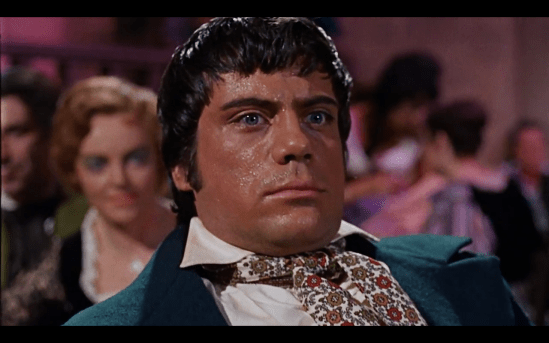
Playing the shapeshifter werewolf is Oliver Reed who at the time was relatively unknown, playing a few bit parts such Plaid Shirt (“Wild for Kicks”) or my personal favorite, Man With Bucket on Head (“No Love for Johnnie.”) Yet, Reed exuded animalistic qualities, such as his dark features and somber eyes, that made him ideal for the role by appearances alone. The thespian in him didn’t quite fit what I believe Fisher was trying to flush out for his beast as Reed held back with a stoic reserve rather than a man desperate for salvation or death, but no one could deny that Reed wore the werewolf makeup like no other, a fine tuned testament of makeup artist Roy Ashton’s creativity that intensified an already beastly framed actor. “The Kiss of the Vampire’s” Clifford Evans took the role of being the wealthy socialite and surrogate father, Don Alfredo, who took the responsibility of raising a cursed child as his own with much suppression love as he could muster to stave the beast from returning. The legendary actor who starred in countless crime-dramas step outside his niche and into horror, even if at the time horror was considered a schlocky exercise of distaste content for a cheap thrill. As Don Alfredo, Evans wages his worth solely on the prospect of being a gentled hearted father-figure doing the right thing even if it’s detrimental to himself and the veteran actor triumphs taking an aloof man with little responsibility to his village, let alone his home, and turning him into taking the matter of his adopted son’s affliction into his own hands when he fails to cobble another solution together. “The Curse of the Werewolf” holds many other fine support performances from “Circus of Horror’s” Yvonne Romain as the mute jailkeeper’s maid, Catherine Feller, Richard Wordsworth, Warren Mitchell, Anne Blake, and John Gabriel.

“The Curse of the Werewolf” is driven not by the snarling teeth action or the transformative body horror one expects of Lycanthropy features. Instead, Hammer’s film rides a story high without being arbitrary with nonsensical waning on the centerpiece of the story, the curse, coursing the path that led to Leon’s fate that was no fault of his own. Leon’s throat-ripping moonlight rendezvous was bred from cruelty and circumstance of severe class division that reaps the life from those in the same blue collar social class as Leon, leaving the higher, wealthy class virtually unscathed by the curse’s wrath in a cruel ironic twist of events. With the story leading the charge, special effects and makeup take a backseat without only some immature fangs and shadowy lurking to sate the need for creature presence. When Roy Ashton’s vision of the half-man half-beast does make a full presentation of Oliver Reed in the full hairy beast getup, complete with a furrowed brow, elongated lower canines, and large wolf ears that were connected with bristly, greyish brown hair down the side of his lower jaw, the werewolf is worth the wait for some of the best practical werewolf makeup from the mid-20th century and surely was the inspiration for future werewolf films, such as “Wolf” with Jack Nicholson. The novelty of “The Curse of the Werewolf” still remains ripe despite being nearly half a century young, giving the beast a meaningful, if not also pitiful, existence to empathize being damned on two fronts: a wretched, cursed soul and being the target of a village mob.

Can love soothe a killer heart? Find out in Scream Factory’s collector edition Blu-ray of “The Curse of the Werewolf” with a new 4K scan from the original 35mm negative and presented in a 1080p high-definition widescreen format of a 1.85:1 aspect ratio. Rendering with clean textures and superb details, the image has remarkable vibrancy and hue balance in it’s tinctured technicolor. The transfer is virtually blemish-free, suggesting that the original negative aged well, with agreeable natural grain to complement the film stock. Scream Factory has produced the best looking version of this classic Hammer release. The English language DTS-HD single channel Master Audio renders, again, scot-free of aged distortion with the high-definition eminent boost to providing even clearer dialogue and untarnished ambient clattering during more turbulent scenes of laughter or beastly disarray. English subtitles are optional. A collector’s edition wouldn’t be complete with a slew of bonus materials and, boy, does “The Curse of the Werewolf” have brand spanking new material for the special features that include a new Roy Ashton tribute piece by his friend and “Little Shoppe of Horrors'” writer Richard Klemensen and new audio commentary with film historians Steve Haberman and Constantine Nasr. Plus, interviews with actors Catherine Feller, Yvonne Romain, Mike Hill, art director Don Mingaye, art department member Margaret Robinson, and filmmaker Jimmy Sangster in “The Making of The Curse of the Werewolf” featurette, a look at Lycanthropy that discusses whether man’s inner wolf can be a transformative source of mental will, a still gallery, and the theatrical trailer. The package is illustrated with Oliver Reed’s snarling werewolf persona by Mark Maddox, who designed Scream Factory’s “The Thing” release, and comes in a nifty cardboard slip cover. All in all, Scream Factory brought new life into the re-originating and re-orientating “The Curse of the Werewolf” that is, perhaps inarguably, the best Hammer upgrade to date.
EVIL Metal vs EVILER Zealot! “We Summon the Darkness” reviewed! (Lionsgate / Digital Screener)

Set in the Midwest of the late 1980’s when a satanic cult has killed upwards of 18 people, slain in groups of threes, across the United States, three good girlfriends set forth on a road trip to a heavy metal concert. The girls bump into and befriend three aspiring musicians and fellow metal heads at the venue, inviting them to beers and some company while rocking out to killer show. The after show party moves to one of the girl’s father’s pastoral home for some late night boozing around the firepit, reminiscing about their favorite bands, and whatever else the dark night has in store for them, but the night of hedonism turns quickly into a night of terror when that satanic cult comes calling for three more souls. Some of the group isn’t truthful about their intentions and dead bodies pile up as the ritual killings aim to continue to spread.

Harking back to that killer trope oddity, a setup very keen in the 1980s, of a mysterious killer hiding behind a friendly façade, “We Summon the Darkness” is a modern day remembrance of such a subgenre in the slasher-survival field set along the drab bible belt of Indiana landscape, though, in actually, filmed in Winnipeg, Canada. At the helm is “My Friend DahmerMy Friend DahmerMy Friend Dahmer” director Marc Meyers from a script by Alan Trezza, who is the creative mind behind the short and feature film versions of another Alexandra Daddario comedy horror, “Burying the ExBurying the ExBurying the Ex,” that co-starred the late Anton Yelchin. May he rest in peace. Meyers moves his hand from the somber and inquisitive mutilations to murder of the Jeffrey Dahmer biopic origins story to the fanatical whims of pious psychopaths, daggering the crux of the issue into the misperceptions of stigmatic cultures and beliefs while at the same time being an extension of the dark comedy tone that worked charmingly with the tale of zombified ex-girlfriend hellbent on revenge. “We Summon the Darkness” is a product from a conglomerate of production companies, highlighting The Fyzz Facility,= (“47 Meters Down: Uncaged47 Meters Down: Uncaged47 Meters Down: Uncaged”), Grey Hawk Productions, Nightshade Entertainment, MEP Capital, and Common Enemy as well as Daddario, herself, pitching in into the producer pool that isn’t her first rodeo in that role.

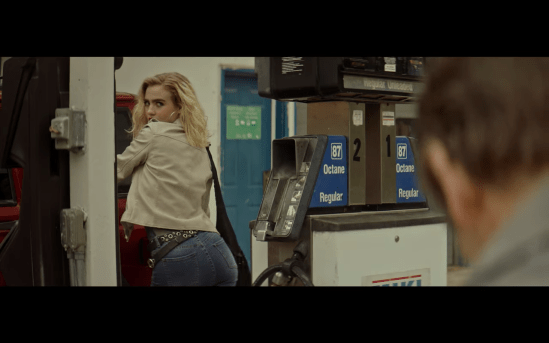
If you haven’t guessed already, Alexandra Daddario (“Burying the Ex,” “True Detective”) stars as Alexis Butler, one of the three metalhead girlfriends cruising to the show, and sequestering herself the ringleader of the road tripping trio as a level headed, parental type with an edge to keep her ostentatious blond friend, Val, played to the fine tune of being uninhibited crazy well by Maddie Hasson, and the timidly sharp Beverly, a role docile to the point of uncertainty and shepherd well by “Hell Fest’s” Amy Forsyth. The three very attractive concert goers bump into another trio of friends, more haplessly hazardous, if not hopeless, band mates who try their hardest to be as metal as they can be, even if that meals throwing a chocolate milkshake out of the window of their speeding van onto the gals’ Jeep. Austin Swift, Logan Miller (“Scouts Guide to the Zombie Apocalypse”), and Keenan Johnson (“Alita: Battle Angel”) make up the group caught red handed in a stroke of coincidence that the girls find them at the very same concert. As much as the two groups mirror each other in personalities, matching up almost perfectly in the varying degrees of state, one group holds a darker secret that could cost the other their very lives. That level-headedness Daddario portrays onto Alexis’ mindset becomes ravaged with wild fires in her eyes and her laid back amount of patience becomes threadbare frazzled when the bodies start to drop in a satanic twist of murder and mayhem, frenzied with extreme ideology founded on multiple levels of greed. Daddario wears crazed well in a very different side to her usually starry eyed and elegant approaches, making all the others seem abhorrently normal in comparison. “We Summon the Darkness” rounds out with Allison McAtee, Tanner Beard, Harry Nelken, and that “Jackass” Johnny Knoxville as Pastor John Henry Butler.

Despite Daddario’s rising stardom and luminous performance, “We Summon the Darkness” falls hard into a mosh pit of despair. The concept is sound and promising, but the execution couldn’t rise to the occasion with limited secretion of the murderous evil that has spread like a pandemic across the nation that’s has sorely downgraded and diluting the nature of the news and media’s role in beyond hammering in the deaths. When story turns dark, the effect feels whiffed and not as jarring as hoped as little is then diagramed to help assist the viewer grasp just what these satanic cultist wish to accomplish. Also, Trezza’s script is highly predictable as the twist is unfolded fairly early on even before the catalyst transition to a darker tone, spoiling the unveil with too many gnomic sidebar conversations and a slew of obvious character tells that don’t exactly shield the truth of their true wolf in spiked studded, black jacketed, metal band patched sheep’s attire. Also, the film pulled too many punches, teetering on the balancing beam whether it’s an edgy killer comedy or a killer comedy with that’s soft around the belly area. Plus, I’m still trying to figure out why a walk-in pantry has a lock on the inside…?

Metal posers rule while the victims haplessly mewl in this Marc Meyers’ film, “We Summon the Darkness,” hitting retain and digital shelves this week on DVD, Blu-ray, and Digital courtesy of Lionsgate and Saban Films. Since the screener provided was a digital streamer, the video and audio aspects will not be covered; however, the Blu-ray specs will feature a 1080p High Definition, 16X9 (2.39:1) widescreen presentation with an English 5.1 Dolby True HD mix while the DVD is presented in the same aspect ratio and will sport an English 5.1 Dolby Digital Audio. Both releases with have optional English, Spanish, and English SDH subtitles. Special features will include a featurette entitled “Envisioning Darkness” and an audio commentary with director Marc Meyers and writer Alan Trezza. “We Summon the Darkness’s” cheekiness is fresh for an 80’s maniac homage armored with solid performances by Alexandra Daddario and an uncharacteristically stoic Johnny Knoxville as a devout pastor against metal music, but seizes up, derails off the tracks, and fizzles to a reduced version of the greater version it could have been.