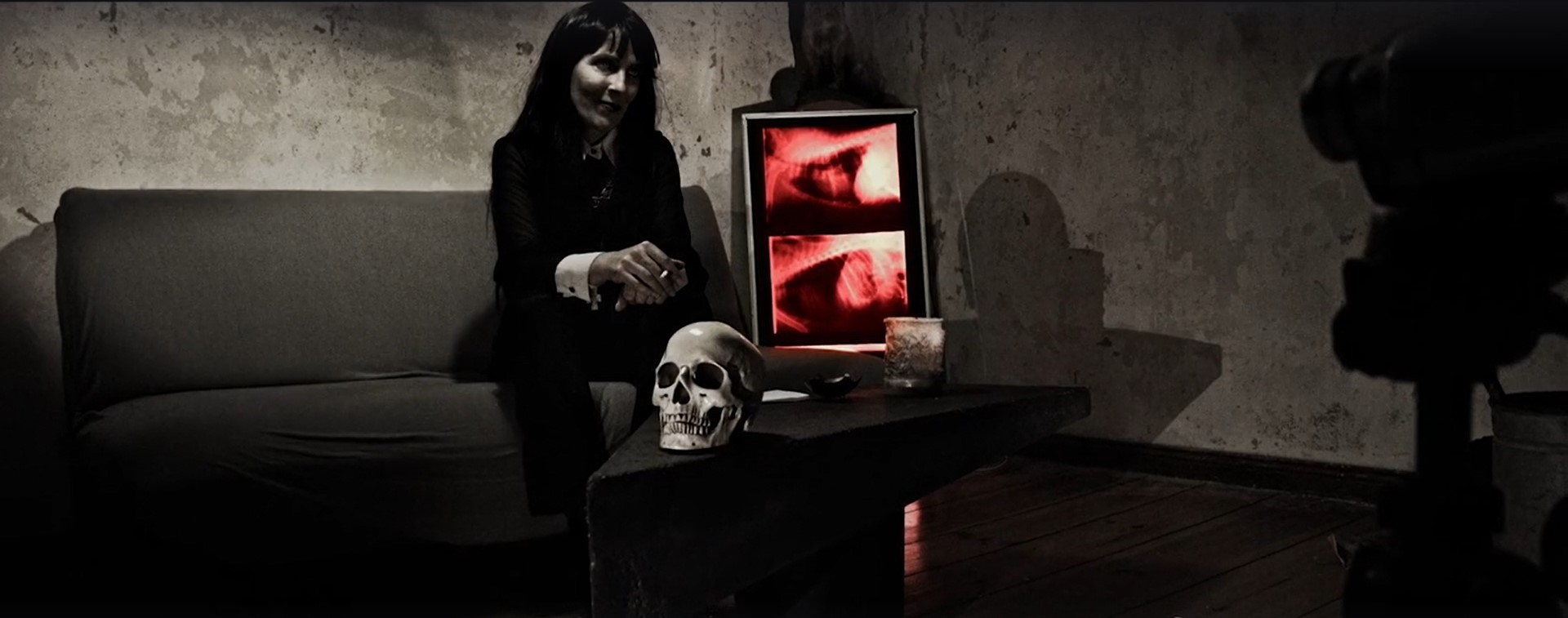
When Machine and Man Merge, Which EVIL Will Emerge? “Re-Flesh” reviewed! (SRS Cinema / DVD)

“Re-Flesh” DVD Available Now to Replace Your Old Skin!  

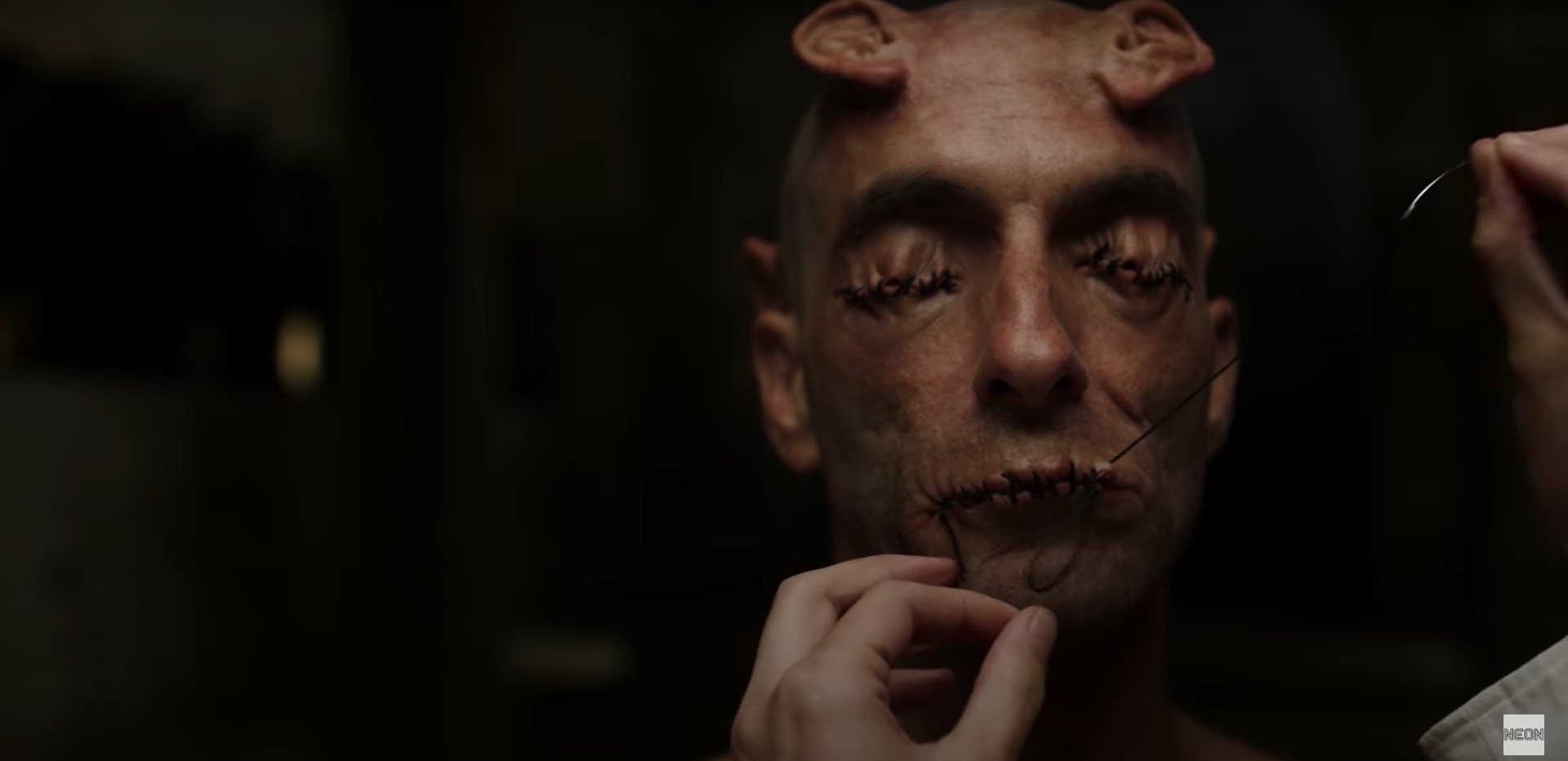
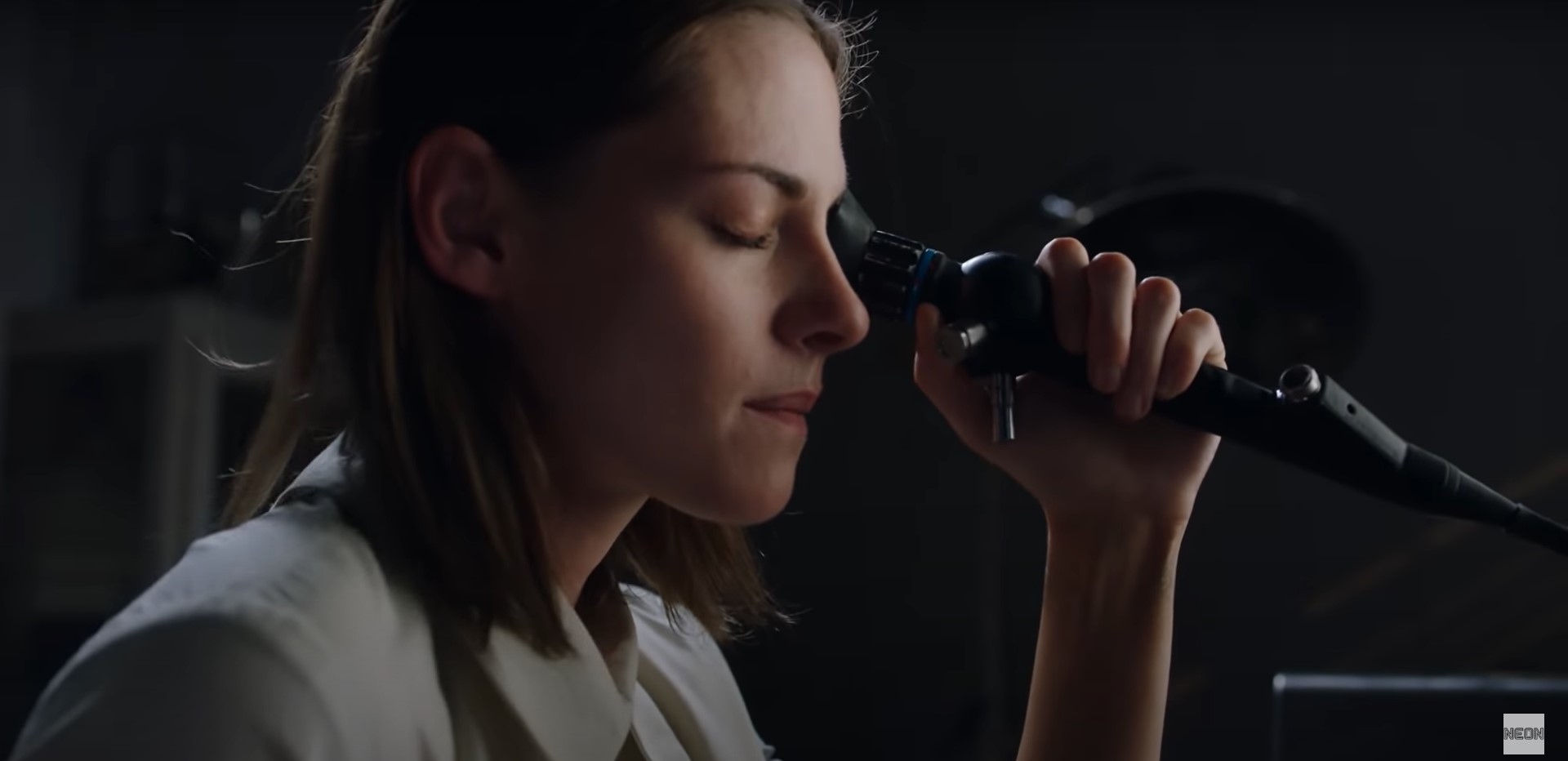
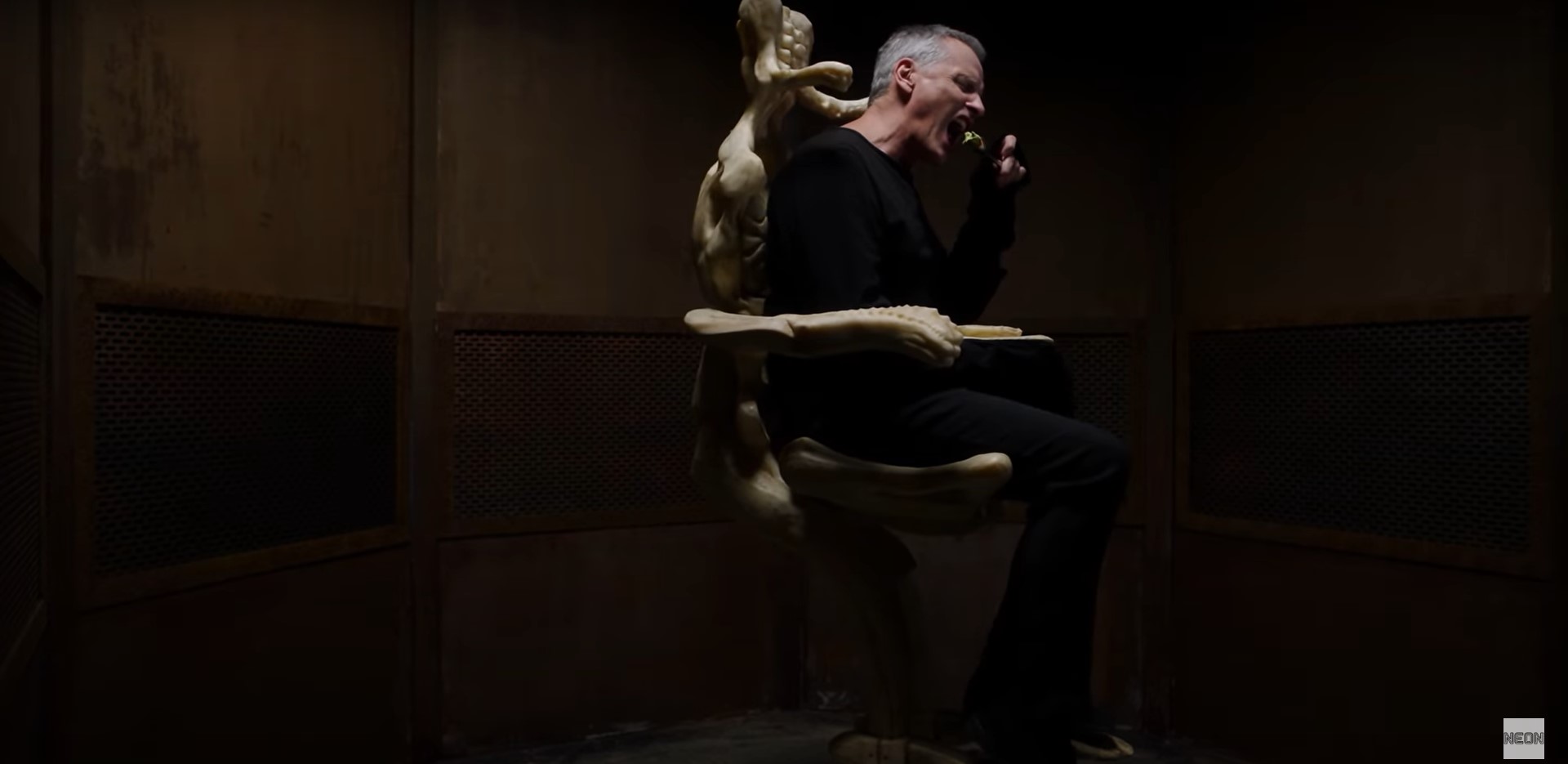
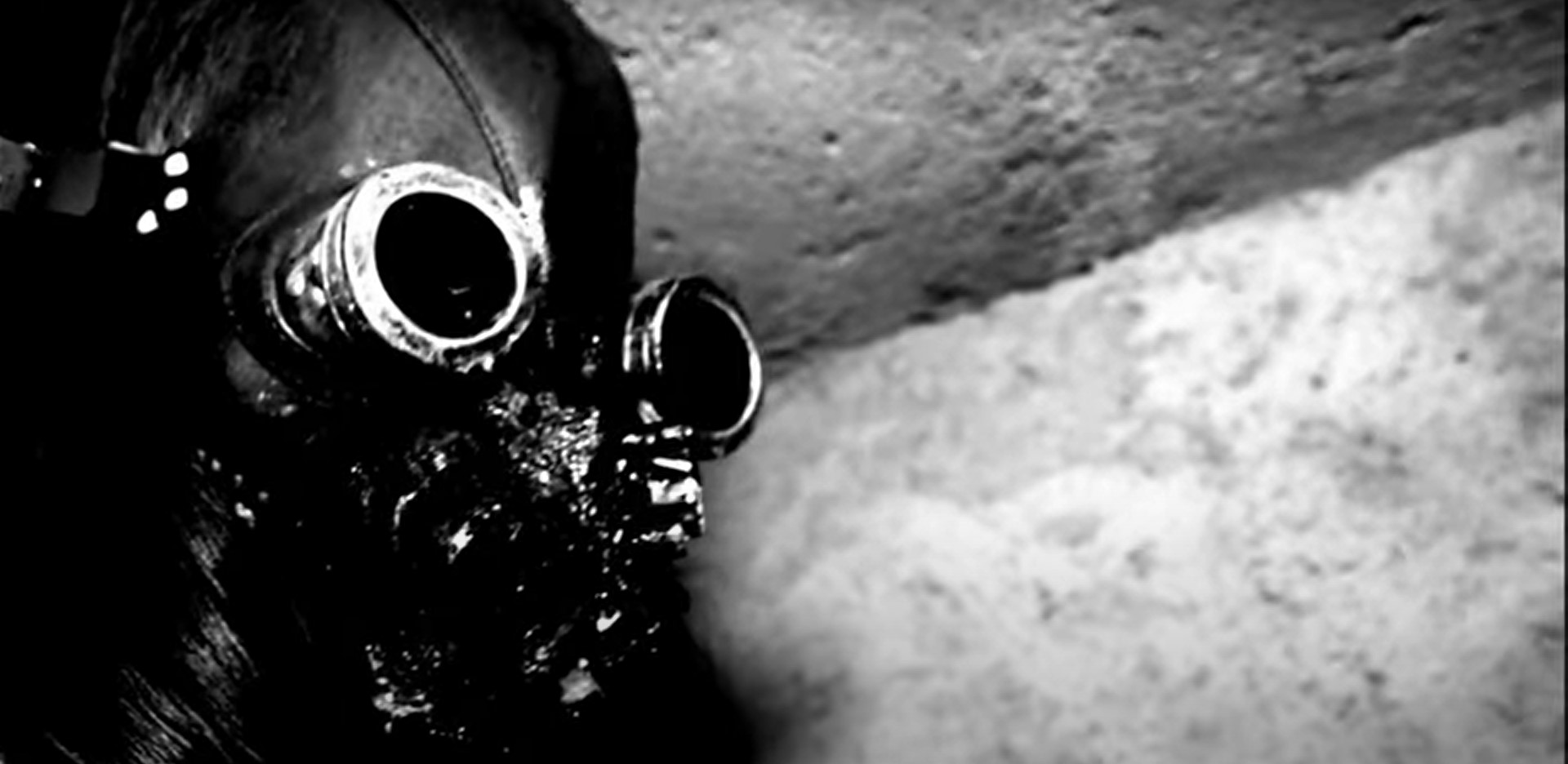
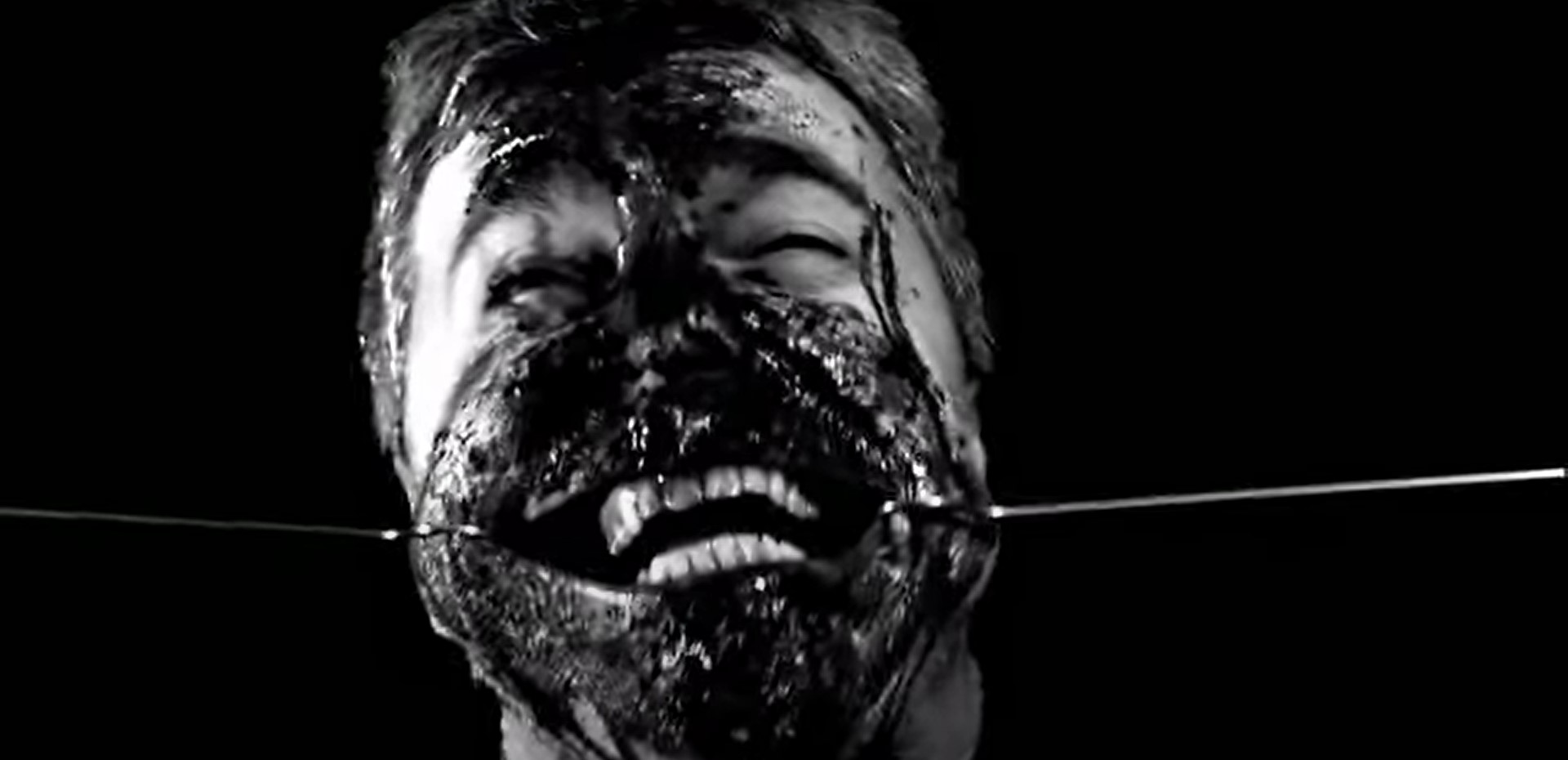
In a dystopian future, machine and man have merged into an asymmetrical symbiosis where machine is preponderantly present to corrupt man’s benevolent humanity.  Such corruption removes compassion at the core level with the use of neurol inhibitors of technological ascendency over mankind in a gruesome, unpleasant fashion.  The exhibited process is exampled with a masked nurse pushing a wheelchair bound masked man down a dank and dark hallway and into a reprocessing room where he’s plugged with a cable attached to his arm.  From there, the man is fitted with a virtual viewfinder displaying five short reprocessing-to-repair files, transmitted before his eyes to incite organic machinery violence that’ll absorb and eradicate years of human psychological evolution.  Slowly through the images and videos of visceral excision does the man morph into an automaton of flesh, blood, and commingled organic cabling and mechanical veins that will render him resolved as biologically re-fleshed.

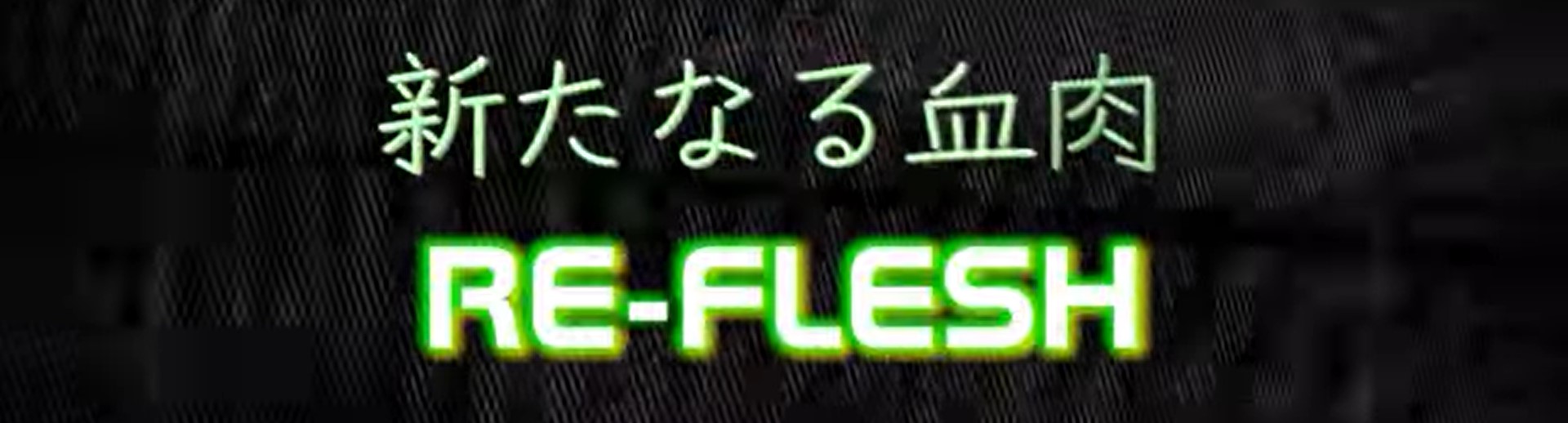
Japanese splatter punk Body horror inspired “Re-Flesh” becomes “Deep Web XXX” and “Suffering Bible’s” director Davide Pesca’s tribute to the very distinctive denaturalization of the man-machine mix cinematic movement from the unabashed narrative risktakers hailing from land of the rising sun, Japan.  Made popular by the likes of auteurs Shinya Tsukamoto and Shozin Fukui and cult favorites like “Tetsuo:  The Iron Man” and “Tokyo Gore Police,” “Re-Flesh” adds to the niche palate with an unconfined, Italianized take to ambiguate that blurry line between the soul and the soulless as man comes to terms with a terror-inducing technological takeover.  Writer-director Pesca’s underground anthological tale pits the human condition, it’s mortal coil if you will, up against the cold and heartless tech to create coded layers of neova carne, or new flesh.  Pesca and fellow coproducer Massimo Bezzati reteam after “Night of Doom” to collaborate the 2020 released production under their respective indie companies Demented Gore Productions and M.B. Productions.

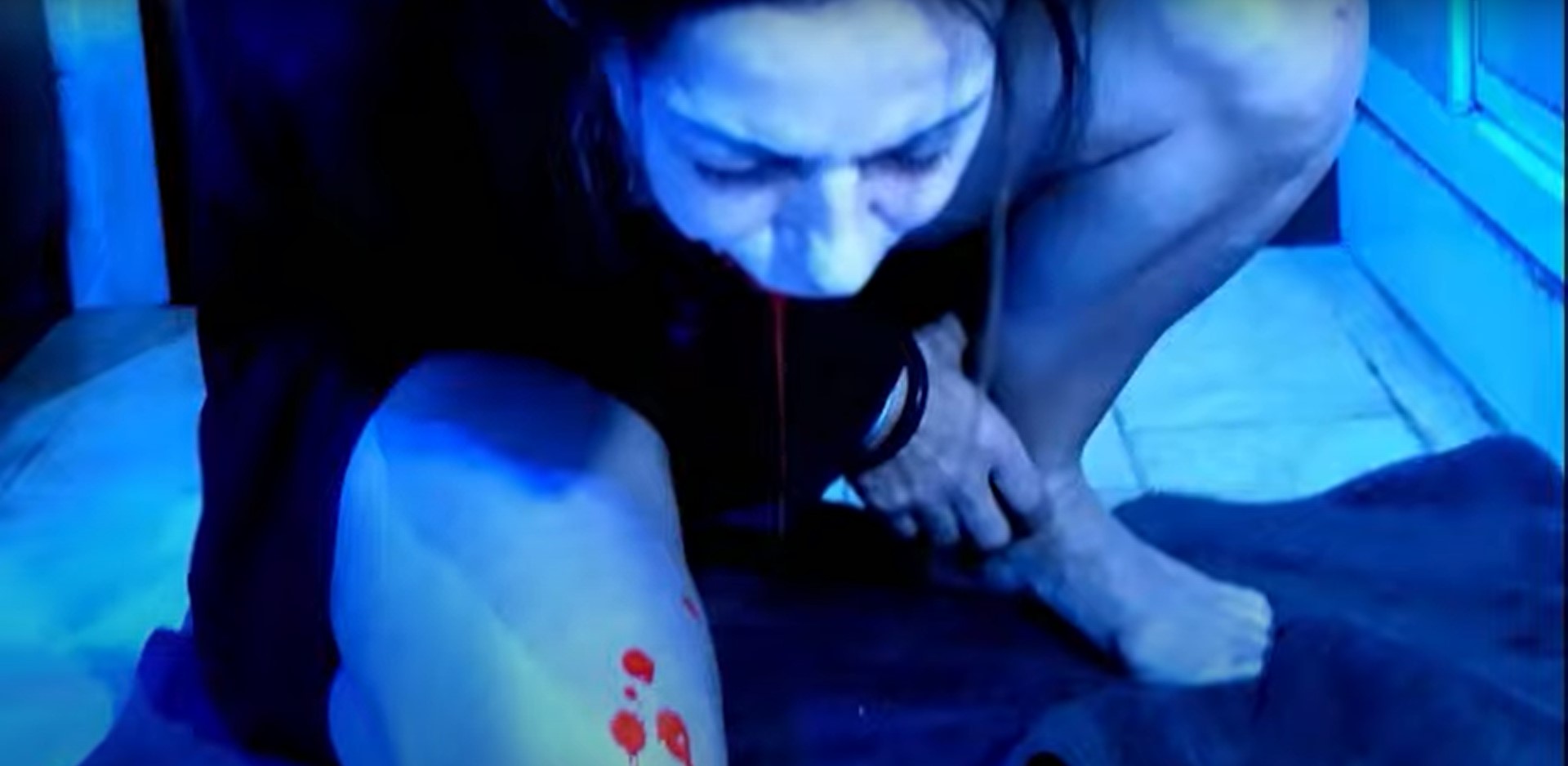
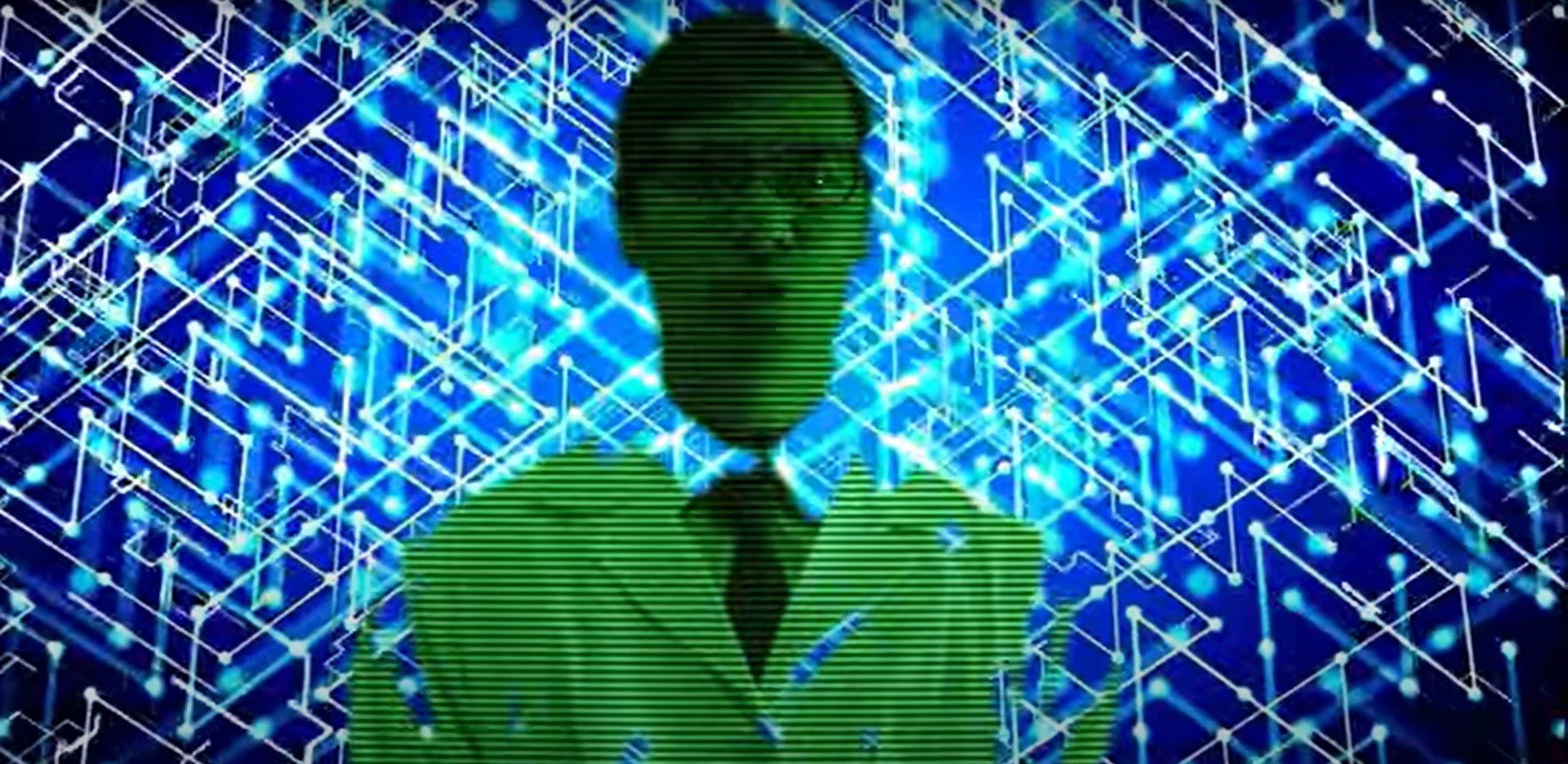
The five-story anthology with the interweaving wraparound of a man being reprogrammed casts a lot of visual performances without the need for dialogue.  Dialogue is reduced to only a pseudo medical television advert or surgical endorsements for a better, prosperous life to eliminate human flaws, advancement in new, and improved, flesh, and can even cure homeless afflictions like drugs and addictions.  Pesca keeps a simplicity about his scenes by keeping sullying dialogue removed to just retain the beauty of body horror and a sonorously cacophonous industrial soundtrack.  Each story’s characters are also fairly simplified.  Without dialogue, individual complexities and depth remain shallow in what is “Re-Flesh’s” sole celebration of horror based cybernetic organisms.  This creates no emotional attachment to any of the characters being violated by fiber optic cables and experimentally operated on with crude animatronic gizmos, but Pesca does implant an imploration of at least one emotional response from his audience through gratuitous nudity on half of the female protagonists going through a rapture and ruination of bodily rape and mutate connected by inhumane sentient cybernetics.  Most of the women protagonists are half-naked women ensnared by the inescapable new world of merged new flesh but the tail end episodes dig a little deeper, perhaps even stretch the theme to the limits of cyberpunk horror, to where women are more than just ravaged victims.  “Re-Flesh” sees skin in the game from Alessandra Pellegatta (“Night of Doom”), Giacomo Clerici, Mery Rubes (“Rage Killers’), Reiko Nagoshi (“Devil Times Two – Quando le Tenebre escono dal Bosco”), Giulia Reine, Paolo Salvadeo, Amira Lucrezia Lamour (Devil Times Two – Quando le Tenebre escono dal Bosco), Alessandro Davoili (“Alice Was My Name”), Ivan Brusa (“7 Days, 7 Girls”), and Marco Cinque.

David Pesca is no stranger to short, gore-laden, underground films having been a featured segment director on a pair of anthologies in the last decade from “A Taste of Phobia” and “After Midnight.”  For “Re-Flesh,” Pesca doesn’t have to share the spotlight in his very own tech-themed, feature length compilation that narrates transmitted computer files as tech insidiously infiltrating our insubstantial innards.  The first three episodes revolve around phones and solitary women become enslaved to the devices with a link of invading their bodies with a foreign object, whether be adopted a virtual, grotesque pet to being the reason for infection that spreads throughout the body like a flesh-eating disease, to being beamed up and constrained for a thorough, if not sexual, examination of one of mother nature’s creatures.  I’m intentionally skipping the review of fourth short and head straight into the terminal episode that is more dystopian splatter punk than the others with an experimental bio-cybernetics company called Neo Vita, or New Life, ridding the world of lowlifes by module implants that turn them into society-controlled puppets.  Yet, all these stories are not terribly straight forward with the rub being the ambitious nature of interpretation and the fact there isn’t a dialogue track for most of the runtime.  Taking a step backwards to the fourth short, I found this particular short doesn’t fit “Re-Flesh’s” theme with a demonic woman damning three inert souls to a black void of pain and death.  Perhaps, a construal could be constructed to lay in code into the technology sequence strand, but the code would be a fractional stretch in comparison to the surrounding system.  As a whole, “Re-Flesh” may side more with gory sanguine than an illuminating story but does depict the scourged with a front row seat in this bloodcurdling network of body horror.

Befitting to be distributed on SRS Cinema’s Nightmare Fuel – Extreme and Unrated sublabel, “Re-Flesh” emerges as a bizarre aghast mix of tentacle erotica and technical dysfunction onto a 480p DVD, presented in a widescreen 1.85:1 aspect ratio.  Technical dysfunction also applies to the image quality.  Though combating some lossy compression issues, the standard definition resolution and budget filming equipment sustain a level of image softness under a desaturated color palette.  Depth and delineation range from hazily outlined to a complete wash out from the frame’s JPEG conversation.  Pesca operates under a wide-stylistic format that incorporates varied black-and-white schemes (a gritty B&W wraparound story compared to a more defined desaturated monochrome for the fourth segment), natural lighting, harsh gel lighting and tint, and green screen for CGI backdrops.  The English dub stereo 2.0 mix will obliterate your sound setup if not careful and without a subwoofer with a booming LFE industrial soundtrack that has produced an inherent crackle and since there is no in-scene dialogue or ambience, all of which is 100% done in ADR, the lower frequencies engulf the other channels that may pop in for phone effects or squishy surgery sounds.  “Re-Flesh” is an Italian film, but the cybernetic implant advert shot, originally spoken in Italian, is dubbed in a burned-in expeditious English dub that is what it is.  Bonus features include a promo and original trailer, a behind-the-scenes featurette entitled Backstage which is a look at some of the gory scene effects the first two segments, the short “Electric Dreams” which is an alternate graded version of the second segment, and other SRS trailers.  The traditional DVD snapper case comes with the illustrated front cover art of the man plugged in under a faux harsh white neon glow with the disc art containing the same art but superimposed with a red hue layer.  There is no insert inside the casing.  The unrated feature has a runtime of 72 minutes, more than enough time for this type of anthology, and has a region free playback.  A kitschy and schlocky graft of “Re-Flesh” will get under your skin, but this anthology quickly grinds gears toward a blue screen of death.      

“Re-Flesh” DVD Available Now to Replace Your Old Skin!  

Under an Urban Club Scene, EVIL Horrors Connect Us All. “Flesh City” reviewed! (Wild Eye Releasing / DVD)

“Flesh City” Yearns for Connection on DVD!

An insomnious city pulsates with an industrial soundtrack and claws cantankerously at denizens without pity. Under one of the raging night club scenes, enamored raver Vyren follows the beautifully alluring Loquette, an inspiring electronic DJ, down into the club’s labyrinth of old stone corridors. Their coquettish play becomes the monitored study of Professor Yagov, a glowingly cadent and mad experimenter of anthropology. The two lovers are drugged and abducted by the Yogav with the intent of genetic mutating the couple’s anatomy that renders Vyren’s hand displaced with a bulbous nub and Loquette impregnated with an ingestible sludge. What becomes of their affliction insidiously infects the entire city population with a flesh tentacle curling through the city’s underground sewer and drainpipe infrastructure in what amasses to a single connection of brain-invading techno-horror.

“Flesh City” annexes our individuality for the sake of connective solidarity conveyed in an electronically infused and alternatively aesthetic experimental film from Germany’s own jack of all independent media and artistic trades, Thorsten Fleisch. The 2019 released feature is Fleisch’s first and only written-and-directed full-length film depicting his feverish analog avant-garde, reflecting the filmmaker’s menagerie of orthodox-shredding short films, video art, and written and produced music. Overseeing “Flesh City’s” cinematography and special effects, Fleisch has complete and utter autonomy of the visuals to obtain a harshly discordant image melody edited together, which Fleisch also manages, into an agglomerate of acetic aesthetics to shock and stress the audio and visual cortexes. Once under the working titles of “Berlin Blood” and “Zyntrax: Symphony of Flesh,” “Flesh City” is entirely shot in Berlin, Germany, produced by the director and United Kingdom producers Arthur Patching and Christian Serritiello, and is a feature of Fleischfilm and Tropical Grey Features.

One of the film’s coproducers and musical artists, Christian Serritiello (“Streets of East L.A.”), is at the front lines of “Flesh City’s” afterthought cast of characters with Vryen as essentially the naïve and lured-in Alice chasing the white rabbit Loquette, played by Eva Ferox (“Love Songs for Scumbags”), down the twisted rabbit hole of a cellar dwelling doctor.  I say afterthought because the characters take a backseat to Fleisch’s contortion of reality and the analogical subtext generated by Fleisch’s love for analog anomalies, using them as supporting pawns to carry out his visceral vision of vitality.  Music videos, psychedelic montages, and grotesques images of beetles absorb screen time like formless or arthropodal principals.  Even Professor Yagov (Arthur Patching”) is obscured by a rainbow shimmer, never visually seeing his face as an individual seemingly between two dimensions.  “Flesh City” is a very multiverse, multidimensional nightmare-scape of unconventional color that has culminated from Fleisch’s imaginative idiosyncrasies over the years and that’s what being intently showcased here with more evident display of a less-character driven, shapeless story within the technical aspects of the DVD release where the soundtrack drowns the dialogue into a muffled deaf tone, like any good loud music venue would subdue.  “Flesh City’s” urbanites fill out with Marilena Netzker (“Love Songs for Scumbags”), Shaun Lawton (“Possession”), Denis Lyons (“German Angst”), Anthony Straeger (“Call of the Hunter”), Maria Hengge (“Love Songs for Scumbags”), Helena Prince (“12 Theses”), and Thorsten Fleisch in a Max Headroom meets Total Request Live-like host role of Quantum 1337.

“Flesh City” will not be everyone’s approx. 90 minutes of how to spend their time choice.  The experimental film will only speak to a few select souls with a filmic affinity for Lynchian peculiarities, Terry Gilliam’s bold fantasy, David Cronenberg’s body horror, and a hellish capriccio along with an eclectic music palate for noise rock, henpecking alternative, and strident industrial bass.  I wouldn’t go as far as saying Fleisch’s film is akin to nails on a chalkboard but can be boisterously unpleasant to the ears at times while, in the same breadth, be stimulating visually, even if that stimulation may induce a photosensitive epileptic seizure.  Fleisch’s non-traditional narrative design splices in music videos from various underground and indie artists with him providing introduction as an illusionary host in a virtual world, breaking up the Vyren and Loquette’s post-punk-adelic core quandary with a teetering melodic cacophony of feedback rock electronic, a hostile rhythm, and bizarre lyrics and visuals.  Fleisch pushes the taboo envelope with not only liberal nudity, to which Germans are very at ease with their body image, but also within the unconfined stylistic creativity of multi-formats that razzle-dazzles like the innards of radiant plasma globe; the Tesla coil electrons that’s drawn to your conductive flesh won’t hurt you but provide a feeling of captivated wonder.  Yet, don’t expect to be thrilled in a traditional predator-and-prey sense as “Flesh City” appeals more to our disconnect from each other and how to reconnect must be through some kind of inclemency. 

Likely to transmit under the radar, “Flesh City’s” biomorphic body horror arrives onto unrated director’s cut DVD home video courtesy of cult and independent distributing label Wild Eye Releasing in association with Tomcat Films.  The DVD5 presents the transfer in a widescreen 2.35:1 aspect ratio with varying levels of image quality due to different types of equipment and methods used to create Fleisch’s tripped out vision that contains, but isn’t limited to, black and white, color, stylistic lighting, analog equipment, digital equipment, stock footage, and so forth.  This mishmash movie makes for divisible degrees of signal quality that can be look crystal clear in one scene and then heavy noise interference the next, but the overall clarity is remains stable without any scenes being rifted because of visual vagueness.  The audio comes in two formats:  a English Dolby Digital 5.1 surround sound and a English Dolby Digital 2.0.  Frankly, the original English dialogue track is feeble under the tremendously potent soundtrack and sound design that makes comprehending Vyren and Loquette subterranean exchanges under the industrial rumble of the score virtually impossible to discern.  Even Quantum 1337’s cyber-stutter chat softly introduces us into his world, essentially leading the blind into a mound of musical mania. Bonus features only include other Wild Eye Releasing trailers with the physical aspects of the DVD come with a misconception cover art that has a terrifying gaunt and fleshy, humanoid creature front and center, but that creature doesn’t exist in the film until maybe at the climax that’s nebulously discernible at best what viewers are supposed to see. Inside the standard DVD snapper, the disc art is pressed with the same front cover image but with no accompanying insert. The region free disc features the unrated film with a runtime of 84 minutes. “Flesh City” is a delicacy of distortion, but the Thorsten Fleisch film is an acquired taste that general audiences won’t have taste for but, then again, general audiences are not Wild Eye Releasing’s target audience, now are they?

“Flesh City” Yearns for Connection on DVD!

Cicadas’ EVIL Song Will Test Your Sanity! “The Sound of Summer” reviewed! (Unearthed Films / Blu-ray)

If You Can’t Take The Heat, Watch “The Sound of Summer” instead!  

A coffee shop employee is over the Summer’s relentless heat.  She’s also over Summer’s Cicada call of vibrational chorusing when the winged insects glide their tymbals across their abdomens to attract the season’s female sex.  In working one shift, a strange local man patrons her shop, bringing in his Cicada nets and enclosures, feeding his snared insects right in the middle of his hot coffee break.  Revolted by who she dubs The Cicada Man, and by cicadas themselves, insidious nightmare dreams and an intense itching sensation drives the girl into scratching and terrified fit.  The obsession to scratch the itch wears out spots on her skin to the point of creating open wounds to excavate the bugs she believes have burrowed their way into her body because a dream of The Cicada Man planting them inside her.  Reality begins to crumble  and delusions set in as her and The Cicada man have unfinished business that begin a downward spiral of Summertime insanity. 

The Summer season isn’t for everybody.  The oppressive heat, the swarming insects, the uncomfortable stickiness of sweat-inducing humidity, and the very essence of an overwhelming nature that can be engulfing toward a devolved transfiguration.  That’s the premise behind the 2022 Japanese extreme shock and gore horror “The Sound of Summer,” the first feature length film by a United Kingdom-born writer-director known only as Guy (aka Guy Fragments) who has lived and worked in Japanese since 2016.  Influenced prolifically by Japanese underground filmmaker Shozin Fukui (“Rubber’s Love,” “964 Pinocchio”), Guy follows Fukui’s extreme experimental horror with his own tastes and experiences built into the framework of what becomes an antithetical liking to the widely popular season that usually provides outdoor fun and sun.  In “The Sound of Summer,” the sun is the enemy and the cicadas are the siren song humming foot soldiers that infest the mind.  The body horror is a production of the director’s indie production company Sculpting Fragments, the same company used to produce the Guy’s shorts, “The Rope Maiden” and “Difficulty Breathing.”

“The Sound of Summer” runs a cast of nameless characters and at the center of the cicada madness, we’re individually tailgating one of the two women who work at the coffee shop.   Kaori Hoshino enacts the young woman’s displeasure for the Summer with constant vocal grouchiness of the heat and her visible disgust and detest of the surrounding cacophonous cicada chirping.  Hoshino works lathering loathsome into the character’s routine as a single working woman, living alone, with a daily schedule.  There’s never ostentatious gesticulation that overplays her hot hating hand.  Intermittent with seemingly mundane tasks provides a more down to earth and normal person, juxtaposed greatly with more contrast in the later extremely disturbed version of herself.  Her delusional disorder stalks her in the physical form of The Cicada Man, a rather odd, older man involved in what she considers to be childish bug-catching activities, and his presence, or maybe just the image of him, invades her mental space coinciding with everything else she dislikes about the Summertime.  The Cicada Man becomes the epitome of everything she finds repulsive yet every element of his being and the Summer sink underneath her skin, in a literal figurative combination.  In the metamorphizing macabre role of The Cicada Man is Shinya Hankawa who also has a tangent sub-story of feeding his precious insects, as well as himself, blood from the sickle opened young women he has hidden away in a derelict building.  This expresses The Cicada Man as morosely deranged but the narrative has up until now been latched onto the young woman from the coffee shop, which begs the question, is this how the young woman perceives The Cicada Man, even as far as labeling him with a slasher-esque moniker to further demonize him into being a part of a culmination toward her worst nightmare?  “The Sound of Summer’s” cast comprises of Kiyomi Kametani, Shiori Kawai, Kuromi Kirishima, Keita Kusaka, and Yuina Nagai.

Like renowned painters Edvard Munch or Vincent van Gogh, a madness quality lies within every stroke of Guy’s ‘The Sound of Summer.”  Guy pulls inspiration from his own experiences of a moderately pleasant English Summer being eradicated by the same season in Japan and it’s Hellish temperatures become a reconfiguration of the psyche when the once comfortable becomes oppressed by the uncomfortable surroundings of sensory overload.  A cultural physical representation of the season in Japan is the cicada, like the recognizable and sought after Cherry Blossoms of the insect world.  Guy uses the spellbinding cicada song with a fear-inducing frequency that vessels in psychological harm or delusional parasitosis with a visual goad of an enigmatic old man having them as pets that mixes the brain’s signals into a freefall into madness.  Yet, the audience is never outrightly explained what’s happening to the young coffee shop barista as a limited number of The Cicada Man’s spliced in scenes chauffeur in a more supernatural and macabre side separate from the woman’s narrative preponderance.  Are we supposed to be inside the barista’s disordered brain that’s going mad or is The Cicada Man offshoot sub-narrative an inside look at his bizarre insect consumed little world that slowly seeps under the Barista’s skin?   “The Sound of Summer” might be open for one’s own personal interpretation, but it’s clear in message as an anti-Summer film, an anti-bug film, and an anti-sane film with a prosthetic effects edge and a hyper-sensitive gore impact that’ll leave you scratching the most insignificant itch – just in case.

Ring in the approaching Summer season with “The Sound of Summer” on Blu-ray from extreme horror label Unearthed Films.  The AVC encoded single layer BD25 presents the film in a 1080p, high-definition resolution with a widescreen 1.78:1 aspect ratio.  Image quality is relatively stable throughout with spot areas of compression concern, such as splotching, around the darker, grittier scenes inside The Cicada Man’s rundown squat.  Details maintain their sharpness as we receive some gooey bits and pieces of unidentifiable flesh and muscular tissue.  Plus, the prosthetic applications display a coarse texture comes through the decoding well, despite a jumpy Mbps.  Guy’s approach to the cinematography takes a steady devolutionary downfall from the brightly lit and sterile to the darkly embracing and infested as if the two contrasting elements are linked by the psychological supporting wall between safety and danger, easily to crumble under natural pressures with the simple prod of gentle persuasion.  The Japanese language PCM 2.0 track distributes a fine dual channel mix that favors the sound design with cicada chorusing and the constant scratching and open wound tissue removal churning out an audible force of discord.  Dialogue is the other suitable track that’s remains clear, clean and in the forefront of the action, soundtrack, and robust sound design.  No signs of hissing, popping, or strength with the digital recording.  The optional English subtitles synch well with error free translation.  Extras include a behind-the-scenes that’s more of a blooper reel of the cast and crew making faces and messing around during principal photography, the Tokyo live-stream premiere after screening interview with director Guy and cyberpunk horror director Shozin Fukui, the Japanese premier with director and cast, and the film’s trailer.  Front cover is a grainy look at The Cicada Man in full metamorphic bloom slipped into a traditional Blu-ray snapper case with a disc art pressed with the illustrative, flesh-wounded flesh of the young victim.  The Unearthed Films release is not rated, has gore-friendly pacing at 75 minutes, and is locked with region A coding.  Special effects by “Versus’s” Susumu Nakatani and an original soundtrack by the Singaporean electronic-experimenter, Microchip Terror, “The Sound of Summer” buzzes with body horror boudoir in Guy’s directorial feature length extremity. 

If You Can’t Take The Heat, Watch “The Sound of Summer” instead!  

Fresh-Water Fatalities of the EVIL Female Kind! “Piranha Women” reviewed! (Full Moon Features / Blu-ray)

Awesome Cover for “Piranha Women!”  Check Out the Reversible Cover Art by Purchasing Your Copy Today!  Click Below.

At the seaside dive bar of Antonio Bay, flesh hungry creatures dressed in high heels and lowcut blouses circle around unsuspecting male prey gawking into their female gaze and their female bosoms.  Lured back to the woman’s indoor pool lair, the lured men are nibbled-to-death with tiny, sharp teeth bred by a science gone mad.  The normal, everyday guy Richard understands the dangers of his coining of the Piranha Women all too well as his cancer-stricken girlfriend desperately enrolls in an experiment drug program led by a Dr. Sinclair who binds the magically healing properties of the Piranha chromosome to his patients to build a sexy, sharp-teethed army.  With his colleague dead after being enticed by one of the beautiful and fish-spliced femme fatales and his girlfriend disappearing soon after seeing Dr. Sinclair, Richard must evade the murder suspicions from the police and battle through a pair of sexually aggressive, bikini-cladded chompers to save his endangered girlfriend from becoming one of the Piranha Women!

From the bizarre brain of Charles Band, who delivered devilishly cult pictures like “Puppet Master” and “Trancers” under the Full Moon empire for 40 years (if you’re counting Band’s defunct Empire Pictures) , and from the eccentric and erotica-charged touch of Fred Olen Ray, the writer-director of “Evil Toons” and “Hollywood Chainsaw Hookers”, comes the next freeform and fishy Full Moon feature, “Piranha Women.”  The 2022 film has all the assurances of a contemporary Full Moon production with a slapdash story structure, a handful of willing women to go topless, a hale and hearty use of a familiar carnivalesque score, and, of course, blood and lots of it, discharged by freaks and fiends of mad science.  Charles Band produces the venture, alongside associate producer, the former Playboy model and under-the-radar scream queen, Cody Renee Cameron, with Fred Olen Rey having penned the script treatment and sitting in the director’s chair.

For to recognize any of the “Piranha Women” cast, one would need reach down to the far depts of the fish tank where the bottom feeders roam.  Now, I’m not stating that performances are poor but to call the principals household names at any caliber level in film.  If you’ve established a residing foot on the internet, like me, or maybe have a photogenic keen eye, “Piranha Women’s” slender cast might blip on your brain’s recollection radar.  For instance, Bobby Quinn Rice, the story’s male lead trying to save his girlfriend Lexi (Sof Puchley, “Gatham”) from the clutches of killer fish with hot bods, had swimmingly integrated into the web series Star Trek universe in multiple series.  The “Super Shark” finds a solid lead performance in the adulthood reasonable and morally incorruptible Richard in what is Rice and Olen Ray’s fifth collaboration together as actor and director. If you’re not a Trekkie and have a more salacious sense of knowledge, the two actresses playing the genetically spliced, serrated teeth villainesses are former Playboy models in Keep Chambers and Carrie Overgaard and, yes, they do show plenty of skin if you were wondering.  Chambers debuts herself as an actress with a tight curve on how to hook men to their death with an extremely attractive lure while Overgaard’s off-and-on working relationship with producer Cory Renee Cameron scores the Michigan native a Los Angeles shoot, her first dive into the horror genre.  Chambers and Overgaard do as well as expected in roles where their nipples morph into bite-sized piranha teeth in conjunction with their mouths also modulating into larger razor teeth.  In all honesty, the film could have benefited for more nipple dentata carnage much the same way vagina-dentata did for Mitchell Lichtenstein “Teeth.” “Piranha Women” fills the cast pool with B-movie actors Jon Briddell (“Hot Wax Zombies on Wheels”), Richard Gabai (“Demon Wind”), Michael Gaglio (“College Coeds vs. Zombie Housewives”), Nathaniel Moore, Jonathan Nation (“Mega Piranha”), Houston Rhines (“Angels Fallen”), and Shary Nassimi as the fishy Dr. Sinclair.

Sharks, the apex predators of the ocean, may have their own patented subgenre with Sharksploitation, but Piranha are predominately pack hunters also hungry from meat and deserve their own categorical moniker (perhaps Piranhasploitation?) as these little carnivorous creatures will eat a little of your flesh one morsel at a time until the masticated body looks like chewed bubblegum. Joe Dante knew this with his Roger Corman cult classic “Piranha” and even The Asylum gets into the action with their “Mega Piranha” schlocker. Fred Olen Ray, who once raised his own personal piranha fish, takes a stab at a new angle involving our rather ravenous ankle biters by not making them the main antagonists of the story. In fact, the fish itself is not the villain as “The Attack of the 60 Foot Centerfolds” and “Bikini Jones and the Temple of Eros” filmmaker splices female erotic genome into the fold with body horror elements. The science behind the genetic sequence isn’t necessarily important, as Dr. Sinclar mentions in the film, it’s all little complicated, but there’s a lackadaisical air with the barebones narrative. With a film titled “Piranha Women”, we’re not looking for Academy Award substance or an auteur aiming to reach the depths of our soul with a powerfully visceral, visual tale and there’s a genre fan understanding in what to expect from Film Moon Features and director Fred Olen Ray, but after being pleasantly surprised with Full Moon’s more contemporary projects, like “Don’t Let Her In” and “Baby Oopsie,” I found “Piranha Women” falling apart at the seams. Pivotal scenes of transformation of the desperate, ill-stricken women at the hands of Dr. Sinclair are boiled down to one moment their normal, the next their nips have gnashing nibblers. Plus, and I know I’m asking a stupid question in relation to the director, but why is Dr. Sinclair only genetically modifying beautiful women? And why are the women enacting siren ways by only seducing men? Perhaps men are easy prey when against a hot, female bod but isn’t meat meat? The climatic ending is the weakest link of the entire chain as Richard searches out his beloved Lexi at the “Piranha Womens'” indoor pool lair only to become with the last of the piranha mutants. Richard’s weapon? Ethylene glycol. Yup, antifreeze in the pool water kills piranha and before his showdown with the shifty seductress, he unloads a quart into a fairly large pool, which in my opinion would be diluted to the point of non-affect, but when the piranha woman hits the water, apparently antifreeze electrocutes piranhas and, apparently, for a brief glimpse, the bolts of voltage unveil their monstrous, animalistic side of a humanoid piranha. There’s also another instance of rain melting another creature and, again, the pieces of the puzzle of how this is happening isn’t adding up. A flat, crestfallen ending nearly drowns its interestingly ludicrous premise into forgotten oblivion as the lasting episodic memory continues to battle for legacy between a plunged ending of perplexity and the sharp-teethed piranha women with sharp-teethed areolas.

Piranhasploitation might be an insignificant right now, but the pygmy pack hunters are fiercely swimming upstream to be a household name in terror as Full Moon Features adds their entry “Piranha Women” to the exclusive ranks. Full Moon’s AVC encoded, 1080p, high-definition Blu-ray is presented in a widescreen 1.78:1 aspect ratio. This particular release has strayed from Full Moon’s indiscriminate use of dark and gloomy lighting gels, tints, and high contrast shadow work that heighten the horror tone for a more natural lit preserve that has become baselessly bland. Compression looks pretty good as I wasn’t catching major instances of banding or artefact blocking but there are softer details around skin textures. However, pixel resolution frequently waves up and down from mid-teens to low-30ss because of the interlaced composite shots with the Antonio Bay dive bar or the floor-to-ceiling piranha tank when layered with characters. The release defaults to an English Dolby Digital 2.0 Stereo but there is an English Dolby Digital 5.0 mix option that’ll you’ll have to toggle to during the feature. Both mixes are clean and clear with the surround sound option providing a slightly plusher but not by much more. No subtitles are available. More so with the post-production itself rather than issues with the Blu-ray is the stock ambient background noise doesn’t overpower the dialogue at all but is unfitting, especially when we only see a small cast in the scene but can hear a bustling office or bar. There is even one moment where the background clamor completely cuts out for an important part of the conversation and then never comes back despite being in the same room. Other ambience including poured drinks, popped corks, and high-heeled footsteps is right up front with the dialogue at times. Bonus features include a behind-the-scenes with one-sided discussions by the principal cast and director Fred Olen Ray as well as other Full Moon trailers that not only included “Piranha Women” but also “The Resonator,” “Baby Oopsie,” “Don’t Let Her In,” Evil Bong 888 – Infinity High,” “Weedjies: Halloweed Night,” and “The Gingerweed Man.” The physical features include a snazzy illustrated cover art of one of the piranha women with teeth bared, ready to bite; however, the release includes reversible cover art that reveals more of same said posed piranha women in a NSFW option which is a far better display cover for the standard Blu-ray snapper. As mentioned before, “Piranha Women’s” ending drops steep like going off over the Mariana Trench shelf and part of that reason might be the film’s 58-minute, under an hour, runtime which some will not consider a full-length feature that comes unrated and region free. Plenty to like about Fred Olen Ray’s “Piranha Women,” but there is equally plenty to dislike too with the absurd take on the raptorial fish’s transgenic titty-twisting body horror.

Awesome Cover for “Piranha Women!”  Check Out the Reversible Cover Art by Purchasing Your Copy Today!  Click Below.

EVIL Packaged Fresh, Never Frozen. “Raw” reviewed! (Second Sight / Blu-ray)

Brought up on a strict vegetarian diet by her parents, Justine became conscious that one swallow of meat down her gullet might start a chain reaction of life-threatening allergies. Her legacy acceptance into the prestigious Saint-Exupéry Veterinary School would have a set of challenges toward retaining that diet but her older sister, Alexia, who is still studying at the school and is also a vegetarian, would protect her from the intense hazing brought down upon the freshman class. When it turns out that Alexia gave into the temptations of peer pressure and egged her own to digest meat in a hazing ritual, Justine learns that her sister’s shielding won’t stand up against the forces of elder student pranks. From then on, a primordial animalistic behavior slowly transforms Justine from a quiet, awkward, and studious teenage girl into a party animal, an explorer of sexual awakening, and a herbivore whose slipping from her regime. Justine’s craving for raw meat digs deeper into the bone as the overwhelming need to consume human flesh spirals her down into an uncontrollable descent, turning the school’s exuberant hazing knaveries all the more dangerous.

Having been a meat eater all my life, the transition to vegetarian would be a hard-fought war that would likely shed years off my life just as much as eating a thick, juicy cut of a steak seasoned to perfection and medium cooked. After all, the human race is born with tapered canines that rip through the tough flesh and meat first and then pass along the now tendered feed to our molars, our mashers, that would handle the soft, chewy substance for an easy ride down toward our stomach. “Raw” takes that approach one step further, or maybe two or three steps further, by coupling the sudden discourse from meatless to meaty meals that expands into cannibalism with a coming of age and finding one’s place in life story that can be relatable to us all. The French film is written-and-directed by Julia Ducournau, who reprised herself with another body horror sensation with last year’s acclaimed “Titane,” and was shot at an actual veterinary school in Belgium, the University of Liège. Originally titled “Grave” before being upgraded to “Raw,” the film is a production from a conglomeration of studio labels, including the first horror production for Petit Film. Rouge International (“Murder Me, Monster”), Frakas Productions (“Sea Fever”), Ezekiel Film Production and Wild Bunch (“Martyr”) serve as a few of the film’s other coproduction companies with Jean des Forêts, Julie Gayet, Jean-Yves Roubin, Nadia Turincev, and Cassandre Warnauts as producers.

“Raw” is not your typical girl journeying through the trials and tribulations of normal self-discovery.  For this, you need not your typical girl to play centric character Justine.  Enters 16-17 year-old Garance Marillier, the Paris-born actress with an established bond on and off screen with director Julia Ducournau having debut her acting in Ducournau’s 2011 short film “Junior” as a tomboy going through a strange corporeal transformation.  Fun fact:  Marillier has been cast as a different Justine in all three of her collaborations with Julia Ducournau – “Junior,” “Raw,” and “Titane” since 2011.  Marillier soaks into “Raw’s” Justine with not only a transcending behavior pattern performance that takes the freshman from stifled to uninhibited, but the young actress also overhauls a complete body language transformation that sheds Justine’s meek skin, literally displayed on screen, for a more confident and abrasive veneer.  Ella Rumpf (“Tiger Girl”) receives Justine’s inexperienced blossom-hood with an the older, already initiated, sibling having been fostered by rambunctious peers to break the sheltering chains her parents had shackled with and just like true to life sisters, there’s contention.  The vehemence venom between them when they’re on bad terms on screen can stop one’s breath, you can hear a pin drop, yet you still understand their sisterly connection and love no matter how messed up a situation might be, especially when involving boys, such as the pansexual fluidity of Justine’s freshman roommate Adrien, played by Rabah Nait Oufella.  “Raw” rounds out the small cast surrounded by a slew of extras with Laurent Lucas and Joana Preiss as mom and dad.

Julia Ducournau has the body horror genre down to the molecular level.  It’s as if the filmmaker studied every film and playbook of David Cronenberg just from researching her various work credits that target to restructure and regress the human condition into something far worse and watching “Raw” unravel a symbiotic relationship between natural and unnatural human development blurs that line of what is considered to be normal so disturbingly good.  Exteriorly, we notice the changes and can almost set a clock to way our bodies react and change over time, biologically and socially, within the context of our environment.  Internally, a whole unexplored set of conditions apply to the unpredictable mindset of transfiguration and that’s where Justine paves an unfounded roadmap for her sudden kick from being a veggie lover to a flesh craver. “Raw’s” undoubtedly an allegory of a young girl’s pubescence and coming of age into her own from, essentially, being on her own exploring her sexuality and exploring new interests as is such with going into university. Ducournau casually strolls through Justine’s drama and tension as much of the body horror overwhelms our morbid curiosity but her angsty complications, still very much underlined even being overshadows, retain a constant line of parallelism in a symbolic reality. Delicate touches of indelicate gore really spice up “Raw’s” entrenching story not for the faint of heart as well as vegetarians.

Hot off the heels of their now out of print limited edition release of “Raw,” Second Sight Films offers a second, standard release on Blu-ray home video. The UK label offers a single disc packaged, region B encoded, BD-50 of a 1080p, high-definition, 2.40:1 aspect ratio presentation, listed at running an average frame bitrate of ~24Mbps. Highly accurate on its bitrate average, the image is well diverse in discerning details without an ambiguous scene or spot in sight. The color often feels muted, dreary, like one long continuous overclouded day that presents an everlasting feeling of dismay. Yet, that isn’t all cinematographer Ruben Impens has to offer with arthouse framing of disturbing imagery and an opening freshman party scene that takes us through the cramp pockets of sweaty, half-naked partygoers in one lengthy, single shot that expels just about everything Justine will face at her time in veterinary school. The French DTS-HD 5.1 master audio superbly distributes the audio tracks with just right levels to accommodate each scene. If there’s a noisy, bass blaring party, the score rightly takes over and the dialogue takes a muted backseat but still clear and intelligible – or so I believe since I don’t understand French, but I can make out the syllables and inflections. Otherwise, dialogue is king and clear alongside an eclectic soundtrack of English indie rock and experimental tracks as well as Jim Williams guitar and industrial synth trek across that’s beautiful and, simultaneously, disconcerting disharmonic. If you missed out on the limited edition, don’t bite yourself as the standard edition as plenty of extra features, including an interview with actress Garance Marillier The Girl Can’t Help It, an interview with producer Jean des Forêts Making Ends Meat, an audio commentary by film critic Alexander West, an audio commentary with director Julia Ducournau and critic Emma Westwood, an interview with Ducournau A Family Affair, the featurette Raw A Votre Gout with Ducournau and Emma Westwood, a conversation between Ducournau and critic Alexandra Heller-Nicholas Quick Bites, a genre matters panel discussion, an Australian premier introduction and post screen Q&A with Ducournau and Kier-La Janise, and a handful of deleted scenes. The film runs at 99 minutes, comes with well synced English subtitles, and is certified 18 for strong gory images and injury detail. Taste “Raw’s” unseasoned, unadulterated, pure and simple line of hidden truths and manifesting urges that once crossed there’s no turning back as the person you once were, is no longer akin to an impossible burger but a fully tendered hunk of mouthwatering meat freshly cut and ready to sink your teeth into.