Your Hopes and Dreams Come Down to Beating an EVIL Fitness Center in a Workout Marathon! “Heavenly Bodies” reviewed! (Fun City Video / Blu-ray)

Move Your Butt to this Fun City Edition of “Heavenly Bodies” on Blu-ray!

Working 9-to-5 has a secretary, Samantha quits her grinding job to pursuit her passion of owning her own dancercise studio.  Leasing a vacant building with her girlfriends, they form Heavenly Bodies to let the craze of group dancing and aerobics take hold of all those interested.  The success of her rapidly flourishing business persuades her to audition to host a regional workout show while at the same time juggling being a single mother and decrypting feelings for a new man in her life.  After winning the audition, Samantha is targeted by fellow finalist and rival aerobicize instructor from a bigger fitness center having felt deserving to be the television host.  With her relationship heading for the rocks and her fitness studio building being bought outright by the larger investor, Samantha insists on an all or nothing dancercise contest against the rival studio heads, challenging her best versus their best in an hours long workout made for the TV world to see.

Dancercise.  A craze I know all too well watching my mother high-knee kick, arm-twirl, and run-in-place to the programs hosted by Jane Fonda and Denise Austin right in the middle of our living room.  “Flashdance,” “Footloose,” and “Dirty Dancing” are just some examples of the dance centric subgenre that swept through the 1980s.  In the middle of that mix is 1984’s “Heavenly Bodies.”  Written-and-directed by Lawrence Dane, an actor, who had more of a horror lining with roles in “Scanners,” “Happy Birthday to Me,” and “Seed of Chucky, who tried his hand being behind the camera, co-wrote also his first script alongside Ron Base.  The Canadian feature was co-produced by Stephen J. Roth and Robert Lantos, both of whom shared a string of erotic dramas early in his career with “Paradise” starring Phoebe Cates and the sex-comedy “Scandale” but the two parted and became more mainstream on their paths with Roth financing “Scrooged” with Bill Murray and “Last Action Hero” with Arnold Schwarzenegger” while Lantos partnered off-and-on with fellow Canadian and body-horror director David Cronenberg on “eXistenZ,” “Eastern Promises,” and “Crimes of the Future.”  “Heavenly Bodies” is a production of Producers Sales Organization, Moviecorp VIII, and is one of the few less erotic features from Playboy Enterprises.  

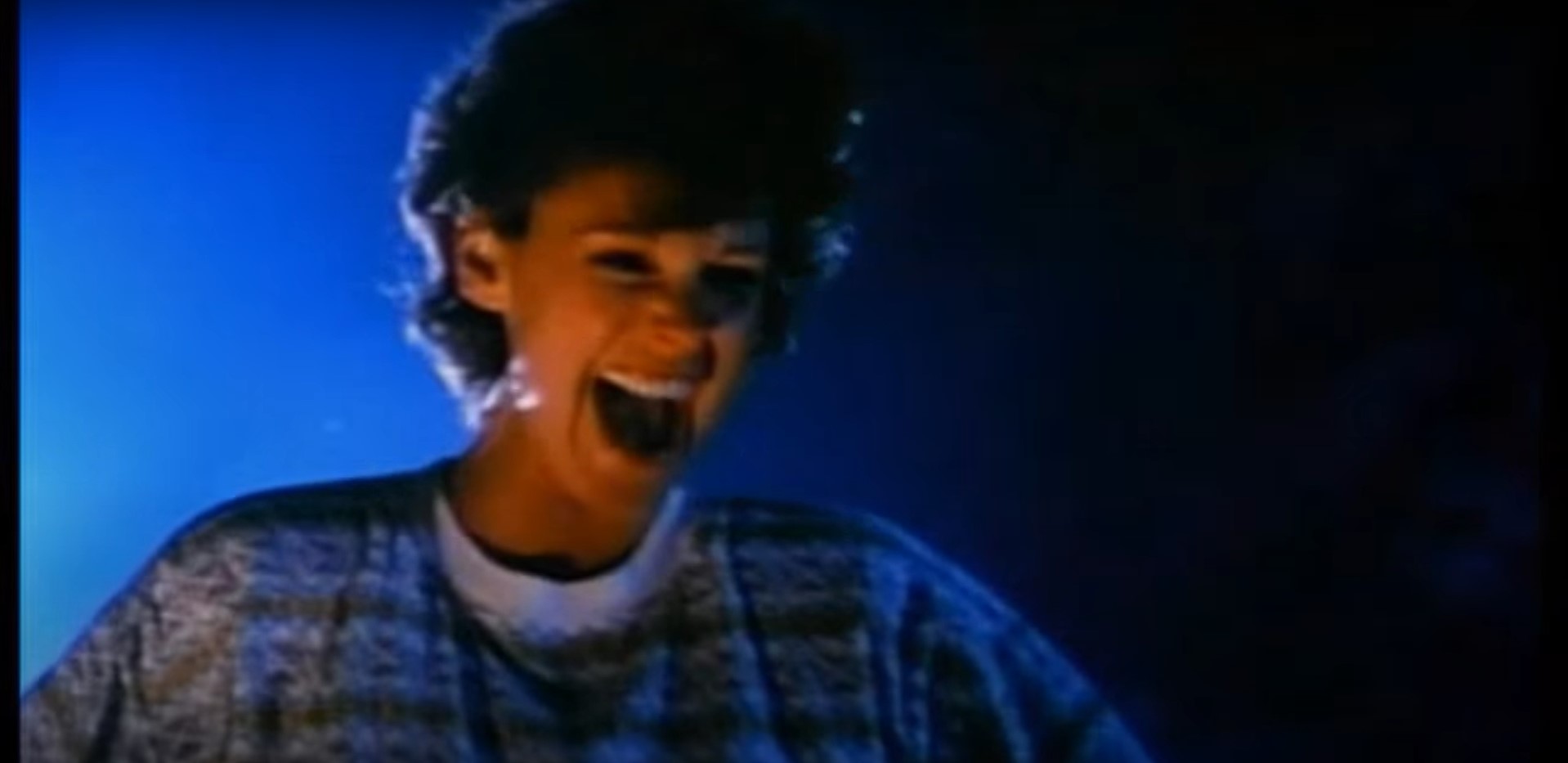
Leading the casting headline like her character Samantha leading a group in a dancercise routine is Cynthia Dale.  The “My Bloody Valentine” actress with curly shoulder length brown hair, an infectiously joyful smile, and killer dance body is the heart and soul of what makes “Heavenly Bodies” truly worth watching.  Her long take choreographed dances are breathtakingly fun and gracefully executed, full of energy and sizzle with the camerawork angles that move along every part of her kinetic body.  Samantha embodies the strong, independent single mother who do it on her own terms after setting passion aside once for a man, her son’s father, and is determined to not make the same mistake twice nor back down from being intimidated, but her arc is to change, to fall in love again, and to make sacrifices for not only the sake of her dream but to let someone else into her heart by being flexible and compassionate to their needs.  That person ends up being Richard Rebiere (“Happy Birth to Me”) as the football player who falls for Samantha after his team’s instructed to attend her classes to shape up.  The duo is pitted up against an established, powerhouse fitness center managed by Jack Pearson (Walter George Alton, “10”) and his head aerobics instructor Debbie (Laura Henry) to marathon their way to the last person standing in a 8-versus-8 fitness free-for-all, not to forget some scandalous moments of smooching, swindling, and woman abusing in between.  Pam Henry, Cec Linder, and Patricia Idlette, round out the principal cast with a slew of backup dancers working their butts in shape and officiating contests. 

You think Playboy Enterprises, you think erotic, romantic sleaze with dumbed down dialogue, a half-cooked story, and jazzy, yet soulless soundtrack coupled with candle lit moments and insignificant drama a la carte.  That’s not the case here.  Yes, “Heavenly Bodies” has moments of tenderness between dancer Samantha and football star Steve and fleeting glimpses of nudity, but those bare skin moments are more of a garnish than a main course as the story dishes being a dramedy with a killer soundtrack and a solid acting from main street, legitimate actors, and liberal art performers.  Articles on the film accuse it of being a “Flashdance” imitator and I would be so bold to accuse the authors of those articles to have never seen “Flashdance.”  Dancing along to a hot track does not equivalate two features that share no other plot similarities.  “Heavenly Bodies” stands, or rather dances, on its own two peppy feet in its whimsical nature of an aerobics showdown that determines the fate of a single woman, single mother, and single business owner to topple the threatened-felt commercial giant in a desperation attempt to save face and be relevant. 

Fun City Video steps up to release a new, debut high-definition transfer of “Heavenly Bodies” on an AVC encoded, 1080p, BD50.  The film has been out-of-print for over three decades but now there’s a 4K scan and restoration of the original 35mm internegative presented in the widescreen 1.85:1 aspect ratio.  The new transfer is absolutely gorgeous and rejuvenates the dance-craze 80s right before our very eyes.  Hyper facticity of detail has remarkable texture and color, diffused nicely over all aspects of costume from the leg warming socks to the diversity hued headband assortments, and punctuated distinguishably when sweat soaks shirts and skin.  The grain has natural analog appeal with no hints of DNR or other types of video smooth over or manipulation.  Original elements appear mostly damage free with an occasional dust speckle here and there.  The sole English LPCM stereo 2.0 is suitable mix for this originally at home, premium cable title that pumps and spreads layers through a dual channel output.  Dialogue renders cleanly without a confluence of popping or hissing along the audio.  The integrated soundtrack has stepping and staying power, full-bodied to frenzy synthesizing sound and catchy ballads and motivation lyrics.  Faint crackling or interference in the background but nothing worth really concerning over as there are plenty of other elements audio senses with attune to.  English subtitles are optionally available.  Special features under a fluid menu of one of more ramping up dance scenes includes a new Cynthia Dale interview, a new feature-length audio commentary track with Atlanta based film programmer of cult and late-night cinema and podcaster Millie de Chirico and Jeffrey Mixed, aka Jeffrey Nelson, co-creator of the horror media label Scream Factory, and an image gallery.  The clear Amaray case showcases a retro vibe of multiple boxy colored lines underneath a framed, perspiring Cynthia Dale in low side crouch of her promotional shot for the film’s one sheet.  The reversible side has more artistic illustration of the same post with a tagline and Samatha striking anther aerobic pose in opposite.  The white disc is pressed with a two-tone, darker emphasized silhouette of a dancercise group.  A 15-page one-part faux channel guide, one-part essay by Cinema Studies academic Nathan Holmes is a nice touch of 80s nostalgia and historical context on dance movies of the era.  The region free release is rated R and has a 90-minute runtime.

Last Rites: By no means is “Heavenly Bodies” horror or sleazy sexploitation this reviewer usually injects right into his caustic-cinema arteries, but the Lawrence Dance directed, Cynthia Dale danced cult film embodies eighties elegance this guy grew up in. Those with similar nostalgia enthusiasms or those who find room in their hearts for ridiculous-raving, dancercising dramedies can’t miss out on this intense workout wonderment.
Move Your Butt to this Fun City Edition of “Heavenly Bodies” on Blu-ray!

Backyard is Spacious, Green, and has an EVIL Portal to the Underworld! “The Gate” and “The Gate II” reviewed! (Via Vision / Blu-ray)

Better Hurry! Amazon Has a 20% Coupon for This Very Release! Limited to 1500 Copies.

The Gate

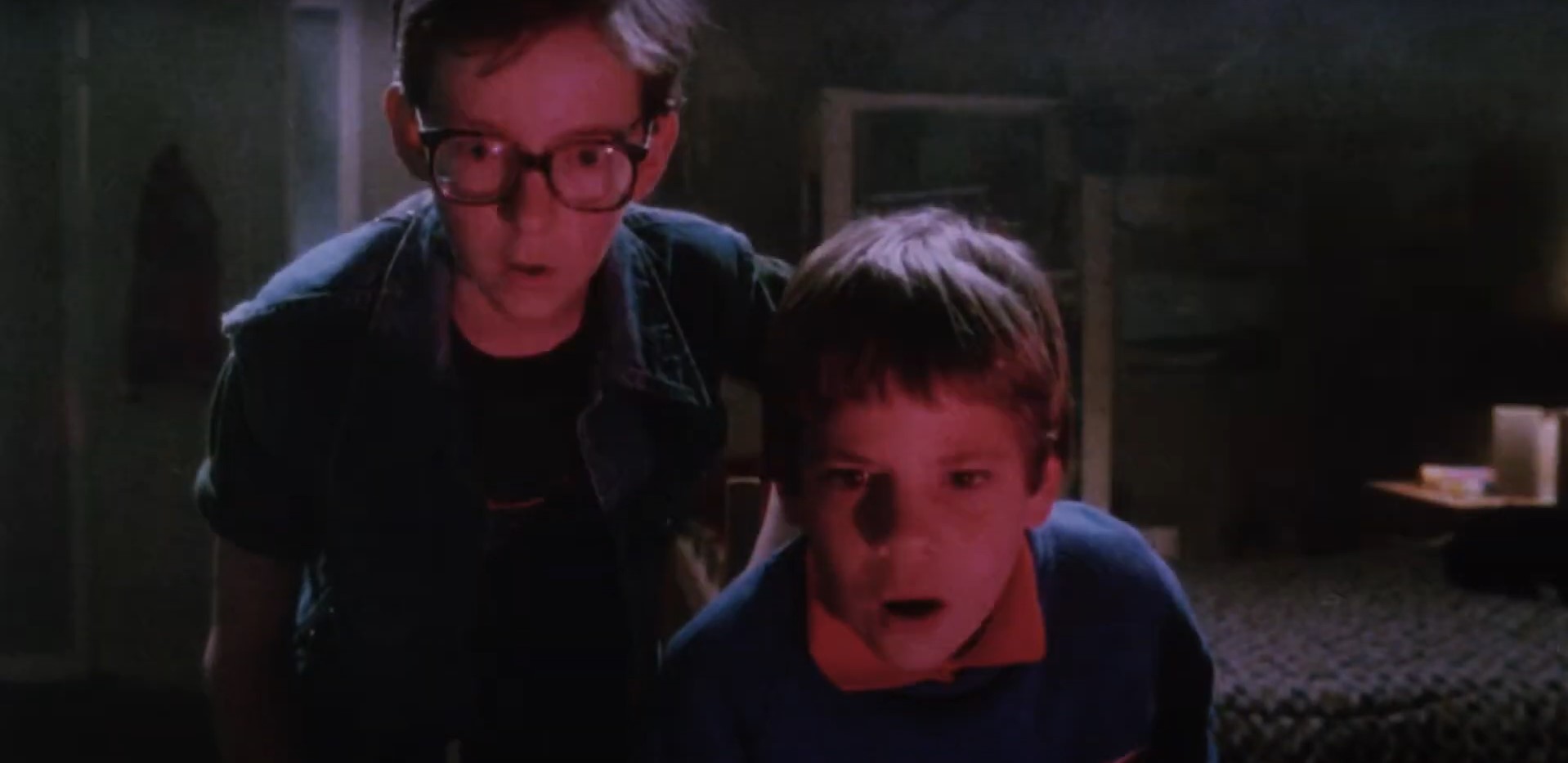
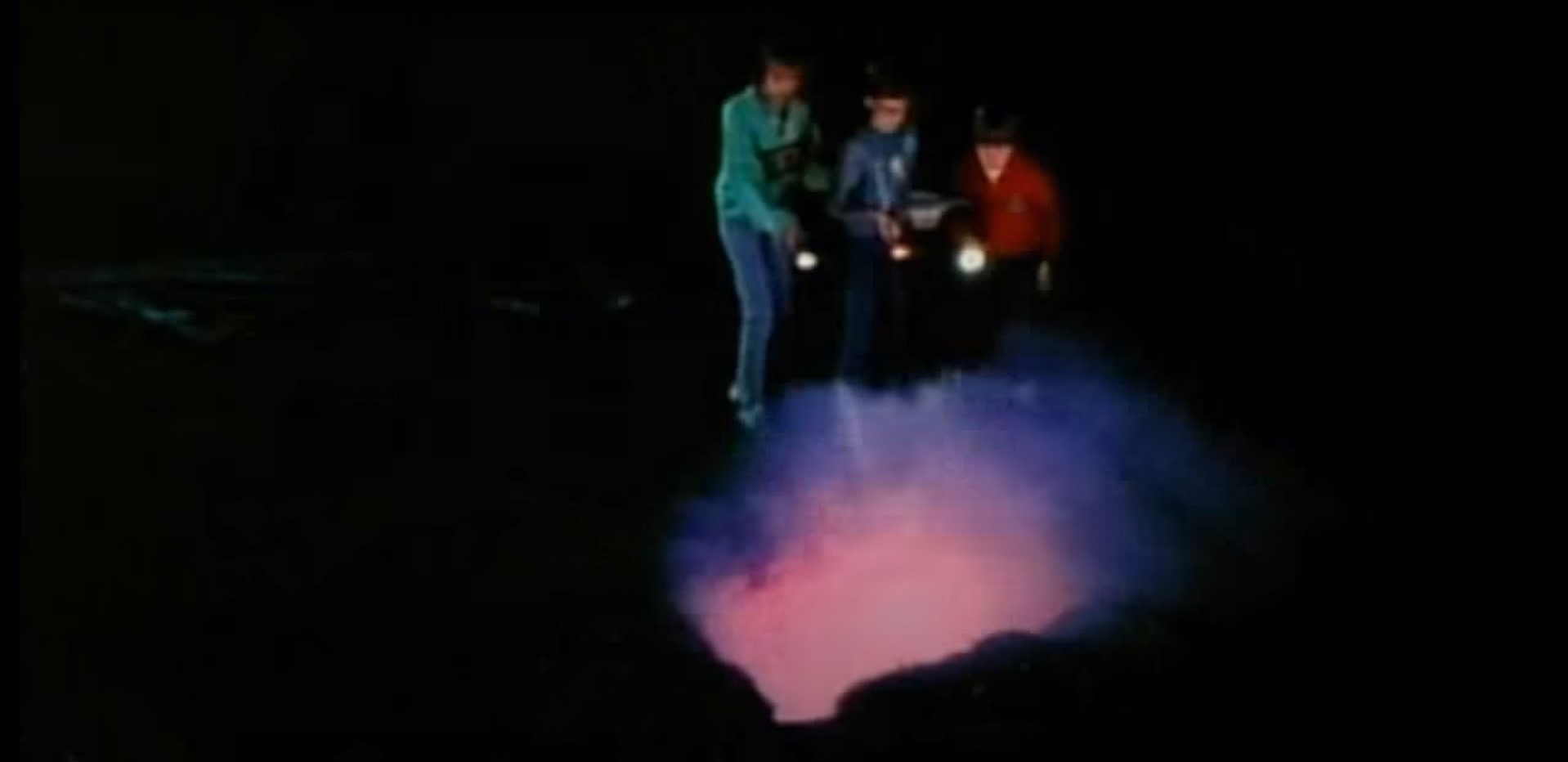
A severe storm brings down Glen’s treehouse, leaving a giant hole in his background.  Discovering what looks to be precious geode rocks, Glen and his friend Terry continue to dig hoping to strike larger, more valuable, geodes.  When they come upon a sizable rock, breaking it open unveils a crystalized liner of colorful minerals as well as a strange gas that unearths an incantation to open a gate to the underworld.  With Glen’s parents gone for the weekend, he, his teenage older sister Al, and Terry must somehow reverse the opening of the gate but demonic-serving, pint-sized minions hunt down a pair of human sacrifices in order to unleash their powerful demon master, an old God reemerging from being locked away from Earth for billions of years.  Serving the night is a fight for their very lives as the minions use their cunning tricks and supernatural powers to deceive the home alone kids into traps in order for there to be Hell on Earth. 

Created in mind to appeal to children with the limitless possibilities of a child’s imagination, “The Gate” caters to a wide audience of all ages.  Hungarian-born Director Tibor Takács and American-born writer Michael Nankin bring out of the shadows the scary corners of a young mind into the light with a demonic tale, a portal from another plane of existence, and a theme of growing up and being accountable in a context of taking head on a doomsday event without mommy and daddy.  The 1987 released Canadian production, shot mostly around Ontario, is the first of two “The Gate” films under the studio flag of Alliance Entertainment.  Presented by New Century Entertainment, as one of the company’s limited credits, “The Gate” is produced by fellow Hungarians in Andras Hamori, who went on to produce fellow Canadian filmmaker David Cronenberg’s “eXistenZ,” and “Quest for Fire” and “The Wraith’s” John Kemeny.

The Gate II:  The Trespassers

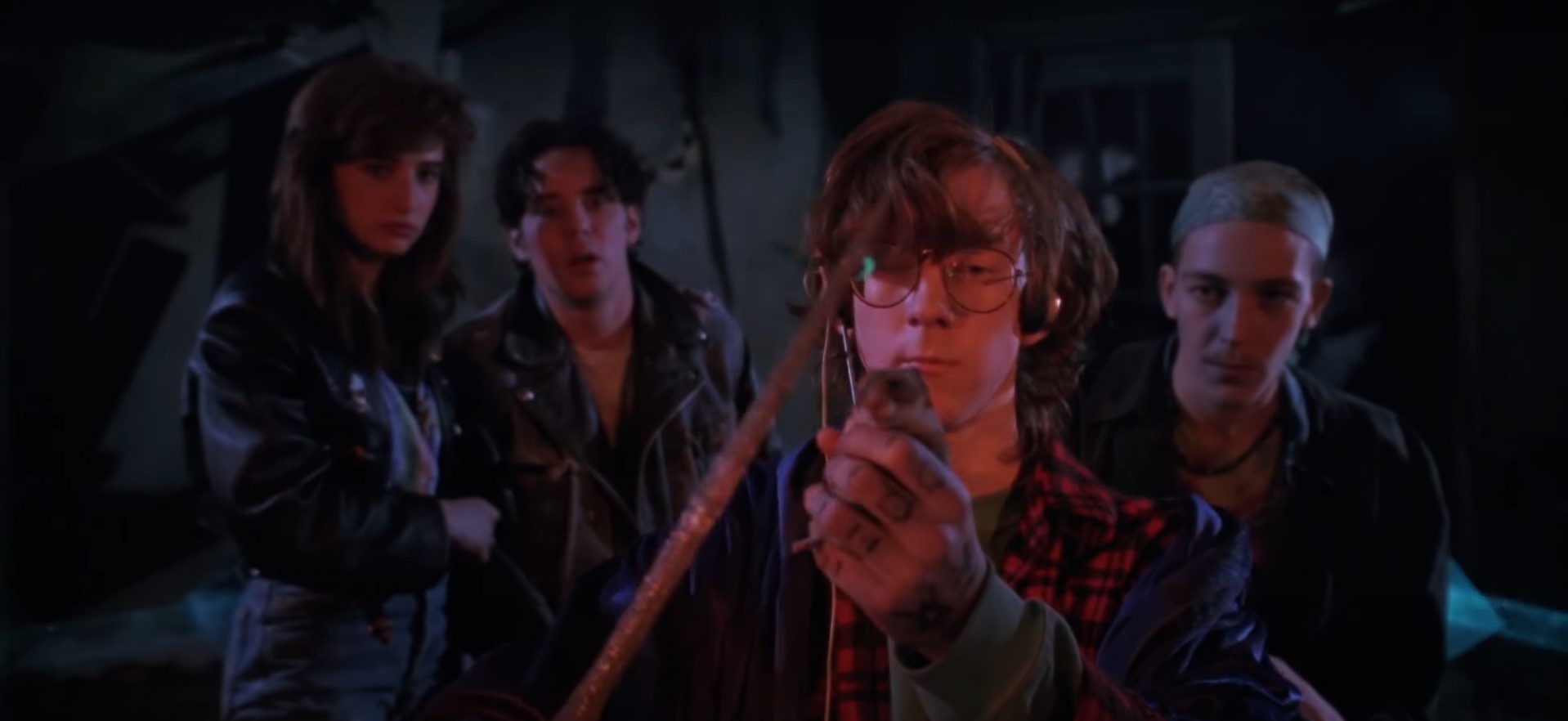
Five years after narrowly surviving near Hell of Earth, Terry’s obsession to return to Glen’s abandoned and dilapidated home and resurrect the demonic powers of wish granting stems from his jobless father’s dwindling livelihood, drinking himself into a stupor every night at the bottom of a bottle.  With equipment powered to project his incantations and protect him from evil, Terry is about to begin his summoning when interrupted by three teens led by bad boy John who mostly ridicules his fixation until one of the pint-sized minions comes out of the shadows and is quickly gunned down by John.  The injured minion self-heals and is captured for wish granting exploitation but when the wishes turn into a disastrous chimera, Terry soon realizes that his summoning has not just been answered for selfish motives, but it also re-opened the portal for three power demons to transmogrify from within him and his friends. 

The success of “The Gate” sought the fast tracking of a follow-up story produced within two years’ time after that spoke a different tone and came in a different approach to the nightmarish content and the age of the kids.  Takács and Nankin reteam for “The Gate II:  The Trespassers” who, at the authoritative behest of executive powers, had to take the fantastical lining of a child’s imagination to more extreme measures that evolved the original film’s grotesquely saturated PG-13 rating into a lighter, water downed R rating, removing a good chunk of the viewer base from a theatrical run.  The 1990 released venture was also shot at some of the same sets in Ontario Canada as the first film with Alliance Entertainment returning as producing studio and Vision International presenting to the world.  Andras Hamori and John Kemeny also return as producers.

Doesn’t take the understanding mechanisms of rocket science to discern “The Gate’s” cinematic victory.  Demons were all the rage in 80’s from Italian eurotrash to American grindhouse and why shouldn’t the Canadians get into the action?  Special and makeup effects, in themselves, are tremendously impressive, as aspect we’ll go thoroughly more into later in the review.  Yet, the one golden ticket area that deems “The Gate” as an unsullied hero of PG-13 horror is the unaccompanied children misadventure narrative coupled with, or maybe elevated by, good dialogue sanctioned by even better performances.  The 80’s saw scads of children in danger storylines that either had no responsible adult in sight or the adult party was the adversarial danger.  “Explorers,” “Adventures in Babysitting,” “E.T.,” and, one of the biggest examples of all, “The Goonies,” caddied the action-adventure and thrills-and-chills long game for the better part of the 80s decade and “The Gate” teed up on the opportunity, bringing together a trio of varying degrees of adolescents to go toe-to-toe with an ancient evil in what would have been seen as a no-win situation.  In his feature film debut, the barely teenage Stephen Dorff (“Blade”) lead the trio as the highly impressionable and model rocket enthusiast Glen, the youngest of the cast to be the one to save them all, including big sister Al, played by Christa Denton, and best friend Terry, played by Louis Tripp.  Tripp would go on to be principal lead in the sequel that veered away from the fantastically supernatural misadventures of innocence into a more older teen intrinsic narrative that no longer saw the world warp through youthful eyes.  While Tripp segues seamlessly in his role, he finds himself in new territory as the heavy metal and demonology aficionado sparks potential romantic interest in Liz (prolific voice actress Pamela Adlon, “Vampire Hunter D:  Bloodlust”) and is seized by arrogant bullies with two pot smoking hooligans Moe (Simon Reynolds, “P2”) and John (James Villemaire, “Zombie 5:  Killing Birds”), both instances a premiere example of the raw rite through to adulthood.  Again, “The Gate II” keeps adults at an arm’s length away, forsaking youth the challenge of cleaning up their own mess.  Both films fill out their respective performances from Kelly Rowan (“Candyman:  Farewell to the Flesh”), Jennifer Irwin (“Another Evil”), Deborah Grover (“Rated X”), Scot Denton (“Murder in Space”), Carl Kraines (“The Slayer”), and Neil Munro (“Murder by Phone”).

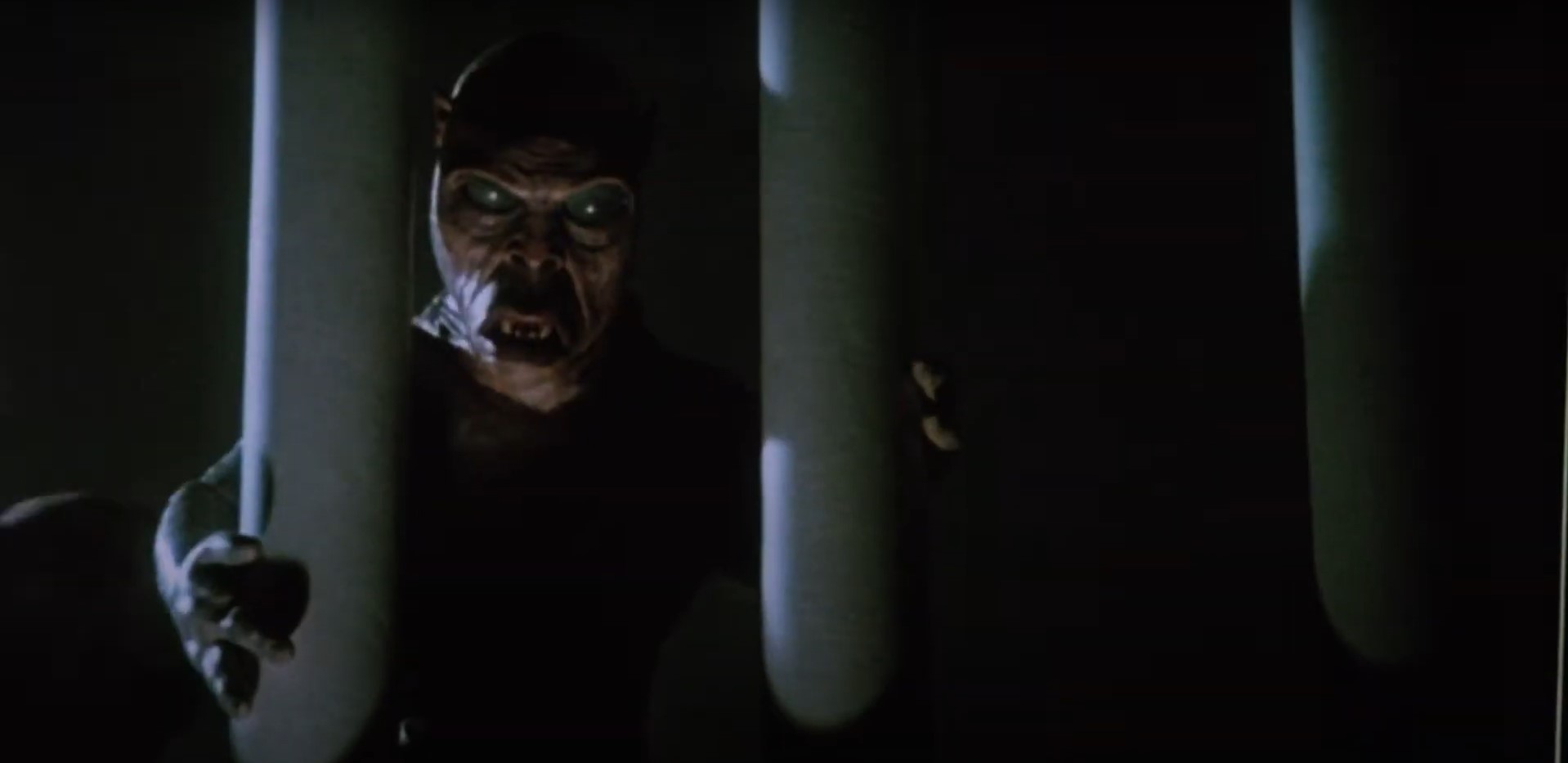
Special effects by the team of Randall William Cook, Craig Reardon, and Frank Carere couldn’t have pulled off an ambitiously suburban horror hyper focused inside Glen’s home any better.  Fashioning mind-bending illusions that are still marveled at to this day, Cook’s forced perceptions eliminates mostly the use of stop motion tactics for the miniature sized minions, replacing the rigid effect with a more lively physical man-in-suit option that smooths out the actions, attributing the creatures idiosyncratically with not only depth of perception to contrast sizes but also shot in a faster camera speed compared to which the seemingly normal sized actors would have to slow down their performances to become level with the creature.  The whole process is crazily multifaceted and mind-boggling effective if pulled out in great detail and “The Gate” team does so, twice, in face, between the two films, with Reardon’s fleshy creature designs enhancing the hideous zeal in the bulbously decaying Workman zombie and even in Reardon’s blamelessly slapped together endgame demons for the ordered change of a quickly surmised climax in the sequel.  As a collaborating unit, the special effects crew pulls off seamless transitions in what is captivatingly pure eye-candy of movie magic.  The stories themselves, especially in “The Gate,” are enchanting, full of mysterious and unpredictability, and stretches the imagination beyond the confining limit as we’re led to inevitable showdown only to be pleasantly accosted on the optics.  The sequel has a rougher go with the story as the narrative feels like a wound-up toy twisted tight to the threshold only to be released spinning in all different types of directions that ultimately lead to an exhausted stopping point. The stark contrast between the two films doesn’t offer a lot of subsequential continuity in narrative and even in some areas of the special effects but the silver lining in that last statement can be a sigh of relief in not receiving a rehashed product sought to recap or repeat off the back of the original’s success. Instead, “The Gate II” begs to be separated to be its own entity and does so while being a homage to the practical illusions that sparks awe, joy, and terror!

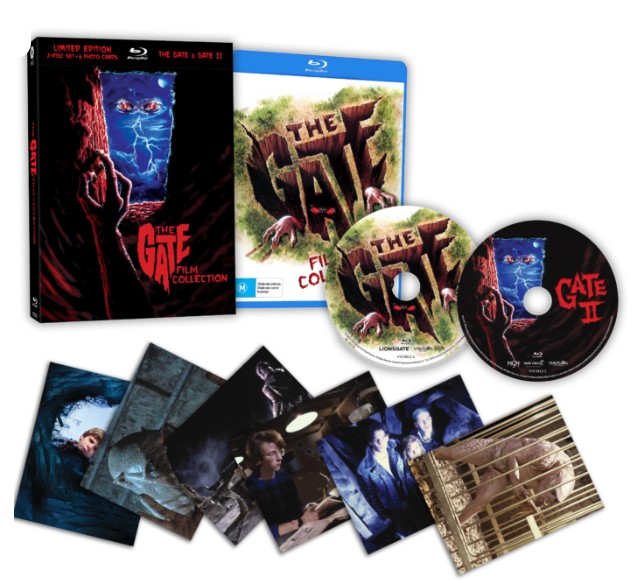
If looking to physically own both “”The Gate” and “The Gate II” in one deluxe package, the Australian based distributor Via Vision has set the bar high with their 2-disc, numbered limited edition, Blu-ray collector’s set. Both films, shown in a widescreen 1.85:1 aspect ratio, are AVC encoded with a high-definition, 1080p resolution on a BD50 (“The Gate”) and BD25 (“The Gate II”) and we’ll come to the reasoning to that split later on. Shot on 35mm and scanned into a 2K print, not many details are noted about what film negative or other print element is scanned to 2K but most of the bonus content on this particular release is Vestron produced, leading to believe the same Vestron print is also used here. Between the two pictures, “The Gate II” has a better saturated image whereas the original film almost seems ungraded with a slight gray concealer that somewhat mutes the hues. The forced perception shots are seamless yet are also delineated nicely that curves into a believable and pleasing symmetry without an inkling of divisional depths. Skin tones are natural looking and textures, such as practical prosthetic masks and molds, score high in all the nooks and crannies of the folds and surface level haptics. The English encoded tracks include a lossy DTS-HD 2.0 stereo codec on “The Gate” and an uncompressed, lossless PCM 2.0 stereo on “The Gate II.” These sole options provide suitable stereophonics without significant compression issues, other than “The Gate’s” minor fidelity data loss, or original source damage or technical gaffs, such as hissing or popping. Dialogue design sees the “The Gate” come out on top over the course of layering and projecting atmospheric augmenting. I don’t get that same sense from “The Gate II” that modulates the dialogue with a redounding heavy-handed echo effect in locations it does not make sense for reverberations. “The Gate” has English and Spanish subtitles with the sequel reduced to just English subs available. “The Gate’s” greater format capacity holds most of the special feature cards with a number of duplicated Vestron produced bonus content, including two audio commentaries: commentary one with director Tibor Takács, screenwriter Michael Nankin, and special effects designer/supervisor Randal William Cook and second commentary with Cook again along with his f/x crew Graig Reardon, Frank Carere, and Bill Taylor. Composer Michael Hoenig and J. Peter Robinson discuss the score with selected isolated tracks to enjoy, a conversation between Takács and Cook in The Gate: Unlocked, Craig Readon in an interview about creating the pint-sized creatures in Minion Maker, an interview with co-producer Andras Hamori From Hell it Came, an interview with actor Carl Kraines aka The Workman aka Terry the Demon The Workman Speaks!, an interview compilation from the local Toronto talent involved Made in Canada, a 2009, archival retrospective look and discussion from Reardon and Cook at their monstrous being handiwork From Hell: The Creatures & Demons of The Gate with Randall William Cook and Craig Readon, a 2009, archival retrospective look and discussion with director and writer Tibor Takács and Michael Nankin The Gatekeepers, a vintage making-of featurette, teaser and theatrical trailers, TV spots, and storyboard and behind-the-scenes galleries. In what is a David and Goliath size imbalance, “The Gate II” special features ultimately will not trump with smaller disc capacity and the lack thereof content but the second disc sequel does contain a new, 2023 audio commentary by Tibor Takács and film historian Jarret Gahan as well as a documentary with Takács, Nankin, and Cook Return to the Nightmare: A Look Back at The Gate II that discusses how and where the film strayed off the intended course, an interview with make-up effects artist Craig Reardon From the Depths, the theatrical trailer, and retain video promo. Via Vision’s limited-edition packaging is another world chic and cool with a rigid sleeve box and a lenticular “The Gate II” front cover art. Slipped inside from the right is a single Amary Blu-ray case with a center stationed second disc attachment. While the front cover on the sleeve box showcases the sequel cover, the Amaray’s reversible cover sports the original “The Gate” cover art with a Glen still image and film cast/crew credits on the other side. Also inside the sleeve box are six fully colored glossy photo cards! Both films are Australia certified Mature for moderate violence and moderate course language and have a runtime of 84 minutes (“The Gate”) and 93 minutes (“The Gate II”). The Via Vision release is region B locked (note: the release did play on my region A setting).

Last Rites: Digging a hole to open “The Gate” and the contradistinctive sequel unburies a pair of underrated underworld-creeping-toward-the-surface 80’s phantasmagorias, a regular doomsday fait accompli with children standing between Hell of Earth and saving the world, and what better wait to see the world potentially burn to the ground than with a beautiful new Blu-ray collector’s set from Via Vision!

Better Hurry! Amazon Has a 20% Coupon for This Very Release! Limited to 1500 Copies.

Sooie EVIL Sooie! “Pig Killer” reviewed! (Breaking Glass Pictures & Darkstar Pictures / Blu-ray)

On This Farm There Was a “PIg Killer” now on Blu-ray!

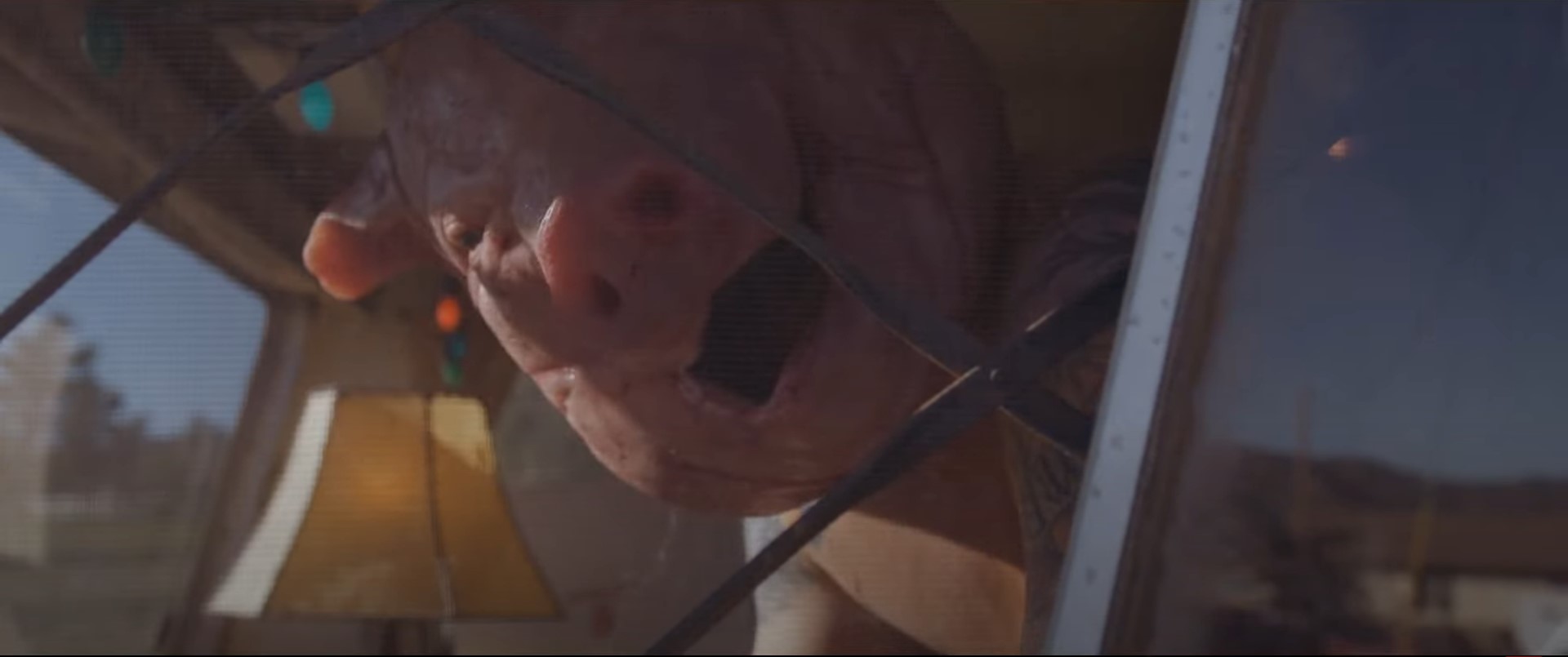
Pig ranching landowner Robert “Willy” Pickton’s compulsions to pick up unprincipled women involved in prostitution and drugs and horrifically rape and murder them in the name of salvation stems from a severely abusive childhood with the father’s physically and mentally tormenting as well as a scornful mother sexually assaulting him.  Willy’s fanatical obsession threatens his drug-fueled, orgy-laden, rock-n-rolling Piggy’s Powwow party, a regular throwdown held at his ranch that has elicited a cease and desist letter from the city, but Willy pushes the party forward despite his brother David and their lawyer’s stern opposition.  Paralleling Willy’s story is Wendy Eastman who almost dies of an accidental drug overdose.  The incident stirs more the already contentious bad blood between her uncompromising stepmother and insecure father that leads to storm out and bump into Willy at a bar with the feeling of destiny bringing them together only to horrifically discover Willy’s unsavory secret the hard way. 

Part one of my reviews on serial killer biopics, headfirst we go into the psychotic world of Robert “Willy” Pickton, a pig former turned one of Canada’s most notorious serial rapists and killers living in Port Coquitlam, British Columbia.  While the extent of his butchery is vague at best and even in some ways evolving over the course of the last two decades, Pickton was able to be the filmic inspiration for the Chad Ferrin brazen biopic “Pig Killer.”  The “Easter Bunny, Kill! Kill!” and “Someone’s Knocking at the Door” director wrote-and-helmed the interpretation of the egregiously presumed methods Pickton executed upon his female victims, mostly drug-addicted sex workers from the Eastside of Vancouver.  Once under the working ttile of “Pork Chop Rod,” Ferrin’s Crappy World Films, Girls and Corpses (of Robert Steven Rhine’s Girls and Corpses Magazine), and the post-production company Laurelwood Pictures served as co-productions with 50-year acting vet Robert Miano (“Malevolence,” “Giallo”) co-producing.

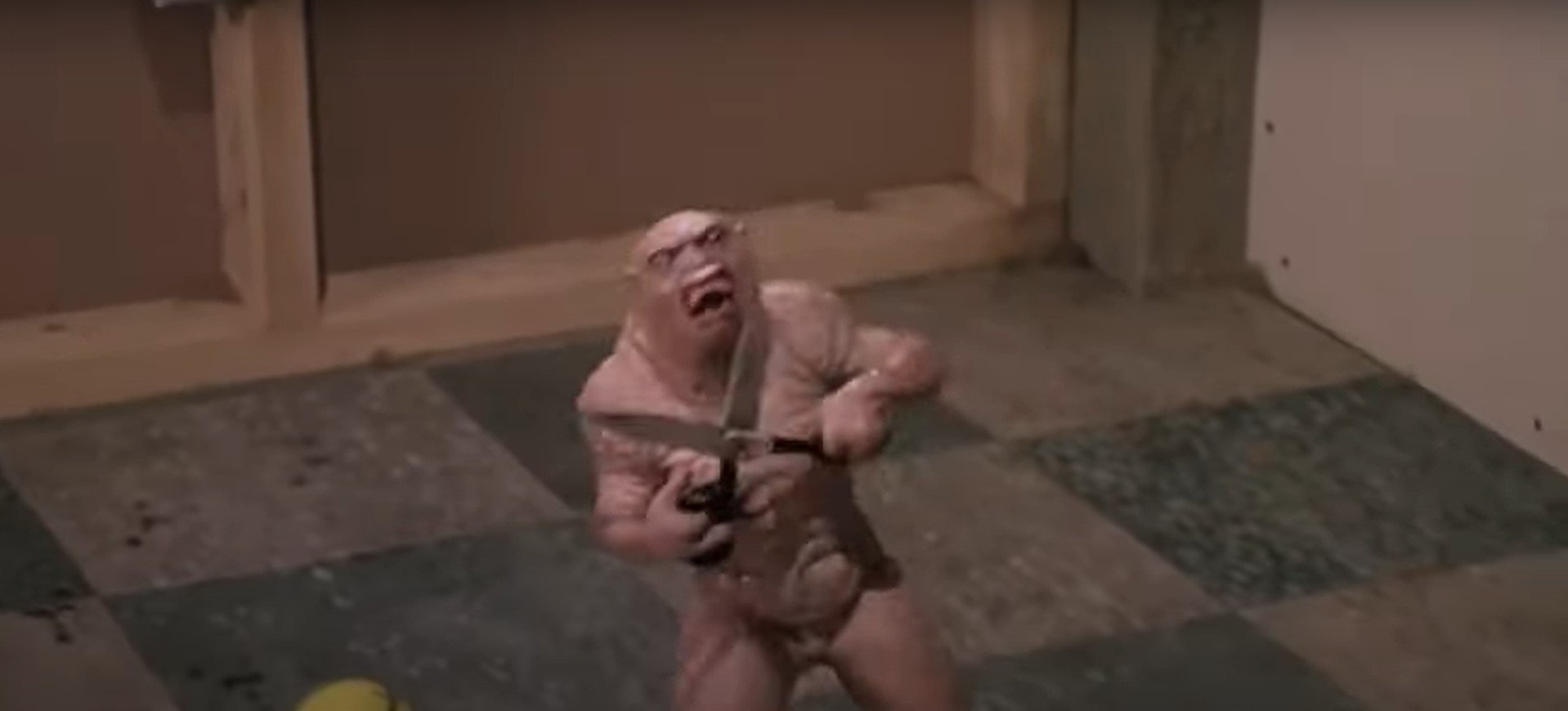
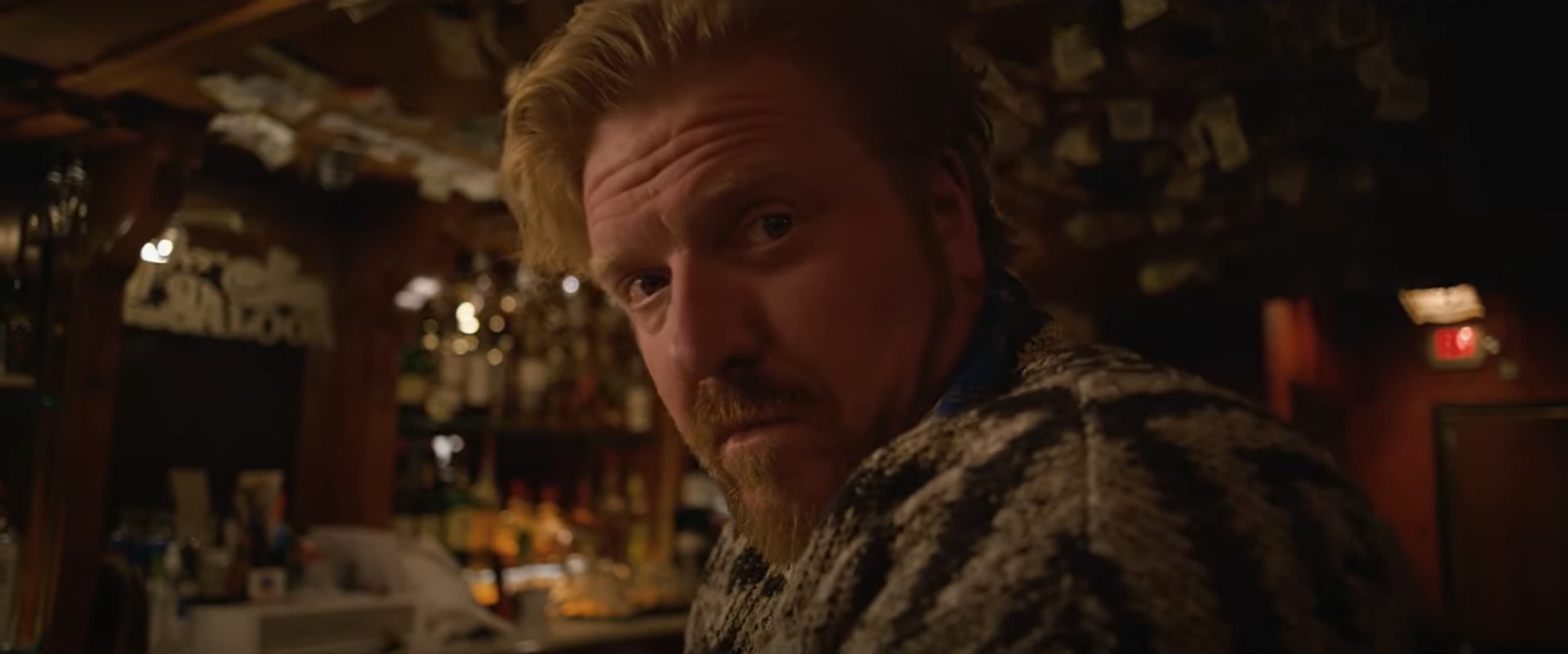
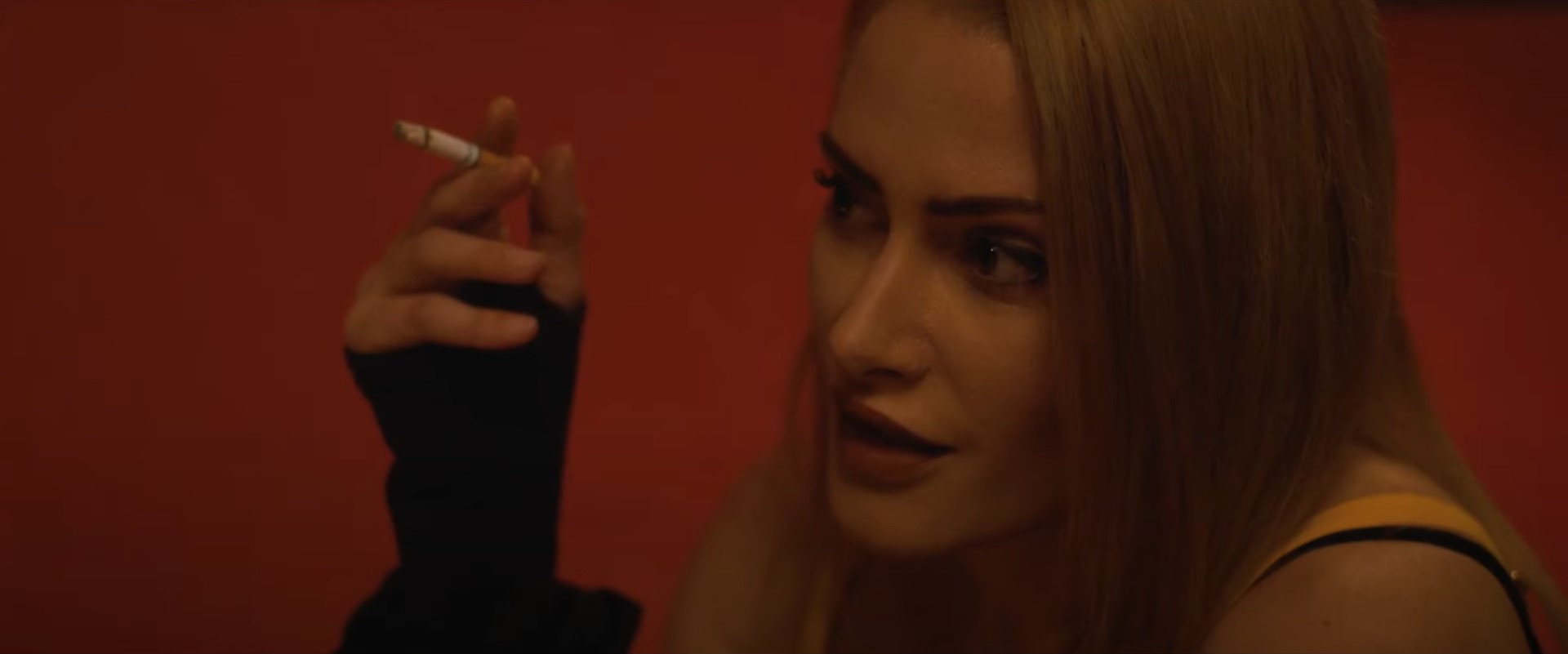
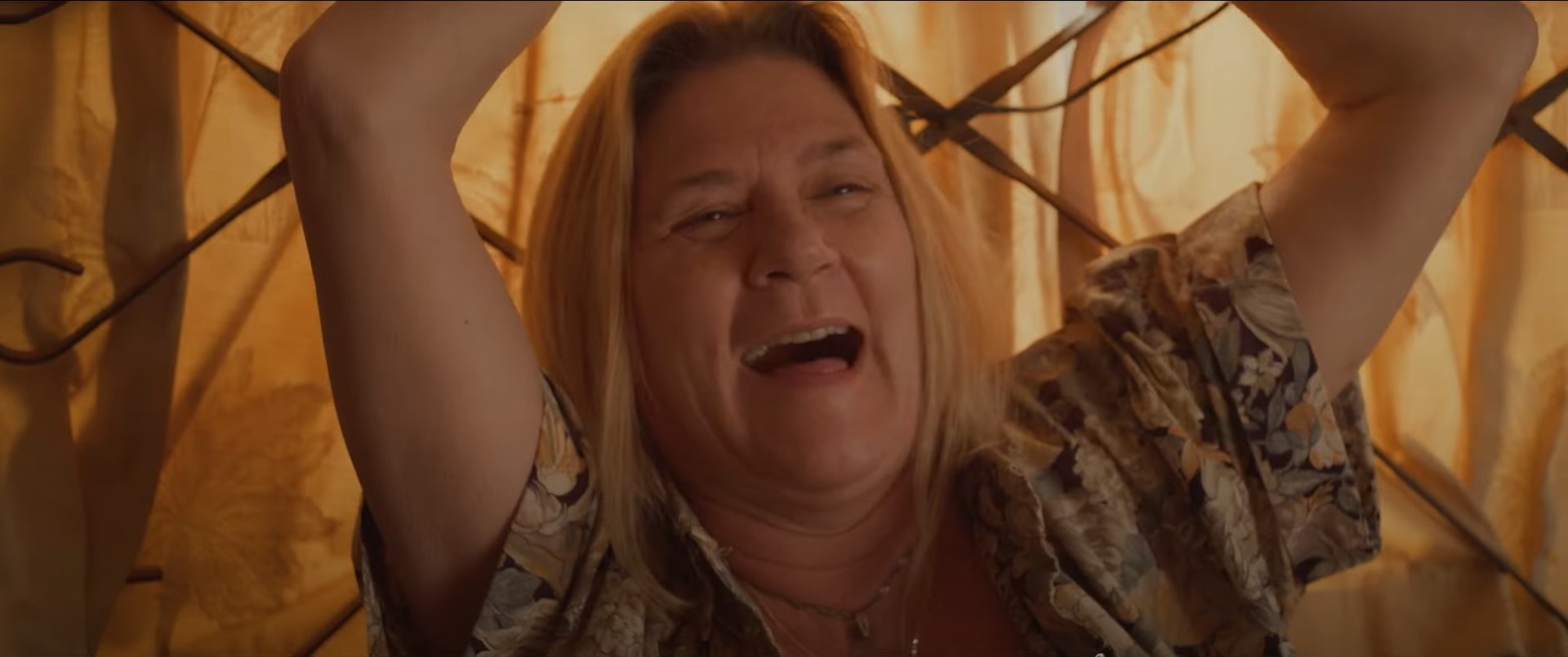
Even though this actor has portrayed serial killers in “Identity,” “The Hitcher II,” and “The Frighteners,” and even a deranged zealot in “Contact,” I would never have imagined in a million years “Starship Troopers” actor Jake Busey would have stepped into the sordid shoes of Willy Pickton in a Chad Ferrin production.  There’s something to be said for Jake Busey’s nerve in moving forward with eccentric and controversial and Willy Pickton is every fiber of those infamy traits and all that is in between.   Disheveled and dirty, maniacal and demented, prosthetic phalluses and dildo revolvers, pig masks and masturbation – Jake Busey doesn’t hold back on an exigent script important to Pickton’s state of mind.  Creepy and apathetic blanked by his deceased mother’s devout spitefulness and her incestuous sexual abuse, Busey secretes these irascible qualities held dormant in Pickton until the sleaze is sated and his patients runs out then it’s time to go hog wild, literally. Lew Temple (“Halloween,” “Devil’s Rejects”) plays Willy’s brother David who also has mother issues, but that avenue is not as profoundly travelled as Willy’s, both men see delusional visions of their mother’s tirades but definitely lopsided in disfavor of Willy and that leaves David left in the dust some to not have his mental faculties inspected.  Their flashback, foul-mouth, and Electral loving mother goes to an unabashed by former adult actress turned low-budget horror scream queen Ginger Lynn Allen (“Murdercise,” “31”) in what her scenes can only be described as uncut and uncomfortable lewdness as she bares it all at the ripe young age of 60 years old.  Another standout performance goes to Kate Patel as the debut actress, who in her own right is an Amazonian goodness buff beyond rebuff in black lace underwear, finds her voice as a young woman named Wendy Eastman in a complicated and dysfunctional household after the death of her mother, at odds with a wicked stepmother, and an insecure father with passive fortitude.  The only obstacle that can be rendered cleanly from her performance is how her character’s written to be drawn to Willy Pickton as because between age gaps and social differences, the two have nothing tangible to drawn them together mutually.  “Pig Killer” rounds out the cast with producer Robert Miano as Wendy Eastman’s father, Michael Paré (“Streets of Fire”) and producer Robert Rhine as Detectives Oppal and Schneer, Silvia Spross (“Parasites”) as Wendy’s disparaging stepmother, Jon Budinoff (“Someone’s Knocking at the Door”) as Wendy’s friend and drug source, Elina Madison (“Caged Lesbos A-Go-Go”) as a druggie sex worker, Bai Ling (“Exorcism at 60,000 Feet”) as also a druggie sex worker, and Kurt Bonzell (“Parasites”) as Willy’s disfigured and throat-cancer suffering friend Pat. 

Sensationalized for cinematic charm, the story behind the “Pig Killer” hits near the bullseye of all major bullet points from the escape of Wendy Eastman (actual person being Wendy Eistetter) and her coinciding her drug addiction to the wild gathers at the Pickton farm known as Piggy’s Powwow (actual title being Piggy Palace Good Times Society) where motorcycle gangs and prostitutes congregated for a drug-fueled good time.  If having viewed a few of Ferrin’s credits before, some of the unrestrained gore and shock will not come at a surprise.  The benumbing unconcern of misanthropy is poignant amongst Ferrin’s soft-pedaling of horror with a whimsical manner within a gritty film that doesn’t feel as gritty as it should be considering the subject and subject material.  Another mitigating moment, one that’s more counterproductive to the Pickton storyline, is the parallel melodramatics of Wendy Eastman that eventually rendezvous with the titular “Pig Killer” and become the rendition of Wendy Eistetter supposed personal backstory and escape from death.  Wendy’s overdose and family issues provide reason for her subsequent run away from home, but the extent of the backstory unnecessarily rivals Willy Pickton’s and the whole destiny meetup enlists some deeper rooted significance that isn’t neatly fleshed out, turning awkwardly impertinent that waters down their entanglement. 

Arriving onto a Breaking Glass Pictures and a Darkstar Pictures collab, “Pig Killer” oinks itself onto an AVC encoded, 1080p, High-definition Blu-ray.  Presented in an anamorphic widescreen 2.39:1 aspect ratio, “Pig Killer” under the warm glow and desert dry eye of cinematographer Jeff Billings (“The Deep Ones”) sundries the shot types in various techniques, such as closeup slow motion to be inside Willy’s moment of divination, to provide Ferrin’s feature with comely appeal even in the vilest of moments. Details are sharp and delineated nicely albeit the quick editing for intensity purposes and to float Willy in and out of psychosis. Coloring is more natural than anything else with a few gels scatter about to spruce up the vibrancy. The lossless English DTS-HD 5.1 master audio renders clear dialogue without any distortions or other audible disturbances; however, the strength of the dialogue favors an infirm conveyance to grasp a few exchanges, especially in the exterior. A maximal Gerard McMahon soundtrack scores the entire biopic from start to finish with a range of 80’s power ballads to 90’s pop rock; the 76-year-old not only scores the project but also has a concert performance role with his band G Tom Mac. Depth and range supplement greatly as sound design cater to the surrounding atmospheres, such as the echo vibrations under the Eastside bridge or the pig-pen oinks and frenzies when feeding bits and pieces of sex workers to his farmyard swine. English SDH is optionally available. Packed with extra content, supplements included are an interview intercut with scenes with Ginger Lynn as well as a few of her clothed adult industry spreads/modeling, a behind-the-scenes footage with Michael Paré, deleted and extended scenes, and Q&A from Cine Excess, the making-of the Pig Mask, a making-of the film entitled Canadian Bacon, an introduction to Spunky the Pig aka Willy’s pig, a screen test of Kate Patel in the role of Willy, which was considered before Jake Busey landed the role, “Pig Killer” auditions, and the trailer. The clear Blu-ray Amaray case sports a dark-and-dirty gilt image of a half-naked Kate Patel and a menacing pig-masked person holding a clever overhead. Reverse side contains a still image of the insides of Willy’s pigsty camper while the disc is pressed with the same menacing pig and clever but more prominent. The collab release has a region A playback, a runtime of 122 minutes, and is not rated. The back cover also lists a 2000 production date, conflicting with the 2023 release states elsewhere, but the 2000 date would be before Willy Pickton’s arrest and so that might be a misprint. Chad Ferrin and Jake Busey jointly tackling the monster that is brutal serial killer Willy Pickton with an inkling of lighter material coursing through its arteries, style secreting through the madness, and, of course, gore, the most important ingredient to the likes of a film entitled “Pig Killer.” 

On This Farm There Was a “PIg Killer” now on Blu-ray!

A 13-Year-Old Girl is EVILLER than Skinheads! “Becky” reviewed! (Ronin Flix / Blu-ray)

“Becky” is Clearly a Special Girl!  Purchase the Blu-ray by Clicking the Below Cover!

Cancer has taken Becky’s mother away from her.  Over the past year, the 13-year-old girl finds comfort in being angry, especially at her father who choose to move forward with his life that stirs a flurry of pent up uncomfortable, rage-filled emotions inside the teen.  As Becky stays in her constant stew of angst, her father surprises her with a trip to their cabin getaway he initially planned to sell but had a change of heart.  There is one small caveat, he plans to propose to his girlfriend who joins them on the trip, cornering Becky into one-sided fight and meltdown with those who love her and care for her and sending her to retreat into her woodland fort.  At the same time, a group of escaped convicts take her family hostage in search for a mysterious key left behind by the escapee’s neo-Nazi leader, Dominick.  Dominick has planned for years every possible scenario to secure the key that will undoubtedly serve every race with what he thinks they deserve, but Dominick didn’t plan for one scenario:  Becky. 

Amongst the movie nerds, there’s a particular phenomenon that occurs when a film is first mentioned across the internet and an immediate acclaim and attraction follows in its wake toward the film’s actors or actresses flipping the script on their stereotyped industry roles and playing totally unorthodox personalities that may shock. “Becky” was one of those films.  The 2020 released home-invasion, revenge thriller has been labeled by critics and fans alike as a horror, but the Jonathan Milott and Cary Murnion codirected production is more than just blood and guts.  The Ontario, Canada production is based off an original and debuting script from Nick Morris with “The Devil to Pay” and “Rattle the Cage” screenwriting husband and wife team, Lane and Ruckus Skye who have specialized credentials in the thrillingly brutal, hardnose character genre.  With a punk energy and engrossing family themes, “Becky” is a heart-stopping, heart-stomping, mischief making, ball of fury.  Jordan Beckerman of Yale Entertainment (“Cut/Print”) and Boulderlight Pictures’ J.D. Lifshitz and Raphael Margules (“Barbarian”) serve as the U.S. production companies in association with Bondit Media Capital, SSS Entertainment and Buffalo 8 Productions and is presented by Quiver Distribution and Redbox Entertainment. 

Aforementioned, this strange manifestation of hype for an upcoming feature leads the world, or at the very least film aficionados, in extreme anticipation. The conspicuously, incongruous piece glimpsed briefly in the trailer, one-sheet, posters, and stills claws for our attention as our brains can’t quite compute or process Kevin James in an Aryan acolyte. With a shaved head, long beard, and covered in swastikas, SS doppel sigrune, and other various Nazi-symbolic tattoos, Kevin James transforms his loveable and comedic “Paul Blart: Mall Cop” and “I Pronounce You Chuck & Larry” self into a ruthless and irredeemable skinhead. James absolutely nails the look of escaped convict and neo-Nazi Dominick with growing out his facial hair and shaving his head that takes his usually unassuming presence to a whole new level of calculated evil, but the script spoon feeds Dominick too much leeway to tolerate insubordination amongst his four-man crew, to allow hostages to talk back, spit in his face, and antagonize against his goals, and lacks the know-how of how to appropriately bait Becky with her own family, if Dominick is truly a despicable person as we’re lead to believe in earlier scenes of an approved prison leadership shanking and the implied murdering of children sitting in the backseat of a family roadster he aims to hijack. Yet, Dominick allows to be taken advantage of despite his cruelty stating to the contrary. In a stark contrast to evil embodied, there’s teenage girl Lulu Wilson.  The New York City child actress has been quickly making a name for herself in the horror genre, as a scream queen prodigy of sorts, with having supporting roles in “Deliver Us from Evil,” Ouija:  Origins,” “Annabel:  Creations” and Netflix’s “The Haunting of Hill House” before landing the titular lead in “Becky.”  Instead of scared pretense, Lulu Wilson gives a visceral, violent performance.  It’s teenage angst on steroids.  “Becky” is the only child versus adult cat-and-mouse game where the audience will get more out of the younger, smaller rival full of enraged paroxysms.  Joel McHale is another comedic actor wiggling his way into more dramatic roles that expand not only his resume but his range to showcase the other side of the once syndicated television comedy host.  From his stint into horror alongside Lulu Wilson in “Deliver Us From Evil” and in dark comedy, such as “Happily” that released the same year as “Becky,” McHale is finding a different voice other than laughter that has come natural to the actor and does show a lot of promise in more compelling roles as in “Becky’s” widowed father looking to move forward with his life but treads on pins and needles with his angry daughter.  Those relationship complications between Becky and her father never wander but rather do wonders for the connection on coming to terms with little go of the past.  The robust range of characters continue with an eclectic and noteworthy remaining cast that includes Amanda Brugel (“The Handmaid’s Tale”, “The Infinity Pool”), former Canadian-turned-actor Robert Malliet (“Pacific Rim,” “300”), Ryan McDonald (“He’s Out There”), James McDougal (“Heinous Acts”), and Isaiah Rockcliffe (“Random Acts of Violence”).

Kids committing hyper-violence in films is not entirely uncommon but they’re also not run-of-the-mill either.  Yet, films like “Becky” produce an unsettling affect that churns in the back of our psyche when witnessing a young teen girl intently stabbing a grown man with a jagged ruler and a handful of colored pencils in the neck.  Fans and critics label “Becky” as an adult, violent version of “Home Alone,” but the comparison I would draw would be closer to “Die Hard” for the barely young adults.  “Becky” plays out like a graphic novel or a young adult novel, stylish and impulsive in its edgy execution and character.  Unlike “Home Alone,” hardly anything sweet and endearing radiates from Milot and Murnion’s ferocious family retaliator and though Becky may set a trap or two (really just one trap) to inflict pain and punishment on her pursuers, the youngster is more inclined to John McClane wing it as the plot plays out, going toe-to-toe, face-to-face with adults two and three times as big as her without a moment of hesitation. There are some unique and graphic death scenes that ooze Becky’s personal satisfaction, and the Derek Liscoumb (“Possessor”) special effects blood reel is perforating, shredding, and cutting to pile on perfection as the kills go deeper into mutilate pool. Tremendous raw emotion superhumanly strengthens Becky’s adrenaline rush as the tragedies aggregate into one big horrific destruction of familyhood, contradicting the first act’s despisal of her father with a regret-filled, redemptional theme that without family there’s nothing else to lose. Its powerful for Becky to lose people she, in the moment, abhors yet are close to her because of her own unworked out pain and suffering that in all innocence pit her against the world.

“Becky” is the quintessential diamond in the rough as an unsurprising hit with fans. This small, independent Canadian film can hold its own in story, style, and sanguinary. With a sequel in the works, entitled “The Wrath of Becky,” our friends at Ronin Flix have released a collector’s edition Blu-ray to enlighten those new to Becky’s inherent mean streak. Released on an AVC encoded BD50, the feature is presented in 1080p high-definition on a widescreen 2.39:1 aspect ratio. Nothing to particularly note negatively on the digitally recorded image quality to the tune of compression storage as there doesn’t appear to be an issue with a clean-cut picture that delineates the hell out of the image, capturing every contour, fiber, and skintag inconvertible. Colors are potent with a natural grade along with plenty of textures to salivate over with a palpable tongue, such as Becky’s wool hat or Kevin James’s thick beard. The compressed image unloads at a gloriously hefty 36-38Mbps. The CE comes with two lossless English audio options – a Dolby Digital 5.1 Master Audio and a Dolby Digital 2.0 Stereo. Unless your audio outputting on the television speakers, the surround sound is the optimal and preferred choice for “Becky’s” unmanage mischief making through the rustling brush. The small aspects of her plotting and executing her revenge are what give the ambient padding meaning and offer a plentiful and grotesque semiliquid, semi-flesh sound effects. Dialogue comes through clean, clear, and robust. Optional English subtitles are available in SDH. Over 60 minutes of bonus features are on this release with interview commentary by directors Jonathan Milott and Cary Murnion, an interview with Joel McHale, and an interview with Lulu Wilson that all pretty much do a similar roundtable of remarks of their time and experiences working with each other. Milott and Murnion provide more backgound, backstory, and insight to their directing process compared to solo directors. Behind-the-scenes gallery, fan art, audio commentary with Lulu Wilson and screenwriters Ruckus and Lane Skye, and individual pre-feature introductions by the directors. Physical features include a cardboard slipcover of composite art by Tim Johnson, which is also on the latch-featuring clear snapper case cover art, a reversible cover art featuring a solo Lulu Wilson, and an anime-esque, illustrated disc art by Andrea Michel. The Blu-ray is rated R for strong bloody violence, graphic images, and language with a runtime of 94 and is region A locked. “Becky” is brutal with blood and guts galore and is more fun than can be describe with Lulu Wilson delivering an atomically hot-headed performance and Kevin James sporting uncharacteristic, fascist tats.

“Becky” is Clearly a Special Girl!  Purchase the Blu-ray by Clicking the Below Cover!

A Gnostically, Esoteric EVIL Acid Trip. “Archons” reviewed! (Syndicado / DVD)

“Archons” are Watching You.  You Can Watch Them on DVD!  Click the Cover to Purchase!

A once promising, up-and-coming rock trio struggles years later to exit the shadow of their only hit song. They embark on an acid-stimulated spiritual canoe trip down the meandering river pathways of British Columbia, hoping the creative juices will flow under the influence while connecting the native wilderness. Along the way, they pick up a beach camping super fan and continue their trek toward mapped out checkpoints and take a hit of acid at each stop. The drugs have seemingly taken effect in a strange, voyeuristic way as if someone, or something, is watching them at each campsite. The visions become terrifyingly vivid as a pair of humanoid creatures rummage through their gear during the night and survey them from afar no matter where the band are or how far they travel. To make the situation worse, the acid they’re ingesting might be the root cause that not only expands their mind beyond the brain’s limited scope but also grows a biological entity wriggling for more room space.

The influence behind Nick Szostakiwskyj’s “Archons” is something fascinatingly outlandish in what’s a simile to the Scientology handbook. Rulers of the realm, creators of the physical universe, guardians of the celestial heavens, architects of the kingdom of darkness, archons, as some historical cultural teachings would have it, rise above traditional and conventional spiritualities with an expanse and infinitude of spiritual knowledge as related to the Gnosticism belief system. For the Vancouver filmmaker, Szostakiwskyj adapts the ideology with a bad acid trip in his 2020 cosmic horror that was once under the working time, “Hammer of the Gods.” “Archons” is the third feature film for Szostakiwskyj and the second otherworldly horror following “Black Mountain Side,” a precursing complementor that also captures the spectacularly natural, yet ominous lit, Canadian terrain in the Winter opposite season compared to “Archons’s'” Summer. The independent Canadian feature is A Farewell to Kings Entertainment production and is produced by Szostakiwskyj with Cameron Tremblay and alongside with the now defunction A Farewell to Kings Entertainment executive producer team of Samantha Carly and Steve Kaszas, who are now in the leadership team of Alright Alice Productions, and James and Susan McDonald.

“Archons” is tightly casted with less than a handful of canoers being spied upon by the gnarly gatekeepers of the universe. The story surrounds the spiritual and drug-laced scull trip of Dog Sled, a three-piece rock band who have lost their creative mojo and star power momentum with a fickle music fanbase. Lead singer Mitchell Ashley-Hoffman doesn’t have the emotional range to synthesize great lyrics but has the vocals of a sway fans and is played with Kurt Cobain-esque and mellow concern by Josh Collins. Rob Raco and Samantha Carly play bassist and songwriter Eric and drummer Olivia, aka Liv, and the pair are more in tune with each other while Mitchell mind wanders and drools over the ride hitcher and tarry eyed fan, April (Parmiss Sehat). The Vancouver based cast have enough chemistry to be slowly dismantling as a band on the fringe of collapse with backdoor dealings from one of them aiming to go solo into the limelight and to hold secrets that lead to life-threatening consequences all in the name of spiritual retreat.  However, to the extent of the being followed, spied upon, and endangered by hostile creatures, the character concern level is too low as if apathy for interdimensional beings that at first were cloaked and now are full view is not at the top of the internal fear alarm list for any of them.  The situation is written downplayed and the subtle actions to understand what’s in front of them mutes the anxiety for the audience.  “Archons” rounds out the cast with radio voices, minor roles, and two archons with Billie-Rae Grant, Lauren Donnelly (“Viral”), Michael Dickson (“Driver From Hell”), Timothy Lyle (“The Revenant”), Cameron Tremblay, Nathaniel Gordon, Marc Anthony Williams (“Black Mountain Side”), and Quinton Boisclair (“Demonic).

“Archons” has this beautiful backdrop of British Columbia’s topographical nature in a panoramic view in a breathtakingly serene opening shot and continues the wilderness motif with a thick forest and a never-ending river that seemingly swallow a group clearly not in their usual element.  “Archons” also has a beautifully disturbing breadth of perception concept laced with drugs and the gnostic universe.  The cosmic horror element is not forced or over-the-top being wrapped and shrouded in ambiguous mystery that keeps audiences glued to the progression baby steps before coming to terms with a dropped veil that causes reactionary looks over your shoulder with every unexplainable sound not in view.  Szostakiwskyj is in no hurry to quickly build an underlayer reality that ties into a dualistic system of two worlds running parallel to each other and colliding when drugs produce the sneak peek behind the curtain.  What shouldn’t be seen is clearly bad for the protagonists’ health, much like drugs in themselves if abused, and Szostakiwskyj plays into that limitation of the mind as if the part the brain or the organism that allows to see it all overloads, or overdoses if you will, the network of tissue and neurons until it bursts outward like a Yellostone geyser in a spray of blood in what is a pretty neat and simple effect, one of the few practical effects by Geoff Ingeberg in this rather performance driven film, as well as a neat scene to behold while the group travels down river when the unexpected pop occurs.  “Archons” is open for a numerous of interpretations, leaving the possibilities endless, but we don’t exactly know where Eric the bassist obtained the snack baggie drugs, what the creatures are intently undertaking, or if the vague final scene is the aftermath of a horrible acid trip gone fatally wrong and has dislodged memories of events, jumbling them up to the point where nothing makes sense and leaves more questions than answers.  The story definitely ends with more desires in detail, delineation, and context but isn’t the less-is-more concept the bread-and-butter of cosmic horror where the unknown is the scariest part that makes us feel infinitely small knowing the world around us is infinitely bigger?

Splice into a new and startling reality with your own DVD copy of “Archons” courtesy of Syndicado Distribution. Stored on a DVD9, “Archons” is presented in a widescreen 2.39:1 that enhances the initial landscape shots in the opening scenes. From then on out, Cameron Tremblay’s cinematography sticks to eyeline mid-to-closeup framing with a here-and-there upward angle to inject foreboding if the scene calls for it. Despite being pitch black, the aphotic zones Tremblay creates without the use of artificial lighting or tinting day scenes provides a sobering and somber authenticity of young people being stalked in the woods. Syndicado stakes a larger storage capacity for a low-budget film and the result pays off despite the decoding 5-6Mbps rate with the blacks looking especially inky without an inkling of compression issues, such as banding or splotchiness that plague darker scenes. The cooler color pallet digs a little more into bleak atmospherics, but there are warm pops of the BC bush with lime green leaves. The English Stereo 2.0 challenges to be more potent than it should be as the quiet and desolate trek the nature should incite more directional channels for a sound design that relies on the rustle of branches and the creatures’ low gutturals off in the distance and in an undeterminable bearing. What’s essentially a bare bones release, the region 1, clear cased DVD comes with the theatrical trailer on a static menu that also includes chapter selection. “Archons” is unrated with a runtime of 88 minutes. A low-key cosmic horror with eye-opening chills, “Archons” is cabbalistic cinema for the selective few who will understand it but does harp on the relatable proverb of with seeking fame comes a price.

“Archons” are Watching You.  You Can Watch Them on DVD!  Click the Cover to Purchase!