When Trying to be Good, EVIL Will Always Pull You Back In! “Streets of Darkness” reviewed! (SRS Cinema / DVD)

Just Look at this “Streets of Darkness” Cover!  It’s a Must Own!  

After avenging the death of his friend and sister, Danny completed his prison stint and was released back into his Miami neighborhood to restart his life.  Looking to stay clean of violence, Danny doesn’t want to connect himself to any crime organization but when a cruel Cuban drug lord assaults his mother due to his father’s past transgressions, Danny’s seek for solitude drives him into the embracing arms of the Italian mafia who also has a grudge against their rival drug trader.  One hit leads to another and Danny finds himself back in the criminal world rising quickly to become one of the mafia’s profitable enforcers.  Danny has everything he’s ever wanted – money, respect, and the woman of his dreams – but when a pre-affiliation sexual tussle with one of the crime boss’s young vixens come to light, a division between the family turns the tide on Danny’s uncertain future when a target is placed on his back.

If you’re looking for that Miami Vice feel of a movie with hot locations, hot bods, and hot criminal action, look no further with “Streets of Darkness” having been rightly resurrected from video obscurity, lost to Father Time since the mid-1990s.  The 1995 crime thriller comes from director James Ingrassia who hasn’t cinematically published a movie since his double billed features of 1988 – a surfing themed sex comedy entitled “Hot Splash” and an island survival slasher in “Kiss of the Serpent.”  “Streets of Darkness,” paying titular tribute to and cashing in on perhaps the popular stage fighting game “Streets of Rage,” is also a direct sequel to “Just a Chance” of 1992, a semi-biographical story of Danny’s descent into the depths of criminal syndicates told anecdotally while in his incarceration  Both stories are the pen presentation of Creative Productions’ Vincent LaRusso, the creative wordsmith, producer, and star of both films trying to capitalize on the market’s desire for toned bodies and gang dramas with treachery and murder. 

Vincent LaRusso isn’t just the leading man of his own film, he’s also a workout enthusiast that helped his own cause in creating a chiseled mafioso who’s smooth with women and even smoother laying down criminal keystones to the way he runs operations.  Yet, LaRusso’s character Danny can often talk-the-talk but can’t seemingly walk-the-walk with his own principles as he quickly turns against his own rules of operations by joining the mafia with dollar signs in his eyes after repeating himself, at least three times, noting how he doesn’t want to be attached to anyone or anything.  Repeating himself also becomes a running motif, or maybe a running joke, as much of LaRusso’s script recycles a ton of aforementioned material.  You can even make “Streets of Darkness” a drinking game on how many times Danny, or any character in general, says, “you understand me?”  If you do make it a drinking game, the possibility of being drunk half-hour in is very possible.  You’ve been forewarned.  Commingle the script spiraling with LaRusso’s one note performance and what churns out only scratches the surface of potential in what could have been a lucrative gem of indie filmmaking.   Instead, what’s achieved is a lifeless centric character in the midst of decent supporting players, such as Armand Cassis as the ruthless Cuban Hector, Jerry Babij as a cuckold crime boss, and Christine Jackobi as the cuckolding and scorned Diabolique.  Speaking in regard to the latter’s veneer that LaRusso aims for, “Streets of Darkness” offers that sexy, supermodel, Andy Sidaris-type of female principals, including a Hawaiian Tropic contestant.  Monique Lis and Jennifer Cole (a Miss Hawaiian Tropic), along with Christine Jackobi, fit that busty and beautiful bill that solidifies that beach body and vice viscera.  “Streets of Darkness” fill out with Joseph Cappello, Peter Gaines, Stanley Miller, Frank Palanza, Gennaro Russilo, Louisette Geiss, Lou Rebino, Angelo Maldonado, and Patrick Berry.

LaRusso’s “Just a Chance” was a made for CTN, the Christian Television Network, to deliver a religious message of strength of endurance and overcoming the cause-and-effect in turning toward a life of violence and crime.  For the sequel, LaRusso wanted to embark on a more entertaining product for the public with edgier content, hence the naked women and graphic violence which most of the Christian community won’t understand, shy away, and definitely wouldn’t fund a financial base.  With a budget doubling “Just a Chance,” LaRusso is able to obtain through private funding a higher production value with areal cigarette boat footage in and around Miami and its waters, decent lighting in a broad and focal sense, camera movement work, variety of locations though many look like hotel rooms, and achieving the overall Miami mise-en-scene cinematography.  For a 90’s indie production, “Streets of Darkness” reaches that particular look of tropical turmoil and drug scene, the perfect beachy bodies, and the complex story of one man’s reluctant return to the savage, dark streets but the picture doesn’t take the elements to the next level beyond other Miami-based gang/cartel movies like “Scarface” or “Cocaine Cowboys” where there’s a continuous blanket of thick aired intensity and explosivity of big shootouts.  “Streets of Darkness” is more expositional and story driven, likely due to budget reasons, to integrate gangster Danny’s plight into our own understanding of this character’s vow to do the right thing but ultimately destines him in the opposite direction.  The editing starts off funky with a clunky fast forward scene that comes around later to then slowly but eventually, level out to a chin high in too deep path of no return from life of crime.

Due to some shady dealings with a corrupt distributor, the Beta SP master was lost but Ron Bonk and SRS Cinema was able to obtain the VHS master tapes for an Apple Hi-Def ProRes digital remastering of “Streets of Darkness” onto DVD.  What results is a beautifully slick and clean appearance of Vincent LaRusso’s vision, especially for a standard definition 480p, sourced almost impeccably from one of the best possible VHS format options, the Beta SP.  Though virtually wear free with no signs of VHS degradation issues, details are generally and expectedly soft presented in the letterbox 1.33:1 full frame but not overwhelming glossy smooth to the point of splotchy or granularly patchy.  Remastered coloring, along with the innate lighting, sell “Streets of Darkness’s” semigloss South Beach brushstroke and achieving LaRusso’s production value desire tenfold.  Audio options only include an English Dolby Digital 2.0 stereo mix has been augmented with additional score and soundtrack by Tim Ritter (“Truth or Dare?,” “Killing Spree”) and Toshiyuki Hiraoka (“Clownado,” “Cannibal Claus”).  From the commentary track, a few of original soundtracks had expired copyrights and so additional music was needed to rescore the film but, honestly, the additional pieces delved too much into Tim Ritter’s gore-and-shock territory with heavy low-frequency tones that rattle the eardrums and don’t necessarily scream Miami’s synth-beat rock or Latin flair.  I would have been interested to hear the original music and compare to the newly supplemented release.  However, dialogue protrudes into the forefront with lesser force than normal but still clean, clear, and prominent other than the heavy duty, reverberating bass notes.  There’s slight static feedback throughout but doesn’t hinder the audio senses.  The Brutal special features include a second film, the Vincent LaRusso’s “Just A Chance” along with video commentaries and interviews with both films featuring video discourse between LaRusso, Tim Ritter, and filmmaker Larry Joe Treadway and Ritter and LaRusso only on the audio commentaries.  The bonus content ends with theatrical trailers of both films.  While not chockablock with physical fixings, the SRS release has one of the more amazing cover arts sourced from the original poster elements of a shirtless and ripped Vincent LaRusso in between two model women for the front cover.  Immediately eye-fetching and intriguing, the image is accentuated by SRS’s mock retro designed DVD casing with a round ACTION and BE KIND REWIND stickers and an image bordering encompassment to make the appearance of a VHS cover.  Disc pressed art is the same image but cropped to focus on the three individuals on the front cover.  The not rated film has a runtime of 102 minutes and is region free.  “Streets of Darkness” is a win-win for SRS Cinema and Vincent LaRusso in its newly remastered form that revives the Miami mania even if it’s only for one more heat and beach encore.

Just Look at this “Streets of Darkness” Cover!  It’s a Must Own!  

Limited Edition EVIL to the Extreme! “August Underground” reviewed! (Unearthed Films / DVD/Blu-ray Combo)

Limited Edition “August Underground” Ready to be Received! 

A young farm owner invites his quirky, video-taping friend into the soiled and confined basement of his home where he keeps a nude, young woman gagged and rope bound to a chair, previously been tortured, and covered in her own blood and filth.  Both feeling giddy with excitement over their new plaything, the two sociopaths revel inflicting more torment and pain on the woman while her boyfriend’s mutilated and dead corpse is being dismembered in the next room.  When their basement plaything expires after days of neglect, the two joy killers hit the New Jersey and Pennsylvania turnpikes and backroads to continue a merciless killing spree of whomever stands in their path.  Convenient store clerks, hitchhikers, prostitutes, even their tattoo artist and his twin comic book enthusiastic brother are not safe from their chockful of callous carnage and every moment is recorded via videotape for reliving the moment in posterity. 

As far as underground horror goes, Fred Vogel’s “August Underground” is about as extreme and underground as they come and still be recognizable amongst the most casual of horror fandom.  Vogel’s inaugural written-and-directed, pitilessly violent, exploitation begins a direct-to-video trilogy of torture-on-tape with SOV quality, imparting grisly shudders to the unfathomable amount of blank-labeled VHS cassettes through man’s stowage, collecting dust bunnies and remaining unseen over the years to the horrors the magnetic tape just might behold.  What “August Underground” essentially boils down to is a raw day-to-day look of two maniacal serial killers on a free-for-all of a butcher’s market, the shooting locations stretch from the recesses of Vogel’s hometown of Warren, New Jersey and all the way to the surrounding back roads and isolated areas of Pittsburgh, Pennsylvania.  Self-produced by Fred Vogel and co-producer John A. Wisniewski, “August Underground” set inaugural voyage on the blood red sea for Vogel’s Toe Tag Productions in 2001.

There is a severe lack of story for Vogel’s debut and that’s no oversight or a sign of omission of a subconscious creativity.  Most normal, everyday people video-record with the intent on not making a feature-length film but rather to capture memories and store them away for another day.  Vogel strives for that realism here where a plot is, for lack of a better word, pointless for the depicted atrocities where the sole purposes is to exhibit dementedness and insanity.  The same can be said about the cast of nameless characters.  The freeform recording does not spout off introductions or make references to monikers to, again, portray as much as organic conversation or realism as possible to further skewer an already gore and violence skewed imagination into thinking what we’re seeing is authentic and inconclusive of its entertainment purpose.  Fred Vogel, under his so-called porno stage name of Peter Mountain, plays the main principal dressed in arrogance and apathy as he’s recorded in a thumbed selection of runtime filmed by an equally bad-natured, sociopathic friend behind the camera, played by a post-release distancing actor under the pseudonym of Allen Peters.  The two complement each other in a Beavis and Butthead friendship kind of way with Vogel in synch with his character’s bloodlust as well as the burly bulk while camera buddy perversely watches, giggling to his friends’ blood shedding exploits.  Their relationship feels like a lonesome outlet to do harm and senseless killing makes the connection firmer, more enjoyable, in the easiest opportunities of a rural area where bored people do evil just to pass the time.  Vogel sets up a series of scenarios rather than plotting acts of a linear story in what becomes an anthology of anarchy that has us climbing down the manhole of maniacal mischief.  Mania is soaked into every inch of “August Underground” and that fits snug and makes warm the scattered story into a much more coagulated coherency.  “August Underground” rounds out the victims, I mean cast, with AnnMarie Reveruzzi, Erika Risovich, Randi Stubbs, Aaron LaBonte, Ben LaBtone, Victoria Jones, Alexis Iris, Stephen Vogel, Dan Friedman, Casey Eganey, Kyle Dealman, and Andy Lauer.

“August Underground” is ugly, nasty, grimy, sordid, perverse, tasteless, callous, and not shot with technical or detailed perfection.  “August Underground” is also unique, bold, unafraid, successful, gory, realistic, practical, and not shot with technical or detailed perfection that’s actually, in its own way, gorgeous.  “August Underground” is all those things and more with its rough-and-ready, extreme exploitation that will be polarizing amongst horror fans and not be a film for everyone’s taste or collection.  Frankly, there are worse underground and extreme horror films out there in the world, but “August Underground,” through the disgusting trices of dismemberment, force feeding of feces, and vomit inducing snuff, has somehow ,at least in this reviewer’s humble opinion, who like in a Dr. Seuss line, has been here, there, and everywhere within the horror spectrum, slipped through the veil of obscurity, having a foot well positioned in the land of the universal acknowledgement where many genre fans putter around with the same old formulas.  The depth of this story is so shallow that digging any deeper into the themes and the possibilities isn’t necessary with its home-made movie facade of people joyfully torturing and killing people being already horrific enough. 

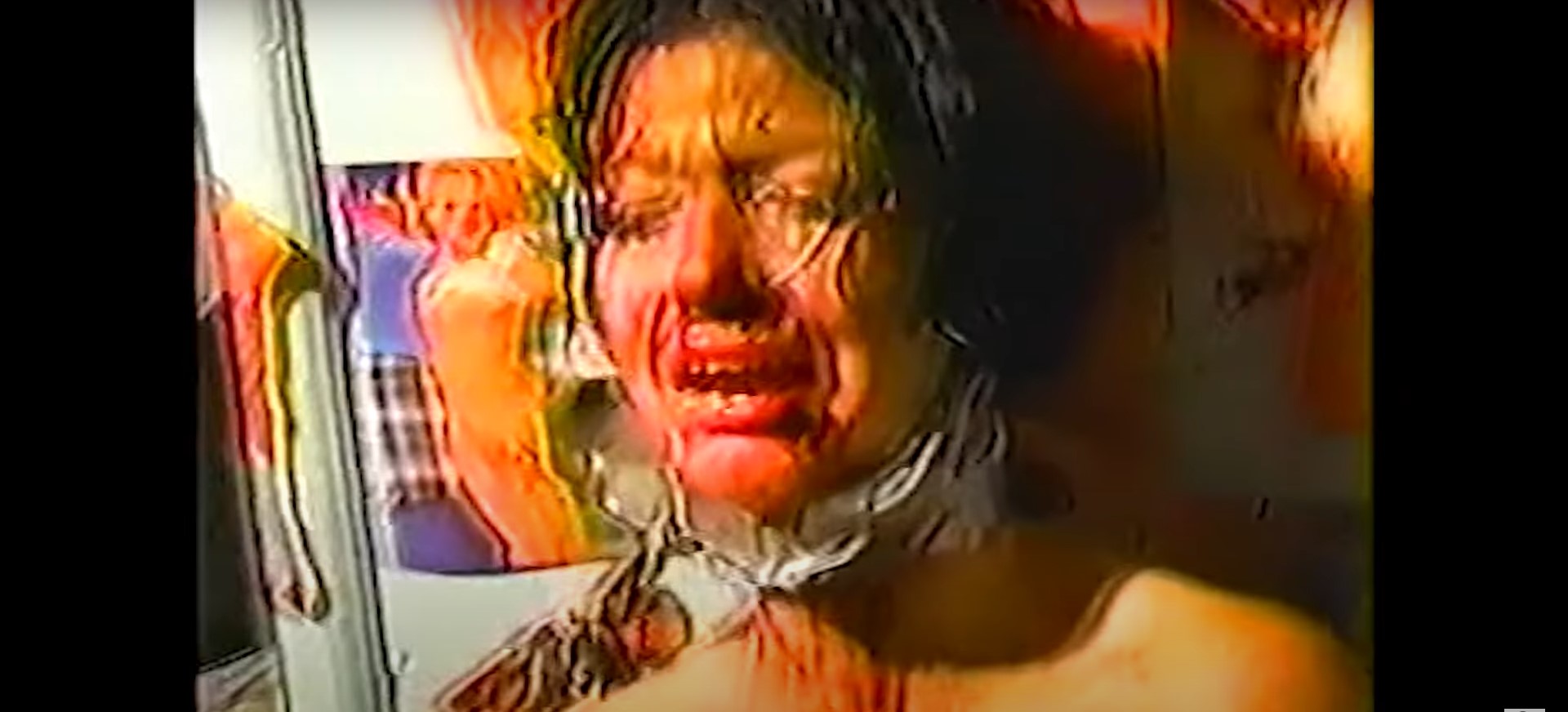
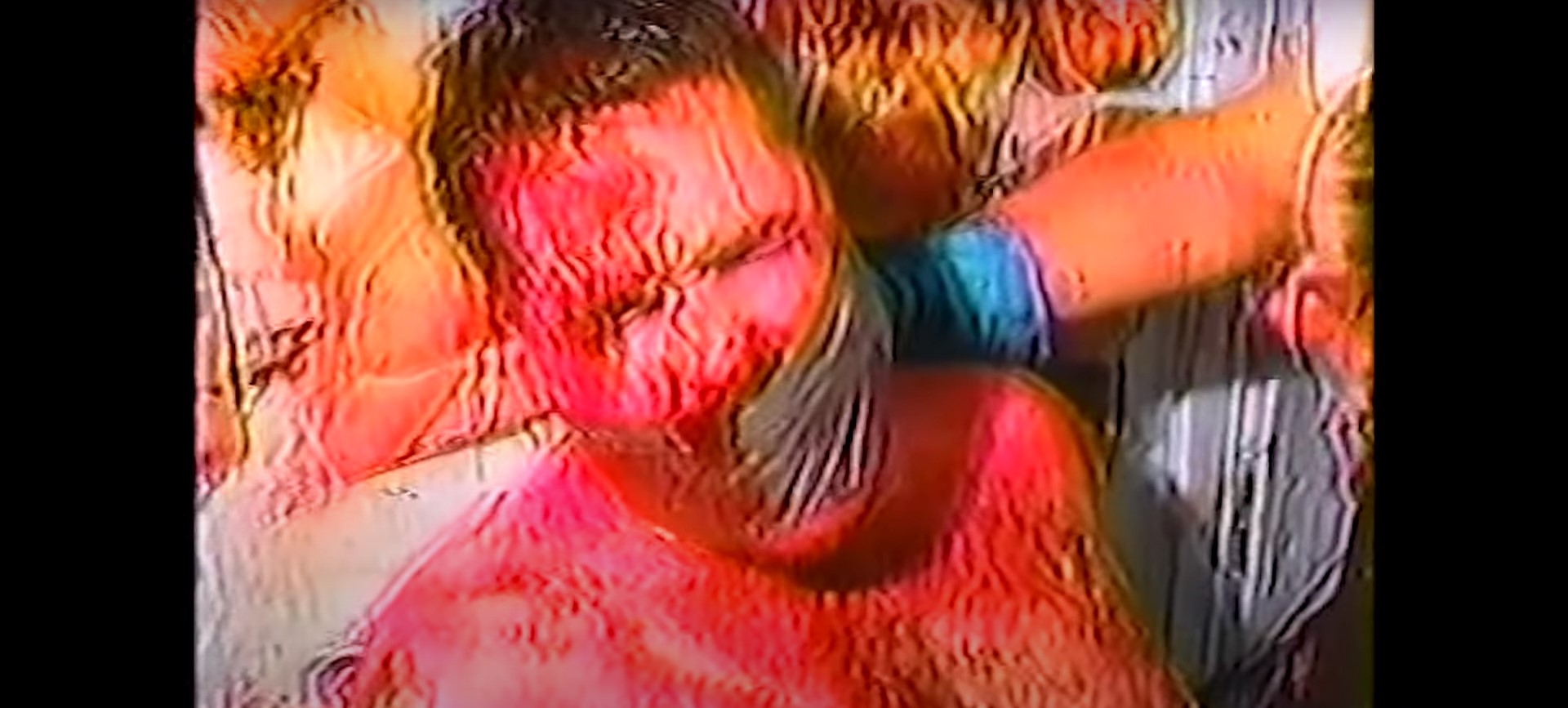
For certain to go out of stock and out of print into physical release obscurity once again, Unearthed Films’ limited-edition collector’s edition of “August Underground” is the 2-disc DVD/Blu-ray combo set to act on right now. The AVC encoded, high definition 1080p, BD50 comes from a MiniDV print, often considered the transitional format from analog and to digital in a tape format with lossy compression. Presented in the original aspect ratio of 1.33:1 aspect ratio, don’t expect image quality to be pristinely detailed and sharp as the MiniDV maxes out at 720p resulting in both, standard and Hi-Def formats, having indistinguishable presentations. Resembling the amateur, at-home movie, scaled down tape quality renders ghosting which shapes and details are bleary and the coloring resembles ember or incandescent with a warm, red-and-yellow layer. What we don’t see much of is a ton of tracking, static, or a ton of noticeable interlace but blacks can be prominently spotty with the horizontal bars. The lossless on-board MiniDV English audio is a PCM 2.0 that doesn’t extend beyond the limits of the camera’s microphone, but the clarity fairs well with clean and commanding dialogue with a natural range between the proximitous cameraman and his killing machine star of a friend in front of the camera. Also, equally interchangeable between the physical formats with what’s made to be a rough recording, discernible differences are minute at best. The Blu-ray and DVD have many of the same special features with the Blu-ray containing a few more frills over its format counterpart with a new Dave Parker interviewing Fred Vogel as well as a separate interview with Vogel and Mike Watt of Rue Morgue Magazine, another new interview with Fred Vogel from Severed Cinema Revisiting Infamy. The formats shared bonus content includes never before seen and new material, such as the original screener version of the film that comes with watermark and a slightly different color grading, a new audio commentary by Fred Vogel and Ultra Violent Magazine’s creator Art Ettinger, a new 10 questions with Fred Vogel answering some of the longstanding queries surrounding the film’s realism achievements and behind-the-scenes permissions and achievements, and a new Toe Tag Masterclass that compares storyboards with the screen version. Archived bonus content include audio commentary with Vogel and actors-producers-brothers Aaron and Ben LaBonte, another commentary track with Fred Vogel alone, an audio commentary by the witty, giggly “Killer,” Hammer to the Head closer look at “August Underground,” on location behind-the scenes, a behind-the-brutality of the film, outsiders’ perspective take in a Too Real for Comfort discussion, an introduction by director Fred Vogel, photo gallery, and trailers. The limited-edition collector’s set comes with a cardboard slipcover with a blurry, interlaced still of Vogel’s character wrapping a forearm around a gagged-girl’s throat while peering into the camera, but it’s the clear snapper case’s front cover that’s more developed with a graphic pencil-graphite illustration of the same slipcover image with more visible mutilated skin and visual weapon of human body destruction. Front cover is also reversible with an interlacing black-and-white image of the main killer. Both discs also sport two different art presses with the Blu-ray mirroring the slipcover image while the DVD has nearly the identical position of killer and victim but with a whole new victim. The region A locked edition has a digestible 70-minute runtime and is, of course, not rated. I would never say Unearthed Films has been diluting their pool of extreme underground gore and guts horror, but their “August Underground” release puts the brazen company back on the mondo-macabre map with definitely a too real for comfort twisted depravity and an au naturel sense of debauchery.

Limited Edition “August Underground” Ready to be Received! 

Death Penalized EVIL Returns to Wreak Havoc on Young Women. “The Stay Awake” reviewed! (Cheezy Movies / DVD)

Can You Keep Your Eyes Open at “The Stay Awake?”  On DVD now!

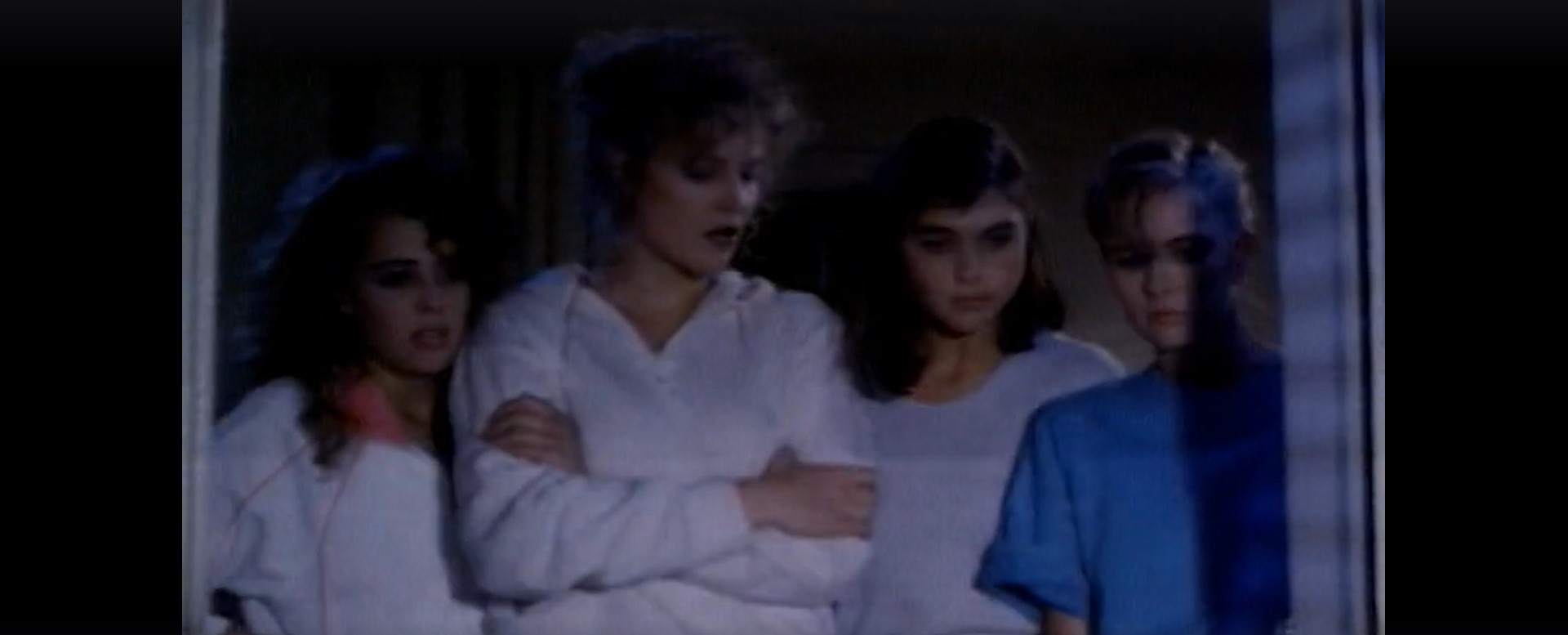
America, 1969. William John Brown brutally slays and sexually assaults 11 women. Before a judge, the serial killer is sentenced to death by gas chamber where his last words proclaim him as the Angel of Darkness sent Earthbound to ravage women. Nearly 20-years later in 1988, the St. Mary’s School for Girls in Europe is holding a stay awake event where a handful of students and one chaperone stay up the entire night as a fundraiser for their school. Dark and nearly vacant, the school basks in an eerie haven for the murderous William John Brown’s returning spirit seeking new souls of the softer sex. Determined to protect the girls at all costs, chaperone Trish Walton will not stop protecting the frightened girls until the entity is destroyed but when the ethereal malevolent spirit takes shape of a monstrous rodent with outstretching attack tentacles and psychokinetic glowing eyes, chances of survival are bleak.

Malevolent forces crossing oceans to death grip the innocent are films that are few and far in between as most transatlantic terror usually stays put, regionalized and localized to keep an authentic aural blend of superstition and history. Director John Bernard attempts to go against the grain with a small crowd of filmmakers who either overcame the parochial provenance and succeeded tenfold or became lost in foreign land narrative and failed miserably.  Bernard and, assumed brother, Johan Bernard co-write “The Stay Awake,” a South African mixed lot of horror elements brewed together into a supernatural schlocker that’s one-half dark and stormy night, gloomy Church Gothicism and one-half final girl survival slasher but equal parts outlandishly overexerted ghost thriller stretching across multiple continents.  “The Stay Awake” is a product of Heyns Film & Television Productions, produced by Thys Heyns of South African action-thriller flicks, as well as produced by Paul Raleigh, the producer of the “From Dusk Till Dawn” and the notable Millennium Films cofounder Avi Lerner, of “American Ninja” and “The Expendables” franchises, in one of his earliest credits from 1988.

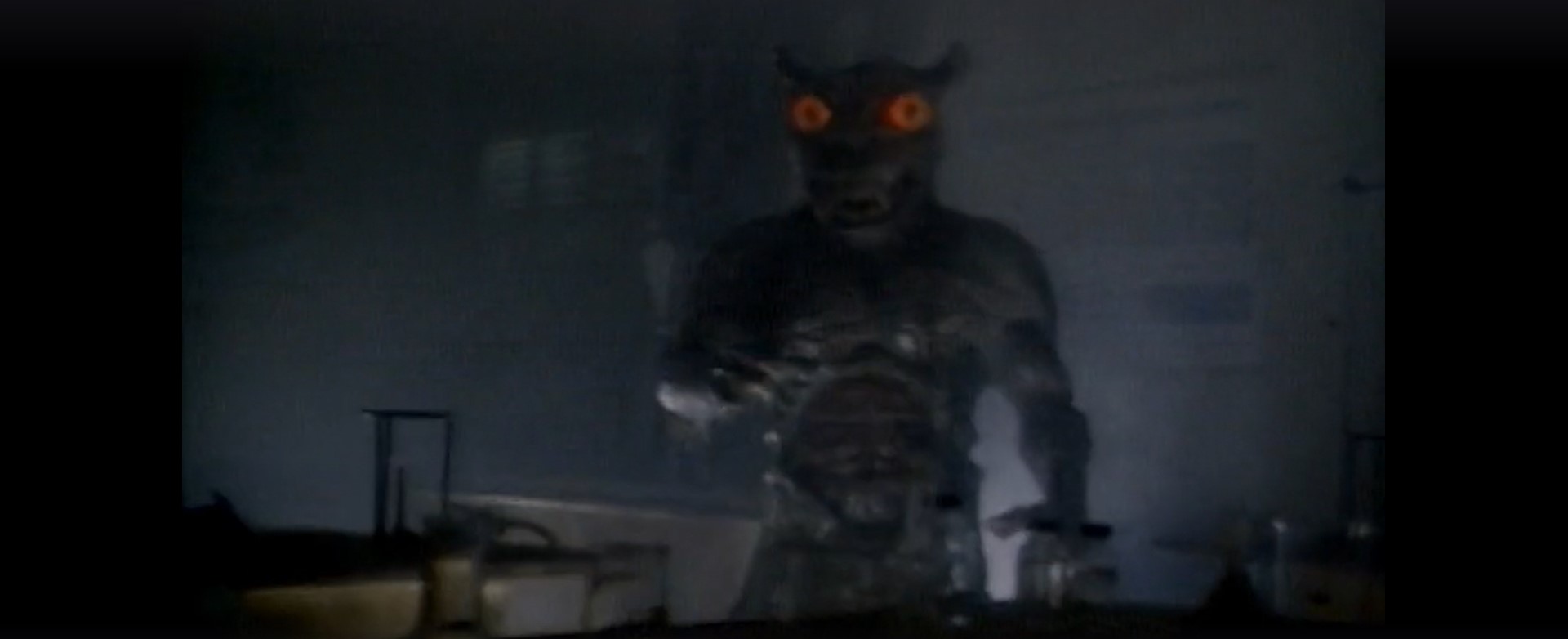
Though the story begins in America and mostly takes place in Europe, the cast is comprised of mostly South Africans trying to pass their accents for British English that is more like a rotating centrifuge of South African sub-accents.  Shirley Jane Harris (“The Most Dangerous Woman Alive”) spearheads the cast of principals with an extremely proclaiming protagonist, delivering lines with flatfeet and flat inflection that makes her one of the more forgettable final girls.  Her foe compares just as bland with a grunting, bodiless entity floating through corridors and hiding behind indoor plants (why would an imperceptible spirit need to hide behind anything at all?) before manifesting into what looks like a giant, big-eyed, and built on steroids rodent that then shows the William John Brown (Lindsay Reardon, “The Masque of the Red Death”) in side profile speaking in omnipresent and menacingly through the beast to taunt his prey.  The script allows just enough the group of young, private school girls to standout cliquishly, contain an ounce of contempt for each other, and underpin some form of individualism to make them retain some interest in their wellbeing.  However, most of the buildup that’s created to antagonize or unify between their personalities ultimately fizzle out into resembling something along the lines of kowtowing sheep or lemmings in more ways than one.  “The Stay Awake” caffeinates with a sizeable cast including Tanay Gordon (“Hellgate”), Jayne Hutton, Michelle Carey, Maxine John (“Howling IV: The Original Nightmare”), Hellie Oeschger, Joanna Rowlands (“Armageddon: The Final Challenge”) as the damsels, Bart Fouche (“Monster Hunter”), Clinton Ephron, Warren Du Preez, and Pierre Jacobs as the imposing boys, and Ken Marshall (“Return of the Family Man”) as the school’s night caretaker.

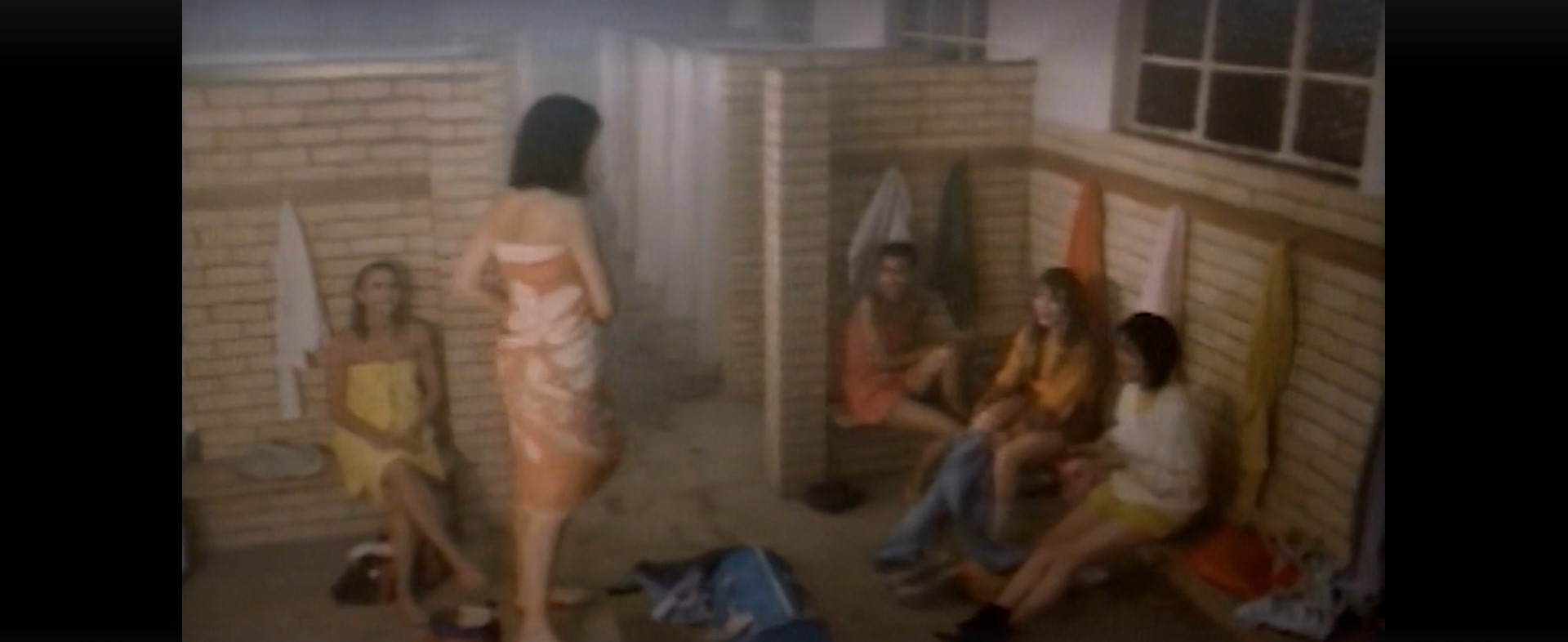
John and Johan Bernard’s logline for “The Stay Awake” likely looked appealing on paper but a full story treatment begs to differ with an inscrutable concept from start-to-finish.  “The Stay Awake” wades in generalities, oversimplifying locations and periods such as “America, 1969” and “Europe, 1988.”  The setup meat in between the disjointed times periods sets up a standard yet effective backstory for the killer, William John Brown, with a Judge’s voiceover of all his brutal transgressions, flashbacks of his victims at the death scene, and a slow walk down the corridor to the gas chamber that clearly denote him as the villain but then accentuates his supernatural supervillainy with a demonic voice screaming his return before the gas engulfs him.  However, why move from America to Europe and why in the span of 19 years does an unexplained possessed version of William John Brown return and select a group of religious school girls while his previous victims look to be a pact of randoms from off the street?  From the start, “The Stay Awake” has little to stay our fictional plausibility.  Couple the perplexation with dry performances, a possibly Hell originated monstrous, burning eyes rat creature, and the gratuitous horror nudity rug being pulled from under our feet as the schoolgirls tease with a shower scene only to be shown showering with towels wrapped around them and what has looked to be a promising possession of perpetual pandemonium  has quickly turned into a deflated disappointment with the only really good thing to come out of the film is the stationary man in a creature suit rat monster built like a bodybuilder.

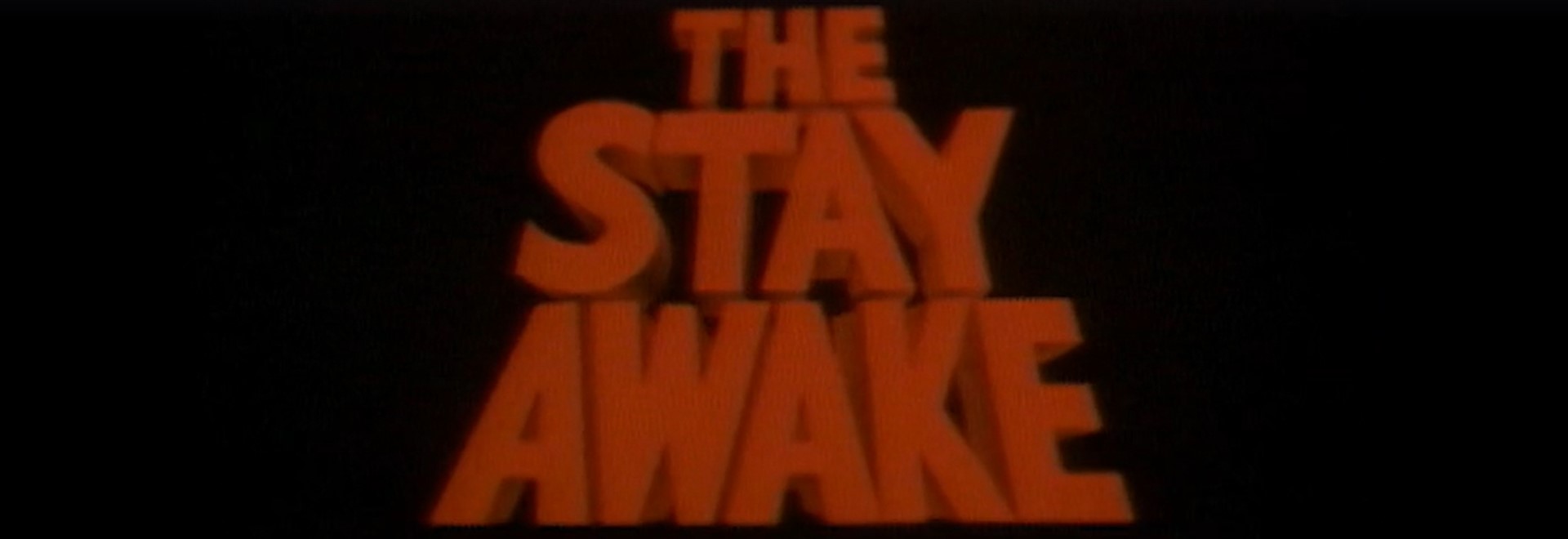
“The Stay Awake” arrives onto DVD distributed by Cheezy Movies in a direct rip of the standard definitional 480i VHS transfer with a letterbox 1.33:1 aspect ratio.  Don’t expect a detailed transfer in a jittery and smoothed over standard definition that’s covered in a harsh blue tinted lens, but the condition of the interlaced video is surprisingly close to being damage free in a well-cared for print.  However, delph and range is difficult to determine due to the obvious lack of delineation but mostly because of the blue tint, poorly lit scenes, and contrast levels that make this presentation nearly pitch-black unwatchable in corridors, classrooms, and in the room of the like, but darkness is seriously enhanced and meshed together by Bernard stylistic choices of backlighting characters or using soft light to center the focus to offer a darkened horror picture. An English Dolby Digital 2.0 stereo serves as the only audio option which differentiates the soundtrack from the rest of the tracks.  Dialogue mostly separates itself to the top of the audio dogpile but is also well imbedded into the other track fighting to be heard that renders the dialogue dull and flat behind a wall of constant and diffused feedback static.  There’s also hissing at the tail end of sentences and faint crackling throughout.  Subtitles are not available.  The only extras on the static menu are back-to-back, quasi-grindhouse style trailers for two Cheezy Movies distributed titles of the blaxploitation “The Man from Harlem” and a “Dirty-Dozen”-esque “Commandoes.”  The physical aspects include a standard black DVD snapper with a rather enticing original title being sandwich with the demon’s glowing eyes on top and four schoolgirls ready to fight at the bottom.  The disk art is the same image except the four schoolgirls are cropped out and an unfortunate placement on the “The” from the title finds it punched out by the disc center/disc lock to just reveal “Stay Awake.”  The rated-R DVD has a region free playback and a runtime of 85 minutes.  “The Stay Awake” has all the indications of a cheap imitation on an established horror formula and this particular physical release doesn’t help the feature’s cause with an extremely dark and nebulous image to match its narrative.

Can You Keep Your Eyes Open at “The Stay Awake?”  On DVD now!

https://vimeo.com/814964711

Ever Get the Feeling that Your Downhill Relationship is an Endless EVIL Loop? “Brightwood” reviewed! (Cinephobia Releasing / DVD)

“Brightwood” available on DVD August 22nd!  

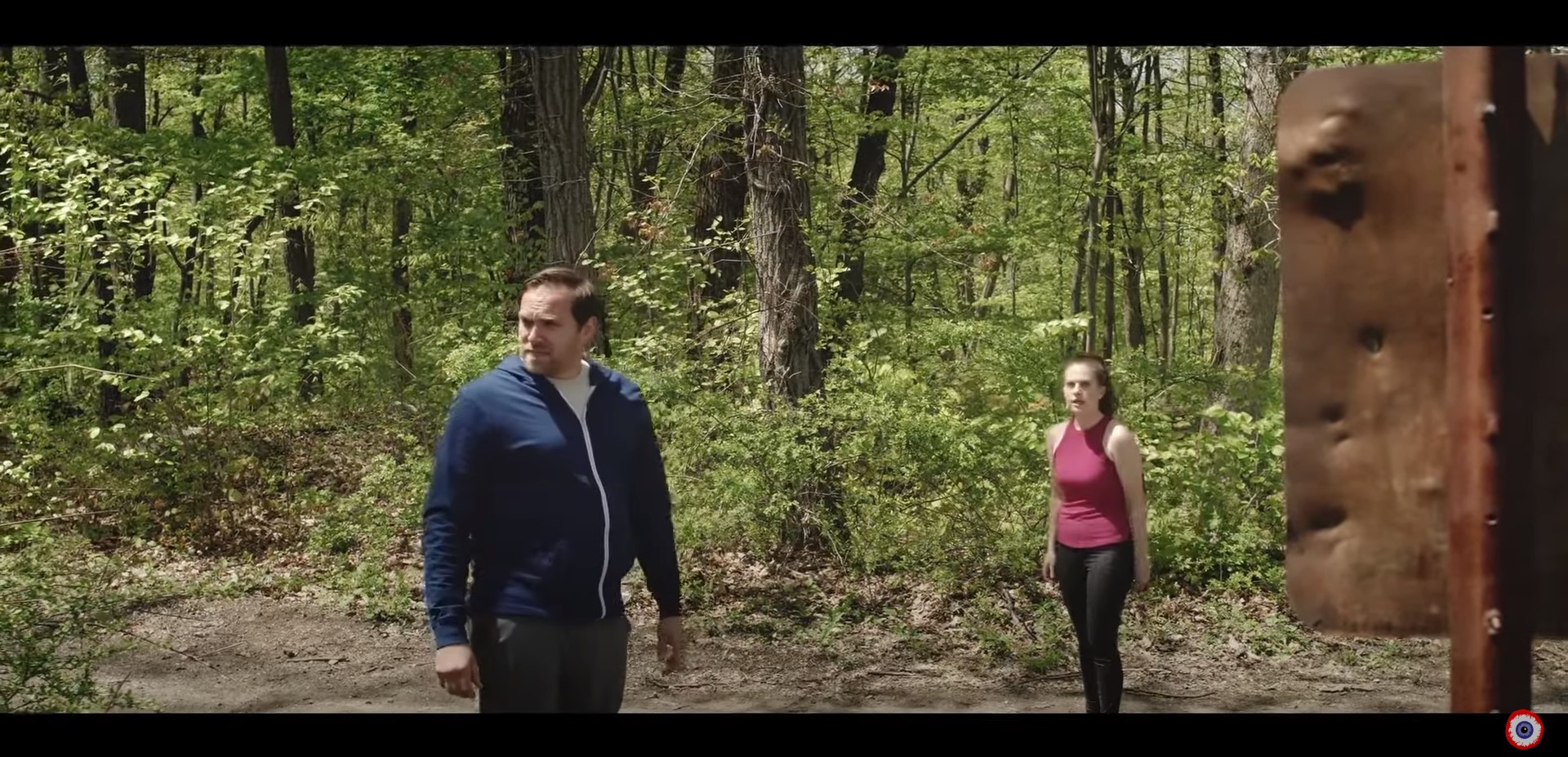
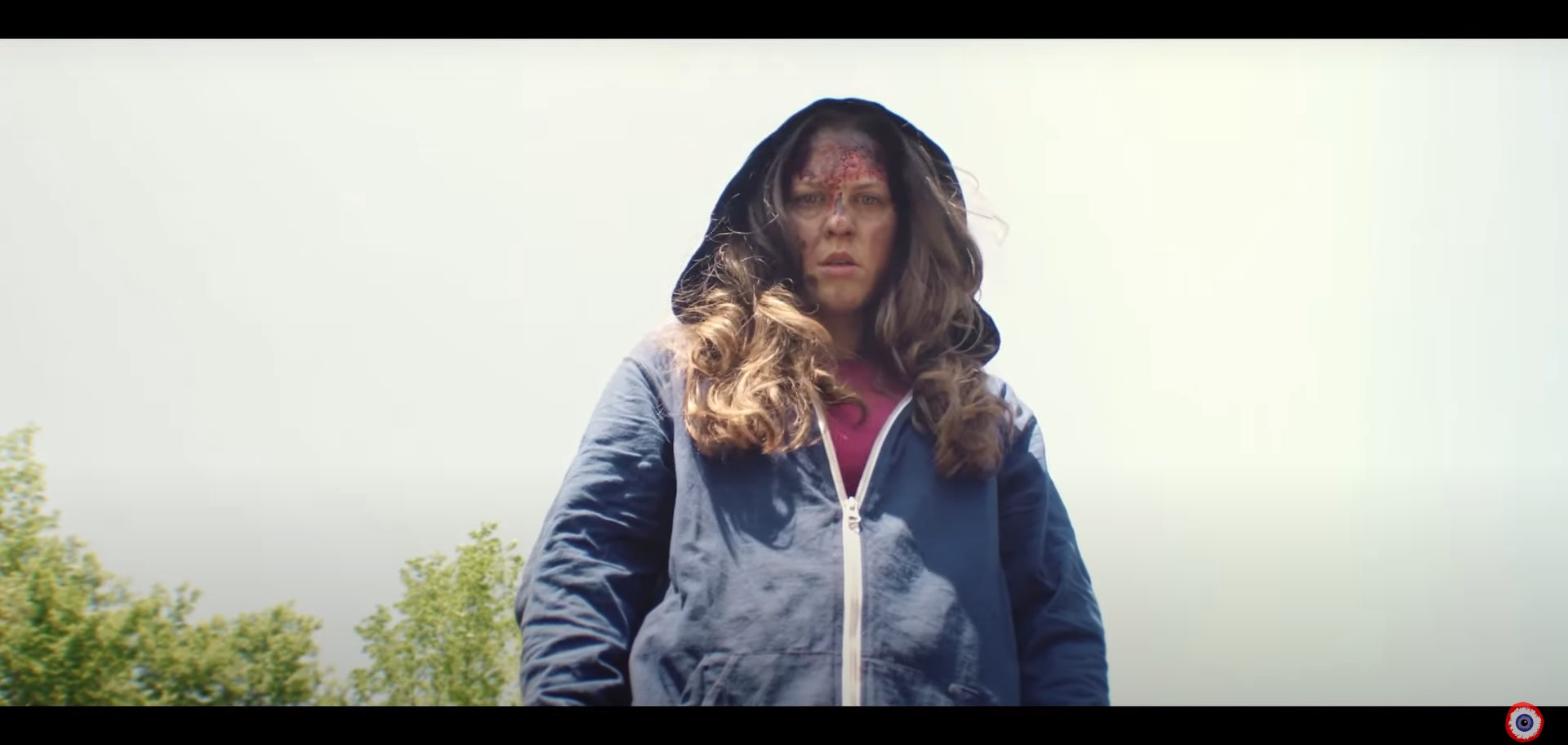
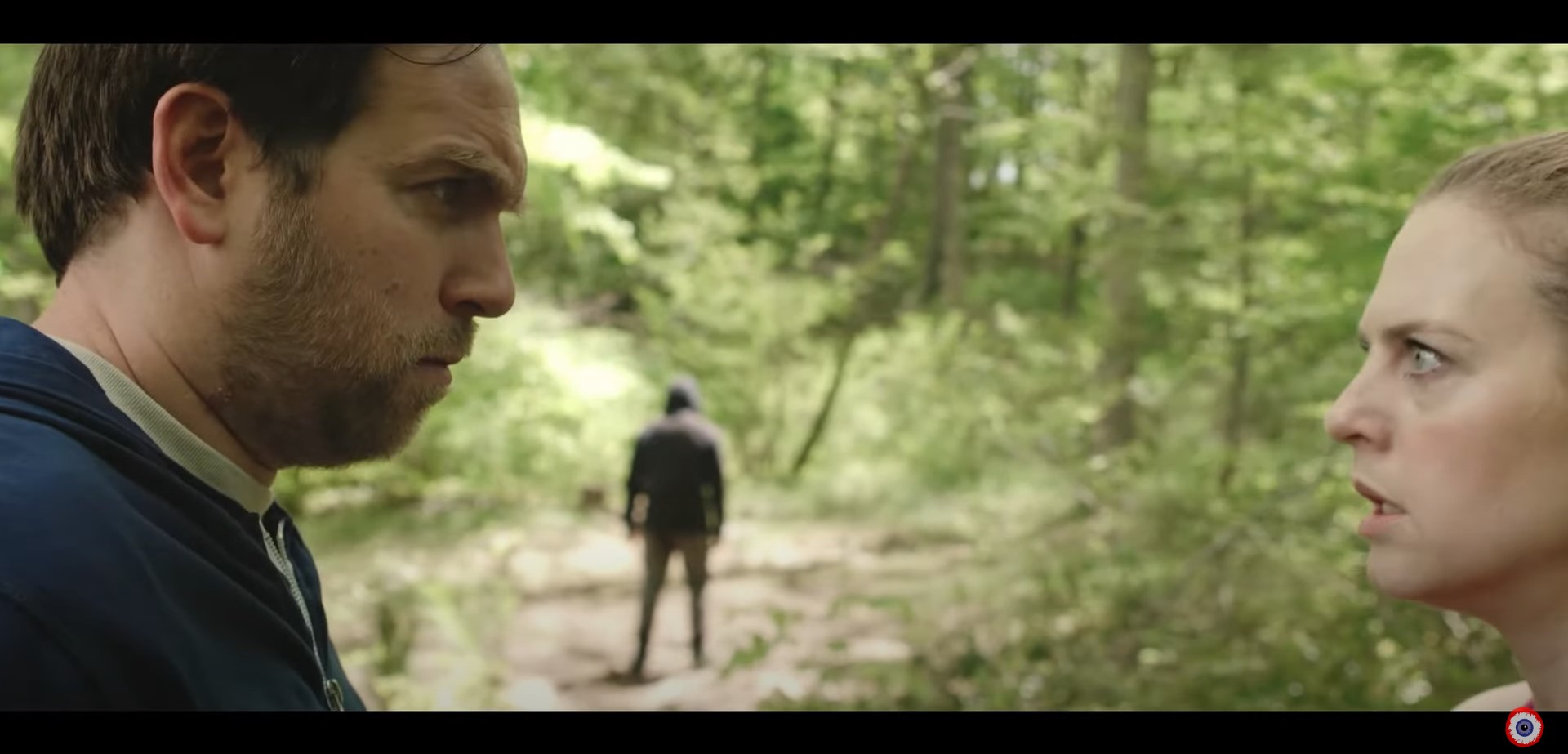
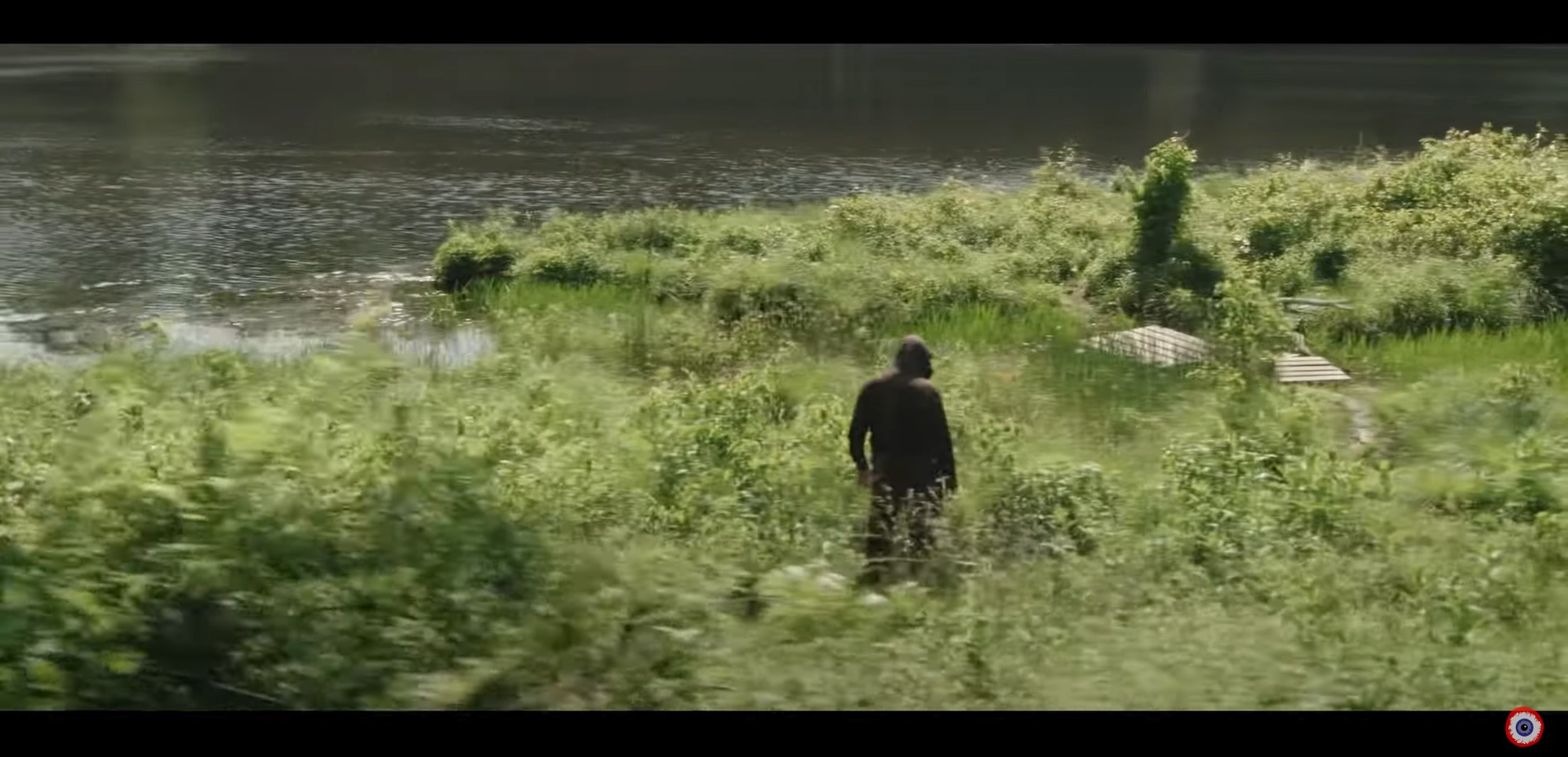
Jen and Dan have been a couple for a long time.  A stupid long time.  Such a long time, Jen has come to loathe Dan for everything he is worth.  On the other hand, Dan self-deprecates himself into submission despite his love for Jen, even a loveless, spit firing Jen.  When the two go for a run, hashing out the contentious night before, Jen heads for the pond to run laps around Dan in avoidance.  Having circled around a few times, Jen realizes the once exit trail from the pond, the trail she run through to the pond, is now no longer visible.  Perplexed, she voices her concern to Dan who also can’t seem to find the exit trail and every attempt to navigate through the surrounding forest reverts in them being brought back to the pond.  With no way to escape a dead cell service zone, the couple realize their not alone when they come across different versions of themselves stuck on a time loop from the very beginning moment the quarreling couple first ran onto the pond circuit to the future, disheveled versions that no longer have humanity.

Strained relationships and cosmic horror go hand-in-hand.  Or, at least, sometimes they feel like they do with an endless and revolving stagnation of being one with another as the hatred for the other and the fear of being alone cancel out any promise of an amiable or favorable solution.  Instead, staying put seems safe albeit the loop around effect of revising old and reoccurring snags that keep the relationship stale and hopeless instead of moving forward.  That’s possibly how writer-director Dane Elcar sees the suffocating time warping scenario playout symbolized in his debut cosmic horror feature “Brightwood.”  Based off and remade from Elcar’s 2018 20-minute short film entitled “The Pond,” anxiety riddles an already one-sided contempt couple who can’t find the path out of not only the pond but also their relationship in the thriller that’s peppered with dark comedy.  The 2022 feature, filmed around Egbert Lake in New Jersey, is produced by the director as well as star Max Woertendyke under Noble Gas Media productions presented by Media Moove and the LLC, Pond Pictures. 

“Brightwood” has a whopping cast of two and, honestly, the story doesn’t require the need for more and the principals, who may be better described as neutral characters or possibly as far as anti-protagonists, run the gamut of moral principles depending on which in-time version of them we’re witnessing.  Dana Berger and Max Woertendyke play the beleaguered and one-sided cantankerous couple Jen and Dan who are unable to escape the mysterious circumstances of being trapped around and forced to endured permanent residence at the trail that encircles a nearby pond.   The couple’s relationship dilemma relates irreconciled differences once adoring lovers cross beyond into when the romance goes stale.  Jen notes this by saying how she hates Dan’s smell as if it just lingers in her nasal cavity.  Hate is sowed deep after years of living with the person she has come to despise because of Dan’s lack of gumption to be anything but mediocre.  Like a puppy trying to keep up with an odiously pissed off owner, Dan mostly fears losing the one woman who likely puts up with his inadequacies.  Berger and Woertendyke really do nail the exposition history while feeding into these dynamics to setup their characters’ climatic, life-altering stuck in an invisible cosmic cage.  Stuck, the word that best describes both a worn-out relationship and the unnatural situation they’re in.  Jen and Dan are stuck together, possibly forever, to work out couple complications or to give up and just terminate it all.  The actors tap into that cathartic back-and-forth by giving a range of therapeutic emotion performances that purges truth and guilt from their characters, like any relationship would in order to grow and/or move forward.

“Brightwood” is one diabolical tale of torment of being indefinitely stuck in relationship Hell.  Analogies and metaphors compile along the way in a parallel stream of unfavorable situations.  To add more layers, Dane Elcar throws them for a loop, literally.  Jen and Dan are copied over-and-over again in a replay of moments and time and each time they’re copied, new developments emerge in the time loop that were different from before, ascertained by previous versions of themselves.  Conceptionally, the idea has it’s convoluted moments in trying to make the characters appear derived from a particular staring point and interact with each other in various behavioral outcomes, but this particular subtenant, niche layer of the cosmic horror genre is innately difficult to represent but a moderate degree of success can be conveyed or extracted depending on how much you’re willing to be opened minded, or stretched the limits of reasonability, or just don’t plain give a damn about it making sense.  Films like Justin Benson and Aaron Moorhead’s saturated cosmic horror “The Endless” or not-so-cosmic but tantamount to the concept is George Moïse’s “Counter Clockwise” are examples that work and work well to entertain a coherency and a consistency of repeated time.  If expecting a flashy and full-fledged effects driven feature, “Brightwood” is the opposite with a low-key approach that relies on staggering scenes to eventually overlap them, keeping the common core element of the pond as a center focus and turning it instantly in our minds as an undercurrent source of evil despite’s its serenity and idyllic nature.  Little do we know, our instincts might be more on point than lead to believe.

Psychotic endlessness is synonymous with loveless relationships in Dan Elcar’s “Brightwood” available on the 3rd DVD distributed by Cinephobia Releasing come August 22nd.  The single layer, interlaced DVD is presented in a widescreen 2.35:1 aspect ratio.  Image quality on the release displays a subtle overexposure, shot mostly with natural daylight, and desaturated video image not terribly rich with coloring.  Basic detail renders over nicely, exhibiting fair delineating and depth within a nature coloring scheme that micro blends characters into the foliage and mirror pond landscape.  Minor aliasing shows within the frame but the overall compression artefacts end there, decoding data at the higher end of where DVD’s can perform around 7-8 Mbps. “Brightwood” comes equipped with two English audio options – Dolby Digital Stereo 2.0 and a Dolby Digital 5.1 Surround Sound.   Between the tracks, dialogue transcends the others in a very line heavy narrative to push the small cast along but there’s a suffice amount of leaf rustling and trail running ambience and range to expand the sound into the back channels.  Jason Cooks composed score a lightly melodious score mixed with harsh tones to keep viewers edgy with suspense.  English subtitles are available.  Bonus features include a feature commentary from director Dane Elcar and stars Max Woertendyke and Dana Berger, 11-minutes of deleted scenes, the original 17-minute short “The Pond,” and Cinephobia Releasing trailers.  The standard DVD sports “Brightwood” poster art with no insert on the inside and the disc art the same as the poster with release spec, which are a not rated feature and a runtime of 84 minutes with an unlisted regionality of region 1 playback.  “Brightwood” endures the subgenre’s stumbling blocks with concentrated acting stability and synergy between the 100% invested Dana Berger and Max Woertendyke who could literally perpetuate Dane Elcar’s vision endlessly.

“Brightwood” available on DVD August 22nd!  

When Machine and Man Merge, Which EVIL Will Emerge? “Re-Flesh” reviewed! (SRS Cinema / DVD)

“Re-Flesh” DVD Available Now to Replace Your Old Skin!  

In a dystopian future, machine and man have merged into an asymmetrical symbiosis where machine is preponderantly present to corrupt man’s benevolent humanity.  Such corruption removes compassion at the core level with the use of neurol inhibitors of technological ascendency over mankind in a gruesome, unpleasant fashion.  The exhibited process is exampled with a masked nurse pushing a wheelchair bound masked man down a dank and dark hallway and into a reprocessing room where he’s plugged with a cable attached to his arm.  From there, the man is fitted with a virtual viewfinder displaying five short reprocessing-to-repair files, transmitted before his eyes to incite organic machinery violence that’ll absorb and eradicate years of human psychological evolution.  Slowly through the images and videos of visceral excision does the man morph into an automaton of flesh, blood, and commingled organic cabling and mechanical veins that will render him resolved as biologically re-fleshed.

Japanese splatter punk Body horror inspired “Re-Flesh” becomes “Deep Web XXX” and “Suffering Bible’s” director Davide Pesca’s tribute to the very distinctive denaturalization of the man-machine mix cinematic movement from the unabashed narrative risktakers hailing from land of the rising sun, Japan.  Made popular by the likes of auteurs Shinya Tsukamoto and Shozin Fukui and cult favorites like “Tetsuo:  The Iron Man” and “Tokyo Gore Police,” “Re-Flesh” adds to the niche palate with an unconfined, Italianized take to ambiguate that blurry line between the soul and the soulless as man comes to terms with a terror-inducing technological takeover.  Writer-director Pesca’s underground anthological tale pits the human condition, it’s mortal coil if you will, up against the cold and heartless tech to create coded layers of neova carne, or new flesh.  Pesca and fellow coproducer Massimo Bezzati reteam after “Night of Doom” to collaborate the 2020 released production under their respective indie companies Demented Gore Productions and M.B. Productions.

The five-story anthology with the interweaving wraparound of a man being reprogrammed casts a lot of visual performances without the need for dialogue.  Dialogue is reduced to only a pseudo medical television advert or surgical endorsements for a better, prosperous life to eliminate human flaws, advancement in new, and improved, flesh, and can even cure homeless afflictions like drugs and addictions.  Pesca keeps a simplicity about his scenes by keeping sullying dialogue removed to just retain the beauty of body horror and a sonorously cacophonous industrial soundtrack.  Each story’s characters are also fairly simplified.  Without dialogue, individual complexities and depth remain shallow in what is “Re-Flesh’s” sole celebration of horror based cybernetic organisms.  This creates no emotional attachment to any of the characters being violated by fiber optic cables and experimentally operated on with crude animatronic gizmos, but Pesca does implant an imploration of at least one emotional response from his audience through gratuitous nudity on half of the female protagonists going through a rapture and ruination of bodily rape and mutate connected by inhumane sentient cybernetics.  Most of the women protagonists are half-naked women ensnared by the inescapable new world of merged new flesh but the tail end episodes dig a little deeper, perhaps even stretch the theme to the limits of cyberpunk horror, to where women are more than just ravaged victims.  “Re-Flesh” sees skin in the game from Alessandra Pellegatta (“Night of Doom”), Giacomo Clerici, Mery Rubes (“Rage Killers’), Reiko Nagoshi (“Devil Times Two – Quando le Tenebre escono dal Bosco”), Giulia Reine, Paolo Salvadeo, Amira Lucrezia Lamour (Devil Times Two – Quando le Tenebre escono dal Bosco), Alessandro Davoili (“Alice Was My Name”), Ivan Brusa (“7 Days, 7 Girls”), and Marco Cinque.

David Pesca is no stranger to short, gore-laden, underground films having been a featured segment director on a pair of anthologies in the last decade from “A Taste of Phobia” and “After Midnight.”  For “Re-Flesh,” Pesca doesn’t have to share the spotlight in his very own tech-themed, feature length compilation that narrates transmitted computer files as tech insidiously infiltrating our insubstantial innards.  The first three episodes revolve around phones and solitary women become enslaved to the devices with a link of invading their bodies with a foreign object, whether be adopted a virtual, grotesque pet to being the reason for infection that spreads throughout the body like a flesh-eating disease, to being beamed up and constrained for a thorough, if not sexual, examination of one of mother nature’s creatures.  I’m intentionally skipping the review of fourth short and head straight into the terminal episode that is more dystopian splatter punk than the others with an experimental bio-cybernetics company called Neo Vita, or New Life, ridding the world of lowlifes by module implants that turn them into society-controlled puppets.  Yet, all these stories are not terribly straight forward with the rub being the ambitious nature of interpretation and the fact there isn’t a dialogue track for most of the runtime.  Taking a step backwards to the fourth short, I found this particular short doesn’t fit “Re-Flesh’s” theme with a demonic woman damning three inert souls to a black void of pain and death.  Perhaps, a construal could be constructed to lay in code into the technology sequence strand, but the code would be a fractional stretch in comparison to the surrounding system.  As a whole, “Re-Flesh” may side more with gory sanguine than an illuminating story but does depict the scourged with a front row seat in this bloodcurdling network of body horror.

Befitting to be distributed on SRS Cinema’s Nightmare Fuel – Extreme and Unrated sublabel, “Re-Flesh” emerges as a bizarre aghast mix of tentacle erotica and technical dysfunction onto a 480p DVD, presented in a widescreen 1.85:1 aspect ratio.  Technical dysfunction also applies to the image quality.  Though combating some lossy compression issues, the standard definition resolution and budget filming equipment sustain a level of image softness under a desaturated color palette.  Depth and delineation range from hazily outlined to a complete wash out from the frame’s JPEG conversation.  Pesca operates under a wide-stylistic format that incorporates varied black-and-white schemes (a gritty B&W wraparound story compared to a more defined desaturated monochrome for the fourth segment), natural lighting, harsh gel lighting and tint, and green screen for CGI backdrops.  The English dub stereo 2.0 mix will obliterate your sound setup if not careful and without a subwoofer with a booming LFE industrial soundtrack that has produced an inherent crackle and since there is no in-scene dialogue or ambience, all of which is 100% done in ADR, the lower frequencies engulf the other channels that may pop in for phone effects or squishy surgery sounds.  “Re-Flesh” is an Italian film, but the cybernetic implant advert shot, originally spoken in Italian, is dubbed in a burned-in expeditious English dub that is what it is.  Bonus features include a promo and original trailer, a behind-the-scenes featurette entitled Backstage which is a look at some of the gory scene effects the first two segments, the short “Electric Dreams” which is an alternate graded version of the second segment, and other SRS trailers.  The traditional DVD snapper case comes with the illustrated front cover art of the man plugged in under a faux harsh white neon glow with the disc art containing the same art but superimposed with a red hue layer.  There is no insert inside the casing.  The unrated feature has a runtime of 72 minutes, more than enough time for this type of anthology, and has a region free playback.  A kitschy and schlocky graft of “Re-Flesh” will get under your skin, but this anthology quickly grinds gears toward a blue screen of death.      

“Re-Flesh” DVD Available Now to Replace Your Old Skin!