Don’t Mind the Glowing, Ominous Hole in the Wall. That’s Just a Gateway to Evil. “Beyond Darkness” reviewed! (Severin / Blu-ray)

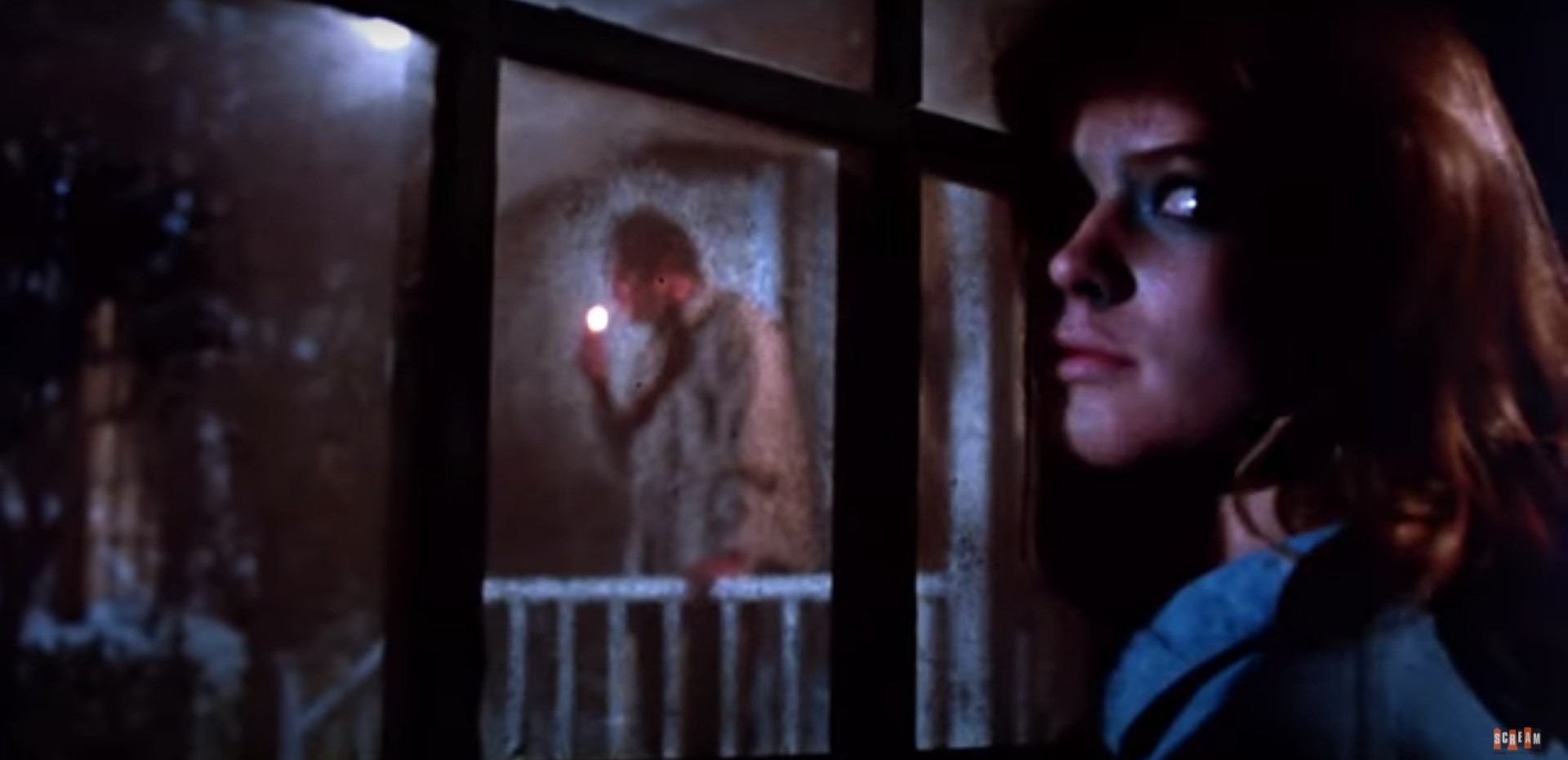
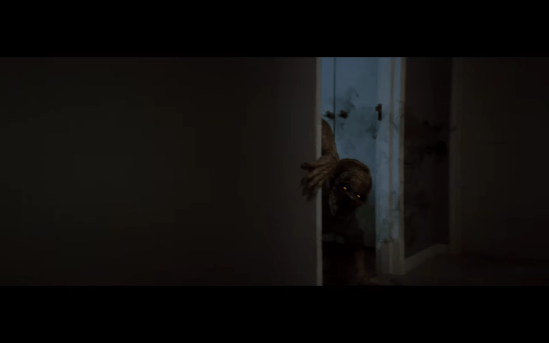
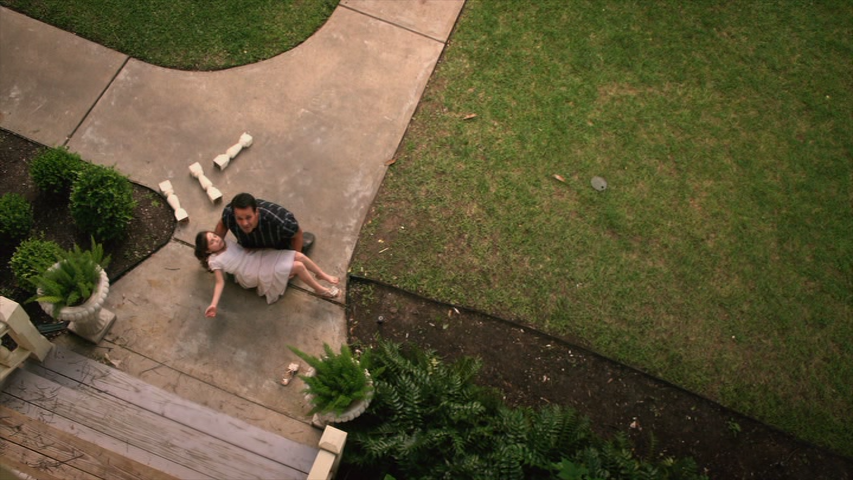
A witch acolyte of Ameth, an underworld demon, is executed on multiple counts of child murder.  The priest who oversaw the witch’s last rites came in with a doubtful heart and upon researching Ameth through an unholy book, disavowed his own religion only to fall into a near drunken stupor of atheism.  Months later, a new priest and his family move into a home arranged by the archdiocese, but soon after settling into the old house, a series of disturbances point to a closed in wall behind a door that’s uncovered to be a gateway to another plane of existence; an existence where the child killing witch is granted access to seek the souls of the priest’s young children.  Fighting with his own struggles of faith, the ex-Jesuit assists the priest and his family in an attempt to cast out evil once and for all. 

Perhaps common knowledge amongst diehard horror fans, but not so much among the casual curiosities of an oblique coursed moviegoer is the fact that “Beyond Darkness” and Sam Raimi’s “The Evil Dead” share a cinematic series connection.  Well, not one in any official capacity one at least.  Drained from the same bloody vain that unofficially corrals Lucio Fulci’s “Zombi 2” as a sequel to George Romero’s “Day of the Dead,” retitled in Italy as “Zombi,” the American-made, Italian-orchestrated “Beyond Darkness” too fell upon the slew of Italian title changes sword with a rechristening into the “La Casa” series.  With the success of “The Evil Dead” in the U.S., Raimi’s video nasty was renamed to “La Case” and “Beyond Darkness” became the fifth “sequel” in the series as “La Casa 5.”  Since Italy has no copywrite laws, a light breeze can easily change any filmic title.  Even the director, Clyde Anderson, dons a false pretense as the Americanized alter ego of Italian director Claudio Fragasso.  The “Scalps” and “Troll 2” Fragasso pens “Beyond Darkness” with longtime script confederate Rossella Drudi, under the Sarah Asproon pseudonym.  “Beyond Darkness” is shot in the deep American South of Louisiana under the Joe D’Amato (aka Aristide Massaccesi) founded Filmirage (“Anthropophagus: The Grim Reaper,” “Deep Blood”), produced by D’Amato, as the Filmirage Production Group.

While behind the camera is mostly an Italian production team, in front of the camera is a cast of American and English actors with an opening Louisiana penitentiary pre-execution theology debate between Bette the witch, played by Mary Coulson, and Father George, a priest having a crisis of faith, played by one of D’Amato’s regulars in English actor David Brandon (“StageFright,” “The Emperor Caligula:  The Untold Story”).  Coulson’s role may be punitively small as the “Beyond Darkness’” lead witch and predominant face of the core evil, but the actress puts all into the Bette character comprised of a maniacal laugh and a lots of very European skin-tag makeup effects whereas the classically trained David Brandon has an array of lively emotions and facial expressions sized to fit Father George’s clerical shirt and white tab collar when he’s not sloshed with doubt.  Both characters interweave into the life of a new-to-the-area priest, his wife, and two kids who move into an old house, built on unholy ground, to start his new chapter in priesthood.  Days later, as the kids become instantly okay with a giant black swam rocking horse in the middle of their bedroom, the family is terrorized by flying kitchenware, flooded with a bayou mist, and frightened by figures in black, tattered shrouds seeking to steal their children’s souls.  Christopher Reeve’s lookalike Gene LeBrock (“Night of the Beast”) fails at double father duty in his poorly lit excuse of a worried father with his children being lured to the realm of the spirit side and as a grounded in faith Father combating the forces of evil without a solid sense of what to do.  Both parents are equally written off as incompetents who continue to stay in the house despite on the continuous threat of Baba Yaga wannabes knocking at every door in the house.  As the mother, Barbara Bingham felt as if she had a little more skin the game.  Perhaps having just come off the legacy success of a “Friday the 13th” sequel (“Jason Takes Manhatten”) she felt the responsibility of maintaining a more diligent approach toward being a mother coursing through occult’s dire straits.   Michael Paul Stephenson (“Trolls 2) and Theresa Walker excel much better in their roles as the two kids, Martin and Carole, who’ve become the centerpiece of Bette’s maliceful desires. 

“Beyond Darkness” will come across as very familiar amongst both horror fans and fans of movies in general with a story pulling inspiration from films like William Friedkin’s “The Exorcist” and Tobe Hooper’s “Poltergeist.”  Fragasso picks and chooses a blanket of trope elements to rework with great malleably in order to not be a total copy.  However, for those who know anything about low-budget Italian horror, Fragasso’s rousing similarities to major and independent hits should come as no surprise.  Notoriously renowned schlock horror directors Joe D’Amato and Bruno Mattei, amongst a sea of others, use to fabricate out of fame at every opportunity by gobbling up successful films, chewing them up, and spitting out their Italian produced counterparts without a second thought just to cash in on just a fraction of the original narrative’s success.  The way I see it, the method was (and still is) an honorable form of flattery. Yet, flattery doesn’t cure sloppiness and “Beyond Darkness” is about as sloppy as sloppy joes. Plot hole after plot hole stack up on Fragasso’s inability to amalgamate elements in an entirely coherent way. There are underwhelming revelations to anticipating character build ups that fizzle; such as a thick-tension mystery behind the local archdiocese and their involvement to place a good Christian family in a house built on evil land or what precisely convinced Father George of Ameth’s power to sink him into an alcoholic pit of despair? I already mentioned Martin and Carole’s inept parents on not fleeing the house at first sign of poltergeist activity or any activity since then so don’t get me started. The story needs some fine tuning but not after is amiss. The acting is not entirely a humdrum of monotony, Carlo M. Cordio’s eclectic synthesizer riff and haunting keynotes score is on another level akin to a composition pulled right out of a survival horror video game, and Larry J. Fraser, another one of Joe D’Amato’s pseudonyms, has an honesty about his scenes unlike we’ve ever seen before in a D’Amato production as the cinematographer captures the fog luminously and effervescently surrounding and chasing the family from out to in.
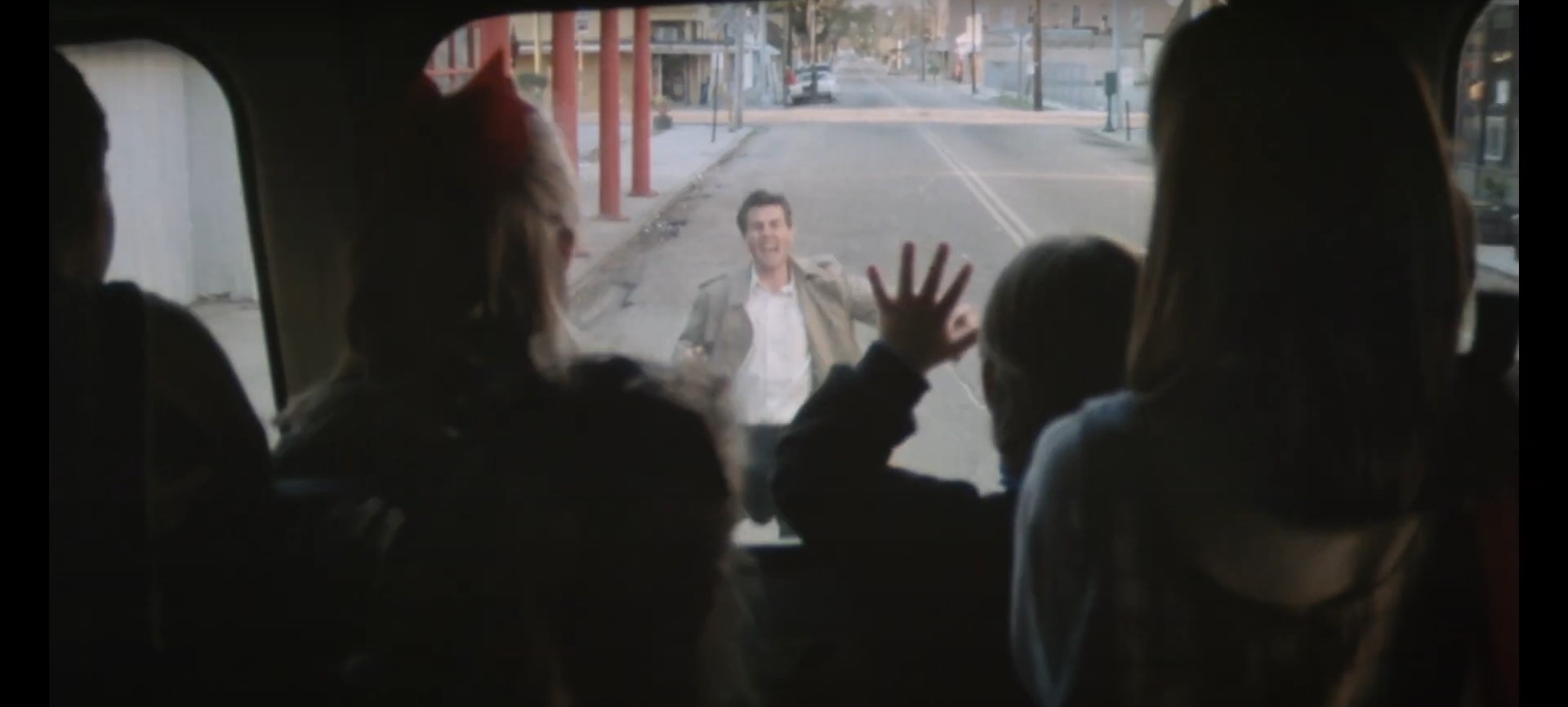
“Beyond Darkness” is no “The Evil Dead” but is a solid demon and ghost dog and pony show from 1990. Now, the Claudio Fragasso (or is it, Clyde Anderson?) classic is heading straight to your level room television set with a new 2-disc Blu-ray. The hardcoded Region A is presented in widescreen 1.66:1 aspect ratio in a full high definition and 1080p resolution. With only a possible color touch up here or there, I would venture to say the transfer used is the most pristine copy with hardly any damage or any age deterioration. The grain looks amply checked and no cropping or edge enhancing at work in an attempt to correct any issues, if any ever existed. Severin offers two audio options: an English language DTS-HD master audio 2.0 and an Italian dub of the same spec. With dual channels, there retains an always room for growth inkling and with the film’s broad range in sounds, a difficult to swallow lossy audio pill plays the aftertaste tune of, man, this could have been way better. Yet, the track is solid enough, if not more so, with virtually zilch damage. Dialogue comes across clean and clear, but there tails some minor hissing. Like with many Severin releases, new interviews are the star of the special feature show with one-side, talking head interviews with writer-director Claudio Fragrasso Beyond Possession, co-writer Rossella Drudi The Devil in Mrs. Drudi, and actor David Brandon Sign of the Cross. Though the theatrical trailer rounds out the first disc special features, Severin also includes Carlo M. Cordio’s superb soundtrack as disc number two along with a two-page booklet with an introduction to the ingredients of a horror score and to Cordio himself as well as a listing of all 17 tracks. “Beyond Darkness” is Claudio Fragrasso’s unbridled mutt, a motley of motion picture royalties rolled up into an adulating and piggybacking horror beyond comparison.

“Beyond Darkness” 2-disc Special Edition Blu-ray Available on Amazon

When the Girl of Your Dreams Thinks Like an EVIL Robot! “Deadly Friend” reviewed! (Blu-ray / Shout Factory)


Whiz kid Paul Conway, along with his mother and artificial intelligence robot creation called BB, move to a new house to be close to Poly Tech where the teenage prodigy begins research study on the human brain.  Paul quickly befriends Tom, the local paperboy, and cute neighbor Samantha, aka Sam, that evolves into more than just friendship, but when Sam’s abusive father kills her and BB is blow to smithereens by a cruel, paranoid neighbor over the holiday season, a distraught Paul begs his friend Tom to assist him in a radical resurrection to save Sam by implanting BB’s A.I. chip into Samantha’s brain.  The long shot surgery pays off and Sam is awake and moving around automatonlike, but the thoughts and feelings of Sam and BB blend and the hatred toward their killers feeds into the need of grisly revenge.

Wes Craven.  Every genre fan upon hearing his name goes through an euphoric reliving in seeing one of his films for the first time.  For most that film is “A Nightmare on Elm Street” with Robert Englund starring as the fedora-sporting, dream killer Freddy Krueger  who wears a glove with finger knives.  Krueger has been and still is one of the most iconic and memorable villains ever in horror since Krueger’s from Craven’s nightmare-to-cinema creation in 1984.  Fast forward two years later, Craven hops at the chance to make a studio film with Warner Bros.  A film that’s polar different from “ANOES” with a touching, PG-rated macabre, science fiction coming of age story based off the Diana Henstell novel entitled “Friend” with an adapted script by Bruce Joel Rubin who went on to pen “Ghost” and “Jacob’s Ladder” a few years later.  After test screenings, the studio began to meddle, urging, if not demanding, Craven add horrific violence to the intensity lighter story thus turning “Friend” into “Deadly Friend” with a blender hacked story that failed at the box office during the Halloween season nonetheless.  Pan Arts/Layton serves as the production companies with Warner Bros presenting “Deadly Friend” under the studio’s banner.

At the center of the story are two star-crossed teens in the midst of adolescent flirtation.  Eyes glued to one another, but separated by the cruel whims of a drunken father, are Paul, “The Little House on the Prairie” star Matthew Labyorteaux and Samantha, “Buffy the Vampire Slayer” feature star Kristy Swanson.  While not overly smoochy between Paul and Sam, the then teenage youngsters sell the affectionate tension between them with depth in their performances.  Yet, the Swanson’s post-surgery mechanical movements are terribly rudimentary and cheesy, turning the studio warranted violent exploration of youth and morbid Sci-Fi cybernetics story into the laughing stock of the already inanely entertaining killer robotic subgenre.  Without the studio intervened violence and gory edits, I could not envision Craven and Rubin’s touching story between Paul and his desperation creation to cure his broken-hearted affection for both his robot and the girl next door.  By far the best principle role is Tom, played by Michael Sharrett (“Savage Dawn”) who really plays into that Craven and Rubin softer vision with a bit of well-timed comedy.  As a character, Tom’s always falling or fainting in some capacity and deliveries some great one-liners that jazz up the lightheartedness of “Deadly Friend’s” more macabre stance.  Big names and distinguish faces fill rather unexpected cameos, such as “The Goonies” Anne Ramsey as a paranoid recluse who blows away BB in a Halloween mischief gone wrong, as well as Roger Rabbit voice actor Charles Fleisher as BB.  “Deadly Friend” routs out with Anne Twomey (“The Imagemaker”), Richard Marcus (“Tremors”), Lee Paul, and Russ Marin (“The Dark”).

I know Warner Bros. swallowed the original intent of “Friend,” chewed it with the purpose to add crowd-pleasing violence and gore, and spat out an game-changing “Deadly Friend” totally going against the wishes of the cast and crew, but losing that more tender creativity of an undead romance narrative wasn’t put out to pasture in vain.  Infamy and a semi-cult status long after release came out of the hellish mixed-bag of critically panning spitfire and the disownment of the film’s creators.  One particular scene, involving a basketball and an explosion of head goo, is definitely one of the more rememberable and well executed kill scenes of the era.  As a whole, “Deadly Friend” rests in ridiculous peace as many viewers will watch, digest, and come to some kind of self-compromising understanding on Craven’s misadventure and will relinquish to the fact that the film has a place in his repertoire of work.  Yet, dicey editing and pacing issues suggests a heavily edited film and trying to surmise how “Friend” would have been perceived in studio unmolested form is nearly impossible given the already bizarre sci-fi narrative subject matter.  What I found more interesting is Craven essentially sticking it to the studio’s request for violence and gore by rehashing much of “A Nightmare on Elm Street” into “Deadly Friend’s” framework with the intense dream sequences, a giant furnace-boiler room, a severely burned man’s face, and even a few shots of a blond Kristy Swanson garbed in white has a familiar Amanda Weise skin.  Overly compressed and subsequently reworked to appease audiences, “Deadly Friend” is no friend at all on a “Re-Animator” or insert man-in-machine horror parallel dipped into a “Short Circuit” coating that plainly suffers from outside interference resulting in a neutralized effect.   

You’ll never have a friend like “Deadly Friend” now on a collector’s edition Blu-ray from Scream Factory, a subsidiary of Shout Factory!  The rated R film has a runtime of 90 minutes and is presented on a 1080p High-Definition, region A Blu-ray in a widescreen 1.85: aspect ratio from a new 2K scan of the interpositive 35mm film.  Without much criticism, the virtually undamaged transfer refreshes previous releases for high-definition aficionados with a palatable amount of grain and the details are clearly discernable.  Colors looks good too between the natural skin tones and the range in contrasts, providing new life into Philip H. Lathrop’s (“Lolly-Madonna XXX”) two-toned atmospheric cinematography.  The English language DTS-HD Master Audio Mono track is equally as pleasant with clear and clean soundtrack unobstructed by damage or static.  No issues with the dialogue as well in another testament to Shout Factory’s attention to the audiophile-appreciated fidelity.  Optional English SDH subtitles are available.  Special features include new interviews with Kristy Swanson and writer Bruce Joel Rubin who go into rigorous details about the Studio’s interception as well as working with their cast and crew mates.  There are also new interviews with composer Charles Bernstein and special make up effects artist Lance Anderson.  The theatrical trailer rounds out the special features.  “Deadly Friend’s” tech-horror with a twist is about as deep as the brain of a toaster oven replacing your girlfriend’s father submissive and overly meek brain, but the new Scream Factory collector’s edition is absolute perfection.

Wes Craven’s “Deadly Friend” now on a Collector’s Edition Blu-ray!

Two Lovers Become Entangled in Evil’s Child Abduction Web! “Hollow Creek” review!


Wyoming County, an economic crumbling West Virginia area, is the destination for a work and romantic getaway for popular horror novelist Blake Blackman and his book cover illustrating mistress Angie. As Blake continues to struggle with writer’s block on his next book, Angie attempts to relax in a town that’s outside her comfort zone, but immediately diagnosis trouble as she believes she is witnessing a crime in progress and not just any misdemeanor violation, but a child being abducted, a third abduction that has plagued Wyoming County for the last 18 months. Angie follows the kidnapper to an isolated farm house where she’s captured and imprisoned in the basement for five months along with two caged young boys. Blake becomes prime suspect number one in the case, but after five months of no evidence and Blake not vacating Wyoming County as he searches for the woman he loves, the frustrated police department finally open to new leads from Blake’s obsession in locating Angie, even if his theories and circumstantial evidence are churned from out of a supernatural presence that surrounds itself around the malevolently insane child kidnappers.

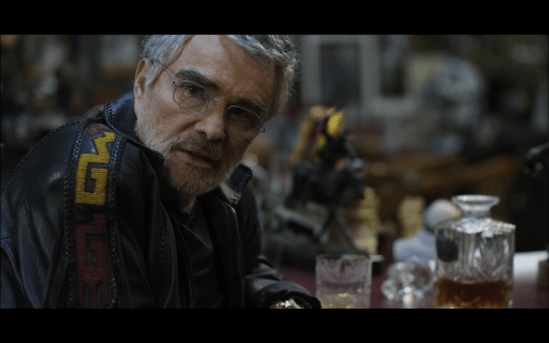
From this reviewers stand point, the last Burt Reynolds’ film to cross these glossy green eyes was perhaps in the year of 2005 with “Legend of Frosty the Snowman” and, even then, Reynolds’ casting was just voice work. “The Longest Yard,” starring that ridiculing funny guy Adam Sandler, was the last live action film, but the films I recall of the handsome mustache charmer sticking to me like glue and always coming to the forefront of my sometimes fried brain isn’t always “Smokey and the Bandit” or “The Cannonball Run.” No, the films that stay with me are “Cop and a 1/2,” “Boogie Nights,” and “Strip Tease.” A guilty pleasure comedy and two adult comedy-dramas overwhelm the light-hearted and comedy action of the 1980’s favorites and, perhaps, solely becomes I was more conscious of films in the 1990’s. In either case, Reynolds’ in any of the noted films was this charismatic and larger than life figure. That’s not the case in the 2016 thriller “Hollow Creek.” Written and directed by Guisela Moro, with Steve Daronn credited as a writing collaborator, “Hollow Creek,” also known as “Haunting at Hollow Creek,” displays a much more humble Burt Reynolds whose weak physique and agitated temperament more closely resembles his 81-years on this Earth and even though the enduring actor has only about 5 minutes’ worth of screen time as the region’s wealthy owner of coal mines, the fading A-lister shares a headlining credit alongside costars Moro and Daron.

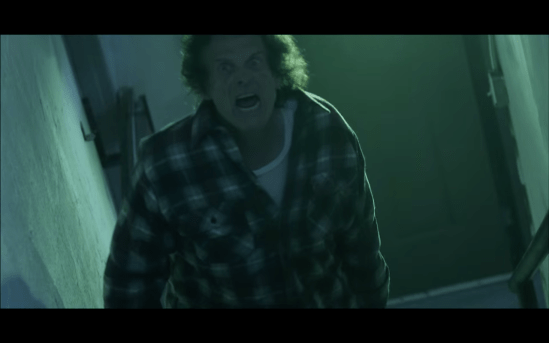
Filmmakers Guisela Moro and Steve Daron also star as the lead characters Angie and Blake Blackman. The two have well enough chemistry to pull off incognito lovers, but regress when unable to feed off each other when they divide for more than most the runtime as they’re pitted against their respective oppositions and fed their individual motivations. For Daron, the Burt Reynolds protégée succumbs to his character’s desperation and eagerness to locate his missing lover, showing an earnest fiery ambition and displaying a softer side whenever Angie is paired with him on screen. For Moro, I wasn’t sold on her performance that shifts into many different gears and taps into a wide range of unwarranted expressions and actions, but Moro’s directing herself and in that mindset, a narrow envision of how your character should react, behave, or carry themselves comes off a bit skewed and that’s more or less what happens in Ben Stiller directed-and-starring movies. If you’ve seen “Zoolander,” you know what I’m talking about. Alyn Darnay and Earleen Carey steal the show right under the noses of Moro and Daron with an unstable older couple trying to recoup thee the loss of their twin boys with the snatching of other people’s children and the pair dive into two very different hostiles with Darnay exposing his character, Leonard Cunnings, as a paranoid and psychopathic hand of the couple while Carey sails a softer, yet still deranged, side with trying to hunt down the perfect children for their unsuitable home.

Guisela Moro’s “Hollow Creek” succumbs to a lack of genre identity. Meaning, the 2016 film wasn’t constructed with one genre in mind, does it want to be a ghost film, an exploitation, and even Blake Blackman goes through his segmented drama of searching for his mistress in Wyoming Counter. There’s even a quotational introduction referring to children being abducted every 40 seconds in the United States. Without an identifier, plot holes rear their ugly little heads. For example, a hazy dynamic between Angie and a ghost of one of the dead kidnapped boys doesn’t seem to add up to the film’s ultimate conclusion when Angie has briefly passes into death and she shepherds the dead boy’s ghost to the great beyond, ending his Earthly torment. The whole scene is out of place and significantly unimportant as the two really never had an interaction with the exception of a pair of extremely brief moments, but in Angie’s moment on the other side, the two are the best of friends. The story was also inarguably one sided with much of Cunnings’ mental stability and criminal escapades of kidnapping three young boys falling shamefully by the waist side.

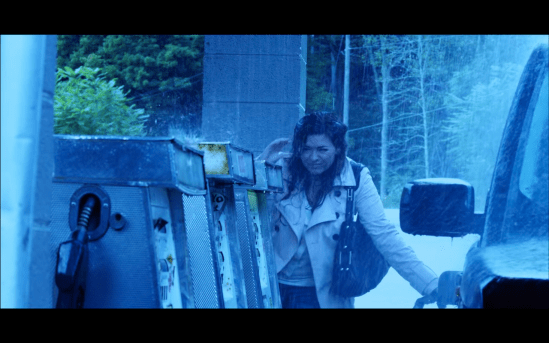
MVDVisual in association with FilmRise distributes the Guisela Moro directed “Hollow Creek” on DVD home video. The widescreen presentation is glorified by the lush West Virginia backdrop with intrinsic details in the greenery and the couples’ cabin, but darker scenes succumb to digital block interference and appears slightly washed over. Skin tones are a nice touch when in natural lens, but the back and forth between natural and a heavy blue filter, especially during scenes at the gas station, become a thorn in the side of continuity. Overall Jon Schellenger’s cinematography conveys a nice concoction of intrinsic beauty and hazy mystery. Audio quality pars well with some range issues that don’t really discourse the project. There are zero bonus features accompanying the disc. “Hollow Creek” flatters the Stephen King story telling imagination and Guisela Moro helms her first feature with rock solid determination with a touch of a cinematic spark that hooks you into the story, yet the unclassifiable stance mislays how the story is to be accepted, spooling an incomplete wash over Moro’s work as a whole. Still, “Hollow Creek” aims high and doesn’t miss and that’s the bottom line.

Own “Hollow Creek” on DVD today at Amazon.com!

Evil Hate Trumps Good Love! “The Hatred” review!


In 1968, former Nazi occult officer, Samuel Sears, runs a strict farm in rural America, restricting his only daughter Alice from the corruption of the outside world with an infinite workload, and Alice violently rebels against her tyrannical father, Samuel kills her with rage. Hidden deep in the dark basement of his plantation home, a powerful Nazi-occupied amulet, charged by fear and hate, feed on his rage and fear and curses him to do the unspeakable. In the present day, four college girlfriends retreat to a friend of the family’s recently purchased foreclosure farm house, the abandoned and forgotten Sears farm, for a relaxing weekend getaway, but after night of drinks and games, the amulet reignites an ominous and dark cloud, reviving long forgotten, evil spirits who search for an endless quantity of fear and hate and will stop at nothing to swallow the souls of each and everyone inside the Sears’ estate home.

“The Hatred” is the 2017 haunting thriller from writer-director and Brooklyn native Michael Kehoe and produced by long time “Halloween” franchise producer Malek Akkad. Kehoe tells the story in two parts with the first delving in the Sears family, getting a first hand look at the hardworking German mennonite character that is Samuel Sears whose a former war time Nazi that’s settled down and raised a family in America’s backcountry. From what can be gathered about Samuel Sears, the farmer protects his past identity and isn’t ashamed of yet, but rather proud of his accomplishments alongside the Führer. All of the attributes of a proud countryman come suddenly alive when he receives a mysterious package containing the amulet, a photo of him in full Nazi dress standing with Adolf Hitler, and a signed letter personally acknowledged by the Nazi leader himself offering him the amulet as a gift for his fine work during the War and that ultimately becomes his downfall, pitting him against his family. The second part of the film tells a more uncharismatic story of four young girls staying at the Sears farm in present day. One of the girls, Regan, just finished college and is about to start a new job and what’s her ideal getaway with her girlfriends? An old (haunted) farmhouse.

“Wishmaster” himself, Andrew Divoff, gives “The Hatred” much more life despite his joyless character Samuel by somehow giving the former Nazi, now American farmer personality traits that are haunting in an unforgettable performance during the first act. The same can not be said about the four girls – Regan (Sarah Davenport), Layan (Gabrielle Bourne), Samantha (Bayley Corman), and Betaine (Alisha Wainwright). There’s no comparison as Samuel is a superiorly written and finely performed character than those he stalks beyond the afterlife. The gaggle of women offer no substance in the face of adversity or just plain ole progression of their character. Numerous times does Regan’s sick grandmother have scenes and Regan passively forgets about her poor grandmother’s health or Samantha’s uncanny interesting in history that really goes no further than the random facts that she spews. Regan and Betaine seem to have this close knit relationship, yet it founders and is suddenly cut short when all hell breaks loose. There are no personal connections established, offering little-to-no worth to their lives when Samuel comes calling for their souls, and leaves “The Hatred” in the take-it or leave-it column in the second and third act. Darby Walker, Nina Siemaszko, and Shae Smolik complete the cast.

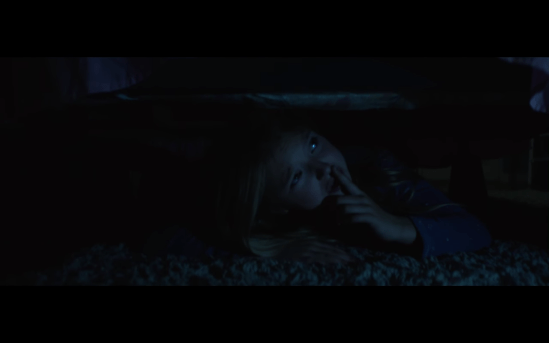
Kehoe does display intense, nail-biting visuals with the materialized embodiment of fear and hate as well as sly editing with a scene involving Shae Smolik’s Irene, a little girl whose friends with Regan, who asks Regan to check under her bed, for supposed shadowy figure. When Regan pulls back the skirt to look, she sees another Irene putting a finger to her mouth, hushing Regan, and saying, “that’s not me,” as she points upward toward Regan’s impending doom. The heart-stopping moment will tear eyes away from the screen in anticipation of what Regan will see atop of Irene’s bed. However, that’s the sad truth in the extent of Kehoe’s story; a story riddled with plot holes and underdeveloped subtexts in which one in particular pertains to the aforementioned subplot of Regan’s ill stricken grandmother that goes undercooked when attempted to connect with the supernatural portal that of the Sears farm home. Characters disappear to never be seen again, character motivations go unexplained, and backstories are like a hazy dream and the entire ensemble is a mismatched, muddled mess in a premise that should have continued with the motif of the Nazi infiltration into America and less about scaring the wit out of witless girls with the creepiness of an alternate dimension seeping out of an unholy amulet.

The Lionsgate Films’ “The Hatred” is presented by Anchor Bay Entertainment on Blu-ray and UltraViolet home video in a 2.40:1 aspect ratio from an encoded AVC 1080p transfer that’s sleek and well lit, especially capture Samuel’s earthly and grim nature. The overall atmosphere doesn’t particular hone in a horror palette design, but offers realistic ventures into brightly lit areas of dark scenes. Details are fine in more of the natural aspects of the film whereas the CGI goes soft at times, but still very well detailed. The English language Dolby TrueHD 5.1 keeps Kehoe’s film buoyant with a leveled mix through and through with clear fidelity and good, if not great, surround sound output. Instilled with conventional horror schemes, burdened with design flaws, and unfocused in it’s inability to pin down an narrative identity, Malek Akkad and Michael Kehoe’s spook house feature “The Hatred” requires much tender loving care to uplift this unkempt cliche horror into a coherent thriller.

“The Hatred” on Blu-ray+UltraViolet!

Can Evil Be Thwarted From Plaguing Your Family? “The Hours Till Daylight” review!

output_3Yp2Xe
Ever since he was a small child, Marco has been haunted by a malevolent presence inside his family home. The nighttime darkness has become Marco’s most feared adversary, staying up late and sleeping with the lights on has been molded into the normalcy of his life. While recollecting his childhood, a happy and tragic period in his life, Marco tracks downs and locates a Curandero, a Witch doctor of sorts, named Luis Ortiz, hoping for a resolution to the spirit’s relentless torture before Marco’s son becomes the spirit’s next target. The unorthodox Ortiz discloses a self-exorcising ritual that only Marco can perform to ultimately rid Marco’s family’s curse. Armed with ritualistic candles, a barrier of salt, the holiness of water, and a slither of courage, Marco transforms his childhood home into an evil eviction dwelling that will be the last stand.
vlcsnap-00060
Director Jon Garcia’s first step into the horror genre with “The Hours of Daylight,” a ghost film through-and-through, starring Quinn Allen as Marco. Set within the confines and on the outskirts of Corpus Christi, Texas, Garcia’s uses the industrial and river-ridden backdrop to contrast a stark outline between the metal and the nature qualities of the coastal city, a demarcation dividing the otherworldly evil versus the organic man. However, the diverse landscape is only a embellished blanket over a lingering underdeveloped story written by Garcia. Marco spends much of the time wandering the land, pondering the what ifs of his past, and doing a lot of soul searching in order to build courage against a lifelong and unknown force, but the story goes stagnant for a good portion of the first two acts doing nothing to motivate and build upon an established character from early into “The Hours Till Daylight.”
vlcsnap-00058
Interesting aspects of the film such as Curandero Luis Ortiz and the stricken girlfriend of Marco left a befuddled teaser in a Quinn-centered story. Dan Braverman (Dylan Dog: Dead of Night) portrayed the Curandero, a character whose disability, threatening protection, and greedy candor made a highlight when Marco comes calling for unconventional assistance. Braverman’s “gangster” charisma overpowers Quinn Allen’s timid and drab performance of a desperate man on a mission to do and try anything to end his family’s suffering. Marco’s girlfriend, credited to Sarah Jannett Parish, begin to experience the affects of Marco’s torment as the apparition clings onto her and their unborn son, pursuing a legacy of spirit attachment. Again, the scenes are brief and unexplored; these scene would heighten a clear and present danger that provokes Marco.
vlcsnap-00059
I previously read that the slow pace of “The Hours Till Daylight” was well worth the wait at the finale. I disagree. The finale was better with a blue tinted, “not-of-this-Earth” force, naming itself Hate, makes a confrontal appearance when Marco challenges it and though the ghost effect does the job, final bout lets the air whoosh out, deflating any kind of tension and excitement right out of moment. Technical details crash Garcia’s initial horror achievement and its the little things that create an atmosphere. Garcia has an eye for horror, but not the eye it needs to be more defined in it’s training to capture the tiniest of details that makes a scene, or a movie, truly scary. Whether or not Garcia’s intentions we’re to display a blatant ghost thriller or to exhibit Marco’s severe mental distress stemming from the tragic loss of his sister and his emotionless father doesn’t matter if the film isn’t technically and emotionally sound. Garcia’s film isn’t technically sound and borderlines being emotionally there, but falters through the inconsistencies.
vlcsnap-00061
Breaking Glass Pictures distributes the 84 minute not rated DVD of the Jon Garcia’s Lake Productions feature film presented in a widescreen 16:9 aspect ratio on a singer-layered disc and the video quality is solid sans some compression artefacts. The Dolby Digital 5.1 audio mix could you some work leveling out of the LFE with the audio tracks. The special features include an in-depth look into the behind the scenes of “The Hours Till Daylight,” the film’s theatrical trailer, photo stills, and other BGP promotional trailers. Overall, “The Hours Till Daylight” atmospheric creepiness bleeds in the conformity of filmmaking, offering nothing new and unique to the psychological horror thrillers. Director Jon Garcia has talent and ambition that needs tweaking and more experience in order to accomplish horror at it’s scariest.

Buy “The House Till Daylight” at Amazon!