An Old Woman Coughs Up Blood and Smells of Death. That’s When EVIL is Afoot! “Death Ride” reviewed! (International Media Network / DVD)

“Death Ride” Available on DVD!

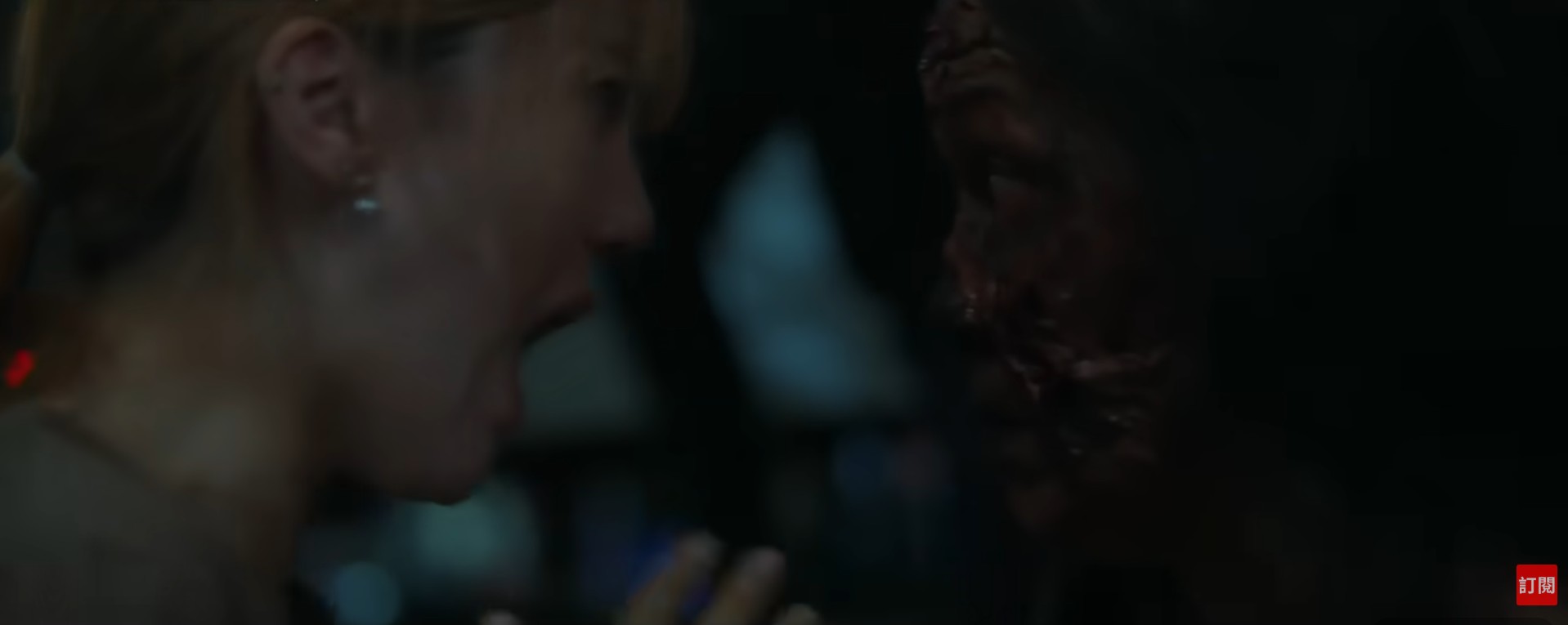
Nick’s about to board an overnight bus in Thailand with other passengers travelling toward the city.  As all passengers take their seats, luggage stowed, and the driver starting the engine, one last ticketed passenger boards, a quiet elderly woman who reeks of fermented fish and has a continuous cough.  What should have been a pleasant ride to the city has turned into an unbearable stench that’s seated right next to Nick.  When the woman dies after a severe coughing fit, neither passenger or bus staff know what to do when the body suddenly disappears, and the believed idea of ghost enters most of everybody’s assumptions.  With the small still strongly permeating inside the cabin, the driver agrees to stop at the next rest area and call for a replacement bus, but the dark road has seemingly no end and a strange curse of the old woman snatches the passengers one-by-one, providing a bus terminus of death.
“Death Ride,” aka “VIP Death Seat,” is the 2024 released commercial transportation ghost story hailing from Thailand.  One half of the “Black Magic Mask” directors, Pasit Panitijaroonroj, splinters off to helm the horror, credited in the title cards as Phasit Panitijaroonroj.  Known by various other interpreted titles, such as “Seat 204,” “The Seat,” and as “Rot Tour Wee Ai Phee” in native Thai, the feature is also written for cinematic screen by Panitijaroonroj with the conceptual story conceived by Wiroj Chotichiawong combines the already tense mass transit journey with a supernatural grim fated outcome that pits people not only against a malevolent and eerie force and terror but also seizes each other in a plight of fear of the unknown.  The production studio behind “Death Ride” is Arriya Film, who produced “Black Magic Mask,” “The Attic,” and “Check-in Shock,” and is distributed internationally by Antenna Entertainment. 
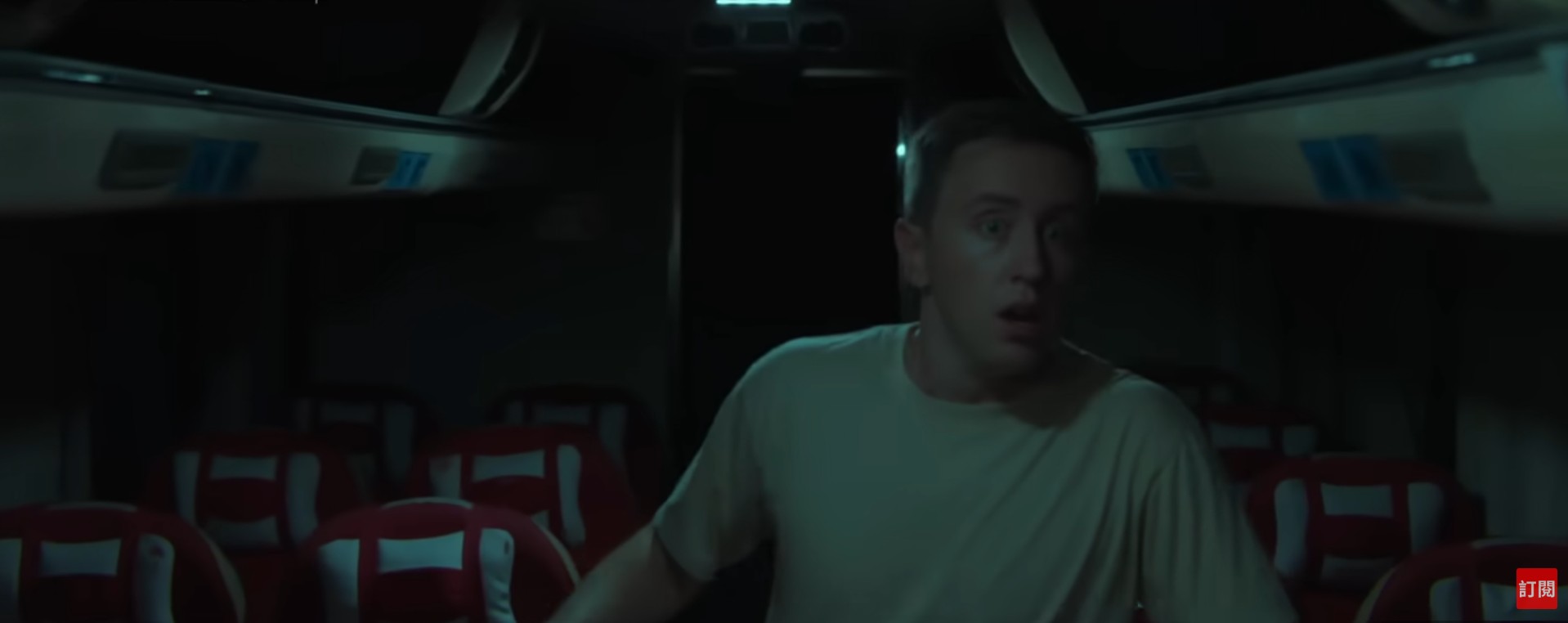
The “Death Ride” story has an ensemble cast setup that bounces between westerner Nick, a group of young people, an older narcissist, the pair of bus staffers, and briefly minor support characters who stand out but without expressed intent, such as the mother and son combo, Nick, who’s travelling solo on unmentioned grounds, has more attention as he wanders the bus stations, becomes the primary disgusted toward the old woman, and has an unaccompanied third act all to himself.  Nick is played by American Nathan Bartling, Youtuber of My Mate Nate, a bilingual prankster who actually was in Thailand authorities’ legal crosshairs for teaching Thai children how to flatten coins on a railway and he was threatened with railway obstruction and damage.  Bartling has since been promoting the Thailand in a positive light despite his expatriate infamy.  He goes on to star in the film as the ignorant and blamed party for the cursed bus ride.  Bartling is joined by Pawornwan Verapuchong, Nichapat Chaiaek (“Bangkok Dangerous”), Prasert Weangwichit, Innyada Yurot, and Jariya Rachomas as the group of youngsters on their way to the city and become intwined in the same mesas Nick but Nick ultimately becomes singled out for being a westerner, to stir up offensive requests to change seats, and because he’s an easy target as a lone travler whereas the group of young people travel in a pack.  Another social media personality-prankster in homegrown Jaturong Papho has a smaller but concentrated role as the trip’s first bus driver who must excuse himself from duty when the local cuisine bottoms out in the stomach.  Papho provides a lot, if not all, the comedy that’s been stitched into “Death Ride’s” loose haunting narrative with fart jokes, overreactions, and funny expressions.  The cast fills out with Pichet Iamchaona, Watsana Phunphone, Suchao Pongwilai, and Namgneun Boonnak as the sickly old woman. 
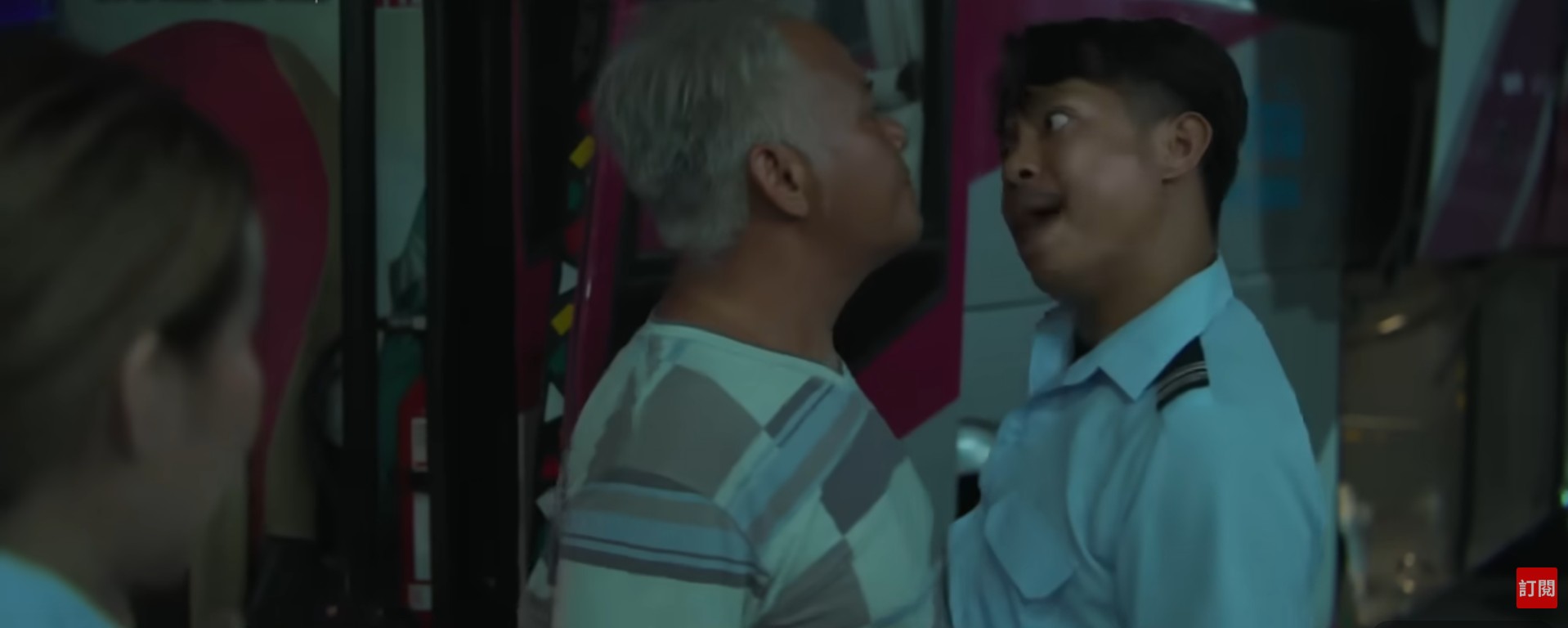
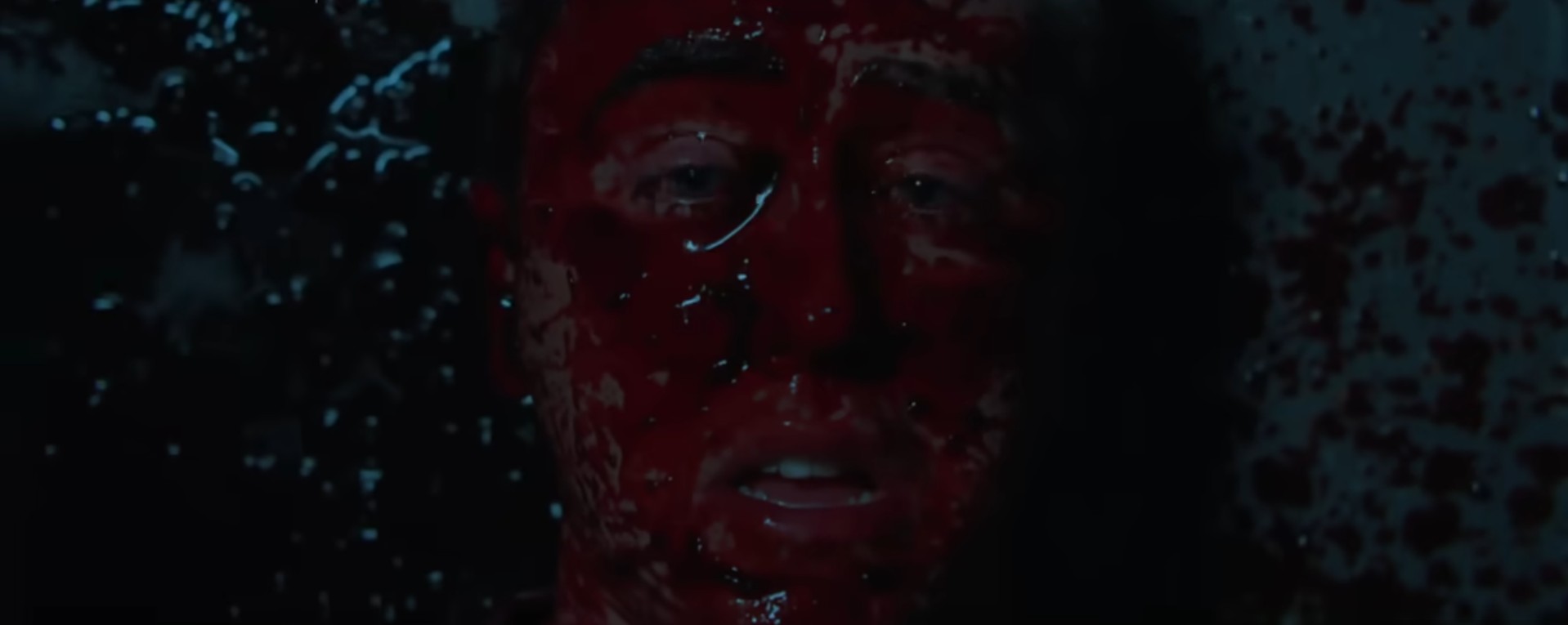
Panitijaroonroj pulls together an ensemble that audiences will have a difficulty relating to, will struggling favoring for in either demise or survival, and just plainly like as characters in general.  There’s nothing characteristically interesting about the ill-fated lot who come to the story without context to their lives or the reason why their on this bus trip the city anyway.  Nick’s is a solivagant who shares not one single tidbit of information about anything substantial to anyone.  In fact, Nick is brutally quiet for much of the duration.  The only time the principal character speaks is to question strange occurrences or be in complaint of the smelly old woman next to him.  The entire cast is written to complain, mostly about the decaying fish smell emanating from who the follow passengers constantly refer to as granny, and this leaves little room to get to know the players of the malevolent spirit misadventure who are trapped with it on a 22-ton bus careening into oblivion. There desperately needs to be some subtext conversations that reach deeper into their lives that sway their motivations or speak to their typology.  Instead, all there is is screaming, bickering, blame throwing, and just being a body just to be fringe fodder for the spirit.  The spirit itself lacks an understanding as the elderly woman is escorted to the bus stop by a boy, assumingly her grandson or nephew, but he wanders off the story at some point before disembarking. At least with the spirit, there can be assumptions made about it, such as a representation of death with the fermented fish smell and the bleeding from the facial orifices, and that suggest this bus fare could cost them everything.  “Death Ride” is also loosely similar to that of Jean-Baptiste Andrea and Fabrice Canepa’s better evolving and character steeping 2003 holiday-thriller, “Dead End,” but “Death Ride’s” ending steers wildly into a ghostly eldritch to resultingly shock viewers with its foreseeable twist ending.
Our first review coverage of an International Media Network distributed DVD begins with “Death Ride” with a DVD5 encoded with NTSC MPEG2 compression and presented in 720p and a widescreen 1.78:1 aspect ratio.  The first impressions are not off to a great start with a heavily aliasing with the lower bitrate that hangs around 3-5Mbps, creating an unnatural blur during active motion and reducing the detailed textures.  The story is entirely set at night that inherently produces the appropriately laid out negative spaces, casted shadows from key lighting, and a distinct higher contrast levels and while the negative spaces show some banding, there definitely some data loss with the image breaking down during the decoding.  Color saturation is left muted for a darker grading to set a bleaker tone and an eerie atmosphere.  The Thai PCM 2.0 Stereo track offers a front and center mix that retrieves and decodes dialogue in a precise and prominent reproduction with a range extended to the hum of the bus engine, the haunting echoes of a malevolent spirit, and perhaps the most asinine element, the hyperbolic hits passengers take against each other and from the angry spirit.  The ill-fitting score, uncredited, is what free stock music dreams are made of with an aggressive and overreaching tone harrowing score that was applied to every single situation the characters came to face.  Forced English subtitles appear error free and move along well enough with the quick Thai Siamese language.  IMN’s release is barebones with only a chapter selection in the static menu.  Also not impressive is the tangible DVD presence that doesn’t indicate even who the distributor is and luckily the IMN title card is presented precursing the feature.  What’s also missing is any kind of cast and crew credits from the back in what is rather also a bareboned informational and image design.  There is no MPAA rating listed but the assumption is unrated, if no rating is given.  The region free disc has a feature duration of 85 minutes.

Last Ride: “Death Ride” is a long, arduous trip to sit through. Lacking depth in story and in character, refunding the bus ticket is perhaps a better deal.

“Death Ride” Available on DVD!

What EVILS Lie After Death? “We Go On” reviewed! (Lightyear Entertainment / Remastered Blu-ray)

Get Haunted as “We Go On” is now on Blu-ray!

Miles Grissom lives in fear every minute of his life.  What scares the editor of shoddily performed, midnight television infomercials the most is the unknown after death.  The question is Is there a life after you die or is there just a black void of nothingness?  To answer that existential question, Miles places a quarter page newspaper ad seeking an ounce of proof of the afterlife with a $30,000 reward attached for one single person who can show him that there is an existence beyond death.  With the unconditional support of his mother, he scours through hundreds of fakes, solicitors, crazies, and the like until he narrows down the advert answerers to a few possibilities that have real promise.    As Miles investigate the claims of each one, he finds himself closer to the truth than he ever wanted to be and now he’s forever trapped between existential planes for the rest of his life.  

One of the longstanding and biggest questions in the universe is what happens to us when we die?  Where does our immortal soul, the individualistic essence of our being, wander to after the corporeal shell is empty?  Or does it just poof vanish, like an extinguished candle flame?  While all of these questions can be up for philosophical debate amongst the various, and often contentiously stubborn, religious groups and cultures, filmmakers Jesse Holland and Andy Mitten use the idea for their 2016 drama-horror “We Go On” that gives one possible, uncontested and cinematically electric, explanation as well as imparting a somethings are better left unknown dread.  The duo behind “YellowBrickRoad” returned to write-and-direct their sophomore U.S. production with a principal photography location shoot in Los Angeles.  “We Go On” is produced by Logan Brown, Irina Popov (“Chilling Visions:  5 Senses of Fear”), and Richard W. King (“The Witch in the Window”) under the production banner Filmed Imagination.

Miles Grissom is a mild-mannered and scared into solitude individual.  His loneliness, though not conspicuous to any extent, extends to his profession of a video editor of infomercials and other overnight television programming.  Agoraphobia and thanatophobia keeps Miles securely isolated in his modest apartment building where a recurring dream of a car accident sends his heart racing, a side effect of a core, back history moment yet to be explored when we meet Grissom, who is played by a stiff, but gets the psychologically wounded character across, Clark Freeman who has worked previously with Holland and Mitten on “YellowBrickRoad.”  “Cat People” and “Superman III” actress Annette O’Toole fills in as Miles’s ride-or-die, overprotective mother with a deep, dark secret of her own coated with a thin film of backseat family drama that’s doesn’t make her character shine like it should, especially being an important piece and highly influential to Grissom’s character.   Instead, the exposure of the secret and the impact it’s supposed to have is left on the backburner for Nelson to come into play, a greasy airplane janitor with deadly drug problem in what can be described as the best Sean Whalen role he never played with Jay Dunn filling those janitorial coveralls.  Dunn, who would go on to have a role in Andy Miton’s solo project, “The Harbinger,” dons slicked over balding hair, grimy teeth, and a deep, sunken eyes to be a bane toward Grissom’s existence and while Dunn doesn’t have dialogue for half of his onscreen time, he makes for a perfect hang around the background, meanspirited glarer.  The rest of the “We Go On” cast pop in and out as Grissom dwindles down his list of fakes and phonies with appearances from Laura Heisler (“YellowBrickRoad”), Giovana Zacarías, and the always wonderful on screen, “Gremlins 2’s” actor, John Glover, as a scientist trying to scare Grissom into giving him the reward money.

“We Go On” encases more drama elements than horror but the circling horror imagery enclosed has a beautifully grim layout with the minor touches, such as the slow turn of a hanging corpse or the statement of a ripe smell of a long dead overdose victim, that add a palpability, reinforcing the horrific moments and increases the ghastly tension.  The further we journey with Miles Grissom in his obsessive search, the grislier the imagery gets in what is essentially a two-part tale that firstly puts us and Miles on the hunt for life after death that quickly nosedives into a leeching supernatural torment.  Oddly, Grissom takes his newfound nuisance almost instantly in stride with not a ton of obstacle or self-realization work to warrant an acute enlightenment of how to handle an orbiting ghost that flashes disturbing images every other minute inside his mind and allows him to see between the planes of other gruesome ghosts stuck in limbo.  There are other examples of these sudden reversals or improvements that work against the pacing and don’t invite reward through struggle or pain in what is a walk in the park for Miles Grissom to see and handle ghosts being introduced to audiences as a man emotionally crippled by a traumatic, underlying fear.

Via Lightyear Entertainment, an American coast-to-coast independent film distributor, “We Go On” receives the Blu-ray treatment with an AVC encoded, 1080p high-definition resolution, BD25.  There’s little information regarding the remastering of the film with the only kick up being a digital restoration and enhanced visual effects and touchups to provide a smoother, cleaner picture presented in the film’s original anamorphic widescreen aspect ratio of 1.78:1.  Having never watched the DVD or first Blu-ray version, I have to take Lightyear’s restoration at face value which does have a crisp, clear picture full of natural color and graded with brilliance that sometimes makes the picture look too digitally sterile with not a ton of contouring shadows that can make the picture look depthless at times.  The infused visual digital f/x add about the same flavor, but the images never linger on screen, turning brevity to the film’s effects advantage.  No apparent issues with compression on the 25gig BD; textures modestly tactile despite the bright and airy grading and blacks are deeply saturated with spectrum banding.  The English language audio options include a lossy Dolby Digital 5.1 and a lossy Dolby 2.0 Stereo.  Dialogue is clear and projecting over the other layers but lacks that full-bodied, full-channeled trait of lossless.  Supernatural effects find distinctive ground and synch greatly with the sudden scares in transition between reality and the ghost realm.  Range and depth are favored by the remastering in the scenes that warrant both, such as the LAX’s airstrip takeoffs that considers the jet plane’s positioning in the background or above, increasing steadily the jet noise volume whenever a plan is in the extreme background to a more overhead location.  Also added for the remastered release are three new, feature-length commentaries:  two with the individual directors in Andy Mitton and Jesse Holland with the third houses the two stars, Annette O’Toole and Clark Freeman. The clear Blu-ray Amaray arranges a darker composition cover art than what the movie actually entails with an interior disc pressed with the same cover and a reversible cover that has one of the more memorable scenes from the feature. There are no insert materials included. The region free, unrated release has a runtime of 89 minutes.

Last Rites: You get what you ask for is the moral of the story maxim in Andy Mitton and Jesse Holland’s “We Go On,” a commercially technique, light-weight thriller with a thin lining of grim imagery between drug overdoses and suicide and adequate performances by Annette O’Toole and Clark Freeman that drops the everlasting question of desire and extreme, emotional fear for instant peace of mind, even if experiencing the terrifying truth firsthand.

Get Haunted as “We Go On” is now on Blu-ray!

Keep the EVIL Family Drama for Your Mama. “Abigail Haunting” reviewed (High Fliers Films / Digital Screener)

While searching for a life in Reno, Katie reluctantly becomes an accomplice in a heist job with her abusive boyfriend, scoring a small brown paper bag packed with stolen money.  In the middle of post-heist uncertainty, an opportunity to escape a troubled relationship presents itself and Katie hightails it to her hometown of Prescott with the loot, leaving the dark life behind her in Reno.  Unsure of her next steps, she hides away by moving back into her childhood trailer home with foster mother, Marge, who has nearly deteriorated into a completely catatonic state over the last few years.  As the days pass and Katie catches up with Brian, rekindling a relationship with a high school crush, her secretive past becomes plaited into Marge’s sinister skeleton in the cupboard that pulls both of them into the supernatural wrath of a tormented spirit haunting the trailer home, merging the past and present with a shocking conclusion.

Cursed.  No, not the vengeful spirit who resurrects to plague havoc on the still breathing, flesh and boned to set their tortured, spiritual planed souls to rest.  The curse I speak of involves putting Haunting into the title of any ghost film that has been released in, oh let’s say, the last 20 or so years culminating into being one mediocre release after another of mainstream and independent films that has, frankly the lack of a better word, cursed the subgenre.  Type haunting in the IMDB search field and just glaze over as hundreds of films crash over you in a tsunami of stale capitalism ever since the remake of Robert Wise’s “The Haunting” in 1999 with Liam Neeson and Catherine Zeta-Jones.  “The Haunting of Connecticut.”  “An American Haunting.”  “23:59:  The Haunting Hour.”  Being one step behind the hackneyed “possession” in nearly every title about, well, possession, these post-2000 ghost films are just morsels of the bigger crapola pie that investors love to sink as little of their money into as possible because the return is greater because ghost film don’t necessarily a R rating unlike other subgenres and, sometimes, piggyback off a successful film with the parlance.  PG-13 in slashers is an oxymoron, if you ask me, but in with ghosts, fear of mysticism and the unknown has enough power to scare if done correctly, i.e. the original “Poltergeist.”  This unbecoming setup leads us to the 2020 release of the revenant thriller “Abigail Haunting,” the latest Kelly Schwarze written and directed full length film after tackling an Area 51 inspired bloody battle beyond the stars set in our backyard with “Alien Domicile, and before we go into whether the Schwarze film, co-written alongside Charisma Manualt, can tame an unbridled use of title-exploitation with a first rate story, the Indie Film Factory production will receive full benefit of the doubt until the end of the review.


The story follows a small town girl, Katie, from Prescott, Nevada who falls into small time crime with a lowlife boyfriend that quickly turns sour and deadly after an armed cash grab, presumably from a Reno casino.  Chelsea Jurkiewicz fits that small description recipe of stuck in a rut local girl without much cause for disbelief.  As Katie, Jurkiewicz’s able to be the part of a young, harried woman running from a checkered past and into the flames of a paranormal bombardment.  The then early 20-something, “Stalker” actress kept Katie balanced between her cash stealing time in Reno, integrating back into what was a rough patch with an unreasonable and abusive foster mother, and dealing with unexplainable occurrences of nightlights turning on by themselves, her room being ransacked, and succumbing to disturbing visions while reminiscing of being a scared child hidden behind a makeshift potato sack mask that becomes a reoccurring object throughout.   While Schwarze loosely ties all the facets together in a nice, tight bow that leads to a climatic unraveling of Katie’s past, the visually assaulted Katie suffers as the centerpiece punching bag that connects them altogether.  To top Katie’s mounting pressure, a face from the past tries to pry his way into her life.  A lost fling in Katie’s fleeting existence is Brian, played by Austin Collazo in his debut film performance, forcing himself into her life in what reeks of single parent desperation.  A moment involving Katie looking through a photo scrap book shows the two smiling together in a lone picture, as if she’s reflecting upon a previous romance or friendship that has since fizzled, but that’s about the extent of their history that doesn’t dive deeper into the reflection or explain the spark from the sudden interest from Brian.  At the crux of the story is Marge (Brenda Daly), a dirtied, nightgown wearing middle-aged woman who fostered abandoned at 4 months old Katie in what only has been, in Katie’s sole exposition, a terrible experience.  Schwarze instinctively ties the trailer home and Marge together as a single entity, enacting as one to push Katie around in a fit of unmotivated hysteria.  Katie doesn’t seem too eager to lift an investigated finger any of phenomena that has plagued her in the home, in the back shed, or even follows her out on a date with Brian.  Instead, Brian initiates digging into her past that sends Katie down Marge’s rabbit hole of hidden secrets in an off kilter directional take where a protagonist stands indifferent or remains stagnant after multiple Abigail encounters that would seemingly rouse up curiosity or for the sake of proving sanity.  Rounding out “Abigail Haunting” is Michael Monteiro, Christopher Brown, and Taylor May as the titular ghost.

Not a positive start with flat, often time dunce, characters in “Abigail Haunting.”  The mindset behind Katie’s involvement with the Reno robbery and a scoundrel lover strains to play a bigger role into the eerie defense she’s positionally locked into at Marge’s dreary trailer home.  Schwarze remains on the fringes around the preoccupations that descend Katie into this dark place in her life between searching for her real mother that abandoned her as an infant, the deadly robbery in Reno, and the abusive ex that all seem to be weighing less on Katie’s shoulders than the duffle bag of a couple thousand dollars that would typical skewer one’s psyche, manifesting more than just the typical side effects of pressure.  Instead, Schwarz doesn’t fold in well enough the incorporation of our angry spirit, Abigail, whose unexplained appearance out of the Nevada blue sky in between Katie’s leaving and returning to Marge’s home denotes not one single explanation of when and why Abigail chooses to be a resurrected, phantasmal spite.  More jeopardizing toward Katie’s past and present life is her obsession with the stolen money versus living a decent life with possibly Brian and his dissociable, divorce struck kid, who the former is clearly obsessed with her, but the story more so saturates with a free floating, full torso phantasm, as the Ghostbusters would say, that undermines the subterranean psychology at work here and clouds the ghost foundation built on deceits, lies, and ugly truths. What “Abigail Haunting” succumbs to is being about as rudimentary as they come with a climax too riddles with plot holes that squish much of good establishing camera work and some decently laid jump scares. Haunting, as in a title, still curses the horror subgenre with middle-of-the-road dynamism.

Death clings to us all. In “Abigail Haunting,” death clings to vengeance in this supernatural thriller dropping on DVD in the UK on February 8th courtesy of High Flier Films and ITN Distribution. The region 2, PAL encoded DVD will be presented in a widescreen 2.35:1 aspect ratio with a runtime of approx. 85 minutes. I initially had high hopes for Abigail to be at least be a derivative carbon copy of “The Conjuring” as “Scare Me’s” Michael TusHaus’s shows off impressive camera work that organically flows through Marge’s tight quartered trailer, as well as in other scenes when applicable outside the trailer location, with generous use of a stepping in-stepping out steady cam. TusHaus’s hard lighting also creates stern atmospherics with full bodied shadows that symbolically keep secrets and spirits in the dark. The digital release had no extra bonus feature available with none displayed on High Flier Film’s website. There were also no bonus scenes during or after the credits. Solid cinematography and palatable performances couldn’t plug up all the plot holes that stiffen “Abigail Haunting” into a two-bit carnival attraction that looks cool upon entry but not worth the money on exit.


In the S.H.U., The EVIL Comes From Within. “Caged” reviewed! (Shout! Studios / Digital Screener)

Psychiatrist Dr. Harlow Reid is sentence to life in prison after being convicted of murdering his wife.  With his assets frozen and his legal representation dropping him as a client, Reid is forced into being his own legal counsel.  To make matters worse, a female prison guard’s perverse pleasure is to slowly torture him while in her custody at solitary confinement.  His only means to enter general population is to behave and confess to the crime he contests, but he continues to maintain his innocence by refusing to sign the confession, remaining alone and withstanding abuse until he can write a formal plea to a judge to reconsider the facts in his case.  As the days turn to weeks and weeks turn to months, the usually stable minded Dr. Reid, alone with his thoughts, has his fortress of reality buckle under the heavy burden of isolation compounded with the maltreatment and his personal demons that struggle with the actual events in his wife’s sudden death, questioning himself that her death might have been at his hand.

Inside the clink is a maelstrom set in a pressure cooker. Ready to explode at any moment are cons of, mostly, unsavory personalities simmering with pent up anger, desperation, and ill-will positioned by equally fraught guards harried by timebomb temperaments and undervalued in training and payment. In Aaron Fjellman’s written and directed debut feature film, “Caged,” the strain festers toward being hell behind bars in a ruthless determination of survival. Also once known as the working title, “The S.H.U,” Fjellman constrains his American-made, and inspired, big house thriller with a minimalist approach set with a backdrop of chiefly the solitary housing unit to lock up viewers in, as witnessing accomplices, with a protagonist’s downtrodden path of mental degradation as well as being humanly degraded. Aaron Fjellman produces his film for production company Panic House Films and Shifty Eye Productions with the latter a company created by the film’s star, Edi Gathegi, serving on the board as executive producer.

It’s no big surprise that Edi Gathegi dons the prison house jumper and clanking shackles in this social commentary thriller. The “Blacklist” and “X-Men: First Class” actor knows a good role when he sees with, especially inside the body and mind of one Dr. Harlow Reid. Gathegi regularly has to battle with himself filtered through the madness of the S.H.U. mind-breaking solitary with a little fanning of the flames from sadistic prison guard, Officer Sacks. In an extremely ghastly transformation, Melora Hardin goes from a classic beauty with a big smile and high cheek bones to baring an unflattering lumpy posture with hair pulled back in a tight, short ponytail overtop a demonizing trope of a scar down the left side of her face and an assured cockiness symbolized by the gum smacking that’s sometimes becomes the only thing in the camera frame. As Gathegi masters the ideals of a convict presuming himself innocent, Hardin lurks beyond his cell door as the devilish guard over his shoulder. Officer Sacks defines a face with a story and her story has a hard on for power over prisoners, especially affluent ones or, maybe, those of African American descent in a tinge of racist undertones as Fjellman notes on the racial injustices in the prison system. A smidgen of that notion is supported shown in Officer Sacks behind-the-back passive aggressiveness toward Warden Perez. “Annabelle’s” Tony Amendola truly delivers being a heartfelt ally, yet sturdy firm handed warden with Reid. Perez, an expressed Catholic, seeks Reid’s redemption through the admittance of wrongdoing and that becomes the steadfast barrier Reid has to hurtle that will test his convictions and his sanity. “Caged” rounds out with Mick Jagger’s son, James Jagger, as Reid’s unhinged S.H.U. bedfellow who speaks in hyperbole of inmate hauntings in an opaque analogy of guilt mixed with madness, and “Westworld’s” Angela Sarafyan told through flashbacks and supernatural induced psychosis as Reid’s wife, Amber.

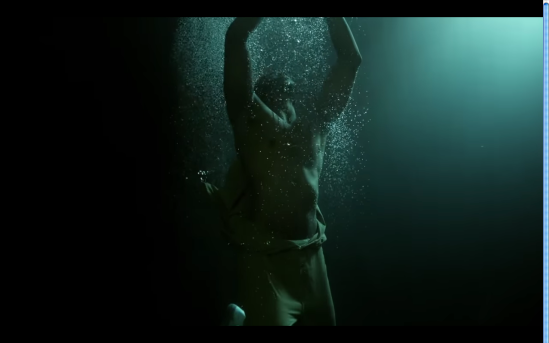
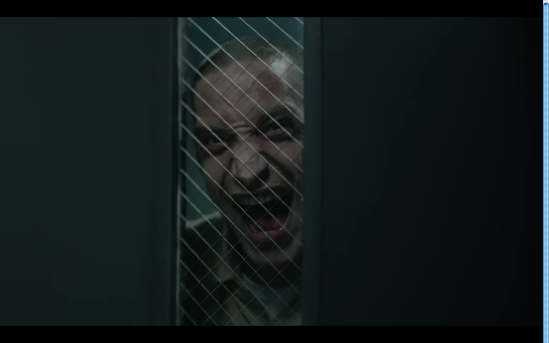
To tell an inmate’s nearly yearlong story succumbing to the brutal and segregating abuses surrounding him in solitary confinement is a tremendous feat working into the mental cracks and exploring the fallacies. Yet, Aaron Fjellman made his fictional interpretation look easy by relating a surreal, but telling story in just 80 minutes, gripping with metaphorical concepts of an overcrowded prison system preying on uncontested obedience, even if the lengths taken to obtain complete compliance is trauma exacting torture of draconian policy, by primarily privately funded institutions with little-to-no funding or resources to manage. “Caged” is very fleeting with montage upon montage of Harlow Reid’s day-to-day, but never becomes a monotonous roundabout vivarium of Reid sitting hopelessly-looking in his cell. Gathegi’s put to work as a man determined to challenge the system that engages Reid to keep sharp and in shape by working out in various exercises, entertain an unhinged neighboring inmate with his ramblings and blurbs of crazy talk truths, and feverishly work on his legal case by any extraordinary measures, including using his own blood as ink. Yes, “Caged” can elicit a genuine sense of horror, a perspective on psychological terror, and be an eye-opening gasp of real life prison dread when good versus evil is mirrored in reverse with the good guys not being the prison guards. Fjellman imprisons us all in “Caged” by culminating the fact that no matter your social circumstances, the S.H.U. breaks everyone.

Orange may be the new black, but Aaron Fjellman’s bleak fretting “Caged” jars with somber authoritarian power. The new thriller released by Shout! Studios premiers unrated on VOD and digital January 26th. “Caged” is film by director of photography, Jessica Young, with an Arri Amira camera and presented in a widescreen format, 16×9 aspect ratio, and, typically, the Amira camera versatility is in the use for low-budget films, perfect for “Caged” in it’s nearly singular setting and two-tone, steely gray and black, atmospherics that naturally have devoid color vibrancy. CJ Johnson, who will soon see his musical scores in a pair of upcoming Friday the 13th fan films, lines “Caged” with a soft, building industrial score that tunes the disquiet in Reid’s racked inner conflict. With this digital screener, there were no bonus materials or any bonus scenes during or after the credits. Through the use of visual and audible horror tropes and with potent performances from Edi Gathegi and Melora Hardin, “Caged” is a ghost story told for the unspoken voices victim to long-term confinement.

Click the poster to pre-order “Caged” at Amazon!

Youtubers EVILlog a Malevolent Presence Inside Their Home! “8ight After” reviewed! (PovertyWorks / Digital Screener)

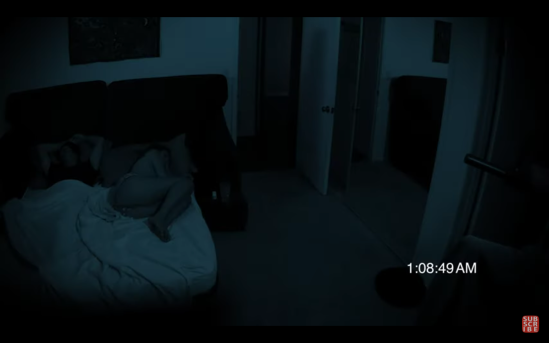
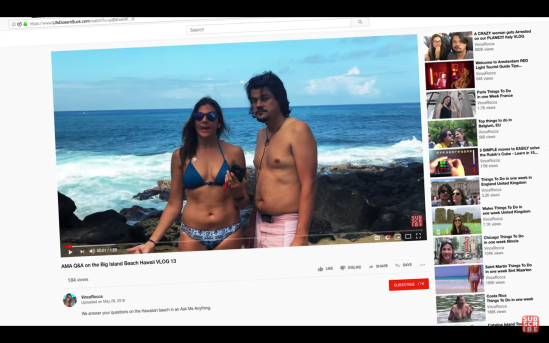
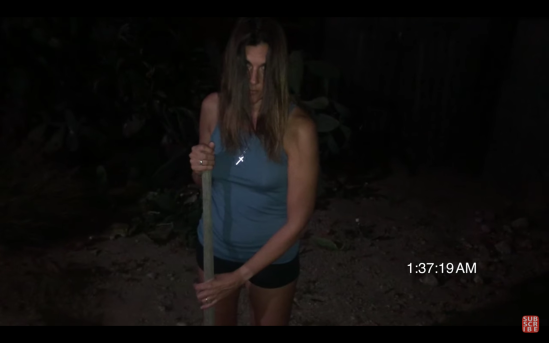
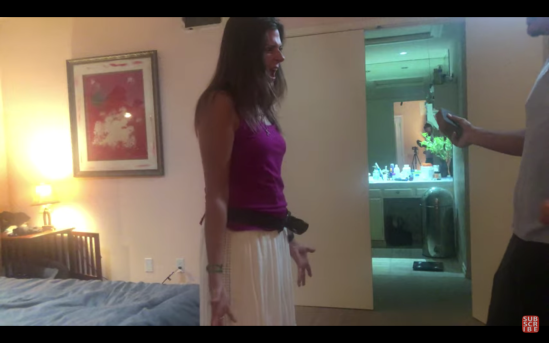
Vlogging husband and wife, Vince and Deanna, digitally showcase their married life to the world from their vacation travels to exotic coastlines to the day-to-day, mundane tasks that includes home renovations.  When they demolition a wall in order to install a French door in the master bedroom, they discover a mysterious box containing a Portate (carrying) cross hidden within the wall.  Every night since then, Godfearing Deanna has felt a profound presence in the house, experiencing supernatural phenomena, such as grabbing at her feet and possessing her body, almost on a nightly basis, especially 8 minutes after 1:00 AM.  The compilation of footage from Vince and Deanna’s vlog cameras around the house capture the seemingly malevolent events, but Vince, being the ever agnostic skeptic, tries to invalidate any paranormal occurrences, passing them off as more feasibilities explanations.  Yet, the bumps in the night continue to place Deanna in inexplicable danger, forcing Vince to reconsider his position on God in order to save his wife.

CCTV horror has been quiet over the last few years, but 2020 has seen a fair share of the stale, declining genre that’s become more repellant than a draw for audiences; yet these new ventures into CCTV horror have splashed into a Lazarus pool, rejuvenating a slither of lifeforce within genre, with limited theatrical and VOD releases into the volatile cinema market.  Vincent Rocca’s written and directed multi-camera spectral thriller, “8ight After,” is a found footage horror-comedy that is an analogue releasing on the heels of moderate success, following the making-of an active shooter thriller, “Mother of Monsters,” and the hellish hotel imprisonment of souls of “Followed,” another apparitional aghast blending CCTV and handheld footage in a vlog style.  Rocca’s sophomore directorial comes nearly a decade and half after his 2006 feature film debut, a comedy entitled “Kisses and Caroms,” and is produced by Rocca’s less-is-more production company, PovertyWorks Productions, that aims to produce funny and profitable films and shorts on a miniscule budget.  In “8ight After’s” case, the production cost totaled a whopping zero being Rocca’s own actual camera footage of and around his home and the use of handheld’s and phone cameras when out and about. I’m also positive he didn’t pay his wife a dime.

“8ight After” fits right into the PovertyWorks’s comedy portion of its business model, especially with Vincent Rocca in the lead role as a practical joker-goofball of a husband (who really has the vocal projection of the late Bill Paxton), leading the charge of the voyeuristically invasive vlogging lifestyle as well as being a religiously laidback soul with an atheist belief set.  In stark contrast to his convictions is his wife Deanna, played by his real wife Deanna Rocca, who brings a knowledge of faith for a subplot of inner family squabbles about their mixed relationship to God.  When I say “8ight After” is invasive, I mean the film is a truism of invasiveness that not only is a near tell all of Vincent’s life as a videophile and Deanna’s vocation as a zoo vet but also fractures into the story their recorded travel escapades from their VinceRocca Youtube channel show, “Life Doesn’t Suck,” that discusses and logs their destination highlights of various locations from around the world.  The energy from their Youtube channel transcends over into the scenes committed to the necklace narrative with a bout between comedy and horror that peers Vince and Deanna’s religious fervors.  Deanna shoulders more of the in character plights with the subtle, but effective, person plagued by a unremitting presence and has to become possessed, sleepwalk, and look menacing toward her husband when the time is right for the all-seeing camera.  

Compiled like a documentary (or mockumentary?) and presented in a meta format by spinning and weaving the Rocca’s exuberant régime of life and love into an undercurrent of hidden terror, “8ight After” has unique cinematic properties, utilizing his reality television fluff techniques and editing, and tackle themes of family upheaval contentious topics like religion and gun control, to wrap “8ight After” complete on a zilch budget that rides the seams of fact and fiction.  For the most part, “8ight After” tenderly progresses organically with little staged affect as the high school sweethearts play to their most innate strength – 20 years of marital bliss – and chips in sparsely the sarcastic wit of Vince Rocca (did I mention he sounds exactly like Bill Paxton?) through a tech-recorded compiled story that’s well built up initially with convincing acting and strange and spooky incidents that, like most found footage films, point to specifics pieces important to the narrative. There are even a couple of homages to great horror classics like “Jaws” and “Exorcist III.” But then in a turn of sudden events, the revealing climax fizzles like the air wheezing quickly out of an inflated balloon.  The finagled ending stinted completing something uniquely branchlet from the found footage genre and something that had solid momentum and steam of an escalating snowball toward the essence of a presence, but became grounded by the acute conclusion to the matter in such a matter-of-fact fashion that it completely killed the mood, tone, and disposition “8ight After” carried in preponderance.

Become wrapped up in the lives of a pair of vloggers and see them suffer the wrath of a stubborn spirit in “8ight After” that was released October 15th on various digital retailers, including Amazon’s Prime Video. The film is unrated and has a runtime of 97 minutes and has an accompanying English language 5.1 surround sound audio mix with optional English subtitles. There were no bonus material included, but you can live vicariously through Vincent and Deanna’s touristy adventures of swimming with manatees, paddle boarding, and visiting breathtaking waterfalls. Also, you can purchase Vincent Rocca’s journal notes put into paperback, of the same title as the movie and also on Amazon, that goes hand-and-hand with the film; it’s also available as an audiobook. “8ight After” tempers with a well braided blend of found footage comedy and horror from a pair of seasoned Youtubers that then suddenly trails off, leaving us holding the baby in trying to make sense of an nonsensical ending.

Watch “8ight After” on Prime Video!


Read or listen to the book on Prime Video!