Is Your Disturbing Library This EVIL? “Reality Killer” review! (Treasured Films / Blu-ray)

“Reality Killers” Entering the U.S. Torture Porn Market! Buy it Here!

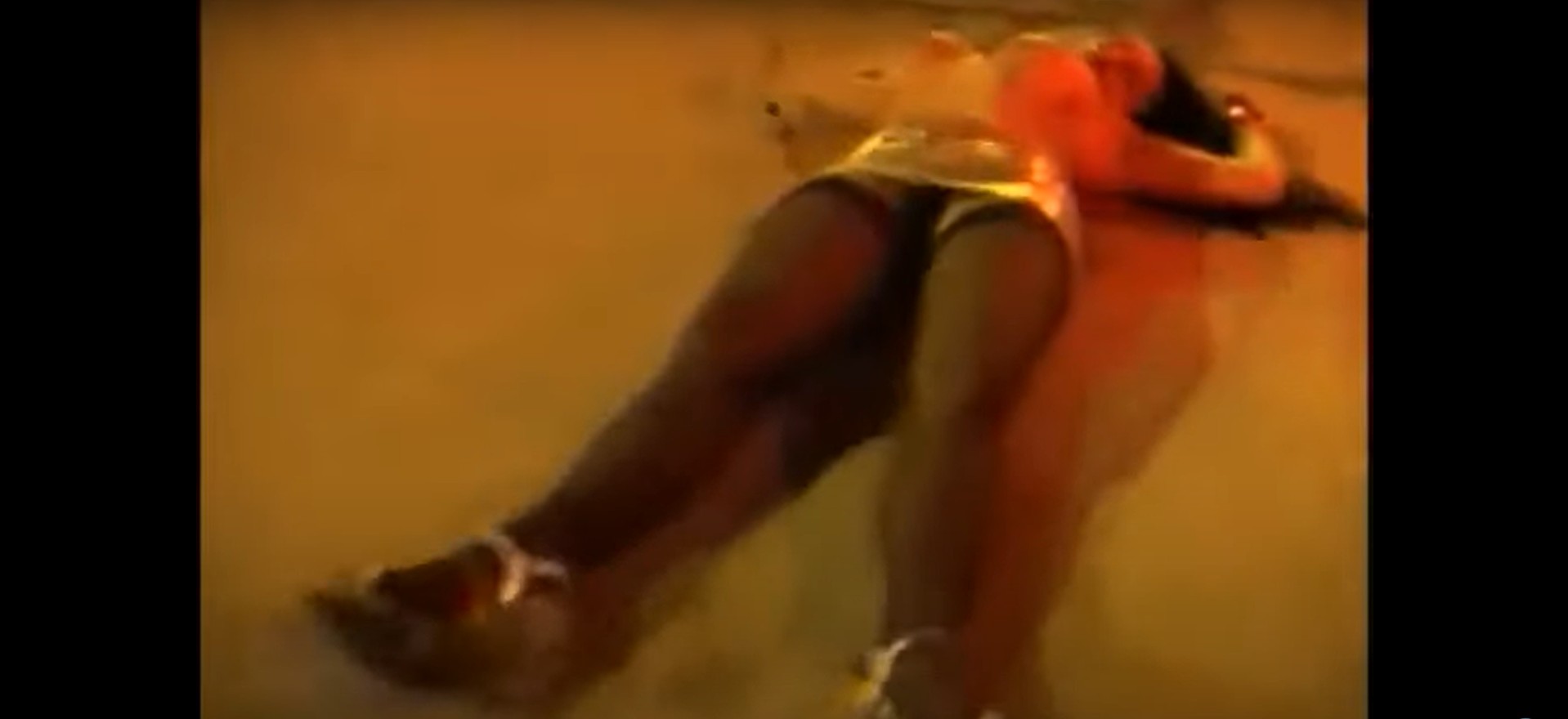
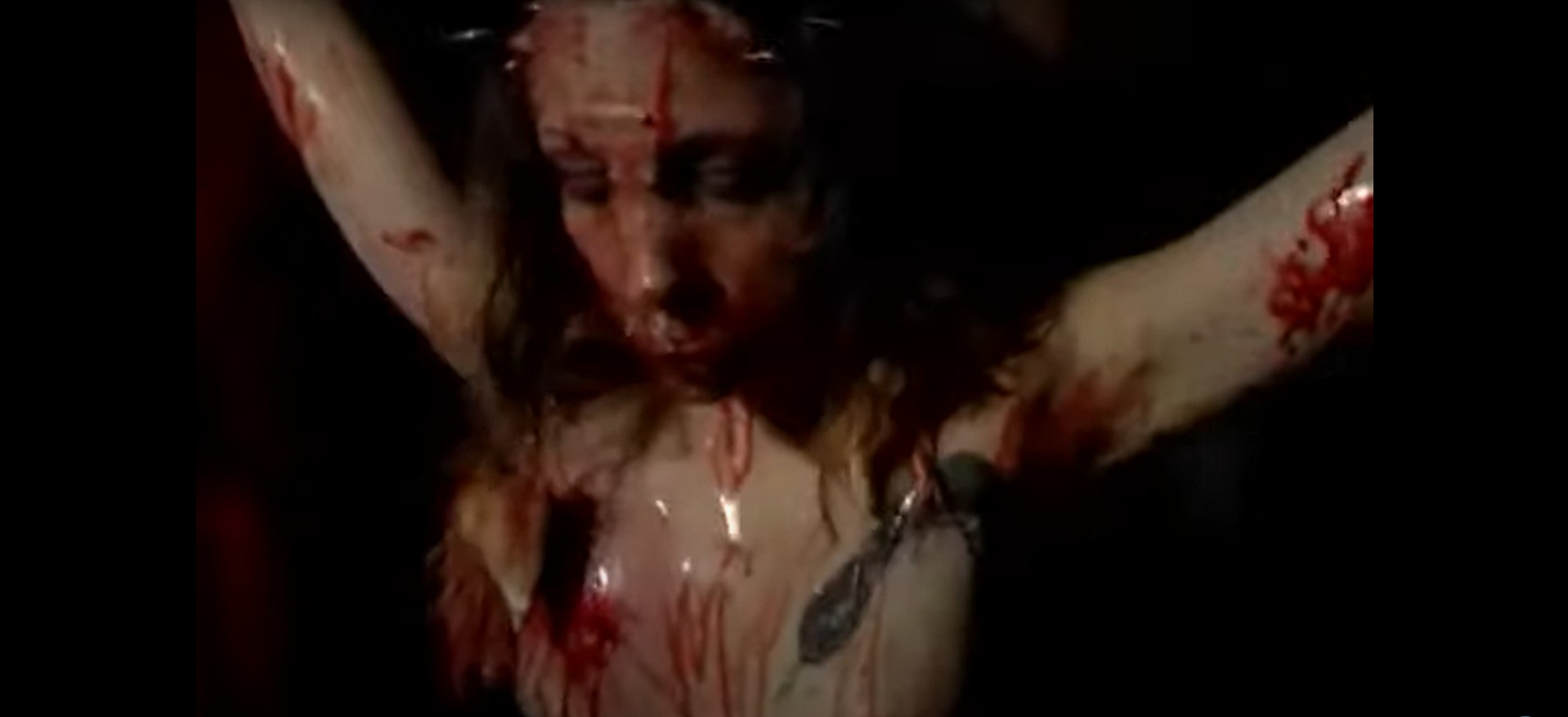
Serial killer known as “The Sculptor” narrates his obsession and love with documenting the stalking, capturing, torturing, raping, and killing of his victims.  As he watches and video tapes his next target, Mary, from afar, a woman he’s chatted with online extensively about recording home snuff movies, The Sculptor opens up his personal library of snuff movies, labeled and numbered dark web bought tape cassettes exhibiting the videoed brutal deaths of strangers by strangers for their pure sordid joy of taking another life.  An adventurous couple lure a promiscuous young girl on the promise of a threesome, a group of three masked teens take pleasure in the torture of a young woman, a couple enticement a child to their backyard pool, father and son roam the streets for call girl action and a little home invasion, and an underground, all-female rock band’s music video takes male fans to new extremes.

A title and a film unabashed and fully accepting the phrase torture porn, as if it’s a pithy elucidative to be proud of, “Reality Killers” is a shot-on-video, found footage anthology and snuff horror from 2005 helmed by “Witch Story” director and “Body Count” writer Alessandro Capone.  The Italian production contains shorts and a wraparound story that connects them together in an ugly tale of sadism, written by four aspiring, young filmmakers in Pablo Dammicco (“A Deadly Compromise”), Francesco Maria Dominedò (“Dedalus”), Volfango de Biasi (“Help!  My In-Laws Are Vampires”), and a writer simply known as Zedd with Alessandro Capone also contributing with his own screenplay while project managing filmic newcomers as they shoot mostly in Los Angeles using American actors.  Alternatively known under the title of “Project K,” the 2005 film of nihilistic sadism is produced by Eagles Pictures’ Ciro Dammicco and Pablo Dammicco and executively produced by Luca Dammicco and Fabrizio Manzollino.

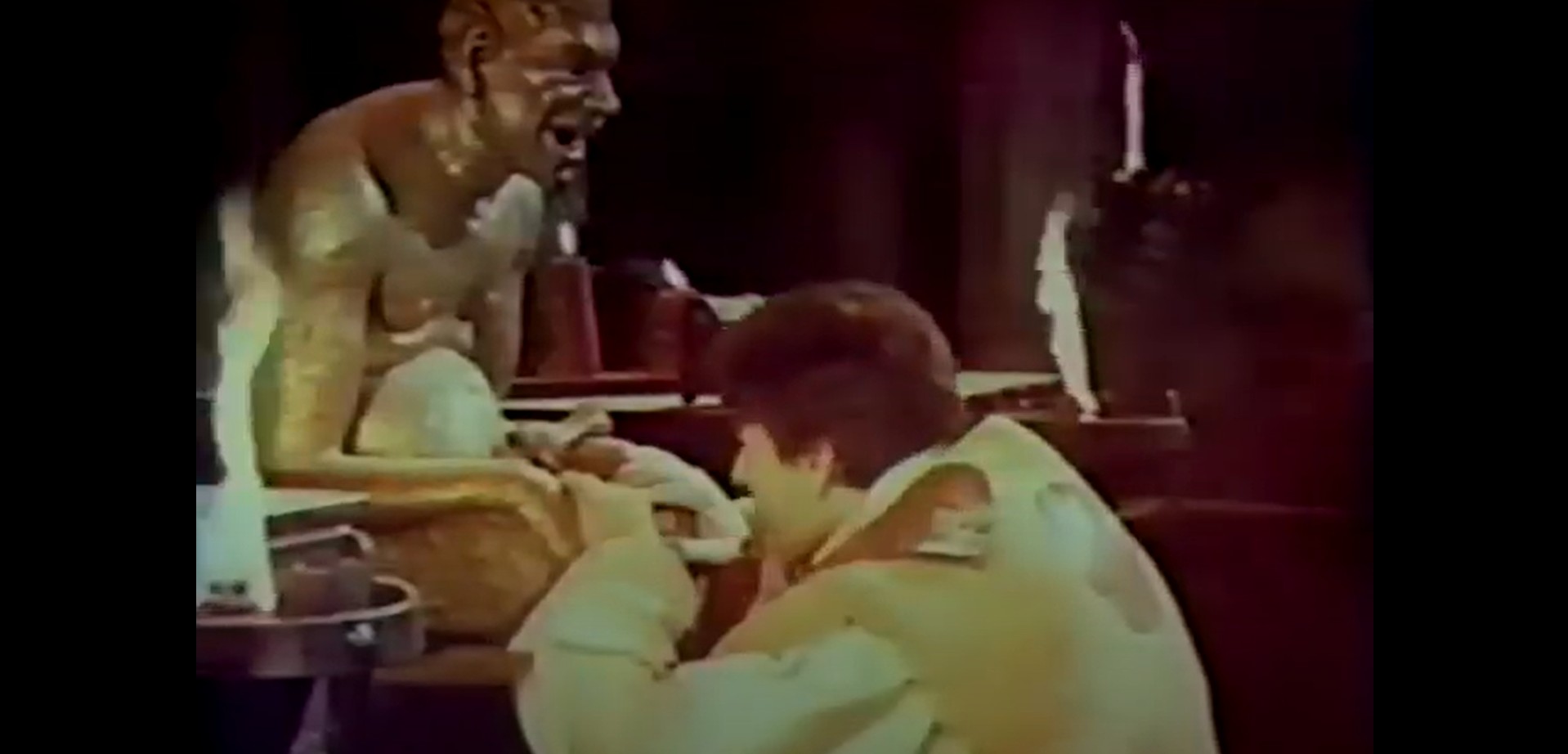
“Reality Killers” is one of those rare breed films that shares a connection with pictures 70+ years it’s senior with having no after credits.  With no before or after cast credits, acknowledging the cast and their ignoble roles is a challenge to say the least.  If fact, it’s impossible.  The wraparound segment with The Sculptor has some clarifying character elucidation online connected to one of the more well-known Italian extreme violence and horror filmmakers in modern times with Domiziano Cristopharo, director of the surrealistic yet broad-stroked with intense visceral “Confessions of a Necrophile Girl” and “House of Flesh Mannequins,” in a role credited as The Monk.  However, there seems to be some melding overlap between The Monk and the large, oiled-up, and masked concentrated sadist on screen in the wraparound story, played by Valter D’Errico, in a disturbing show of vain and perverse expression.  Alongside D’Errico, in a handful of scenes of being stalked around a metropolitan city and in a naked position of vulnerability on D’Errico’s slab of slaughter, is Cristina Puccinelli (“Phantasmagoria”) playing as the aspiring snuffer enthusiast and killer as well as the online conversationalist Mary who turns prey to her own betrayal going against and essentially humiliating a masterclass maniac like the oily and masked maniac.  After that and within the shorts, none of the other actors are repeated or credited for their work that waver between being exaggeratedly overacted and staged to the point of disingenuous means and the thought of the inflicted violence that spur a subtle creepiness.

The trouble with “Reality Killers” is the inherent topsy-turvy post-production that revamped the anthological storyline with a linear outer story with an anthological storyline connected with a threadbare connected wraparound.  Initially story structured with a sheriff unearthing a library of snuff films and going through selected VHS examples of the killer’s cache with a journalist to explicate the rare breed of butcher.  The videos were also lengthier, more narratively in depth of character and plotline, and have digestible connective tissue with the main shell story that’s redesigned for a body round and glistening, conventionally narcissistic, masked chatterbox, “The Sculptor,” who’s just a physical and commanding orb of a presence in a dark and grimy setting, spouting a deluge of devilish details about his devotion to snuff filmmaking and his own contribution to the perversion.  The told tales vary in degree of both explicit violence as well as story structure as some become more glimpses than a perusal of a three act analog anecdotes to which, in all fairness, found footage, especially pulled from VHS, are only short-lived windows into the lives of others, literally short-lived.  The vignettes are mostly hyper concentrated on the gore, leaving little room for a yard to build, lengthen, and become deeper to invest audiences when the decisive moment comes to take a life with sociopathic heartlessness.  However, “Reality Killers” pales in comparison to the likes of others, such as Fred Vogel’s “August Underground” features that really hammer down on violence and gore with sickening special effects and concentrated shock.  Capone’s entry into the niche subgenre feels reversed at times, never really going for gold in the gutting of precious human life, but the film still evokes a visceral response to the extreme content. 

“Reality Killers” arrives into the U.S. market hailing from the UK label Treasured Films, squeezing itself into the ever tightening commerce of boutique distributors.  Treasured Films’ debut special edition Blu-ray is MPEG-2 AVC encoded, 1080p high-definition resolution, BD50 is presented in a 1.33:1 aspect ratio and either scanned through a VHS record or implements a VHS or commercial handheld camera filer to achieve that passé effect that’s slowly making an aesthetic comeback.  There’s not a ton of other stylistic options used in the vignettes to instill a realism effect and result while the wraparound ups the contrast and grades darkly into its grim substance, leaving attenuated tones of yellows, greens, and reds to be coloring that seep through the oily voids.  The featured presentation carries more of the filtered aspects but in the special features’ Original Production Scenes, the alternate telling of “Reality Killers” embarks on a cleaner, conventional approach in the different outer story with the vignettes either slightly less boxed in by a matte or are outright more defined.  The audio track is an English DTS-HD stereo.  Though an Italian production, the vignette actors are primarily American and the wraparound story is voiced over.  Dialogue coincides with an onboard camera mic that picks up every little detail but also captures varying degrees of volume.  Discerning clarity is, must I say, pretty excellent for the differing sub-productions without an overbearing lopsidedness that usually stems with some who don’t have the technical knowhow to engineer audio precision; each episode achieves what’s strived for without interference, or even with the physical release, compression issues.  English subtitles are available.  Special features include a new interview with director-producer Alessandro Capone From Witch Lore to Snuff Gore in Italian only with English subtitles, a new interview with coproducer Gabriele Pacitto A Killing Reality in Italian only with English subtitles, a new English language essay by Giacomo Calzoni Cutting Deep :  Mapping the Origin of Torture Porn which takes a look at films like “Saw” and “Hostel” that generated the coining of descriptor torture porn and how it influenced horror pop culture, a teaser trailer, storyboards, and an image gallery.  The Original Production Scenes I’ve mentioned previously tells a completely different story and, in my opinion, is more interesting with longer story sequences, more nudity and gore, and the first vignette is scored with music from Nine Inch Nails, specifically “Dead Souls” from The Crow soundtrack, which adds another element to the coarse-riddled subject matter.  Treasured Films standard special edition set comes in a rigid slip box with a hazed face of the masked Sculptor.  The clear Amaray case houses new Ilan Sheady illustrative, compilation cover art in all its explicit detail with the same art pressed onto the disc.  Inserted is a 31-page color booklet with film stills, Blu-ray acknowledgments, and a David Flint essay “The Forbidden Films of the 21st Century” that discusses the films banned in Britian, which includes “Reality Killers’ rejected by the BBFC.  The all-region release has a runtime of 75-minuts and is, obviously, not rated.

Last Rites: Torture porn snuff films are, for a lack of a better world, repetitive in their controversial narrative and “Reality Killers” is no exception but it’s the style choices that and effects that entertain us or makes the sweat run down our brow. Alessandro Capone’s entry to torture porn has a visceral bite but isn’t the repulsive best-of-the-worst. Yet, Treasured Films’ entry into U.S. market is remarkably unforgettable.

“Reality Killers” Entering the U.S. Torture Porn Market! Buy it Here!

Are You Ready for EVILLLLL! “Visceral: Between the Ropes of Madness” reviewed! (Unearthed Films / Blu-ray)

Step Into the Ring with “Visceral: Between the Ropes of Madness” On Blu-ray!

A low-ranking boxer is set up with a match of a lifetime.  Quiet but confident, his manager doesn’t exactly have a faith in the underdog, constantly questioning his training with gambled money on the line.  When the boxer is beaten to a pulp in the ring, he’s immediately disowned by the unsympathetic manager and spirals out of his training and into darkness, finding murdering young women to be more pleasurable than the pain of loss and rejection.   His darkness in death incites a demon, perhaps even the Prince of Darkness himself, if the form of a half-naked woman with a distorted face and places him under her ward, forcing him into submission of pain and suffering while also commanding him to collect souls for her through his own tasting menu of torture.  The boxer’s life is told in three different stages of time on how he becomes evil’s most prized champion.

Accurately titular described, “Visceral:  Between the Ropes of Madness” pushes deviant instinct over everything else, a formidable urge to listen and adhere to those intrusive thoughts, especially after one’s lifelong goal, their most prized position, is creamed and squashed for good and forever in a humiliating way.  Writer-director Felipe Eluti uses hopelessness as pure evil’s plaything, turning a dedicated fighter being managed by Hell for the sake of not only revenge but also to fill the emptiness of the Netherworld with tortured souls.  The Chilean born and film schooled Eluti debut feature also enacts him to star as the demented boxer in a gore-soaked, ringside performance that moderately excites and intensifies with rope bondage as one of his character’s key motifs.  The extreme exploitation thriller is under the producing team of Sebastián Amenábar, Cristóbal Rivera, Andres Palma, and Daniel Vivanco.

Felipe Eluti is a one-man steamroller as the unnamed boxer leaving a laid-to-waste corpse trial in his wake.  Going virtually pantomime through the entire quasi-plotted narrative, Eluti conveys an apathy through blood and body language as well as utilizing his unsettling glare underneath different stages of head and facial hair growth from his time as a slimmed down, smooth-shaven boxer to a Curly-do’d, five o’clock shadowed, and expressionless shell of a human being.  From an outsider’s characteristic perspective, the boxer can be considered pathetic by preying down upon and torturing to kill smaller women in what is almost a result of retaliatory motivation after his brutal loss and he literally uses their bodies as his personal punching bags of stoic anger and hate.  The demon also presents itself in the form of a woman named Judas (Carolina Salles), cladded in bondage ropes, speaks in a whispery, omnipotent voice and visits him with a twisted face to represent the evil, or even the ugliness, she embodies, or the boxer sees in all his feminine victims.  Personified as a woman who tortures, beats, and verbally belittles him into a pacifistic submission only amplifies his dark crusade of soul collection.  Other than the boxer’s manager, a porn addicted, condescending loudmouth by José Manuel García, the remaining cast is filled with fleetingly visited torture victims, mostly women who are also voiceless and have little-to-no fight in them until the boxer works up to courage near the end for revenge which he can call his own, and Gabriela Aranchibia, Valentina Varela, Tamara Zuñega, Daniela Pardo, Pia Cardenas, Claudia Mena, Carolina Palacios, and Felipe Ruiz fill in those fated roles. 

While Felipe Eluti’s boxing themed gory shocker and exploitation rope-a-dope is definitely not a Rocky Balboa prime time fight film, “Visceral:  Between the Ropes of Madness” favors severe mental deterioration over an underdog beating the odds with glorifying the ultra-violence.  The strange-faced Judas pertains only to the Boxer’s vision or presence, conjured by feeding off the fighter’s anguish and indoctrinating him through pain, suffering, abuse, torture, and the most horrible like to do the demon’s bidding without resistance or fear.  The boxer’s kidnap and slasher traits shows a motif dominance over women that could possibly stem from most of the Freudian theorized root of a lot of evil doing, mother issues.  Supporting this scenario is the boxer’s visit to his mother.  Face never shown within the thicket of a deep shadow and directed toward a glowing television set, the avoided boxer seeks self-satisfaction approval and support from presumably his one and only blood relation on this planet, but the attentive mother denounces him, rejects him, and belittles his existence as the worst thing to ever happen to her just before his big match.  Eluti’s arthouse direction focuses on the boxer’s lack of love, support, and concern for his wellbeing and uses that the-world-vs-me detestation as a fuel and resupplied by his submission to Juda’s verbal and physical abuse to carry on his hate-filled and apathetic tear of women.  

Unearthed Films, a leader in producing and distributor extreme, ultra-violent and gory movie content brings “Visceral:  Between the Ropes of Madness” into the squared circle with a new Blu-ray release of Chilean production.  The single layered BD25 is AVC encoded and presented in a high-definition, 1080p resolution, with a widescreen 1.77:1 aspect ratio.  Cinematographer Tomas Smith’s approach to the content serves up stark and severe drab with a lifeless parallel to the apathy spree of the Boxer’s dark undertaking.  Heavy on grays and browns, there’s hardly any pop of aesthetic style or color but is counterbalanced by some interesting just obscure or to the side framing that ignite more imagination than having the scene spelled out for you.  There are also other interesting visuals with Judas and inside the Boxer’s mental state that don’t allow much in the way if finer details but allure to and speak of motivation and context.  The divided darkness through provides plenty of opportunities for compressions issues on a lower capacity disc compression but there’s not a whole lot to speak in way of artefacts.  The Spanish PCM 2.0 mix plays the familiar tones of an arthouse gore film by giving more stock to the soundtrack than to the dialogue.  While the dialogue is apparent despite the Boxer saying very little and Judas’s voice done in post, composer René Roco has free reign to be industrially glum above the whimpers, cries, and screams of the Boxer’s tortured women.  Ambient action is perceived post-product separation as the sounds don’t necessary match or synch in frame with the carnage and the environmental ambience is reduced to near nothing with low levels murmurs of city life stock sounds in the exterior scenes.  The English subtitles appear accurate and match well with in-scene prattle.  Extras include a commentary with director Felipe Eluti, a post-showing speech at the Cineteca Nacional’s Massacre in Xoco, Mexico City circa 2013, a behind-the-scenes gallery, and a teaser trailer.  The reverse cover liner art inside the clear Amaray case has barely safe for work primary of the mad Boxer and a bloodied woman bound in rope and a not safe for work cover that focuses on a bare-chested and rope bound Judas, both in contrasted to a deep inky void background.  There are no insert liner supplements and the disc is pressed with the same NSFW cover art image.  The not rated, region A encoded release has a runtime of 76 minutes.

Last Rites: Glorifying hopelessness through violence, “Visceral: Between the Ropes of Madness” is a round-for-round degression from failure through the dreary lens of director Felipe Eluti and his kink for rope bondage that sets forth an unstable champion amongst the maidenly defeated.

Step Into the Ring with “Visceral: Between the Ropes of Madness” On Blu-ray!

EVIL’s Brew Just Needs a Severed Head! “The House of Witchcraft” reviewed! (Cauldron Films / Blu-ray)

“The House of Witchcraft,” a part of The Houses oof Doom series, Now on Blu-ray!

Luca Palmer has experienced the same reoccurring nightmare for months of him finding shelter from being chased inside a large countryside house with an ugly hag boiling his severed head in a large cauldron.  The dreams have required him to find professional help in a psychiatric ward but without any real mental or physical health concerns, he’s released to his incompatible, witchcraft practicing wife Martha who sets up a country house getaway in a last ditch effort to save their dwindling marriage.  When they pull up to the house, Luca immediately recognizes it from his nightmares.  From then on Luca believe he’s seeing the malicious old woman from his dreams around on the estate grounds and urges his psychiatrist, who is also his late brother’s wife, to visit him to assess his state of mind, but the visions keep coming and those around him keep dying a horrible death with his wife being the key suspect of witchcraft related deaths.

“La casa del sortilegio,” aka “The House of Witchcraft” is a made-for-television, witch-centric movie for the four-film series The Houses of Doom concept created under the companies of Dania Films and Reteitalia’s producing team Massimo Manasse and Marco Grillo Spina.  The 1989 witchy-slasher hybrid and the third film of the series is helmed by another notable Italian schlock and shock director, Umberto Lenzi (“Seven Blood-Stained Orchids,” Cannibal Ferox”), as well as Lenzi writing the script from the story of The Houses of Doom envisaging duo Gianfranco Clerici and Daniele Stroppa.  “The House of Witchcraft” speaks the very essence of what to expect in a traditional sense regarding witches while really stepping up with Italian nastiness inside the slasher principles, filmed in the heart of Italy in the popular Chianti wine municipality of Rufina where the landscape is lined with vineyards, churches, and castles.

Luca Palmer is committed to his mental health by committing himself to his sister-in-law’s psychiatric hospital after months of nightmares involving a witch and his severed head as the main ingredient for her boiling stew.  Perhaps, because of his rocky relationship with wife Martha, played by French actress Sonia Petrovna (“Flashing Lights”), Luca just needed a break from her witchcraft obsession and loveless aloofness to clear his head.  Either way, the American-born and ‘Naked Rage” actor Andy J. Forest is one of Umberto Lenzi’s go-to action stars, of such Lenzi’s war films “Bridge to Hell” and “The Kiss of the Cobra”, whose taken off the film battlefield and positioned as the confounded centerpiece of a cackling witch tale, completing his task as a the tall, handsome, and flawed hero of a man haunted and driven by unpleasant night terrors of the long face, broad features of the fittingly named Maria Cumani Qausimodo as the dolled-down witch.  Quasimodo is no stranger to the filth and frights of Italian schlock with roles in “Behind Convent Walls,” “Five Women for the Killer,” and even the notoriously porn augmented “Caligula” and her physical traits, long stare of blue eyes, and pandering of character’s wickedness transform her into an ideal archetype of the original folk-acholic Brewmeisters.  Characters for the slaughter tin this supernatural slasher and to be intertwined into the suspect and innocent pool are played by Paul Muller (“Lady Frankenstein”), as the sixth sense blind homeowner Andrew Mason, Marina Giulia Cavalli (“Alien from the Deep”) as Andrew’s visiting niece Sharon, Susanna Martinkova (“Fracchia Vs. Dracula”) as the psychiatrist sister-in-law Dr. Elsa Palmer, and Maria Stella Musy as the doctor’s daughter Debra tagging along with her mother to visit the barely mentally managing Luca. 

Umberto Lenzi’s rollercoaster career has seen its fair share of misses overtop what are today considered trashy, cult triumphs that lure fans to seek out his even lesser known, poorly critiqued titles more often than required for any more than the casual horror moviegoer. However, “The House of Witchcraft” is not one of those latter, threadbare produced pictures as Lenzi instills more aesthetic style and cinematic substance of searing phantasmic enthrall and danger with an unwavering villainess vile down to her very rotten teeth and scraggly, gray hair.  Offing houseguests left and right is the witch’s supernatural birthright but why exactly Luca Palmer, a stressed out journalist, to be the target of precognitive events is more opaque than it is clairvoyantly evident but we get some great malevolent manipulation and sleight of hand with black cat familiars, bulgy maggot-infested corpses, unusual indoor freezing precipitation, severed heads, and a face transfiguration that’s pretty damn good that has no right to be in a Lenzi film, mostly in part to special f/x and makeup artist Giuseppe Ferranti (“Anthropophagus,” “Nightmare City’), his favorable, collaborative relationship with Lenzi, and the fact he’s locked into the 4-part film series The Houses of Doom provides him creative freedom, flexibility, and fluctuation in diversity.  “The House of Witchcraft” is not the one-all, be-all witch story but does scratch that warty itch in the foulest of cloak-wearing evils without flying a broomstick! 

The second of four Blu-rays for The Houses of Doom lineup produced by Cauldron Films, “The House of Witchcraft” is an AVC encoded, 1080p high-definition, BD50 with a transfer scanned into 2K, uncut and restored, from the original film negative.  Very similar to Lucio Fulci’s “The House of Clocks,” Cauldron Films scan is quite impeccable.  A pristine picture with no wear or tear and age deterioration, “The House of Witchcraft” is deep and rich with immense coloring timing efforts, defining an authentic look without overcorrecting to a fault.  There’s no perfunctory enhancing or extreme variability with contrasting, retaining a smooth, consistent picture quality throughout its European aspect 1.66:1 presentation.  Even in the more stylistic lighting work that creates clear tone of how the indoor snow should feel cold or the lightning strikes and wind brings a chill of ominous doom, there’s plenty of delineation to provide space and demarcations of depth between objects.  There are two DTS-HD 2.0 mono mixes with an ADR Italian and an ADR English dialogue.  Synchronously smooth, a noticeable dialogue separation between audio and video is not easily perceptible, which is kudos to the post work on the post-crew efforts, and Cauldron’s mixes have clarity without a fault in the compression means.  The two channel funneling of the mono output separates the dialogue and ambience/score.  Backing of the boiling cauldron stew or the knife swipes that severe heads and stab fleshy trunks, leaving impacting thuds and thwacks, are good examples of the conveyed foley audio that leaves a lasting impression through component construction in the audio design.  There are optional English subtitles on both language tracks.  Special features include Cauldron Films’ produced interviews with FX artist Elio Terribili Artisan of Mayhem, cinematographer Nino Celeste The House of Professionals, and a commentary track with Eugenio Erolani, Nathaniel Thompson, and Troy Howarth.  Also like “The House of Clocks” release, Matthew Therrien and Eric Lee compose a composition of illustrative graphic artistry of film’s decomposing and maniacally laughing madness and logo design for The Houses of Doom series on the front cover inside the clear Scanavo case.  Reverse cover has a still image of the black cat and the disc is pressed with the same front cover artwork but cropped to focus primarily of the witch with title and company logos at the bottom half.  The region free release has a runtime of 89 minutes.

Last Rites: Umberto Lenzi’s “The House of Witchcraft” casts a spell over the hex canon, beguiling it with mystery, enchanting it with surrealism, and bewitching it with blood. Cauldron Films’ Blu-ray is topnotch for an obscure made-for-TV Lenzi production.

“The House of Witchcraft,” a part of The Houses oof Doom series, Now on Blu-ray!

Luther the Berserk has EVIL Plans in the Bayou! “The Naked Witch” reviewed! (VCI / Blu-ray)

A string of horrific murders of beautiful women becomes the study of a six-person team of paranormal researchers who head down to the Louisiana swamplands surrounded by notorious superstition and urban legend for once being the home of witchcraft.  One of the researches, Tasia, is a sensitive, a highly psychic receptive woman and student of team leader, Dr. Hayes, to sense the area’s extrasensory waves thought to be behind the murders, especially the ones of a satanic ritualized nature.  On the isolated island, encircled by swamp and gators, a powerful Satan acolyte known as Luther the Berserk seeks to spellbound Tasia to complete his coven of witches and evokes the help of Jessie, a haggard crone with the ability of mind control over those with sensitive abilities.  One-by-one, the researchers are being picked off for the blood ritual and it’s up to the survivors to stop Luther before it’s too late.

A bold psychotronic of the 1960s, “The Naked Witch” has a tingly macabre aura about it that’s not swinging, swanky, nor is it groovy.  Also known primarily as “The Witchmaker,” there’s a thick circumference of dread and darkness surrounding the William O. Brown written-and-directed picture.  Brown’s sophomore film behind the 1965 “One Way Whaine” comedy about Hawaiian babes and bank robbers is a stark 180 degrees four years later that showcased the filmmaker’s range from laughs to terror on the cusp of the early days of the Satanic scare.    “The Naked Witch” has also been reissued as “Witchkill,” The Witchmaster,” and “The Legend of Witch Hollow” and while Brown’s film goes by many monikers, one thing is for certain is the film was shot partially on location in the mucky swamps of Louisiana during exterior locations whie the remaining interiors were in a Los Angeles studio.  The U.S.A. made film was produced by Brown with L.Q. Jones serving as executive producer and released independently under LQ/JAF Productions.

Personally, horror films like “The Naked Witch” that were produced through the 1950s and into the 1960s always share mixed feeling that can only be described as from “the content is revolutionary for Americana horror post-World War II cinema” to “the stiff, exposition acting just doesn’t work with the grim nature of the ahead of its time story,” and as Marty McFly once said back in 1955, “I guess you guys aren’t ready for that yet.”  There’s nothing inherently bad about “The Night Witch’s” acting other than the lack of emotional weight from the troupe needed to lift up and be on the same level as the story that includes hanging half-naked women upside, slitting their throats, and drinking their blood out of chalices in a coven on satanic confluence.  “Revenge is my Destiny’s” John Lodge is the exception that goes against the stagey type of stilted acting grain as lead satanist apostle Luther the Berserk, flashing devil hand gestures and acting like a wild man in his ravaging role that’s ambitiously true to character and subtly perverse in blood and in lust. The same passion portrayal of character is not extended the principal leads of “Green Acres’” Alvy Moore and “Deep Space’s” Anthony Eisley playing a pair of opposing scientists – Moore as the more supernaturally open-minded Dr. Ralph Hayes and Eisley has the rigid in rationality Dr. Victor Gordon.  Their conflict of beliefs creates another subplot satellite that abides by superstition and lore as well as the division it produces, a decent representation of the overall contrarianism inside people as a group, then you have Tasia, a medium struggling with her powers being pulled in two different directions.  The European heritage and Canadian born blonde knockout Thordis Brandt steps out of the saucy side role and into one of her more prominent performances as the Sensitive who is manipulated by Luther’s unholy powers over the coven.   The coven and researcher cast rounds out with Shelby Grant, Tony Benson, Robyn Millan, Burt Mustin, Warrene Ott, Helene Winston, Carolyn Rhodimer, Larry Vincent, Patricia Wymer, Del Kaye, Diane Webber, Valya Garanda, Gwen Lipscomb, Nancy Crawford, and Sue Bernard. 

“The Naked Witch” is not as graphic as one would assume with such a scandalous, provocative title.  Again, you must remember, the film is originally titled “The Witchmaker.”  Yet, for a 1960’s horror, William O. Brown’s satanic sorcery picture is too advanced for the era’s mostly puritanical audience.  I’d even go as far as saying “The Naked Witch” borders the line between the foggy and gloomy atmospherics and set productions of Gothic Hammer and the ever-close-to-the-edge designed no nudity or graphic death coverups of an early Russ Meyer production sans the zany cartoon sounds and the rapid-fire editing.  An abundant of dread hangs in the air of starched collars and secretary skirts that conjures more than just the Devil’s presence in the bayou but a heavy dealt hand of a no-win situation full of desperation and death.  The story itself evolves from the brutal, ritualistic killings of strung up and stripped naked young, beautiful women to a more focused objective of converting Sensitive Tasia into a full-fledged witch that completes Luther’s coven and resurrects his master for a diabolical Hell on Earth.   The broader strokes of “The Naked Witch’s” narrative places the fate in the hands of a group of students and naïve ignoramuses playing catchup to what’s really happening under their noses.  Of course, alarm bells never go off and panic never really sets in for the group of survivors after each death in what is more like an aw-shucks and move on reaction.  Granted the team is stuck on the island for a few days with no way to call for help but that doesn’t mean being not proactive or being crippled by fear doesn’t have a place amongst them and in the story, especially missing opportunities within the researchers to turn on each other by way of Luther’s manipulating witch, Jesse, who herself has her own drastic motivation with a blood ritual that make her young again. 

“The Naked Witch” is fairly cladded with atmosphere and ghoulish intentions instead of the mentioned nudity but the new VCI 2-Disc Format Blu-ray and DVD release provides the bare essentials with a restored 35mm archival print into 4K-UHD scan.  Presented in a widescreen 2.35:1 aspect ratio, the grading is rich and overall image and details look pleasing with depth in most scenes and grain is era appropriate appeasing.  Skin tones shade a little more toward orange but maintain within spec but on the higher end of a RGB.  The print has sustained some damaged with a slew of scratches, dust and dirt, and cell burns peppered throughout and can be a nuisance but nothing terribly critical to warrant narrative loss or a complete loss of viewing pleasure.  The English Dolby Digital Mono track offers little to try and immerse viewers into the swampy bayou and that’s a real shame since visual elements are detailed.  There’s minor background noise is palpable but not distinct to warrant attention.  Dialogue and the Bolivian born and “The Town that Dreaded Sundown’s” Jaime Mendoza-Nava’s gypsy-esque and minor key brass and percussion score are the heavy hitters in this presentation.  Dialogue has insignificant hissing and crackling but as a whole, the track comes over clean enough to firm pass well over grade.  Option subtitles are available.  The only encoded bonuses are a 2024 commentary track by film enthusiast and artist Robert Kelly and a poster gallery that include not just “The Naked Witch” but other 60’s horror pictures.  VCI’s standard Blu-ray incasement has one-sided still picture and illustrated compositional artwork that roughly produces the madness incarnated with the DVD on right and the Blu-ray on the left inside, individual pressed with images from the front cover.  The region free disc has a runtime of 99 minutes and the film is rated R.

Last Rites: “The Naked Witch” has no skin in the game in its necromancy ways but finds the fog of dread easy to become lost in with interesting characters and a ghoulish witch and ritual vise gripping it on both ends on a verge of being something more.

“The Naked Witch” on Dual Format DVD/Blu-ray from VCI!

An EVIL Taxi That Requires Your Baby for Payment! “Black Cab” reviewed! (Acorn Media International / Blu-ray)

Anne has lingering reservations about getting back together with cheating boyfriend Patrick but half-heartedly agrees to take him back and even merry him.  The announcement comes as a surprise to dinner friends, including Anne’s best friend Jessica, but before talking out the situation that clearly has the two women upset, Anne is eager to leave and return to her home.  The embattled couple jump into a cab driven by Ian, a gabby cabby prying into the couple’s heated discussions.  When Ian drives down a dark alley and stops to retrieve a map from the trunk, Anne and Patrick realize they’re locked inside the cab.  A returning Ian reveals his true intentions with a purpose still ambiguous why the couple has been abducted but a desperate Ian will do anything, even kill, to get what he loves back from a wistful countryside spirit, and he needs disordered Anne for a trade. 

Should have taken an Uber.  “Black Cab” is the 2024 British abduction and supernatural horror-thriller from serial television and made for TV movie director Bruce Goodison, with a career credits that specializes mostly in tales of international military conflict and British murder mystery, and a screenplay by “Reawakening” writer-director Virginia Gilbert, incorporating into the relationship couple’s discordant flame a sliver of kidnapping, electrical prodding torture, and a desperate act inside the context of an old ghost tale as well as inside the English’s famous hackney carriage of black taxis, using the popular public mode of transportation as a device to market the film’s story for the sordid cab driver.  Filmed in the city of Manchester and the surrounding greater area, the Shudder exclusive presented film is produced by Jan Roldanus of Stolen Pictures and executively produced by Sony International Pictures’s former strategic producer Lucy Robison and current producer Michaela Fereday.

When a moviegoer familiar with actor Nick Frost runs through a mental checklist of the actor’s filmography, comedies like “Hot Fuzz,” “Shaun of the Dead,” “Monster Family,” and “Paul” come to mind with the often lighthearted, sometimes heart wrenching or darkly humorous, storylines in the presence of physicality and fun, done nearly most of the time alongside Frost’s usually entourage and friends, actor Simon Pegg (“Star Trek,” “Run Fatboy Run”) and director Edgar Wright (“Shaun of the Dead,” “Last Night in Soho”), but Frost has been frequently rooted at the base in horror, science fiction, and, well frankly, genre films in general, with the perfect examples being the aforementioned with shoot’em up polizias, zombies, classic monsters, and an Earthbound alien features.  Frost’s comedic genius is all about timing and the way he carries himself jovially and nonchalantly through tough situations, but Frost can also use those same qualities and twist them to enact a man of deeply troubled anguish behind a masked funny face and viperous wit.  That’s his role in Ian, a cab driver with the gift of gab but turns on a dime with forced aggressive intent to take what he needs from Anne, emoting her character’s already internalized troubles with now a threatening abduction conflict from actress Synnove Karlsen (“Last Night in Soho”).  While Anne is poised as can be in the situation, her disagreeing fiancé Patrick has little-to-no merit as a character being a bit of a bully, cheat, and coward.  Luke Norris (Poldark) gives his best unpleasant rendition of a dirtbag white male with misogynistic issues, but the poorly written aspects of Patrick never fully amount to anything but a weighted towline and an extra body to do what what Ian thinks best with.  Tessa Parr and Tilly Woodward make up the rest of the cast. 

“Black Taxi” subsidizes good suspense over the supernatural calling cards that slowly, yet continuously, shows Anne through an emotional struggling, involving a rather vocally rambunctious boyfriend in Patrick, as well as building the tension inside the cab by hinting at its unusual state of tinted windows, child locked doors, and a more than nosy driver, mostly gone unnoticed by Anne and Patrick due to their bickering and heated love life, or lack thereof.  The first two acts slowly feel out where this story is aiming to drive the audience as Ian’s true intentions are well covered and contained and not fully delineated by the baby clues Ian hints at along the way.  There’s an elemental theme of family and protection, loss and heartache, and how that torment is divergently depicted by both the lead principals Ian and Anne, with the latter being more at a crossroads of choices whereas Ian has already made his choice and it’s one he won’t or can’t come back from.  The third act is mostly where the supernatural factors come into play with the infamous haunting of Mabel Hill, a fiction road supposedly paranormal charged with the ghost of a woman who lost her baby fleeing an abusive relationship and continues to search for the child through bypassing passenger vehicles.  The third act is also where things get murky under the black and white essence of Ian’s motivations as the Ian, Anne, and the ghost are nebulously intertwining on Mabel Hill in some sort of supernatural netherworld dimension that plays mind tricks and is foggy with phantom, falling apart at the seams to support a porous ending.

“Black Cab’s” fare is prenatally pricy in this new release from Acorn Media International and presented as a Shudder exclusive. The UK release is AVC encoded, 1080p high-definition, BD25 that renders a softer image quality that, in all fairness, was already foggy and murky being set in the darkness of the English countryside, presented in a widescreen 2.35:1 aspect ratio. Lots of shadows and silhouetted surroundings drowns out the delineated city structures that blend to the spooky forest as the focus is significantly on the interiors, the cab and the abandoned hotel, and not even those highlighted inmost sets solidified specifics. There’s quite a bit of banding from compression and that’s not to be surprising given the format size and the profound amount of tenebrous tone. Textures along Frost’s dressed-in-black casuals or in contrast to Karlsen’s cocktail outfit that’s more nightgown than ritzy, they’re just not there to extensively define Ian and Anne other than being the epitome of differing the dark and light of loss. “Black Cab” has more of a cityscape than a landscape though the story heavily hits upon Mabel Hill as ghost central and yet lacks the elucidation as well as the finer points to flesh out the haunted area. The ghost too is more a cheap visual effects trick than the implementation of palpable practical patience with an overlaid layer of overexposed blues and whites over top the actress to be then augmented into the scene for ethereal effect. The English language DTS-HD 5.1 surround mix is a better outfit, more so in the clean and clear dialogue exchanges between the trio of Nick Frost, Synnove Karlsen, and Luck Norris but does whittle down to the Nick Frost exposition hour when his vague maligned venture is made with more understanding through his broken man diatribes and Anne just sitting and listening as any good abductee would do to avoid saying or doing the wrong thing. Light atmosphere hubbub caters to just that with the night, likely late, shoots inside the city and rural settings but the localized car actions, taser zaps, and character efforts are effective enough to entice a palpable action. English subtitles are optionally available. Acorn’s releases are not chockfull of special features, and “Black Cab” harbors the same slimmed down supplements with a behind-the-scenes gallery. The UK release has a slightly thicker than normal Blu-ray Amaray with an encompassing composition of a rearview mirror peering Frost and a shadowed Karlsen in the fear of the mirrored frame while a ghost hovers above the presumed Mabel Hill Road. UK certified 15 for strong threat, horror violence, domestic abuse, and very strong language, “Black Cab” is hard encoded for region B playback only and has a runtime of 87-minute runtime.

Last Rites: “Black Cab” starts off as an unpredictable ride of mystery and suspense that quickly loses gas to keep up with the swerving supernatural vehicle.