EVIL’s Casting Couch Could Be the Last Audition! “Young Blondes, Stalked and Murdered!” reviewed! (Anchor Bay / Blu-ray)

Not Red Heads, Not Brunettes, Blondes! “Young Blondes, Stalked and Murdered!” on Blu-ray!

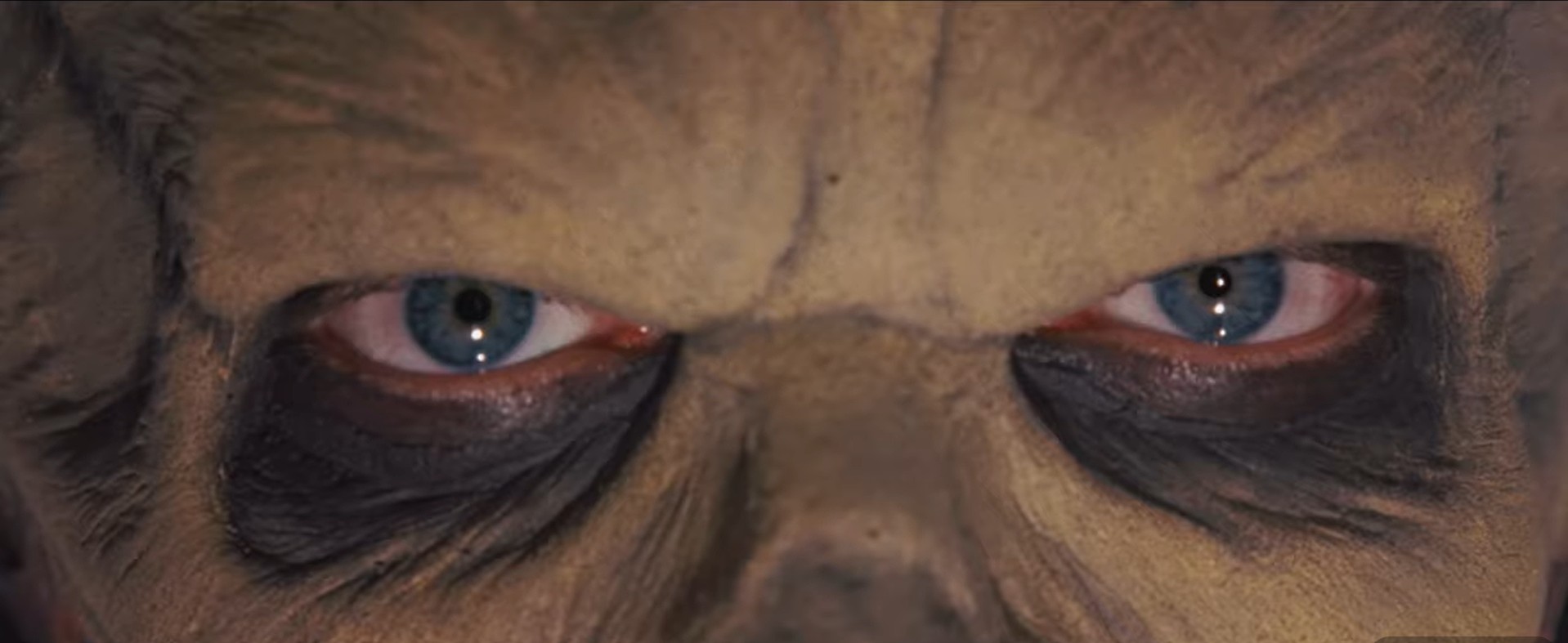
Stacy and Josie are two aspiring young actresses living in Los Angeles.  Both women are blonde and both ambitious to make it big in acting while being friends vying for the same work in the difficult industry that involves casting couches and who-knowing-who to get even just a foot into the door.  As Stacey’s journey to fulfil her acting career stumbles role-after-role, especially after a unique pre-casting session with a film director named Sasha, she finds that Josie receives role interest from the same director.  The pressure gets under Stacey’s skin to where nightmares evoke jealousy and a thin layer of fear, raised by the widespread terror of blonde women, also aspiring actresses, being discovered horrible murdered by a killer who records every kill.  Stacy pushes forward but her friendship with Josey wanes with her casting success and the news of more blonde actresses found gruesomely murdered unlock her nightmares to their full potential. 

“Young Blondes, Stalked and Murdered” catches the eye with a lustrous, vice-drenched title, but the narrative layout is anything but candidly conventional.  The film can be described as a reverse slasher that keeps the serial killer of young, blonde actresses in the peripherals integrated ever so delicately inside a character study of the principal lead, in this case with Stacey, a Minnesotan with stars in her eyes.  Those stars eventually lose their sheen, but the desire doesn’t dull amongst a deficiently of roles for an overabundance of the same type of actress going for them.  For writer-director, “Young Blondes, Stalked and Murdered” is Nick Funess’s first feature-length production based loosely on the trials and tribulations of young women cat scratching their way into the business with a hairline hook of a maniac with a murdered type.  Silence Films serves as the production company with Corentin Leroux and Matt Morello co-executive producing alongside Funess for the L.A. shot film.

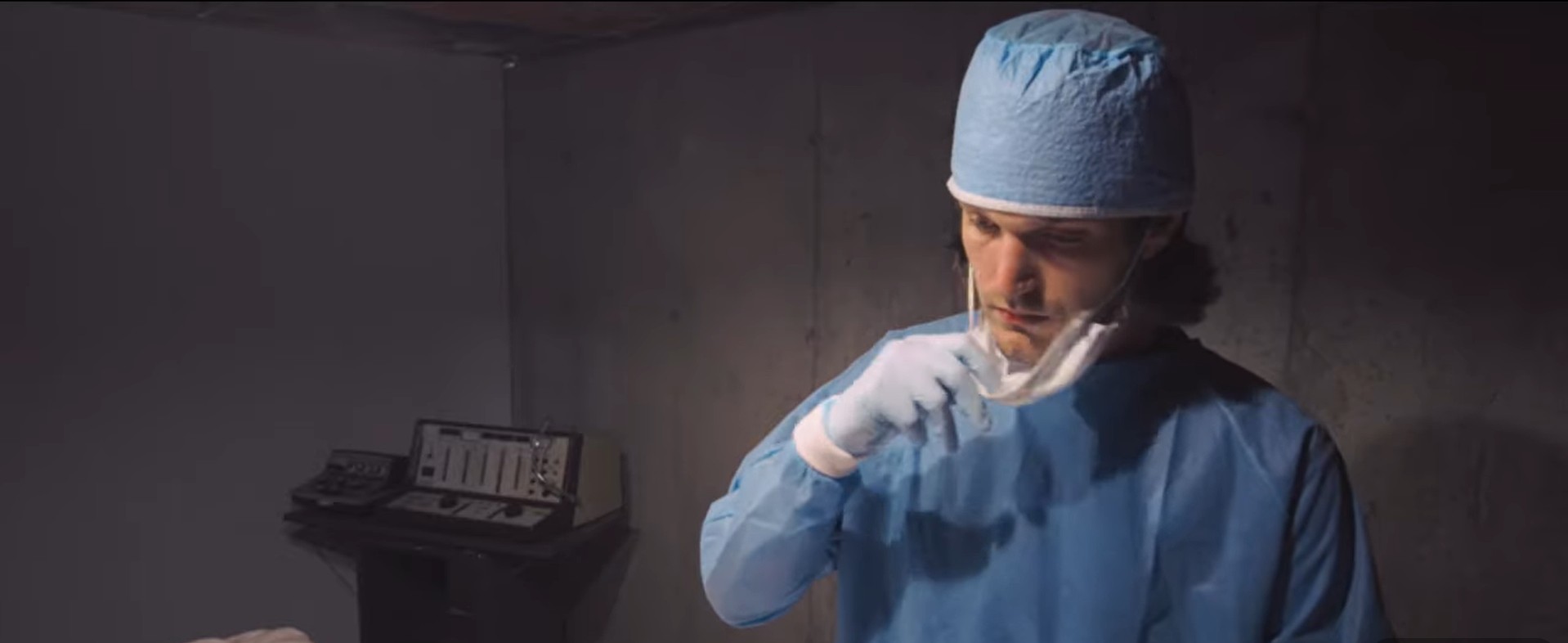
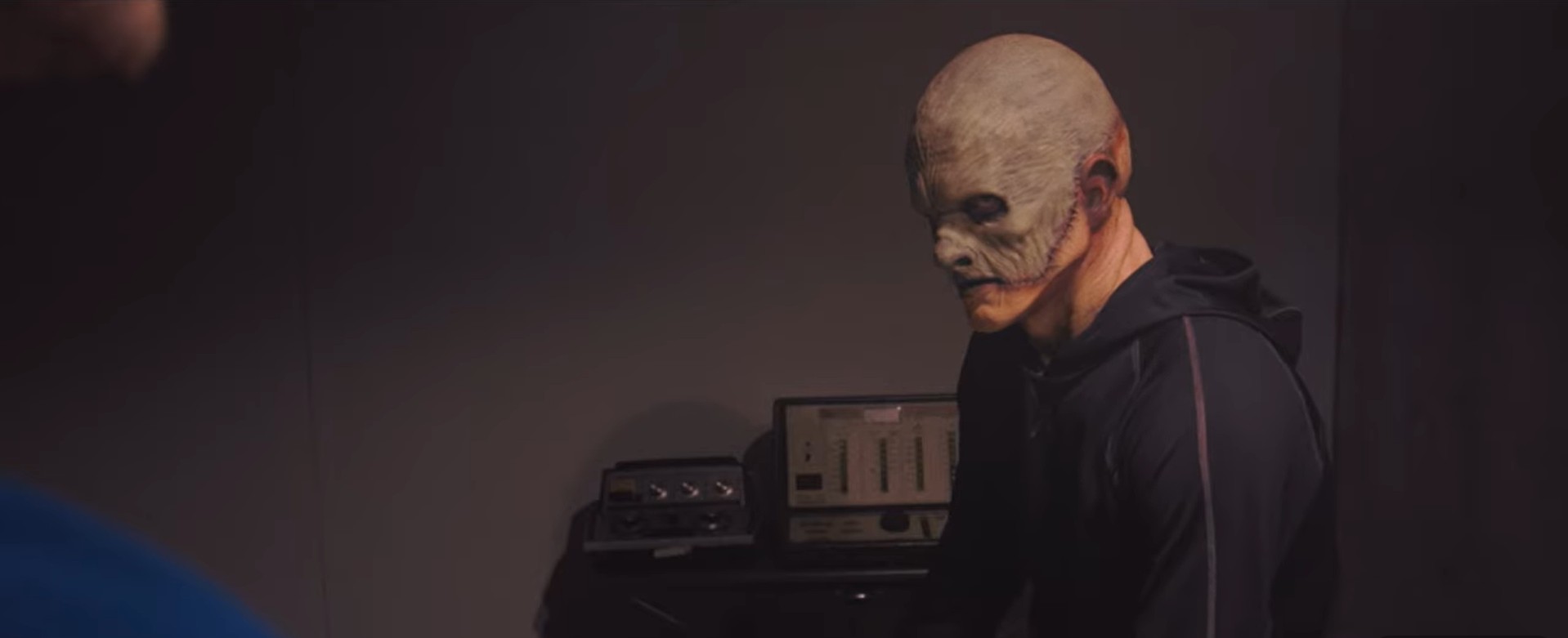
Inhabiting as the primary character learning the curve of your desired trade is Samantha Carroll in her second full-length feature role but first at the helm as the star.  However, as Stacy, Carroll plays a character who doesn’t feel like her longed dream of being a star.  Instead, Stacy plays by the rules as if there’s a guide or a playbook to becoming a successful on-screen thespian.  Carroll’s range of emotions can peak from mile excitement to absolutely feeling crushed by the weight of failure.  Disdain and jealousy also rear their ugly heads in between inside a structure that isn’t exclusive in following Stacy as Josie runs a parallel course with less touch-upons in the grind that is to follow one’s dreams.  Elle Chapman’s more dolled up for the role by accentuating her natural beautiful for perkier and more cosmetically inclined haughtiness to contrast her conceit against Stacy’s honest efforts.  Though Funess essentially wraps the story around two actresses, the extent of supporting actors is limited to the exact same number with Gemma Remington as another blonde, actress acquittance and/or rival to Stacy and Zachary Grant as a casting filmmaking who has unspoken quirks about his character Sascha that are told through his rather distinct distilled friendliness and the way Funess and Corentin Leroux frame him by cropping out portions of his body by the frame itself or by objects, as if hiding bits and pieces of his truth in obscurity.  Both Remington and Grant’s scenes are brief and spliced in to add to the stress of an actress’s day-in-a-life, to terraform the the gossipy, cutthroat world, and, in earnest, to be more a grounding third-dimensional force that doesn’t allow Josey to be the only other character for Stacy to bounce off of, yet the characters do add impact with the peripheral killer with Remington’s gruesome news update of another blonde-headed body found as well as hinting at the killer’s possible modus operandi of how he selects, hunts, and dispatches his victims and Grant going further with that idea with a seemingly irrelevant and odd casting couch method depicted with Stacey on screen and with Josey off-screen told anecdotally through her perception, and from both experiences may leave breadcrumb clues toward a suspect without ever divulging concrete evidence toward an unnamed and masked killer rarity making an appearance in the film.

Like most moviegoers might experience, my eyes bored with interest into the unique title.  So much so, my mind started an imagination factory of possibilities there could be inside the encoded disc.  A true-blue slasher initially became settled on with a conventional killer stalking, hunting, and the eventual demise of the titular, ill-fated blondes and while that sort of terminus concept is hackneyed beyond repair, excitement still bubbles to the surface because the method itself sells from it’s tried and true history with genre fans and general audiences alike.  “Young Blondes, Stalked and Murdered” is not that kind of film.  You can label it a deconstructive or backwards slasher, but the subgenre thriller has deeper drama roots in the grounded character conflict garden, blossoming more toward a psychological thriller with a rear mirror, background view of a niche specific serial killer.  Funess’s film is akin to some apocalyptic thrillers of an impending, world-ending devastator on the horizon that you know is coming but it’s the interpersonal dynamics, or maybe even political and authoritarian moments, leading up to that catastrophe that are the heart-and-soul of the story.  Funess’s film is very much a slice of life rather than a slice of flesh with an eye for framed shot, the draw of contention through personal hindrance and envy, the melting mindset stemmed by failure, and it’s an overall celebration of performance by the cast in a story with minimal violence because the violence itself is at the very back of the mind, forgotten almost as these young blonde women continue to strive for just an ounce of limelight no matter the cost that stares directly at their faces. 

Anchor Bay continues to release rebellious films on their revamped label with “Young Blondes, Stalked and Murdered” now available on Blu-ray.  Stored on a single-layered BD25, the AVC encoded high-definition film, 1080p resolution, is presented in widescreen 1.78:1 aspect ratio.  Image wise, the picture captures natural appearances with a soft grading that lightly brightens the image.  There is some excellent use of blacks that are solid and deep with crush but works to the advantage of the scene to create a void tension of what’s inside’s it’s inkiness.  Skin textures are fair with some smoothing over of texture, but the tones appear organic and consistent throughout; the same can be said about fabric and surface textures in a range of settings and outfits that add unconscious concentrated coatings to the mise-en-scene.  The English 5.1 DTS-HD MA audio is overkill for a dialogue and score-driven soundtrack narrative but does provide clean conversation with plenty of clarity and no interference.  The back and side channels are less utilized with most of the action held within camera lens view, reducing any kind of non-diegetic milieu activity to the flutter of soft intrusions.  Sergei Kofman’s delicate perceptible score hangs in the rafters for the most part but does come down form time-to-time when needed to either build tension and show discourse in Stacey’s life/wellbeing as she struggles to get ahead with acting gigs. The special features include a scene-by-scene breakdown audio commentary from writer-director Nick Funess and executive producer-cinematographer Coretin Leroux. Anchor Bay’s Blu-ray is encased in a standard Blu-ray Amaray with a white, yellow, and poker hot red artwork of a splattered star with Stacey’s face inside staring back out at you. A leafy insert depicts the same primary artwork plus additional, similar artwork. Clocking in just above an hour at 65 minutes, “Young Blondes, Stalked and Murdered” has region free playback and is unrated.

Last Rites: “Young Blondes, Stalked and Murdered” is a hard sell as a backwards slasher but the unsettling disseminating of ruthless Hollywood is a methodology projecting hopelessness, defeating, and hostility, metaphorically represented by a killer on the hunt for blonde actresses and could pop into frame at any moment.

Not Red Heads, Not Brunettes, Blondes! “Young Blondes, Stalked and Murdered!” on Blu-ray!

There’s No EVIL Treat with This EVIL Trickster! “The Jester 2” reviewed! (Dread Present / Blu-ray)

“The Jester 2” Blu-ray Is a Must-Get Sequel!

15-year-old Max is a girl without friends and with her bordering the edge of maturity that leaves her too old for trick-or-treating.  Dressed as magician with an enthusiasm for card tricks and slight of hand, Max tries unsuccessfully to make the best of her Halloween night as school peers mock and tease her until the animated and sinister Jester comes before her to show her a trick of his own.  When Max foils his trick, the Jester’s undertaking to contractually collect souls for Devil every All Hollows Eve comes into jeopardy as he loses his power to trick others.  The Jester forces Max’s hand to play tricks on others for their souls to be collected by the end of the night before his own soul burns in the internal inferno.  As the night goes on, Max must outplay the supernatural killer whose desperate game to spill as much blood as possible before the end of the night is coming to a full carnage head.

Our review of Colin Krawchuk’s “The Jester” called it “clever, entertaining, and devilish,” concluding out the review with “The Jester” acts the whimsical clown of conscience-stricken torment with an indelible joker different from the rest of the villainy pool. Yeah, we liked it.  Krawchuk and team return for a sequel, simply entitled “The Jester 2,” that opens backstory doors for the mischievous maniac whose mask grins from ear-to-ear and knows all of the tricks of the soul reaping trade.  Only one problem lies in his path, a 15-year-old girl who may be better a deceiving than he is.  The standalone sequel doesn’t segue with the original film, creating a new whole installment that anyone could enjoy without watching the original 2023 film or it’s viral short films both films are based off of.  Krawchuk writes-and-directs to be inherently different not only from the first film but from the large slasher genre that’s seen its fair share of clownish killers as of late.  Traverse Terror and Epic Picture Group collab once again for another Dread Presents release with Epic Picture Group leadership of Patrick Ewald coproducing side-by-side with “Bag of Lies” producing team of Victoria McDevitt, Jake Heineke, and Cole Payne. 

Michael Sheffield returns with his top hat and cane as the manically mute and mischievous Jester but with a slightly different approach to the Jester’s appearance.  Instead of a Venetian mask strapped around his head by an elastic band, the sequel’s Jester has a mask that’s seemingly an extension of his face, delineated by the rivulet of exposed under flesh between where skin ends and where mask begins.  Without Sheffield’s enthusiastic harlequinade and long, drawn out glares and motionless menace through empty, black eyes of the mask, “The Jester” films and shorts would without a doubt not be as entertaining and terrifying.  This time around, the Jester has a new foe in a 15-year-old girl with puerile dreams of magic and trick-or-treating.  It’s safe to say this girl, Max, is a loner with her peers making fun at her expense, but Max, as a final girl against the Jester, is intelligent and crafty in the face of pure evil despite her ounce of fear to live and be free of his threat against those she cares for – mother (Jessica Ambuehl, “Black Mold”) and sister – and strangers, even the ones that bully her.   Making her feature film debut, the then early 20-something Kaitlyn Trentham has a convincible foot in the door of “The Jester’s” awkward teen being the equalizer against supernatural Hell spawn.  Trentham can pivot between dejected loner to confident talent to the improvising fighter in the matter of circumstances, and when one of those circumstantial events involves Max’s family, a game of wits opens the chessboard for the next few moves.  Forced to align before “Halloween” night comes to close, “The Jester 2” is exclusively between Max and The Jester, good versus evil, for most of the narrative with filler, supporting characters weaved into the pattern to support the threat of tension and a high body count a sequel can be proud of.

Sequels tend to do everything bigger with their inlaid bigger budget off the back of a successful first film.  Big name talent, bigger effects, higher body count, etc., but character and story creator Colin Krawchuk doesn’t take the bait for a bigger boat and pushes that need to multiply tenfold “The Jesser’s” presence amongst audiences down to a suppressed level.  While that might seem counterintuitive to the idea of sequels, “The Jester “thrives on story and sf/x simplicity, letting Sheffield and Trentham battle it out and drive the story of certainly a different scenario from the first film.  The original “The Jester” embodies a similar tone but the control was imbalanced to “The Jester” with a supernatural upper hand always on the pulse of his tricked prey.  The sequel kinks the hose, stopping the Jester’s paranormal flow of life and soul snatching to be humbled by his need from a mortal who ultimately has his existence hanging in this teen girl’s sleight of hands.  This creates a perceptional shift from the Jester’s omnipresence, omnipotent immortality to he’s scraping by with desperation and longshot dependency on a young teen magician with a homemade costume.  This is not to say this new installment into the Jester’s ethos and extended qualities is downgraded or is riding the exact same original wave toward a mundane surf as the kills do have incremental whimsical value and there’s certainly more of a visual effects presence than before and it’s done well to push the sequel to be a step up and forward in conjunction with the good versus evil alliance storyline.

Epic Picture Group and Dread Presents returns the Jester for another go-around of illusionary ill intention with a Blu-ray release.  AVC encoded with 1080p, high-definition resolution on a BD25 and presented in a widescreen 1.78:1, the standard for video metrics supplies “The Jester 2” with adequate levels of a color saturation on a graded scale that leans toward ever so slightly a piano black finish.  Details hover between great depth to vague depending on the focus which Krawchuk and “2 Lava 2 Lantula’s” cinematographer Kevin Duggan who play with the perspective focus in the realm of an already detail-vague and hard-lit night shoot that’s contrast heavy, obtaining nice shadows around the contours of the Jester’s mask.  Duggan is not the returning cinematographer from the original 2023 film but really channels Joe Davidson’s (“President’s Day”) style that’s near raw with graded elements and focus precision.  “The Jester 2” offers an English Dolby Digital 5.1 surround sound and a Dolby Digital 2.0.  Much of the 5.1 is frontloaded with a trickle of atmospheric coming through side and back channels in a watery compressed copy of the track, that was likely recorded in Dolby.  Dialogues rendered clearly and cleanly, the Jester doesn’t speak anyway so much of his diegetic sounds are the ruffling swifts of his suit and hat with some walking cane taps, and the supernatural and killing ambient action has a punchy quality of a slight toon quality.  English subtitles are available for selection.  Special features include a director’s commentary, a making of featurette which is of Colin Krawchuk speaking on camera about the genesis and fruition of creating a sequel and sustaining villain with clips intercut into the interview footage, and the trailer as well as other Dread Presents’ previews.  The 87-minute Blu-ray is open to all regions for playback and is the film is not rated.

Last Rites: “The Jester 2” is the same but different and kills as a context sequel for a villain on the right path to being a successful franchise.

“The Jester 2” Blu-ray Is a Must-Get Sequel!

From the EVIL Clowns to the EVIL Scarecrow. “Die’ced: Reloaded” reviewed! (Dread / Blu-ray)

Go Beyond the Short Film with “Die’ced: Reloaded” on Blu-ray!

As child, Benjamin ripped his parents to shreds with his bare hands after long stints of abuse, including cutting out his tongue to forever silence him.  Now as a mute man, Benjamin remains incarcerated in a psychiatric prison, quiet behind a homemade mask, and under the care of a psychiatric doctor with good intentions.  After a violent, aided escape, leaving the doctor and a nurse mutilated and dismembered, Benjamin finds himself roaming the streets on Halloween night, coming across and killing a young man for his elaborately exaggerated scarecrow costume.  The imposing killer now has his sights set on a teenage girl, Cassandra, stalking her from inside the crowded venue of a friend’s costume party to invading her family home where her father is home alone.  Benjamin becomes a relentless force obsessed with Cassandra and he will stop at nothing and rack up the bodies in unrestricted violence just to have her.

Back in 2023, the co-director of “The Dark Side,” Jeremy Rudd, created a 50-minute slasher short “Die’ced” that took its villainous maniac, a scarecrow mute with a penchant for maiming and slaughtering, and made him into a viral internet hit, snagging the attention of the creative producing team over at Dread.  Along with some meager crowdfunded capital, roughly $3,500 out of a $75,000 goal, Rudd was able to extend his written-and-directed short film into a feature length release in 2025 and rebranded the film with the slightly tweaked title of “Die’ced:  Reloaded.”  Rudd, who has a 20-year career acting in front of the camera, brings his most eyed feature to his home of Seattle, Washington, set on Halloween as the backdrop for the slasher’s body pool, and utilizes Seattle surrounding specific businesses for some of his scenes, such as The Lott Coffee shop and the A&W Bottling Company in Snohomish county as key sets.  Taylor Jones produces with Louis Gallegos and Jeremy’s identical twin brother, Nathan, serving as executive producers.

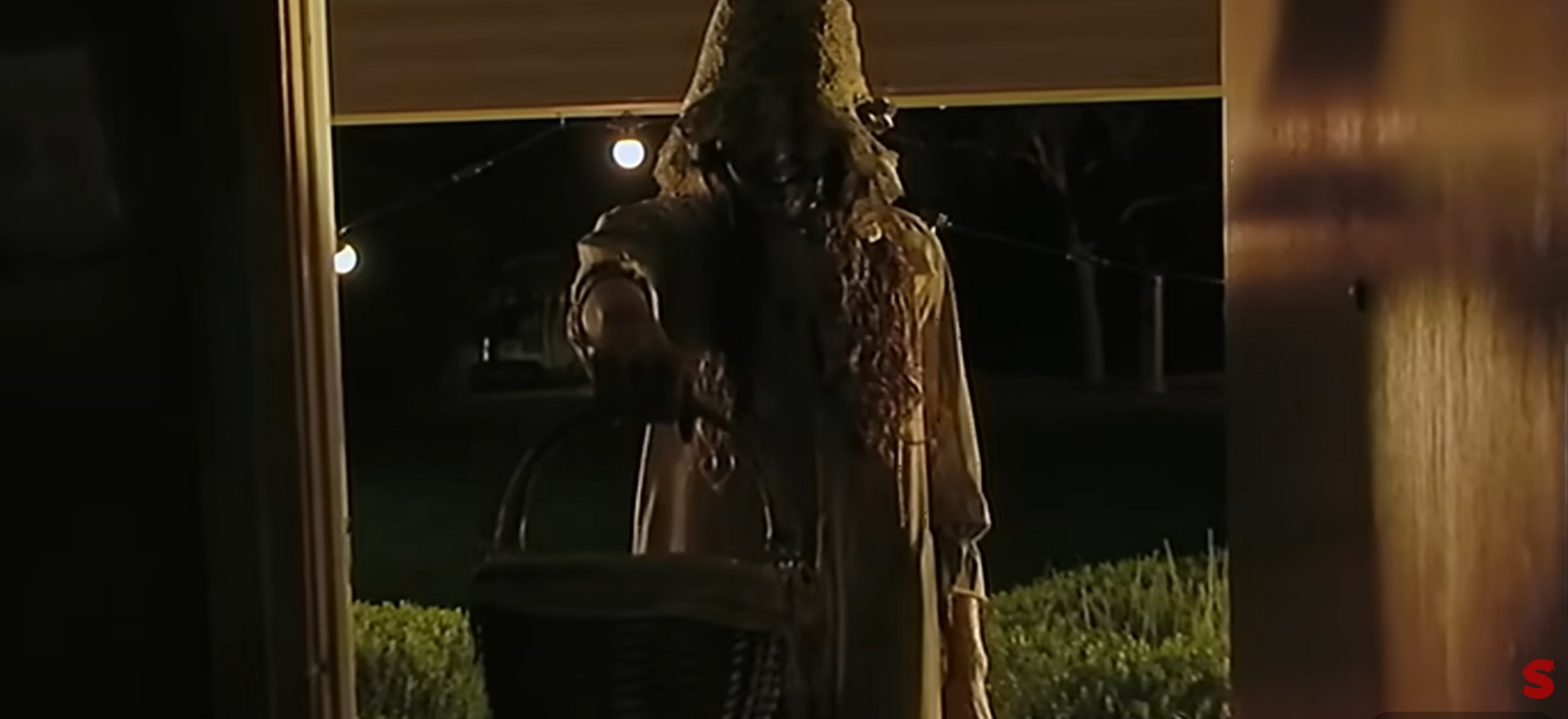
Acting as “Die’ced’s” frontman without a single line of dialogue, Jason Brooks stalks without being stealth as the deranged psych-prison escape Benjamin.  As a character actor of many faces, having donned the mask of the iconic Jason Voorhees character in a handful of short tributes, strapped on the gloves and fedora for a quick Fred Krueger, and has played the monster countless times over and over again, Brooks follows the footsteps of the likes of Kane Hodder, a part time stuntman keen on being the on-screen villain and making the role is own.  As Benjamin, there’s no qualms about the character’s imposing height and careful movements, some being gently infantile while most have an aggressive cruelty like a wild dog shaking a mouse in its jaws to literal pieces in a fit of blood spatter.   In the other corner, the final girl, Cassandra is just a seemingly normal teenage girl trying to live her adolescent life by going to parties and being a sister to brother Tommy.  However, there’s no way you could convince me Eden Campbell and Collin Fischer are playing teenagers.  Typically, a slasher high school cast would be near the edge or just over the threshold of adulthood, but Cassandra and Tommy are way too old to be high school students with an age range of mid-to-late 20s having a noticeable, natural filled out physique of maturity.  Campbell career stretch has her as a micro-scream queen of sorts from a few horror-related roles from her haunted theater debut performance in “Ghostlight” to having a significant role in the two-part Netflix series “Fear Street:  1978” based off the R.L. Stine scholastic book and with “Die’ced,” Campbell is no Lauren LaVera or Jamie Lee Curtis with her final girl character that’s pitted against a scarecrow garbed killer who’s able to take down without much to-do.  The cast rounds out with Christine Rose Allen as Benjamin’s nurse and escape benefactor, John Karyus (“Lo,” “The Gruesome Death of Tommy Pistol”) as an unfortunately psychiatric doctor being utterly taken apart piece-by-piece, and Nigal Vonas (“Coyote Cage”) as the Cassandra and Tommy’s father.

If analyzing “Die’ced: Reload” in the grand scheme of the slasher iconography, Benjamin, the scarecrow, boils down to being an unauthorized spinoff of Art the Clown, a completely unmistakable byproduct of the widely popular, ultra-violent “Terrifer” film and subsequent franchise about a devilish smiling clown immensely enjoying eviscerating victims in all different kind of ways.  With the same traditional traits of a brawny butcher running on vocal silence, Benjamin is compared to the fan favorites of Michael Myers and Jason Voorhees by its filmmakers, but as far as costume and behavior style goes, along with the intense desire to craft art out of the entrails of his victims, the “Die’ced: Reload” antagonist has more qualitative measure toward Art the Clown with the Aguste face makeup that accentuates the odd shape of a distinct facial bone structure, the harlequin jester who revels in the pursued dismemberment and savagery of innocent parties, and the fact a girl/woman becomes the singled out and obsessed target that rivals the Art the Clown versus Sienna inextricable link.  To further the film pretentiousness, the narrative is held together by elementary school graded glue and Scotch tape with an inexplicable twist that fails elucidation and logic and a familiar narrative that also relies too heavily on the gratuitous gore elements to carry it from beginning to end, reducing the once 2023 viral short into nothing more than a too soon hackneyed concept for 2025.  The “Reload” subtitle gimmick extends the original 2023 short by 30-minutes’ worth of additional gore footage and slipping in some of Benjamin’s backstory while the narrative trunk remains unchanged, but the overall outcome bares a slapdash impression as the story isn’t as terrifying or is whole enough for the Benjamin scarecrow to scare off even a murder of cowardly crows.

”Reload” scares its way onto Blu-ray from Dread’s home video label, Epic Pictures Group, with an AVC encoded, 1080p high definition, BD25 that’s has definitively no issues with the compression integrity seeing pitch black negative space, delineated outlining, and a stable digital image quality but isn’t quite as sharp.  “Die’ced” and director Jeremy Rudd pride themselves on their retro homage to the slasher genre of yesteryear where “Halloween” and “Friday the13th” reigned supreme and Rudd tries to emulate the effect with hazy fog, low and key lighting, and plenty of corner shadowing that impairs surface details and textual outputs.  Coloring is fine but the dark tone grading hampers the hue explosion that leaves the Scarecrow, or maybe Clownish, makeup moderately subdued under the straw mop and burlap hat. “Die’ced” is presented in a widescreen 1.85:1 aspect ratio and without a grain filter to exact a throwback 80’s slasher.  The English Dolby Digital 5.1 audio mix offers a tampered fidelity through the multi-channel system with a weaker side and back channels to focus more on the front.  Dialogue doesn’t deny clarity and provides enough prominence to be the singled finest element of the audio design that really lacks the range for broader Halloween costumed killer on the loose in Seattle that winds up at a drinking party and a bottling factory without making a bigger splash in the audio pool.  Special features include the original “Die’ced” short film and trailer, plus additional Dread produced film trailers.  Physical packaging is a standard Blu-ray Amaray case with Benjamin’s clown-scarecrow mug menacing smiling through the arch of a bloodstained sickle garnished with one single retro VHS “Horror” sticker which perfectly denotes the extent of “Die’ced’s” throwback slashery.  Epic Picture Group’s Blu-ray is region free and presents the film not rated with an 81-inute runtime.

Last Rites: I’m not seeing the viral sensation the internet saw with a hackneyed antagonist doing much of the same as those who came before, but “Die’ced: Reload” has an extreme slasher violence appeal that can temporarily quench bloodthirst and the open ending leaves more to be explored for character redemption.

Go Beyond the Short Film with “Die’ced: Reloaded” on Blu-ray!

A New Drug, A New Promised Cure, a Result of EVIL Side Effects! “Mirror Life: Modern Zombies” reviewed! (Cleopatra Entertainment / DVD)

“Mirror Life” on DVD from Cleopatra Entertainment!

An experimental drug known as Dumitor has the promise to cure all known ailments but while the animal testing proved encouraging, scientists Donovan and Taylor need to prove their miracle formulation on people.  The formulation creates a mirror reversal of the right-handed nucleotides and the left-handed amino proteins in the biological DNA sequence that could contrary the effects of chronic sickness.  Halfway through the experiment trial, Dumitor appears to be working until one of the participants comes down with hallucinations stemmed by an overload of endorphins resulting in violent behavior.  A failed lockdown and execution of all infected puts the world on the precipice of a pandemic and video journalist Tracy aims to find out what happened to her cousin, one of Dumitor’s trial members, who has mysteriously disappeared.  As Tracy gets closer to the truth, the pandemic spreads, the violence spreads, and the coverup to debunk accusations and prominent names out of the media has turned to desperate aggressive measures by Dumitor’s benefactors.

Based on the actual scientific and controversial theory called Mirror Life and transposed as the basis for the 2025, American horror-thriller, “Mirror Life,” the movie, depicts the cinema sensationalized effects from the synthesized molecular theory put into practice on the human body and mind as the be-all and end all cure for persistent ailments, turning usually mild-mannered and sensible people into crazed and delusion killers being masked under a whitewashing umbrella.  Also known as “Mirror Life:  Modern Zombies,” the film is written and directed by former amateur boxer turned filmmaker Kazy Tauginas in what would be listed as his debut writing credit and directorial.  With that being said, “Mirror Life” is actually a doubled up and mirrored concept of itself in some weird kind of way as a different cut of the Brian Kazmarck written-and-directed “Terminal Legacy” from 2012 that has Tauginas as the story creator.  The plot above is essentially the same with the original shoots being spliced with the integrated documentary investigation from Jordan’s cousin Tracy and her cameraman, interwoven as a non-linear parallel extension to the original concept and re-released with a new title, with the genre hot term zombie thrown into the subtitle for good measure.  “Mirror Life” or “Terminal Legacy” part deux is a production from Crapshoot Productions, New Lease Films, Ugly Puppy Productions and Open Fire Films, produced by Aidan Kane, Louise M. Peduto, Nat Prinzi, Stanislav Puzdriak, Brian Smith, and Kazy Tauginas.

Tauginas also costars in the film as Jordan, a surviving trial participant and Tracy’s missing cousin who finds himself chin deep in Dumitor contagion and a prime target in a containment massacre of his fellow trial mates Lindsay (Tationna Bosier, “Supernaturalz:  Weird, Creepy, & Random), Rosemary (Elise Rovinsky, “Fog Warning”), and Keith (Corey Scott Rutledge) when disturbing signs of infection show.  The small sample group have a decent dynamic with Jordan and Lindsay become hot for each other, Keith donning the bad boy antagonist persona, and Rosemary bringing up the rear as the withdrawn woman as they interact with the three doctors conducting the experiments in a cautious and courteous Dr. Taylor (Cuyle Carvin, “Dolls”), a more confident formulation scientist Donovon (Bristol Pomeroy, “Devil and the Nail”), and a more charge-forth with testing and results in Dr. Campbell (“The House on Tombstone Hill) who have their own contentious dynamic when fast and loose trial and error butts heads with steady-as-she-goes testing.  The original “Terminal Legacy” shot cast has their story spliced with a documentary style investigation by Jordan’s concerned cousin Tracy, played by Courtney Cavanagh who was also in anthological spinoff short of “Terminal Legacy” subtitled “Lost Souls” which doesn’t connect with the Kazmarck feature.  Both “Terminal Legacy” and it’s subsequent, unconnected short tread into being a lesser-known version of the popular sci-fi horror series and movies of “Black Mirror,” hence the word mirror being used to attach “Mirror Life” onto the success of the Charlie Brooker written and produced creation.  The cast fills out with Lawrence Ballard, Sally Greenland, Erica Becker, Mako San, Marc Reign, and Brian O’Neill.

Two shoots from two different times mashed together to form a single narrative structure doesn’t come without any issues, also being a non-linear story that toggles time and characters also doesn’t help.  Yet, “Mirror Life” bulldozes its way to being sound with little overlap puzzlement and only sustaining portions of a la carte plot holes.  Kazmarck’s 2012 script and direction nail a successfully conceive pre-apocalyptic thriller narratively designed like a Steven Soderbergh’s “Contagion” released a year prior snuggly fit into the “Black Mirror” like mold.  Where “Mirror Life” becomes a choppy is with the present tense portion of the shot of video documentary, added in as surplus offshoot to perhaps clean up and close out “Terminal Legacy” with fleshier reel and complexity toward the coverup concept.  By using interchangeable lensed cameras and mock security CCTVs, the spliced in sections create a whole new aesthetic and feels that grasping connection to the original film.  Plus, Tracy’s connection and motivation doesn’t appease her drive to make a documentary or even explain why the compulsive, go-getting cousin is compelled to do the extra leg work for her cousin other than their quickly mentioning their blood relation; there needed to be a deeper conversation of exposition out of Tracy’s emotional vault to get the audience on her side for hounding doctors, sneaking into apartment buildings, and the, essentially, putting herself and her crew in harm’s way for Jordan.  In short, “Terminal Legacy” had the makings of a sufficient sci-fi and apocalypse thrills and chills but without actually seeing the film in its entirety, there’s no way to know if the Kazmarck production went into being development hell, shelved for budget reasons, or had a more incongruous outcome that warranted a redo.

Cleopatra Entertainment distributes “Mirror Life:  modern Zombies” onto DVD home video with a MPEG2 encoded, upscaled 720p, DVD 5.  Presented in a widescreen 1.78:1 aspect ratio, image quality ranges from a third person graded digital capture, a first person raw digital capture, and pseudo-CCTV filter.  For lower DVD storage and the range of perspectives, compression issues are limited to smaller banding issues albeit plenty of darker and negative space opportunities for those milky arch lines to appear.  The grading, however, has a bit of milky residue but not terribly soaked but does keep the black saturation diluted.  Textures around skin and clothing have limited emersion with a smooth or slightly splotchy limitation from the 5-gigabyte compression that has a feature plus bonus content and a soundtrack menu.  For Cleopatra Entertainment, “Mirror Life” is a rights only distributed release, meaning they do not own the music, or rather soundtrack, from the parent company Cleopatra Records.  However, the mix is still an encoded English Dolby Digital 2.0 that has some bite in decibel volume but still can’t quite compare to an uncompressed stereo with “Mirror Life’s” gun-firing, fist-throwing, and the infected guttural sounds; however, the Dolby compression factors into saving space for a decent picture and its accompanying special features.  More importantly, dialogue comes through clearly and prominent.  Bonus features include a director’s DVD commentary, outtakes, deleted scenes, a slideshow, and theatrical trailer.  Cleopatra Entertainment has been constant on packaging with a standard DVD Amaray containing stark and intriguing cover art, especially with “Mirror Life’s” Kerry Russell and Alexandria Deddario-esque Sally Greenland appearing manically and sepia toned with a pair of scissors on the DVD and disc cover.  There are no other physical supplements on the region free DVD that houses an 89-minute, unrated feature.

Last Rites: “Mirror Life” mirrors itself from 2012 with a retouched version of the original film, “Terminal Legacy,” with little-to-no differences and another name slapped on in the director’s section. The horror comes from an effective, scientific relevant story of side effects and coverups but does the Modern Zombies subtitle really, and I mean really, come into play here? It’s a stretch to say the least.

“Mirror Life” on DVD from Cleopatra Entertainment!

EVIL’s the Bacon, the Pork Roll, and the Scrapple All Mixed and Slashed together! “Butcher’s Bluff” reviewed! (Breaking Glass Pictures / DVD)

“Butcher’s Bluff” on DVD from Breaking Glass Pictures!

Film students Rodger, Nicole, and Derrick decide to head to the rural Texas town of Emerald Falls and make their class project documentary around the 28 missing persons over the years and the Hogman, an urban legend of an escaped killer now roaming the woods of Butcher’s Bluff.  Bringing along their friends to make it concurring party getaway at Rodger’s family vacation cabin, the trio conduct interviews with the eccentric town locals to build a story around the Hogman myth, even ascertaining the original location for the mask Hogman wore during his first kills before escaping psychiatric prison.  The more they investigate into the Hogman, the more the locals warn them to stay away from Butcher’s Bluff but in a case of curiosity killed the cat, the documentary film students and their drug-fueled, sexed-up friends find themselves being hunted with no cell service, no help within miles, and no way out of the Hogman’s kill radius. 

Co-directors William Instone and Matt Rifley helm their first collaborative feature “Butcher’s Bluff,” a 2023 small town slasher reminiscent of the renaissance slasher movement of the 1980s, packed with practical gore effects, odd backwoods characters, a campy party of vice-riddled youth, and, moist importantly – excuse me – most importantly, T&A.  Instone, whose all-in director, writer, and producer debut horror “Jon” from 2012 brings one man’s delusions into horrifying reality, cowrites his latest grim story with writer, painter, and overall liberal arts connoisseur Renfield Rasputin.  Filmed in Texas with principal locations taking place in Bastrop, New Braunfels, and San Marcos to composition a story set in the fictional town of Emerald Falls and its rural woodland of Butcher’s Bluff.  The film is a crowdfunded venture that raised an approximate $60K to cover principal shooting and post-production costs with Instone and Rifley serving as primary producers amongst an amalgamation of crowdfunded producing backers   Instone’s Thunder Mountain Films, in association with Dull Knife Productions and Spicey Ramen Productions, go hog wild with their slasher horror. 

As if he doesn’t have enough on his plate writer, directing, and producing “Butcher’s Bluff,” Instone also portrays the main antagonist Hogman, masked with a stitched together pig head complete with cockeyed tusks and garbed with a dingy mechanic jumpsuit and tan jacket.  The Hogman is a walk-and-run chaser with a duel-sided axe and rusty, broad curved knife as main melee weapons though he’ll get his bare hands dirty from time-to-time.  Instone’s not flashy with the villain and doesn’t key-light any iconic poses, stances, or stares to incite a nerve coursing fear.  Hogman’s victims are anyone and everyone who enters the Butcher’s Bluff forest, from necking lovers (Jacqueline Hays and “Mallrats’s” Jeremy London), to lost pot farm thieves (“You’re Next’s” L.C. Holt, “Scare Package’s’” Christopher Winbush, “Girls Gone Dead’s” Shawn C. Phillips), to finally, but not limited to, the Rodger’s friends and classmates on their excursion investigation and party.  Fortunately, the group displays different caricature tropes without going full-blown cliché.  Between them you have the exuding sexy yet overly bitchy duo of Sam and Tina (a cut pixie cut but broodingly built Samantha Holland and a slender yet high-end platinum blonde Kayla Anderson), Rodger’s sex-driven, dweeb cousin Bobby (Dakota Millett) who Sam and Tina torment, the polar opposite to Bobby stud with Jake (Santiago Sky) and of course the three documentarians:  Rodger (Michael Fischer), Derrick (Johnny Huang), and Nicole (Paige Steakley), each reside in their own attribute world consistently, dying the way they live, that’s very telling of their moral fiber.  In additional to Jeremy London and Shawn C. Phillips, who have worked themselves into being staples of the indie genre films, other notable names to mention for their brief but key roles are Brinke Stevens (“Nightmare Sisters”), Paul T. Taylor (“Hellraiser:  Judgement”), Bill Oberst Jr. (“3 From Hell”), and Bill Johnson (“The Texas Chainsaw Massacre II”) peppered into the rest of the supporting cast to draw in fandom.

“Butcher’s Bluff” has the necessary bone structure to be a digestible slasher, checking all the elemental boxes, and Instone and Rifley manage to technically pull off a nearly 2-hour film on a crowdfunded budget.   The problem is “Butcher’s Bluff” has a hackneyed routine about it.  Instead of creating something new and wonderfully, gory and diabolical, under a distinct flag of novelly progressive storytelling, every scene feels all too familiar, a telltale sign to horror fans that we’ve seen this kind of story before.  From Hogman’s stony silence and indiscriminate aggression bores him as a Michael Myers carbon copy, a family in cahoots with a s flesh-stitched maniac plays the tune of “Texas Chainsaw Massacre,” and there’s even a character moment of yelling What Are You Waiting For? aimlessly into the dark forest while spinning around with arms wide apart that oozes Jennifer Love Hewitt vibes.  Add in some rather uninspiring frame, shot design, and editing and “Butcher’s Bluff” very much embodies the crowdfunded costs rather than the intended crowdfunded spirit.  Now while all of this portion of the review sounds grossly negative, don’t just run for the hills to the next slasher film in line just yet as Instone and Rifley still manage to keep an engagement lock on what makes the slasher film enjoyable to behold with some decently inlaid practical gore effects, including a pleading head being sliced horizontally through from mouth to hair or a posthumous, lawn chair display of one fine girl’s nipples and eyes plucked from her body and posed on her eye-gouged out person as if giving a blood offering to the audience Gods.  There’s also the inviting gratuitous T&A from Samantha Holland, Kayla Anderson, and Jacqueline Hays that keeps the old theme motif alive within the campy slasher genre as well as keeping young boys’ dreams from becoming dry.

Breaking Glass Pictures distributes the archetypical slasher “Butcher’s Bluff” onto DVD home video.  The MPEG2 encoded, 720p upscaled standard definition, DVD9 really has a tough go with the compression capabilities as there’s quite a bit of data to encode/decode within a near full-time night shoot picture and color accompaniments that blend right into the darkness, melding out of a clean definition.  Presented in a widescreen 1.78:1 aspect ratio, banding and splotching render a difficult deciphering of data in inkier fields.  When colors do contrast or arise into lighter hues, there’s a pop of demarcation with its full potential held back by an ungraded layer.  Textures are extremely fluid throughout with the prominent skin scenes offering a decent, natural look but most scenes are fuzzy as if the upscale fights the downscaling for supremacy.  The English Dolby Digital 5.1 surround sound offers an adequate compression for a routine slasher with mid-level range with clear and clean dialogue overtop eerie forest soundscape of breaking branches, tree knocks, and leave crunching footsteps.  The mix doesn’t convey much depth with dialogue and ambience hanging around the front channels while medium shots and some tree knocking flirt with the side channels.  A mainstay slasher should have a memorable, tense-riddles soundtrack for the chase or create omnipresence fear but “Scream, Queen!  My Nightmare on Elm Street” and “Dinner with Leatherface” composer’s Alexander Taylor’s insipid inspiration can’t be held in the memorable bank and fails to elevate the Hogman’s imposing sheer terror.  English closed captioning is available.  Special features include a proof on concept trailer for the crowdfunding campaign that stars a handful of the actors from the feature film, such as Michael Fischer and Paige Steakley, and a behind-the-scenes music video that contains behind-the-scenes footage.   The DVD presence is standard fair for Breaking Glass Pictures with a DVD Amaray and a one-sided front cover art, which subjectively pleasing in its retrograde mockup of an illustrated Hogman looming over a scared, running Steakley (supposedly) in her white tank top and high cut shorts.  There is at least one noticeable error on the back cover that spells Paige Steakley’s name incorrectly in the credits, listing her last name as Steakely.  The Not Rated release is hard encoded with region 1 and has a two-hour runtime which can appear quite long, but the pacing was not terrible and the long runtime for an indie slasher didn’t feel overly immeasurable. 

Last Rites: “Butcher’s Bluff’s” has little to offer as far as the next novel and generational slasher but scratches the genre itch with a large body count, solid kills, and campy campers looking to buy, sell, and trade their vices for being violated.

“Butcher’s Bluff” on DVD from Breaking Glass Pictures!