EVIL Moves in When Sister Goes Missing! “Sister Tempest” reviewed (Darkside Releasing / Blu-ray)


“Sister Tempest” – on Blu-ray home video at Amazon.com

Private school art teacher Anne Hutchinson faces an alien tribunal on the set of circumstances surrounding the sudden disappearance of her younger sister.  Anecdotally going through the chapters of her life, beginning with her parents perishing when the sisters were young into growing up in a confrontation household between the sisters’ warring personalities to Anne’s desperate search for her younger sister after an ugly fight one night.  Still reeling from the abrupt disappearance, a new student joins her class that ensues a sudden fascination from Anne.  When the student shows up one night at Anne’s house, unloading woes of being kicked out of school due to lack of funds, Anne offers sympathy and suggests staying in her sister’s room that’s now been vacant for some time, but Anne’s new roommate hides a secret as she must feed on raw meat to combat of a body-covering boil sprouting illness.  Little does the art teacher know that there’s a connection between her sister’s disappearance and her former blood-thirsty pupil that will shock her very core.

What happens when a promise to another person can’t be kept because that person’s will and commitment is so strong it’s becomes a severe fault?  From an not from this world alien perspective, the contradictory and irrational nature of humankind has a profoundly illogical pattern to it that bears hardly any understanding to an unlike mind.  There’s fragility to interpersonal relationships and to the people devoted to those relationships that force unforeseen, sometimes fatal, consequences when expected coherency and harmony turns into irrational chaos from seemingly arbitrary means.  This is how Joe Badon’s genre-bending “Sister Tempest” expresses that conundrum of curious conscious with a surrealistic sci-fi-horror-drama that teeters on the edge of deadpan.  The 2020 released “Sister Tempest” is the second written-and-directed feature film from Badon, following his 2017 experimental horror “The God Inside My Ear,” which falls upon similar “Sister Tempest” lines of emotionally distress-induced bale.  Filmed in New Orleans, Louisiana, “Sister Tempest” is a produced by Badon, editor/sound designer Joseph Estrade, Dustin Rosemark (“Inferno”) and cinematographer Daniel Waghorne with visual effects artist Clint Carney (screener of “Dry Blood”) and Miles Hendler serving as executive producers.

After a series of prefacing introductory and non-linear story scenes, Anne Hutchinson, a debut feature role for New Orleans based actress Kali Russell, sits in negative space wearing an orange jumpsuit and being introduced to her alien tribunal council.  Dazed and confused, but not totally in shock and frightened about being in the presence of otherworldly extraterrestrials, Anne recounts events surrounding the disappearance of her sister, played by Holly Bonney (“Bird’s Eye).  As sisters, a defined line between the older responsible and the younger immature is contentiously formed between Anne and Karen as they deviate from earlier promises after their parents’ untimely death to take care of each other.  Through Anne’s retelling of her life, her mother, though hard and disciplined, had a conditioning care that burdened the eldest child with a sense of duty and care at a young age and this really is no different from most firstborns who shoulders already a ton of responsibility regardless in taking on even more when the parents are no longer around.  You love them to death is great idiom that rings true in Badon’s subversive-cinema standards tale when the sisters can’t see eye-to-eye on matters and there’s a loss of connection, accountability, and gratitude that the audience can relate to.  For much of the picture, Holly Bonney takes a backseat to Kali Russell’s spiraling disconnect that affects her relationship with love interest Jeffrey the Janitor (Alex Stage, “Eat Brains Love”) and new life-entangling pupil Ginger (Linnea Gregg).  The latter Greg played character has a little more layers to peel back that involves directly with Anne.  Ginger’s is venom in disguise as vampire of sorts who requires raw meat and to keep her human appearance intact.  There’s a representational duality in Ginger, reflecting both a monstrous quality and a sweet innocence that ties into Anne personally and into the search for the sister.  “Sister Tempest” rounds out the cast with Clint Carney (“Dry Blood”), Lucas Boffin (“Return to Sender”), Andre LaSalle (“The God Inside My Ear”), Cami Roebuck (“Children of Sin”), and Sarah Rochis.

“Sister Tempest” has a foundational design we’ve all likely seen before with breaking points, dualities, and downhill-racing mystery unfathomable to the naked eye, but the Josh Badon story inexplicitly feels different from the others.  Perhaps because of Badon’s unconventional storytelling style that throws the normal perceptions for a loop, literally and figuratively, with a 50’s-ish callback to science fiction films or its glamour of 70’s-ish British horror in color and macabre or an unsane mixture of both. I’m not going to sugar coat “Sister Tempest” as an easy to follow, low-hanging fruit film that simple, straight-forward, and is everybody’s cup of tea. That would be a waste of peddle spiel. There’s a zaniness quality that can’t be ignored that surrounds the principal Anne character as if she’s experiencing an ersatz world normally. Some would say that Anne’s caught in a maelstrom, or tempest, of unclear thought and her ordeal is catalytically charged by the work and the love that is poured into her sister’s wellbeing only to be thrown back into her face. Badon has a flair for the unusual, an eye for the odd, and can extravasate an uneasy air from a capsule of seemingly randomized happenstance and beyond the already preternatural events to aggregating the wayward tension.

“Sister Tempest” is the very definition of independent movies with a take it or leave it spellbinding archetype that’s unlike anything ever seen before. You can bear witness to Joe Badon’s mesmeric madness and melancholy with a brand-new Blu-ray from Darkside Releasing. Presented in two aspect ratio formats, a 2.39:1 and 1.33:1, the screen really runs the side-to-side gamut. Image quality shows zero sign of issues from the high-definition digital video, shot on a 4K black magic pocket cinema camera. The blacks are deep and rich as well as the coloring through Daniel Waghorne’s versatile cinematography involving gel lighting, color reduction, and spotlighting. The English language 5.1 surround sound shows no sign of slowing down this A/V wonder with clean and lively multi-audio tracks that come through every channel definitively. Bonus material includes an audio commentary with the director, produces, and actors, a blooper reel, a deleted scene, and trailers for Darkside releasing surreal and giallo films. “Sister Tempest” Lynchian style is not going to please the masses, but it’s certainly the wildest ride in the theme park of contemporary indie cinema.

“Sister Tempest” – on Blu-ray home video at Amazon.com

To EVIL, Death is Only the Beginning. “Girl With a Straight Razor” reviewed! (Darkside Releasing / Blu-ray)

“Girl With A Straight Razor” available on Blu-ray and DVD at Amazon.com!

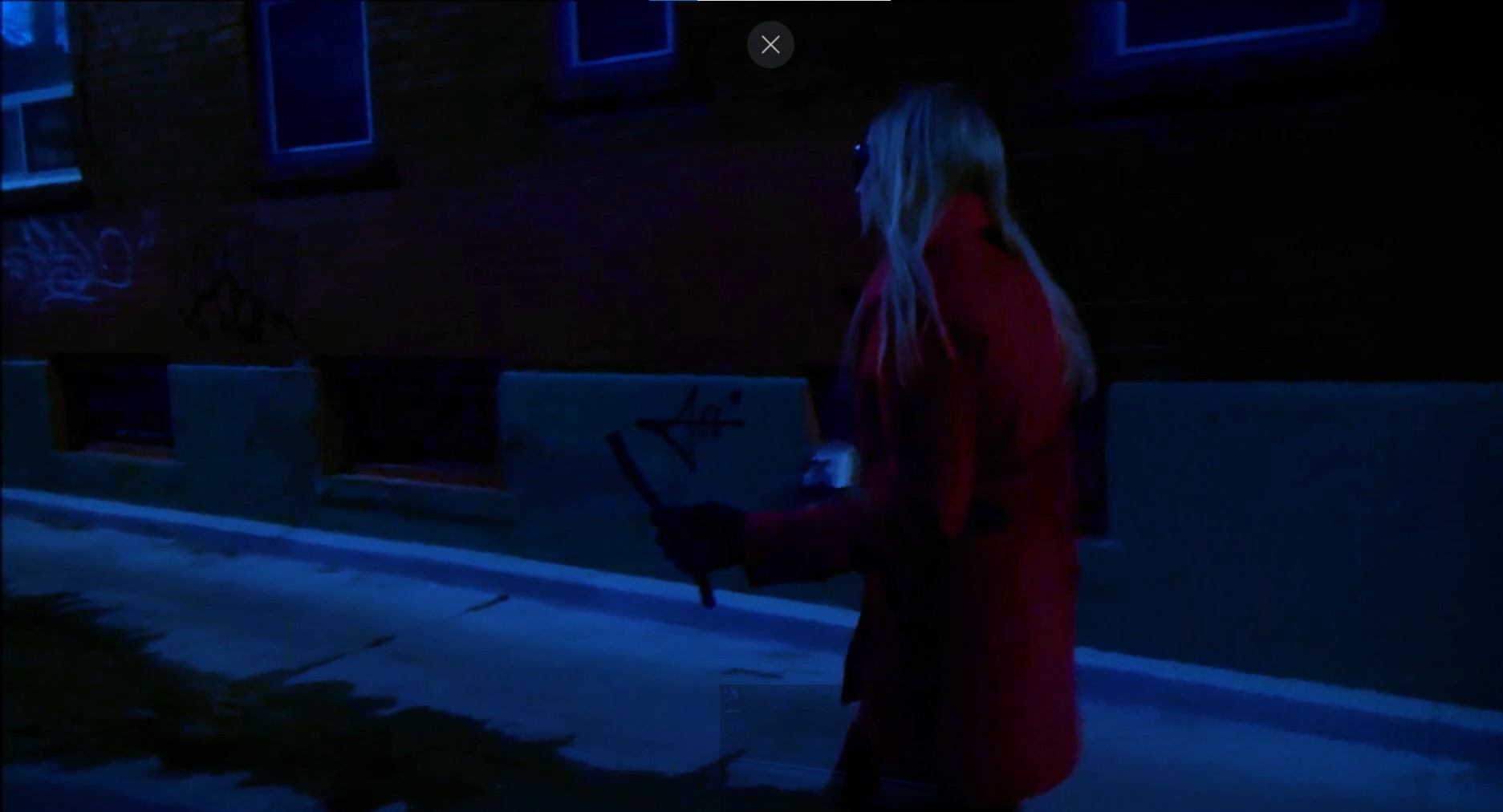
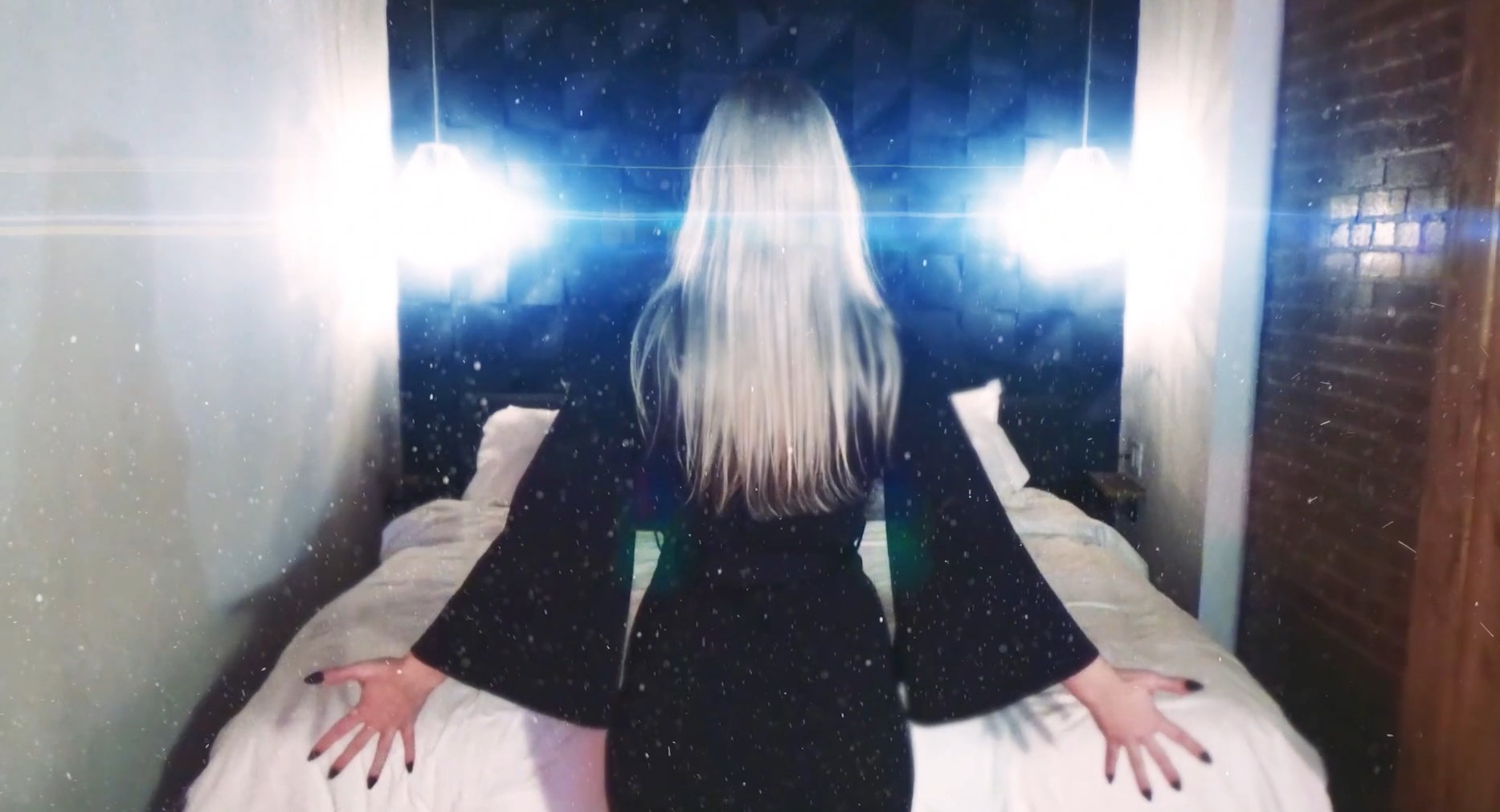
A placid woman waits in her modern chic apartment until dark. She ritualistically dresses elegantly and exits her apartment building wearing sunglasses, a bright red coat, and an unsheathed straight razor. As she wanders the streets, she locates a target, another woman, and stalks her with a bloody thirst in her eyes. When approaches from behind to only turn around her victim and come face-to-face with an exposed neck, she slashes away at the jugular, slicing crudely a blood-splattering spree that manifests a smile across her face. She returns to her apartment where she’s visited in between her straight razor murders by a lady dressed and veiled in black, priming the elegantly dressed woman for the next kill. The blade continues to slash through napes nightly, memories of the woman’s past seep into her psyche to a terrifying outcome of how she became a killer.

“Girl With a Straight Razor.” Simple, yet effective. The eye-catching, razor-sharp title certainly has a couple of key words combined together audiences often drool over just by the very straight-forward approach and appealing word sequences that make the appearance of an idiosyncratic title that much more desirable. Canadian horror-filmmaker Chris Alexander seizes advantage writing-and-directing a script that’s a numbing-gaze reminiscent in homage to giallo by assembling the trademark motifs of stark red coloring, gloved hands shot in a first-person view, and the use of a melee blade familiar to the Italian-made mystery-thriller genre for a fever dream highlighted as a pain-pleasure principled purgatory. The “Female Werewolf” and “Necropolis: Legion” director also composes the film and controls the overall look of the colorfully prone to epilepsy cinematography that jars sense the visual cortexes. “Girl With a Razor Blade” is the first feature production of the Vancouver based Molemen Entertainment and is produced by Vince D’Amato, the founder and managing partner of Darkside Releasing who released the film on home video this year.

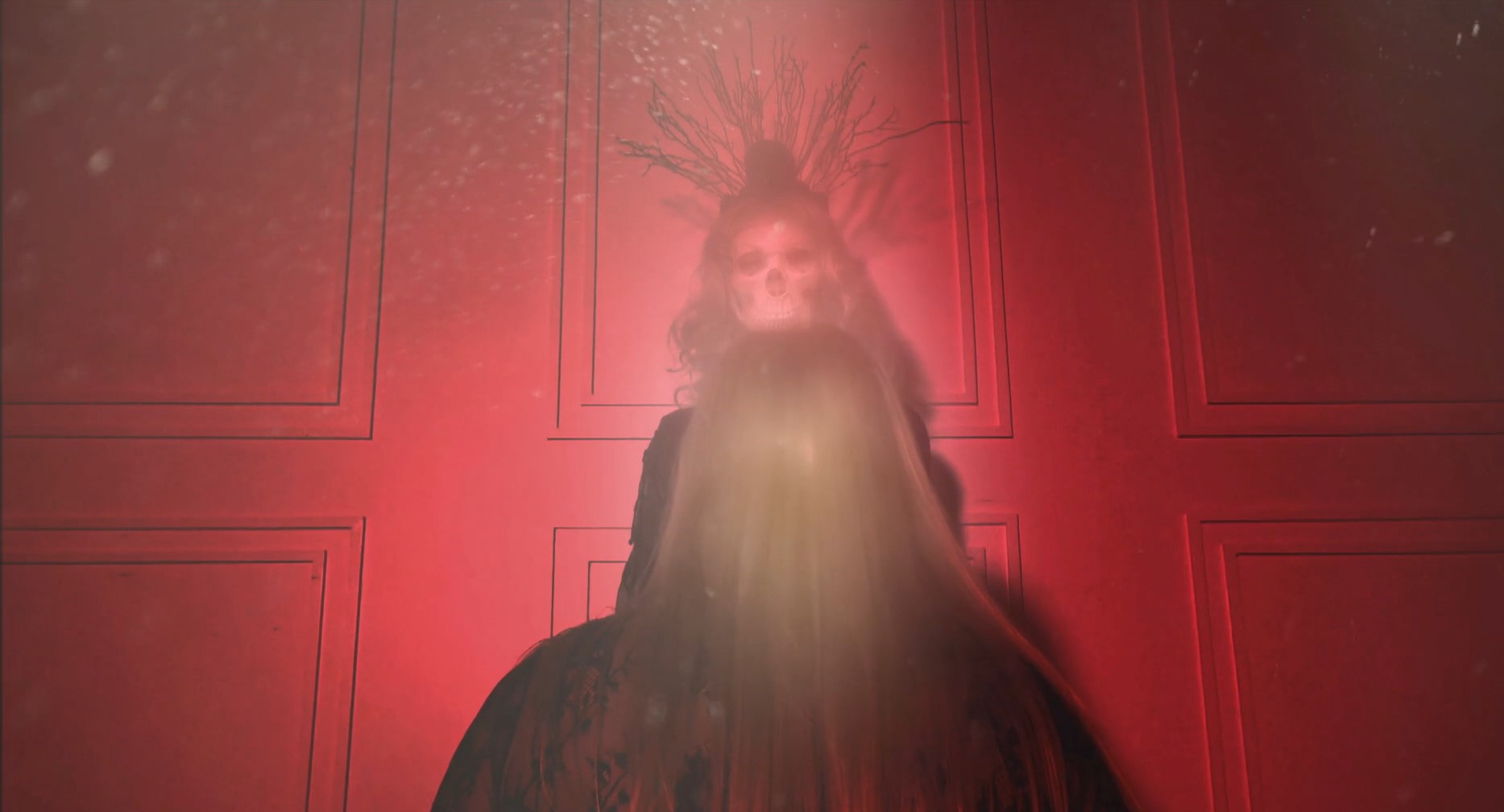
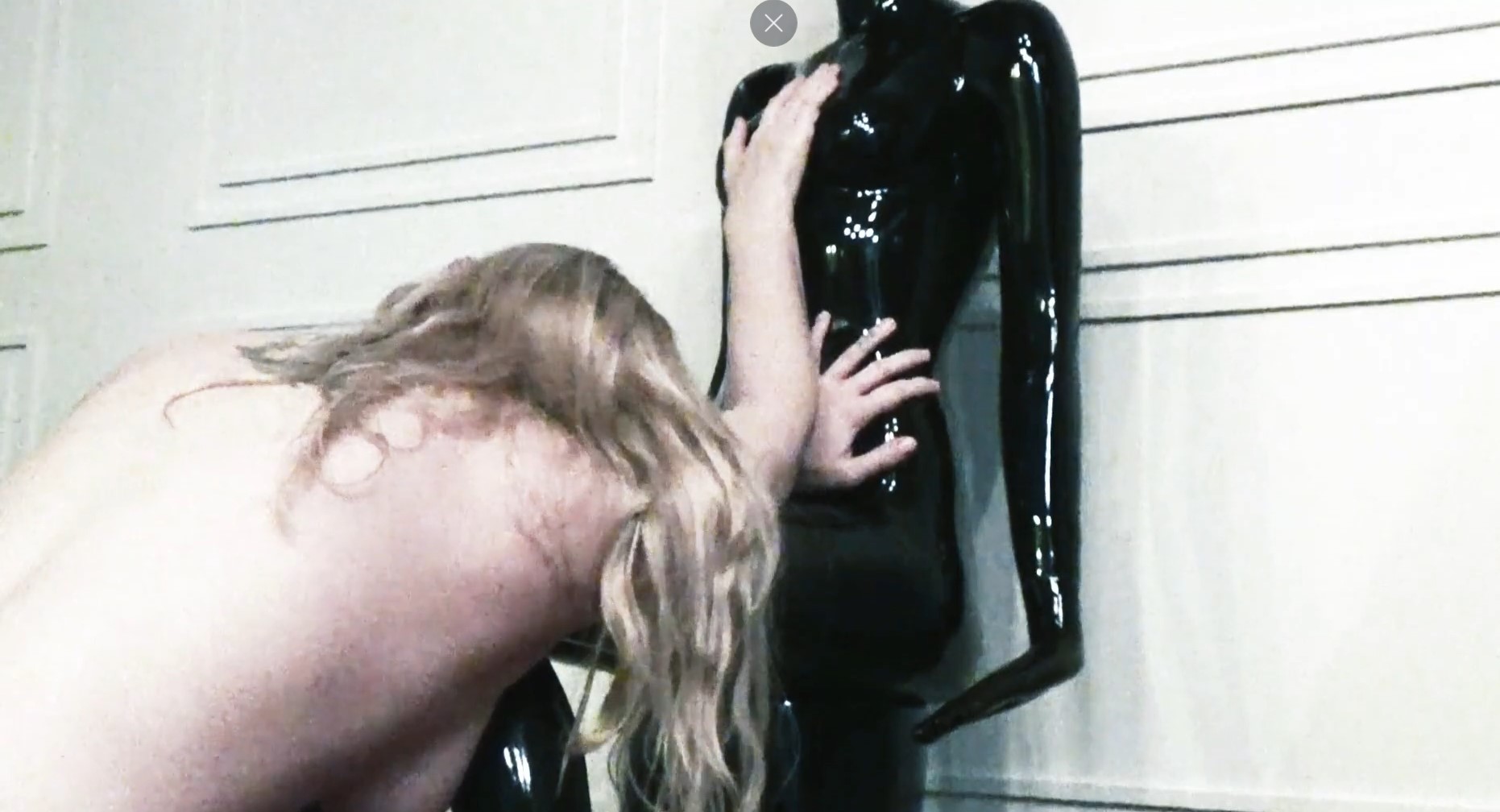
If you want to make a low-budget film and keep a lot of change in your pocket, hire only a handful of decent, well-rounded actors and actresses to maintain the spirit of independent filmmaking that balances the budget as well as balances the filmmaker’s creativity with semi-creditable performances. If you want to make a low-budget film and keep dollar bills in your pocket, hire two actresses where one only has two to three scenes max with no dialogue and the other have them play four different versions of themselves with very little dialogue. The minimal dialogue forces Alexander into a creative environment where express the principal’s emotional deluge, or lack thereof, can be displayed in a range of camera angles, his musical composition, and the variegated kill scenes contrasted against contrasting black and white visuals. In these scenes are a pair of Chris Alexander regulars. Having had roles in some capacity 2019 re-imagining of Bruce Hickey’s “Necropolis” from 1986, Thea Munster finds herself again in front of the director as a ghostly, haunting figure costumed in an old-fashioned lacy black dress as if going to a funeral, to which she’s properly playing a character called Lady Death so there’s no ambiguity about the status and intentions from the grim reaper concept, and Ali Chappell who isn’t foreign to leading lady role with Alexander and has the nearly the entire story on her shoulders with scenes of her as the lady in red cutting the throats of window shoppers on a nightly basis that becomes reverse engineered into the deconstruction of her as a killer with humanizing sympathy. Despite not much dialogue, both Munster and Chappell hit their marks and cater to Alexander’s idea of posturing expression that mostly involves Chappell laying topless in an egg-shaped chair, an animal skinned carpet, or on a black mannequin chair.

“Girl With a Razor Blade” is cutting-edge existentialism and novel re-imagining around the idea of death’s plans for us all. Alexander dives into the depths of mortal consequences that limbo the soul into a loop of insensible pain and suffering.  As we learn more about this woman and her marital troubles, presumably separated by legal force and a resentfully angry husband, from her child, Chappell’s character has no other place to go than down into darkness, mentally and physically.  Its during that time Lady Death approaches to become a harbinger of death, puppeteering her subject’s will to conduct more self-harm as the villain and the victim in a mind warping illusion that’ll fool the viewers’ perception of the woman’s insatiable lust for red jugular juice.  Alexander’s cinematography style is simply ethereal and elegant with a touch of precise choreography in the characters positions and movements to reflect a vivid dichotomy between the present stillness of surrealism and the past’s stressful reality. “Girl With a Razor Blade” is grim bordering the line of certain religious doctrines in condemning oneself to an unsavory existence, if you can even call it an existence, of facing yourself, your fate, over and over again until no longer the feeling the need to spill blood is gnawing at the marionette strings and waking up to the truth, facing it, can be free. There are moments the blade is a sexual object, almost like an obsession with what it represents, which would be death, that can be addicted, can’t be ignored, and won’t let you forget it.

Stylish, cryptic, and thought provoking, Chris Alexander’s seventh film “Girl With a Straight Razor” cuts onto a high-definition, AVC encoded, Blu-ray home video courtesy of Darkside Releasing. Two versions of the film are available – a Darkside Releasing expanded cut with a runtime of 67 minutes and a director’s original cut of the film with a runtime of 57 minutes. Both produced during the pandemic films are presented in a widescreen 1.78:1 aspect ratio. Picture quality wasn’t the best for Darkside Releasing with a shaky, often banding, image mostly throughout due to compression issues. You can see the blurry splotches in the darker portions of the scenes. Delineation is also difficult during rainbow strobe effect when the woman slices at away during a kill moment in a fit of haziness that leaves barely an outline of the contours. In fact, Alexander’s style is all over the map with filters, lens flares, and gel lighting that can be a little too much and gaudy to digest. The English language 5.1 surround sound has a lossy framework that’s more of a soft crunch than a sharp crisp. There isn’t much dialogue to be hand in the film, but the clarity is there, it’s just not robustly defined. Aside from two versions available of the film, bonus features also include an audio commentary on the director’s cut, three short music videos by co-star Thea Munster and her band “Night Chills” as she spotlights her niche playing of the theremin instrument, and Darkside Releasing 2021 Giallo and Surreal trailer reels. A character-driven and introspective “Girl With a Razor Blade” laments as an acquiescent nightmare breaded lightly in giallo features and fried heavily in the abstract qualities of surrealism. Don’t expect Chris Alexander’s film to be straight forward giallo with a straight blade razor and you’ll come out with only a close shave nick into your expectations.

“Girl With A Straight Razor” available on Blu-ray and DVD at Amazon.com!

A Mushroom Cloud of DNA Altering EVIL Proportions! “Mutant Blast” reviewed! (Troma / Blu-ray)

“Mutant Blast” is a BLAST!  Now available at Amazon.com

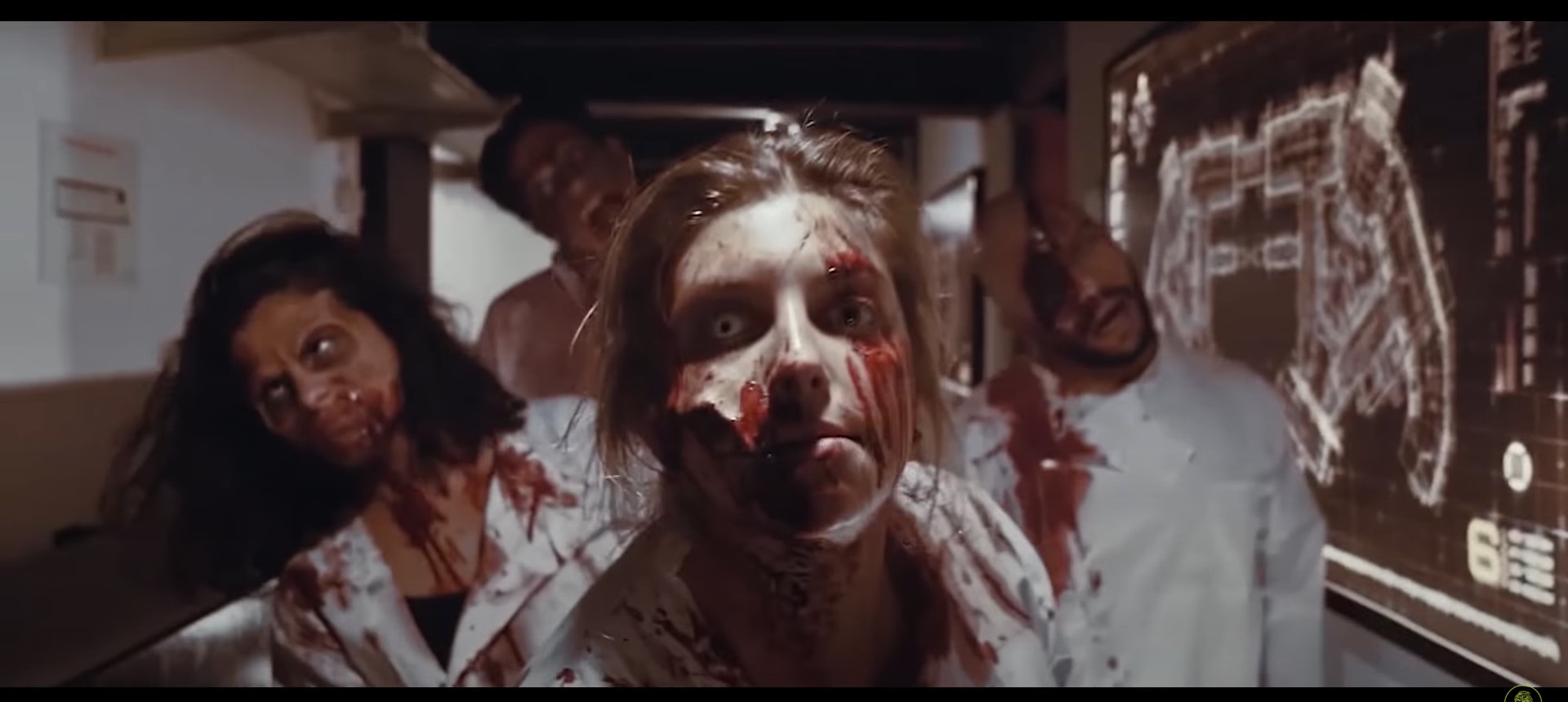
A top-secret military unit conducts human experiments to create the perfect super-soldier. Their illegal and amoral work has proven more difficult than desired with only one subject, TS-347, being deemed functional and fit for dutiful purpose. Maria, operating incognito with an adversarial paramilitary group, infiltrates the cell section where TS-347 is being held to either purloin the property or destroy it in order to not have the DNA be replicated. There’s only one problem – the failed superhuman experimental trials that transformed people into flesh-eating zombies have escaped confinement to begin the apocalypse. Barely escaping with their lives, Maria and TS-347 run into Pedro, a simple, low ambitious man with no clue to what is happening after awaking from a party-induced hangover. Together, they trek to the ocean for safety, but multiple nuclear bombs send their journey into a tailspin of mutant hostiles along their path.

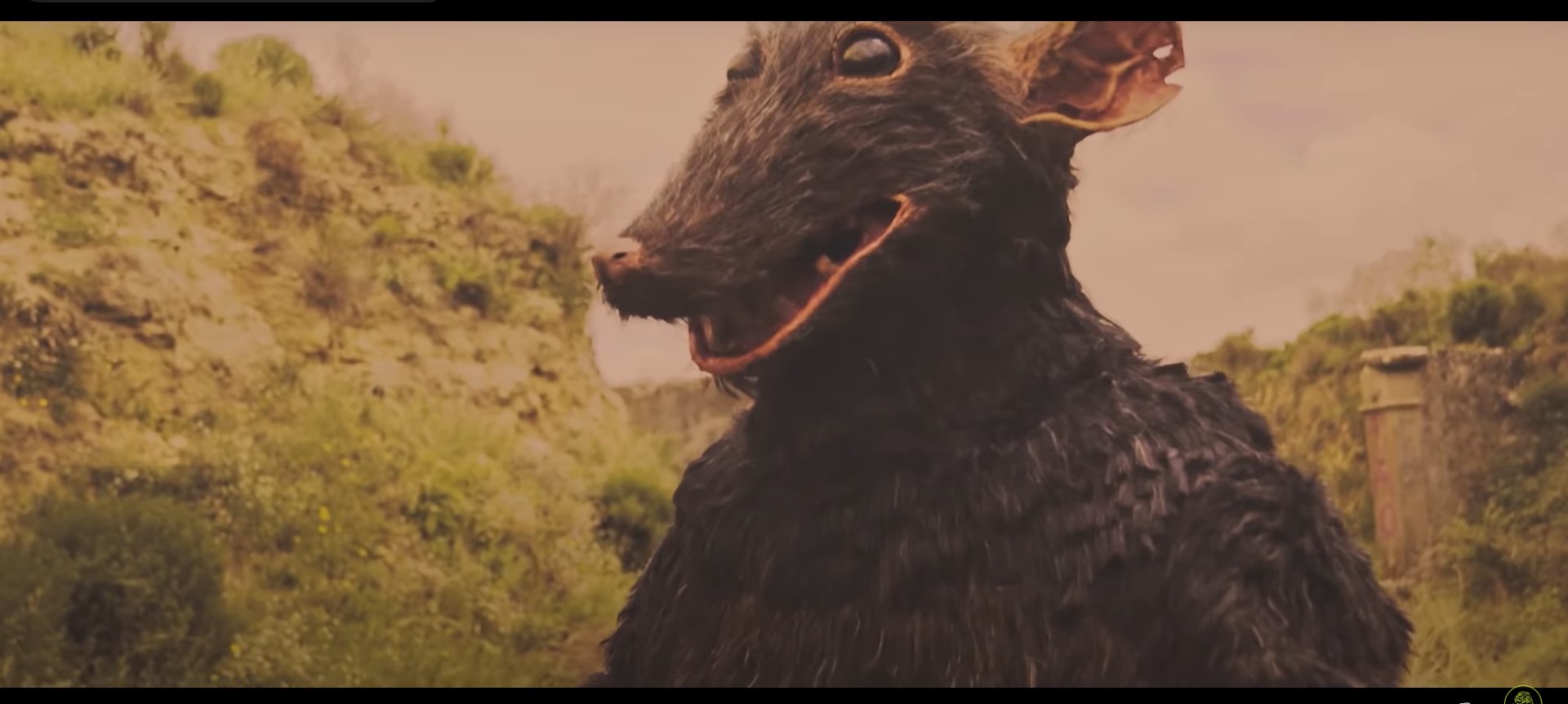
A nuclear orgasm within every minute, the Portugal-made post-apocalyptic comedy-adventure-horror “Mutant Blast” is crazy fun and certifiably crazy. Produced in 2014 but not released until 2018, the Fernando Alle written-and-directed debut radioactive-to-rendezvous through a zombie infested and freakshow continent leaves no stone unturned with an unbridled and practical effects-laden story that’s reminiscent of early 90’s splatter-comedies. Being one of the select more recent films to be actually produced instead of distributed by Troma Films (“The Toxic Avenger,” “The Class of Nuk’Em High”), “Mutant Blast” doesn’t have to work too hard to be granted passage into Tromaville’s sophisticated affinity catalogue. Troma’s masterminds Michael Herz and Lloyd Kaufman, who has a zombified bit part in the film, coproduce “Mutant Blast” alongside Alle and Matt Manjouridas, executive producer of Shudder’s “The Last Drive-In with Joe Bob Briggs, also financially supports Alle’s film that should one day, hopefully, be on the docket for Joe Bob Briggs to introduce its rat-fu, seafood-fu, and titty-shot-fu to the rest of the horror fanbase.

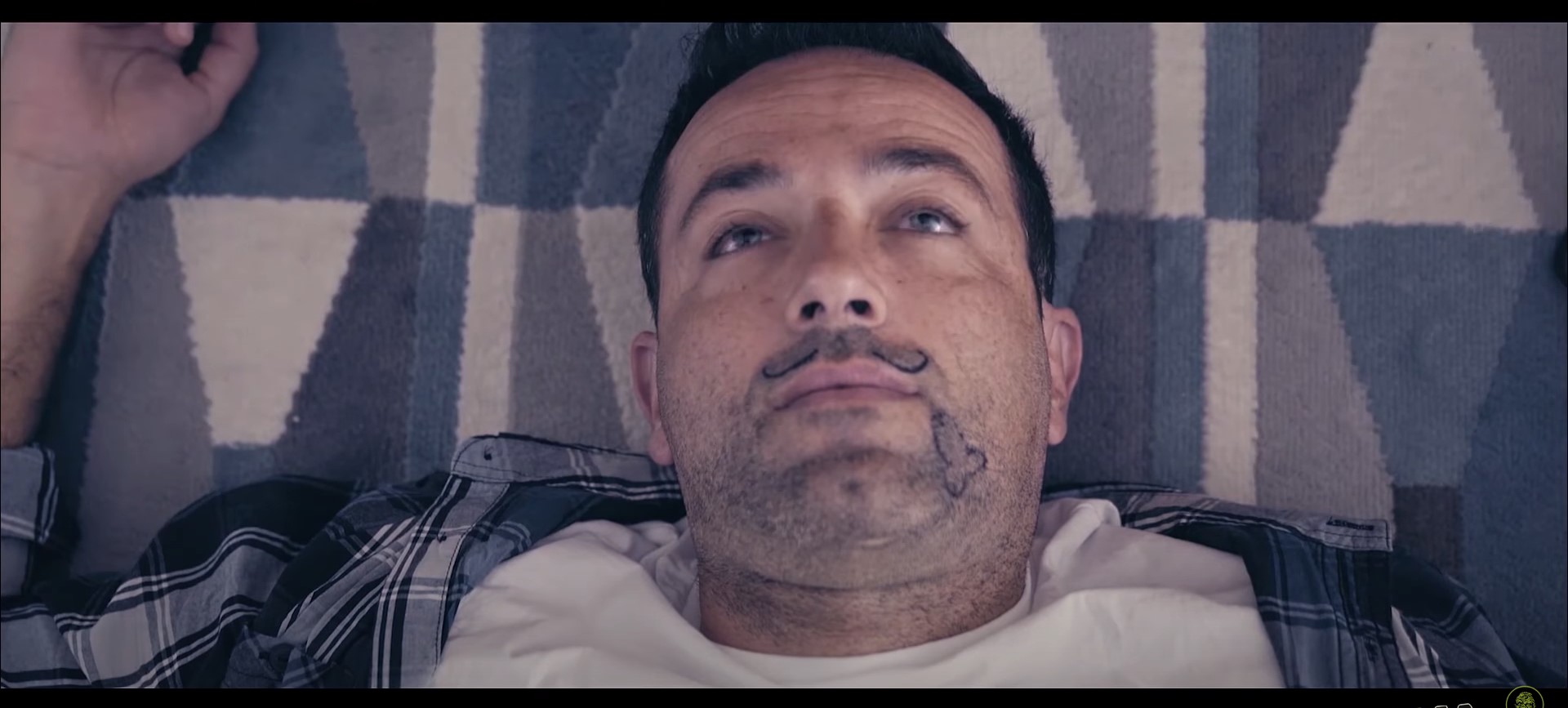
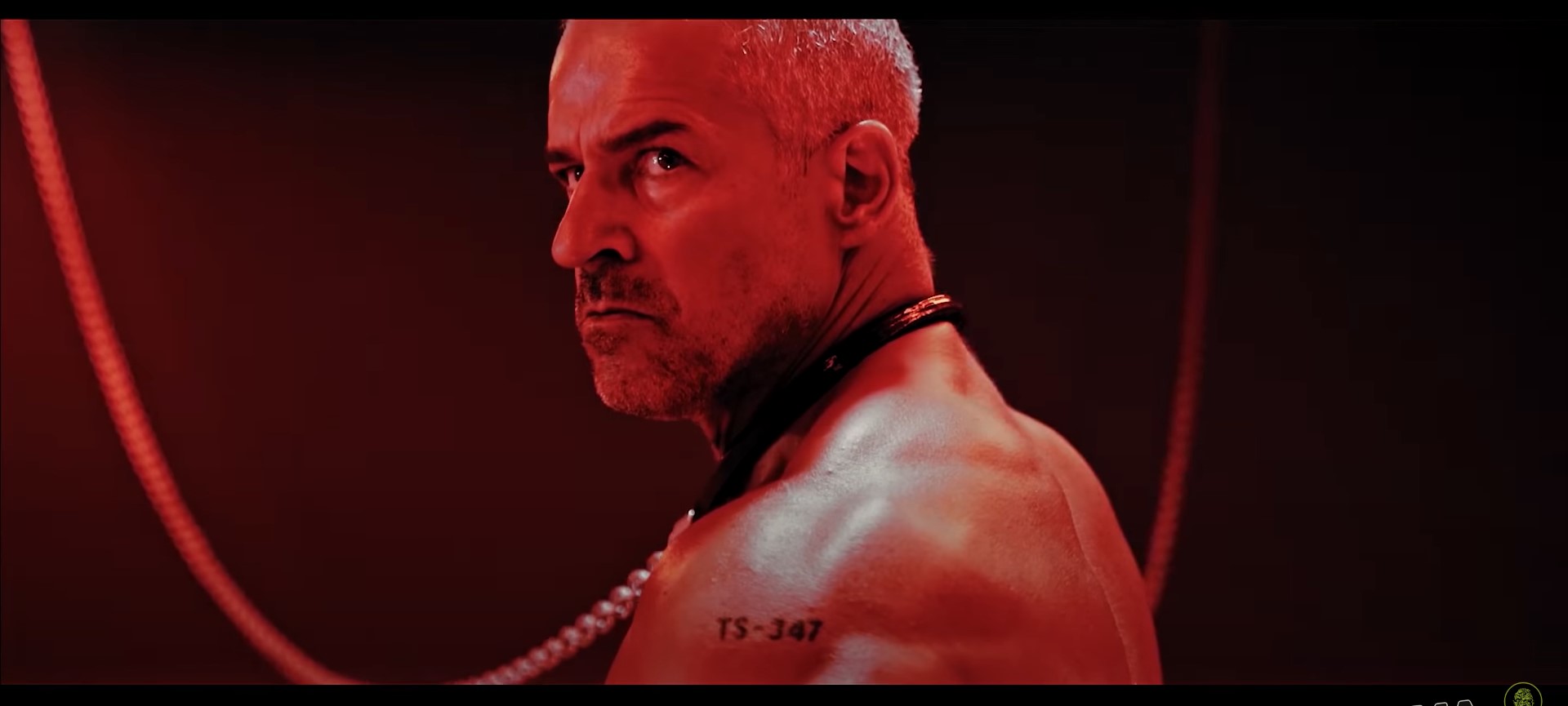
Living her best imitation of Ellen Ripley with a shaved dome from “Alien 3” is Maria Leite as the infiltrating noble cause soldier aiming to stop the experimental creation of human super soldiers by any means necessary.  Leite makes looking like a badass action hero pretty convincing and her comedic timing is wonderfully contrasted with Pedro, “Blarghaaahrgarg’s” Pedro Barão Dias in his introductory role into feature films, as a lighthearted and bewildered man strikingly outside his element and out classed what’s about to face him.  If you haven’t noticed, the characters names don’t stray far from the actor’s and that makes the chemistry a little easier, especially on “Mutant Blast’s” ambitious post-apocalypse and kooky freakshow façade.  Dias has the charming qualities of a gleefully lost puppy in a world that has everything trying to kill his character Pedro where previously the carefree partying fool was left alone, if not also insignificantly thought of, to his own devices.  If hitting the notes on the “Alien” franchise notes a part of the Fernando Alle’s must-have adulation check list then “The Terminator” is another box the filmmaker sought to check off as well with the TS-347 cyborg-ish super solider played by the then nearly 50-year-old professional bodybuilder Joaquim Guerreiro doing double duty as also the evil counterpart TS-504, splitting his obvious presence except with a prosthetic mask, makeup, and way more clothing overtop his shirtless glistening pectorals and deltas.  Their odyssey to the ocean has them cross paths with other survivors, sprouting various fission bomb mutated genes as if seeds were sowed in their skin.  Mário Oliveira, Hugo Cássimo, Andreia Brito, Joao Gualdino, Pedro Caseiro, Mauro Herminio, Francisco Alfonso Lopes, Basco Ferreira, Paulo Alexandre Firmino, and João Vilas fill the colorful shoes playing one, or sometimes multiple, mutants.

If you like gooey and explosive foot-to-head smashes, then “Mutant Blast” is for you.  If you like single punch decapitations, then “Mutant Blast” is for you.  If you like baby rat hands, third ear growths, melted faces, horn protrusions, zombie head backpacks, giant rats squirting highly acidic teat milk, Dolphinman versus a French speaking Lobster man, then “Mutant Blast” is definitively in your very best interest. Past all that juvenile jazz that, if done right like Alle did it, transforms a lobotomizing spectacle into a complete cherry of cinema, underneath the liberating layers of free, self-made movies, lies a subtle message weaved into the very fabric of “Mutant Blast’s” nuclear core story. Alle’s undoubted wants audiences to take away from his film not only riotous laughter and an appreciation for tangible gore effects but also to take away a sense of how we, people of Earth, seek to self-destruct. Life is precious yet experiments turn into crazed maniacs, we nuke ourselves in an ironic act of fighting fire with fire in cleaning up our messes, and with the lobster who turned into man names Jean-Pierre, wears a suit, speaks French, and hates “motherfucking” dolphins delivers a monologue served up on a platter of overfishing, environmental indifference and destruction, and a general apathy overview for life in general conceptualizes as the vertex of the Alle’s entire theme before the one-on-one with the James Gunn created Dolphinman who makes a very special appearance.

Troma’s newly upgraded, upscaled, and likely high on uppers release of “Mutant Blast” is not available on a director’s cut Blu-ray that wouldn’t be complete or official with a Lloyd Kaufman introduction from the COVID bunker. Released in high definition 1080p, the region free, 2-disc, AVC encoded Blu-ray is presented in a widescreen 2.35:1 aspect ratio with an 83-minute runtime. I’m genuinely impressed by the compression of this Troma release as the image quality looks quite good with little-to-no compression afflictions in the digital video, displaying an above par codec in the ballpark of 24-26 megabytes. Granted, “Mutant Blast” isn’t perfect with signal aliasing infractions, but the overall image stands out amongst the catalogue as one of the best from Tromaville. Offering two dual audio options – a Dolby Digital 5.1 surround sound and a LPCM 2.0 stereo track – you’ll get to enjoy every squish, squash, and squirt on the effects track to compliment to head bashing assaults. The Portuguese and French language dialogue tracks render no issues with clarity and the English subtitles keep things smooth and easy with ample timing and errorfree. There are a slew of dubbed languages including English, Russian, Spanish, Italian, Polish, and, if you want to be precise, Brazilian Portuguese. Troma also offers up some fantoxically futuristic extras with a making of featurette Lobsterman Caws, the giant rat pre-production test, a doc about “Mutant Blast” heading to Korea over a three-day coverage span, Portugual audiences’ reactions to “Mutant Blast,” the film’s special effects, blooper reel, bottlecap challenge, the original theatrical trailer, international trailer, 30 second trailer, and see how Lloyd Kaufman transformed into a flesh-eating Portuguese zombie. In the gloriously objectionable essence of all that makes Troma Troma, “Mutant Blast” is textbook Troma, a modern new face for the company, and is radiantly glowing from the same toxic waste that gave birth to the beloved Toxie.

“Mutant Blast” is a BLAST!  Now available at Amazon.com

Mama’s EVIL Little Boy. “Mother” reviewed! (SRS Cinema / DVD)

A boy’s best friend…is his “Mother.”  DVD at Amazon.com

In the deep pocket of rural America, a son is born in a country home and over the years, the baby of the house lives a cossetted life by his mother.  Warped by her mollycoddling ways and unaffected by the death of his father, the now young man apathetically bends to his mother will whether she’s conscious of it or not.  He responds in unkind to overprotect his mother when an envious older brother derides their special son and mother bond and is murdered in cold bold.  As more years pass and his mother succumbs to her health deterioration, the son, now the last of his family, remains in solitary at the family home and the absence of his beloved mother haunts him as he processes his unnurtured and unhealthy sexuality onto the unwilling living and the unresponsive dead. 

In 2003, the NY-based indie horror filmmaker Michael P. DiPaolo gave us “Daddy,” an undead rape-revenge zombie-thriller that brought the corpse of an abusive father back from the grave to exact a fate far worse than death on his daughter and her friends who put an end to drunken state defiling of his little girl.   Three years later, DiPaolo releases to us “Mother.”  However, don’t expect this to a companion film connected to “Daddy.”  Instead, “Mother” is a whole new story with a whole new stylistic approach, including zero dialogue in a black and white frame – much like a silent movie but with more Foley and no corresponding continuous piano tunes. Ed Gein became the core inspiration for DiPaolo who retells the Plainfield, Wisconsin described Ghoul‘s horrifying deeds of exhuming corpses, creating trophies out of the remains, and even the slaying of two women, a tavern owner and a general hardware store clerk. DiPaolo self-produces the film under this Black Cat Cinema productions along with associate producer Zachary Balog and shoots the film most of the homestead around Cropseyville, New York, near Albany, and the surrounding area.

Comes no surprise that the actor who once portrayed the former Republican Vice President, Dick Chaney, for Damon Packard’s Fatal Pulse also plays the details likes of one of America’s most notorious murderers. The Buffalo, New York born John Karyus, who had a minor role in “Daddy,” reteams with DiPaolo to present a dialogue-less version of the life and death of Ed Gein by stepping into virtually his skin – that’s an Ed Gein joke in case you were paying attention. Karyus and DiPaolo don’t hold anything back in the peculiar biopic that dives deep into dismemberment madness, fascination killings, and the loss of motherly love. Half of the praise should be awarded to Nina Sobell as the son’s mother. Sobell not only plays mommy dearest but also the hardware store clerk and the tavern owner in an unrecognizable fashion. The up-in-age actress’s comfort level was high enough even for a nude scene in which Karyus has to dress her approaching older age and invalid body. Karyus might be on centerstage as the star of the show, but Sobell’s in the backstage manipulating the pullies, curtains, and supporting Karyus with different angles that give way to the avenues of an aggressor’s cloistered milieu. Other minor characters quickly come and go amongst the silence feature with costars in Jason McCrea as the bigger brother, Phil Sawyer Jr. as the best friend, Adam Zaretsky as the father, and Svetlana as the exhumed corpses brutally hacked away for her bone-afied trophies.

The distorted mind of Ed Gein must have been a surreal inverted world. I think Michael DiPaolo encapsulates a similar essence of the upside-down perspective seen through the eyes of a killer with what can be said to be his woven auteur’s arthouse tapestry. You would think no dialogue would drag the film through the monotonous much and show signs of repetitive tiresome, especially dressed in a colorless monochrome but the crafty cinematography and grisly gestures never waver interests as we’re along for the fall of man beheld as not only mother’s baby boy but also as her ardent admirer. Her presence was a tattered thin tether that kept him secure to reality and once she checked out, the abnormal fascinations that always laid dormant now flourishing with full force like an unchecked weed in an immaculate garden of prize-winning roses. The son goes from a chaperoned teetering-maligned individual to full-fledged grave robber and skin suit tailor, raping and ripping the flesh from dead bodies over the course of years, denoting just how psychologically paramount a mother’s care is for a boy in the balance of good and evil. DiPaolo more-or-less hits every note in the book in regard to Ed Gein’s past, tweaking a few historical moments for dramatization or budgetary limits, while still maintaining a professional code of conduct despite constructing the film on the cheap. DiPaolo definitely knows and understands what he’s doing and how to work the system as clearly seen between the tone and expression differences of 2003’s “Daddy” to 2006’s “Mother.”

First, there’s was the back form the dead “Daddy.” Now, there’s the spoiling to sociopathic “Mother.” A match made in Hell and both available on a region free home video DVD from SRS Cinema. The “Mother” release is presented in black and white on SOV 1.33:1 aspect ratio, reconstructed in an impressive 6-7 megabytes per second due partly because there is nothing to decode from a RGB color signal. Contrasting is good as you can greatly appreciate the spectrum between light and dark patches. Sporting no dialogue, the LPCM 2.0 stereo features slightly exaggerated Foley and a dissonant vocal score, some in the Russian language nonetheless, from the Moscow born, New York residing folk instrumental artist LJova (Lev Zhurbin). There’s clarity over ambiguity to the action-destined soundbites being conveyed even if a bit over-the-top as if to compensate for the no dialogue. The 76-minute film is coupled with a DiPaolo short film “Brutal Ardor” about a woman trapped inside her small apartment and an immense amount of despair living with a sexually overbearing and jealous husband. Also included in the bonus material is a making of featurette voiced over by DiPaolo as he goes through his creative process and techniques (and is also somewhat of a comedy track), a director’s commentary, the feature trailer, Michael DiPaolo film trailers, and other SRS trailers. Perfect for a double bill with DiPaolo’s “Daddy,” “Mother” is a cynical and desolation ark of biblical proportions adapted from a horrid torrent of truth.

A boy’s best friend…is his “Mother.”  DVD at Amazon.com

At 42,000 Feet, EVIL Can Hear You Scream! “Row 19” reviewed! (Well Go USA / Blu-ray)


Don’t Miss Your Connection For “Row 19” on Bluray!  

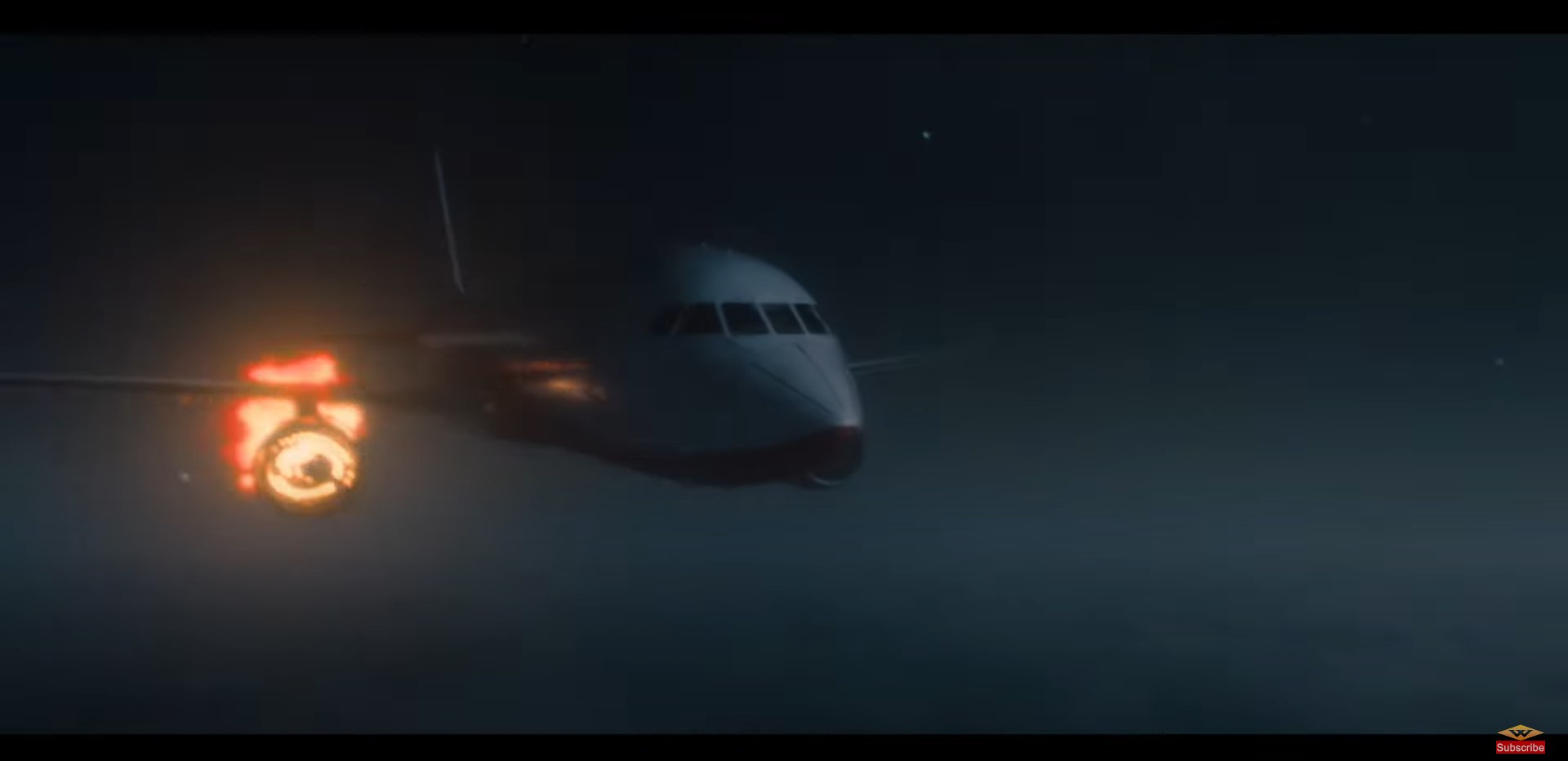
Young Katerina survives a deadly commercial plane crash that killed her mother.  As the only survivor to miraculously to alive, she becomes the center of the public and media attention over the next 20 years.  Now as a grown woman with a young daughter of her own, around the same age of her deadly tragedy, Katerina is about to embark on a plane for the first time to visit her mother and though past feelings leave her tense and scared, her daughter and her being a psychologists help soothe her fears…to an extent.  The late-night flight during a snowstorm leaves half the cabin empty with only a few passengers and the flight dwindles the numbers even more when passengers begin to die off in mysterious random misfortunes.  Lines blur between reality and the past for Katerina who’s about the relive the worst day of her life. 

I consciously realize that all things Russian is likely on everyone’s blacklist at the moment with the unfounded war Ukraine, but anything not created by the authoritarian Russian governing body could be, more-or-less, independently controlled by the people of Russia who are, again more-or-less, against the bloody and unnecessary Putin-fueled conflict outside their country.  So, when I sit and analyze Russian native Alexander Babaev’s latest film, a mile-high horror known as “Row 19,” I’m objectively looking at the artist and his craft rather than the possibility of a stalwart countryman just doing his propaganda duty for the motherland.  In fact, there’s none of that latter statement present in Babaev’s paranormal 2021 thriller that touches upon regret and facing fears, penned in the debut feature film screenplay by James Rabb. “Row 19,” or “Ryad 19” and, in South America, “Passenger 666” is the high-flying, dark mystery of the air film from multiple production studios in KIT Film Studio (“Mermaid: Lake of the Dead”), Central Partnership, Monumental Film, and Red Media.

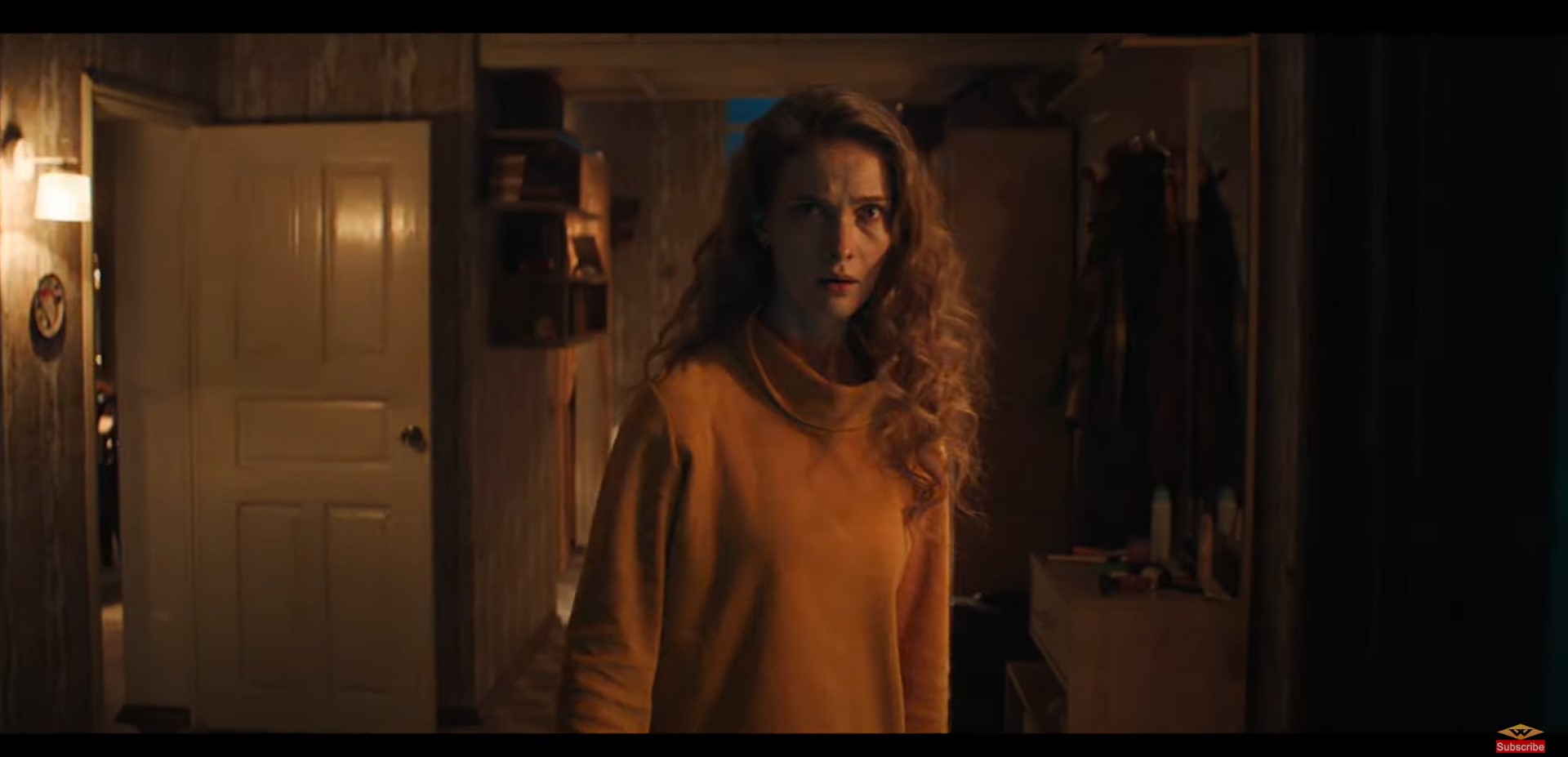
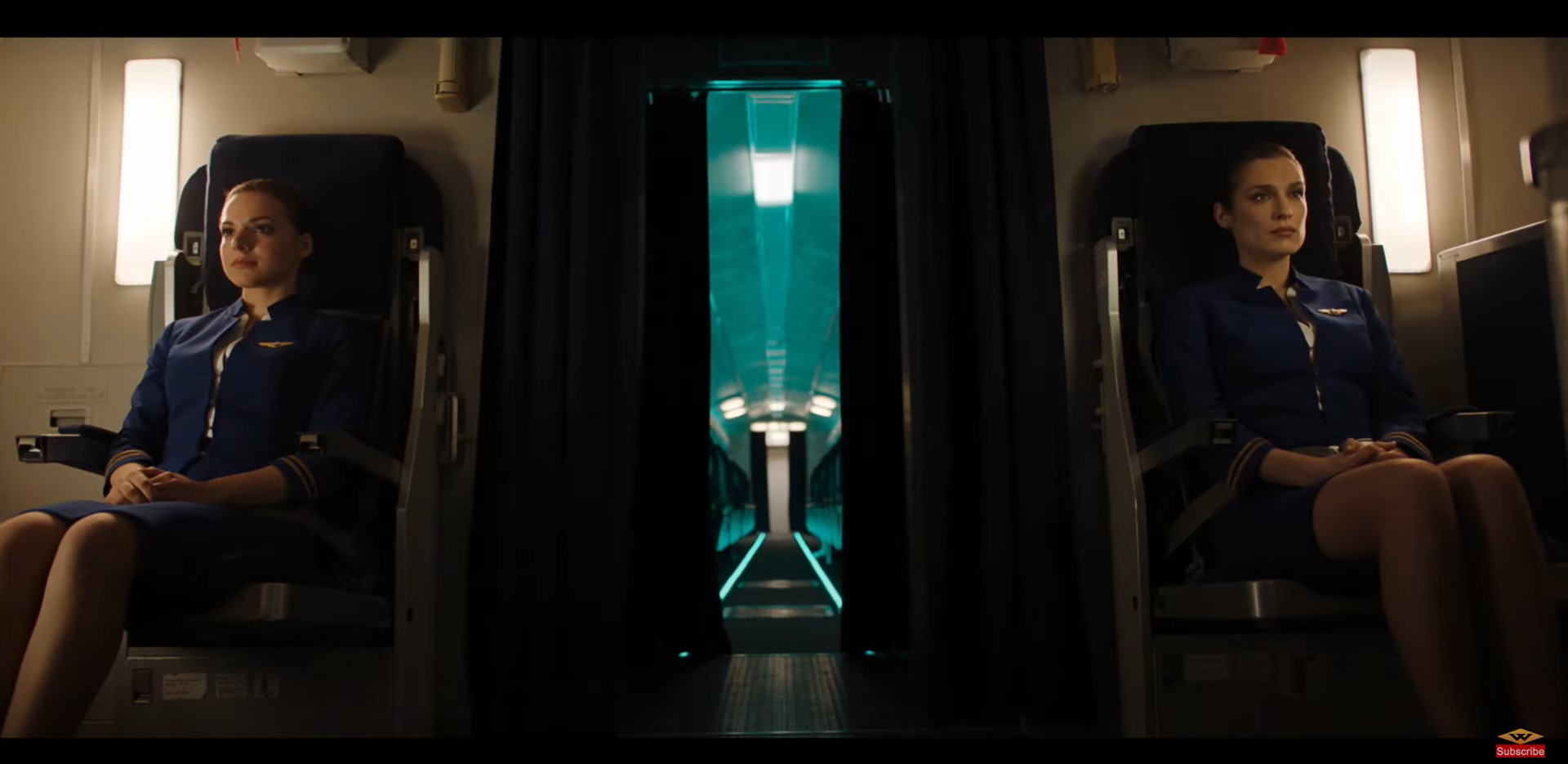
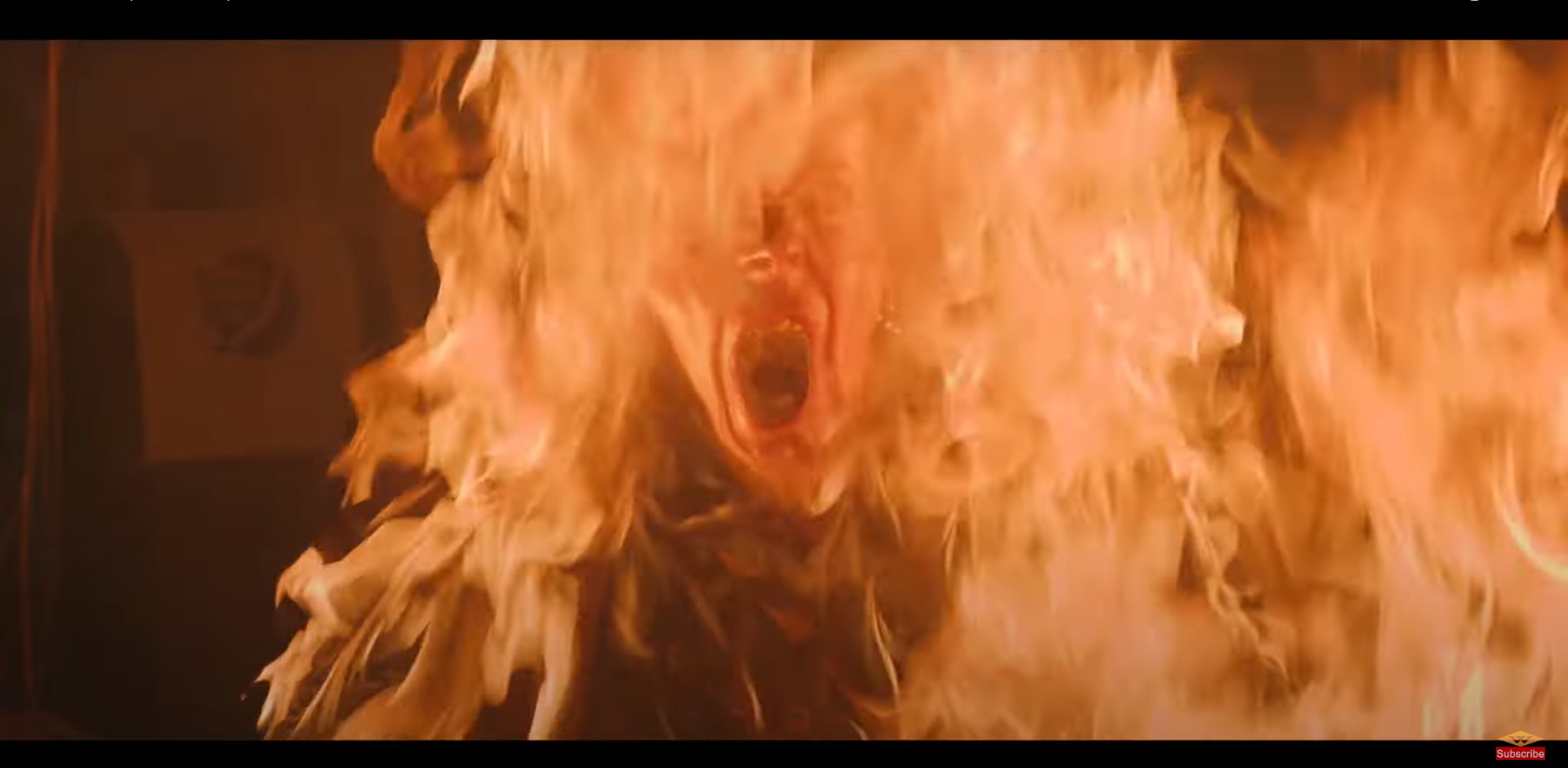
“Row 19” sets the stage with a handsome cast of ensemble characters boarding a sole frostbitten and nearly vacant plane bound for a destination that audiences know all too well will be a landing zone that is anywhere else, but the destination printed on their purchased tickets. A variety of character flavors is always a classic touch when elucidating an unexplained threaten situation. At the yoke is Svetlana Ivanova (“The Blackout”) playing the adult version of the Katerina who bested death being the only survivor of a deadly plane crash 20 years ago. Scarred not only on her leg but also in her head, Katerina vouchsafes herself into getting back on than massive flying steel horse with an internalized pep talk by way of her psychologist vocation who she also helps people with their own internalized issues. However, Katerina is not a very good psychologist when the cabin goes into a tailspin of unexplained death and disappearances. The impression from the film is that the script, at one point or another, had Katerina as a medical physician as she’s often called upon and looked toward by the other passengers to know what to do when a passenger faints or another passenger is burnt to a crisp. She also doesn’t help the matter when she claims to be a doctor (and neglect to mention she’s a mind doctor. I believe that warrants a case for malpractice.). In the adjacent row is the hunky former combat news reporter Alexey (Wolfgang Cerny, “The Red Ghost”) who makes small talk with Katerina and her daughter Diana (Marta Timofeeva) and yet, the suspected sexual tension between them became never present and never materialized. Instead, Katerina and Alexey go back and forth on their mental blocks that causes drug use and shaky hand syndrome, a welcoming change to a rather routine love interest path that’s been overtrodden in other films in similar plots. However, there’s never a full understanding of Katerina’s role in this topsy-turvy spin through realities that only suggests that Katerina has a mighty will that can’t be contained even for her own good. Anatoliy Kot, Denis Yasik, Irina Egorova, Viktoriya Korlyakova, Ivan Verkhovykh, Anna Glaube, and Yola Sanko as the Witch (yes, there is a regular Baba Yaga-esque in the character list!) round out of the cast.

The sky is the limit with airplane horror as the concept of inescapable terror above the clouds can be the most frightening experience for not only acrophobia or claustrophobic individuals, but for average joe passenger looking to earn extra flyer miles on their fear membership cards.  We’ve seen zombies on a plane (traditional and Nazism), we’ve seen gremlins on a plane, and, hell, we’ve seen snakes on a plane.  Now, Babaev introduces the spell-casting witch confined to the rows of the tightly packed, small, and uncomfortable airplane seats and served the Salisbury steak with a side of rancid bag peanuts.  I can see why a witch would be pissed off as well.  However, there’s more than what meets the eye in Babaev’s witch that isn’t just on an obvious killing spree because her inflight cocktail was a little watered down or because of something a little more worthy of a massacre.  “Row 19” aims for misdirection in trying to get the audiences thinking one way by using sleight of hand but really a behind-the-scenes motive is kept in the dark for most of the runtime.  Babaev keeps the momentum fairly charged by setting up individual character personalities with just enough of a touch of odd behavior to make the atmosphere feel foreboding and keep interest in the next key scenes of story progression and at the climatic reveal is where the director’s momentum takes a nosedive, losing the altitude and the cabin pressure of smooth flight with a bow-wrapped-gift exposition that takes all the air of the suspension. 

Fasten your seat belts. Secure all lose items. Lift your tray table and lock it in the upright position. “Row 19” is about to take off and take flight on a Blu-ray home video release from Well Go USA Entertainment. The not rated, region A Blu-ray is presented in a widescreen 16:9 aspect ratio with a decompression of around 20-26 Mbps, rendering picture quality of this AVC encoded release better than expected from Well Go USA. Image is sharp, well-delineated, and abundant with the right amount of color, appropriately denoting flashbacks with a filtered color reduction with only the slightest of change by director of photography Nikolay Smirnov. The Russian language 5.1 DTS-HD master audio track is crisp and clear. A solid track, well-established, full-bodied fidelity track that hits all the right channels with the right balance. There is an option English dub as well as available English subtitles on the Russian track. The subtitles synch well, though fast, and are transcribe with no errors detected. The 79-minute feature comes with a static menu, scene selection, and zero bonus features, which is typically the case with these U.S. distributed Russian releases. “Row 19” is visualized phobic fear, a self-flagellation of trying to change the past with what ifs, and director Alexander Babaev instills a shadowy creepiness inside the cockpit of consternation, but stalls at the height of the film’s storytelling success with a wrap-it-up quick and loose ending.

Don’t Miss Your Connection For “Row 19” on Bluray!