

“Speak No Evil” has Speechless Horror! Now Available at Amazon!
A Danish family on holiday in Tuscany meets a family from Holland. The two families hit it off enjoying each other’s company on the final days at the getaway villa. Weeks after returning home, a postcard arrives from the Dutch family, inviting the Danish family to stay with them for a weekend at their home. What starts off as the pleasant beginnings of friendship slowly degrades to an unsettling suspicion something is not right with the Holland family. Abel, the Dutch couple’s mute son, is held to a higher standard with uncompromising, punitive measure, the husband and wife’s acute uncouth behavior sets an uncomfortable stage, and their attention toward the Danes’ daughter, Agnes, is unconscionably overstepping parental boundaries. An attempt to call out or even leave the home altogether has been met with disbelief, guilt, and pleads for stay and enjoy under their guise of sincerest apologies soon to be dropped for something far more sinister.

Before James McAvoy grew a beard, got jacked, and attired himself in buffalo plaid for his manly maniac performance in the 2024, usurpative family thriller, “Speak No Evil,” directed by “Eden Lake’s” James Watkins, the Netherlands and Denmark were the original blunt forces behind the sociopathic caprices of those assumed normal and amiable adults. Only released two years ago, the 2022 film that spurred the American remake and the feature’s namesake is directed by the Copenhagen-born Christian Tafdrup (“Parents’) and co-written between Christian and brother, Mads Tafdrup, as one of their numerous collaborations since 2017, beginning with a manipulative tale of a viperous female in “A Horrible Woman.” Profile Pictures (“Holy Spider”), in a co-production association with OAK Motion Pictures, serves as the production companies on the Jacob Jerek, of Profile Pictures, and Trent, of OAK Motion Pictures, produced motion picture shot primarily in the southern portion of Netherlands in the Friesland region.

The Danish father and mother, Bjørn and Louise, are played by Morten Burian and Sidsel Siem Koch and before becoming ingrained into the crux of the story, the couple reflect a complicated complexion all on their own, especially and specifically with the focus toward Bjørn who seems unsatisfied or unhappy with his life as he’s shown staring off in the distance or mentally checking out at the dinner table. The Danish are represented as a couple who are too nice to a fault, unable to say no most of the time, and try to keep to themselves mostly when a problem arises, skirting away without notice in a dust of avoidance. That’s not so much the case with the Holland father and mother, Patrick and Karin, bordering as an equally amiable couple performance by Fedja van Huêt and Karina Smulders. That is until the outer appearance of friendly strangers turns into an uncomfortable nightmare of being caught between a rock and a hard place of how other people live and do things, especially from another culture or country. Patrick and Karin show more passionate displays of anger, sexuality, and bohemianism that wasn’t on display on their shared holiday with the Danes. Then, there are the children. Agnes (Liva Forsberg) is a lovely young daughter perhaps too coddled by her parents, especially by Bjørn who can’t resist saying no in going to find Agnes’s beloved stuff animal when she constantly loses it. Abel (Marius Damslev), on the other hand, is shy and can’ talk due to a tongue malformation, but the overly critical parenting by Patrick and Karin keeps Abel on a silent edge. The Holland family’s outer haul slowly regresses, facades drop, but still the Danes are reeled back in by their own niceties despite all the red flags.

I can’t help but think those comportment particulars are somehow a reflection of the Denmark peoples’ true nature as a statement to their culture and social relations between themselves and, in this case, their neighboring countries. The Tafdrup brothers prelude the script with verbal contrast between the two countries, such as their similarities, but the Tafdrup’s firmly stamp that just because you’re similar doesn’t mean you’re the same. The notion can be applied to anybody of people from groups to individuals living amongst each other in a neighboring fashion and that their differences are being conducted right under your noses. Of course, the script then embellishes more a distributing sensationalism of a spider leading the innocent moth to it’s sticky web by an attractive, orienting glow of light. The analogy is right up Bjørn’s alley as a man who is looking to loosen the chains of parental and marital, perhaps even inherent to his nationality, suppression in a misguided notion that his promises have put a limitation on freedom; he finds himself attracted to Patrick’s freewheeling way of life and wants to emulate that in some sort of way. The psychology behind “Speak No Evil” runs rampant with a paralyzing inability to let wicked do what it wants without confronting it head-on or without fighting it. “Speak No Evil” is a chilling story of the all too familiar Edward Burke phrase, the only thing necessary for the triumph of evil is for good men to do nothing.

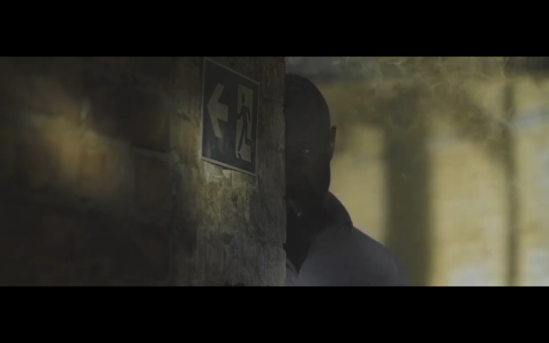
“Speak No Evil” arrives onto UK DVD from Acorn Media International co-presented as a Shudder Exclusive and IFC Midnight production. The MPEG 2 encoded, upscaled 1080p, DVD9 is presented with an anamorphic aspect ratio of 2.35:1 that encompasses an array of landscapes from vast fields, rocky dunes, and Tuscany vistas. Contrastingly, director of photography Erik Molberg Hansen goes for an austere, harsh grading with little less light to give everything surface a rough edge from skin to fabric to natural to synthetics. Colors a held at neutral browns, tans, grays, and blacks to accentuate the severity that continues to increase as the story progresses when moving away from holiday in Italy to the morose, rock-strewn dunes in Holland and while details are generally lost in dense nighttime exteriors, the more brightly lit corners excel in isolated spots. The Danish-Holland-English audio comes in only one format, a lossy Dolby Digital 5.1 surround sound mix. Adequate for this type of interpersonal awkwardness, the score and sound design offers a plentiful mix free from compression issues or physical obstacles on the recording in post. “Speak No Evil” is person-on-person violence in the most primal form that leaves the possibility of added effects from violence next to nothing in what is more of a less is more design under a suppressive audio format that’s akin to trying silence a low-talker. Dialogue is clean, clear, and at the bow of all the other layers in the audio boat. What’s interesting about the encoded English subtitles is that they’re only available for the Danish dialogue and not the Netherlanders’, which adds an additional layer of intrigue and suspension as the non-native Dutch speakers with not understand what Patrick or Karin are communicating between each other. The static menu offers no special features option and there is no stinger at the end of the credits. The clear DVD case showcases that austere black and gray look with one of the story’s most engagingly odd scenes involving Abel. The insides are standard edition bare as well with this disc pressed with the same primary image. THE PAL disc is hard coded with region 2 playback, has a runtime of 93 minutes, and is certified 18 for strong violence and injury detail.
Last Rites: The original “Speak No Evil” speaks volumes of the dangers of societal pleasantries that turn a blind eye to caution for the sake of not hurting the feelings of others, but those subconscious hints are a part of the innate, primal early warning system in us all. Once we ignore those insinuations, we might as well dig our own grave.


 It's Bloggin Evil!