As Videogame Adaptations Go, This Ones the EVILEST! “Exit 8” reviewed! (Blu-ray / Visions Home Video)

Keeping to himself and listening to music on a subway car, just like everyone else, a man exits the train car at his stop and learns his ex-girlfriend is pregnant with their child when she unexpectedly calls him.  Undecided how to feel about the news of being a father, he walks up a flight of stairs to exit the subway station only to find himself trapped in a zigzag hallway that loops the same series of advertisement images, directional signs, and a businessman walking intently down the seemingly sterile and ordinary, tiled corridor.  After reading the hallway’s information sign, noting specifically to not ignore any anomalies and providing the direction to take when an anomaly is discovered, the lost man realizes he’s trapped inside some sort of twisted game and must determine if 8 hallways are either anomalous or not to be free and exit.  If he misses an irregularity, he must start from zero again and not every anomaly is as harmless as a sign out of place.  The anomalies can psychological, monstrous, terrifying, and deadly.
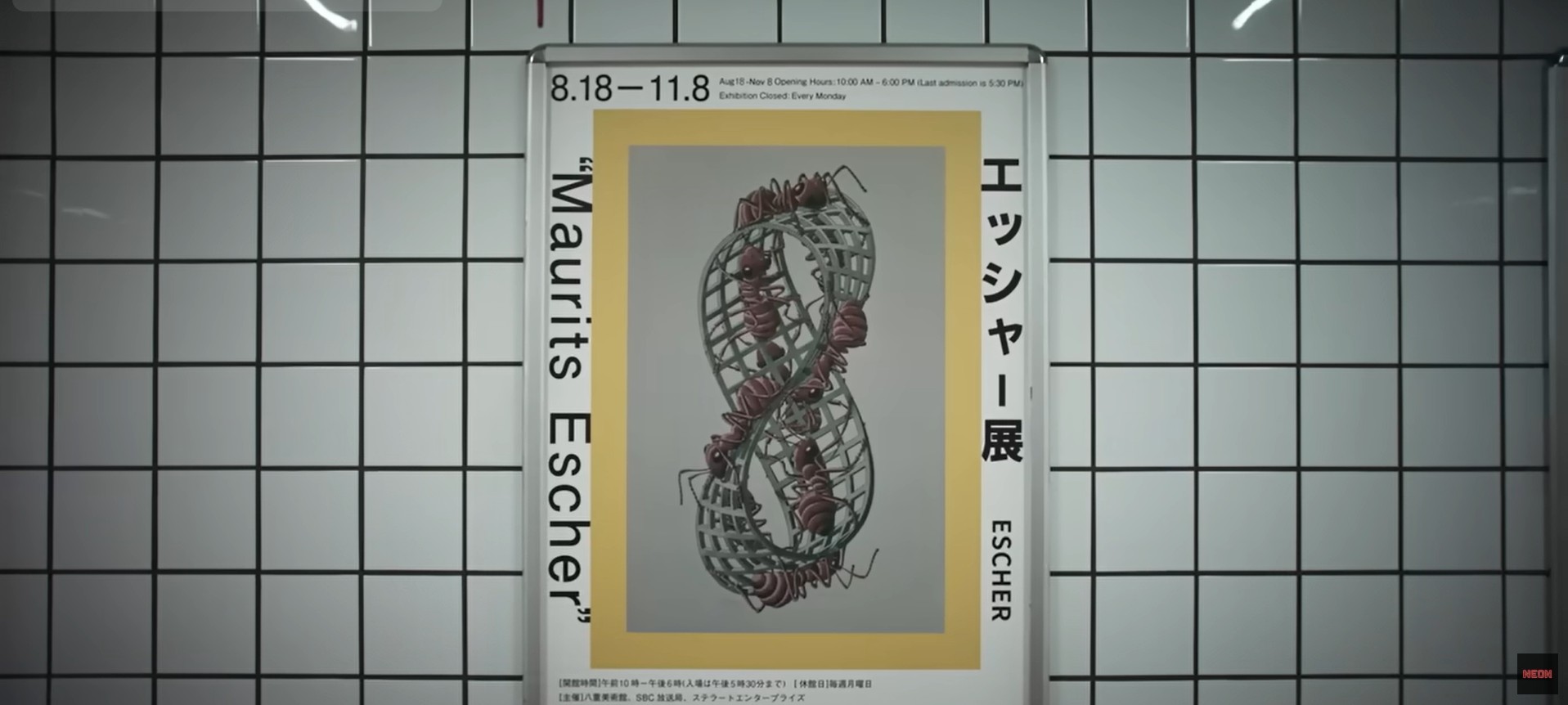
Based off the Japanese horror and psychological video game of the same title, “Exit 8,” the film, also originates out of Japan.  Kotake Create is the indie video game developer behind the “Exit 8” concept and its sequel “The Platform” from 2023 and 2024.  The 2026 film is the sophomore directed film by Genki Kawamura who co-wrote the filmic adaptation “Sai:  Juchang ban” co-writer and director Kentaro Hirase.  Both the video game and movie indulge into the theme of the Noble Eightfold Path, a teaching core of Buddhism that serves a guide from suffering to enlightenment through eight corrected attitudes, such as mindfulness, intention, and effort.  A conglomeration of producers, including Yoshihiro Furusawa, Minami Ichikawa, Taichi Itō, Yuto Sakata, Taichi Ueda, Kenji Yamada, Akito Yamaoto, and director Kawarmura, bring the film to fruition under the Toho Film Corporation and AOI Pro. Inc. and in association with Story Inc. 
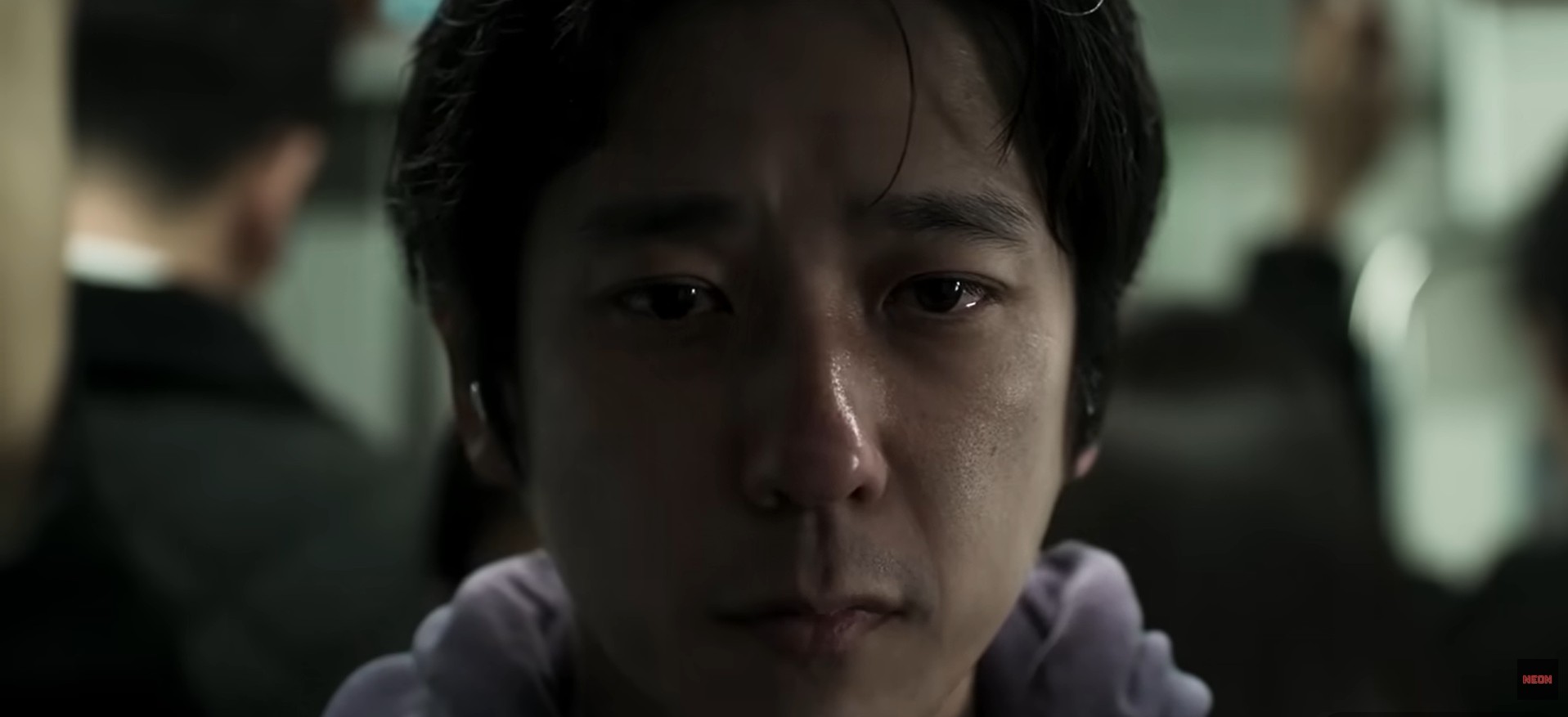
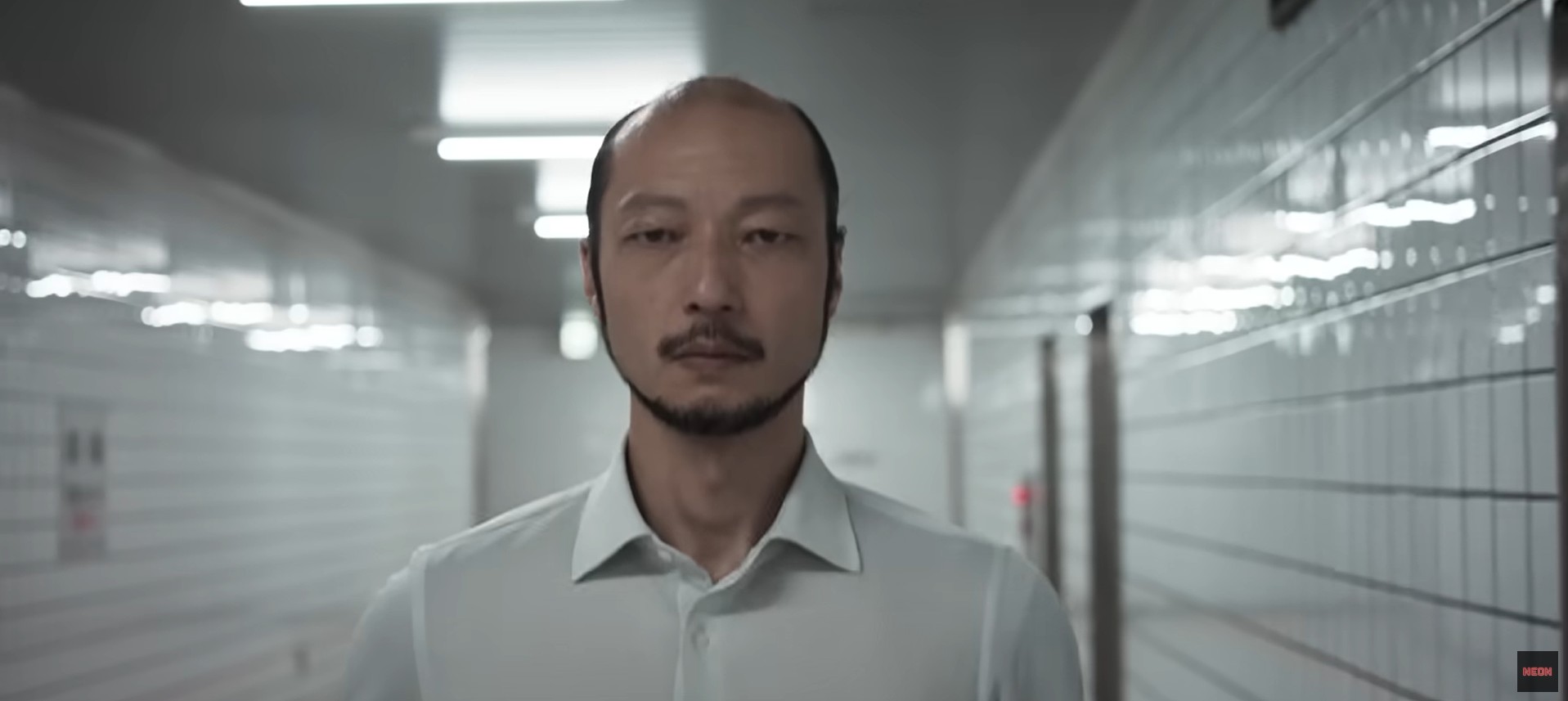
“Exit 8” has a limited cast of key characters, mostly trapped inside the sterile, tiled subway walls, playing real and unreal characters depending on the perspective in turn.  Mostly, the center focus is around a male character only known as The Lost Man, a young man who shrugs off responsibility to his fellow man as well as being undecisive when it comes down to important decisions; we see examples of this on the subway train of a businessman yellow at a mother who’s infant is crying and when his girlfriend phones him to inform him of her pregnancy in which she poises a pivotal question he can’t either fathom, process, or ultimate just decide upon.  “Letters from Iwo Jima” actor Kazunari Ninomiya plays the nameless Lost Man to character arc his way from skirting responsibility to fill him with purpose and round the character out as a person of great attention, detail, and decision.  The only downside to the Lost Man is with how he’s written on the initial experiences of the hallway loop in what’s an obvious disturbance in reality he quietly absorbs without freaking out, even to the point he’s able to quickly red and process the rules of the scenario and understand their purpose.  This, in itself, is an anomaly of human processing and rationality as the average person would be overwhelmed by surreal receptiveness and break down before they could build themselves up.  Ninomiya performance lifts the Lost Man with a more positive performance that sets the emotional rollercoaster back on track and when the audiences to get that break of the character’s mental state, its crippling effect translates and is greatly empathetic.  In the loop, the Lost Man meets the Walking Man (Yamato Kochi) who cycles passes through the anomalous-or-not corridor at an expressionless pace, but we also get his backstory too as he was once real and trapped just like our protagonist.  Another character the Lost Man meets is The Boy (Naru Asanuma), another victim playing the game, and has an eye for detail despite his quiet demeanor.  The Boy also represents the Lost Man’s future being the protector and parent to the boy as they try to escape together through the harsher anomalies.  “Exit 8” rounds out the cast with more minor parts from Kotone Hanase, Hirota Ôtsuka, Tara Nakashima, and Nana Komatsu. 
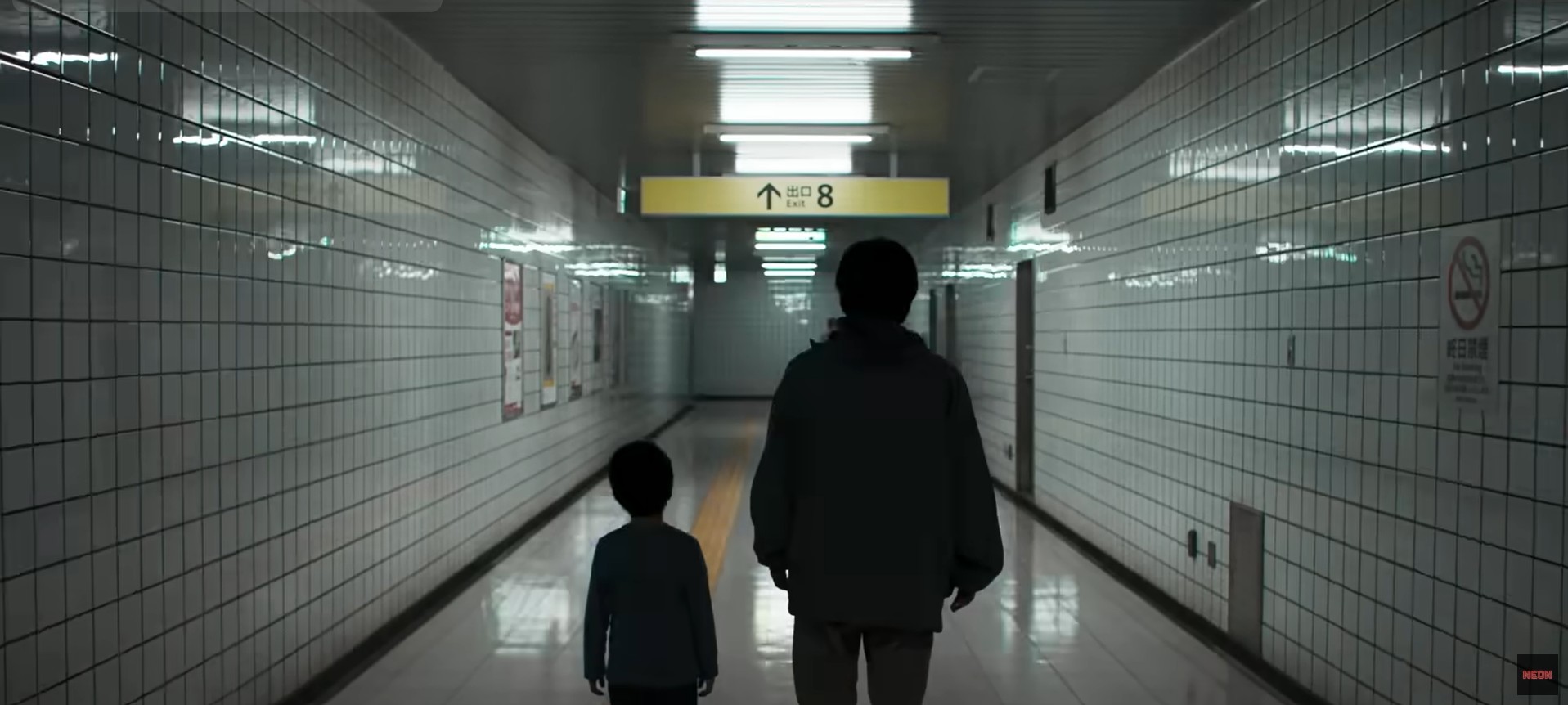
An uncanny and ambiguous horror, providing no explanation for why the man is trapped inside a loop, “Exit 8” serves to be a metaphor for life’s hard decisions, ones that affect fate in the futre.  Paying attention to the small things have the same direct result as paying attention to the much larger, obvious ones despite the being blatant and the threatening anomalies, no matter big or small, can have disastrous consequences.   Kentaro Hirase is an obvious fan of the game by rendering a faithful adaptation of Kotake Create’s creation that walks, talks, and acts just like the mystery horror and existential crises symbolizer.  There’s even a first-person perspective at the beginning of the film that provides more homage to Create’s first-person game.  After that, the switch to omnipresent third person has its own distinct brand of tension and it also achieves grabbing the fearfully fret expressions on the actors faces, that’s if they’re human or otherwise it’s creepier and menacing in the surround sterile environment that can be subtle or flooded with odd occurrences only to go back to normal in a matter of a few steps and one left turn away  Aside from vague purpose of the 8 level loop, there are more creepypasta anomalies that don’t make a lot of sense on its face but share an underlying connection to those cut off from the rest of normalcy in what’s can be considered a subconscious ensnarement of personal strife that has put them in a precarious position with unexplainable and terrifying results.  The acting carries with a repetitiveness about that that is not tired or mundane as the Walking Man walks the same corridor, at the same time, and in the same manner at least ten times in the duration, an exemplary one-note performance by Yamato Kochi to never break the automaton gait and persona no matter how involved the Lost Man gestures or speaks to him.
Visions Home Video’s “Exit 8” Blu-ray is a great addition to anyone’s collection of Japanese modern cinema or overall film library.  With a 1080p high-definition resolution, the AVC encoded BD50, presented in a widescreen 1.85:1 aspect ratio, has natural, run through digital brilliance meaning the walls are sterile white, the color saturation has an innate organic measure through primary grading, and skin tones render like they would off camera but all with the clean look of digital.  There is some noticeable aliasing on the tile that lose some of the definition and blurs as objects move through the scene, effecting in at least a couple of scenes the texturing.  The Japanese DTS-HD 5.1 Master Audio has a kick with a sound design that plays with the perspective of the Lost Man’s environment, providing excellent directional and immersive audio space from the diegetic and non-diegetic muffled and non-muffled sounds from first person perspective with earbuds in to the intensity depth of walking from background to foreground.  Dialogue has strong presence and is clear.  Subtitles are well paced and contain no noticeable grammatical mistakes in the UK English translation.  There may be some key vocabulary differences as anomalies is perhaps more British than the word used in Japan. The English subs come in two options:  SDH and audio descriptive.  The special features include a behind-the-scenes of “Exit 8,” an On the Carpet at Cannes Film Festival featurette, an On the Carpet Busan Film Festival featurette, the UK trailer and the Japanese trailer..  The stark physical presence of “Exit 8” is eye-catching with a mostly golden O-ring, cardboard slipcover with an illustrated figure eight, tiled like the subway corridor with illustrated story characters standing on it.  Sheathed is the clear Scanova case with the same primary image from the slipcover on the sleeve but drops the sheeny gold coloring for more canary yellow.  The reverse side of the sleeve has a creepy image of the Walking Man.    A double-sided, folded mini-poster and art cards of the corridor wall signs are inside the clear case with more yellow themed display pressed on the disc.  The UK 15 certified film lists two different explanations between the slipcover and the clear snaplock case.  The slipcover has strong horror while the clear case has infrequent strong language.  The region B locked region has a runtime of 95 minutes. 

Last Rites: Personal growth is hard. It’s even more difficult when a subway tunnel becomes the ultimate mind-messing and deadly trap to steer you in the right direction. “Exit 8” is a guileful guide of molding moral behavior done with a twisted circumference. This video game adaptation is one of the better ones in a long time!

An Ice Fishing Contemplation Becomes Interrupted by Kidnapping EVIL! “Dead of Winter” reviewed! (Vertigo Releasing / Blu-ray)

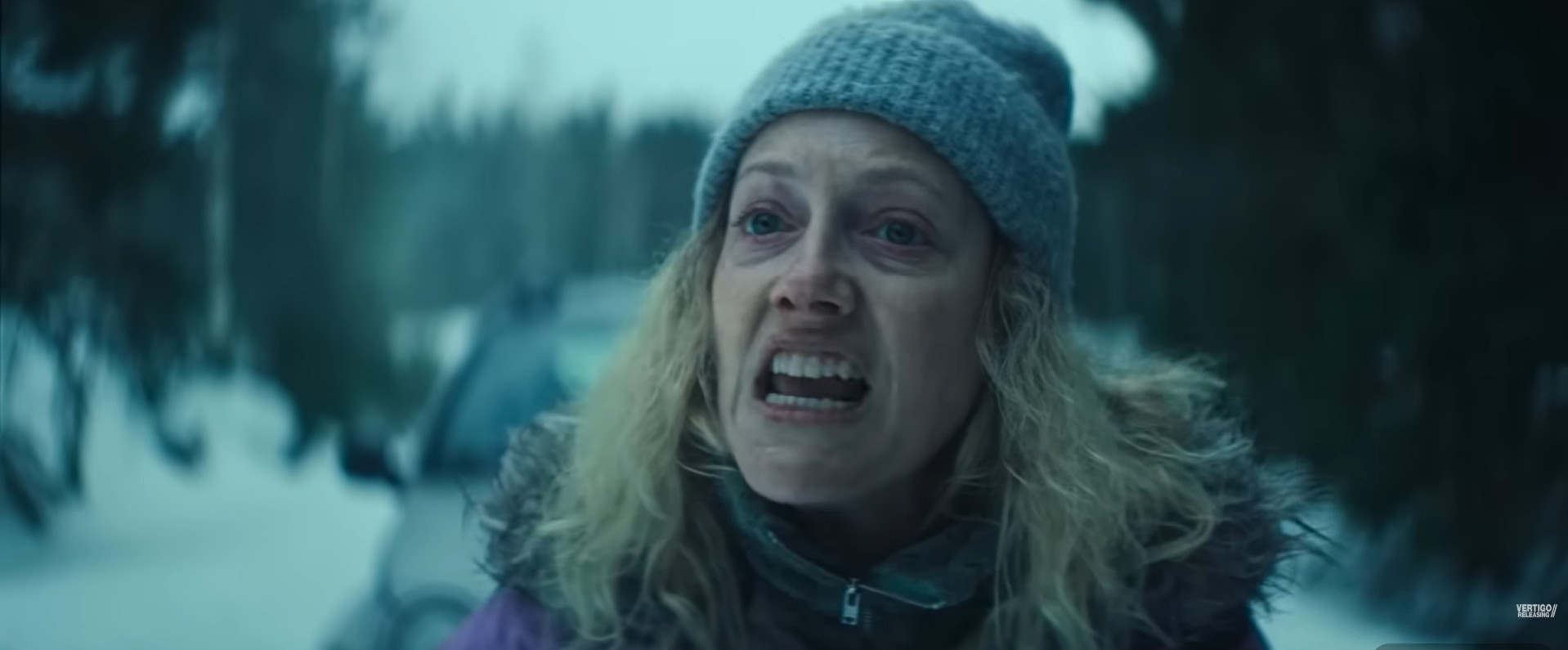
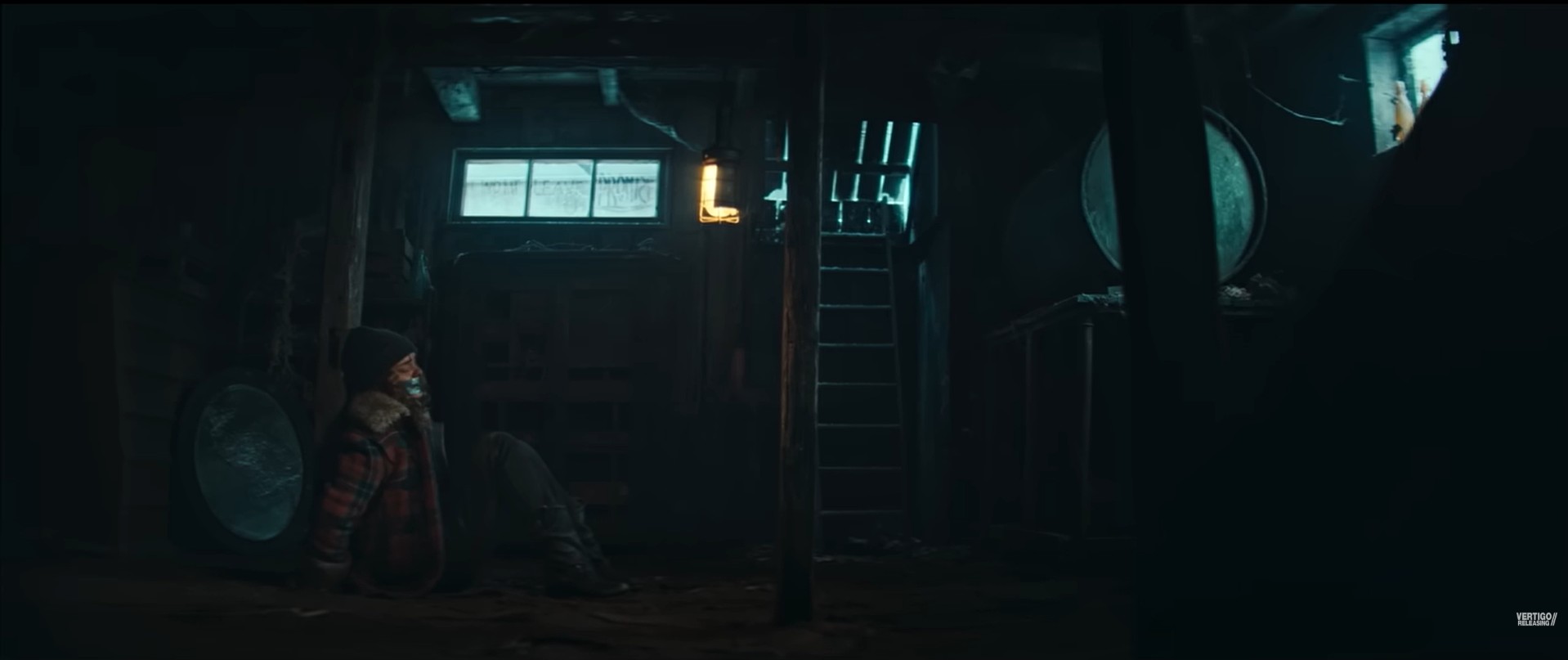
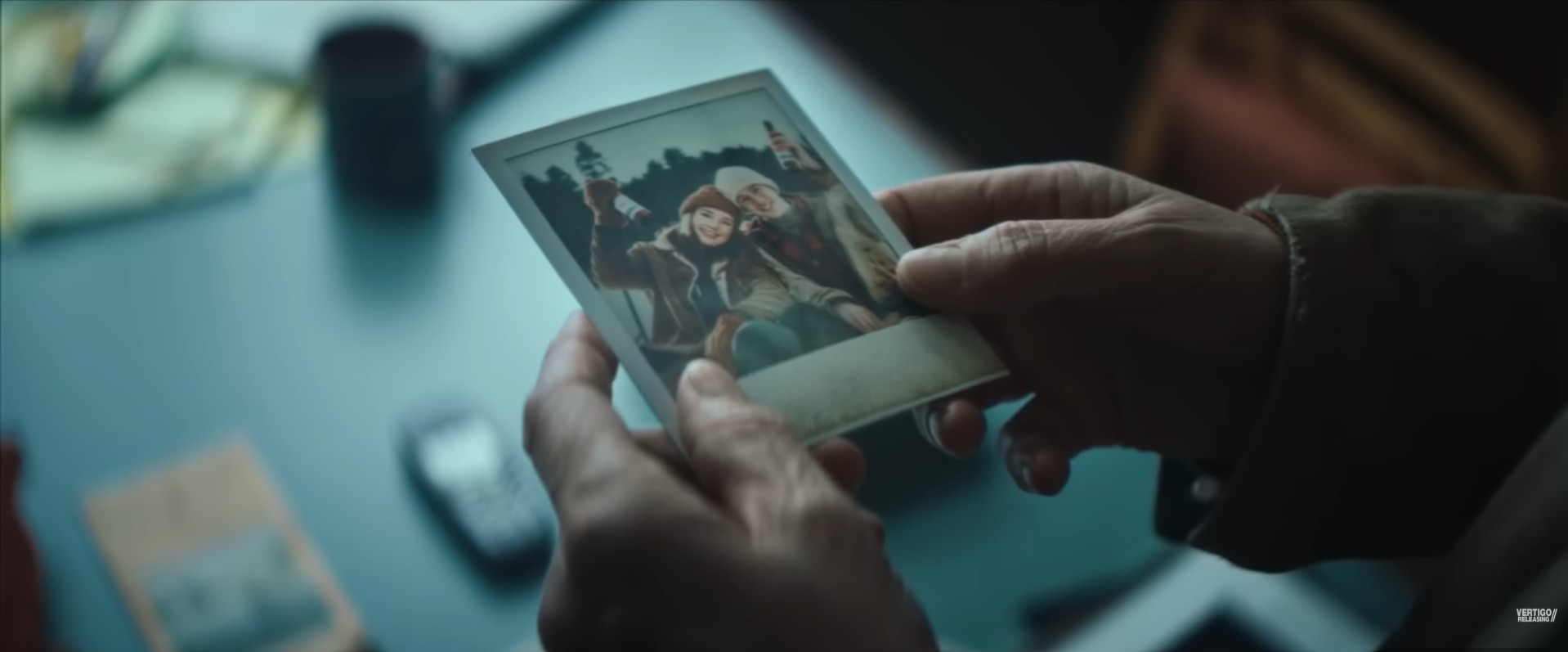
After the death of her husband, long time Minnesotan Barb travels to the snow covered, frozen over Lake Hilda to ice fish, the spot where her and husband had their first date.  When asking for directions from one of the few people she’s seen in hours, she inadvertently interrupts the kidnapping of a young girl by a husband and wife with an illegal self-preservation plot.  With help hours away, Barb knows she must do all that she can, push the limits of herself, to help the young girl escape the clutches of a determined woman who will stop at nothing and do anything to keep her desperate plan intact and moving forward.   Two against one seems like impossible odds but Barb is determined to keep her promise to the girl tied up in the basement and soon to be murdered for the one thing the wife, the lady in purple holding the rifle, needs. 

A transfiguration of one last goodbye during sudden loss into a destiny of saving a life brings chills to the bone in Brian Kirk’s snowy thriller “Dead of Winter.”  The 2025 released film is the latest feature length film from the “21 Bridges” director from a collaborating script between actor Dalton Leeb (“One Day Like Rain,” “Feeding Mr. Baldwin”) and composer Nicholas Jacobson-Larson (“Wildcat,” “Leave the World Behind”) in what would be the writing duo’s first screenplay as individuals and as a duet.  Koli, Finland doubles for the fictious Lake Hilda in the coldest parts of an upper Midwest winter that’s ever fleck of the season with snowcapped trees, drifts of snow, and a frozen lake, an overall sense of frigidity that reestablishes reference back the film title.  The Finnish, Germany, and U.S. coproduction from the company partnership of Stampede Studios, Augenschein Filmproduktion, Leonine Studios, Zweites Deutsches Fernshen, MMC Studios, Crafthaus, and Wild Bunch Germany is produced by Quirin Berg, Max Conradt, Cloe Garbay, Jonas Katzenstein, Greg Silverman, Maxmilian Leo, Max Widerman, Cosima von Spreti, and Bastian Sirodot. 

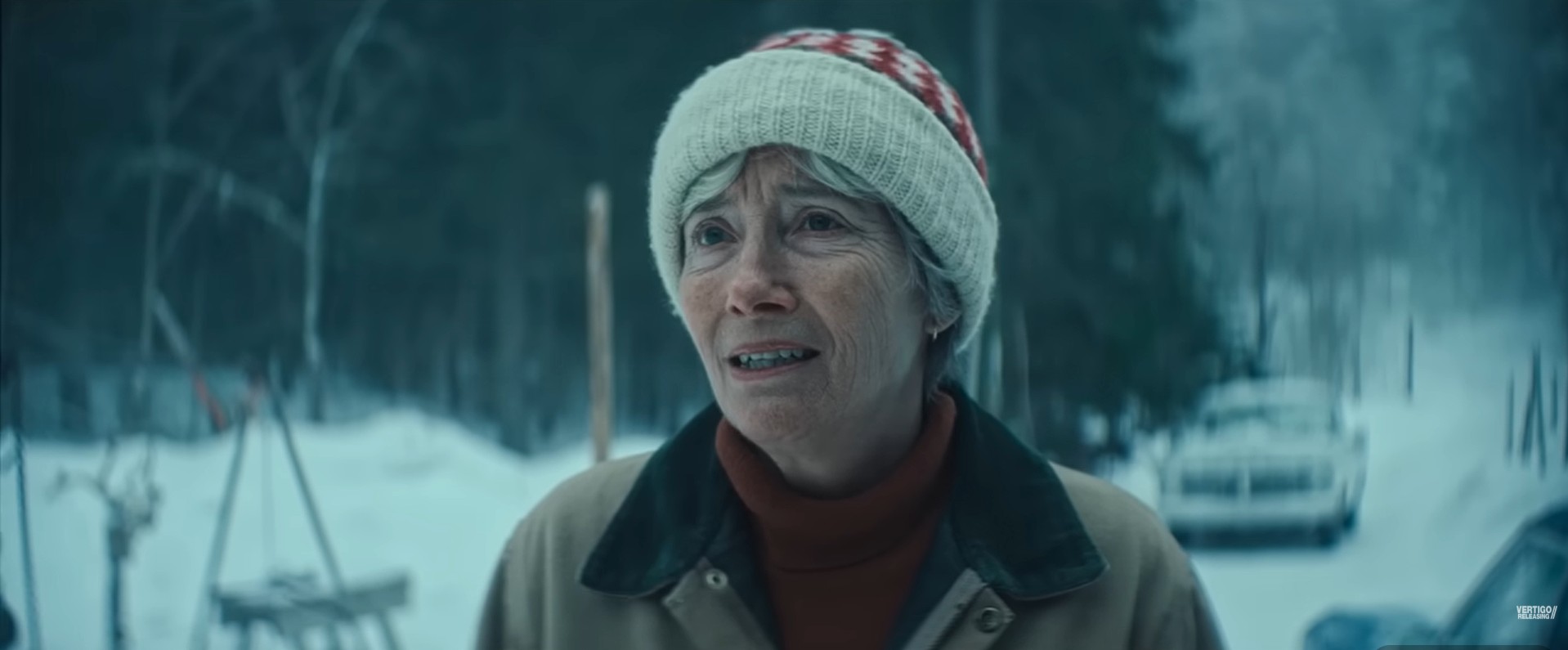
Two-time Oscar winner Emma Thompson finds herself in a tan mechanic suit driving up a frozen lake in the middle of nowhere and coming across a kidnapping.  The English actress, fondly known for her dramatic period pieces in “Howard’s End” and “Sense and Sensibility,” develops Minnesotan attributes for her role as Barb, a smalltown woman who lost the love of her life, a husband for decades, now on the precipice of letting him go for good by spreading his ashes into the lake where they first courted, as part of his last request.  While going through the emotional catalogue of reminiscent flashbacks and teary-eyed loss, Barb’s distracted by young woman, hands tied, and being held at gunpoint by a kidnapping hisband and wife.  While their names are never divulged, only credited as Camo Jacket for the man and Purple Lady for the woman, their scheme is not lost upon them as they are very aware of the dangers that confront them.  The only difference is the danger they face is dichotomized, Camo Jacket sees the immorality and the punitive measures of kidnapping someone for harm but does it anyway to save Purple Lady whose mortality is at stake with a terminal illness.  “Companion’s” Marc Menchaca doesn’t wear the pants in the dynamic in doing his wife’s bidding but the fear, the reluctance, and the sense is there enough to where it becomes pitiful to what he’s reduced as a man and as a husband whereas “Jurassic World’s” Judy Greer is an unstoppable monster with calculated intent who will stop at nothing, and I mean nothing, to get the young girl’s healthy organ.  Hearing Thompson in a Minnesota accent is not terribly jarring but it’s carries with it enough of a zing that it doesn’t suit her well but her character Barb’s tough as nails without exuding an equal presence as such and resourceful inside a mild panic veneer when coming inches away from death every time her and Purple Lady’s path cross.   “Dead of Winter’s” remaining cast sees Laurel Marsden (“The Pope’s Exorcist”) as the kidnapped girl in a role that doesn’t have any depth compared to Barb’s overdrive depth, Emma Thompson’s daughter Gaia Wise and Cúán Hosty-Blaney as young Barb and her husband Karl, and Brian F. O’Byrne (“Bug”) and Dalton Leeb as two hunters caught in the middle.

There’s something to be said for these genre types where an unfortunate, regular pedestrian is thrown into a forced hero position.  There’s an extra something when the setting is snow-covered and isolated with limited, what’s-on-your-person resources.  Barb’s very well written to be that exact person as if she was destined to be, maybe even lead by Karl’s hand, to be a young girl’s savior.  The root cause for the kidnapping is a bit of a far stretch with an illegal and clandestine medical procedure held out from being completed until Camo Jacket and Purple Lady can setup a pop-up surgical tent over the iced lake, a concept that often feels longwinded through the whole ordeal, but this gives Barb the opportunity to make constant fools of the kidnappers by sabotaging gear and setting up traps that cause they enough harm to make the cold by an extreme factor and delay them enough to attempt rescue.  Kirk misses a few important editing and factual elements that put blights on the authenticity and the performance of an otherwise competent action-thriller.  Barb scouts, hides, and runs around an area with less clothes than her counterparts and perhaps Barb’s lifelong residence in the extreme cold of Minnesota has acclimated her body but for this long period of time without being indoors would, shielding from the outside elements, would have taken a toll on anybody.  There are also some editing issues, such as a flame shown before the fire start in the next scene, in a blatant miss of continuity.  Barb’s flashbacks of her past life with Karl are active and sporadic throughout which feels out of place with a contemplative activity when time of slaving someone’s life is of the essence and the threat is always near.

Vertigo Releasing releases elderly woman tenacity and determination to do what’s right in “Dead of Winter,” now available on Blu-ray.  The UK release is an AVC encoded, 1080p high-definition, BD50 presented in an anamorphic widescreen 2.23.1 that captures the majestic of a winterized Minnesota (aka Finland) with extra wide shots and creating immersive depth.  Despite all the snow, there’s no whiteout here with a higher contrast to define shapes amongst the powdery white stuff, such as the tall tales, hillside terrains, and the man-made objects that stick out in the back and foreground without losing focus or delineation.  Textures are nicely crisp around the edges and on the body to get a full sense of each character’s attire – which is important for credit classification – and the environment surrounding.  There are select scenes of superimposed effects, such as when people go under the frozen lake and into the water, that appear more angelic in the slowed down moment of dramaticism that denote a very polished stylistic choice in what too is a stark contrast against a harsh winter landscape.  There’s also a purposeful desaturation of color that juxtaposes against Barb’s flashback scenes that are more brilliant with the colors and softer lighting to recount Barb’s happier days.  Skin tones and details appear nature with an extra wrinkle or two on Emma Thompson’s face to make her appear more midwestern rugged.  The English language 5.1 DTS-HD Master Audio is accompanied by a second encoding, a 2.0 LPCM Stereo.  The surround sound mix is the preferred option here that captures the reverberations of a snow-scape through the side and backchannels.  The gunfire really comes through with a pop and a directional sense.  Every effect hits the intended marker with clarity and has a vigorous impact while Volker Bertelmann’s synch-harrow score weaves into and out of the action and the reminiscing moments.  Dialogue is clean and without issue, and though I made a negative remark of Thompson’s Minnesotan accent, it’s not, in fact, that terrible but does feel unnaturally off as it contents with her classic British English.  English SDH subtitles are available.  Extras include a making-of featurette and the theatrical trailer.  The Vertigo Releasing physical set is also just as simple with a standard Amaray case with a battered and bruised weary Emma Thompson in character on the front cover.   There is no reverse side image on the sleeve insert, no other physical extras, and the disc is pressed with the same front cover design.  The UK certified 15 feature, for strong language, threat, violence, and injury detail, has a runtime of 98 minutes and is region locked on B. 

Last Rites: “Dead of Winter” ices the filmic competition with a tundra-sized unlikely hero thriller who never looked for trouble, but trouble finds her in a fit of righting wrongs kismet. The standard Vertigo Releasing Blu-ray is just that, standard, but the film itself embraces the cold elements with stark winter harshness and an even colder organ heist.

Cinderalla’s Beauty Evokes an EVIL of Jealously, Obsession, and Beauty Standards. “The Ugly Stepsister” reviewed! (Second Sight Films / Blu-ray)

“The Ugly Stepsister” on 4K UHD Blu-ray from Second Sight!

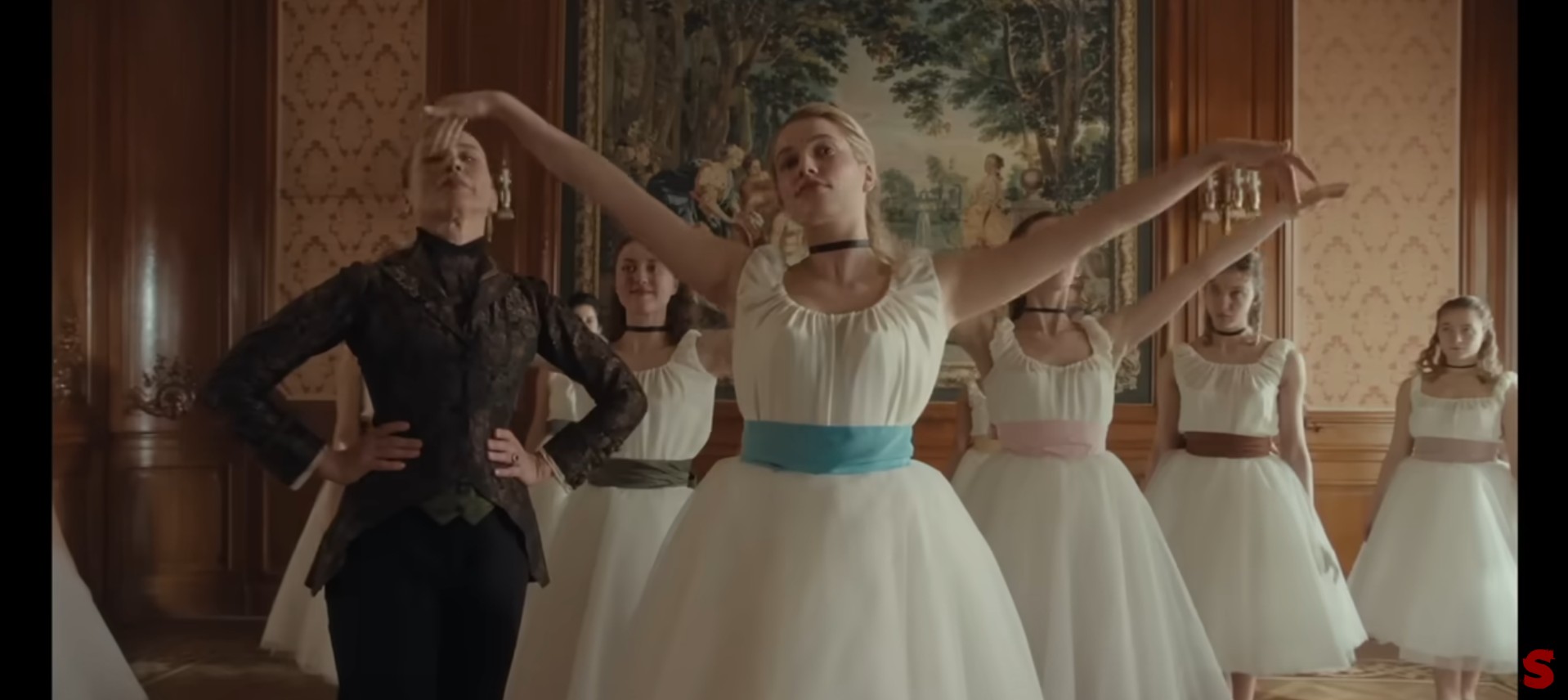
Elvira’s mother weds a wealthy estate owner to re-establish life and permanence in high society.  Alongside living with her sister Alma and her new, beautiful stepsister Agnes, Elvira keeps on smile on her braced teeth though she’s passively mistreated by those around her.  When Agnes’s father suddenly passes away and it’s unearthed the estate has no money to its name, the opportunity to attend the monarchy ball for the prince to select a wife from a pool of available the virginal maidens is Elvira’s persistent dream to marry a prince and get her family back in wealth and power.  Elvira attends finishing school to learn proper lady etiquette but her braces, round nose, and pudgy exterior pushes her aside of teacher’s attention in favor of the beautiful, blond Agnes.  Primeval cosmetic surgeries, tape worms, and no sympathy from her mother send Elvira down a path of obsession despite the harm to herself as she eyes the prize of landing the prince of her dreams over her stepsister. 

Based off the classic folk and fairy tale Cinderella, debut feature film director Emilie Blichfeldt takes a different perspective on the story that retains its roots in happily ever after but redirects the core narrative to the eldest stepsister in immense obsession, pain, and suffering to obtain the seeming unobtainable, to marry a prince.  “The Ugly Stepsister” the 2025 dark comedy and body horror from Norway that emphasizes the lengths one will take to become noticeably perfect in every aesthetic way.  Blichfeldt regularly visit the concept of a deranged perception of beautiful in her short films from the 2013 documentary “Do You Like My Hair?” that aims to spin a reinvention on beauty standards by finding it from within and the more body fantastical “Sara’s Intimate Confessions” that follows a big and tall disproportional woman exploring what it means to be feminine with her overly talkative vulva.  “The Ugly Stepsister” also tackles beautiful in a more painfully, cathartic way in order to achieve, much the same way a cheerleader sustains a lower body weight to make the squad or the self-harm models put themselves through to stay thin and beautiful.  The film, entitled in it’s native Norwegian as Den stygge stesøsteren, is a coproduction between Lava Films, Film i Väst, Scanbox Entertainment, Zentropa International Sweden, and Mer Film with Lizette Jonjic, Ada Soloman, Mariusz Wlodarski, and Maria Ekerhovd in the role of international producers. 

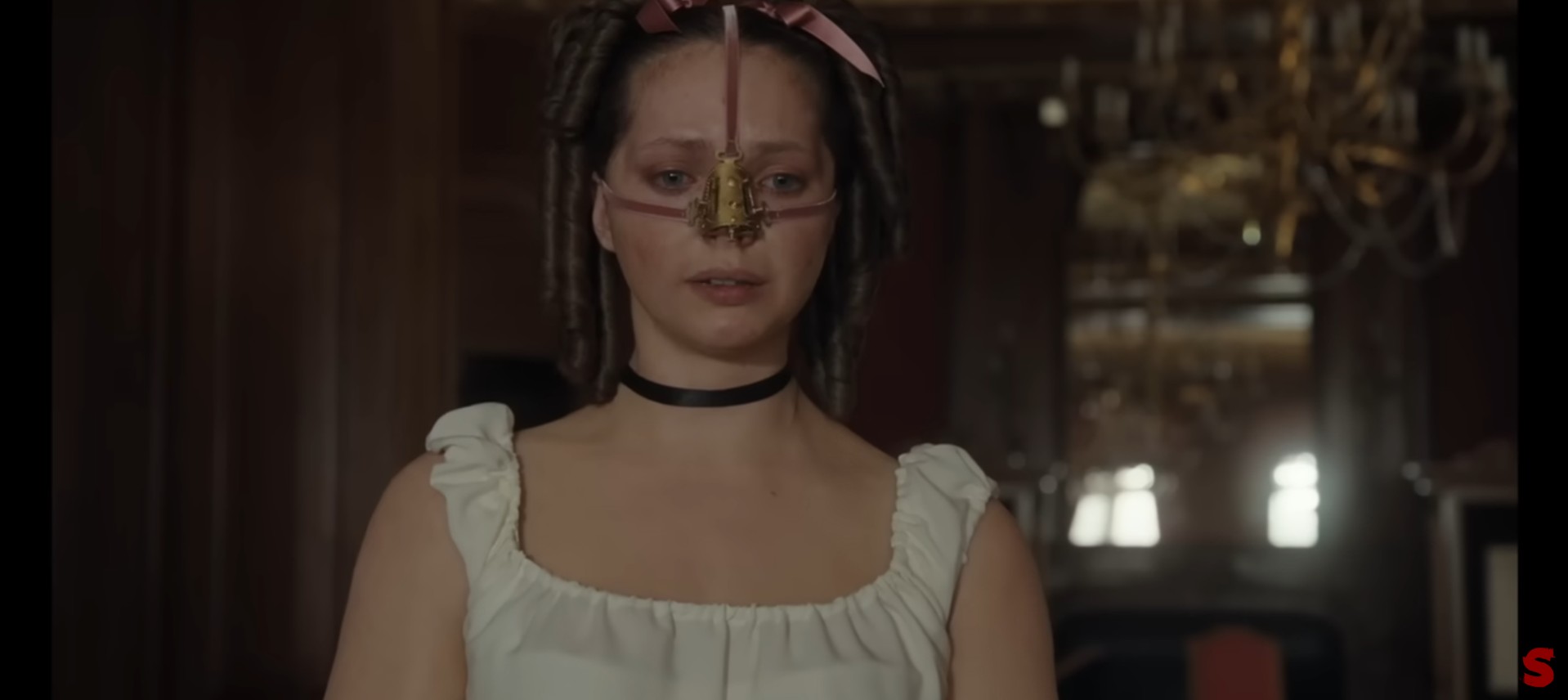
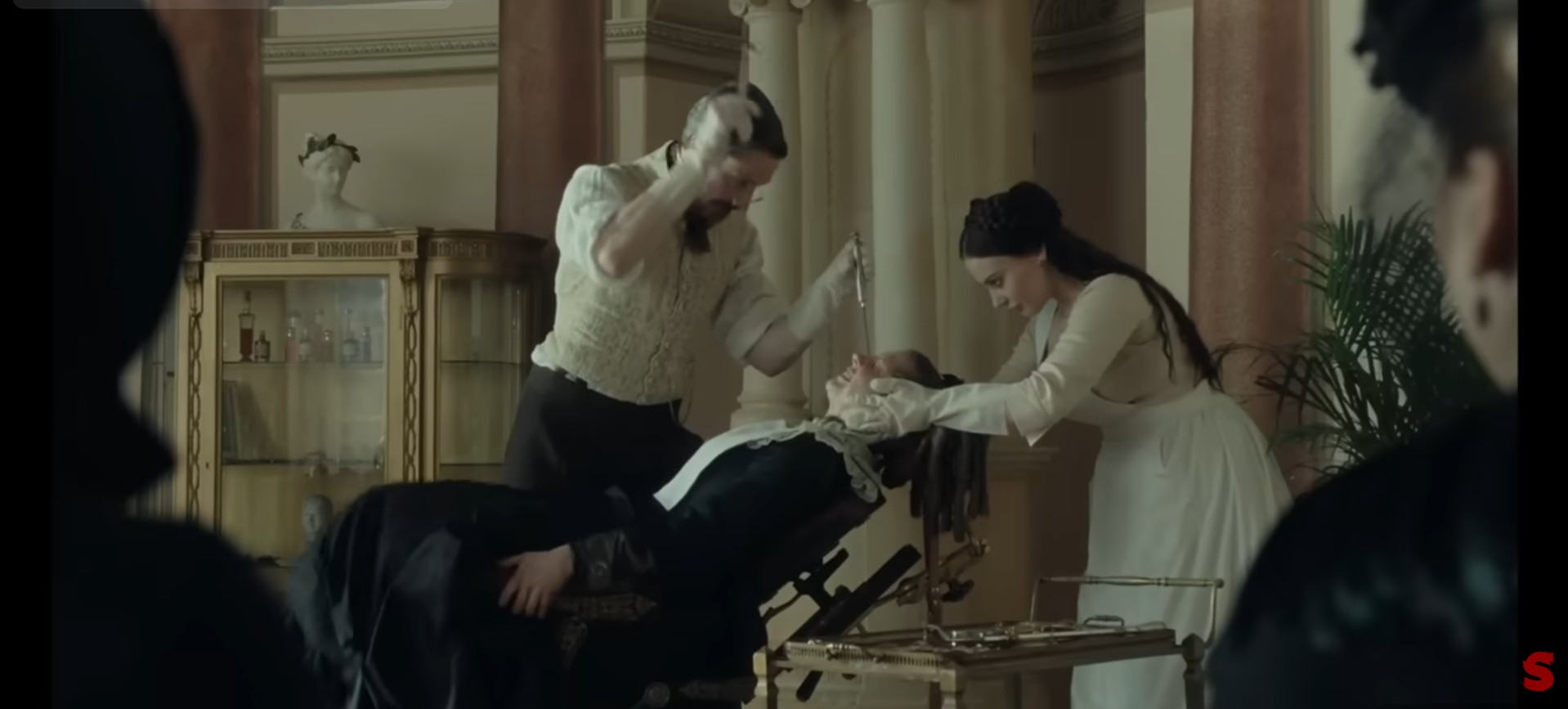
Though a beauty already in her own right, Lea Myren donned prosthetics and makeup for the titular Elvira to make the appearance of later teen, early 20s woman just on the verge of losing the baby fat.  Other personal traits added to Elvira’s character are braces, dark corkscrew curls, and muted toned outfits to further and contrast as a perceived ugliness within the context of the era, but in reality, Elvira’s beautiful young woman already with soft, large eyes, a curvy physique, and a natural gift of goodness within her that’s twisted by exterior conventions on what is defined as beauty. Shedding some of those elements, like the braces and weight, transform Elvira into a more desirable young lady now visible to all, from her draconian etiquette teacher who initially wouldn’t give her the time of day to the Prince who first looked upon Elvira with disgust in her natural state before become an exquisite creature stemmed from surgery and other unnatural body manipulations.  Myren wonderfully careens the character right into the dirt as Elvira cuts off her nose to spite her face, damn near literally, on the quixotic quest to change her outer shell that ultimately changes her from the inside.  Constants in Elvira’s life, or way, are Agnes, who’s only referenced as Cinderella once in a look that isn’t too cinder-y, played by Thea Sofie Loch Næss (“Arctic Void”) who doesn’t struggles with her character’s looks but contends with her new family’s acute empowerment, mostly rooted in family favoritism and jealousy, as well as Alma, Elvira’s younger sister with a by far majority much more comfortable in her own skin despite having dressed similarly with frizzier, unkempt hair by way of Fo Fagerli’s approach. Loch Næss doesn’t portray the as pure and innocence of the Disney classic, with her passionate romance with the stable boy in the hay barn, but the character is fairly close in all other regards with the more significant change to the characters being the stepsisters, especially Elvira’s reserved notions turned bitter when being compared to Agnes.  Alma is altogether out of the equation with no bitterness in her heart nor with any malice whatsoever to anybody but tends to her sister’s rise and downfall with little pushback.  Ane Dahl Torp (“The Wave”) is in the role of the mother Rebekka who will do anything to advance her daughter in society, mostly for selfish reasons as we’ll gather later on through a course of characters, such as the Prince Julian (Isac Calmroth), stable boy Isak (Malte Gårdinger), brutal plastic surgeon Dr. Esthétique (Adam Lundgren), and finishing school head mistresses/lesbian lovers (Katarzyna Herman & Cecilia Forss) who have contrasting approaches, both negative, toward Elvira’s waistline. 

“The Ugly Stepsister’s” body horror is more than just a serious manipulation in losing weight and cutting more than corners toward image perfection.  The real horror is in the shame, the shaming of the body that’s overlooked, called out, and humiliated and to make matters worse for Elvira, her body type is by all of today’s standards curvy in the right places and beautiful albeit a body double was used for her pre-trim down nude scene.  Prosthetics are in place around the face and arms to make Lea Myren appear a little weightier, but the difference is extremely negligible and that’s the real power of horror when it’s terribly subtle, an already beautiful young girl succumb to peer and societal pressures that induces crazy self-harm for opinionated ideals and appearances.  Blichfeldt’s ideas of body-shaming extreme measures done by Elvira are not a far stretch from what self-conscious people do today about their weight.  Instead of swallowing a tape worm egg, one can stick a figure down their throat to achieve the same effect.  Instead of breaking a nose to re-mold with a hammer and chisel, surgery and medicines are abused ot be the new, easy, fast weight lost solution.  Blichfeldt comparative shots linger on Agnes with Elvira seething with envy and with the director’s bold choice of provocative nudity, exposing genitalia and depiction of X-rated acts, engages an alluring perversity that sheds light on a superficial world of beauty and sex, shielding the core, deeper problem of societal shame. 

Second Sight Films brings the Shudder and Vertigo Releasing North American marketed  “The Ugly Stepsister” to 4K UHD Blu-ray.  The ultra high-definition release is HVEC encoded onto a BD66 and presented in HDR10 with Dolby Vision, at 2160p, and in it’s the original aspect ratio, a European 1.66:1 widescreen.  Match the dark toned nature, the grading also exacts a somber coating with mahogany and ebony wooden structures and dimly lit castles of a Victorian era to bask in an austere state were, more so with personal happiness, is hard to come by.  Details are hard to stomach, in a good way, with proximate detail in the special effects closeups, such as in the mutilation scene where a nearly severed toes are hanging on for dear life by what little skin in left tethered to the foot, that go into macrolevel detail and is accentuated by the additional pixels.  Skin tones appear natural and unique to each individual in a purposeful contrast of fair and tanned skin along with different layers of texturing between organic qualities and the fabric outfits they wear, such as Agnes more single block outfit with a smoother design compared to Elvira’s multiple layers and pattern garb.  The Norwegian DTS-HD Master Audio 5.1 has an eclectic powerhouse soundtrack of synth and string orchestra from John Erik Kaada and Vilde Tuv.  The story doesn’t have a great deal of direction use for the 5.1 mix with mostly a conversating piece with mostly diegetic ambience, leaving the 5.1 less immersive than required, but there is vitality and strength behind the dialogue and action, clear and unobscured in its clean presence.  The multitude of squishiness, again the severed toes and also the removal of the tape worm through an orifice, is highly emphasized more max effect.  Areas of depth mostly lingers around the front but there are opportune moments in medium shots for audio expression.  English subtitles are clean, accurate, and well-paced.  Special features on the standard 4K release include a new audio commentary with director Emilie Blichfeldt and filmmaker Patrik Syversen, a new audio commentary with critic Meagan Navarro, a new interview with Blichfieldt This is my Ball, a new interview with star Lea Myren Generational Trauma, a new interview with Cinderella actress Thea Sofie Loc Naess Take Up Space, a new interview with special effects artist Thomas Foldberg Character and Gore, a special effects featurette The Beauty of Ugly:  The Effects of the Ugly Stepsister, a visual essay from Kat Hughes A Cinderella Story, deleted scenes, and both the Blichfiedt short films mentioned earlier in this review:  “How Do You Like My Hair?” and “Sara’s Intimate Confessions.”  The review here is for the standard 4K UHD Blu-ray set but there is a limited edition set that includes the 1080p Blu-ray as well.  The black Amaray case features a character still of Elvira on the front cover in all her dark maiden and sweet-faced glory.  There are no physical extras inside.  UK certified 18 for strong sex, nudity, and gore, “The Ugly Stepsister” from Second Sight Films is region free and has a runtime of 109 minutes. 

Last Rites: “The Ugly Stepsister” is a yarn not yet explored in other Cinderella tales, especially when it involves body horror and a sexually explicitness that that will forever make watching the Disney classic now uncomfortable when a recalled thought from Blichfeldt’s film pops into the visual cortex. Yet, it’s a remarkably twisted story from a different perspective that isn’t magically fantastical but grim and tragic.

“The Ugly Stepsister” on 4K UHD Blu-ray from Second Sight!

An EVIL Auction Decides One Girl’s Self-Inflicted Fate or the Entire School Massacre of Goth Students. “Eating Miss Campbell” reviewed! (Troma Films / Blu-ray)

“Eating Miss Campbell” on Blu-ray from Troma Films and Refuse Films!

Vegan-goth Beth Connor contemplates suicide daily while attending a high school with a student body that’s cliché to a 90’s horror film and living with her grossly affectionate father and stepmother who are nonchalant and oblivious to her own self-destruction.  When a new, radical, American headmaster is hired at her British school, he creates the “All You Can Eat Massacre” contest that grants one winner a chance at a fully loaded handgun to either kill those of the winner’s choosing or blow their own brains out.  Apart of the accompanying American contingent on school staff, a new English teacher, Miss Campbell, catches Beth’s eye, and she falls heads-over-heels for her.  The contest is Beth’s way out of this clichéd life but her feelings for a morally complicated Miss Campbell and Beth’s sudden urge to consume human flesh puts a small damper on her chances to win the “All You Can Eat Massacre” that’s also highly sought after by a trio of stuck-up, TV themed-named girls aimed to eradicate every freak, geek, and goth on campus grounds.

“Eating Miss Campbell” is the meta-horror-comedy that amplifies stains of the American way, history, and culture in a concurrent saturation of satire.  The Liam Regan film is everything Lloyd Kaufman and Troma Films dreams of in a Troma presented production with a goal to subvert the routine machine of mostly rightwing establishments and conventional, cherry-coated filmmaking.  The United Kingdom film, shot in Yorkshire, is a sequel to Regan’s “My Bloody Banjo” of 2015 but only with a few returning characters in a new situation rather than direct follow-up.  Regan’s sophomore film is the second chapter to what’s being labeled as the Bloody Banjo saga and is a production of Troma, Refused Films, and the “Bad Taste” inspired-company name Dereks Don’t Run Films with Regan and Kaufman producing and Dereks Don’t Run Films’ Danny Naylor serving as executive producer.

A cast made up UK and US actors, “Eating Miss Campbell” marks the return of some familiar faces and character names from Regan’s “My Bloody Banjo” with Vito Trigo (“Return to Nuke ‘Em High Vol. 1,” “Assassinaut”) as Mr. Sawyer now the progun, proviolence American headmaster of Beth Cooper’s school, Laurence R. Harvey (“Human Centipede 2,” “Frankenstein Created Bikers”) as Mr. Sawyer’s indelicately charming number one Clyde Toulon, Dani Thompson (“No Strings 2:  Playtime in Hell,” “Rock Band vs. Vampires’) as Mr. Sawyer’s well-endowed lover with an affection for younger high school boys, and, of course, no Troma production would be complete without a Lloyd Kaufman appearance or cameo as he re-enters the role of Dr.  Samuel Weil for a brief spell on a how-to dispatch oneself.  These returning personalities are integrated into a new grotesque story that surrounds high school goth and aware of the third wall girl Beth Cooper, played by “Book of Monsters” actress, and who has killer bangs, Lyndsey Craine.  Coopers looking to break out of the horror movie cliché by nixing herself before being consumed by the prosaism of it all, and she expositions this all to the camera, talking right to the viewers, to express her discontent and reasoning.  The tongue and cheek affair doesn’t end there with Emily Haigh (“The Lockdown Hauntings”), Sierra Summers, and Michaela Longden (“Book of Monsters”) playing into that 90’s theme by being Clarissa, Sabrina, and Melissa, all different television role iterations of one of the 90’s most iconic actresses Melissa Joan Hart.  The film rounds out with real life couple James Hamer-Morton (“Dead Love”) and Charlie Bond (“The Huntress of Auschwitz”) playing Beth’s parents, Justin A. Martell (“Return to Nuke ‘Em High Volume 1”) as school board member Tusk Everbone, Annabella Rich (“Powertool Cheerleaders vs the Boyband of the Screeching Dead”) as Nancy Applegate the bloodthirsty racist, Alexander J. Skinner as the girl chaser jock Ethan Rembrandt (Hotel Paranoia), and Lala Barlow in the titular role of English teacher, flesh eater Miss Campbell.

“Eating Miss Campbell” is completely satirical, completely outrageous, complete overtop, and a Troma contemporary classic.  Director Liam Regan understands the Lloyd Kaufman’s market audience to provide an unfiltered, unfettered independent production careening with uncontrollable momentum of bloody cannibalism, screwball antics, and topless gratuitousness and, in turn, solidifies himself as a Troma archetype director.  “Eating Miss Campbell” is a practical effects believer that implements squibs, prosthetics, and buckets of stainable blood to use in borrowed locations and while gruesome aspects work for the film, the pacing and storytelling is quite patchwork.  Covid-19, like the virus did for most films in production prior to 2020 lockdown, halted Regan’s progressive flow and caused a year-and-half, 18-month gap, that required additional weeks’ worth of shots, disrupting the flow in story and in character. There’s not a ton of filler to build history, storylines, or even give a moment to connect the pieces and absorb Regan’s revolving madcap that include references to cherry-picked scenes from “My Bloody Banjo” and the whole meta concept that beleaguers audiences with rants and rancorous tudes about reliving a certain period in time, such as a cliched 90’s horror movie for example, or a culture bastardized by violence and grotesque, maligned shapeshifters, and this becomes more than providing protagonist insight and protest propaganda no matter which way you slice and rearrange the story, and that goes without saying that’s most of Troma’s cuckoo-tastic catalogue.

Troma Films and Refuse Films proudly presents “Eating Miss Campbell” onto a Lloyd Kaufman introductory stated unrated director’s cut, Hi-Def Blu-ray. The AVC encoded, 1080p, BD25 presents the film in a 1.85:1 aspect ratio. A feature and a trunk load of extras on the lower shelf of capacity format, keeping in tune with most Troma home releases, shouldn’t surprise or phase the physical media aficionados to know there are compression issues along the darker tones with banding and some posterization, smoothing out textures in poor lighting. When details do emerge, they’re noticeable and visually enriching a right-to-rebel indie production without going overboard into the clarified butter that is major studio glossiness and precision. Often heavy shadow contrasting doesn’t dispel the vivid and appeasing coloring scheme that pops intermittently and skin tones, though skin texture in general bleeds into the adjacent shade, appear about as natural as initially captured without filter, gels, or post work enhancements. The British/American English track in a lossy Dolby Digital 5.1 surround sound mix lessens what should be a quite robust hitting of every audible mark. The scale of “Eating Miss Campbell” is quite expansive from start to finish, carrying over into a number of interior and exterior sets, as well as a lucrative range of diverging, differentiating noisemakers but what’s at hand does the job adequately with plenty of emphasis on the more foolish sense of humor. Depth is rarely utilized in what’s mostly medium-to-closeup scenes and replaced with just a level playing field loading of dialogue, which is clean and clear. An English Dolby Digital 2.0 Stereo is also available. Troma releases are good for special features and “Eating Miss Campbell” is another testament to a haul of extra content, including an audio commentary by director Liam Regan, editor Jack Hayes, and foley artist Finn Brackett, a 7 Days of Hell behind the scenes documentary that looks at the making-of the film with the post-COVID pickup shots, deleted scenes and outtakes, a gag highlight reel, raw b-roll footage, even more behind-the-scenes footage that’s nearly an hour long, the FrightFest premiere, cast interviews, VFX reel, the Troma radiation march against pollution, Troma in Time Square takes a look at Troma’s streaming service, Abbie Harper’s music video Tromatized, and the trailer. There are also a couple of prologue introductions with a Ukraine support intro and a Lloyd Kaufman as character Dr. Samuel Weil with intercut video of director Liam Regan. The traditional Amaray has a dim cover with colorful lettering in a compilation of characters overtop the high school. The disc is equally black with the same colorful lettering and a black and white penciled razor blade encircled by stark red blood. The region free release has a runtime of 94 minutes.

Last Rites: “Eating Miss Campbell” has edge that favors, or even flavors, Troma’s taste with a high school shooting, cannibalistic, no holds barred, teacher-student affair alternate societal universe that’s tough to digest but easy to chew.

“Eating Miss Campbell” on Blu-ray from Troma Films and Refuse Films!

No One Can Hear You Scream in EVIL Found Footage Space! “V/H/S/Beyond” reviewed! (Acorn Media International / Blu-ray)

Go Beyond the Limit with “V/H/S/Beyond.” Now on Blu-ray!

Six new tapes push the boundaries of what we know is true and what we know as reality.  Six new tapes confirm that we are not alone on this Earth or even in this universe.  Sex new tapes shows the horrors beyond our plane of existence and into another dimension of fear of the unknown.  A special tasked police force raids a house horded by violent, brainless baby-nappers only to discover the horrible creature lurking in the attic.  A megastar under the pressures to perform breaks from the mortal chains of human greed and power.  Skydiving friends encounter an alien attack miles above the Earth surface.  A doggie-daycare aims to transfigure and train people to sit, rollover, and behave like good, obedient hybrid canine creatures, a woman determined to find proof of extraterrestrial’s in the Mojave desert found curiosity didn’t just kill the cat, it also brought it back to life to kill it again and again and again, and a two flea market bought VHS self-tapings quite possibly reveal the horrifying truth of if we are alone in the world.

The next grand tour through “V/H/S” horror has entered orbit!  “V/H/S/Beyond” abducts and probes our fear receptors with invasive and terrifying cold instruments of science-fictional horror tales.  “Beyond” marks the 7th entry into the found-footage anthological franchise formed over a decade ago in 2012, created and produced by genre devotee Brad Miska under his founded, longstanding horror website Bloody Disgusting, and this entry’s theme “Beyond” denotes a sci-fi flare from the hellish man-made creations to vicious visitors from the void above.  Miska returns as producer alongside Josh Goldbloom, James Harris, and Michael Schreiber all of whom have been a part of the series since 2022’s “V/H/S/99.”  Cinepocalypse Productions, Studio71, Spooky Pictures, and Shudder serve as coproduction companies for the shorts directed by Jay Cheel “Abduction/Adduction,” Jordan Downey “Stork,” Virat Pal “Dream Girl,” Justin Martinez “Live and Let Dive,” Christian and Justin Long (yes, that Justin long from “Jeepers Creepers” and “Tusk”) “Fur Babies,” and Kate Siegal “Stowaway.”

“Beyond” introduces a variety of situations, mostly flipping between man-made mistakes to alien encounters, with a medley of spirited characters to shepherd the shorts where they need to end in a timely outcome.  Each found footage story is inherently different with no two situations nearly alike, keeping to the same synonymous rhythm that has garnered fandom for the “V/H/S” anthologies.  The wraparound segment has the facsimile of a mystery documentary of two flea market purchased tapes that are believed to be evidence of alternate life beyond this universe with mock interviews given by the actors casted in the film – Brian Baker, Gerry Eng, Sam Gorski, Mitch Horowitz, Wren Weichman, and Trevor Dow discussing the history of tapes and the house they’re filmed in, social alien background and perception, and determining if the tapes are authentic.  Like all the other wraparounds, story progression is interspersed between the five other shorts with the first being “Stork” where the special police task force W.A.R.D.E.N. takes the fight to the paranormal.  Officers Broome (Thom Hallum, “Bull Shark”), Aubert (James C. Burns, “Lake Dead”), Bennet (Jolene Andersen, “Doctor Death”), Ivy (Tyler Andrews), and E.T. (Vas Provatakis, “Children of the Pines”) storm an infested monster house with rookie Segura (Phillip Andrew Botello, “Devil’s Revenge”) to save stolen infants.  From here, paparazzi Arnab (Sayandeep Sengupta) and Sonu (Rohan Joshi) find themselves at the mercy of an all-powerful and vengeful goddess in megastar Tara (Namrata Sheth), birthday boy Zach (Bobby Slaski, “White Terror”) finds himself free-falling into an alien invasion, doggie daycare owner Becky (Libby Letlow) is dead serious about Frankensteining the purrfect fur babies, and UFO researcher Halley (Alanah Pearce) will find that discover the truth will be a painful purgatorial experience.  “Beyond” brings a wide range of talent to the table with ensemble casts, streamers, Bollywood actors, and solo preformists to exact another side of fear for the franchise with a principal supporting cast rounding the anthology with Virat Pal, Rhett Wellington, Hannah McBride, Matthew Layton, Braedyn Bruner, Phillip Lundquist, and Kevin Bohleber.

One would think an anthology series built upon the idea of a found footage would eventually become stale amongst the public who are feeling the fatigue of an overused subgenre, much like the zombie subgenre in the early 2000s to early 2010 where every George Romero wannabe with a handheld camera set out to either homage or hit it big with the next undead head success.  Found footage is currently, or rather vaguely, in the throes of being overworked because of how cost efficient and effective films of its ilk can be to those inspired to create.  However, the “V/H/S” series hits differently.  For one, it’s an anthology series that brings a fan of imagination to its whole and we’re not subjected the one type of found footage narrative as dissimilar styles, tastes, direction, writing, etc., converge by means of short films.  Another element of “V/H/S” staying power is the series created and developed by genre admirers, such as Brad Miska whose veins course with literally nothing else but the blood cells of the horror.  Lastly, “V/H/S” continues to evolve by colliding past and present, nostalgia and current, and myth and fact together with a serrated surrealism that can thrill you with, often times, hell on Earth entertainment as well as scare the living bejesus out of you.  “Beyond” maintains the trend by coming out of the 80’s and 90’s vibe from the last three installments and diving headfirst into beyond the scope of traditional monsters, terrestrial creatures, and iconic monsters for nothing born of his Earth, such as with the wraparound story, “Stork,” “Live and Let Dive,” and “Stowaway,” and nurturing more a mad-science madness in “Dreamgirl” and “Fur Babies.”  A possible detriment to “Beyond’s” ability to connect with fans of fear and frights with the latest entry leaning heavily on the physical side of action-gore that sometimes is a tall order of campiness rather than the instillation of underlaying, psychological terror aside from the Mike Flanagan (“Oculus,” “Doctor Sleep”) penned “Stowaway” that evokes some segregated space isolation and a death-defying situation that still feels the repetitive painful sting.

“V/H/S/Beyond” lights up the night sky with blood red intergalactic splatter and takes mad science to a whole new abominable level with a new Blu-ray from the UK label Acorn Media International.  The AVC encoded, 1080p high-definition, BD50 presents the film in a widescreen 1.78:1 aspect ratio with an occasion retro-slip into pillar box 4:3 for that VHS façade.  Image presentation ranges because of the home movie, handheld camera, and body cam found footage trope that’s this series bread-and-butter.  Through the intended static, interlacing and tracking lines, fuzzy darkness, quick movements, and mostly whichever video interference objects one can think of, minus authentic celluloid print damage, to pseudo-sell found footage realism.  The outcome is superbly effective and highly captivating albeit moments that are too agitated to understand and connect objects and sounds in the narrative, another part of the collective that makes it effective yet also makes it wasted runtime space for viewers.  What’s not wasted is the chainsaw point of view in “Stock” where ripping through and decapitating monsters has DOOM inspiration all over it. A majority English with some Hindi DTS-HD 5.1 surround sound mix is, too, designed to mimic the gimmick of handheld found footage. Distortions and other audio mic cuts and external interference on the audio system are included to sell the illusion and are often done at great detail in time, overlay, and spatial fractions in-between viewer and what the view is experiencing on screen. Depth is mostly front loaded within the context of first-person viewpoints while the surrounding channels take a subtle backseat but whisper through when there’s a sound behind the camera. LFE charges in during more rambunctious moments, which there are a lot of, and are not quelled for the sake of dialogue that’s mostly discernible when necessary. English subtitles are available. The encoded special features on a static menu include the pre-visuals of explosions, disintegrations, and free-falling bodies on the practical skydiving of the cameraman explain how many jumps were needed to put the pieces altogether for that breathtaking scene at 20,000 miles in the sky, actress Libby Letlow’s audition tape for Becky in the “Fur Babies” short, the making of “The Dreamgirl,” a behind the scenes of “Stork” with IGN, and the how the timelapse was created in “Stowaway.” Physical areas of the releases are about the same other Acorn Media Releases with the thicker UK Amaray casing that has the illustrated cover art of the “V/H/S” thematic skull worked into the swirling steller-laden of scary space. Inside is just the disc pressed with the same image art. UK certified 18 for strong violence and injury detail, “V/H/S/Beyond” has a runtime of 114 minutes and is not noted on the back cover in regard to the region playback, usually Acorn Media releases are hard encoded with region B, but this particular release play on a Region A setting and could be very well region free.

Last Rites: The “V/H/S” team continues to maintain a sustainable supply of fresh meat for the grinder in relation to its current theme. Plenty of splatter, mayhem, lunacy, and backbone quivering chills to get lost in “Beyond’s” cosmic Hell. Can’t wait to see what’s next in store for the anthology!

Go Beyond the Limit with “V/H/S/Beyond.” Now on Blu-ray!