This Toyish EVIL is Definitely Not a Toy! “The Monkey” reviewed! (Neon / Blu-ray)

Own “The Monkey” on Blu-ray from Neon!

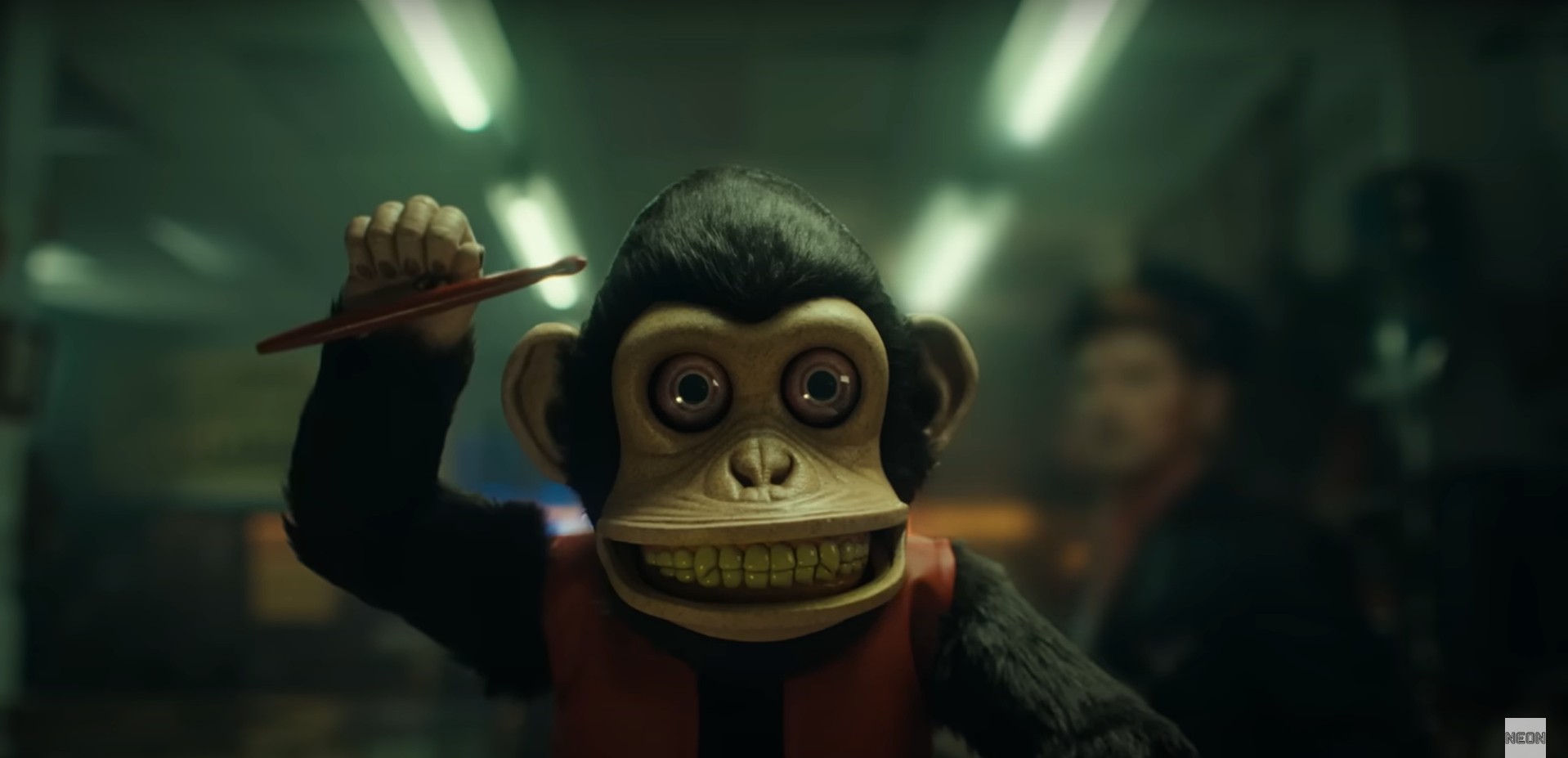
When twin brothers Hal and Bill, who personably couldn’t be more different, come across their deadbeat father’s windup toy grinding monkey amongst his left behind things, every time they wind up the monkey’s rat-tat-tat tune, at the last stroke someone close them dies a gruesome, horrible, seemingly accidental death.  As the deaths hit closer to home, such as the violent aneurism that takes their loving mother, the boys decide to toss the sinister toy into a deep well to stop it’s dooming of another soul.  The boys diverging personalities drive them apart and for many years they don’t speak until Bill calls Hal about the accidental death of their aunt.  A new string of death begins as the toy resurfaces to play its portentous tuneful rattling once again.  Hal, who’s now trying to connect with a son he’s kept at arm’s length in fear of the monkey’s return, must reunite with Bill to stop the carnage before it’s too late for them all.
Stephen King is so hot right now.  Hell, Stephen King has been hot for decades as one of the still living novelists to have numerous film and television series adaptations.  This year alone proves how influential and craved King’s work is amongst filmmakers and fans with “The Long Walk” and “The Running Man” feature films being released in the months to come.  There’s even the upcoming film rendition of “The Stand,” a novel that’s been adapted twice already set to receive a third account.   Since 1976 with his first adapted novel “Carrie,” King has been the king of having his work reimagined for visual scares and entertainment.  Earlier this year’s “The Monkey” is another example of the prolific author’s short story of the same title from his “Skeleton Crew” collection, coming to life on the big screen being helmed by one of the hottest new directors in modern horror, Osgood Perkins (“Longlegs”).  The horror-comedy is written and directed by Perkins in British Columbia, Canada and produced by “Saw’s” James Wan as well as Chris Ferguson, Dave Caplan, Brian Kavanaugh-Jones, and Marlaina Mah.  “The Monkey” is a company collaboration between Atomic Monster, The Safran Company, Oddfellows, Stars Collective, and C2 Motion Picture Corp. with Neon presenting theatrical distribution.

English actor Theo James is also no stranger to films adapted from literary works as The Divergent Series film star steps into “The Monkey’s” killing sphere by playing not one but two roles as the Hal and Bill Shelburn, twins with a tragic history that runs integrated with the windup, grinder monkey.  James caters to both personalities with mild-mannered energy that does transition exactly from the children counterparts (Christian Convery, “Cocaine Bear”) in the first half of the 30-year time span. Older Hal is joined by his son, lightheartedly named Petey, played by “Wonka’s” Colin O’Brien with the same deadpan deliveries as Theo James that greatly adds to their combined relationship and antagonism.  There’s plenty of self-deprecating and bullying upon Hal who, amongst the monkey’s supernatural selection-for-death drumming, is fashioned to be a loser but the narrator of the story in his slow burn rise to overcome the blood splattering challenges ahead, turning one-half of the twin duo into a lead principal and the feeble hero of the tale mostly setup by the character’s voiceover of the past and his action of the present.  In a rare showing amongst conventional character work, there is no love interest to note to either Hal or Bill other than possibly the Shelburn mother Lois in a doing in the best with what I got single mothering act by Tatiana Maslany (“Diary of the Dead” ).  Lois’s rough around the edges attitude is more shaved down by her airline pilot husband who left her and the boys and comes across as a guiding light for her twins on the rough, diverging path.  Once she’s removed from the picture, whatever threadbare connection between the twin boys had was severed that day, creating underlining turmoil and bloodshed decades later.  The cast fills in with Rohan Campbell (“Halloween Ends”) a teen obsessed with the monkey since his first encounter, Osgood Perkins as the blunt uncle, Sarah Levy as the unfortunate aunt, and a couple of powerhouse names with cameo appearances in Elijah Wood (“The Toxic Avenger”)  as Petey’s soon-to-be stepfather and Adam Scott (“Krampus”) as the Shelburn deadbeat dad.

Through the mysterious monkey business of randomized, accidental deaths is this dark theme of everybody dies and everybody dies at different times in various ways.  Through Theo James’s Hal narration and a few character jawing harps upon a zero set expiration date for people and really nails the head on the lack of preconceived set of parameters and time span of how long a person should be alive before they die, setting a concentrated focus on the way a person dies, as mentioned in Lois’s post funeral service monologue while holding her two boys that some die screaming in blood curdling agony and some parish peacefully without a blip of hoopla.  The grinding monkey toy (never call it a toy!) represents the sardonically absurd aspects and happenstances of death with its selective process and imminency; in essence, the grinder monkey is a materialized grim reaper.  Stephen King wrote “The Monkey” 45-years ago in 1980 but the film shares similarities to the modern-day horror of the “Final Destination” franchise that provides ominous premonitions precipitating subsequent deaths of those who weren’t supposed to survive a major mass causality event.  Yet, what the two entities possess is their love for the absurd, Mouse Trap ways those in the crosshairs come to end with “The Monkey” rivaling the exploding of gore, gruesomeness, and ferocity that’s made the “Final Destination” franchise rocket with cult fandom. 

Beyond bananas, “The Monkey” shines as an adept and agreeable anarchial Stephen King adaptation.  Neon brings the blood with a standard Blu-ray with an AVC encoded, 1080p high definition, BD25, presented in a widescreen 2:00:1 aspect ratio.  Technically, “The Monkey’s” a sound example of competent compression on a lower capacity format with no evident artefacts of any size.  “Witch Hunt’s” Nico Aguilar’s semi-dark gloss adds a sheen to the elements inside a middle-of-the-road contrast.  Coloring is diffused distinctively into the well-lit scene, providing separation and delineation amongst objects, while the lower lit, more obscure moments, are sprawled by a mellower shadow that is inky or just a void but a stylistic choice to create atmosphere rather than be a menacing presence or a gape of mystery.  The English DTS-HD 5.1 Master Audio equates much of the same caliber with a clean, clear, and robust dialogue layer with a step down for the ambience, accentuated by range and depth where necessary, and a soundtrack that’s not engrossingly ear-catching but is still full-bodied and present from Edo Van Breeman (“Afflicted”).  Also listed is a Descriptive Audio 2.0 Stereo and there are English and Spanish subtitles optionally available.  Encoded bonus features are a condensed cut of behind-the-scenes featurettes, including Becoming Hal and Billi with Theo James conversing about getting into the mindsets of two completely personalities of twin brothers, Funeral Gallery provides insight on the funeral programs for the multiple services of accident deaths, Outrageously Gory and Thoroughly Gratuitous takes a dive into the cartoon-like graphic violence full of blood – lots of blood and body parts, and The Cast of The Monkey rounds out with in-depth look at the cast playing the cast of eclectic characters.  An assortment of trailers is also in the mix with an included announcement teaser, teaser, and the full theatrical trailer.  Neon’s Blu-ray is standard fare with a conventional Blu-ray case from Viva Elite housed inside a delicate slipcover with a hard detailed look at the grinder toy monkey (again, don’t call it a toy!) in full smile and ready to rap his drum, the same image of stark red and black contrast that’s also on the front cover of the Blu-ray cover art.  The insert section does not contain any physical supplements nor are there any other physical supplements included.  Locked in a region A playback, Neon’s release has a runtime of 98 minutes and is rated R for strong bloody violent content, gore, language throughout, and some sexual references. 

Last Rites: Banging away as a harbinger of death, ‘The Monkey” drums up an honest day’s work as a solid Stephen King adaptation twisted by Oz Perkins’s black comedy and high-level gore only the filmmaker could devise.

Own “The Monkey” on Blu-ray from Neon!

EVIL Wants Your Brain Fluid! “Vile” reviewed! (MVD Visual / Blu-ray)

These “Vile” Atrocities are now on Blu-ray!

What was supposed to be a relaxing camping trip amongst friends has turned into a torturous nightmare when four friends wake up to find themselves in the company of five strangers in a basement and learn they’ve all been kidnapped for a purpose.  Behind the illicit arrangement is an illegal drug manufacture whose formula is produced from the byproduct of the brain’s fear and pain induced chemicals.  With a 22-hour clock counting down from the first act of violence, the puzzled lot must fill a 100% quota before time runs out in order to be set free from the reinforced house they awoke in and the only way to do that is by hurting each other to fill the vials connected to the backside of their heads.  Framing a plan, a vote proceeds a numerical order of voluntary participation of torture, each contributing a fraction of the pain percentage needed to survive and be free, but egos, fears, and secrets cost them more than a few moments of unbearable pain.   

Before becoming Paramount Network’s golden nugget for creating the more recent acclaimed American television drama with shows like “Yellowstone,” “1883,” “1923,” “Tulsa King,” and “Special Ops:  Lioness,” Taylor Sheridan had first directed a small-time horror movie over ten years ago in 2011.  The title “Vile,” a play on words used to not only describe the cruel atrocities done from one character to another but also alluding to vial containers used to fill up with fear and pain fluid, is the brainchild of scriptwriters Eric Beck and Rob Kowsaluk.  Certainly, a different tone compared to hardnosed westerners and high-profile casted thrillers, Sheridan filmmaking roots from “Vile” mold his next stage directions of cruel character dynamics.  Beck produces the feature with Noël K. Cohan (“Into the Void”), Tina Pavlides (“100,000 Zombie Heads”), and Kelly Andrea Rubin (“Skeeter”) with presumably father Larry Beck footing some of the funding under the LLC of Vile Entertainment in association with Bosque Ranch Productions and Signature Entertainment.

An ensemble cast thrusts strangers into the throes of do-or-die but amongst the cast of characters, a delicate introduction of a core four put forth the wheels in motion of the sick extraction technique all in the name of drugs and profit.  The preliminary meet-and-greet of Nick (Eric Beck), Tayler (April Matson, “Primrose Lane”), Tony (Akeem Smith, “Holla II”), and Kai (Elisha Skorman) sets up love interests, Tayler’s secret pregnancy, Kai’s drug problem, and a playfully semi-morbid game of would you rather that foreshadows another choice pick of torture later the group has to contend with when joined with the other five test subjects – a dark and cryptic Greg (Rob Kirkland), a subtly anxious Julian (Ian Bohen, “5 Souls”), a selfish hothead Tara (Maya Hazen, “Shrooms”), a young and frightened Lisa (Heidi Mueller) and a level-headed Sam (Greg Cipes, “Deep Dark Canyon”). The variety of character provides varying shades of distrust, betrayal, and hope as factions form and convictions are about-faced, jostling those steadfast at first and solidifying principals for those teetering on the edge.  As whole, the cast works well together to provide adequate and satisfying suspicion as well as selling a particular attitude despite a couple of red herrings that are hidden really well within the framework. As individuals, lots of the dialogue pertains to self-explanatory states of the obvious that stick out like a sore thumb of colloquial filler with a story set in one location with the same nine people for approx. an hour long. ”Vile’s” cast rounds out with McKenzie Westmore and the unmistakable Maria Olsen (“I Spit on Your Grave 2: Deja Vu”) in a procedure-nothing televised head. 

As much as I disfavor comparing one film to another outside of sequels, series, or franchises, “Vile’s” voice is lost as an individual. Seven years prior, James Wan and Leigh Whannell began what would become one of the biggest contemporary horror franchises with “Saw,” spanning sequels through two decades, and concluding, thus so far, with this past year’s “Saw X.” What does this have to do with “Vile?” ”Vile” follows much of the same formula Wan and Whannel concocted in the earlier 2000s with a very to-the-manual approach of “Saw’s” collaring of individuals, media announcing a timed-task, and the players of the game have to hurt themselves, or others, in order to be set free. Fundamentally different with “Vile” has more to do pure greed and profit at the expense of those unfortunate to be in the path of profiteers whereas “Saw” forces transgressors into rebirth through pain and suffering. ”Vile” is also not as explicitly graphic with much of the torturous violence done out of sight, off screen, or in a blink of an eye. Nevertheless, the intriguingly staid premise takes the human condition to the limit and steps across the line of no return of committing what is self-destructively necessary to survive. Beck and Kowsaluk tweak the formula by a narrow margin but the manner of how the narrative plays out distances “Vile” to almost unitary means. For example, “Saw” almost always had a dual storyline that eventually converges with a shocking twist-tie conclusion. ”Vile’s” straightforward with a singular storyline that isn’t dichotomized with a parallel storyline, a periodization storyline, or any other type of storyline to be a crutch for the other, leaving audiences in the undivided present that’s an around-the-clock time crunch to live or die by the hands of themselves or at the mercy of others, and with a palpable enough twist that you’ll kick yourself in the chin for not predicting it ahead of time. 

“Vile” comes to Blu-ray from MVD Visual on the company’s Marquee Collection label. The AVC encoded, 1080p High-Definition, BD25 has the film presented in a widescreen 1.78:1 aspect ratio. Limited to a two-tone grading of steely blues and canary yellows, picture quality range has spasmodic bursts of interiority to agreeable presentations. More of the pre-ensnarement night scenes appear granulated by macroblocking, degrading the image to pre-high definition pixelated rate. Bitrate decoding jumps sporadically from mid-teens to mid-30Mbps, most likely due to an unstable data compression transfer. Compression appears better, though not flawless, later in the runtime with tighter contouring and a finer detail on a grungy, dirty, dilapidated house where the main set takes footing. The English Dolby Digital 5.1 and the uncompressed LCPM 2.0 are the available audio options, both of which lack commodious conviction with a suppressed volume. While the dialogue renders sufficiently with discernibility and clarity, much of the eye-averting torture sound design, the milieu audio, and even the rock-hard rock soundtrack retains an undeliberate lo-fi quality. English subtitles are optionally available. Special features include two deleted scenes that expand on more of the earlier character interactions, a behind-the-scene moment of director Taylor Sheridan mopping the kitchen set and singing, and the feature trailer plus other MVD Marquee Collection trailers. Tangible features include a cardboard O-slipcover, first pressings only, vaunting the nastiness to come and, again, appropriates a “Saw” cover with that nastiness of an extracted, bloody tooth in a pair of vice grip, a nod to the “Saw III” poster/home video art. The Amary case has reversible cover art with the original “Vile” artwork on the inside. The unrated, 88-minute MVD Marquee Collection feature has a region free playback. If “Saw” is deluxe imperial crab, then “Vile” is the suitable imitation equivalent with a steady pace of group-wrenching contrition and contempt that forgoes the games for straight up blunt force trauma. 

These “Vile” Atrocities are now on Blu-ray!

Open Up Your Mind to EVIL! “Conjuring the Beyond” reviewed! (DVD / Breaking Glass Pictures)

“Conjuring the Beyond” on DVD at Amazon.com!

Divorced and left to wallow in her own self-pity, Wanda Fulcia moves into her brother and wife’s house but her inability to secure a job and act responsible has proved difficult with her hosts as she continues to ask for favors, such as borrowing her brother’s car to drive to a paid sleep study in the middle of a nearly deserted small town.  Dr. Pretorious, the head clinician of the study, seeks to hypnotize his four, sleep paralysis unaffected, participants to open their portion of the brain to produce night terrors and sleepwalking in order to treat the condition.  What the participants are really opened to is a nightmare state of being paralyzed while aware of an old, animalistic hag surveying them as they lie powerless to move.  At dawn, they all convey recalling the same dream and realize one of them is missing.  The recorded video shows the missing participant sleepwalking from his room without a trace of where they’ve gone.  The next night, the ordeal repeats itself and another member of their party goes missing.  Wanda and those left must uncover the mystery behind their night terrors before they back to sleep again. 

Borrowing from the tall story superstitions that sleep paralysis was the work of demons while also plucking ideas from Stuart Gordon’s perceptually other-dimensional horror film, “From Beyond” and James Wan’s spirit-investigating “The Conjuring,” Calvin Morie McCarthy writes and directs his own unofficial, unauthorized, and unsanctioned sublevel spinoff with “Conjuring the Beyond.” The Vancouver, Washington born 30-year-old filmmaker has been through his fair share of direct-to-video horror refuse, even etching himself into the running joke of “Amityville” titled cheapies with his entry “The Amityville Poltergeist” that has garnered a general public rating of 2.2 on IMDB.com. That low score doesn’t tarnish our objective goal to look at “Conjuring the Beyond” impartially without the blatant cash-in title affecting our sound judgement because, trust me, we’ve seen our lion’s share of reused, reworked, and rehashed titles. The film marks the first 2022 release for McCarthy and is produced by Chad Buffet of the Renton, Washington based special effects and props company, Raptor FX Studio, along with Joe Dietrich’s co-created company 7th Street Productions with McCarthy and Richard Wolff of Breaking Glass Pictures who distributes the film with an at-home release.

At the heart of the story is Wanda Fulcia played by Victoria Grace Borrello in her feature film debut. The Loyola University graduate of the arts, Borrello offers a new face and a serious craft performance toward a recently divorced person who has become lost in themselves. Wanda’s written to be entrenched into any kind situation that befalls her whether be with her own troubles of self-discovery or the beleaguering troubles of a cerebral doorway opened to let a malevolent entity into her subconscious. Who opened that mental gateway is the potentially guileful psyche-physician, Dr. Richard Pretorious. Pretorious, as all horror fans know, is a homage to “From Beyond’s” Dr. Edward Pretorious, the main antagonist who used a machine called The Resonator to expand a person’s mind into other dimensions. “Mutant Vampire from the Planet Neptune’s” Steve Larkin certainly does not portray the diabolism in her version of a Pretorious Doctor but there is this underlining itch that can’t exactly be scratched regarding the character’s true intentions. This unfinished business happens between both Wanda Fulcia and Dr. Richard Pretorious and that takes away from completing well-rounded characters who never see themselves cross that arc finish line. Essentially, both are stuck in a disappointing stasis of unfulfillment, and their morals and their emotional baggage are carelessly left to the wind. I found the secondary principals more impressive and a little more understandable with tidbits of themselves being dropped like breadcrumbs through the variable time on screen. Cocky boxer Porter (Jon Meggison, “The Haunting of Ravenwood”), a tarot card floozie Margo (Jax Kellington, “Cross Hollow”), and midwestern drunkard Theo (Tim Coyle, “I Need You Dead!”) are the other three participants of the sleep study and each provide a unique image that continues to keep us interested and where they possible might end up retired on the runtime scale. Neil Green, Erik Skybak, and Chynna Rae Shurts as the skulking Sleep Demon.

With an amusing banter of well-written dialogue, a passable night terror demoness, and a nodding homage or two to a couple of horror powerhouse films, “Conjuring the Beyond” has scrappy potential to be something a touch more than just a capitalizer of better and already completed novel ideas. “Conjuring the Beyond” ends like an unfinished thought that asks more questions than provides answers in its thematic night terror framework. Shurts’ Sleep Demon is sorely underused and mostly not present to be invoking scares from the feature. Shurts is cladded on a budget but well adequate to eerie up the antagonist enough with fake long nails, fake gnarly teeth, and a dark shawl or robe attire that slinks and creeps in-and-out of alert sleep paralysis patients. McCarthy also dives into another theme of shared experiences or mutual dreams that then send a shiver of petrifying terror zipping through a collective’s inner being. More precisely in that theme is one’s person’s affliction affects or infects the surrounding others; we also see this at the beginning with a Wanda’s brother Nick and his wife negatively feeling Wanda’s ability to rebound from an ugly divorce. However, not all scenes make complete sense. The prologue of a man trembling in his bed and watching the Sleep Demon slither into his room before snatching him from his bed is detached from the trunk of the story much like a dead branch lying next to not it’s tree provenance. Yes, the branch part of a tree, just not this tree. Other aspects of the film also don’t make much sense or lack explanation is the participants who disappear reappear as sleep walking zombies under the control, possession, or will of the Sleep Demon and to what purpose is far from being seen.

“Conjuring the Beyond” evokes images of demons and terror onto a DVD home video from the Philadelphia based, provocative independent film distributor Breaking Glass Pictures.  The MPEG-4 encoded DVD5 is a NTSC, region 1, unrated U.S. release presented in a CinemaScope widescreen 2.35:1 aspect ratio.  The lossy codec compression appears to sustain a relatively good picture throughout the 90-minute runtime with little-to-no banding or issues and toned-down artifacts concentrated more so around darker scenes around the delineation of objects in the background. Noticeable post-production issues don’t go unnoticed when the visual effect of compositing CCTV footage on a computer screen was left undone and so there is a scene where the sleep study participants and Dr. Pretorious are huddled around a laptop staring at a blank, black screen while providing commentary on the disappearance of a fellow member of their group. The lossy English dual-channel stereo mix offers a mediocre, yet still strongly inclusive, audio output that has slight issues maintaining consistent decibel levels at times. Dialogue can sound muted at times or distant and then suddenly be more robust in the same breath. English subtitles are available if opted. Depth and range work well with the fear atmospherics and environments. The release is feature only with only a static menu on the DVD that’s encased in a normal black snapper case with egregiously deceptive artwork of a woman floating above her bed; no floating happens in the film. Perhaps less misrepresentative if titled something more original, “Conjuring the Beyond” holds tightly to the coattails of other iconic horror films but tweaks the story just enough to tease a fresh take toward the unharnessed and terrifying dimensions stemmed by the power of the mind.

“Conjuring the Beyond” on DVD at Amazon.com!

A Dilapidated Terminal Full of EVIL Spirits. What Could Go Wrong? “Prison of the Psychotic Damned” reviewed! (Wild Eye Releasing / DVD)

A pre-depression era railway terminal is now an aging and decrepit structure left to ruin in Buffalo, New York. It’s also the site where an experienced paranormal investigator, her ghost-tech guru, and three volunteers venture for exploration, hoping to uncover something spooky that goes bump in the dark because of the buildings long-marred and infamous history that includes an insane asylum, an unorthodox cattle abattoir, and many unexplained and terrible deaths throughout the decades. The deeper they dig down into the terminal’s underground corridors, the more they find themselves lost in a labyrinth amongst a taxonomic diversity of unhinged ghosts and ominous orbs. Lost and being hunted down, the ghost hunters fight for topside survival before absorbed by the terminal’s evil past.

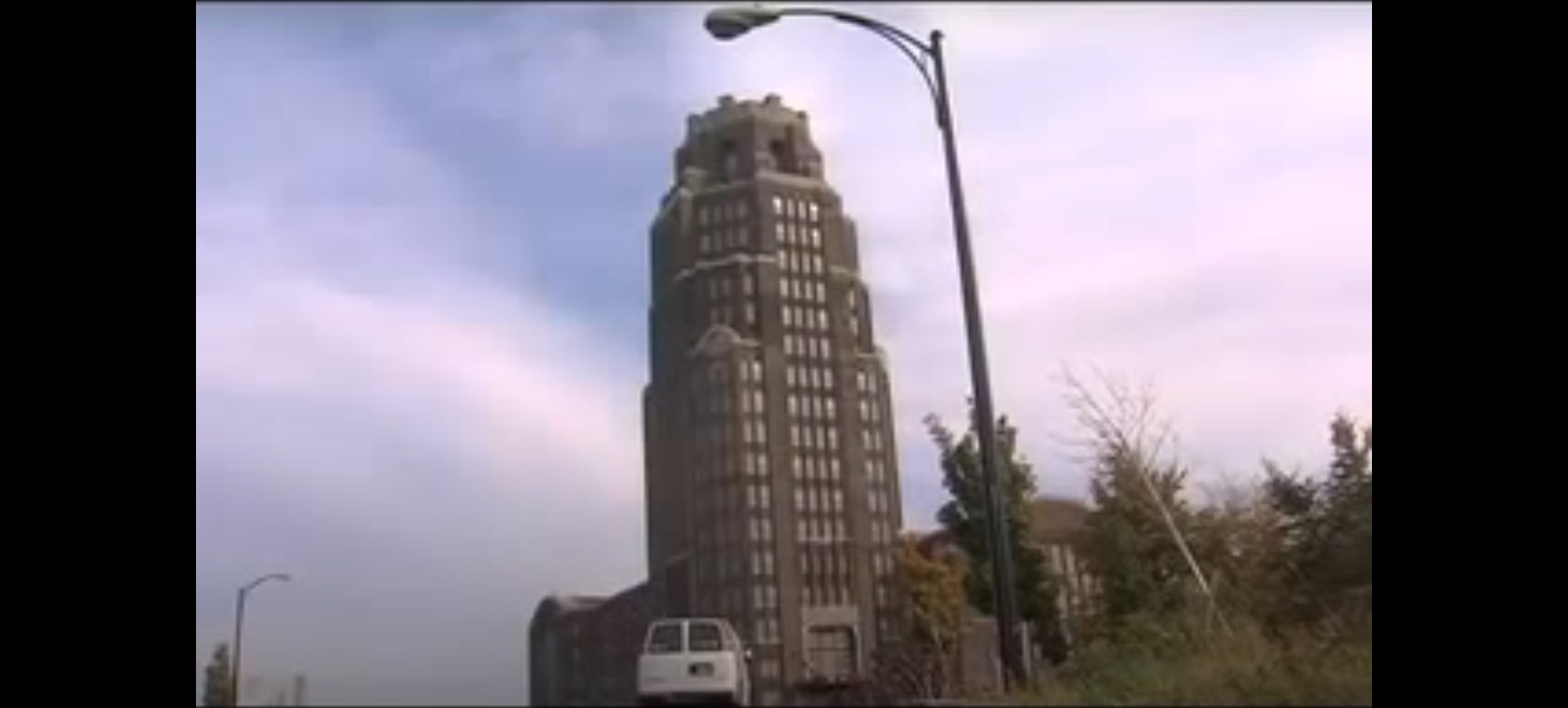
Ghost hunters investigating the eerie ambience has been a source of easy pickings for producers and filmmakers from television’s “Ghost Adventures” to the popular James Wan phenomena that is “The Conjuring” franchise based off the Ed and Lorraine Warren investigations. The then mid-30s, New England filmmaker, David “D.W.” Kann hops aboard the investigator train with his own specter-sleuthing indie film, “Prison of the Psychotic Damned,” penned by producer David R. Williams (“Frightworld”) and released in 2006.  Also known as “Prison of the Psychotic Damned:  Terminal Remix,” the once puppetry and props master, who worked on such classics as “Carnosaur 2” and “Children of the Corn III:  Urban Harvest” as well as hitting the big time with Jim Carrey’s “The Mask” and the 1995 video game adaptation, “Mortal Kombat,” showcases the historic Fellheimer & Wagner Art Deco-architecture that once stood grand inside the Buffalo Central Terminal.   Built in 1929, the 15-story building has been abandoned since 1979 and left for the whim of vandals until its sloth restoration in the 2000’s that even saw paranormal activity themed reality shows take a crack of discovering spirits beyond the grave.  “Prison of the Psychotic Damned” also is an imprisonment of psychotic fraud as David R. Williams was arrested and convicted of embezzlement of his then employer’s capital back in 2010 to fund his schlock ventures under his production company, Red Scream Films, including this film but that didn’t stop Williams who went on to continue producing and directing long after his short stint in the slammer. 

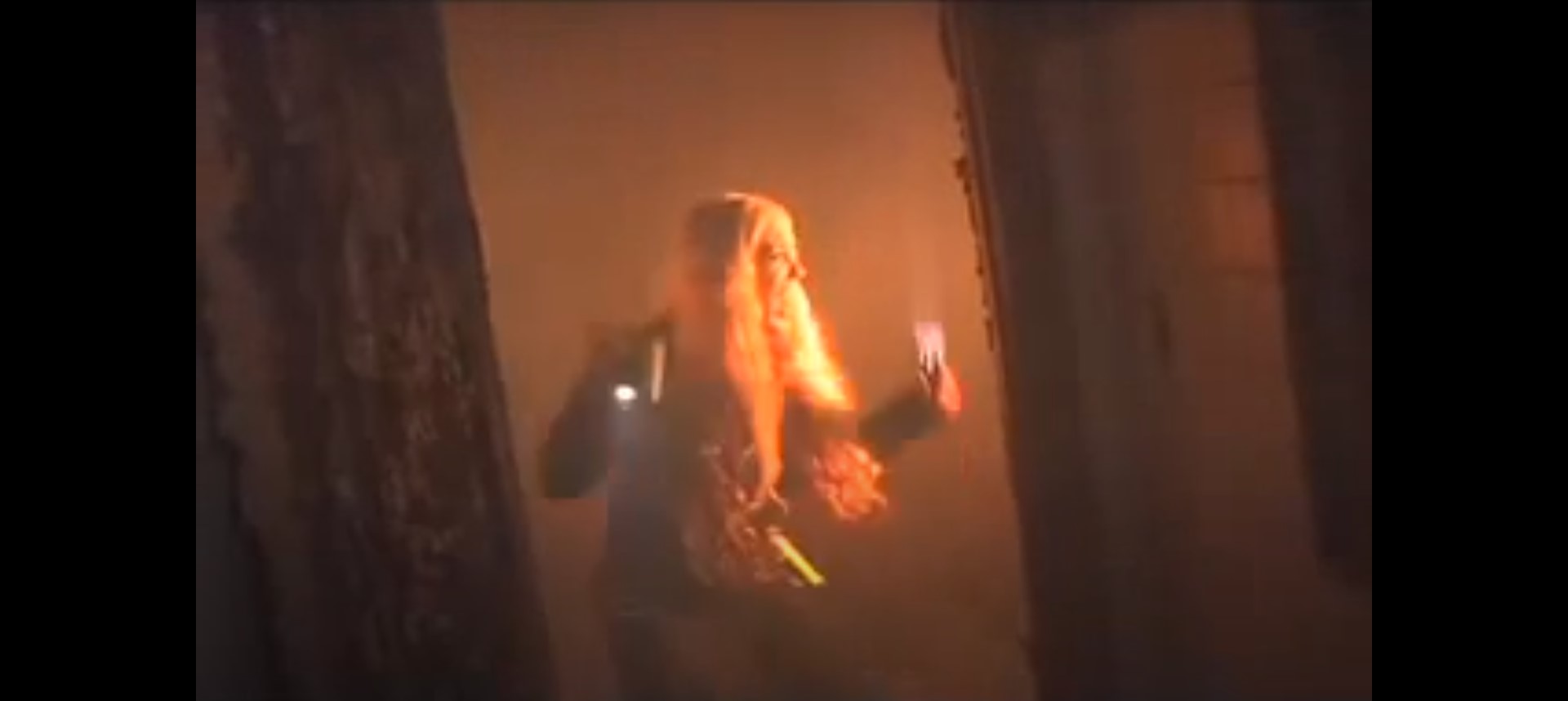
About as volatile as Mount Vesuvius wiping out Pompeii in 79 A.D. are the five, dynamically counterpoised ghost hunters driving toward their insensible doom at the Central Terminal.  Spearheading the venture is the most experienced investigator Rayna (Susan Andriensen, “The Blood Shed”) with the intention of reviving her dwindling career before becoming defunded by the grant investors.  Rayna is joined by her longtime tech assistant Jason (James Vaughn) looking to capture something, anything, supernatural with his homemade psychokinetic-detecting gear as he innocently enough flirts with the snarky unwilling participant Kansas (Melantha Blackthorne, “Bloody Slumber Party”) who finds herself on the brink of losing her funded wayward lifestyle if she doesn’t join Rayna’s expedition per her moneybag father’s direction.  The relation between Rayna and Kansas is being step daughters, but that connection isn’t made entirely clear with only one brief exchange regarding Kansas’s forced attendance.  While Kansas disparages much of the investigation, and many of its participants, she’s joined by fellow volunteers Nessie (Noel Francomano, “Kottentail”) and Aurora (Nemesis 5:  The New Model’s Daiane Azura, credited as Demona Bast) in their respective roles of Rayna’s geeky fanatic and go-to psychic.  The one aspect that really kills these characters (pen intended) for me, and probably the audiences, is the consistent, continuous, ceaseless contentiousness between them with a slew of nitpicking, name-calling, and verbal and physical abuse that makes you wonder why should we even care for a bunch of people who can’t get along.  Brief moments of reasoning flash between them that could end up turning the dynamic around, but the fleeting qualities subside to blunt anger and hate to the point they’re bashing each other’s heads with bricks and leaving each other to fend for themselves against a horde of surgery-conducting ghost-zombies with revoked medical licenses, played by Kidtee Hello, Terry Kimmel, Michael Ciesla, Kelly Budniewski, and Jessica Grangler rounding out the remaining cast list. 

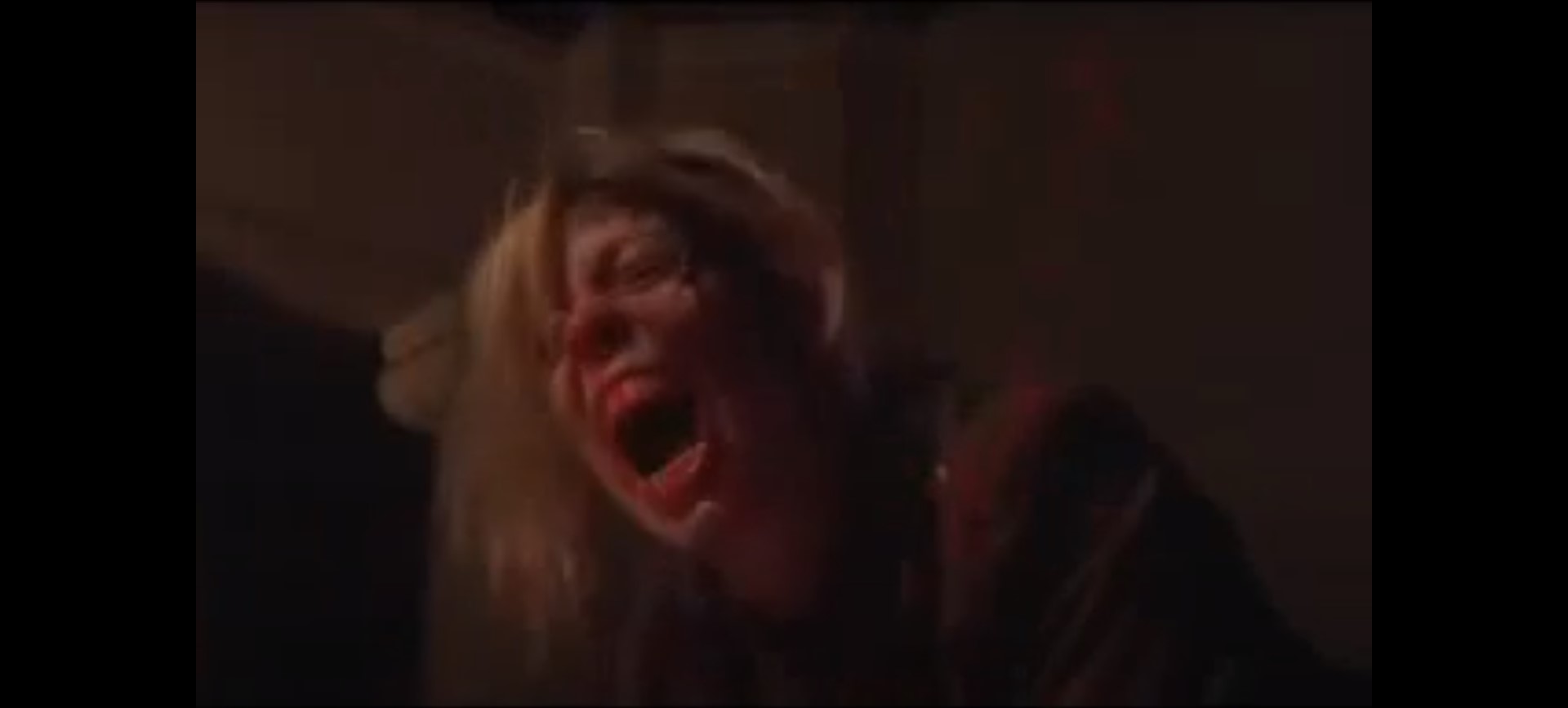
In what feels like the distant cousin, watered down version of “House on Haunted Hill” lite, Kann’s lowbrow, Digital8 shot film is a talkative spew of exposition that lends itself to pretentious prologue surrounding Kansas’s opening scenes of self-mutilation and prosaic nudity as if she’s on an unidentified narcotic.  What’s more confusing about the out of context opening scenes is we don’t really know it is Kansas alone in her apparent apartment.  The film begins with a woman slashing her wrist and licking the blood from her wound, before two medically masked men rush through apartment door and whisk her away.  Next scene, the same woman is back in perhaps her same dingy, dim lit apartment, but this time she’s spouting out philosophy and exposing her breasts by ripping her cheap cotton, tight white top before getting into a warm, steamy bath to stare at the candles at the other end of the tub.  Next thing we know post title creds, we’re riding in a van with the five paranormal investigators and Kansas, sitting in the back seat with Nessie and Aurora, doesn’t even look like the person we saw in the prologue as her hair is put up tight in a bun and she outfits more makeup and gothic drapery.  Once Rayna and Kansas have a sidebar chat and Kansas’s hair progressively loosens and falls, the pieces begin to fit together that Kansas’s disturbed impulses has forced her father’s hand to pair his errant daughter with Rayna for some extracurricular activities that maybe will do her some good…?  Ghost hunting must be the new vogue therapy the kids are into these days, or at least back in 2006.  Structurally, “Prison of the Psychotic Damned” runs faithfully the same obscured narrative course with Rayne expiating mouthfuls of the Terminal’s anecdotal infamy to build a dark dome above the longstanding history, but we rarely see any of the said mythos come for blood and get punted random glowing orbs, creepy doll room, and gloppy possession in return.  Along the way, Kann finds some ways to expose all but one of the actresses’ breasts in a gratuitous-laden attempt to advert our attention from the misaligned components like the story or the performances that just consist of ball-breaking personalities becoming trapped underground with killer spooks and have to duck and dodge the malevolent spirits to survive.  Though the gory bits sate nicely and David Williams erratic editing of eerie filler shots of the Terminal and surrounding area renders like a formidable damaged homemade movie on screen, “Prison of the Psychotic Damned” ultimately boils down to just more of the same rebranded indie slop we’ve all seen before.

Wild Eye’s DVD is released under the indie company’s Raw & Extreme sublabel and is the third physical release of “Prison of the Psychotic Damned” behind the cheap York Home Entertainment DVD and the SRS Cinema limited edition Blu-ray that was released approx. 2 years ago.  The DVD back cover lists the region free film as a widescreen presented transfer, unrated, and clocking in a 100 minutes.  Producer David R. Williams once noted that the surviving master transfer of a flood that destroyed nearly all material is the best there ever will be and with many dark areas shot on a Digital8 camcorder, the presentation is practically raw footage switching back and forth between digital third person and POV with ghosting and soft details amid the thick grain that collaborates the fact of a cruddy transfer. The lossy English 2.0 stereo sound mix toggles with the ears about as much as you have to toggle with the volume. From dialogue to score, insipid flat audio mix universally stiffens the Terminal urban legends Rayna rambles on about as well as extinguishing the score to a putter of insignificant industrial tones with a bookend and backup soundtrack by The Voodoo Dollies and actress Demona Bast serenating with the gothic-vamp vocals with Sonic 14 on an outro track. Among a static menu with scene selection, only Wild Eye trailers are included with the release. Buried beneath the torment of deranged souls, “Prison of the Psychotic Damned” sequesters itself from originality and from graspable, relatable, or even likeable characters in a vanilla story with decent gore effects.

Own “Prison of the Psychotic Damned” on DVD from Wild Eye!

Obey EVIL’s Every Last Command! “Held” reviewed! (Magnolia Pictures / Digital Screener)

Emma and Henry Barrett celebrate their 9-year marriage anniversary by renting an isolated house complete with modern day automation bells and whistles. On the morning following their first night’s stay, they come to a horrifying realization someone was in the house and has displaced their clothing. As panic begins to set in and the couple try to flee, the house suddenly locks down, barring the windows and doors under the smart home controls, and a Voice commands them to obey every word in order to reveal devastating secrets and fix what’s broken in their splintered marriage by returning to antiquated ideas of a patriarchal system. Implanted with an electroshock device, Emma and Henry have no choice but to comply to every authoritative command, turning their romantic getaway into a house of wringing pawns.

Out of all of fight against misogynism and #MeToo inspired films that have been released in the last few years, Jill Awbrey’s scripted story is the most fascinating with an implausible overkill plot derived from, and this would be the scariest part, actual male frames of mind that were not systemically changed too long ago and are still ineradicably infesting a good chunk of male psyches today. The Fresno, California-shot film is entitled “Held,” a literally captivating suspense-thriller with whispers of James Wan’s “Saw” crisscrossed with, and I may get flak for this, Wes Craven’s “Scream.” “Held” is steered by Travis Cluff and Chris Lofing, directors of “The Gallows” and the subsequent “Act II”, with a follow up with edgy confines of a pintsize location embellished with hidden rooms and secret passageways bringing normalcy to the forefront of topsy-turvy inequity. Under Cluff and Lofing’s Tremendum Pictures banner, “Held” is also produced by the directors alongside Kyle Gentz and Cody Fletcher.

Jill Awbrey is not only the screenwriter of “Held” but also stars as the Emma Barrett, an internally traumatized woman weary of strange men asking none-of-their-business questions. Her feature film actress debut plays opposite of vet actor Bart Johnson. The television and “Simon Says” actor Johnson puts on his husband hat as Henry Barret frustrated and disheartened by Emma’s recent lack of intimate interest. All of the Henry’s resentment and Emma’s self-reproach fades away when the house comes down on top of them, literally, in a barrage of hidden spy cameras, an uncontrollable to them security system, and by an obscured voice coursing through various wall intercoms with ground rules and instructions. Before trouble finds them in the guise of a vacay rental, Awbrey and Johnson make a fairly convincing seasoned husband and wife with all the rapport familiarity trimmings; Awbrey instills a meekish quality that makes Emma reserved in not being assertive enough to help herself, a condition stemmed from a traumatic event in her past as the opening moment of “Held,” while Johnson follows Awbrey’s lead in an equally good job showing a nurturing and doting husband who wants nothing more than to take care of everything for his wife. When the panic sets in and the possibility of escape seems futile, Awbrey and Johnson have to use separate approaching methods and mindsets that become essential to “Held’s” time warp speeding male chauvinism undertones. The supporting cast is folded into “Held’s” firm two-lead narrative with precision story placement from Rez Kempton (“Stag Night of the Dead”) and Zack Gold (“Fear Lives Here”).

“Held” is a fight in hell for women who feel that there is life bares no choice in the matter, when their voice is silenced by fear, when the prospect of death is as strong as a masculine build, and when an atrocious past experience hinders personal growth. The commanding-to-demanding obedience tale freefalls from worse case scenario to the absolute worst case scenario of a clear cut redeeming need for change and to once and for all extinguish the old-fashioned binary thought of men being stronger, faster, smarter, better, and more dominate then women. Speaking of old-fashioned, Cluff and Lofing incorporate 1950s era technology, such as a tube television set, rotary phone, and computers with nobs and dials, into the vacation rentals’ futuristic hardware as a symbolizing blend of the seemingly evolved present day man being motivated and driven by antiquated thoughts. The filmmakers also work in nicely Awbrey’s misinterpretation of a Biblical paradise by parochial views by warping the fabled beginnings of man and woman for their own selfish desires. The plot point twist was uncomplicatedly easy to predict but wasn’t necessarily unwelcomed either as the turning point layered a crazy subplot involving a radical marketed and hairbrained scheme with such audacity it’s felt unbelievable. And there were a handful of select scenes that did feel unbelievable by computing more a comical reaction than a petrifying one as perhaps intended. What’s probably more even more of a quirk in “Held” is the script’s subdued dialogue that garnished with not one single obscenity, but the action, which includes multiple graphic stabbings, a self-surgery extraction, and one particular scene where Emma is choked slammed through a wall, conveys extreme intensity in a superficial imbalance with the dialogue. Underneath the tender discourse, “Held” has a crupper of brutal violence that never slips.

Those following Ephesians 5:22-24, reading wives should “submit yourselves to your own husbands as you do to the LORD,” will find “Held” as a blasphemous counterattack of disobedience against the strong arming of a behind-the-times complementarian marriage. “Held” will be released by Magnolia Pictures as a Magnet released film, presented in a widescreen 2.35:1 aspect ratio with a runtime of 94 minutes. The Frightfest 2020 film is a perfect union of imperfect times and feminism fight back and director of photography, Kyle Gentz (“The Gallows Act II,” “Zombies 2”) captures it all with a bright, nearly sterile, perspective full from closed circuit voyeurism, to aerial shots of isolation, and to shaky cam with flashing lights to produce ear splitting pain effect. There were no bonus scenes during or after the credits. The Garden of Eden has been man and woman’s place of paradise and destruction but for Travis Cluff and Chris Lofing’s “Held,” the battle of the sexes is more barbaric than it is biblical when Adam’s machoism stakes claim to Eve’s forbidden fruit.