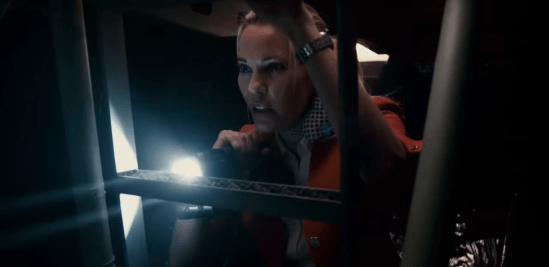
Your Train Has Come in on the Platform EVIL! “The Ghost Station” reviewed! (Well Go USA / Blu-ray)

Cho-Cho-Choose “The Ghost Station” on Blu-ray!

The Oksu train station’s past has incur many strange occurrences over the 17-years since it’s construction but more recently has seen a string of bizarre deaths. When a public service worker Woon-won witnesses a man’s death on the rails, he reluctantly informs friend Na-young, a struggler gossip journalist in need of a good, multi-click story after being hit with a lawsuit from her previous writeup and landing in hot water with the editor. As Na-young and Woon-won dig deeper to save Na-young’s begrudging career, they soon discover there’s more to this story than meets the eye as train station commuters and workers begin exhibiting scratches over their arms and neck. Those marked eventually die horribly. Bodies pile up as the story leads Na-young to the past of a razed orphanage and visions of grotesque children become the center of the young journalist’s investigation until her friend Woon-won displays the same marks. Now, they must solve the curse before it’s too late.

Based off the real Oksu Station operated by Seoul Metro in the Seongdong-gu district of South Korea and the short digital manhwa webtoon entitled “The Ghost Station of Oksu” from Horang’s Nightmare, the 2022 movie adaptation “The Ghost Station” waters the short story webtoon and grows a surrounding plot around the only adapted portion of a near empty Oksu platform except for one bench-sitting man and a stumbling lady who appears to be intoxicated.   The South Korean-Japanese co-produced picture is written-and-directed by So-young Lee (“Apt”) and Hiroshi Takahashi, the latter is the Japanese filmmaker behind the popular “Ringu” series which crosses orient borders by being the most important or influential in “The Ghost Station’s” inhabited identical J-horror elements.   Co-productions Mystery Picture and ZOA Films pull the train into “The Ghost Station,” produced by Yoo Jang-Hun and is theatrically distributed globally between Smile Entertainment and Contents Panda.

The webtoon is only a leaping point for the film version.  Not establishing any cited characters in the illustrated horror story, a whole new plot is built around and extended upon the webtoon narrative of the drunk platform woman that ends in a horrific accident for the young gawker on his phone texting ridicule commentary of her inebriation.  Story continues with a gossip Na-Young on the heels of being reprimanded for not receiving consent for her story of labeling her subject a him despite being very convincingly a woman in looks.  Bo-ra Kim plays the tenacious yet conflicted journalist, self-deprecating her career as clickbait material rather than honorable news reporting until the supernatural Oksu Station occurrences shed light on a bigger, corruptible conspiracy.   The “Ghost Mansion” actress sleeps through what should be a cold-clenching tale of sprog spirits and callous coverups that form a mighty-gripped grudge on those unlucky enough traipsing through the station yet doesn’t really affect her directly.  Oppositely, her friend Woon-wan epitomizes exaggerated fright within the performance of Jae Hyun Kim who can express translated fear in breath holding moments but outside of that Kim dons childish whimpering and yelling as if it’s a fad.  Together, the actors cancel out their characters flaws by embodying one investigative team as a public station worker and a journalist uncovering the truth and to save themselves the next victims of vicinity vindictive spirits.  “The Ghost Station’s” richer performances are yoked by stinted deuteragonists that actually drive the story but feel suspended in their integrated impact and relegated to being flashbacks or wedged into one particular location without a ton of exposition or background.  The dictatorial gossip editor (Kim Na-Yoon), the creepy alcoholic mortician (Kang-il Kim, “I Saw the Devil”), and the first victim’s externally anxious, psychosomatic dreaming sister (Shin So-yul, “Pyega”) are colorfully acted, complex in character, and plod the story along intrinsically, yet they’re underutilized hanging around the peripheral with only the sister edging out the other two with a more direct connection to the grudge or curse. 
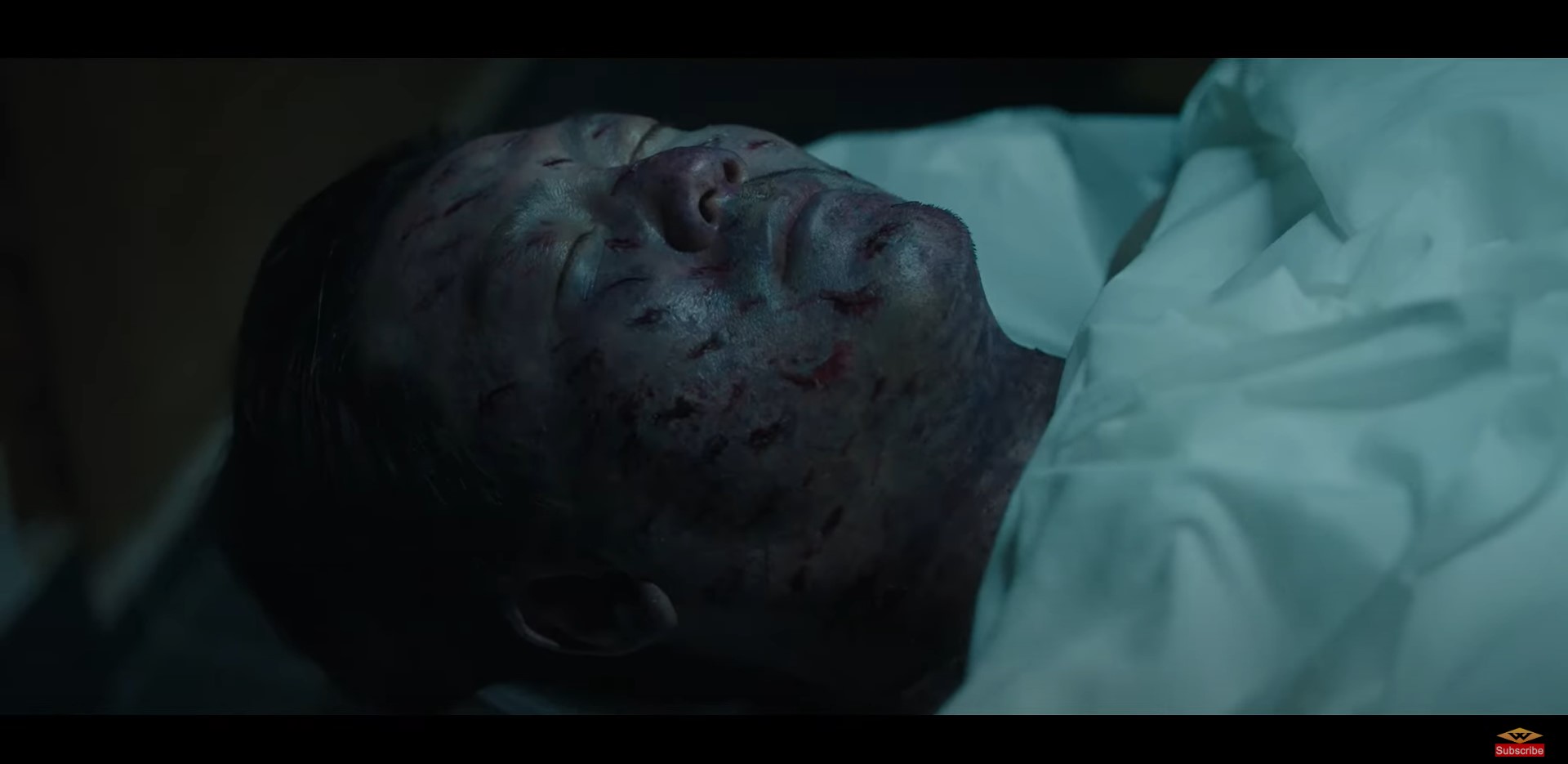
Without unwrapping “The Ghost Station” before watching the film, the story progresses along without any cause for concern with a supernatural sleuth story of a horrible train accident causing a domino effect of curses.  Deeper into the feature, a water well becomes a focal object, then abnormal faces of ghastly children appear, and the principals are using keywords, like grudge, grudge this, grudge that, and where have we heard of this before?  With Hiroshi Takahashi “Ringu” films dappled intermittently with “Ju-on” insignias that turn the initially promising K-Horror into a full blown J-Horror in repeated attire.  While directors So-young Lee and Hiroshi Takahashi are able to garner a handful of scares through technique, makeup effects, and morose aesthetics and dolor, “The Ghost Station” has a creative deficiency as there are just too many coincidental “Ringu” and “Ju-on” suspense devices to craft an original curse tale despite the positivity just oozing out from the idea of two nations blending their respective horror niches into one project that dissects the integrity of the individual.  Na-young’s ethical dilemma as a tabloid journalist carries weight and is tiptoed around when her editor urges for better clickbait material, Woon-won struggles with self-preservation and a friendship bond, and other minor examples add up to the summation of choice.  Many made bad choices that resulted in an orphanage full of pissed off preadolescents using their spook powers for premeditated parricide.   
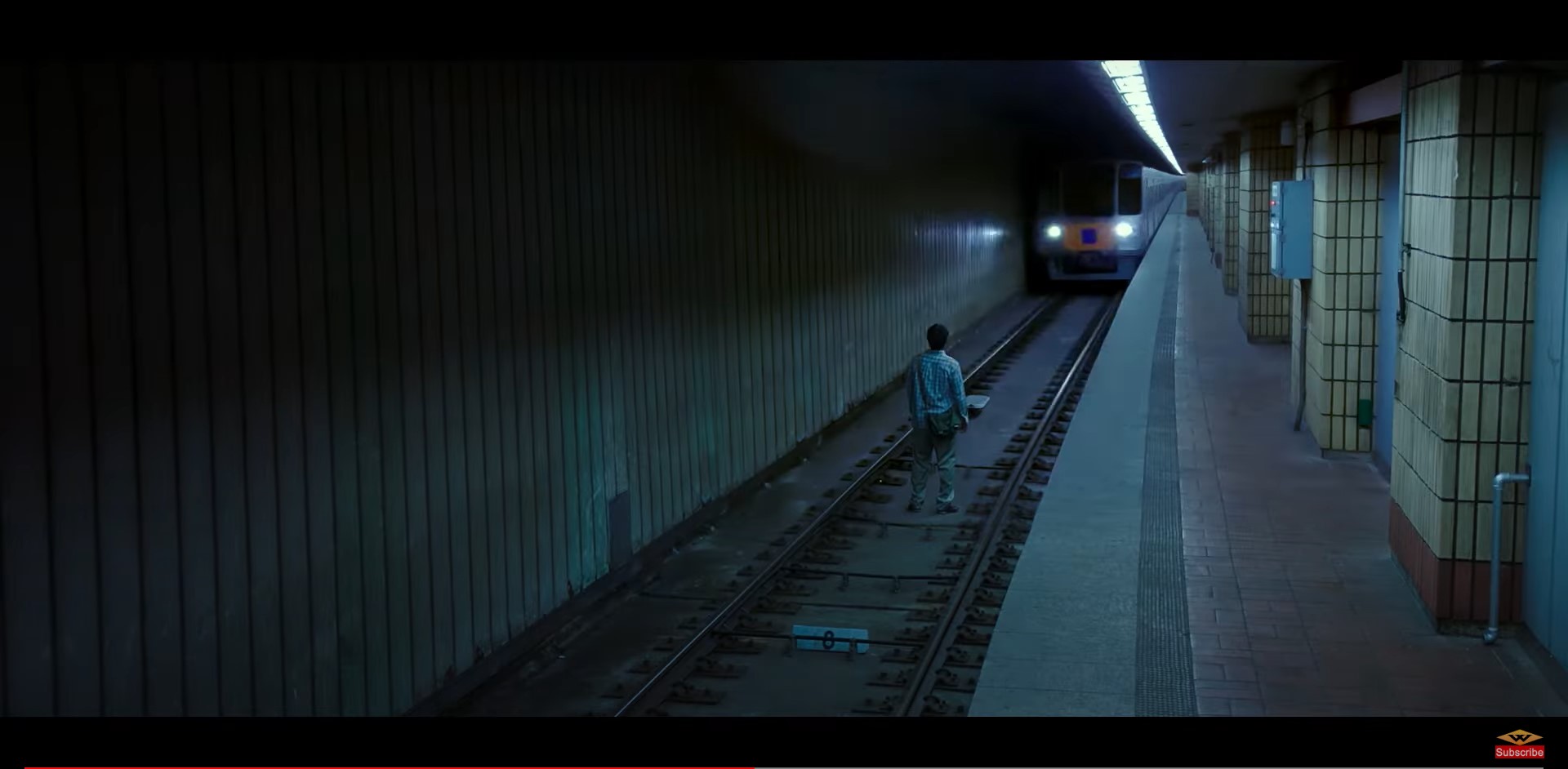
Walk down to the platform and wait for your train to come into “The Ghost Station,” servicing now on Blu-ray home video from Well Go USA Entertainment.  The AVC encoded, 1080p High-Definition, BD25 is presented in a widescreen 2.39:1 aspect ratio.  What the release showcases, as far as image quality, is a more than adequate transfer of the substantially tenebrous picture that renders shadows without analogous banding or splotching.  The low-light grading offers a polished appearance with deep, rich shadows to provide a natural ominous atmosphere and partially shroud characters without compromising distinctive detailing.  The Korean language audio options include a DTS-HD Master Audio 5.1 and a Dolby Digital 2.0 Stereo track. A more than viable digital audio recording that clear and comprehensible with formidable sound design for quotidian scare devices that abled to still produce fear, using the back and side channels to flesh out the scare factor in a fine-tuned direction. Dialogue’s renders nicely without any technical or interfering barriers. English subtitles are optionally available, come error free, and pace well with the rapid Korean dialect. Like many of the Well Go USA titles, not a ton of bonus features are inlaid and the same is said with “The Ghost Station” that only holds trailers for other Well Go USA Entertainment films. In a traditional Amary Blu-ray case, the front cover pays homage to the Horang webtoon. Inside, an advert insert is included with other Well Go USA films from the company’s Hi-Yah! collection. The not rated feature has an 80-minute runtime and has a region A playback only. ”The Ghost Station” undertakes a mesh of identity between K-Horror and J-Horror that sought to pull up to the platform as a singular, supernatural, scare package and, in the end, the film pulls in as a train of consumable terror.
Cho-Cho-Choose “The Ghost Station” on Blu-ray!

The EVIL Anti-Abortion Film You Never Knew You Wanted. “Evil Dead Trap 2” reviewed! (Unearthed Films / Blu-ray)

Aki is a self-solitude movie theater projectionist who avoids talking to men and to pretty much everyone in general.  Her high school friend, Emi, is the complete opposite, a socialite of sorts, with a previous celebrity career as a singer and a high profile television news reporter.  While Emi thrusts her unusual interests upon encouraging her married boyfriend, who is more than game, to sleep with Aki, the projectionist has a secret of her own in being the culprit of a string of grisly murders involving young women with their ovaries ripped from the inside out.  When these murders occur, Aki is in a feverish, yet reserved state of mind that borders being sexually and dangerous uninhibited and totally blackout deranged.  She discovers mementos of the night before in her home and questions her actions, especially as the kill count grows and Aki’s mind wanders between reality and the supernatural as a mysteriously eerie boy keeps popping up everywhere, even at the crime scenes.  Emi’s dangerous game and her smug prodding of Aki sends her friend down a rabbit hole of a disturbing past. 

If you’ve seen “Evil Dead Trap” then essentially forget everything you knew about the first film as the sequel is not a direct follow-up and concerns a different tale of prenatal byproduct revolving around a common moniker that connects both films.  That name of evil that binds would be Hideki with the sequel titled “Evil Dead Trap 2:  Hideki,” bestowed the subtitle to ensure proper acknowledge.  Another aspect that’s different is the person in the director’s chair as “Akira’s” screenwriter Izô Hashimoto helms the 1992 sequel from a script cowritten between Hashimoto and the then early in career Chiaki Konaka who would go on to pen teleplays for a number of Ultraman series and get his hands colorfully deep within various anime project, such as the Digimon series.  With such anime talent behind one of the more brutally savage renditions to sow the seeds early in the J-horror supernatural genre that incited the widely popular “Ringu” and “Ju-on” franchises less than a decade later, “Evil Dead Trap 2” pelts a supernatural and homicidal esoteric storyline riddles with themes of abortion, guilt, and deriding judgement.  Naokatsu Itô and Mitsuo Fujita produce the Japan Home Video production, the company behind metal-horror “Tetsuo” and the Yakuza-zombie film “Junk.” 

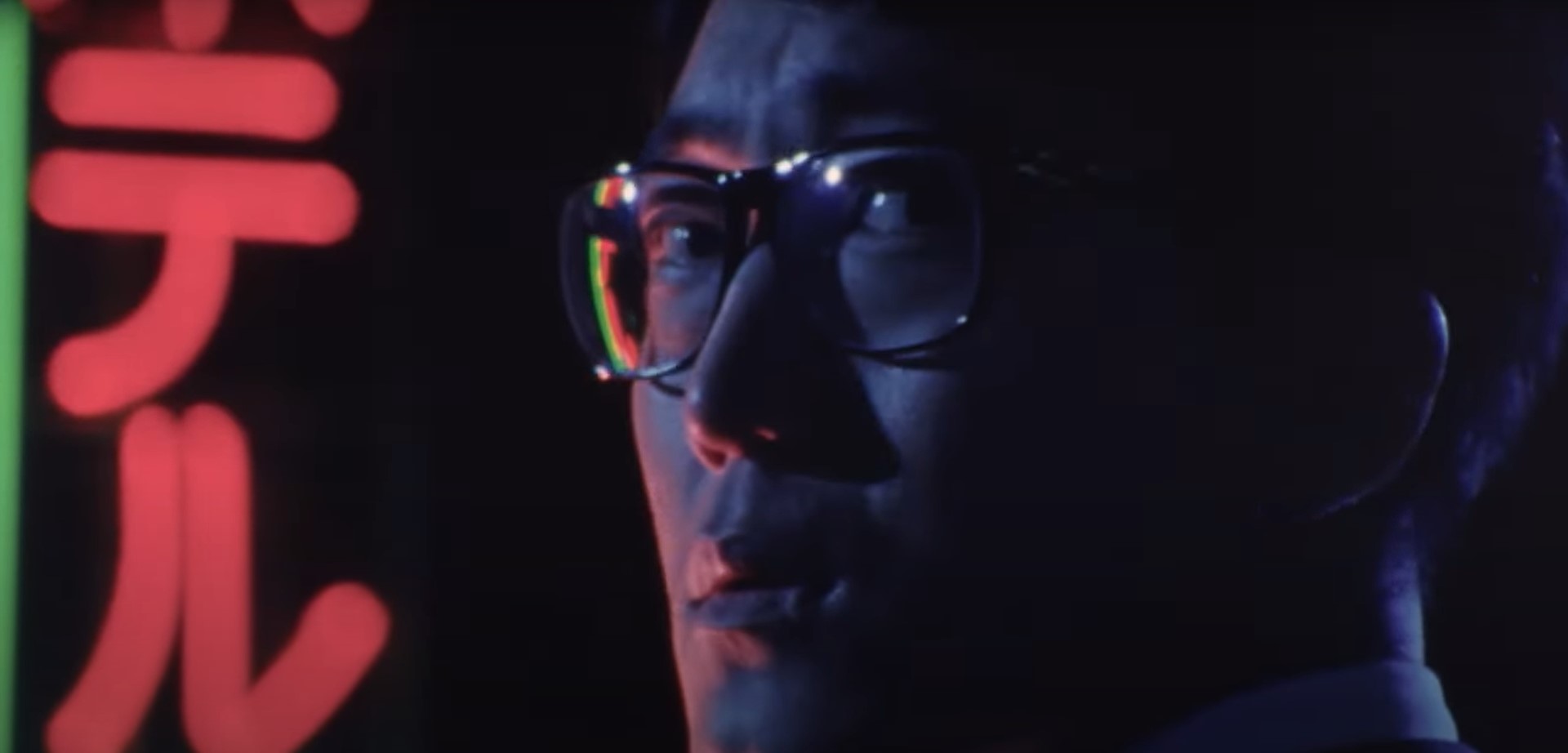
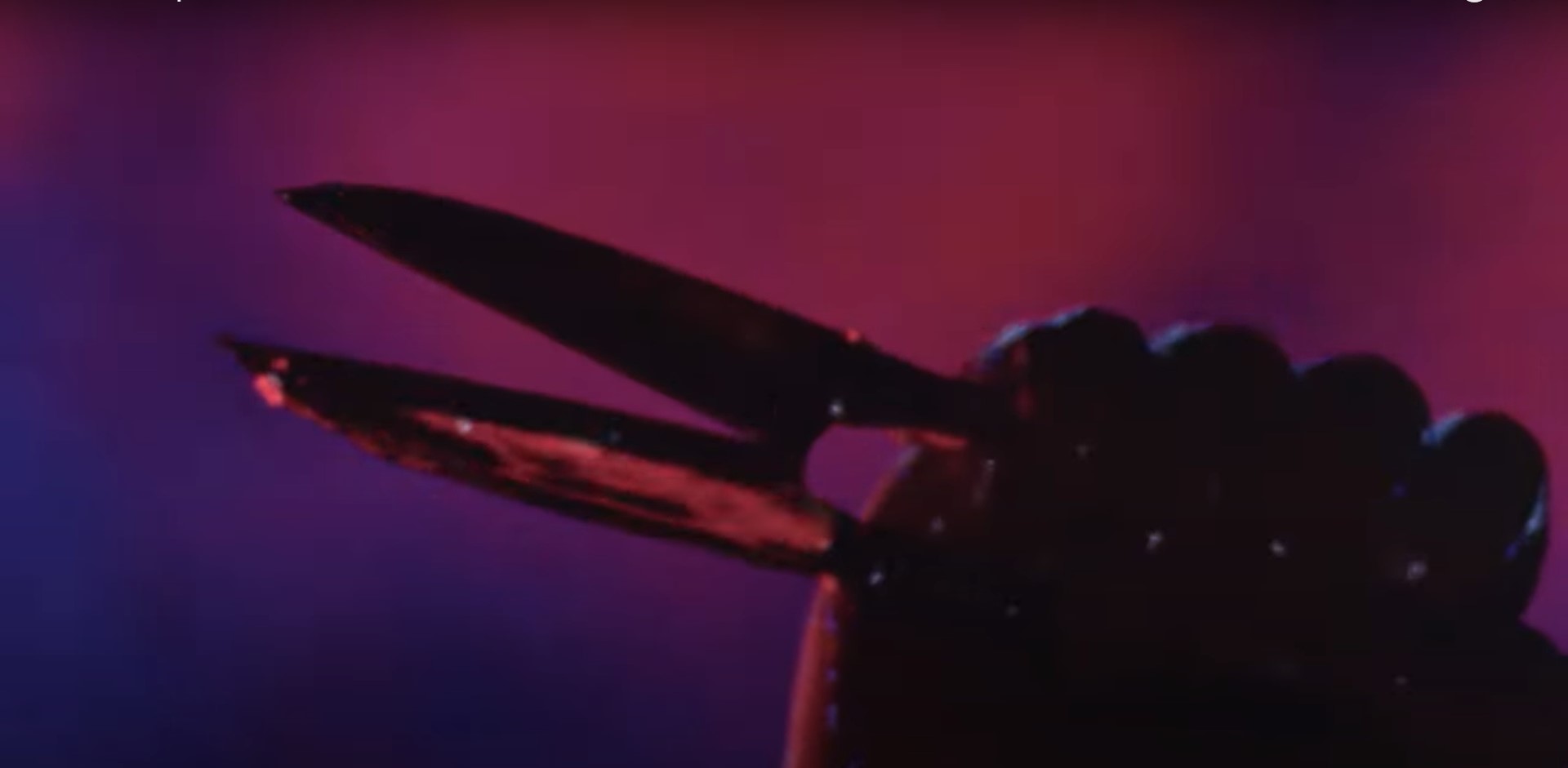
“Evil Dead Trap 2” washes the slate clean with a new cast enveloped into a ghastly chaos the abhorrent an the unnatural.  The story takes on a bold female lead in Shoko Nakajima at the beginning of her career and the fresh faced actress doesn’t also have the typical physique of leading lady.  Nakajima is not only a fascinating and curious choice to be the centerpiece principal but her performance is rock solid with an unsettling, mild-manner manic approach of a night stalker of women opposite her appearance.  Now, whether Hashimoto intended juxtaposition is completely unknown to me, but I find the affect potent nonetheless in unification with Nakajima’s near-subdued and muted act.  On the flipside, there’s “Last Frankenstein’s” Rie Kondoh as Aki’s good friend Emi.  Emi’s a hotshot in her mind fabricated from the television reporter’s brief stint with fame and is cavalier in nature when it comes to her friends and flings.  The contrast between the two is often playfully contentious that never settles on firm ground about how these two become to be friends to begin with, but when their friendship comes to a head in a heated and bizarre one-on-one skirmish with a boxcutter and film sheers, all bets are off and all our conclusions about the two friends are thrown to the wind.  What sets them off is a man, Kurahashi to be exact, a role filled in by Shirô Sano (“Infection”) playing a boyish-behaving philanderer between the two women.  The character of Kurashashi, much the same as Aki and Emi, have his own offshoot piece of the narrative pie with an unsound wife who waits for son to return home – the only problem is, Kurashashi’s wife never had a child.  This is where the 3 characters arcs begin to meld together in a disorder of surrealism between reality and nightmare and those entangled in that web are, for lack of a better phrase, entering a consuming darkness from which they can’t escape, and Hideki is in the middle of it all.  Performances are perfectly unhinged and coy, a variety of personas that make “Evil Dead Trap 2” engaging enough until the end, with a cast list that fills out with Sei Hiraizumi (“Orgasm: Mariko”), Kazue Tasunogae (“Ring 0:  Birthday”), and Shôta Enomoto as the ominous, tangible presence of Hideki.

Comparing the original to the sequel is like comparing worn infested apples to bloody rotten oranges.  The melding of the characters in the third act succumbs to an arthouse avalanche of symbolism, upon symbolism, upon symbolism.  The audience is expected to piece together the chunks of sinew and connect the dots of sibylline secrets of a past contrition. There are strong themes of abortion that persist up into every other few scenes and mostly allude to Aki as the one who gave up a child that has somehow manifested into living, breathing, perceptible and tangible man-child. Aki’s haunted under her fragile, if not delusional, state and while making sense of the manifestations, that hasn’t quite come clear, yet the mental noise leads her to murder when provoked and has her staggering out into the middle of the night to be willingly ravaged by strange men. A logical response to Aki’s action is that internally grieved recluse has snapped, coming unhinged outside the guise of regret as she kills exclusively around a maternity ward that has since closed and is under heavy construction. However, you can’t disregard the supernatural element so easily as Aki visits a miko, a Japanese shaman of sorts, who is senses Aki’s connection to the other side. Multivocal like primordial Hell, Hashimoto works in beautifully shot scenes with brilliant urban lighting that collocates looming, in-your-face figure over the head of the antisocial Aki and shepherds the characters’ darkest secrets to summit before the entity rips them a part in a bloody showcase of madness.

Unearthed Films continues to reverse coagulation and let the blood flow once again with another obscure Japanese gory horror, “Evil Dead Trap 2: Hideki,” onto a new Blu-ray home video coming in at number nine on the spine for company’s Unearthed Classics banner. The release’s image is presented in a widescreen 1.85:1 aspect ratio and retains much of the luminescent coloring of heavy neon-lighting and intended gel filters to play down the story moment’s stitch in questioned reality. Skin textures appear really defined and that also translates into much of the other details as well. No bulky discolorations, splotchiness, or banding stand to say that there were no real compressions with this release albeit having virtually no special features to go along with the single layered feature. The release comes with two audio options, a lossy Japanese LPCM mono and a far more robust LPCM stereo. Both tracks outline a clean and clear passage with no real threats to the audio with only minor white noise in the background. Optional English subtitles provide an error-free experience and pace well with the film. Aforementioned, a lack of bonus features is reduced to only a photo gallery of scene stills and Unearthed trailers, “Evil Dead Trap 2: Hideki” included. “Evil Dead Trap 2: Hideki” challenges each and every one of us to think outside its basket case box and dredge up reason from an addled, abortion-deviled, and serial murdering narrative.

“Evil Dead Trap 2:  Hideki” on Blu-ray Home Video from Unearthed Films!

No Sam Raimi. No Bruce Campbell. Just the EVIL! “Evil Dead Trap” reviewed (Unearthed Films / Blu-ray)


Nami, a Japanese late night show host, is seeing her ratings dipping.  Though not in danger of losing her all-female produced show, Nami decides take her team on an investigation of a mysterious snuff tape that was mailed to her specifically.  Left for her is a bread crumb trail of directions to an abandoned military base, Nami and her crew explore the campus’s rundown structure, searching for evidence, a body, a story that they can televise.  Ignoring the dangerous presence around them, they dig deeper into the dilapidating labyrinth where they horrifying discover something waiting for them laid out in a cruel plan of deadly traps with a maniac pulling at all the strings. 

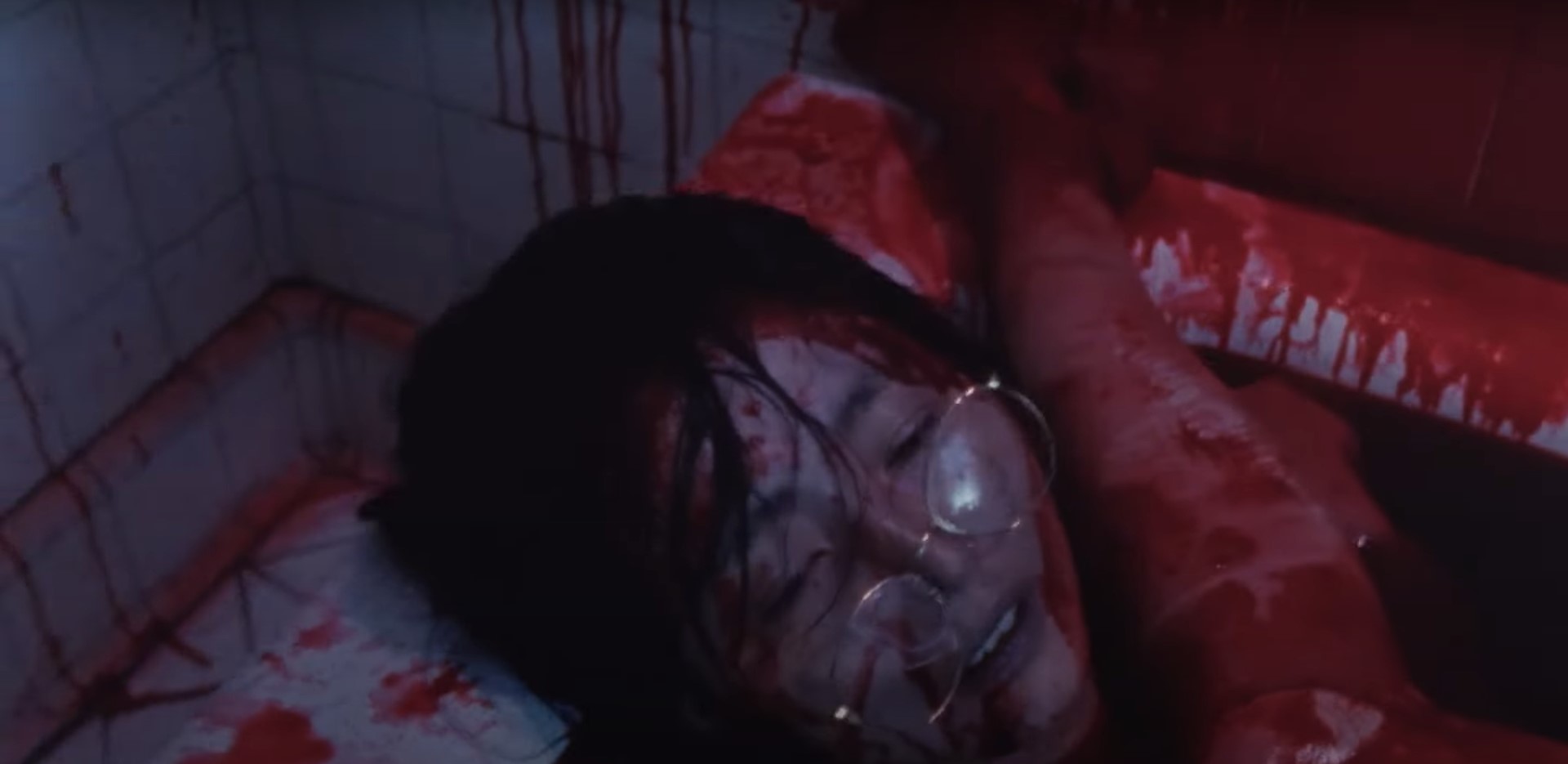
Bred out of a pedigree of pinkusploitations and a nation’s crisis of identity after the Second Great War, “Evil Dead Trap” is a greatly symbolized Japanese machination tale helmed by pink film director Toshiharu Ikeda (“Sex Hunter,” “Angel Guts:  Red Porno”) and penned by an equally historical pink film screenwriter and “Angel Guts” manga series creator Takashi Ishii (“Girl and the Wooden Horse Torture,” “Angel Guts” series).  Also known under its original Japanese title, “Shiryô no wana,” as well as, and my personal favorite, “Tokyo Snuff,” in Spain, “Evil Dead Trap’s” smorgasbord of rape, torture, and gory death naturally shocked viewers upon release and continues to do so as one of J-Horror’s branched out films that segued out from the brutal and depraved pink film inspired context into the new longstanding ghost genre we’ve seen over the last few decades with “Ringu” (“The Ring”) or “Ju-on” (“The Grudge”).  The production company Joy Pack Films, behind the 1980’s obscure Japan films, such as Genji Nakamura’s “Go For Broke” and Banmel Takahashi’s “Wolf,” houses the “Evil Dead Trap” from executive producer Tadao Masumizu.

If you recognize a couple cast members, or maybe just their naked bodies, then there’s something depraved about you!  With all kidding aside, but no seriously, if Rei (Hitomi Kobayashi) or Kondo (Masahiko Abe) look familiar, then you my friend are pink film aficionados as Kobayashi has starred in “Hard Petting” and “Young Girl Story” and Abe was in these pink film hits the “Pink Curtain” trilogy and “Female College Dorm Vs Nursing School Dormitory.”  If these faces didn’t touch you in any kind of sensual way, no worries, leading lady Miyuki Ono brings the star power.  The “Black Rain’s” Ono plays Nami, a go-getter television host/personality with her sights set on ramping up her late night show’s ratings, but also sucked into the posted snuff film’s darkest allure that’s personally calling her into to a precarious story lead.   Nami could also be a homage to one of screenwriter Takashi Ishii’s manga-inspired pink films entitled “Angel Guts: Nami” and the title might not be the only aspect paid honor to with that particular Nami written with a journalistic vocation drawn into and obsessed with a serial rapist’s attacks, making a striking parallel between the two stories that are nearly a decade apart. Eriko Nakagawa and Aya Katsurgagi fill out Nami’s investigating team as Rei and Mako. As a whole, the characters lack personality; Rei and Kondo tickle with relationship woes that are snuffed out before fruition, Rie’s timid innocence barely peaks through, and Nami and Mako’s thicker bond compared to the rest of the team is squashed to smithereens way before being suckled into note worthy tragedy. This late night show team has been reduced to slasher fodder and, honestly, I’m okay with that as we’re only here for the deadly traps. Noboru Mitani, Shinsuke Shimada, and Yûji Honma, as the mystery man looking for his brother, complete “Evil Dead Traps” casting.

“Evil Dead Trap” boasts a melting pot of inspirations, a mishmash of genres, and spins a nation’s split identity variation crowned in aberration. Diversely colorful neon-hazy lighting complimented by a Goblin-esque synth-rock soundtrack from Tomohiko Kira (“Shadow of the Wraith”), Toshiharu Ikeda shadows early Dario Argento inside and outside the popularity of the Italian giallo genre as the “Evil Dead Trap” murder-mystery horrors resemble more of a westernized slasher with a killer concealed behind a mask stalking a fringed, neglected compound in a conspicuous outfit. While the killer dons no hockey mask or snug in a mechanic’s jumpsuit, an equally domicile, yet more calculated, antagonist taunts more brains than brawns, especially with the severity of traps that seemingly float from out of nowhere. The fun is chiefly in the imagination of how the trap designs operate in the void of physics of a slasher fodder film so wipe clean the Jigsaw and the “Saw” films from your mind completely and relax to enjoy the outlandish kill scenes. Some of the kills are imperialistically inspired by Imperial Japan, that is, to blend the wartime nation’s atrocities with how the proud country wants to distance itself from that old-fashion, war-criminal, stoically perverse superstratum layer, but that’s were “Evil Dead Trap” pulls for most of the juicy parts as well as supplementing with Argento lighting, some, believe it or not, “Evil Dead” elements of that menacing presence bulldozing through the spiritual world, and an divergent climatic finale stuck to the narrative body that’s akin to pulling off the head of a doll and replacing it with T-Rex head’s. The uniformity quells under the pressure of how to end Nami’s and her attacker’s coda with pageantry weirdness that’s typical status quo Japanese cinema. Lots of symbolism, little modest explanation.

Get caught in “Evil Dead Trap” now back in print and on Blu-ray courtesy of Unearthed Films, distributed by MVD Visual, as part of the extreme label’s Unearthed Classics spine #5. The Blu-ray is presented in a matted 1.66:1 aspect ratio, a format rarely used in the States but widely used in other countries. Reverting to the 1.66:1 from Synapse’s 1.85:1 crop, Unearthed Films showcases more of the European feel, heightening that colorful vibrancy of the Argento-like schemes. Image quality has peaked on this transfer with natural grain with the 35mm stock, but details are not granularly sharp in an innate flaw of the time’s equipment and lighting. Shinichi Wakasa’s unobscured practical effects heed to the details and don’t necessary suffer the wrath of miniscule soft picture qualities when you’re impaling someone or birthing a slimy evil twin…you’ll see. Add in Ikeda’s wide range of shooting techniques, you’d think you’re watching Hitchcock or Raimi and the focus really lands there with the differently camera movements and techniques. The Japanese language single channel PCM audio fastens against that robust, vigorous quality to make “Evil Dead Trap’s” diverse range and depth that much more audibly striking, but there’s a good amount of silver lining in there being no damage albeit discernable, but not intrusive static to the audio files, dialogue is unobstructed and prominent, and the stellar synth-rock soundtrack nostalgically takes you back to when you first watched “Suspiria” or “Dawn of the Dead.” English subtitles are available but display with a few second delay which can be cumbersome if trying to keep up. Special features includes three commentaries that include director Toshiharu Ikeda and special effects supervisor Shinichi Wakasa, filmmaker Kurando Mitsutake (“Gun Woman”), and James Mudge of easternKicks. Plus, a Trappings of the Dead: Reflecting on the Japanese Cult Classic retrospect analysis from a Japanese film expert, Storyboards, Behind the scenes stills, promotional artwork, trailers, and a cardboard slipcover with phenomenal artwork. Highly recommend this atypical Japanese slasher, “Evil Dead Trap,” now on Blu-ray home video!

Own “Evil Dead Trap” on Blu-ray!

Evil Joins the Mile High Club! “Flight 7500” review!

output_mHp8FX
The transpacific Vista Pacific Flight 7500 from Los Angeles to Tokyo should have been a long, but relaxing overnight ten hour flight for many of the traveling passengers. After experiencing heart-stopping turbulence, the flight’s most mysterious passenger dies suddenly and violently over the pacific ocean. His death releases a string of strange apparition encounters with rest of the passengers and the crew that literally grapple at their internal fears. As the supernatural force slowly engulfs every inch of the plane, passengers disappear one-by-one and the key to possibly stopping the remorseless evil that has betaken them is to investigate into the unexpected death of the mysterious passenger and into his on-flight baggage.

Ju-on: The Grudge director Takashi Shimizu terrorizes the skies with his trademark macabre of supernatural entities. Shimizu’s “Fightly 7500” mixes Japanese culture with Hollywood cinematic values while also, literally, connecting L.A. with Tokyo with a flight over the pacific. Nothing is scarier than being trapped with no where to run from a menacing force on a pressurized plane that could fail on any given moment. The plane becomes a synonym for death. Shimizu exemplifies the given unforeseen horrors of a plane by adding in the exterior motive of a trembling, and extremely creepy, Shinigami death doll, which allows suddenly dispatched spirits to spook and terrorize. Sinister spirits are unable let go of their robbed mortality. Shimizu couldn’t help but include numerously his trademarks of limbs jutting out suddenly, reaching to grab a surprised victim to face their fate or slowly overcoming an obstacle such as in this film a hand reaching over the edge of a suitcase or springing out of a small airplane trash receptacle.
Screen shot 2016-05-05 at 6.35.22 PM
The cast is made up of relatively recognizable and more modern day horror vets with Amy Smart (“Mirrors”), Scout-Taylor Compton (“Halloween I & II” remakes), “True Blood’s” Ryan Kwanten, Leslie Bibb (The Midnight Meat Train), Rosita Espinosa herself from “The Walking Dead” Christian Serratos, and Jamie Chung (“Sorority Row” remake). Nicky Whelan, Jerry Ferrera, Alex Frost, Rick Kelly, and Johnathon Schaech round out the rest of the cast. The under the radar, non-mainstream cast play their roles respectively and accordingly to the script written by the serial B-horror writer Craig Rosenberg, building up their conflicting outer lives before they’re all crammed into a single jumbo jet liner. However, the instance of too many characters cause each of character’s development to fall flatlined due in part to the measly 80 minute runtime.
Screen shot 2016-05-05 at 6.34.55 PM
Like previous Shimizu ghost features, nothing is what it seems and “Flight 7500” is no exception to that fact, but in trying to build a monumental case to deliver a shock in the finale, various mishaps raise questions that don’t add up the surprising reveal. A couple brain scratching questions rise to the surface, stemming from the following: There were two different midair turbulent events in which both were significant, but the one the film specifies isn’t the one referenced back to the catalyst turn of events in dooming the passengers to a remaining ride of rampaging terror. Also, when the phantasmal mystery becomes resolved and the characters’ realize the understanding behind their strife, the plane’s onboard television transmit a newscast explaining the events that happened to “Flight 7500,” but the divulging is ridiculously forced and a road less traveled trick. The newscast exposition comes as if there isn’t any other means of communicating the characters’ situation, putting in the ground, six-feet under, the mood of the ah-ha moment.
Screen shot 2016-05-05 at 6.34.15 PM
The Lionsgate and CBS Films collaboration presents the 2014 PG-13 feature on DVD in a 16×9 widescreen format with a crisp, LFE heavy English 5.1 Dolby Digital audio. The experienced director of photography David Tattersall uses a vibrant, almost neon-like, dark blue tone that sets appropriately the coldness of thrilling spirits and the lifelessness of mechanical plane setting. The Tyler Bates soundtrack feels as inexpensive as the film’s modest budget which is disappointing from Bates whose had solids scores for Zack Snyder’s epic-extravaganza “300” and superhero-melodrama “Watchmen” while also doing John Carpenter justice in re-imagining the “Halloween” theme. “Flight 7500’s” “The Grudge” like effects stay the plotted course given by this director and embodies the airplane as a haunted house in the sky, soaring through living fog, jutting grey hands, and a presence that can’t be shaken. The overall experience doesn’t have a perfect touchdown landing on the runway, but at least the Takashi Shimizu airplane horror doesn’t crash and burn either, leaving viewers walking away safe and satisfied at their journey’s final destination.