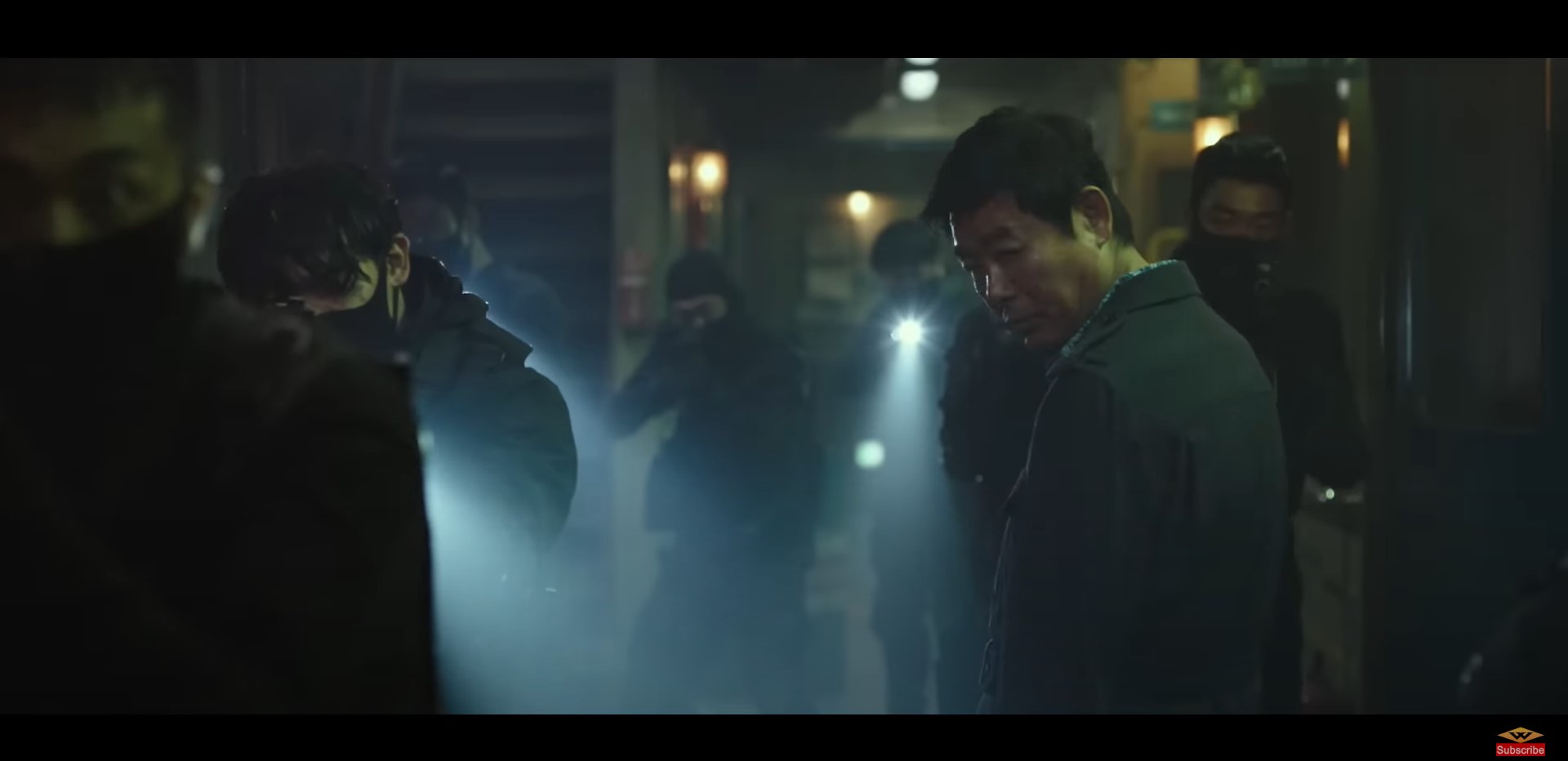
Digging Up the EVIL Disentombs the Past! “Exhuma” reviewed! (Well Go USA Entertainment / Blu-ray)

Open the Blu-ray Coffin on “Exhuma” Today!

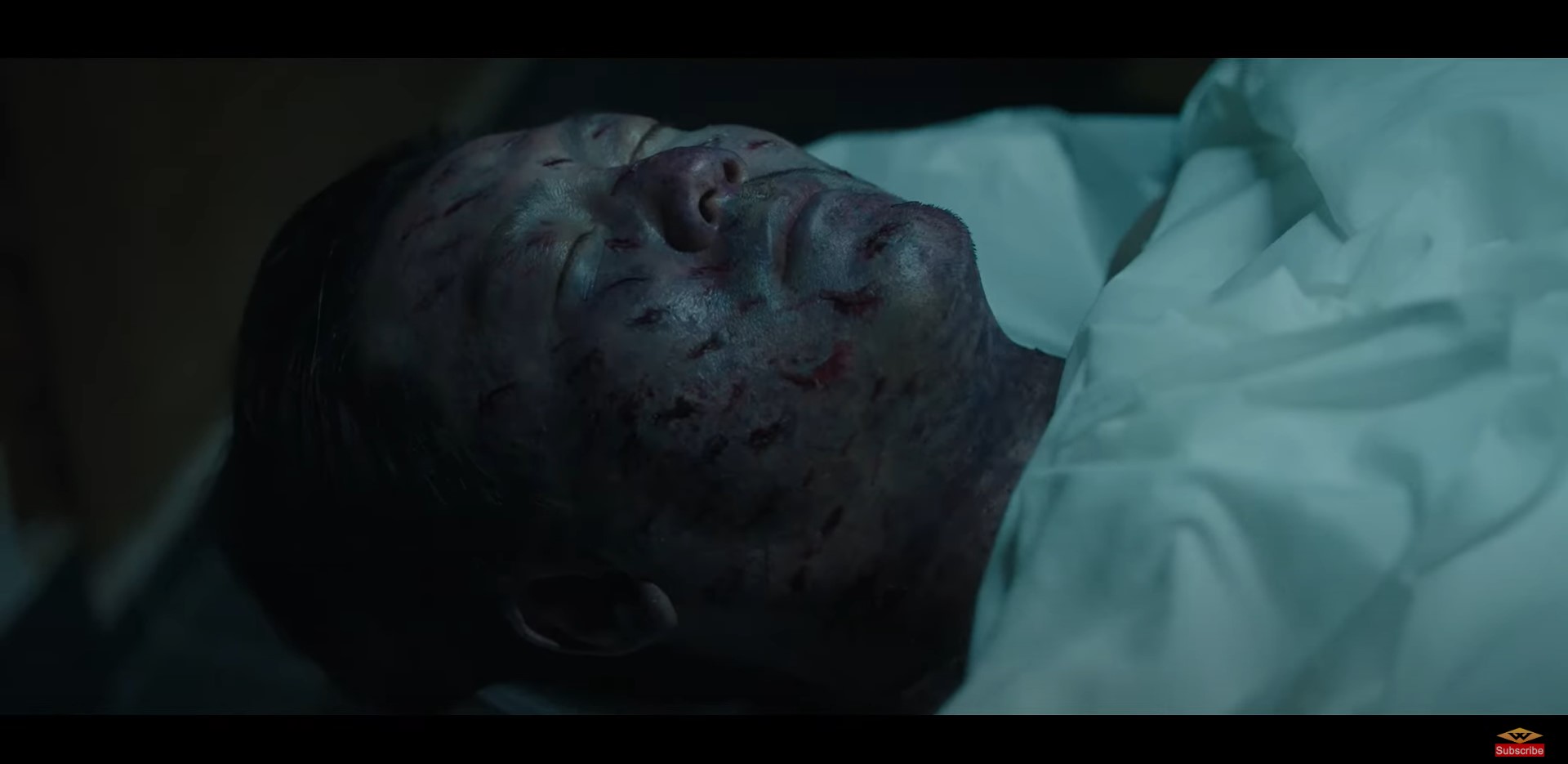
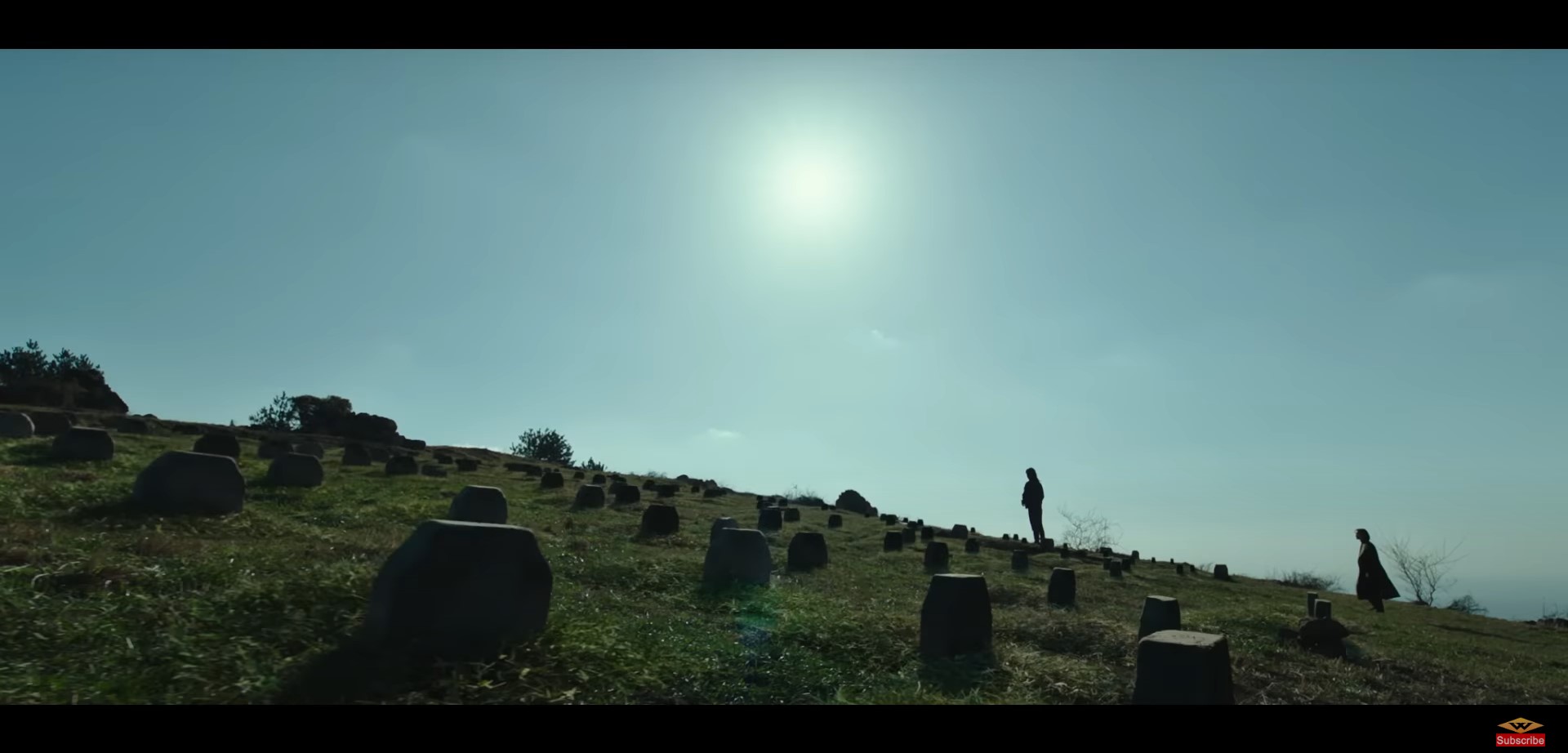
A shaman and her assistant recruit a geomancer and a mortician to investigate the case of an American newborn boy’s distressing grave calling that has also haunted every patriarch member of the family for generations.  The large paying job sends them to remote forest where the unmarked grave of the boy’s great, great grandfather lies beneath the dirt.  For the geomancer, all signs point to not disturbing the grave but the father’s eagerness to cure his son’s troubles and the shaman’s persistence for a big payday goes against the wise geomancer’s better judgement.  All is seemingly well after exhuming and transferring the ancestral coffin to be cremated at a nearby hospital the next day until a greedy, hospital official pries open the sealed casket, releasing a long-awaited evil, and digging up out of the same burial ground another malevolent and mysterious ancient force that reaches far beyond the borders of Korea. 

Here as of late, ItsBlogginEvil.com’s last three reviews have taken readers on a genre-diverse tour of Asia, from Japan with Yu Nakamoto’s meta-slashers in “Ikenie Man” and “Harawata Man,” to Hong Kong with David Chung’s affrayed police actioner “Royal Warriors,” to conclude in South Korea with the supernatural horror in the realm of cultural superstitions of P’ungsu, or geomancy, in Jang Jae-hyun’s latest written-and-directed thriller “Exhuma.”  The 2024 film follows a string of religious related, supernatural themes Jae-hyun has put out in his prior two directed projects with “The Priests” and “Svaha:  The Sixth Finger,” and like “Ikenie Man,” “Harawata Man,” and “Royal Warriors,” a portion of Jae-hyun’s films are touched by Japanese culture.  “Exhuma” amounts to the same standard of crisscrossing the two cultures with dangerous results with “Exhuma” digging up a past better left alone.  Park Hyeong Jin and Kwon Ji Yong (“Ghost Mansion”) produce the spiritually turbulent story under Showbox Entertaiment and Pinetown Productions. 

“Exhuma” encircles four culturally inclined characters that entrench themselves into an unorthodox means of exhuming a disturbed essence for what is essentially an exorcism variant to alleviate living perturbation beyond the grave.  The superstition here revolves around the land temperament.  Geomancers find good sites to lay people to rest, ones that exert extrasensory, or grave call, troubles onto family members that place upon them a grief, anxious, and other mentally uneasy state, and it’s the “Exhuma’s” Geomancer who has story predominance, shared only with the young and beautiful shaman woman with tagalongs who resemble more of assistants than coequals.  In an age-old and cautionary tale of wisdom and inexperience, Choi Min-sik (“Oldboy”) and Kim Go-eun (“Monster”) play the respective roles of the reluctant and experienced Geomancer Kim Sang-deok and the naïve eager yet gifted shaman Lee Hwa-rim.  Receiving character voice over monologue introductions and becoming the ultimate deciding factors of this new job is worth the pay, they completely overshadow the Shaman apprentice (Lee Do-hyun,) and the mortician (Yoo Hae-jin) who works with the Geomancer.  Pivotal as these support characters are to the story, not only buffers for the evil that beleaguers them but also as latched on friends and family of the isolating weird and strange subculture to most but normalized in Korea, the shaman apprentice and mortician definitely take a back seat to the more prominent players to the point where they almost seem contributorily worthless to the task.  As a whole, the dynamic works because the shaman and geomancer alone would not be sufficient for diabolical misadventures of an exhumation gone wrong and supplement only when necessary to aid the fight against an ancient evil twice over.  The cast fills out with Hong Seo-jun, Jeon Jin-ki, Kim Jae-Cheol, and Lee Jong-goo.

The wafting back and forth between Korean and Japanese culture, the fraternization of beliefs and superstitions, tells “Exhuma” differently than most hilltop haunts and horrors.  Themes of a haunted past and inexplicable guilt riddle holes through family lineage, resulting rancorous ripples in the form of mental illness, and devised as a story vehicle device of supernatural subverting trauma from the sins of the father.  In America, Shamanism and Geomancy don’t exist, especially in the history, but for Korea and its people, the country is rich in transcendent ritual and mythology that shapes society, even in their cinematic culture as regularly do we see period films of feudal Korea.  History also dictates “Exhuma’s” need to be a representation of purging the long Japanese occupation of Korea for nearly three and half decades from 1910 to 1945.  The occupation was a disruption in Korean way of life with oppression and war machinations stitched into Korean’s fabric, hence the Korean plot of land being very spoiled with vileness in “Exhuma’s” tale of one historically troubled family’s course to remove that uneasiness that has plagued and followed them to America.  Yet, the past is rooted deep and Jang Jae-hyun’s understands the difficulty of eradicating a sullied ancestry by dichotomizing his darkly toned, folklore valued, and occult twisted story into two parts with sublayers as deep as the dirt surrounding the coffin, or rather, coffins with a formidable presence created and conjured by malicious Japanese Yōkai and represented in one of the most iconic Japanese figures as remnants of an Imperial Japan occupation.

Lying in wait underneath the high-definition terra firma is Well Go USA Entertainment’s “Exhuma” on an AVC encoded, 1080p resolution, BD25, presented in a widescreen 1.78:1 aspect ratio. Accompanied by no information on the video vehicle, IMDB.com lists Jang Jae-hyun and cinematographer Lee Mo-gae shoot with an Arri Alexa Mini which offers the ease of use of multiple lenses, and that shows here with a vast stretch to encompass the Korean mountains into the frame as well as keeping tight on characters while keeping in focus the immediate surroundings. Details are sharp under a flinty tone of saturated grays and blacks with spot pops and glows of in-scene lighting and under the capacity’s umbrella, finer textural elements suffuse through the darkness and into the fold. Audio options include the original Korean language DTS-HD 5.1 and an English dub DTS-HD 5.1. Crystal clear dialogue runs through parallel with the visual counterpart and is well timed and potent, touching the side and back channels with the eerie callings of the grave and its inhabited spirits running rampant free while harnessing focus on the character on scene to create a ranging discarnate of deep, ominous sounds that stalk and haunt the principals. English translation paces well and appears to be translated grammatically and is error free. Well Go USA Entertainment releases are feature focused and this one too containing only a making of featurette in the bonus content along with the trailer. The interior of the traditional Blu-ray Amaray comes with a disc pressing of the four principal characters peering into a dug grave. The exterior has a two-tone, subsoil profile forming a face out of a grave with the four principals on the topsoil and the same image also graces the cardboard O-slip that has a pseudo-lenticular sheen. Authored to have a region A playback, “Exhuma” runs just over two hours long at 135 minutes and is not rated.

Last Rites: The addition of learning authentic, practiced rituals benefits “Exhuma’s” folklore frights tenfold and with neat, grounded performances and a superb blend of visual and practical effects, this original, supernatural thriller raises the Korean movie industry up a notch on the global scale.

Open the Blu-ray Coffin on “Exhuma” Today!

Your Train Has Come in on the Platform EVIL! “The Ghost Station” reviewed! (Well Go USA / Blu-ray)

Cho-Cho-Choose “The Ghost Station” on Blu-ray!

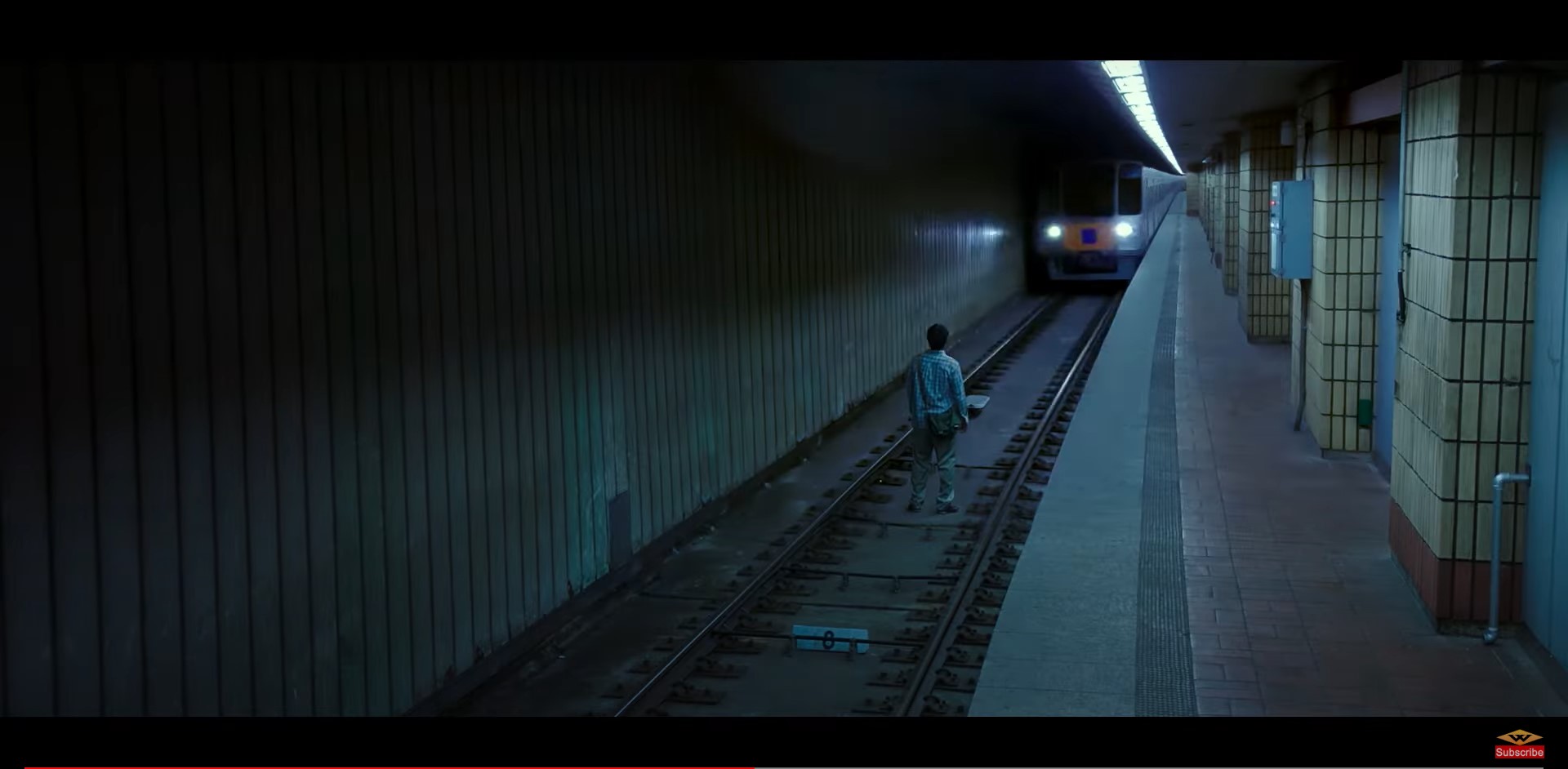
The Oksu train station’s past has incur many strange occurrences over the 17-years since it’s construction but more recently has seen a string of bizarre deaths. When a public service worker Woon-won witnesses a man’s death on the rails, he reluctantly informs friend Na-young, a struggler gossip journalist in need of a good, multi-click story after being hit with a lawsuit from her previous writeup and landing in hot water with the editor. As Na-young and Woon-won dig deeper to save Na-young’s begrudging career, they soon discover there’s more to this story than meets the eye as train station commuters and workers begin exhibiting scratches over their arms and neck. Those marked eventually die horribly. Bodies pile up as the story leads Na-young to the past of a razed orphanage and visions of grotesque children become the center of the young journalist’s investigation until her friend Woon-won displays the same marks. Now, they must solve the curse before it’s too late.

Based off the real Oksu Station operated by Seoul Metro in the Seongdong-gu district of South Korea and the short digital manhwa webtoon entitled “The Ghost Station of Oksu” from Horang’s Nightmare, the 2022 movie adaptation “The Ghost Station” waters the short story webtoon and grows a surrounding plot around the only adapted portion of a near empty Oksu platform except for one bench-sitting man and a stumbling lady who appears to be intoxicated.   The South Korean-Japanese co-produced picture is written-and-directed by So-young Lee (“Apt”) and Hiroshi Takahashi, the latter is the Japanese filmmaker behind the popular “Ringu” series which crosses orient borders by being the most important or influential in “The Ghost Station’s” inhabited identical J-horror elements.   Co-productions Mystery Picture and ZOA Films pull the train into “The Ghost Station,” produced by Yoo Jang-Hun and is theatrically distributed globally between Smile Entertainment and Contents Panda.

The webtoon is only a leaping point for the film version.  Not establishing any cited characters in the illustrated horror story, a whole new plot is built around and extended upon the webtoon narrative of the drunk platform woman that ends in a horrific accident for the young gawker on his phone texting ridicule commentary of her inebriation.  Story continues with a gossip Na-Young on the heels of being reprimanded for not receiving consent for her story of labeling her subject a him despite being very convincingly a woman in looks.  Bo-ra Kim plays the tenacious yet conflicted journalist, self-deprecating her career as clickbait material rather than honorable news reporting until the supernatural Oksu Station occurrences shed light on a bigger, corruptible conspiracy.   The “Ghost Mansion” actress sleeps through what should be a cold-clenching tale of sprog spirits and callous coverups that form a mighty-gripped grudge on those unlucky enough traipsing through the station yet doesn’t really affect her directly.  Oppositely, her friend Woon-wan epitomizes exaggerated fright within the performance of Jae Hyun Kim who can express translated fear in breath holding moments but outside of that Kim dons childish whimpering and yelling as if it’s a fad.  Together, the actors cancel out their characters flaws by embodying one investigative team as a public station worker and a journalist uncovering the truth and to save themselves the next victims of vicinity vindictive spirits.  “The Ghost Station’s” richer performances are yoked by stinted deuteragonists that actually drive the story but feel suspended in their integrated impact and relegated to being flashbacks or wedged into one particular location without a ton of exposition or background.  The dictatorial gossip editor (Kim Na-Yoon), the creepy alcoholic mortician (Kang-il Kim, “I Saw the Devil”), and the first victim’s externally anxious, psychosomatic dreaming sister (Shin So-yul, “Pyega”) are colorfully acted, complex in character, and plod the story along intrinsically, yet they’re underutilized hanging around the peripheral with only the sister edging out the other two with a more direct connection to the grudge or curse. 

Without unwrapping “The Ghost Station” before watching the film, the story progresses along without any cause for concern with a supernatural sleuth story of a horrible train accident causing a domino effect of curses.  Deeper into the feature, a water well becomes a focal object, then abnormal faces of ghastly children appear, and the principals are using keywords, like grudge, grudge this, grudge that, and where have we heard of this before?  With Hiroshi Takahashi “Ringu” films dappled intermittently with “Ju-on” insignias that turn the initially promising K-Horror into a full blown J-Horror in repeated attire.  While directors So-young Lee and Hiroshi Takahashi are able to garner a handful of scares through technique, makeup effects, and morose aesthetics and dolor, “The Ghost Station” has a creative deficiency as there are just too many coincidental “Ringu” and “Ju-on” suspense devices to craft an original curse tale despite the positivity just oozing out from the idea of two nations blending their respective horror niches into one project that dissects the integrity of the individual.  Na-young’s ethical dilemma as a tabloid journalist carries weight and is tiptoed around when her editor urges for better clickbait material, Woon-won struggles with self-preservation and a friendship bond, and other minor examples add up to the summation of choice.  Many made bad choices that resulted in an orphanage full of pissed off preadolescents using their spook powers for premeditated parricide.   

Walk down to the platform and wait for your train to come into “The Ghost Station,” servicing now on Blu-ray home video from Well Go USA Entertainment.  The AVC encoded, 1080p High-Definition, BD25 is presented in a widescreen 2.39:1 aspect ratio.  What the release showcases, as far as image quality, is a more than adequate transfer of the substantially tenebrous picture that renders shadows without analogous banding or splotching.  The low-light grading offers a polished appearance with deep, rich shadows to provide a natural ominous atmosphere and partially shroud characters without compromising distinctive detailing.  The Korean language audio options include a DTS-HD Master Audio 5.1 and a Dolby Digital 2.0 Stereo track. A more than viable digital audio recording that clear and comprehensible with formidable sound design for quotidian scare devices that abled to still produce fear, using the back and side channels to flesh out the scare factor in a fine-tuned direction. Dialogue’s renders nicely without any technical or interfering barriers. English subtitles are optionally available, come error free, and pace well with the rapid Korean dialect. Like many of the Well Go USA titles, not a ton of bonus features are inlaid and the same is said with “The Ghost Station” that only holds trailers for other Well Go USA Entertainment films. In a traditional Amary Blu-ray case, the front cover pays homage to the Horang webtoon. Inside, an advert insert is included with other Well Go USA films from the company’s Hi-Yah! collection. The not rated feature has an 80-minute runtime and has a region A playback only. ”The Ghost Station” undertakes a mesh of identity between K-Horror and J-Horror that sought to pull up to the platform as a singular, supernatural, scare package and, in the end, the film pulls in as a train of consumable terror.

Cho-Cho-Choose “The Ghost Station” on Blu-ray!

Beckerland Fosters Deranged EVIL Upon POWs! “Opposing Force” reviewed! (Scorpion Releasing / Blu-ray)

“Opposing Foce” now in Control of Blu-ray Home Video!  

Air Force Lieutenant Casey has initiative, determination, and something to prove being the first woman to be approved for a special and notorious evasion and escape course on a remote U.S. base Philippine island.  The course simulates downed Air Force pilots behind enemy lines where they either have to evade capture or escape as POWs without divulging U.S. secrets.  The simulating is meant to break down the individual physically and mentally through psychological and physical torture that nearly blurs the regulation guidelines of the United States military, but has been proven to be an effective training to withstand the most brutal of POW conditions despite the course’s infamous reputation.  Casey joins the ranks of participants, a young group of eager male officers and one experienced Major Logan looking to requalifying for action, and are dropped into the simulated enemy combat zone controlled by General Becker, a calculating commanding officer who has succumb to his opposing force role.  Becker’s unconventional and illegal tactics exploit Casey’s gender in the name of training her, but his knowingly criminal activity puts the rest of the trainees in danger and it’s up to the Logan and Casey to stop him and his opposing force in an all hell breaks loose war.

POW exploitation has been missing in modern day cinema.  A subgenre that is a dark, degrading note of unscrupulous and vengeful action has been exclusive to the 1980s for far too long, barely being reprised throughout the proceeding decades.  Not to be restricted to the popularization films of Chuck Norris of the “Missing in Action” franchise or of Sylvester Stallone’s Rambo II and III, these camp from Hell films run the money and production gamut, pulling inspiration on conflict wars before the decade, such as Korea, Cambodia, and even as far as World War II.  For mainstream, the jungle entices with harrowing heroism that glorifies determined, strong-arming patriotism while showcasing America’s enemies as Geneva Convention ignoring villains who deserve every ounce of blow’em up, shoot’em up at the hands of escaped captees or an elite team, or a one-man, rescue mission.  Nazis saw more action in the low-budget Eurotrash market with sexploitative women-in-prison camps ran by the sleazy, inhumane, and experimenting Gestapo mostly.  American filmmaker Eric Karson, director of Jean-Claude Van Damme actioners “Black Eagle” and Lionheart,” moves away from the Muscles from Brussels and into Tom Skerritt’s mustache behind bamboo bars in the 1986, American-versus-America military-thriller “Opposing Force.”  Penned by Linda J. Cowgill, under the pen name of Gil Cowan in what’s likely a name change spurred by sexism in the industry, originally titled the script as “Hell Camp” but took the name “Opposing Force” based off the antagonistic enemy labeled as OPFOR right on their chest.  “Opposing Force” is coproduced by “Skinner” and “Final Mission” producer Tamar E. Glaser and “Sometimes They Come Back… for More” producer Daniel Zelik Bert under the theatrical distributors of Orion Pictures. 

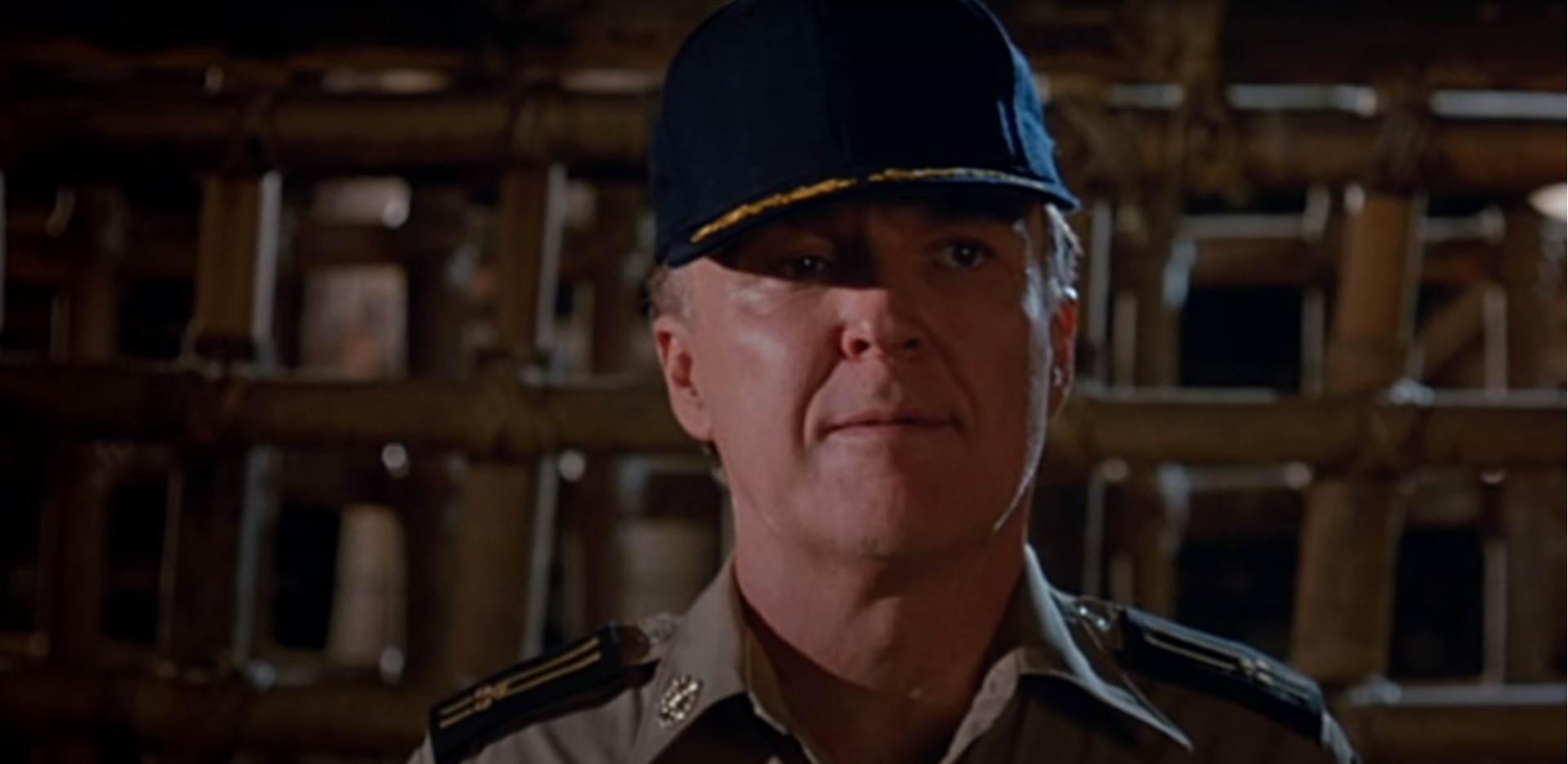
We already know Tom Skerritt’s world-renowned mustache is in the movie and is the star of the show, but Tom Skerritt is in there as well as the man behind the stache as the seasoned boot Major Logan.  The “Alien” and “Contact” actor become the patriarchal figure to a bunch of figurative sons in younger course participants and overprotective of one figurative daughter in Lt. Casey in a wildly uncharacteristic situation brazenly exploited in unconventional mainstream means in the uncomfortable skin of Lisa Eichhorn (“Deus”).  What Lt. Casey goes through is more on familiar ground with the low-budget sleaze of women-in-prison grindhouse and while it’s certainly jarring and unexpected, It’s a welcoming chance for an upper tiered independent film with big names attached.  A couple of the other big names attached are Anthony Zerbe (“The Omega Man”) and Richard Roundtree (“Shaft”) as Commander Becker and his staff sergeant Stafford.  Becker and Logan mirror each other as veterans that have graded into either being corrupted by power or to be righteous in doing what’s right.  Yet, but Zerbe and Skerritt play into what the experienced actors know best, their trademark stoicism.  Tack on Eichhorn’s equally endurable fortitude and a three way standoff erects a monumental solemn stalemate of relatively the same attitudes until the last straw breaks the proverbial camel’s back and war erupts.  Roundtree at least develops Stafford’s internal conflict when the job bites at his conscious, becoming the connection needing convincing of Becker’s crossing over to the darker side of power like a Sithlord in public face disguise.  The narrative physicality aspects piece together a grueling atmosphere that each actor undertakes appropriately by their determined military rank, but as eloquently as Lt. Casey puts it to the aging Major Logan, “You got a limp and I got tits; these aren’t great things ot have in the military,” sets up themselves as misfits-to-heroes that were being crapped on all their careers for their antithetical military image.  “Opposing Force” rounds out the cast with a bunch of moaning male air force participants in the middle of it all with performances from Paul Joynt (“Echos”), Robert Wightman (“Impulse”), George Cheung (“Rambo:  First Blood Part II”), and John Considine (“Circle of Power”).

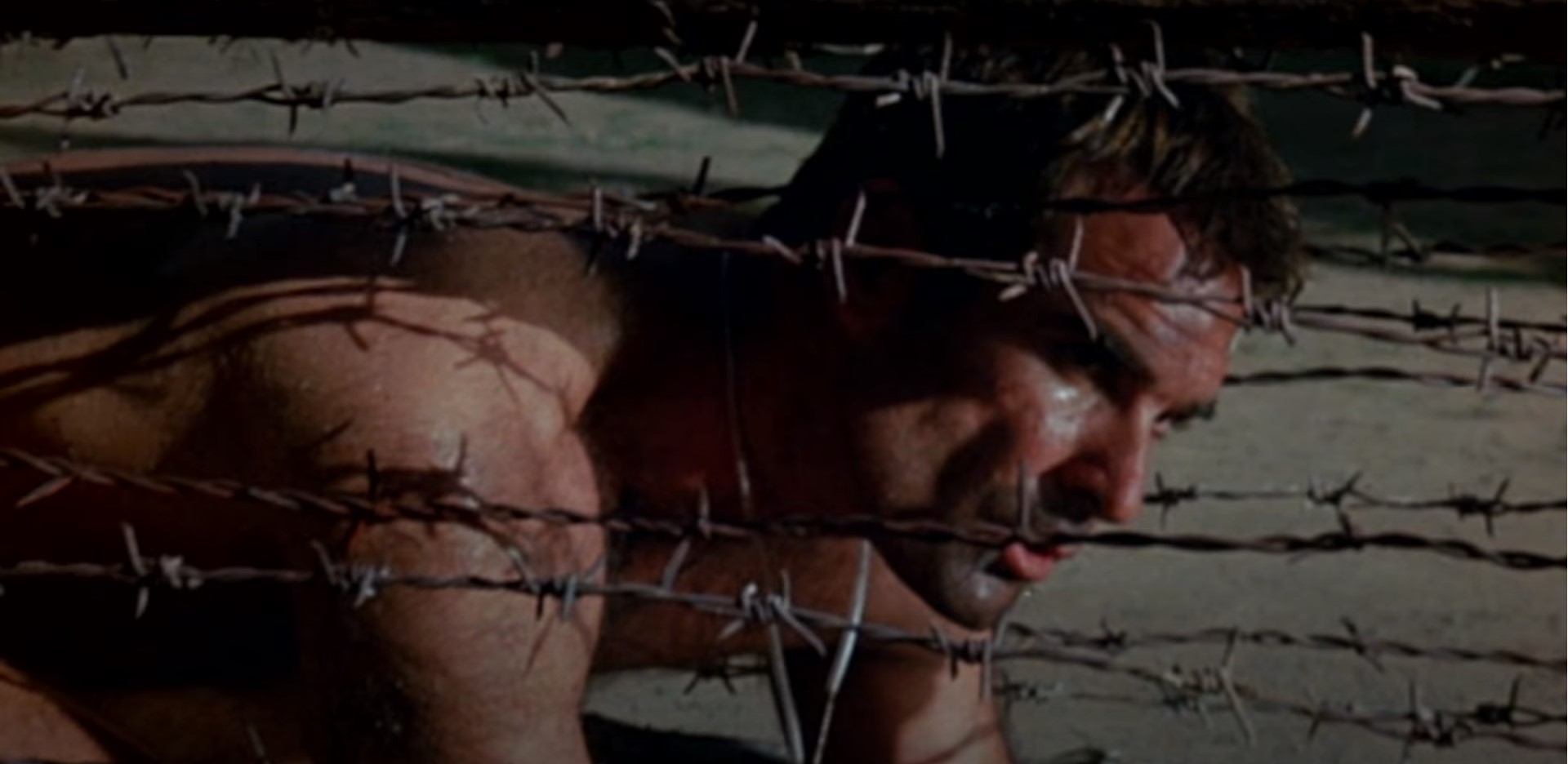
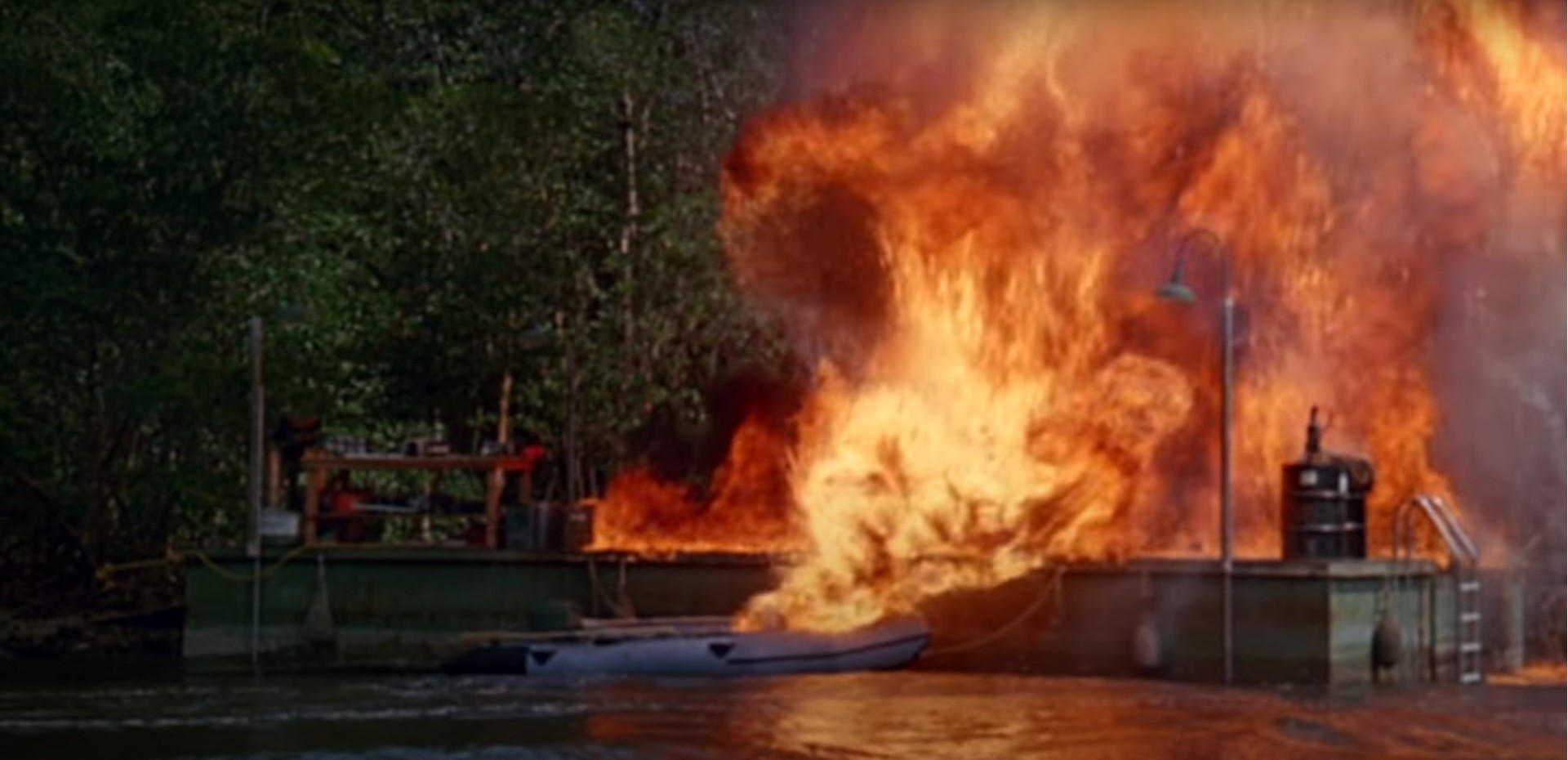
Influenced by the U.S. Military’s real life training program known as S.E.R.E. (Survival, Evasion, Resistance, and Escape.), Cowgill uses the program to formulate “Opposing Force’s” principle groundwork in setting up the jungle POW scenario on a remote island that goes through the motions of no chance of a rescue and aid of any kind.  Participants are throw into a survivalist gauntlet that turns surprisingly rough aggressive when physical and mental tortures are instilled upon those thinking the training would be a walk in the park.  This particular training simulation is unique to the OPFOR team with an aging officer looking to requalify for combat and the first woman to ever be accepted into the course due to a loophole, throwing new challenges to an embedded far too long commander who can easily break a man’s spirit but tiptoes around the possibilities of what to do with a woman until his insidious power and authority blurs right from wrong and takes the torturous tactics and enhanced interrogation techniques too far, beyond the limits of what’s necessary and beyond the limits of human decency all in the name of reinforce training.  The grueling torture and bush action is palpable enough to contrast the naked, sweaty, and battered bodies with the M1A1 bursts and munition explosions galore.  Only one aspect adds an out of place measure in the narrative and that is of the rest of the POW contingent and their seemingly wishy-washy decision on whether to escape, stay put, or join in the fight against Becker and his live-round shooting island battalion; the group disperses into the jungle only to fade from the climatic third act Major Logan, Lt. Casey, and Botts defending their lives against a treacherous throng and their wicked commanding warden.  Their disappearance doesn’t allow for closure for the acts against them during the entire ordeal and becomes a fizzling distraction.  Another distraction is the severely cut ending that freeze frames on Eichhorn’s final act with her voiceover exposition post-battle in what feels sorely rushed to complete.  The Blu-ray bonus features has an extended ending that’s more completist approach in wrapping up the story sutibly.  For a POW film, “Opposing Force” is an archetype of its originating decade that sates the subgenre’s need to pit an overreaching and ruthless camp head against the resiliency and determinate of the America fighting spirit. 

A re-release from the 2019 Scorpion Releasing Blu-ray comes “Opposing Force” reprising a presence on online retail shelves.  The AVC encoded, high-definition, BD25 is presented in 1080p resolution with a widescreen 1.78:1 aspect ratio.  Identical to the earlier Blu-ray 4 years prior, the image quality is freshened up quite a bit from the likely 35 mm print source into a detail-laden HD transfer that offers a lush jungle-scape to be in juxtaposition against the camp from within its center, a large guerilla compound bathed in browns and greens make for good POW-themed pageantry.  Skin tones and individual features flesh out nicely, adding detailed levels of salubrious status over the course of the day-to-day detainment. The English language DTS-HD master audio 2.0 leans toward a softer dialogue mix that, for the majority, is discernible despite favoring “Opposing Force’s” selling points: large explosions, pepper potshots, and militant vehicles running rampant around and above the island terrain. Dialogue’s clear enough to emerge without much hinderance with enough depth to provide a sense of position and the audio layer is remarkably clean with no hissing, popping, or static. English subtitles are an available option. Special features include an audio commentary with director Eric Karson, the trailer, and that extended ending I mentioned, and noted preferred, earlier in the review. The traditional Blu-ray snapper casing includes a rendition of the alternate titled “Hell Camp” poster with a more titillating illustrative lookalike of Lt. Casey in shredded rags and ride-up shorts with hands tied above her head and looking over her shoulder. The warm yellow with a hint of white stirs in an element of jungle heat ramped up by also providing the cage accommodations in the background to let it be known you’re about to watch an exploitation POW film. Locked on a region A playback, “Opposing Force” has a runtime of 98 minutes and is rated R. Eric Karson manages to find a place amongst a serrating subgenre that takes an ostentatious, yet not entirely fictious look, at prisoners of war with his “Opposing Force” actioner that goes to convey that not every unethical and malintent camp leader is a foreigner; evil can also be domestically grown.

“Opposing Foce” now in Control of Blu-ray Home Video!  

EVIL Embarks with Cons and Cops in “Project Wolf Hunting” reviewed! (Well Go USA Entertainment / Blu-ray)

“Project Wolf Hunting” on Blu-ray and Available for Purchase by Clicking the Cover Art!

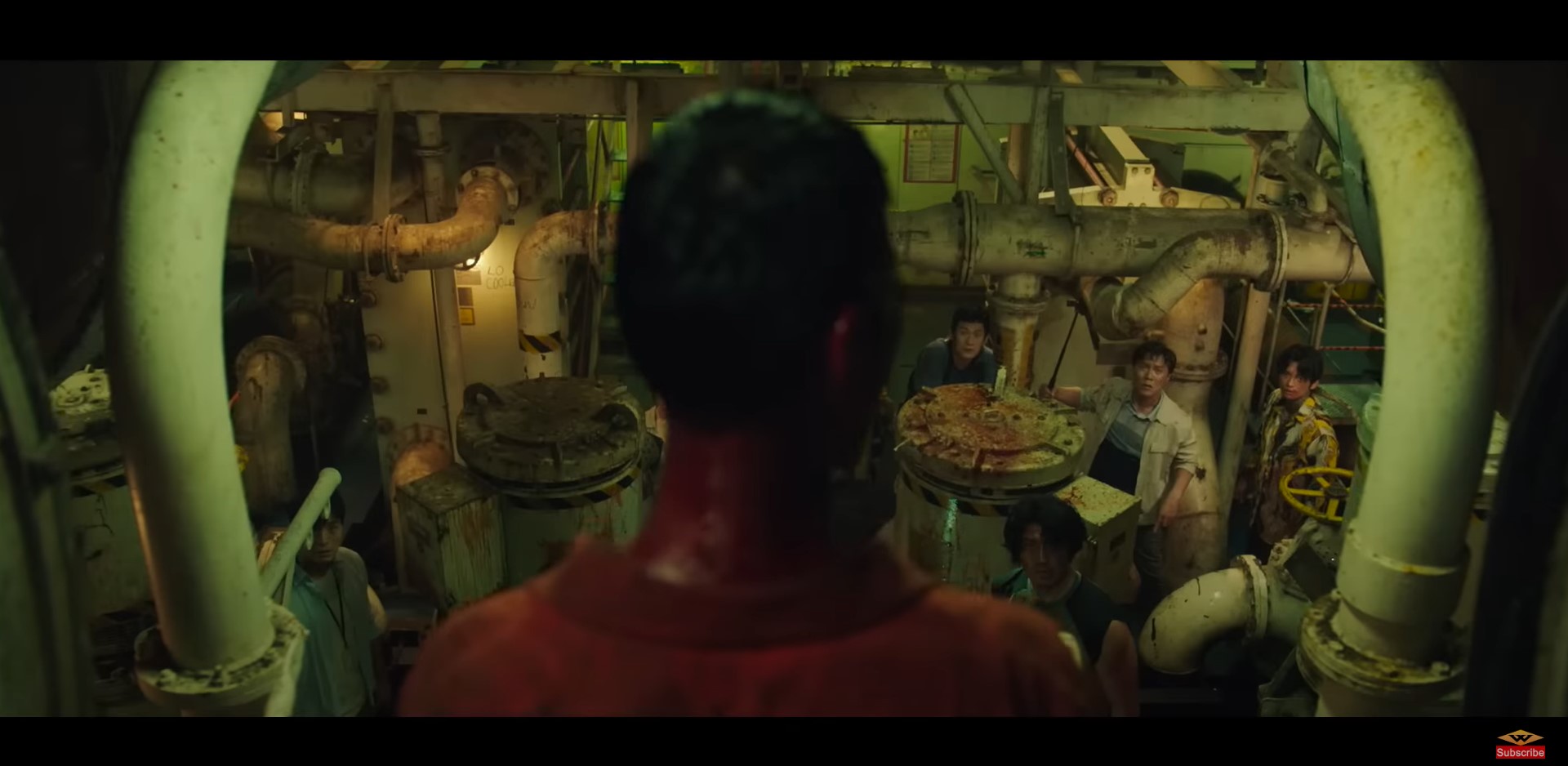
After a disastrous Philippines-to-Korea extradition processing of criminals that resulted in an airport suicidal bombing with multiple casualties, the procedure to transport dangerous criminals moves to a decommissioned Cargo ship known as the Frontier Titan.  The 3-day journey is expected to be a safer option to extradite Korea’s most wanted as highly trained and experienced detective accompany the criminals as armed escorts.  Every contingent has been covered except for what lies in the belly of the cargo ship.  Hidden in the bowel, underneath the engine room, a top secret biological weapon, involving an ancient wartime prisoner’s chromosomes commingled with the agility, strength, and prowess of a wolf, being transported across the sea.  When the criminals plan an elaborate seizing of the ship, the monstrous hybrid man known as Alpha is also inadvertently released and kills his caretakers, leaving him free to roam the ship and engage the good and bad guys alike as fair game to hunt.

Only a handful of times in my life have I’ve seen a film with so much blood.  “Project Wolf Hunting” is one of the bloodiest, most violent, Korean films to come out of 2022.  The hybrid action-horror with a genetically hybrid superhuman is the latest effort from writer-director Hongsun Kim, sticking with the horror genre after his positive reviewed 2019 evil spirit family drama “Byeonshin.”  The title, in reference to the operation of transporting Alpha through to East China Sea, into the Korean Strait, and dock at Busan, is the international marketing title for the Korean name “Neugdaesanyang” and is a film I can confidently and merely describe as “Predator” meets “Con Air” on a cargo ship.  Seasoned civic officers of the law, hardened criminals with sordid pasts, a special op consisted of superhuman soldiers are up against the odds to stop the Alpha, the original specimen.  Film between the ports of Busan, Korea and Manilla, Philippines, “Project Wolf Hunting” is the Korean venture production from Content G with Gu Seaon-mok serving as producer and is presented theatrical by The Contents On in association with CJ CGV.

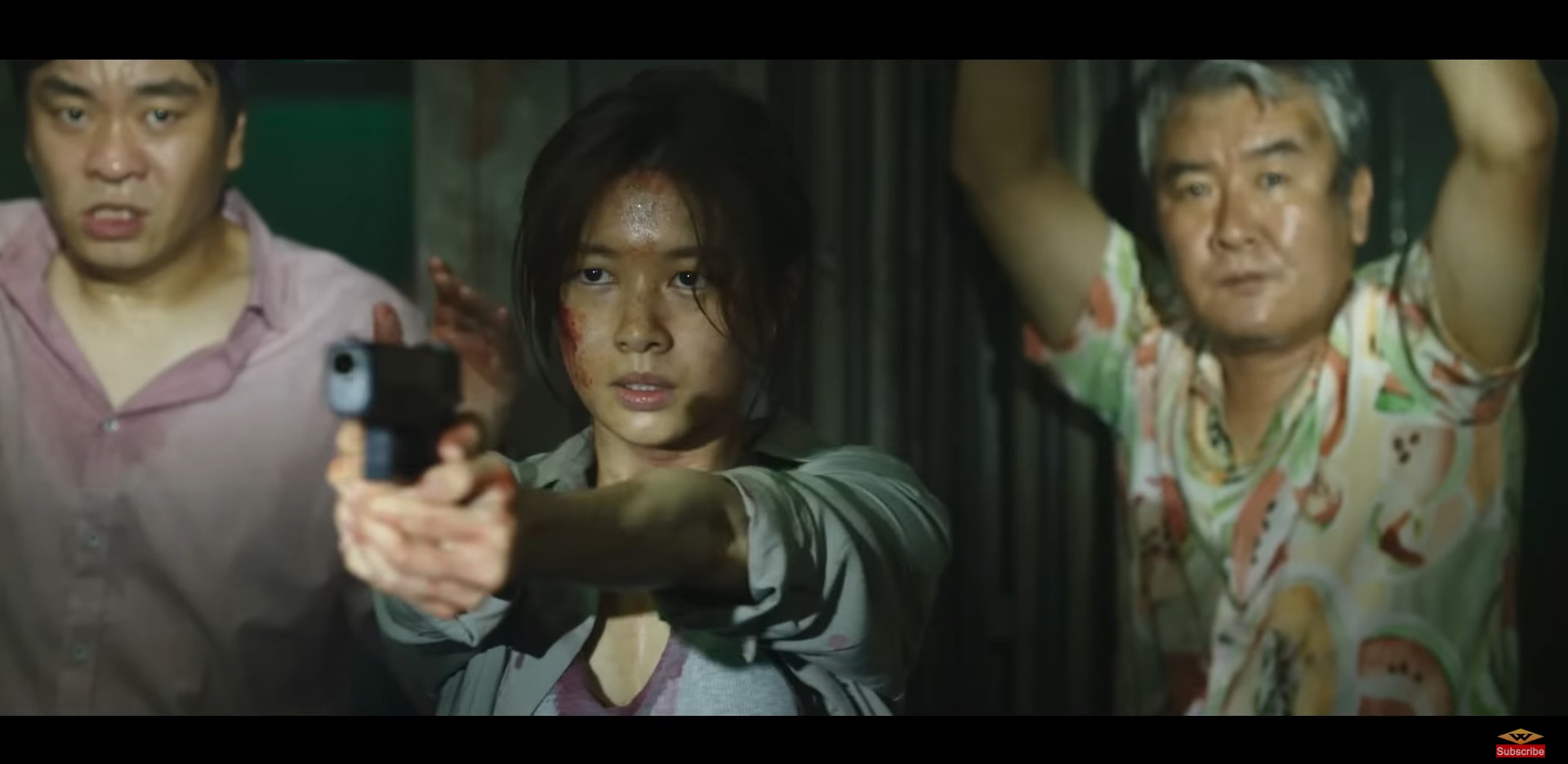
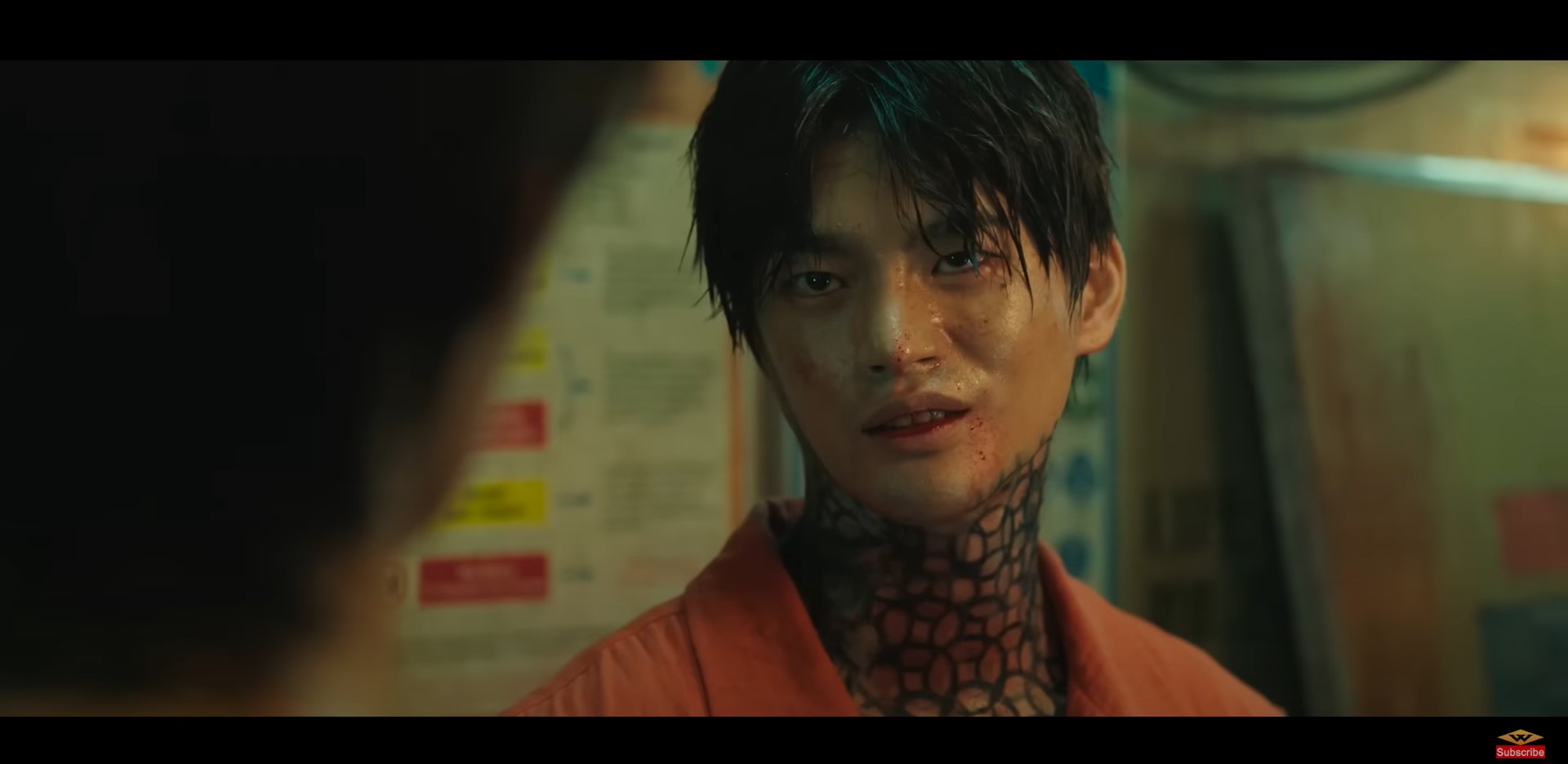
What’s interesting about Korean cinema is what you know what you’re getting with the characters who are greatly upfront, unpretentious, and full of attitude.  There are not a lot of false veneers with the cast of characters, something that can be said with most films spawned out from the Asia Pacific industry.  I might dangerously be overgeneralizing but from my viewings and writeups, but I’m fairly locked into my statement with confidence as “Project Wolf Hunting” paints a stark contrast of who’s who from the beginning without casting any doubt or even suspicion. Even with the some of the ship’s crew, Hongsun Kim clearly delineates their allegiances despite not coming right out with it initially and the cast immerse themselves into the appointed role with well-designed idiosyncrasies that seeing them out of character can be a bit of shock. Park Jong-doo perhaps is the most archetypical with Seo In-Guk, in his first feature performance, becoming the despot amongst the thieves. Guk transforms his appearance with full body tattoos to denote mafioso status and even takes that extra step with a few naked from the rear scenes to establish a conspicuous nonchalance for what anyone else has to think, say, or do. When many of the insurrectionary inmates take the ship, Jong-doo’s counterpart, Lee Do-il, isn’t so easily intimidated but is reserved and quiet in his strong posture. Dong-Yoon Jang offers a less violent option only to bide time for what’s ahead of them, the Alpha. Gwi-hwa Choi, who been hot right now in Korean cinema with having roles in “Train to Busan” and “The Wailing,” is the extraordinary and mysterious monster prowling to kill every single person on and off the ship’s manifest. With Alpha’s eyes stapled shut, maggots feeding off the festering tissue inside his mouth, and has a near spartan approach to liquidating, Choi completely transforms into the silent hunter with unstoppable and wild violent mode, but Alpha is only a name and the implicit meaning of the name does change hands throughout the course of the film that makes “Project Wolf Hunting” all that more the interesting. Female principals are not meek, weak, or helpless in his all-out brawl in a confined space with Jung So-Min as an eager cop with acumen and Jang Young-Nam as the dangerously uncouth companion to one of the mafia’s leadership and the fact that none of them are a love interest, or become even remotely involved romantically, sexually, or even innocently, speaks volumes on “Project Wolf Hunt’s” no room for romance rampage. The large cast lends to a high body and the acting pool rounds out with Dong-il Sung (“Byeonshin”), Park Ho-San (“The Call”), Chang-Seok Ko (“Lady Vengeance”), Lee Sung-wook (“Spiritwalker”), Jung Moon-sung (“The Cursed”), and Son Jong-hak (“Thirst”).

There’s so much blood. That statement was worth repeating. “Project Wolf Hunt” is reminiscent of the Japanese samurai films of yore or the absurd comedy gore film with geyser sprays of red with every blow.  Literally, tons of fake blood was used to coat the sets crimson in an impressive feat of movie magic carnage.  I’m also doubly impressed how the special effects team was able to achieve multiple sprays from out of the nostril cavities in what might seems small, insignificant, and simple looks amazingly palpable on screen that stopping to think about the difficulty in how that effect can be accomplished can be easily overlooked.  The blood sprays are only a fraction of the wide variety of violence and gore put on display and we’re treated to an abundance of slaughter and a superb, choreographed melee in each and every tightly confined skirmish that makes “Project Wolf Hunting” captivatingly adrenalized.  Production design creates the illusion of a cargo ship without question and the visuals, though soft in some scenes, sell the nautical voyage through clear skies and a storm rough patch.  Much of a part of “Project Wolf Hunting’s” success is cinematographer Ju-Hwan Yun’s framing.  The example I like to use is the post-elevator attack when the hoisting cord snaps that sends the lift plummeting down the chute with Alpha inside.  Yun then sends the shot from the top down the chute to the exposed opening of a mangled lift to see Alpha turn his eye-stapled face upward toward the narrowly escaping prey.  The shot gets the heart pumping and relays, in one sequence, the unkillable nature of Alpha.  If “Project Wolf Hunting” isn’t already thrilling enough with the brimming, cutthroat tensions spilling onto every deck between the police detectives and the criminals in their custody, the evolutionary plot twist that welds the age-old divide between the two frictions is a bloodbath you don’t see coming and one you’ll enjoy experiencing. 

Action, horror, human experimentations, and with a complemental nod to the hard-hitting Asian cop films of 90’s, “Project Wolf Hunting” has teeth and stamina for 123 minutes of knockaround bloodshed. A winning Blu-ray release for Well Go USA Entertainment, the film is presented in a widescreen 2.39:1 aspect ratio. The AVC encoded BD50 offers a topnotch 1080p resolution that translates well to the big screen with granular detail in the interior and exterior of the cargo ship set and displays the stylistic choice of a warm color scheme consisting of prominently yellows and greens, providing less shadowy, higher contrast areas to suggest there is nowhere survivors can hide. Though quite a bit of CGI throughout the film, the end result doesn’t appear half bad with more fleshed out textures built into the renders to make them less gummy-looking. The release offers four audio options – a Korean and dub English 5.1 DTS-HD Master Audio and a Korean and dub English 2.0 stereo. Obviously, you receive more bang for your buck with the amped up surround sound option and don’t have to contend with dubbing if you go the original Korean language route. A high velocity range sounds strong through the rear channels with gunshots, the ship’s indiscreet hum, and the overall ricochets, clinks, and skirmish shuffles submerge an enveloping blanket of directional sounds right in your ears. The Korean dialogue is clean, clear, and vociferous in Korean inflections. English subtitles are optional and available well synched and error-free. Like status quo with other Well Go USA Entertainment releases, bonus features are an ornately produced, one-sided interview vignettes with the cast and crew and of the behind-the-scenes making of the film as well as a making of Alpha which was more actor Gwi-hwa Choi’s excitement about this different kind of role per his usual. The trailer is also available in the bonus content. Physical features include a traditional Blu-ray snapper with latch with the grisly, dirty face of Alpha blended into a black background. The film is unrated and is coded region A for disc playback. Despite minor convoluted expounding, “Project Wolf Hunting” kept the attention at high alert with a high body count, an indomitable super soldier, and a cargo ship load of blood.

“Project Wolf Hunting” on Blu-ray and Available for Purchase by Clicking the Cover Art!

EVIL Comes in Pairs. “The Witch: Part 2 – The Other One” reviewed! (Well Go USA / Blu-ray)

“The Witch:  Part 2 – The Other One” – A Whole New Blu-ray Tale of Intensity.

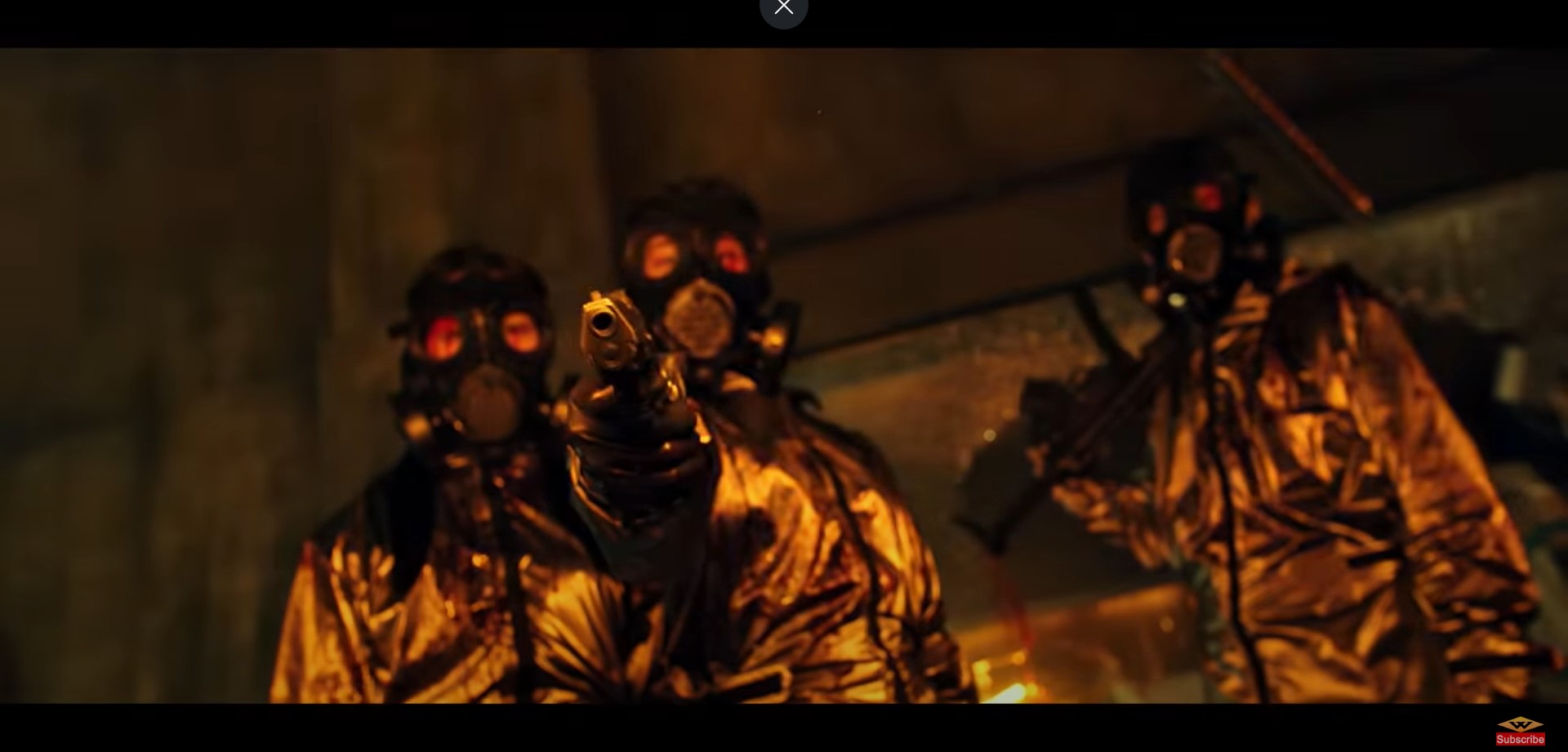
A top-secret lab, known as the Ark 1 of Jeju Island where The Witch project is being conducted, is raided by ruthless mercenaries armed to the teeth with weapons and an enhanced superpowers resulting from The Witch project.  Eradicating every living person in the tundra camouflaged facility, one teenage girl emerges bloody from the carnage and wanders off into a neighboring snow-covered forest.  She’s rescued by Kyung-hee and her brother Dae-gil who inherited the land from their recently killed father.  The siblings are in a contentious situation of their own with a gangster uncle, Yong-du, who will stop at nothing to get his hands on the property, especially when he took care of the previous landowner.  With her Witch powers, the girl helps her kind rescuers to fend off a Yong-du shakedown, but the problems only begin there as the Ark 1 mercenaries are tracking down the girl’s whereabouts to finish what they started and a tactical team, enhanced with Witch powers too, has also been dispatched to eliminate the girl as an unpredictable global threat.  When all forces collide, the Earth will shake in a bloodbath of superpowers. 

A direct, but not an entirely direct sequel to the 2018 high-action Korean thriller “The Witch:  Part I – The Subversion,” writer-director Park Hoon-jung (screenwriter of “I Saw the Devil”) returns with a follows up the long awaited sequel “The Witch:  Part 2 – The Other One” that promises to be just as excitingly unrestrained with more players in the superpower game culminating to an explosive head that plays out like a hard-hitting Guy Richie storyline of intersecting plot threads except without wisecracking Englishmen.  The sequel follows another, and a handful of others in sperate, funneling threads, like the first installment’s principal character Koo Ja-yoon with insurmountable supernatural abilities except now everyone and their brother can “Twilight”-jump and Wolverine-heal, making the field even-steven to a known extent up until the grand finale.  Park returns as producer as well as newcomer Hyun-woo Kim, producer of “I Saw the Devil” and “Snowpiercer,” with Next Entertainment World and Goldmoon Films serving as production companies.

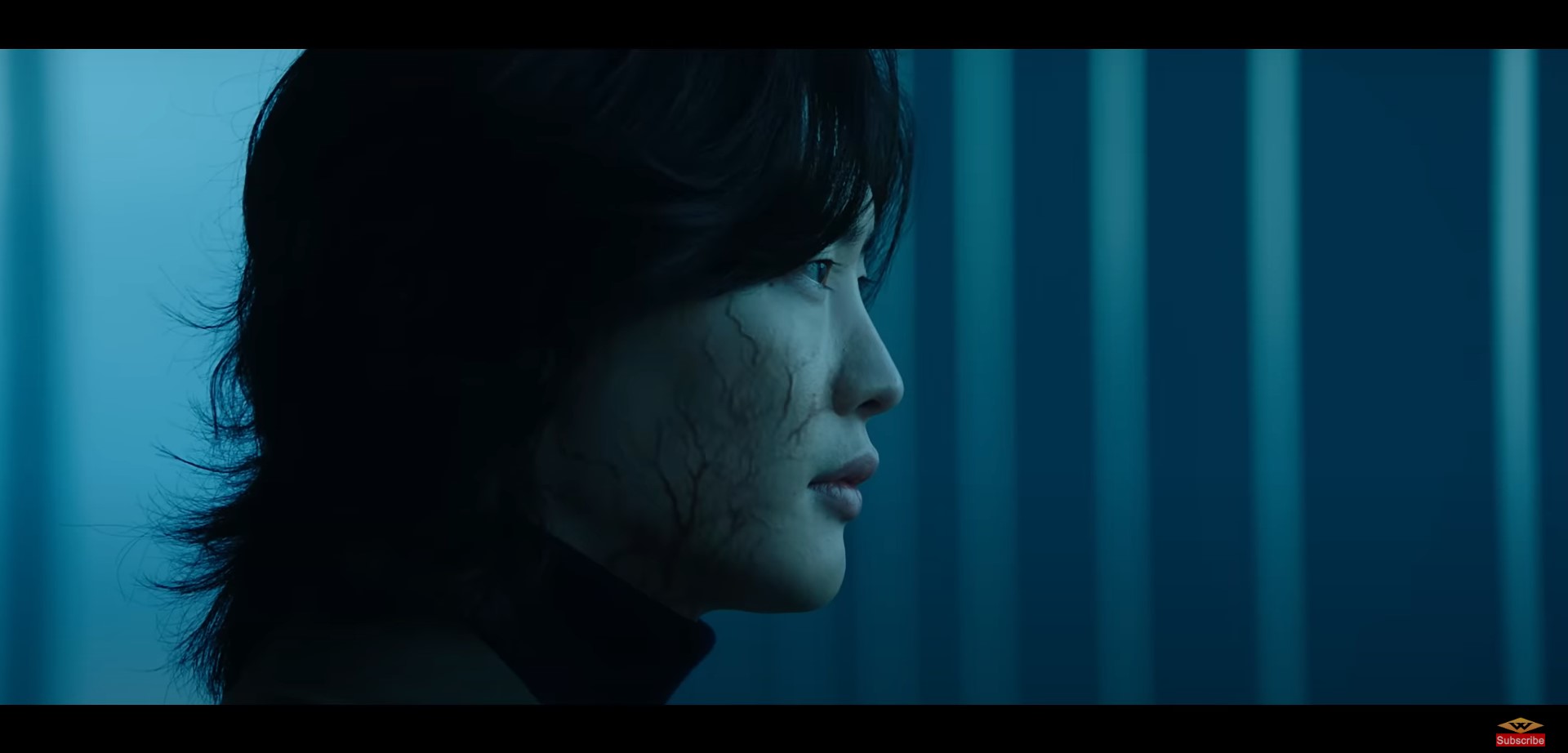
The sequel does not specifically revolve around first film femme fatale Koo Ja-yoon and turns the focus on a new prodigal Witch who has been cooped up in a lab since birth, hence why the film is not a full-fledged direct sequel as the storyline goes into an offshoot that later intersects. The face of the new witch is played by Shin Si-ah who makes her feature film debut.  When not covered in blood, Shin’s mostly reserved performance opens to light-hearted and childlike wonder as her character is experiences everything for the first time outside the Ark 1 lab.  Kyung-hee (Park Eun-bin, “Death Bell 2:  Bloody Camp”) and Dae-gill (Sung Yoo-bin, “Manhole”) take in the girl and become the warm absorption resemblance of family life or a life with romantic interests that can quickly be ripped away at any moment, sending the emotionally teetering girl into battle mode.  However, that sensation of relationships and tenderness hardly translates well on screen.  Perhaps losing some impact in literal translation, the trio’s dynamic retains a goalless fruition of connecting with other people, especially the superhuman powerless ones.  I found more complexities in the two factions seeking the same target – the girl.  Enigmatically opening with the mercenary raid on the secret Ark 1 lab and executing all in their path, we’re not immediately introduced to, and then barely given an introduction at all, is “The Cursed Lesson’s” Chae Won-bin’s mercenary boss lady and her squad of lesser-though of subordinates who all carry this overly murderous confidence with the latter being often measured inside their own group.  The other group is quite the opposite with the official tactical response team deployed by the Witch project head Dr. Baek (Jo Min-soo), a returning character from “The Subversion.”  Compiled as chief agent Jo-hyeon (Seo Eun-soo) and her second-in-command, a South African named Tom (Justin John Harvey). Seo and Harvey have a better act as the exchange is degrading and goofy in a comical manner with Jo as a workaholic lone wolf leader of an elite group of special ops while Tom brown noses his commander with new tech and offers helpful suggestions to which his commander either breaks or doesn’t use the new tech and views him as more of a warmhearted nuisance. Jin Goo completes the principal cast as a high-level gangster boss that would be big time in reality but in “The Witch’s” universe equates to an insignificant goon in a fancy coat. With an entourage of loyal henchmen, Jin Goo rubs elbows with his business smarts to get in bed with a clandestine organization as well as staying alive as long as he can in order to rob property right from under his niece and nephews’ nose. Goo plays the part with sly astonishment as he creates a pompous persona mildly shocked by awesome abilities of a young girl with the strength of 100 men.

What garnered much fascination with the 2018 film was the Korean dark, neo-noir tone intermixed with the uncanny abilities of a mystery person who can’t remember jack about their past. Park Hoon-jung essentially removes the simplified spine of “Part 1” and transplants it as the basis of “Part 2” with the similar added angles of a destroyed lab that supposedly no one survives but one person ultimately does and a pair of benevolent landowners who rescue, nurse, and essentially adopt the amnesiac girl back to 100% percent. “Part 2′” mirrored storyline is then targeted by at least three different angles represented by each bird-dogging group to add elements of change that include a contrast of comedy and austere posturing, the former being refreshingly novel to the two-film series that promises more to come after an open-ended finale. Returning to the sequel is the insane visual effects of “Twilight”-esque rapid movements and epic fight sequences with large explosions, a cold and bloody violent complexion, and high body count and while that’s all good and dandy for surface level popcorn effects, what’s agonizing is the how sped up they are as if every super occurrent was purposely depressed on fast forward by the power of three. If Park and his creative visual supervisors and gurus could have tempered down every other two moments with instead of having thrown cars, and among other things, seemingly skip multiple frames would have had more of a plausibility impact. The mélange complexity of multiple pursuers armed to the teeth and converging onto an unexpected teenage girl shacked up in a humble abode is a great classical spell of barnstorming besiegement that has the same improbability odds of survival as before betting on David versus Goliath until upended unto the aggressors, with all their guns and knives, who now need a prayer and much more against the prodigal youth with a considerably more amount of Witch power.

A fierce force of controlled power, and unforeseen surprises, the long-anticipated sequel, “The Witch: Part 2 – The Other One,” has finally landed post-pandemic. Well Go USA Entertainment, who released the first installment on Blu-ray, has picked up the rights to release the sequel on the high-definition format, presented in a sleek and sharp 16:9 aspect ratio. Virtually no issues with the digital presentation, the Blu-ray’s 1080p heightens every aspect of detail, even to a fault with the wonky visual effects as mentioned earlier. The overall darker lit tone and range can sometimes give off the appearance of softer details but with solid contrasting, the outlining shapes up more so than often and there’s no compression distortion to render an ill-defined texture. The Korean-English Dolby Digital 5.1 mix, also available is a Dolby Digital 7.1 Atmos and a Stereo 2.0, delivers a formidable, comprehensible, and frenzy-favorable mix of balanced action and dialogue. Depth perfectly pitches the focus properly while the range fuses together mostly during the fighting sequences until there’s a deep and punch-packed explosion mushrooming into a ball of crackling fire. No evident issues with dialogue and the English subtitles synch well with no flaws. Bonus content features a glossy and sped-cut behind-the-scenes featurette and the theatrical trailer. Physical features include the original Blu-ray snapper case with a cardboard slipcover featuring the same cliff-note touching cover art as the snapper case. The NTSC Blu-ray come region A hardcoded, is unrated, and has a runtime of 130 minutes. Time flies when you’re engrossed in “The Witch: Part 2 – The Other One’s” take no prisoner thriller of transcendent turbulence.

“The Witch:  Part 2 – The Other One” – A Whole New Blu-ray Tale of Intensity.