EVIL Says Talk to the Hand. “Talk to Me” reviewed! (Lionsgate / Blu-ray)

“Talk to Me” on Blu-ray/DVD/Digital!

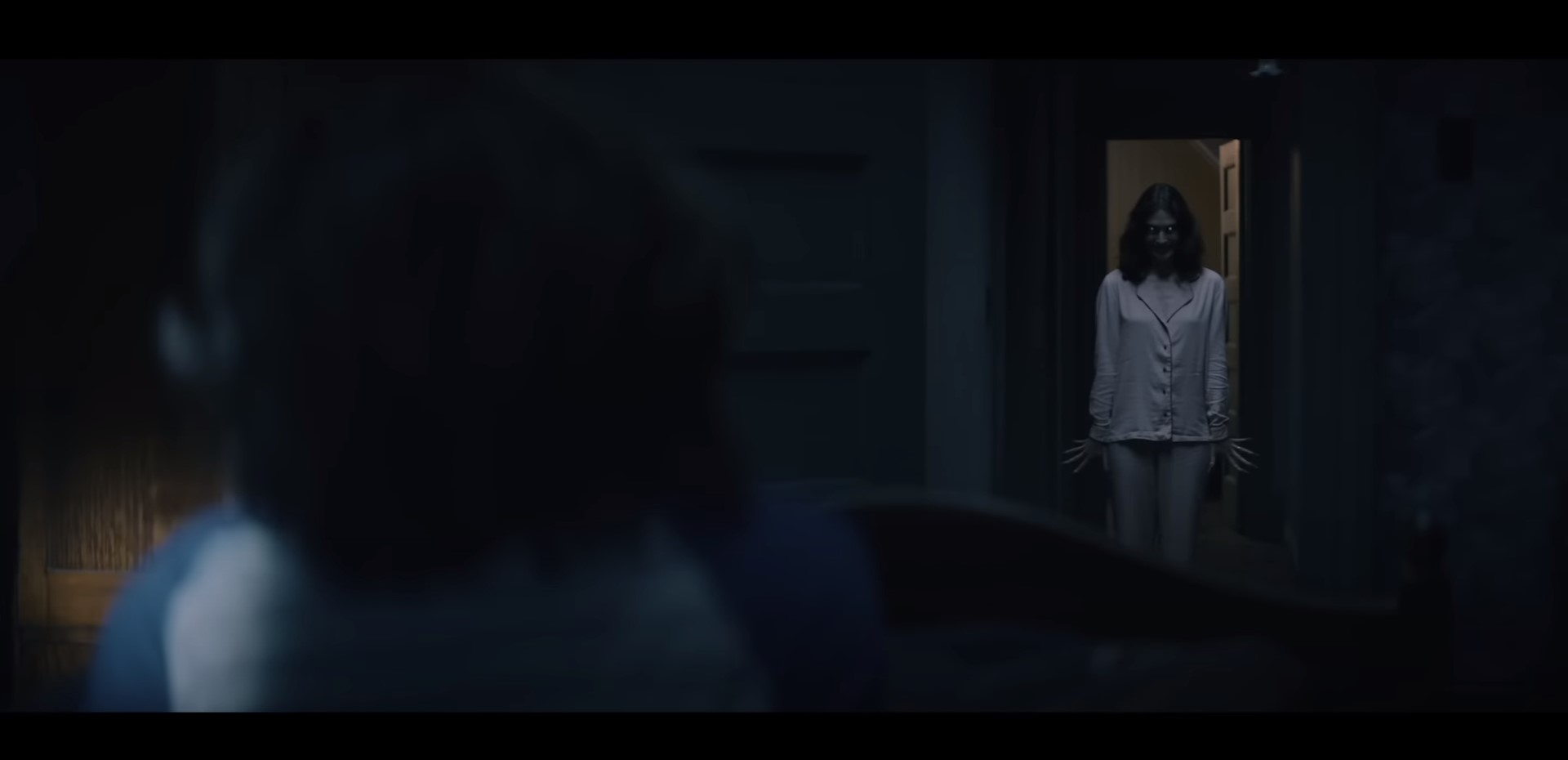
The two-year anniversary of the death is a solemn time for Mia to mourn the hard loss of her beloved mother who took her own life, or at least that is what her father tells her.  Feeling uneasy by her father’s account that circulates doubt uncontrollably, Mia pries her way into her best friend Jade’s family for comfort and becomes equally amiably with Jade’s younger brother, Riley, as like another sister.  When social acquaintances post viral videos of peers supposedly being possessed by an embalmed hand of a psychic for party games, Mia is eager to participate.  All is fun and games with the dead inhabiting and speaking through the hand holder for a limited time until Riley’s spirt takes a violent turn, leaving the boy severely injured and in a comatose state after exhibiting Mia’s mother possessing him.  Obsessed to speak again with late mother, Mia uses the hand to talk to the dead and learns Riley’s soul is stuck on the other side and being tortured by the countless, malign spirits. 
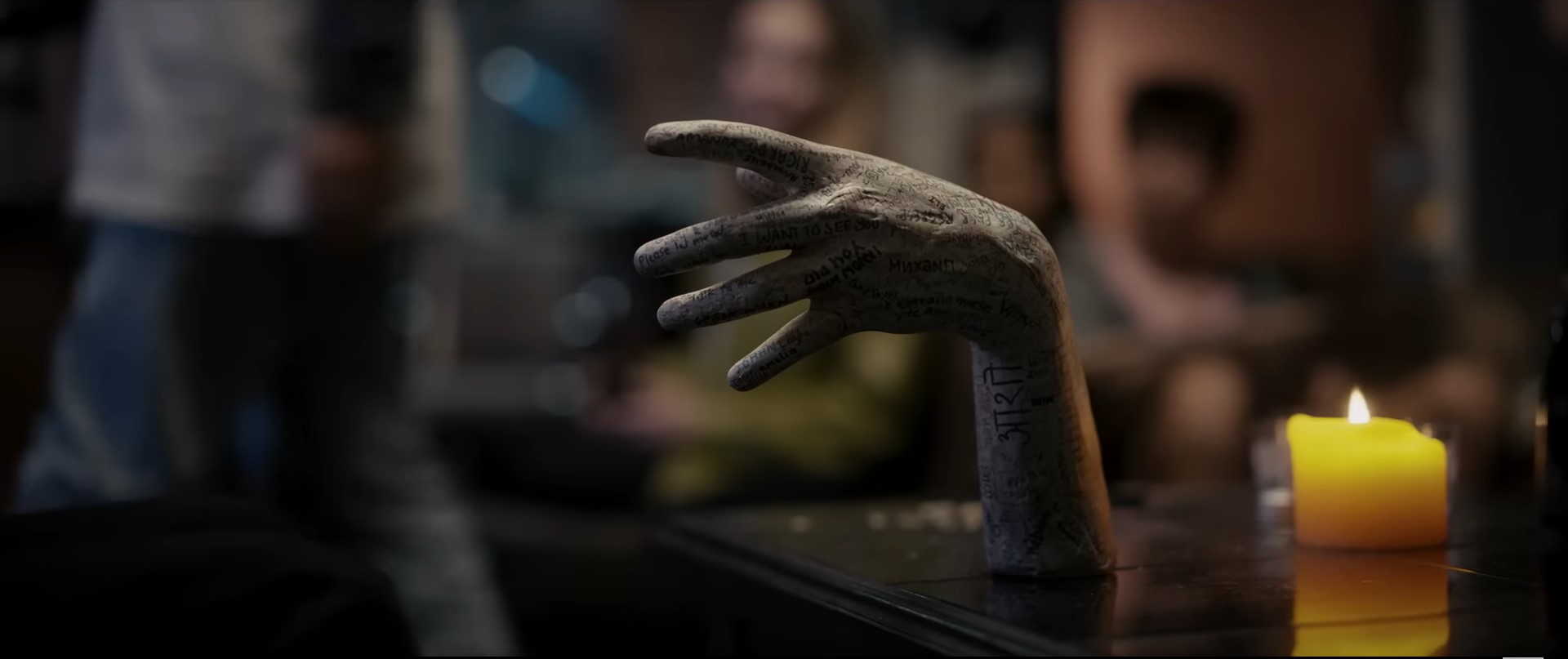
Grief can be so powerfully self-destructive that holding an embalmed hand, becoming connected with the grotesque spirit, and letting the shadow world possess you can be addictive and even as far as a parlor game to pursue answers or a desperate release from suffering.  The 2022, breakout Australian production “Talk to Me” explores that forced hand of grief, literally, with a socially pressuring aspect that can be contagiously engrossing and collaterally harmful if unchecked.  The Southern Australian-born brothers Danny and Michael Philippou come out swinging on their debut feature-length film penned by Danny alongside Bill Hinzman based on a concept by “Bluey” executive producer of all people, Daley Pearson.  “Talk to Me” is a coproduction between The South Australian Corporation, Screen Australia, Head Gear Films, and Causeway Films with Christopher Seeto (“The Flood”), Samantha Jennings (“Cargo”), and Kristina Ceyton (“The Babadook”) producing.  The film is released theatrically by A24.
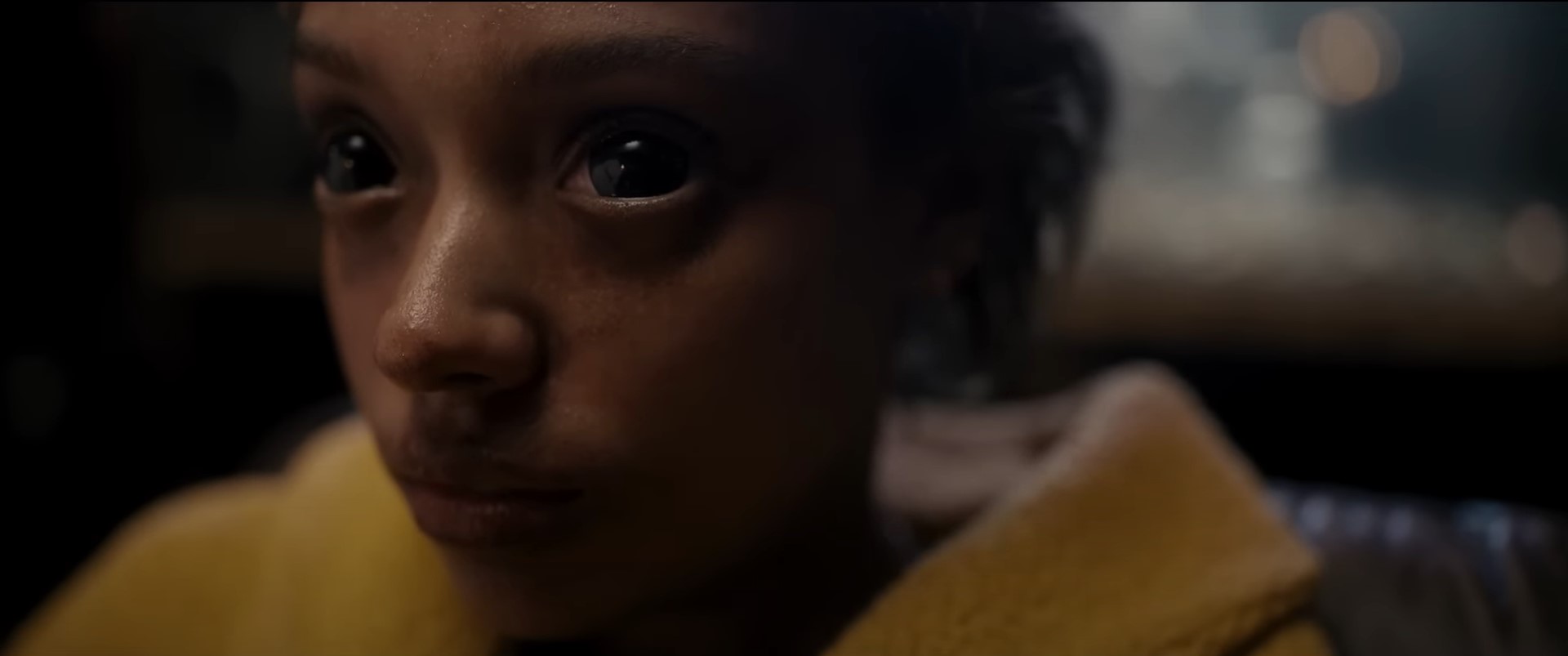
“Talk to Me” opening with a young, shoulder length haired man desperately searching for his younger brother through a sea of people at a house party.  The scene sets the film’s take-no-prisoners tone with begins with compassion as the older brother comes to the rescue of his disturbed, shirtless kin, trying to display the flashlight gleaming phone camera sharks who smell viral video blood in the water, when in a surprising turn of events the younger brother stabs his sibling before ramming the chef knife into his own skull.  “Talk to Me” segues into the cast of teenage characters, spanning the age spectrum of 14 to 20, letting us know right off the bat that youths are on the chopping block and no one will be safe.  The mostly untried cast pulls through with a trypanosome performance that gets under your skin, festering in its linger.  Sophie Wilde helms being the principal lead Mia still shell shocked by the sudden death of her twinning mother two years after later.  Suspicious of her father’s role in the death, Mia escapes and integrates herself into best friend Jade’s family, a role resting in between two uncomfortable rocks of being the new girl beside Mia’s onetime ex.  Alexandra Jensen as Jade floats carefully portraying Mia’s friend and a pursuant tiptoe toward the relationship with Daniel (Otis Dhanji) that passively irks Mia in the form of playful jokes, side glares, and inner demons becoming fruition ones expressing desires.  Sophie Wilde, on the other hand, spans the gamut with a flip of a switch soul spectrum polarized by spirit madness, grief over loss, and a fallback friendship.  When Wilde turns on the darkest light of possession, when her character lets the spirit into her body, the disheveled whole of Mia lives up to the actress’s surname becoming an uninhibited periapt for the spirit within that lusts over the youngest in the room, Riley (Joe Bird), for his childlike purity and when the spirits have control of over his soul in what is an orgasmic suffering that neither is parlous fun or exciting.  “Talk to Me’s” cast rounds out with Zoe Terakes, Chris Alosio, Marcus Johnson, Alexandria Steffensen, Ari McCarthy, and “Homeland’s” Miranda Otto. 
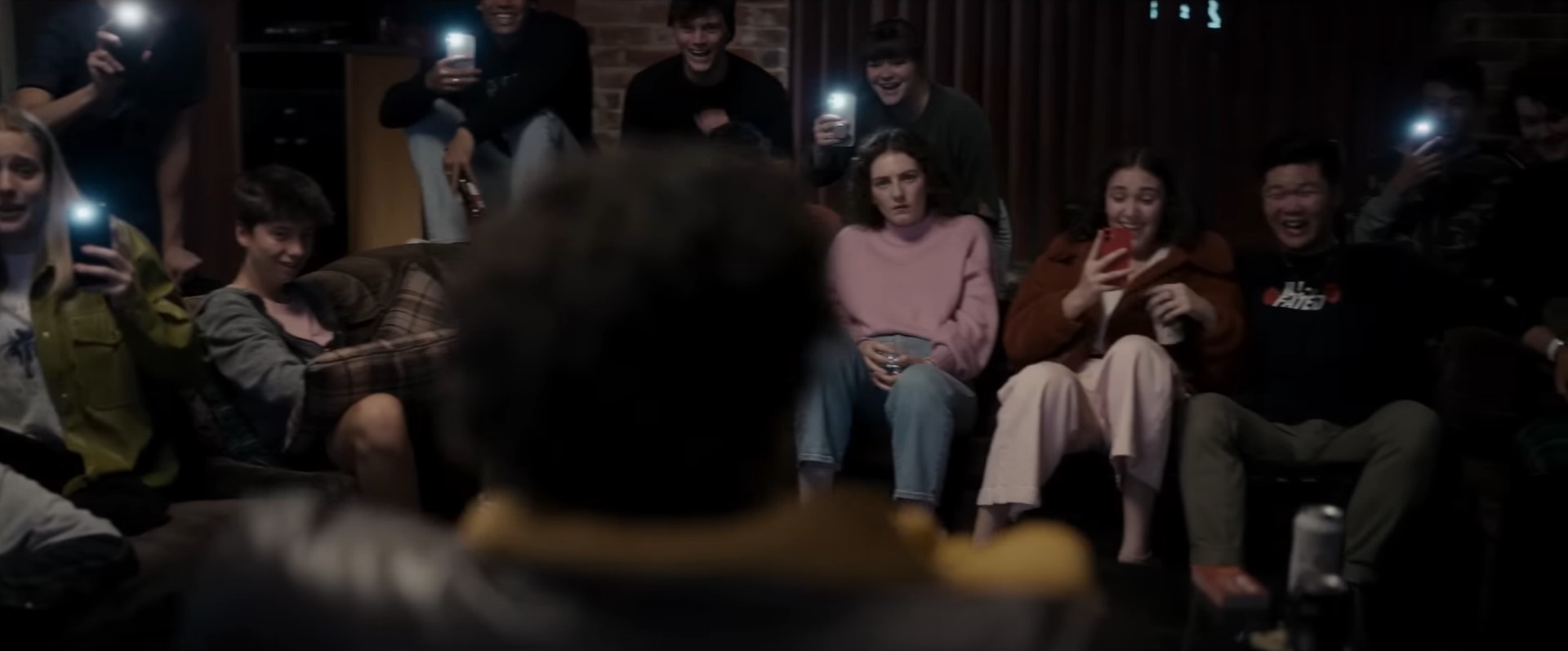
“Talk to Me” is an original byproduct stemmed from the cursed fetish genre.  The inexplicable mummified hand with unknown origins, thought to be once the hand of a medium, falls into the hands of a difference kind of representation.  Not to be bestowed conventional tropes like an inanimate object to be feared, the mirror in “Oculus” comes to mind or the cenobite unleashing puzzle box of “Hellraiser,” the persevered curled open hand doesn’t hold that sort of malevolent power, at first.  Despite its powerful connection to the purgatorial other side with frightening results of classic possession cases – levitation, catatonia, dissociative profanity and behavior, etc. –  these more-or-less new generational children treat something they don’t completely understand, such as ancient, mystical artifacts and in this case, human remains to be exact, without respect and humility, using the hand as if an additive drug, parlor game, or write to go viral amongst peers.  Directors Danny and Michael Philippou use the peer-pressuring viral video social commentary of their film as a sensationalized stern warning that has equal cause-and-effect results.  Ostentatiously showcasing more of the adolescent revelry spree rather than the mangled, decaying, and water-bloated entities in front of them or recklessly inhabiting their bodies once let corporeally inside.  For someone like the character Mia who continues to process close loss and has troubling thoughts, or maybe even delusions, regarding her father’s role in her mother’s untimely demise, she yearns for answers and when Mia receives a glimpse into what she believes is her kindred spirit mother through the vessel that is her friend Riely, aching impulses take over already crumbling judgements and she goes down the rabbit hole despite the consequences to herself, to her father, and to her adopted family.
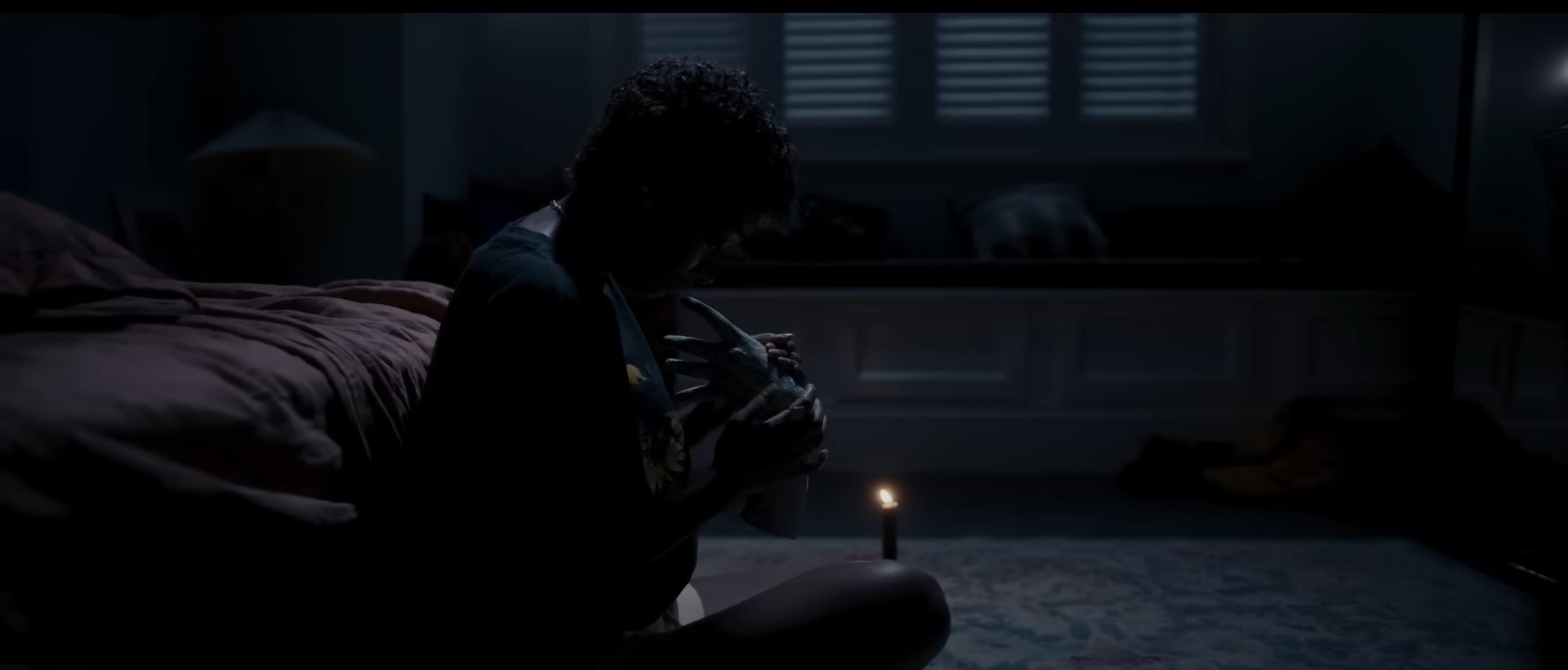
Get a grip and take “Talk to Me’s” hand to experience the possessively powerful Philippou brothers’ debut film on a Lionsgate 2-disc Blu-ray/DVD/Digital release.  The AVC encoded, 1080p high-definition, BD50 and the MPEG-2 encoded, upscaled standard definition, DVD are presented in a 2.39:1 widescreen aspect ratio.  What’s achieved out of the Aaron McLisky’s through-the-looking-glass visual vignette is focus driven, claustrophobic, and engaging to be present of a reality teetering the line between two worlds.  Details inarguably shine, casting a great deal of deep shadows within the hard lighting to set the ominous tone.  Skin textures gleam within the light as well as coarse change with the vapid and pale makeup adjustments of the dead-entered body or even when we do brief see a condemned soul, the greatly applied contusions, decay, or bloating is reflected with great care from the infinite image detail.  The release has an English Dolby Atomos output reaching the difficult crevices of the inaudible dark holes and exposing them to immense carousal and haunting zeal that makes the experience more palpable. Dialogue renders nicely through albeit a heavy-handed score that relentlessly attempts to knock down the channel-leveled door and a strong Australian accent on most of the cast may sway those who don’t have a keen and distinct diverse ear away from the film or may find discerning a challenge to channel from beginning-to-end. While most of the camera’s frame stays in medium closeup to closeup, McLisky’s able to find depth where advantageous to bring a creep building dark cloud after Mia’s one minute over willing but felt forced possession participation. English SDH and Spanish subtitles are optionally available. Special features include an audio commentary with brothers Philippou, a featurette with the cast and crew in their experience and thoughts on the film, entitled In the Grip of Terror, deleted scenes, and theatrical trailer. Behind a rigid O-slipcover imaged with the centerpiece un-ensepulchered, plaster anoint, and sanskrit-esque-ladened hand upright and in the forefront with phone flashlights dully lit in the background. The typical Blu-ray snapper houses the same slipcover image slipped in between the plastic sheeting whilst the two discs are held on snapper locks on each side of the interior accompanied by an insert for the digital download. Both discs are pressed with the same font and coloring on in reverse with a baby blue stark against white. The 95-minute minute feature is region A locked and is rated R for strong bloody violence, some sexual material, and language. “Talk to Me” is utterly and terrifyingly fresh and freakish in more so with the naturality toward the touching and the facetious ways with an embalmed hand that’s a one-way personal radio to the dead as a means to be engaged in popular, peer-pressuring social activity and as something to prove with reckless naivety.

“Talk to Me” on Blu-ray/DVD/Digital!

EVIL Knocks, A Child Listens. “Cobweb” reviewed! (Lionsgate / Blu-ray)

“Cobweb” on Blu-ray at Amazon.com!

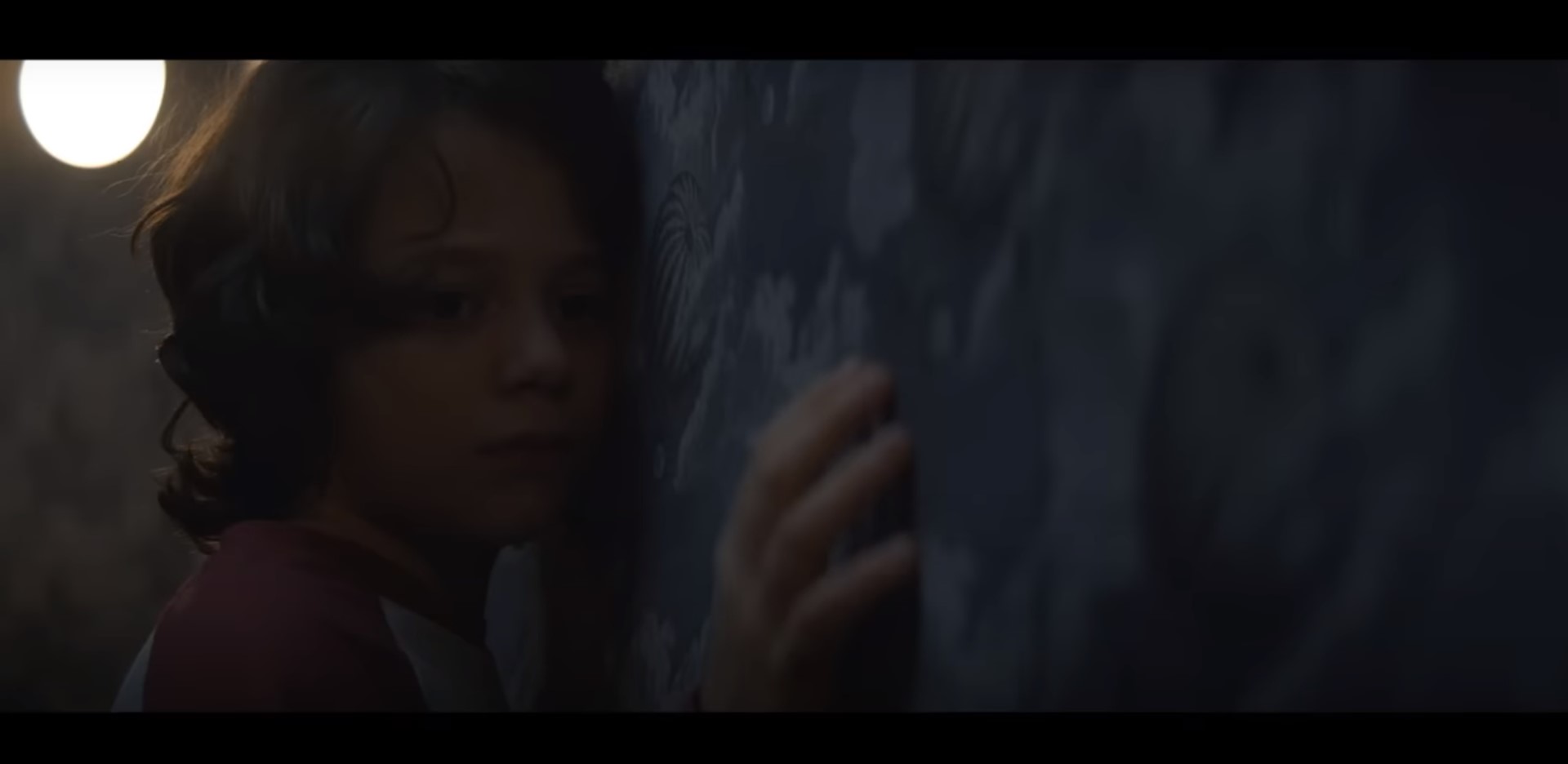
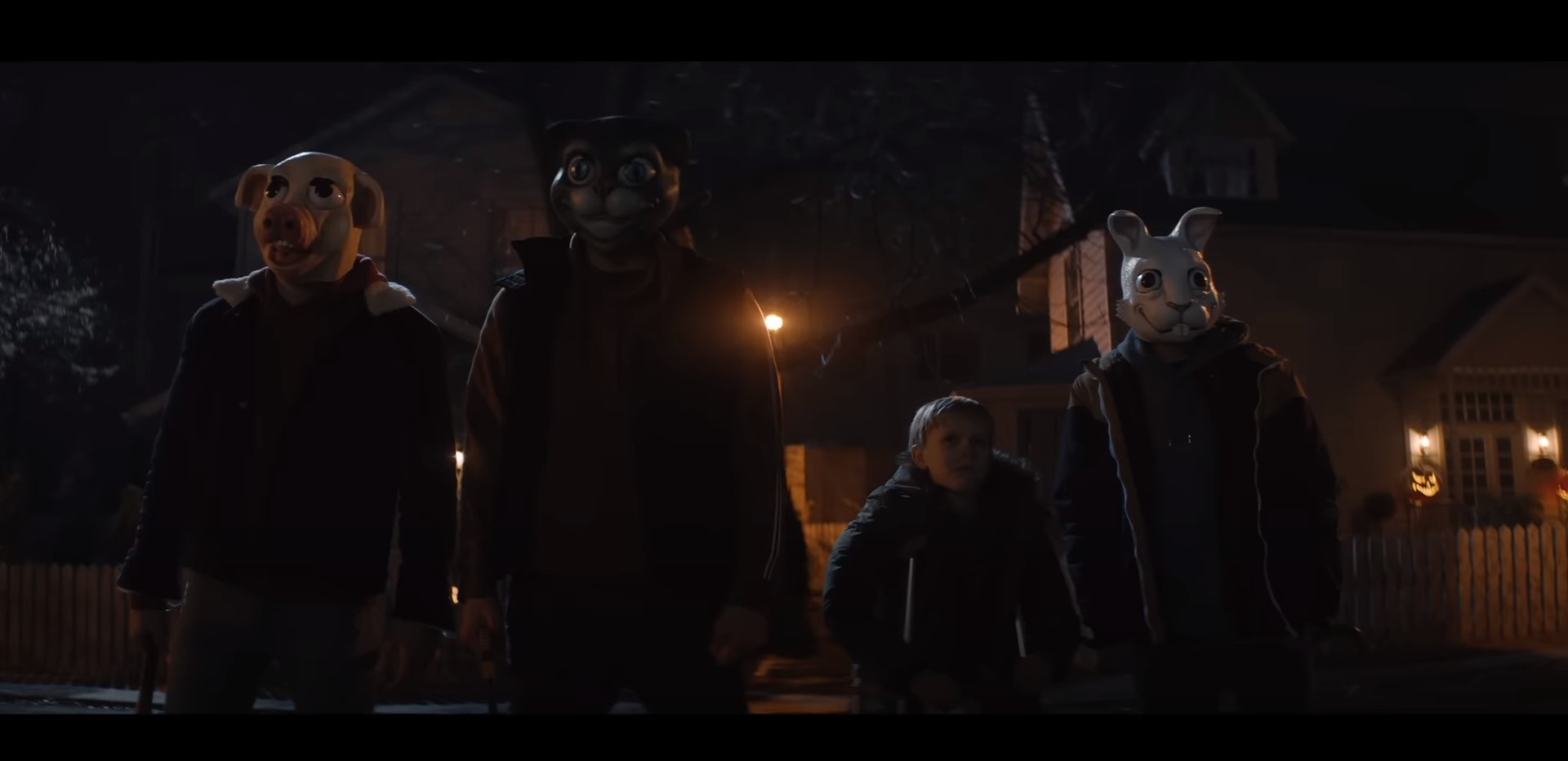
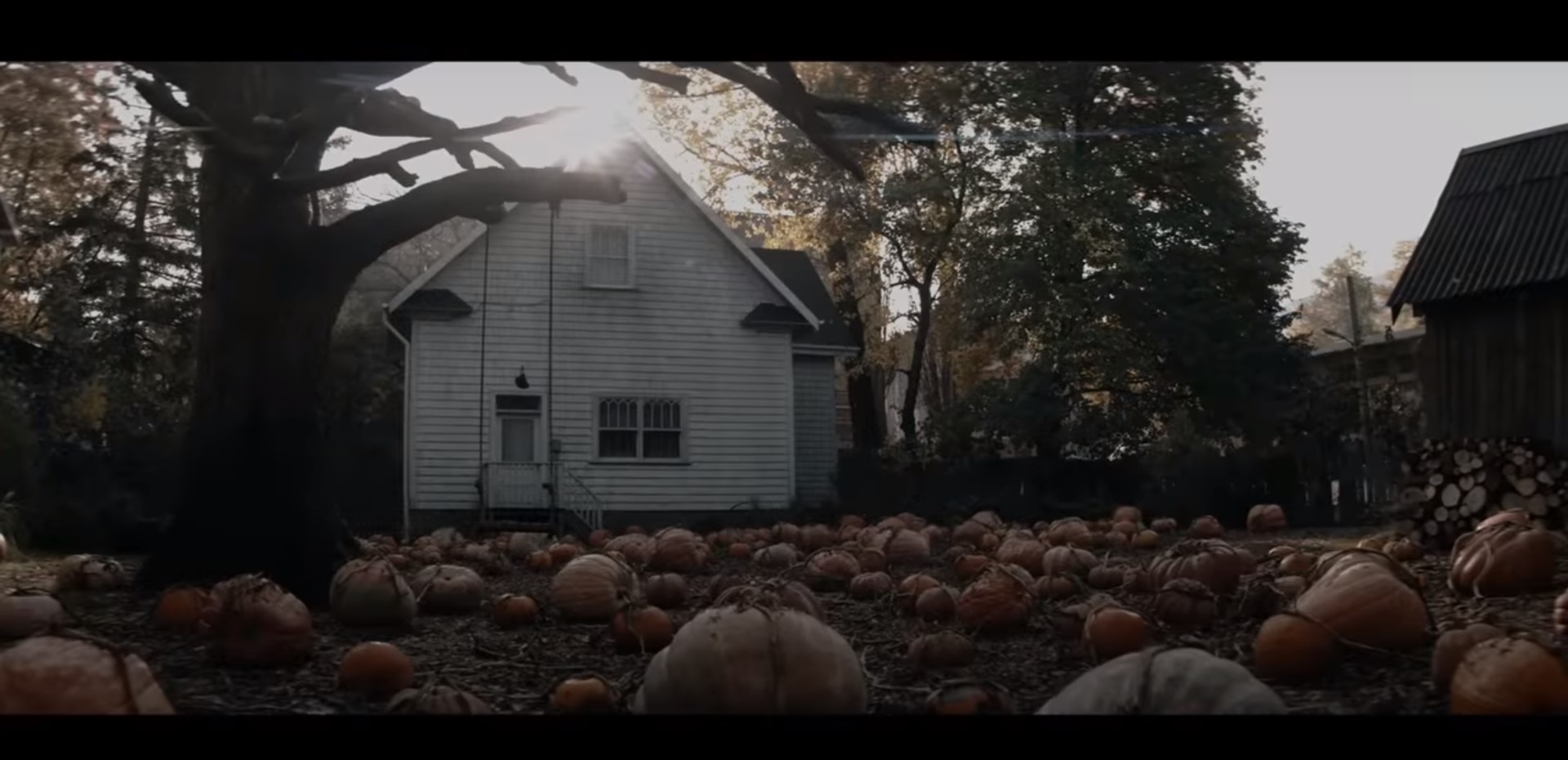
Eight-year-old Peter isn’t allowed out on the forthcoming Halloween night.  Frightened by a neighborhood girl who went missing years ago, his strict parents keep a very close eye on their only son who’s social life has been squashed like one of the rotten pumpkins growing in his family’s backyard patch.  Relentlessly bullied and severely sheltered at home, Peter spends most of his time isolated from others until he hears knocking from the inside of his wall in the middle of the night.  Frightened at first in hearing the ensuing young girl’s whispering voice behind the wall, Peter’s loneliness entices a friendly, conversational voice after his parents dismiss the occurrence as Peter’s overactive imagination.  As the two talk through the nights, Peter learns the mysterious voice behind the wall is a terrible secret his parents have been hiding since before Peter was born, but the truth is much more darker and scarier than Peter could ever over imagine.  

Following the success of his written-and-directed 2019 French horror series “Marianne” on Netflix, surrounding the manifesting nightmares of a young writer who returns to her home town, director Samuel Bodin dives right into the spooky season with a Halloween-themed dysfunctional family horror feature that metaphors helicopter parenting as a harmful detriment that eats itself from within the nuclear structure.  The French director builds his vision off the back of the creepy children subgenre and off of the script by Chris Thomas Devlin, an American screenwriter behind the 2022 direct from the original sequel, “Texas Chainsaw Massacre,” that happens to be another Netflix debut release.  Devlin trades in rip-roaring chainsaws for rickety old houses lined with gaudy, antiquated-pattern wallpaper in this what’s-behind-the-walls thriller, produced by the Seth Rogen and Evan Goldberg company Point Grey Pictures (Amazon’s “The Boy’s” and “Invincible”) with Josh Fagen alongside producers Roy Lee (“Barbarian,” “It”) and Andrew Childs of Nu Boyana Productions and Vertigo Entertainment with Lionsgate distributing. 

Ironically at the center of attention is the loneliest boy Peter casted with UK child actor Woody Norman (“The Small Hand,” “The Last Voyage of the Demeter”) to ensure Peter’s anemic spirit with a head full of shoulder length brown hair, downcast eyes, and melancholic demeanor. Yet, like most child dependent horror schemes, Normal can thrust out a gutsy sprint to survive and save the day against not only his oddly adjusted parents who quarterly channel the onscreen unionization of Wendy Robie and Evertt McGill in fiercely fearful “The People Under the Stair’s,” but also something far more secretive and far more sinister.  Anthony Starr, who has worked with Seth Rogen’s Point Grey Productions in “The Boy’s,” is aptly a father suppressing to fold and diminuendo his son’s curiosity and venture with scary stories of disappearing children and a stern childrearing with a sinister smile only Anthony Starr can produce.  Then, there’s Lizzy Caplan as the austere-dressed matron with a retractable badge for her small set of keys, which are an underemphasized plot device for all the doors in the house, both unconcealed and concealed.  I struggled with Caplan’s mother that borders being simplistically prose, like speaking in a fairytale without the elegance of being a dainty princess or the maniacal barbs of an evil sorceress.  The “Cloverfield” actress’s take on how a reticent mother is overly proper and out of place even in this tale that stretches the imagination and even beyond the film’s other flawed portions, which lead me into Cleopatra Coleman’s benignant substitute teacher Ms. Divine, a name not abashed in its metaphorical properties.  Ms. Divine overreaches herself secondary educational authority by interjecting her nosiness into what she mistakenly thinks is Peter’s subconscious cry for help.  The “Infinity Pool” actress goes unnecessarily lone wolf into the lion’s den that would make any parent understandably concerned and angry whether hiding something or not.  “Cobweb’s” cast fills out with Jay Rincon and Gary Busey (“Predator 2”) and Stephanie Sampson’s (“Sharknado 4:  The 4th Awakens”) preteen son Luke Busey who I must say is the spitting image of his father. 

Funny and coincidently enough, this is my second Grey Point Production film watched back-to-back with “Teenage Mutant Ninja Turtles: Mutant Mayhem,” “Cobweb” is not children’s film but resembles more like a Grimm fairytale with elements pulled from various volumes, some from more popular stories such as the long locks of Rapunzel or the pretense of a wolf in planned deceit of the eager youth, and the film certainly embodies the charmingly dark and rustic patina of such tales.  From the words on a page to the visual effects of the screen, “Cobweb” introduces us to a new kind of terror co-bred out of bigotry and fear of a polar difference so severe, so monstrous, that it warrants a shameful imprisonment and a simultaneous misappropriation of tutelage of starkly unalike children because, as parents, we can have this innate fear for ourselves being replaced with the creation transcending the creator threat.  Pour these twisted tales and themes together into a cauldron of storytelling and we can easily overlook how flawed “Cobweb” can appear on the surface, as if to say the story’s phantasmal qualities exempt narrative structural norms.  “Cobweb” has repetitive use of the imagination as an excuse for Peter’s hearing something, someone beyond walls or could even stretch to the parent’s feigning ignorance or diverting tactics as part of making believe whatever they’re secretly hiding doesn’t exist.  Aside from the title, other allusions to an arachnid theme suggests Peter might have an overactive power of invention, integrating his already schoolyard bullied mind and body to form an embodiment of fear. His rigid parents mixed with an overwhelming fear of spiders creates, or wills, a person or creature of shared relations, someone he can converse with quietly and share his concerns but, in the same breath, be frightened of when out from the wall.  Peter has the same reaction between the spider that crawls on his desk in the class and see the wall dweller’s floating out from a hole in a wall, signifying a one-in-the-same fear.  When inevitably revealed, the creature skulks with the movement of an eight-legged arthropod, has hair like a large, draping web, a face with bulging eyes and fangs, lives within and between walls, and has tiny spiders crawling through its hair.  Intense and portentous, “Cobweb’s” creepy-crawlies are sure to be hair-raising with a shocking turn of events.

Become caught up in Lionsgate’s release of “Cobweb” on the Blu-ray + Digital release. The AVC encoded, high-definition 1080p, BD50 has a Mbps decode rate of low 30s and presented in a 2.39:1 widescreen aspect ratio. Centered around the Fall season, “The Transporter’s” Philip Lazano’s cinematography lives in the dichotomy of shadows and a cool blue-green grading. Exteriors look potently seasonal in a dreary-overcast kind of way that fits “Cobweb’s” austere approach to an atypical straightforwardness in such a dark fairytale theme. Unostentatious, Lazano does a remarkable job with shadows, and dim lighting in general, to convey just enough to make the creature’s skuttling a double dose of undetectable dread before you know what hits you. The main audio option is an English DTS-DS 5.1 master audio with Spanish and French Dolby Digital 5.1 alternatives. Again, the skuttling around the house, the faint scraping of dry, old hair on the wood floors, the creaks, oh the creaks, of every inch of that house make “Cobweb” cue every traditional trope of audible terror right to your sensory receptors. Dialogue is clean, clear, and prominent with the only issue being the behind the wall speak that renders more like whispering in the same room than a muffled subdued voice as the layered dialogue overlap in volume. English subtitles are optionally available. Special features are not in-depth with a to the point featurettes with Becoming the Girl that express Bodin’s vision of the person behind the wall and contortionist Aleksandra Dragova’s efforts to bring that vision to life, Through the Eyes of a Child focuses on a small child in a bigger, uglier world through one-sided interviews with the cast and director and how those differences translates an uneasiness not only with the child but also the viewers who are engrossed by the contras, and A Primal Fear rounds out the specials with underlining fears of creaky house sounds, amongst other combined sounds, and how they’re arranged into a design that innate scare us. Physical aspects of the release come in a traditional Blu-ray amaray case housed with a beautifully composition shot that immediately grabs the eyes on a sturdy O-slipcover laced with a slight embossed spine title. Disc art goes for the less is more visage of a blueberry blue background with white font “Cobweb” at the top. In the insert slot is the digital copy waiting for you to either download and discard the physical release (which I hope you don’t) or neglect for way longer than the expired date allows. “Cobweb” is rated R for horror violence and some language, has a runtime of 88 minutes, and is region locked on A. Lionsgate has distributed the boogeyman, or in this case, the boogeywoman in the fretfully concentrated “Cobweb” that turns every scurry or scratch behind your own walls worth your undivided attention.

“Cobweb” on Blu-ray at Amazon.com!

The EVIL is Inside Me! “Nightmare Man” reviewed! (Ronin Flix / Blu-ray)

“Nightmare Man” Is Here To Haunt Your Dreams in High-Definition!  Blu-ray Available at Amazon.com

To channel mystical help with her and her husband’s fertility issues, Ellen purchases a mask from overseas that supposed to provide fruitful results.   Instead, Ellen is plagued by nightmares of a demon figure, forcing himself onto her with a maniacally grin.  Diagnosed a paranoid schizophrenic and on medication to dilute the vivid dreams, Ellen’s husband chauffeurs her to the mountain isolated Devonshire Institute to commit her for treatment, but when the car runs out of gas and her husband ambles for gas, Ellen finds herself alone in the car at night and with the nightmare man lurking outside,   Escaping barely with her lift now that the physical form of her tormentor is no longer just in her dreams, Ellen takes refuge with a pair of couples celebrating an engagement party.  Rambling erratically about an entity no longer inside her, a debate between the group of friends question Ellen’s sanity until the nightmare man shows up and slaughters anyone in his path, but the party’s just beginning when another killer has been freed from suppression.

Pivot stories are the best!  The investments into a foundation roots a focus, provides a clear understanding of the forthcoming, and can be, for better or worse, an expectation of narrative structure.  What happens when a monkey wrench is thrown into the story and completely bends the storyline at a 90-degree angle onto another totally unexpected path?  Some would be too jarred by the jerk toward another direction, coming out of the film with a severe case of whiplash that joggles and boggles the mind, while others, like myself, would find a refreshing phoenix out of the tired ashes of a stale genre and welcome it with open, grateful arms to keep my rear-end sewn to the couch and eyes glued to the television to see what happens next!  Writer-Director Rolfe Kanefsky (“There’s Nothing Out There,” “Art of the Dead”) alters the early 2000s post-“Scream,” masked-slasher with a twist and never second guesses the decision to bounce from out of one subgenre and into another without skipping a beat.  “Nightmare Man” is a production of Delusional Films and is non-SAG, shot in the area of Big Bear, California, produced film by the father-son team of Rolfe and Victor Kanefsky and Esther Goodstein, and Frederico Lapenda.

What’s very curious as well as fascinating about “Nightmare Man’s” character hierarchy is that there isn’t just one lead principal throughout the film.  In fact, lead principals change hands at least three times and also misleads audiences into thinking someone is going to charge of the situation only to be cut down in a blink of eye and a jolt to the normal hardwires of our cerebral higher functioning.   The titular star of Rolfe Kanefsky’s “Jacqueline Hyde,” Blythe Metz, returns to work with the filmmaker as a woman overwhelmed by dreams of a demonic dybbuk of sorts who chases her and tries to force himself onto her, into her, in a violating way.  Metz convinces much later as someone suffering from delusions and paranoia but her Ellen character, a woman who is supposed to be wealthy from some of the dialogue bits, is a bit more lucid and grounded early into the story with only her frustration to lean back on to warrant being committed, which seems like a harsh and unconvincing setup for the character that also induces early suspicion on her husband’s (Luciano Szafir, “Hopekillers”) eagerness to check his wife into a mental institution.  Before long, we’re introduced to two couples, played by Jack Sallfield (aka Jack Sway), Johanna Putnam (“Feast II and III”), James Ferris (“Jacqueline Hyde”), and every fan’s favorite scream queen, who’s currently playing a reoccurring character in season 3 of “Picard,” Tiffany Shepis (“Abominable,” “The Black Room”), partaking in an intimate celebration and partaking in what mostly early 2000s portrayed characters love to participate in – sex themed conversation, games, and forbidden secrets.   Soon, the two parties collide when Ellen is chased through the woods by her African horn-masked dream stalker (Aaron Sherry) and then the situation turns into mice in a glass cage with a snake circling hungry.  Shepis doesn’t stray terrible too far from her normal cache of credits or Tromaville antics as a provocative, promiscuous, and downright master of her domain with intent.  While Shepis doesn’t necessarily compete with any other onscreen personas, as the long-time horror vet can steal a show with ease, we’re also treated to strong performances from her costars, such as Metz splitting into thirds with her diagnosed paranoid-schizophrenia, and we’re introduced to Johanna Putnam in her debut role as an engaged woman has who a dangling lesbian secret from her past hanging over her head.  The dynamic works not in a dramatic means but rather as a comedy portico tossed into the narrative structure to spruce up character conversing toward something humorous and interesting as arrows plunge into chests and knives are puncturing through lower jaws.  “Nightmare Man” rounds out the cast with Richard Moll.  Yes, Bull from Night Court, as well as “Scary Movie 2” and “Sorority Party Massacre, makes brief cameo appearance as the local sheriff and you need look very closely because the scene is so dark, you can barely tell it’s him. 

The one theme that keeps popping up in the recess of the mind is perhaps the one theme that eludes being talked enough about when overhauling “Nightmare Man” as a message bearer. Being an early 2000’s horror in the long established and well-dipped into the shadow of the “Scream,” “I Know What You Did Last Summer,” and “Urban Legend” franchises that defined the turn of century before it even happened might have had something to do with “Nightmare Man’s” lack of enticements for distributors to feel love for the man of nightmares and notice it for the novelty and the theme for what it is, an instilled paranoid fear that one’s sexual attacker leaves behind as a post-traumatic stress bomb that is everything all consuming. Kanefsky patterns the hallmarks of rape trauma stealthily into the script, disguised as a shadow, with a teethy mask, and vividly glowing and menacing eyes. Some other scenes are more obvious than others, such as Ellen’s dreams of the sinister smiling figure pinning her to the attic floor and spreading her legs right before she wakes or when she cries out, “I still feel him inside me,” while held up inside the cabin, with Kanefsky painting with a broader brush on “Nightmare Man’s” obscured presence and masked killer with an agenda that attaches itself directly in avoidance of calling a spade a spade. The kills and gore effect gags can stand up against any big budget, Hollywood production and are just unique enough to make the killer interesting in diversity and brutal enough to give “Nightmare Man” an edge sharper than the knife he wields.

If a Tiffany Shepis fan, or a fan of Tiffany Shepis in her underwear holding a crossbow and won’t be rattled by the bent elbow plot pivot, the Rolfe Kanefsky picture is an enjoyable, campy romp that gives homage to the horror films that have set the scene for “Nightmare man” to exist.   Ronin Flix plucks “Nightmare Man” out of standard definition dreamland and into the reality of high-def, 1080p Blu-ray.  Presented in an anamorphic widescreen 1.78:1 aspect ratio, the story is set almost entirely at night with more household lighting for interior shots and not too much exterior lighting to brighten objects or even cast hard-edged shadows.  While this creates more realistic atmospherics of isolating apprehension in the woods horror, Kanefsky and cinematographer Paul Deng (“Trancers 6,” “Song of the Vampire”) bathe many of the night shoots in deep blue tint and the Ronin Flix transfer appears to display in low contrast and is very dark, leaving focal objects nondelineated and obscured.  I haven’t checked out the Lionsgate After Dark DVD print of this film so I can’t compare.  There some dip in the compression decoding as the release hovers in the mid-30Mbps for good periods of time but does dip into the lower 20s and it shows with light phasing macroblocking.  When not bathed in blue, skin tones and grading often look natural and palpable.  The English language DTS-HD 5.1 Master Audio is balanced between all levels tracks, putting the dialogue in the forefront, keeping the range of ambient noises at an appropriate depth, and a soundtrack that maintains tensions rather than over intensifies to a fault.  I will say that the multi-channel lacked a significant stalwart production that didn’t provide the anticipated strength of audio.  Dialogue is clean and clear with no perceptible issues and the overall package track can be said the same.  English SDH are optional.  With the Ronin Flix release, new bonus supplementals extend more background and insight with retrospective discussions and distribution challenges associated with “Nightmare Man,” such has a new interview featurette with director Rolf Kanefsky, producer Esther Goodstein, and star Tiffany Shepis in There’s Something Out There:  The Making of Nightmare Man and a new audio track isolating the film score by Christopher Farrell (“Bus Party to Hell”).  Also included is Creating the Nightmare:  The Making of Nightmare Man – a raw footage behind-the-scenes look at some of special effects, makeup, and off-the-cuff tomfoolery during in between take down time, extended scenes, Tiffany’s Behind-the-Scenes of Tiffany Shepis weaponizing a handheld camera with her flare of sexualized humor and potty-mouth pizazz, an audio commentary track, on the audio setup, with director Rolf Kanefsky, producer Esther Goodstein, and star Tiffany Shepis, Flubbing a Nightmare Gag Reel, still photos, and a promo reel.  The physical features include a David Levine package design of an abract-esque composite of the Nightmare Man mask, Tiffany Shepis in a bra, and a knife all splashed in red lined inside a traditional Blu-ray snapper case with no insert.  The release is locked on Region A playback and the film has a runtime of 87 minutes and is rated R for horror violence, gore, some sexuality/nudity, and language – what Tiffany Shepis release wouldn’t include all of that?  “Nightmare Man” is a dream of a subgenre-bending film; sexy, gory, intense, and unpredictable, all the prefigures of a hell of a good time.

“Nightmare Man” Is Here To Haunt Your Dreams in High-Definition!  Blu-ray Available at Amazon.com

When Your Shame and Guilt Turn EVIL! “Prey for the Devil” reviewed! (Lionsgate / Blu-ray)

“Prey for the Devil” on Blu-ray home video.  Purchase a Copy Today!

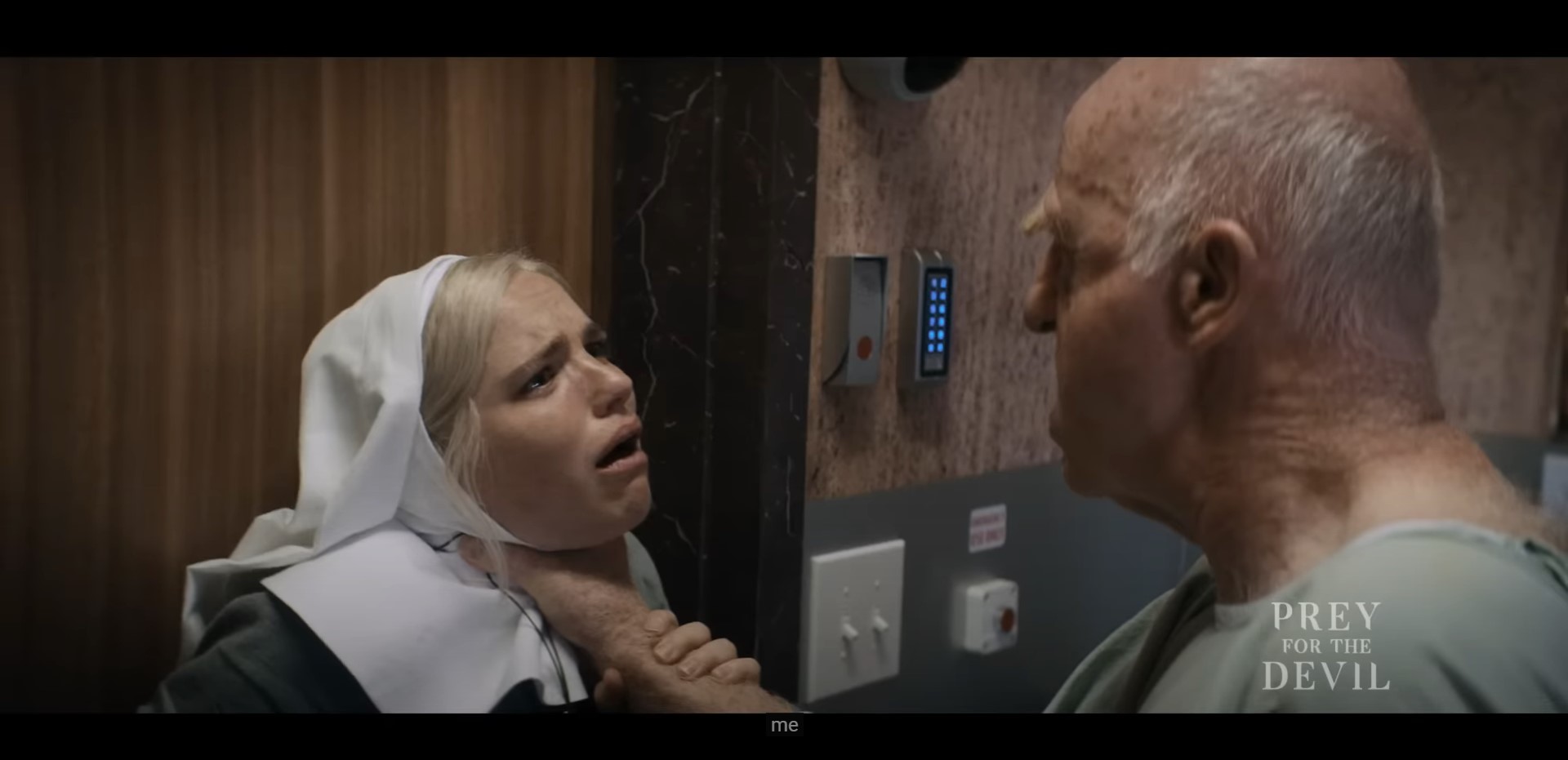
The rite of exorcism has been strictly performed only by Catholic priest; a decree enforced by the Church for more than a century.  At the Saint Michael the Archangel School of Exorcism in Boston, Massachusetts, Ann, a young nurse caring for suspected possessed individuals, finds herself bound personally to a demon from her childhood.  An opened-minded Father invites her to study exorcism as an observer only, but when Ann is able to connect to beyond the demon of a terminally possessed little girl, her theory on exorcisms goes against Church doctrine.  Unable to officially help the little girl without agitating trouble, Ann performs back-alley exorcisms to prove her theories correct, bring her findings to the Church, prepare herself against a demon hungry for her soul, and save the life of a girl bound for transport to the Vatican where she will surely expire.  Ann’s past and present collide in a battle between light and dark with a young girl’s life hanging in the balance.

Possession and exorcism movies have become rather formulaic in the last two decades with more than most being derivative as surpassing the bar on William Friedkin’s “The Exorcist” has been an uphill battle, but, in my opinion, director Daniel Stamm has figured out a path to make the wavering subgenre emerge from the depths of the Netherworld and take possession with a different angle. “Prey for the Devil” is a terrifying tale by screenwriting partners and brothers Earl Richey Jones and Todd R. Jones, the first horror work from the “Rio” and “Johnson Family Vacation” writers, and the script, under the original working title of “The Devil’s Light, is designed by “Halloween H20” co-writer, Frank Zappia.  The Hamburg, Germany-born Stamm returns to the demonically charged, demon possession genre having found moderate success with fans in his 2010 pseudo-doc/found footage film “The Last Exorcism.”  More than a decade later, Stamm is still sending young girls up climbing up the corner of walls in his latest exorcism themed entry produced by the Jones brothers, Jeff Levine, Jessica Malanphy, and Paul Brooks under production companies Gold Circle Films (“Slither,” “Blood Creek”) and Lionsgate (“Saw” franchise).   

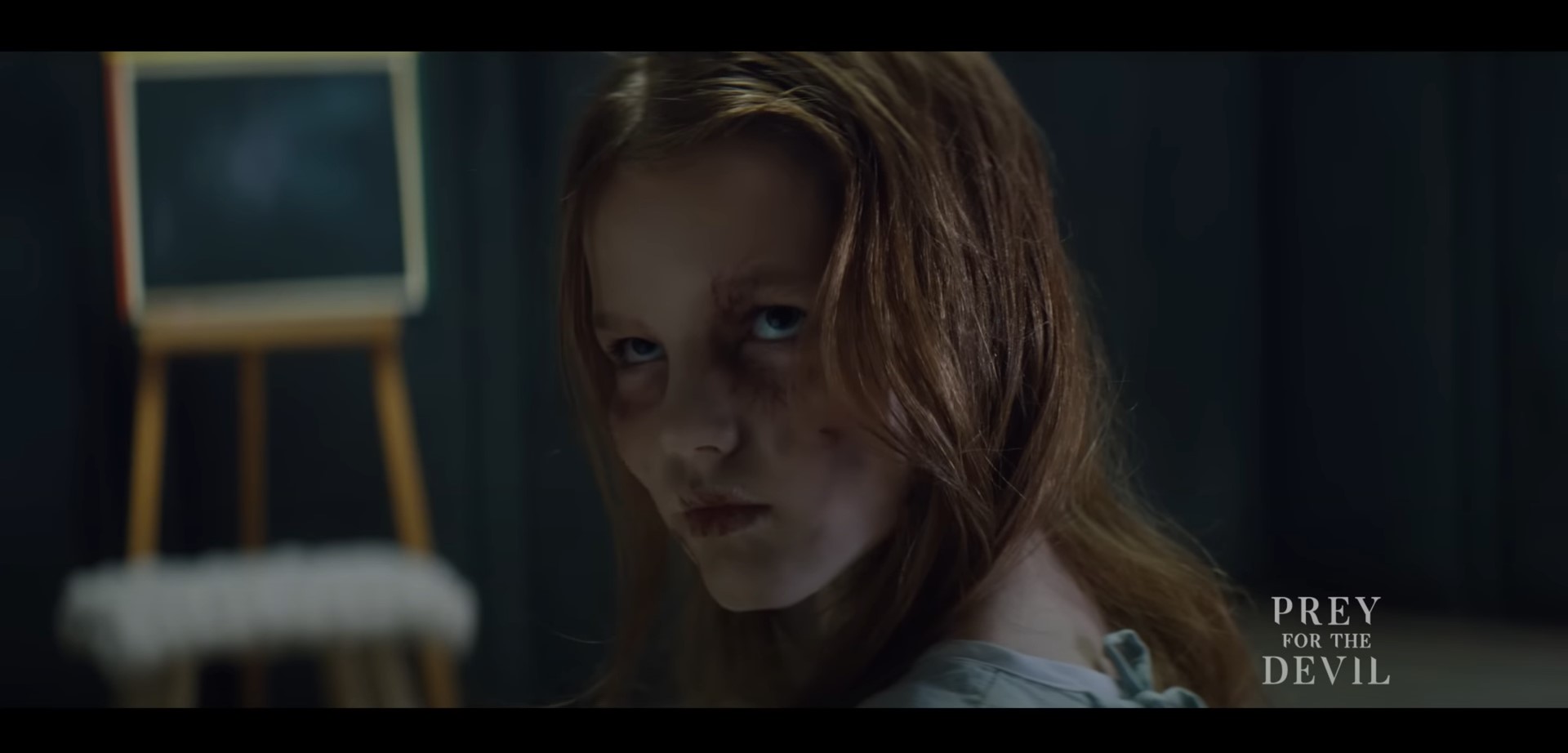
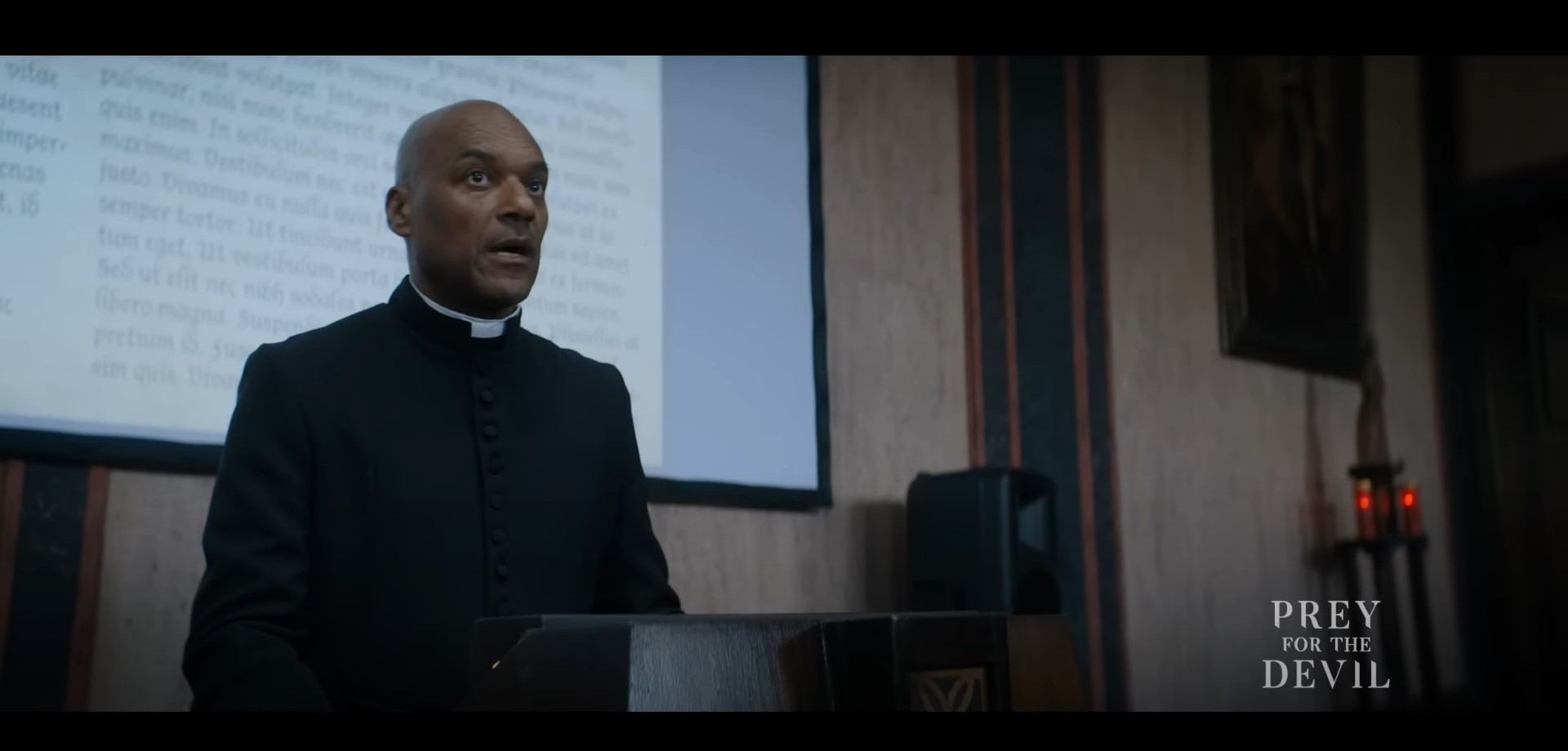
“Prey for the Devil” has an embattled protagonist facing two opposing fronts – one fowl demon hellbent on devouring the Godsent Ann from the inside out and one the Church solely for being a woman wanting to practice what’s been appointed as a man’s vocation. Jacqueline Byers has been penned to play the curious and targeted nun and the “Bad Samaritan” actress doesn’t disappoint being the center of attention without overstepping conceitedly into Ann’s habit. The story never feels like it’s Ann, paralleling similar to the overall theme of looking past the surface level demon and understanding the person’s state of consciousness that might have invited the demon inside. Byers evokes more curiosity of a woman drawn to exorcism because of her own past involving an abusive mother (Koyna Ruseva) who, when listening to the voice inside her head, would hurt child Ann with a tough tugging, decorative comb. In Ann’s way is the Church represented by Sister Euphemia (Lisa Palfrey, “The Feast”), Father Quinn (Colin Salmon, “Resident Evil”), and Cardinal Matthews, played by the late Ben Cross (“Exorcist: The Beginning”) who would succumb to cancer after the completion of his role. With a trifecta of solid performances, the Church opposition lacks fortitude in coming down hard on Ann for not only taking a shining toward a priest’s appointed aptitude, but also for performing an unauthorized exorcism on a desperate priest’s sister. Her desperate priest friend, Father Dante (Christian Navarro, “13 Reasons Why“), is a sympathetic friend without much skin in the game of sticking his white collared neck out for Ann. “Prey for the Devil” introduces the teenage actress Posy Taylor with a chillingly consumed Natalie who has a strong semblance to Regan when demonized to the fullest and in a while gown. The film rounds out the cast with Nicholas Ralph, Keith Bartlett, and “Candyman’s” Virginia Madsen as the psychiatrist using science to disprove possession.

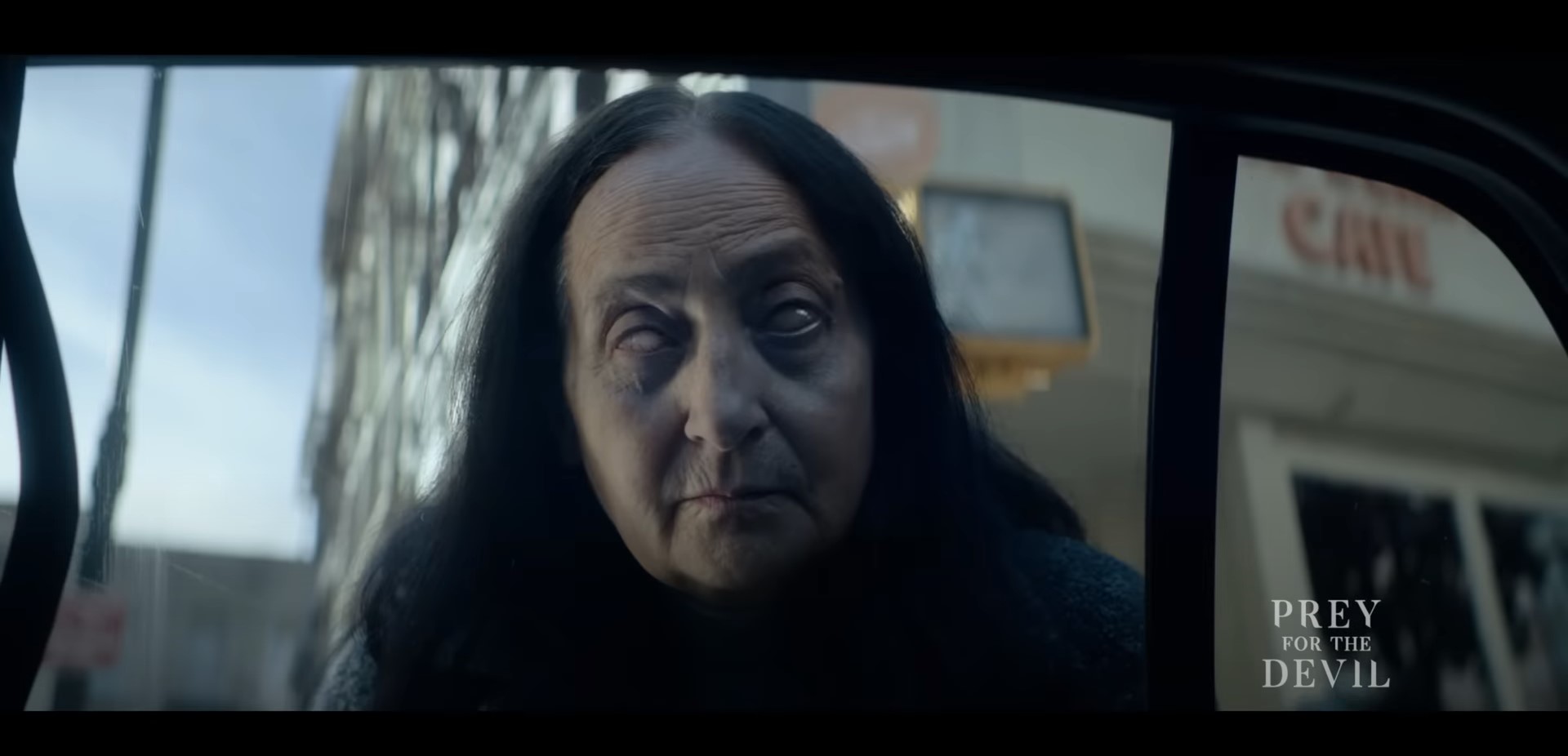
“Prety for the Devil” sets the stage strong by defining from the very opening credits that women were forbidden to perform the rite of exorcism. There’s even back support from Sister Euphemia giving her glares of disapproval and a library that limits the access to priest approved restricted texts, but Ann slides into the realm of exorcisms when little push back that begs the question why no other nun ever attempted to enroll in the demon extraction rituals course? Perhaps being set in the permissive Boston and not the draconian Vatican might have something to do with it, but the theme of inequality is ultimately suppressed and dispelled from the story, leaving Sister Ann to face a one-front battle against the unholy creatures of the underworld inhabiting those closest to her. For supernatural special effects, the computer visual imagery renders a meticulously blended and seamless compositional execution from a team under VF/X supervisor Laurent Spillemaecker (“Overlord,” “Martyrs’). The mesh of reality and virtual reality becomes indistinguishable to the point where good scares scenes come about as a result. There are plenty physical effects that are joint into a pivot from the visuals and the motions don’t have an ounce of clunkiness to them. While we touched upon the theme of inequality of women in the Church, “Prey for the Devil’s” other theme revolves around a fairly common one in films today – guilt or shame. The new angle the story provides ceases to look at possession not from a demon focused level but to reach in and try to convince the person within that they’re at fault for whatever it is they grieve in shame for and to tell them whatever the case may be, no fault is put on them. Novel enough to be interesting, guilt and shame will forever be vilified and demonized, literally, in most horror. For “Prey for the Devil,” the element of anguish proves to be more powerful than most who utilize it, capitalizing in on the power of being overcome by it, and turning it into a nasty, soul-swallowing distemper one may not come back from. This is why Virginia Madsen’s psychiatrist character exists, to provide that presence of psychosis and other mental disabilities that sometimes appear to be demonic in nature to the naked, untrained eye. The story does well to create an alternate universe around this idea by having the Church admit patients with undiagnosed disorders as they could be more than what meets the eye.

Not quite the nunsploitation one might be hoping for, but “Prey for the Devil” envisages self-conscious emotions as a wide-open door for pain, suffering, and unmitigated self-punishment. Lionsgate Home Entertainment presents “Prety for the Devil” on a high definition, 1080p, AVC encoded Blu-ray, DVD, and digital code release with a widescreen 2.39:1 aspect ratio. With tight quarters of Saint Michaels, a fictional location setup from Sofia University in Palo Alto, California, the anamorphic lens compacts hallways and auditoriums cylindrically, offering more space than actuality, but the format doesn’t necessarily fit this type of a film that offers no vast landscape or much depth or long shots. Not much else to say negatively about the digital image that offers a darker, low contrasted tone. The audio track has three audio options: an English Dolby Atmos, a Spanish 5.1 Dolby Audio, and a French 5.1 Dolby Audio. For the English Atmos, the format fully immerses the viewer into a complete surround sound experience with each crescendo jump scares as well as in the middle of a good versus evil quarrel. Crisp and spatial, Atmos on the release takes advantage of the infrasound to build tension where it might be lost in other audio formats and also italicizes the ambient composition into the Nathan Barr’s (“From Dusk till Dawn 3: The Hangman’s Daughter”) classical and haunting lullaby scores. The special features include an audio commentary with director Daniel Stamm and principal lead actress Jacqueline Byers, a 41-minute featurette with in-depth and retrospective interviews with cast and crew Possessed: Creating Prey for the Devil, Nathan Barr’s discussion on creating the score for the film A Lullaby of Terror, exposing the film’s visuals effects The Devil’s Tricks, a feature-length, nearly 2-hour roundtable read of the original first screenplay draft from the cast, and an Exorcist and Psychologist discussion about the possession with screenwriter Robert Zappia mediating (or maybe even moderating) the comments. The physical release comes in a traditional Blu-ray snapper case with artwork cover pictured with one of film’s rememberable scenes. Inside is the digital code slip and outside the snapper is sheathed in a cardboard slipcover with the identical cover art. Possession-exorcism films are just as tired as the zombie subgenre, but “Prey for the Devil” possesses symbolic and doleful undertones inside a superbly acted and an intriguing alternate universe story that’s not too far from the truth in one of the Church’s more confrontational, as well as controversial, methods to battle evil.

“Prey for the Devil” on Blu-ray home video.  Purchase a Copy Today!

Continue reading

Let the Heavens Fall to Cleanse the EVIL Away! “Undead” reviewed! (Umbrella Entertainment / Bluray)

The small finishing town of Berkley, Australia comes under siege by blazing meteoroids that turn the quaint residents into mindless flesh-hungry zombies. A small band of survivors led by the town’s dismayed local beauty queen and a fisherman turned doomsday prepper fight the undead hordes in order to escape the carnage by reaching the city limits, but when faced with an otherworldly monolithic barrier surrounding the town and blocking the exits, a hopeful way out becomes quickly fleeting. To make matters worse, unusual rainstorms drench them with fear of what’s really in the rainwater of the apparent alien attack. In a last-ditch effort, the remaining survivors board a personal prop plane to scale the great extraterrestrial wall that’s imprisoning them with the undead. An onslaught of end of days catastrophes drives their instinct to battle on, to push forth toward living, despite all the evidence of a contrary methodology to the misunderstood, overwhelming alien actions.

A 9-year marriage, three children, the death of my dog, two states, a new home, four jobs, four presidents, and a global pandemic in more than almost two decades’ passing has transpired since the first and last time I saw the Spierig brothers’ 2003 zombie-comedy “Undead” and, still, the 2003 Australian film impresses with a large-scale gore show on a small-scale budget. Before terraforming new vampire words with Ethan Hawke in “Daybreakers” and taking a stab at an entry in the “Saw” franchise with “Jigsaw,” the brothers Michael and Peter Spierig’s first full feature-length venture was an ambitious love letter to their’ most endeared cult films of their youth, more heavily influenced by Sam Raimi’s “The Evil Dead.” Blowing through the meager budget halfway into filming and shooting an insane 40 to 50 shots per day for the better part of two months, the completion of “Undead” was a must for the self-funding brothers under their production banner of Spierigfilm and the success of “Undead” also jumpstarted the careers of cinematographer Andrew Strahorn (“Hostel III,” “Lethal Weapon” television series), production designer Matthew Putland (“San Andreas”), and special effects artist Julian Summers (“Bait,” “Mortal Kombat” ’21).

“Undead” was the first film for Felicity Mason and Mungo McKay in a lead role as that dismayed local beauty queen, Rene, and that fisherman turned doomsday prepper, Marion, mentioned in the above synopsis. Rene seeks to leave the town of Berkley in the wake of the tragic death of her parents before becoming the burdened beholder of their debt; instead, she thrusted into a crisis that won’t allow her to escape so easily from a destiny laid out for her in hometown. Mason’s humble portrayal of Rene is nearly invisible compared to her more boisterous and gun-fu counterparts but grounds us to an agreeable realism of reactions whereas Marion’s limitless gun-toting out of his fishing overalls and Matrix-like gunplay moves adds that layer of voguish fun of the Chow Yun-fat variety. The other four survivors fall into the run-of-the-mill of yowlers and cutting personality types who throw around their weight and cowardly sarcasms in immediate show of unfounded animosity. Supposedly, a longer cut of “Undead” provides more backstory for father-to-be charter pilot Wayne (Rob Jenkins, “Australiens”) and the law enforcement neophyte Molly (Emma Randall, “Bullets for the Dead”) but the release copy which this review is based off was not of that longer cut. Dirk Hunter supplies a purge of negative comic relief as Harrison, the chief constable without a clue, and Lisa Cunningham’s Sallyanne is Wayne’s antagonizing pregnant lover of bitterness as she comes in second place next to Rene at the local beauty pageant and seizes moments, during all Hell breaking loose, to confront Rene’s rope-wrangling talent that won her the cast prize.

Over the past year, I watched and reviewed another Australian sci-fi horror “Dustwalker” from director Sandra Sciberras where crash landed space objects turned the local dustbowl residents into the resemblance of zombies and connected to the chaos is a not from this world creature. I likened “Dustwalker” to be a lesser, weaker, total rip-off of the Spierigs’ ozploitation rager and I still stand 100% behind my claim as I reaffirm “Undead” to be the reigning supreme champion, and “did it first” as far as story goes, between the two nearly identical narrative plots. There’s an uncrushable affinity for “Undead’s” bold risk of looking at the bigger picture head on and absolutely landing each scene whether in prosthetics or in post with better than your average computer rendered imagery. Are the effects the sleekest, most realistic, graphics you’ve ever seen? Absolutely not but what they are are ultra-rich in creative detail rather than quality detail and can give most substantial budgeted films a run for the money, especially in the closeup shots that can be an obvious slapdash, might as well be silicone, fake. The Spierig brothers also don’t overcomplicate the plot with survivors trying to simply quickly decamp the overran town madness with plot points sensible to character designs and not relying on gratuitous happenstance scenarios for the sake of gore alone. However, do believe me when I say that “Undead” will delight gore geeks with a gut-spilling, face-lifting, head-decapitating mixture of zany zombie knockoffs that are steady throughout. If you’re deciding between the more recent “Dustwalker” and the now almost considered antique 15+ year-old “Undead,” the choice is clear with “Undead’s” superior campy, shoot’em, blood-splattering zombie mayhem.

For U.S. horror viewers looking for something that borders obscurity and might be out of their comfort zone, “Undead” has yet to make an appearance on Blu-ray, surprisingly enough. Only the Lionsgate DVD version is the known, and authorized, copy to be released in America. For those searching high and low, the all-region Blu-ray from the Australian distributor, Umbrella Entertainment, offers a 2-disc alternative with a new 1080p, Full High-Definition, release as volume # 12 on the company’s World on Film: Beyond Genres banner. The Aussie cult modern classic is presented in a widescreen 1.77:1 aspect ratio and with a runtime of 97 minutes, mirroring the U.S. DVD length which is a bit disappointing as longer cuts of the film do exist on other European releases. Day scenes play into an agreeable enough flat, more natural, color scheme with some serious grain in the 16mm film stock use, moving the photography toward a retro de-aged semblance courtesy of Spierigs’ cult film homage, but the darker scenes, mostly through a moderately intense blue filter, sees the unstable pixelation flareups, especially in black blank spaces and I’m taken aback by the lack of touchup to clear up any stylized misgivings. Umbrella offers two audio options – an English 5.1 DTS-HD Master Audio and an English 2.0 DTS-HD Stereo. Paired with an excellent soundtrack, the audio tracks do “Undead” complete justice without a smidgen of lossy fidelity. With plenty of action to go around – firearm discharges, explosions, zombie grunts/groans/sneers, and sundry of miscellaneous and oddball effects – each elemental output is distinct and clear. The dialogue renders nicely as well. Umbrella holds a few exclusive and rehashed special features that include an audio commentary from Peter and Michael Spierig and cinematographer Andy Strahorn, a raw video behind-the-scenes look on the set of “Undead,” the more production quality making of “Undead,” “Attack of the Undead” short films from the Spierig brothers that inspired the feature, home-made Dolly Video, the camera and makeup tests, still gallery, and theatrical trailer. Plus, an exclusive Simon Sherry illustrated art on the front covers of the snap case and the cardboard slipcover along with reversal DVD cover art and a second disc containing the complete 17-track soundtrack from Cliff Bradley. The rating is listed as an Australian certified MA 15+ for horror theme, medium level violence. which sounds severely tamer than it is for the more recent video nasty with all its zombies punching holes through hapless skulls, bloody brain munching, gooey face ripping, and severed torsos with spine exposures.