Trapped Inside His Own Body While EVIL Buries Him Alive! “Short Night of Glass Dolls” reviewed! (Celluloid Dreams / 4-Disc 4K UHD and Blu-ray)

Collector’s Run to Grab Celluloid Dreams’ “Short Night of Glass Dolls” on 4K UHD and Blu-ray!

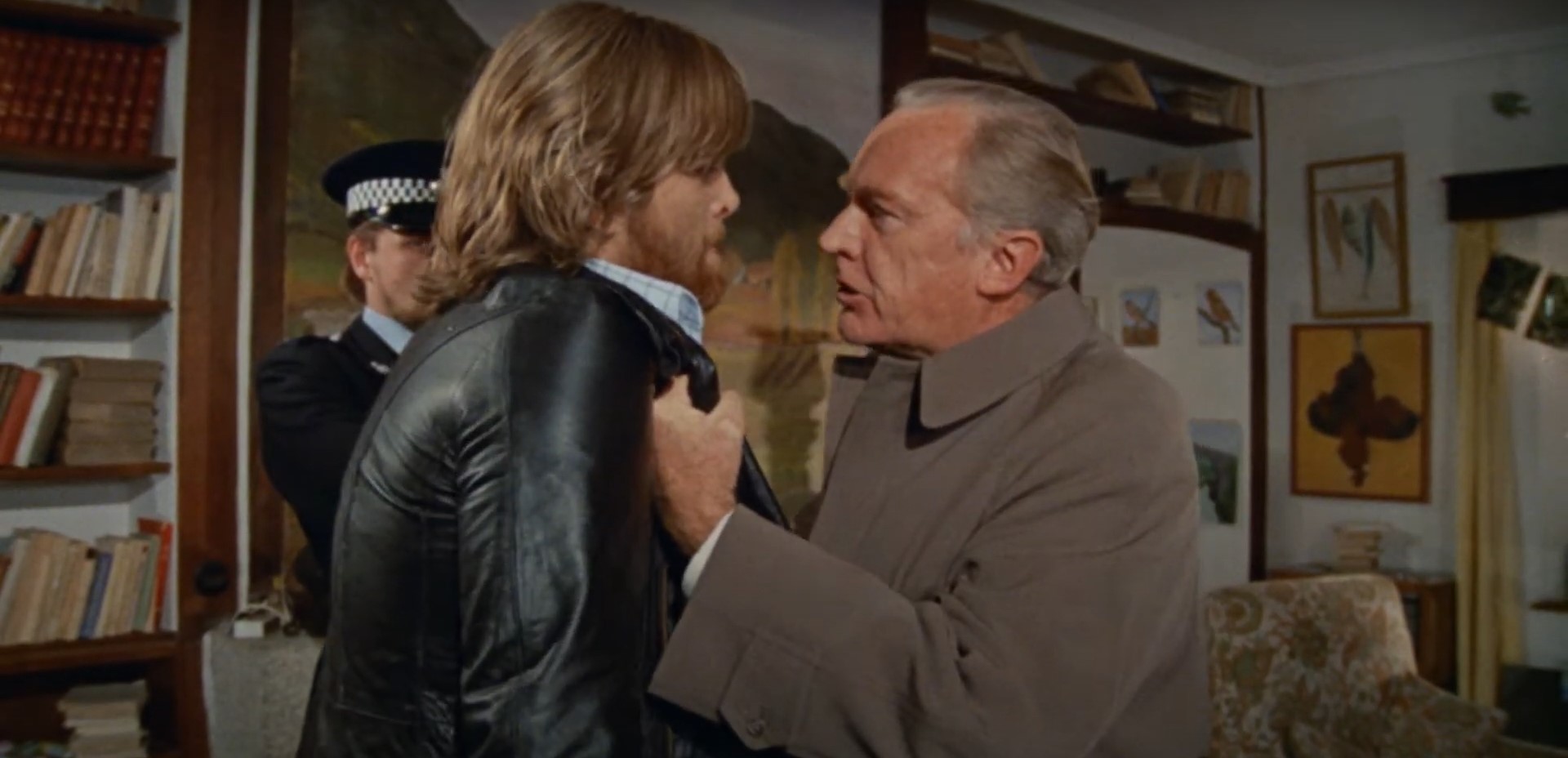
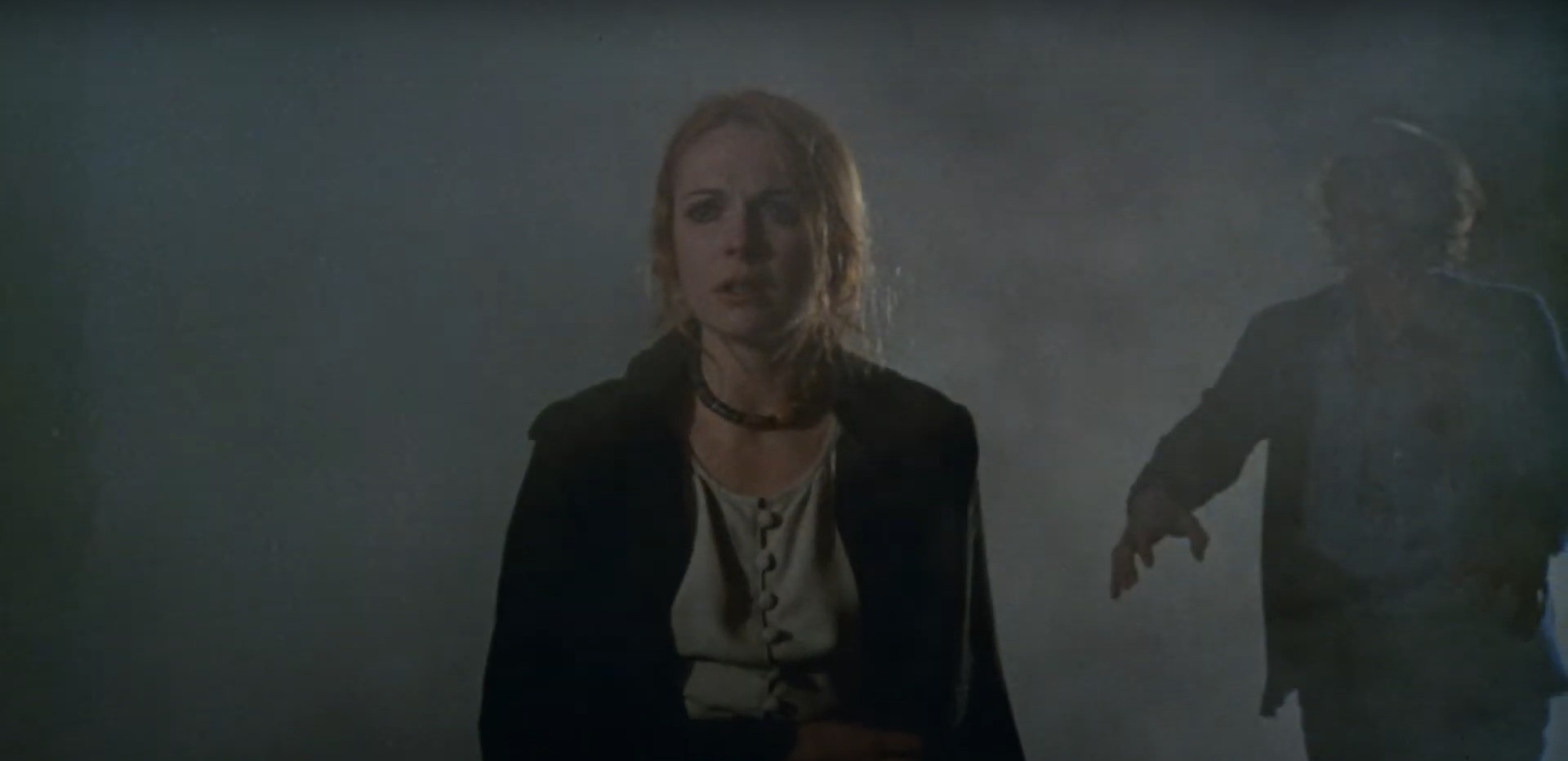
Gregory Moore’s body is found motionless and wide-eyed in a Prague Plaza and is confirmed deceased by local doctors, but Moore is actually alive, paralyzed and trapped inside with only his inner voice able to cry for help.  As his mind races about how to communicate with those around him, Moore must recall the previous days events to see how he ended up this way.  Days before, the American journalist, currently stationed in Prague and soon to be relocated in another European country once his assignment comes to term, is visited by his beautiful girlfriend Mira and they attend an affluent party hosted by socialite Valinski.  Soon after, Mira disappears from his apartment late a night, leaving all her belongings behind in his apartment and as the police begin to suspect Moore as primary suspect, the journalist uses his trade to discover a powerfully mysterious and sexually depraved organization, known as Klub99, may be behind her disappearance.
Aldo Lado’s written-and-directed murder mystery goes by many Italian and English names:  “Short Night of Glass Dolls,” “La Corta Notte Delle Bambole di Vetro,” “Malastrana,” “La Corta notte delle Farfalle,” “The Short Night of the Butterflies,” and, finally, “Paralyzed.”  Doesn’t matter what you call it, “Short Night of Glass Dolls” needs very little title nomenclature as Lado, a dark sided and rich yarn spinner of Italian cult cinema with credits like “Who Saw Her Die?” and “Last Stop on the Night Train,” debuts his 1971 tale of mystery with precision and style that speaks global themes of affluent power for the sake of retaining that power as well as their youth.  The Italian production is a cross-country affair being filmed in not only Italy but also in Croatia, Slovenia, and Prague and is a production of Doria Cinematografica, Jadran Films, and Dieter Geissler Filmproduktion with Enzo Doria (“Beyond the Door,” “Tentacles”) and Dieter Geissler (“Kill! Kill! Kill! Kill!,” “The NeverEnding Story”) as producers.

“Short Night of Glass Dolls’” American protagonist was actually not played by an American but by French actor Jean Sorel with a handsome stached face, bronze swagger, and whose taste of giallo carried into the Lado film after acting in “The Sweet Body of Deborah” and Lucio Fulci’s “A Lizard in Woman’s Skin.”  It’s not surprising or even uncommon for a 1970s through the 1980s Italian production to cast non-native Italians to star and perform as Italy sought foreign talent to be highly marketable abroad and “Short Night of Glass Dolls” is bursting with international talent from America, Yugoslavia, and Sweden to perform alongside Italians.  The only American in the film is the petite and lovely Barbara Bach whose career was mostly a decade and half of Italian films, including “The Great Alligator,” “The Humanoid,” and “Black Belly of the Tarantula.”  Bach’s short stint as Moore’s girlfriend, Mira, is the epitome of innocence and cherished love, an quality lost by Moore because of his work blindness and his philandering with colleague Jessica, “Salon Kitty’s” Ingrid Thulin entrenched into Jessica’s passion for Moore but also keeping a stark low-profile on her looks against Mira with Thulin’s naturally blond hair contained in a colorful headwrap for most of the film.  The love triangle is downplayed from the early revealing signs that Moore may be playing both sides but from the moment Mira vanishes, Moore and Jessica, along with fellow journalist Jacque (Mario Adorf,  “What Have You Done To Your Daughters?”) become a single unit of vocation to find Mira and they bitterness drains from Jessica to just despair by the shocking finale when all the cards laid upon the table.  Lado neatly keeps a tight lid on Klub99’s patrons with only the assures of Valinski as the organization’s ringleader of undisclosed purpose.  José Quaglio (“The Eroticist”) dons well as the oligarchal head keeping a low profile that emerges out like sordid serpentine of perversion and wickedness.  Daniele Dublino, Fabijan Sovagovic, Relja Basic, Piero Vida, and Semka Sokolovic-Bertok are the Croatian and Italian support actors that fill out the cast. 

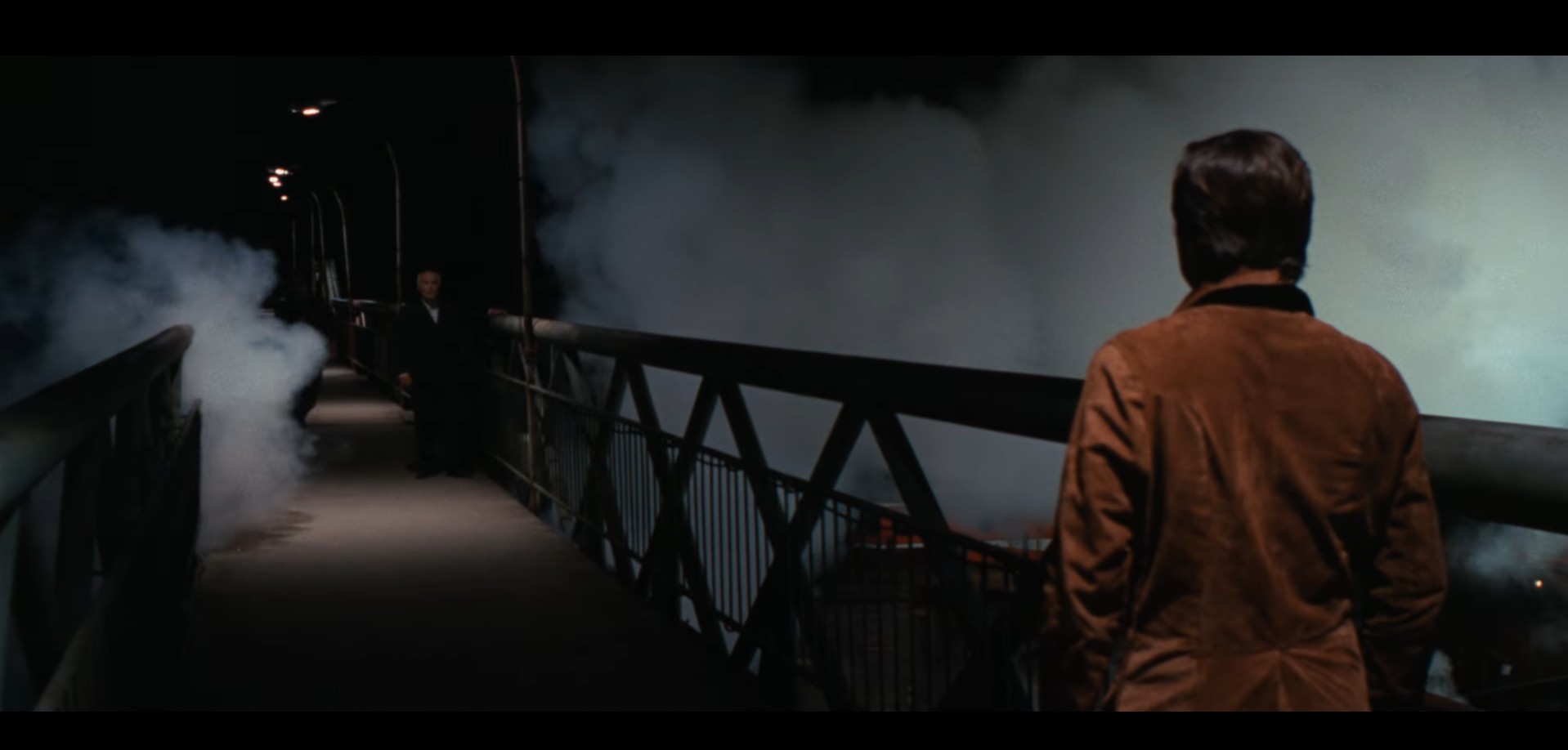
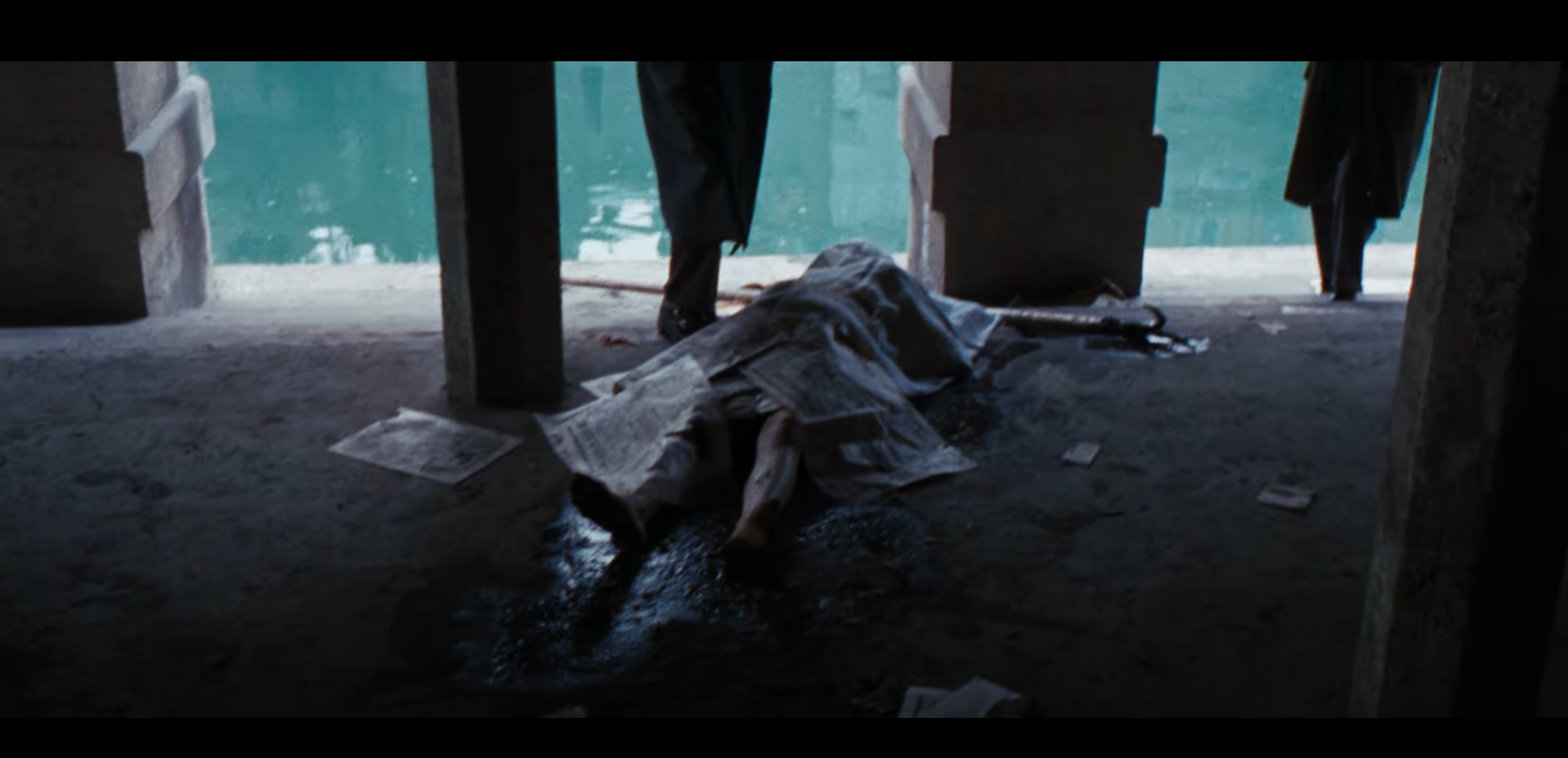
Aldo Lado’s debut film pins him as a productional prodigy with a naturally gifted cinematic eye and a phenomenal storyteller.  “Short Night of Glass Dolls” sallies forth in an untraditional, nonlinear narrative through the perceptive procession of a paralyzed man’s thoughts and recollections.  That man being journalist Gregory Moore who audiences are first introduced lying motionless in the bushes of the plaza morning and, from the start, Moore is at the mercy of bystanders, medical professionals, and friends who mostly believe he’s dead but, on the inside, is in his thought’s echo chamber screaming for help.  Every frame captures the act and emotion, amplified even more so when Jean Sorel is absolutely still, eyes open, and withstanding forces upon, such as chest compressions, to which he doesn’t even flinch.  Lado finds beauty in the macabre imagery when dead women are laid out nude, splayed with an arrangement of flowers or juxtaposed wet against a dry paved ground.   Lado also doesn’t cater to a fixed position and, instead, tracks the characters with smooth movements, coalescing at times a back-and-forth or side-to-side to get lengthier, more dialogue and dynamically enriched, scenes with director of photography, Giuseppe Russolini (“Firestarter”), achieving a naturally dissemination of lighting and color.  “Short Night of Glass Dolls” is not a film without flaws as Moore’s investigation takes the easy pickings route as if briefly glancing over the reported missing, naked women list is an automatic ladder to the winner’s circle for unearthing mostly everything of an deprave inner circle of the powerful rich and so Aldo cheats a little to give his story’s theme of flightless butterflies some much needed wings.
Following up on their definitive, carefully curated, stunning release of Giuliano Carnimeo’s 1972 giallo “The Case of the Bloody Iris,” Celluloid Dreams doesn’t pump the breaks delivering their latest “Short Night of Glass Dolls” with an all-encompassing, 4-disc collector’s edition set that includes 4K UHD and Blu-ray. Scanned and restored in 4K from the original camera negative, the UHD is an HVEC encoded BD100 with 2160-pixel resolution and the Blu-ray is AVC encoded BD50 with 1080-pixel resolution. It goes without saying that both transfers are impeccable in their damage and blight free form for those who might have owned or once owned the cropped, VHS-sourced release under one of its many titles, “Paralyzed.” The grading blends a natural, dynamic pop with peppered psychedelic trips down the dark rabbit hole with Klubb99 is open for business and the color is diffused with balanced, natural saturation, adapting to lighting of all varieties. UHD offers a richer depth of focus with the increased pixel Dolby Vision seizing better delimitation around objects, but that doesn’t mean the Blu-ray doesn’t do the same, the UHD just enhances it by a quarter approximate percentage, while still keeping healthy, transpicuous grain. Two fidelity-true 1.0 DTS-HD offers mostly a dialogue entrenched mix that, audibly, has an imbalance against a rather omitted ambience and that’s not the release’s doing but rather a lack of Foley work amongst an ADR English or Italian track. Ambience hits where it counts but there are times when establishing shots or slow pans of Prague go nearly into a coma state, letting the dialogue and the renowned Ennio Morricone’s piano, triangle, and melodic vocal score take flight through the course of the mystery. English subtitles are available for the Italian language track. Disc one and two not only contain the feature but also contain identical extras with writer-director Aldo Lado & and Freak-O-Rama’s Frederico Caddeo feature-running commentary, a second parallel commentary track with Celluloid Dream’s founder Guido Henkel, an assortment of trailers labeled as grindhouse, Italian, English, and the Catalepsis, with an isolated score that pedestals Ennio Morricone’s score. Disc three delves into the Italian-language, English-subtitled feature documentaries and featurettes with a 2015 archived interview The Nights of Malastrana, clocking in over 100 minutes, that have isolated discussions with Aldo Lado and actor Jean Sorel, All About Aldo is another archived interview with the director circa 2018, The Quest for Money is an interview with producer Enzo Doria, To Italy and Back touches base with producer Dieter Geissler’s perspective and historical context, The Most Beautiful Voice in the World interviews Italian singer Edda Dell’Orso’s haunting vocalizations on Morricone’s score, Cuts Like a Knife speaks to editor Mario Morra, the Flying Maciste Brothers’ video essay The Man on the Bridge: Philosophy, Perception and Imprisonment in Aldo Lado’s ‘Short Night of Glass Dolls,’ the alternate title Malastrana’s German export credits, and an image gallery. Finally, disc four brings the encoded special features home with not one, but two alternate cuts of the film, a 35mm Grindhouse version and the cropped Paralyzed VHS version. If you thought the encoded special features weren’t hefty enough, Celluloid Dream’s physical presence is certainly imposing with a rigid slip box with newly designed cover compositional cover art on back and front, a massive 64-page color picture and poster booklet features a retrospective essay from Andy Marshall-Roberts as well as reprinted column and magazine reviews from the film’s initial release, and, of course, the thick Amaray case, which is surprising in the traditional Blu-ray blue rather than the 4K UHD black. The cover art is an original rendition that brings all theme elements of giallo into the illustrated fold in circling chaos of catalepsy with the reverse side displaying the same image but titled in Italian. Inside, an advert for “The Case of the Blood Iris” and their upcoming third title “La Tarantola dal Ventre Nero” is inserted. The 4K is region free while the Blu-ray is hard coded region A. The unrated main feature has a runtime of 97 minutes.

Last Rites: Celluloid Dreams pursues excellence and strikes twice achieving it with a heart-and-soul poured release that by far has blown all other limited-edition copies, collector sets, definitive releases out of the water and “Short Night of Glass Dolls” deserves every bit of the attention.
Collector’s Run to Grab Celluloid Dreams’ “Short Night of Glass Dolls” on 4K UHD and Blu-ray!

The Gates Are Opening and The EVIL Wants to Squish Your Brains! “City of the Living Dead” reviewed! (Cauldron Films / 4K UHD – Blu-ray)

Cauldron Films’ “City of the Living Dead” on 4K and Blu-ray 3-disc Release!

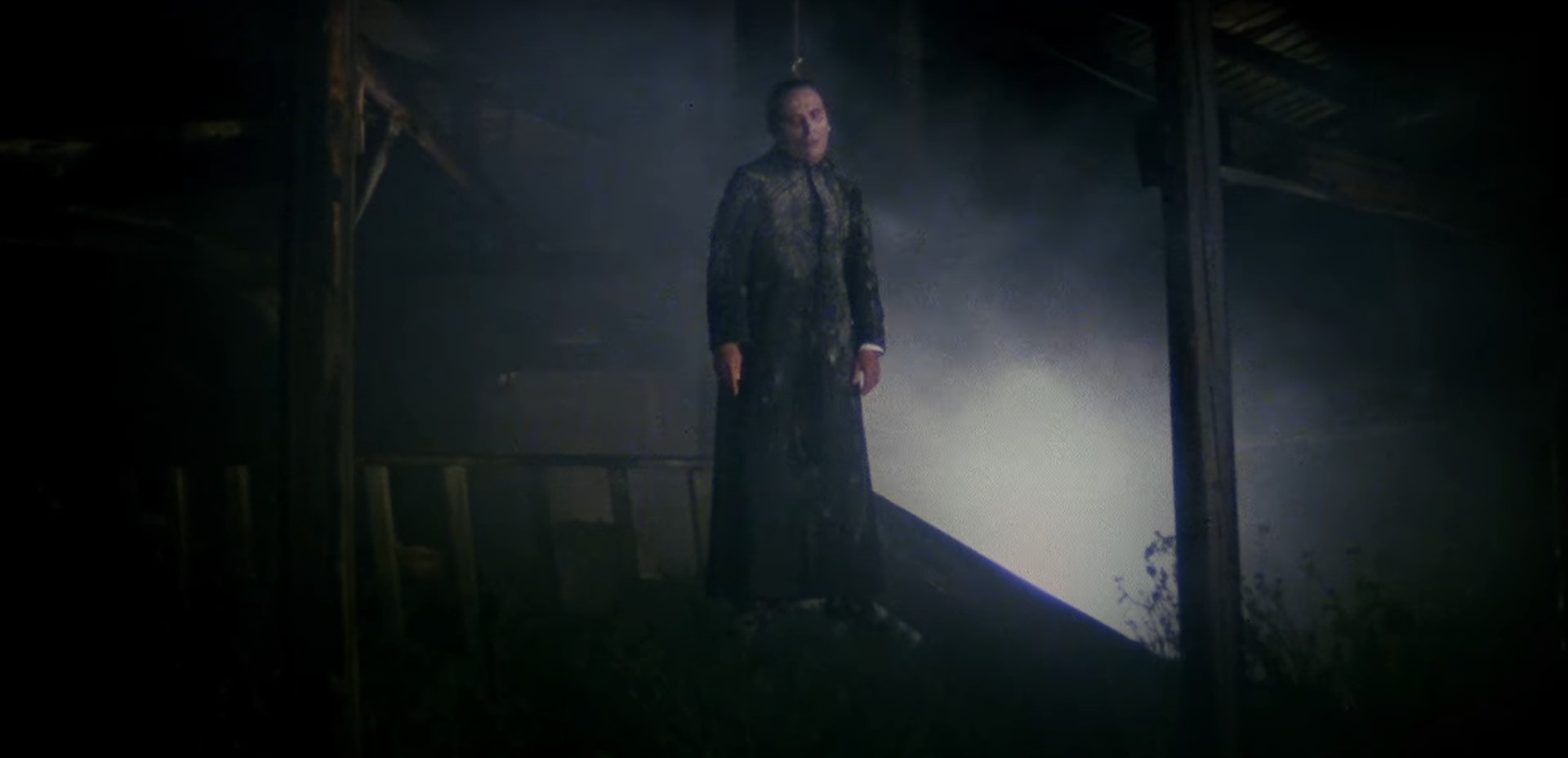
In the Dunwich, a priest commits suicide by hanging himself in the Church’s graveyard.  In the same instance, a psychic based in New York City holds a séance where she witnesses the beginning of the gates of hell opening.  The order sends the psychic into sheer fright that nearly kills her.  A reporter digging deep into the near death of the young woman also buried alive and befriends the psychic, following his nose for a good lead despite its absurd sounding hoodooism of death apocalypse in less than 72 hours.  The psychic and reporter travel to the hard-to-find Dunwich town where the residents have been mysteriously vanishing or discovered dead of curious causes.   Baffled by all the strange occurrences is the town psychiatrist who witnesses first hand the troubles that stir fear into those close to him.  When the psychiatrist teams up with psychic and reporter, they must venture to the very depths of crypt Hell to close the gates and stop the dead for rising before All Saints Day.

The Godfather of Gore Lucio Fulci undoubtedly lives up to his title, establishing himself as one of Italy’s more profound and substantial horror filmmakers before his death in 1996.  “City of the Living Dead” came at the height of Fulci’s success after his breakout into the American market with “Zombie” or “Zombi 2,” an unofficial sequel to George A. Romero’s superb “Dawn of the Dead.”  Yet, Fulci didn’t follow suit with “Dawn’s” social commentary and pale-faced flesh eaters; instead, the writer-director stemmed his undead creatures from black magic hoodooism set in the sunny and sandy Caribbean islands with just as much visceral violence as his inspiring mostly Pittsburgh-based counterpart.  Alternatively known as “The Gates of Hell,” the Italian production of “City of the Living Dead” remains set in the U.S., filmed in New York and the surrounding metropolitan northeast, as the first part of the Gates of Hell trilogy that coincided with “The Beyond” and “The House by the Cemetery,” both of which were released approx. a year later.  “City of the Living Dead” is a Dania Film, Medusa Distribuzione, and National Cinematografica production with Fulci producing as well as the American Robert E. Warner (“Return of the Swamp Thing”) as executive producer.

A medley of nationalities make up “City of the Living Dead’s” who either are or are playing American characters.  Comprised mostly of Italian actors Antonella Interlenghi (“Yeti: Giant of the 20th Century”) as one of the first doomed Dunwich victims, Michele Soavi (director of “The Church”) as a canoodler with his brains being squished, Daniela Doria (“New York Riper”) as the other canoodler having her innards become outers, Fabrizio Jovine (“The Psychic”) as the hung priest who started all this mess and as the harbinger of the living dead, and Carlo de Mejo (“Women’s Prison Massacre”) in the psychiatric lead.  There’s an abundancy of diverse Italian flavor that definitely grounds “City of the Living Dead” as an Italian production, but a minor chunk of the cast are Americans with co-principal Christopher George (“Graduation Day,” “Pieces”) as a rakish NYC reporter forcing his way into a minor lead turned major forthcoming day of reckoning and Robert Sampson (“Re-Animator”) in a minor law enforcement role that bears little significance.  Sprinkled in the cast is also the Swedish-born-turned-Italian actress Janet Argen (“Eaten Alive”) as the psychiatrist patient and UK actress Catriona MacColl rounding out the principal cohort as the psychic.  MacColl is the only actress to have a role in all three of Fulci’s Beyond the Gates films, playing different characters in each.  Between Christopher George’s skeptic playfulness, Janet Argen’s uncontrollable hysterics, and in the unmalleable wrought shock of fear, the sundry cast doesn’t hinder the performances that mesh well under the greater air of portent and the hours leading up to end of days.  Giovanni Lombardo Radice (“Cannibal Ferox”), Luca Venantini (“The Exterminators of the Year 3000”), Adelaide Aste, Venantino Venantini (“Cannibal Ferox”), Robert Spafford, James Edward Sampson (“StageFright”), Perry Pirkanen (“Cannibal Holocaust”), Michael Gaunt (“Forced Entry 2”), and filmmakers Robert E. Warner and Lucio Fulci costar.

Through an unexplained mysticism and preformed stipulations on why the priest was the be all end all gatekeeper to the dead’s awakening on Earth other than Dunwich was original built upon the ruins of a witch-burning Salem, Massachusetts or why the day after the unmentioned Halloween season (likely because Italians do not celebrate Halloween with an abundance of candy and custome), All Saints Day, becomes the zero hour date when clearly the dead are already fatally impacting lives in the corporeal realm, Lucio Fulci masterful magician qualities diverts attention away from seemingly crucial elements of the plot toward a complete and total elemental atmosphere of fear, using eerie fog, whipping wind, and phantasmagoria imagery of the macabre to implant chthonic horror slowly rising above ground.  Makeup artist Franco Rufini recesses the sight sockets with deep, infraorbital darkening under the eyes in stark contrast with the pale shade skin, creating that classic yet effective zombified corpse casing in conjunction with special effects artists Gino de Rossi (“Burial Ground:  The Nights of Terror,” “Cannibal Ferox”) use of ground raw meat or whatever the gushy material used to construct the cerebrum contents that just squishes to a pulp between the fingers of the undead when they grab a fist full of hair, skin, and brains from behind an unlucky left living.  There’s quite nothing like a Lucio Fulci film where the ghouls knock on the door from the other side, threatening the land of the living, the world even, with a sound and steady ghoulish malevolence and death in a well-lit and framed Fulci-scope to hammer down defined purpose that drives a penetrating stake through the chest bone and into a chilled soul.

“City of the Living Dead” goes beyond the format gates and arrives onto a 3-disc 4K/Blu-ray release from Cauldron Films.  2160p Dolby Vision 4K and a 1080p AVC encoded high-definition options really put this Fulci classic back on the map, unlike the small, forsaken city of Dunwich. The 4K UHD is an HEVC encoded, 2160p Dolby Vision ultra high-definition resolution while the AVC encoded Blu-ray sports 1080p high-definition, presented in a widescreen 1.85:1 aspect ratio. Through the translucent mist of natural, good-looking grain, Cauldron Films have hyper-accentuated the atmospherics with a clean rendering of the innate cooler-to-warner photography grades of blue-to-yellow with creating a harsh contrast transition. The encoding never shows an ounce of detail distress to keep textured and palpable image of the darkened crypt or the thick fog exteriors that often would degrade decoding with omitted data. The Cauldron Films release retains and sustains bitrate that fastens the dark levels to a robust and effective pitch black. What’s neat about this release is the ability to toggle between the English DTS-HD 2.0 Mono and the Italian DTS-HD 2.0 mono, both post-recorded in standard with Italian productions. Both tracks are comprehensibly sound with a clear and clean dubbing with the only detailed differences being one in English language and the other in Italian and the title card switched out for the each. Between the two, range is exact on both with not a lot of superfluous ambient sound and both tracks offer a near blemish free experience in a robust context of atmosphere. Disc 1 and 2, 4K UHD and Blu-ray respectively, come with new audio commentaries, including with cult film critic Samm Deighan, author of Italian horror cinema Troy Howarth and film critic Nathaniel Thompson, as well as individual archival commentaries with actors Catriona MacColl and Giovanni Lombardo Radice. Disc 3 includes an interview with production Massimo Antonello Geleng, actor Giovanni Lombardo Radice, and on-stage Q&A with Venantino Venantini and Ruggero Deodata (“Cannibal Holocaust”), a Q&A with Catriona MacColl, a Q&A with composer Fabio Frizzi, interviews with special effects artist Gino de Rossi and principal actor Carlo de Mejo, A Trip Through Bonaventure Cemetary – an explorational and historical account on the main cemetery where the priest in the film hangs himself, trailers, an image gallery, and other archival interviews in a near feature-length collection of conversations with cast and crew reminiscing about Lucio Fulci during filming. The 4K UHD and third disc packed with special features are region free while the Blu-ray remains region A locked in licensed playback on the format. Both features have a runtime of 93 minutes and the release is unrated. Emerging from the gates of standard definition hell, Cauldron Films tempers Lucio Fulci’s “City of the Living Dead” to a foreboding crust, burgeoning with ominous clout the undead’s underscoring resurrection.

Cauldron Films’ “City of the Living Dead” on 4K and Blu-ray 3-disc Release!

House Music is EVIL’s Jam! “Rave” reviewed! (Scream Team Releasing / Blu-ray)

Get High and Get Pumped for “Rave” on Blu-ray.

Free flowing Mimmi and her timid pal Lina are invited to an underground night club for one more illegal rave party before the building is vacated for unlawful occupation.  As the two dance the night away, Lina becomes steadily ill and as she tries for the bathroom, she begins to bleed from her skin.  Other rave goers begin to feel the same effects, spewing blood, dripping skin, and a melting away existence while the strobe lights unceasingly flicker and the deep house music pulsates into a fixed one-note bass.  Mimmi and another friend escape the party before even the first signs of the illness, hiding away to do a line cocaine, but when they’re followed by those turned into slow walking bags of oozing flesh, no longer resembling something human, her friend is brutal killed and she barely eludes the ill-fated ravers, becoming trapped inside by those liquifying creatures and a pair of masked individuals seemingly unaffected by what’s occurring around them.

Often times there comes a film that sneaks under the radar and may warrant a second watch for it to sink under the skin or into the recesses the brain’s grey matter.  For writer-director Nils Alatalo, his Swedish melt horror “Rave” is the epitome of context.  The 2020 released independent production, known as “Svartklubb” in the Swedish language, is Alatalo’s debut feature that catapults the filmmaker into the same melt movie categories held in reverence by fans of “Body Melt” or “Street Trash” while kissing the outer edges of vintage and cult iconic eurotrash from the 80’s.  “Rave” will be our consecutive watch, analyze, and review into body horror, following the more gore-gorging merge of man and machine of Davide Pesca’s “Re-Flesh” released last year.  “Rave” proclaims a more stylized and abstruse approach compared to Pesca’s grossly unconcealed transgressions of the body.  Haveri Film is the production company behind “Rave.”

“Rave” asynchronously follows two central characters beginning with the rave-reserved and dry-hesitant Lina before a switcheroo into dipping into the carefree, go-with-the-flow, drug-positive Mimmi.  Played correspondingly by Tuva Jagell (“Girls Lost”) and Isabelle Grill (“Midsommar”), the main principals are a dichotomizing pair of personalities mutually connected to each other by friendship and though Alatalo ultimately decides not to fully explore the intimacies of a cherished bond in post-climax, there’s certainly a relatability audiences will be able to understand amongst their own friendship terms, such as seemingly tired of the meekness or revel in being the dominating friend, as being fostered with empowerment, or on the opposite side of the spectrum, needing a friend to take charge, provide reassures, and be a beacon of exuberance.   However, all the letting go on inhibitions come at a cost, a deadly one at that, and when they essentially are the peak of being identical for perhaps the first time in their lives together, the closeness of Lina and Mimmi become mortally unraveled by what could be described as pure, unadulterated Hell.  What also unravels is their friendship in the midst of drugs coursing through their bloodstream and their minds have shutoff with the trance rhythm of the house music, both aspects of which put up walls to deflect the danger from within and around them, making them clueless to the clues.  Jagell and Grill’s performances have more physical importance than whatever come be extracted from their slim dialogue written for the characters and the two young actresses convert themselves into the roles of psychedelic terror. “Rave’s” partygoers round out with Victor Iván, Sophie Lücke, Ebba Gangoura, Sebastian Norén, Christer Wahlberg, and Celina Braute.

“Rave” is a flash of brilliance tightly confined and bottlenecked to not be bigger than needed by squeezing to contain its claustrophobic purgatory that’s wrapped like a nightmare on molly.  “Rave” is also not a straightforward line of coke, glow sticks, and fleshy fluid fiends within what is an ambiguous narrative that requires an open mind to its reverence for elder Euro horror.  That’s what I suspect Alatalo was shooting for here, an immense adoration and respect for European horror peppered with inspirations from American filmmakers as well.  Soft brilliance of Dario Armento lighting, silhouette eeriness of Lamberto Bava cinematography, and the slow bloodletting of Lucio Fulci’s gore represent the best qualities of same continental yore while including a John Carpenter story-ingrained synth score and paying homage to American melt horror filmmakers, such as J. Michael Muro, Gregory Lamberson, and Philip Brophy to name a few, with his own rendition of what it means to have skin slink and blood secrete from inside the body out.  While the first viewing doesn’t quite stimulate immediately the senses with its slow burn dread, ambiguous cause and effect, and dialogue adverse script, “Rave” glues itself to the psyche and lingers in that cranial netherworld that nags and gnaws at the subconscious and does it enough that a second viewing becomes necessary.  Instantly, piecing together the puzzle through a second visual overlay can jumpstart the engines on what exactly we’re witnessing – Alatalo’s patience with the structure, meticulous details in the scene, and admiration for the genre.  “Rave” is also an indie picture on a budget but considering the composition of the final product, “Rave” strongly accomplishes a persistent uneasiness without exposition that parallels subtle strikes of sharp, startling dread only seen by a handful of filmmakers.    

A whole new version of neon dead arrives onto a special edition Blu-ray of Nils Alatalo’s “Rave” from Scream Team Releasing.  The AVC encoded, 1080p high definition, BD25 presents the film in a widescreen 1:78:1 aspect ratio, scaled down from the original aspect ratio of Univision 2.00:1 causing some minor compressed looking scenes.  Not to be deterred, the range of scene setups under the cinematography trio of Jakob Ivar Ekvall, Amelia Finngåård, and Gustav Råström offer an eclectic mix often in the humblest of fashions, such as using just a camera flashlight in a windowless room or the red and blue neon lighting through fog machine.  Silhouettes delineate nicely on screen with the use of backlighting and camera angles.  Framing is a hit or miss coupled with energetic editing, but the overall atmosphere is agreeably chafed with tension.  Minor banding and some aliasing creep out as artifact side effects of a dark-laden story with some of the quicker moments evading the slimy-secretors through the building trying to keep up through the decoding of data.  The compression issues are not terribly invasive during viewing, but they are annoying consistent and notifiable.  The Swedish uncompressed LPCM 5.1 surround mix has lossless binding and sounds really good environmentally albeit many of the tracks are done in post, such as some of the exterior dialogues, which sound natural but softer in the scene, and the itemized milieu ambience.  The Joakim Martinsson and Christer Wahlberg house music and soundtrack are the real victors here integrated into “Rave’s” overall sound design of having the discordant industrial rhythms and irregularities become an antagonistic competitor breathing through the back and side channels, reminiscent of how intrinsic Giuliano Sorgini’s score heightened the intensity of the impending zombie attack.  English subtitles are optionally available.  Bonus features include an English commentary by director Nils Alatalo providing insight on nearly every shot, a soundtrack featurette alternating between Joakim Martinsson and Christer Wahlberg discussing and sample their individualized tracks, a making of montage with soundtrack only, and the film’s trailer.  The physical characteristics of the release contain a beautifully macabre composite in neon coloring and lace slipped into a standard Blu-ray snapper with latch.  Front cover is reversible with a more disheveled and strung-out Isabelle Grill looking blankly upward, which has a variation of her facial posture on the factory-distributed cover.  Disc art contains one of the gloppy ghouls bathed in red with a black background.  “Rave” release comes region free, not rated, and has a runtime of a brisk 72 minutes.  A slow burn melt movie capturing the essence of “Rave” to the grave.

Get High and Get Pumped for “Rave” on Blu-ray.

EVIL Inspires a New Concert. “Nightmare Symphony” reviewed! (Reel Gore Releasing / Blu-ray)

“Nightmare Symphony” is a Falsetto of Praise for Lucio Fulci.  Purchase the Blu-ray Below!

Unable to cope with another large box-office failure, the American indie horror director, Frank LaLoggia, is in the travails of a make-or-break psychological thriller overseas in Kosovo.  With an executive producer forcibly pulling LaLoggia’s creative marionette strings and the film’s screenwriter displeased and disapproving LaLoggia’s arm-twisted version of the story, the struggling director finds himself frantic and in the middle of a breakdown caught between a rock and a hard place with a postproduction from Hell.  Those around him, the conceited producer, the upset screenwriter, the pushy wannabe actor, and more, are being hunted down and brutally murdered by a masked killer and the imaginary line between Frank’s reality and paranoia grows in intensity coming down the wire of completing his career-saving, or rather lifesaving, film.

Long time since I’ve heard the name Frank LaLoggia enter the dark corners of my brain as it relates to the horror genre.  The director of 1981’s “Fear No Evil” and 1995’s “Mother” had seemingly vanished from the director’s chair spotlight and more-or-less, or rather more so than less so, vanished from the broader film industry altogether.  Then, Domiziano Cristopharo’s “Nightmare Symphony” suddenly drops on the doorstep and there’s Frank LaLoggia, starring in the lead role of an Italian horror production.  Domiziano, known from his entries of extreme horror, such as with “Red Krokodil,” “Doll Syndrome,” and “Xpiation,” engages LaLoggia to act in an unusual role, as himself, and turns away from the acuteness depths of uber-violence and acrid allegories to a toned down, more conventionally structured, narrative inspired by the Lucio Fulci psychological slasher “Nightmare Concert,” aka “A Cat in the Brain.” Co-directed with first time feature director Daniele Trani, who also edited and provided the cinematography, and penned by the original screenwriter of “A Cat in the Brain,” Antonio Tentori, “Nightmare Sympathy” plays into questioning reality, the external pressures that drive sanities, and weaves it with a meta thread and needle. The 2020 release is produced by Coulson Rutter (“Your Flesh, Your Curse”) and is an Italian film from Cristopharo’s The Enchanted Architect production company as well as companies Ulkûrzu (“Cold Ground”) and HH Kosova (“The Mad MacBeth”).

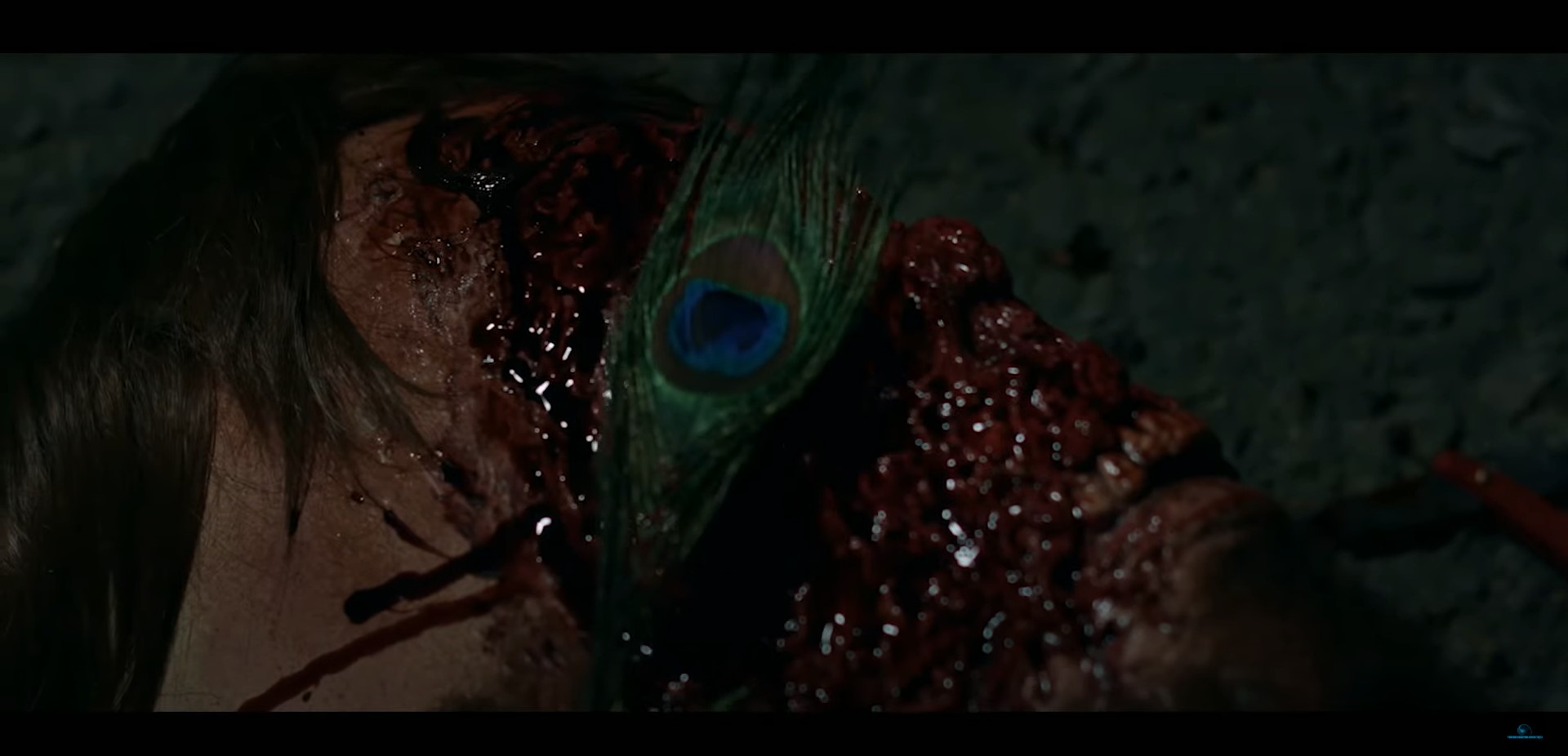
Much like “A Cat in the Brain,” Frank LaLoggia depicts his best Lucio Fulci representation as a horror filmmaker whose storyline production mirrors the individual slayings surrounding him. As a character, LaLoggia is not entirely aware of the murders as the peacock headed slasher’s string of sadism runs parallel to LaLoggia’s post-productional workload. Cristopharo pays a simultaneous tribute to not only Fulci but also LaLoggia with a built-in brief, off-plot moment of the editor, Isabella, a good friend and longtime partner of LaLoggia, running a reel of “Fear No Evil” to reminisce over his debut picture. Antonella Salvucci (“Dark Waves,” “The Torturer”) plays Isabella but also LaLoggia’s pseudo film lead actress Catherine in a dual role performance with the latter marking Salvucci’s topless kill scene that hits and sets up the giallo notes. Isabella denotes the director’s only real friend with everyone else, from the screenwriter to the executive producer, push their own self-gratifying wants onto the American filmmaker from all angles. A vulgar herd of personalities descend upon LaLoggia to exact their strong-willed ideas on how the film should appear and be marketed. From the screenwriter Antonio (Antonio Tentori, ‘Symphony in Blood Red”), the imposing desperate actor David (Halil Budakova, “Virus: Extreme Contamination”), to the uncultured and pushy executive producer Fernando Lola (Lumi Budakova) and his aspiring actress Debbie (Poison Rouge, “House of the Flesh Mannequins”), they all look to exploit LaLoggia’s modest career for their own benefit. Performances vary with a range of experience, and we receive more noticeably rigid recites and acts from the Kosovo cast in a clashing pattern with the Italy cast that has worked with Cristopharo previously. Ilmi Hajzeri (“Reaction Killers”), Pietro Cinieri, and Merita Budakova as a chain-smoking lady stalker that has glaring eyes for Frank LaLoggia.

While not necessarily thought of as a remake, “Nightmare Symphony” is certainly a re-envision of the Fulci’s “Cat in the Brain.” What Cristapharo and Trani don’t quite well connect on is connecting all the pieces of the psychotronic puzzle together into what is meant to be expressed. The giallo imagery is quite good, a praise of the golden era period in itself, with a mask and glove killer, the closeup of gratuitous violence, most of the score, and the stylistic visuals imparted with ominous shadow work, foggy and violent dream sequences, and with congruous cinematography and editing of earlier giallo. Plus, audiences are treated to not only the aforementioned Antonio Tentori, screenwriter of “Cat in the Brain,” but also have composer Fabio Frizzi score the opening title. Frizzi, who has orchestrated a score of Lucio Fulci films, such as “Zombie,” “The Beyond,” “Manhattan Baby,” and even “Cat in the Brain” just to select a few notable titles, adds that proverbial cherry on top to evoke Fulci directing “Nightmare Symphony” vicariously through Cristapharo and Trani. There are some questionable portions to reimagining’s take on the original work that are more the brand of the contemporary filmmakers. The presence of death metal prior to one of the kill moments puts the overall giallo at odds with itself in a fish out of water aspectual scene composition. Another out of place component are the external characters that are not directly involved with LaLoggia’s peacock-head themed slasher; the ironical venatic of an animal hunting down people is the reversal of a Darwinism theory that instead of sexual selection, the beautiful and elegant peacock forgoes using grace to attract and aims to survive by natural selection and thus the killer kills to remain alive. However, the story and the directors never reach that summit of summation and with the oddball characters adrift from the core story – such as the stalking woman and the eager actor – “Nightmare Symphony” flounders at the revealing end with its severe case of blinding mental delirium.

With a cover art of an upside skull overfilled with film reels and unfurling celluloid through the soft tissue cavities, “Cat in the Brain” continues to be reflected in “Nightmare Symphony” up to the release’s physical attributes on the Reel Gore Releasing’s Blu-ray. Presented in on a AVC encoded BD25, with a high definition 1080p resolution, and in a widescreen 2.35:1 aspect ratio, the Reel Gore Releasing espouses the Germany 8-Films’ Blu-ray transfer for a North American emanation, which might explain some of the complications with the bonus features that’ll I’ll cover in a bit. Situated in a low contrast and often set in a softer detail light, “Nightmare Symphony” doesn’t pop in any sense of term with a hazy air appearance and a muted color grading that goes against the giallo characteristics, especially when the clothing and set designs have the same desaturation or are colors inherent of low light intensity. Despite appearing like a slightly degraded transfer on a lower BD storage format, compression issues are slim-to-none with artefacts, banding, or blocking and this results in no tampering edge enhancements or digital noise reduction. The release comes with three audio options: A German DTS-HD 5.1, German DTS-HD 2.0 Master Audio and an English and Italian DTS-HD Stereo 2.0 all of which are Master Audio. The German audio tracks are a dub from the 8-Film Blu-ray and the 5.1 offers an amplified dynamics of the eclectic soundtrack and limited environment ambience. Dialogue remains outside the dynamics on a monotone course but is clean and clear with good mic placement and a neat, fidelity fine, digital recording. The German dub has a distinct detachment from the video because of its own layer environment, sounding a little sterile than the natural English or Italian, but works well enough as expected with the supplement multi-channel surround sound. English SDH and German subtitles are optional. Bonus contents feature a behind-the-scenes which is entirely just a blooper reel, an English language interview with co-director Domiziano Cristopharo whose secondary language is English, the original soundtrack playlist, and the teaser and theatrical trailer. I mentioned an 8-Films’ transfer complication with the bonus content because there’s is also an interview with Italian screenwriter Antonio Tentori that’s only in German dubbed and subtitled with no option for English subtitles or dub. When you insert “Nightmare Symphony” into your player, an introductory option displays to either pick German or English and I considered this to be the issue for the German only interview with Tentori; however, that is not the case as both country options are encoded in German for the interview, so at the beginning option display, I would recommend the German selection because the setup will have contain all audio options for the feature whereas the English selection will only contain the English 2.0. Reel Gore Releasing’s Blu-ray comes housed in a red snapper case, the same as the company’s release of “Maniac Driver,” and has a less tributing reversible cover art with more revealing and illustrated aspects of the narrative. The release is region free, unrated, and has a runtime of 78 minutes. Another little fun fact about the release is the incorrect spelling of the director’s name on the back cover that credits his surname as Christopharo instead of Cristopharo. Influenced by Lucio Fulci beyond a shadow of a doubt, “Nightmare Symphony” proffers the Horror Maestro’s less notable credit with a companion piece that punctuates both films love for the giallo genre, love for the violence, and love for the morbidly unhinged human condition.

“Nightmare Symphony” is a Falsetto of Praise for Lucio Fulci.  Purchase the Blu-ray Below!

Sonar Radiation is Music to the EVIL’s Ears! “The Living Dead at Manchester Morgue” reviewed! (Synapse / Blu-ray)


Don’t Let the Sleeping Corpses Just Lie!  Grab a copy of “The Living Dead at Manchester Morgue” at Amazon!

After having a run-in with a beautiful woman, Edna, at a gas station who accidently wrecking his motorbike, Manchester antique dealer George offers to drive her car to her destination in the country, her sister’s place in Southgate, and then borrow the car to continue on toward his appointment in Windermere.  However, upon their arrival in Southgate, Edna’s husband Martin has been brutally murdered and the police immediately suspect the two urbanite out-of-towners George and Edna of coming the heinous crime.  In reality, the recently dead in a mile radius has their nervous system reactivated and directed to kill the living by a new sonar radiation technology aimed to destroy crop pests.  With the police and the dead on their heels, George and Edna seek to expose the truth to the world before its too late and the experimental new pesticide’s range is extended to cover more ground. 

Hitting the stop button here before we dive into our review of “The Living Dead at Manchester Morgue.”  If you’ve never seen the Jorge Grau directed 1974 flesh eating zombie film then drop everything – you’re work, your kids, your winning lottery ticket worth millions – and take the next one hour and 33 minutes to enjoy the graphically gory, social commentary horror that not only cashes in on the George Romero “Night of the Living Dead” gamechanger undead horror but also rivals Romero’s film in story and in full, gorgeous color.  “The Legend of Blood Castle” director Jorge Grau helms the Spanish-Italiano co-produced script penned by Sandro Continenza (“Uncle Was a Vampire”) and Marcello Coscia (“Teenage Emmanuelle”) and was provided to Grau by “The Eroticist” and “Don’t Torture the Duckling” producer Edmundo Amati who wanted to make a Romero-esque flesh-eating zombie film of his own.  Also more widely known as “Let Sleeping Corpses Lie,” “The Living Dead at Manchester Morgue” is co-produced by Manuel Pérez and is a co-production between Star Films and Flaminia Produzioni Cinematografiche.

Hot off the presses of Italian action-crime dramas, Ray Lovelock (“Emergency Squad,” “Almost Human”) finds himself playing an antique merchant holding up shop in the metropolitan area of Manchester, England and as George Meaning, the relatively undisclosed personal experience as an antique merchant, Lovelock gets into character not on the business end but when the shopkeeper goes on holiday in the country, riding his motorcycle Windermere where he has arranged a meeting with some very important people that never flesh out in the end. Speaking of flesh, don’t expect the leading lady Cristina Galbó (“The House that Screamed”) to provide any as the panicky Edna Simmonds on her way to her sisters (Jeannine Mestre, “Count Dracula”) for an intervention toward her sister’s severe heroin use. Much of the only flesh to be hand in “The Living Dead at Manchester Morgue” is that is which ripped from the bodies and stuffed into rotten, undead mouths. In itself, the entire scenario between Edna and her druggie sister is a compelling enough story to warrant attention in accumulating a sense of sisterly betrayal and a sacrificial compassion to do the right thing despite the consequences. However, that pathway, no matter how distressingly prominent it may seem, does not carry over into the main plot points of an experimental pesticide treatment involving sonar inadvertently raising the dead to be superhuman zombies. Between an Italiano (Lovelock) and a Spainard (Galbó), who not throw in an American while we’re at it with Massachusetts born Arthur Kennedy (“The Antichrist”) to be the aging local inspector keen on pinning every murder on youthful urbanites with their hippie ways and satanists beliefs. “The Living Dead at Manchester Morgue” fills out the cast with José Lifante (“Night of the Walking Dead”), Vincente Vega (“Historias para no dormir“), and “Flesh+Blood’s” Fernando Hilbeck as the foremost feared zombie.

What makes Jorge Grau’s take on the living dead canon so impressive is not only the social commentary story that seeks to deconstruct ecological progression as an ironic destructive poison to the Earth and its inhabitants and the striking moments in gore effects from the team of Juan Antonio Balandin, Luciano Byrd, and Giannetto De Rossi (of Lucio Fulci’s “Zombi”) that have remained timeless in holding up and rivaling against many of today’s gruesome effects, but also the terror-inducing sound design that combines Giuliano Sorgini’s funky-spook with Antonio Cárdenas zombie-vision resonances of heavy breathing and resonating heart thuds that cues the lurking of an undead lurker.  The effect is potent and full of imminent danger when included into Grau and cinematographer Francisco Sempere’s (“Death Will Have Your Eyes”) perfectly framed shots of the Romero-esque zombie lumbering toward their prey in an unstoppable hunger to kill and eat and, sometimes, convert to their infant-legion inside-and-out of the zombie perspective.  Along the lines of “The Living Dead at Manchester Morgue’s” environmental theme is the juxtaposition of big city and countryside in regards to their pollution levels in the opening credit scene where George rides out of Manchester through the degradation of the masses who are popping pills, wearing face masks (like in today’s COVID climate), numb to shock (in the scene where a naked protestor runs in front of stalled traffic for peace and the motorists are blank to the moment), passing by death and polluted nuclear smoke stacks.  Once the lead George reaches the countryside, he removes the scarf covering his nose and mouth and breathes in fresh air with a smirk on his face.  From then on, the story moves forward with a cautionary tale of ill-fated modern progression, such as urbanism, seeping into a natural landscape and causing death and destruction, leaving an poignant aftertaste in the inevitably of man’s ignorance will kill us all.  Grau’s film is a good candidate to be a promotional movie for the dramatic effects of climate change in today’s campaign for ecological change to reduce our carbon footprint.

Synapse brings “The Living Dead at Manchester Morgue” home onto a Blu-ray home video, restored in 4K from the original camera 35mm negative that includes the authentic and intact opening and closing credit sequences. The region free, AVC encoded release is presented in 1080p high definition of a widescreen 1.85:1 aspect ratio and the picture is the gold standard of presentation with a vivid and stable color palette, controlled DNR without any posterization, and greatly detailed without an inkling of lossy image quality. Two audio mix come with the release – a DTS-HD Master Audio 5.1 surround sound remix and the distinctive to the Synapse release the original English theatrical mono mix. Though nice and nostalgic in the original English mono mix, the clarity and robustness of the channels on the DTS-HD track is by far superior with its reformulated by Synapse lossless quality and fidelity, especially in that aforementioned sound design by Antonio Cárdenas. The English dub on Ray Lovelock can be off-putting at times but the track is still beyond the best of the two available audio options. English SDH subtitles are available. Extras include two audio commentaries by author and film scholars Troy Howarth, Nathaniel Thompson, and Bruce Holescheck, a feature length (89 min) documentary Jorge Grau – Catolonia’s Cult Film King that explores the lift and films of director Jorge Grau, The Scene of the Crime is special effects and makeup artist Gionnetto de Rossi discussion on the film, another de Rossi feature of the SFX artist at a Q&A at the Festival of Fantastic Films in the UK (43 minutes), the theatrical trailer, TV and radio spots, and a sleek black snapper case that wouldn’t be complete with a Synapse catalogue booklet. If you’re a diehard zombie genre fiend, Jorge Grau’s “The Living Dead at Manchester Morgue” must be at the top of your personal video collection. If it isn’t, kick yourself in the shin really hard and then check out Synapse’s gorgeous release of the Spanish-Italiano production that’s worth every second of your life viewing.

Don’t Let the Sleeping Corpses Just Lie!  Grab a copy of “The Living Dead at Manchester Morgue” at Amazon!