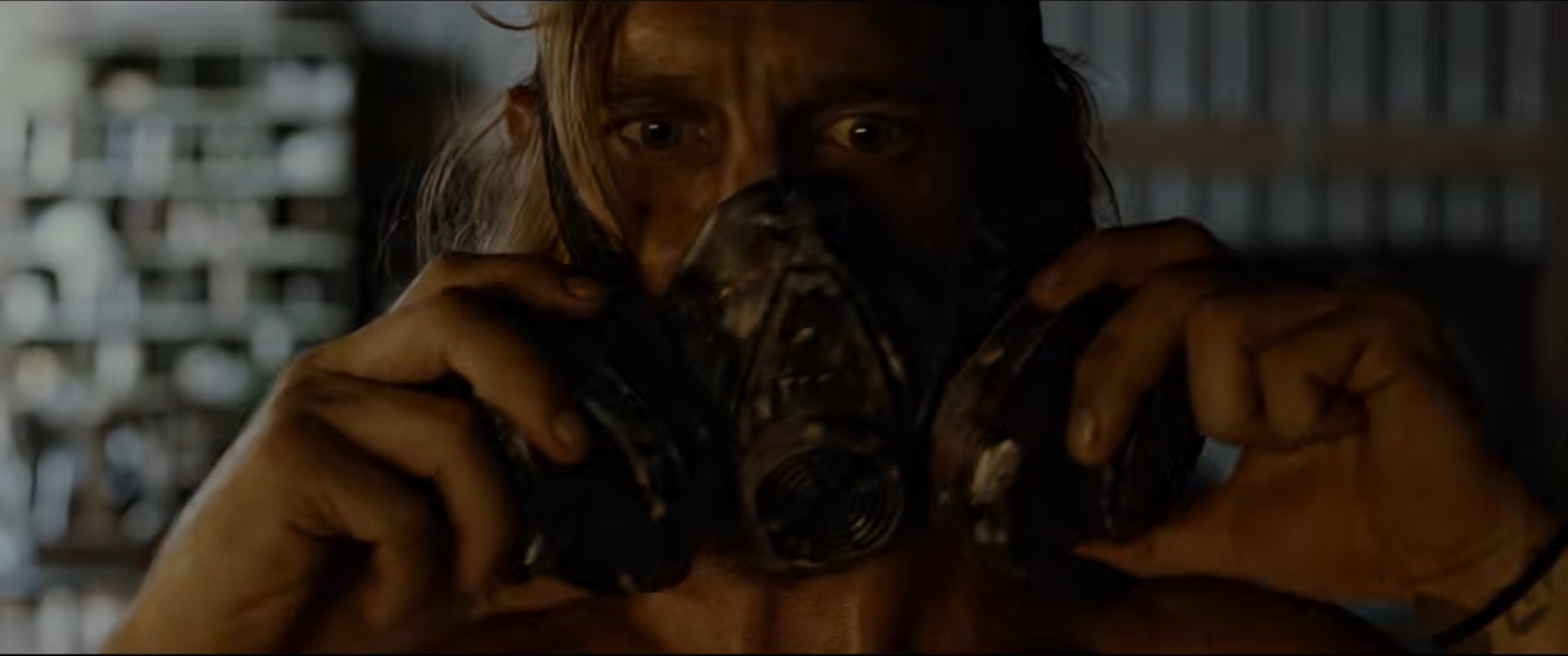
Two Van Damme’s Take on Twice the EVIL! “Double Impact” reviewed! (MVD Rewind Collection / 4K UHD and Blu-ray)

“Double Impact” 4K UHD and Blu-ray Will Having You Seeing Double the Damme!

The assassination of their parents separates infant twins Chad and Alex from Hong Kong to different parts of the world, living very different lives.  Chad trains Karate and stretching while living the high, comfortable life in Los Angeles with this uncle while Alex, abandoned at a covenant orphanage, grows up to be a street-savvy importer of illegal and luxury goods.  They’re reunited in Hong Kong by Chad’s uncle, who’s not their uncle at all but their father’s former bodyguard and close friend, to bring down a criminal organization collaborating with their parent’s killer who orchestrated the hit with the Chinese triad.  Outmanned, outgunned, and at odds with each other’s different persona, Alex and Chad must find common ground to stand on to fix the wrong done them, to inflict payback for their murdered parents, and claim his stolen legacy, an underwater passage way between Hong Kong and mainland China, as their own in observance of their birthright from what they’re engineer father had built.

If one Jean-Claude Van Damme wasn’t enough to handle, try your hand at double the Van Damme!  “Double Impact” is the first film Van Damme gets to show his range inside the context of martial arts action film and to break, ever so delicately, the typecast he’s been filled repeatedly to perform by taking on converse brothers.  The 1991 action-thriller with comedic morsels was shot in Hong Kong, one of a handful of films the now 65-year Belgium native did in country, coming in between “Bloodsport” and “Knock Off,”  with years in between, and is written-and-directed by Sheldon Lettich with cowritten credits by Van Damme as well.  “Double Impact” is the sophomore collaboration between Lettich and Van Damme and the two have worked on a number of project since the film’s release, such as “Perfect Target” and “The Order.”  Van Damme also produces the film alongside Paul Michael Glaser, Ashok Amritraj, and the one and only Michael Douglas under his co-founded company Stone Group Pictures (“Flatliners”) in association with Vision International. 

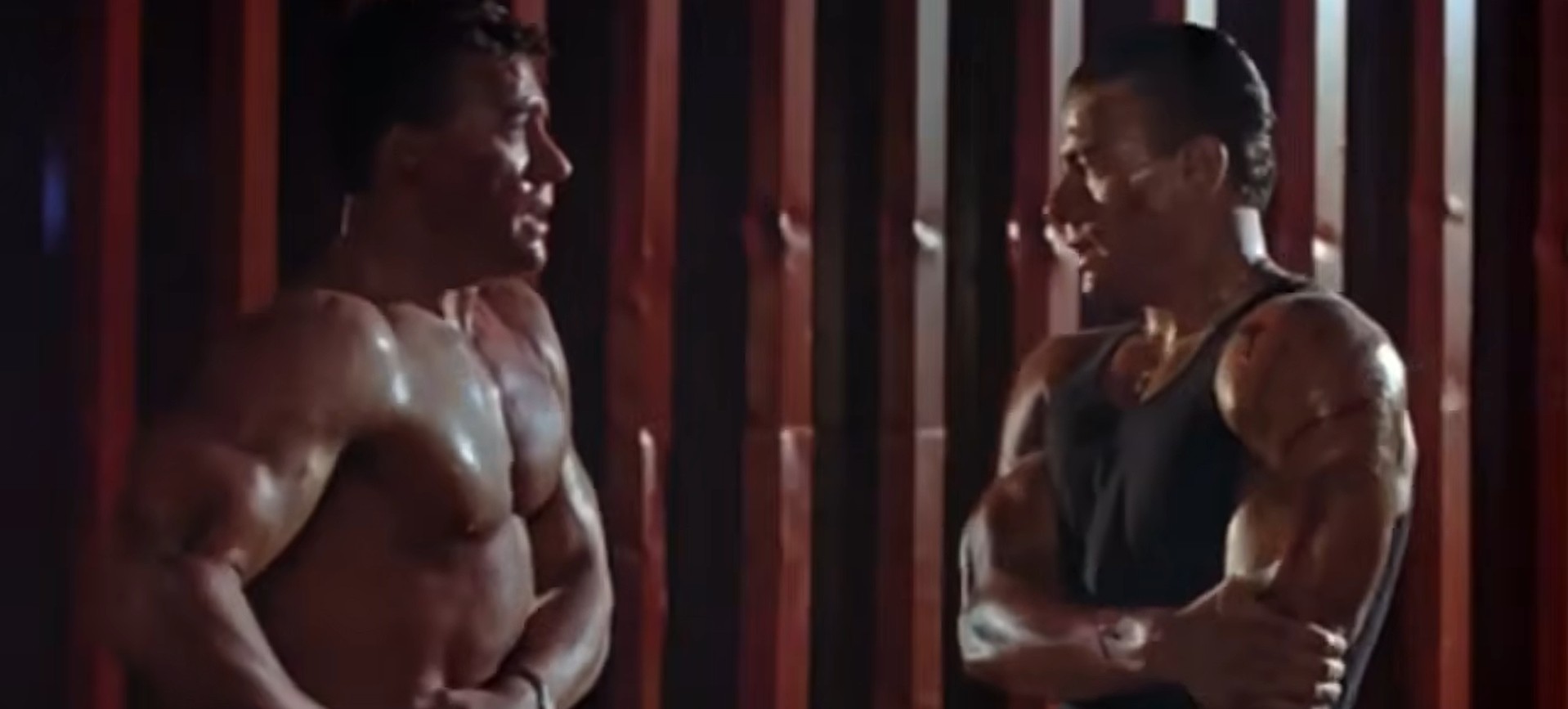
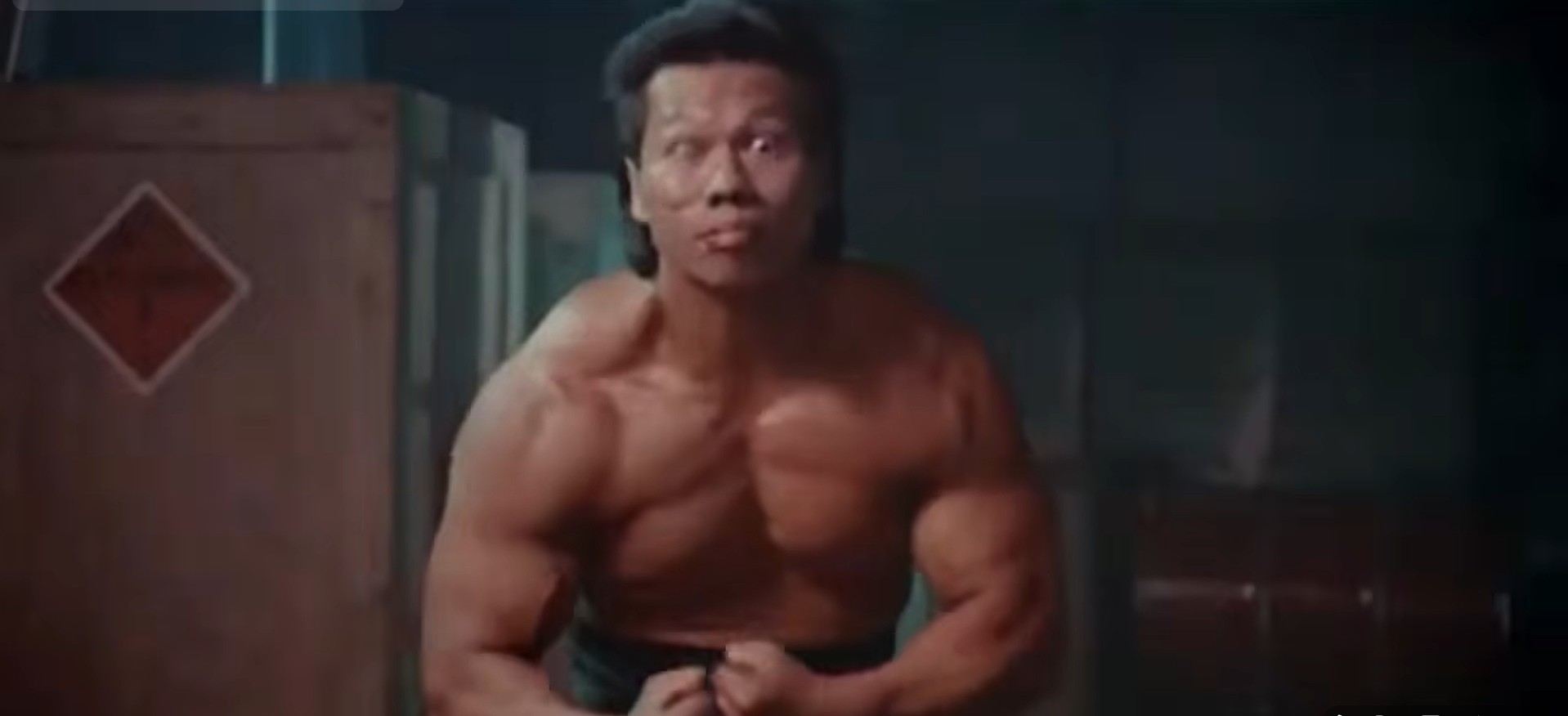
“Bloodsport” Van Damme pulls double duty with ying-yang characters Chad and Alex.  Chad’s an easy-going, well-dressed, expensive-taste, slightly naïve, student of Karate who’s living comfortably in L.A. while brother Alex with slick back hair, leather attire, greasier-appearance and cynical attitude has him pegged as more Hong Kong street smart in his transgressor affairs as a illegal importer.  As far as exhibiting the desired range goal, Van Damme does provide the persona separation to make Chad and Alex individuals but he’s still playing characters he’s been in previous films and the only difference between Chad and Alex is their hair styles.  To ensure their differences, the story is woven for them to compete each other a little bit with evoking some jealous around Alex with the fear Chad may still his woman, Danielle, played by the tall and beautifully blonde “King of New York” actress Alonna Shaw.  Fueled by alcohol and a wild imagination, a wedge drives Alex to view his brother as more feminine than him and shows it with pejorative name calling and brotherly spat violence while in an intoxicated schoolyard tiff.  I will say that one the many glaring plot holes between the two characters is both have the same fighting style, which is Van Damme’s kick heavy Shotokan karate, and while that fits Chad’s backstory, it does not fit Alex who was too busy selling stolen cars rather than learning Karata in a studio.  Geoffrey Lewis (“Night of the Comet,” “The Devil’s Rejects”) dons the forced parental role as Chad and Alex’s former friend and bodyguard Frank who must reunite and rekindle the twins’ harmony with shared, common foe.  That foe, or rather foes, being corrupt businessman and British socialite Nigel Grifith (Alan Scarfe, “Murder by Phone”) and Hong Kong triad boss Raymond Zhang (Philip Chan, “Bloodsport”).  However, the real villains of the story are more interesting and standout with Bolo Yueng (“Bloodsport”) as the scarred face hitman and brute enforcer Moon and six-time Ms. Olympia Corinna Everson as a muscular henchwoman. 

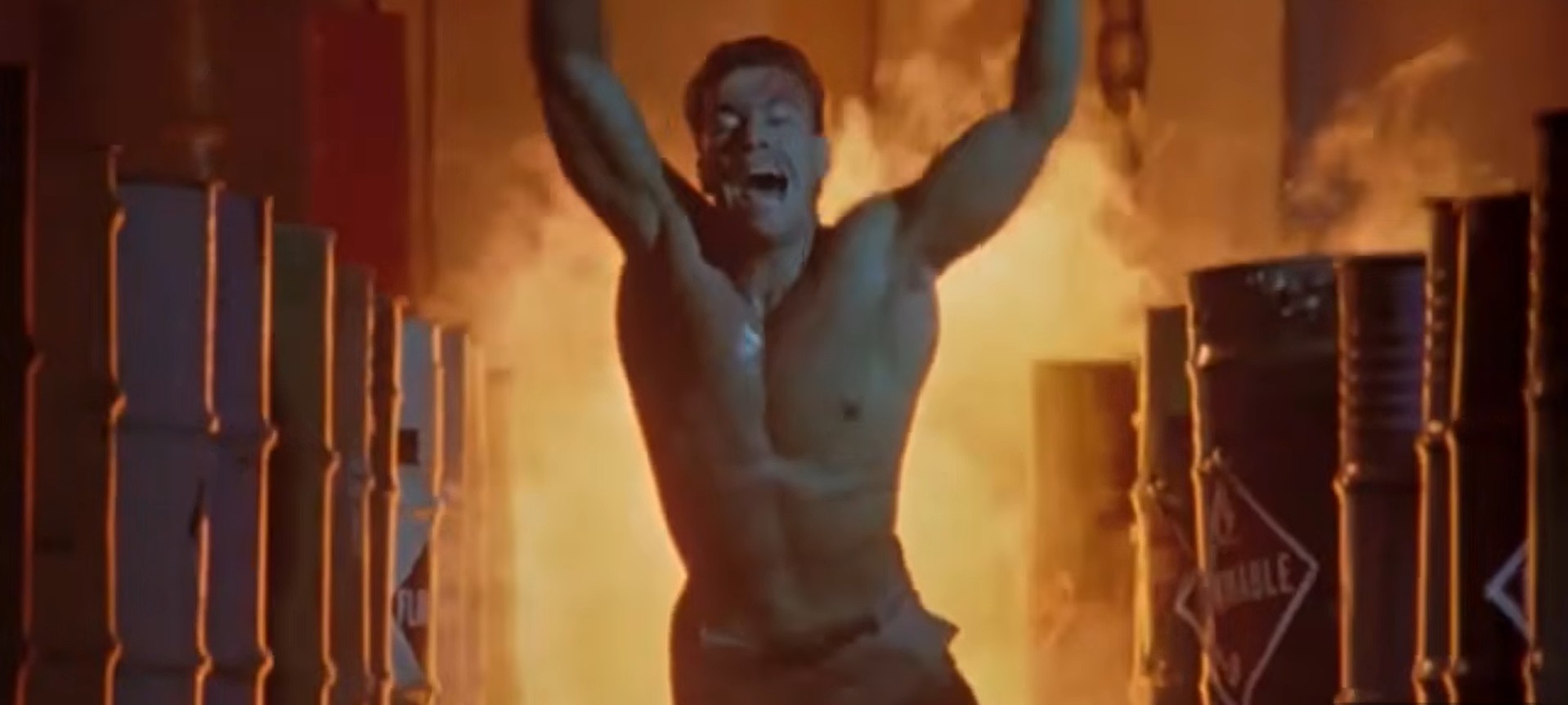
Though Van Damme essentially plays the same person, I wouldn’t necessary dub “Double Impact” a replica of his previous work as it does mix up the narrative formula with dual roles with a one-half antihero theme and the scenes themselves where both Chad and Alex are in together, face unobstructed, present, and forward, are done exceptionally well for a late 90’s production with little-to-no seam and coloring imbalance or weird facing angles from Chad or Alex looking at one another – often times it’ll appear one character is looking at something totally offscreen instead of the appearance of looking at themselves.  The action is also palpable and fun to watch Van Damme go through the motions of making the opposition look foolish with his grunted elbows and roundhouse jumpkicks but there’s really no decent opposition for him in the choreographed mix.  Aside from Bolo Yeung, all the other major playing villains are no real equal match against Van Damme, not even Corinna Everson, who’s a physical and perceived threat, doesn’t provide the satisfactory fight in her brief combat interaction with the Muscles from Brussels.  The fight and action are also more grounded in reality unlike Van Damme’s last Hong Kong venture earlier in the decade in “Knock Off” that had an implausible cartoony design to it’s nonstop physicality.  There are no high-flying rope acts or escaping the inescapable devastation case by nano-explosives; instead, “Double Impact” is truly a fair 1v1 with gunplay and martial arts doing most of the heavy lifting and anything else that’s outrageous is left at the door. 

MVDVisual releases “Double Impact” on a new 4K and Blu-ray dual formatted release on their Rewind Collection sublabel.  As a part of the 4K LaserVision Collection, that emulates the mock trimmings of the antiquated but still celebrated LaserDisc video format, the MVD release 4K is HVEC encoded with 2160p ultra-high definition HDR – DolbyVision – onto a BD100 with the standard Blu-ray encoded with AVC with 1080p resolution onto a BD50.  Presented in it’s original 1.85:1 aspect ratio, the new, director’s approved 4K scan and restoration comes from a 16-bit scan of the original camera negative and looks pretty flawless with image presentation, immersive depth, skin and fabric textures and tones, inky negative space, and a diffused color palette that’s mediumly saturated, slightly muted for a harder, gritty appearance.  Neither format shows areas of concern with compression artefacts in a clean transfer and decoding.  The main audio track is an uncompressed English 2.0 Stereo.  The dual channel audio has enough impact to provide a wide berth of action points with the kick and punch added hits, dialogue is clean and unobstructed even though Van Damme’s heavy Belgium accent which seems more egregious in this feature, and the soundtrack’s your staple culture blend of a Jan Hammer synth-pop rock and traditional notes of Hong Kong influence.  Depth is limited as well in stereo that front loads the action and dialogue with not a terribly immersive ambient track of a bustling Hong Kong city that would be the chief spatial and directional culprit for depth.  UHD special features are limited due to space and, in fact, the 4K disc is feature only.  All your extras are on the standard Blu-ray disc, including a near hour long Making-of featurette segmented in parts I and II that provides retrospective interviews from cast and crew, such as Jean-Claude Van Damme, director Sheldon Lettich, fight coordinator Peter Malota, producer Ashok Amritraj, and more.  The bonus content continues with director a short Sheldon Lettich interview Anatomy of a Scene, a behind-the-scenes featurette with Van Damme interviews archived from 1991, deleted and extended scenes, a raw footage B-roll with behind-the-scenes moments, television promotional clips, and an electronic press kit (EPK) that contains more interviews with Van Damme, Moshe Diamant, and Charles Layton.  The Rewind Collection always comes with a substantial exterior style that begins with the black background of a O-ring slipcover that mirrors the crinkled sleeve of a LaserDisc and has the original poster/home media art of the “brothers” Van Damme.  The black 4K UHD Amaray case has the same front cover image sans mock crinkles with the discs inside pressed with LaserDisc appearance imagery on the UHD and VHS texture imagery on the Blu-ray.  There’s also a folded mini-poster of the slipcover image tucked inside.  The 17th title on the Rewind Collection also has a reversible sleeve of the unwrinkled image.  Rated R for strong violence, sexuality, and langue, “Double Impact” has a runtime of 110 minutes and is region A locked.

Last Rites: You need double the media formats to enjoy double the Jean-Claude Van Damme in “Double Impact!” Double time it to get your copy in stores now!

“Double Impact” 4K UHD and Blu-ray Will Having You Seeing Double the Damme!

Driven Mad with Revenge, The Doctor’s Wife has Wanton, EVIL plans for Those Responsible for his Death! “She Killed in Ecstasy” reviewed! (Severin Films / 4K UHD and Blu-ray)

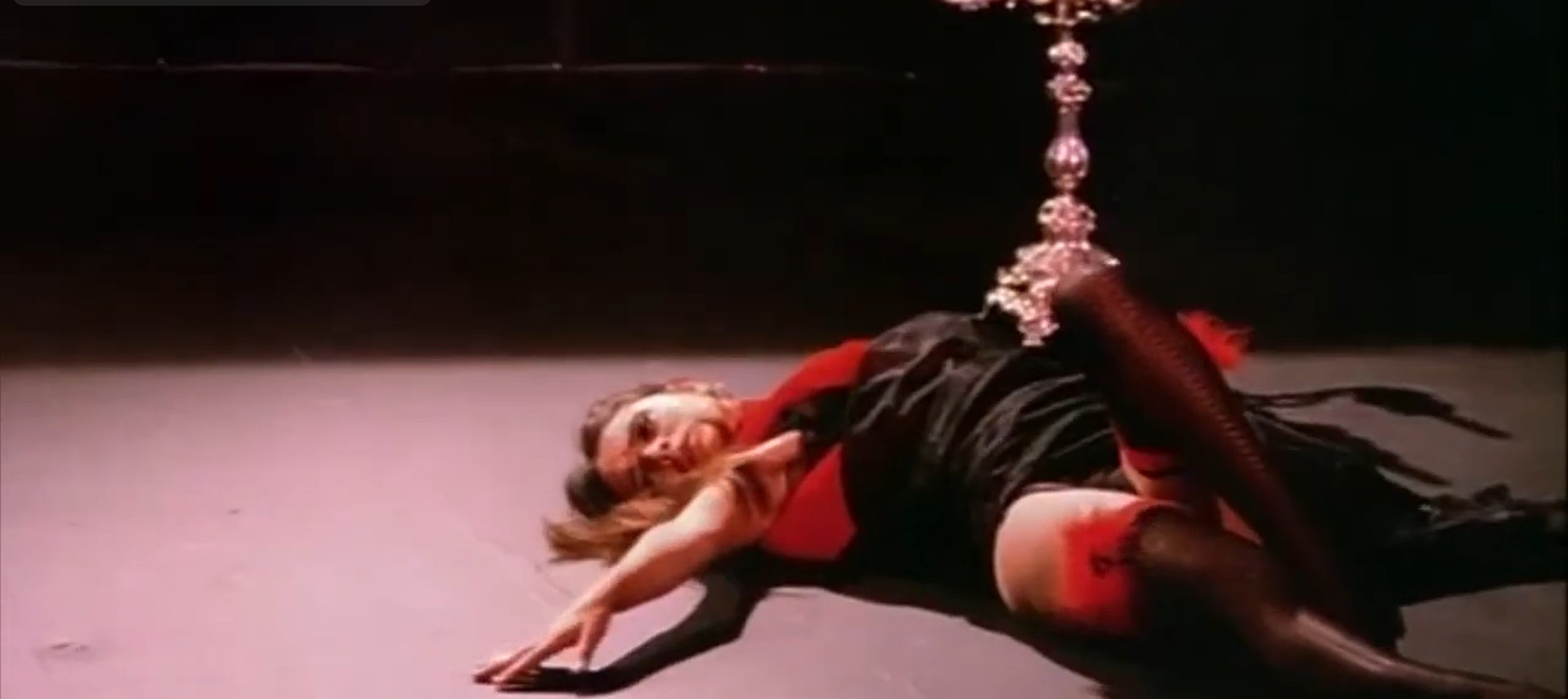
Dr. Johnson is determined to save countless lives from diseases, including cancer, by experimenting his research on human embryos with great results.  However, the more conversative medical board deems his actions too inhumane and unethical for science, rejecting his research, expelling him from the medical board, and revoking his license to practice medicine.  Unable to cope with the loss, Dr. Johnson slowly slips into insanity with his former colleagues’ condemnations rolling through his thoughts to the point where he ultimately takes his own life with one slice of the wrist.  His beloving and dedicated wife reels over his death and swears to avenge him by luring each of the four into a seductive death trap.  Mrs. Johnson entices the respectable professionals one-by-one with her desirable femininity into sordid circumstances that leaves them vulnerable for vengeance but at what cost to her own sanity and the police hot on her trail.

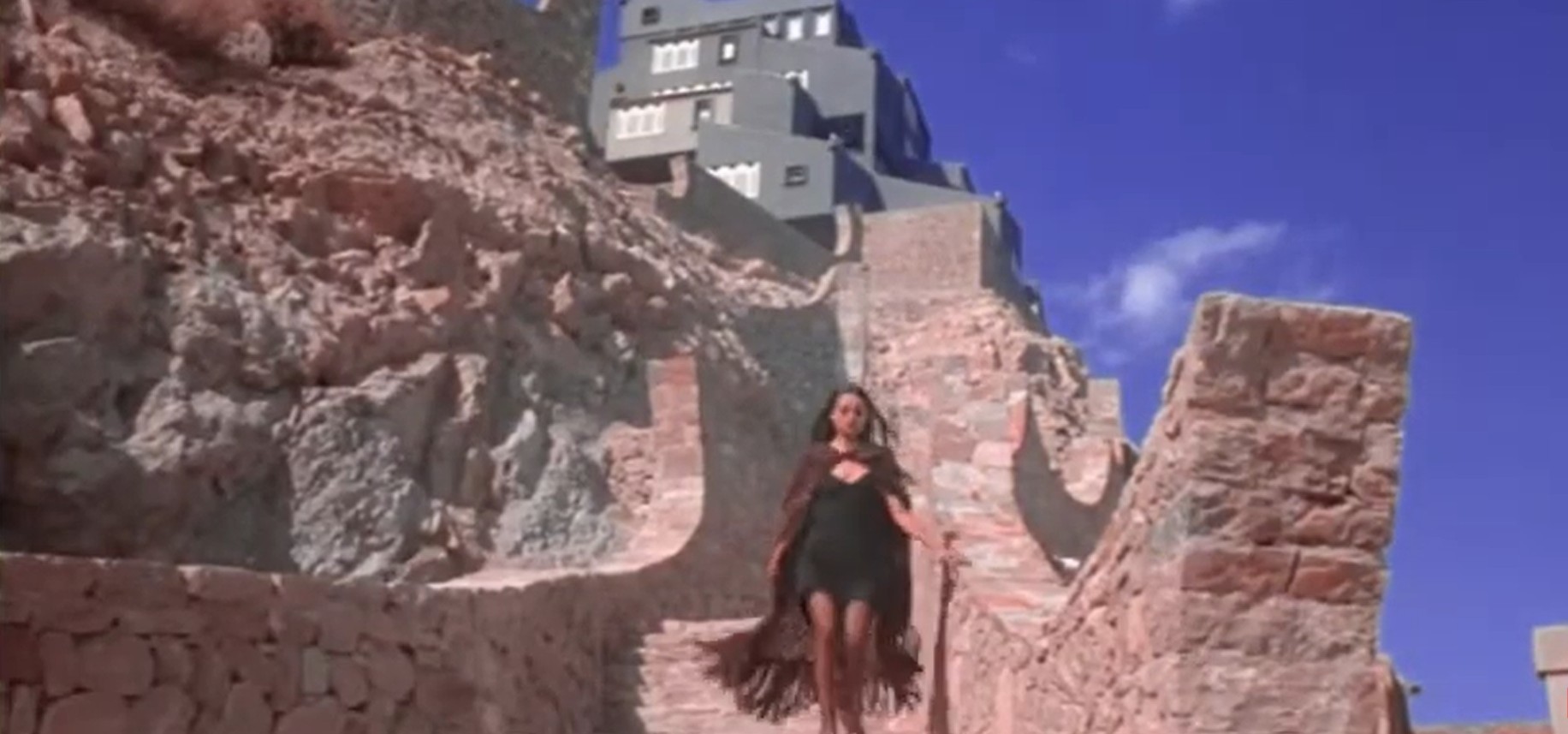
Jesús Franco, aka Jess Franco, writes and directs, under the pseudonym of the Americanized Frank Hollman, a tit-for-tat revenger of European sleaze under the contextual themes of controversial medical research, revenge, and hypocritical moralities with a femme fatale kicker.  The film is called “She Killed in Ecstasy” and was released the same year as Franco’s auteur homoerotic “Vampyros Lesbo” of 1971 and as a pair, the two films see a 4K caliber upgrade from the established genre boutique label Severin with UHD Blu-rays that star sultry actress Soledad Miranda.  Filmed in Spain, more specifically in the Valenciana providence, and like his “Vampyros Lesbos,” “She Killed in Ecstasy” is also a German production produced under Artur Brauner (“The Devil Came from Akasava”) and Arturo Marcos (“Count Dracula”), both of whom worked with Franco on “Vampyros Lesbos,” with Karl Heinz Mannchen returning as well to serve as executive producer under the production banner of Tele-Cine Film und Fernesehproduktion in collaboration with Fénix Cooperativa Cinematográfica. 

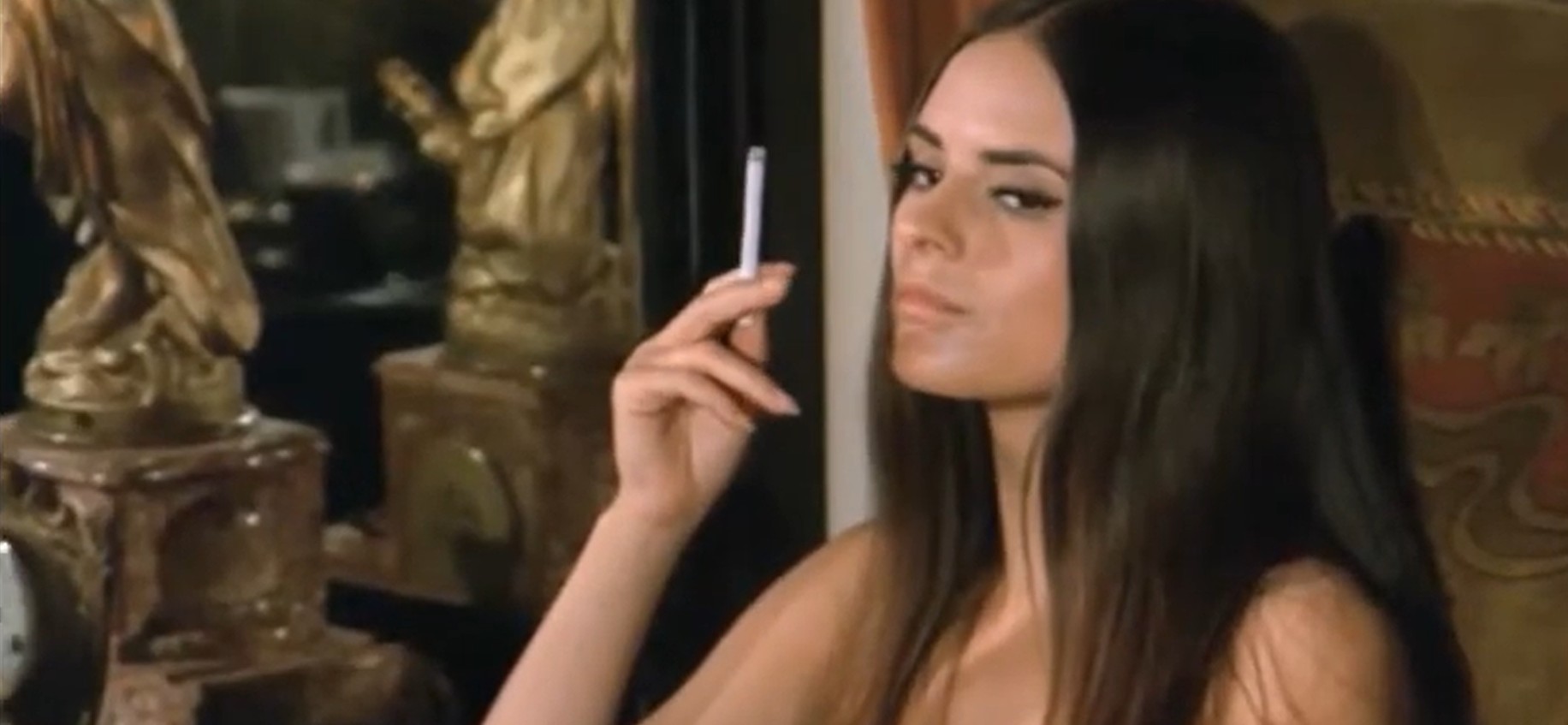
If you thought Spanish actress sizzled as a sapphic bloodsucker in “Vampyros Lesbos,” seeing her manipulate those who’ve done her and her husband (“Fred Williams, “The Red Nights of the Gestapo”) wrong with weaponized sex is the naked, full-bodied zenith of her career as the vehemently vindictive Mrs. Johnson.  “She Killed in Ecstasy” offers Miranda more range of arc that takes her happiness, squashes it, and forces her to sex her way through destroying the lives of those who’ve destroyed her own relationship but with each kill slowly piecing away her soul and sanity.  It takes a woman’s touch to evoke the sordid true selves of the husband-damning medical board who are riddled with their own vices that stray not too far from Mr. Johnson’s unethical research.  Masochism, lesbianism, perversion – these are the sexualized traits of the medical board who fall into Mrs. Johnson’s snare to be snuffed out in the summit throes of sexual foreplay, distracted by her iconic figure, lush bush, and deep brown hair and eyes.  Primarily Swiss and Swedish actors makeup the medical board with Paul Muller (“Lady Frankenstein,” “Eugenie de Sade”) as the Dr. Franklin Houston, Howard Vernon (“Angel of Death,” “Zombie Lake”) as Prof. Johnathan Walker, and Ewa Strömberg (“The College Girl Murders”) returning to costar alongside Miranda from “Vampyros Lesbos” as the only woman in the group as Dr. Crawford while Jess Franco himself takes the last spot as Dr. Donen, integrating himself into the madness.  The last principal cast member is “The Horror of Blackwood Castle’s” Horst Tappert and the German actor plays the generic role of a police Inspector monitoring and tracking a killer unleashing knife-edge fury on specific medical professionals.  The Inspector is essentially a throwaway role with no real contribution to the narrative other than to be an aimless cat chasing it’s own tail with no real sleuth work; instead, the Inspector has the persona attributes and gaited grace of a cool, calm, and collected know-it-all except the killer’s identity and motive. 

Now, the premise itself is promising, like most revenge thriller that exploits sexual provocatively for a death strike, but Franco’s narrative is hindered on being formulaic without any kind of deviation from one kill to the next as Mrs. Johnson spins the same trap of being the promiscuous spider enticing the fly to its bed of web.  Mrs. Johnson does disguise herself differently for every scenario and opportunity to lure, attract, and feast upon her targeted prey, using mostly a melee knife from her garter to slit their throats and castrate them as if to say, you killed my husband, now I take your manhood!   Pure spite drives her until the unhinge of insanity takes the helm with each kill taking a little bit of her soul with each murder.  “She Killed in Ecstasy” fits into Franco’s framing and depth of shots by shooting with wide landscapes and incorporating actors as longshots to engulf them in the environment without it feeling isolating or an immense sense of doom.  Franco can also get intimate with closeups as the actors get intimate themselves, it’s as if Mrs. Johnsons is reeling in the unsuspecting lustful and condemning medical board from the wide, long shots through class panes and door frames to between the sheets that is tightly shot on faces, body parts, and the eventual fatal act. 

The second act on a two part Jess Franco and Soledad Miranda film 4K UHD and Blu-ray release from Severin Films, “She Killed in Ecstasy” comes dual formatted with a HVEC encoded BD100 and a AVC ended BD50 and with their respective resolutions of 2160p ultra high-definition and 1080p high-definition.  The work Severin has done is impeccable with a well diffused, well saturated image containing natural and balanced film stock grain and has immersive details.  There’s not a ton of notable differences between the two formats with more of the darker shades or tenebrous areas on the UHD having a richer control in the decoding that has spot yet minor banding on the standard Blu-ray.  Skin tones and textures never break from normal tones and into splotchy territory; it’s quite an achievement to make the newly scanned 4K image from the original camera negative appear like a fresh film right off the digital scan.  The audio is not as complex with just a simple German language mono track with optional English subtitles that’s about as good as it would be sound on any system setup with coequal layers between dialogue, ambience, and soundtrack.  With an international cast, not all the cast speak German with the film’s dialogue, and ambient, layer produced through ADR with German voice actors.  The produced result is overall clean with minor interference static from the used equipment but does not impede verbal progression and dynamics between characters.  English subtitles appeared accurate and well-placed.  The UHD disc has little-to-no special features in what is essentially a feature-only disc that has an accompany German trailer for the film.  The Blu-ray has all the extra glory with a Jess Franco novel author Stephen Thrower interview Ecstasy in Rage,” a location visit In the Land of Franco Part 13, an archived interview with Jess Franco before his death Jess Killed in Ecstasy, an archive interview with actress Soledad Miranda Sublime Soledad, and an archive interview with actor Paul Muller.  The German trailer is also on the Blu-ray disc.  Much like ‘Vampyros Lesbos,” “She Killed in Ecstasy “ has a O-ring slipcover with commissioned graphic art that resembles the original poster art and the Shriek Show DVD cover with Soledad Miranda in one of her rememberable scenes of her character’s sanity crumbling in a upright fetal on a couch moment.  The backside of the slipcover offers up some of her character’s rage which is intense amongst the eyes and fascial expressions.  The black UHD Amaray case comes with a single sided sleeve with original film artwork and no tangible materials inserted inside.    The region free release for both formats provides all Franco and genre fans with a not rated film clocking in at 80 minutes. 

Last Rites: A must-see Jess Franco film for exploitational revenge and a must have physical release for Jess Franco fans, “She Kills in Ecstasy” is an alluring revenge-thriller that exposes thin morality hypocrisy as well as a deepening madness over grief and death.

EVIL Seduces the Woman of her Dreams. “Vampyros Lesbos” reviewed! (Severin Films / 4K UHD and Blu-ray)

Men Beware of the “Vampyros Lesbos” now on 4K UHD and Blu-ray

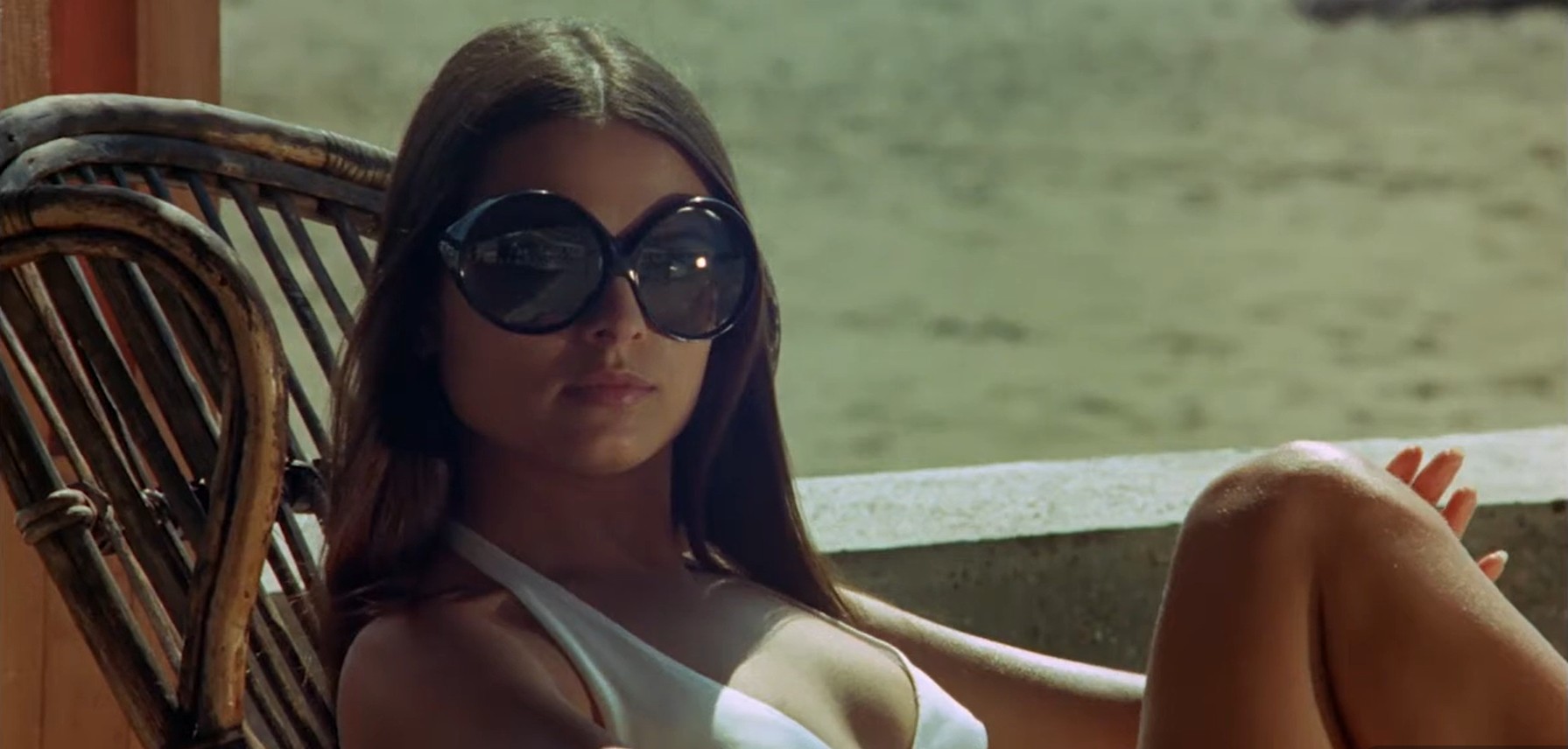
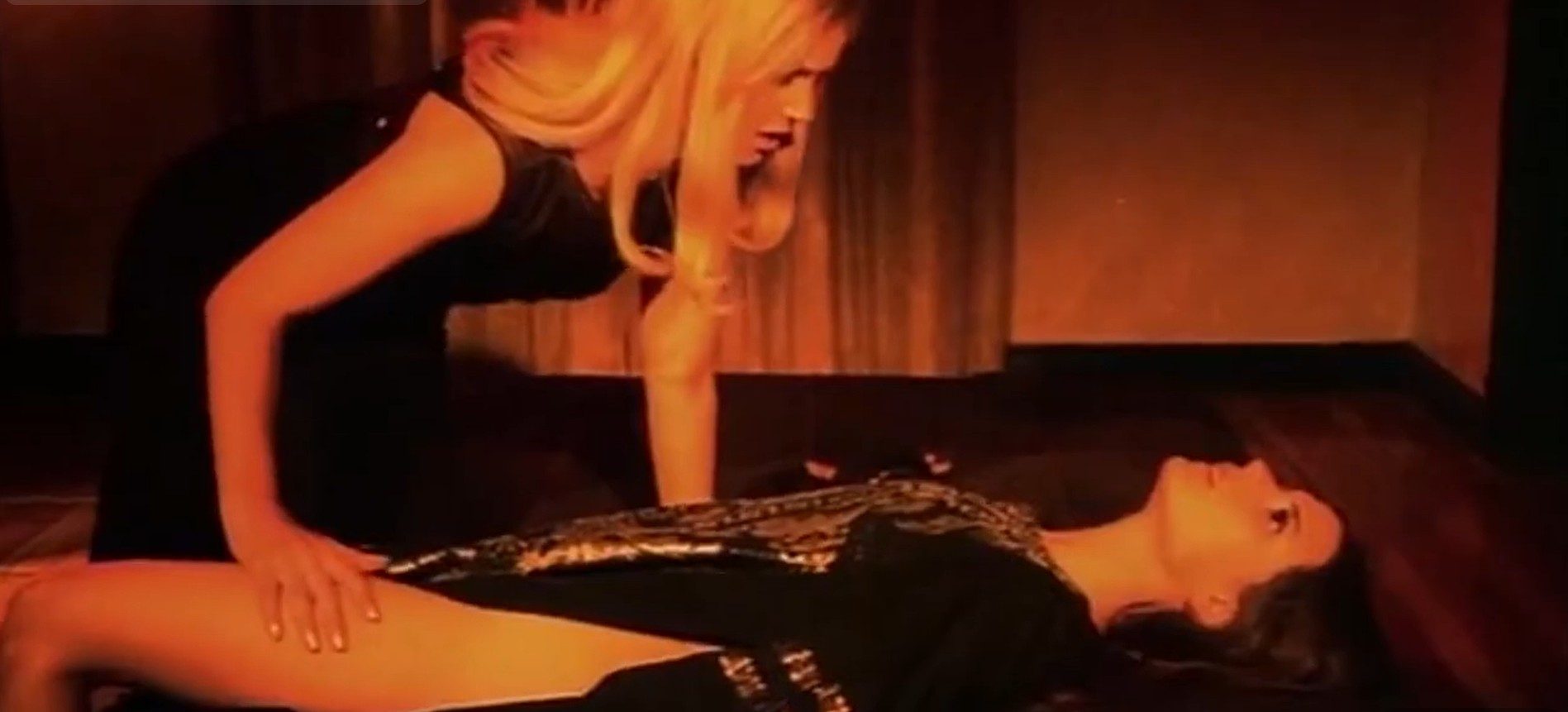
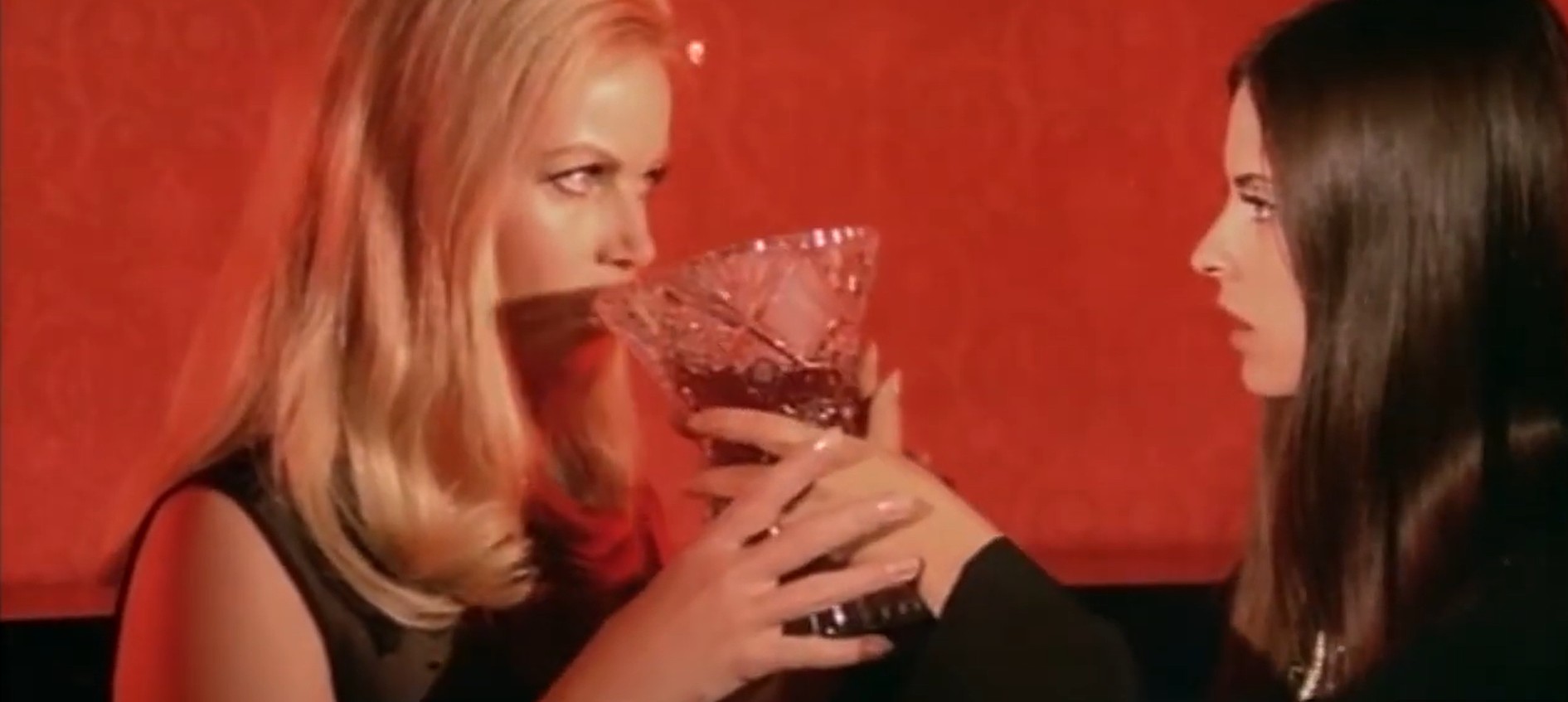
Linda’s dreams vividly disturb her with imagery of an idyllic island where blood rivulets watercourse down curtains while being in the romantic embrace of a swarthy beautiful woman.  These dreams are so powerful she must see a therapist about them.  When attending an nude performance art show with husband Omar, she’s shocked to see the woman on stage is the same woman from her dreams.   The coincidence lingers with Linda on her business trip to a Turkish island where she meets Countess Nadine Carody to discuss a large inheritance from a Count Dracula.  Come to her surprise, Countess Carody is the same woman from on stage.  Immediately, Linda’s under Countess Carody’s suggestive sexual influence of a lesbian vampire.  When Carody falls deeply for Linda, she will stop at nothing to have her whole, as one of her, to pass along the tradition of inherence as Dracula has done for her, but Omar, the psychiatrist Dr. Seward who’s familiar with vampirism, and a Memmet, a hotel clerk moonlighting as a rogue and vindictive vampire hunter, aim to help Linda from Carody’s grasp one way or another. 

The director behind some of Europe’s sleaziest erotic-horrors, such as “The Sadist of Notre Dame,” “Ilsa, the Wicked Warden,” and “A Virgin Among the Living Dead,” Jesús Franco, aka Jess Franco, was a prolific cult icon of the past, the present, and will still be in the future.  The Spanish born filmmaker grew up in the Francisco Franco dictatorship for over 30 years but that didn’t stop him from expressing his artistic freedom with the 1971 released “Vampyros Lesbos, “ a German production set in Turkey that mirrors the classic Bram Stoker tale but with teaks of character, scenery, and sexual orientation albeit “Dracula” is too thought to be a homoerotic tale to some filmic scholars.  Compositely filmed in Turkey, Spain, and Germany, “Vampyros Lesbos” is a production of Tele-Cine Film und Fernsehproduktion, Central Cinema Company, and the Fénix Cooperativa Cinematográfica with Karl Heinz Mannchen as executive producer and Artur Brauner as producer, both of whom worked on Franco’s “The Vengeance of Doctor Mabuse,” and the story, based loosely off of Stoker’s tale, is penned by Franco. 

Like other Franco productions of this caliber, the cast is comprised of internationals, ranging from Spain to Sweden, from Britian to Switzerland, and to finally Germany without a single Turkish thespian in sight despite the story’s setting locale of Istanbul.  As mentioned briefly above, “Vampyros Lesbos” follows a threadbare version of Bram Stoker’s iconic Gothic tale that trades the grotesque Gothicisms for sunnier skies and idyllic island houses.  The basic principal characters are present from Stoker’s story but have been tweaked to fit Franco’s feverous surreal aesthetic that has a really sink its teeth into the homoerotic indulgencies.  Swedish actress Ewa Strömberg (“The Devil Came from Akasava,” “She Killed in Ecstasy”) resembles something along the lines of a Jonathan Harker-type but instead of being in real estate, like Harker, her character Linda Westinghouse is an inheritance lawyer dispatched to Countess Carody’s island home where she is bewitched by Carody’s infatuation and lust for her lifeforce.  Countess Carody is the obvious counterpart to Count Dracula but spun in a way that makes Bram Stoker’s story more like a tangent rather than remake as it’s Count Dracula’s fortune Countess Carody is inheriting.  Spanish actress Soledad Miranda (who also costarred with Strömberg in “The Devil Came from Akasava” and “She Killed in Ecstasy”) is the sultriest creature on the screen in Carody’s nude and neck biting pastimes and coupled with the easy-going Linda, Strömberg and Miranda sizzle as lesbian lovers very comfortable with each other’s performances and bodies.  Van Helsing is embodied by Dr. Seward but with reverse tendencies that do not require the doctor to be the stake to stop vampirism but rather entertain an unexpected twist trait that’s quite opposite.  Seward is played by British actor Dennis Price (“Tower of Evil”) and is a comparable Van Helsing amongst the previous lot but definitely less harrowing and dramatic than most.  Seward’s deranged patient Agra is the final piece to the Stoker narrative semblance as the story’s Renfield.  German actress Heidrun Kussin (“The Swingin’ Pussycats”) does not eat or feign eat bugs and other nightcrawlers to aspire being a vampire but retains Renfield’s psychic connection while going hysteria topless as she squirms in bed for her master’s return to whisk her away into the night.  “Vampyros Lesbos” rounds out the cast with new cast not familiar to Bram Stoker’s “Dracula” with Andrea Montchal (“Eugenie de Sade”) as Linda’s husband Omar, José Martínez Blanco as Countess Carody’s loyal bodyguard Morpho, Paul Muller (“Lady Frankenstein”) as Dr. Seward’s assistant Dr. Steiner, and Jesús Franco in the role of Memmet, a hotel clerk with a visceral vendetta against vampires. 

Arguably the most notable film out of the prolific Jesús Franco filmography, as I believe it to rival another outstanding piece of work from Franco, “Eugenie… The Story of Her Journey into Perversion, starring Christopher Lee and Maria Rohm based off the Marquis de Sade novel, “Vampyros Lesbos” is perhaps Franco’s most recognized piece film that has a sliver of notoriety while also spurring a remake years later in a 20-minute short film in 2008 by Matthew Saliba.  Most of Franco’s repitoire can be said as messy, a mash up of other films recut to make a new film, hackeneyed, and a complete dull, but “Vampyros Lesbos” is different.  It’s also not the same Eurosleaze one might be familiar with in regard to his catalogue; in fact, “Vampyros Lesbos,” despite the name, doesn’t even feel like sleaze.  There’s a naturality about it underneat it’s Bram Stoker-homoericism message sans the gratuitous nudity that’s more of a playful exploration of sexuality.  The only resemblance of sex is through the vampiric rite of seductive foreplay and subsequential drinking of the blood and with only Linda and Countess Nadine in scenes of embrace.  Not even poor Linda’s husband, Omar, has conjugal interactions and that plays into the whole theme of the story that Oman and Linda have this sexless relationship and here comes along Countess Nadine and her oozing sexpot of Linda’s fantasies inside a one-side power dynamic.  There’s no degenerate-filled debasement in this sexploitation, one the story’s traits that actually separates itself from “Eugenie,” and Franco, like with “Eugenie” on this element, actually helms an artistic aesthetic with good editing, crafty angles, and a varied cinematography blend of natural and stylized imaging. 

Provocative European sexploitation that isn’t busk European sleaze, “Vampyros Lesbos” is zenith Jess Franco, a social-political rebel and artist unafraid to tell a story that won’t tickle everyone’s interest but definitely be an archetype of the director’s caliber.  Severin Films proudly presents “Vampyros Lesbo” onto a new 4K UHD and Blu-ray dual-format set with a 4K presentation scanned from the original 35mm negative.  The 4K UHD is compressed with HVEC encoding onto a BD100 and the standard Blu-ray is AVC encoded onto a BD50 with respective resolutions of 2160p and 1080p.  The European 1.66:1 widescreen is the aspect ratio on both formats, but the UHD uses DolbyVision to expand upon the already lush color pallet with a richer complexity within the color scheme even though Franco loves his most muted black dressings on characters and on sets.  The extra pixels offer deeper textural, mostly auspiciously perceived in the club scenes that present a room of textures and in often brightly lit captures that don’t washout the details but rather define them more accurately.   The standard Blu-ray offers the same approach but brought back a step or two due to format limitations on the color scale and pixel count but a lesser keen eye won’t take much notice.  The original negative print shows no egregious mishandling damage or degrading emulsion wear.  The only audio track available is the German Mono ADR track with optional English subtitles.  This release does not contain the English dub that’s lost out there in physical media land.  The mono track has a flat tone with no depth to speak of and is full of desynch between dialogue movements and audio overlay but never hides behind the other single output layers. German Manfred Hübler and Sigfried Schwab eclectic score is a fun listen with brass, piano, sentur, light drums, and bass compiled to an era swanky main score that’s quoted being a sexadelic dance party, and rightfully so.  There’s even a distorted vocals on a slow beat jazz track that provides the unsettling and sultry notes for the underplayed horror side of this sexploitation.  Special features on the UHD includes audio commentaries by Kat Ellinger, author of Daughter of Darkness, and a collab between film academic Aaron AuBuchon and Oscarbate Film Collective’s John Dickson and Will Morris.  The UHD concludes with the German theatrical trailer.  The standard Blu-ray has more wiggle room for bons features with all the above from UHD, plus an interview with Jess Franc just prior to his death Interlude in Lesbos, an interview with Stephen Trower, author of Murderous Passions:  The Delirious Cinema of Jesús Franco, a Jess Franco career appreciation by “Anora” director Sean Baker The Red Scarf Diaries, the Stephen Thrower hosted In the Land of Franco, Part 12 looks at iconic locales from Franco’s films with a primary focus on “The Sadist of Notre Dame” which his set in Paris, France, an interview with Soledad Miranda historian Amy Brown Sublime Soledad, a 3-minute mini interview with Jess Franco labeled Jess is Yoda that provides some comedic flair and “Star Wars” references, and the German opening title sequence.  Physically, Severin’s release has a stark, hard contrast cardboard O-ring slipcover with Soledad Miranda in a seductive position starring right aback at you in front of black background.  The backside of the slipcover contains no technical information but does have review quotes, credit acknowledgments, and lingering stare between Countess Carody and Linda Westinghouse.  Inside you’ll find the classic 4K UHD Amaray with Severin’s original Blu-ray art from 2015, commissioned by graphic artist Ben Benscoter.  There is no reverse image on the sleeve.  The discs are held separately with one each side of the interior.  The 89-minute film is not rated and is region free for global enjoyment.

Last Rites: Jess Franco’s “Vampyros Lesbos” is on the select short list of how the Spanish director should be judged by existing and new fans of his work and remembered in his long career and legacy as a truly psychedelic, auteur driven, lesbian vampire film with plenty of women-centric allure and flesh.

Men Beware of the “Vampyros Lesbos” now on 4K UHD and Blu-ray

One’s Cool, One’s Crazy, Both Are Chasing EVIL. “Cutter’s Way” reviewed! (4K UHD and Blu-ray Combo / Radiance Films)

“Cutter’s Way” 4K UHD and Blu-ray Now Availble!

Cruising through life and women without much purpose, Richard Bone finds himself the prime suspect of a young woman’s murder.  Realizing he may have witnessed and seen the killer deposing of the body in a back alley where his car broke down on a raining night, he confides in his longtime best friend Alex Cutter, a crazed and paranoid disabled Vietnam veteran with a drinking problem.  Alex sinks his teeth into the case to exonerate his friend’s good name when Richard possibly recognizes the killer, a powerful oil tycoon revered by society and an employer to many and won’t let up on proving to Richard his suspected guilt by pieces the clues together.  Richard’s amuses Alex’s obsession, stemmed possibly from his trauma delusions, alcoholism, or his passive aggressiveness toward Richard’s infatuation with his wife Mo, but when Alex’s evidence becomes more and more convincing, Richard can no longer ignore his lunatic friend’s fixation as just a waste of time and conjecture. 

Based off the novel “Cutter and Bone” by novelist Newton Thornburg, the 1981 comedic-whodunit-drama “Cutter’s Way” is an unorthodox buddy gumshoe mystery with themes of the pitiful and nearly forgotten veterans of Vietnam War, the magnate power of whitewash and concealment, and to have purpose in life before life is taken away from you.  The late Ivan Passer, director of crime dramas “Law and Disorder” and “Crime and Passion,” focuses paper-to-screen transgressional energy to the pen-to-paper script by Jeffrey Alan Fiskin in the screenwriter’s sophomore feature film following the 70’s biker-exploitation and revenge caper “Angel Unchained.”   “Revenge’s” Fiskin tones down the ruffian violence, trading it for another type of irrational behavior in the form of the half-bodied war veteran drowning what’s left of himself at the bottom of a bottle while his best friend, a full-bodied, red-blooded, ladies man, ironically enough wants the one unavailable woman the vet married  and could keep in his possession despite her own form alcoholism and depression.  Once titled “Cutter and Bone,” changed to “Cutter’s Way” to appear less like a medical horror production, the film is produced by Paul R. Gurian (“The Seventh Sign”) under his namesake production company, Gurian Entertainment, shot in Santa Barbara, California.

“Big Lebowski’s” Jeff Bridges has the story’s focal point being Richard Bone, the happenstance victim becoming a murder suspect while trying to coast through life by walking away from hard problems and not taking the steps to advance.  The Bridges of 1981 is certainly a different breed than of grizzlier Bridges of more than four decades later, and even nearly two decades later around “Big Lebowski’s release, with a slender cut and tall physique, baby-smooth shaved skin, and a head full of dirty blonde hair that certainly makes him the ladies’ man as shown in the opening scene of him dressing himself after a bedroom romp with a slightly older woman.  Bridges embodies both Bone’s lackadaisical commit to himself, his friends, to woman he loves, and even to the conspiracy surrounding the real suspect concocted and presented by his friend, Alex Cutter, but when the tone starts to shift more toward the evidence of a coverup and all the dots begin to connect to Cutter’s alcoholic rantings and ravings that could be construed as convincing conjecture, you see the Bone begin to care more than he’s ever allowed himself to.  Bridges’ Bone is actually not the most interesting, complex character as that accolade goes to John Heard as Alex Cutter.  The “Home Alone” actor deserved to be praised for his performance as the untamable and wildly convincing Veteran horribly disfigured by his service in Vietnam that fuels his drinking problem, causing a seemingly impenetrable yet sociable wall between him and his wife, and always seems to put tolerable Bone in the middle of his trouble, such as his use of the derogatory N-word in a joke at a bar where we first meet his uncouth, drunken, yet surprisingly together state.  Heard’s intensity has range and emotional standing in the character’s cocky hop-a-log swagger that gives the big ability middle finger to his disability that doesn’t stop his motivational obsessions.  Caught in the middle is Mo, played by Lisa Eichorn who would later costar with Jeff Bridges over 20-years later in the mystery-thriller “The Vanishing” alongside Kiefer Sutherland and Sandra Bullock.  Also an alcoholic in a less look-at-me kind of way, Mo has the heart of both Bone and Cutter as Bone walked away from their romance years earlier and she marries pre-war Alex, but Bone and Mo’s spark lingers, teases, and eventually comes to fruition as the damn breaks with Cutter’s behavior that leaves Mo isolated and lonely in a pit of depression.  One character that has girth in the first two acts is the murder victim’s sister Valerie from the girl who yelled SHARK! In “Jaws 2” in Ann Dusenberry and while Dusenberry has a sizable part as part of Cutter’s investigating team, almost like an instigator to his whims, Valerie ultimately disappears in near the tale end of act two and completely from act three, making this one of the biggest mysteries alongside the possible murder suspect itself.  “Cutter’s Way” rounds out the cast with Stephen Elliott (“Death Wish”), Arthur Rosenberg (“Cujo”), Nina van Pallandt (“The Sword and the Sorcerer”), and Patricia Donahue (“Paper Tiger”). 

“Cutter’s Way’s” powerhouse duo of Jeff Bridges and John Heard couldn’t be more perfect with two contrasting walks of life that somehow fit and work, drawn together like strong magnets despite their odd shaped and conflicting personas.  At some points during Cutter’s insane theories and aggressive, uncivilized touting, you would think a calm demeanor and conservatively rational Bone would distant himself from Cutter, or even try to stop his stare-induced antics but Cutter’s shenanigans fuel something in Bone that makes this relationship hobble along without any sign of slowing down and that likely is largely in part to Mo being the connective tissue.  There’s perhaps some guilt residing in Bone who escaped the draft whereas Cutter did not, resulting in losing eye, limp, and leg for a country he obviously has contempt for by going against societal norms.  Cutter convincingly lays the framework of suspicion against the big time oil tycoon with intrinsic connections to not only society by to Bone and Cutter’s friends that makes their meaningless existence in comparison to the oil man’s own feels diminutive and impossible to rise up and action against with the evidence toward a police department that already has Bone in their sights because his car was nearby.  However, the investigation follow-up, as well as the acute disappearance of the victim’s sister Valerie, stamp the story with difficulties of resolve and being a well-rounded narrative. These poofs of key parts differ from the death of main character that goes without explanation, or rather has too many explanations that mold in speculation, that adds to story’s deep misgivings of who was there that dark and stormy night of the murder and culminating to a dramatic finish that impresses a linger skepticism and perhaps even a little bit of cynicism between all left involved. 

“Cutter’s Way” has sorely fell under the radar amongst aficionados of cult classics and UK distributor Radiance Films is looking to expand the Ivan Passer directed adaptation to a broader audience of not only to fans of Jeff Bridges and John Heard but to the fans of thought provoking and open-ended features that get the rusted mind gears turning once again for storytelling and not glaze over with immense computer generated special effects.  Radiance Film’s new restored limited edition 4K UHD and Standard Blu-ray set is pretty deluxe with a 4K restoration presented in HDR/DolbyVision.  The 4K is HVEC encoded with 2160p on a BD100 and the Blu-ray is AVC encoded at 1080p on a BD50.  The ample space allows the restoration to fly without constraint with a vibrant and nicely diffused picture through the dynamic coloring with a slight contrast on its essential organic grading that dips into a bluish tone and low light noir here and there when the moment calls for it.  Impressive detail measurement along the texturing as John Heard looks every bit as grizzly as his character entails with a course, unkept beard, long straggly hair, and ill-fitting military-esque attire whereas Bridges has primary color pristine and neat lines about him.  The Panavision spherical lens used creates a natural concise look, often flat but not unnatural, as it doesn’t try to squeeze the framing.  There were no damage spots to note on a well looked after 35mm print.  The English DTS-HD Master Audio mono track is too flat with frontal space only for the enriched dialogue of the script between mostly Bone and Cutter.  The suitability of track doesn’t change despite a lesser vigorous mix that has competent job performance and is adequate to the type of contemporary noir.  Jack Nitzsche’s soundtrack too makes the film more alluring with a blend of Latino influences and an oxymoronic harmonic dissonance of a musical saw and harmonica that plays into the noir undertones.  English subtitles are optionally available.  On the 4K special features coverage there is an introduction by Jeff Bridges and three audio commentaries with novelist Matthew Specktor, assistant director Larry Franco and Production Manager Barrie Osborne, and an archived conversation between film writer Julie Kirgo and late producer Nick Redman.  There’s an isolated soundtrack from Jack Nitzsche formatted in a DTS-HD Master Audio 2.0 compared to the feature’s mono track.  The Blu-ray houses a little more bonus content with all of the above on the UHD and continues with an analyst featurette Piety, Patriotism, and Violence:  The Legacy of Cutter and Bone by film writers Megan Abbott, Jordan Harper, and George Pelecanos, an Ivan Passer interview from 2015, a Lisa Eichorn interview from the Fun City release, an interview with producer Paul Gurian from the Australian Imprint release, an audio only interview with former United Artist exec Ira Deutchman, Cut to the Bone:  Inside the Score is a featurette that interviews music editor Curt Sobel, Bertrand Tavernier is a Sidonis Calysta’s interview of admiration from the French film director, a still gallery, the trailer, and an alternative title sequence with the original “Cutter and Bone” title sequence.  Radiance Film’s physical presence is substance with this limited-edition release held all together in a rigid slipbox with new commissioned artwork by Time Tomorrow on both sides and comes with an obi strip with credit and technical information.  Inside is a clear Scanova Blu-ray case with reversible artwork with the primary art a split still image, one image for either side from the feature, with the reverse containing new artwork as well.  The overlapping stored discs are pressed with a blood red tint.  A 78-page mini book is inserted alongside the Scanova with cast and crew acknowledgements, transfer notes and release credits, and essays from Nick Pinkerton, Christina Newland, and Travis Roberts with an Ivan Passer Q&A by Jerry Roberts.  The book also contains color images as well as composition artwork on the bookends.  The region A locked release doesn’t have a rating listed, assuming not rated, and has a 109 minute runtime. 

Last Rites: Jeff Bridges and John Heard are the dysfunctional detective duo you never thought you needed. “Cutter’s Way” is a cathartic comedy and crime thriller refreshed and renewed for ultra-high definition from the fan’s favorite boutique labels, Radiance Films.

“Cutter’s Way” 4K UHD and Blu-ray Now Availble!

EVIL’s Counterfeit Products are the Bomb! “Knock Off” reviewed! (MVD Rewind Collection / 4K UHD and Blu-ray)

When confronted with product forgeries by Hong Kong police and company representative, Ray, a longtime Hong Kong counterfeiter trying to go legit by partnering up with Tommy to be a distributing fashion designer of V-Six Jeans, becomes embroiled in a Russian smuggling operation of hiding powerful micro explosives in counterfeit goods being sent around the globe.  With their ability to be activated by satellite waves, the devices can be hidden in all types of products.  The CIA, using Ray to track down another notorious counterfeiter, becomes involved and exploit Rays connection to Hong Kong’s criminal underbelly but double-crossing twist and turns has Ray struggling to trust an ally in his mission to not only find out who is counterfeiting his denim goods but also save the world from infiltrating Russia explosives.  He’ll have to rely on his fighting skills as well as hesitantly trust those who’ve deceived him to unearth the person responsible to clear his name and stop the deadly outbound shipments. 

To start this review with a personal anecdote, I recently sold Air Jordans to an eBay customer and come to my surprise and dismay, eBay’s authentication process determines the shoes a forgery.  I’ve sold many Air Jordan and Nike shoes in the past, successfully through the authentication process, and pride myself on knowing what to for when determining fake product.  This one had me fooled.  An exact lookalike of the Air Jordans that passed my authenticity examination with the company tag that has all the production information including the product identity number, had the correct Air Jordan logo, and the material passed the visual and feel test with substantial promise to confidently market.  Now, what eBay found is completely without reason as I don’t know what they saw or found but what I found in the 1998 campy-action-thriller “Knock Off” surely reminded me that there is always more than what meets the eye.  “Once Upon a Time in China” and “Twin Dragons” action film director Hark Tsui works with western actors to achieve a nonstop, impractical, and fun to watch film that doesn’t letup or provide any downtime.  The script is penned by Philadelphia born screenwriter Steven E. de Souza, the same de Souza behind “Commando,” “Die Hard,” and “Street Fighter,” orders another supersized helping of action on a Hong Kong reality-defying scale and is produced into an extremely 90’s-laden existence by Raymond Fung, Kamel Krifa (“Universal Soldier”), Moshe Diamant (“I, Madman”), and Nonsun Shi (“Double Team”).  “Knock Off” is a production of Film Workshop and MDP Worldwide. 

At the tail end height of his career, the Muscles from Brussels, Jean-Claude Van Damme (“Bloodsport,” “Universal Soldier”), finds himself in a self-deprecating lead role that’s campy toward showcasing his own physique but in a slapstick way.  His character Ray is a likeable, affable, cool type with a tragic past, only touched upon ever so briefly and delicately in conversation, who has resorted to selling counterfeit items to make a living.  Yet, Ray’s trying to pull himself into a straightened arrow by jumping at the opportunity to partner with Tommy (Rob Schneider, “Deuce Bigalow:  Male Jiggalo”) for legit business.  Van Damme and Schneider become a buddy action duo with Van Damme knocking around bad guys with jump kicks and parkour while Schneider provides the comic relief with very few, and pale in comparison, combative fighting moments in what is also the same kind of role from Sylvester Stallone’s “Judge Dredd.”  To Van Damme’s credit, the usually unintentionally funny action star arises some comedic chops in a devil-may-care persona that eventually hammers down to a determined save lives ambition, but not before Van Damme egregiously has to thematically remove his shirt for nearly every action scene or strip down to his boxer-briefs so all can good a good view of his athletic, muscular physique.  The whole course is an objectifying tragicomic, especially when he starts to rip through Tommy’s Hawaiian shirts simply by turning his body or being whipped in the rear by Tommy during a rickshaw race with Schneider commenting about his big, beautiful ass.  Yes, men do get objectified as well.  Van Damme and Schneider are eventually joined early on by Lela Rochon (“The Meteor Man”) as a V-Six Jeans Representative from North America with a covert agenda and the iconic Paul Sorvino (“Dick Tracey”) as a CIA operations supervisor taking on counterfeiting, both Rochon and Sorvino subdue their performances initially for twisted knots in the storylines later on that makes his evolving ensemble that much more entertaining.  Moses Chan, Wyman Wong, and Glen Chin, Carmen Lee costar.

“Knock Off” isn’t your typical Jean-Claude Van Damme beat’em up action-thriller though it follows the same principles as one.  Hark Tsui puts forth a kinetic ball of continuous energy, ever evolving and dynamic to keep scenes from getting stale.  From the opening illegal rickshaw race through the streets of Hong Kong city to the massive Budha temple explosion to the cargo ship container toppling scenes, there’s plenty to behold in Tsui stunt and special effects juggernaut.  A less serious Van Damme with Rob Schneider joined at the hip is the peculiar buddy action-comedy we never knew we wanted, brush stroked with late 1990’s superimposed fireballs and the legendary pushed to the limit Hong Kong stunt effects that look quite expensive and detailed beyond belief.  Some of Van Damme’s swift movements are aided by a stunt wire that’s briefly visible in hi-def and a few of Tsui’s stylistic edits, ones that zoom in, try to seamless transition, and give an interior view of a sniper’s scope or a barrel of a gun is heavy handed in it’s editing.  While Tsui gets his filmic credit as the one-and-only director, it’s stunt supervisor Sammo Kam-Bo Hung (“Ip Man”) who should receive recognition for helming the camera for the stunt scenes.  You can see the different styles being pushed together between Tsui’s unconventional down shot angles and Hung’s more straightforward impact in an action shot, creating an eclectic design that adds to the intrigue, especially in Tsui’s downtime moments of conversation that’s not only witty and fast but at an off centered framing that’s more vertically skewed while keeping the concentration on the actors in a wider anamorphic lens in an environment that seemingly wraps around them. 

They say imitation is a form of flattery but this legit MVD Rewind Collection release of “Knock Off” fawns clear adulation with a 2-Disc, 4K UHD and Standard Blu-ray release.  Coming in as the 6th title on the company’s 4K LaserVision Collection, cojoined with the Rewind Collection label, the HEVC encoded, BD66 4K UHD, presented in 2160p in a widescreen 2.35:1 aspect ratio, is noted having a hi-def restoration with a 16-bit scan of the original camera negative that provides more a dynamic color range and saturated depth.  There’s definitely an improvement and a difference in contrast to the standard Blu-ray with a vivid offering of a multihued Hong Kong cityscape from the HDR10 that’s not offered in 8-bit or even 10-bit color depth.  Interiors are subjected concreated warehouses of the colorless and dark variety but no banding to note and no block distortions.  Textures are surprising not there at the level we’d expect but likely due to Tsui’s heavy use of superimposition effects with green fireballs and other types of overlayed explosions, and the action scenes often retract a good amount of detail too.  The 1080p Blu-ray is an AVC encoded BD50 with the same aspect ratio as the 4K.  It too offers a solid presentation but not to the extent of the 4K and still suffers from the same wishy-washy texturing, but the overall presentation is solid and worth the value.  The English language tracks available on both formats are a DTS-HD 5.1 Surround Sound Mix and an uncompressed LPCM 2.0 Stereo.  For any action film with lots of range, depth, and conversation, you certainly want to go with the surround sound option that harnesses every direction and that’s the clear choice with “Knock Off” as it opens the lines of directional communication with the back and side channels, leaving all the dialogue and heavy LFE lifting with explosions primary in the front and clear immersive resonation.  Dialogue has no issues with the original audio track albeit being ADR but used with the original cast’s voices.  English subtitles are available for selection.  The 4K special features include only an archival commentary from action film experts Mike Leeder and Arne Venema.  The Blu-ray contains te same in tandem audio commentary plus a new interview with producer Moshe Diamant, an archived interview with screenwriter Steve E. de Souza, the original making-of featurette, and the original theatrical trailer.  MVD’s Rewind and LaserVision Collection set comes with a thin, cardboard O-ring slipcover that has faux crinkled front image, the original cover art of the highly original Van Damme with a gun (my hint at sarcasm) like a laserdisc paper sleeve would have.  Inside is the black Amaray with the same primary image for the sleeve art sans crinkling but if you reverse the sleep, you’ll see the classic Rewind Classic design with the same Van Damme image.  The Amaray has snaplocks on each side of the case on the inside – 4K UHD on the right and Standard Blu-ray on the left – with an insert containing a mini-folded poster of the LaserVision Collection artwork.  “Knock Off” is rated R, has a runtime of 94 minutes, and is A region locked.

Last Rites: “Knock Off” is no cheap…knockoff. The Hong Kong production is action-packed, outrageous, and campy fun with Van Damme in taking a step back from being the stoic hero and charismatic hero to be the anti-hero caught in the middle who just knows how to roundhouse his way out of an nefarious Russian plot involving nano-explosives.

You Better Damme Believe It! “Knock Off” on 4K UHD and Blu-ray from MVD Rewind Collection!