A Lake Swimming With EVIL Off of “Mermaid Isle” reviewed! (WWMM and MVDVisual / DVD)


On a nearby island with an infamous past, four friends come to dock on the island from a pleasure craft cruise to explore the adjacent and serene lake surrounded by woods. What was supposed to be a fun, relaxing, and romantic getaway turns frantic when one of them accidently falls into the lake and is bitten by a mysterious unseen creature in knee high water. With a storm brewing and the bite affects worsening, the group takes shelter inside a seemingly abandoned lakeside cabin receiving an unwelcome and surprise greeting from an old woman who immediately wants to kill the injured party, but is bitten during the small skirmish and kills herself in total fear. Bewildered, the group remains in refuge from the storm, sleeping through the worst winds and rain only to wake up to find the injured and one other friend missing. Their search brings them back to the lake where they discover once bitten, there’s no saving you as the lake is a breeding ground for vicious, blood hungry mermaids, spreading their transformative contagion with a single bite. As the survivors contemplate next steps, the old woman’s delinquent adult son returns home to find mother dead and sets out to kill her murder.

Popping my mermaid horror cherry with the Jason Mills’ ravenous take on the mythical half-human, half-aquatic creature feature, “Mermaid Isle,” released in 2020. The writer-director debuted his first genre feature back in 2009 with an attic dwelling creature terrorizing an unsuspecting and already fragile and distraught family in “Above Us Lives Evil,” also more commonly known as “They Came from the Attic,” but it wasn’t until 2015 when “Above Us Evil Lives” came across our critical lap and was reviewed rather favorably for the filmmaker’s first credited venture with the following excerpt observing Mills as a “promising” director with “attributes that can contribute to the horror community” through the “strategical” use of knitting visual FX work with practical prosthetics to supply an effective heinous attic monster on a penny pinching purse string. Over a decade later, Mills continued his successful ability to turn around project after project of independent b-horror that includes the markings of spiraling madness with “The Changing of Ben Moore,” a joint home and alien invasion thriller with “Alone We Are Not,” and even tackling the mysterious and carnage-laden mythical sasquatch in “Bigfoot Country.” The director’s latest sea-faring fiends maintain the basic principle features of a fabled mermaid: an alluring, half-naked maiden on the top half with a marine flipper-tail at the bottom. Yet, “Mermaid Isle” explores the darker side of the mermaid mythology with a schlocky, self-funding of the plagued island concept with his own production company, Millspictures Studios.
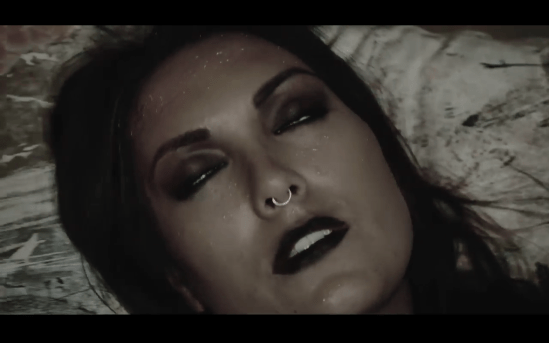
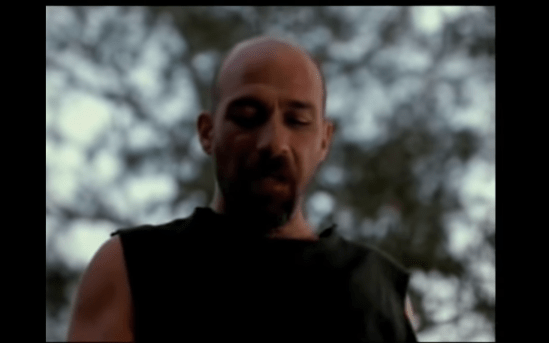
“Mermaid Isle” is very character dependent to push the story along and toward the secluded residing lake since the story concept doesn’t involve any victims to be wound up stranded, buoying in the water, and surrounded by deadly and infectious mermaids creating a filthy amount of dire circumstances of harrowing survival. Instead, we doggie paddle along with bland, monotonous, and uninteresting characters played by bland, monotonous, and uninteresting actors riding the only wave of substance of the lead character (Mark Reinhardt) being rejected upon his proposal to his short term girlfriend (Kristina Soroff). The other two in the group, an assertive goth (“Bigfoot Country’s” Kiana Passmore) and tagalong friend (Samuel Buchanon), offer little to warrant their survival as they’re targeted for either mermaid chum or to be marked for warped evolution. The young cast never click together as on screen friends or form a frantic group with a correlating enemy, but rather seem underwhelmed by the lake inhabited by evil mermaids being the source of their dilemma. There was much more interested in the double sided danger foreboding around the old woman (Elinor Walker) and her bad new son (Dan Martinez), whose mysterious ruffian background surfaces to the top as he’s eager to turn his newfangled life of a straighten arrow path is squashed back into the miscreant he was once was by hunting down those responsible for his mother’s death, but that also fizzles into oblivion. Hope for the character emerges when he declares, “time to do some bitch fishing,” as an oath to, once again, contain the mermaid contagion from spreading by some noble crusade of, oh, I don’t know, spear fishing the hell out of the creatures or taking a dive into the depths of the unknown and do a little hand-to-flipper combat. Sadly, “Mermaid Isle” continues to miss chances rewarding viewers with potential much needed plights. The film rounds out with Liam Tait, Austin Richards, and Garnet Campbell in some unresolved, barely associating epilogue set four months later.
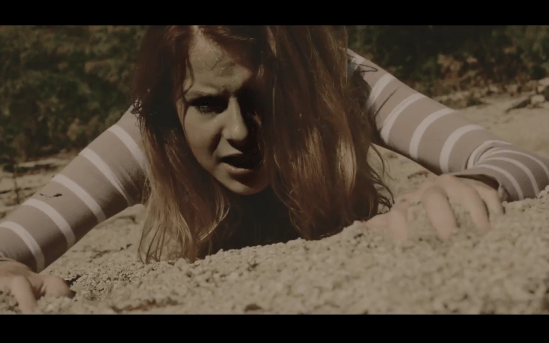
“Mermaid Isle” struggles to come up for air as an exalting mermaid horror, especially being released in 2020 amongst a sea of competing indie interests. Yet, Mill’s story spans over three and half decades beginning with a backstory, told through the words of newspaper clippings from 1983, honing in around a prefacing story of a father and son being murdered by a mermaid bitten daughter and transforms to ravage portion of the family. While the news clipping claim hoax, the mother, the old woman, who we visit in the story later at the cabin, is shuttled off by authorities to a psychiatric ward because of her rant and ravings about killer mermaids. While the slightly crafty, yet also chintzy soaked way to setup the film is engrossing enough to keep us interested at the start, the small budget stiffens any kind of any remotely rudimentary devices to then mingle man versus unnatural nature in a project too big for the budget’s britches. Further reaffirmations assume the assigning of multiple hats amongst the crew and cast, including Kiana Passmore is also the first assistant director, Garnet Campbell is the line producer, and the Mills and the Passmore families extending their services as credited Crafty and Location scouts. The story logical capsizes the moment the movie is popped into the player. For instance, the movie is entitled “Mermaid Isle,” but the Island is adjacent to a river and on the other side of that river is a lake so the premise really has nothing to do with the island, but rather a lake. The DVD back cover mentions the four friends attempting to conjure (spelled conjueron the back cover); yet, there’s none of that conjuring jazz and nothing to affix the detached epilogue to the rest of the film, as previous stated. Lastly, the DVD front cover has more gore, more skin, and even a shark in the water. Low and behold, none of those enamors exists. I will say this about “Mermaid Isle,” the mermaid itself looks convincing, obscured enough around the seams and the physical fish tale to pull off an effective mermaid creature with pitch black eyes and a face flush with hunger.
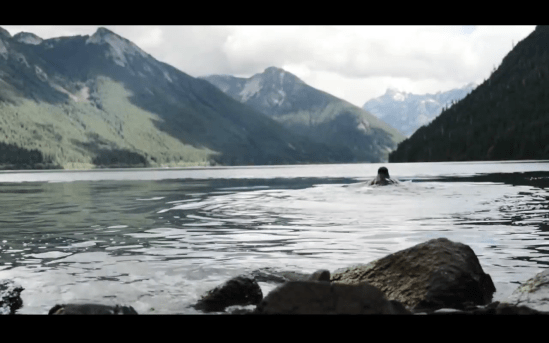
If feeling adventurous, jump into the deadly waters of Jason Mills’ “Mermaid Isle” on DVD courtesy of World Wide Multimedia Entertainment, an affiliate of Alchemy Works, and MVDVisual. The not rated, 80 minute feature, is presented in a widescreen presentation, 1.66:1 aspect ratio, and the overall video image quality is not too terrible, but lacks breadth of color, compressing the details of the woods, the rocky lake shore, the old cabin, and the snow-covered trees more favorably than would have expected. Some aliasing during more actiony sequences in the water with the mermaid swimming. The English language 5.1 surround sound mix is a complete lackluster in regards to dialogue. The muffled vocals are nearly indiscernible levels for more than half the dialogue track and heavily overshadowed by ambient mix and, a bright spot on the release, the Thomas Beckman viola that almost feels too Renaissance to be paired with “Mermaid Isle.” Aside from a static menu with chapters, there were no special features included. Having no point of refence having never seen “The Lure,” “She Creature,” or even “The Mermaid: Lake of the Dead,” “Mermaid Isle” sinks the aquatic humanoid subgenre deep into Davy Jones locker for greenhorn viewers, but bares intrigue at times with the idea of a menacingly unfathomable creature stirring in the blue waters, sloshing up enough to give you the creeps and not bother with the movie itself.

[https://www.youtube.com/watch?v=wWcq9bQGb6I]

“Mermaid Isle” available on DVD. Click the poster.

Neighborly Isn’t In EVIL’s Vocabulary in “Red Letter Day” reviewed! (Dread and MVDVisual / Blu-ray)


A divorce lands Melanie Edwards and her two teenage children, Madison and Tim, to redefine their live a new and quiet suburban community called Aspen Ridge. While adjusting to their new normal and becoming acquainted with their new neighbors, the Edwards receive a mysterious red letter in the mail, calling for each person to kill a neighbor from an algorithm, created by a masked anarchist group named The Unknown, has vied them against by working from the parameters set to calculate each individuals’ polar opposite personal, political, or religious beliefs. Every resident in Aspen Ridge has received a red letter with the same instructions that mounts tension amongst friends and neighbors until, eventually, all hell breaks loose and it’s kill or be killed.

Welcome to part one of my unofficial independent horror films out of Canada series where we take a look at Cameron Macgowan’s written and directed 2019 horror-comedy, “Red Letter Day.” Filmed entirely in Calgary, Alberta providence, Macgowan and his production crew claim numerous AirBnB rentals to exact the sleepy, suburban, sanctuary to instill the murderous wrath that simmers just beneath the surface of every mild-manner person living next door, seething with contrasting opinions and beliefs. As a sort of a permission granted for carnage, “Red Letter Day” aims to set itself a part from the typical archetypes that hide the horror in the dark shadows and obscured corners with a bright and sunny morning melee armed with shotguns, baseball bats, sledgehammers, and a kitchen knife with a transfixed cooked chicken on it. “Red Letter Day” is a product of Macgowan’s Calgary, Alberta based production company, Awkward Silencio” in association with Tanda Films.

“Red Letter Day” focuses around the Edwards family who have just gone through the trials and tribulations of divorce proceedings, settling into their new surroundings with relative ease in Madison finding love with an older boy, Tim rounding out a routine, and their mother Melanie shaping a safe haven environment as a soft cushion for her children from the spoils of her ex-husband, but their ease comes with some conventional teenager microscopic social nuisances beneath the surface that places the barely adult Madison as a defiant outlier and the 17-year old, almost in adulthood, Tim as a clinching mama’s boy. All the breakdowns of their everyday life becomes superficial and, at the same time, becomes thought provoking on how they view themselves as a family when a domestic terrorist group invokes hunting season on the neighbors to kill their specific opposite of themselves. Dawn Van de Schoot (“Ice Blue”) steps into a role she’s relatively familiar with in being the mother, Melanie, and while Van de Schoot is perfect as the down to Earth, cool mom with some loose ground rules and sizes up tolerably being a proactive mother, her overall performance is shaky at best as she never finds solid ground in the malicious circumstances that are unfolding around her. Despite being a good chunk of exposition, there isn’t much on-screen friction between Melanie and her daughter, Madison, played by Hailey Foss making her feature film debut. Foss well walks the shoes of a naïve and expressively angst teen that unfortunately does cross beyond that as her character is written to almost physically fade out of the story with an inaptitude toward re-bonding with her mother. The introduction as Kaeleb Zain Gartner as kind of a dorky, smart-mouthed, but overall nice kid, Tim, is perhaps the better of the three character and performance to not only be written as a dependent driven millennial who musters up an ounce of strength to defend his mother, but also acted well by Gartner’s boyish charm. Together, the three less inexperienced actors harness the story enough to push it forward, even if that bind is attached by a thread. Rounding out “Red Letter Day” is Roger LeBlanc (“Painkillers”), Arielle Rombough, Michael Tan, Peter Strand Rumpel (“Devil in the Dark”), and “Friday the 13th Part V’s” Tiffany Helm in a religiously passionate cameo.

“Red Letter Day” could be construed as an interesting social experiment if people were given the freedom to carry out their anger on another person due to their conflicting ideologies. The film feels very much like a part of a small world portion of “The Purge” universe in a sense that the premise allows individuals to blow off resenting steam in the most old testament way: murder. Being that the story’s setting locale is in Canada, a typecast for welcoming benevolence, adds to the already dark and dry humor charm director Cameron Macgowan has applied to his script paralleled with some terrific gory prosthetic work from Stacey Wegner (“Decoys 2: Alien Seduction”) involving a bloodbath drenched meat fork through the neck and a gnarly split down the middle jaw courtesy of a meat tenderizer, adding yet another layer of subtle comedy with household items turned into melee weapons. Macgowan’s adamancy about practical effects hones in on the fork to the neck and a prologue kill scene involving a shotgun being the only two scenes to receive a VFX treatment by adding touches of gore components to sensationally sell the effect and the result is simply and effective complement to the scene without the visual effect grossly absorbing the moment with an indelicate cringe of an ornate polish that becomes the unintended main focus. With a runtime of just 76 minutes, “Red Letter Day” jockeys right out of the gate in this don’t-mess-with-mama bear fighting frenzy.

Presented by Dread, “Red Letter Day” finds home onto a Blu-ray home video distributed by MVDVisual. The region free release is presented in widescreen 2.35:1 aspect ratio, and the digital image has no obvious imperfections or color obstacles to hurdle over in this vividly detailed hi-def release. The cinematography by Rhett Miller poises a neighborly atmosphere of a bright and sunny picturesque community in the throes uncuffed chaos. The English language Dolby Digital 5.1 surround sound displays a well-balanced layer between dialogue, ambience, and soundtrack with the dialogue in the forefront. Considering the material, range isn’t a big factor into the film’s repertoire built into the story, but is sufficient to pass with minor edits of videogame jingles, various gun shots, and a few whacks with a sledgehammer or meat tenderizer. This also translate well into the depth that some of the acts happen offscreen up or down stairs in these community’s houses and that’s reflected properly as well along with the minor random acts of implied violence in the distance outside. Bonus features includes a commentary by director Cameron Macgowan, a make-of documentary that charts pre-production through post-production with cast and crew interviews, an interview with Tiffany Helm who recollects her filmic career, and Dread trailers. File “Red Letter Day” as a social media thriller bordering on an episodic premise similar to that of “Black Mirror” that infuses technology with the deinstitutionalize of ethical niceties and neighborly good deed for miscreant terror and murdering.

“Red Letter Day” is on Blu-ray and Included in Prime Video!

EVIL Goes Metal! “Project Metalbeast” reviewed! (Invincible Entertainment and MVDVisual / DVD)


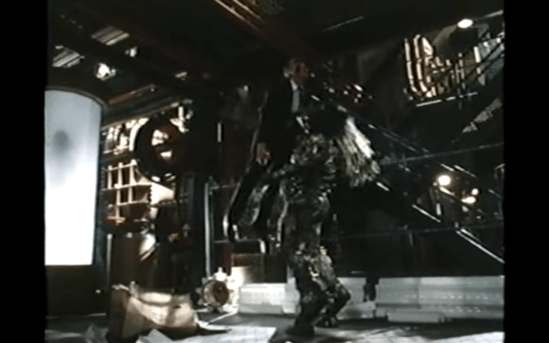
A top secret CIA operation, known as Operation Lycanthropus, leads two agents to a Hungarian castle where they must retrieve a sample of werewolf blood in order to create the prototypical ultimate super soldier. With his partner’s throat ripped out during the initial werewolf attack, agent Butler manages to retrieve a sample after plugging the werewolf with metal bullets, but upon returning to the secret operation headquarters in the States, his supervisor, Agent Miller, and a team of scientists pursue a more subdued approach in synthesizing an advantageous killing machine. The unhinged and impatient Butler injects himself with the remaining blood sample, transforming him into a blood thirsty werewolf. After attacking and killing a scientist, Agent Miller neutralizes the beast and places him in cryogenic suspension, hidden away in the secured basement, for future sinister endeavors. Twenty years later, a new secret operation headquarters building is erected after the first burns down, clearing the way for a new team of scientist developing game changing medical technology for burn and cancer victims by creating artificial skin out of metal, but when the project is suddenly taken charge by Agent Miller, the bewildered and upset scientists are impelled to work on human cadaver trials, placing Agent Butler’s inanimate body on the operating table for a metal skin transplant. When he suddenly awakes, the base of unsuspecting scientists and military personnel come under attack by a formidable and blood hungry beast now armored plated with a metal exterior and virtually no way in stopping it’s vicious wrath.

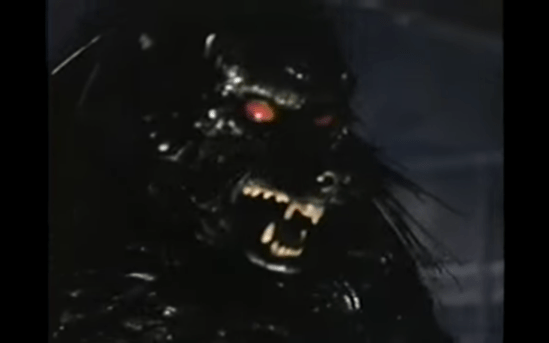
Talk about an archetypical blend of classic and tech horror, “Project Metalbeast” exemplifies the age-old theme of scientific research being usurped for control and power and the end result is fatally catastrophic. Also known as “Proect Metalbeast: DNA Overload” and just plain ole “Metalbeast,” the film was written and directed by Alessandro De Gaetano (“Bloodbath in Psycho Town”) who spun a 1995 unorthodox werewolf feature that presaged playing God in more ways than one and added a fresh and new elemental armament to an iconic, and already super, beast on the prowl. Tom Irvin, Brad Hardin, David Barrett and Wesley Wofford, who makeup (no pun intended) the special effects team of Magical Media Industries, have credits that include the “Carnosaur” killer dinosaurs and a couple of the “Halloween” franchise sequels and have applied their combined tapestry of creative talents to bring a practical, larger-than-life metalbeast to the screen that’s not only monolithic in size, but also fearsomely primal with a glint of “Terminator” characteristics in its glowing red eyes. “Project Metalbeast” was one of the last semi-cult releases of Prism Entertainment Corporation, a company that chugged out some great B-horror films mainly in the 70s and 80s with titles such as “Eaten Alive” and “Body Melt,” and one of only a few films from the associated production company, Blue Ridge Entertainment.

Before taking Jason Voorhees to space to metalize the already the indestructible carnage incarnate, Kane Hodder did a test run stepping inside the augmented paws of a gnarled werewolf. Instead of space, Hodder grounds his performance by barely able to walk on two hind legs in the fabricated prosthetic suit, but the veteran stuntman and character actor is the dynamo practical effects horror version compared to today’s CGI-guru, Andy Sirkis, thriving tangibly polar opposite on the character effect sake, but Hodder captures the metalbeast’s utmost power gait and stance despite the extremely limited range of motion. Another symbol success in his own right is Barry Bostwick as Agent Miller. Bostwick is best known for his hero role in “The Rocky Horror Picture Show,” but to me, he’ll always be the aloof mayor in Spin City opposite Michael J. Fox so it was challenging to accept Bostwick as a conniving cutthroat intelligence agent. Yet, the longtime actor has perfected the knack of being haughty in not only his performance, but in all his mannerisms, making Agent Miller a completely loathsome character undeterred by the sensitives of others. Opposite Agent Miller is the more rational and sensitive head scientist, Dr. Anna de Carlo, played by Kim Delaney who appeared in “Darkman II: The Return of Durant” that was released the same year. Delaney didn’t excel as the strong heroine one might expect her character to be thrust into a situation that calls for her to protect not only her life, but all the lives outside the base if the creature escapes and the scientist is more-or-less part of a splinter group derived from a team effort against the metalbeast. Costars include Musetta Vander (“Mortal Kombat: Annihilation”), Dean Scofield, Tim Duquette, Lance Slaughter, William G. Clark, and John Marzilli as the unhinged Agent Butler.

“Metalbeast” sounds like a metal title, but Gaetano works the orchestrated talents of Conrad Pope into the soundtrack and “Project Metalbeast,” at the time, was Pope’s scored feature as a composer, the classically trained musician has been the orchestrator on a variety of films, such as the films of “Jurassic Park,” “Star Wars,” and “Harry Potter.” Yet, Pope’s score is akin to Harry Manfredini, a character of the story, that maneuvers coincidingly with the metalbeast while simultaneously triumphantly denotes specific scenes of dread, victory, and intense suspense with the latter being reminiscent of Mandfredini’s “Friday the 13th” brashly intrinsic cello and violin composition when Jason Voorhees would startle victims on the screen and chase them down a moonlit forest path. While Pope’s score is invigorating, the story leans more toward less so with a tediously uninspired quality regarding the film’s semblance of a comprehensive secret operations base that has corridors stunk of a standard hospital setting and story structure that fortunes little against the beast’s point of view in which Gaetano merely removes a few frames and adds a distortion effect to the picture that peers out of the eyes of a drunkard’s discombobulated staggering as well as leaving some plot holes with the bit characters, such as the other military police who simply just vanish though the character pool has been whittled down near the climax. Plus, Bostwick’s Agent Miller doesn’t age in the 20-year gap in the story, leaving any tidbits of truth versus a metallic werewolf as dust in the wind. Even with the faults, “Project Metalbeast” without a doubt is a product of it’s decade with a touch of lycanthropy campiness illuminating a sardonically augmented military killing machine.

Resurrected from the video graveyard and for the first time on a home video release in the States, or at least officially, Alessandro De Gaetano’s “Project Metalbeast” lands onto DVD from independent entertainment distributor, Invincible Entertainment, and partnered with MVDVisual. Presented in a full frame, 1.33:1, the transfer looks like either a VHS rip or a scan from an unofficial DVD release with heavily lossy details amongst a washed hue overlay. There’s some transfer imperfection, such as slight scratches, but is less intrusive than the soft image. The English language mono audio is bombastic, but there’s no strength behind the explosions, beast growls, and such to emphasis the impactful scenes. Dialogue remains in the forefront behind the ambience and, even, Conrad Pope’s powerful, but non-subversive score. Depth and range are acceptable as the camera and sound relation viably work hand-in-hand. The Invincible Entertainment release is nearly bare bones without an significant transfer upgrade, no bonus features, and barely a static menu. “Project Metalbeast” lives and breathes as a poster boy of a 1990’s revamped creature feature genre that transforms a classic monster into a man’s weaponized wet dream, but the film stutters as a reserved case of conservative metal monster mayhem.

Own “Project Metalbeast” on DVD!

Available for free with a Prime Video subscription!

Nothing Will Stop EVIL From Being EVIL! “Chaos” reviewed! (Dark Force Entertainment & Code Red / Blu-ray)


Visiting home on break from UCLA, Angelica visits her close friend, Emily, at her parents’ secluded country home. With nothing else better to do in the small rural town just outside Los Angeles, the two teenage girls set off early to attend a local rave deep within the woods at the reluctance of Emily’s overprotective parents and to kickstart what could be a drink and dance fueled night, they aim to push the limits and find a drug pusher to score ecstasy as the first priority to make a dull party fun. They run into Swan who promises the best ecstasy as he leads them to his cabin away from the rave. What Angelica and Emily find is themselves caught in the middle of a ploy by a sadistic gang lead by the ruthless Chaos, whose wanted in 4 states for his barbaric and merciless methods and looking for something fun to play with and torture. The cat-and-mouse game with the girls makes an interesting turn when the gang arrives at Emily’s parents’ house when their van breaks down and the parents suspect them in Emily’s sudden disappearance, veering the night into unreserved chaos.

“Chaos” is the intended true love song remake to Wes Craven’s 1972 sadistically vile “The Last House on the Left” that’s co-produced by Marc Sheffler, who play Junior Stillo in Craven’s film, and, at one time, Krug himself, David Hess, was attached to the project. “Chaos’s” conception is the brain child of Steven Jay Bernheim and David DeFalco, with the DeFalco wielding the hammer of writer and director, and the pair have collaborated a few years earlier on another DeFalco directorial, a comedy horror entitled “The Backlot Murders.” In the eyes of the filmmakers, the amply charged exploitative “Chaos” shares more in common with the original “The Last House on the Left,” despite having no official connection other than the ties with Marc Sheffler, and that the more commercialized remake of the same original title, released four years after “Chaos” in 2009 by Universal Pictures Home Entertainment (UPHE), lost that raw camerawork and visceral storytelling that depicted the abhorrent human malevolency that’s capable from within us all. “Chaos” is essentially a self-funded project from Steven Jay Bernheim’s Bernheim Productions.

Though Sage Stallone, the late son of the iconic action movie star, Sylvester Stallone, receives front cover bill due to, in perhaps, his name alone, but the film is called “Chaos” which centers the story around the “Heat” and “Laid to Rest” actor, Kevin Gage. In some kind of cosmic circumstances in regards to recent events, before the Kelly Preston settled into married life with John Travolta, she was once wedded to Gage, marking “Chaos” as a timely film from 2005 and a just so happened upon my lap occurrence for this review. Yet, Gage, a seemingly giant of a man with a resemblance build toward WWE/WWF’s legendary Bill Goldberg, utilizes his intimidation appearance, transferring all the good and gentleness that’s described of him from fellow costars into a pure embodiment of evil whose misogynistic, bigoted, a killer, and just a downright bad guy giving way a testament to the character’s adverse moniker. Gage brings to the table a formidable tone, viperous wit, and a clean cut brutality in the most sordid and unforgettable ways that makes him stick out as portraying one of the most inhumane villains in the last 15 years of the cinematic universe. Chaos’s infamy is by ingenious design from the Marc Sheffler and David DeFalco collaborations who, along with the actors’ faux backstories, meticulously craft each of the gang’s personalities. Sage Stallone’s Swan seems like a similar parallel version of Sage in reality as a chain-smoking, reserved individual sans the perverse context. “The Love Witch’s” Stephen Wozniak is a complimenting character that offerings a different personality with Frankie and Frankie’s feels like a two-bit slime ball with long, greasy hair, an unkempt beard, and a scrawny figure but can produced an evil that’s step or two back from Chaos; Frankie is a character you’ll love and you’ll love to hate, making Wozniak’s performance singular and one of the best in the film. Then, there’s Daisy, the only female of the group though more butch than delicate, and Kelly K.C. Quann (“Baberellas”) adds a dose of Southern inhospitality to Daisy’s brutish beauty. “Chaos” rounds out with a bunch of victims; hell, everyone’s a victim, but the cast includes Deborah Lacey, Scott Richards, Maya Barovich, Chantal Degroat, Ken Medlock, and Jeb Barrows.

“Chaos” absolutely equates toward the unflinching callous themes from “The Last House on the Left” of violence amongst various degrees of people, youthful ingenuousness, and systematic racism with the latter being extremely relevant and on point, years earlier, of the current social climate in America. Yet, with any remake, “Chaos” yearns to stand on its own by instituting an unmeasurable sense of graphic violence that will churn stomachs, advert eyes, and belly-up the throes of disgust. For a good portion of “Chaos,” the exploitation narrative is fairly run-of-the-mill, damn near walks the same line as Craven’s story, with a sadistic gang kidnapping two young women for their own amusement only to then wander unknowingly into the arms of retributive parents, but two scenes sticky out and go beyond the course of customary exploitation fodder and into necrophilia, mutilation of body parts, and a perverse way to kill another human being with such tactless intentions that the act makes the other gang members splay questions, doubt, and fear amongst their faces. The film opens up with a written warning, not so much on the intense scenes themselves, but resembling more of a public service announcement for parents that what you’re about to see does and will happen to the youth of land, but these shocking scenes are just that, for shock value, and that a small percentage of people partake in such grisly matters. “Chaos” is violence upon violence, leaving no room for conscious absolving resolutions in the unofficial capacity of a remake that pungently separates itself with extreme violence and that’s saying something considering Craven’s visceral first course.

As the bestow flagship release of Dark Force Entertainment, “Chaos” arrives onto a deluxe special edition Blu-ray in association with Code Red and distributed by MVDVisual. Transferred through to a 1080p, high definition scan, from the original 35mm negative, complete with extensive color correction, and presented in a widescreen, 1.78:1 aspect ratio. “Chaos” doesn’t look very chaotic anymore in regards to the image quality; instead, the before stardom cinematography by Brandon Trost (“Lords of Salem” and “Halloween” remake) creates the voyeuristic position of the audience is now visually distinct with stable color markers that are more in tune with the premise’s raw approach. The English language dual channel stereo mix renders softer than desired, especially in the first act as Angelica and Emily converse through the woods. The teenagers dialogue are nearly mumbling on their rave trek with depth issues perplexing their relation to camera. Range seems to be well faceted: rustling leaves through the woods, the clank-clunks of a rustic van, the ground skirmishes. All seem to exude exact decimals of their intended value. Even the firing of firearms has a pleasantry about it. The special features include brand new interviews with co-producer Marc Sheffler, who goes in-depth pre-production and production while also touching upon his other interests before concluding with director David DeFalco and a man in a banana suit making an appearance and offering up dick jokes, and actor Stephen Wozniak with a fountain of information about his time on production, his fellow cast, and about the filmmakers as he is being interviewed in front of a locomotive museum. I love the absurd, obscurity of it all. The bonus material rounds out with commentary from the director and producer as well as the original theatrical trailer. The lewd and radical “Chaos” has engrossing roots of violence that burgeon into realm of rarity or, if not, into sadomishsim extended by the filmmaker’s deepest darkest desire, but what’s transpires on screen is difficult to look away from which begs the question, is it morbid curiosity or is there something far more sinister within us all?

Own “Chaos” on on the new “Blu-ray” release!

EVIL’s Madcap and Meshuga Rabbit Hole! “Frankie in Blunderland” reviewed! (Wild Eye Releasing / DVD)


Frankie is the epitome of underachiever living in small, scummy, suburban house with an antagonistic and obtruding houseguest, Tommy Spioch, indisposed to ever new living accommodations and a brash Katie, Frankie’s wife, who loathes every fiber in his body, but reaps the benefits of his income. Fed up with how the way things are, Frankie impulsively decides to do something about by trying to kill Spioch, but when Spioch kidnaps Katie, Frankie wusses out on his freedom from their oppressors and pines to find Katie by hitting the streets. Frankie encounters the strange and unusual as well as the macho confrontational characters along the way, involving a spider with human face, a homeless man with paradoxical wisdom, naked fairies, Mormon aliens, and a hideous marionette-like boy.

In the midst of writing this review, Lewis Carroll is probably rolling over six feet underneath his English gravestone with the bastardized fantasy-comedy variation of his classic literary tale of “Alice in Wonderland with the 2011 released film, “Frankie in Blunderland,” from director Caleb Emerson (“Die You Zombie Bastards!”). Emerson, who is also a frequent editor for “Tosh.0,” helms the pretzeled script written by the late Marta Estirado, who passed away before the official release of the film, but “Frankie in Blunderland” is the Spanish-born writer’s debut screenplay twisted with browbeating cinema anarchism while juxtaposing circumstantial life defeat with an adventitious urge to be better despite the odds. Shot mainly in the greater Los Angeles area of Echo Park and Eagle Rock, “Frankie in Blunderland” is an Emerson funded, low-budget project that courses the weird and unnatural, a pair of descriptors that aren’t so abnormal on and off the streets of Los Angeles.

After assisting his editor skills with “The Gruesome Death of Tommy Pistol,” which was starred, produced, written, and directed by Tommy Pistol himself, Emerson locked down Pistol, whose credited under his real name of Aramis Sartorio, to be the titular character, Frank Bellini. If you’ve been audience to any of Tommy Pistol’s *cough cough* porn, you’re well aware of the male performer’s more-than-professional uninhibited nature to do anything on screen. The same uninhibited nature transcends out of adult industry and into the off-Hollywood narrative as Satorio unloads a wide array of unbridled range that allows Satorio to not only be a despondently enfeebled and sheepish Frankie, but also extend to his self-assured Tommy Pistol persona on the latter half of the character arc. Thea Martin and Brett Hundley (“The Trek”) play Katie and Tommy Spioch respectively as the adverse versions of Frankie’s wife and best friend. Katie and Tommy sincerely embark on the utmost effort in making Frankie feel like a worthless wanker by belittling him continuously on every whim he allows Katie and Tommy to get away with while they also stir the lobotomizing love triangle with their own sidebar skirmishes and much like the Lewis Carroll’s “Alice in Wonderland,” every character that shows up in “Frankie in Blunderland” is antagonistic to one and another in a bizarre battle royale of an irritational reality. The colorful characters continue with performances by David Reynolds (“House of 1000 Corpses”), John Karyus (“Poultrygeist: Night of the Chicken Dead”), Caleb Emerson, Gio Paloma (“Dawn of the Head”), John Christopher Morton (“Girls Against Boys”), Vincent Cusimano (“Blade the Iron Cross”), John Brookbank, Bryan Planer, Sadie Blades, and special appearances by “Slime City Massacre’s” Debbie Rochon as a human-spider and Evan Stone as a well-endowed fairy.

Like a full-feature skit from Eric Wareheim and Tim Heidecker, “Frankie in Blunderland” will activate your receptive inertia dampeners, slowing your comprehension down to the point of a snail’s speed on what exactly is going on with Frankie and his misadventures through an alternate reality of the real world all the while encountering the obscure and abnormal characters along the way, rekindling that trippy, if not hallucinogenic, sensation one gets when watching any other bizarre renditions more faithful to the Lewis Carroll’s classic but with more dry wit and blood. While I feign to know all the answers about the meaning behind Estirado’s outlandish script, I’m truly at a loss for words at understanding it, a feel much of the cast has also stated, and to interpret “Frankie in Blunderland” is to be a perceptive cinematic aficionado disconnected for reality, but from what themes I think I do perceive, Frankie reverses course on moral obligations for self-importance to become a quasi-anti-hero in bizarro world. For much of the film, Frankie is tormented, internally and externally, as he subsequently beats himself up over the abuse he meekly swallows from wife Katie and no-so-best friend Spioch and as act one continues to punish the mildly manner Frankie, there comes a point where Frankie is a glutton to own his maltreatment, learns to evolve from it, and becomes one with the disparaging masses in order to be part of the salt-in-the-wound collective that attempt to beat into submission or just downright destroy those unlike them, seen with characters like the loafer Mike West, the unsightly disjointed puppet boy, and a doughy-soft security guard named Peanutch, whereas a fem-bot, Maggie Robot, whose secretly a robot posing as a woman, can simulate into the natural order of the Blunderland society. When Frankie begins to thrash against and degrade these said characters is when he ascends beyond his suicidal thoughts and shoving aside his timid nice guy persona for more turbulent attitude toward life. If this speculation is anywhere near being accurate, then “Frankie in Blunderland” is a revolutionary view of unorthodox measures to rise up above despair in a day of stupidity enveloped by a ludicrous satire.

Perhaps not very extreme, but certainly raw, “Frankie in Blunderland” lands onto DVD under the Wild Eye Releasing sublabel, Raw and Extreme, and distributed by MVDVisual. The re-released Wild Eye Reelasing DVD is presented in a widescreen, 16:9 aspect ratio, housed with a new illustrated artwork liner that’s akin to the Ghana hand-drawn posters and, more than like, keeps with the first pressing’s lossy compressed image and spastic image jittering shifting between different levels of picture and detail degradation. The vapid coloring devours any story-telling vibrancy, leaving the scenes seemingly lifeless and aesthetically devoid, especially when Frankie has his loopy, unconscious discharge of repeated scenes and avant garde imagery after passing out thinking he killed Tommy Spioch. The visual effects are almost cut and paste crude, but add to the chaotic charm of Frankie’s living nightmare. The stereo dual channel audio mix is equally as lossy noticeably muffled by the compression, leaving also a faint and lingering hum through the 82 minute duration. The position of the dialogue remains even, if not behind, the ambient and soundtrack audiophiles and without any depth and range to compensate the lack of gusto, dialogue is lost in a lackluster limbo of lame and loitering linguistics. On a microbudget of this level, don’t expect in depth special features, but considering the content, I’m happily surprised of what’s available which includes a Caleb Emerson director’s commentary, cast and crew interviews with Aramis Sartorio, a peculiar interview with Thea Martin, and director Caleb Emerson, along with six teaserettes which are short clips from the film, and rounding out with Wild Eye Releasing trailers. “Frankie In Blunderland” is a labor of love for Marta Estirado and a sure fire way to kill a couple of brain cells in this degradingly funny demoralizing epic.

Purchase “Frankie in Blunderland” on DVD from Amazon!