

One man kidnaps women, gags and bounds them inside his bleak apartment, and unleashes a fury of hate and disgust whilst searching for one woman who will understand him and his relentless, and vehement, scouring. One woman lures highly aroused men back to their apartment for what they believe will be a night of passionate embrace or of simplistic carnalities of inhibition. While the guys are thinking with the wrong head, the woman slices and dices them to a pulverized pulp of death meat and repetitively fillets their manhood postmortem without guilt. She, too, also searches for something, but is more reserved about it as she allows men to verbalize their needs and desires to her. As the two killers go through the melee day-by-day, they eventually find each other, but before realizing their compatibility, the killer inside themselves square off against each other in a one-on-one bout of maniacal mayhem that must unravel in blood before unsheathing true love.

Who knew that love could hurt so badly? Director Takashi Hirose exhibits a painful peak into two desperate swains callously searching for some understanding, some deep rooted mutual pain that plagues their own embodiment, in “Brutal,” Hirose’s 2016 feature that packs a bloody brawling wallop of the human will toward punitive punishment and desperate determination. The Japanese filmmaker also wrote and co-produced the three part chapters that segments Man, Woman, and Man and Woman into a commingled three act narrative of utter chaos that glorifies finding a soulmate in the most insane circumstances. E-Harmony. OKCupid. OnlyFarmers.com. None of these so-called matchmaker websites have the formidable fortitude to remove all the political niceties and to dig into the human psyche the way that only Takashi Hirose can to lure out and strip one person’s entire vulnerability and, essentially, the parts that makes us ultimately human into a raging, yet emotionally unstable, hapless lover.

Butch, the one and only moniker for the actor, portrays the Man who is a very strong and determined man that brings to his apartment many nice, and sometimes unsavory, attractive ladies; however, he doesn’t whip them up an aphrodisiac dinner or sweep them off their feet with a romantic Rom-Com. He likes to move the relationship along, at a hare’s pace, with getting down and dirty and in certainly not in a sexualized manner. Butch pinpoints the man’s ambitions, machine-like in his will with a hint of softness behind the eyes when plucking through the headcount of numerous women for his match. Ayano is equally compelling as Woman and though Ayano has brawnier range of comedies and dramas under her belt, she notches gore and shock as if it’s simple to get stabbed 50 times and be completely nude with unpleasant prosthetics garnishing the naughty bits of your body. Butch and Ayano are quintessential to “Brutal’s” languishing love story and present themselves with such confidence, which is made key from their previous work with Takashi Hirose – Ayano worked with Hirose in his dramatic horror short, “Bandaged” in 2011 and then Hirose worked with Butch in a 2012 zombie short entitled “Moratorium” that starred Japanese cult and former pinku actress, Asami. The film also stars Katrina Grey (“Vampire Reborn”), Takashi Nishina (“Ringu 2”), Naho Nakashima, and Nanako Ohata.

Hirose doesn’t hold back the punches. In fact, he’s added one or two more for good measures. Helmed by a three person crew and one visual effects artist, the special effects department ramps up the rampage and carnage, making poetry out of ruthless romanticism. The end result is absolutely killer with stab after stab, gore galore, and post-mutilation prosthetics of the naughty bits. Hirose steps aside for fight sequence director Satoshi Hakuzen to exalt his gift for action sequences. Having previously worked on “Resident Evil: Degeneration” and “Dead Sushi,” Hakuzen showcases his mixture of gore and shock horror and hand-to-hand combat in the smallest of quarters while still seamlessly continuing Hirose’s narrative. Yet, “Brutal” doesn’t follow much of the laws of basic human biology as when people are knifed multiple times, whether spreading punctures along the various parts of the body or more precise slices into one focused area like the crotch, they keep breathing breath and they keep moving like their Arnold Schwarzeneggers covered T-800 endoskeletons in “The Terminator” and that unfaithfulness to realism inches “Brutal” more toward a fantastical flavor.

Unearthed Films and MVDVisual present Takashi Hirose’s “Brutal” onto Blu-ray for the first time and it’s brutally honest with a phenomenally fair picture engrained from a singer layer BD and presented in 1080p with a widescreen 1.85:1 aspect ratio. Colors really match the film’s coarse tone of a desaturated hue where the blood runs like caramel colored water. Textures look fine, especially around the natural looking skin toned bodies of each person, and the no noticeable issues with compression. The Japanese language Dolby Digital 2.0 audio track fairs equally well with a prominent dialogue track and a sickening range of lacerating thrust that make wet whiff sounds of cold steel that much painful. Tatsushiro Hirose’s rock score unfortunately wanes in soundtrack behind the intensity of Man and Woman’s blood thirst for love to the point of almost non-existent. Subtitles sync up nicely to the dialogue track. Bonus features a clipped production progression of behind-the-scenes, trailers, and music videos. “Brutal” and Unearthed Films found each other, just as Man and Woman in their twisted circumstances, and present an entertaining 67 minutes that solidifies Takashi Hirose one hell of a romanticist and absolutely, 100% bestow his film a true-to-form designation.
Tag Archives: MVDVisual
Evil Isn’t Home. “Death House” review!

Top law enforcement agents, Boon and Novak, achieve special access through steep sacrifice during job assignments and are permitted to tour their upcoming placement in the highly exclusive Death House, the ultimate maximum and multi-level penitentiary home to the nastiest criminals known to society and the deadly threat to mankind in a metaphysical way. Death Houses uses virtual reality to keep inmates stimulated to the point of calm submission as well as drugging the homeless and the unwanted to supply killers with victims upon victims in an their personalized virtual surroundings, but when an outsider uses an EMP to knock out all power within the facility, the cages are open and the ruthless animals are free to overrun, beating to death the guards and staff. Boon and Novak must fight their way to the bottom level that hold the Five Evils, criminals with grotesque supernatural abilities and a wickedly grisly past, where the two agents believe the Evils are their best hope for survial against a Five Evils acolyte named Sieg and his faithful jailhouse followers.

Considered as “The Expandables” of horror, “Death House” had gained almost instant fandom solely from the long-list of horror icons in the cast. Director B. Harrison Smith (“Camp Dread”) re-writes most of Gunnar Hansen’s original “Death House” story produced by Cleopatra Entertainment and Entertainment Factory. Cleopatra Entertainment is more notably a music label that has delved into films the last few years and, in my opinion, haven’t faired positively in the horror genre, but “The Texas Chainsaw Massacre” star fought tooth and nail to try and get his script off the ground, even in the face of death. “Death House” saw release after Hansen’s death, but from interviews with the filmmakers, Smith had almost totally revamped the original treatment, leaving The Evil’s at Hansen’s request if his script was to be entirely cleaned. Shot right in this reviewer’s backyard of Philadelphia, Pennsylvania at the historic Eastern State Penitentiary, the defunct prison is an ideal location as the “Death House” due in part to John Haviland’s separate cell design and gritty appeal that was once of the home of Al Capone, but more of the focus is on the interior than exterior with green scenes and Los Angeles shots constructing the story-lined scenes.

Like aforementioned, “Death House” has been called the “The Expendables” of horror. An immense, if not soaked, cast of horror fan favorites are peppered about around the main characters of Agent Boon and Novak. “Sushi Girl” and “Zombeavers” star Courtney Palm embodies the Agent Boon character with G-man toughness, but finds difficulty leaving that b-horror mentality with shakiness in working climatic scenes. Palm’s also roped into doing an extremely gratuitous shower scene with Cody Longo (“Piranha 3D”) as Agent Novak. Novak’s a hotshot and Longo has the looks and the talent to out perform his character, but Smith’s script doesn’t do justice to either Boon or Novak’s character that blatantly underwhelms their performances with cameo star power and a shoddy narrative. Dee Wallace (“Cujo”), Barbara Crampton {“Re-Animator”), and Kane Hodder (“Jason Goes to Hell”) have prominent roles that are pertinent to the story and are enjoyable to see them in more of a supporting capacity. Andrenne Barbeau {“The Fog”), Sid Haig (“The Devil’s Rejects”), Vernon Wells (“The Road Warrior”), Bill Moseley {“The Devil’s Rejects”), Lloyd Kaufman (Mr. Troma), Michael Berryman (“The Hills Have Eyes”), Tony Todd (“Candyman”), Sean Whalen (“The People Under the Stairs”), Debbie Rochon (“Killer Rack”), Bill Oberst Jr. (“Deadly Revisions”), Felissa Rosa (“Sleepaway Camp”), Danny Trejo (“Machete”), Tiffany Shepis (“Abominable”), Brinke Stevens (“The Slumber Party Massacre”), Camille Keaton (“I Spit On Your Grave”), Gunnar Hansen (“The Texas Chainsaw Massacre), and R.A. Mihailoff (“Leatherface: Texas Chainsaw Massacre”). Whew. Rounding out the remaining cast is Lindsay Harley (“Nightmare Nurse”), Vincent M. Ward (“The Walking Dead”), and Bernhard Forcher.

While the genre star-studded ensemble cast is a wet dream for horror fans, “Death House” fails in numerous filmmaking categories with the first being the most important, the script. Smith’s re-work of Hansen’s original story requires another drastic once-over, or two, as the final result attempts to push, stuff, and cram 100 lbs of multi-subgenre elements into a 10 lb, inflexible bag, cramping the ambitious project with dis-connective storyline tissue braced together with shoddy visual effects, like the two agents free-falling down a bottomless elevator shaft and able to precisely shoot their targets on each level. The overall result of “Death House” just endures an unfinished varnish and seems slapped together with pre-schooler glue and claggy spit. Singular moments surface as diamond specks amongst cubic zirconias, like the Mortal Kombat fatality-esque practical effects, but are too far and in between to muster up an enjoyable film. The Five Evils definitely and desperately needed more presence in the story instead of just flexing the talking heads muscle; well, the only two Evils to say anything at all were Bill Moseley and Vernon Wells. The Five Evils didn’t quite have that oomph to be a force to be dealt with as Gold-described beings who philosophical interpretations on the concept of good and evil.

Cleopatra Entertainment and MVDVisual present B. Harrison Smith’s long-anticipated “Death House” onto DVD home video. The unrated, all-region DVD is presented in a widescreen format that displays some frayed flaws like contrast; there’s way too much inky black in the dark scenes and little-to-no definition in more visible sequences. The compression suffers from blotchy artefacts at times too and lacks hues, which works with the gritty tone inside the Eastern State Penitentiary’s decomposing walls of rubble and decay. Visual effects are glossy with virtually no textures to give detail or, essentially, life amongst the continuous death. Bonus features include multiple interviews with director B. Harrison Smith, Courtney Palm, and more. Also included is a behind-the-scenes feather, a gallery slideshow, and theatrical trailer. Despite being true to the title and highly anticipated since it’s inception into the public market, “Death House” ultimately disappointments as an unfurnished mess enlisted with big names in the horror domain that’ll unfairly sell the film on it’s own, but all-star cameos won’t establish “Death House” as a solidified cult favorite, being unfortunately one of the biggest release flops of 2018.
Evil That Shall Not Be Named! “The Unnamable” review!
Miskatonic University students Howard Damon and Randolph Carter investigate the disappearance of a missing friend last seen making good a dare to stay the night in a century-old, dilapidated house, right in the middle of a cemetery and with the caveat of a ghastly, creature legend. In the same instance, two colligate hunks try to fraternize with two freshman women within the dark and gloomy walls that seem to reposition themselves into an unescapable maze. Lurking through the inky corridors, an ancient and horrifying beast, thirsty for blood and hungry for flesh, continues to roam freely in the house, unleashed from it’s confined room a century ago, and hunting the students down one-by-one. Their only hope to get out alive is Howard’s haphazard bravery and Carter’s unrivaled intelligence that aim to rescue survivors and decipher the house’s resident Necronomicon to defeat an evil monster’s night of carnage.

Campy, brazen, and inspired, Jean-Paul Ouellette’s 1988 “The Unnamable” is every bit of an 80’s teen comedy rolled up into a bona fide ball of barbed madness shrouded with heaps of highly anticipated mystery. Unravels like a truly classic H.P Lovecraft story, Ouellette, who also penned the script, shows great patient to give the monster a grand finale revealing that leaves the characters left standing face-to-face with the fear that’s been stalking them. While “The Unnamable” strays away from more of Lovecraft’s prolific Cthulhu literary works, the story is drive by the theme of the unknown that partially, if not all, gives Ouellette motivation to not put the monster on full display. The fact that “The Unnamable” is also gory retells the tales of how horror used to be pure gold back in the Golden Age of the genre despite budget restraints and executive naivety in the audience ratings game.

“The Unnamable” finds their unlikely star for the unassertive character in Howard Damon. Soulcalibur series voice actor, Charles Klausmeyer, lands the role as his sophomore film about 8 years after Vanna White’s “Gypsy Angels.” Klausmeyer’s surefooted unsureness and comical desperation of Howard Damon makes him a likable character, likable enough to be opposite whatever has been locked away from over a century. Damn finds an arrogant cohort in Randolph Carter, a conceited fellow freshman whose a bit of a know-it-all, well versed by Mark Kinsey Stephenson. Stephenson, or rather his character, reminds me of a babyface John Glover (“Gremlins 2” and “Scrooged”). A pair of love switcheroo love interests in Alexandra Durrell, in her sole credited performance, and Laura Albert, who went from nude supporting roles to being one of the top stunt women in Hollywood, fair well as the standoffish and damsel-in-distress opposite the vibrant and lively Damon and Carter. Rounding out the remainder of the cast is Blane Wheatley, Eben Ham, Colin Cox, and Katrin Alexandre who did an impeccable gesticulation performance of the creature.

Ouellette story isn’t all that complex; a group of young students are trapped inside the black heart of a folklore notorious cemetery house. However, the breakneck narrative certainly needed something more extensive to the creature’s confinement and unholy backdrop, warranted to fulfill just what the hell these kids were getting into. The house has been doused with shielding dark magic, a fact barely mentioned until the final moments of the monster’s exposition, unveiled through the pages of the Necronomicon which becomes weaponized by quick study Carter. Spells and passages envelope the monster within the house’s old bones, like a prison cell constructed of two-by-fours, wood panelling, and asphalt shingles. While the story could have opened up more in that regard, the lack of dark mysticism doesn’t uproot an entertaining creature feature strongly braced with gory, character demising allegories, and peppered with misogynistic innuendos and campy skirmishes with the damned.
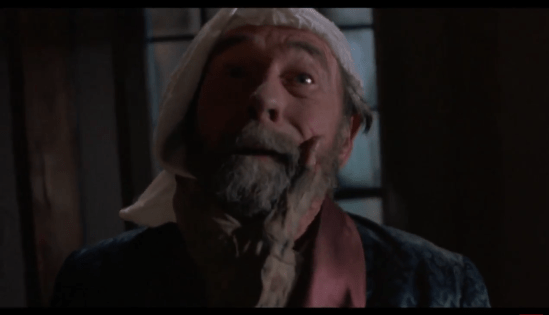
Unearthed Films and MVDVisual proudly present “The Unnamed” as part of their sub-label entitled Unearthed Classics and lands onto 1080p Blu-ray home video. Horror fans will thoroughly enjoy the newly restored 4k transfer presented in widescreen, 1.85:1 aspect ratio and the image quality is remarkably detailed with absent compression artifacts and edging enhancements. Skin tones look natural during outside shots while a blue tint, overlaying a dark backdrop, inside the rickety house isn’t overexposed and makes for quite the grim atmosphere. The English 5.1 Surround Sound DTS-HD, 2.0 PCM, audio track was resonating with a range of ambient sounds; however, an unfortunate mishap of ambient duplication followings about half a second from the initial sound. The dialogue track and soundtrack are no affected by this issue and the dialogue is clear in the forefront, not terrible interfered by the technical boo-boo. The extras are packed with audio commentary with Charles Klausmeyer, Mark Stephenson, Laura Albert, Eben Ham, Camille Calvet, and R. Christopher Biggs. There’s also a video interviews with actors Charles Klausmeyer, Mark Stephenson, Laura Albert, Mark Parra, R. Christopher Biggs, Camille Calvet, and Eben Ham, a vintage audio track, photo gallery, and trailers. The Blu-ray comes in a limited edition slip cover with the beautifully illustrated gothic-esque poster from Tongdee Panumas courtesy of the M. Wright Collection. “The Unnamable” was endangered; a potentially lost classic that quickly went to being out of print as soon as it was released onto DVD in Europe and never actually saw the digital upgrade light of day Stateside from it’s VHS predecessor. Luckily for us fans, Unearthed Films, living up to label moniker, unearths “The Unnamable” from the depths of obsolete format hell, revamping for a new generation of horror fans and re-transfixing fans who once thought Jean-Paul Ouellette’s film would never, ever see a glorious rebirth.
Evil’s Ultimate Climax. “Gorgasm” review!

A low on the totem poll detective receives the chance to get out from behind a paperwork overloaded desk to investigate the gruesome death of a seemingly BDS&M gone array. The case lures the investigator through the muck of the sleazy and sexy underground to where an independent zine lists GORGASM as the ultimate climax. With every lead, GORGASM connects them all and there’s one person, one suspect, on his radar and her name is Tara, the face of GORGASM. Tara’s a psychopathic call girl, aiming to dish out a finitely pleasurable zenith to those who want more than just sex, and the unlikely hero detective embraces the case personally to put a stop to Tara’s gruesome delusional calling before he’s sucked into an inescapable world blended with lustful carnalities and death.

“Gorgasm.” By title alone, “Gorgasm” has already peaked interest and paved for a path of optimism and delight despite the inkling in the back of the mind about the film’s low-budget shlock. In any case, the title comes from the imagination of creator, writer, director of “Dead Silence,” a one Mr. Hugh Gallagher, and is his 1990 sophomore feature that showcase plenty of violence in an ostentatious psychosexual thriller. Gallagher, perhaps, isn’t the first to delve into porn’s mucky and sleazy underworld that’s universally stigma in many cultures, but, and again perhaps, is the first to explore the many facets that porn has to offer and highlights the habituating circumstances porn has to morph into to keep up with customer demand, whether it involves whips, clips, and chains or to be more specific in the realm of fetishes.

Gallagher didn’t manage to make any old, run-of-the-mill low-budget venture, but managed to do so with a professional lead in Rik Billock. The name might sound familiar to horror fanatics. Billock has been a stock regular in George Romero films: “Dawn of the Dead,” “Knightriders,” “Monkey Shines,” and in “The Dark Half.” He also had a small, yet door knocking down roll in Tom Savini’s “Night of the Living Dead.” Billock’s a bright star with an organic singularity amongst a mechanical lineup, popping out like a child’s pop-out book that solidifies his presence. Even his co-lead, introducing an actress only known as Gabriela, a former wrestling-affiliated performer in her first feature film. Gabriela is stunning, beautiful, and well-endowed, perfectly casted to be the personal-placing killer call girl with dark features and though her method is a bit monotoned and monologuing, Gabriela’s looks really do standalone. “Gorgasm” also co-stars Paula Hendricks who puts a real damper into the ebb and flow of being a strict and condescending sergeant to Billock’s character, but the silver lining is that this Hendrick’s sole credited role. Rounding out the cast includes Paula Gallagher, Kevin Patterson, Denis Hellrung, and co-producer Flint Mitchell in a show-stopping slimeball performance as a sleazy magazine owner.

With an extreme and inviting title like “Gorgasm,” there comes a usual, if not blatantly given, perception that blood will flow and guts will be strung and plastered on forefront of the featured scenes, but to an extent, the gore and the blood splatter were surprisingly granular results and doesn’t ultimately champion an autassassinophilia effect. However, don’t be scornfully turned away from Gallagher’s film if “Gorgasm” isn’t locked and loaded with blood drenching entrails and other body fluids and fleshy tissue. Gallagher executes tasty scenes of violence and mortality on a budget with examples being a garage door decapitation and a kill shot to the vagina. There’s also a weed whacker chewing through a pervs face. “Gorgasm,” perhaps, does find space in the gore and shock subgenre pie, even if only a sliver of a piece.

MVDVisual and SRS Cinema release the Draculina Productions film, “Gorgasm,” onto DVD home video and present the film on the original SOV, full-frame format that’s pleasantly held up over the last 28 years. Aliasing is quite common on shot-on-vide, even on Super VHS that director Hugh Gallagher shoots the film, and the coloring has a slight washed look, but considering the VHS monstrosities out in the world today on DVD, “Gorgasm” has no ill-will toward this release. The uncompressed PCM 1.0 mono track has limited depth and range with a consistent static hiss throughout, but generally adequate with clear dialogue upfront. The “bloody” bonus features include a commentary with Hugh Gallagher, behind-the-scenes footage, and trailers. Also, the grisly-gorgeous illustrated cover art by Mike Mez Phillips is exquisitely killer and on point. While director Hugh Gallagher mediocrely went through the nuts and bolts of vehement slasher violence without really thickening already deep pool of gore, the director did manage to fulfill a promising title with meshing sexual deviancy and blood in an entertainingly provocative feature. Rik Billock and Gabriela, whose half naked through more than half the 82 minute runtime, embraces their twisted characters that you’ll love to death!
Mad Doctors, Evil Bloodsuckers, and Vengeance in “Lust of the Vampire Girls” review!

After painstakingly trying to argue to her boyfriend that he never hangs out with her drug abusive friends, the woman withdraws to her friends’ exclusive sanctum without telling him. Before he realizes what’s really at stake, the boyfriend learns that her friends are potential Devil worshippers that aim to practice human sacrifices, but little does he know that his girlfriend is beyond the dangers of a Devil cultist as she had unwittingly placed herself in the experimental hands of a mad Nazi doctor named Gunter and his serum produced harem of female vampires and loyal male acolytes. As the boyfriend attempts to infiltrate the cult incognito, he’s overwhelmed by the flesh-piercing, bikini-wearing beauties, but the eldest vampire, whose bored after years of being with Gunter and wants to find true love, spares the man’s life and instantly imprints herself onto him. She shows him that his girlfriend is no longer mortal and promises to be with him forever, but before he can commit, he first must destroy Gunter and his work before the evil scientist distributes a new serum that’ll be able to transform women and men into the upgraded superior race of blood-thirsty vampires.

There have been moments where horror enthusiastic filmmakers have embarked creatively on re-creating cult favorites or re-inventing that of the European, over-sexualized female vampire, Victor Matellano’s remake of Jose Ramon Larraz’s for instance, and most have come out on top with inspirationally faithful stories or portray the particular type of promiscuous vampire. Writer-director Matt Johnson takes a wooden stake stab at the complexities of the homage with “Lust of the Vampire Girls,” his feature film debut, and with a budget that’s resting on a minimalistic mishmash pot of a self and crowd-funded platter, the director runs with his sparsely written script with a vast amount of bodies able to fill a plethora of roles. Instead of mystical, fantastical, or ancient damned souls feeding on the hapless male sex, the “LofVG” story surrounds a Nazi madman injecting his serum into women over the years (No, that’s not an euphemism) which is Johnson’s modern day spin to the genre.

Nameless characters, aside from Gunter, shape the lineup of vampires and humans, starting with Victor Medina as the boyfriend. Medina’s performance further darkens the character whose an utter jerk lacking chivalry and a moral compass, but the actor is able to fulfill the boyfriend’s character arc as he tracks down, and express a figment of empathy toward, his estranged pretty girlfriend played by “Friend Request’s” Amy Savannah. The two battle against each other with petty ventures of, sometimes typically, relationship woes and Medina and Savannah reflect that rather well until coming entangled with Dave Nilson’s Gunter. Certainly fitting the part and wielding a passable German accent, Nilson comes off as power, arrogant, and invincible. In short, perhaps the most convincing performance in the entire film. Leading Gunter’s harem den of vampire girls is a the doctor’s oldest, yet ageless, subject, donned to the lovely Ashley Eliza Parker, whose eagerness falls just beyond the fumes of desperation. Rounding out the cast are Jeff Christiensen, Cherish Dawn, Mary Etuk, Jami Kelly, Flo Median, and Bri Northem.

“Lust of the Vampire Girls” might be billed as a homage to the 1960’s and 1978’s European exploitation, but as the film seeps into a quasi-level surrealistic state garnished with sexy female lasses in undergarments, very much reminiscent of the genre claimed to respect, the allure finitely founders and tilts more toward below a meager attempt that results in wince-worthy acting and female vampires perpetually hissing through their teeth. In the sequence of events, the beginning offers a small non-linear storyline that’s sorely misplaced starting with the pretty girl being lost only to be found by a vampire loyalist, then the boyfriend, surrounded by variously masked cladded acolytes, becomes a sleeper agent in Gunter’s psychosexual church of horrors, but then the couple are having an embattled conversation at a coffee house, and then, before we know it, we’re back at the church again – with, again, the perpetual hissing, underwear garnished, vampires in silky, see-thru robes. Overly sexualized female vampires are a very Eurotrash and the hazy environment is very reminisce of the LSD era, which Matt Johnson pulls off both fairly well, but the greats, like Jean Rollin or Jesus Franco, made them more captivating than just being mindless, eye-candy monsters with a very bad lisps.

Wild Eye Releasing and MVDVisual release Matt Johnson’s “Lust of the Vampire Girls” onto DVD home video. Image quality varies in a numerous shades of tint, but for the majority, there’s a soft glow to the entire stock and macroblocking during night scenes. The stereo track has an unbalance wit about it that’s unsavory in it’s lossy quality during the genre uncharacteristically progressive metal soundtrack and offers a cacophony during scenes of anger and scuffle. Bonus material includes “LotVG” trailer and storyboards. On the surface, Matt Johnson skimmed the exploitation genre the filmmaker was shooting for and whether intentional or not, the quality waivers from script to performance and then there are aspects that just don’t make since (like vampires wearing gas mask..?), but it’s an atmospheric A-to-Z low-budget horror film and nothing more.

Own “Lust of the Vampire Girls!”

 It's Bloggin Evil!