Never Trust a Script Written by an Egotistically EVIL “Scream Queen” reviewed! (Visual Vengeance / Blu-ray)

This Chainsaw’s Made for Cutting! “Scream Queen” on Blu-ray!

Malicia Tombs, an acclaimed horror actress known for B-movies and bad attitude, bursts into a wreckage of flames when her car sudden explodes after storming off the set of her new movie, “Scream Queen,” in which she wrote and starred as the titular character.  Part of the cast and crew were devastated by the accident that had cut their own career short while others were relieved the egotistical Tombs had perished despite publicly feigning grief over the loss of a genre fan-favorite.  Months later, the small cast and crew receive a mysterious invitation to gather at a creepy mansion butlered by Runyon.  When their host is unveiled as to be a very much alive Malicia Tombs, she offers them a lucrative sum of money to finish the film they’ve started but with a new script.  As the guests read through the new treatment, the cast and crew realize their present moments read just as their being played out in the script, even their deaths. 
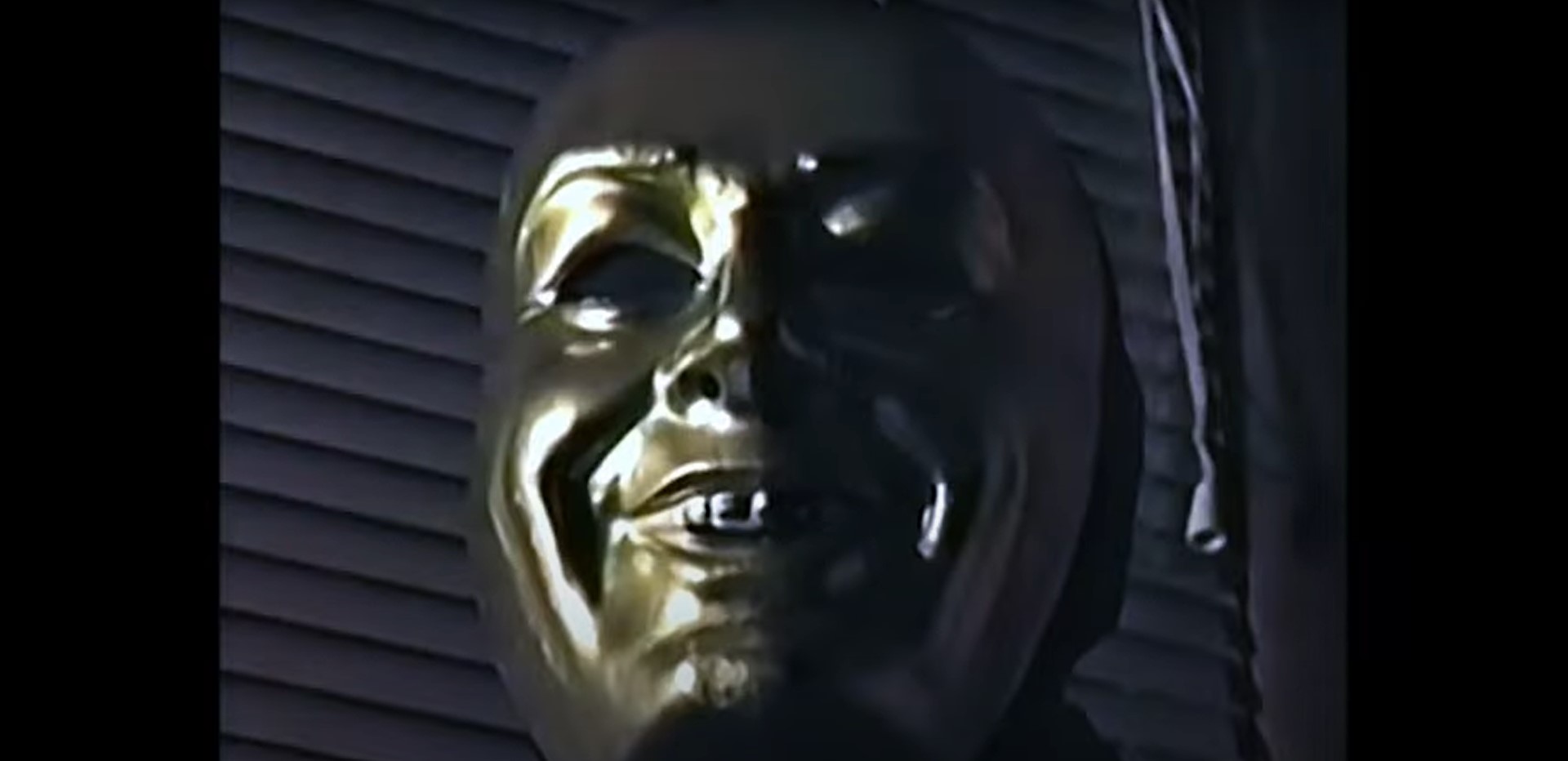
If there was ever a single face deserving the representative distinction within an overpopulated categorized scream queen genus, Linnea Quigley would be that green-eyed, blonde-topped, beautiful face with an infectious smile.  Quigley worked with an array of filmmakers, ranging from some of the most renowned cult films of all times amidst reams of horror movies for nearly half a century (yes, we’re feeling old now) to the most independent of the independents films never having really receive the proper exhibition format or audience attention.  To what would be a delight to Quigley’s fanbase, one of those obscure features is Brad Sykes’ “Scream Queen,” a late 90’s filmed, 2002-released, SOV, U.S. slasher written-and-directed by the “Camp Blood” and low-budget filmmaker with Quigley in mind to play the scream queen character Malicia Tombs, now available, officially, on Blu-ray.  “Scream Queen” is the first major project for Brad Sykes in a collaborating effort in not only as a director but also as a co-producer alongside David Sterling of Sterling Entertainment.
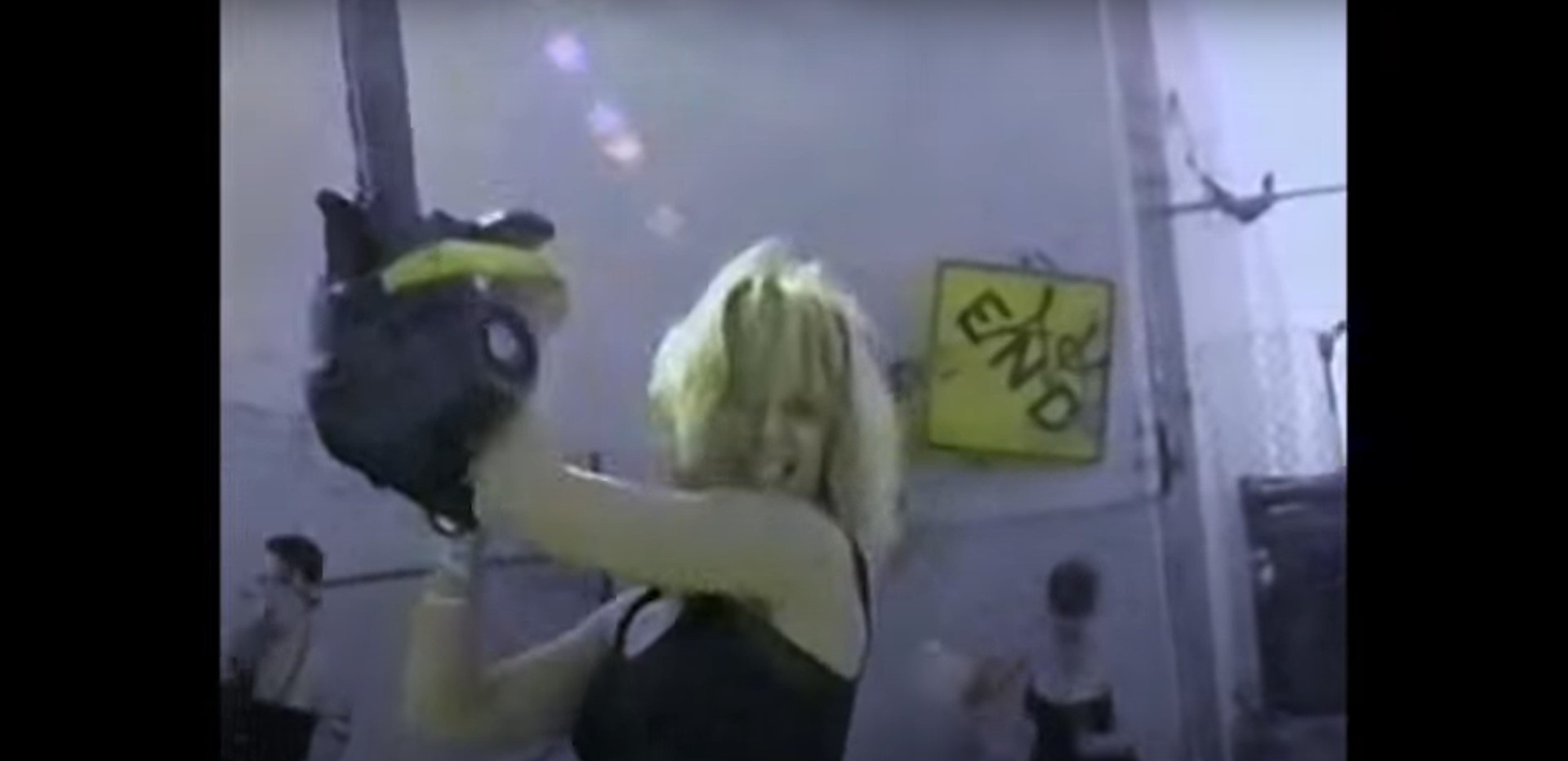
“The Return of the Living Dead” and “Night of the Demons” Quigley puts on another memorable and wickedly fiendish performance as the haughty genre scream queen Malicia Tombs who superiority has gone to her head as she embraces her designation to an exact mania, displayed early on when her character’s character attempts to choke-kill another actress despite the numbered scene not being a death scene and Malicia harps on wanting to continue with the resembling act of murder.  As much as Malicia Tombs embraces the killer instinct inside of her, Linnea Quigley very much embraces Malicia Tombs without having to take her top off and despite having less screen time than her costars.  While Quigley fades in and out of the linear story, the narrative progresses with livelihood hardships of the now out-of-work cast and crew who relied heavily on that small film to boost their acting and filmmaking careers.  That crop of characters falls short tipping into their expectations, aspirations, and even their relations to be just slasher fodder for the mysterious maniac roaming the house.  Jenni (Emilie Jo Tisdale,” Escape from Hell”) and Devon (Nova Sheppard) are inferred romantic roommates who sell clothes on the side of the street to make ends meet post failed film but don’t have surmountable direction to either be a full-fledged couple to sympathize or seem terribly concerned about opening their own clothing shop other than what would be a bad decision to reside at the mansion overnight.  Again, no sympathy there either.  The special effects goof Squib (Bryan Cooper churns chuckles relentlessly by relating more to his crafted effects dummy more than people, marking him conclusively comedy relief as well as fated for death that, like in life, no one takes him seriously when he shows up gruesomely mutilated.  The other principal actress across from Tombs is Christine (Nicole West, “Dimension in Fear”), a buxom blonde tired of secretary work succumbing to lead man flirtations in a dark and scary house where every shadowy corner is lodged with threat.  The pair fall into that horror character cliché of have sex, will die, quickly downgrading their pre-professional relationship into nothing more than dark house desire.  Director Eric Orloff (Jarrod Robbins, “Evil Sister 2”), a presumed spin on the Awful Dr. Orloff and perhaps hints at his motives, seems to be stuck in angsty avoidance and melancholy stemmed by what could have been with Scream Queen but that also peters to a gross negligence end of an arc waste.  Rounding out the cast are a couple of special bit parts played by prolific Full Moon Entertainment and overall horror movie screenwriter C. Courtney Joyner (“Puppet Masters III,” “From A Whisper to Scream”) as a televised homicide detective and Kurt Levee in a quasi-return of his character Runnion from “Evil Sister” but alternatively spelled “Runyon” in “Scream Queen.”  
Though obviously and definitely not the first to do this, “Scream Queen” humors metacinema measures built upon horror tropes and spherical plot points that redirects the story back upon itself for a killer effect.  The feature has no issues making and poking fun at itself within a campy context albeit the usually grave apprehensions of a true scary slasher movie that’s less campy of which a scream queen is born – think Jamie Lee Curtis in “Halloween” or Neve Campbell in “Scream.”  Bryan Cooper not only portrayed the foolish effects guy persona but also actually did a lot of the gore gags for the film, achieving very detailed inlaid gore prosthetics for a smalltime picture with an axe embedded into a chest and a mangled face to name a few.  The story itself feels a bit rough and ready as it slips into supernatural obscurity and, as aforementioned, character setups flounder to a stagnation, killing instantly the miniscule arcs that were structured prior to their mansion gathering in what becomes a slapdash of serial offing that wraps up the story post-haste without much cat-and-mouse tension.  With that said, “Scream Queen’s” unpolished plot had once mirrored its fallowed physical release until recently but now witnessing its birth out of twilight has been multitudinous worth the wait. 
Another of Linnea Quigley’s lost films has been resurrected from the format graveyard by Visual Vengeance with a new Blu-ray release of “Scream Queen.”  The Wild Eye Releasing sublabel release comes with an AVC encoded, high definition interlaced scanned and director approved 1080i transfer from the 480p tape elements on BD50 capacity and comes also with the qualitative joys of a standard definition shot on video experience.  SOV tape upconversion can never completely eradicate the imperfections associated with tape and we also know this going in courtesy of Visual Vengeance’s standard practice of a fair warning before the film, but the overall “Scream Queen” presentation passes as clear content despite some minor tracking blips, 1.33:1 aspect ratio, original lower resolution, and scan line visibility, which is smoothed out nicely by the 1080i conversion. Exteriors and brightly lit scenes take on more shape compared to darker and low-lit areas that become like a void in standard DEF, which also hits the natural grading into a washed-out drab.  The English Dolby Digital 2.0 stereo labors to maintain some form of auricular strength but often nearly goes dark to where certain Linnea Quigley monologues periodically go silent for a few seconds, so the dialogue isn’t entirely clear but when it is, it’s relatively clean. There’s no hardiness pop in the audio track, staying suppressed throughout, and having little-to-no range or depth to the compile contexture. Some electro-interference throughout but nothing to be bothered by considering the grade of the SOV. Optional English subtitles are available. Special features include a commentary with writer-director Brad Sykes, a new behind-the-scenes documentary Once Upon A Time Horrowood that’s mostly Brad Sykes going through the stages of making “Scream Queen” and his recollections of his first big time produced film, a new interview with star Linnea Quigley, a new interview with one of the three various editors Mark Polonia (director of “Splatter Farm”), an original full-length feature producer’s cut of “Scream Queen,” a behind-the-scenes image gallery, Linnea Quigley image gallery, snippets from the original script, original trailer, and other Visual Vengeance distribution trailers. Along with the hearty software special features, hardware physical features include a six-page trifold with behind-the-scenes color photos notes by Weng’s Chop Magazine’s Tony Strauss and beautifully illustrated with dripping blood, a chainsaw, and Linnea Quigley on the front cover, a folded up mini color poster of a scantily-leathered Linnea holding one of the film’s murderous weapons, retro stickers, and your very own Four Star Video plastic rental card. All of this great stuff is stuffed inside a clear Blu-ray Amary case with a pressed disc art of a bloody illustrated Linnea sawing some unknown guy’s face off. The same illustrated graces the front cover in an expanded form and under a different hue. If you don’t like it, which I would be hard-pressed if you don’t, the reverse side contains one of the original cover arts with, again, a scantily-leathered Linnea holding that murderous weapon. The entire package is sheathed inside a rigid O-slipcover with an extended view of that chainsaw scoring with a bloody spray the eyeball from some guy’s face. The 13th Visual Vengeance release comes region free, unrated, and has a runtime of 78-minutes. Lost vintage now found and digitally revived to give us even more Linnea Quigley than we knew we needed with a meta-film shows initiative and fit special effects but swerves off trajectory into a more-of-the-same pathway. 

This Chainsaw’s Made for Cutting! “Scream Queen” on Blu-ray!

When Music Videos Go EVIL! “The Backlot Murders” reviewed! (Dark Force Entertainment and Code Red / Blu-ray)


After a night of drinking that ends in breaking a bottle over the bar owner’s head, a struggling and internally conflicted rock band kicks out the cancerously unhinged and troublesome member before their rise to stardom. Unfortunately, all the talent went out door along with the excommunicated band member, forcing the band to impress with an extravagant music video shot on Universal’s iconic backlot, sponsored by their agent and the lead singer’s girlfriend’s music mogul father. Instead of intense pyrotechnics and scantily cladded female groupies dancing on their crotch, the band, their girlfriends, and the crew find themselves caught in the gloomy, labyrinth-like movie lot, housing spooky interior and exterior sets, unaware the lurking murderous manic taking them out one-by-one.

By far a polar opposite polished genre film than the sadistically raw brutal rape and murder extravaganza that was “Chaos,” writer and director David “The Demon” DeFalco dabbles in the early 2000’s revival of the slasher genre with his 2002 released feature “The Backlot Murders” in the wake of the widespread success of the “Scream” franchise. In much of the same way “Chaos” came to fruition derived from “Last House on the Left,” DeFalco, once again, finds inspiration in the form of cult horror director Wes Craven. However, DeFalco strays away from the meta-horror and trope-reversal techniques and replaces it with a satirical façade of the music industry where glam is more important than meaningful substance. The slasher-comedy carves up nods to Van Halen, Pearl Jam, Aerosmith, and even Elvis Presley with a horrendously skewed mask version the killer wears. “The Backlot Murders” were co-written by Paul Arensburg and Steven Jay Bernheim with the latter writer serving also as co-producer with DeFalco in association with Dominion Entertainment.

A contributing factor to “Scream’s” success was the diverse in career cast that clicked together as well as twisting archetypical roles into atypical whammy that veered audiences to the edge of their seats. “Scream” shocked audiences with the immediate death of a well-known actress right out of the gate, nabbed “Friends’” star Courteney Cox, “SLC Punk” and “Hackers” actor Matthew Lilliard, teen heartthrob Skeet Urlich, one of the Arquettes with David Arquette, and, perhaps, would have guaranteed Neve Campbell a slab of concrete for the Hollywood Walk of Fame along with an already cemented label as a scream queen and a final girl. The same eclecticism could be transfixed by “The Backlot Murders’” acquisitions but on a more obscure scale with a cast from all walks of life that includes the Roger Rabbit voice actor himself, Charles Fleischer, “Three’s Company” star Priscilla Barnes, 1997’s Playboy Playmate Carrie Stevens, and the late Corey Haim (“The Lost Boys”) as the band’s guitarist in a role that seemed below his fame stature. Most gaps are plugged with interesting characters treated with some backstory buildup that becomes more stagnant than footfall companions in order to get to know them better before their demise, but their persona conductors include Brian Gaskill (“The Bloody Indulgent”), Tom Hallick, Jaime Anstead, Dayton Knoll, Lisa Brucker, Ken Sagoes (“A Nightmare on Elm Street 3: Dream Warriors”), LoriDawn Messuri, Angela Little, and Tracy Dali.

“The Backlot Murders” didn’t set out to revolutionize the slasher genre, but only relished in the after success and donned a more satire effort that purposefully retreated back into the conventional tropes to form an entertaining run of sex, drugs, and rock’n’roll gags, but the one thing missing, and it’s a doozy, is the actual killer presence in the film who is treated as an afterthought of slim importance and chucked into a insignificant plot twist that forces DeFalco’s hand to become a routine hack’n’slash lemming. One positive aspect of “The Backlot Murders” is the extremely high body count that produces a continuous stream of nixing off a slew of characters with their own death scenes inside the renowned confines of a Universal backlot backdrop that’s not only good-humored irony but also a sizeable effort by the Bernheim/DeFalco producing team. Yet, despite the high body count, the kills and gore felt sorely uninspired and underwhelming, rehashing into homage death scenes from “Friday the 13th” and “Scream” with a few forgettable approaches to call its own, until DeFalco breaks the damning goreless streak with a gruesome Columbian necktie effect that goes for the throat. I make “The Backlot Murders” seem unenjoyable and heartless when, in fact, the early 2000 slasher-comedy is immensely funny with a Charles Fleisher gold recorded, laugh track amongst the relentless mocking of the music industry from a far in this true to form slasher accessorized with a high body count kill dozer of a villain.

When things are quiet on set, “The Backlot Murders” evoke the slasher spirit on a new-to-Blu Blu-ray release in the U.S. from Dark Force Entertainment and Code Red with MVDVisual handling distribution. The 1080p, hi-def release is presented in an anamorphic widescreen from a brand new 4K scan of the original 35mm negative. The cool contextual colors render nicely amongst the shadowy gloom and foggy backdrop that’s reminiscent of a softly lit late 90’s and early 2000s slasher. The textures are sharper than the Razor Digital DVD release; the tactile feeling of asphalt when a bluish white glow hits the pavement or the gritty backlot sets vibrant with an ominous glow strike powerful chords of a lively presence from the transfer. There doesn’t seem to be any cropping, edge enhancing, or any other manipulation to the transfer present. The English mono track, which leans away from the LFE, has the opposite, lackluster appeal with a single channel blockade that doesn’t project the bands pyrotechnics, the screams of being chased, and settling for limitations on other wide range of girthy resounding audio. However, the dialogue is clear, unobstructed, and in the forefront. Bonus material includes a new audio commentary with director David DeFalco and Code Red’s Banana Man plus three new and very bizarre interviews with Carrie Stevens lingering from effects of the #MeToo movement to making home fudge, with Charles Fleisher and dissociative disorder or madman genius insight, and ending with a fairly regular interview with Brian Gaskill recollecting the film and his career through a tough industry standard. The Fleisher and Gaskill interviews end with a video op with The Demon himself, David DeFalco. “The Backlot Murders” had forefront potential of systemic slasher films of the time period, but pitter-patters for levity and a sweeping kill count that reconstructs the dread into death and comedy.

“The Backlot Murders” on Prime Video!

Oscar Wilde’s Not-So-Evil…”The Canterville Ghost” review!


An ambitious physics professor Hiram Otis obtains a research grant that requires him to study in England, pulling his wife, daughter, and two young boys from their Indiana home into a strange new world. In an age of obsolete aristocracy, the Otis family is able to afford rent at the grand Canterville Hall, a legendary castle with an infamous tale of death and suspicion that also might have resulted in being an affordable estate for the American family. Legend records have it that the lord of the castle, Sir Simon de Canterville, had subsequently killed his wife due to his obsessions and became the victim of his wife’s family spiteful vengeance by being chained to a dungeon cell. For 400 years, Sir Simon remained in that cell and his ghost haunts Canterville Hall, but despite their beliefs in the supernatural, the physics professor and his wife can’t see the ghost and only their teenage daughter and two young boys are able to witness him roam the halls, haunting those who live within the castle walls.

Every once and awhile, we’ll thoroughly review a light-hearted fantasy, horror, or sci-fi film and since we’re hot off the heels of the review for Wes Craven’s “Summer of Fear,” the made-for-television train might as well keep chug-chug-chugging alone with the 1996 TV movie adaptation of the Oscar Wilde novella, “The Canterville Ghost.” Distributed by ABC, the Sydney Macartney (as Syd Macartney) directed and Robert Benedetti teleplay written installment tries to differentiate itself and standout amongst a plethora of adaptations that span across the globe, but the American Broadcast Company, a subsidiary of the great and powerful Disney, aimed to separate from the masses by adding star studded power and the result brought a rejuvenation to the ye old tale over two decades ago.

The big name headliner is none other than Captain Jean-Luc Picard himself, Patrick Stewart, two years after his 7-year stint on Star Trek: The Next Generation. Stewart, who co-produced the film, adds his theatrical flair and is absolutely brilliant shaping drama monologues into dense thickets that define Sir Simon de Canterville’s ghost, but there’s an issue; the problem doesn’t lie with Patrick Stewart, but with how Benedetti’s teleplay expos from the story as a continuous, if not slightly jumbled, stream of old English that just feels like rambling. To alleviate that strain is Stewart’s co-star Neve Campbell to add a softer, glassy-eyed touch to the story with a pinch of plain jane American girl insecurities, characterized in Wilde’s story as Virginia Otis. Perhaps in the beginning portion of the height of her career, Campbell finds herself between “Party of Five” and hitting scream queen status as Sydney Prescott in “Scream,” but the “Wild Things” actress wasn’t that sultry or that chased in “The Canterville Ghost” who only took upon an annoyed teenage girl persona, wishing her life was back in America up until the mysterious spirit of Sir Simon de Canterville allured a spark into her dull life. Alongside Stewart and Campbell, Daniel Betts, Ciarán Fitzgerald, Raymond Pickard, Cherie Lunghi, Donald Sinden, Joan Sims, and the late Edward Wiley, who died shortly before the film’s premiere, costar.

Going into “The Canterville Ghost” was nothing short of knowing nothing other than the fact the Patrick Stewart and Neve Campbell were in the lead roles of a Disney backed, family film and to be completely honest, Macartney’s vision completely underwhelms. Along with the verbose nature of the script-to-teleplay alterations, the magical supernatural portions are inarguably cheap, even for television. The simple superimposing of Sir Simon de Canterville offered no stimulation as the the two scenes just didn’t splice together well to seamlessly make the grade. Firecracker explosions and party store cobwebs dilute even thinner the already slim pickings of special effects that top when Virginia Otis crosses over into a dense fogged ghostly realm thats chopped, cropped, and edited with such disorganization, the entire scene feels more lost than Virginia trying to escape the other side back to the living.

Sydney Macartney’s “The Canterville Ghost” is presented for the first time ever on Blu-ray courtesy of the U.K. distributor Second Sight Films. The Blu-ray is presented in the Academy ratio of 1.33:1 with 1080p resolution on a MPEG-4 AVC BD 25. Second Sight’s release will have the best looking version of this film, if the quality is anything like the screener sent to me, with a strong color palette, minor digital noise, and rich in great detail; so detailed in fact that the blemishes on Neve Campbell and Daniel Betts can be seen. The English DTS-HD audio track is lively, but not entirely boastful with more thematic and dramatic elements. Dialogue track is clean and clear and the score by “Dead Heat” and “Tremors” composer Ernest Troost augments his fairy tale rendition into the mix. Bonus material includes new interviews with director Sydney Macartney and producer-writer Robert Benedetti. Second Sight’s presentation of Hallmark Entertainment’s “The Canterville Ghost” has strong Blu-ray technical potential, but despite the big names of that time period and a visually stimulating setting, the fantastic adventure through a cursed ghost’s melodrama and a bored young girl’s tenure of self discovery unfortunately didn’t rivet with excitement or wonder, losing steam with it’s important message that life is more than being in a bubble of stagnant disappointment and guilt.