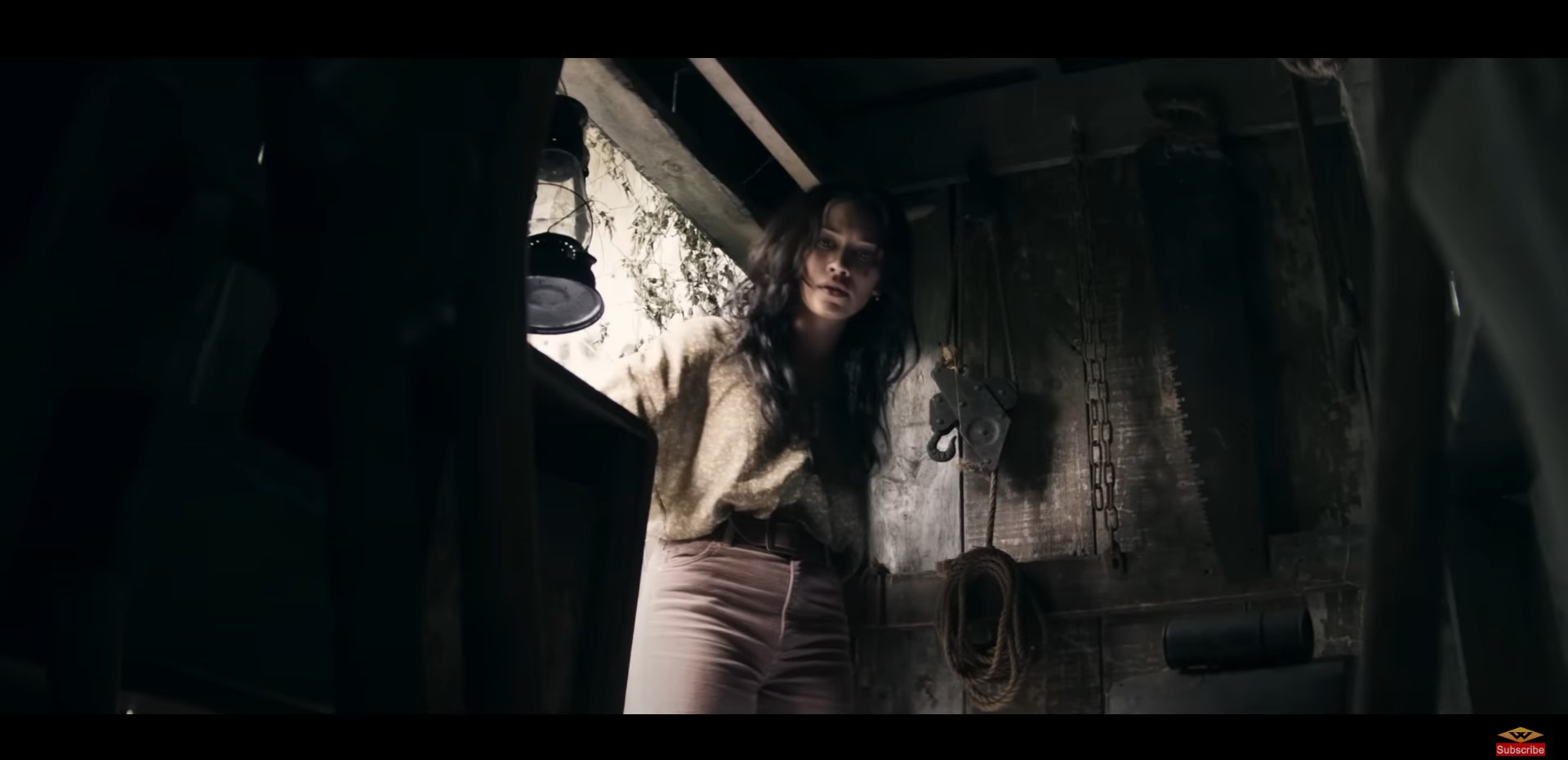
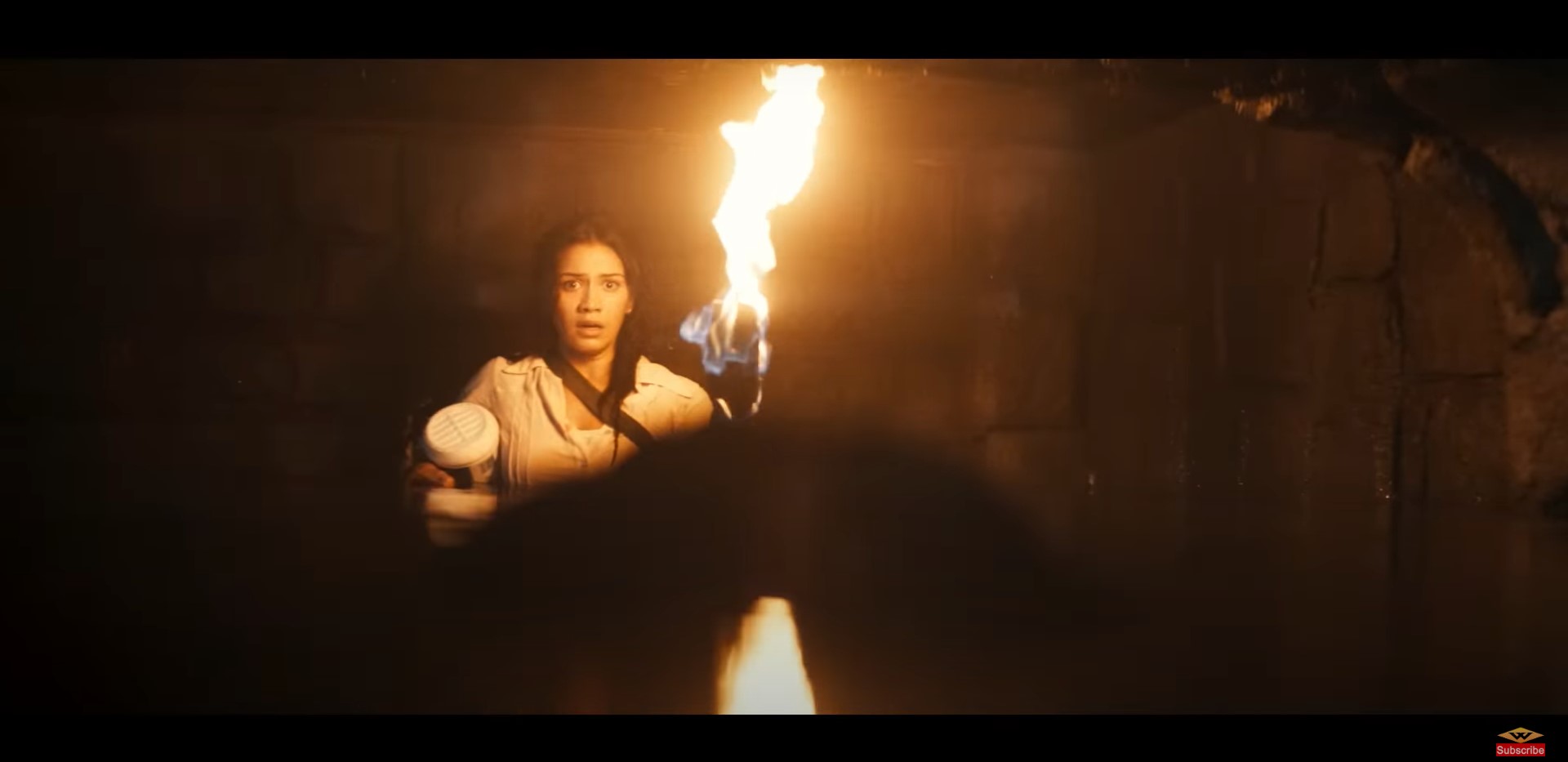
Not a Plague of Rats Could Stop EVIL’s Obsession. “Nosferatu” reviewed! (Universal Films / Extended Cut Blu-ray)

Experience “Nosferatu” in 4K UHD or Blu-ray. Purchase Here!

Wisborg, Germany, 1838 – Thomas Hutter is a promising real estate apprentice appointed travel six weeks to the Carpathian Alps to settle on Wisborg real estate for the reclusive and mysterious Count Orlok.  Thomas Hutter is also a newlywed, married to the lovely Ellen Hutter whom together Thomas plans to solidify their proper social status with the wealth of this trip away from his wife despite her pleas for him to stay.  Upon meeting Count Orlok in his dark castle, Thomas is overcome by his host’s undying evil presence that confines him to the grounds while Orlok psychically holds spellbound Ellen’s mind to a fretful state.  When Thomas escapes, he makes it back home at the same time Orlok arrives by ship that brings a plague of rats to the city of Wiseborg as well as a nasty blood-loss disease affecting population.  As Thomas warns of Orlok’s intentions, discredited Prof. Albin Eberhart von Franz knowledge of the occult sees through the rat-plague and into the dark heart that has cast its shadow over the city and into Ellen Hutter’s soul.   

The acclaimed folkloric horror director of “The Witch” and “The Lighthouse” sinks his teeth into one of the most renowned classical villains of our time, a vampire known to most as Dracula and revised, at times, up to the Robert Eggers take on the timeless “Nosferatu” tale.  Eggers’s 2024 adaptation of Bram Stoker’s novel and the 1922 F.W. Murnau silent picture, “Nosferatu:  A Symphony of Horror,” written by Henrik Galeen, is also penned by the director, revamped to tell both classic narratives in a way that is his own and that’s reflective of his slow burn gothic dread style.  “Nosferatu” is a Focus Features presentation from the productions of Birch Hill Road Entertainment and Studio 8 as well as produced by Eggers alongside the industry esteemed Chris Columbus (“Home Alone,” “Harry Potter”) and daughter Eleanor Columbus under their Maiden Voyage Pictures co-founded company.

Stepping into the tall, slender, blood slurping role of the titular character, under a full-body prosthetic suit of what is essentially a rotting corpse with a wicked mustache, is Bill Skarsgård, the actor who is quickly rising to the top of heavy makeup and effects characters while making the star-studded Skarsgård name synonymous with horror in his breakout film playing the maniacal demon-clown Pennywise in the film remake adaptation of Stephen King’s “It.”  Skarsgård’s baby face is completely enveloped in the ancient Transylvania nobleman Count Orlok with a high-bridge nose, protruding and high cheekbones, a vertically elongated face, and a sparse hair straggling through presumably a latex mock of decaying skin.  Skarsgård also modulates his vocal chords to reach deep, resonating levels that gives Count Orlok an additional tier of terror.  Undoubtedly, Count Orlok is an omnipotent, powerfully entrenched presence brought to existence by Skarsgård and accentuated and elevated even further by Lily-Rose Depp in Orlok’s obsessive muse of Ellen Hutter.  Through choreographed body manipulation and control, the daughter of Johnny Depp has since put the gum-chewing, wise-cracking, convenient story clerk “Yoga Hosers” role behind to redefine herself as an austere period and physical role actress willing to go the extra mile for the story.  Nicholas Hoult (“Warm Bodies,” “Mad Max:  Fury Road”) updates his Dracula film resume with another after having just come off the heels of playing the titular character in “Renfield” to Nicholas Cage’s grotesquely campy version of the Prince of Darkness, but there’s nothing intentionally campy about this Stoker story nor his role as Thomas Hutter with first-hand experience of Count Orlok’s monstrous dysphoric plague in what would be, too, another physical, yet less so, role for Hoult as a concerned husband fighting for his wife.  Speaking of roles, or films, that come around again for certain actors, Willem Dafoe passes the torch of Count Orlok from his Max Schreck performance in “Shadow of a Vampire” and takes on the elder Professor von Franz, a once esteemed learned man of science and knowledge now a discredited scientific explorer of the occult brought in to see to Ellen Hutter’s feverish nightmares and hallucinations.  Dafoe’s just as spasmodic and expressive as ever to be a part of those knowledgeable opposition of the vampyr realm, giving prominence to the character Dafoe has bordering as a mad genius of sorts with eccentric behavior that never allows to be compassionate or otherwise emotionally driven, like a true scientist.  Principal cast rounds out with Aaron Taylor-Johnson (“Kickass”), Ralph Ineson (“The Witch”), Emma Corrin (“Deadpool & Wolverine”), and Simon McBurney (“The Conjuring 2”).

As much as Eggers wanted to make “Nosferatu” a scary film while staying to the themes of obsession and Stoker and Munrau’s core elements, the film only manages to scare up a couple of true moments of hold-your-breath terror with panning shots and swelling scores that composition a seat jumping jolt.  Like most of Egger’s previous work, a continuous course of dread, which the filmmaker produces well in droves, meanderingly streams through the narrative that slowly builds with each closing in step Count Orlok takes toward obtaining Ellen Hutter’s willing submission to him.  Between the 1922 and 2024, both films play the love-triangle card of a married couple’s happiness being compromised by a tall and dark outsider entrancing, enthralling the wife, diverting her loyalty by any means possible.  In this case, those means are to blackmail her by holding the city hostage to plague of rats and draining her of the loved ones surrounding her.  However, the genesis of Orlok’s obsession is built upon brittle sticks with a prologue that hamstrings a powerful, psychic ability unwittingly used by Ellen Hutter to awaken the ancient evil.  The whole origin of events feels threadlike and happenstance, perhaps to instill more mysterioso of the antediluvian universe on a smaller scale obsession story.   Aesthetically, “Nosferatu” follows the Robert Eggers’ cinematography trend of blacks, grays, and a reduction to dull of primary colors for a gloomy period piece of cold weathered melancholy and bleakness under the continuous collaboration camerawork eye of Jarin Blaschke, marking their fourth feature together that implements inventive, complicated shots to sell practicality as fantasy in an early 19th century European context.  Blaschke’s aesthetic style would not have worked without the makeup and prosthetics for Count Orlok as a decrepit evil nobleman juxtaposed against the period costuming and elevated higher by the massive set designs of creating the Wisborg city as well as all of the other sets built to scale on acres of movie lot land. 

Robert Eggers and “Nosferatu” is the match made in dark heaven to give that classical rebirth the kick in the Dracula cape it desperately needed for Universal.  The at-home, Blu-ray release brings the darkness into living room television sets and other media players with an AVC encoded, 1080p high-definition, BD50.  Eggers is also so fine and particular on detail, such as with all the production value listed above and the retro design company opening credits, “Nosferatu” is also presented in a European widescreen 1.66:1 aspect ratio used in antiquated times of the 60s to early 90s in Europe, to which this story is fictionally set.  The Universal Films release houses both the theatrical version and extended cut at their respective runtimes of 132 minutes and 136 minutes, which is pretty incredible being both versions compressed onto one disc and, in the same breadth, had me concerned for artefacts in what’s surely a beautifully dark and tenebrous veneered Egger feature.  However, low and behold, no signs of posterization or banding to speak of with a saturated void to keep the shadows menacing rather than murky or milky.  The overall grading is quite dark with a deep bluish hue that enriches the time piece as well as the gothic tones.  The unnatural density of color saturation leaves natural skin tones to sake of reality, but the details do emerge here and there when shadow play, mostly around the presence of Count Orlok, is abridged for quotidian life without the encroaching dread of supernatural omnipotence.  Both formats are encoded with lossy audio mixes, a quite of a bit of them actually, with an English Dolby Atmos, Spanish Dolby Digital Plus 7.1, a French Dolby Digital Plus 7.1, and, lastly, an English Dolby Virtual Speaker (DVS) 2.0.  The Dolby Atmos is tuned for a 7.1 configuration, emitting immersive and resonating sound to which “Nosferatu” laps up in luxury.  The most notable aspect of the entire design goes, without question, to Skarsgård voice modulation for Count Orlock, a deep, guttural, European-accented assertion of all-encompassing faculty highlighted in every scene when, even more so when Orlock is not physically in frame.  I like to think Robert Eggers is the Wes Anderson of horror when it comes to dialogue and entourage of ensemble casts and with dialogue range and depth that’s dynamic to flow with the ever-presence of physical change or to swell or diminish a moment.  Dialogue is also stable, clear, and without dodgy interference, the spatial environment diffuses and disperses nicely through side, back, and even upper channels in Atmos and, the illusion provided, in DVS, and LFE finds a proper level without overwhelming cataclysmic plagues, fever dreams, or Orlok’s dreadful lust.  Opted subtitles are available in English SDH, Spanish, and French.  Bonus content includes a feature length parallel commentary with writer-director Robert Eggers, a lengthy behind-the-scenes featurette with interviews from cast and crew, and deleted scenes that can be seen in the extended cut.  The Blu-ray, plus digital code, release comes with white-black and grayscale in between cardboard O-slip with the same Lily-Depp Rose’s face being caressed by Orlok’s sharp-nailed and decrepit hand image also as the cover art on the Amaray case.  Inside, you’ll find the digital code stage right while the disc is pressed like most of all of Universal’s home video Blu’s with a near translucent quality to them.  Theatrical cut is rated R for bloody/violent content, graphic nudity and some sexual content and the extended cut comes not rated.  Though not listed anywhere on the cover or disc, the Blu-ray is encoded with region A playback only.

Last Rites: Robert Eggers shoots his shot working his dream story under a major Hollywood studio providing him with a major Hollywood sized budget. “Nosferatu” is every bit of Eggers, carved out and etched to the gothic and folkloric perfection that has quickly skyrocketed his brief career and the eclectic cast stuns in their own right with otherworldly and creepy performances that revives ole’ Count Orlok back to from the celluloid dead.

Experience “Nosferatu” in 4K UHD or Blu-ray. Purchase Here!

Breathtaking, Private, and Full of Blood-Hungry, EVIL Amphibians! “The Tank” reviewed! (Well Go USA Entertainment / Blu-ray)

“The Tank” on Blu-ray from Well Go USA Entertainment!

A financially struggling San Franscisco family of three learn their recently deceased grandmother had a large, secluded property on the oceanic foothills of Oregan. The coastal property was kept a secret for 30 years from the mentally unstable woman’s youngest child, the father, for reasons unknown. Rundown and off the beaten path, the vast acreage promises lucrative income from interested land developers at a time when the family needs the money the most. Included with the home is a water tank system built into the cliffside that can house thousands of gallons of fresh water underground from a nearby spring. Activating the system awakens a sinister breed of anophthalmia creatures, revealed to have plagued the family for generations and answers a number of troublesome family secrets that now terrorize the current inhabitants.

Initially beginning the backstory of a vital family turning point stemmed in the 1940s, “The Tank” succeeds 30 years later in the 1970’s with an execrable house understanding with a loving but desperately coursed family walks into its deadly den and sharp-teethed, subterranean dwelling. The creature feature thriller is the sophomore feature written-and-directed by New Zealand filmmaker Scott Walker, ten years after the director’s debut full-length biographical drama “The Frozen Ground,” starring John Cusack and Nicholas Cage. “The Tank’s theme toils with the troubling idiom, if something looks too good to be true, it probably is, as opportunity turns oppressive when ignoring red flag secrets and throwing caution to the wind when taking chances for the love of your family to relieve financial troubles. The looming debt and inevitable curiosity, who we all know killed the cat, sends a family into the fire, produced by Walker, wife Minna, and Lesley Hansen and is a coproduction from Ajax Pictures, General Film Corporation, and Happy Dog Entertainment with Ingenious Media presenting.

“The Tank” contains a slim six characters: three principals and a handful of support. However, another can be added to the list but in a non-speaking role, unless you consider Regina Hegemann and her contortionist craft as an articulate performance with her hands, feet, arms, legs, and, well, her entire body. In fact, I do consider those crooked twists and bends of a slender anatomy to be able to speak louder than words sometimes – think the archetypical Doug Jones. Hegemann’s debut film role builds a gap in between the contortionist’s regular vocational circus acts and instructions of physical sinuous spiraling of the human body to bring practical effects to slithering, vicious life in “The Tank’s” underground dwelling monsters – yes, she plays more than just one creature. Hegemann’s innumerable creatures are pitted up against a nuclear family made up of a strictly New Zealand cast beginning with Matt Whelan as Ben, the father and inheritor of the secluded cliffside cabin whose drowning in family closet skeletons and ambiguity, Luciane Buchanan as Ben’s wife Jules who drowns in a different way with debt as she tries to earn her degree in zoology while raising a family and running a pet shop, and Zara Nausbaum as daughter Reia caught in the middle of her parent’s woes and in the clutches of the undiscovered and eyeless salamander never imagined to be extant. With a secret home laid out in Ben’s mother’s postmortem belongings, an opportunity to dig themselves out of debt seems now feasible for a family treading profusely to keep their head above water, but the script only nibbles at what the family is doing at the cottage. Sure, a real estate agent comes a-knocking to offer them an interested buyer’s more than generous offer to build upon the land, but that doesn’t keep the family from loafing about the property, reissuing a there’s always tomorrow stance even when all their current problems can be obliterated with a firm yes. Instead, thinking about the supposedly large offer doesn’t quite kickstart negotiates but rather belays the inevitable, a family’s forgotten dark and dastardly secret is now gnawing on them – literally. Ascia Maybury, Graham Vincent, Mark Mitchinson, Holly Shervie, and Jack Barry fill “The Tank’s” cast list up.

Following up on “The Tank’s” main theme of some family secrets should never be explored, investigated, dug up, analyzed, or even the slightest looked for its potential value because the secret is secret for a reason. Usually, those grounds are odiously detrimental and, in this case, the grounds have hidden a longstanding life form unbeknownst to man. “The Tank” has a hard time selling the message with the one most affected by the family’s history, with a father and sister having perished under mysterious circumstances and a mother committed to a mental institute, having little interest in unravelling the truth. Instead, the reverse happens when Jules immerses herself into Ben’s past, unable to shake the freaky feeling of the cabin’s ominous atmosphere and checkered past around the land that had claimed the lives of her husband’s father and sister. Jules continues to surpass her husband’s faults and failings with a reminiscent climatic “Aliens” strap up for battle when her child is snatched by the insidious creatures, with attributes and coloring very similar to the xenomorph but on a smaller scale and telluric, and to their water-filled, underground tank-habitat. Using an aerosol flamethrower, we again get that Ellen Ripley vibe as she uses her motherly strength to go toe-to-toe with a terrestrial creature who took down a well-built cop with a gun. All the while Jules wades through multiple encounters with the slippery salamander with razor sharp teeth, her husband Ben, who had previously failed in collapsing the cavern with explosives, becomes invalid with injury and so she stands alone up into the final act of one-lining a car creeping-in creature with, “Get out of my car!,” before shooting it’s head off with the dead cop’s sidearm. Comparably not as influential or heavy-duty with force and violence as “Aliens,” “The Tank” still manages to hold water with a strong, female heroine willing to jump into the jaws of death to fight for her child without backup.

“The Tank” doesn’t run empty with a solid Blu-ray release from Well Go USA Entertainment. The AVC encoded BD50 is presented in 1080p, high-definition, in a widescreen 2.39:1 aspect ratio. Faced with a lot of low-lighting scenes, the digitally captured picture offers up good detail levels with spotty compression banding when introducing light into darker scenes. The larger format storage leans to non-compromised video quality that provides enough storage to maintain consistent grading stability and pixel sharpness all along the way. The English language DTS-HD 5.1 surround sound mix provides a wide-berth of sound elements that hit in the right audio channels. I found dialogue to be quite soft, especially against the prehistoric boom-roar of the creature resonating across the channel board, but the overall dialogue track is clean and clear despite its lack of boost. “The Tank” features fair range elements involving the slinking creatures, cabin creakiness, and outdoor ambience; this also includes a well-rounded depth to create space albeit the creature’s ferocious roar that doesn’t have any directional positioning and swallows output space. Bonus features include A Look into the Tank – a compositional cut of cast and director interviews regarding their experiences in the making of the film, Making the Creature is a full-blown look from spark idea to complete realization of the creature-look and design to fit the outward and physical capabilities of Regina Hegemann’s contortionist craft, and the original Well Go USA trailer to bring up the rear. The Blu-ray comes in traditional casing with latch with an advert insert on the inside for three other Well Go USA Entertainment titles. Though not as sexy as some other covers, the still highly effective front cover embodies the mysterious circumstance of looking into the belly of a dark-laden tank. The region A encoded Blu is rated R and has a runtime of approx. 100 minutes. A salamandroid reservoir that supplies a deluge dose of devilish, aquatic quadrupeds, “The Tank” is yet another title of alternative, out-of-the-box horror courtesy of Well Go USA Entertainment!

“The Tank” on Blu-ray from Well Go USA Entertainment!

Fixing the Tracking on Those EVIL VHS Cassettes! “Snuff Tapes” reviewed! (MVDVisual / DVD)

Ready to be Recorded?  “Snuff Tapes” now available at Amazon.com!

Marcela Arkaino investigates a Talca, Chile rapist and murder who has been drugging and abducting women for years to record aberrant tapes of his cruel exploits.  Marcela takes a special eager interest in this particular assignment as she was one of those unfortunate women.  As a silver lining out of an extremely bad situation, she is one of three women left alive by her brutal sex-sadist aggressor.  As the reporter in her garners the difficult stories from the other two survivors, Cataline and Jesus, abused by the same masked man, she inches closer to his whereabouts by triangulating attacks and connecting similarities but her scouring of roadside market, unlabeled VHS tapes became the smoking gun needle in a haystack that produces not just any depraved tape of his victims but of her own ordeal, turning now an inch into a mile in finding him.  Bring the other two women into the fold, Marcela devises a plan of revenge to direct a snuff film of her own, starring their rapist and torturer.  

Hailing from Talca, Chile, the same location where the story is set, comes the shock-slamming, VHS-inspired thriller “Snuff Tapes,” aka “Cintas Tapes,” from the Chilean born independent filmmaker, Vito Garcia Viedma.  The writer-director’s prior two zombie-influenced short films, the 2012 “Bajo el sonido del tren” and the 2017 “Escape from Zombie City,” along with the criminal underbelly 2017 feature, Los culpables,” displays a course change deviation that wouldn’t prepare the average Viedma film fan for his 2020 venture into the dark underworld exploitation of indie snuff.  While the title highlights the concept around videotaping the misuse of a person’s trust and vulnerability for one’s own disturbing profit, in this case to get one’s jolly’s off, much of Viedma’s story skirts around the edge with just mentioning the nixing of captured and consumed of vivacity women, saving the story’s climax for more detailed death dealing in a vengeful perspective rather than a videotaped one. “Snuff Tapes” is created under Viedma’s ZineFilms production company in association with Cabro Chico and Trippas Productions.

“Snuff Tapes” is no “8MM” with a mega-Hollywood budget and Nic Cage doing Nic Cage antics. “Snuff Tapes” is no “Effects” with cult icons Joseph Pilato and Tom Savini helming sordid scenes from fantasy to non-fiction. “Snuff Tapes” isn’t even on the same level as “A Serbian Film” and, to be honest, I don’t think any film anytime soon will ever be on the same level as that twisted picture. What all three of those successful and notorious films have in common and what Viedma lacks in separating itself from the rest are in two very important details: a budget and an array of talent. Viedma’s film humbles in comparison with not only a microbudget but also in a cast makeup of essentially five actors with withering substance. Valentina Soto Albornoz stars as the retribution-reporter, Cataline Ibarra, who for the last decade has been piecing together clues of her kidnapper’s whereabouts by purchasing random video cassettes tapes from Talca street vendors and when Ibarra strikes gold unearthing her own ugly tape, she understandably feels overwhelmed reliving visually the nightmare and subsequently gravitates toward being hellbent for revenge. Ibarra recruits her survivor carbon copies in the tattooed Jesus Mayano (Camila Medina) and aspiring photography model Marcela Arkaino (Camila Carreno Arancibia) for a little payback, but Ibarra, aside from her good friend Esteban (Hugo Villar) providing her a PAL encoded VHS player and rewatching her tape to catch clues missed, she virtually does all the legwork in pinpointing the one responsible, drugging him, abducting him, and committing herself to the nitty-gritty, fantasy plan for whenever she got her hands on him. I’m not sure what roles or business Arkaino or Mayano actually had to just stand there moping other than maybe bear witness to the end of their lifelong torment, to see the boogeyman parish once and for all? Reinaldo Aravena plays the man behind the mask who initially puts up a strong showing as the camera operator and stud of his homemade videos but then quickly fizzles disappointingly on the opposite side of the camera due to a lack of scaled down combating in what becomes just a one-woman show without much to show for it.

Viedma paves an interesting structural path for his film, taking the audience an extended 36-minute introduction of voiced over VHS recordings of survivor stories before entering opening credits to what then becomes a dichotomy narrative between backstory and present day. This also speaks to the visual cinematography as well that jumps back and forth between being shot on the VHS’s boxed-in format (found footage) to a wider lens of the digital world, capturing past and present in two distinct formats as well as capturing the past that isn’t glossy, pretty, and is an inescapable prison where the walls, the horizontal pillars, are closing in on the world.  Appearances, no matter how apt to the subject, do not give the movie soul and “Snuff Tapes” misses that poignant shock value target with poorly written characters and a misaligned connect-the-dots investigation that doesn’t make much sense.  Ibarra examination of the evidence, or really lack thereof, points to one man, but like a cheating slacker in high school, she does not show her work to come up with that result.  Instead, she repeats, at least in a couple of instances, her gut knows she has the right man.  In Viedma’s world, a gut feeling is factual evidence for stringing someone up to face judgement.  In reality, that’s a severe boo-boo case of miscalculation that would get you jail time.  Circumstantial street justice on little-to-no proof separates the empathy from what an audience is supposed feel fired up against an unspoken truth and gives them satisfaction in a just cause to see the obliteration of scum from the face of the Earth. In the first half, “Snuff Tapes” is undeniably graphic and cuts deep with a veridical, degenerate villain, but falters with a lazy second half approach and gratuitous revenge.

MVD Visual in association with Danse Macabre and Jinga Films release “Snuff Tapes” on a North American DVD release. The region free DVD is presented in a VHS format of 1.33:1 when looking cassette camera lens with the rest of the film in a widescreen 1.85:1 aspect ratio. As expected, the VHS quality has semblance of overuse and age with a fuzzy display and muted, boxy sound. Outside of that, the picture quality is not much better in reconstituting a playback on lower end of the DVD spectrum – approx. 3-5 Mbps. Compression artefacts are heavily present with poor clarity around the edging and blacks shimmer and appear blotchy. The lossy Spanish language Dolby Digtial 5.1 Surround Sound loses some of it’s fidelity in the compression but is the overall highlight amongst the DVD’s A/V scorecard; however, the subtitle transcription is the worst I’ve seen in quite some time with duplicated segments, spelling errors, and a timing that equates to a microsecond blip of dialogue on some occasions. The release comes with another version of the film as the sole bonus feature with an entire VHS 1.33:1 (4:3) VHS Cut for an immersive effect. As always, snuff features can be difficult to digest but they are becoming more and more prevalent and popular in a highly accessible home video market and director, Vito Garcia Viedma, tries his creative hand at creating disturbing content only to defile the genre with a subpar entry sullied by deficient storytelling.

Ready to be Recorded?  “Snuff Tapes” now available at Amazon.com!

An Elite, EVIL Assassin Loses Herself as the “Possessor” reviewed! (Neon / Digital Screener)

Tasya Vos is the top professional assassin employed by a hire-for-murder agency who uses surgically implanted brain transceivers to insert agents’ consciousness into a person’s body who can get close to their intended kill target. The no contact procedure has been successful with some severe drawbacks, such as the potential for slipping out of your own identity in being, in one way, a part of many distinct personalities. When Vos’s next assignment is to insert herself into the mind of the soon-to-be son-in-law of a powerful tech CEO, her individuality begins to crumble, losing her grip as the primary inhabitant of the body. The commingled souls share thoughts and memories and when Vos takes a backseat in a body that’s no longer under her control, her life becomes vulnerable to a confused and unhinged man seeking vindictive measures to evict the assassin from his mind.

Like an existential extension of his father’s career, writer-director Brandon Cronenberg’s foothold within sci-fi horror is anchored by functional practicality, substantial social commentary, and a knack for exhibiting cynical undertones in his sophomore film, “Possessor,” a gripping tech-thriller avowing the soft-pedaled ambiguous identity and corporate invasiveness. “Possessor” is the blood soaked corrosion of individualism that strips morality and replaces it with unapologetic nihilism in a film that feels very much David Cronenberg’s “eXistenZ” merged with Paul Veerhoven’s “Total Recall” with that plug-and-play dystopian coat of paint that’s being brushed over the quickly disappearing free will. Studios involved in the making of “Possessor” include Rhombus Media (“Hobo with a Shotgun”) and Rook Films (“The Greasy Strangler”) in association with a WarnerMedia division company, Particular Crowd.

“Possessor’s” leading lady, Andrea Riseborough, is no stranger to idiosyncratic roles in equally atypical films having starred in “The Duffer Brothers'” “The Hidden” and played the titular character in the avant-garde horror, “Mandy,” across from Nicholas Cage; yet, from her experience with big-budget studio films, such as “Oblivion” starring Tom Cruise, the English actress felt the uneasy atmospherics to be pressurizing and uncomfortable Riseborough has thus exceled with films such as Cronenberg’s “Possessor” that’s pivots into an alcove just off the main halls of horror and science fiction. Riseborough looks nothing like herself from “Oblivion” by sporting a stark white hair on top of a thin frame, which could be said to be the very counter-opposite of what a typical, bug-budget assassin should look like, but Riseborough delivers stoic and uncharitable traits of a character on the brink of losing herself. Christopher Abbot delivers something a little more chaotic when his conscious retreats back into the depths of his psyche only to then seep back into his mind where he stumbles to catch up on current events. The “It Comes At Night” Abbott disembodies himself not once, but twice, becoming an avatar for Tasya Vos to play, picking up where Abbot’s Colin left off, and then Abbot has to regain control, splicing Colin back into the cockpit where Tasya commands the yoke. The dueling dispositions cease being unique as one attempts to control the other in a mental and corporeal game of chess, confounding audiences of who is in control during certain scenes, especially when Colin goes into a blackout murdering spree of people Colin himself knows and trusts. As a puppeteer moving a marionette, pulling as an influential strings behind company lines, is Girder, a poker-faced agent head seeking the absolute best in the company’s interest, who finds her thimblerigger in Jennifer Jason Leigh. Leigh, whose experience with David Cronenberg’s “eXistenZ” brought a high level of cognizance to “Possessor” having been an cerebral deep virtual reality trouper previously, folds in the nerve of any level of management that would guilt someone else into doing the work necessary to get the job done. Girder opposes Tasya’s external humanity in a silent, but deadly manner by appealing to the killer instinct in Taysa, letting red flags of the out of body experience fly by the waist side that ultimately wears away at her star pupils moral conscious and turn her into a stone cold killer. “Possessor” cast fills out with Tuppence Middleton (“Tormented”), Kaniehtiio Horn (“Mohawk”), Rossif Sutherland (“Dead Before Dawn 3D”), Raoul Bhaneja, Gage-Graham Arbuthnot, and “Silent Hill’s” Sean Bean in a worthwhile role just to see if his role will succumb to a typical doomed Sean Bean character as the undesirable tech CEO.

Its safe and sufficient to say that Cronenberg’s “Possessor” is not a feel good story; the amount of tooth-chipping, eye-gouging, and throat stabbing gore takes care of any hope and ebullient energy that one could misperceive. Yet, while the disgorged grisliness stands on it’s own, Cronenberg possesses a factor of tropes that multiply the film’s bleak, icy landscape inhabited by unpleasant characters that ultimately seek and destroy the little good exhibited. The obvious theme is the disconnect from one’s own identity. Tasya Vos mental capacity nears the breaking point being an inhabitant of numerous bodies and with each callous, bloodletting assignment, Vos’ indifference for the things she should hold dear strengthens immensely drowns in the persona of another person and the psyche breaking acts of violence. Her latest assassination attempt even blurs the lines of her sexuality as her feminine body parts merge with Colin’s masculinity in one of the craziest sex scenes to date. Colin’s individuality is too threatened but from Vos’ intrusion, equating the quiet, strange behavior to a sudden vagary toward a person’s dejection, being estranged from their own life, on the outside of “Possessor’s” alternate reality of science fiction’s hijacking of one’s brain. On the subject of intrusion, a not-so obvious theme, but certainly has a strong motif, is the severe invasion of privacy. Vos’ spying on Colin and his lover for personality intel, Vos’ inspection of the entire Colin body while inside inhabiting him, and the data mining of Sean Bean’s character’s tech company, which pries itself through the optics of people’s computer cameras to garner information, such as the fabric of window curtains in this case, divulge an uncomfortable message that privacy is a luxury we are unable to ever grasp. There’s even a scene where Vos, in Colin, becomes a voyeuristic participant of a couple’s explicit sexual intercourse during data mining work hours. Despite the breadth of technology that are brimming near our fingertips today, “Possessor” has a very analog approach with dials and switches of seemingly antiquated electronic circuits, thus rendering the story grounded in nuts and bolts rather than being lost in the overly saturated and stimulated advanced tech. Beguiling with a somber serenade, “Possessor’s” a highly-intelligent work of diverse, topical qualms seeded by years of body horror and existentialism and is released into a world that’s perhaps not ready to come to terms with much of the themes it will present.

Come October 2nd* to select drive-ins and theaters, “Possessor” will be distributed uncut by Neon, implanted in the midst of horror’s biggest month of the year. Since not a physical release as of yet, the A/V attributes will not be critiques, but the film is presented in 1.78:1 aspect ratio and is under the cinematography direction of Karim Hussain, who has previously worked with Brandon Cronenberg on his debut film, “Antiviral.” Hussain adds rich two-tone coloring for a symmetry of sterilization that is, essentially, white and black with every shade of both in between tinted slightly with a dull hue on the spectrum and with the blood being that much more graphically illuminated against the backdrop. There are moments of composites that could render a person disabled with epilepsy, so be warned. The audio is a smorgasbord of a jarring ambience and soundtrack, adding to “Possessor’s” fluxing turmoil, but the dialogue discerns a little less sharply across; there was difficulty in understanding characters’ monologues or discourse who came across mumbling through scenes of fuzzy earshot. There were no bonus materials to mention nor were there bonus scenes during or after the credits. Perhaps the best movie you won’t see this year, “Possessor’s” an impressive follow up feature that reaches out beyond the outlining border of a vast and prolific filmic shadow looming over the filmmaker, but Brandon Cronenberg contrives new vitiated wonderments and is capable of casting his own umbra that would eclipse to throw light onto his soon to be seen cathartic body of work.


* Release date correction (9/29/20)

Evil Wants To Profit From Your Death! “Red Room” review!


When Kyra awakes inside an unadorned room of the second floor of an isolated farm house, the woman, who last remembers herself walking to her car from an afterhours night club, finds her wrists and ankles bound together alongside two other women. The women, Lilly and Allison, have been locked inside the room for days, kidnapped the same way, and treated with an inhumane care that more-or-less maintains their physical beauty. Uncertainty questions their fates, but one thing is for sure, when their captors come to remove you from the others, like selected head amongst the cattle, and relocate you to the red room, that’s when the screaming starts and you’re never heard from again. Between the three captives, anger and fear struggle for common ground on a plan of desperate escape and with the iron grip of their abductors honed into their every move, Kyra’s determination to escape breeds sturdier when the possibility of death is more than likely imminent, but before their inevitable snuff, the red room holds sickening world-wide pleasures that anticipates their particular company.

Poised to be callously unsettling and keen to rip apart compassionate souls, “Red Room” hails from Ireland as a ghastly and shocking exploitation thriller from writer-director Stephen Gaffney. A production of Gaffney’s Deep Web Films and co-written with Erica Keegan, “Red Room” slides ever so covertly into the internet’s interlining of unspoken grisliness that exploits people for the darker desires of other people and Gaffney runs through the typical rational of the irrational abductions, such as sex trafficking, and though that’s certainly taboo enough to quench viewers with a powerful story in itself, the director taps a sex and death geyser a few filmmakers have reaped, perhaps more so retrospectively, the machiavellian benefits in finding a home in a rather thin genre with films that are akin to the plot, including works of malevolent personal satisfaction as such as in Dusty Nelson’s “Effects” or the investigated side that encompasses the snuff world in Joel Schumacher’s “8mm” starring Nicholas Cage.

The 2017 film thrills to inflict tortuous anticipation for what lies ahead of the tethered three women. Amy Kelly’s Kyra is the only colleen to be shown physically abducted and while Kelly maintains a fine performance as the strong female protagonist with no-choice-but-to-escape attitude, Kyra’s character arc has a confounding impact where Gaffney involves non-linear scenes into the story, providing the events leading up to her abduction and also other more linear scenes with her mother on the phone with the police irate with her disappearance, but none of those scenes had significant impact to Kyra’s predicament or motivation and felt out of place. Kyra doesn’t necessarily talk about her child much either, which is always a powerful motivator for anyone with a need to live. Instead of carrying on with Kyra’s needless background, Richard, played by John D’Alessandro, could have benefited from the excess framework capacity of how he became groomed by his stern father, a role fit for a cruel king by “Game of Thrones'” Brian Fortune, and how his calm, sensible, and business casual character admixed himself with various complex villainy, roles donned by JP Albuquerque and Rodrigo Ternevoy, and how they became a triad of high end brunette liquidators of sorts. The other two women with Kyra, Alison (Saoirse Doyle) and Lilly (Sohaila Lindheim) spread the reactionary affects in a petrified Alison and a realist in Lilly when contrasted to Kyra’s defiance, but Alison carries the crux of the story, the reason why there is a story, that falls right smack dab in the red room and, frankly, she becomes the star of the gritty show. “Red Room’s” tops out the cast with another “Game of Thrones'” star Eddie Jackson and Fiona Twamley Hewitt.

“Red Room” has been compared to “Hostel” with a plot that does walk a familiar path of a pay-to-die morbidity and that comparison is a fair assessment with the ancillary connotation that “Red Room” could be seen as an extension or a byproduct of Eli Roth’s sadist of a film. However, a microscopic obstacle provides just enough to dispute that claim, to whither back a formidable opponent in the game of who has the most visceral body of work, and that evidence lies in Gaffney’s creative style. The filmmaker, for lack of a better term, pulls punches, not delivering the full on aggression required to provoke and stimulate the masses. The scenes of gore are ghastly to a point and that’s not necessarily the issue that’s more so with the unravelling of their inhuman nature that doesn’t genuinely denote a persuasive emanation of their victims damnation. We see a little of spark with JP Alburquerque’s Andras who is clearly insane with an limitless immoral conscious whereas the others teeter about more of the business margins or struggle with a tough guy image.

From Stephan Gaffney’s Deep Wed Films in association with Sicario Pictures enters “Red Room” onto DVD home video from Breaking Glass Pictures. Presented in a widescreen, 2.35:1 aspect ratio, on a one-sided, doubled layered DVD9, the Canon C300 Mark II digitally shot feature cleanly and sharply provides quality throughout that falters occasionally with some choppy video speed controlling in the more extreme scenes. Color palette isn’t lush with brilliant hues, but with the darker tone of the film, the expectation of vividness lies more so with graphic content and adds to the value. The English language Dolby Digital 5.1 surround mix is meaty and balanced, strong enough to even tune uneducated ears to the Irish accents. The dialogue is rightfully upfront with fine range and depth with no issues on mic placements. Bonus features include a short and sweet radio interview with director Stephen Gaffney, cast interviews, test screen reaction with the finale climax, a director’s audio commentary, a single deleted scene, and a concept promo. Ireland makes a play for extreme horror with Stephen Gaffney’s “Red Room,” a twisted and a humanly fathomable thriller with a cold-hearted gape at the worst of human nature that lingers into the vast virtual and essential disconnect amongst online gawkers that will never face the exploitive repercussions of what wets their appetites as they sit behind computer screens.

“Red Room” DVD available at Amazon!