A Single Spool of Film Can Make the Filmmakers EVIL Enough to Murder. “Naked Over the Fence” reviewed! (Cult Epics / Blu-ray)

“Naked Over the Fence” on 2-Disc Blu-ray and CD set!

Rick, who runs an arcade business and is a pigeon enthusiastic with a dovecote on his building’s rooftop, attends his friend’s Karate competition with another good friend, a schoolteacher and his tenant, Penny.  Learning that his Karate friend, Ed Swaan, has developed a romantic relationship with Netherland pop-singer Lilly Marischka and will have a small role in an upcoming movie with the star, shooting in building adjacent to Swaan’s Karate studio, Rick doesn’t think twice about it until Penny catches glimpse of naked photography happening in the very same building.  Rick is sent that night to investigate, and witnesses Ed and Lily uncomfortably being persuaded to take part in a private viewing porno and nearly escape with their lives when they rescind their participation and are chased by two low-life goon twins.  Ed and Lily’s nudie film now threatens them with scandal and as Rick pokes his nose into the production team’s business, innocent lives pay the price to keep the film in the blackmailing and profit seeking hands of the filmmakers. 

A cult comedy-thriller for the ages, “Naked over the Fence,” aka “Naakt over de schutting,” is a murder-mystery monkeying with spirited jest from the Amsterdam-born filmmaker Frans Weisz. The screenplay treatment comes from Weisz familiar writers Rob du Mee and the late Rinus Ferdinandusse, who penned the novel of the same Netherland title from which the story was adapted and who had passed away back in July of this year. Both writers have worked with the director on respective projects, such as “The Burglar” and “A Gangstergirl” before “Naked Over the Fence.” Set in and amongst the close quartered housing of Amsterdam and along the river of the Amstel, Weisz very much incorporates the intertwining the compact of the brick-and-mortar and the expanse of a widened landscape flow of the surroundings into tongue-and-cheek situational micro comedies that sometimes has you forget your watching a rather cynical and entangling murder mystery involving shady pornography, blackmail, and murderous foul play. Parkfilm and Cinécentrum N.V. are the production companies behind the film with Rob du Mee producing and Gerrit Visscher as associate producer.
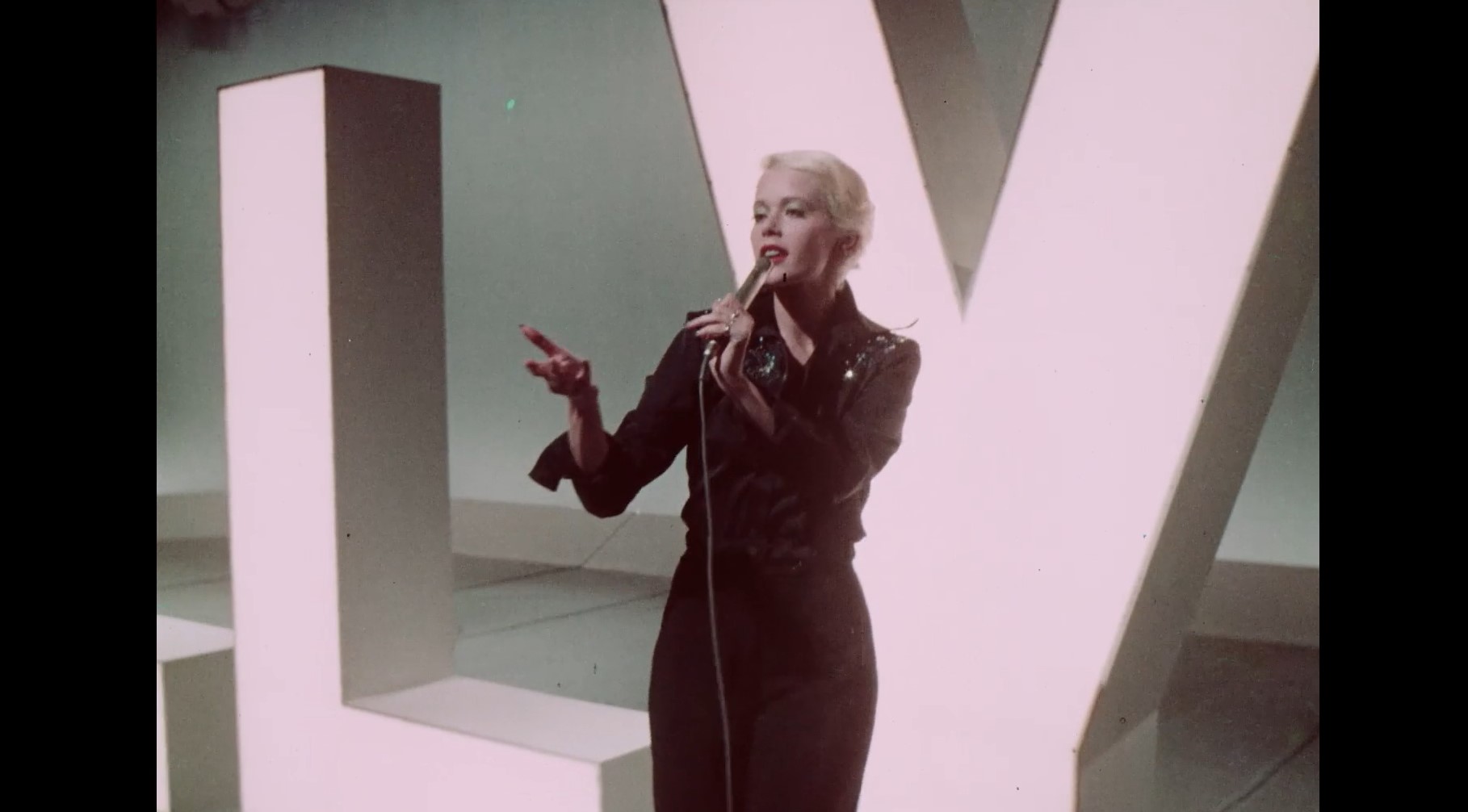
Initial previewing presumptions about “Naked Over the Fence” might fall along the lines of being a highly erotic comedy because of not only the film’s suggestive title and the half-naked actors halfway over a fence on one of the original poster artworks, but also the fact that Sylvia Kristel as one of the principal stars.  Kristel is far and wide known for her continuous provocative performances as the lusciously licentious title character in the erotically charged “Emmanuelle” mega-series that has expanded decades since the 1970s.  “Naked Over the Fence” is not that kind of movie.  Not even close.  There are moments of skin, conservatively from Kristel, and subtle and not so subtle scenes of sensuality coursed throughout but the Weisz film notes as one of the Netherlands’ actress’s first films of her career before “Emmanuelle,” exploring her range as a scared pop singer backed against into a career stemmed quid pro quo before becoming an embedded typecast of the erotic genre. Kristel perfectly complements as a beautiful, delicate, yet reserved in strength starlet alongside arcade owner and staunch friend Rick (Rijk de Gooyer, “Rufus”) and her new beau, a large karate dojo owner Ed (Jon Bluming, Paul Verhoeven’s “Turkish Delight”). As much as an odd couple as they’re describe, Gooyer and Bluming are greatly well-received on screen as a dynamic duo attempting to outwit shady porno makers, blackmailers, and merciless murderers as if the contest to the film reel is a game with that swashbuckling, self-assured attitude as two amateur sleuths. The one character I thought was a little out of place was Penny, played by Jennifer Willems as a schoolteacher renting a room in Rick’s arcade building but is also a good friend of both men. Penny feels solely like an object used to force the hands of Rick and Jon when trouble arises and never actually does any leg work in tracking down the film reel. Willem performs to the best of her extent in a role that doesn’t obtain much action until the unique action chase at the end. Willem, Gooyer, and Bluming have all worked with previously with director Frans Weisz on “The Burglar,” alleviating beforehand any undue first meet jitters and that translate tremendously on screen. “Naked Over the Fence” has an ensemble cast of color characters, each one more interesting than the next, that include Jerome Reehuis, Tom Lensink, Adèle Bloemendaal, Jerry Brouer, and mustache and curly perm identical twins Lodewijk and Hans Sijses as a pair of cronies.

“Naked Over the Fence” might be a pulp novel coursing loosely as a glib tongue in cheek but the complexities the film assume merits cult-worthy cachet. The adaptational flow of a novel story, its wildly entertaining and diverse performances, and its bold direction deserve accolades upon its accolades. The very beginning sets the tenor of the film on the Amsterdam rooftop with tracking shots that are simply amazing, smooth, and precise toward the working up of Rick waiting for his named pigeon friends to return, the Ferenc Kálmán-Gáll cinematography and Ton Ruys editing is remarkably accomplished as the intercut composite between Rick peeping through the fence and the boiling-to-conflict back-and-forth conversing of the pre-setup porn scene that lead up to the film’s title of Ed and Lily hopping climbing over 6 to 7 ft wooden fence is tip-top execution, and the extended tram chase is unlike anything I’ve ever experienced in a bird-dog chain of scenes as the two trams zip down the engrooved track lines on the streets of Amsterdam while making it whimsical and parlous with excitement. there’s real production money financially backing the uncontained and mutable story and it shows right from the get-go to the very end with only a handful of key instances where the digression of the certain level of high-dollar antics can only be done at a lower quality and that drags down Weisz’ flair quite a bit. An enjoyable romp of Dutch cinema, “Naked Over the Fence” ossifies friendship, loyalty, and morality over the forces of tit-for-tat evil.

Proudly continuing their restored release of Sylvia Kristel films, Cult Epics presents “Naked Over the Fence” onto a 2-disc, region free Blu-ray home video set with a newly restored high definition 4K transfer from the original negative. Virtually unscathed by time, the original negative beams with vitality in its showcased 1.37:1 aspect ratio, upgraded into an improved compression rate to hold all its detailed wonders for the full 91-minute runtime. The stable picture and natural, unwavering coloring persists with a consistent color palette. Other than complimentary natural grain of the stock, there’s no obvious instances to fault the image quality that’s above exemplary. The Dutch language tracks come with two audio options: a LPCM 2.0 and a DTS-HD Master Audio 2.0. Both render audibly clear and emphatically enough with the DTS providing a little ambient and dialogue boost with a cleaner track of the dub Dutch language. English subtitles are included and don’t have an apparent errors and synchs well with the pace. Special features include an audio commentary by biographer Harry Hosman, a 15-minute behind-the-scenes featurette of unpolished footage of scene takes and director Frans Weisz at work with his cast, a 2014 Dutch audio interview with Frans Weisz that includes English subtitles, an interview with composer Ruud Bos from 2015 that includes performances with the B-Movie Orchestra, a promotional gallery, Sylvia Kristel trailers, and a 2nd disc, included only in limited edition, 1000 copy sets, of the exclusive compact disc Soundtrack by composer Round Bos. The physical bonus material with the limited-edition release is cardboard slipcover and a reversible cover art that includes the original poster art and a list of the score’s 16 composed track list. I adore the quirkiness and relish in the story’s transgressional diegesis and now with this stellar new and improved Blu-ray release of the Netherlands’ “Naked Over the Fence,” the perfect movie does exist.

“Naked Over the Fence” on 2-Disc Blu-ray and CD set!

Caribbean EVIL is No Vacation. “Zombie Island Massacre” reviewed! (Troma Films / Blu-ray)

“Zombie Island Massacre” on Blu-ray here at Amazon.com

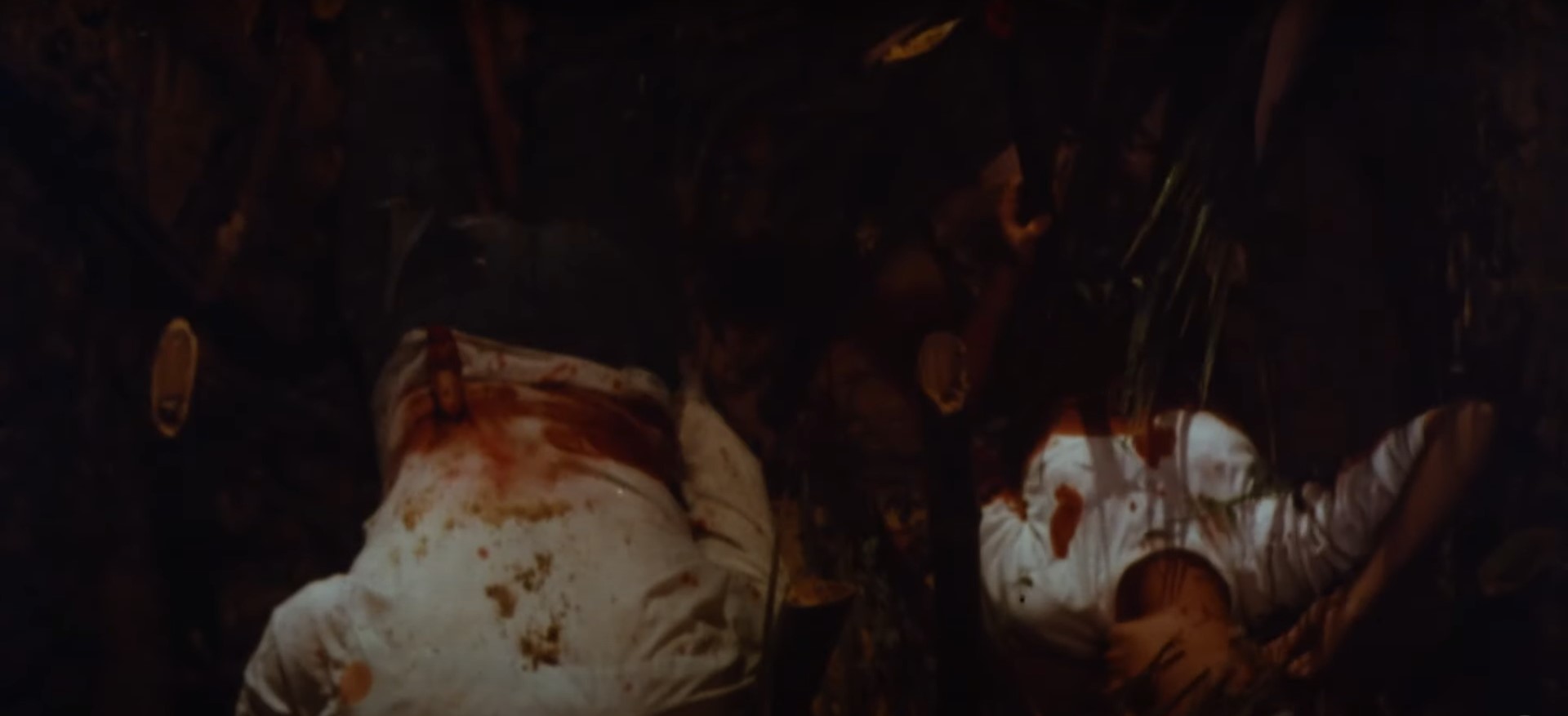
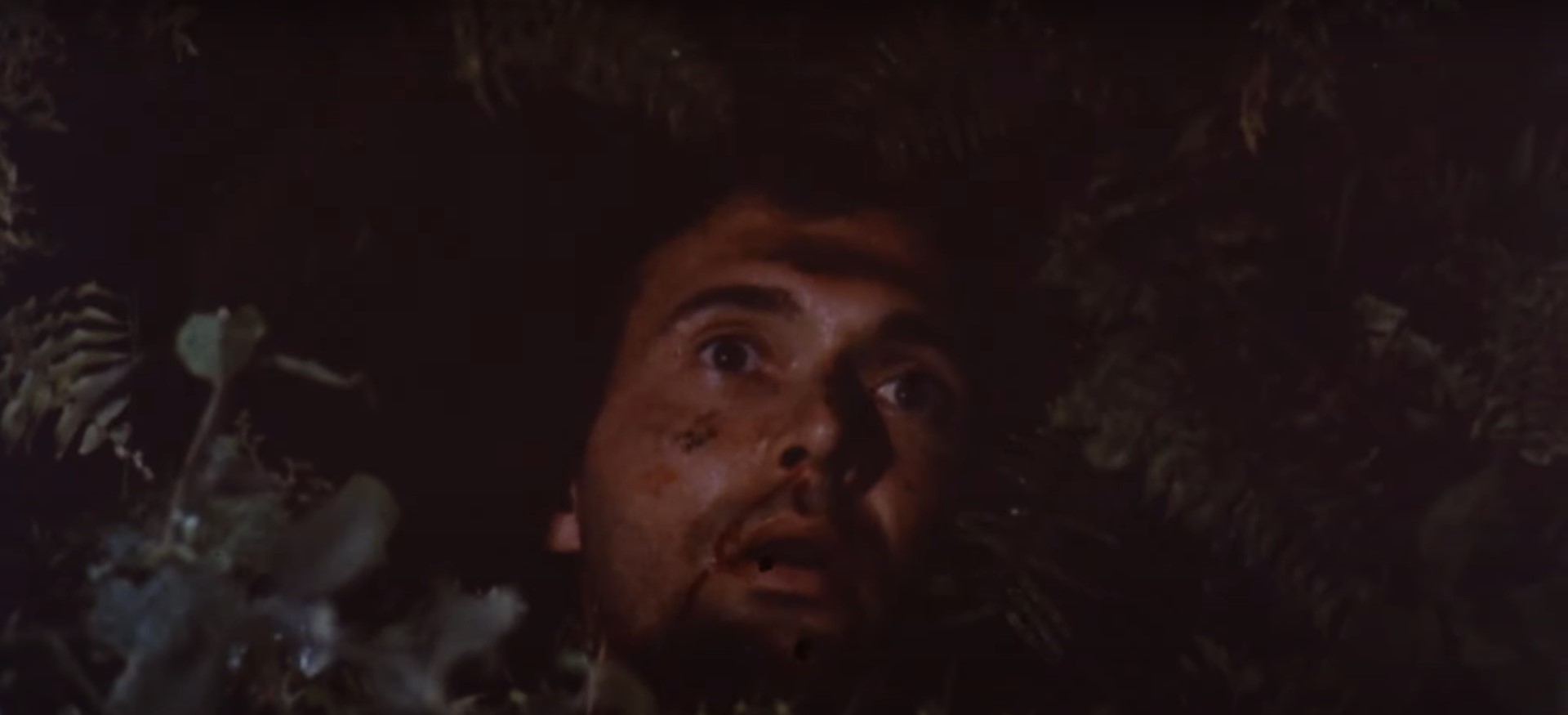
American vacationers in Jamaica book tickets to tour guide Chumlee Jones’s Sunshine Tours. Their destination is Santa Maria Island for a rarely seen religious voodoo ritual. After the unsettling experience involving live goat sacrifices and the necromancing of the dead, the tourists become stranded when the bus driver has vanished from his post. With no transportation to the seaport, a menace lurks amongst the darkness and is picking them off by-one-by. With no other options, the afeared excursionists trek through island thicket in search for a passed remote house but will they survive the perilous journey with an unseen murderous predator or predators camouflaged in the dense foliage?

Jamaica isn’t all about rum punch and ganja, mon. Voodoo is a big part of Jamaican culture. It’s so much a part of the Caribbean Island culture, the practice is a certified religion complete with voodoo priests and public ceremonies to exact a range of obeah spells – most for good, few for spiritual bedlam. For “Zombie Island Massacre,” a theme of mystic voodoo pitches the tale of two sides of every coin as the unknown and the usual differ from one’s own customs begins to swirl unnatural thoughts of fear, trepidation, and censure while other malevolent forces behind the veil may be at work. Also known under the working title of “The Last Picnic,” “Zombie Island Massacre,” a rather arbitrary and common structured title of choice, is the released Jamaican-shot inchmeal killer thriller from director John N. Carter, an industry editor with his one and only directorial credit to his name. The script is penned by Logan O’Neill and William Stoddard based off the O’Neill and David Broadnax concept story. Broadnax serves as producer alongside executive producers Abraham Dabdoub and Dennis Stephenson on a feature that undoubtedly was inspired by the 1982, George Romero influenced, Marion Girolami directed “Zombi Holocaust” in what is arguably influenced by title only as a marketing cash-in of the early 80’s Zombie success.

Stories that progress with a group of unfortunate souls trapped in a dire straits situation and there’s no way out but unwisely toward the path of danger in hope of salvation are some of my favorite types of threatening circumstances.  Think “Poseidon Adventure.”  Think “Predator.”  Think “Deep Rising.”  Any movie where a desperate group of diversified dog chow characters have to move from point A to point B without being swallowed by the darkness around them is great fun in its pick off pattern.  Archetypes of this linear lap through hell can be fairly conventional with its persona of characters where you have the strong hero type, the gorgeous level-headed love interest, the angry shmuck, the slower-downer, and there might even be a cultural token character to round the group out plus a red-shirted body or two for good carnage measure.  By design, there’s a need for these stereotypes and “Zombie Island Massacre” has a hit-and-miss, middle-of-the-road batting average with its cast of characters, beginning with a shared lead man role for Tom Cantrell and David Broadnax.  With his idea for the story and serving as producer, it makes a lot of sense why Broadnax co-ops the lead as a lone wolf, tough as nails photojournalist.  Cantrell, on the other hand, is just another pretty tall boy who becomes more-or-less a babysitter of the group while Broadnax stays behind to leave directional notes for lag behinds and to keep the retirees company when their tickers go South in the heat of turmoil and walking uphill.  This turns the co-op into more of a dog and pony show where the pony just stands there and dog runs around doing most of the entertaining.   Diane Clayre Holub is Cantrell’s love interest as a painter on holiday in Jamaica and the character is more than just reasonable and a pretty face that comes unexpectedly apparent in the third act of attacks.  Broadnax, Cantrell, and Clayre do not bring the star power to “Zombie Island Massacre” and that trend continues with the fourth top billed Rita Jenrette who brings more than just her pretty face to the table too in more of a full-bodied contextualized kind of way who ends up sliding into, if not encroaching into, Clayre’s assigned love interest role without a lick of love.  “Zombie Island Massacre’s” cast fills out with Ian McMillan, Harriet Rawlings, Emmett Murphy, Bruce Sterman, Deborah Jason, Tom Fitzsimmons, Christopher Ferris, Kristina Marie Wetzel, Debbie Ewing, Dennis Stephenson, George Peters, and the “Ghostbusters II” “The Titanic Just Arrived”-guy Ralph Monaco. 

Big kudos to story creators David Broadnax and Logan O’Neill for delivering a narrative with an unpredictable twist that immerses you deep into the voodooist rituals and gets your blood pumped for the monikered title to deliver flesh-eating, blood-thirsty zombies only to be hoodwinked into a genre trap and a good one at that too.  Sneaky and subtle are the hints that not everything is what it seems on the island that hits you like a flashbang grenade when the truth is revealed, shocking the sensory system with a welcome voltage of sleight of hand.  I never saw it coming though I will say that the creature or creatures roaming the woods initially looked shoddy draped in blue trash bags with patchwork foliage sticking out but remaining relatively obscure from view that implored more of a slasher design than one of the undead one. However, “Zombie Island Massacre” is too by far a good film with precarious burlesques that result in a tacky feigning of thrills and chills hubbub. Only a handful of kills rendered a golden touch, such as the slow-motion bashing in of a man’s head with a large stick is effectively gruesome, but yet lots of the kills are done off screen and implied which can be a deficit for a slasher-like story that takes pleasure in and makes whoopee of the big bloody death scene. Some kills are even half-hearted in their execution. For example, one unlucky tourist has his head chopped off with a machete in slow-motion and audience has full view of the entire act; yet the machete snags on the initial slice point into the neck but the head still severs cleanly. The scene, likely needed to be done in one take, makes the cut…pun intended. “Zombie Island Massacre” wiggles peacockishly into the realm of island horror with a mawkish audacity but the wild pragmatic pivot is worth every second of humble hoodooism.

Lloyd Kaufman and Michael Herz presents a Troma team release with “Zombie Island Massacre” on a new region free, uncut, director’s cut Blu-ray. The HD 1.78:1 aspect presented John N. Carter film has favorable surface arrayal with natural grain off the 35mm film stock that comes with very little, yet still noticeable unobtrusively, vertical scratches and white dust specks. Skin hues appear natural, island bush backgrounds are lush despite some contrast issues deep into the background, and no blatant touchup enhancements awkward stand out, confirming that the transfer was in good shape to begin with and compression upon the BD25, churning out an average of 30Mbps, didn’t cause a technical gaff. The English language mirrors the Vinegar Syndrome release with a DTS-HD MA 2.0 and the audio isn’t as near flawlessly fortunate as the image transfer with voice trailing hissing and lots of noticeable crackling and white noise interference which can eat into the already soft and muted dialogue from time-to-time and downsize the details of audio clarity. Plenty of range of sound effects to go around in the story but the depth just isn’t there to elevate it. Harry Manfredini’s score is essentially a reworked composition of “Friday the 13th” and if you close your eyes and listen, you’ll nearly hear the ch ch ch, ha ha ah and have visions of a headless Mrs. Voorhees and a hockey mask stuck in your head. Special features are mostly Troma-related as expected with any Troma Team release. There’s Toxie and Uncle Lloyd smoking ganja introduction at the beginning of the feature. In sectionalized bonus menu option, the film’s theatrical trailer, a promo reel of all the kills under Harry Manfredini’s original “Friday the 13th” score, a 3-part special effects tutorial plucked from various Troma videos through the years, a super-short film “Blood Stab,” and other Troma feature trailers. “Zombie Island Massacre” is an excursion to remember lined and studded with Caribbean macabre that sink tapered teeth into the skin only to have just barely missed the pulsating vein for the kill.

“Zombie Island Massacre” on Blu-ray here at Amazon.com

The Reining Bullies Get the EVIL They Deserve! “Massacre at Central High” reviewed! (Synapse / Blu-ray)

“Massacre at Central High” is Grade A Exploitation!

David just transferred to Central High School, reuniting with his good friend Mark, but Mark is no longer a part of the outcasted crowd at his new high school as he has joined Bruce and his pals to be the apex elite in the school’s lopsided social hierarchy.   Refusing to abide by the relentless and ruthless bullying, attempted rape, and intended bodily harm, David stands up for the oppressed with firm and actionable rebuke.  Bruce and his gang don’t take kindly to David’s opposing behavior and purposefully cripple him to teach him a lesson in disobedience punishment under their sovereign thumb, but what doesn’t kill David makes him a retribution killer as he begins his one-by-one takedown of the disparaging upper-class.  When there are no more bullies left at Central High, the once oppressed turn into the oppressors and it’s up to David to continue the cleanse of megalomanias.   

Now here’s a unique take on the revenge thriller that doesn’t involve the conventional concepts of a slaughter escapade return from being nearly raped to death or to exact revenge for the untimely and heinous murder of a loved one at the hand of sociopathic other.  “Massacre at Central High,” written and directed by the late Netherlands filmmaker Rene Daalder, is the sociopolitical, slashereseque picture from 1976 that is just as parentless and bizarre as it is cold in its exaggerated truth of undiplomatic ways.  Also known as “Sexy Jeans,” the Italian X-rated interposed cut, “Massacre at Central High,“ is Daalder’s second feature behind his 1969 exploitation and organized crime thriller “The White Slave” that tells the story of one man’s righteous crusade turns into a bungled mess with him being intertwined in a scheme to sell unsuspecting young Dutch women into sexual slavery.  Daalder’s sophomore film might not be as controversial, but certainly maintains that provocative and erotica bravado under the otherworldly shadow of an ultra-angsty high school veneer.  Filmed in and mostly around Los Angeles’s Griffith Park that included an abandoned private high school in Burbank, “Massacre at Central High” is produced Harold Sobel (“Very Close Quarters”) with Jerome Bauman serving as executive producer.

Before he was the four-eyed face of the franchise where it was cool to be square in “Revenge of the Nerds,” Robert Carradine landed one of his first principal roles in Daalder’s “Massacre at Central High” as free-lovin’ hippie, Spoony. Though Spoony is an activist idealist and gets two chicks, the half-brother of David Carradine wasn’t in the star lead though he certainly had the presence and the state of mind to withstand it. Instead, Derrel Maury enveloped the role David that seeks vigilante justice to a bunch of entitled school bullies lead by Bruce (Ray Underwood, “Jennifer”) with Craig (Steve Bond, “The Prey”) and Paul (Damon Douglas) being a part of his gang. Maury’s deep eyes and good looks make him a shoe in to be one of the top-predators to join Bruce’s paleoconservative circle and, as David, his personal connection with good friend Mark (Andrew Stevens, “The Terror Within”) who eggs, basically begging and pleading, David continuously to join or face the consequences of Bruce’s wrath. The acting and dynamics between this already complicated group of late teens is basic in its formulaic high school turmoil but also very disturbing on many levels that puts the boys-will-by-boys mantra into a whole new comfortless light. We all know characters like Bruce and his lackeys from High School where guys like him think the student body pledges allegiance to their unofficial rule; Ray Underwood, Steve Bond, and Damon Douglas do a phenomenal job of letting you hate them for who they portray with characters who are not beneath attempting the rape of two female peers in broad daylight and in one of the classrooms. To provide another twist to this tale, Bruce and his gang are not the real antagonists in the story but rather just a part of a bigger, broader discernment that’s infectious as it is dangerous in the realm of political power and hierarchy. Kimberly Beck is the angling love interesting that teeters between good friends Mark and David and “Friday the 13 Part IV: The Final Chapter” actress ultimately doesn’t become the focal purpose to David’s revenge (remember, this isn’t a typical revenge narrative) as Beck more than spurs jealously with her feelings for David as well as become eye candy with gratuitous and beachy full frontal nudie scenes. “Massacre at Central High” rounds out the cast with Steve Sikes (“Horrid”), Tom Logan, Jeffrey Winner, Rainbeaux Smith, Dennis Kort, and Lani O’Grady.

The sociopolitical aspect of “Massacre at Central High” is by far the most compelling with the story’s uncompromising subcomponents of teenage high school perils. The fact that are zero parents introduced into the mix makes Daalder’s narrative that much crisper in its poignancy as these children are left to fend for themselves in like some bizarro version of William Golding “Lord of the Flies” that dives into similar themes such as groupthink mentality, social organizations that reshuffles into a lemming trajectory, and even outlier themes comparing Bruce’s gang to Nazism. Behaviors turn on a dime for the worst and bring out the worst when the opportunity to govern the school affairs leads to an asymmetrical power struggle. Even David, our hero of the story, isn’t immune to the adverse effects of change when pushed beyond reasonable reaction after having his leg crushed and he left maimed by Bruce. To David, this turning point reduces down below differentiating the difference between morality and immorality as he views them as equals to right-the-wrongs and to be a way to level out toward equity for all, a quality that’s been an attribute to David’s pre-murderous existence ever since transferring to the school, but the all-around good guy couldn’t rub off the impartial view of the world to others and so he finds himself in a continuous solo crusade of course correcting. “Massacre of Central High” isn’t as austere as “House of the Flies” as its facade is campy and contrived in an artificial manner. The parentless environment disintegrates principles right at the door in “Massacre of Central High’s” biodome of guttersnipes and that sections off this gem from other exploitation ventures in a must-see good way.

Enroll yourself for September 13th releasing of “Massacre at Central High” on Blu-ray home video from Synapse! The spectacular course offers a region free, AVC encoded BD50 Blu-ray that presents the feature in 1080p at a widescreen 1.78:1 aspect ratio and the take on the director’s approved 35mm remastered presentation is tight, detailed, and utterly clean. Color palette is warm but diverse with a great bit of contrast where needed, such as the nighttime skinny dip and love-makin’ beach scenes. Virtually free of wear and imperfections, the impeccable transfer dodges four and half decades of negative ageing with great delineation to show for it. The original English DTS-HD Master Audio mono soundtrack is the only audio option on this release and is more than adequate with the same clarity as the picture. There’s quite a few, ACME-ish style explosions, a tumbling rocks scene, and spates of variable automobile revs, exhausts, and engines to quench an audiophile’s interest with a broad ambient range. With the original soundtrack comes Tommy Leonetti’s clashing lead melodic and easy listening track “Crossroads” that sticks out like a sore love song thumb in the background of murderous revenge. Newly translated optional English subtitles are available. The bonus material includes an audio commentary by “The Projection Booth” podcaster Mike White interviewing cast members Andrew Stevens, Robert Carradine, Derrel Maury, and Rex Steven Sikes. Also included is an archived audio interview with director Renee Daalder with horror historian Michael Gingold, Hell in the Hallways making of featurette with new recollection interviews from the cast and cinematographer, fellow Netherlands native Bertram van Munster, theatrical trailer, TV, and radio spots, and a still gallery. The film is rated R and has a runtime of 88-minutes. “Massacre at Central High” focuses more on detonation than detention as bodies pile high in this explosive dog-eat-dog hatchetjob of unsupervised minors gone wild.

“Massacre at Central High” is Grade A Exploitation!

Taxi Driver by Day, EVIL Serial Killer by Night! “Dr. Lamb” reviewed! (Unearthed Films / Blu-ray)

“Dr. Lamb” is ready to operate.  See him in action on Blu-ray from Unearthed Films and MVD Visual!

Quiet as a boy verbally and physically abused by his stepmother yet laid to experience the adult perversities at the permission of his unconcerned father, Lam Gor-Yu, now as a man, is still quiet and still has unusual interests as an afterhours taxi driver.  Triggered by rainy nights when a torrent of verbal abuse by his female passengers send the usually reserved taxi driver into a homicidal fury, extending his lonely nights into straggling women, returning their bodies to his family homes, and video tapes his exploits within his fascination for amateur medical procedures.  When the police raid his family home after developed disturbing pictures were discovered at the local print shop, Lam’s entire family is hauled into questioning and it’s to Inspector Lee and his team to unearth exactly what transpired to the lifeless bodies seized by a notoriously sociopathic serial killer.

When you think of serial killers globally, Hong Kong isn’t the first place that comes to mind.  In fact, Hong Kong isn’t even a blip on the radar as the Pearl River Delta residence only has two known serial killers attributed to the city.  One of those killers is Lam Kor-wan – aka The Jars Murderer – aka the Rainy Night Butcher – who terrorized the then British territorialized Hong Kong in the early 80s, killing and post-mortem mutilating four young women.  La Kor-wan became the notorious inspirational material for the Danny Lee and Billy Tang (“Run and Kill”) co-directed Dr. Lamb that was released in 1992 and penned by Kam-Fai Law (“The Close Encounters of Vampire).  “The Killer’s” star Lee, who was more Chinese action star than filmmaker, developed the film, reluctantly at first, during the time when Hong Kong’s Category III classification rating was extending from solely high-end erotica and sleaze into extreme horror and thrillers.  Lee served as executive producer with Parkman Wong, who also worked alongside Danny Lee on “The Killer,” under Grand River Films Ltd.

To be portraying one of two Hong Kong’s serial killers feels like an unsurmountable responsibility burdening the actor’s shoulders in order to parallel the motivational intricacies and the mental mindset as accurate as possible knowing that the character can’t just blend into a vast serial killer fold where you can find multiple variations of John Wayne Gacy or Jeffrey Dahmer being grossly rendered for U.S. pop culture exploitation.  Yet, in steps in front of the camera Simon Yam, one of Hong Kong’s prolific action stars in the late 80s to early 90’s now stepping into the shoes of a real-life maniacal persona and relatively close to where all of Lam Kor-wan’s dirty-little-deeds took place.  Simon Yam could very well be the killer himself, that’s how brilliantly Yam’s performance is in what’s certainly a confident display of range in contrast within his acting opus.  Replacing a gun with a scalpel, Lee and Yam dig deep into the character’s psyche with an interpretation of why Lam Kor-wan did what he did and, frankly, Yam just went stoically wild to reach Lam’s staggering levels of crazy as he descends deeper into the retelling of his encounters with each victim. While “Dr Lamb” is a grim tale, there’s a comical side to it with the police force, supervised by Inspector Lee, played by Danny Lee himself in a duality position of cast and crew. More of the comic relief stems from Inspector Lee’s second-in-command, an experienced, yet overweight, cop who lets others handle his workload. Literally named Fat Bing, comedian and “Human Lanterns” actor Kent Cheng continues his whimsical routine in unvarnished subject matter revolving around separate bits and pieces of people’s tissue and organs for twisted pleasures. Collateral damage of Lam’s horrifying late-night exploratory surgery antics on women involve his family as they also become suspects. Lam’s father (Siu-Ming Lau, “A Chinese Ghost Story”) keeps his blinders on while the evidence piles only to be turned when his son’s transgressions include a minor family member does his own flesh and blood then cross a line of no return.

There are always two sides to every story. No, I’m not saying there are two repelling sides to The Rainy Night Butcher’s homicidal havoc. “Dr. Lamb,” as a film, has a dichotomy about it that’s half biographically true and grim while the other half is crime drama peppered with clownery. The combination is odd and equally as frustrating as the black tone of the historical background and the graphic nature of some authentical depicted acts of inhuman urges find their way weaved into the fabric of cavalier cop buffoonery who, on one hand, seem really good and really intense at their job while, on the other hand, lack the gumption for sobering behavior. Even when investigating Lam’s videotape (to which there is no way in Hell Lam videotaped that himself as the camera moves as he’s engrossed with necrophilia and removing body parts), the cops overact the disgust with what looks like chunky tuna being forced out of their mouth along the lines of appearing like vomit. The underplayed theme is anything but funny in its psychological context of misanthropy and misogyny. All of Lam’s scenes of cruelty are told in flashback through his perspective, molded by his undertone hate for women. “Dr. Lamb” is a misogynistic tale bred out of childhood abuse by a woman close to his family and unabashed and unattended by his lenient father’s lack of concern. Three out of the four women Lam taxis-to-taxidermy often verbally and physically assault him and plague his personal space with their awful behavior, setting a dial backwards in his battered brain that reminds him of the time his stepmother slapped him or forced him into a closet for hours. Is “Dr. Lamb” a Freudian lemma that Lam sees his ruthless stepmother in these women and turns on them to humiliate their corporeal existence? That’s a deep dive, but not as deep as “Dr. Lamb” cuts as a visceral experience based off of one of Hong Kong’s notorious serial killers.

Distributing in at number 8 on the spine of the Unearthed Films’ Unearthed Classics banner is “Dr. Lamb” on a new Blu-ray home video. The region A locked, AVC encoded, BD50 is slicked up with a 1080p high-definition upgrade presented in a widescreen 1.78:1 aspect ratio. As one of cinematographer Kin-Fai Mau’s first few pictures, the cool blue and misty has an interesting allure like a hazy bad dream subdued by an infusion of looking through blue glass with a prism of white light filtering through. Perhaps not as detailed as desired, the release does stand above the rest with low-level continuous speck blemishes that are only noticeable if you’re searching for them. Two audio options are available: a Cantonese LPCM 2.0 Mono and a Mandarin LPCM 2.0 Mono. Both tracks do come with well-sync and accurate English subtitles with the only downside is in their quick sojourning. There are a few instances where the subtitles pop up for literally a second as a result of quick nature of the dialect to get to the next set of text. While toggling between the two languages, my audio receptors really took to the Cantonese for a more natural flow and visually for unison between speech and speaking. The Mandarin is certainly more powerful but also too over-the-top as in watching I relate to watching old Japanese with English dub. The special features include an audio commentary by Ultra Violent’s Art Ettinger and Cinema Arcana’s Bruce Holecheck, a background interview about “Dr Lamb’s” genesis with the story producer Gilbert Po Lamb to the Slaughter, an interview with film critic James Mudge on the Golden Era of Cat III Three Times the Fear, a talking point conversation about “Dr Lamb” from film academic Sean Tierney, an Atomic TV interview with star Simon Yam, and trailers. The physical release itself comes with a 6-page, color booklet essay from cinema academic and author Calem Waddell (producer of “The Collingswood Story” and many horror-film related documentaries). A cardboard slipcover with one of the more provocative poster arts. Unearthed Films’ Blu-ray comes unrated with a runtime of 90 minutes. When perusing what to watch one night, be sure to hail down this cab of fact-based macabre driven by “Dr Lamb’s” psychological psychopathy and his pathologic urge for unnecessary medical procedures.

“Dr. Lamb” is ready to operate.  See him in action on Blu-ray from Unearthed Films and MVD Visual!

A Sleepover With More Pillow Fight Than EVIL. “Slumber Party Slasherthon” reviewed! (Wild Eye Releasing / DVD)

“Slumber Party Slasherthon” on DVD at Amazon.com

We all know the familiar stages of a slumber party. The pillow fights, the junk food, and the all-nighter horror movie marathon that elicits amongst the room a simmering suspense that boils to bubble-popping action when even just the lightest rap at the front door can make one jump out of their seat in fear that the monster on the screen is also the monster clawing its way inside. These are all classic campout characteristics of a well-organized slumber party for a group of young high school planning a night of fun. Immerse in a string of video thrillers and with their male friends having joined the party, all fells safe during their night of revelry. That is until a manic with a high-powered, industrial drill shows up uninvited and unhinged. A night of fun quickly spirals into a night of unescapable terror just like in the horror movie marathon as they become the lumped together prey of their very own horror movie.

Slumber parties with uninhibited and skimpy-dressed teenage girls and the bedlam brought to the party by the unstoppable and unglued serial killer are a winning combination that go hand-in-hand just as well as vanilla ice cream and chocolate syrup on a classic sundae dessert. For the unofficial king of direct-to-video sequel and the despot of campy, indie horror filmmaker, Dustin Ferguson shares that perspective with his very own unique spin on the slumber party horror subgenre with “Slumber Party Slasherthon” that showcases snippets from Ferguson’s earlier movies, as well as Abel Ferrera’s video nasty “Driller Killer,” spliced into the wraparound story in what could be considered an eclectic compilation of clip anthologies with one common theme – homicidal killers. The 2012 “Slumber Party Slasherthon” is one of a handful of Ferguson’s early feature submissions before he went on a marathon of his own in the DTV market with films including some of his more recognizable titles in “Die Sister, Die!,” “Camp Blood 4 & 5,” “RoboWoman,” “5G Zombies,” and “Ebola Rex.” Under his own production and distribution label of RHR (Retro Home Remix) Home Video, Ferguson self produces the film in Lincoln, Nebraska as a one-man operation who knows showing up to a slumber party with a blood thirsty drill is better than showing up to a slumber party empty handed.

If you’re in the mood for familiar faces or recognizable names in what could be an interesting slasher trope-laden production, well you won’t have that memory jogged I know that actress moment with a cast of unknowns beyond this credit and have securely hitched their body of work to the Dustin Ferguson business model. With a next-to-nothing on the dialogue outside the marathon showreel, the performances of Nina Colgan, Tara Hinkley, Kim Moser, and Jettie Sorensen-Sticka are left to defend their acting credentials with the dual variation of a pillow fight sequence and in which one of the arrangements, intercut with the opening title credits, is shot in negative image. The brief topless nudity of one of the actresses and the frolicking of soft pillow swings are all the girth given to the principal cast, providing no arcs, no substance, and no real chance to do anything but be bit part actors in what seems like a commercial or faux trailer for Ferguson’s other films. In fact, I did read that “Slumber Party Slasherthon” was originally intended to be a fake trailer for a sequel to the “Slumber Party Massacre” line, yet somehow the project became unbuttoned from that franchise and fashioned in a way that’s more Frankenstein’s Monster than feature file, turning “Slumber Party Slasherthon” into a demo reel for Furgeson and RHR Home Video’s DTV catalogue. I couldn’t tell you who Colgan, Hinkley, Moser, or Sorensen-Sticka played in the foursome, but Breana Michell’s is distinct from the others as the girl who arrives late only to get drilled later – offscreen, of course.

A muddied-up potpourri of RHR Home Video produced and distributed enumeration of slasher films, “Slumber Party Slasherthon” isn’t as gorily galvanizing as it sounds. From beginning to end, there’s not a single ounce of a story conveyed to lure in a potentially captivating audience wanting to bestowed upon highly sexualized girls in lingerie being ripped to shreds by a lunatic over a single night sleepover. Instead, Furgeson regurgitates clips of his schlocky direct-to-video titles from years’ past, such as “Terror at Black Tree Forest” and its sequel “Escape to Black Tree Forest,” which look just as cliched and trashy as the intended feature with an over enthusiastic use of primary color filters. Other features not directed by Furgeson but are a part of the RHR Home Video assemblage of titles is “7 Down” directed by Tyler L. Schmid and, perhaps the most buoyantly intelligible and substantial film of the whole grouping, “The Diller Killer” directed by Abel Ferrera, that ironically enough clearly partitions itself from the rest of the films as a completely deranged concept not borrowed from the canon like the rest.

A part of the Raw & Extreme label, “Slumber Party Slasherthon” comes to the masses unrated on a Wild Eye Releasing DVD. The region free releasing is presented in a stretched full screen 1.33:1 aspect ratio with a variety of video problem areas. Aside from the poor, commercial grade filmmaking equipment, likely a shot on a handheld digital camcorder with a max resolution output of 720p, compression artefacts run rampant with a blotchy, and often jittery with swelled pixels, image. Despite a flat hue palette for the main story, an assortment of color filters is placed on the 3rd party films showcased as horror movie marathon fodder, whether or not the “Escape to Black Tree Forest” or “Terror at Black Tree Forest” camp powwows and kill highlights are authentically presented or not in its rehashed integration into “Slumber Party Slasherthon,” I could not definitively know. The English Stereo 2.0 mono has little to offer in shepherding any kind of storytelling design nor is there an attempt at a clean sense of clarity around a dialogue track that’s poorly edited, plagued with electronic interference, and has about the sharpness of a butter knife. Levels vary wildly in the ambient and the soundtracks also. The single redeeming quality of “Slumber Party Slasherthon” is John Altyn’s “High Roller” single that leaned on to way too hard – being used in the opening credits, first act, and in the post-credits, and post-credits music video – to excel save a little change and give Ferguson’s film flashier audio tinsel with 80’s rock-n-rock. Bonus features are about the same as expected with A/V quality with a scene selection and Wild Eye trailers, plus RHR Home Video previews of “Scared Sillies 2,” “The Wanted,” “The Devil Times Five” and an awkward two-girl sway-your-hips-in-place dance party featuring Altyn’s – you guessed it – “High Roller” single (not the official music video by the way). “Slumber Party Slasherthon” is a sleeping bag full of disappointments and is the anti-scary story told that’ll lull teenage girls right to dreamland during the slumber party pajama party.

“Slumber Party Slasherthon” on DVD at Amazon.com