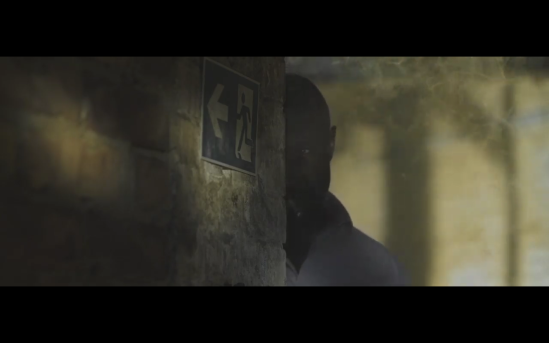
At the tail end of the second great war, Philippines based U.S. army deserter and Japanese sympathizer, Joseph Langdon, runs for his life as the Philippines police and guard track him down through the jungle for committed heinous acts that not only include treason, but also rape and murder. Exhausted and dying from his wounds, Langdon will do anything to stop the process of pain and death, including making a deal with Satan himself. In exchange for saving his life, Langdon commits himself to eternal servitude at the malevolent pleasures of Satan by inhabiting various souls and bodies through the decades and extracting the latent evil from his interactions with people, but Langdon finds himself again exhausted and exacts free thought and a rebellious stance against his master after inhabiting an American business man and given back his own face. The Dark Lord, as amusing as he wicked, bestows upon Langdon the ability to transform into a flesh hungry man-beast whenever his desires boil to the surface and he becomes the most wanted man in the Philippines, but how can they stop a monstrous fiend they can’t kill? The answer lies solely with the damned Langdon himself.

Rarely does a horror film birthed from the Philippines reach my critical virtual desk and, fortunately, “Beast of the Yellow Night” lands smack-dab in my lap as an absolute jewel from the early 1970’s from writer-director Eddie Romero. The 1969 “The Mad Doctor of Blood Island” director, who’s heritage is Pilipino, had visions of grandeur for his large scale features that stem from an infinitesimal budget, but with enthusiastic energy from former musician and beach party, teen heart throb John Ashley, the duo cofounded their theatrical finance company, Four Associates Ltd, to produce their very own horror feature films straight out of the Philippines which “Beast of the Yellow Night” was one of first to be released, if not the very first to be produced. Additional funding was provided by a little known distribution company, New World Pictures, jointly founded by the genre-setting Corman brothers, Roger and Gene, and thus forth “The Night of the Yellow Beast” was built upon a rich and solid cult foundation that began a Philipino-film circuit conversely well-known in the U.S. and put Eddie Romero on the proverbial map of relatively unknown and granular cult directors while providing a branching out of yet another successful credential façade for John Ashley that doesn’t involve country music or being just another pretty face in the beach party moviegoer crowd.

If you haven’t guessed by now or if you’re just as dense like myself, John Ashley also stars in his co-produced creature feature and Ashley, who goes without saying that he stands in his own rite, is also the Paul Naschy equivalent of the Philippine Islands with his all hands on deck attitude toward filmmaking and being the man behind the gnarly man-beast makeup that more than likely takes hours to apply. His performance as even tempered Joseph Langdon is a stark contrast from the wild and vicious beast with a flesh appetite and knack for mauling that herd this film into the werewolf category according many descriptive plots, summaries, and reviews, but “The Night of the Yellow Beast” actually resembles more of a Dr. Jekyll and Mr. Hyde familiarity as Langdon doesn’t transform when the full moon is high, but rather at the whims of his tormentor, in this case it’s Satan rather than an ill-fated elixir, and then he morphs more rapidly and explosively during exhilarating and endorphin stimulated moments like intimacy to further exacerbate his dreadful curse on Earth. Langdon and beast Langdon are befriended by a blind, long-tooth ex-con, Sabasas Nan, played by “The Big Bird Cage’s” Andreas Centenera and Centenera captures the gentle nature and extended wisdom of a man at the tail end of life and looking to right the wrong for his past mistakes. Sabasas Nan is similar to the blind man in the tale of Frankenstein that doesn’t judge, become frightened, or even shun the ugly shell of a monster, but though visionless, both blind men are able to clearly see into the soul of what used to be once a man. “Beast of the Yellow Night” also stars leading lady Mary Wilcox (“Love Me Deadly”), Leopoldo Salcedo, Eddie Garcia (“The Woman Hunt”), Ken Metcalfe (“TNT Jackson”), and labeled as the Filipino Peter Lorre, Vic Diaz (“Black Mama White Mama”) as the pot-belly Satan and Langdon’s mischievous master.

Eddie Romero’s deep and intellectual script sticks out amongst the fray of time lapse and post-skirmish makeup effects that teeters “Beast of the Yellow Night” on a B- to C- movie. Not that the special and makeup effects were completely awful or subpar by any means, but the directing filmmaker pushes the boundaries to scribe the pull strings of a man’s soul, really digging into the anguished flesh of redemption and mankind’s mortal coil, which puts a lightly coated dampening on Langdon’s transformations from man-to-beast that hasn’t yet reached the Paul Naschy level of editing and progressiveness toward his horror films. In fact, the “Yellow Beast’s” effects are merely one step below that aforementioned level. However, the beast is no wolf of any sorts, but nor it isn’t a man in a cheap leathery or latex rubber mask that materializes a rather mangled, mangy beheld fiend with razor sharp canine teeth shown through a ferociously hungry and breathy-snarling maw set below equally ravenous eyes that yearns for the blood of man. For 1971, the effects are exceptionally marvelous, but Romero’s script just blows the practicalities out of the water being ahead of its time and sorely overshadow the effects work.

MVDVisual and VCI Entertainment proudly gift to us “Beast of the Yellow Night” onto 2-disc all region DVD/Blu-ray home video. Produced from a 2K scan of the original 35mm negative, VCI Entertainment’s widescreen, 1.85:1 aspect ratio presentation in full Metrocolor is mondo cult cinema exhibited on a high level and despite some blotchy patches, the corrected coloring and cleaner picture are by far the best we’ll ever see while still sustaining a healthy amount of beneficial cinematic grain. The prologue has coloring issues with about 20% of the right side of the film strip in sepia harboring in sepia town, but becomes corrected after the title and credit sequence. The English and Tagalog, the national language of the Philippines, mono audio track has lossy bite that’s expected and yet, still maintains ample dialogue track and a solid and balanced in range ambient track. Optional English subtitles with SDH are also included. Bonus features include a 2018 commentary track by writer and filmmaker Howard S. Berger and the head of Mondo Digital, Nathaniel Thomspon, old and insightful video interviews about John Ashley and the Filipino films of the 19870’s with Eddie Romero, Sam Sherman, Patrick Wayne, Peter Tombs, Eddie Garcia, Gloria Hendry, Sig Haig, and Jan Martin, a Remembering John Ashley featurette that includes interviews with wife Jan Ashley, filmmaker Fred Olen Rey, Steve Stevens, and Andrew Stevens, original theatrical trailer and TV spots. Plus, a thorough inner liner essay from Howard S. Berger that goes examines “Beast of the Yellow Night” and the films of that era that are a metaphor for much, much more. “Beast of the Yellow Night” is a simple message cause and effect. If vileness becomes you, then villainy will forever run fluidly through your icy veins in this Eddie Romero and John Ashley monstrous picture that pulls at the tattered strings of a downtrodden soul.
Tag Archives: nudity
Evil is an Oily Bullshit Artist! “The Greasy Strangler” review!

Ronnie, the owner of a Disco walking tour, works and lives alongside his hectored son, Big Brayden. Their disheveled and bigoted relationship becomes upended by the enticing Janet. With big eyes and an endless amount of sexual drive, Janet swoons the virginal Big Brayden that urges him to become his own man against a criticizing father, but when Ronnie sees an opportunity to swoop in and steal Janet under his son’s nose, the proclaimed disco king of Los Angeles ups the charm and bed’s Janet with little resistance. A back-and-forth ensues between a hopeless, if not hapless, romantic and his sexually aggressive, A-typical personality father for top dog. Meanwhile, those who even cross Ronnie in the faintest ends up brutally murdered by an inhuman killer lathered completely in grease, dubbed The Greasy Strangler, and the aberrant love triangle just might be related to the recent spike in deaths at the hands of the oleaginous murderer!

Just one big corn ball of engrossing black comedy horror, “The Greasy Strangler” is a one of a kind Jim Hosking directed film of abnormal quality and sensational crude storytelling of a father and son rivalry to rekindling with a greased up suited killer in between to connect them. Co-written with Toby Harvard, “The Greasy Strangler” marks the fourth project between Harvard and Hosking and the turnout is laugh out loud funny. The penning and pair filmmakers write scintillating characters with socially disapproving norms accepted in a cinematic universe that can only be imagined by the disturbed. “The Greasy Strangler” is the Tim Heidecker and Eric Wareheim version of a Wes Anderson film that can only be described as grotesque in content with an unflattering dry, if not something bathroom, humor and will not likely be accepted by the majority of popcorn audiences as their typical brand or cup of lard lavished tea. The horror element to all of this is a greased up manic strangling tourists and shearing the heads off blind car wash owners, but very much has a backseat the dynamic between Ronnie, Brayden, and Janet.

“The Greasy Strangler” revolves around the special relationship between father and son, Big Ronnie and Big Brayden. The disco passionate and pathological storytelling-embellisher Ronnie has an immensely rock solid hard on for any and all things that are greasy, oilier the better, and cathartically browbeats his adult aged son to the point of nowhere being near the parent of the year for years to come. “The Video Dead’s” Michael St. Michaels has an absolute screen presence. The Doc Brown hair and a wiry frame complete the compiled shell of a man to which a flaming ball of disgruntled and disillusioned kinetic and emotional energy calls home. Michaels’ oozing and brazen confidence equals Ronnie’s slimy thirst for internal and external grease addiction. Ronnie supports his 40-year-old something son, Brayden, ever since his wife parted ways for a fellow with ripped abdominal muscles, as Brayden would frequently state. Brayden’s the epitome of what a 40-year-old virgin should look like and not how Hollywood depicted the persona with Steve Carell. The stringy, greasy hair, unkempt physique, and a personality that’s stagnant with naïve humility, Sky Elobar (actor in the upcoming Tony Todd starring film “Candy Corn”) envelops himself as the big man child that is Big Brayden who doesn’t have much self-worth in life until a forward young woman, on one of Ronnie’s Disco Walking Tours, enchants Brayden with flirtatious eyes. Those eye below to Elizabeth De Razzo, the actress who portrayed the subjugated Stevie’s baby mama on Danny McBride’s “Eastbound & Down,” as Janet, the Rootie-Tootie Disco Cutie that causes an upheaval between Ronnie and Brayden’s already ragged relationship. From the HBO comedy series to the “The Greasy Strangler,” Razza has a knack for off-color comedy, exploiting routinely awkward circumstances to Janet’s advantage that wedge the father and son apart and amusing herself as a selfishly sexual and shameless monkey wrench. The remaining cast of colorful character actors include Gil Gex (“Dangerous Men”), Abdoulaye MGom, Holland MacFallister, Sam Dissanayake, and Joe David Walters.

Distasteful visuals enfilade the eyeballs that include one head-to-toe greased up strangler, two half naked speedo-sporting father and son duo, and three overly grotesque, if not a toon like whimsicality of genitals, but don’t worry, Ronnie’s mongoose-sized penis, Brayden’s shrimpy penis, and Janet’s afro-tastic bush are 100% prosthetics. The trade is with that is the actors are practically half nude for about half the film with Big Ronnie dangling his artificial junk from the spinning brushes of the drive-in car wash to the antiquated funky disco dance floor. In all honesty, the prosthetic take a backseat to the ingenious quirky comedy from Hosking and Harvard and with all the oddball body language, the bizarro back and forth banter, and witnessing Michael St. Michaels in a crude suit of grease is special enough.

MVDVisual and FilmRise present “The Greasy Strangler” onto a full HD, 1808p, special director’s edition Blu-ray in a widescreen, 1.85:1 aspect ratio format. Shot with an Arri Alexa camera, the digital image is super crisp and benevolently engrossing despite the explicit content of the narrative. Hardly any digital noise and colors pop with full flavor. The English 5.1 Dolby Digital track is prime steak, utterly tender when chewing and overly filling when done. Dialogue is balanced at the forefront while ambient tracks are equally subdued in tandem. Andrew Hung’s complete “The Greasy Strangler” score, a genetic makeup of nerdy synthesizing discordance, could be rendered as an upstaging character in itself. Extras on the release include an audio commentary with director Jim Hoskins and stars Michael St. Michaels and Sky Elobar, cast and crew interviews about the zany narrative and their opinions on the the zany characters, and the theatrical trailer. Kooky, full frontal, and the most unique best film I’ve ever seen, Jim Hoskins’ “The Greasy Strangler” has a bold and uninhibited cast full of character and full of oldfangled taste that dovetails with a too cool for school attitude and doesn’t give a horse shit about its unconventional cinematic discourse and anatomy. A must, must see cult classic!
The Devil’s Greatest Trick is His Evil Being a Part of You. “Luciferina” review!

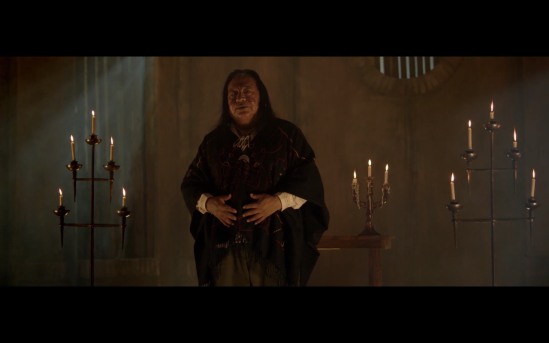
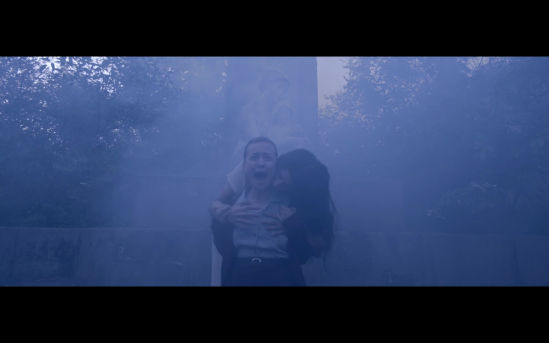
Natalie’s dedication to her religious vocation has led her to become a nun. Her celibacy is a symptom of disgust with her family’s household, a home the young virgin could not bear to live in another second or much rather return to that stems from an uncomfortable inkling of unnatural circumstance, but when she is informed her parents were in a tragic accident involving the death of her mother and a father bedridden by shock, Natalie reluctantly returns home. She’s greeted by Angela, her university studying older sister, and her delinquently dangerous boyfriend, Mauro, and alongside a few of Angela’s classmate, the decision to track down a shaman on an secluded island on the outskirts of town has convinced the group to seek alternative and holistic treatments, such as a brew made from the mystical Ayahuasca plant, to battle their own self-complications. What they discover is that some inner demons should be left untapped and undisturbed or else their souls will pay the consequence.

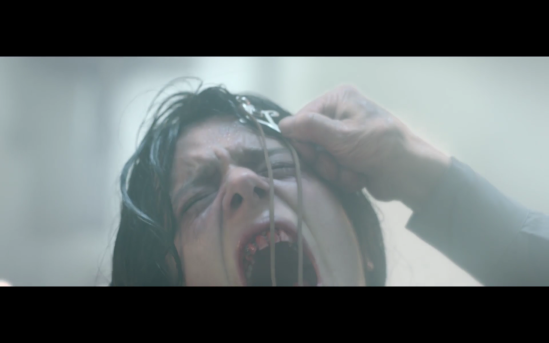
“Luciferina” is a black rites narrative saturated with psychosexual tendencies and religious divergences from writer-director Gonzalo Calzada whose horror mystery footprint, the Argentinian filmmaker’s common foundation for his prior work in “Resurrection” and “The Clairvoyant’s Prayer,” maintains a strong foothold for his latest venture from 2018 with a story of solid foreboding and overshadowing complication that’s naturally opaque, guiding viewers seemingly toward one direction and then obliterating their conjectures in an in a blink of an eye about how characters or events might play out. Layered with themes and heavy with motifs, Calzada summons the internal demon, figuratively and literally, from within an indie picture budget that’s complete with accidental demonic conjuring, eye-devouring effects, and a climax involving temple fornication of various Kama Sutra positions.

Young, beautiful, and, yet, withdrawn and plain, Natalia has embedded herself into nun-hood, a means to escape the unexplainable discomfort inside her own home and even in herself as she’s haunted by visions of a disheveled woman with crooked arms popping unnaturally out of a white nightgown, but not all of Natalia’s visions are bleak as she’s able to, at times, define a person’s gleaming aura during a momentary spell. Sofia Del Tuffo stars as the troubled vocational woman, a role that demands much from the young actress who can easily transition from a screaming and scared postulate to taking charge of her destiny by gripping Satan’s horns. Tuffo opposites Pedro Merlo as Abel who is, well, more or less a potential love interest. Abel has fire inside him sparked by his desire for Natalia, but goes full inferno after downing the Ayahuasca juice. The light and dark of Abel has Merlo flipping the script continuously and the actor keeps up with relative ease. The opinionated downside to roles Natalia and Abel might be lost in translation, but there’s a sense of disconnect between their multiple purposes: shaman visit, the unspoken connection for each other, and their intertwined destinies. These aspects go fairly unexplored or are either, in the script, diluted in the details. The supporting cast also don’t add volume to the story and though not all of the cast are like this, a good chunk are rather auxiliary for the moment of pinnacle prominence and their sub-stories are quickly squished – that’s the Gonzalo Clazada affect. The remaining cast includes Marta Lubos (“Darkness by Days”), Melena Sanchez, Francisco Donovan, Stefania Kossl, Gaston Cocchiarale (“Terror 5”), and Desiree Gloria Salgueiro.

“Luciferina’s” themes bubble quite easily to the surface, the more obvious found in the religious field, but an interesting theme is a woman’s protective, if not problematic, stance toward copulation and the guarded uterus and their right to chose. Natalia has no experience with sex and she’s constantly under the pressure of having sex, even inside the chaste nunnery. Natalia nonchalantly pushes away one of the boys in the nun’s drug rehab program with not much oomph, she then comes under siege by the forcibly accosting Mauro and his verbal rape fantasies toward his girlfriend’s younger sister, and then Abel’s internal struggle with his Faustian under guise who enthusiastically confesses his hard on to score with Natalia to bring forth more evil spawn. A common motif from the baby making is the uterus that pops up in Natalia’s dreams and her late mother’s frantic paintings that circle around the pressures of motherhood and as Natalia procrastinates under the semblance of saving her own life to further prolong her inevitable destiny, she comes to the realization running will prove for naught and becomes empowered. One thing weird in relation is not the uterus in itself, but rather the computer generated baby in the womb; the impression is okay in construction as the baby has some realism in the detail, but the adverse effect is the use of the effect that seems pointless and ostentatious.

Artsploitation Films and Reel Suspects presents “Luciferina” onto Blu-ray home video. The anamorphic widescreen, 2.35:1 aspect ration, presentation is quite sharp with textures and details in a lossless image. Calzada uses much of the natural coloring in daytime sequences and the night scenes are moderately bluish and director of photography, Claudio Beiza, has immense range and depth that provide astonishing interior and exterior backdrops that can be subtly pleasing. The Spanish language Dolby Digital 5.1 surround sound substantially keeps with the tone and pacing of the story. Dialogue is balanced and verbose in the forefront. The release also comes with a Spanish language 2.0 stereo track. Both audio tracks come with English subtitles that saw minor issues with translation errors and timing. The only bonus feature available is the film’s theatrical trailer. “Luciferina’s” contemporary tale of possession and sexual innuendo is rabid. Director Gonzalo Calzada’s ambiguity of mystery horror is grossly engaging while “Luciferina” can also be glossy with splayed monstrous savagery and graphic sexual content, two genre commodities that churn easy entertainment.
Evil Loves a Good Plot Twist! “Open Wound” review!

In the moments before attending a pool party, apparent strangers-to-acquaintances, a distinguished, if not quirky man and a promiscuous, self-involved German woman, withdraw to a secluded building in order for the brazen woman to shave the bikini line exposed excess hairs before strapping on a suit. Their intricately deep discussions about desires, sex, and kinky foreplay fair nothing more but course, blunt banter between two familiarities, but when the woman pretends she must be tied up and punished for playfully biting the man’s ear until bleeding, the next few moments after fall into a state of obscurity of a he said, she said rape accusation. As confounding declarations are made and fingers are being pointed to decimate lives, a sack of deceptions and an abundance of threats accrue through a blackmail scheme and an abduction based vendetta. Nothing can be certain and no one can be trusted between the two, but one thing is definite, a third man watching from afar has nefarious plans of his own.

Like sitting front row at a bastardized version of an off-broadway show, “Open Wound” is an immaculate stage performance of battered psychologies and visceral deceptions from writer-director Jürgen Weber. The thriller, also known as “Time Is Up” or “Open Wound: The Über-Movie,” measures extreme lengths of human bitterness while constantly shapeshifting into plot twist after plot twist aggregated with clusters of popup violence. The Chinese born Weng Menghan, under her moniker Tau Tau, is the financial backer of “Open Wound. The globetrotting author makes her breakthrough imprint into the feature film business that modestly begins with an opening scene about anal sex among other verbal sexual references before man versus woman fisticuffs and a pivoting third act that rapidly alters character compositions into, essentially, a free for all. So metaphorically speaking, a Chinese producer walks into a bar, sits onto a stool next to a German director, and orders one of the more absorbingly chic cocktail thrillers in English. “Open Wound” is a melting pot of cultural influences and a display damaged egos that’s simply brilliant.

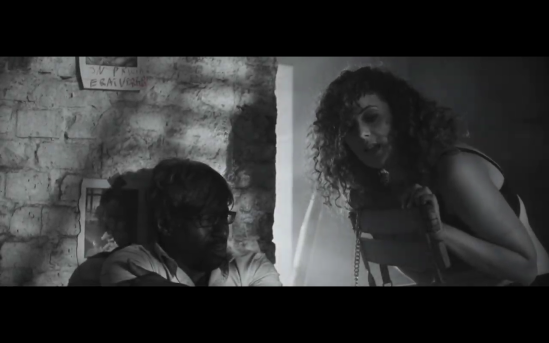
“Open Wound” has a short character list comprised of three characters. The first is woman who is introduced first, or rather her lips do when she declares her love anal sex and the parallel criteria for types of cars in one man’s garage, as she’s using a straight razor to trim the dark haired pubes from her bikini line. She oozes eroticism like a bodily fluid that gravitationally seeps from between the legs, spilling innermost desires, whims, and historical sex-capades with in a philosophical prose. #Nippelstatthetze advocate, German podcast expert, and stunning model, Leila Lowfire engrosses herself into the role of fierce, proud, confident, and strong woman. With an established vigorous sexual prowess, Lowfire culminates the femme fatales and breakneck show-stoppers female roles, notably similar in Quentin Tarantino movies, with high-brow tastes and a debasing reprove. Lowfire’s accent is low and thick and can be considered her weakness here as getting your brain to interpret the fluidity of the words, structures, and compositions is undeniable challenging at times, but acts upon fervor while in her lingerie or even topless throughout the film. The contrast against man is stark. His introduction paints him as unequipped, socially inept, and hopeless desperate. Man longs for Woman, but knows he doesn’t have a chance with her until she offers up a random game of role-play that inevitably leads to disarray. Jerry Kwarteng’s man performance is systematically peerless and a complete joy. Even if the character lacks depth, Kwarteng’s range is devilishly good with the only comparison coming to mind would be James McAvoy and his multiple personality disorder in “Glass.” Once Man and Woman comes to terms after a back and forth bout with dominance, the Suicide King’s grand appearance bestows upon the plot an even bigger, clunkier monkey wrench. The Suicide King’s an ex-con, looking for revenge in a small vat of acid, and his mark and him have a long, complicated history which parts personally shock the other. Erik Hanson’s raspy voice, feeble appearing physique, and lofty age has a second row seat to his character’s unwillingness to die, in a slick performance that’s part nihilist and part psychotic to which Hansen pulls off.

Weber’s choice toward “Open Wound’s” narrative layout conflicts with how the DVD release is specifically marketed. “Open Wound” rides the dark comedy pine that is peppered with black tongue-and-cheek dialogue and violence and as will be noted later in the review, the advertising depicts something far more extreme and graphic. On the shock value scale of one to ten, “Open Wound” hovers around a solid five and maybe a seven or eight for the casual popcorn viewer and, personally, I don’t believe “Open Wound” was intended to be a source of utter distress and visual barbarity. There’s brisk lighthearted comedy that softens the blunt force. For example, in the room with the Man and Woman, a record player will every so often, to comically assist in explaining the actions, play the cheesy tune of lounge background music with a singer narrating the character’s every move and also be the voice of between chapter contention or bewilderment. The singing is privy to only the audience just as the twelve chapter titles that offer a mixed bag of sequences that interchange between English, German, and Chinese title introductions, a toilet paper title card in reverse action, and an artistic rendering of chapters titles and just like his title card introductions, Weber also utilizes an assortment of styles to tell his story, whether be a 5 minute sepia, nitrate film burn effect, or day dream sequence, that peers the sudden twists and eruptive chaos between the characters. While the effects work to sensationalize the context, they tend to be equally be nauseating and annoying as a disruptive structure that seemingly doesn’t make sense to the naked eye.

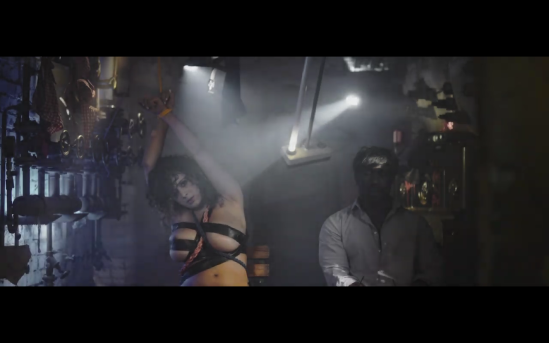
MVDVisual and Wild Eye Releasing distributes Jürgen Weber’s “Open Wound” onto DVD home video as the the 11th spine feature under the Wild Eye Raw & Extreme sub-label. The DVD is presented in a widescreen format and the image quality holds up well, withstanding Weber’s bombardment of stylistic techniques of distortion, over exposure, sepia, and contrast. There’s a little softness around the skin, more noticeably during facial close ups, with a slightly lower bit rate in the compression but still very agreeable detail. The stereo two channel audio channel does the job, but has flaws with Weber’s score have an equal playing field with the dialogue tracks. The audience already has to manage Leila Lowfire’s thick German accent and their ears will also need to try and filter out the soundtrack that’s invasive upon the colloquy. Not much range to warrant mentioning, but the depth was well tweaked amongst Weber’s visual compliments. There are unfortunately no bonus material with the feature, but the DVD reversible insert is graced with a semi-naked and bound Leila Lowfire. “Open Wound” is dangerous, sexy, thrilling, and complicated to say the least, but stamped as a Raw & Extreme film it should not; however, see this film! Director Jürgen Weber’s visionary molotov cocktail of a story is an underground must for arthouse lovers and noir enthusiasts.
Evil’s Brewing in “Crucible of the Vampire” review!

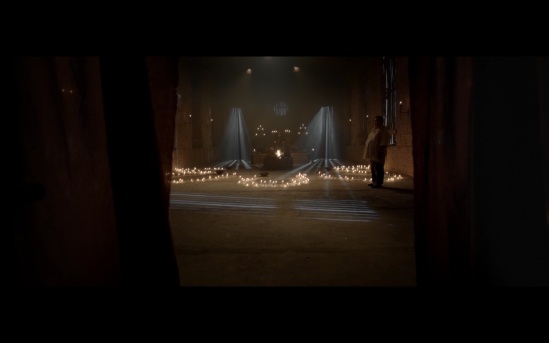
When half of an archaic crucible is discovered while excavating in the basement of an old Victorian mansion, Isabelle, an assistant museum curator, is hastily dispatched to authenticate the finding and to confirm the analyst that the cauldron is, in fact, the missing second half to the one in the museum’s possession. Isabelle is greeted by the estate owner, Karl, his wife Evelyn, and their eccentric daughter Scarlet who welcome Isabelle to stay with them while she evaluates the crucible. The unnerving manor home keeps Isabelle awake at night as she frightfully witnesses silhouettes of a young woman wandering through the haunting corridors and the untended rooms. As Karl brushes Isabelle’s nightly concerns to the side, impatiently urging her to summon for the other half of the piece and finalize a match that would then focus on the crucible’s value, the young curator can’t shake the continuously dreadful sensation that danger lurks in every dark corner of the estate and that the residents are inherently grooming her for a sinister awakening of immortality and power.

Writer-director Iain Ross-McNamee has diffidently checked all the British-gothic horror boxes in his latest film, a brooding vampire macabre entitled “Crucible of the Vampire.” “The Singing Bird Will Come” director co-writes the script with Darren Lake and “I Bought a Vampire Motorcycle” screenwriter John Wolskel to reel in the once was, the gilded age of British horror that made a nick in time with the vehemently violent and boldly colorful enriched Hammer Horror. Like other genetic make-ups of horror bodies, Hammer Horror has a genome of a check list of self-defining attributes and “Crucible of a Vampire” aims to notch a few key elements including the Gothicism finesse, the sexually unchaste vampire, and, also, to deliver big horror on a small budget. Ross-McNamee places stakes not into the cold, bloodthirsty hearts, but more so into construing a film that isn’t a carbon copy of the old days, adding a contemporary digital presentation that’s laced generously with contemporary photography techniques even when the opening prelude is set in the 17-century and shot in a sepia style.

The story centers around the assistant curator, Isabelle, who has wearisome tendencies of 24/7 suspicion, being a pawn in every sense of the word. From the head curator to Karl’s family, Isabelle finds herself alone in tight spots and not many people she can count on. There are a couple of characters that are potential allies, but their feeble attempts in buffering Isabelle from the house’s evil secret are no thinker than a single sheet of college rule paper. Isabelle herself is her strongest defense and when push comes to shove, the curator turns ass kicker against a family of vampire acolytes. Katie Goldfinch handles Isabelle with reasonable composure, if not slightly timid at times, especially during fight sequences. Goldfinch sustains her lead performance of her sophomore feature film that is exposition heavy to formulate an isolating and intimidating dynamic between her and Karl’s family. Karl’s portentous cruelty is town-renowned, shaped by rumors and peppered with truisms and Larry Rew channels Karl precisely. The “Underworld: Rise of the Lycans” actor has traditional methods of able to creep one out by standing still and speaking with a vigorously commanding tone, but Rew feels significantly older compared to his wife and daughter. Karl’s wife, Evelyn, stammers as a wild card in a role that seems to go nowhere and Babette Barat can only strut her hippie performance of Evelyn so far until we’re wondering what’s significance as a mother, as a wife, and as part of the crucible grand scheme. Scarlet had the opposite effect as the daughter was overly forward with defining her intentions that toward Isabelle that involved stealing, desiring, and chastising. Scarlet’s predestined for villainy and actress Florence Cady provides a fringe heavy and tantalizing seductive performance. So much so, Cady nearly becomes the female lead, but certainly overshadows the crucible’s calling, a vampire named Lydia, a non-verbal role with barely much screen time given to wild-eye, teased haired, and paled Lisa Martin. Angela Carter, Brian Coucher (1995’s “Underworld”), Phil Hemming, Aaron Jeffcoate (AMC’s “The Terror”), Charles O’Neill (“Cripsy’s Curse”), and the UK Bob of “Bob the Builder” Neil Morrissey co-star.

If “Crucible of the Vampire” is supposed to be a reawakening of British gothic horror, Ross-McNamee went without the vibrancy of color and went without much of the fervent violence that Hammer Productions was keen on. “Crucible of the Vampire” sustains a dissimilar path focally toward more exposition to forefront a narrative until an action climax that’s initiated by awkwardly edited gratuitous nudity and weak character flaws. Like being brewed inside the ironclad enclosure of a crucible, the filmmaker simmered a story that quietly bubbled to the surface until it boiled over uncontrollably and extinguished itself, splattering onto the floor below in a heap of smoke. Act three is misshapen by the prior two acts with one issue being Isabella transforming in an instant into a complete bad ass when faced with death because of her pure, virgin blood. In a blink of an eye, she literally kills five acolytes with a melee weapons that include a rustic knife, the crucible, a metal pipe, and a fired filled chalice. The kill by fire chalice and other igniting instances during the film saw shoddy outcomes of superimposed, computer generated fire which really do speak the inane quality of the visual effects. Even with the practical effects, blood doesn’t spray or gush onto a wall when a vamp victim has his throat become the main course; instead, the effect squirts on the adjacent wall like from a condiment squeezer, losing a sense of convincing value.

ScreenBound Pictures presents “Crucible of the Vampire,” a Ghost Dog Films’ production, onto an all region PAL dual format, DVD/Blu-ray home video release. The Blu-ray is presented in 1080p with a widescreen, 2.35:1 aspect ratio. Picture looks absolutely gorgeous with the natural color palate, but slightly stodgy with the blood red vampire vision in only a couple of brief scenes. Details are fine and textures slice through, especially in the opening segments of Isabelle walking along the river line, and in conjunction with aesthetic wide shots that monolithic structures, like an old giant tree or the Victorian home. The English Dolby Digital 5.1 LCPM uncompressed audio track is not a film that necessarily needs five channels, but does utilize them when the night churns out bumps in the darkness. The dialogue has prominence, depth, and range without breaking or interrupting the audio lineage. The staid score by Michelle Bee and Amanda Murray floundered in the lossless audio as an unfortunate miscue to reel in and hammer away the gothic vision. This release came with no bonus features in a day and age where most Blu-rays do have some sort of extra content. “Crucible of the Vampire” has earned merit in the traditional British gothic horror sub-genre that’s been flailing over the years, reinvigorating the concept of dark arts and lesbian vampires, but loses footing at crucial moments that ultimately unglues the narrative.