God Hatin’ MMA Fighter Still Has The Power in Him to Fight EVIL! “The Divine Fury” reviewed!


After the sudden and violent death of his police officer father, mixed martial arts champion, Yong-hoo, has a complete disdain for God from a young age now that both his parents have perished. Growing up angry and swarmed with negative thoughts, Yong-hoo goes through life without much of a purpose until he awakes from vivid dream with the wound of stigmata on his hand. Unable to stop the bleeding by means of conventional medicine, he resorts to a shaman who convinces him to seek out Father Ahn, an elder priest experienced at practicing the rite of exorcism, and learns that the wound and Father’s once unwavering benevolence provide a divine weapon against a growing covenant of demons under the black magic of a Dark Bishop. Together, Yong-hoo and Father Ahn combat the forces of evil before the possession runs rampant in the city.

South Korea packs a punch with an action-packed take on possession and exorcism with Kim Joo-hwan’s “The Divine Fury.” The 2019 released film that blends horror with the cinematic formulas of the comic book universe films is written and directed by Joo-hwan and produced by Studio 706, KeyEast, and Lotte Entertainment, the latter being a subsidiary of one of the largest Asia conglomerates and a leader in the Asian film industry. “The Divine Fury” isn’t low-rent horror, providing fans with salt of the earth martial arts, a range of diverse set locations, and a decent grade of special effects that range from stunt men quality to visual monstrosities, including a giant hell worm bristled with millions of arms and hands, and also gives a chance for Joo-hwan to showcase his junior horror-action that succeeds a 2017 buddy-comedy in “Midnight Runners” and a coming to terms drama in his 2013 film, Koala. One motif, and perhaps trademark, that runs through all of Joo-hwan’s written and directed films is the coupling of protagonists element and “The Divine Fury” is not an exception and follows the same coupling, if not slightly altered, mechanism.

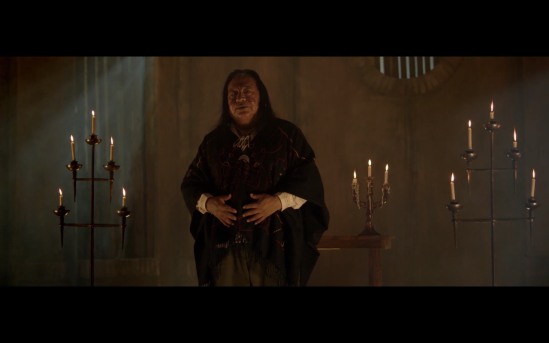
A pair of actors from Bong Joon-ho’s award nomination buzzing “Parasite” also have a role “The Divine Fury,” one of them, Seo-joon Park, being the lead star of the Joo-hwan film as the MMA Godsend, Yong-hoo, with hate in his heart for the Lord Almighty. Yong-hoo’s a joy to watch on the screen as a character with an arch’s beginning as a young man, a mindless fighter, being verbally influenced over his shoulders by demon puppeteers to finding his lost father figure in a man who has an unflinching amount of faith. Seo-joon captures the defined struggle Yong-hoo has with God even in the face of pure demonic evil before him. An evil battled by Father Ahn, dolefully portrayed by “Sector 7’s” Sung-Ki Ahn. Sung-Ki fatherly performance places Yong-hoo into a role of humility, not only as a mentor, but with experience and patiences that resigns to trust rather than action. However, the dynamic goes both ways. Seo-joon shows lot of physical strength becoming unwittingly the “divine” warrior to thwart an insidious malevolency when Father Ahn is taken out of action due to Yong-hoo’s haste. Seo-joon had to quickly and naturally grow up his character to be the leading, brute force of experience and physicality and did just that as character faces off with the Dark Bishop, Ji-sin. Ji-sin invokes demons to inhabit those in a weak state of mind. This devilishness wouldn’t have been made possible without Do-Hwan Woo’s stoically sly and slimy confidence behind the character. The remaining cast rounds out with another “Parasite” actor, Woo-sik Choi, and Seung-Joon Lee.

“The Divine Fury” is fundamentally an essential oil extracted from the widely popular comic book universe money-making machines, that are sometimes also called movies from time-to-time, but “The Divine Fury” doesn’t have that monstrous platform of a narrative pulled directly from the illustrated pages of comic book franchise. Yet, the story builds a downtrodden, seeking-answers Seo-Joon with a tragic past and an ability to pulverize people – a winningly similar combination to any pre-defined hero in the Marvel character evolution. There’s also this theme of fatherhood and mentorship, like seen in “X-Men” with Professor X or “Blade” with Abraham Whistler. The latter of those two examples perhaps more closely resembles Father Ahn as the relation to the horror-action genre is similar in nature, but instead of abstaining from blood thirst, Seo-Joon is abstaining from letting God into his heart. Of course, “Blade” was ultra-violent and bloody and “The Divine Fury” is grossly more toned down with the exception of a few key moments of blood regurgitation. Speaking of effects, the visual effects waned from expectation and teetered more toward a rushed and unpolished look. They weren’t terrible, but not the best looking visual effects demons in the industry.

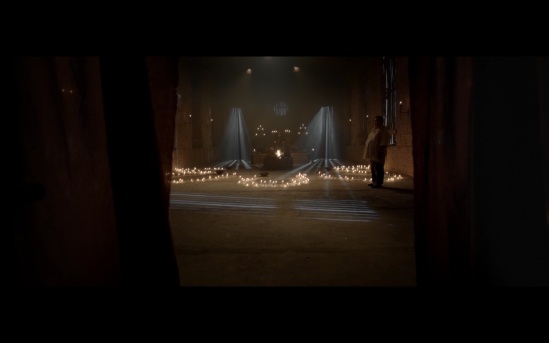
Well Go USA Entertainment brings the action of exorcism to Blu-ray and DVD home video with a dual format, two-disc release of “The Divine Fury.” Presented in a 1080p widescreen, 16:9 aspect ratio and sheathed in a slipcover, “The Divine Fury” feels necessarily gritty in comparison to the subject material with a clean, almost sterile image that defines the blacks and colors, despite a short range of vivid hues the hues that are dominant are profoundly thick and dark. The limited color palette won’t be a problem as demons hide in the shadows and that’s where the story takes domain in scaffolding-laden churches, orphanage basements, and even a swanky neon-glowing club with a well of damnation beneath in the dungeon. The skin tones have a natural feel about them, but going against the grain of naturalism is the visual effects as aforementioned as they don’t render properly to exude the right viewer reaction. The Korean language 5.1 DTS-HD Master Audio has ample weight. Whispering shadows of slithering speak and the bubbling of the, again, well of damnation emit the right kind of range and depth needed to descent into doom and gloom atmospherics. Dialogue is crystal clear and in prominent. An English dub is available, as well as English subtitles that errorless and well synced to the Korean dialogue track. There is some English during a MMA fight on the Korean track. Bonus material includes a rather generally spiced together making of featurette that includes mini segments such as prop commentary, special effects, behind-the-scenes look, and the construction of the antagonist world in “The Divine Fury. There are also a couple of trailer variants and a U.S. trailer for the film. Ultimately, “The Divine Fury” intrigues on the fray, desiring more into the backstory of Father Ahn and delving further into Seo-Joon’s weaponized stigmata and director Joo-hwan Kim teases just that with a taste of things to come with a short pre-credit scene that sets up “The Divine Fury” for more themes, perhaps, on a love-hate relationship with God, more, perhaps, finding suitable father figures, but, of course, there will be for sure more exorcizing ass-kicking of demons.

Purchase the dual format release by clicking the above image! “The Divine Fury”

EVIL Checks Into the “Motel Mist” review!


The Motel Mistress stands tall beside a highway on the outskirts of Bangkok. The adult-oriented love accommodate caters to the freakiest of the freaks under the soft glow of the hotel’s purple-pink neon marquee that’s shimmers on the rooftop during the tantalizingly active nightlife, flickering to a more conspicuous Motel Mist, but during the day, the near vacant hotel sits dormant and has scarce use. That’s all about to change when four visitors and one Hotel Mist front desk man become five strangers entwined into an uncanny affair that begins with illicit sexual desires between an extremely perverted and dangerous middle-aged man and a young school girl with ulterior motives and ends with a former child star’s refuge into, what he believes, is communications from beings not of this Earth. Salacious deviances, revenge, and strange occurrences check into the Hotel Mist, but will the five strangers check out?

From the erotically charged DVD cover from Philadelphia based home video distribution company, Breaking Glass Pictures, the Truevisions Original Pictures in coproduction with the 185 Films and Song Sound Productions produced “Motel Mist, written and directed Prabda Yoon, has the irrefutable markings of an unforeseen science fiction thriller from Thailand. Yoon’s introductory 2016 picture initially dodders on various genre borders that venture into the human complexities of interaction from an alienation or a subversive standpoint and wholeheartedly whips 180 degrees merging into exacting revenge and experiencing unearthly dimensions to an inevitable mesh correcting what’s characteristically abnormal. Though sexual romps in one-night-stand lodges have been marketed as quite the norm in Bangkok, Yoon pushes the creepy factor limits to the max, turning the dial on predatory intentions to an unreal reality.

The focus surrounds five characters with dialogued roles. The characters, with the exception of two of them, are essentially from all walks of life: a young hotel concierge with ambitions to be a fire stick performer, a middle-aged man with duel façade, a child star with unknown psyche complications, and then there are the school-aged girls with relatively the same motivation, but of a diverse personality type. We’re gently introduced to the middle-aged father figure Sopol, played by Surapol Poonpiriya, gazing at a newscast about a missing child celebrity on a car onboard touchscreen. Poonpiriya reels in slowly a conservative, perhaps even old-fashioned, fatherly figure where children shouldn’t swear and nose deep in cell phones isn’t a proper and good thing, but then the actor yanks hard back on the spoke, settling his character into a blurry role between niceties and deviances. Sopol’s an abhorrent wolf in sheep’s clothing, lavished and proud of his alternate life of an older man whose been with many younger women in his prefabbed BDSM motel room. His latest fair object is Laila, a young school girl in a short skirt with fresh innocence splayed from head to toe, performed by Prapamonton Eiamchan. Laila goes with the Tot’s flow by guiding her every move and letting him manipulate her like a doll of his pleasure. Eiamchan’s curious portrayal befalls her character’s with a relationship with masochism because of a more deep rooted motivational factor and the dynamic between Eiamchan and Poonpiriya pulls at the unsettling strings while also teasing visceral fantasies. Yet, oddly enough, Vasuphon Kriangprapakit cerebral performance being an antenna for alien correspondence is more intriguing. Kriangprapakit’s Tul is the crucial focal point that connects each character, playing against their vices that shepherds into a more savior role; in fact, Kriangpapakit could be considered appearing like the Thai version of the Messiah. While Tul requires a force invading into one’s mind bubble, Tot bubble seems to have popped with vague ambitions and being an overall motel lackey. Tot, a role suited for the talented Wissanu Likitsathaporn, sports green hair atop his punk rock outfit, and, like today’s typical millennial, enjoys conversing on the phone, especially with women. His sympathetic qualities aim to grant him amnesty for his cooperative nature, especially assisting covertly alongside Sopol, and being an agent of greed when figuring out his other daytime tenant, Tul, has a reward for his whereabouts. Katareeya Theapchatri rounds out the cast as Laila’s accomplice, Vicky.

As the subtitle insists, “Motel Mist” is a setting where there are no limits. Whereas that’s true for unlimited sexual pleasures and displeasures as well as thematics akin to the “Outer Limits,” “Motel Mist” has some limitations to challenge the experimental engine on which the film is powered. For one, the takeaway message has vague variables and not enough outright exposition to grasp viewers by the balls for that deep-in-thought, chin scratching moment that ekes forward the turning giant wheels in our heads, spinning conclusions and possible theories into plausible themes. For me, the takeaway message borders somewhere along the lines of the mysterious mechanics of the cosmic universe righting the wrongs between inherently misguided human faults and interactions. Whether that notion weighs in with any truth or not is most certainly up for grabs and could possibly way off the marker, but the enigmatic complexities are what make films, like “Motel Mist,” interesting to dig into and explore.

Breaking Glass Pictures calls for room service and has delivered “Motel Mist” onto DVD home video presented on a DVD9 with a widescreen, 2.39:1 aspect ratio and the region 1 Sci-Fi/Thriller runs just under two hours at 117 minutes. Often with a warm resemblance to Bangkok atmosphere, Yoon also seizes every opportunity with a vast color palate to shape the character developments in Room 7 with sultry red and Room 5 with a sterile black and grey. No problematic issues from a nice sharp picture in natural lighting juxtaposed a vivdly colorful. The frame work, by cinematographer Chananun Chotrungroi, captures micro stories with such aggression that it becomes a thing of beauty and with Yoon’s long takes, the sensation, no matter how unpleasant, lasts what seems to be an eternity. The Thai language stereo 2.0 dual channel audio mix has clean range and depth with parameters around mid-to-high levels of output through the variations of dialogue, ambient, soundtrack, and miscellaneous distortion tracks. There are English subtitles available and while seemingly translated okay, the yellow font coloring blend way too much into the background, making reading them difficult. Special features include a pair of behind the scenes with cast & crew and a trailer. Common perceptions of Bangkok could be extracted out entirely from director Prabda Yoon’s “Motel Mist” with a taste of illicit sexual affairs and the super bizarre in this unique science fiction thriller.

Make a Deal with EVIL, EVIL Will Come Calling! “The 27 Club” review!


Kurt Cobain. Robert Johnson. Amy Winehouse. Jim Morrison. Jimi Hendrix. All these recording superstars have one tragic thing in common: their fame engrossed lives ending horribly, sometimes violently, at the young age of 27 at the height of their careers. Their deaths are a part of an elite group called the 27 Club that incorporates effervescent celebrities from all walks of fame. When another popular rock star ends up mysterious deceased a night after his concert, the same concert that student journalist Jason attended, the eager academic finds himself at the right place, at the right time while researching and documenting the notoriety of the 27 Club. While hallowing out the club’s infamy, Lily, a wild and struggling musician, enters his life on a connective collision course toward his research that evidently surrounds itself around an ancient Latin-based text. The book is binding to those seeking rock star status in exchange for their souls and with a steep decline in her musical career, Lily provokes satanic rituals with exploiting help from the love struck Jason, but the only thing Lily didn’t count on was her unexpected love for him back.

The actual 27 Club lore continues to be an interesting notion. A curiously notorious concept that flew under the radar for this reviewer up until happening upon and diving into the Patrick Fogarty’s written and directed soul-bargaining tale regarding the idea’s parameters as the film’s foundation. Fogarty, the staple music video director for bands such as Black Veil Brides and The Burning of Rome, tests his hand at satanic, soul-swallowing horror, simply titled “The 27 Club,” for Cleopatra Records cinematic sub-division, Cleopatra Entertainment, and is co-written a mythos script alongside “Clownsploitation’s” Joe Flanders and Michael Lynn. Even if nothing more than a freak coincidence, Fogarty processes an innovative take on the 27 Club that has spanned over century and, perhaps, provides a little education and knowledge to those outside the music industry.

Many iconic rock stars rise from the grave to spit philosophical truths and knowledge, constructed as miniature prologues of a chaptered story, intertwined with a relatively unknown cast beginning with headlining leading lady Maddisyn Carter as the toiled Lilly seeking refuge in any drug or sexual partner her beautiful disaster can ensnare in a world of deaf tone destruction. Her character is intended to be refracted by the introduction of the 27 Club research journalist, Jason (“Mutants'” Derrick Denicola), who just happens to be around when another musician kicks the proverbial bucket, but Carter maunders through the relationship with Jason and unable to materialize compassion, losing any slither of internal conflict Lilly may possess. Todd Rundgren, Cleopatra recording artist and a member of the progressive rock band, Utopia, headlines polar opposite of Carter on the cover of the home media release only and not as a chief player in this possession plot. The role downsizes his long legacy in the music biz and though a small role and acting isn’t Rundgren’s first love, the rocker tops as being one of the film’s better moments as a record store wise-guy patron doing the right thing and a creepy video-chatty music professor. “The 27 Club” tortures the cast of remaining souls with Adam Celantano, Kali Cook (“Victor Crowley”), Zack Kozlow (“Devil’s Domain”), Mr. Chromeskull himself Nick Principe (“Laid to Rest” and “Chromeskull: Laid to Rest 2”), Jason Lasater (“Death Tunnel”), Zach Paul Brown, Emily Dalquist, Eugene Henderson, wrestling superstar John Hinnigan, Gogo Lomo-David, Tasha Tacosa (“Halloween Pussy Trap Kill Kill”), and, my personal favorite, Killjoy’s Victoria de Mare!

Novel backstory might be one thing, but a comprehensively sound one is another and while “The 21 Club” begins like a John Carpenter cask of embolism-depth imagination and beguiling, if not apocalyptic hinting, descent into oblivion, Fogarty’s film collapses when Lilly and Jason seek out a couple of drug dealers to understand the book’s portentous contents. Conveniency and rushed theatrics push a scene-to-scene overhaul that forgets to breathe and come up for air, losing that dramatic, dire consequence associated with a thriller. No consequences steep the pot to forge a luxury of sympathy or any type of relation toward the characters. Jason and Lilly’s dynamic was hot and cold at best and why Lilly kept Jason around after learning of his possession of the book is a complete mystery. The exposition isn’t conveyed properly in this instance and their coupling wipes on a thin wave toward the finale. There’s also the common motif of a sex tape – Jason records his and Lilly’s sexual encounter after a night of clubbing and Lilly’s record producer explicitly states if there’s a sex tape out there that might risk damaging her career – and then that information goes dark, nothing but crickets to line an explanation to why her sex tape would be important to the story. If a stipulation of her fame agreement with the reaper was to not lie or become involved scandalously entangled, the sex tape would be the perfect real world-relating catalyst that fully encompasses the fame-to-fallen storyline.

Cleopatra Entertainment and MVDVisual release a sweet, multi-format package perfect for home entertainment of Patrick Fogarty’s “The 27 Club.” The all region DVD/Blu-ray combo set also includes the compact disc soundtrack to the movie that features music from Todd Rundgren featuring NIN’s Trent Reznor and Atticus Ross, plus Die Klute, Bestial Mouths, The Anix, Jurgen Engler and more. The full HD, 1080p Blu-ray, which was viewed, is presented in a 1.78:1, widescreen, aspect ratio. The 97 minute digitally shot film has a wonderful color palate that often shutters from natural tones to one or two-toned primary color filters with also a desaturated approach to the 27 Club’s most recognizable members conducting a foggy room soliloquy. Banding issues have noticeable effects in various stages of darker scenes, especially surrounding a humanoid figure. The English language Dolby Digital 5.1 surround sound has insignificant bite through the multi channel conduit that denotes continuous issues with Cleopatra Entertainment’s home video releases. With a recording penchant for talent in the music industry, the expectation is high in delivering bombastic results flowing from one through five and presenting a singular comprehensive result, but the range and depth lack beside the powerhouse release and instead, find more solace in the third format of a traditional CD soundtrack content with great musical contents. Bonus features include two interviews with the film’s stars, Maddisyn Carter and Darrick Denicola, slideshow, trailers, and of course, a CD soundtrack all underneath a slipcovered jewel casing. “The 27 Club” spins a concoction of malediction around historical tragedy that’s more heinous hoopla and than harrowing horror and while the release bursts with razor sharp teeth and high pixelating resolution, channelling all the material rudimentary didn’t stay glued together in the end, hurting the character progressional arch and thinning out the hair-raising filament.

Pre-order “The 27 Club” available June 11, 2019!

Evil’s Coming Out of the Closets! “Hunting Evil” review!


After an intense stand off with a powerful and playful demon during a supernatural expedition gone wrong, the unfortunate death of a young girl has Jonas Littleton facing skeptics that hand the ghost hunter a five year sentence behind bars ruling. His release from an Arizona prison offers him a second chance to start over with his wife and young son and Jonas makes promises to no more paranormal pursuits in hopes for a normal life. Miraculously, Jonas is offered a good paying job despite his manslaughter record that affords him seven years of suburban comforts and family growth, but little does Littleton know that his good fortune is the handiwork of the very same demon who bested him so many years ago, tricking him into a underhanded deal that requires his son’s soul with his wife being a casualty of war. Another seven years later, an obsessed Jonas fields every call that comes across his paranormal investigator’s desk as he tirelessly searches for his son and with the help of an eager investigator, Ron Tippard, and a green horn assistant, Ellie French, Jonas will come face-to-face with his rival evil again for one last time.

Welcome back to part two of our unexpected two part review segment of films that were disowned, supposedly, by their filmmakers. Today, we take a look at the 2010 supernatural thriller, “Hunting Evil,” or more commonly known under the title as “Closets” or “The Closet.” Already, the evidence is clearly powerful against “Hunting Evil” that alternate titles bares the potential markings of a repudiated film, aimed to cloak and shield the ramifications that would be supplied to unsuspecting audiences renting or blind purchasing. Director Charles Peterson has been reported to have disowned the Bob Madia (“You Can’t Kill Stephen King”) penned film because of too many chefs in the kitchen, if you smell what I’m cooking. Peterson, who has directed other indie horror projects such as “The Eleventh Aggression” and most recently, “A Killer Awaits,” which will be released this month, has ties with the investment group Old World Investors Group Incorporated a.k.a. OWIGI Films. Now, OWIGI Films is ran by “Hunting Evil’s” producer and star Lenny Rethaber (“Blood Moon Rising”). So, the lingering questions is this: Did star-producer Lenny Rethaber force the whip and reigns from Charles Peterson? Well, all this reviewer can say is that Lenny Rethaber also produced “The Eleventh Aggression” and the upcoming release “A Killer Awaits,” so seems like any adversity between the two has long since settled or just comes and goes with the industry territory.

However, what’s inherently curious about the DVD release from World Wide Multi Media is the three names headlined on the DVD’s front cover to which none are the film’s star Lenny Rethaber as the embattled Jonas Littleton. Knowing the type of distribution company WWMM is, more than likely the case is the first three credits, which are also in alphabetical order, and slapped them onto the front cover, one of which is just an unnamed barkeep who has approx. 5 minutes of screen time and not one other single credit to his name. As Jonas Littleton, Rethaber is soda flat with no bite and fizz to his performance and though his entertaining enough, the producer-star is also on the wrong side of the tracks in that category. There’s even whispering talk that “Major League’s” Corbin Bernsen, who has dappled in directing horror with “Dead Air” starring Bill Moseley (“Devil’s Rejects”), had issues with the producer (Rethaber), yielding to yet another instance of production problems. Though I’ve had verbal disagreements with Bernsen with his previous work, I find his performance as an enigmatic father of a missing child refreshing and complex, but the fate of his character poofs into thin air as if the writers, directors, or, most likely, producer didn’t know how to finalize the character. The sole best role comes from Patrick Adams as the enthusiastic paranormal investigator Ron Tippard. Not to be confused with “Suits” actor Patrick J. Adams, the Arizona resident Adams sparked life into a relatively unhinged project with an amusing and interesting performance in a side kick role who has substantial screen time and adds value to the situation. Rounding out this remaining cast in this conundrum is Darl Chryst (“Autopsy: A Love Story”), Dena Esquivel Frederickson, Jackson Furedy, Sallie Glaner (“The Visitant”), Davina Joy (“Death of a Ghost Hunter”), Pete Kelly, and Orchid Tao.

A twitching, tingly part of my soul yearned for “Hunting Evil” to come out on top, to be a solid supernatural saturation that a viewer, like myself, can sink into immensely, and with a script that precedes “The Conjuring” with the perceptive view of an unoriginal, yet sparsely used investigator concept, the appeal hyperdrives into salivation, but instead of salivation, “Hunting Evil” sluggishly drips slowly from the mouth’s corner crevices with script plotholes, badly layout composites, and undercooked characters. The story follows Jonas for nearly two decades, yet the man never ages despite already starting out looking middle aged to begin with so where are the streaks of grey, the loose and wrinkled skin, or maybe even a display a little physical ailments? Each of these natural flaws could have further enhance his lifespan evolution on Earth and speak to a little down to Earth as well. The composites look horrendously old fashion like from an antiquated video game platform. It’s as if the creators of 3D Realms not only provided the MS-DOS source code for those amazing Duke Nukem 3D levels also provided the visual worlds for “Hunting Evil” actors to humorously and painfully act against. the underwhelming, unfinished characters were slightly touched on before, but their arcs just ultimately poof into smoke without constructive reasoning or even to leave as fishhook into another movie.

“Hunting Evil” haunts onto DVD from World Wide Multi Media and MDVisual. Presented in a widescreen format and clocking in a 90 minute runtime, the DVD technically has little faults to discuss aside from the coloring looking a little desaturated and don’t visually pop. Some digital noise from the low end production quality during the night scenes that are accompanied by a little compression blotchiness, but the DVD passes muster in image quality. The English language 5.1 surround sound finds itself limited moderately to a two-channel output which is unfortunate with the amount of demonic tomfoolery being subjected to Jonas and his team. Low of the LFE and minimalistic on the depth and range, “Hunting Evil” couldn’t scare the pants off viewers audibly alone. There are no bonus features on this disc. Jonas Littleton’s troubles spread beyond a malevolent and playful demon destroying his family with “Hunting Evil” targeted as a suspect of an unfinished and problematic film. Whether turmoil driven or just the lack of rightfully placed funding, the spooky stories of paranormal investigators are left to the genre platonic professionalism of James Wan and not Charles Peterson and Lenny Rethaber.

Own "Hunting Evil" on DVD.  Amazon.com!

The Devil’s Greatest Trick is His Evil Being a Part of You. “Luciferina” review!


Natalie’s dedication to her religious vocation has led her to become a nun. Her celibacy is a symptom of disgust with her family’s household, a home the young virgin could not bear to live in another second or much rather return to that stems from an uncomfortable inkling of unnatural circumstance, but when she is informed her parents were in a tragic accident involving the death of her mother and a father bedridden by shock, Natalie reluctantly returns home. She’s greeted by Angela, her university studying older sister, and her delinquently dangerous boyfriend, Mauro, and alongside a few of Angela’s classmate, the decision to track down a shaman on an secluded island on the outskirts of town has convinced the group to seek alternative and holistic treatments, such as a brew made from the mystical Ayahuasca plant, to battle their own self-complications. What they discover is that some inner demons should be left untapped and undisturbed or else their souls will pay the consequence.

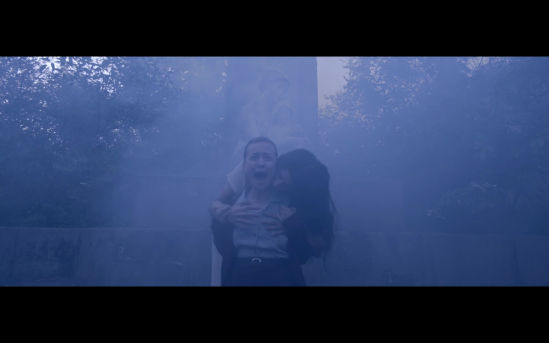
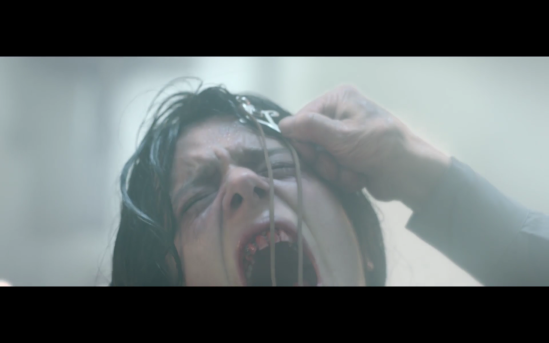
“Luciferina” is a black rites narrative saturated with psychosexual tendencies and religious divergences from writer-director Gonzalo Calzada whose horror mystery footprint, the Argentinian filmmaker’s common foundation for his prior work in “Resurrection” and “The Clairvoyant’s Prayer,” maintains a strong foothold for his latest venture from 2018 with a story of solid foreboding and overshadowing complication that’s naturally opaque, guiding viewers seemingly toward one direction and then obliterating their conjectures in an in a blink of an eye about how characters or events might play out. Layered with themes and heavy with motifs, Calzada summons the internal demon, figuratively and literally, from within an indie picture budget that’s complete with accidental demonic conjuring, eye-devouring effects, and a climax involving temple fornication of various Kama Sutra positions.

Young, beautiful, and, yet, withdrawn and plain, Natalia has embedded herself into nun-hood, a means to escape the unexplainable discomfort inside her own home and even in herself as she’s haunted by visions of a disheveled woman with crooked arms popping unnaturally out of a white nightgown, but not all of Natalia’s visions are bleak as she’s able to, at times, define a person’s gleaming aura during a momentary spell. Sofia Del Tuffo stars as the troubled vocational woman, a role that demands much from the young actress who can easily transition from a screaming and scared postulate to taking charge of her destiny by gripping Satan’s horns. Tuffo opposites Pedro Merlo as Abel who is, well, more or less a potential love interest. Abel has fire inside him sparked by his desire for Natalia, but goes full inferno after downing the Ayahuasca juice. The light and dark of Abel has Merlo flipping the script continuously and the actor keeps up with relative ease. The opinionated downside to roles Natalia and Abel might be lost in translation, but there’s a sense of disconnect between their multiple purposes: shaman visit, the unspoken connection for each other, and their intertwined destinies. These aspects go fairly unexplored or are either, in the script, diluted in the details. The supporting cast also don’t add volume to the story and though not all of the cast are like this, a good chunk are rather auxiliary for the moment of pinnacle prominence and their sub-stories are quickly squished – that’s the Gonzalo Clazada affect. The remaining cast includes Marta Lubos (“Darkness by Days”), Melena Sanchez, Francisco Donovan, Stefania Kossl, Gaston Cocchiarale (“Terror 5”), and Desiree Gloria Salgueiro.

“Luciferina’s” themes bubble quite easily to the surface, the more obvious found in the religious field, but an interesting theme is a woman’s protective, if not problematic, stance toward copulation and the guarded uterus and their right to chose. Natalia has no experience with sex and she’s constantly under the pressure of having sex, even inside the chaste nunnery. Natalia nonchalantly pushes away one of the boys in the nun’s drug rehab program with not much oomph, she then comes under siege by the forcibly accosting Mauro and his verbal rape fantasies toward his girlfriend’s younger sister, and then Abel’s internal struggle with his Faustian under guise who enthusiastically confesses his hard on to score with Natalia to bring forth more evil spawn. A common motif from the baby making is the uterus that pops up in Natalia’s dreams and her late mother’s frantic paintings that circle around the pressures of motherhood and as Natalia procrastinates under the semblance of saving her own life to further prolong her inevitable destiny, she comes to the realization running will prove for naught and becomes empowered. One thing weird in relation is not the uterus in itself, but rather the computer generated baby in the womb; the impression is okay in construction as the baby has some realism in the detail, but the adverse effect is the use of the effect that seems pointless and ostentatious.

Artsploitation Films and Reel Suspects presents “Luciferina” onto Blu-ray home video. The anamorphic widescreen, 2.35:1 aspect ration, presentation is quite sharp with textures and details in a lossless image. Calzada uses much of the natural coloring in daytime sequences and the night scenes are moderately bluish and director of photography, Claudio Beiza, has immense range and depth that provide astonishing interior and exterior backdrops that can be subtly pleasing. The Spanish language Dolby Digital 5.1 surround sound substantially keeps with the tone and pacing of the story. Dialogue is balanced and verbose in the forefront. The release also comes with a Spanish language 2.0 stereo track. Both audio tracks come with English subtitles that saw minor issues with translation errors and timing. The only bonus feature available is the film’s theatrical trailer. “Luciferina’s” contemporary tale of possession and sexual innuendo is rabid. Director Gonzalo Calzada’s ambiguity of mystery horror is grossly engaging while “Luciferina” can also be glossy with splayed monstrous savagery and graphic sexual content, two genre commodities that churn easy entertainment.