

What’s Fashion Without a Little EVIL Behavior? “Helter Skelter” reviewed! (Radiance Films / Limited Edition Blu-ray)

Beauty is Pain. “Helter Skelter” from 88 Films!

Lilico is the hottest Japanese fashion icon.  Fans adore her, brands want her, magazines crave her, and paparazzi and photographers yearn to shoot and work with her beauty that inspires all and commands undivided attention.  However, her astonishing beauty isn’t entirely organic as multiple surgeries through unorthodox surgical procedures that enhance her from a forgettable nobody to an unforgettable somebody.  Her radical surgeries begin to show blight side effects of the surface of her skin, sending her into vanity driven sociopathic spiral of sex, mental torture, and self-destruction, also affecting those closely around her, especially her assistant Hada who takes the brunt of her maltreatment.  When a new, hot model is presented by her manager and the world begins to fall in love with her, seemingly dropping Lilico from being the face of the fashion industry, the model’s snowballing and necrotizing surgical side effects can’t be stopped from becoming all but public. 
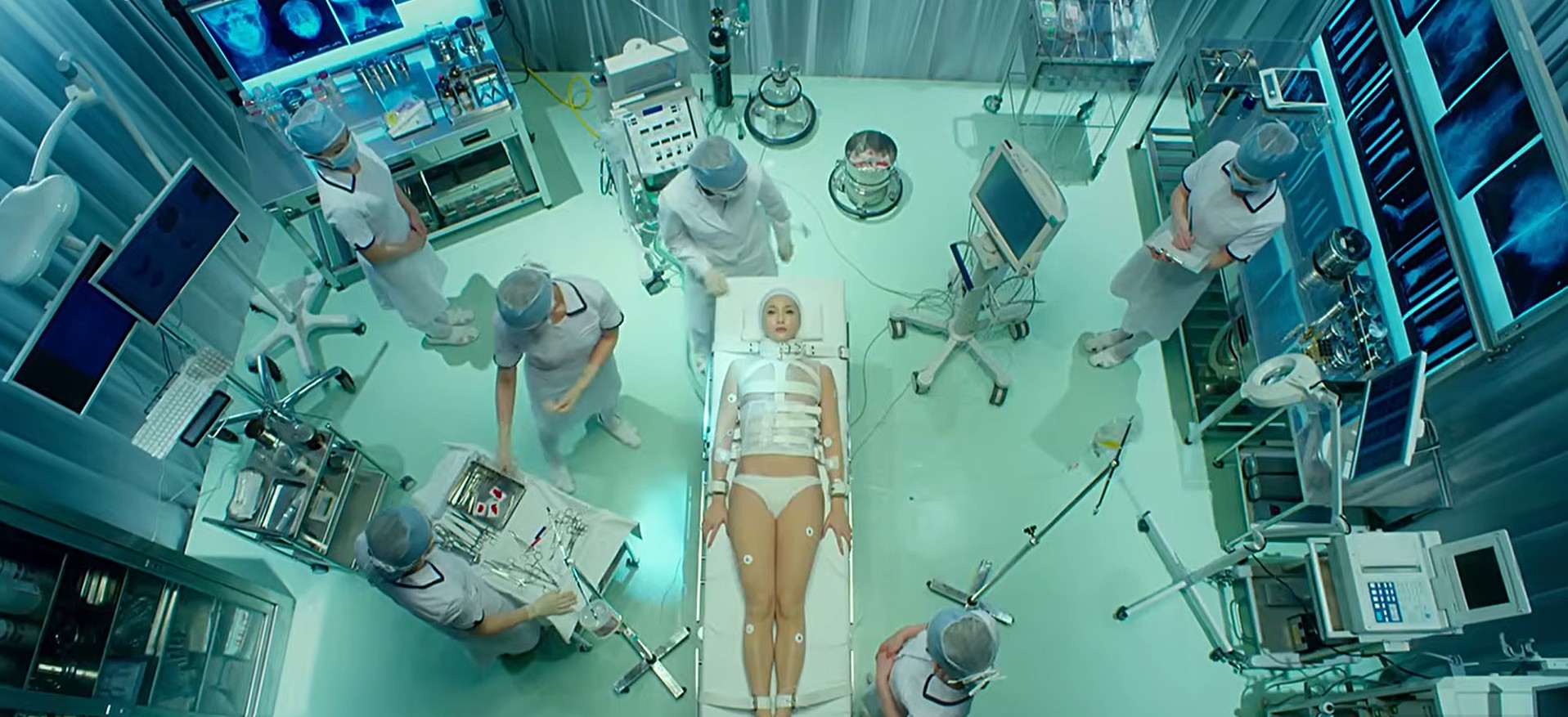
Social commentary horror movies like “The Substance,” “The Neon Demon,” and “The Ugly Stepsister” underline the vast awfulness and extreme lengths of beauty standards.  How to keep youthful, how to manipulate the face and body, and how envy can be weaponized from the worst of counterparts are just some of the attributes, which are very accurate outside the cinema, used as tropes for the body horror subgenre where attractiveness is the core catalyst that motivates monstrosities.  These late 2010s and early 2020 films might not have been directly inspired by Mika Ninagawa’s “Helter Skelter” but definitely pulls from the same cloth.  The 2012 Japanese fashion industrialized body and psychological horror is adapted by Arisa Kaneko based off the Kyôko Okazaki manga of the same name with established manga-to-film experienced producers, Morio Amagi (“Cutie Honey”) and Mitsuru Uda (“Xxxholic”), producing the WOWOW, Parco Co. Ltd, and Asmik Ace Entertainment film.
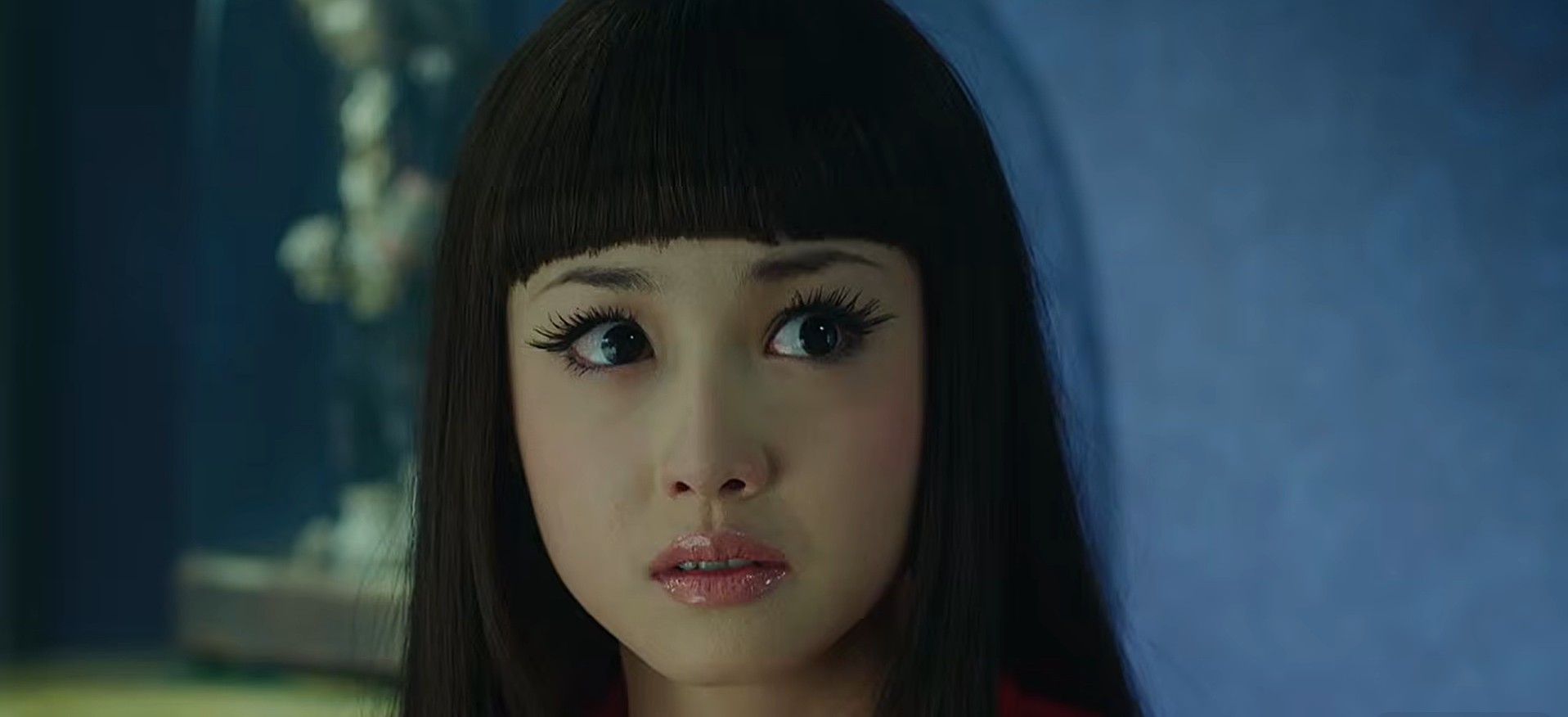
Objectification perspective isn’t always from the outside looking in but can be looking out as well.  In “Helter Skelter,” model Lilico believes in her self-importance, treating others in subordinate to her illustriousness career as the hottest flavor in Japan’s fashion society.  Society objectifies Lilico as nothing more than a stylistic Goddess who can do no wrong and even have the smallest bit of her in their space, whether be the hot topic of conversation or to the be face of their magazine cover, whereas Lilico objectifies those all around her with eviscerating self-proclaimed eminence and dominion over their mind, body, and soul.  “Ghost Train’s” Erika Sawajiri has the perfect look and approach to celebrity derision without blatancy toward others as her expressionless face never contorts with anger, never smiles without the devilish smirk and piercing eyes, that makes the fashion icon unreadable and to sway of control during bi-polar scenes where happiness and disgust swing rapid on a totalitarianism pendulum.  Personal assistant Michiko Hada, under the performance of “R100’s” Shinobu Terajima, takes the brunt of abuse during on-the-clock and off-the-clock professional and personal time.  Terajima’s ordinary bearings for Hada make the character an easy target in contrast to Lilico’s ornate wardrobe and lavish style of living spurred by ruthless nature to be best and most beautiful, taking an authoritative sovereign stance of control in the fashion hierarchy.  Lilico’s spoiled prince behavior coincides by a fueling Kaori Momoi in a queen-like mother figure as the talent agent who mostly advises her star pupil an instigating misconduct mindset with pro-surgical advice and like-minded guidance that artificially influences her body despite the pain and dangers as well as providing a mimicking behavior of dejecting and downcast harm.  Nao Ōmori (“Ichi the Killer”), Gô Ayano (“Woman Transformation”), Kiko Mizuhara (“Attack on Titan”), Hirofumi Arai (“The Neighbor No. Thirteen”), Anne Suzuki (“Returner”), and Mieko Harada (“Ran”) all play a role in the rise and fall of Lilico.
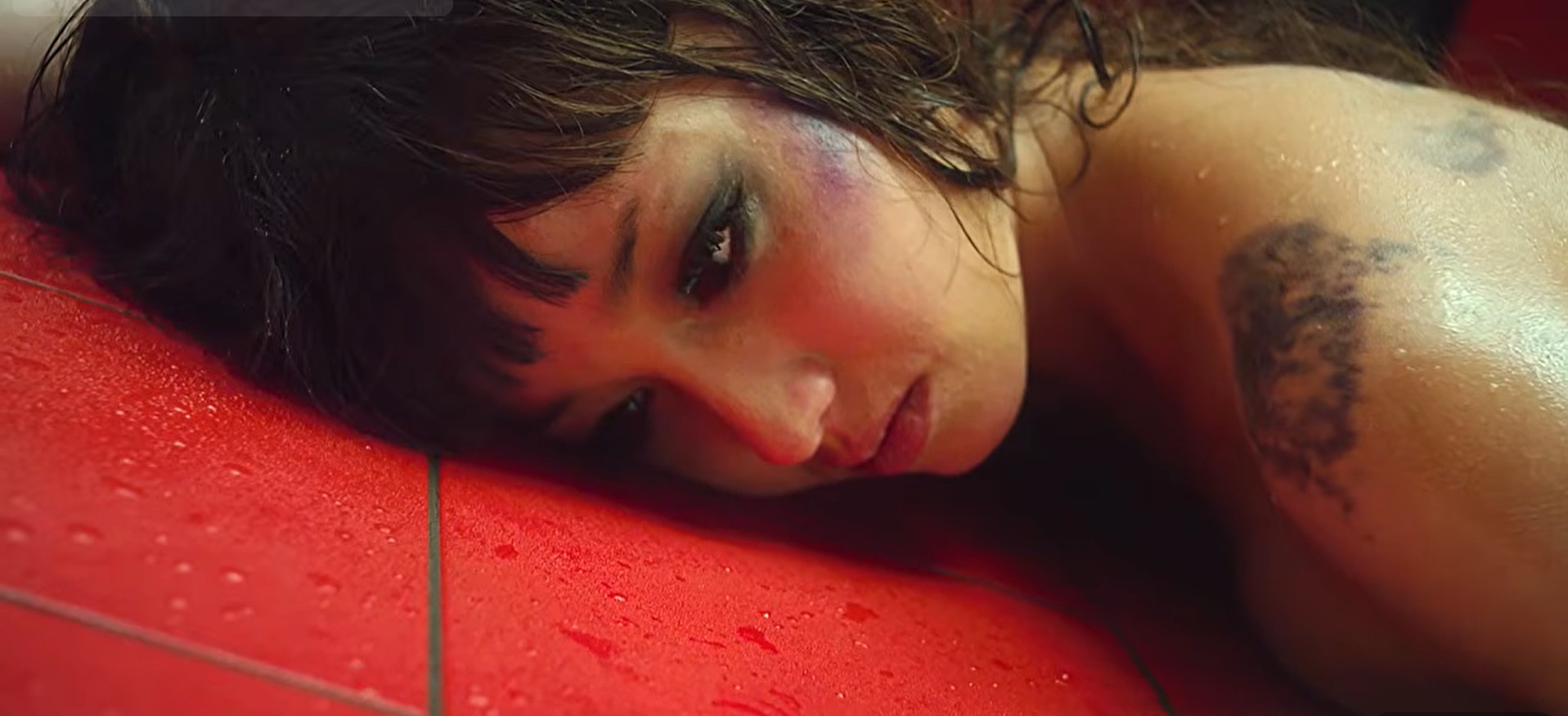
Much like Lilico’s quickly deteriorating fractured state of mind, and body, Ninagawa utilizes a cinematic style that’s overly brilliant with neon colors and a sharp polished look that contrasts reality and distorted perception, creating a disjointed narrative digression Lilico experiences.  The hyper stylization keeps in tandem with the fashion world of flash photography and gaudy maximalism, the ultra-violence and promiscuous behavior depict the cutthroat competition of remaining beautiful and the ugliness that’s truly inside, and the sheer flaunting of indifference and superficiality lingers throughout in and out of favor of our terrible protagonist who is actually the villain and the victim of her own tale.  Each character is flawed beyond reproach and having no redeemable qualities that make them appear strong or promising to be a virtuous type.  Not even the meek and eager-to-please personal assistant Hada who takes the punishing commands of her employer and manager in a purely pitiful subjugation of oneself to not lose a job position and be in the presence of stardom.  Hada even lets Lilico invade her personal life and continues to let it happen with no choice in the matter.  “Helter Skelter” embodies the very definition of the term with its confused and hurried chaotic state in design and in story while, in the same baroque breath, disenchanting the illusion of the fashion industry and beauty standards as not glamourous and genuine but fickle and fabricated with a heavy dish of backstabbing and self-destruction. 

In the same spirit as photogenic magazine models, UK label 88 Films releases a beautifully crafted, limited-edition Blu-ray release.  The numbered release Blu-ray is AVC encoded, 1080 high-definition resolution, onto a BD50 that was already shot digitally with a Red One MX camera through Zeiss Ultra Prime and Angenieux Optimo lenses under cinematographer Daisuke Soma.  This gave “Helter Skelter” a glamorously polished look to accentuate the hyper-stylized and contemporary look that starkly discolor the centralized characters as ruthless people of fashion and high society.  When good finally enters the picture, a young model stepping to Lilico’s high heels as the next young, hot model, the harsh design of modernism is scaled back to simple and sterile aspects with more of the dramatics being held locally to the downfallen characters.  Higher contrasts create deeper shadows amongst a medium-heavy color saturation that primaries strong statement colors like fire-engine red and Duke blue.  The curvature of the anamophoric lenses, presenting in a 1.85:1 aspect ratio, do show intentional signs of wrapping at the sides to capture the entirety of the wide shots in smaller spaces but adds to the surrealistic effect and is implemented at the right moments to make it all sensible.  No compression issues to note.  The Japanese DTS-HD 5.1 Master Audio and 2.0 Stereo tracks are the only two formats encoded.  The 5.1 has formidable attention to the side and back channels with the chaotic fashion-industry ambiance with erratic behaviors steering the scene.  Every action detail is highlighted to bring quieter scenes more tension and every tumultuous moments a fuller body.  The dialogue is crystal clear and layered appropriate with environmental track and soundtrack.  Moods rise up and down with the fluctuation soundtrack that pulsates in breath-holding, provocative, turning-point scenes that while melodies play in more of shocking portions to entice attention during climatic notes.  The newly translated English subtitles have no synchronization or grammatical issues to note and pace well with the visuals.  Special features include a feature in tandem audio commentary with Tori Potenza and Amber T., interviews with star Erika Sawajiri and director Mika Ninagawa, a behind the scenes of raw footage making the film, the Japanese premiere stage greeting, an opening day stage greeting, the Q&A from the Taipei Film Festival with director Mika Ninagawa, the original rehearsal footage, an image gallery, and the teaser and official trailers.  Like Ninagawa’s film, 88 Films tangible release is also hyper-stylized with newly commissioned art by Luke Insect that’s surreal, color, and slightly disturbing.  The clear Scanavo cases comes with an gold Obi strip with film and Blu-ray details and the sleeve is dual sided with original Japaense compositional design on the inside.  Inserted inside is a 23-page color booklet with a chaptered essay by Violet Burns, complete with color photo stills and promotional photos with the front and back art contrasting the two model women in a good and evil, light and dark, way.  The not rated, limited-edition Blu-ray has a runtime of 127 minutes and is A and B encoded to support playback in the Americas as well as Europe. 

Last Rites: There are plenty of horror as well as commentary films about fashion, but none do it with style quite like Mika Ninagawa and still develop an unrivaled cynicism of self-implosion.

Beauty is Pain. “Helter Skelter” from 88 Films!

EVIL Doesn’t Take Rejection Well. “Village of Doom” reviewed! (Unearthed Films / Collector’s Edition Blu-ray)

“Village of Doom” now on Unearthed Film’s Collector’s Edition Blu-ray!

Tsugio Inumaru is considered the smartest young man in his village.  Illness took the life of his parents, and he raised by his grandmother and lives off her land’s income, looking after him and dreading the day Tsugio becomes drafted as a soldier in war service, which bestows great honor from the villagers.  While husbands are away serving their country, bored and lonely housewives and bachelorettes desire the carnal company of the men remaining and with Tsugio’s youth and his own sexual yearnings bubbling to the surface, he’s prime Kobe beef for the hungry village women.  When Tsugio’s health examination reveals a tuberculosis diagnosis, he’s acutely shunned by the villagers, drying up his sexual escapades, as well as potential betrotheds.  Rejection by his village, and even his country, sends the young man into plotting a massive killing spree, targeting all of those who’ve forsaken or scorned him to a life not worth living. 

In the Tsuyama outskirt village of Kamo of 1938, 21-year-old Mutsuo Toi cut the village’s electricity, strapped flashlights to the side of his head, and took a mini arsenal that included a Browning shotgun, a katana, and an axe to 30 villagers, including his grandmother, in an act to revenge killing for being rejected socially and sexually because of his tuberculosis diagnosis.  What is known as the Tsuyama Massacre, Mutsuo Toi’s cold and merciless act of carnage was the basis for Noboru Tanaka’s “Village of Doom.”  The pinkupsloitation director of “Rape and Death of a Housewife” and “Angel Guts:  Nami” helms the Japanese, semi-biographical tale, penned by Takuya Nishioka (“Tattoo,” “Female Teacher:  Chain and Bondage”), that follows closely the bullet point events of Mustuo Toi but with different named characters and a strong pink eiga touch.  “Village of Doom” is one of Kazuyoshi Okuyama’s (“R100,” “Self-Bondage:  All Tied Up with My Own Rope”) first produced ventures and is a production of the Fuji Eiga and Shochiku Eizo Companies. 

While Mutsuo Toi is not directly portrayed, his downward spiraling steps are indirectly followed by Tsugio Inumaru, played by the late Nikkatsu actor Masato Furuoya.  Furuoya’s relationship with director Noboru Tanaka is well established within their director-actor collaborating context with Furuoya having roles in Tanaka’s previous credits of “Rape and Death of a Housewife” and “Angel Guts:  Nami.”  There’s a blanket of comfortability within Furuoya who must treat his character as one-part pink paramour and one-part biographical massacrer, seducing with a tantamount tease of fantasy and authenticity.  Furuoya’s beleaguered performance is a jagged mountainous range of emotions from confidence and compassion to hormonal desires, to the stressed misgivings from cold shoulders and bad fortune mishandled by Tsugio’s own sense of worth to his himself and the village that has turned its back on him.  In keeping with the simulated practice of Yobai, the night crawling sexual escapades amongst young men and women, typically unmarried men and women, Tanaka portions heavily toward Tsugio’s internal grievances with the suddenly thrusted into the primitive and stimulated needs of a young man’s novice sex drive awaken with a morsel nude photograph.  Furuoya’s costars are the collective antagonist from the perspective of Tsugio with their geniality turned hostility of the TB diagnosis.  Sexualized warmth and freedom run rampant, peppered in between with subdued duty to village and country, that cradles an shy Tsugio’s into his manhood but when his manhood is threatened and the village neglects and rejects his contributions, Tsugio’s acute ostracization from within the only community circle he’s ever known disfigures his rationality into revenge.  The cast is surprisingly pink vet lite with the actors coming from other Japanese oriented popular subgenres like samurai films, erotic but tasteful comedies and romance, and horror with Misako Tanaka, Isao Natsuyagi (“Female Prisoner #701: Scorpion,” Kumiko Ôba (“Hausu”), Shino Ikenami (“Evil Dead Trap 2”), Midori Satsuki, Yashiro Arai, Renji Ishibashi, and Izumi Hara (“Island of the Evil Spirits”).

“Village of the Doom” is a two-toned down spiral to build up only to crash down the hopes of an impressionable young person.  Similarly seen in later works like Gus Van Sant’s “Elephant” where the visually intense, raw, and viscerally slicing culmination of enough-is-enough points back to the series of occurrences that significantly mile mark every step lead to the slaughter.  Set inside a valley surrounded by green mountains, the idyllic and rural riverside village impresses more backdrop tranquility than doom with slower pace and dutiful lifestyles but like most cutoff societies, the slow, insidious corruption of morality courses with infectious infidelity under the guise of Yobai, upends rightful justice and trades in for lynch mobs, and wanes promises for easy streets and exploitation run out dates that run its course for one but not the other.  All these aspects have relevant translatability to today’s cliques and inner circles that oust the unusual to where a sense of belonging feels hopelessly frustrating.  The isolation is so engrained that it highlights, in a very matter-of-fact way but does speak to it quite a bit, is the incestuous relationships between related villagers with the instances of Tsugio and cousin Kazuko’s flirtatious meetups and talk of marriage as well as Tsugio accidental arousal around his cousin’s aunt.  This adds to the tension and the corruption of that old idiom of don’t shit where you eat and the evident sourness spoils relationship ties when family is important to lessen the blows of life’s subsidiary problems.  For Tsugio, who is already dealt a bad hand with both parents deceased and his illness, the whole village rots what’s left of his innocence and ambitions and, in turn, aims to exterminate those who’ve foiled his purity.

A wicked, notorious true crime story now for the rest of the world to visual in “Village of Doom” on Blu-ray, courtesy of Unearthed Films on their Unearthed Classics sublabel.  The new Collector’s Edition Blu-ray is format encoded onto an AVC encoded, 1080p high-definition, BD50.  The picture is tempered with the muted colors, or rather the scaled grays, of an archaic Japanese village coupled by the browns and straw hued housing set amongst in and surrounded by a sea of green foliaged valley, and while objects are delineated nicely without any saturation bleeding or compression issues, the colors don’t necessary pop.  What does pop are the textures of the same articles mentioned above.  The groves of thatched wooden abodes are remarkable deep, the greens, though seamless, are nicely touched upon in the foreground, and skin consistencies vary person-be-person within idiosyncratic personal brackets with dynamic sweatiness and emotion-delivery contouring to accentuate.  The Japanese LPCM 1.0 mono has no problem discerning elements.  Though all funneling through a single channel, the dialogue and ambience works together thanks to the clean, more immersive ADR.  Mashanori Sasaji’s tests the soundscapes of traditional Japanese drum rhythms of Oo-daiko with then modernized synthesized notes to create a forebodingly, entrancing composition.  With any post-production voiceover work, dialogue is very robust, and the synchronized English subtitles offer an error-free and organic translation.  The original audio file is compressed cleanly with no issues with crackling, hissing, or any other damage for noting. Unearthed Film’s 17th spined Classics title supplements with an audio commentary by Asian film experts Arne Venema and Mike Leeder, a look at the Tsuyama Massacre in Dark Asia with Megan: Case #57 Japan’s Darkest Night, a promotional gallery, and the theatrical trailer. The Amary Blu-ray case is housed in a cardboard O-slipcover featuring Mutsuo’s iconic night-crawlin’ getup on Masato Furuoya’s Tsugio in colorless black-and-white. The case has the same image used for the cover with no reversible sleeve and the inside does not contain any tangible inserts or materials. The disc is pressed with not the same image but the same head flashlight Tsugio, this time looking right at you in unison with his shotgun barrel. The not rated feature has a runtime of 106 minutes and is region A locked.

Last Rites: “Village of Doom” depicts the same sad story that strikes the hearts of today’s mass shootings, spurred by the dispel from those in proximity, intimate, and friendly. “Village of Doom” is a true classic of casted out carnage relit by Unearthed Films to retell the notorious narrative of Japan’s deadliest mass killing ever.

“Village of Doom” now on Unearthed Film’s Collector’s Edition Blu-ray!