Crooked EVIL’s Fixation for Chocolate and a Childlike Girl Will be its Sole Destruction. “The Dead Mother” reviewed! (Radiance Films / Blu-ray)

“The Dead Mother” Lives on a 2-Disc, LE Blu-ray/CD Set from Radiance Films!

A botched burglary of an art restorer’s home leaves the art conservationist dead and her daughter wounded by a shotgun blast at the hands of apathetic criminal Ismael Lopez.  Years later, the daughter, Leire, has grown into being a young and beautiful simpleton at a mentally disabled clinic where the mute girl often recesses to a caretaker’s city home off clinic grounds.  By coincidence, the lifelong crook Ismael catches sight of her on the street and becomes obsessed with her witness of his past transgressions.  Conferring with his love-hate girlfriend and felonious partner Maite, the two decide to kidnap her while she’s off clinic campus and put her up for ransom after Ismael couldn’t bring himself to initially kill her but an increasing preoccupation for the chocolate-fond and childlike Leire within a stoic Ismael places an insidious jealously and enigmatic strain between him and Maite that tests that already turmoiled codependency of affection and survival.
Emotionally recrudescent with multiple intrinsic layers of tough guilt, incontrollable desire, and maybe even a pinch of forbearing responsibility that can be labeled cossetting at times, “The Dead Mother” is a beautiful film with unsettling undertones from Spanish filmmaker Juanma Bajo Ulloa.  The “Baby” director cowrite the “The Dead Mother” alongside younger brother Eduardo Bajo Ulloa, their second collaboration after hit success with the duo’s crime thriller “Butterfly Wings” two years prior in 1991.  The Spanish film is shot primarily in Vitoria, Spain with the backdrop of a near classic medieval architecture of urban city with old wooden interiors, high ceilers, and gothic qualities, providing a relative old world air to a tale of petty ideals and madness that disintegrates by the mere site of pure, ingenuous goodness. Under the private and state run production companies Ministry of Culture and Gasteizko Zinema, “The Dead Mother,” or “La Madre Muerta,” is produced by Fernando Bauluz.
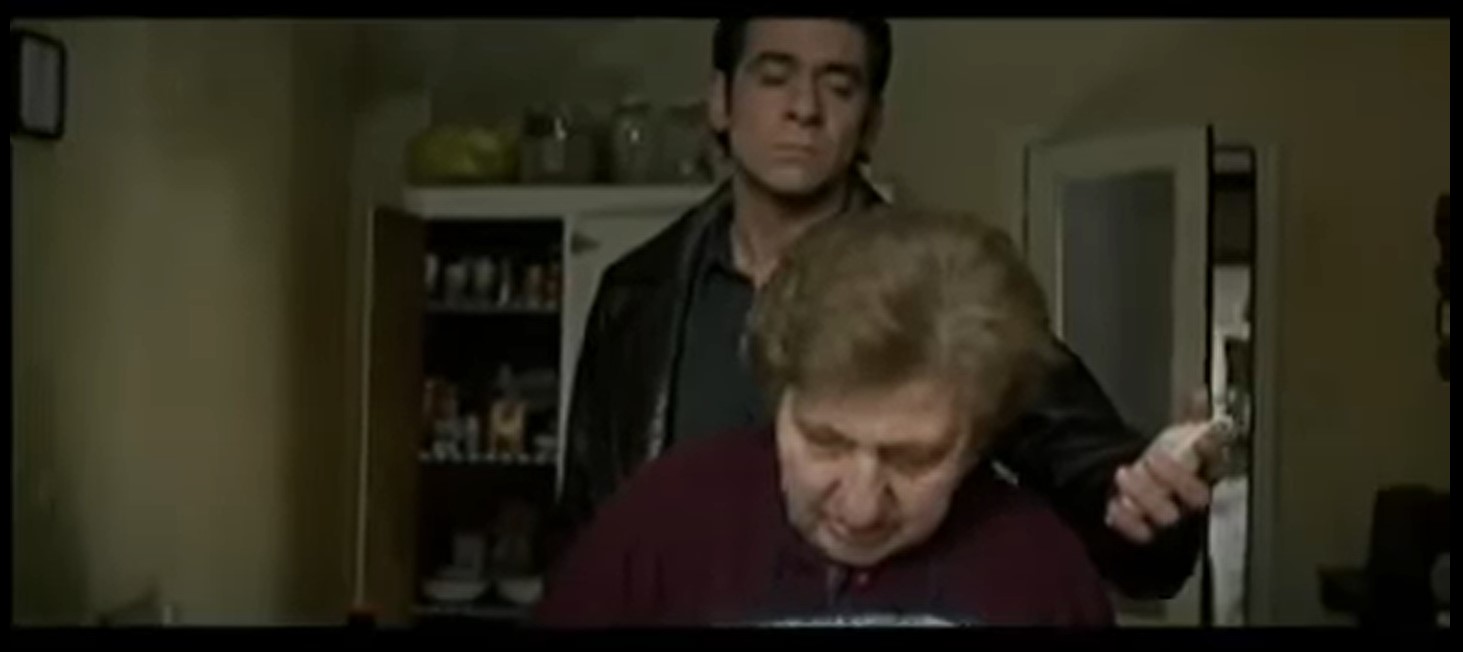
To obtain the intensity, the coldness, the unpredictable, the pitch-black humor, and the soft touch, Juanma Bajo Ulloa doesn’t hire a vocational dramatic.  Instead, the filmmaker chances actor just getting his feet wet the Spanish cinema with Karra Elejalde whose assortment of comedy and drama in his first years seasons him for the role of the reprobate Ismael Lopez, a coldhearted killer with a short fuse for anyone who defies or belittles him and, on the opposite side, can be pensive about his past and next steps in a haphazard way. Opposite Ismael is a devout partner/lover, equal in ruthless potential, yet happy, in her own way, to play house wife in their ramshackle, fly-by-night home.  Played by the Portuguese-born, Belgium-raised singer Lio, her stage name in lieu of Vanda Maria Ribeiro Furtado Tavares de Vasconcelos, the pop star, who still to this day floats between acting and singing, rivals Elejalde’s dark-and-light intensity within her own character’s amorous feelings for the petty crook and murder and would do anything to keep him, even if that means destroying what he adores.  And what does Ismael adore?  Ismael’s new fascination is with Leire, the once little girl who attempted to murder now all grown up, developmentally disabled, and beautiful.  While I can’t fault in any of “The Dead Mother’s” cast performances, I could not imagine Leire being portrayed by anyone other than Ana Álvarez (“Geisha”).  Exuding innocence in her eyes amongst a full-body vacuity, Lio might be the professional singer but it’s Álvarez who hits every note of amentia that constantly has us questioning how much of her facility is there, conscious of the bizarre love-triangle or the homicidal-involving abduction.  In the same breadth, a muted Álvarez talks with her eyes, her expressions, and her body language that subtly fidgets or does other under-the-radar subnormal behaviors to convey an unequivocal virtue starkly in contrast amongst her callous captors who enjoy playing house or even try to make her smile or laugh with jokes and play.  Eventually, the dynamic dissolves, like many love triangles do, between an advantageous perversion and deadly ultimatums that will result unfavorably for most.  “The Dead Mother” rounds out the cast with Silvia Marsó, Elena Irureta, Ramón Barea, and Gregoria Mangas.

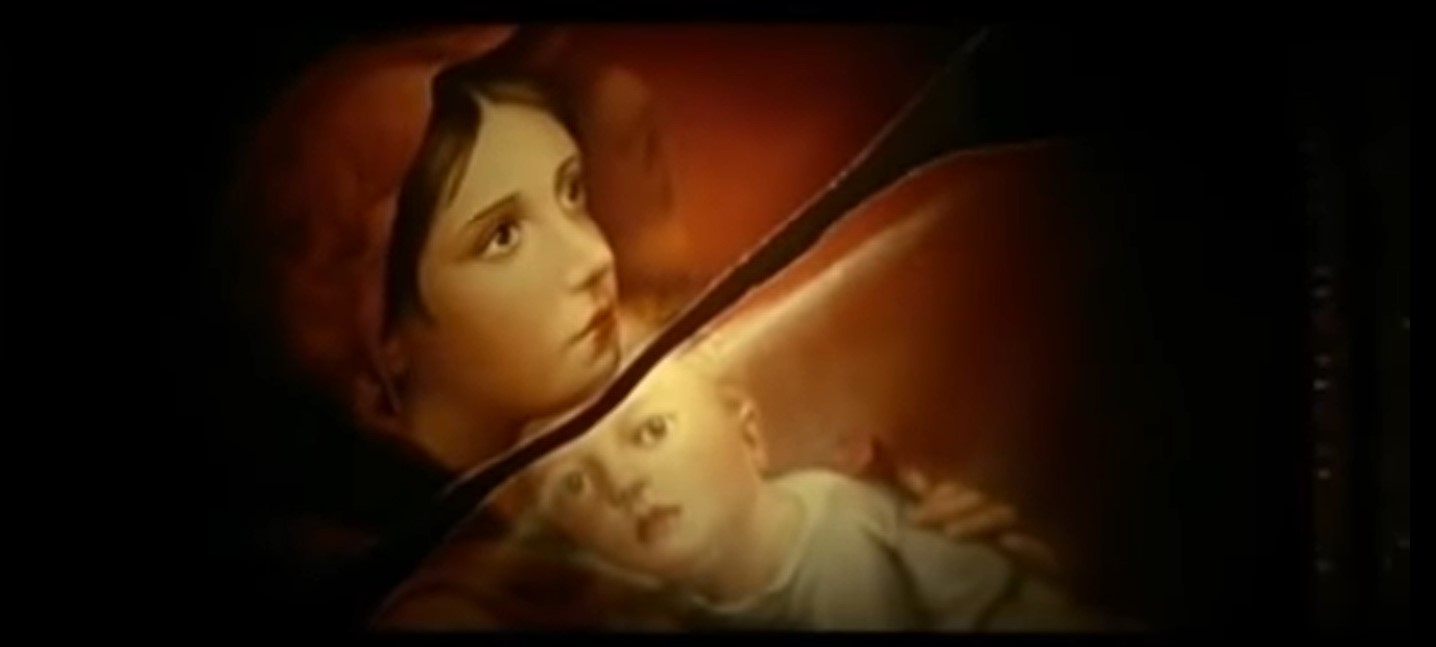
Ismael’s fixation toward Leire is so tremendously opaque without much exertion it’s difficult to understand the criminal’s ultimate motives, leaving audiences with a shrouded aftertaste of open interpretation.  Perhaps guilty from killing his mother all those years ago and nearly killing her, a wash of responsibility for her now placid and childish existence courses through him, driving him to do the bare necessity in taking care of her.  Another facet to Ismael’s curious interest is Leire’s inherent beauty despite her absent situational awareness.  His attempts to make the young woman’s empty expression become joyous with a smile fails, as if that blank-faced barrier keeps him from moving forward with something akin to being romantically involved.  In a couple of brief, uncomfortable viewing stints, Ismael gropes with the second time being passionately fondled by Maite in attempt to win over affection in what Maite believes is a duel between Leire for his attention.  Leire can be interpreted as a burden that has passed from the mother, hence the title, to Ismael, an assuming responsibility pseudo-father figure.  When Ismael kills Leire’s mother during the bungled burglary, a hint of a smile extends upon her face before the blood drips down her eyes in a fantastic POV shot by cinematographer Javier Aguirresarobe.  Supporting this theory is the Renaissance painting of mother and child with a tear in the canvas between them, a painting that Ismael lingers over for a few seconds while rummaging through the art restorer’s home.  The ambiguous nature of “The Dead Mother” only succeeds because of the confident performances and Juanma Bajo Ulloa’s august eye for the impeccable shots he wants and achieves. 

“The Dead Mother” arrives onto a limited-edition Blu-ray, to the tune of 3000 copies, from Radiance Films U.S. line.  The new 4K scanned transfer, restored from the 35mm negative and stored on an AVC encoded, high-definition 1080p, BD50, is presented in a widescreen 2.35:1 Cinemascope aspect ratio.  Juanma Bajo Ulloa oversaw the pristine cleaning of film strip defects and the new, frame-by-frame color grading at the Cherry Towers lab in Madrid, Spain.  The excellent work by the restoration company and Ulloa’s supervision of the process resulted in a naturally clean edged and detailed saturated transfer to rejuvenate the image with a fresh look.  The overcasting shadows and slate aesthetics with brilliantly hued low-key lighting suggest an immense lugubrious tone throughout, accentuated by the antediluvian structures. The Spanish language uncompressed 2.0 stereo audio absorbs what’s absent, which isn’t much, with an uninhibited, original fidelity of the dialogue, surrounding milieu, and the bordering whimsical string soundtrack by Bingen Mendizábal. There are no hints of hissing, cracking, popping, or fragmented damage of the audio track that persists on being punchy with every Ismael scuffle down to the very rustling of the chocolate wrapper in Leire’s chocolate-stained hands. While range is plentiful and natural, depth is not as utilized unless absolutely necessary, such as with the oncoming horns of the diesel trains in the trainyard or Ismael whistling between the pews of a decrepit church shot from the chorus balcony. English subtitles are available and optional. Special features on this limited-edition set include a Spanish audio commentary by the director with burned in English subtitles, The Story of the Dead Mother an archive behind-the-scenes featurette of retrospective interviews from 2008 and some raw footage of takes that’s, again, in the Spanish language with English subtitles, Bajo Ulloa’s short film “Victor’s Kingdom” aka “El Reino de Victor” from 1989 and now restored in a 4K scan, the film’s trailer, and photo gallery. Physical attributes impress within the clear, slightly thicker amary Blu-ray case that’s been conventional distribution use with Radiance Films in its near retro, austere facade. Sheathing a reversible cover of the original media artwork inside, the outside cover continues to remind me of its Arthur Fleck appeal with a doleful Ismael Lopez in his very best clown make up. Both discs, the Blu-ray and the CD soundtrack, are overlapped and locked in place pressed their respective black and creme coloring scheme. On the insert side contains a 35-page color booklet filled to the brim with captured film images, promotional images, and cast-and-crew posed pictures along with the CD track listing, cast and crew breakdown, and expressionism written pieces and essays by Eduardo Bajo Ulloa, Juanma Bajo Ulloa, Nacho Vigalondo, and Xavier Aldana Reyes. The unrated feature has a runtime of 111 minutes and his region free for all you worldly, cultured lovers of cinema out there. The mother might be dead but Juanma Bajo Ulloa’s converging of cynical odd behavior with the breakdown of status quo by a wicked curveball makes for a darkly cherub of Spanish filmmaking worth coddling in Radiance’s exceptional release.

“The Dead Mother” Lives on a 2-Disc, LE Blu-ray/CD Set from Radiance Films!

When Men Want More, They Receive More… EVIL! “Red Sun” reviewed! (Radiance Films / Blu-ray)

“Red Sun” on Limited Edition Blu-ray from Radiance Films!

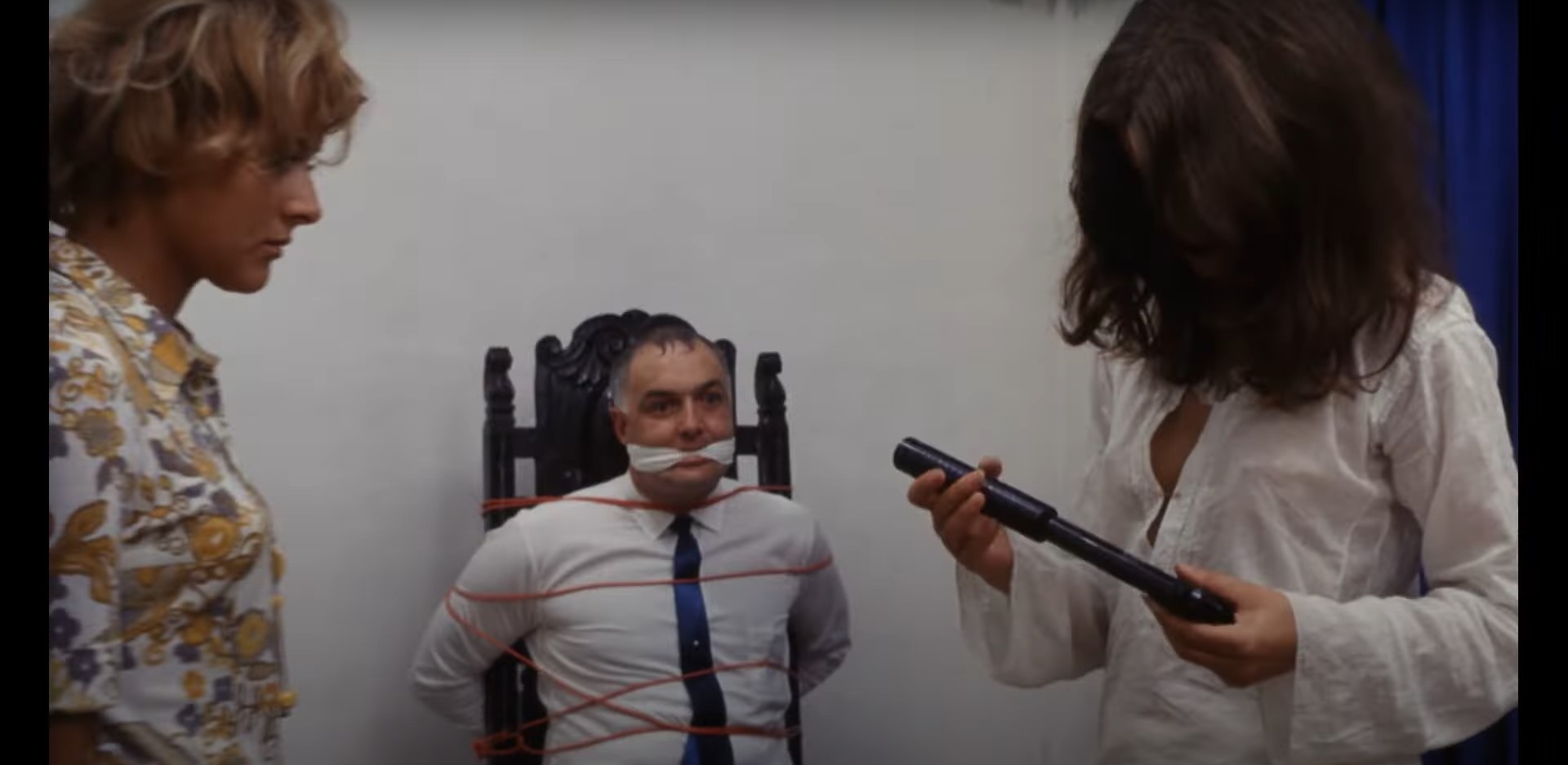
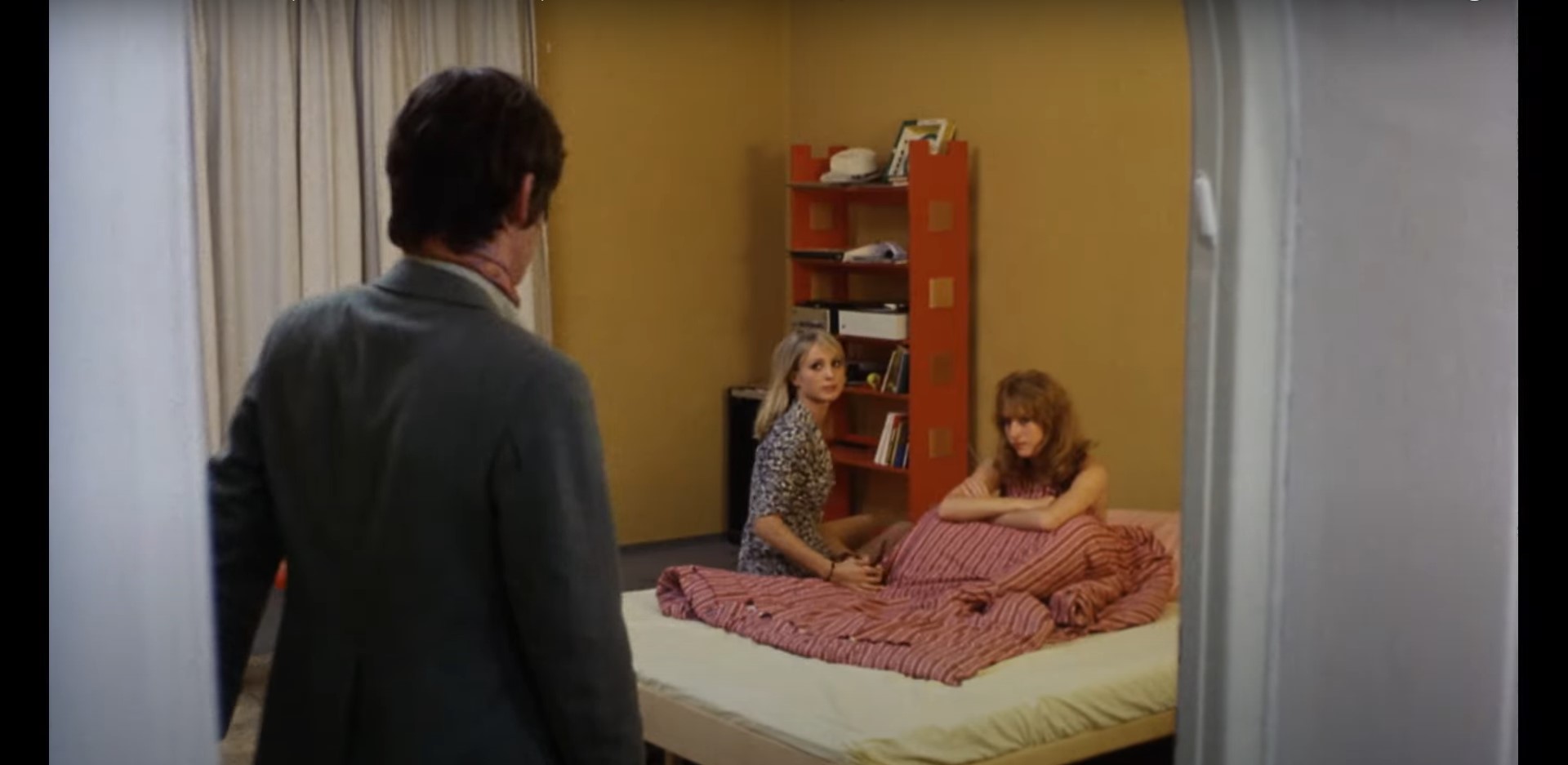
Peggy, Sylvie, Christine, and Isolde have made a mortiferous pact to lure wanton men into their spider’s web before snuffing them out. Armed with guns and homemade explosives, the four women find themselves strapped for cash but managing to get by with their all-in scheme to take out as many licentious men as possible. When the nomadic loafer Thomas re-enters Peggy’s life, she initially sees him as just another mark to relieve from the mortal coil, but Thomas’ uninterest in sexual desires appeal to Peggy’s compassion and care for the man she once loved who just happened to show up in her life one night. As the two become closer, Peggy’s accomplices continue their deadly ideology, working their individual johns, but Christine and Sylvie find Peggy slipping under Thomas’ beguiling draw, an affect she can’t seem to comprehend, and pressures Peggy to be thorough with Thomas to the bitter end.

“Rote Sonne,” or “Red Sun” translated into English, is the 1970 feministic crime drama from German filmmaker Rudolf Thome and penned by the late Switzerland born screenwriter, Max Zihlmann.  Thought-provoking as it is enticingly cold, “Red Sun” tears open a void between lust and violence that separates the sexes of scorned scars.   The pre-European Union film looks at feminism during a highly patriarchal Germany time, West Germany to be specific, when women rights were essentially molded and determined by men.  Wives relied heavily on their husbands to make decisions for them on a permissible granted condition and even some marriage-related abuse crimes we’re not punishable under German law.  Thome helmed a politically anti-conservative and socially anti-inequality picture during the second wave of German feminism of the 1960s with ironfisted and revenge-seeking protagonists as an active cell blending into cultural norm.  “Red Sun” is produced by the director as well as Heinz Angermeyer of Independent Film productions and is part one of our double bill look at radical feminism with Marleen Gorris’ “A Question of Silence” to follow.

At the tip of the cast spear is a Rudolf Thome regular, Marquard Bohm, having had roles in another of Thome’s empowering women feature “Supergirl – The Girl from the Stars” as well as the skin-laden “Detektive,” and the narrative’s focal character stirs confounding interest in that it revolves around a male principal of a women liberation-by-force feature.  As Thomas, Bohm is not a traditionally depicted German man but has all the some of the minuscular familiar qualities of masculine behavior.  Thomas loafs into to life of Peggy, played by fellow “Detektive” star Uschi Obermaier, and her cohort of conniving men eaters – Christine (Diana Körner, “Barry Lyndon”), Sylviie (Sylvia Kekulé) and Isolde (Gaby Go) – simply by being at the right place at the right time or visa-versa, depending on how you look at it.  For Thomas, his nonchalant leeching onto Peggy morphs into something more than just freeloading off of already strapped for cash Peggy and friends, becoming a distraction and an attraction from his previously failed relationship in Munich.  The role is in a mirror reversal of the then current German society with Thomas being a stay-at-home man, running errands at the behest of the woman Peggy as she goes to work and earns to keep their clandestine killing chugging along, but Thomas does what he wants, whether be spending Peggy’s extra cash on cigars or eating all the food in ladies’ fridge.  Opportunistically asserting his needs onto their, often inimical, hospitality, Thomas is the Peggy beloved free-range chicken strutting his stuff around other hungry, more axe-wielding, farmers that put the pressure on Peggy to nix him before he insidiously collapses their pact.  Under the “Red Sun,” the cast fills out with Don Wahl, Peter Moland, and Henry von Lyck.

Unfortunately, Thomas has inadvertently sowed the seeds of destruction within the four women, dividing the group’s cause and on what to do with Thomas.  The women are arranged in a spectrum range of how to handle their contested guest; Thomas has caught the eye of Peggy and Isolde, though active in certain measures of man-slaughter, refuses to partake in the act of killing altogether where Sylvie pushes back against her indifference amiability for Thomas to continue the good fight and Christine just flat out owns her oppositional stance to eliminate the man many would find lackadaisical and nocuous to their friendship and plans, like an usurping boyfriend coming in between two best friends.  What Thomas represents is the potential squash, or delay of, the feminist movement against an arrogant and authoritatively unfair patriarchal society and each woman is a different perspective and reaction to the measures of feministic movement.  “Red Sun” is also a tragic love story that pits rightful duty against the heart’s urges and Thome is able to fashion a path through the commentary to depict both views in a sad, yet heartful conclusion.  What Thome doesn’t do well is the appropriate stitching of time passed.  Perhaps through editing or the within the confined text of the script, what feels like weeks passed is actually only a handful of days, but Thomas’s comfort level is so ingrained, coupled with the brief mentioning of how long he’s been around, the comings-and-goings of time blend into one jerky story that can’t properly materialize a granular tone and “Red Sun” becomes a bit sun blind at times when trying to keep with the characters’ narrative.

“Red Sun” blazes onto a world debut, limited edition Blu-ray release from independent cult film distributor, Radiance Films. The AVC encoded, high-definition release has been scanned in 2K from the original 35mm camera negatives, supervised by director Rulfe Thome, at the Cinegreti Postfactory in Berlin as well as additional touchup restoration work to spruce up the dust, dirt, and scratches. Radiance Films’ presentation features a brilliant quality that has restored to void out any celluloid cankers. Grading appears natural and vivid under the breadth of the welcomed 35mm grain. Aside from a handful of faint vertical scratches here and there, this Blu-ray has none the worse for wear with compression issues as the transfer is stored on an ample BD50 to reduce any compression artefact effects. The original German language LPCM 2.0 mono track vivaciously keeps up with a clean, clear, and robust post-production dialogue recording. No major issues with hissing or popping though minor specimens rear their ugly audibles sporadically to a negligible outcome. Since ADR is used, depth is lost amongst the dialogue track, but the environmental ambience nicely courses through the output with a small explosion and episodic skirmishes to keep the range from being too concentrated. English subtitles are available and are well-synced, well-paced, and are grammatically sound from start to finish. Bonus features include an audio commentary track with director Rudolf Thome and Rainer Langhans and also two visual essays with film academics Johannes von Moltke, in German with English subtitles, on the subject of cultural and social influences on “Red Sun” titled Rote Sonne: Between Pop Sensibility and Social Critique, and Margaret Deriaz exploring the developments on the New German cinema, titled From Oberhausen to the Fall of the Wall. The physical attributes are just as enticing with non-traditional and clear Blu-ray snapper case with a thicket, 51-page color booklet insert featuring the 2022 Guerrilla girls: Radical Politics in Rudolf Thome’s “Red Sun” essay by Samm Deighan, an interview with the director, Letters to the German Film Evaluation Office by Wim Wenders and Enno Patalas from 1969, film review extracts between 1970 and 1991, and transfer notes and full package release credits. Sheathed inside the case is a reversible cover art with a Bond-esque prime cover of Uschi Obermaier in a white, short-skirted outfit holding a revolver in front of a shoreline red sun. Alternate, inside cover notes the original German language title “Rote Sonne” with the 3 of the 4 femme fatales posed around Peggy’s VW bug. The disc press art is perhaps the less exciting aspect with just a plain, off-white disc with red letter of the title. Radiance Films’ release comes region free, has a runtime of 87 minutes, and is not rated. Limited to 1500 copies should not stop a film aficionado from looking directly into the “Red Sun,” a highly provocative and pulpy thriller full of contempt and full of ambivalence curated to pack a punch on a new Radiance Films Blu-ray.

“Red Sun” on Limited Edition Blu-ray from Radiance Films!

EVIL Terrorizes the Parisian Women of the Night! “A Woman Kills” reviewed! (Radiance / Blu-ray)

“A Woman Kills” Now Available on Blu-ray! Click the Cover Art to Purcahse!

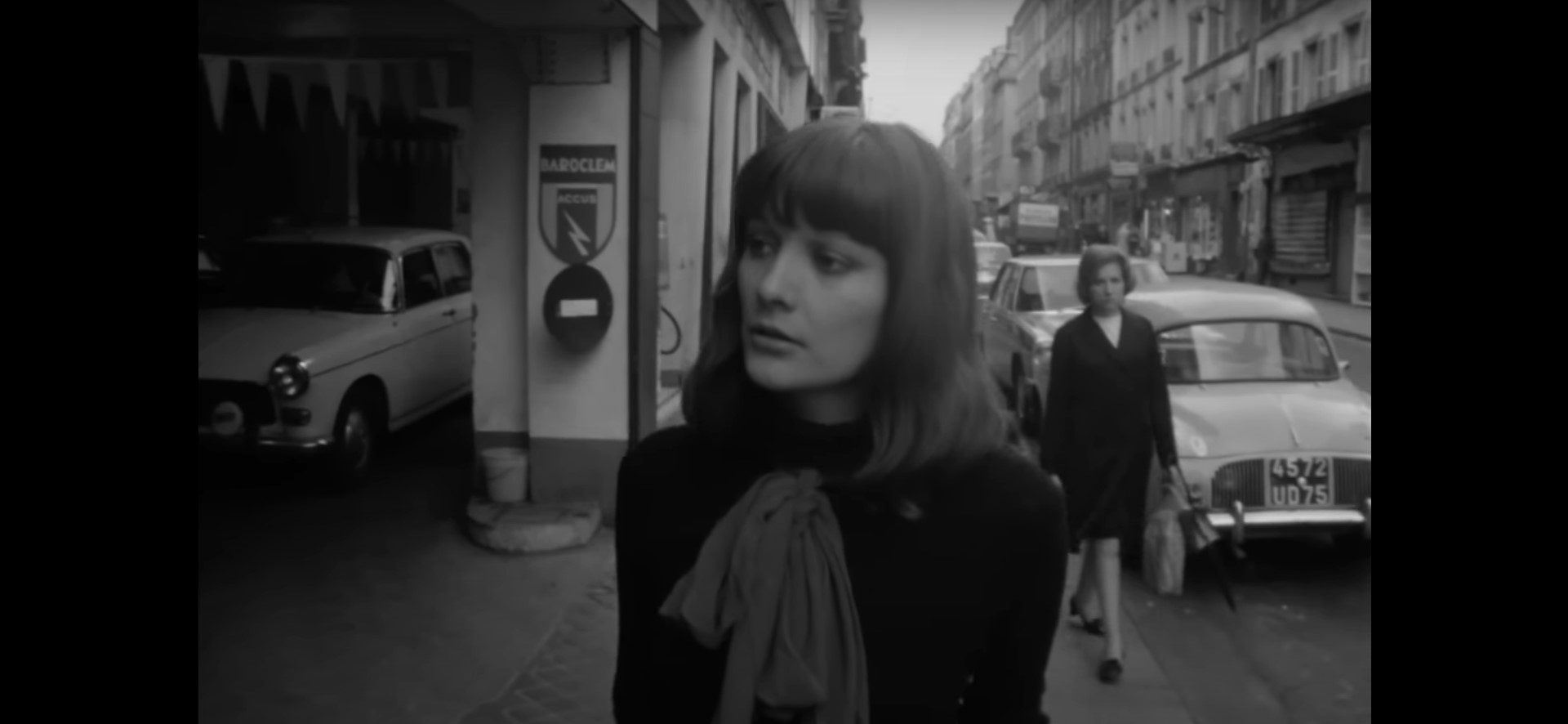
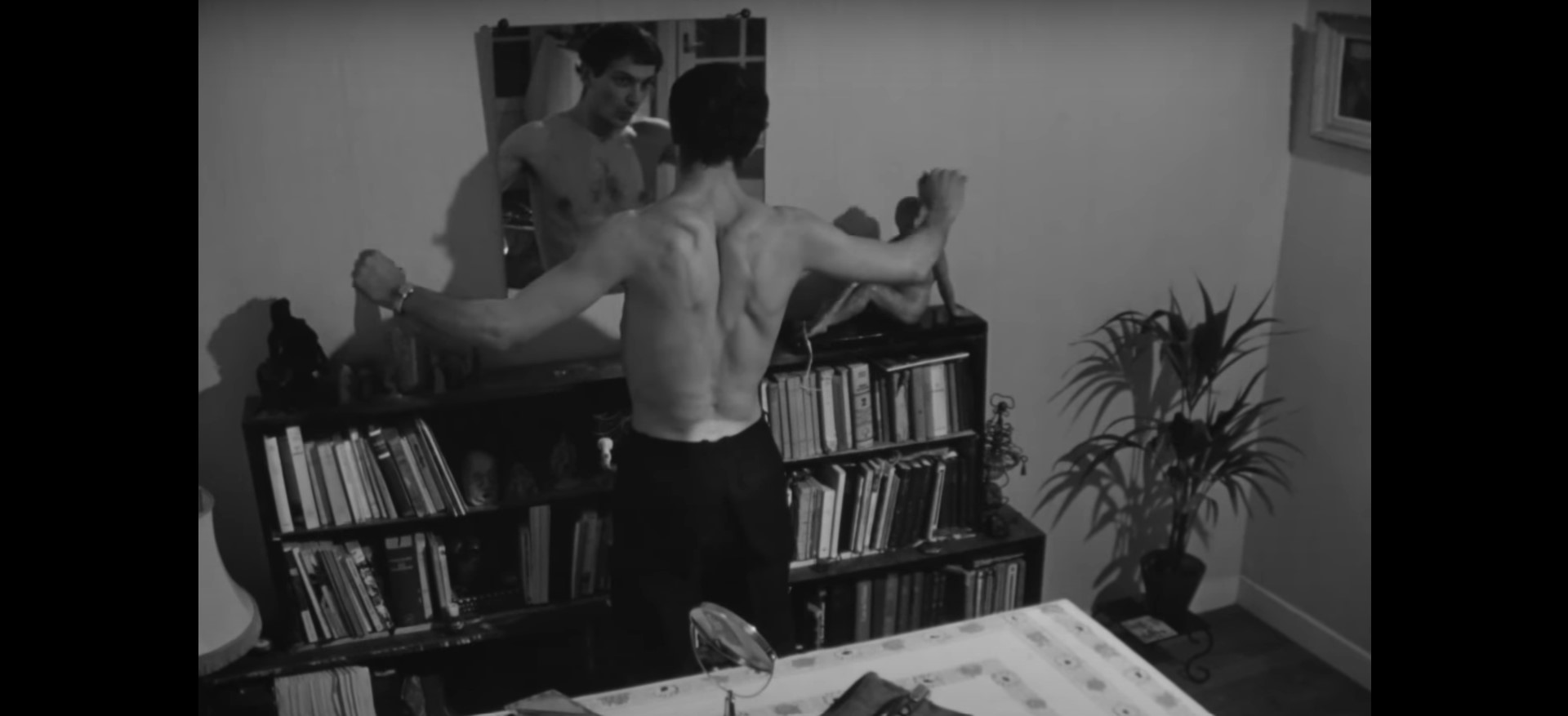
The execution of Hélène Picard, a convicted murderer of prostitutes in Paris, France circa 1960s, is carried forth and thought to have snuffed out a string of brutal killings.  Louis Guilbeau carried out the execution orders that gave Pairs a moment of relief and a sense of safety for the working girls on the streets, but when the similar murders spark public fear and the newspapers compare the scenes as Hélène Picard handywork, Paris is once again thrown turmoil with a serial killer.  Is Hélène Picard really dead?  Is it a copycat?  Or did they not catch the real killer?  Guilbeau, unphased by the recent atrocities, begins an affair with the lead investigator into the murders and continues to always be one step behind the suspected female culprit with no remorse, no shame, and no limits to her brutality against prostitutes.

Thought to be lost in obscurity for forever, the reels for French director Jean-Denis Bonan’s “La femme bourreau,” aka “A Woman Kills” was discovered in 2010.  The master of the unfinished film became destined to be born again with a new home video release as Bonan’s debut directorial embodied parallelisms of the French sociopolitical unrest and protests, known as the Paris economic-stopping May 68 event, during the late 1960s, and hitched a ride on the narrative wave of post-“Psycho” gender identity complexes within the confines of a La Nouvelle Vogue, or the French New Wave movement.  Though “A Woman Kills” was the inaugural film of the young director’s career, Bonan simultaneously also became one of the few to document in real time the May 68 upheaving protests as he and the crew went back-and-forth filming a fiction story and nonfictional protests.  The film incorporates a semi pseudo-doc that treats the script like a mixture between a crime thriller and the experimental qualities of its playful, singsong soundtrack and harsh editing.  The 1968 film is a production of Luna Park Films and is self-produced by Jean-Denis Bonan.

For those casted in film, “A Woman Kills” was there first auteur film if not their first feature film role all together. What could be considered as a blend between New French Wave and Neorealism, Bonan rarely has his cast express their own vocal cords. Lots of action and expressiveness devour the attention but that doesn’t go on to say Bonon completely nixed dialogue altogether with his montage of interviewees, a jest-and-jovial troubadour descriptive songs of the scenes, the narrator’s file readings of victims, the newsboys hawking of murder headlines, all become the dialogue in lieu of the real McCoy. The cast does have their voices heard in rare moments, often in scenes of great exposures and difficult in detail. A case in point is Claude Merlin as the prison executive Louis Guilbeau. Merlin, who went on to be involved in another May 68’s connected film from 2001, “Toutes les nuits” or “Every Night,” is eager and excited in character when going into the medical details of the various way his profession executes prisoners or falls into a somber regarding his mother’s abusive behavior to him when he was just a boy. Guilbeau’s dialogued moments are precise and point plots toward his character and toward the end game. The affair Builbeau has with police investigator Solange Lebas, from Jean Rollin’s “Rape of the Vampire” and Bruno Gantillo’s “Girl Slaves of Morgana Le Fay’s” Solange Pradel, provides roughly the equal amount of dialogue time in a role that’s typically casted for men, a lead investigator on a high-profile murder case. Gender reversal and identity themes are accentuated by Merlin and Pradel’s tenues of the characters. Myriam Mézières (“Spermula”), Jackie Raynal, Catherine Deville (“Rape of the Vampire”), and Velly Beguard (“Endless Night”) work out the remaining cast.

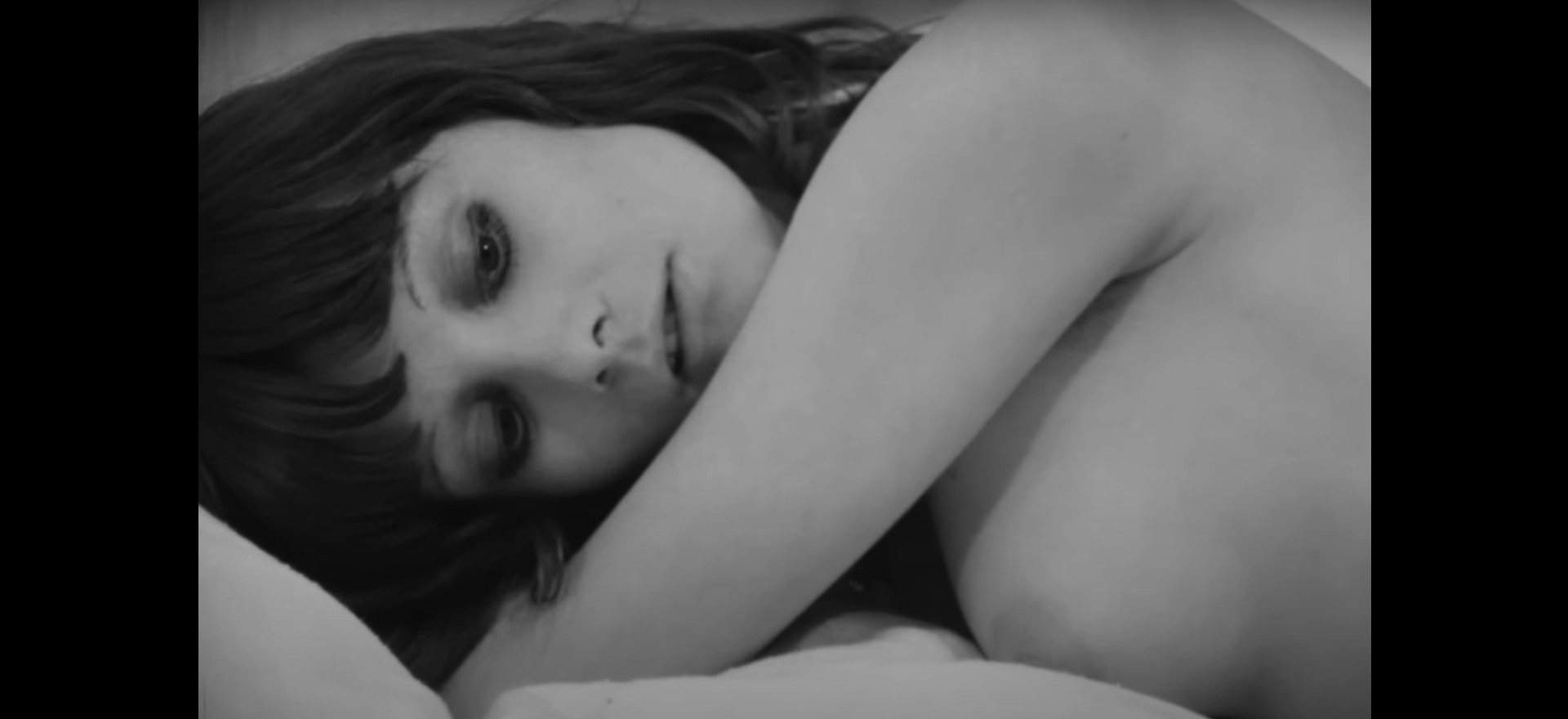
I wouldn’t necessarily call “A Woman Kills” avant garde.  In fact, I firmly believe the propagating audio and video experiments and the themes are far from it.  Bonan borrows a little here and there from different techniques and cinematic trends to fashion a stake in the French New Wave movement.  Splashes of eroticism, which are greatly descriptive visually and narratively, don’t warrant “A Woman Kills” to be a full-fledged erotica film.  The same can be said about the crime or investigator angle that too just seems to be woven sporadically through this melee of classification. Pseudo-documentary montages and script narrator push the labeling in another direction as well. “A Woman Kills” doesn’t exactly fit into a mold, wears patchwork pastiche, but also has flare ups of Bonan’s call to add chaos into the traditional scheme of filmmaking. More so linear than not, the narrative transitions between scenes without a care for being comprehensible early on. Heavily relying on the narrator to give exposition on the background of the notorious prostitute murderer Hélène Picard and how she became under the executioner’s thumb, this event provides framework in introducing the executioner Louis Guilbeau and his professional ups-and-downs that ultimately land him working in the prison system. The association that connects the murders, Louis Guilbeau, and Hélène Picard is all very vague during initial proceedings and Gérard de Battista’s freeholding over-the-shoulder camera work provides passim POV shots and agley angles to keep the wheels of motion mysteriously slipping in order to not fully grip the reality of the situation. Bonan borders the edge of German Expressionism toward the third act by disenchanting the way of guilty thinking aesthetics and to root the killer in insanity on various levels, ending with a chase sequence that is seemingly endless amongst a pile of building rubble and ruin.

A provocateur of storytelling and of the celluloid vision, director Jean-Denis Bonan finally has his film, “A Woman Kills,” released onto a limited-edition Blu-ray home video from Radiance Films twelve years as being unearthed. First released on DVD in 2016, distribution for the film was all but easy due to Bonan’s deemed unclassifiable feature by large scale and indie firms. Today, the original reversible 16mm elements have gone through a 2K restoration scan for the feature’s Blu-ray debut and the presented in the original 1.33:1 aspect ratio and black and white format. For being undiscovered for four decades, unfinished, and receiving literally no support from any state funds to complete, the image has remained nearly pristine with only a few dust specks and faint scratches being the worse of the wear. The Cinémathèque de Limousin and the restoration by producer Francis Lecomte doesn’t feel to have overcorrected the natural grain or go high on the contrast but rather retain much of the classic, original elements for an honest viewing aside from the liner notes mentioning a few special effects added to remove equipment from out of the picture. Father time has forgotten all about Bonan’s lost relic, staving off age degradation to those with more day-to-day exposure. The French language Dolby Digital mono track also retains a remarkable, near stainless net result. The absence of the camera whirring and lack of electrical interference points to a complete dub track of the actors’ voiceovers to which the dialogue is distinct with only a handful of crackling peppered in throughout. English subtitles are optional on the menu settings and offer an error free, well-paced synchronization. The bonus features include a video introduction to the feature by Virginie Sélavy, an audio commentary by Kat Ellinger and Virginie Sélavy, the trailer, and a 37-minute, newly updated 2015 documentary On the Margin: The Cursed Films of Jean-Denis Bonan featuring one-sided interview responses from Bonan, cinematographer Gérard de Battista, editor Mirelille Abramovici, composer Daniel Laloux, and actress Jackie Rynal. There is also Bonan’s short films – “la vie breve de Monsier Meucieu,” “Un crime d’amour,” “Tristesses des Anthropophages,” Mathieu-fou, “and “Une saison chez les hommes.” The limited to 2,000 copies release does not disappointment with tangible material within this clear snapper, untraditional Blu-ray case that doesn’t sport the Blu-ray logo at the top. Much like Bonan’s work, the Blu-ray, too, rebels against marketing norms with cover art that displays the film’s synopsis and documentary bons feature on the front cover. The reversible cover also has the original 2016 DVD art on the inside along with a limited-edition booklet featuring “A Woman Kills” essay by film author and scholar Catherine Wheatley and writer-broadcaster Richard Thomas regarding the film’s themes and Bonan’s short films. The 51-page booklet also includes newly translated interviews and offers film credits as well as black and white stills of “A Woman Kills” and other Bonan credits. The feature has a runtime of 69 minutes, the release is region free, and Unrated. Jean-Denis Bonan disrupts the narrative routine, but his film remains a timeless, psychosomatic portrayal with a contentious backdrop of French sociopolitical unrest that makes the context of “A Woman Kills” that much more engrossing.

“A Woman Kills” Now Available on Blu-ray! Click the Cover Art to Purcahse!