One EVIL Deed Doesn’t Correct The First EVIL Deed! “Cannibal Man” reviewed (Severin / Blu-ray)

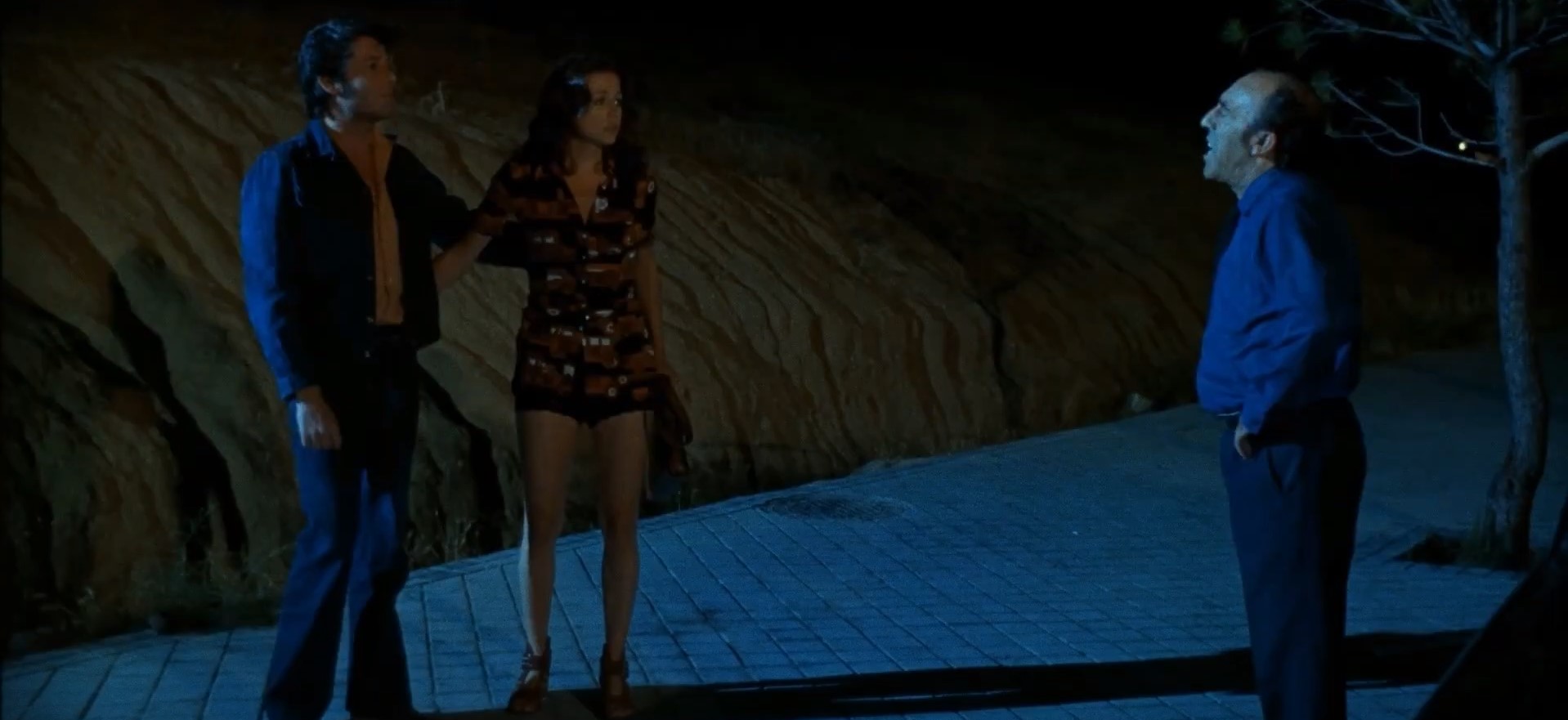
Marcos, a middle-aged abattoir worker, resists the pleas of Paula, his young girlfriend, to confess their self-defense killing of a taxi driver.  When Paula decides she’s inform the police without him, Marcos strangles her and stows her body in the bedroom of his outworn house.  The killing continues when loved ones come poking around to find answers about the disappearance or discover the macabre scene in Marcos bedroom.  Bodies pile up, the smell reaches decaying levels, and Marcos is plagued with nervous guilt.  Every day using his meat clever, he chops up bits and pieces of each victim and takes them to the slaughterhouse processing to rid the evidence and the smell, but no matter how many body parts he unburdens or how much fragrance he sprays, the sweet smell of death sticks with him. 
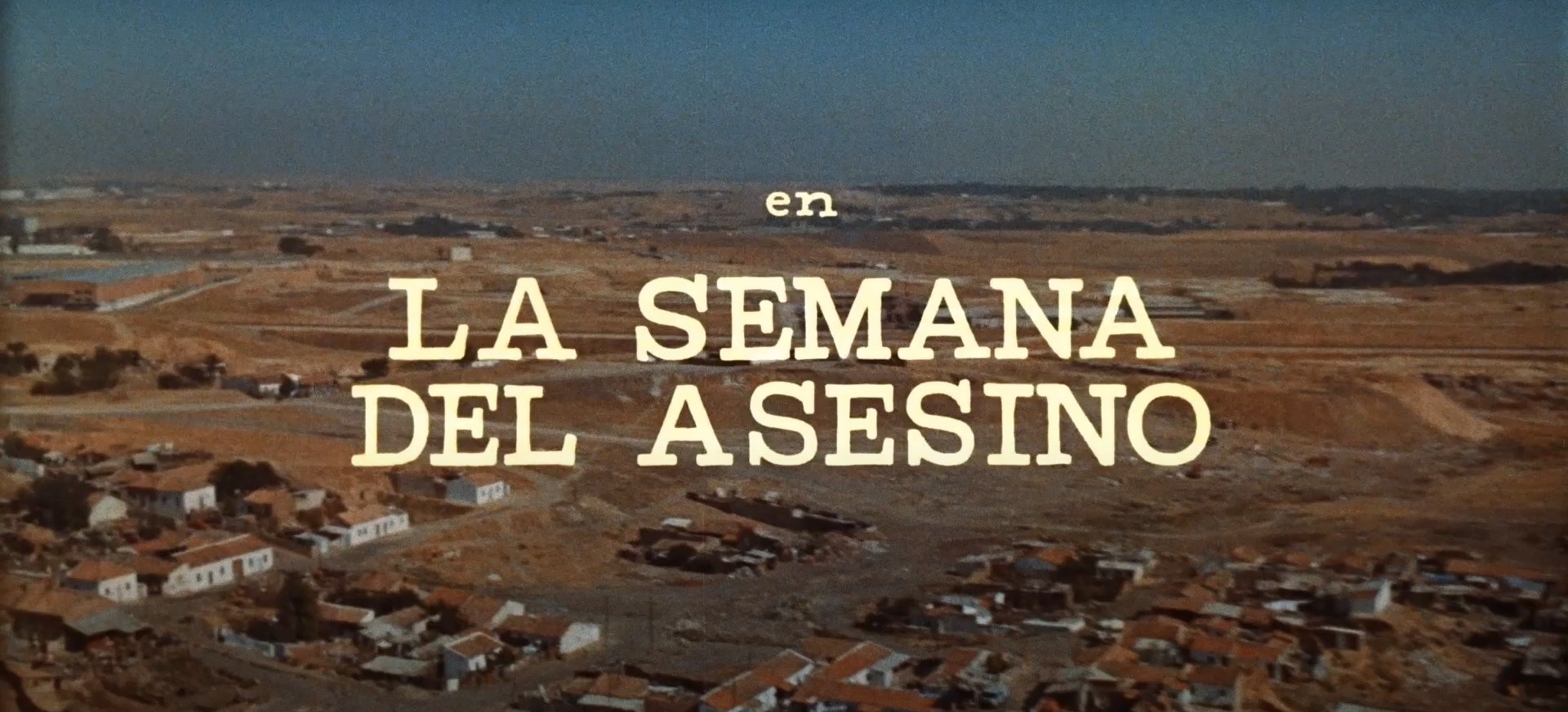
If someone would have said to me – you need to see a flick from Spanish director Eloy de la Iglesia – would you have ever guessed my first stop would be with his 1972 “The Cannibal Man” shocker?  To get to know a filmmaker’s directorial style and personal themes, the most gruesome horror can sometimes be a reflection into the soul of full disclosure because life, as most of us know from our own personal accounts, demons, and happenstances, can be ugly, nasty and unfair and can be cathartically expressed through film by a wretched shell navigating an undercurrent message to others.  That’s how Eloy de la Iglesia’s “The Cannibal Man” speaks to me.  Also known as “La semana del asesino,” or “The Week of the Killer,” as well as “The Apartment on the 13th Floor,” don’t expect an archetypical slasher and cannibal framework from this picture with many names.  “The Cannibal Man” is no “Texas Chainsaw Massacre” or similar to that of “Wrong Turn” as the film stands alone, conveyed as unsurmountable struggles of renewing oneself, a social commentary of class structures, and, also, dabbles in homosexuality suggestion.  Executive producer José Truchado, who also produced “Hundra” and had bit roles in Jesús Franco’s “The Mistress of Dr. Jykell” and “Killer Tongue,” finances the film under his self-titled production company and presented by Atlas International Film (“The Blind Dead Collection”).
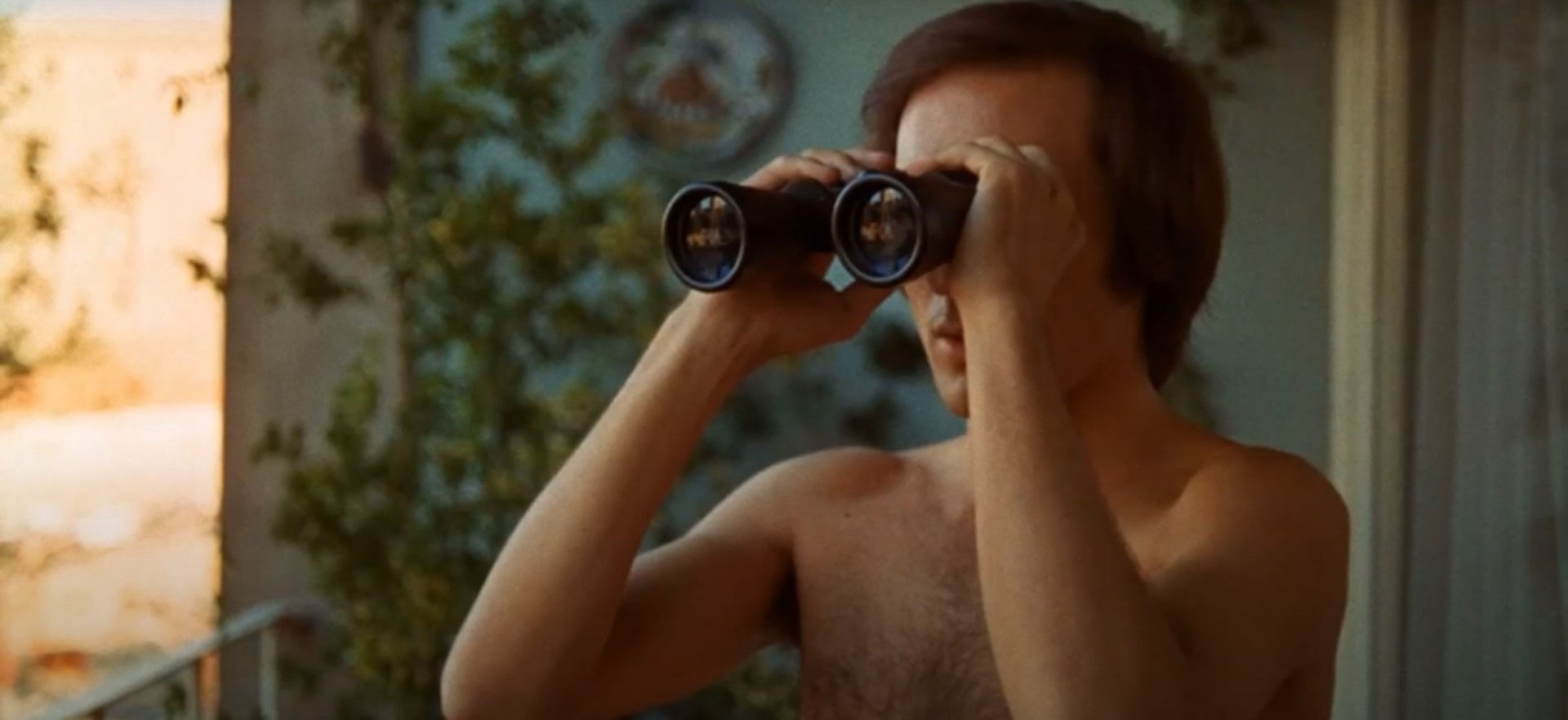
Looking to separate himself from strapping hunk typecasting and to show the world he can do more than just romantic comedies and action, the Madrid born Vincente Parra undertook a massive risk with the lead role Marcos, a meat processing factory worker in his, presumably, late 30’s to early 40’s with little education and social status who’s keeping company with a younger woman still living with and under the rules of her parents.  Let’s not to forget to mention Marcos’s grisly acts of murder and the homosexuality suggestions during his middle of the night rendezvouses with new best bud and neighbor Néstor (Eusebio Poncela, “The Death of the Scorpion).  Nothing sexual happens but the innuendo is there as, aside from his dog, the single bachelor Néstor often invites a tense Marcos out for a late night café visit, an afterhours swim at the local late night pool, and up to his swanky apartment where Néstor often watches Marcos from his high-rise balcony through Marcos’s makeshift skylight with binoculars.  Iglesia, who is gay, puts his own spin on the characters to allude to, and often over played as well, the two men as equally interested parties without ever having to speak a single word or make visible a single touch that would confirm otherwise.  Parra and Poncela couldn’t have acted better a disinterested-interested pair full of sexual tension and naïve foreplay.  Aside from the significant love interest characters from Vicky Lagos, who plays local waitress, Rosa, at the eatery Marcos patrons and “Night of the Walking Dead’s” Emma Cohen, Marcos’s girlfriend Paula, no other character have reoccurring scenes and are simply drafted as what should be major roles in the story to then be cut down by Marcos’s undervaluing psychopathy.  Charly Bravo, Fernando Sánchez Polack, Goyo Lebrero, and Lola Herrera fill in the rest of the cast list.
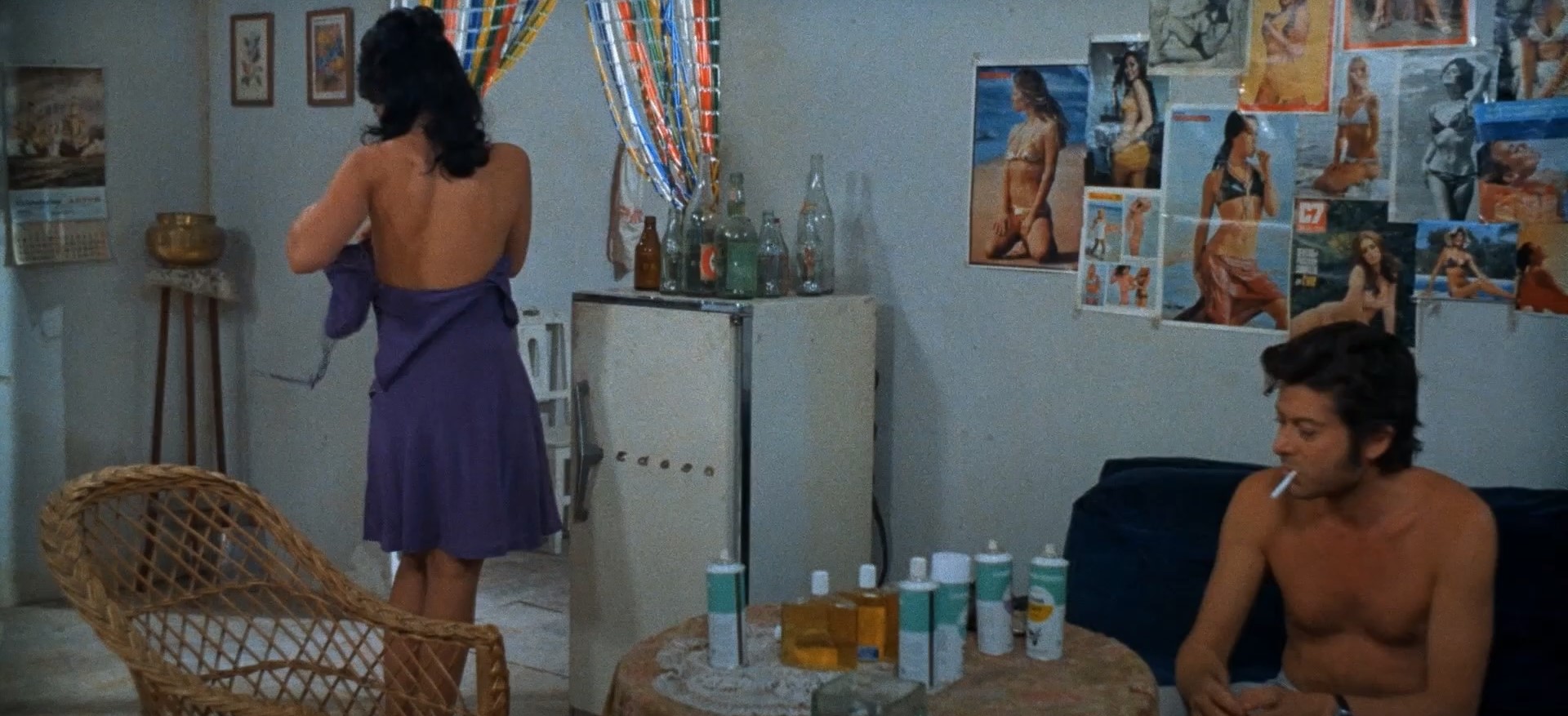
Strike out the slasher category for “The Cannibal Man” as Iglesia offers more than just a mindless, demented, hack’em up killer.  Behind Marcos brown eyes lies a reason of cold truth about his place in the world as a man who is ultimately and foremost stuck.  Stuck at a dead-end job.  Suck in his relationship with Paula.  Hell, Marco is even stuck living in a small bygone bungalow sticking out like a sore thumb right in the middle of new and wealthy high rise buildings.  He’s unskilled and uneducated, living in his brother’s house, and with no end to his personal wedging between his lackluster coursed life and his own short failings as a man until all that mediocre and mundane misery begins to ooze and shape into the one thing he tries to control – murder.  Even murder starts to spin out of control and heavy, burdensome guilt sets as seen in scenes with Néstor who’s choice of words perk up Marcos’s jumpy ears with fear of being caught.  Iglesia is a master at scene compositions that use audio cues, along with a jarring, tonal reversing soundtrack, to accentuate Marcos’s ascending paranoia as well as accentuating the scenes of the more period radical grasping social commentary on homosexuality and the unthinkable back-to-back-to-back-to-back murders.  Editor José Luis Matesanz also slyly cuts transitional scenes together in a stunningly seamless and crafty way that resemble close to Robert Wise (“Citizen Kane,” “The Andromeda Strain”) with harsh cuts that form a directional track and utilizes semi-abstract panning and reverse panning to fill in less significant gaps between the action.  Don’t expect a large amount of cannibalism in the story either.  Marcos isn’t gnawing on bones or baking a flesh brisket; instead, his act of cannibalism falls upon irony in that the bodies he tries to purge from his home ends up coming back to haunt him in more ways than one. 
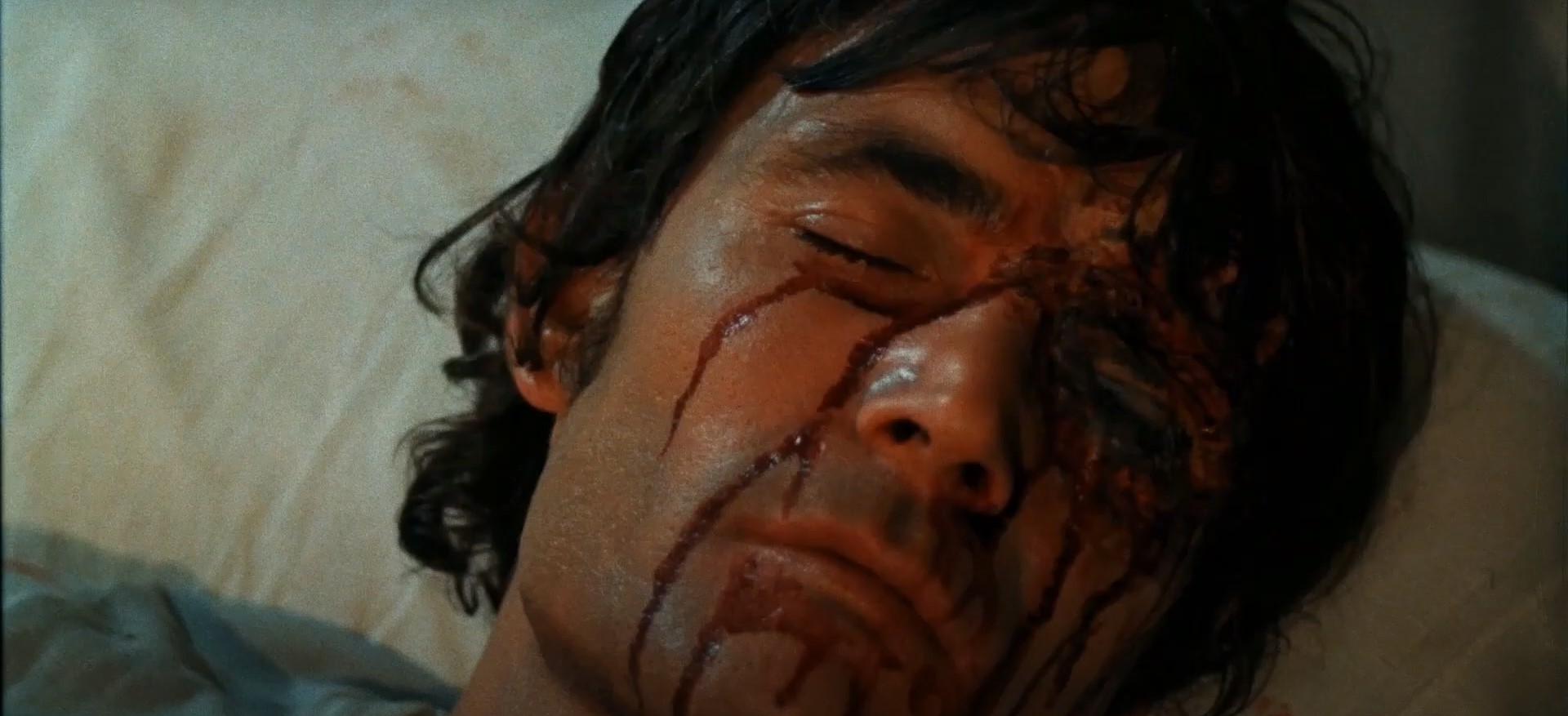
If you love obscure, foreign horror that sustains a fresh packaged air about it, in story and in a remastered transfer, I highly recommend checking out Severin’s newly scanned, region free Blu-day distributed by MVD Visual.   The BD50 comes with two versions of the film, the 98-minute international cut and the 107-minute Spanish version extended cut, newly scanned from the original 35mm negatives for the first time.  Both transfers have excellent picture quality, some of the best I’ve ever seen come out of Severin, presented in 1080p in a widescreen 1:85:1 aspect ratio.  Not a lot of age wear and tear on the either transfer with each cut having only minor and light scratches scarcely throughout.  There’s sufficient, natural grain in both versions, but the extended cut’s grain flattens up, looking coarser, in the extra scenes.  Coloring grade is gorgeous with natural looking skin tones and you can see the details were refined and redefined.  Both versions come with an English dub and Spanish language DTS-HD Master Audio 2.0 track with some back-and-forth forced English dub in those coarser grained scenes that make the flow unsettling.  Both versions render hearty range and fidelity with a strong dialogue track that syncs well with the option English subtitles, but slightly off sync with image unity.  Underneath the double-sided cardboard sleeve, Severin’s special features include Cinema at the Margins – a Stephen Thrower (author of “Beyond Terror: The Films of Lucio Fulci”) and Dr. Shelagh Rowan-Legg (author of “The Spanish Fantastic: Contemporary Filmmaking in Horror, Fantasy and Sci-fi” on director Eloy de la Iglesia, The Sleazy and the Strange – interview with Spanish film scholar Carlos Aguilar on director Eloy del la Iglesia, deleted scenes, and trailer.  An engrossing bodega of vile Euro horror is what “The Cannibal Man” presents as a first-rate cutthroat thriller from the shamefully underrated filmmaker, Eloy de la Iglesia.

Own “The Cannibal Man” on Blu-ray!  Buy at Amazon.com

Keep the EVIL Family Drama for Your Mama. “Abigail Haunting” reviewed (High Fliers Films / Digital Screener)

While searching for a life in Reno, Katie reluctantly becomes an accomplice in a heist job with her abusive boyfriend, scoring a small brown paper bag packed with stolen money.  In the middle of post-heist uncertainty, an opportunity to escape a troubled relationship presents itself and Katie hightails it to her hometown of Prescott with the loot, leaving the dark life behind her in Reno.  Unsure of her next steps, she hides away by moving back into her childhood trailer home with foster mother, Marge, who has nearly deteriorated into a completely catatonic state over the last few years.  As the days pass and Katie catches up with Brian, rekindling a relationship with a high school crush, her secretive past becomes plaited into Marge’s sinister skeleton in the cupboard that pulls both of them into the supernatural wrath of a tormented spirit haunting the trailer home, merging the past and present with a shocking conclusion.

Cursed.  No, not the vengeful spirit who resurrects to plague havoc on the still breathing, flesh and boned to set their tortured, spiritual planed souls to rest.  The curse I speak of involves putting Haunting into the title of any ghost film that has been released in, oh let’s say, the last 20 or so years culminating into being one mediocre release after another of mainstream and independent films that has, frankly the lack of a better word, cursed the subgenre.  Type haunting in the IMDB search field and just glaze over as hundreds of films crash over you in a tsunami of stale capitalism ever since the remake of Robert Wise’s “The Haunting” in 1999 with Liam Neeson and Catherine Zeta-Jones.  “The Haunting of Connecticut.”  “An American Haunting.”  “23:59:  The Haunting Hour.”  Being one step behind the hackneyed “possession” in nearly every title about, well, possession, these post-2000 ghost films are just morsels of the bigger crapola pie that investors love to sink as little of their money into as possible because the return is greater because ghost film don’t necessarily a R rating unlike other subgenres and, sometimes, piggyback off a successful film with the parlance.  PG-13 in slashers is an oxymoron, if you ask me, but in with ghosts, fear of mysticism and the unknown has enough power to scare if done correctly, i.e. the original “Poltergeist.”  This unbecoming setup leads us to the 2020 release of the revenant thriller “Abigail Haunting,” the latest Kelly Schwarze written and directed full length film after tackling an Area 51 inspired bloody battle beyond the stars set in our backyard with “Alien Domicile, and before we go into whether the Schwarze film, co-written alongside Charisma Manualt, can tame an unbridled use of title-exploitation with a first rate story, the Indie Film Factory production will receive full benefit of the doubt until the end of the review.


The story follows a small town girl, Katie, from Prescott, Nevada who falls into small time crime with a lowlife boyfriend that quickly turns sour and deadly after an armed cash grab, presumably from a Reno casino.  Chelsea Jurkiewicz fits that small description recipe of stuck in a rut local girl without much cause for disbelief.  As Katie, Jurkiewicz’s able to be the part of a young, harried woman running from a checkered past and into the flames of a paranormal bombardment.  The then early 20-something, “Stalker” actress kept Katie balanced between her cash stealing time in Reno, integrating back into what was a rough patch with an unreasonable and abusive foster mother, and dealing with unexplainable occurrences of nightlights turning on by themselves, her room being ransacked, and succumbing to disturbing visions while reminiscing of being a scared child hidden behind a makeshift potato sack mask that becomes a reoccurring object throughout.   While Schwarze loosely ties all the facets together in a nice, tight bow that leads to a climatic unraveling of Katie’s past, the visually assaulted Katie suffers as the centerpiece punching bag that connects them altogether.  To top Katie’s mounting pressure, a face from the past tries to pry his way into her life.  A lost fling in Katie’s fleeting existence is Brian, played by Austin Collazo in his debut film performance, forcing himself into her life in what reeks of single parent desperation.  A moment involving Katie looking through a photo scrap book shows the two smiling together in a lone picture, as if she’s reflecting upon a previous romance or friendship that has since fizzled, but that’s about the extent of their history that doesn’t dive deeper into the reflection or explain the spark from the sudden interest from Brian.  At the crux of the story is Marge (Brenda Daly), a dirtied, nightgown wearing middle-aged woman who fostered abandoned at 4 months old Katie in what only has been, in Katie’s sole exposition, a terrible experience.  Schwarze instinctively ties the trailer home and Marge together as a single entity, enacting as one to push Katie around in a fit of unmotivated hysteria.  Katie doesn’t seem too eager to lift an investigated finger any of phenomena that has plagued her in the home, in the back shed, or even follows her out on a date with Brian.  Instead, Brian initiates digging into her past that sends Katie down Marge’s rabbit hole of hidden secrets in an off kilter directional take where a protagonist stands indifferent or remains stagnant after multiple Abigail encounters that would seemingly rouse up curiosity or for the sake of proving sanity.  Rounding out “Abigail Haunting” is Michael Monteiro, Christopher Brown, and Taylor May as the titular ghost.

Not a positive start with flat, often time dunce, characters in “Abigail Haunting.”  The mindset behind Katie’s involvement with the Reno robbery and a scoundrel lover strains to play a bigger role into the eerie defense she’s positionally locked into at Marge’s dreary trailer home.  Schwarze remains on the fringes around the preoccupations that descend Katie into this dark place in her life between searching for her real mother that abandoned her as an infant, the deadly robbery in Reno, and the abusive ex that all seem to be weighing less on Katie’s shoulders than the duffle bag of a couple thousand dollars that would typical skewer one’s psyche, manifesting more than just the typical side effects of pressure.  Instead, Schwarz doesn’t fold in well enough the incorporation of our angry spirit, Abigail, whose unexplained appearance out of the Nevada blue sky in between Katie’s leaving and returning to Marge’s home denotes not one single explanation of when and why Abigail chooses to be a resurrected, phantasmal spite.  More jeopardizing toward Katie’s past and present life is her obsession with the stolen money versus living a decent life with possibly Brian and his dissociable, divorce struck kid, who the former is clearly obsessed with her, but the story more so saturates with a free floating, full torso phantasm, as the Ghostbusters would say, that undermines the subterranean psychology at work here and clouds the ghost foundation built on deceits, lies, and ugly truths. What “Abigail Haunting” succumbs to is being about as rudimentary as they come with a climax too riddles with plot holes that squish much of good establishing camera work and some decently laid jump scares. Haunting, as in a title, still curses the horror subgenre with middle-of-the-road dynamism.

Death clings to us all. In “Abigail Haunting,” death clings to vengeance in this supernatural thriller dropping on DVD in the UK on February 8th courtesy of High Flier Films and ITN Distribution. The region 2, PAL encoded DVD will be presented in a widescreen 2.35:1 aspect ratio with a runtime of approx. 85 minutes. I initially had high hopes for Abigail to be at least be a derivative carbon copy of “The Conjuring” as “Scare Me’s” Michael TusHaus’s shows off impressive camera work that organically flows through Marge’s tight quartered trailer, as well as in other scenes when applicable outside the trailer location, with generous use of a stepping in-stepping out steady cam. TusHaus’s hard lighting also creates stern atmospherics with full bodied shadows that symbolically keep secrets and spirits in the dark. The digital release had no extra bonus feature available with none displayed on High Flier Film’s website. There were also no bonus scenes during or after the credits. Solid cinematography and palatable performances couldn’t plug up all the plot holes that stiffen “Abigail Haunting” into a two-bit carnival attraction that looks cool upon entry but not worth the money on exit.