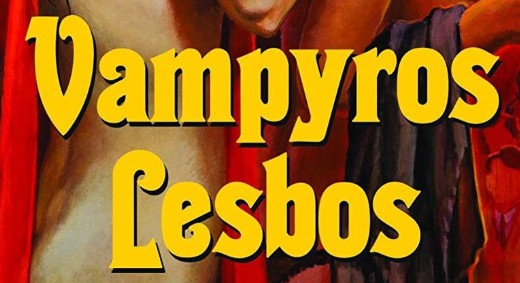
EVIL Seduces the Woman of her Dreams. “Vampyros Lesbos” reviewed! (Severin Films / 4K UHD and Blu-ray)

Men Beware of the “Vampyros Lesbos” now on 4K UHD and Blu-ray

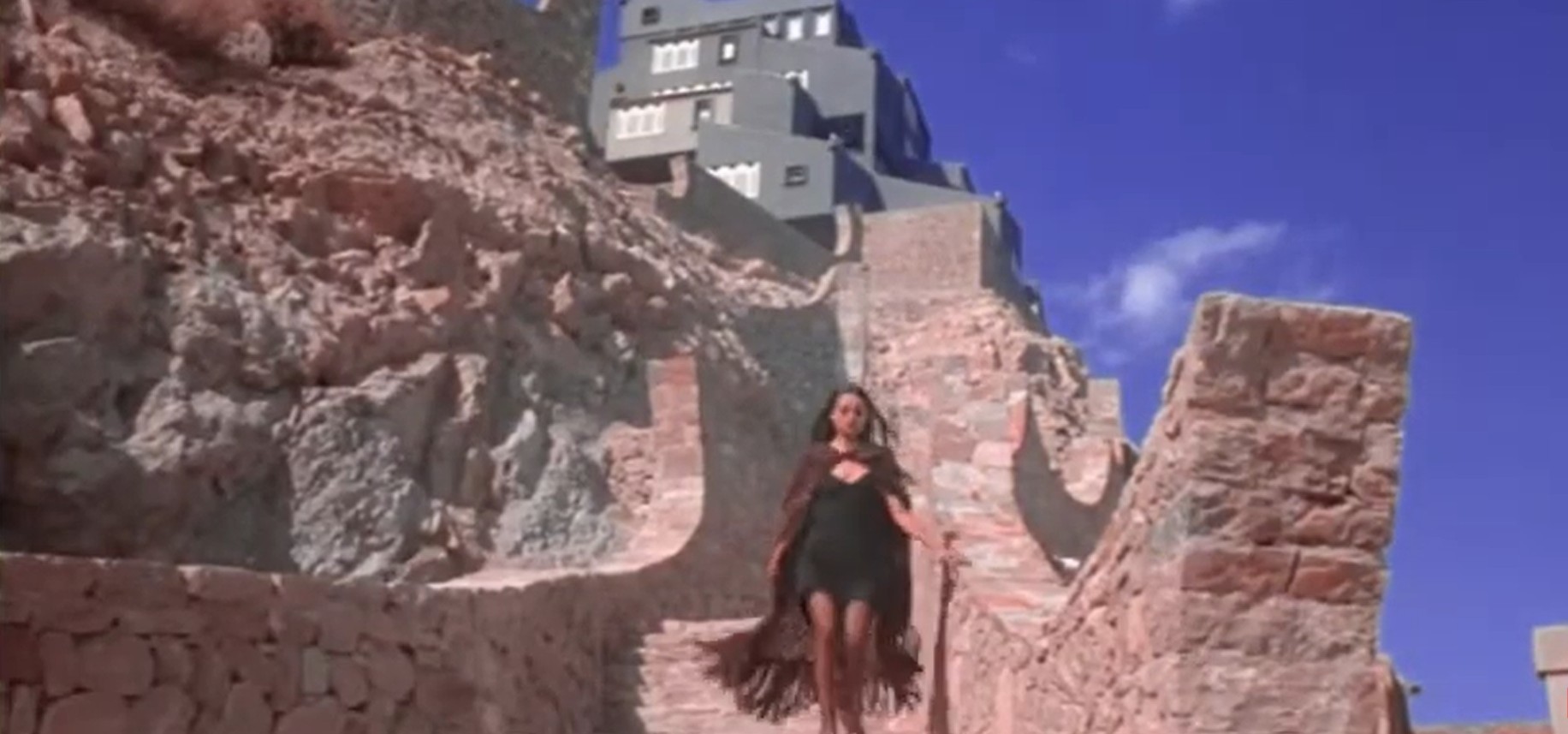
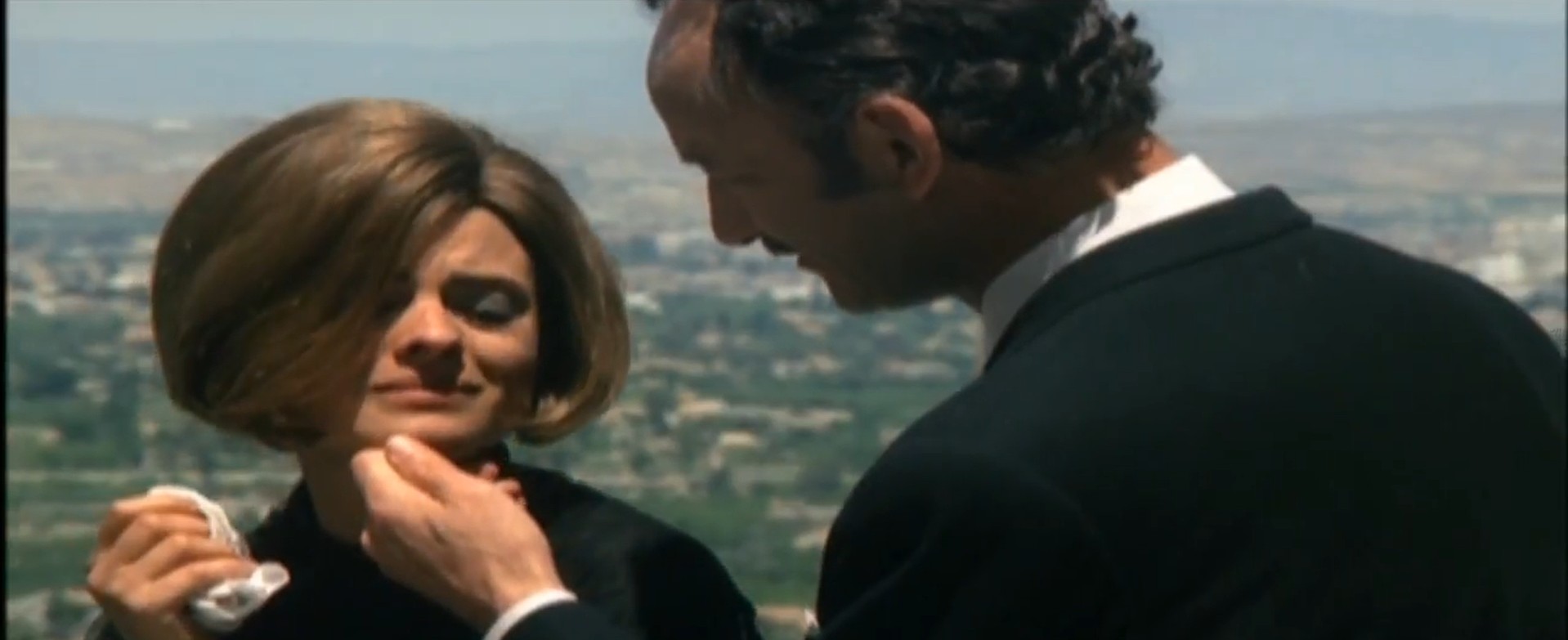
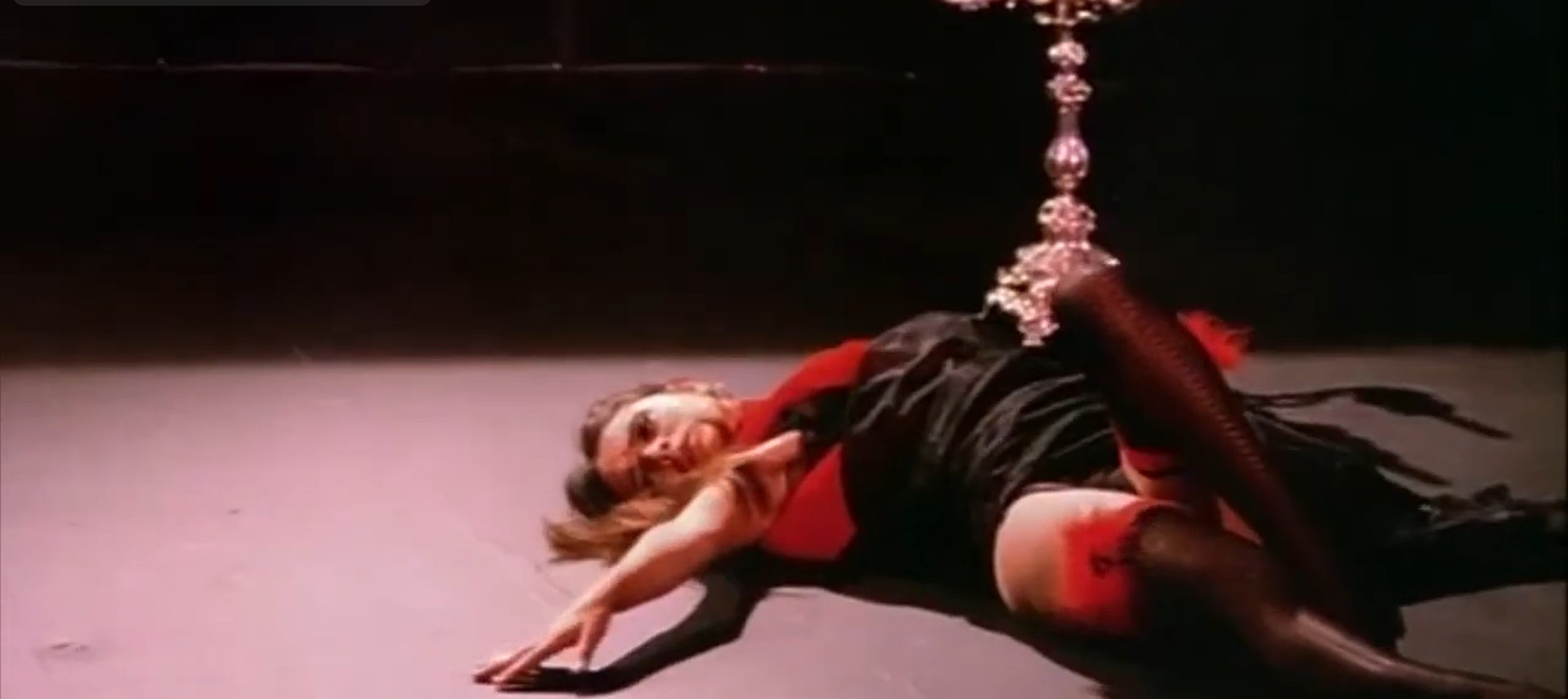
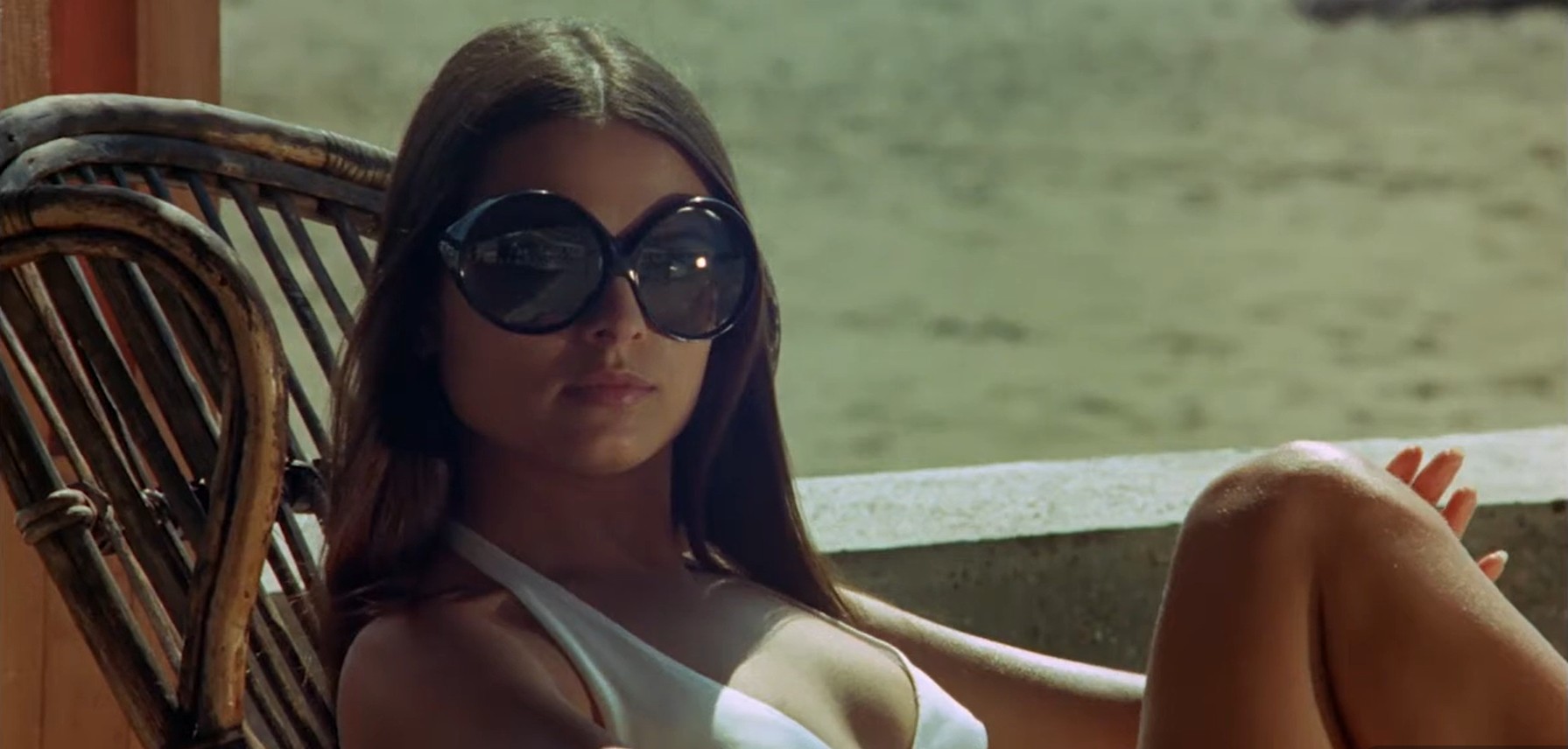
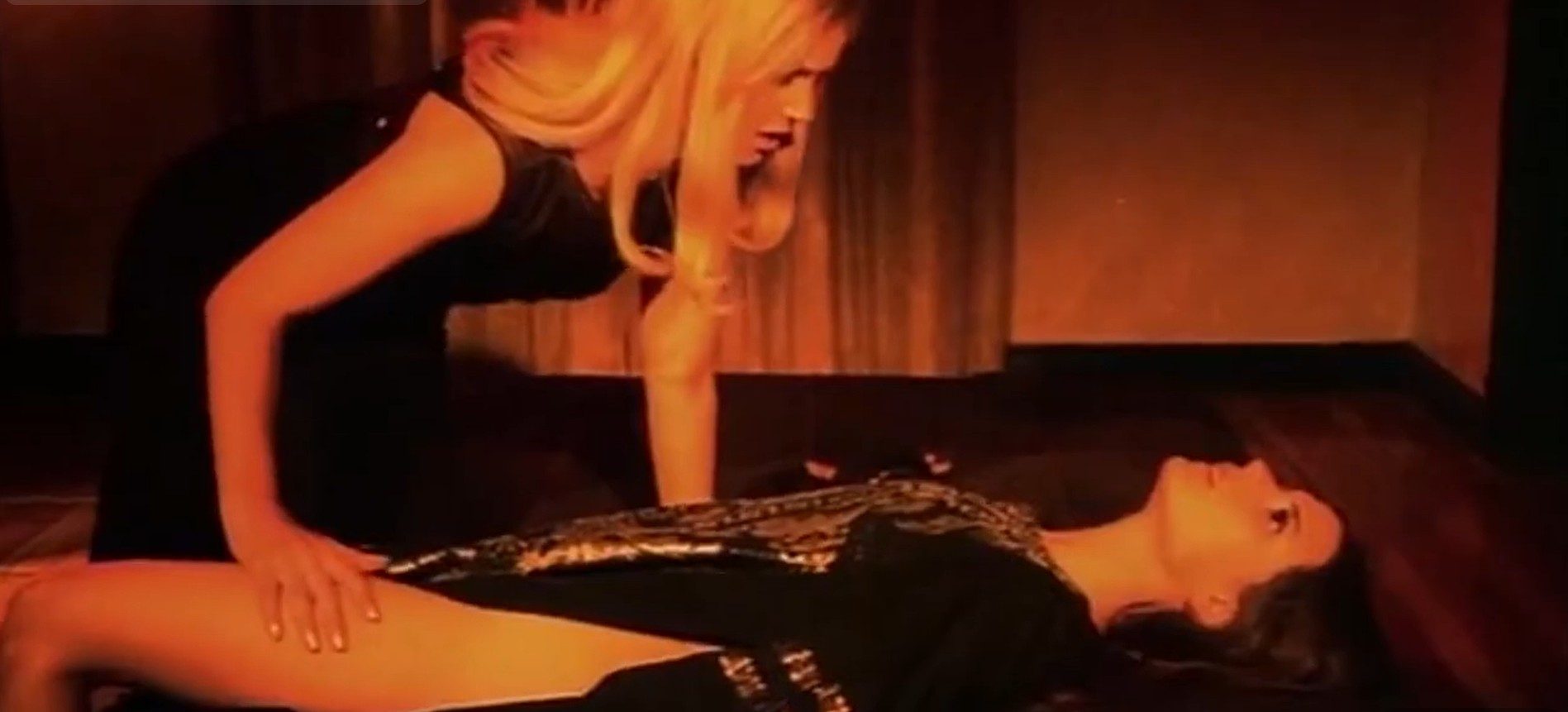
Linda’s dreams vividly disturb her with imagery of an idyllic island where blood rivulets watercourse down curtains while being in the romantic embrace of a swarthy beautiful woman.  These dreams are so powerful she must see a therapist about them.  When attending an nude performance art show with husband Omar, she’s shocked to see the woman on stage is the same woman from her dreams.   The coincidence lingers with Linda on her business trip to a Turkish island where she meets Countess Nadine Carody to discuss a large inheritance from a Count Dracula.  Come to her surprise, Countess Carody is the same woman from on stage.  Immediately, Linda’s under Countess Carody’s suggestive sexual influence of a lesbian vampire.  When Carody falls deeply for Linda, she will stop at nothing to have her whole, as one of her, to pass along the tradition of inherence as Dracula has done for her, but Omar, the psychiatrist Dr. Seward who’s familiar with vampirism, and a Memmet, a hotel clerk moonlighting as a rogue and vindictive vampire hunter, aim to help Linda from Carody’s grasp one way or another. 

The director behind some of Europe’s sleaziest erotic-horrors, such as “The Sadist of Notre Dame,” “Ilsa, the Wicked Warden,” and “A Virgin Among the Living Dead,” Jesús Franco, aka Jess Franco, was a prolific cult icon of the past, the present, and will still be in the future.  The Spanish born filmmaker grew up in the Francisco Franco dictatorship for over 30 years but that didn’t stop him from expressing his artistic freedom with the 1971 released “Vampyros Lesbos, “ a German production set in Turkey that mirrors the classic Bram Stoker tale but with teaks of character, scenery, and sexual orientation albeit “Dracula” is too thought to be a homoerotic tale to some filmic scholars.  Compositely filmed in Turkey, Spain, and Germany, “Vampyros Lesbos” is a production of Tele-Cine Film und Fernsehproduktion, Central Cinema Company, and the Fénix Cooperativa Cinematográfica with Karl Heinz Mannchen as executive producer and Artur Brauner as producer, both of whom worked on Franco’s “The Vengeance of Doctor Mabuse,” and the story, based loosely off of Stoker’s tale, is penned by Franco. 

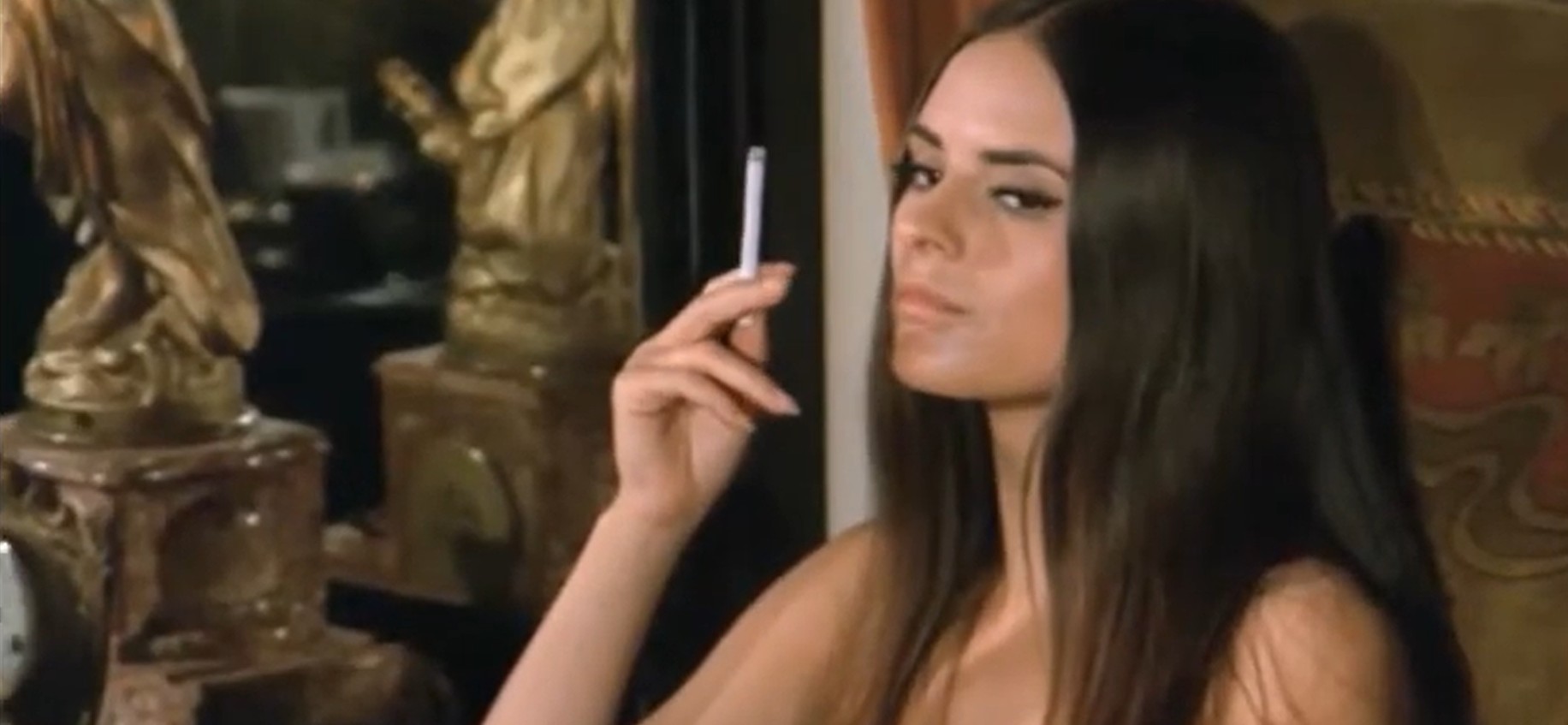
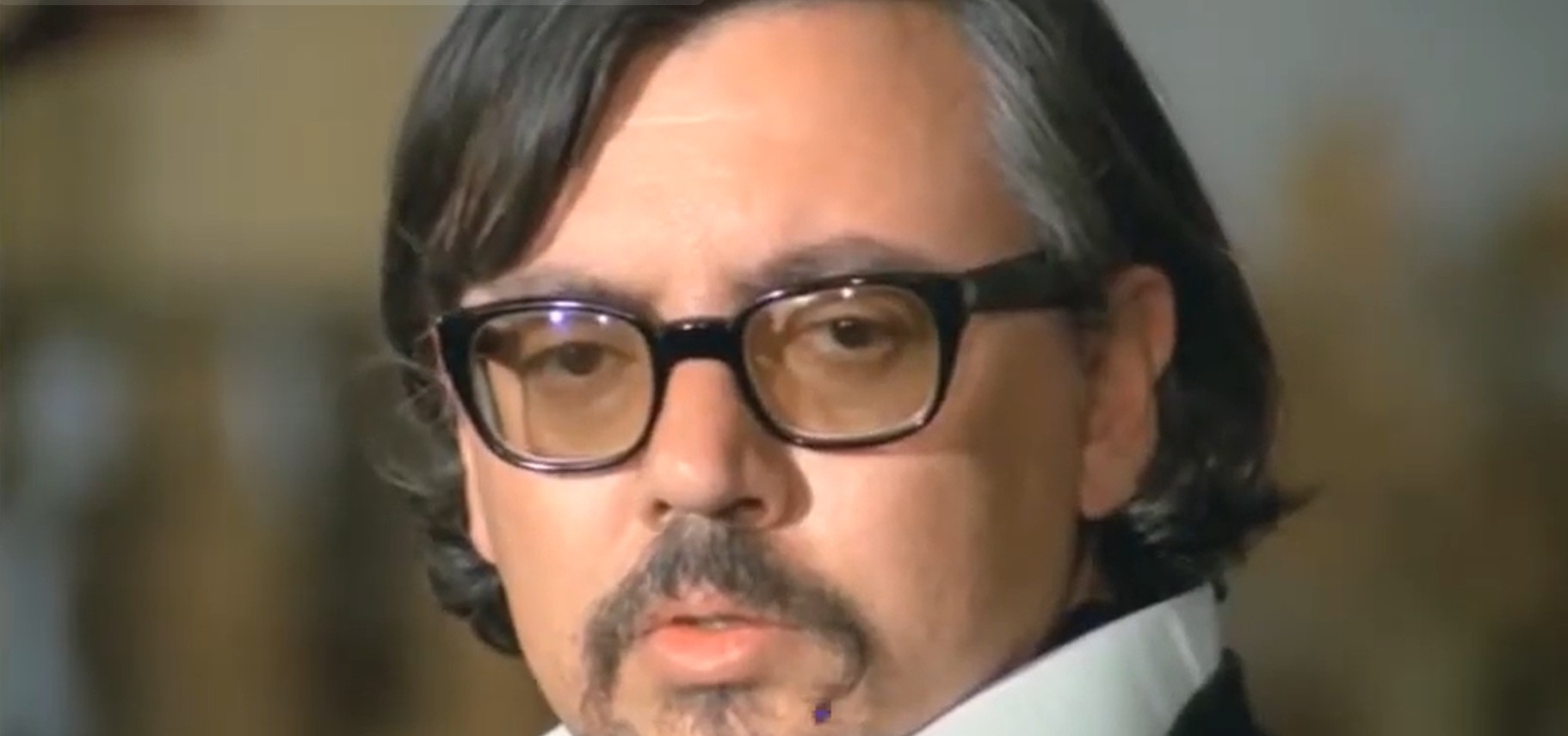
Like other Franco productions of this caliber, the cast is comprised of internationals, ranging from Spain to Sweden, from Britian to Switzerland, and to finally Germany without a single Turkish thespian in sight despite the story’s setting locale of Istanbul.  As mentioned briefly above, “Vampyros Lesbos” follows a threadbare version of Bram Stoker’s iconic Gothic tale that trades the grotesque Gothicisms for sunnier skies and idyllic island houses.  The basic principal characters are present from Stoker’s story but have been tweaked to fit Franco’s feverous surreal aesthetic that has a really sink its teeth into the homoerotic indulgencies.  Swedish actress Ewa Strömberg (“The Devil Came from Akasava,” “She Killed in Ecstasy”) resembles something along the lines of a Jonathan Harker-type but instead of being in real estate, like Harker, her character Linda Westinghouse is an inheritance lawyer dispatched to Countess Carody’s island home where she is bewitched by Carody’s infatuation and lust for her lifeforce.  Countess Carody is the obvious counterpart to Count Dracula but spun in a way that makes Bram Stoker’s story more like a tangent rather than remake as it’s Count Dracula’s fortune Countess Carody is inheriting.  Spanish actress Soledad Miranda (who also costarred with Strömberg in “The Devil Came from Akasava” and “She Killed in Ecstasy”) is the sultriest creature on the screen in Carody’s nude and neck biting pastimes and coupled with the easy-going Linda, Strömberg and Miranda sizzle as lesbian lovers very comfortable with each other’s performances and bodies.  Van Helsing is embodied by Dr. Seward but with reverse tendencies that do not require the doctor to be the stake to stop vampirism but rather entertain an unexpected twist trait that’s quite opposite.  Seward is played by British actor Dennis Price (“Tower of Evil”) and is a comparable Van Helsing amongst the previous lot but definitely less harrowing and dramatic than most.  Seward’s deranged patient Agra is the final piece to the Stoker narrative semblance as the story’s Renfield.  German actress Heidrun Kussin (“The Swingin’ Pussycats”) does not eat or feign eat bugs and other nightcrawlers to aspire being a vampire but retains Renfield’s psychic connection while going hysteria topless as she squirms in bed for her master’s return to whisk her away into the night.  “Vampyros Lesbos” rounds out the cast with new cast not familiar to Bram Stoker’s “Dracula” with Andrea Montchal (“Eugenie de Sade”) as Linda’s husband Omar, José Martínez Blanco as Countess Carody’s loyal bodyguard Morpho, Paul Muller (“Lady Frankenstein”) as Dr. Seward’s assistant Dr. Steiner, and Jesús Franco in the role of Memmet, a hotel clerk with a visceral vendetta against vampires. 

Arguably the most notable film out of the prolific Jesús Franco filmography, as I believe it to rival another outstanding piece of work from Franco, “Eugenie… The Story of Her Journey into Perversion, starring Christopher Lee and Maria Rohm based off the Marquis de Sade novel, “Vampyros Lesbos” is perhaps Franco’s most recognized piece film that has a sliver of notoriety while also spurring a remake years later in a 20-minute short film in 2008 by Matthew Saliba.  Most of Franco’s repitoire can be said as messy, a mash up of other films recut to make a new film, hackeneyed, and a complete dull, but “Vampyros Lesbos” is different.  It’s also not the same Eurosleaze one might be familiar with in regard to his catalogue; in fact, “Vampyros Lesbos,” despite the name, doesn’t even feel like sleaze.  There’s a naturality about it underneat it’s Bram Stoker-homoericism message sans the gratuitous nudity that’s more of a playful exploration of sexuality.  The only resemblance of sex is through the vampiric rite of seductive foreplay and subsequential drinking of the blood and with only Linda and Countess Nadine in scenes of embrace.  Not even poor Linda’s husband, Omar, has conjugal interactions and that plays into the whole theme of the story that Oman and Linda have this sexless relationship and here comes along Countess Nadine and her oozing sexpot of Linda’s fantasies inside a one-side power dynamic.  There’s no degenerate-filled debasement in this sexploitation, one the story’s traits that actually separates itself from “Eugenie,” and Franco, like with “Eugenie” on this element, actually helms an artistic aesthetic with good editing, crafty angles, and a varied cinematography blend of natural and stylized imaging. 

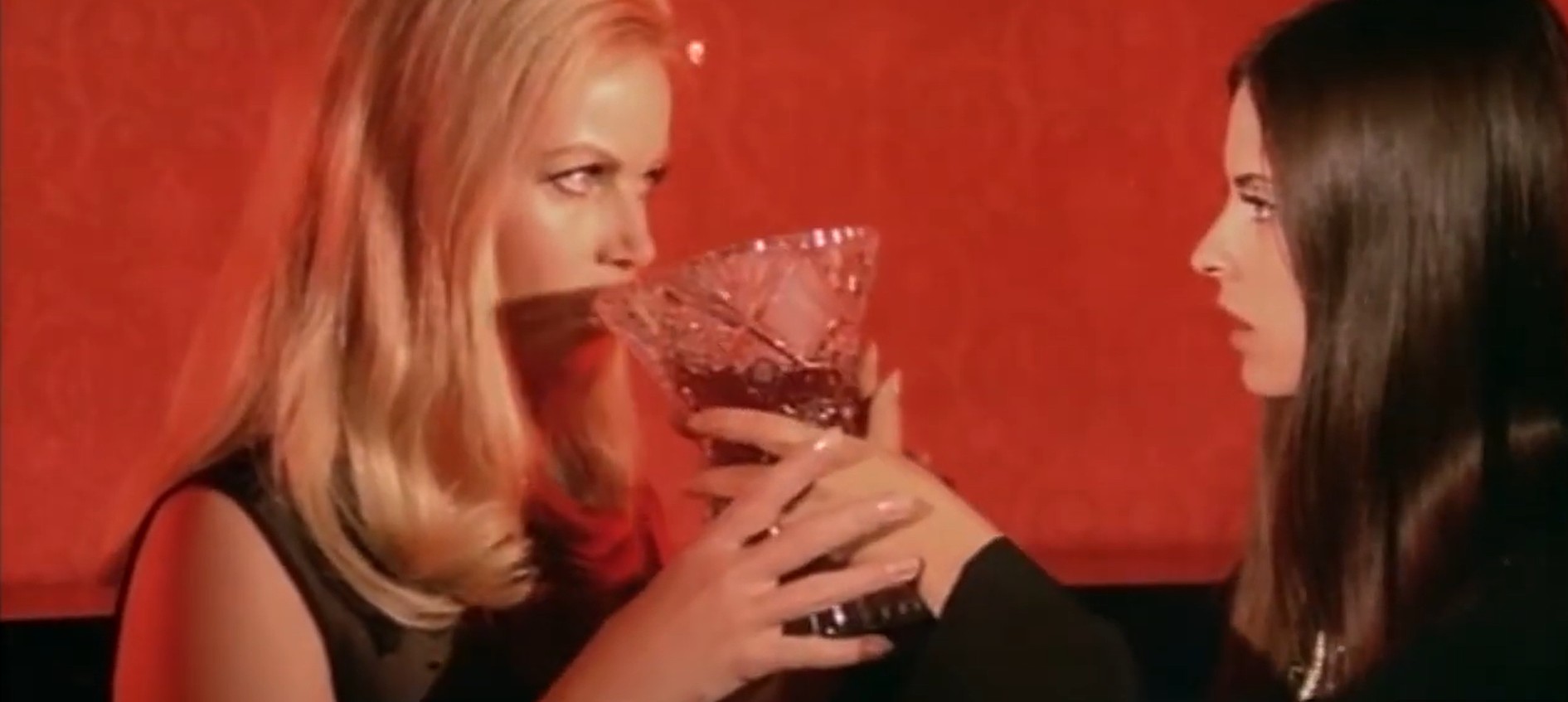
Provocative European sexploitation that isn’t busk European sleaze, “Vampyros Lesbos” is zenith Jess Franco, a social-political rebel and artist unafraid to tell a story that won’t tickle everyone’s interest but definitely be an archetype of the director’s caliber.  Severin Films proudly presents “Vampyros Lesbo” onto a new 4K UHD and Blu-ray dual-format set with a 4K presentation scanned from the original 35mm negative.  The 4K UHD is compressed with HVEC encoding onto a BD100 and the standard Blu-ray is AVC encoded onto a BD50 with respective resolutions of 2160p and 1080p.  The European 1.66:1 widescreen is the aspect ratio on both formats, but the UHD uses DolbyVision to expand upon the already lush color pallet with a richer complexity within the color scheme even though Franco loves his most muted black dressings on characters and on sets.  The extra pixels offer deeper textural, mostly auspiciously perceived in the club scenes that present a room of textures and in often brightly lit captures that don’t washout the details but rather define them more accurately.   The standard Blu-ray offers the same approach but brought back a step or two due to format limitations on the color scale and pixel count but a lesser keen eye won’t take much notice.  The original negative print shows no egregious mishandling damage or degrading emulsion wear.  The only audio track available is the German Mono ADR track with optional English subtitles.  This release does not contain the English dub that’s lost out there in physical media land.  The mono track has a flat tone with no depth to speak of and is full of desynch between dialogue movements and audio overlay but never hides behind the other single output layers. German Manfred Hübler and Sigfried Schwab eclectic score is a fun listen with brass, piano, sentur, light drums, and bass compiled to an era swanky main score that’s quoted being a sexadelic dance party, and rightfully so.  There’s even a distorted vocals on a slow beat jazz track that provides the unsettling and sultry notes for the underplayed horror side of this sexploitation.  Special features on the UHD includes audio commentaries by Kat Ellinger, author of Daughter of Darkness, and a collab between film academic Aaron AuBuchon and Oscarbate Film Collective’s John Dickson and Will Morris.  The UHD concludes with the German theatrical trailer.  The standard Blu-ray has more wiggle room for bons features with all the above from UHD, plus an interview with Jess Franc just prior to his death Interlude in Lesbos, an interview with Stephen Trower, author of Murderous Passions:  The Delirious Cinema of Jesús Franco, a Jess Franco career appreciation by “Anora” director Sean Baker The Red Scarf Diaries, the Stephen Thrower hosted In the Land of Franco, Part 12 looks at iconic locales from Franco’s films with a primary focus on “The Sadist of Notre Dame” which his set in Paris, France, an interview with Soledad Miranda historian Amy Brown Sublime Soledad, a 3-minute mini interview with Jess Franco labeled Jess is Yoda that provides some comedic flair and “Star Wars” references, and the German opening title sequence.  Physically, Severin’s release has a stark, hard contrast cardboard O-ring slipcover with Soledad Miranda in a seductive position starring right aback at you in front of black background.  The backside of the slipcover contains no technical information but does have review quotes, credit acknowledgments, and lingering stare between Countess Carody and Linda Westinghouse.  Inside you’ll find the classic 4K UHD Amaray with Severin’s original Blu-ray art from 2015, commissioned by graphic artist Ben Benscoter.  There is no reverse image on the sleeve.  The discs are held separately with one each side of the interior.  The 89-minute film is not rated and is region free for global enjoyment.

Last Rites: Jess Franco’s “Vampyros Lesbos” is on the select short list of how the Spanish director should be judged by existing and new fans of his work and remembered in his long career and legacy as a truly psychedelic, auteur driven, lesbian vampire film with plenty of women-centric allure and flesh.

Men Beware of the “Vampyros Lesbos” now on 4K UHD and Blu-ray

EVIL Sentences You to the Torture Dungeon and his Bedroom! “Night of the Blood Monster” reviewed! (Blue Underground / 4K UHD + Blu-ray)

“Night of the Blood Monster” on 4K + Blu-ray is Here and On Sale!

After the death of King Stewart, 17th century England went into asunder chaos with the ruthless, usurping King James and the rightful, exiled King William of Orange who sought to return and topple King James’s authoritarian rule of a false claim to monarchy.  During the beginning and at the height of the revolution, Chief Justice George Jefferies presides over witchcraft cases with extreme and unethical prejudice, subjecting them to the torture chamber for what is labeled a ‘thorough examination” of their heretic ways, and eventually sentencing to public execution.  When the sister of one of the condemned women attempts to flee the country with a nobleman’s son, Jefferies learns of their dissidence and sends his henchmen to fetch the lovely woman to exploit her within the context of his own licentious litigiousness but closer and closer do the rebels and William of Orange’s men come to men like Chief Justice Jefferies who believe their power, influence, and proximity to God will save them from the noose.

A 17th century Eurotrash period piece forged out of mostly flesh and wolfish self-importance, “The Night of the Blood Monster” is yet another reteaming of Jesús (Jess) Franco and Sir Christopher Lee based loosely on historical context despite Lee’s best efforts for the contrary.  Also wildly and otherwise known as “The Bloody Judge,” and not to neglect mention the exorbitant unofficial titles from around the globe like “Witch Killer of Broadmoor,” “Throne of the Blood Monster,” and “Trial of the Witches” to name a few, the Spanish-German-British coproduction, cowritten between Jess Franco and Enrico Columbo (“Hell Commandos”) is a biographical interpretation of the Chief Justice George Jefferies and the brief span of his cruel litigator’s life set against an epic regime kerfuffle and grimy, exploitation barbarity.  The storyline concept was imagined by longtime Jess Franco producer and overall B-movie votarist Harry Alan Towers (“99 Women,” “The Blood of Fu Manchu”) alongside Columbo and Arturo Marcos (“She Killed in Ecstasy”) under production firms of Fenix Cooperative Cinematografica, Prodimex Film, and Towers of London Productions.

In yet another instance similar to Jess Franco’s “Eugenie” of a prior year or two where Christopher Lee channels the spiritual embodiment of a pain-and-pleasure pundit connected to the Marquis de Sade yet is unaware of the actual skin-and-sleaze that’s happening all around him while he crafts his melodramatic character, “The Night of the Blood Monster” has Lee conduct a stern symphony for Chief Justice George Jefferies’ conceited righteous carnage, living true to the factual George Jefferies designation of a hanging judge.  Lee is ruthless and cold while proper in public as he peeps beautiful bosoms and skirts from afar.  His costar, the gorgeous blonde with soul pierce eyes in fellow “Eugenie” thespian, Maria Rohm, who was also Harry Alan Towers wife at the time, definitely wasn’t clueless about the more undressed scenes, going full frontal in a couple of occasions with one of the supposedly with Lee as the exploiter of her beauty and circumstances.  However, Lee is never shown and only Jefferies’ hands are seen caressing Rohm’s character’s, Mary Gray, bare skin with post-event moments alluding to the implied affect.  Yet, there’s plenty of well-scripted dynamic play for Lee to bounce off against, which Franco is good at in his work as long as his at least 75% of the work makes it to the screen and not too terribly chopped up and spliced for the sex appeal and gratuitous blood.  Milo Quesada (“The 10th Victim”) swings a mean bastard sword as one of Jefferies head knights of dirty work, Hans Hess (“X312 – Flight to Hell”) is more vanilla than complex as the rebellious nobleman son and Mary Gray paramour Harry Selton, and Leo Genn, who initially wasn’t supposed to play the Lord Wessex, really cements Lee’s genuine performance with his own as the aristocratical, oppositional counterpart to Jefferies sadism.  “Night of the Blood Monster” rounds out with Peter Martell (“The French Sex Murders”), Margaret Lee (“Asylum Erotica”), Howard Vernon (“Angel of Death”), and Maria Schell (“99 Women”) as the clairvoyant old woman Mother Rosa living in the hills. 

Like “Eugenie,” “The Night of the Blood Monster,” and most of Franco’s scripts and films, the historical accuracy you must take with a grain of salt.  Though the underline basis of historical figures and perhaps time periods are more-or-less on point, there’s a greater number of misrepresentation of events or an imprecise use of period appropriate props and costuming that is deemed close enough by a fast-and-loose industry standard. Yet, with any Jess Franco film, the modern-day consumer is not expecting award-winning and emotionally moving cinema but rather fleapit flicks of the fleshy kind with handfuls of equally perversive cruelty.  “The Night of the Blood Monster” fits the bill perfectly with a dressing that, to the untrained eye, would pass historical surroundings, give tribute to sordid bygone figures, and revel in its own unabashed filth outside the interpretations of its own core group of filmmakers.  On one hand I feel bad for Christopher Lee who didn’t know, maybe, that the edification of the character was being twisted into something more carnal but on the other hand, the man has been in quite a few Franco and Towers productions to have learned by then.  However, Franco does depict a remarkable presence of a low-level epic with fabricated Classicism set dresses and interior architecture while keeping the budget down by having multiple scenes of men on horses gallop through an unrecognizable, middle-of-world forest.  With that said, the story doesn’t have perfect fluidity with a choppy sense of tempo that fails to coordinate our specific concepts of time.  Seasons don’t change yet months pass between the wrongful execution of Alicia Gray and the impending arrival of William of Orange’s invasion. In all, there’s a brilliance in the behind the face value and a heart to make Chief Justice George Jefferies the worst person possible yet the timing feels off and the story suffers for it.

I’m curious to understand why Blue Underground used the title “Night of the Blood Monster” on their new 2-Disc 4K UHD and Blu-ray set instead of their previous DVD that had the less-generic-more-fitting title “The Bloody Judge.” No judge-ment here really other than “Night of the Blood Monster” isn’t as catchy. The 4K UHD is HVEC encoded, 2160p high-definition, on a double layered BD-66 presents a new 2023 Dolby Vision HDR 4K scan that is gorgeously sharp in detail of interior structures, brighter exteriors, and even the dungeon scenes invoke the dewy coldness and bloodletting squirms. The skin tones can get a little funky at times with an overly warm, and orange-ish, glow not conducive to elements around the ambiance. Other than a few instances of the skin tones, the grading is overall rich in saturation where we get some really nice and thick contrasting reds and yellows with no artefact inference that cause distraction in darker spots or around the edge of objects. The Blu-ray format offers a lesser immersive picture with a lower pixel count but the compression decoding around 35-38Mbps and the compilation of transfer as well as the high-definition pixels is worth the combo set alone. The English language DTS-HD Master Audio Mono track has lossless compression that renders a clean and unfiltered fidelity in dialogue and in the other audio composited audio layers. Granted, some actors are dubbed due to the international co-production with German and Spanish natives not speaking their native tongues but the dub itself, especially in Lee’s own dubbed track, is one of the better inlaid and integrated tracks compared to most with not a load of static feedback. Blue Underground was able to obtain a cut that is the complete and uncensored version of “Night of the Blood Monster” by combining multiple transfers but in adding additional scenes of nudity and blood from a German transfer, the English dialogue track does briefly switch over to German with burned in English subtitles for two segments. English, French and Spanish optional subtitles are available. The 4K UHD carries with it three historian audio commentaries: 1) Troy Howarth and Nathaniel Thompson, 2) Kim Newman and Barry Forshaw, and 3) David Flint and Adrian Smith. The Blu-ray carries a bit more. Including the aforementioned commentaries, there is also deleted scenes and alternate scenes that rework scenarios or add stylistic choices, an archival interview Bloody Jess with Jess Franco and Christopher Lee, an interview with Stephen Thrower, author of “Murderous Passions: The Delirious Cinema of Jesus Franco, in Judgement Day, an interview with Alan Birkinshaw and Author Stephen Thrower as they discuss producer Harry Alan Towers in In the Shadows, and rounds off with trailers, TV spots, and still galleries. What I love about this new Blue Underground UHD+Blu-ray combo release is not only the picture but also the cardboard slipcover, a remarkable blend of film factuality and gratuitous sleaze of half-naked and scared women chained up in the dungeon with the embossed tactile title “Night of the Blood Monster” in bold gothic lettering. The same image graces the front cover of the black 4K UHD Amary case but if you do want “The Bloody Judge” title, you can reverse the cover art and there it is but with a different, less fun front cover art that’s more in tune with the narrative. Each disc, punch locked into its own side of the interior case, is pressed with a different illustrated image, 4K being the same as the slipcover while the Blu-ray is more Lee and Executioner focused. No inserts or books included. The not rated, 103-minute release comes region free on both formats.

Last Rites: The verdict is in! “The Night of the Blood Monster” now has the best-looking, most-complete version possible with a new, uncensored cut from Blue Underground. Christopher Lee heralds in hopelessness in squalid measure while holding his nose up high as one of England’s most notorious magistrates to ever rule and the brazen Jess Franco brandishes brilliance that glints through the cracks of an overrun production.

“Night of the Blood Monster” on 4K + Blu-ray is Here and On Sale!

100-Year Return Brings a Plague of Flesh-Eating EVIL to a Small Town! “Messiah of Evil” reviewed! (Radiance Films / Blu-ray)

The “Messiah of Evil” has Come to Blu-ray Home Video!

Arletty travels up the California coast to a small beach town known as Point Dune.  The reason for her visit is to find her artisan father after a series of bizarre letters came to an abrupt stop.  She arrives at his mural-graffitied home to discover it empty and decides to stay a few days to ask around town about his whereabouts and to be present for his return home.  Her inquiries at art gallery shopkeepers lead to a motel where Thom, a wealthy collector of urban legends and spooky stories, and his two travelling female companions, Laura and Toni, have also sought out Artletty’s father for his bizarre experiences.  As the days pass, Point Dune slowly becomes a literal ghost town that forces Thom and his companions to stay with Arletty and, together, they experience the horrible truth of what’s really happening to the  residents of the west coast community who eagerly await the arrival of the dark stranger. 

Once married filmmakers Willard Huyck and Gloria Katz are the creative minds behind the stories of “Howard the Duck” and “Indiana Jones and the Temple of Doom.”  They also wrote “American Graffiti” in what was to become their link toward working on Steven Spielberg’s Indiana Jones sequel since both “American Graffiti” and “The Temple of Doon” were both produced by the father of “Star Wars,” George Lucas.  Yet, in the midst of “American Graffiti,” the couple also penned and Huyck came into the entrance of directing with the 1974 horror-thriller “Messiah of Evil” that pulled from various themes of mindless consumerism and the rising fears of dangerous and deadly cults in the U.S.  Also known by a variety of titles around the world, including “Dead People,” “Night of the Danmed,” “Messiah of the Evil Dead,” “Revenge of the Screaming Dead,” and “Blood Busters” to name a few, the Californian coast shot film is a production of the International Cine Film Corp and V/M Productions with Gatz producing and Alan Riche (“Deep Blue Sea”) serving as executive producer. 

“Messiah of Evil” slinks into the soul leaving behind dread’s unwashed pull against what we know as conventional horror.  In order to accomplish such a fear-induced feat, a cast must envelope themselves fully in world of weird and irregularities that nestle an uneasiness stemmed not solely from their performances but from how they react to the eccentric environment, to the crumbling small town society, and to ghastly behaviors of normal-looking people.  Like most daughters, Arletty has concerns for her father and seeks to understand the truth behind his unhinged letters.  Marianna Hill (“Schizoid,” “The Baby”) plays the quietly curious at a cat daughter dabbing residents with barely an effort in interrogational questioning of her father’s whereabouts.  Hill floats Arletty through stages of a slow descent into madness that simmers slowly to a boiling point understanding of what’s taking shape around her.  The same happens to Thom, played by Richard Greer (“The Curious Female”), who initially is a fraction of the nonconformity surrounding Point Dune with his obsession toward collecting strange stories and his polyamorous collection of women.  Of character, Greer is resoundingly in control without being dominating with Thom who has wealth and magnetisms but isn’t someone to be beholden to forever as we see with Laura (Anita Ford, “The Big Bird Cage”) who deserts him for his open-door intimacy policy in his pursuit of Arletty and with the childish Toni (Joy Bang, “Night of the Cobra Woman”) in her infinitely naïve opinions surrounding the dull Point Dune.  One actor I wish we had more of but is utilized perfectly as Arletty’s father and a harbinger of what’s coming is Royal Dano (“Ghoulies II,” “Spaced Invaders”) in a non-humorous nor drunken idiot role that seemed to typecast him later in his career.  Dano’s short but sweetly terrifying stretch divulges a man torn between his previous life and a new terror that now occupies him as he interacts with Marianna Hill as concerned and contaminated father holding it all within toward his frightened, confused daughter.  “Messiah of Evil’s” cast rounds out with Elisha Cook Jr (“Rosemary’s Baby”), Bennie Robinson, and Charles Dierkop (“Grotesque”). 

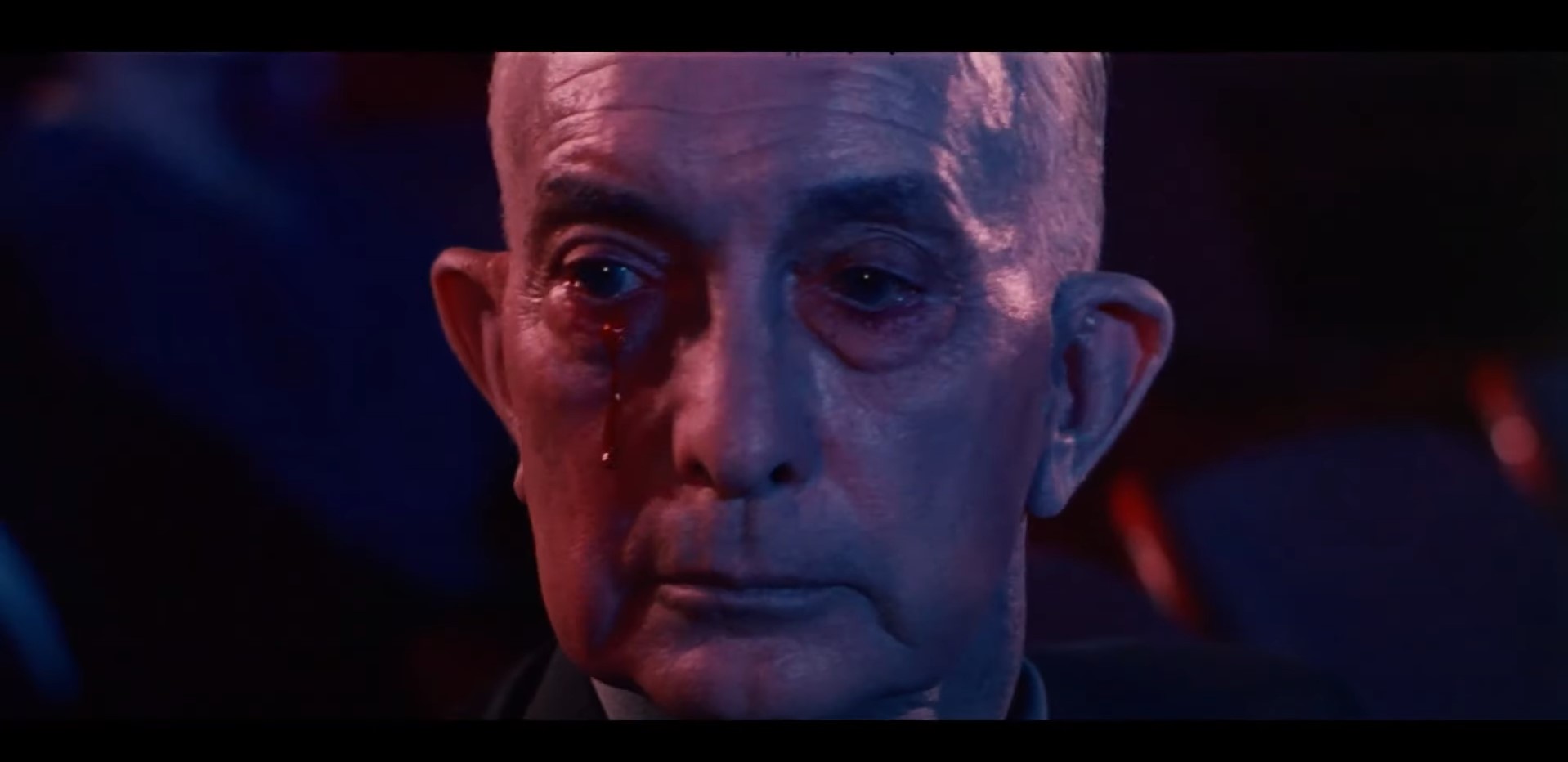
Huyck directs with colorful and verismo synergism that takes the positives of what should be life’s routine pleasures and turns them against us as fantastical and harrowin deadly elements of false securities.  The rolling crashes of Point Dune’s waves takes on a constant cacophony of sinister foreshadowing, a bright and welcoming supermarket becomes a vacant trap in every aisle, the entertaining movie theater darkens with blood on the screen, and an artist’s home, full realistic murals and colors, is an oppressive feast of lifeless eyes.  Point Dune becomes a dead town, literally, as the inhabitants succumb to dark forces from beyond their years, turning primeval in their contemporary three-piece suits and evening blouses.  Huyck and Gatz story pulls inspiration from U.S. history and folklore to mark the 100-year return of spreading evil amongst the land, an evil that resorts to cannibalism by either spellbinding archfiend, an internal infection, or the rise of the undead and not just any mindless, shuffling, flesh-eating zombie but a transmogrified plotter able to move fast and think as a single unit with the touched by evil masse with telltale signs of a single rivel of blood seeping from out of their eye and their insatiable need to consume other people. ”Messiah of Evil” is not overtly graphic like George A. Romero zombies or like the unbridled number of zombie films to follow inspired by Romero’s zombie game-changing wake for the last 60 plus years, separating the flesh-eaters from Romero’s gut-gnashing, pale faced, and slow-walking undead and Huyck and Gatz’s transmitted pestilent receiving horde running fast in their best church shoes with vastly different traits. Huyck and Gatz dip into more eldritch means with the return of a paganistic dark stranger in a pared down explanation without explicitly being definitive who or what the dark stranger (a demon?Antichrist?) is that is driving foreboding signs to a doomsday-disseminating end. ”Messiah of Evil” thrives as the mysterious and strange fulcrum of the beginning of the end told through the point of view of young woman left to tell the world of what’s to come only to be about as believed as much as a man wearing a polka-dotted tutu who has delusions of unicorns dancing the waltz with garden gnomes in his front yard. 

United Kingdom distributor Radiance Films releases a new restoration transfer of “Messiah of Evil” also on their U.S. line. The AVC encoded, 1080p high-definition, BD50 presents a 4K scan of the best-known surviving 35mm print from the Academy Film Archive in a widescreen 2.35:1 aspect ratio. As noted in the release’s inserted booklet, the restoration processes used was the Digital Vision’s Phoenix Finish and DaVinci Resolve was used for color correction, under the supervision of Sebastian del Castillo at the Heavenly Movie Corporation. Audio was also restored with the Izotope RXB. For a surviving print, the original elements look pretty darn good with barely any celluloid hiccup. No vinegar syndrome, not significant tearing, or exposure to name a few issues of possibility. There are a few minor blemishes and missing or damaged frames that seem to provide an unwanted cut but most of “Messiah of Evil’s” film problems stem mostly behind the camera with a rework of the story during the stop-and-go production and conflicts in marketing the film, hence the various title aliases of the film from around the globe. Other detail low points are when the film is bathed in blue and purple gels and tint for to set an apprehensive wander and wonder while retaining more natural grading in its majority throughout. The resorted audio is a lossless English LPCM mono mix. Really focusing on the electronic score of Phillan Bishop (“The Severed Arm”), the low-frequency score sets a perpetual and durable tone of dread out of place in a prosaic small town, much like the Arletty’s father’s work-of-art home that sticks out amongst the mediocrity. In design, dialogue remains robust yet delicate when the scene calls for it, such as Elisha Cook Jr. story of how he was born in what is essentially him, as a vagrant paid for his story, making the only noise in the room. Dialogue in these moments is greatly discernible with negligible electronic interference. Depth layers the permeating isolation of a town gone mad in unison with the range stretching from the distressing design of rolling, crashing, oppressive waves to the scuffles of zombies’ consuls and heels scuffing against asphalt, pavement, and shattering through panes of glass. Radiance provides English subtitles with their release. Bonus features include a new audio commentary by film historian and horror archetype authors Kim Newman and Stephen Thrower, an archived interview with director Willard Huyck, and a new, feature-length documentary showcasing “Messiah of Evil’s” background, themes, production, and influences by various horror scholars, including Kat Ellinger who also voiceovers a visual essay on American Gothic and Female Hysteria, which if I’m being honest, parallelly treads on similarities with Ellinger’s Motherhood & Madness: Mia Farrow and the Female Gothic on Imprint’s “The Haunting of Julia.” Radiance has in the short time poured their heart and soul into their releases and “Messiah of Evil” is no different with a sleek cladded and clear Amara Blu-ray case that’s subtle in showing less but feeling more on the cover art, opposite of the reverse side that houses a classical black and white compositional illustration of characters. Inside the 28th release for the label is a 23-page color booklet insert with the appraisal writings of Bill Ackerman, transfer notes, release credits, and acknowledgements. The disc is pressed red, much like the red moon in the film, with a stark black title. The Radiance release is unrated, region free, and has a runtime of 90 minutes. ”Messiah of Evil” uses cult fears, satanic panic, and the loss of ordinary life to penetrate the spirit by way of slowly eating at it. The crawling, creeping dread meanders, much like Artletty who is seemingly held in place at Point Dune, and we’re glued to the engrossing rate of the terror to come orchestrated by the captivations of a once married couple on a fast track toward success.

The “Messiah of Evil” has Come to Blu-ray Home Video!

EVIL Follows the Virtuous. “Justine” reviewed! (Blue Underground / 4K UHD & Blu-ray)

Own Your Piece of Virtue with this 2-Disc “Justine” set from Blue Undergrounda and MVD Visual!  

Unable to continue their religious education, left with a meager currency to afford room, board and food, and holding no station or options for social pursuit, Justine and her sister Juliette are put out to the streets of 18th century France.  While Juliette recruits herself into a Madame’s established brothel for money, shelter, and sleight of hand opportunities, leading a life sinful in flesh, murder, and exploit that reaps luxurious benefits into high society, a more chaste Justine finds her path to be far less desirable.  Her virtue becomes the object of obsession, lust, and is taken advantage of for other’s personal gain.  No longer protected by her parents or the convent’s shelter, Justine is exposed to the wickedness of the world in every form and fashion with only slithers of bliss here and there as a reward of her decency only to be immediately snatched from her grasp before she can even enjoy a second.  Accused of stealing and murder, tortured and branded, imprisoned and convicted, labeled an escaped enemy of France, and with her virtue corrupted by a cult of pleasure seekers, Justine questions a life led in chastity and overall goodness that has brought her nothing but pain and strife. 

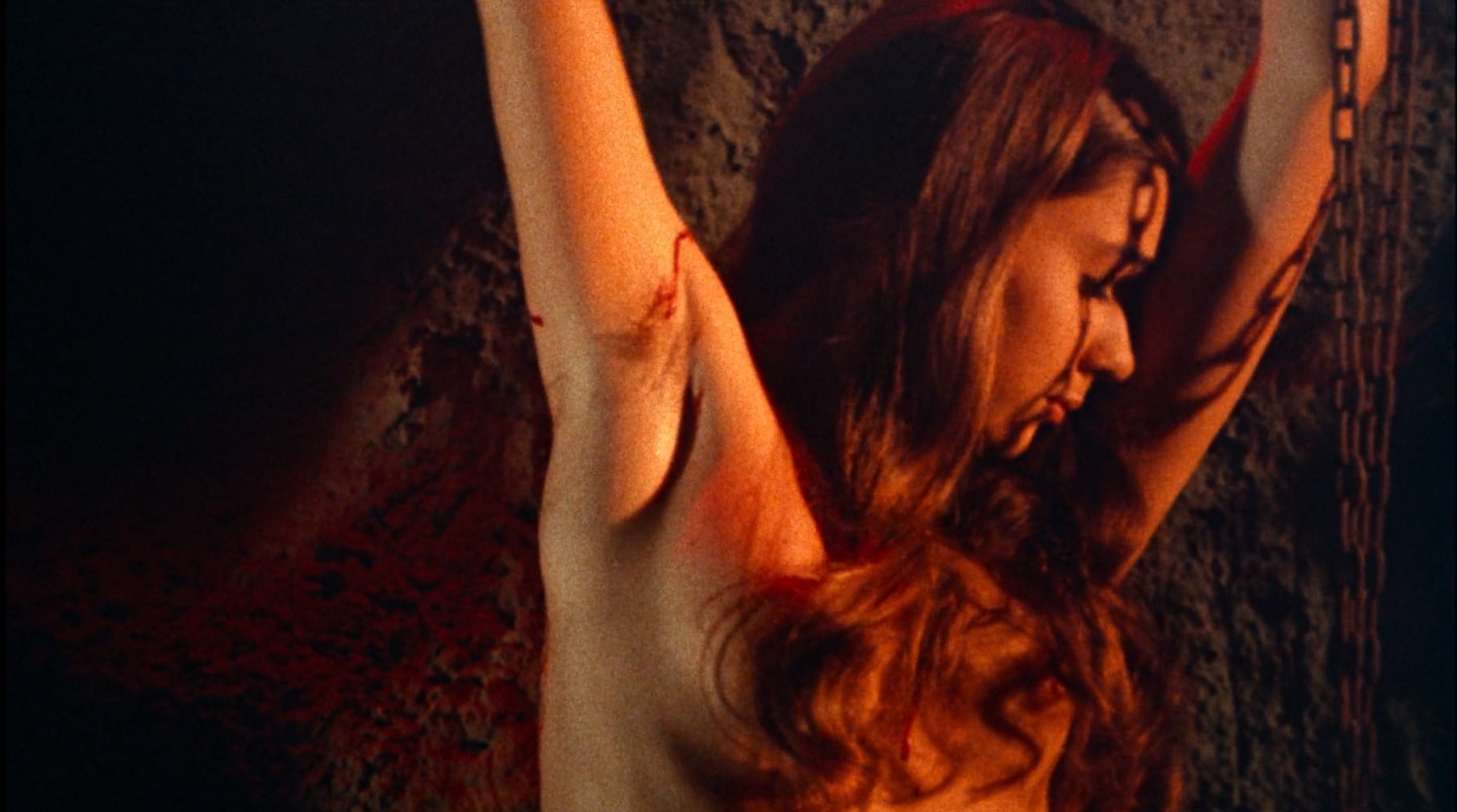
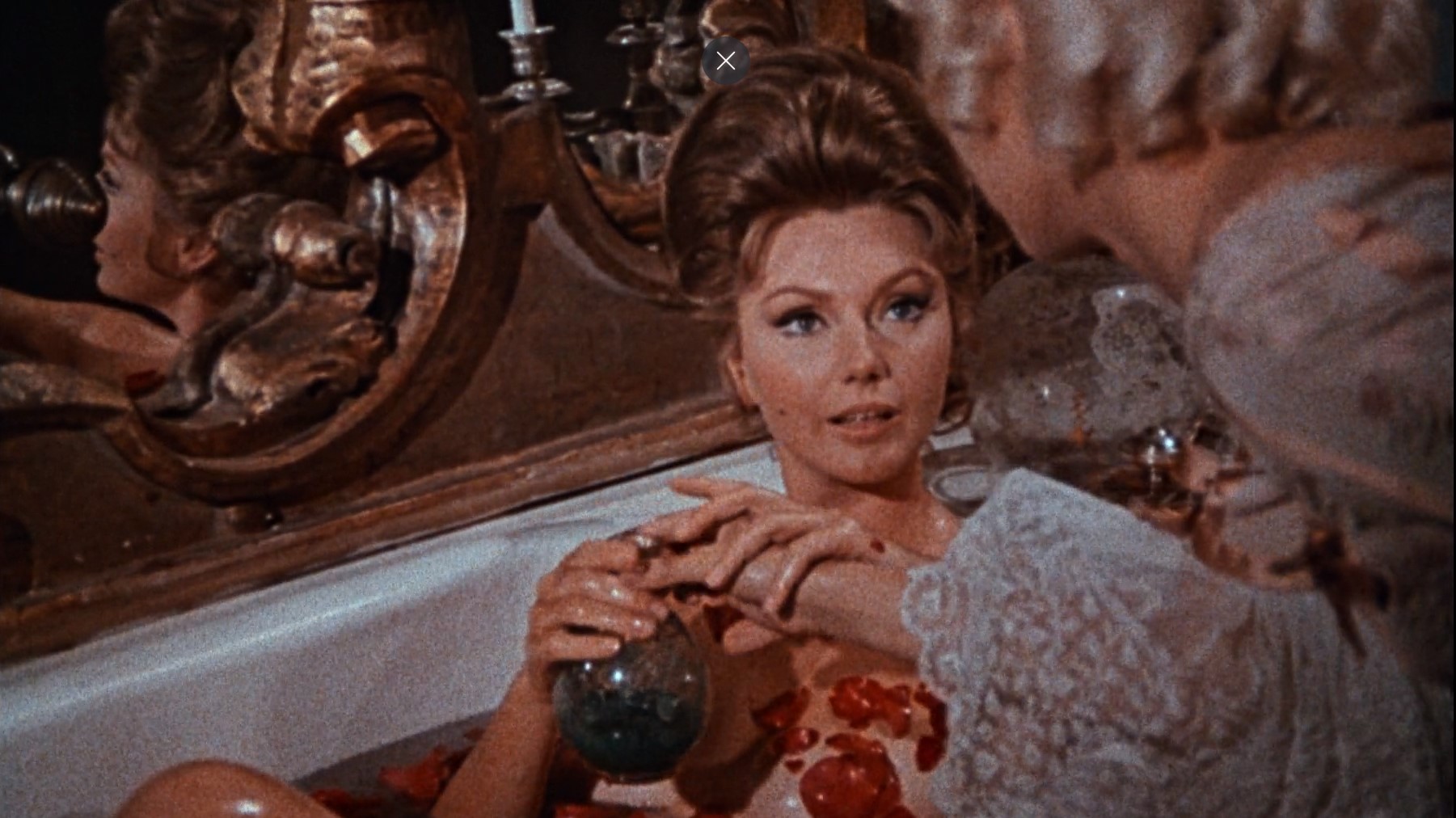
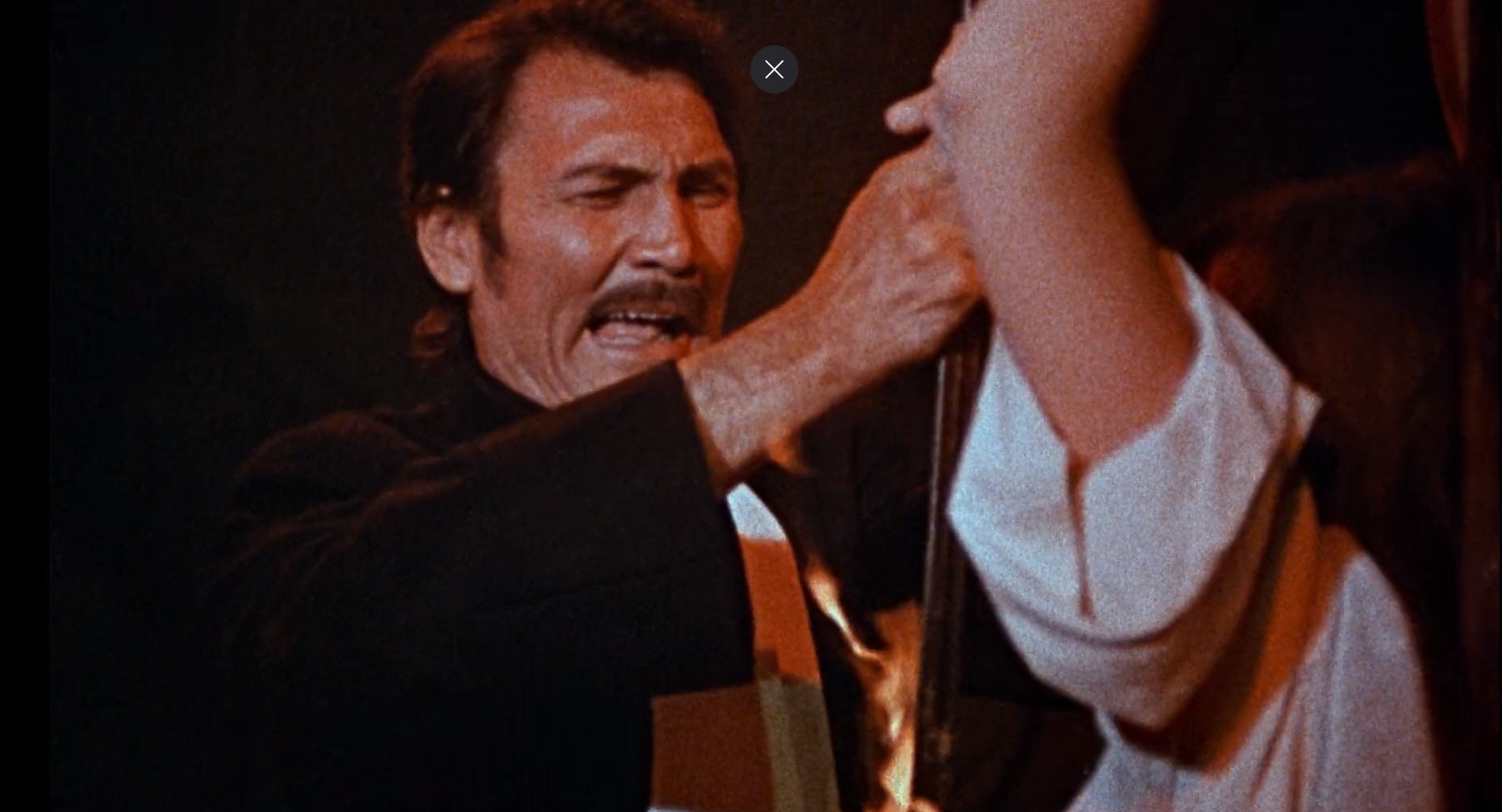
On the heels of my own personal overseas trip to France, a trip for pleasure if you must know, I found it timely and fitting that the Jess Franco directed film, the Marquis de Sade’s “Justine,” would be the next celluloid critique of enticing pulpy obscura.  A part of a pair of Marquis de Sade-themed productions from producer Harry Alan Towers, the other being “Eugenie,” the Eurotrash sexploitation is based off Marquis de Sade’s 1791 novel Justine, or The Misfortunes of Virtue and is adapted for screen by Towers from an original treatment penned by Arpad DeRiso (“Death Steps in the Dark”) and Erich Kronte. “Justine” is one of Franco’s most ambitious visual epics with ornate time period customers, elaborate and grand locations, and an anthology of sorts of the titular character’s misadventures through France that disenchant her chastity. Corona Filmproduktion and the Aica Cinematografica S.R.L. served as the co-productions of this Italian-Spanish 1969 film.

Perhaps the most recognizable and most notable adaptation of Marquis de Sade’s novel, “Justine” is also popularized by its identifiable cast with big names in not only Europe but also in America. The opening scenes with Klaus Kinski, in a wraparound narrative as the Marquis de Sade himself imprisoned and suffering visions of bloodied and bound naked women, immediately draws you into the “Nosferatu the Vampyre” and “Schizoid” actor’s character plight and muted damnation into writing about virtue, a misfortunate respectability. The other famous face in the film, one that spans from Europe to the U.S., is Romina Power as the titular “Justine.” Power, daughter of actor-songwriter Tyrone Power, was, in her own right, a well-known Eurovision singer after the release of the Franco film, but it was her father’s musical talents who landed the sweet-faced Romina into the denigrated young woman role. While Kinski acts on pure facial expression alone, using his iconic, distinct facial features, Power offered a more rigid approach like a child locked by confusion and while unintentional and usually not what any filmmaker wants in a devoid of relaying vicarious expressive emotions, Power naive innocence proves key to Justine’s, well dare I say it, naive innocence. Power’s beauty alone could have stood ground in making the attack from angles perversity film work like a charm. One of the more surprising casted members is Jack Palance. Yes, Curly from “City Slickers” or Jake Stone from “Cops and Robbersons” outlines the formidable pleasure-seeking cult leader Brother Antonin with such gusto flamboyance, the must-see and most-enjoyable performance seemingly feels alien to the usual stoic and stern typecasted actor who could rival Clint Eastwood with a fierce thousand-yard stare. Having co-starred in the Franco-de Sade film “Eugenie” a few years later, Maria Rohm, aka Harry Alan Towers wife, plays the role of Juliette and while the story is ultimately a dichotomy of virtue and sin, there’s an imbalance between the two characters for screen time. The Marquis de Sade’s novel was named “Justine” after all. For her alotted screen time, Rohm provides a suitable sinful scarlet woman climbing the aristocratic ladder by cheating, stealing, and killing her way to the top. The cast fills out with Harold Leiptnitz (“The Brides of Fu Manchu”), Horst Frank (“The Cat o’ Nine Tails”), Gustavo Re (“Horror Story”), Sylva Koscina (“Uncle was a Vampire”), Akim Tamiroff, Rosalba Neri (“The French Sex Murders”), and “99 Women’s” Mercedes McCambridge in an unforgettable role as a nasty gang-leading woman whose high-velocity cruelty rockets are so homed in on Justine it’s explosively devastating to watch.

Having seen the elegance of interior architectures inside Paris’s Opera house, walked the cobblestone streets surrounding the monumental Eiffel Tower, and taking in the laissez-faire of the French way of life, I can honestly say Jess Franco captures France impeccably well for an self-exiled Spaniard known more for his sleaziness and horror than his efforts in cinematic expressionism.   Arching with one big showcase revolving around the idea that virtue will get you nowhere and will be nothing but trouble, ultimately putting to question the validity of the decency concept, the narrative is broken up into a mini-scenarios, mostly of Justine being completely subjugated to the wicked whims of others and a handful of Juliette erecting a better life off the backs of others she’s duped or snuffed.  Franco mastered false hope and misconceptions with each of Justine’s encounters as they lure her in with promises of salvation to then only kick her when she’s down and reap full advantage of her inexperience and gullibility that the world is full of good people.  Sordid and cruel, “Justine” is a contradiction of actionable cynicism in the foreground of depicted magnificence in location, costume, and cinematography choices that hews into the coarse callousness; one particular scene comes to mind involves Jack Palance’s Antonin arranged with hand positioning that abbreviates the name Jesus Christ and as Antonin is holding this hand arrangement, he seemingly glides or floats down the stone corridors toward Justine, demonstrating religious imagery as a form of abusive power or corrupted guidance to serve one’s own deviant devices.  Though labeled in some circles a sexploitation film and certainly full of skin from Romina Power, Maria Rohm, and Rosalba Neri amongst others peekabooing their assets through cut potato sacks during the sex slave orientation scene, much of the sex is heavily implied with a limited gratuitous outcome.  Before going fully into an Eurotrash market by the late 70s and all the way through to the 90s, Franco made every effort to be a considerable filmmaker for a broad audience in numerous countries and his dislike for censorship shines through to his work, despite the likelihood of costing him acclaimed fame as a director. 

“Justine” arrives on 4K UHD in a Blu-ray combo set from Blue Underground.  The two disc set is AVC encoded Blu-ray 50gig and a triple layered Blu-ray 100gig with 1080p (standard BR) and 2160p (UHD) high-definition resolution, and presented in the original European widescreen aspect ratio of 1.66:1.  The brand new 4K restoration from the uncensored original camera negative of the 35mm film with Dolby Vision HDR is a foremost upgrade to the highest power, an ultra-balanced grading that reels in a wide variety of colors from interior to exterior that helps bring the ornamentation of 18th century France to a vivacious life on screen.  The saturation is enriched and finitely retuned to deliver the best and naturalistic grading as humanly possible, or as current technology allows.  The Blu-ray offers a just as reasonable presentation but does lack that high attention to detail because of the lower pixel count.  Bitrate decades are a comfortable average in the high 30s to low 40s.  The UHD and standard Blu-ray offer a clean and free from compression artifacts with immeasurable format capacity to render an unimpeachable picture. Both formats come with an English DTS-HD mono, dubbed in English by voice actors and not the original cast. No hissing, popping, and only a slight interference hum. Dialogue is dub boxy but clean, clear, and right forefront without question of what’s being discoursed and is well-folded into the ambient and Bruno Nicolai epic vein-coursing score that triumphs a military march over a classical base. English SDH are optional. In regard to special features, both formats include a new audio commentary with film historians Nathaniel Thompson and Troy Howarth and the French trailer, but the Blu-ray contains archive interviews with director Jess Franco and writer-producer Harry Alan Towers, an interview with author Stephen Thrower of Murderous Passions: The Delirious Cinema of Jesus Franco, a new interview with actress Rosalba Neri, in Italian with English subtitles, On Set With Jess, a newly expanded poster and still gallery, and a Jess Franco dreaded censored cut of the Americanized shorter version of the film under the “Deadly Sanctuary” title in HD and clocking in at 96 minutes, a nearly 30 minutes shorter. The physical features mirror the “Eugenie” 4k/Blu-ray release with a black Blu-ray snapper case with similar thickness. A shackled Justinne graces the front cover, as with the previous DVD Blue Underground release, and has the same cardboard slipcover with an oval shaped like mirror cutout to not block the half-naked Romina Power. Back covers are both the snapper case and cardboard cover have the same layout design but different still images on each. Inside, there is a disc on each side of the case held in by a push lock. The UHD is a sizzling infrared and sultrier posed version of the snapper cover while the Blu-ray, in the same red hue, is a composition of characters clustered together in a circular design. The film comes not rated, region free, and has the presentation feature with a runtime of 124 minutes. The Marquis de Sade divulges a sardonic, topsy-turvy belief that the more you stay virtuous, the more trouble follows as it’s the way of the world and the more you swindle, the more headway you make in life. Jess Franco brings the Marquis’s vision to cinematic life with a grand and sordid tale, dissevering the two ways toward their individual soul crushing path, and discovering morality within the immoral.

Own Your Piece of Virtue with this 2-Disc “Justine” set from Blue Undergrounda and MVD Visual!  

Do EVIL, Get Dead! “A Day of Judgment” reviewed! (Severin Films / Blu-ray)


1930s rural America – the dejected town priest resigns his congregational duties after failing the local townsfolk who have all but returned to the Church and reclaim their faith in the savior lord Jesus Christ and God.  On his exit of the town’s border, the priest crosses paths with a shadowy figure riding an austere wagon and holding a scythe.  A town full of heartless schemers, adulterers, swindlers, and murders have their unforgiving stories told that leave their fellow townsfolk, their friends, and even their families left suffering in their wake.  The shadowy figure tracks each sinning stray down to face retributing judgment.  The righteous and terrible punishments send the unsavable souls to an eternal existence in Hell.

The Grim Reaper cometh. Screen cap courtesy of Severin.

What was once considered to be a Christian-centric educational project had turned into a Christian-centric damnation of horrors in the quasi-anthology “The Day of Judgment,” where the sinners of sin town deviate from the Godfearing path and into a vat of immorality and ungodly aberration.  “The Day of Judgment,” occasionally under the U.S. bootleg title of “Stormbringer,” is the one and only directorial from C.D.H Reynolds (aka Charles Reynolds), an academic educator turned briefly to film working under the legendary, North Carolina based Earl Owensby Studios that produced the 1981 released film.  The script is penned by Owensby Studios’ regular writer, Thom McIntyre, who inked the film between a pair of genre credits, including the incarcerated grindhouse actioner “Seabo,” also known as “Buckstone County Prison” a few years earlier and a snippy flick of a pack killer Rottweilers terrorizing a mountain resort in “Dogs of Hell” a couple of years later.   Owensby, obviously in regard to his own studio work, took part as the fire and brimstone tale’s producer along with associate producer and longtime “Power Ranger” director Worth Keeter curating the final touches as the creative architect of the script’s grimmest portions or more line as the assistant director of adding the bleaker, bloodier fates of the sinners.

William T. Hicks. Screen cap courtesy of Severin.

“A Day of Judgment” has a non-linear anthology-like structure that swings back and forth between different character scenarios of wickedness.  You may meet one character at the very beginning of the story and don’t meet them again, until you’re already through having sent a good chunk, if not all, of the sinners to Hell in a handbasket.  But McIntyre hones in well on setting up nicely each character’s backstory, those who the priest crosses paths with as he exits the town and delivering their ultimate demise (with an assistant from Worth Keeter’s gloomier approach).  The director himself Charles Reynolds plays the crestfallen Reverend Cage in a classic expository preacher riding out of town and crossing paths with soon-to-be-troublesome townies in William T. Hicks (“Death Screams”) as a greedy and heartless bank owner, Careyanne Sutton and Larry Sprinkle (“Trick or Treat”) as man slaughtering, pretense adulterers. Toby Wallace as the hometown disparaging mechanic scheming to steal the family business out from his parents noses to sell, Helene Tryon (“Dogs of Hell”) as the frettingly kook and paranoid old lady poisoning the local children’s pet goat, and Brownlee Davis (“Wolfman” ’79) as the delusional and disgruntled former employee of his best friend looking for a finality in revenge.  “A Day of Judgment” had this weirdly transitional acting style for an 80’s released horror that resembled the Golden Age of cinema through the 1950s and 1960s where everything is loud and pronounced without much reflection, pause, or change in tone.  Though the style sticks out like a sore thumb, perhaps Reynolds made a shallow attempt to recapture the 1930s as which the narrative period is set.  The acting isn’t terrible but is more staged and reactionary to the course of events.  The cast rounds out with Carlton Bortell, Richard Dedmon, Inga Dennis, Denise Myers, Jerry Rushing, Harris Bloodworth and Fred Roland.

C.D.H. Reynolds as Reverend Cage. Screen cap courtesy of Severin.

Earl Owensby produced films were not known to be big box office hits as they coursed the grindhouse, drive-in theater circuits with relatively unknown talent nearly strict to the back pockets of the Owensby Studios and still meeting profitable margins on low budgets.  “The Day of Judgment,” which doesn’t feel like a grindhouse film, carried meager success by way of production design and wardrobes alone.  Give credit where credit is due with an Owensby film that can dole out a variety of era appropriate automotive roadsters and specific period garments for the illusion.  Some sets are dressed scarcer than others with lots of blank spaces and sparse knickknacks to build upon the 1930’s décor but the overall impression is quite effective, transporting one out of the 80’s and into the depression era the narrative frequently suggests.  I also favored the non-linear anthology of individual hell bound circumstances as that structure rendered “A Day of Judgment” as a whole rather than a pie sliced into six-even segments with a common core connection that, at times with other films, individual stories can feel untethered to the main theme.  In today’s times, “A Day of Judgment” is severely antiquated but the more “bleaker” character demises often landed with underripe special effects and a fair amount of cheesiness that’s a Loony-Toons illustrated representation of Hell that looks more like Wile E. Coyote’s Southwest American desert home.  I was anxiously awaiting the beep-beep of Roadrunner, speeding across the screen, and the drop an ACME anvil on top of the sinners’ melons. 

Helene Tryon being dragged to Hell. Screen cap courtesy of Severin.

The overall message in “A Day of Judgment” is clear that sin and crime doesn’t pay, and the wrath of God’s retribution will come down hard in the form of a scythe.  Severin Films presents up a new Blu-ray, scanned in 2K of the original interpositive print now in full 1080p HD resolution of the widescreen 1.85:1 aspect ratio. Preserved pristine and having virtually no wear from age, “A Day of Judgment” is an amazing picture to behold for its first Blu-ray release with heightened resolution that extricates more details than possible than any other release can provide, especially when those other releases are the official VHS and DVD bootlegs. Here the color grading excellently pops with deeper hues of prime colors to provide more life into the death that’s onscreen. One thing to note about the release is the immense phosphorescence glow around whites and other lighter colors that can be eye-catchingly distracting when a piece of white paper becomes the main focus due to a conspicuous radiance. Other than that, the picture is clean, the grain is healthy, and no obvious signs of alterations to enhance the visual spectrum. The English language mono audio track, though emitting crystal clarity without any audio blemishes, is not terribly clear on whether Severin went with Dolby Digital or the DTS-HD. Other listings on the web offer up “A Day of Judgment” with a dual channel DTS-HD Master Audio while the back cover displays the Dolby Digital logo with a detached written description as a mono track, which coincides with Severin’s official site. With the film’s outmoded ingrained technology, Dolby Digital would be, to me, the obvious format that produces higher quality sound using a lower bitrate. Special features include a pair of new Severin exclusive interviews with British author Stephen Thrower of “Nightmare USA” in The Atheist’s Sins and snippet interviews from Worth Keeter and Thom McIntyre in Tales of Judgment. Final spec notes on the Blu-ray are a region free coding and has a runtime of 97 minutes. Stuck in stasis of prim and conservatism, “A Day of Judgment” has become this oddball labeled slasher of the 80s era that aimed to explore new and unusual stories and techniques on every avenue, but still leaves this impression of Bible-thumping Christian values that serve as a stern warning for all ye sinners!

“A Day of Judgment” on Blu-ray and DVD from Severin Films.  Click Here to Purchase at Amazon.com