

Collector’s Run to Grab Celluloid Dreams’ “Short Night of Glass Dolls” on 4K UHD and Blu-ray!
Gregory Moore’s body is found motionless and wide-eyed in a Prague Plaza and is confirmed deceased by local doctors, but Moore is actually alive, paralyzed and trapped inside with only his inner voice able to cry for help. As his mind races about how to communicate with those around him, Moore must recall the previous days events to see how he ended up this way. Days before, the American journalist, currently stationed in Prague and soon to be relocated in another European country once his assignment comes to term, is visited by his beautiful girlfriend Mira and they attend an affluent party hosted by socialite Valinski. Soon after, Mira disappears from his apartment late a night, leaving all her belongings behind in his apartment and as the police begin to suspect Moore as primary suspect, the journalist uses his trade to discover a powerfully mysterious and sexually depraved organization, known as Klub99, may be behind her disappearance.
Aldo Lado’s written-and-directed murder mystery goes by many Italian and English names: “Short Night of Glass Dolls,” “La Corta Notte Delle Bambole di Vetro,” “Malastrana,” “La Corta notte delle Farfalle,” “The Short Night of the Butterflies,” and, finally, “Paralyzed.” Doesn’t matter what you call it, “Short Night of Glass Dolls” needs very little title nomenclature as Lado, a dark sided and rich yarn spinner of Italian cult cinema with credits like “Who Saw Her Die?” and “Last Stop on the Night Train,” debuts his 1971 tale of mystery with precision and style that speaks global themes of affluent power for the sake of retaining that power as well as their youth. The Italian production is a cross-country affair being filmed in not only Italy but also in Croatia, Slovenia, and Prague and is a production of Doria Cinematografica, Jadran Films, and Dieter Geissler Filmproduktion with Enzo Doria (“Beyond the Door,” “Tentacles”) and Dieter Geissler (“Kill! Kill! Kill! Kill!,” “The NeverEnding Story”) as producers.

“Short Night of Glass Dolls’” American protagonist was actually not played by an American but by French actor Jean Sorel with a handsome stached face, bronze swagger, and whose taste of giallo carried into the Lado film after acting in “The Sweet Body of Deborah” and Lucio Fulci’s “A Lizard in Woman’s Skin.” It’s not surprising or even uncommon for a 1970s through the 1980s Italian production to cast non-native Italians to star and perform as Italy sought foreign talent to be highly marketable abroad and “Short Night of Glass Dolls” is bursting with international talent from America, Yugoslavia, and Sweden to perform alongside Italians. The only American in the film is the petite and lovely Barbara Bach whose career was mostly a decade and half of Italian films, including “The Great Alligator,” “The Humanoid,” and “Black Belly of the Tarantula.” Bach’s short stint as Moore’s girlfriend, Mira, is the epitome of innocence and cherished love, an quality lost by Moore because of his work blindness and his philandering with colleague Jessica, “Salon Kitty’s” Ingrid Thulin entrenched into Jessica’s passion for Moore but also keeping a stark low-profile on her looks against Mira with Thulin’s naturally blond hair contained in a colorful headwrap for most of the film. The love triangle is downplayed from the early revealing signs that Moore may be playing both sides but from the moment Mira vanishes, Moore and Jessica, along with fellow journalist Jacque (Mario Adorf, “What Have You Done To Your Daughters?”) become a single unit of vocation to find Mira and they bitterness drains from Jessica to just despair by the shocking finale when all the cards laid upon the table. Lado neatly keeps a tight lid on Klub99’s patrons with only the assures of Valinski as the organization’s ringleader of undisclosed purpose. José Quaglio (“The Eroticist”) dons well as the oligarchal head keeping a low profile that emerges out like sordid serpentine of perversion and wickedness. Daniele Dublino, Fabijan Sovagovic, Relja Basic, Piero Vida, and Semka Sokolovic-Bertok are the Croatian and Italian support actors that fill out the cast.

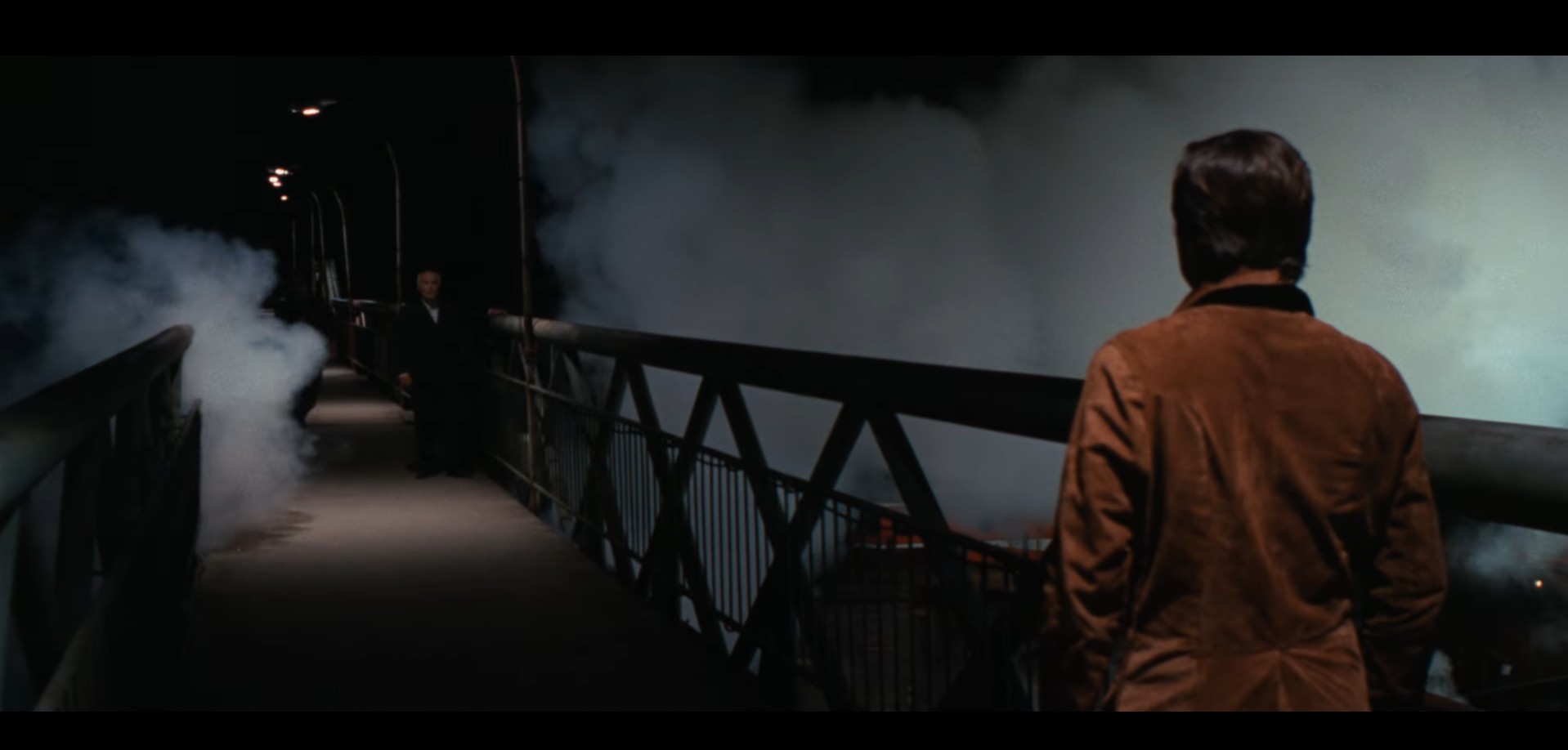
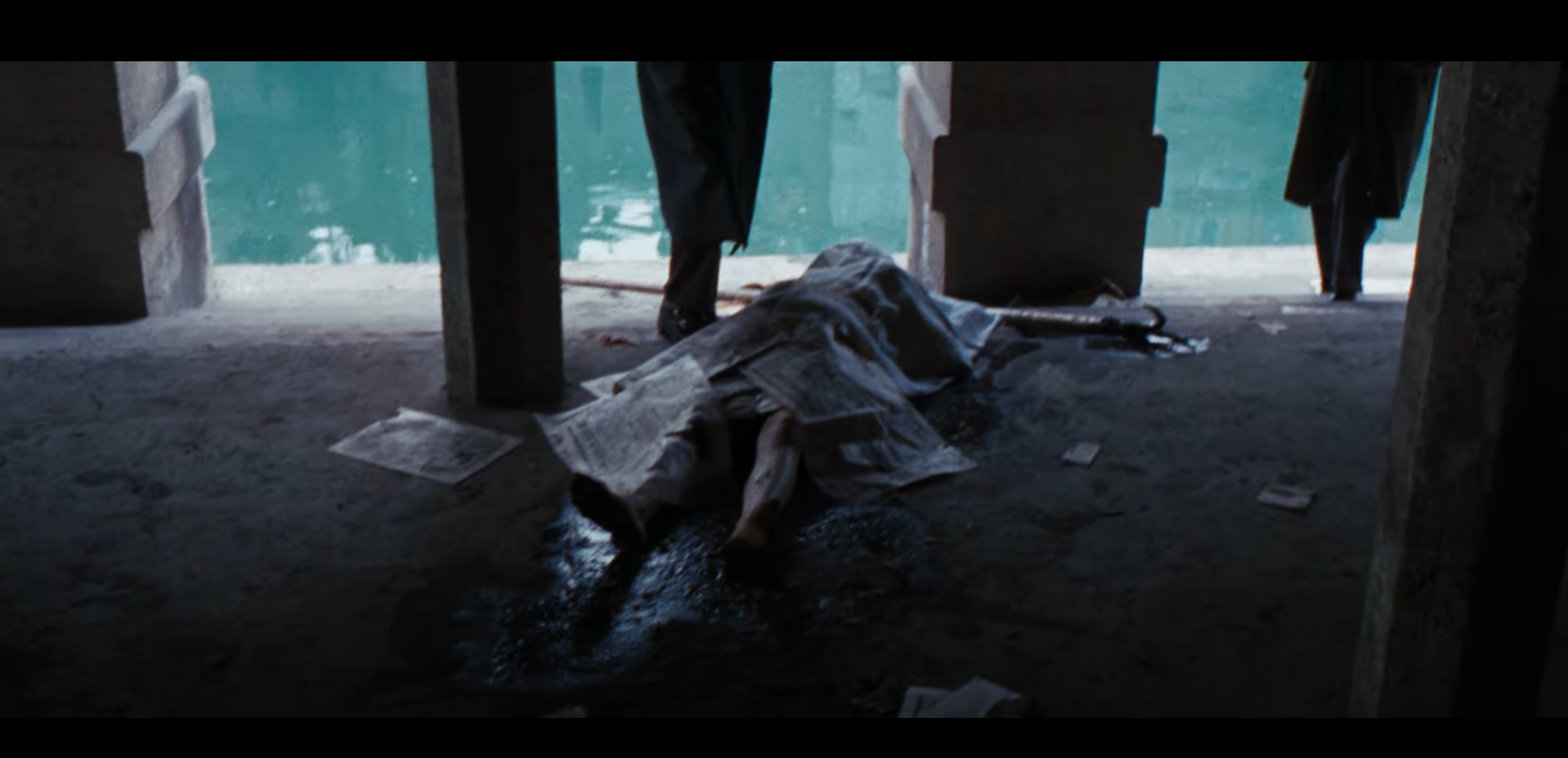
Aldo Lado’s debut film pins him as a productional prodigy with a naturally gifted cinematic eye and a phenomenal storyteller. “Short Night of Glass Dolls” sallies forth in an untraditional, nonlinear narrative through the perceptive procession of a paralyzed man’s thoughts and recollections. That man being journalist Gregory Moore who audiences are first introduced lying motionless in the bushes of the plaza morning and, from the start, Moore is at the mercy of bystanders, medical professionals, and friends who mostly believe he’s dead but, on the inside, is in his thought’s echo chamber screaming for help. Every frame captures the act and emotion, amplified even more so when Jean Sorel is absolutely still, eyes open, and withstanding forces upon, such as chest compressions, to which he doesn’t even flinch. Lado finds beauty in the macabre imagery when dead women are laid out nude, splayed with an arrangement of flowers or juxtaposed wet against a dry paved ground. Lado also doesn’t cater to a fixed position and, instead, tracks the characters with smooth movements, coalescing at times a back-and-forth or side-to-side to get lengthier, more dialogue and dynamically enriched, scenes with director of photography, Giuseppe Russolini (“Firestarter”), achieving a naturally dissemination of lighting and color. “Short Night of Glass Dolls” is not a film without flaws as Moore’s investigation takes the easy pickings route as if briefly glancing over the reported missing, naked women list is an automatic ladder to the winner’s circle for unearthing mostly everything of an deprave inner circle of the powerful rich and so Aldo cheats a little to give his story’s theme of flightless butterflies some much needed wings.
Following up on their definitive, carefully curated, stunning release of Giuliano Carnimeo’s 1972 giallo “The Case of the Bloody Iris,” Celluloid Dreams doesn’t pump the breaks delivering their latest “Short Night of Glass Dolls” with an all-encompassing, 4-disc collector’s edition set that includes 4K UHD and Blu-ray. Scanned and restored in 4K from the original camera negative, the UHD is an HVEC encoded BD100 with 2160-pixel resolution and the Blu-ray is AVC encoded BD50 with 1080-pixel resolution. It goes without saying that both transfers are impeccable in their damage and blight free form for those who might have owned or once owned the cropped, VHS-sourced release under one of its many titles, “Paralyzed.” The grading blends a natural, dynamic pop with peppered psychedelic trips down the dark rabbit hole with Klubb99 is open for business and the color is diffused with balanced, natural saturation, adapting to lighting of all varieties. UHD offers a richer depth of focus with the increased pixel Dolby Vision seizing better delimitation around objects, but that doesn’t mean the Blu-ray doesn’t do the same, the UHD just enhances it by a quarter approximate percentage, while still keeping healthy, transpicuous grain. Two fidelity-true 1.0 DTS-HD offers mostly a dialogue entrenched mix that, audibly, has an imbalance against a rather omitted ambience and that’s not the release’s doing but rather a lack of Foley work amongst an ADR English or Italian track. Ambience hits where it counts but there are times when establishing shots or slow pans of Prague go nearly into a coma state, letting the dialogue and the renowned Ennio Morricone’s piano, triangle, and melodic vocal score take flight through the course of the mystery. English subtitles are available for the Italian language track. Disc one and two not only contain the feature but also contain identical extras with writer-director Aldo Lado & and Freak-O-Rama’s Frederico Caddeo feature-running commentary, a second parallel commentary track with Celluloid Dream’s founder Guido Henkel, an assortment of trailers labeled as grindhouse, Italian, English, and the Catalepsis, with an isolated score that pedestals Ennio Morricone’s score. Disc three delves into the Italian-language, English-subtitled feature documentaries and featurettes with a 2015 archived interview The Nights of Malastrana, clocking in over 100 minutes, that have isolated discussions with Aldo Lado and actor Jean Sorel, All About Aldo is another archived interview with the director circa 2018, The Quest for Money is an interview with producer Enzo Doria, To Italy and Back touches base with producer Dieter Geissler’s perspective and historical context, The Most Beautiful Voice in the World interviews Italian singer Edda Dell’Orso’s haunting vocalizations on Morricone’s score, Cuts Like a Knife speaks to editor Mario Morra, the Flying Maciste Brothers’ video essay The Man on the Bridge: Philosophy, Perception and Imprisonment in Aldo Lado’s ‘Short Night of Glass Dolls,’ the alternate title Malastrana’s German export credits, and an image gallery. Finally, disc four brings the encoded special features home with not one, but two alternate cuts of the film, a 35mm Grindhouse version and the cropped Paralyzed VHS version. If you thought the encoded special features weren’t hefty enough, Celluloid Dream’s physical presence is certainly imposing with a rigid slip box with newly designed cover compositional cover art on back and front, a massive 64-page color picture and poster booklet features a retrospective essay from Andy Marshall-Roberts as well as reprinted column and magazine reviews from the film’s initial release, and, of course, the thick Amaray case, which is surprising in the traditional Blu-ray blue rather than the 4K UHD black. The cover art is an original rendition that brings all theme elements of giallo into the illustrated fold in circling chaos of catalepsy with the reverse side displaying the same image but titled in Italian. Inside, an advert for “The Case of the Blood Iris” and their upcoming third title “La Tarantola dal Ventre Nero” is inserted. The 4K is region free while the Blu-ray is hard coded region A. The unrated main feature has a runtime of 97 minutes.
Last Rites: Celluloid Dreams pursues excellence and strikes twice achieving it with a heart-and-soul poured release that by far has blown all other limited-edition copies, collector sets, definitive releases out of the water and “Short Night of Glass Dolls” deserves every bit of the attention.


 It's Bloggin Evil!