To Do EVIL or To Do Good? “Men of War” reviewed! (MVD Visual / Blu-ray)

“Men of War” are Men now in High Def! See It Here!

Living like a pauper on the frozen street of a snow Chicago, ex-special forces soldier Nick Gunar has no desire to return to his former life, but when he’s referred a mercenary job to visit an island off the South China sea, he’s assured by the man that referred him, his fatherlike former colonial, that there will be no bloodshed in his all for show and intimidation situation that needs more finesse than firepower.  His mission is to assemble a team and negotiate with armed persuasion to get the unwilling, combative locals to sign over the rights to a mineral rich underground cave system.   Gunar’s expected confrontation turns out to be a small village of unarmed men, women, and children, peacefully refusing to sign over their land for excavational exploitation of their ancestral home.  While Gunar weighs his morality, a second team lead by Gunar’s more ruthless brother-in-arms, Keefer, sets to make sure the job is completed one way or another. 

Set off the coast of Thailand, “Men of War” is the 1994 U.S. mercenary action film that induces the ethics and morality question of armed-to-the-teeth hired guns against a small village of mostly helpless residents going to sit with an honorable conscious.  Perry Lang, actor in such films as “Teen Lust,” “The Hearse,” and “Alligator” who then turned director in the early 90s, helmed his sophomore picture after directing Catherine O’Hara in “Little Vegas” four years prior.  “Men of War,” which had a working title of “A Safe Place,” is penned by a trifecta of writers in “The Howling’s” John Sayles, “Demon Knight’s” Ethan Reiff, and Reiff’s longtime screenwriting partner Cyrus Voris.  Seasoned writers and an upcoming director garnered studio funds by Moshe Diamant and Stan Rogow to take a chance on the abroad militant-action subgenre that was dwindling at the time of the mid-90s.  Mark Darmon Productions Worldwide, in association with Grandview Avenue Pictures, served as coproduction studios with Arthur Goldblatt, Andrew Pfeffer, and David C. Anderson producing.

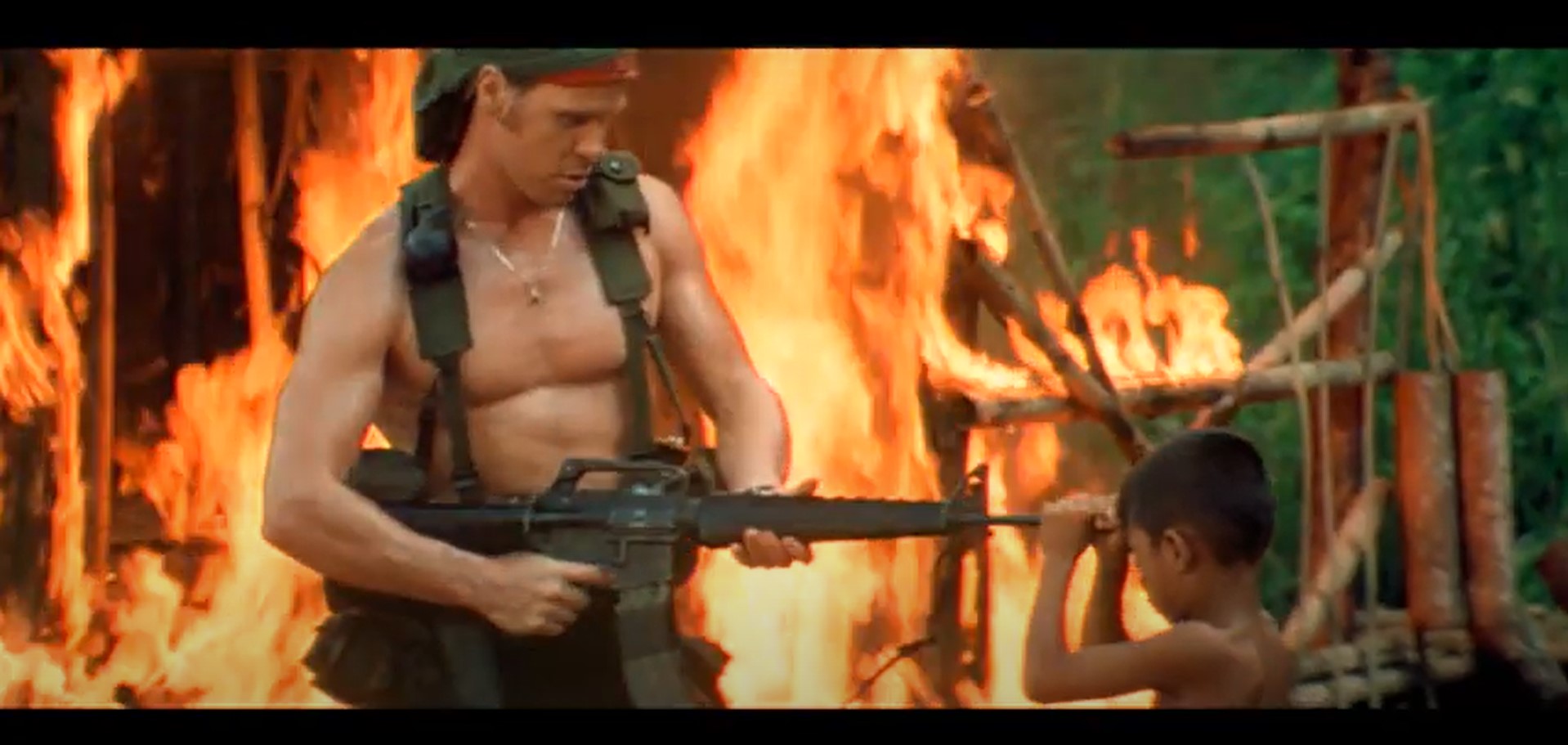
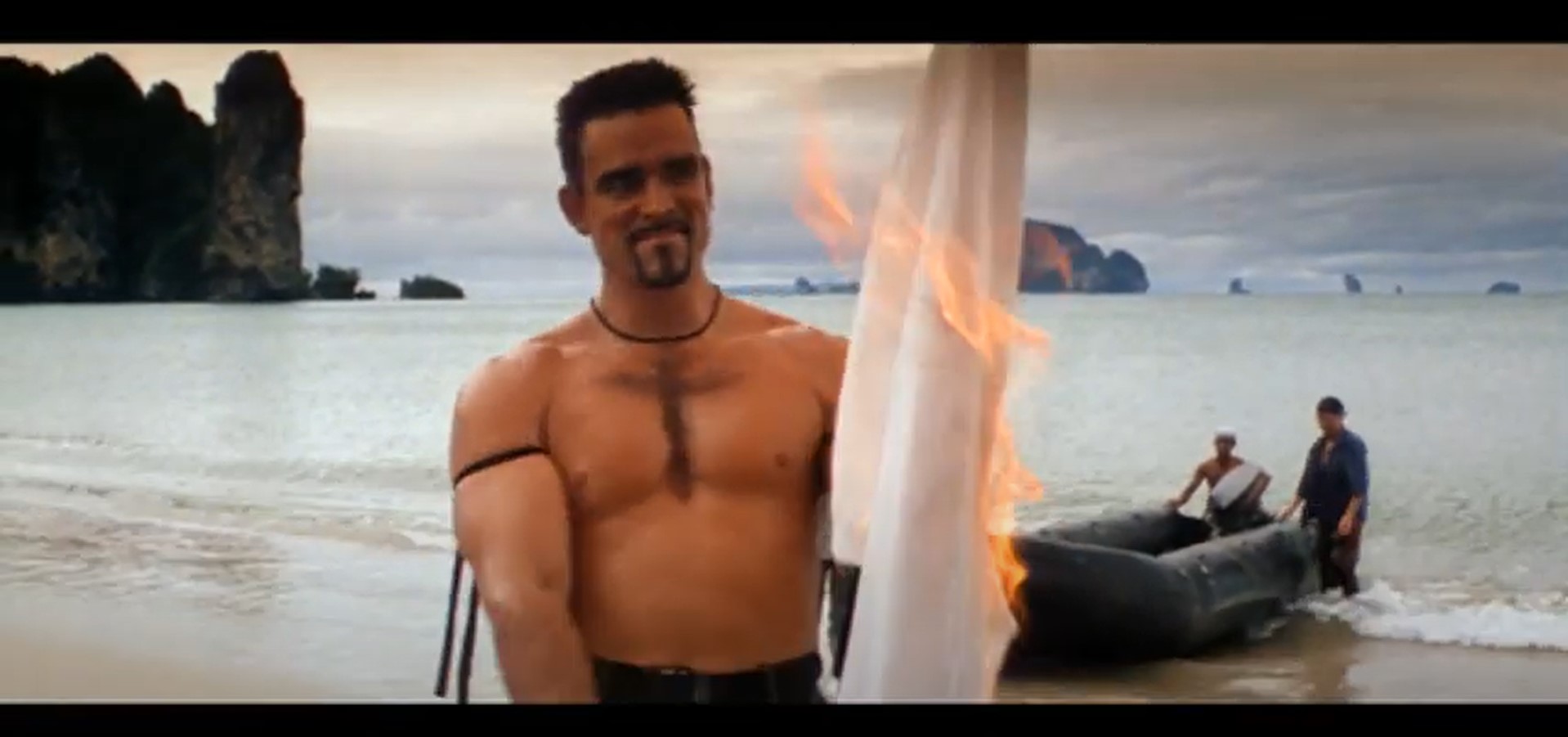
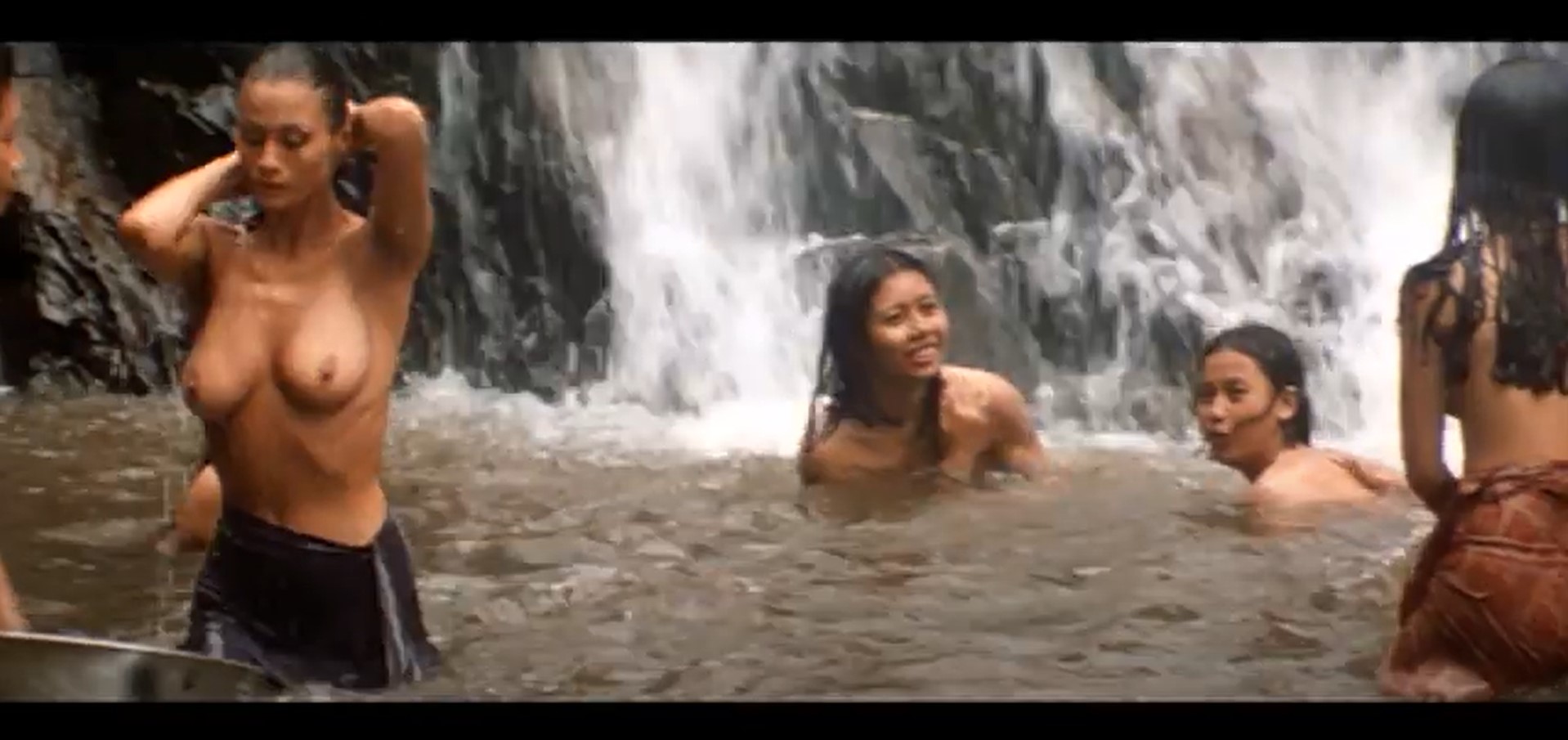
The big name that attracted financial support and give the title a boost was Dolph Lundgren who, at that time, was one of the biggest action stars of the late 80s into the 90s with “Rocky IV,” “Masters of the Universe,” “The Punisher,” and “Universal Soldier” all under his 6’ 3” Swedish, muscular frame topped with blonde haired and gentle blue-eyes.  Lundgren tackles his next role as conflicted mercenary looking to get out of the game all together as former special forces soldier Nick Gunar.  Perhaps one of the more complex roles Lundgren has portrayed in his career, Gunar fights the uphill battle of a pressurized existence that always leads him back to what he does best, being a soldier of fortune.  Yet, the well-trained combatant’s heart has softened and changed to not be an elite killer anymore and his new mission, assigned to him by venture capitalist Lyle (Perry Lang) and Warren (Thomas Gibson, “Eyes Wide Shut”) and referred by Colonial Merrick (a true typecasted bad guy in Kevin Tighe of “K-9”), will put his trained tactics and newfound compassion to the test.  However, for obvious cinematic reasons, things will not go as smooth as Gunar obliviously hopes with nudges from a diversely skilled team of assembled gung-ho comrades, deceived by those he’s trusted, and antagonized vehemently by an unstable, former fellow special forces brother-in-arms Keefer, played by one of my favorite Aussie actors, the late Trevor Goddard (“Mortal Kombat,” “Deep Rising”).  Lundgren usually brings with his large and imposing self to the table with every role he slips into, but Gunar feels different partly because of two very different reasons:  Gunar lacks defining confidence and maintains the fierce façade to keep the assignment afloat under the aforesaid pressures, but Lundgren doesn’t look physically all there as he appears hunched over for a better part of downtime scenes.  “Jurassic Park’s” B.D. Wong plays the village wisecracking’ spokesperson Po who welcome Gunar and his team’s arrival with respect and with a little humor.  Wong’s cavalier style for Po works to cut tension and to showcase the natives as peaceful and unassuming but steadfast in their beliefs.  “Embrace of the Vampire’s” Charlotte Lewis, as Loki the the native island single mother and love interest to Lundgren, is the second credit name of the film yet has perhaps the shortest screen time of all the characters that fill out “Men of War” with Tony Denison (“Wild Things 2”), Tommy “Tiny” Lister Jr. (“The Fifth Element”), Thomas Wright (“Tales from the Hood”), Tim Guinee (“Vampires”), Don Harvey (“The Relic”), and Catherine Bell.

Cast ensemble of familiar faces makes “Men of War” easier to digest when considering the threadbare sensical plot.  If taking the trouble to hire mercenaries to negotiate the signature surrender of property, the company investors might as well have used extreme force instead of finesse as the good Colonial Merrick suggests to Gunar.  “Men of War’s” setup is not very sexy to establish a radical rational to plot against the native denizens, fast-forwarding and skirting through the first act’s purposed goal and recruitment of characters is sullied by that dilution of plot device.  The recruiting montage is what hurts the most that shows Gunar travelling across the globe to handpick past acquaintances for his team, but the history markers are not in place to establish characters behaviors, past or present undercurrents, or anything that really ties them together or tears them apart which eventually happens when a line in the sand is drawn.  Even Keefer’s neglected volatile bad juvenile behavior is crucified by zero backstory substance.  “Men of War” bravely relies on the future to flourish and does so quite well by creating a dichotomy between a paid duty and a moral deed, especially when falling in love with a native girl is involved.  Explosions, bullets, and various kinds of melee skirmishes rock the story’s intended searching for inner peace theme and there’s no shortage or pulled punches with the pyrotechnics or squib-popping gunplay.  Perry Lang and producers make no qualms about the product their peddling by offering a detonating spectacle on a wafer-thin plot to razzle-dazzle on the silver screen and that’s okay. 

Coming in as title number 62 on the MVD Rewind Collection, a boutique banner for MVD Visual, is “Men on War” on a new Blu-ray release that’s an AVC encoded BD50, presented in a widescreen 2.35:1 aspect ratio and high-definition 1080p. This one looks pretty darn good for a 2K scan of a well-kept 35mm film. Picture retention shows just how clean as a whistle it is with no sign of a damaged original print. There also appears to be no issues with compression, such as banding or macroblocking, to gunk of visuals in what is a clean sweep of texturized objects from skin to fabric, even the island jungle setting has a rich green and a variety of sedimentary rock and soil to a real organic coloring that creates the tropical paradise around as seen on vacation brochures. When cinematographer Rohn Schmidt (“The Mist”) does go for more aesthetic, “Men of War” turns into panoramic escapism brilliant with warm colors and a composition too impressive for the likes of a picture teetering between being a B- and A-lister. The English language dialogue comes with two lossless audio options: A DTS-HD 5.1 surround sound and a LPCM 2.0. An explosive film requires free range fidelity and “Men of War” and its sound design package prowls the ambit of discharging and cannonading that hit fast and hard. Dialogue runs through-and-through clean and clear without interrupt or folly against it, as well as being layered properly to have heavy volley suppress the dialogue to a muffled scream. The score of Gerald Gouriet (“Grand Tour: Disaster in Time”) has a pretense of a militaristic stanza that wonders into an idealistic romance choon which downgrades to a pedestrian level at times but there’s also a hint, or even possibly sampling, of Alan Silvestri lurking in the mix from the score of “Predator” when Lundgren stealthily storm the beach with his team. A Spanish 2.0 stereo is available and English and Spanish subtitles are available for toggle. For the MVD release, Perry Lang provides a new, from his living room introduction. The remainder of the special features are archival pieces, such as An Unsafe Place: Making Men of War, a brief doc with Dolph Lungren enthusiast Jérémie Damoiseau going over the genesis of the film, raw footage and dailies from the feature, a photo gallery, and the theatrical trailer. If looking for tangible collectibles, you’re in luck because, like most of the MVD Rewind Collection catalogue, “Men of War” comes with a cardboard O-slipcover with printed faux VHS rental stickers and a mini folded poster of the slipcover image tucked inside. The clear Amaray Blu-ray mirrors of slipcover and has a reversible composition. Region free with a 103-minute runtime, the MVD release is not rated.

Last Rites: An ensemble of colorful characters spearheaded by the towering Dolph Lundgren and shot in the serenity beaches of Thailand lends “Men of War” to be a luxury good of the cinematic armament rhubarb and the presentational transfer by MVD, on their Rewind Collection, breathes fresh and favorable for a solid screening of campy chaos.

“Men of War” are Men now in High Def! See It Here!

Three Men, a Boat, and One Giant, EVIL “Crocodile” reviewed! (Synapse Films / Blu-ray)

“Crocodile” on Blu-ray and Lurking Behind the Wates of Thailand’s Film Industry!

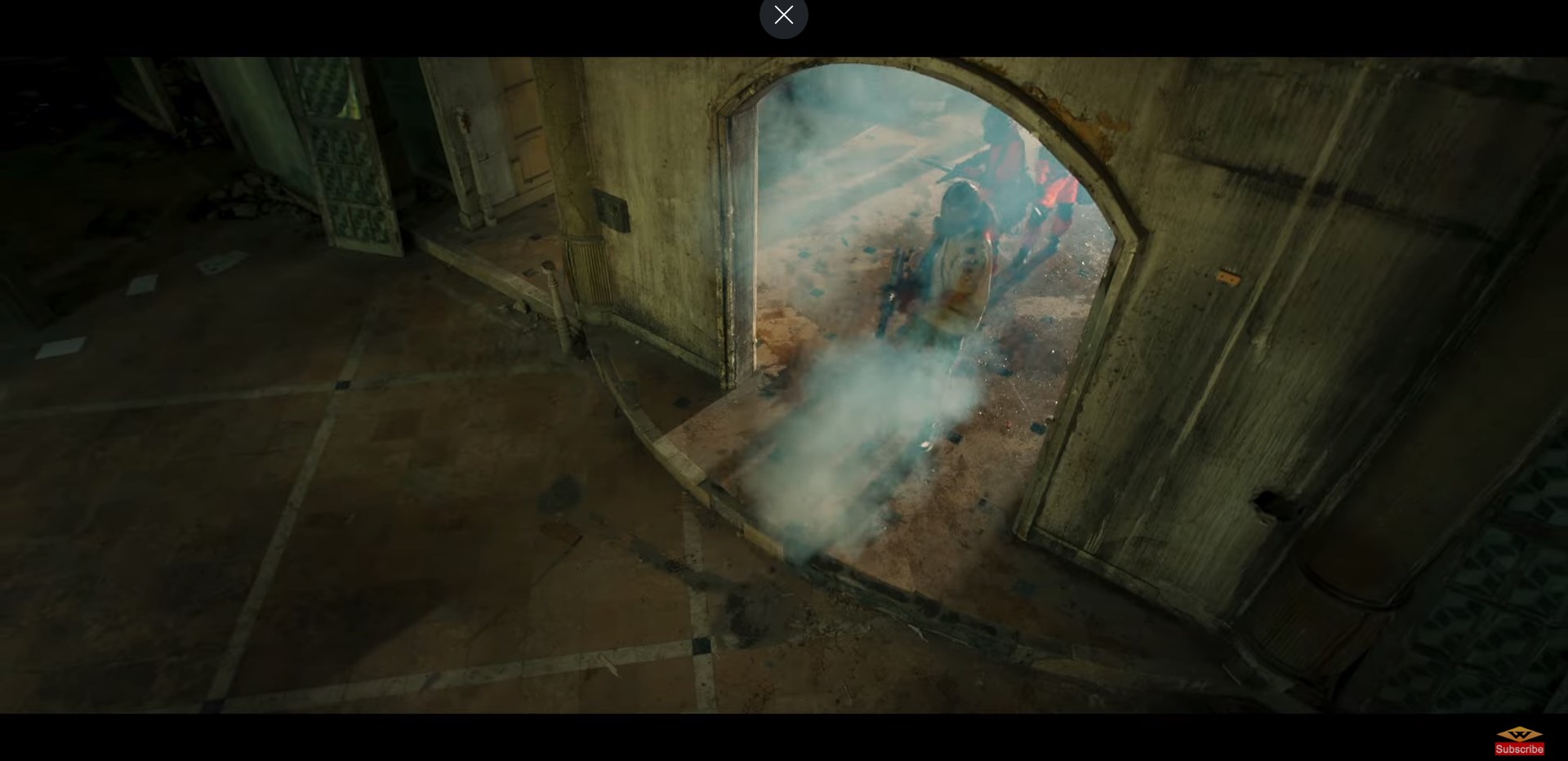
Along the serene Thailand shores, a doctor and his young colleague take their family and fiancé to a beach resort for some much-needed time away after a massive casualty natural catastrophe on a nearby island swallows the entire village with seismic volcano bedlam.  Little do they know that a component of the disaster has swam to their very watery spot on the beach resort and gnashed without remorse on the doctor’s family and fiancé.  Not knowing what kind of creature could do such carnage, they soon discover through first hand witness accounts and the evidence gathered that a large crocodile, mutated by man’s own disregard for mother nature, is the culprit.  The men, along with a fisherman who believes in a destiny of a beastly showdown, swear to track down the killer croc and kill it.  The crocodile’s bloodlust on mankind is seeming unstoppable as it wreaks havoc swimming down river, destroying entire villages in its destructive and hungry path.

Thailand’s reptilian “Jaws” equivalent, “Crocodile” wriggles with wayward ferocity in this giant creature feature horror that rivals Bruce the shark.  “Computer Superman” director Sompote Sands oversees the enormous amphibious aggressor versus frantic and frightened man film that merged or morphed from Won-se Lee’s “Crocodile Fangs” into a blending of the two productions of the same film of one seamless man versus animal hunt above and below the surface of the water.  Sompote Sands produces the venture along with a postdated credit toward exploitation producer Dick Randall (“Pieces,” “Escape from Women’s Prison”) from “Crocodile Fangs.”  Coproduced by Robert Chan and Pridi Oonchitti, “Crocodile,” or rather “Crocodile Fangs,” was a multi-national undertaking with Thailand and Korean actors and crew and a Japanese special effects company bringing the giant, carnivorous maneater to cinematic actualization.  The Chaiyo Productions spliced feature was distributed into the U.S. under Cobra Media. 

Doctors Tony Akom and John Stromm have it all; Akom (Nard Poowanai, “Ghost Hotel”) has a beautiful wife and child and leads a charmed life despite his vocation challenges of being a doctor always on call. and Stromm (Min Oo) is recently and happily engaged to Angela (Ni Tien, “Black Magic” 1 & 2).  Their vacation doses audiences with a picturesque double date plus one child but does a rough patch setup of Dr. Akom’s family neglecting workaholism that isn’t crafted to be a strain on the relationship he has with his family but rather bring upon him tremendous guilt and inset the good doctor into a studious montage of crocodile research after his family becomes crocodile chow.  Sympathy toward the doctors is incurred but the level of sympathy falls low as the ladies’ death scene falters in the editing room, or perhaps was only partially shot, as only one of them is visually attacked while the others are grieved over in postmortem.  Character will is strong enough to carry the anticipated revenge but the giant crocodile is truly the main star stud, a vicious, village-obliterating mammoth of armor and teeth goes full Godzilla on the riverside communities and dining buffet style on anyone, land or sea, who makes a splash in his kill radius.  Unlike in “Jaws,” “Crocodile” is back-and-forth without the mysteriousness of the shark’s lurking underneath the glassy surface, snatching swimmers and boaters to a watery, gory grave, and this really solidifies the crocodile as an intended principal figure as a well-known, full-visible, antagonistic killing machine spurred by man’s own atomic-making hand; an idea that’s only theorized in exposition and not practically fleshed out.  “Crocodile’s” cast fills out with Kirk Warren, Angela Wells, Hua-Na Fu, Bob Harrison, and Nancy Wong.

“Crocodile” very much embodies the “Godzilla” and “Jaws” with deference without being a total negligent rip of either more widely successful hit.  The crocodile, in the form of its oversized whipping tail and rather big and detailed puppet head, raze miniaturized villages, much the same way Godzilla tramples over Tokyo in the 50s through the 80s, and the storyline for “Crocodile” parallels portions of Steven Spielberg’s 25-foot man-eating Great White tale of three men boarding a boat to hunt down a formidable creature, complete with yellow barrels and a sinking ship to an exploding finale.  Antiquated by today’s standards, for late 70’s, the special effects are a marvel to behold.  Kazuo Sagawa, of the special effects company, Tsuburaya Productions, lead the department with size-mattering scale and detailed depictions of villages and boats being quickly and violent undone by either a crocodile puppeteer or a mini-croc circling the boat and even, at times, being wire-flown through the air, bombarding the model ship with WWF elbows (do crocodiles have elbows?).  Action sustains an intensity that’s wrathful and keeps the heart palpitating with excitement.  The same thing can’t be said about the story through the choppy editing style, often times revisiting cut scenes being spliced into progressive context, but the setting, exterior weather, and clothing haven’t changed.

Synapse Films obtains the original Cobra Media distributed U.S. release and meticulously restores “Crocodile” in a 2K scan from the original 35mm camera negative, premiere the film for the first time on Blu-ray worldwide.  With an aspect ratio of 2.35:1, the AVC encoded, 1080p high-definition, BD50 is a deathroll of beauty and when Synapse says meticulously restored, the poof is in the details and coloring.  Not a ton of age wear or damage, a nearly pristine print for some intricate touchups to invigorate the content.  One brief series of scenes appeared as if the film cell was folded with a blended vertical line down the right side, much like a scratch would appear on the film but this looked different; however, the line did not substantially affect viewing.  Between the rapid severity of the crocodile thrashing and the reduced frames of select slow-motion sequences, there is nothing to fault about Synapse’s compression with objects keeping intact and away from ghosting or aliasing.  Blacks are generally faded but don’t show signs of posterization or banding.  The English print audio spec is a DTS-HD MA 2.0 mono dub.  Fidelity of the original audio is retained, uncompressed for lossless sound in all areas of the ADR, Foley ambience, and the cue soundtrack of the impending or attacking crocodile, with a hint of John Williams theme in the opening credit track.  English subtitles are available, but the dub is perfectly clear and prominent.  Special features include an audio commentary with writer and film historian Lee Gambin, a video interview with Won-se Lee, director of “Crocodile Fangs,” deleted and alternate scenes from different country versions of the film, and the original theatrical trailer.  The standard release comes in a green Blu-ray Amaray without the “nude” slipcover but has the same original, clothed illustrated artwork.  Inside, the disc is pressed with a toothy faceless creature versus and a scantily cladded bikini woman.  Opposite side is the usually accompanying Synapse catalogue for this year, 2024.  The R-rated feature has a runtime of 92 minutes and is region free! 

Last Rites:  A Thailand terrorizing monster movie with unrelenting savagery and terrific special effects for circa late 70s.  if you can withstand the story’s choppy waters, “Crocodile” is a fun and fierce swim through predatory, blood-suspended waters. 

“Crocodile” on Blu-ray and Lurking Behind the Wates of Thailand’s Film Industry!

A Thousand EVIL Little Legs Wriggle Inside You! “Creepy-Crawly” reviewed! (Well Go USA / Blu-ray)

Get Wigged Out by “Creepy Crawly” on Blu-ray!

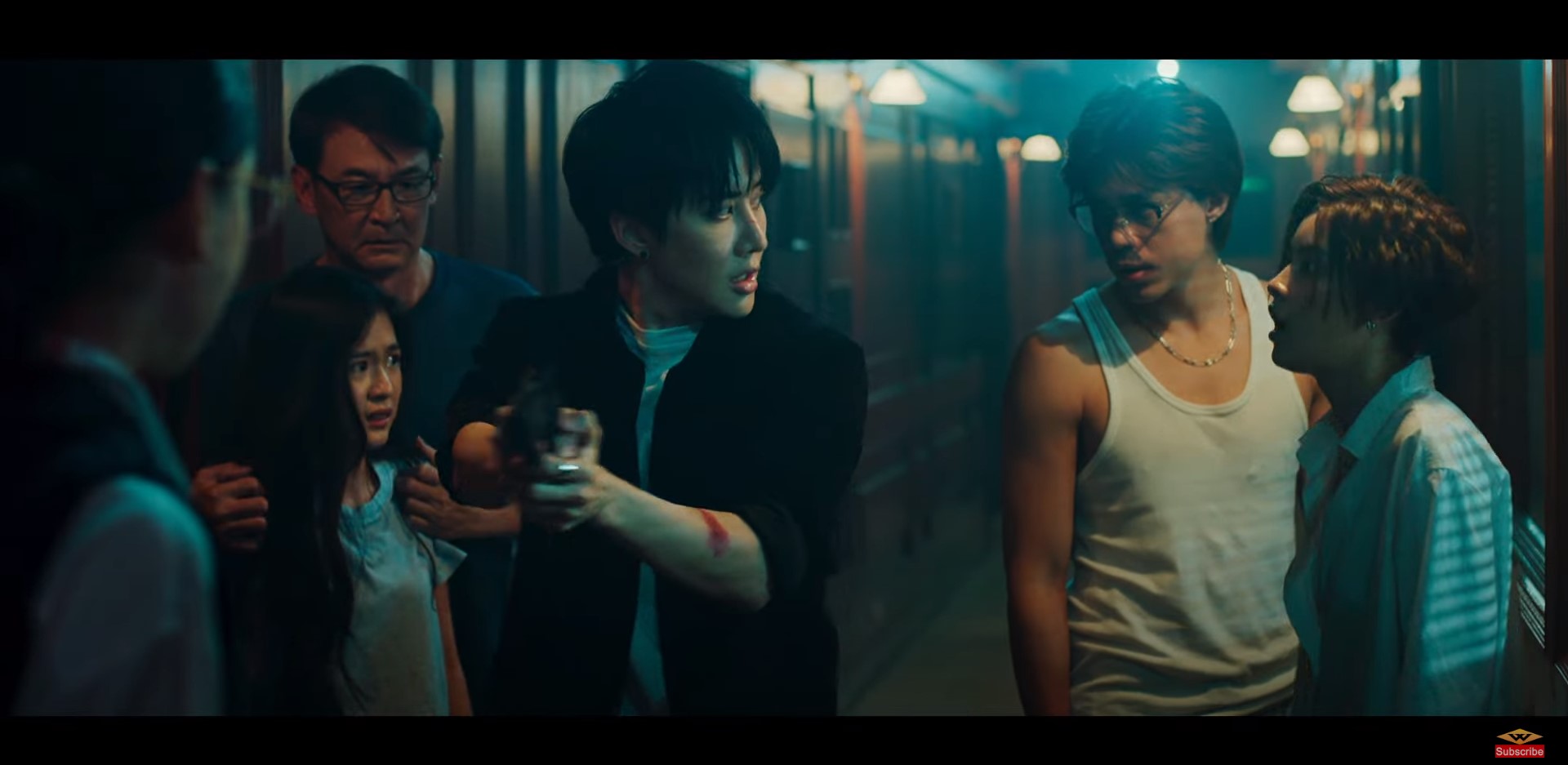
During the COVID lockdown, a group of tourists are confined to a quarantine appointed hotel in a Thailand city. Fielded by skeleton hospitality, the hotel aims to make the tourists comfortable as possible with the limited number of staff and security on hand. Though frustrated and displaced, the quarantined few feel ultimately satisfied by their popup accommodates spearheaded by the Thai government. However, one amongst the staff and tourists is a shapeshifting monster of local legends, jumping from body to body in hopes to find a person with unique blood in order to survive for eternity. Forcibly detained by a sleazy and easily persuadable hotel manager, Leo, Fame, and their families hardly trust anyone, even themselves, as a hidden creature invades a new host to become closer to living forever. It’s true shape like a centipede, the creature summons its smaller, poisonous brethren to wreak havoc inside every crevasse of an inescapable shelter.

Tapping into the same slithery vein as “Night of the Creeps,” “Invasion of the Body Snatchers,” or even “Slither” itself, co-writers-and directors Chalit Krileadmongkon and Pakphum Wongjinda channel their inner spirit animal, the thousand-legged wriggler, back to their home country of Thailand for a new creature feature sure to have your skin recoil with formication.  Also co-written alongside, Charoen Kaithitisuwan, “Creepy Crawly,” or better known in Thailand as “The One Hundred,” is the second feature for Krileadmongkon behind another unearthing creature construction in “The Beast Below” that was released the same year as “Creepy Crawly.”  For Wongjinda, the 2022 released film marks the 9th feature in the filmmaker’s 20+ year-long career who began in 2001 with a script surrounding a feminist ghost killing men victims in “Body Jumper.  “Wongjinda has been once around the horror subgenre carousel to now collaborate with the fresh perspective and ideas from the up-and-coming Krielandmongkon to extend Thai’s catalogue of cinematic chills and thrills.  Neramitnung Film and Fatcat Studios serve as production studios with producers Natchanok Kamonrattananan, Punyanet Tanaprapass (“The Beast Below”), and Kamonwan Kanaraksunti. 

Perhaps better if told in the perspective of an ensemble cast, “Creepy Crawly” reduces is principal character pool to just two, a hot-headed Taekwondo champion named Leo and a social media influencer aptly named Famed.  The two cross paths while being COVID quarantined, sharing a smoke in the stairwell while sharing breaking the hotel rules of remaining locked in their rooms.  There’s not much in the way of connection between the two characters, played by one half of the Golf & Mike musical group Mike Angelo (“The Misfits”) and the mixed heritage of English, Chinese, and Thai actress Chanya McClory, as the progressive action teases something more than just stairwell strangers as Leo frequently comes to Fame’s aid whenever he his sixth sense senses danger.  Both principals carry collateral damage weight with family members also being in quarantine with them; Fame has her brother and social media partner Fiew (Benjamin Joseph Varney, “The Promise”) while Leo has a slightly more extensive circle and greater family drama with sister Lena (Kulteera Yordchang) and their mute, widowed father (Paramej Joiam, “407 Dark Flight 3D”) to which with the latter Leo has an aversion in connecting with periodical flashbacks of Leo and Lena’s dying mother and somehow, which is revealed later, their father is to blame.  This creates more of an arc for Leo with an imbalanced, shared protagonist lead with Fame who we don’t get to know as intimately other than she has an incurable blood disorder that could be fatal if not treated with meds.  “Creepy Crawly’s” cast is beautifully eclectic, and I don’t mean with appearances but rather their interesting, robust with personal motivations, and not terribly dull or overtly bland with performances from Wanpiya Omsinnopphakul, Chanidapa Pongsilpipat, Sita Chutipaworakarn, Chutaporn Chaikawin, and David Asavanond as the slimy hotel owner.

As I sit down to gather my thoughts about this review squirming with venomous centipedes, a house centipede, or what we like to call in our house a thousand-legger, steps hundreds of feet-over-feet on the wall in front of me. Talk about good timing, bad omens, or just a straight up coinkydink when a cousin of the deadly antagonist you just bore witness in a film crawls up the wall in front of you. Despite the inspiration that scuttles in front of me, “Creepy Crawly” has a more fantastically gigantesque infestation. The story has a COVID-19 backdrop and is supposedly based off the story of Battambang told by King Chulalongkorn, aka King Rama V. I, unfortunately, can’t elaborate much about the story as I couldn’t dig up anything that closely resembles the analogy between a centipede invasion and a French conflict. Or are the centipedes a metaphor for the European encroachment? Or are they a metaphor for the COVID pathogen that’s hidden amongst the atypical carriers? Either way, “Creepy Crawly” is visual effects driven with a crevasse-trenched and many-moving-leg scaled arthropod with a pincher-laden head but before the monstrosity makes face, the mega-centipede can hop from body to body, able to protrude tentacled pinchers like spears, impaling victims as well as transposing itself into another body before sucking and skinning the host dry of life and flesh – very reminiscent of an Edgar suit. The jutting spears from the host never harms the body, alloying to-and-fro the skin, and clothing, in a compatibility of supernaturality that fits the folklore mold explained during the opening credits. That’s where I imagine the lore ends and the exoskeleton evil begins as we’re sucked into Leo’s daddy issues, the hotel manager’s self-preservation, and Fame’s bad blood that’s good for the big bad bug. Though Leo’s emotional pull the right heart chords and the hotel manager selfishness and greed adds tension and conflict to an already imposing no way-out scenario, the blood disorder plot device is skimmed to be barely tolerable without diving into the science of why a 10-foot centipede can survive on a compromised blood.

As far as COVID-theme foreign productions, “Creepy Crawlers” checks out as a roach motel monster movie from Well Go USA Entertainment. The distribution company’s Blu-ray is an AVC encoded, 1080p high-definition, and presented in a 2.39:1 aspect ratio. Visual effects conducted by Thailand’s Matchmove team have remarkable detail in the composited scenes with the exception of one latter scene that compromises the blacks of reality to a darker shade of gray or blue when overlaying it with the digitally added creature. Details are generally delineated nicely, color grading pops natural tones, and the BD25 offers sufficient space to suppress compression artefacts. The Thai DTS-HD 5.1 Master Audio with optional English subtitles greatly exudes the centipede click-marching and pinch clips to effectuate an army of killer scurrying arthropods swarming onto, into confined quarters and those suspected of sickness, COVID-19 to be exact. Dialogue cleanly renders, especially between the majority of Thai and the medley of minority languages, such as Chinese and English. Bonus features are limited to just Well Go USA previews/trailers in what has become another barebones release for the company. The Blu-ray comes in a standard amary case with snapper with fantastically to truth image of the creature on the front cover while the inside has a paper advert for three Well Go USA films with the disc art displays warm shades red and yellow in what is a very culturally appropriated Thai coloring. “Creepy Crawly” scritch-scratches the lousy sensation of a buggy creature feature with loads of action that tries to add and induce more into the narrative beyond what’s innately there and that can be a great repellant to this wecl invasive species of Thai genre films.

Get Wigged Out by “Creepy Crawly” on Blu-ray!

EVIL Just Casually Swims Along in “The Lake” reviewed! (Dread – Epic Pictures / Blu-ray)

Take a Dip in “The Lake” on Blu-ray Home Video!

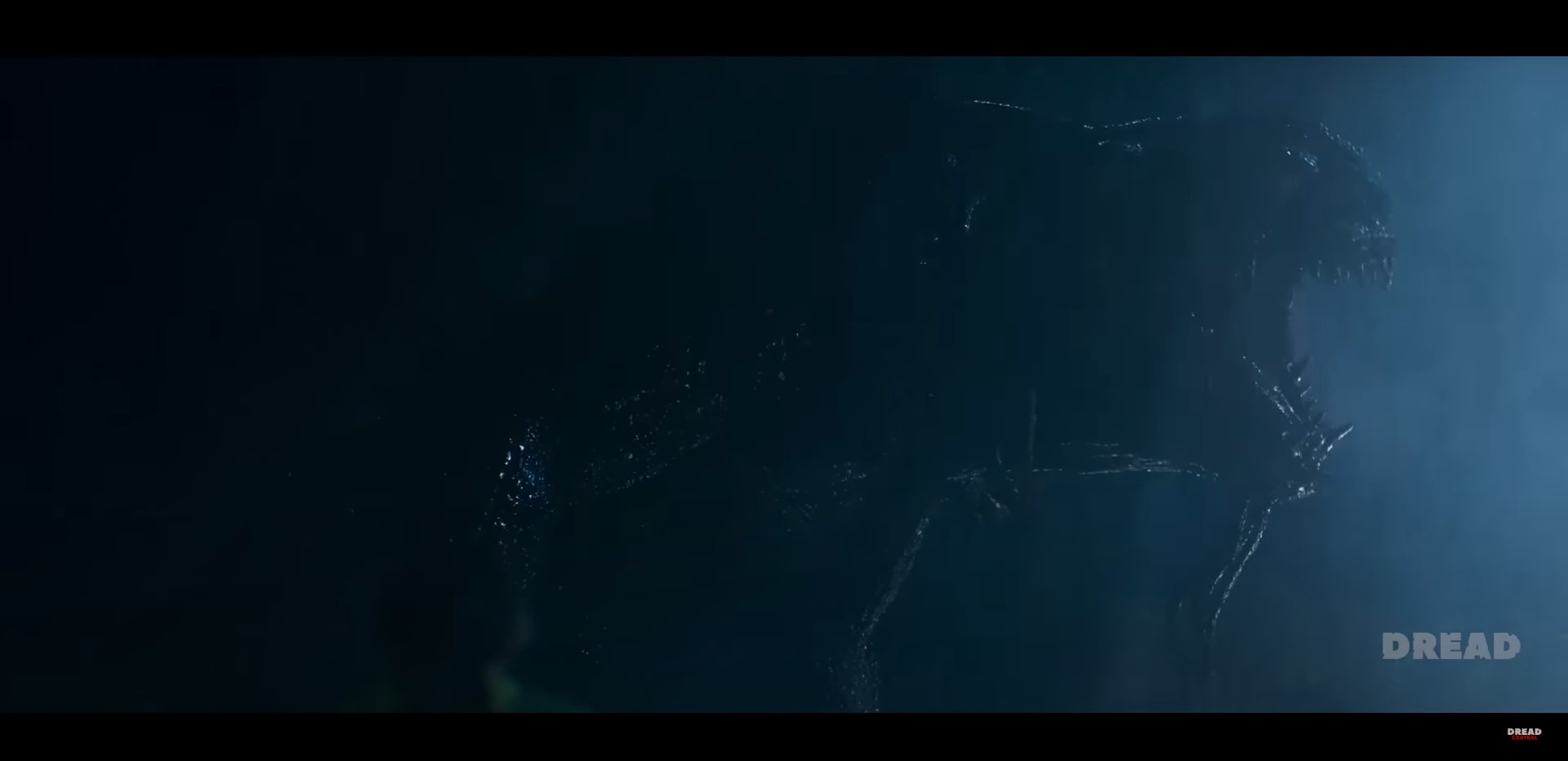
The small Thailand village of Bueng Kan becomes under siege by a monstrous being from out of the depths of near by lake.  Vicious and stealthy, the unknown creature terrorizes the wetland villagers town by town, killing all those in its rampaging path up an inlet river.  The local police commander and his two topnotch detectives are baffled and have no idea what they’re up against or how to exactly handle the situation but with the help of one of the bitten victims, psychically linked to the creature by its bite, the police and vigilant locals manage to capture the creature before it can wreak more havoc.  Concurrently, Police discover a large egg by the originating lake of first creature sightings and as they inspect it, the much larger mother beast emerges.  The mother searches out her children by using vocal sonar to track down her troubled little one, sending her galloping toward the panicky and crowded town in an unstoppable hunt that could lead to chaos and catastrophe. 

When the first news broke about “The Lake,” there was considerable positive buzz surrounding the big-budgeted, Thailand produced picture for it’s substantial, animatronic creature feature effects.  Yet, I purposefully held back doing any further research into learning more about the film that was released in the latter half of 2022 for reasons that may bias my professional opinion and to not spoil a virginal viewing experience of too much trailer audiovisual that can sometime reveal all the good bits and pieces of a movie.  Retrospectively, I’m starting to think that not absorbing much about the Lee Thongkham’s written-and-directed picture, whether by intentional research or by happenstance, was in due part to its unfavourability amongst global audiences despite the tangibly terrifying and impressive effects.  “The Lake” is produced by Nimit Sattayakul and Nathaporn Siriphakacharath with Dread Central’s production label, Epic Pictures, serving as coproduction company in conglomerate association with Hollywood Thailand, Airspeed Pictures, Five Stars Network, Right Beyond, Creative Motion, and the director’s own Thongkham Films.

“The Lake” is an ensemble cast of well-known Thai and Chinese based actors and actresses brought together to play a variety of characters caught up by a sudden and surprising monster attack.  The cast works well enough to supplement “The Lake’s” overall reactionary state of frantic and heavy browed emotions.  In fact, the performances are terribly melodramatic and only reactionary.  For a Kaiju film, there’s not a lot of chase sequences, monster versus man battling, or even mass destruction; instead, the direction is geared toward the emotional aftermath of experiences, such as watching the monster in terrifying awe, twisted faces of concern over the turmoil, or breaking down in a moment of loss, which graphic death scenes seem very sparse with only a few instances of the humanoid sized beast taking chest bites out of a few village denizens and the only principal character death.  The despairing cast is mostly comprised of Thai actors with a handful of Chinese actors sprinkled in, beginning with Thai leading man Thiraphat Sajakul (“The Maid”) as head inspector James (last names are nonexistent in the cast of characters).  Inspector James not only has to figure out how to outmaneuver the magnitude of the creature pool but also outthink the angsty games of his antagonistic teenage daughter Pam (Supansa Wedkama) who has squared off against him after the death of their mother.  That teeming with bitterness and frustration dynamic barely holds water as the problematic situation is over before it can even began to fester with audiences.  The emotional weight is definitely felt but the emotional worth retains little impact when lake monsters begin to emerge like Russian Matryoshka dolls, or nesting dolls, beginning with the smallest of the set first and working it’s to the larger mother.  “Motel Acacia” and “The Maestro:  A Symphony of Terror” actor Vithaya Pansringarm has a comparatively commanding presence as the Police Commander, but, to be honest, Pansringarm is consistently typecast as law authority throughout his career and has a firm foot on the role’s neck, but one of his subordinator officer is his daughter Fon (Palita Chueasawathee), a fact that we don’t really know until much, much later into the narrative, making the bond essentially not worth knowing, especially since nothing really happens with Fon other than the occasional exposition of events that can be easily interpreted with our own eyes.  Another pairing is wetland farmer Lin (Sushar Manaying) and her drunkard brother Keng (Thanachat Tunyachat, “Yuan ling 2”) who experience the initial attacks of the smaller creature and form a link to it once Keng survives a bite from its tentacle-dangling and squared-shaped jaws.  Like the other two couples, not much of arc is established, even for completion, as the pieces to their character composition feels fragmented and frail to the point of futility.  I was expecting Keng to play up his the drunk indolent and someone who takes for granted his hardworking sister and her daughter that the attack becomes this bonding moment of relationship redemption or salvation, but what unfolds on screen, between the two, harps Keng’s connection with the creature and nothing more.  Wanmai Chatborirak, Su Jack, Zang Jinsheng, and Amorntep Wisetsung round out the supporting cast.

Impressive as “The Lake” may be with the creature effects, using a near seamless blend of phenomenal computer generated imagery and the same animatronic technology as in “Jurassic Park” that brought life back from 65 million years of extinction with the T-Rex, a greater amount of depression mounds over the head of director Lee Thongkham like a black rain cloud.  “The Lake’s” creature derivativity, based off the “Jurassic Park,” “Godzilla,” and maybe even borrowing a trifle sum from “Cloverfield” in what is supposed to be a genetic combination of a crocodile, snake, and catfish(?), never weakens the narrative as audiences will always be curious to experience the larger-than-life animatronic head that miniaturizes the cast effectively.  Gen-pop will continue to gobble up a good-lookin’ monster on any day.  Where “The Lake” fatigues is with a poorly progressing script, flat characters, and misaligned directional continuity.  That latter is big – bigger than the monster itself – when one character with the camera perspective facing the framed character and the framed character begins looking slowly up to his right to eye-point the monster out and the next spliced in scene is facing the then camera perspective character from the right side and he also turns his head right to look at the monster.  They both turn their heads to the right, so which side is the monster on?  The same could be said about the omnipresent, big momma monster whose head is seemingly everything, everywhere all at once – by the sound of it, the creature should have starred in that famous multi-verse movie that won all those Academy Awards.  ‘The Lake” is drenched – excuse the pun – in overused scenes where a foreground man squares off against the blurred background monster as well as scenes of the ginormous, scaly head creeping in from either stage left or stage right to interact with the cast.  The moments lose their usually high and sizeable satisfaction rate with Thongkham’s repetitive saturation to create the first Thai, larger-than-life, monster movie because of his inability to showcase other scenes of Kaiju creature carnage.

“The Lake” arrives onto hi-def Blu-ray home video courtesy of Dread’s exclusive distribution label Epic Pictures.  The AVC encoded, 1080p, single layer Blu-ray is presented in the 1.77:1 widescreen aspect ratio, looking stunning and marvelous with the absent of natural lighting.  Most scenes are dark or overcast with rain, graded with a subtle increase of the cyan hue to reign with a ominous lurking in the dark fist.  The middle depth focus with streaking blur, like being concussed, runs as a shell-shocked induced motif throughout.  Thongkham plays with the blur feature a lot, switching back and forth between foreground and background as well as the centric focused blur with streaking.  Surprising, there are no issues with compression, despite the dark shoots against high and vibrant key lighting and the blur features which is well-sustained on the format disc.  The release comes with four dialogue tracks:  A Thai Dolby Digital 5.1, an English Dub Dolby Digital 5.1, a Thai Dolby Digital 2.0, and an English Dub Dolby Digital 2.0.  For about half the film, many of the scenes are done in the rain which don’t translate with vigor over the Thai 5.1, especially during the downpours.  Instead, “The Lake” is more focused on its epically scored soundtrack by composer Bruno Brugnano who has composed a string of horror of the last decade and half, including “The Coffin,” “She Devil”, and Thongkham’s “The Maid.”  Dialogue renders clean and clear with a fine simultaneous English subtitle, but the translation feels coarsely oversimplified to the point of covering just the basic generalities of plans, actions, and explanations, such as the environmental and global warming changes hinted earlier between the two Chinese scientists, that make the intellect of “The Lake” severely less than substantial.  The translated captions render the characters seemingly inexperienced on the simplest of tasks when I suspect that’s not entirely the case.  Spanish subtitles are also an available option.  Bonus features include a promotional behind-the-scenes advert, the official trailer, the Dread trailer, and a handful of raw deleted scenes that provide a better and extended insight into the ending rather than the wrap-it-up ending we’re left with in the final product. The physical attributes sport the monster in full roar bursting the surface of the lake on the front cover of the traditional Blu-ray snapper while the disc art plants a sandy monstrous footprint with the push lock right in the palm. There is no insert included. The region free release comes not rated and has a runtime of 93 minutes. Sold just on special effects alone, director Lee Thongkham rises the leviathan for Thailand’s movie industry, but “The Lake” is drained of box-office depth in every other element.

Take a Dip in “The Lake” on Blu-ray Home Video!

EVIL’s All Inclusive Resort. “Paradise Z” reviewed! ((Yet) Another Distribution Company / Digital Screener)

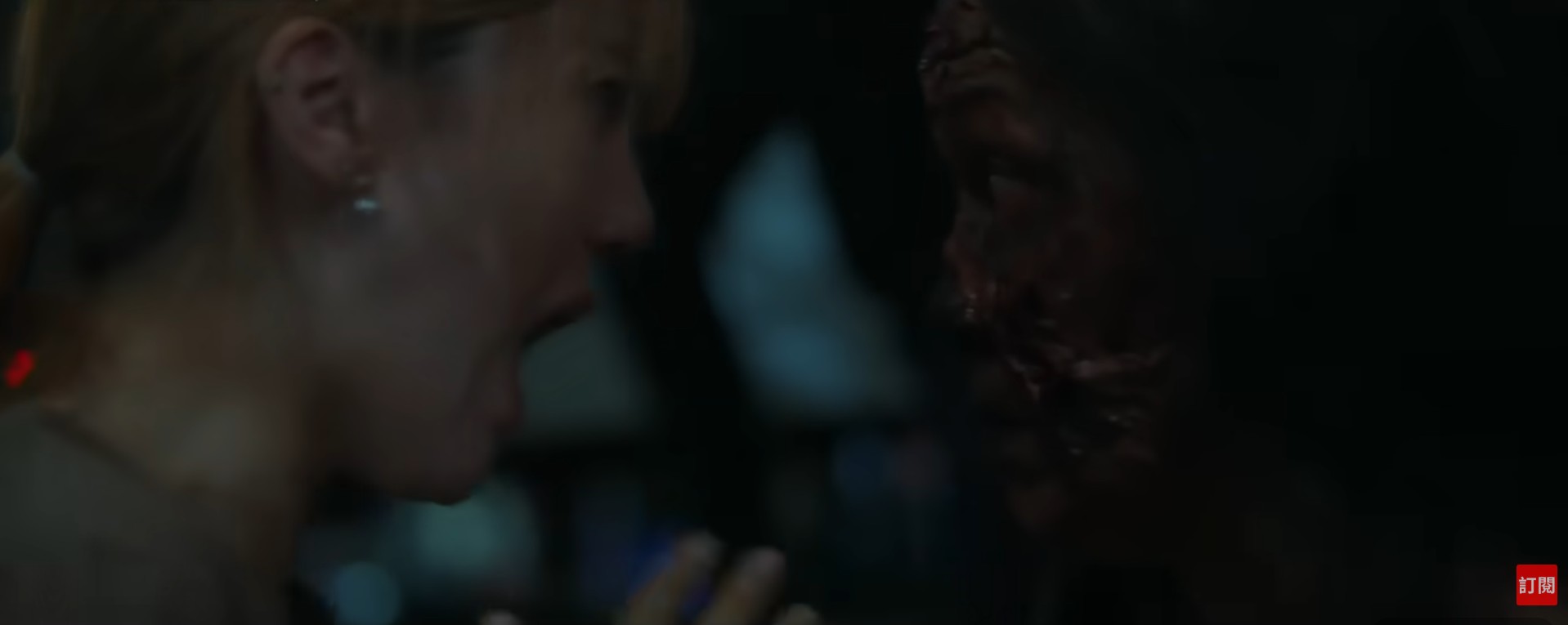
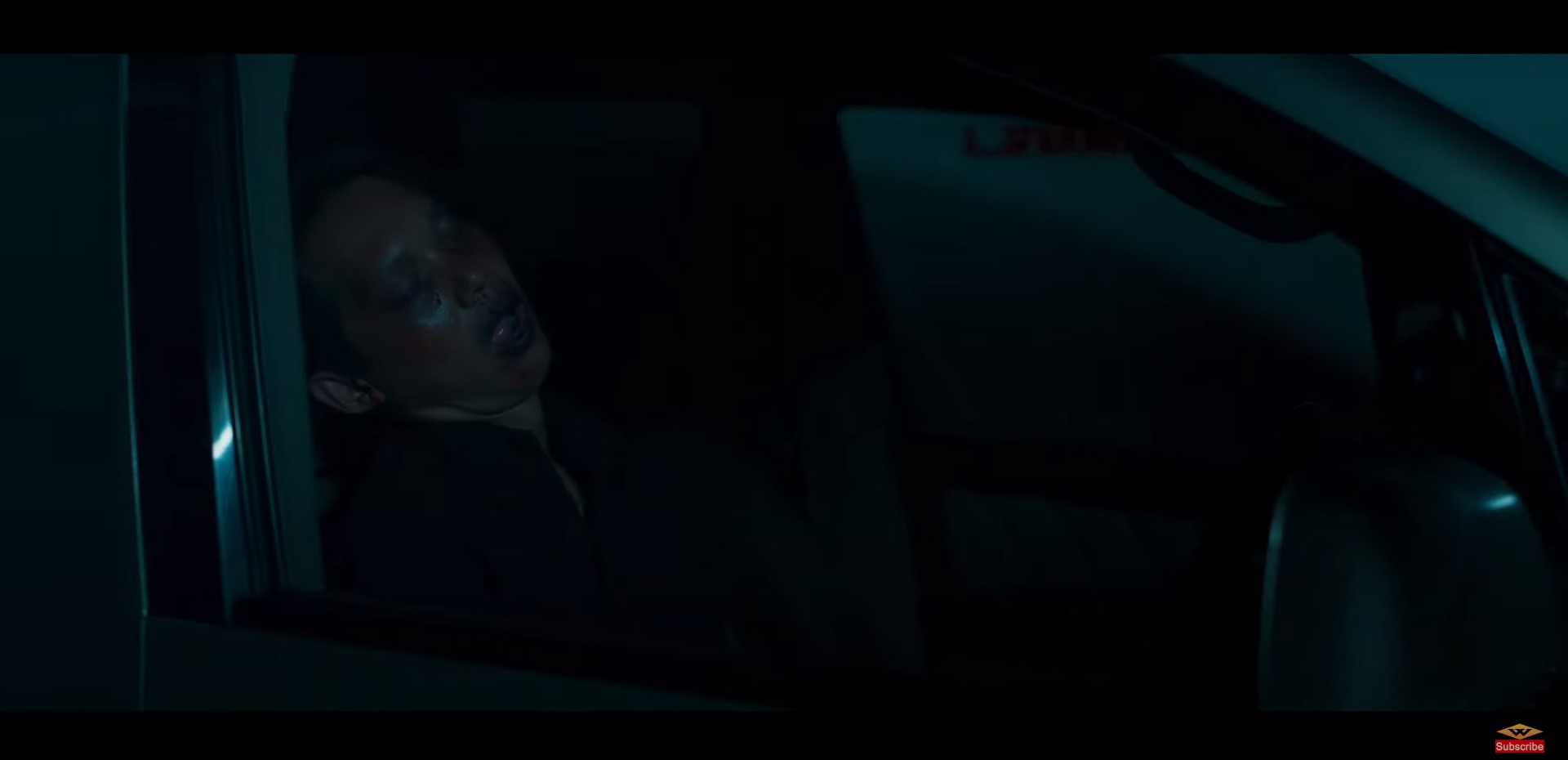
Sylvia and Rose are living the life of harmonious luxury together on a beautiful and serene Thailand resort. There’s only one tiny problem with their first-class accommodations: the world surrounding them is overrun by a population of rabidly crazed zombies. After establishing a rigorous routine of perimeter checks and pool time, food and gas are running dangerous low to keep a secluded and safe survival lifestyle sustained, leaving them no choice but to venture out to nearby villages in search for fuel, but the smallest of sounds could invite the hungry dead to storm their idyllic retreat. No matter how careful scouring outside the gated walls of isolated tranquility, the zombies’ insidious ways infest as bad resorts guests that turn Sylvia and Rose’s make-due habitation to their prospective tomb when all routes of escape are foiled by flesh-feasting zombies. The couple must rely on each other for survival.

There’s trouble in paradise from Wych Kaosayananda’s melancholic-apocalypticism horror “Paradise Z” focusing on two young women, romantically brought together by undead circumstances, to outlive the encompassing fatalist outlook. Marketed in the United Kingdom as a “Lesbian Zombie Apocalypse Gore-fest” and having been through the wringer with title changes from the original title of “Two of Us” to “Dead Earth,” as called in the States, the uptrend to incorporate the Z in any zombie film has been a musky motif ever since Max Brooks introduced the epithet for his 2006 zombie apocalypse novel, “World War Z,” yet that doesn’t stop writers Kaosayananda and Steve Poirier in dishing out a sanguine trilogy with “Paradise Z” laying the ground work as the first installment and “The Driver,” the third installment, following suit shortly after wrapping production on “Paradise Z.” With the second film, “The Rider,” is still in pre-production and the shot films released out of sequential order, Kaosayananda’s unconventional trilogy methods caters to a seemingly budget and location ready-timeline to which characters from all three films will interconnect the dissociated titles under the filmmaker’s self-funded production company, Kaos Entertainment.

Throughout the entire 1-hour and 35-minute runtime, there are only five speaking roles with three of those roles rarely comprising of about four minutes of combined dialogue, assigning by default much of the chitchat the principle characters, Sylvia and Rose. For the first nine and half minutes, Milena Gorum and Alice Tantayanon don’t say a single word as the day’s routine of waking up, showering, topless swimming, poolside yoga, lunch, and other recreational activities dominate the setup of quietude. When Gorum (as Sylvia) and Tantayanon (Rose) do utter a few words, they’re muttered projection is nearly unintelligible with little effort into the purpose of speaking. Born in Los Angeles and now, predominately, a New York city fashion model, Gorum has come across my radar before with a bit Succubus role in the 2017, Cleopatra Films produced demonic thriller, “The Black Room,” opposite Lin Shaye, Lukas Hassel, and Natasha Henstridge and though “Paradise Z” provides Gorum with her first lead role that showcases her immense beauty but limited acting range. The same wooden expressive opinion can be said for the little known Alice Tantayanon whose pigeonholed herself into a Kaosayananda celluloid corner with her only credits being three of his films. Sylvia and Rose rarely separate from each other sides, being lovers noodled into a pot of thick zombie soup, in a rigid position of affixed dynamics difficult to gauge how either one of them is handling the situation. When a show of complexity is finally unveiled, such as when Sylvia murders in cold blood two other survivors and turns to Rose to say it’s better this way, those actions somewhere along the story from there on out should be dissected in explaining just why lacerating two men to death is a good thing. Of course, we can all assume the survival of the fittest and selfish obvious reason that two rugged men are looking for more than just a box of Twinkies and an unopened can of goulash substitute from two good-looking ladies outside the safety of their homemade stronghold; yet, doesn’t answer where the killer instincts root and Kaosayananda shelves that bit of human nature when the zombie caca spreads throughout the resort upon their return that also evaporates a steamy sex scene and inklings of frustration for their dwindling supplies and mundane routine symbolizing an inching wedge between them. “Ghost House’s” Michael S. New rounds out the cast the DJ, an on-air beacon of infected information.

An Elysian-fabricated getaway resort can be an ideal hunker down for an apocalypse of the zombie kind. Mega resorts have a large footprint that are usually gated and fenced, plenty of food and lodging to accommodate a small village, and an escape route from the beach to the open waters where we all know zombies can’t swim. That works here for “Paradise Z” and almost plays like a pillar character that embeds the women survivalists from going on walkabouts, creating a real sense of comfortable isolation and simmering paranoia of the outside world. Kaosayananda, who can’t quite get the bad taste that lingers from out his mouth with the panned Antonio Banderas and Lucy Liu starring critically slammed and chaos-riddled film “Ballistic: Ecks vs. Sever,” left himself to his own devices in trying to rebuild his career shooting in Thailand, but “Paradise Z” crumbles as a stepping stone trilogy that lacks proper severe conflict of placing the heroines into a tight, perhaps inescapable, spot. What the couple have to escape from are the wild, warm flesh-craving leftovers of a plagued mankind, springing to a sprint at the first audible or visual morsel that tickles the eardrums, but the patchwork caked-face, grayscale zombies don’t render the likes from the bygone Golden Age of Horror, or even the current Golden Age of Modern Horror for that matter, in what looks and feels like cheap knockoffs of the genuine fictional man-eaters by rouge applying professionals. What Kaosayananda has made here is a two-tone, straight-forward, out-smart the dumb zombie breed of uninspired mirth, burdening the actresses to shoulder the story on looks alone rather than include emotional depth oppressed by the Z-factor.

Spend your vacation in a halcyon “Paradise Z” exclusively releasing on UK digital platforms come the new year on January 4th from the marginalized advocating distributor (Yet) Another Distribution Company. In regards to cinematography, presented in a widescreen 2.39:1 aspect ratio, Kaosayananda safely approaches most stories set in Thailand with a warm, yellowish glaze overtop the lush tropic vegetation, but, aside from a class I rapid stream the women decide to cool off in on a whim, without weapons and, basically, in their skivvies, outside the resort walls, there’s a limit to the Thai landscapes that doesn’t reach beyond the resort perimeter sufficing to just the surrounding allure rather than cutting in scenes of breath-taking grandeur. Kaosayananda occasionally reduces the frames per second to emphasize certain scenes with slow motion, such as with Gorum and Tatayanon’s topless make out session or when the two are back-to-back unloading an unlimited amount of ammo against a rushing horde with every shot being a fatal one; the silver lining here is the scene is at least aesthetically cool to watch. However, once again, Sylvia and Rose are given winning hands to play without as much showing their cards that work backwards their highly skilled background of arms fire. With the digital screener, there were no bonus material or bonus scenes included. No need to check the yelp reviews on holiday spot as “Paradise Z” is a four star resort with one star performances battling an underwhelming, minimum gory zombie contingent without dutifully jeopardizing survivors enough for the sake of gratefully being alive.