God Works in Miracles, Man Works in EVILs. “Immaculate” reviewed! (Neon / Blu-ray)

Mary Didn’t Have This Much Trouble. “Immaculate” on Blu-ray!

Devout American nun, Sister Cecilia, has been appointed a position in the Italian countryside, a historical convent where terminally ill nuns live in the sisterly comfort of hospice.  Feeling blessed for the opportunity to serve and her faith remaining second to none, the young nun believes she found her true calling and takes her devotional vows in the eyes of God and Jesus Christ, amongst other young nuns in confirmation.   During her training of changing out bedpans and beheading chickens for meals, an uneasiness washes over Cecilia ever since the night of her confirmation reception and being granted to behold one of the stakes that was impaled through the hand of Christ.  As if by miracle, an explanation suddenly and terrifyingly reveals itself not only to her complete shock but the entire convent when she’s discovered to be pregnant through immaculate conception.  As weeks turns to months, Cecilia is forced to focus on baby instead of chores but there’s something dark and malevolent happening behind the convent doors that result in her unable to leave the convent grounds, fellow outspoken nuns disappear, and one sister commits suicide.  The once blessed opportunity has turned into unimaginable terror with no way out. 

Sydney Sweeney is so hot right now.  With her provocative success on HBO’s take of youth and vices in “Euphoria” and a nihilistic teenage daughter in the same premium channel’s series, “The White Lotus, the now 26-year-old Washington state-born actress has also peppered her career with horror films, even at a childish age with her first appearance, a minor role, in a comedy-horror “ZMD:  Zombies of Mass Destruction” and continuing her fresh and new vocation with notable parts directed by notable directors, such as John Carpenter’s “The Ward” and Tibor Takács “Spiders,” that would subsequently offshoot into principal leads of less heeded, moderately successful thrillers when in adulthood with “Along Came the Devil,” “Dead Ant,” and “Nocturne.”  Her latest venture is one she became personally invested in, a modern-day nunsploitation titled “Immaculate,” reteaming Sweeney with her 2021 “The Voyeurs’” writer-director Michael Mohan at the helm of their latest collaborative effort.  Mohan, however, did not write the film with feature film newcomer Andrew Lobel taking the job that would take a decade to fruition once Sweeney, who auditioned for the role when she was 17 years old, made it her passion project to see it come to life  Alongside Sweeney producing is Ben Shafer, Riccardo Neri, Michael Heimler, David Bernard, Jonathan Davino, and Teddy Schwarzman with Neon distributing the Black Bear presentation of the Fifty-Fifty Films and Middle Child Films coproduction. 
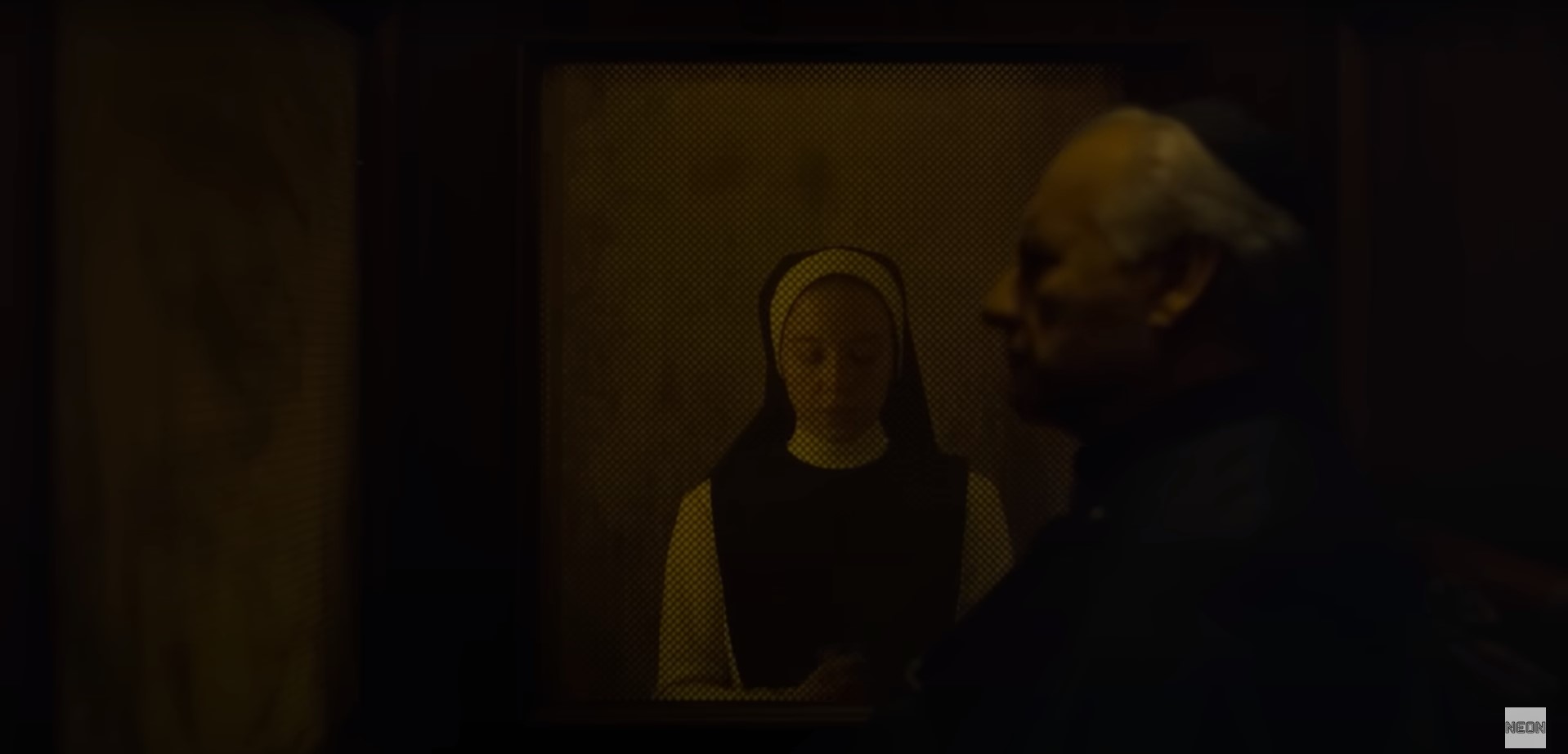
Sweeney exacts the very definition of virginal innocence, a small-town girl with a miraculous backstory that nearly cost her her life.  As a sincerely devout Catholic in Sister Cecelia, Sweeney must shape up an intake of naivety that blinds her to the subtle sinisterism amassing around her.  To do that, a medley of personalities must dupe her, sway her, disparage her, and comfort her to keep the character balanced before the blindsiding shock that surprises her with a twisted misconception and exploitation of God theme. Heading up the mix of madness is the convent’s resident priest, Father Sal Tedeschi, played by Spanish actor Álvaro Morte, indoctrinating a warm welcome as a guise for advantageous deceptiveness, but for what, we yet don’t yet know.  The alarming setup pins Cecelia to the convent grounds, surrounded by equally unconscionable characters in an insistent Cardinal Franco Meroa (Giorgio Colangeli), a benignly sweet Mother Superior (Dora Romano), and a disparaging Sister Isabelle (Giulia Heathfield Di Renzi”), and with little options of escape, or even allies within the walls, Cecelia is truly alone against a rogue Catholic sect that seeks to resurrect Christ in an unconventional and unnatural way against Canon law.  Cecelia’s arc fully embraces the change through Sweeney’s rather transfigured understanding of the religious institution Cecelia devotes her life to and, in the same breath, the nun keeps with the organization’s traditional principles of God’s will and not man’s interference and must be the righteous hand of wrath.  “Immaculate’s” cast rounds out with Benedetta Porcaroli, Giampiero Judica, Giuseppe Lo Piccolo, and Simona Tabasco, who has a “White Lotus” connection with Sydney Sweeney.

If you’re like me and avoid most trailers, reviews, or spoilers to try and keep an unbiased opinion, you may be taken aback by “Immaculate’s” gargantuan twist that goes against everything you may know and believe about the Catholic Church’s dogma and principles.  Granted, several non-Catholics likely believe the Church is corrupt and with recent years’ newsworthy scandals, those Church cynics’ fire has had a continuous stream of fueling fodder.  “Immaculate” plays into the fear, pessimism, and beyond reproach suspicion by subverting religion as a false façade and integrates unlikely, go-against-the-grain coupled themes of genetics tampering, bypassing God, murdering in His name, and even exploiting the Catholic hierarchy with slivers of patriarchal governance over a woman’s body.  We get the latter from the very first opening sequence of Cecelia having just arrived in Italy and is brought before two custom officials who remark, in Italian in order for her now to understand, that her religious vocation to be obedience, impoverished, and chaste wastes her youthful beauty. Then again, “Immaculate” is not beautiful; it’s grotesque, perverted, and shocking and at the core, a purity that’s being sullied by deranged power and evil enlightenments.  Cecelia represents a beacon of hope in a maelstrom of immorality. 
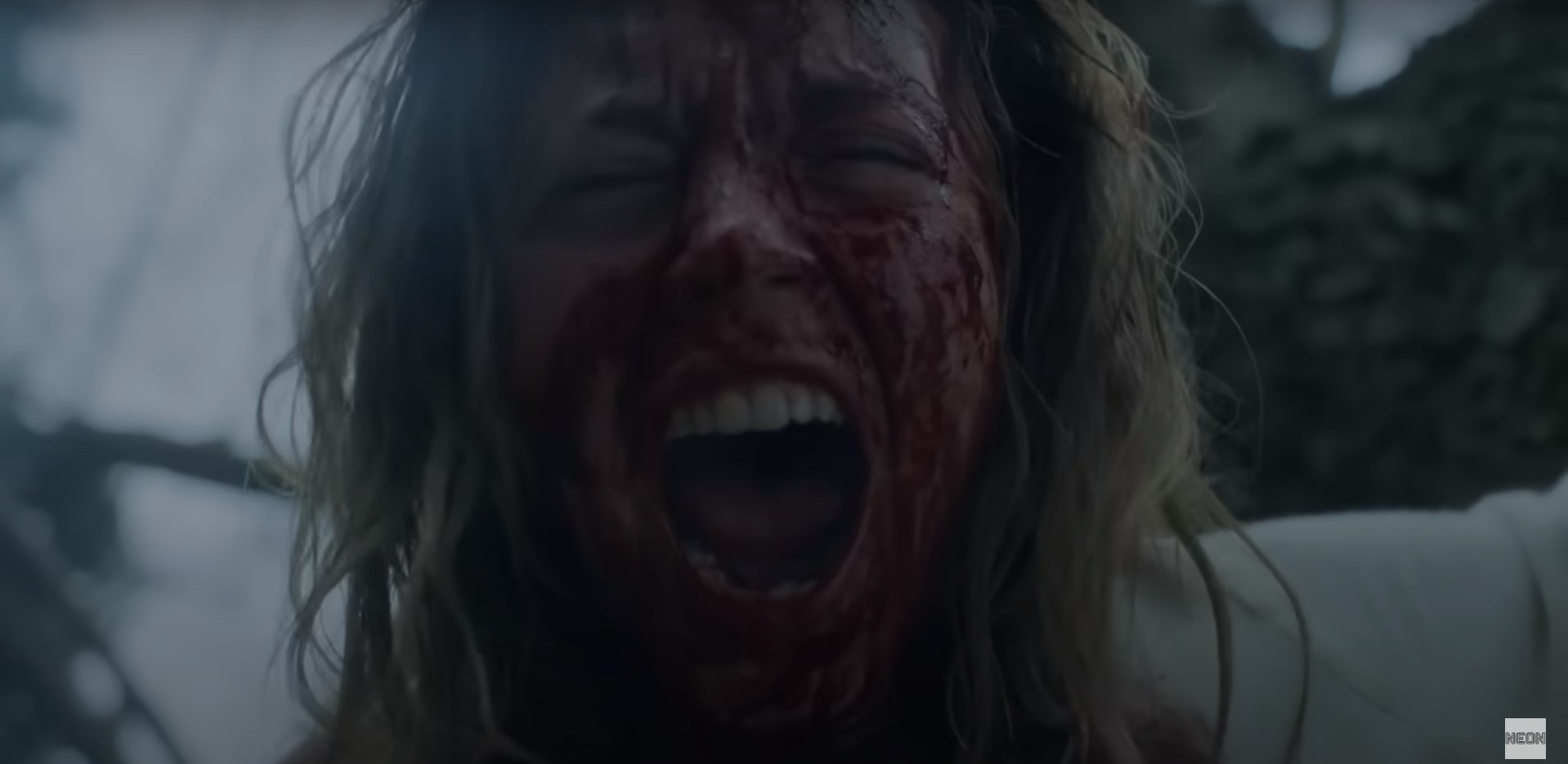
Shudderingly intense and sordidly messed up, “Immaculate” arrives onto a Neon Blu-ray home release.  Presented in a widescreen, Univisium aspect ratio of 2:00:1, the AVC encoded, 1080p high-definition, feature is housed on a single-layered 25 gigabyte disc.  Curious the reason why Neon would choose a lower capacity for such a purposefully soft and dark videographic image that creates a solemn tone inside a harsh appearance of an unpronounced period piece, perhaps set around the 1960s-1970s judging by the wardrobe, suitcases, and other set dressings.  Not also to exclude the premature notions of genetic manipulations that have made giant modernized leaps in the contemporary day-and-age.  Even with emaciated encoded, “Immaculate” looks pretty good around skin tones and textures and not a tone of compression follies to report.  With darker images on lower capacities banding and blocking rear their ugliness but there’s not a tone of that here. Saturation reduction plays into the time period and mood and the specified range of grading is kept to a modestly warm yellow, greens, and reds surfacing above ever so slightly through thick shadows of inkier, key-lit or candle-lit frames and even making a miniscule presence in daylit moments, boarding classical noir on some occasions.  The English-Italian DTS-HD 5.1 Master Audio has lossless appeal that wriggles out clean atmospheric genre cues through the multiple, surrounding channels.  Creaky doors and floors, deep footsteps, cavernous echoing, all play into the ambience track’s gothic timbres.  Conversating dialogue mounts a clear fixed positioning that sharp and clean through Sweeney’s character’s slight Midwestern intonation to the heavily and broad Italian accents from native vernacular to second language English speakers.  A descriptive English 2.0 audio track is also available as well as optional English and Spanish subtitles for the primary track.  One reason “Immaculate” is on a BD25 is because of the only bonus feature available is a feature length commentary track with director Michael Mohan.  The physical side of the Neon release includes a slipcover with the same tones mentioned above with a pious looking Sydney Sweeney in habit and also covered stoically in blood from the collar down.  The backside of the slipcover scarcely has technical information which is pleasant to see the limited real estate being used for something else other than the nuts and bolts that should remain on the Blu-ray’s Amaray case.  Its slightly reminiscent of the way certain boutique labels design their limited slips.  However, what’s not reminiscent of boutique design is the same slipcover front and back image is used for the Blu-ray case too.  Inside is sparse with only the disc with a simple yet effective black background, red titled pressing.  Rated R for Strong and Bloody Violent Content Grisly Images, Nudity, and Some Language, the Neon release has a runtime of 89 minutes and is encoded for region A playback.

Last Rites: “Immaculate” is blessed be the fruit of present-day Nunsploitation themed with power trips that attempt to bypass God and the laws of nature. The finale powerfully depicts and deciphers the principles of one’s firm held faith under God’s will, and perhaps wrath, in its ugliest form.

Mary Didn’t Have This Much Trouble. “Immaculate” on Blu-ray!

The Bishop and Castle seek to Checkmate EVIL! “Sabotage” reviewed! (MVD Visual: Rewind Collection / Blu-ray)

“Sabotage” on MVD Visual’s Rewind Collection Blu-ray!

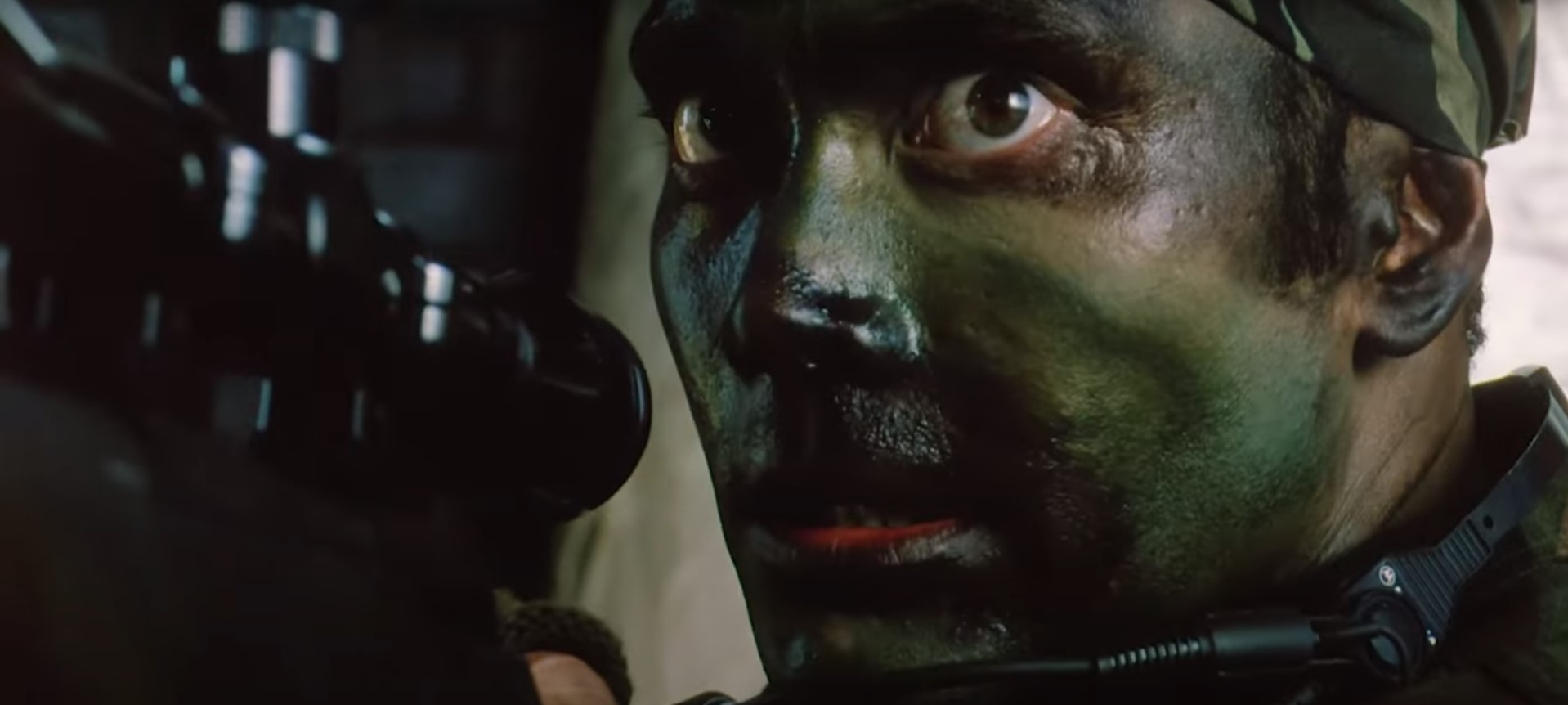
Former Navy Seal Michael Bishop was nearly killed on a gone awry Bosnia mission at the hands of former special forces soldier turned mercenary Jason Sherwood.  Three years and one court martial later, Bishop’s recently hired as a bodyguard for a wealthy businessman and his wife until a successful assassination on the businessman leaves Bishop as the prime suspect in the eyes of Special FBI Agent Louise Castle and his former Bosnia commander Nicholas Tollander now a spook with the CIA.  As Bishop strives to prove his innocence with the help of single mother Castle, looking to impress and rise in the agency to support her daughter, he’s determined to uncover an elaborate conspiracy that involves the FBI, CIA, and the man that put seven holes into him in Bosnia, Jason Sherwood, who enjoys the playful art of mercenary work.  The deep-rooted plot that exploited Bishop as a scapegoat to eliminate gunrunners plays out like a game of chess and each move is deadlier than the next. 

“Sabotage” is the 1996 independent, Canadian cloak-and-dagger thriller from “The Gate” and “I, Madman” director Tibor Takács and cowritten between Rick Filon (“The Redemption: Kickboxer 5”) and Michael Stokes (“Jungleground”).  “Sabotage’s” inspiration pulls from the simple, strategic game of chess where all the pieces, moves, and players are witnessed in plain sight in what is a tactical tornado of interagency spydom and the innocent are only the pawns in the middle, sacrificed to be a part of the puzzle to strike the monarchy behind the shadows on behalf of the across adversaries.  The Andy Emilio (“Shadow Builder”) produced and Ash R. Shan (“Lion Heart”) and Paul Wynn (“Tiger Claws III”) executively produced feature, shot in Toronto Canada (which also doubles for Bosnia in certain brushy areas), is a production of Applecreek Productions and presented by Imperial Entertainment. 

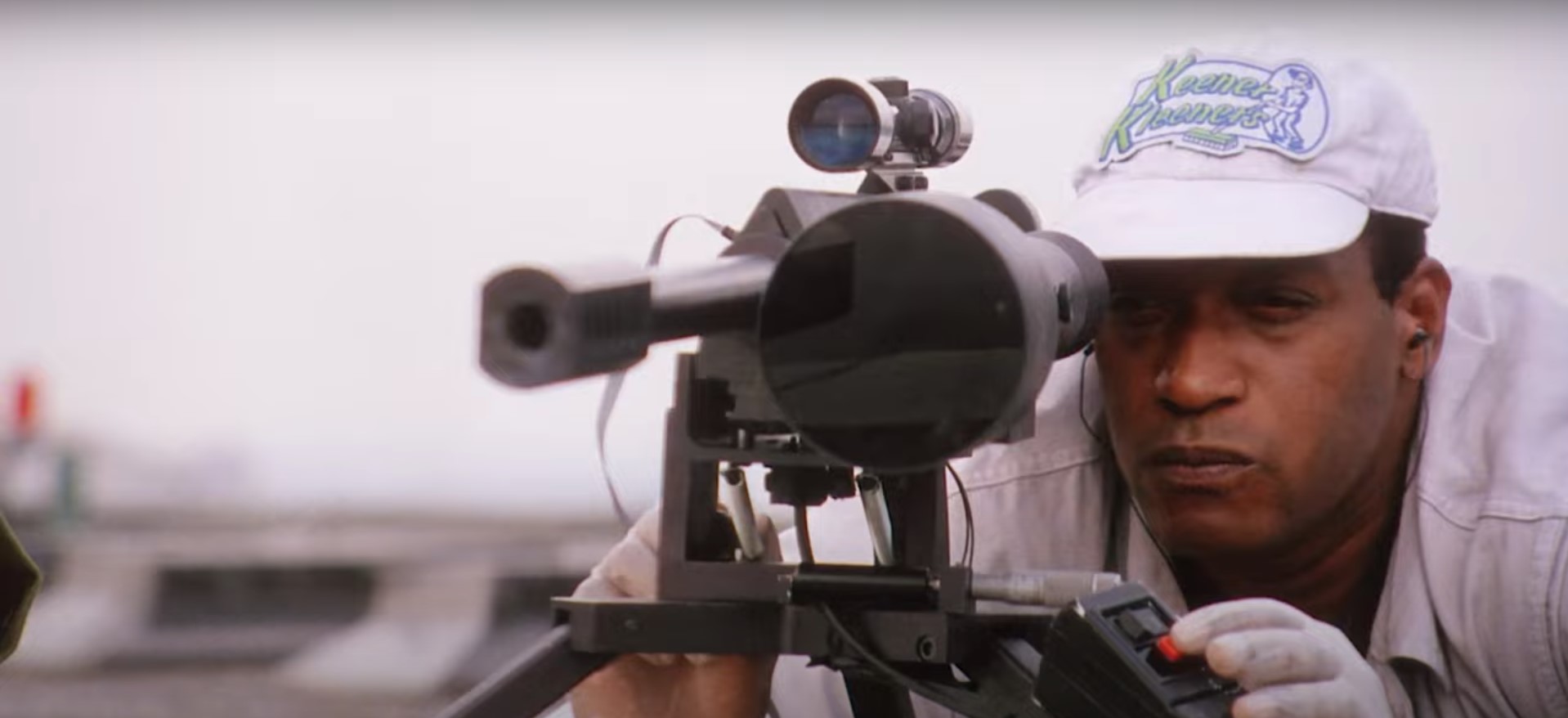
Working off another script from Rick Filon, the previous being “The Redemption : Kickboxer 5,” and hot off his humanoid cheetah role in John Frankenheimer’s “The Island of Dr. Moreau” remake, opposite Marlon Brando and Val Kilmer, the mixed martial artist Mark Dacascos plays the setup and scorned Michael Bishop, disgraced by his own military organizations, and reduced to being a bodyguard for an unscrupulous businessman.  Despite being soft spoken, Dacascos has great charisma on screen that mixes greatly with his eclectic array of martial art fighting styles, such as Muay Thai and Kung Fu.  Dacascos is a shoe in for leading man material, which also includes his swarthy good looks, and does fill the shoes of being a blacklisted former Navy Seal now on the hunt for who burned him in a botched Bosnia mission years earlier.  However, Bishop’s early motivation speaks more toward his character than his need for revenge as Bishop is not aware that it was his former attempted murderer James Sherwood, played by the towering and formidable Tony Todd (“Candyman”), who whacked his client.  Bishop becomes obsessed with the case which speaks to his loyalty and his completist mentality to see something through.  Overshadowing the leading man is Sherwood as Tony Todd instincts with this character is to be a merciless and cutting with his smooth handiwork and jibe remarks, all the while doing the horrible things with a sociopathic smile on his face.  Opposite Dacascos, in a semi-love interest role, is the pre-“Matrix” Carrie Anne Moss as Special Agent Castle who has more complexity of character than Dacascos and Todd combined.  Castle is a struggling single-mother trying to make headway in her governmental career but hits a snag when her morality is checked as she must either stay the course and go along with corruption to obtain security for her daughter or do the righteous thing and unsnarl dishonestly at the highest level with extreme prejudice for her sake of her daughter’s life.  Between the three principal leads, Castle’s arc is the steepest and more stirring with internal conflict, a testament to Moss’s performance.  Graham Greene (“Antlers”), James Purcell (“Bloodwork”), John Neville (“Urban Legend”), Heidi von Palleske (“Dead Ringers”), and Richard Coulter make up the rest of the cast.

“Sabotage” is a down-the-rabbit hole spooktacular 90s thriller, and I don’t mean spooky as in scary.  What I’m referring to is the characters’ covert agencies, such as the spooks of the Counter-Intelligent Agencies, and far-reaching operations that meddle and deconstruct a what should be a tidy organizational design with pot-stirring double-crossing, even triple-crossing, narrative paths that can be a strain to keep straight.  The film’s prelude and core story span 3 years apart and connect while there’s a simultaneous backdrop narrative that’s also connects but only exclusively in exposition.  Audiences will have to hamster wheel their mental gears to connect the dots and keep up with the pacing in this ever-evolving plotline that keeps the action caffeinated with a winding, hard-target center.  Takács also stylizes “Sabotage” with bullet-tracking special effects, high impact shelling, and an indulgence of explosive blood squibs that elevates the independent picture to an upper-class of B movie and gives the feature an edge of fun and entertainment that dichotomizes it from the more slapdash action films of the mid-90s where sex-appeal played more of a role than any other kind of actual action. 

Number 60 on the spine of MVD Visual’s Rewind Collection Blu-ray, Tibor Takács’s “Sabotage” breathes new life into the crisscrossing, projectile-pursuing, scacchic espionage extraordinaire. The AVC encoded BD50 provides a 1080p high-def resolution presented in an anamorphic widescreen 1.78:1 aspect ratio. A well-suffused and maintained print results in an excellent detailing of pixels and a punchy-noir grading. Details on the 2K scan print are historically omitted here, like with many in the Rewind Collection catalogue, but “Sabotage” doesn’t feign to be a product of enhanced visual replication with an organically pleasing form with minimal grain and only one noted frame containing age or damage wear. The uncompressed English language LPCM 2.0 stereo has abundance of vitality, discerning the layers through the dual channel funnel. Range of melee fire power has individualized zenith occurrences rendered at the right synchronization and depth makes the distinction of foreground and background dialogue, ambience, and the sort. Speaking of dialogue (pun intended), the uncompressed encoding keeps faithful fidelity, an ample and adequate of clearly expressed conversations without ever sounding muddled or lost in the skirmish. Optional English subtitles are included. Special features are little light for a Rewind Collection bannered release but what’s available packs a wallop with two new interviews with stars Tony Todd and Mark Dacascos on Zoom, or whichever face time platform is being used, going through their recollection and thoughts of “Sabotage” from nearly three decades ago. A Mark Dacascos trailer reel rounds out the special feature content. The rigid slipcover contains the reprint of the original “Sabotage” poster in a mockup of a VHS case; however, this particular Rewind Collection cover composition has less flair to sell the VHS facsimile. Inside cover art of the clear Blu-ray Amaray case contains the same poster sheet but is reversible with a less-is-more one sheet. In the insert section is a folded mini-poster of the primary cover art and, opposite, the BD50 is pressed with a plastic-patterned, VHS-tape motif. The region free Blu-ray comes unrated and has a 99-minute runtime.

Last Rites: Overall, a gratifying A/V and physical presentation of a mid-90’s, mid-level action-thriller encompassing a showcase of Mark Dacascos’s leading man chops as well as a different side to Tony Todd that isn’t encapsulated in the supernatural during the height of his career.

“Sabotage” on MVD Visual’s Rewind Collection Blu-ray!

Backyard is Spacious, Green, and has an EVIL Portal to the Underworld! “The Gate” and “The Gate II” reviewed! (Via Vision / Blu-ray)

Better Hurry! Amazon Has a 20% Coupon for This Very Release! Limited to 1500 Copies.

The Gate

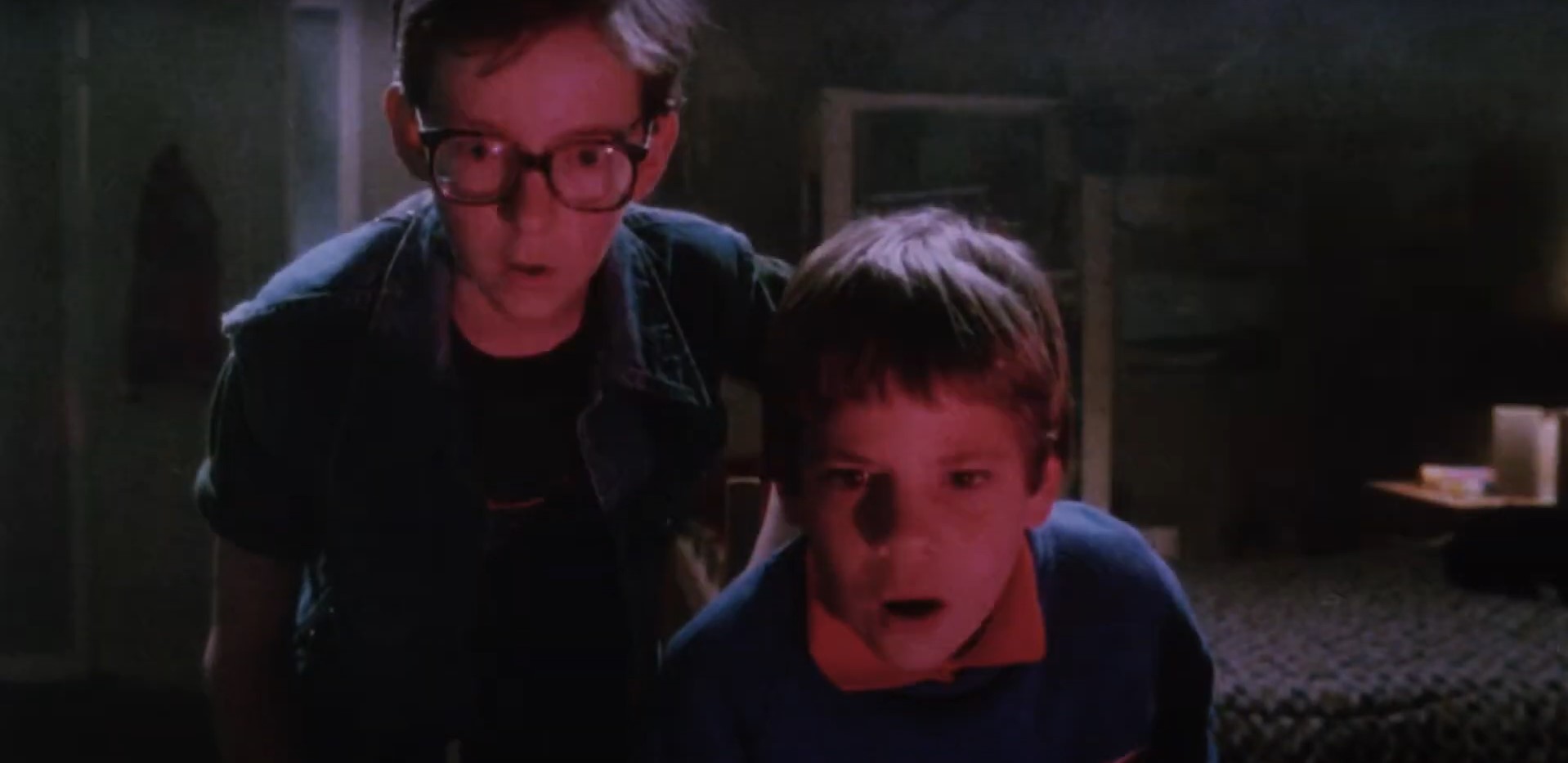
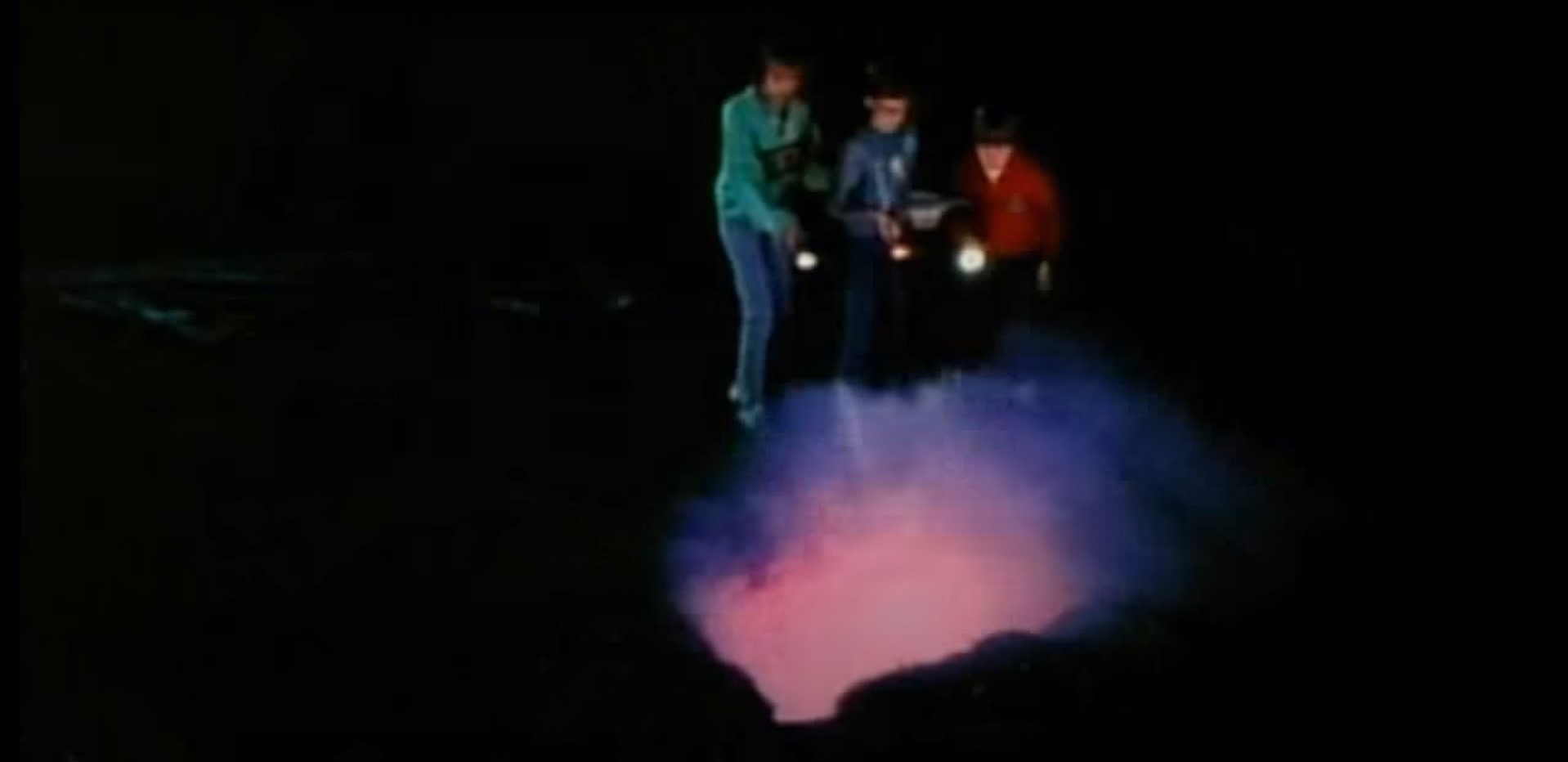
A severe storm brings down Glen’s treehouse, leaving a giant hole in his background.  Discovering what looks to be precious geode rocks, Glen and his friend Terry continue to dig hoping to strike larger, more valuable, geodes.  When they come upon a sizable rock, breaking it open unveils a crystalized liner of colorful minerals as well as a strange gas that unearths an incantation to open a gate to the underworld.  With Glen’s parents gone for the weekend, he, his teenage older sister Al, and Terry must somehow reverse the opening of the gate but demonic-serving, pint-sized minions hunt down a pair of human sacrifices in order to unleash their powerful demon master, an old God reemerging from being locked away from Earth for billions of years.  Serving the night is a fight for their very lives as the minions use their cunning tricks and supernatural powers to deceive the home alone kids into traps in order for there to be Hell on Earth. 

Created in mind to appeal to children with the limitless possibilities of a child’s imagination, “The Gate” caters to a wide audience of all ages.  Hungarian-born Director Tibor Takács and American-born writer Michael Nankin bring out of the shadows the scary corners of a young mind into the light with a demonic tale, a portal from another plane of existence, and a theme of growing up and being accountable in a context of taking head on a doomsday event without mommy and daddy.  The 1987 released Canadian production, shot mostly around Ontario, is the first of two “The Gate” films under the studio flag of Alliance Entertainment.  Presented by New Century Entertainment, as one of the company’s limited credits, “The Gate” is produced by fellow Hungarians in Andras Hamori, who went on to produce fellow Canadian filmmaker David Cronenberg’s “eXistenZ,” and “Quest for Fire” and “The Wraith’s” John Kemeny.

The Gate II:  The Trespassers

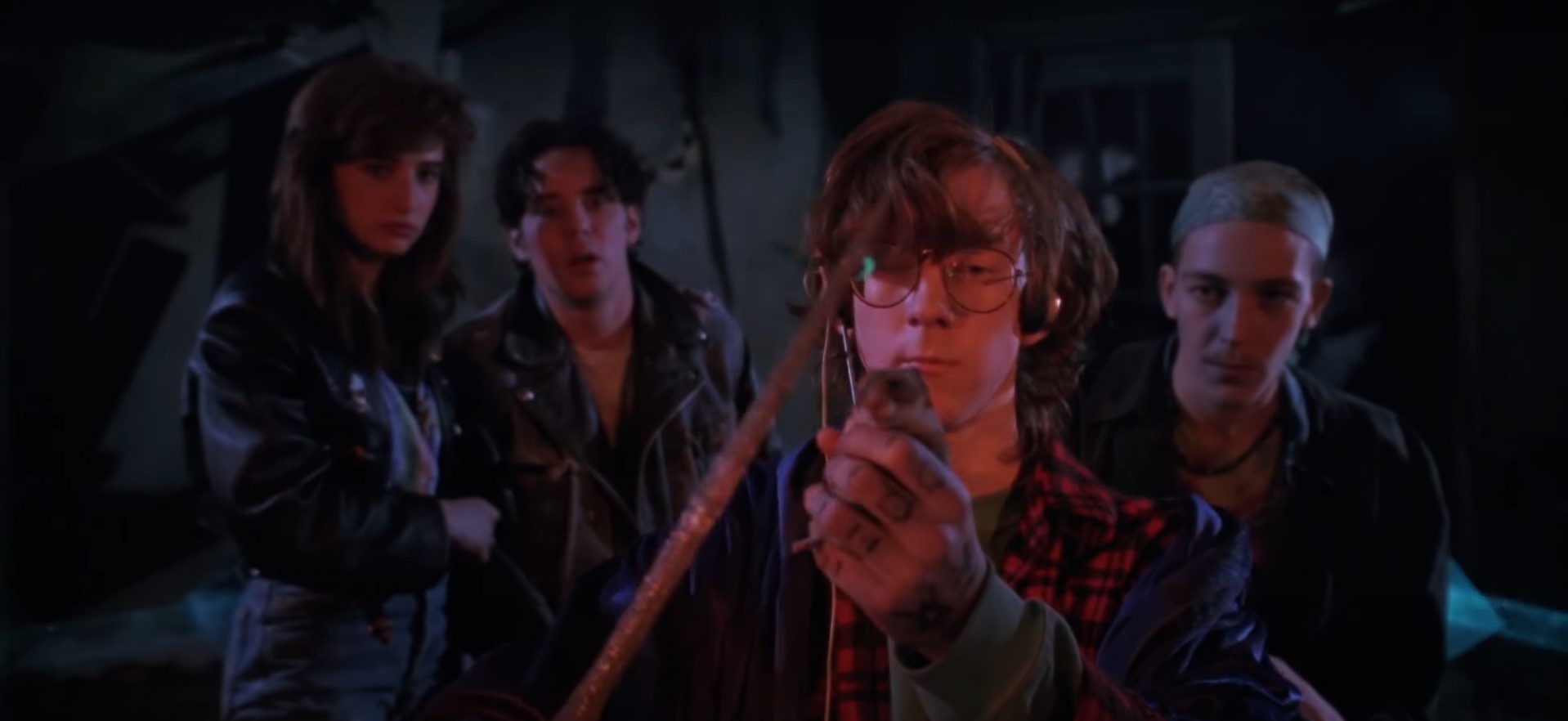
Five years after narrowly surviving near Hell of Earth, Terry’s obsession to return to Glen’s abandoned and dilapidated home and resurrect the demonic powers of wish granting stems from his jobless father’s dwindling livelihood, drinking himself into a stupor every night at the bottom of a bottle.  With equipment powered to project his incantations and protect him from evil, Terry is about to begin his summoning when interrupted by three teens led by bad boy John who mostly ridicules his fixation until one of the pint-sized minions comes out of the shadows and is quickly gunned down by John.  The injured minion self-heals and is captured for wish granting exploitation but when the wishes turn into a disastrous chimera, Terry soon realizes that his summoning has not just been answered for selfish motives, but it also re-opened the portal for three power demons to transmogrify from within him and his friends. 

The success of “The Gate” sought the fast tracking of a follow-up story produced within two years’ time after that spoke a different tone and came in a different approach to the nightmarish content and the age of the kids.  Takács and Nankin reteam for “The Gate II:  The Trespassers” who, at the authoritative behest of executive powers, had to take the fantastical lining of a child’s imagination to more extreme measures that evolved the original film’s grotesquely saturated PG-13 rating into a lighter, water downed R rating, removing a good chunk of the viewer base from a theatrical run.  The 1990 released venture was also shot at some of the same sets in Ontario Canada as the first film with Alliance Entertainment returning as producing studio and Vision International presenting to the world.  Andras Hamori and John Kemeny also return as producers.

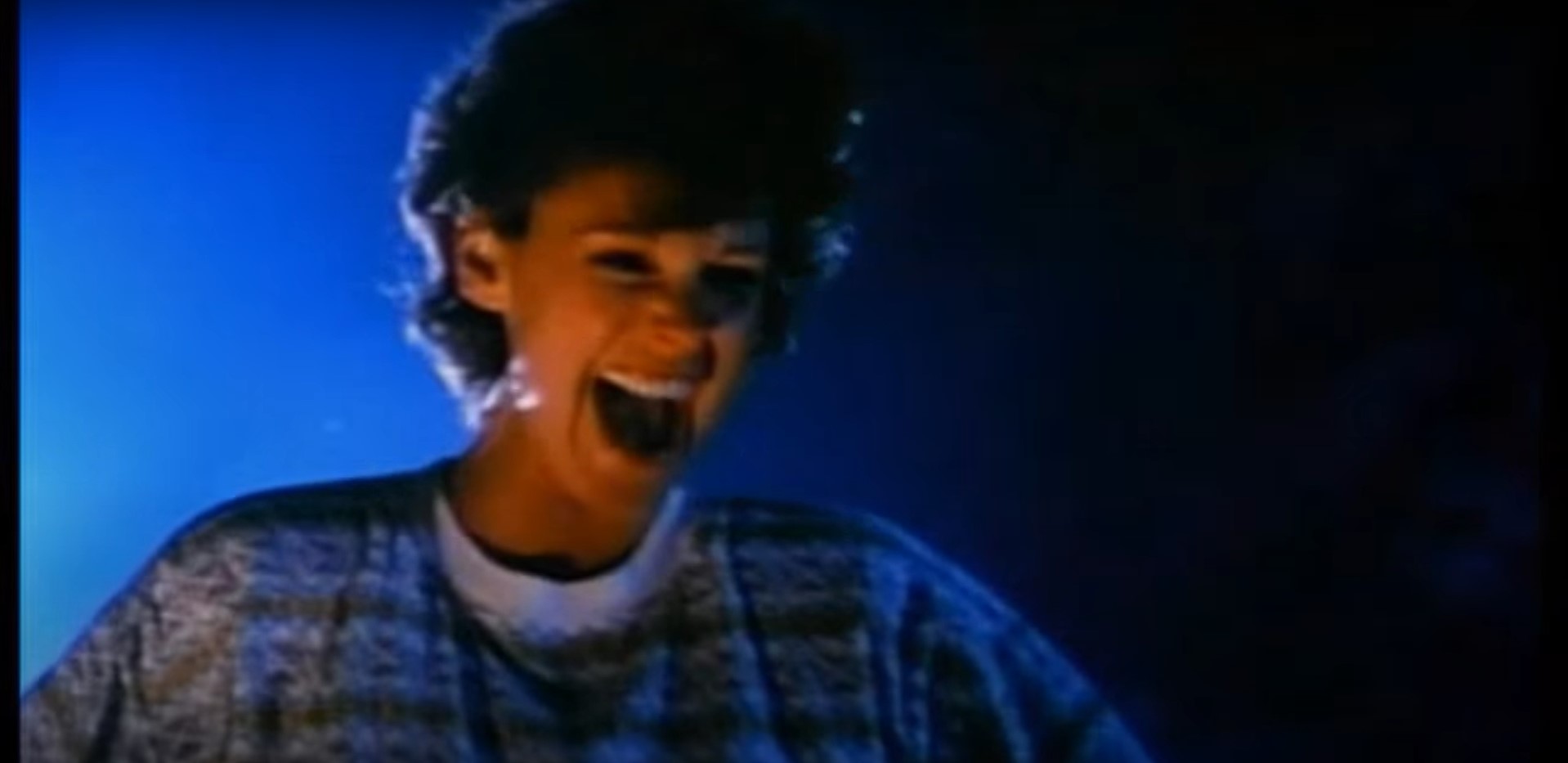
Doesn’t take the understanding mechanisms of rocket science to discern “The Gate’s” cinematic victory.  Demons were all the rage in 80’s from Italian eurotrash to American grindhouse and why shouldn’t the Canadians get into the action?  Special and makeup effects, in themselves, are tremendously impressive, as aspect we’ll go thoroughly more into later in the review.  Yet, the one golden ticket area that deems “The Gate” as an unsullied hero of PG-13 horror is the unaccompanied children misadventure narrative coupled with, or maybe elevated by, good dialogue sanctioned by even better performances.  The 80’s saw scads of children in danger storylines that either had no responsible adult in sight or the adult party was the adversarial danger.  “Explorers,” “Adventures in Babysitting,” “E.T.,” and, one of the biggest examples of all, “The Goonies,” caddied the action-adventure and thrills-and-chills long game for the better part of the 80s decade and “The Gate” teed up on the opportunity, bringing together a trio of varying degrees of adolescents to go toe-to-toe with an ancient evil in what would have been seen as a no-win situation.  In his feature film debut, the barely teenage Stephen Dorff (“Blade”) lead the trio as the highly impressionable and model rocket enthusiast Glen, the youngest of the cast to be the one to save them all, including big sister Al, played by Christa Denton, and best friend Terry, played by Louis Tripp.  Tripp would go on to be principal lead in the sequel that veered away from the fantastically supernatural misadventures of innocence into a more older teen intrinsic narrative that no longer saw the world warp through youthful eyes.  While Tripp segues seamlessly in his role, he finds himself in new territory as the heavy metal and demonology aficionado sparks potential romantic interest in Liz (prolific voice actress Pamela Adlon, “Vampire Hunter D:  Bloodlust”) and is seized by arrogant bullies with two pot smoking hooligans Moe (Simon Reynolds, “P2”) and John (James Villemaire, “Zombie 5:  Killing Birds”), both instances a premiere example of the raw rite through to adulthood.  Again, “The Gate II” keeps adults at an arm’s length away, forsaking youth the challenge of cleaning up their own mess.  Both films fill out their respective performances from Kelly Rowan (“Candyman:  Farewell to the Flesh”), Jennifer Irwin (“Another Evil”), Deborah Grover (“Rated X”), Scot Denton (“Murder in Space”), Carl Kraines (“The Slayer”), and Neil Munro (“Murder by Phone”).

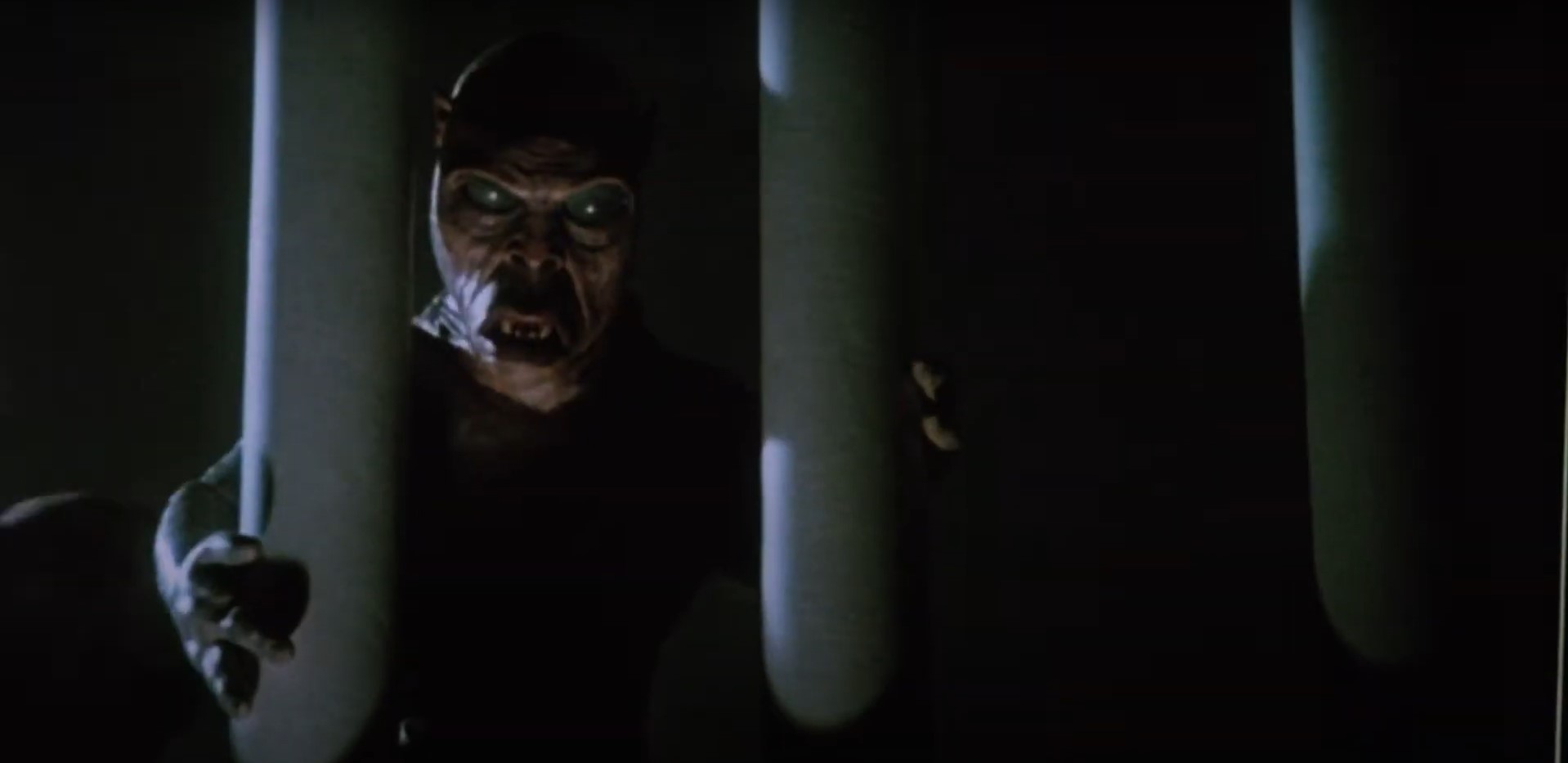
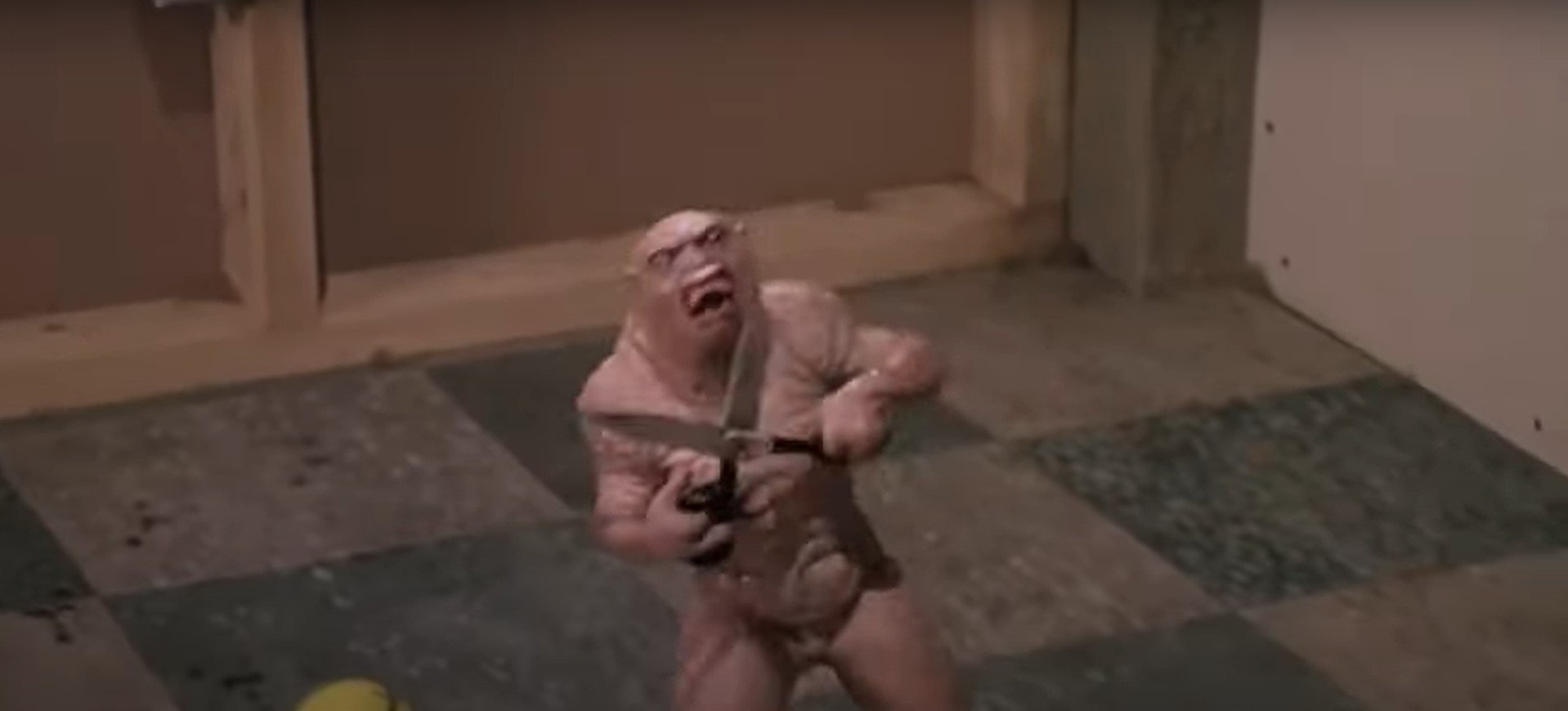
Special effects by the team of Randall William Cook, Craig Reardon, and Frank Carere couldn’t have pulled off an ambitiously suburban horror hyper focused inside Glen’s home any better.  Fashioning mind-bending illusions that are still marveled at to this day, Cook’s forced perceptions eliminates mostly the use of stop motion tactics for the miniature sized minions, replacing the rigid effect with a more lively physical man-in-suit option that smooths out the actions, attributing the creatures idiosyncratically with not only depth of perception to contrast sizes but also shot in a faster camera speed compared to which the seemingly normal sized actors would have to slow down their performances to become level with the creature.  The whole process is crazily multifaceted and mind-boggling effective if pulled out in great detail and “The Gate” team does so, twice, in face, between the two films, with Reardon’s fleshy creature designs enhancing the hideous zeal in the bulbously decaying Workman zombie and even in Reardon’s blamelessly slapped together endgame demons for the ordered change of a quickly surmised climax in the sequel.  As a collaborating unit, the special effects crew pulls off seamless transitions in what is captivatingly pure eye-candy of movie magic.  The stories themselves, especially in “The Gate,” are enchanting, full of mysterious and unpredictability, and stretches the imagination beyond the confining limit as we’re led to inevitable showdown only to be pleasantly accosted on the optics.  The sequel has a rougher go with the story as the narrative feels like a wound-up toy twisted tight to the threshold only to be released spinning in all different types of directions that ultimately lead to an exhausted stopping point. The stark contrast between the two films doesn’t offer a lot of subsequential continuity in narrative and even in some areas of the special effects but the silver lining in that last statement can be a sigh of relief in not receiving a rehashed product sought to recap or repeat off the back of the original’s success. Instead, “The Gate II” begs to be separated to be its own entity and does so while being a homage to the practical illusions that sparks awe, joy, and terror!

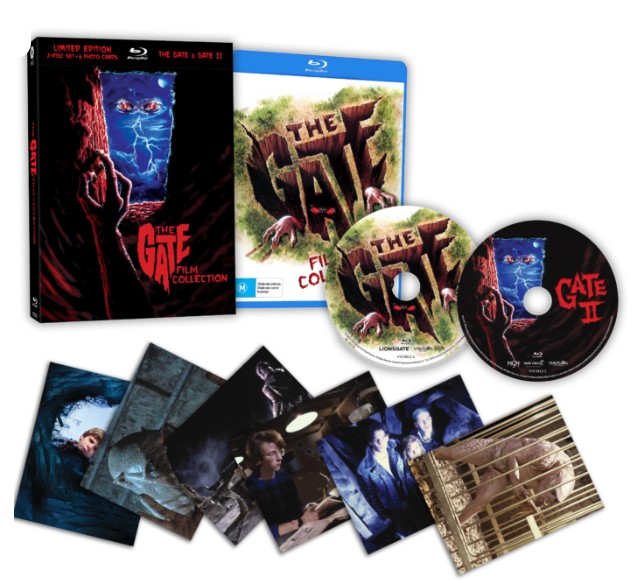
If looking to physically own both “”The Gate” and “The Gate II” in one deluxe package, the Australian based distributor Via Vision has set the bar high with their 2-disc, numbered limited edition, Blu-ray collector’s set. Both films, shown in a widescreen 1.85:1 aspect ratio, are AVC encoded with a high-definition, 1080p resolution on a BD50 (“The Gate”) and BD25 (“The Gate II”) and we’ll come to the reasoning to that split later on. Shot on 35mm and scanned into a 2K print, not many details are noted about what film negative or other print element is scanned to 2K but most of the bonus content on this particular release is Vestron produced, leading to believe the same Vestron print is also used here. Between the two pictures, “The Gate II” has a better saturated image whereas the original film almost seems ungraded with a slight gray concealer that somewhat mutes the hues. The forced perception shots are seamless yet are also delineated nicely that curves into a believable and pleasing symmetry without an inkling of divisional depths. Skin tones are natural looking and textures, such as practical prosthetic masks and molds, score high in all the nooks and crannies of the folds and surface level haptics. The English encoded tracks include a lossy DTS-HD 2.0 stereo codec on “The Gate” and an uncompressed, lossless PCM 2.0 stereo on “The Gate II.” These sole options provide suitable stereophonics without significant compression issues, other than “The Gate’s” minor fidelity data loss, or original source damage or technical gaffs, such as hissing or popping. Dialogue design sees the “The Gate” come out on top over the course of layering and projecting atmospheric augmenting. I don’t get that same sense from “The Gate II” that modulates the dialogue with a redounding heavy-handed echo effect in locations it does not make sense for reverberations. “The Gate” has English and Spanish subtitles with the sequel reduced to just English subs available. “The Gate’s” greater format capacity holds most of the special feature cards with a number of duplicated Vestron produced bonus content, including two audio commentaries: commentary one with director Tibor Takács, screenwriter Michael Nankin, and special effects designer/supervisor Randal William Cook and second commentary with Cook again along with his f/x crew Graig Reardon, Frank Carere, and Bill Taylor. Composer Michael Hoenig and J. Peter Robinson discuss the score with selected isolated tracks to enjoy, a conversation between Takács and Cook in The Gate: Unlocked, Craig Readon in an interview about creating the pint-sized creatures in Minion Maker, an interview with co-producer Andras Hamori From Hell it Came, an interview with actor Carl Kraines aka The Workman aka Terry the Demon The Workman Speaks!, an interview compilation from the local Toronto talent involved Made in Canada, a 2009, archival retrospective look and discussion from Reardon and Cook at their monstrous being handiwork From Hell: The Creatures & Demons of The Gate with Randall William Cook and Craig Readon, a 2009, archival retrospective look and discussion with director and writer Tibor Takács and Michael Nankin The Gatekeepers, a vintage making-of featurette, teaser and theatrical trailers, TV spots, and storyboard and behind-the-scenes galleries. In what is a David and Goliath size imbalance, “The Gate II” special features ultimately will not trump with smaller disc capacity and the lack thereof content but the second disc sequel does contain a new, 2023 audio commentary by Tibor Takács and film historian Jarret Gahan as well as a documentary with Takács, Nankin, and Cook Return to the Nightmare: A Look Back at The Gate II that discusses how and where the film strayed off the intended course, an interview with make-up effects artist Craig Reardon From the Depths, the theatrical trailer, and retain video promo. Via Vision’s limited-edition packaging is another world chic and cool with a rigid sleeve box and a lenticular “The Gate II” front cover art. Slipped inside from the right is a single Amary Blu-ray case with a center stationed second disc attachment. While the front cover on the sleeve box showcases the sequel cover, the Amaray’s reversible cover sports the original “The Gate” cover art with a Glen still image and film cast/crew credits on the other side. Also inside the sleeve box are six fully colored glossy photo cards! Both films are Australia certified Mature for moderate violence and moderate course language and have a runtime of 84 minutes (“The Gate”) and 93 minutes (“The Gate II”). The Via Vision release is region B locked (note: the release did play on my region A setting).

Last Rites: Digging a hole to open “The Gate” and the contradistinctive sequel unburies a pair of underrated underworld-creeping-toward-the-surface 80’s phantasmagorias, a regular doomsday fait accompli with children standing between Hell of Earth and saving the world, and what better wait to see the world potentially burn to the ground than with a beautiful new Blu-ray collector’s set from Via Vision!

Better Hurry! Amazon Has a 20% Coupon for This Very Release! Limited to 1500 Copies.