
Here is “Lion-Girl.” Hear Her Roar on Blu-ray!
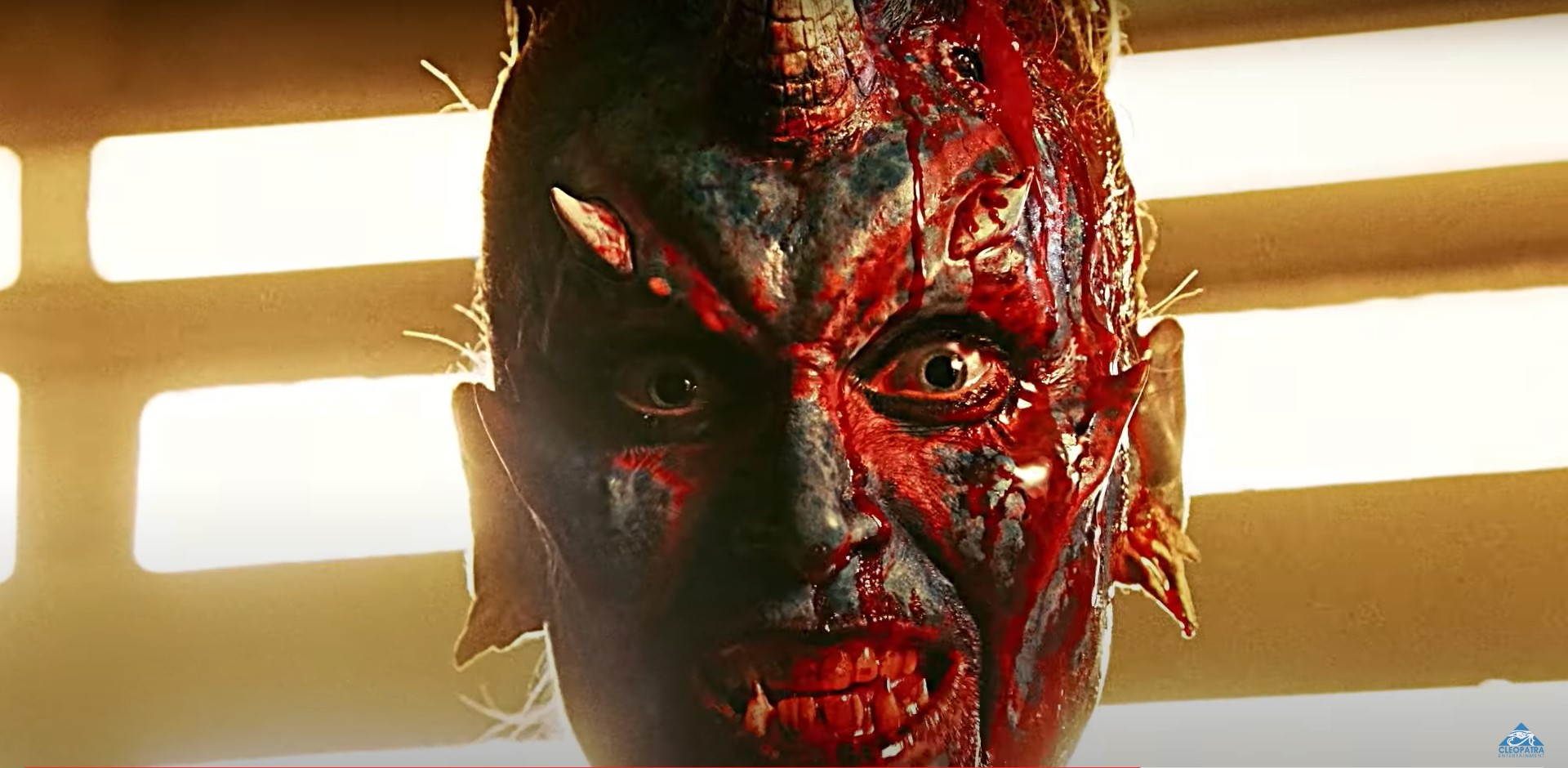
In the year 2045, a rain of meteorites harbingers the possible destruction of the human race as the space rocks contain harmful, radioactive rays that either kill a human within seconds or doesn’t kill them at all but transformers them into bloodletting, mutated beasts with superhuman abilities known as Anoroc. While the rest of the world collapses, only Tokyo remains as the last human stronghold governed by a fascist dictator Nobuhide Fujinaga and his band of ruthless, police state Shogun led by despotic Kaisei Kishi. Fujinaga and Kishi’s prejudices extend decades later when children in utero are exposed to Anoroc rays that keep their human appearances and behaviors only to have gained the psychokinetic energy powers. These evolved man and Anoroc are labeled Man-Anoroc and are sought out for extermination but one defender of the weak and less fortunate, known as Lion-Girl, takes a stand against the forces of evil and bigotry, making Lion-Girl Earth’s last and only hope.
Inspired by the prolific manga works of Gô Nagai (“Cutie Honey,” “Devilman”) and Nagai providing the conceptual illustrations, the Japanese filmmaker behind the pulse-pounding pistol-whipper “Gun Woman,” starring cult erotic-actress Asami, and the Italian yellow picture, or giallo, influenced “Maniac Driver” turns his eclectic, electric style to reproduce his love for manga and the classic Japanese superhero canon with a new heroine in “Lion Girl.” Kurando Mitsutake endears to his audiences through passion for cutting-edge manga’s commanding nudity, a hero’s odyssey in a dystopian future, and a comic’s style depicting graphically good versus evil. The COVID era stymied production costs due to supply issues, affecting various departments such as special effects and even the cast with relative unknown faces, but Mitsutake pushes forward with the Japanese Toei Video Company (“Battle Royale”) co-production with America’s Flag Productions and Nagai’s Dynamic Planning. Masayuki Yamada, Gaku Kawasaki (“The Parasite Doctor Suzune”), and Mami Akari (“Maniac Driver”) produce the film.
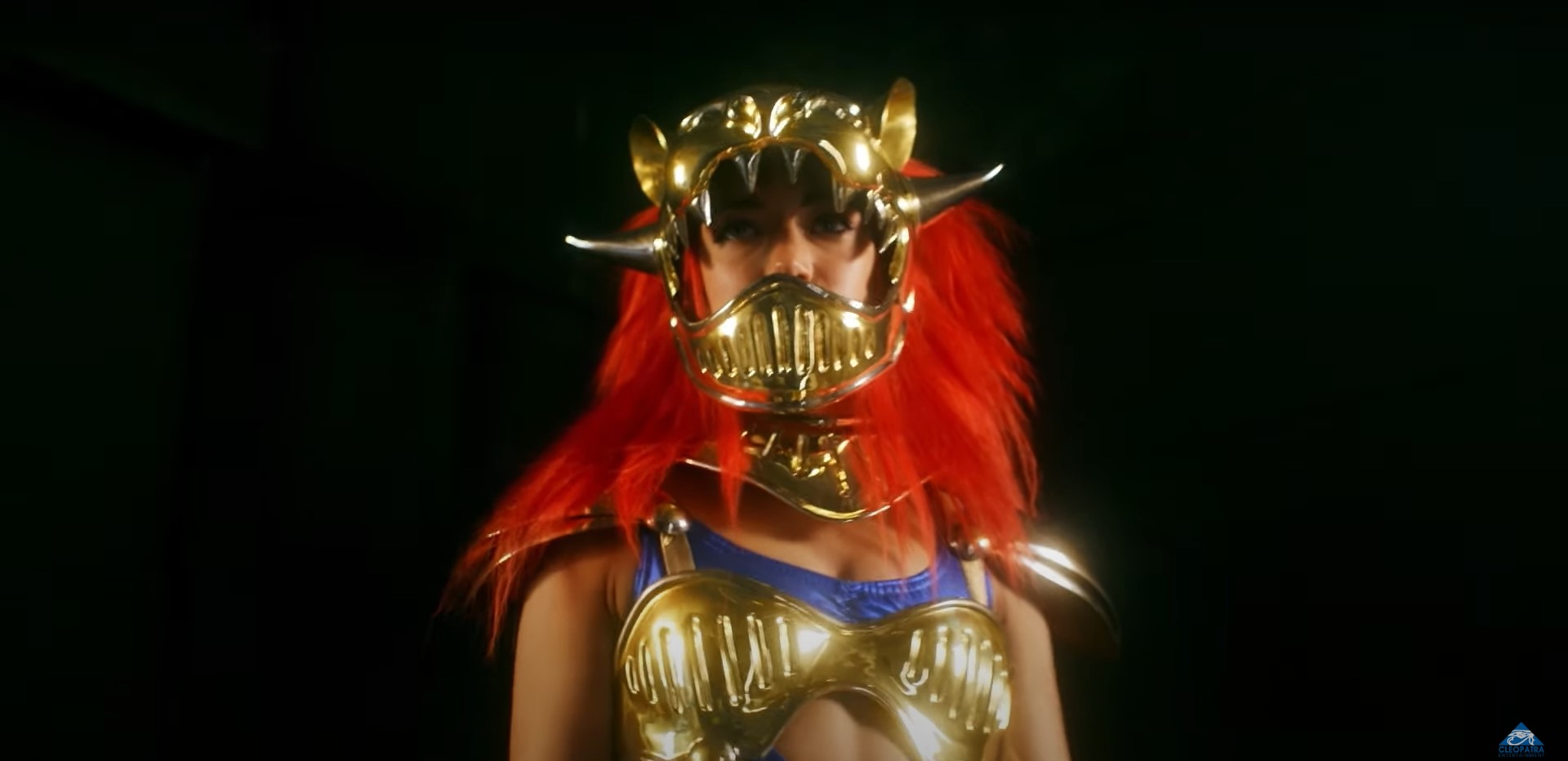
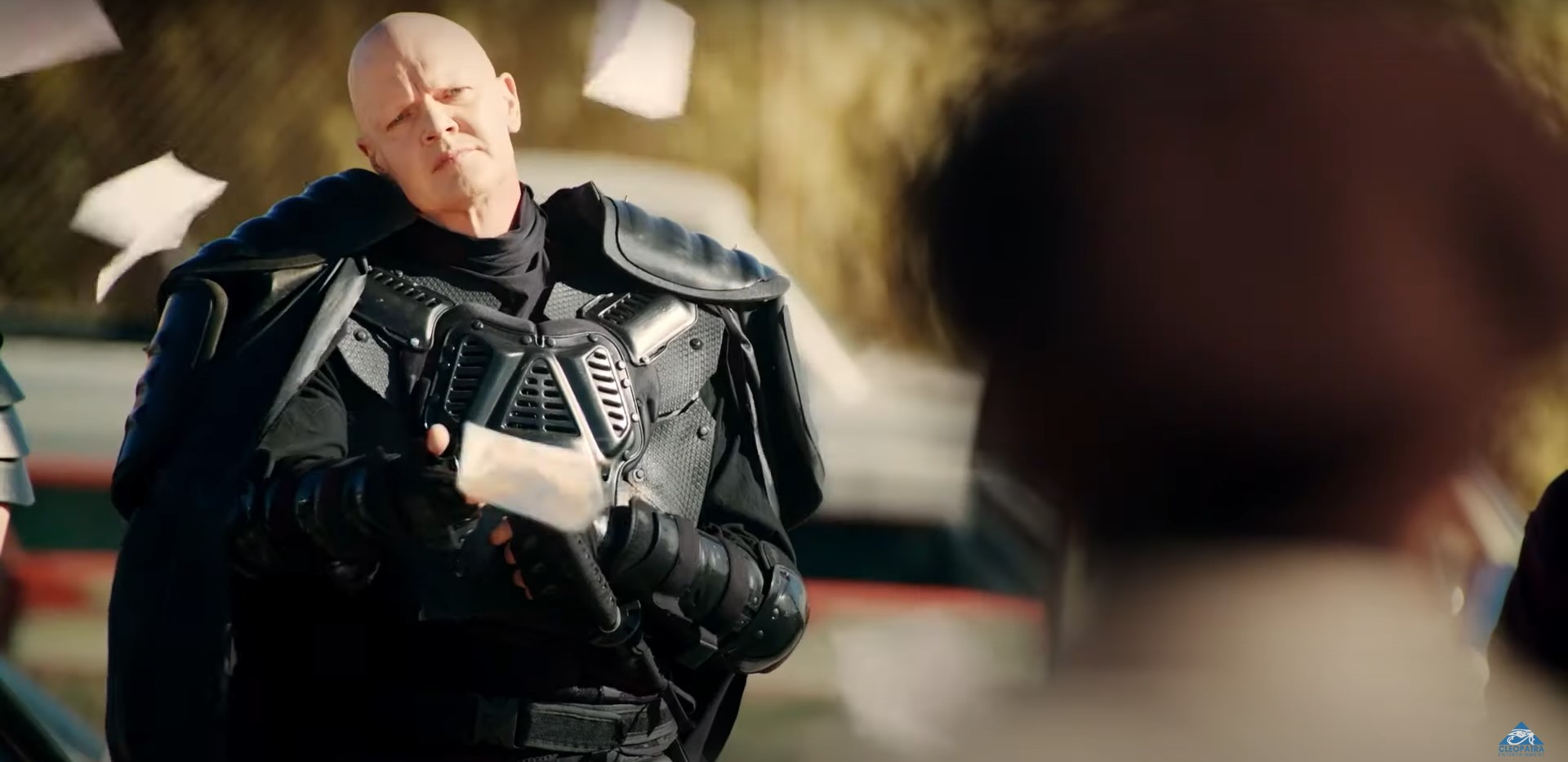
As stated, “Lion-Girl” is filled with unrecognizable faces save for one, an actor who is usually behind the masks, such as in “The Hills Have Eyes 2” ’07,” “Predators,” and even donning the iconic hockey mask for the 2009 reboot of “Friday the 13th” as Jason Voorhees. Derek Mears headlines being the film’s core villain, shogun Kaisei Kishi, the remorseless, power-hungry right-hand man of the Fujinaga state, as Mears’ towering 6’5” stature and unique facial features pit him against a then 22-year-old newcomer Tori Griffith in a highly visibly protagonist role requiring fully onboard nudity and choreographed physical altercations. Griffith pulls off both requirements going through the tokusatsu, hoodoo cliffside and other desert terrain, geometries of motion that fortunately conceal a more softened performance when compared to Mears’ who actually puts a fair amount of attitude into the shogun role. As the Lion-Girl’s sworn protector, as well as one-eyed uncle, Damian Toofeek Raven (“Komodo vs. Cobra”) resembles the sempai fostering and mentoring a younger, stronger apprentice to one day save the world. Raven, like most of the film’s cross-cultural influences, is able to ride the line as force into an honorable fatherhood with Ken Shishikura but the character poorly exorcises compassion of a father substitute until the very end when the right moment in the script calls for it. One flaw in “Lion-Girl’s” casting stitch is the feature could have been meatier as keystone supporting characters come and go so quickly that it could rival the likes of “Mortal Kombat 2: Annihilation.” Thus, rapid firing subordinate roles just to progress the story creates more questions than answers and creates more plot holes than necessary. Nobuhide Fujinaga (Tomoki Kimura, “A Beast in Love”) leads as the iron fist of bigotry in a tyrannically society but barely has presence other than on television announcements, a pair of Kishi entourage lackeys (David Sakurai, “Karate Kill,” and Jenny Brezinski, “From Jennifer”) get lifted up by the dialogue and some action but have the rug cut out from under them from really being developed and explored, and even principal character Marion Nagata (Joey Iwanaga, “Tokyo Vampire Hotel”), the gunslinging coyote, has zero foundational building blocks being a love interest for Lion-Girl yet crowns as such at the story’s climatic showdown. “Lion-Girl” is saturated with supporting cast and stock characters with round out by Marianne Bourg, Matt Standley, Shelby Lee Parks, Hideotoshi Imura, Holgie Forrester, Katarina Severen, Stefanie Estes, and Wes Armstrong.
“Lion-Girl” roars as a wild, untamed animal, mangy in its worst moments but also majestic at the same time. This paradoxical cultural expression befits the co-superpowers production, blending Japanese and American flavors and faults into one oversized bag of live-action manga. With a derision mostly toward western affairs, such as the media circus surrounding the xenophobic administration’s handling of the corona virus, to which the filmic beasts known as Anaroc is corona spelled backwards, the haughty, bullying state doesn’t stray far from Kurando Mitsutake’s pen-to-paper handiwork as he also invokes Gô Nagai’s freedom sense of nudity and violence aimed to shake up with acculturation in high level eroticism that’s not seen as sleazy or objectifying but rather empowering and artistic. What Mitsutake does really well and what’s also to the film’s misstep for today’s audiences is the complete blitzkrieg of background setup that’s bombastically overwhelming with incident backstory, dystopian factions, and the new terminologies in a single, longwinded breath, culminating to an early point in the film with a fight between Lion-Girl and an Anaroc beast where mutated breasts are essentially turned into a flamethrower and psychokinetic battles are commissioned in headspace. That’s the kind of psychotronic tone that bears the cult seal of approval, or in this film, the lion’s share of cult approval.

Cleopatra Entertainment, the filmic subsidiary company of Cleopatra Records, scores big with Kurando Mitsutake retro-fitted superhero “Lion-Girl” on Blu-ray. The AVC encoded, high-definition 1080p, single-layered BD25 is literally stuffed to the brim, presented in a 1.78:1 widescreen aspect ratio. Compression bitrate swings the pendulum, decoding between low 30s and high teens resulting in smoothed over details. To the film’s advantage, the abated details play into the old-style Japanese action flicks of yore, creating a pseudo-illusion of a flatten color palette and lower resolution last seen on tube televisions. Okay, might not be to that extent as therein lies decently popping color scheme and rough contouring and lighting in more scarce settings to make the scenes less complex and rely on more smoke and mirrors to stretch the interior-exterior location budget. The lossy English language Dolby Digital 5.1 surround track is accompanied with also a Dolby Digital 2.0 stereo. While nothing to negatively harp on in regard to “Lion-Girl’s” sound design and soundtrack as a whole, there’s plenty to like about the wide-ranged, heavy rock-riffing audio with unequivocal balance between the sounds and channeling albeit a lesser fidelity. Peppered with Japanese words, the dialogue is forefront and clear that red-carpet the numerous monologues with all-day importance. The release does not come with any subtitle option. Bonus content includes a director’s commentary track, a conversation between Kurando Mitsutake and manage artist Gô Nagai as they discuss nudity, working in America, genesis for “Lion-Girl,” and their COVID era collaborations, the making-of “Lion-Girl,” “The Hollywood premier screen with cast and director Q&A, a picture slideshow, and the theatrical trailer. Cleopatra’s release caters to a conventional standard retail market with a commonplace Amaray and disc release and nothing more. The front cover design is not terribly appeasing with a crowded image composite bathed in an eye-deafening and searing red. Disc represents the same front cover image and there is no insert inside the Amaray casing. The region free release is unrated and has an impressively entertaining runtime of a 121-minutes. Marketed to be a different kind of superhero movie, “Lion-Girl” is certainly more than that, portrayed by Kurando Mitsutake as a love song toward the pulp exposure of his childhood and the film really glows passionately like an Anaroc with supernatural powers ready to strike with nostalgia at the heart of Japanese pop culture.


 It's Bloggin Evil!