Reap the EVILS You Sow. “Wired Shut” reviewed! (101 Films / DVD)

The failings of a once famed novelist, Reed Rodney, have come calling after a horrific car accident leaves Reed with reconstructive surgery and his mouth wired shut.  Stuck in remote mountain home, sipping pain meds through a straw and hitting terrible writer’s block after the critically trashed last novel, fortune and distinction never seemed so lonely until his estranged daughter, Emmy, shows up at his front door, looking to spend some time with him before going to school abroad.  Their hoary embattled relationship, built on alcoholism, lies, and abuse, urges Reed for a change of heart, willing to reconnect with Emmy by any way necessary, even if that means being a punching bag for her bottled up emotional outpourings.  When an unexpected intruder exposes a callous secret and lives are at stake, Reed and Emmy must rely on each other to survive a twisted prowler’s sadistic games. 

“Wired Shut” is the teeth-clenching, family quarrelling, sociopathic surviving inaugural full-length feature from Vancouver born director Alexander Sharp.  The home-invasion thriller too hails from Vancouver, Canada with an old-fashion tale of an inside job story co-written by Sharp and the director’s steady collaborator Peter Malone Elliott in which the project is also the first full-length script for the two writers.  “Wired Shut” houses a single location with a small cast but indulges varying levels of crazy and a good amount of bloodshed initially pie-eyed by the immense build up of downtrodden characters.  Singed family relations, the ebb and flow of trust, and the untangling of an ugly knot to retether a stronger bond becomes the parallel of reconnecting in this GoFundMe crowdfunded film under Lakehouse Productions and Alexander Sharp’s Sharpy Films presented by Motion Picture Exchange or MPX.

In a role where you have to keep your trap shut at all times because you’re playing a former self-centered rake who crashed his Lamborghini and had to have your mouth wired shut, Blake Stadel (“Rise of the Damned”) has one of the easiest parts in all of move making history.  Thank about it.  Zero lines of dialogue, you’re feigning an ego that is as shattered as your character’s jaw, and you write or type if you have to communicate.  Now, I’m not belittling Stadel’s once famous novelist, Reed Rodney, as the actor has to absorb the pity, the verbal abuse, and the overall confinement resulted by his injury as a sort of surrender to unfortunate happenstance.  Reed’s moment of life-altering clarity came pre-introduction when crashing the Lambo that left him vulnerable and alone, two bad, pre-depression dispositions of mind and being.  Across the table stews the stark opposite with Reed’s daughter Emmy, played by Alexander Sharp’s sister, Natalie Sharp (“Baby Monitor Murders”).  Pent up with anger and seething with intent, Emmy is executed with these qualities with perfection by Sharp.  However, Emmy extinguishes her fiery eyed hate too quickly in the fate upturning twist that creates a dubious bubble around her and not in a good way.  Emmy’s defining moment of clarity is weakly pawned off just for her and her dad to have a slither of reconnection in a breakneck transition without any struggle or sacrifice to change her mind.  Her blurry change of heart quickly becomes moot by Behtash Fazlaili’s (“The Evil In Us”) unhinged performance as Emmy’s delinquent boyfriend, Preston.  Preston eclipses the entire father and daughter dynamic with a clichéd villain by monologuing and squandering wasted opportunities to end it all and getaway scot-free.  Fazlaili’s performance also doesn’t inspire terror or much of anything at all except for frustration with the cavalier, walk-on act that’s supposedly a mentally broken man fallen to and reshaped by life’s hard knocks.  What’s on screen is Joker-esque mush relating little backstory that drives him to scheme and to be completely off his rocker whereas, in contrast, we know what motivates Emmy and we know what motivates Reed.

The slow burn of “Wired Shut’s” first two acts attempts to humanize Reed as a dejected and alone with Emmy sparking life into an object he can now be fixated on to mend his meaningless, post-accident existence, but Emmy, herself, lugs her own daddy-issue baggage giving way for the two to buttheads in exacting their feelings upon one another.  Sharp fishes for sympathy but keeps loose with expressing Reed and Emmy’s contentious relationship; a relationship that truly never existed with an alcoholic Reed’s persona no grata behavior around Emmy’s mother and her that extends his jet setting lifestyle with the next mistress.  Though loose, you can see both stand and the foreseeable twist coming because of it in an unsurprising turn of events.  What is surprising is Preston’s sudden Jekyll and Hyde as if Reed’s salivated score is Sharp’s theme that for the love of money is the root of all evil.  The theme is peddled and not exactly discerned in Fazlaili’s character who’s more concerned with the cat and mouse game of unbelievable hilarity.  Part of the absurdity has to do with Reed’s three story house with a built-in elevator and if you’ve ever ridden an in-home elevator, the cramped, smaller versions of a regular Otis are slow as Hell dripping with molasses.  Yet, somehow, Reed and Emmy happen to beat Preston down a meager two stories with the push of a button while Preston stops to take an injury breather at the third story landing.  Getting in the elevator should have been easy pickings when exiting, but in entertainment for some, keeping the audience attentive is pinnacle even if that means sacrificing the story for cheap thrills by stretching the realism just a little bit.
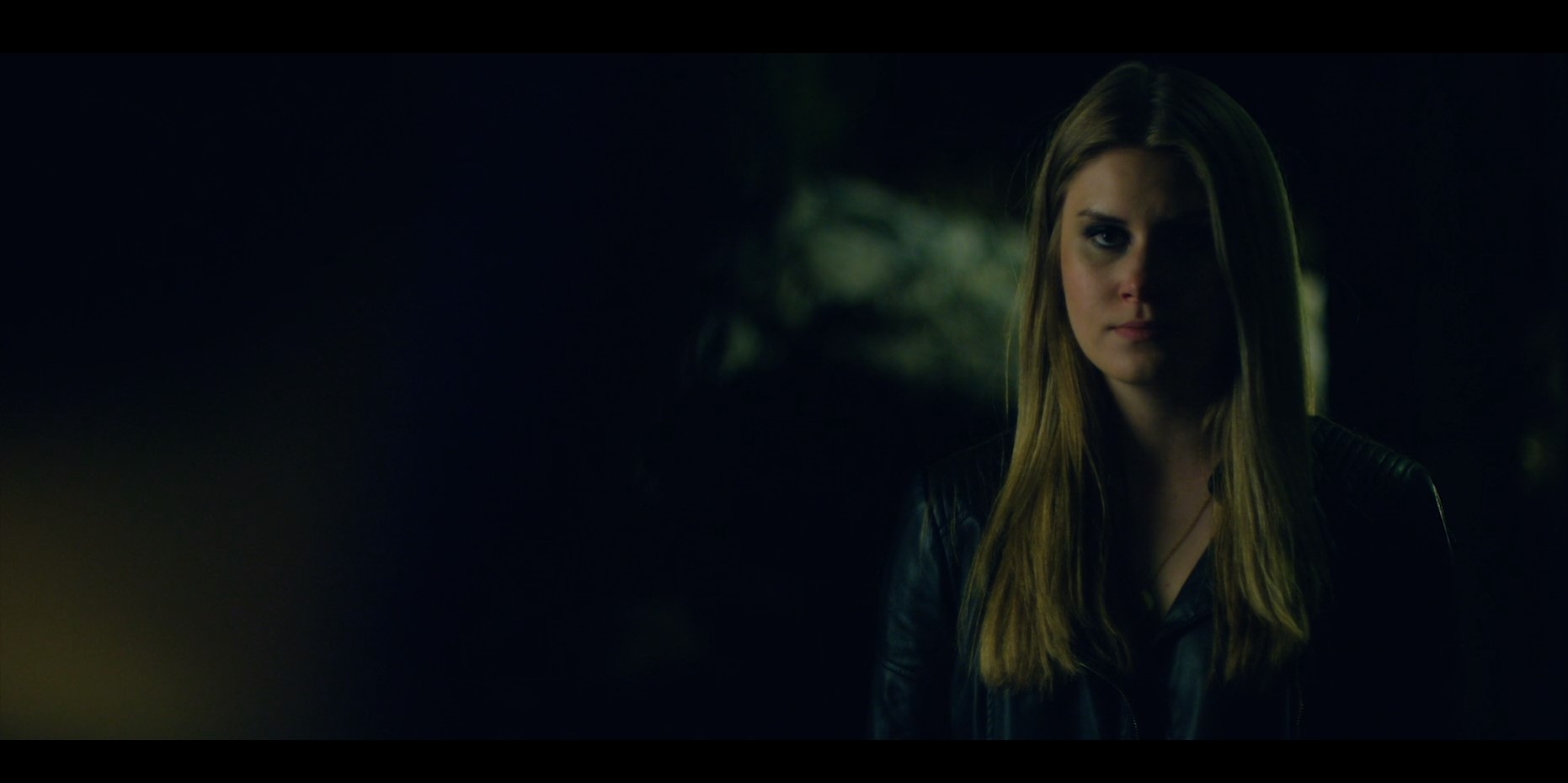
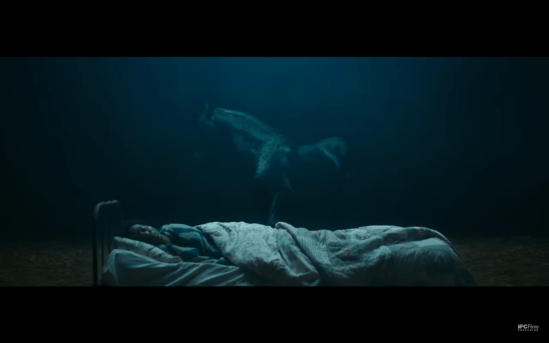
“Wired Shut” will leave you speechless with a pedestrian anticlimax after watching the DVD. Distributed by the United Kingdom’s 101 Films, the region 2, PAL encoded, 91 minute thriller is presented in an anamorphic widescreen, 2.39:1 aspect ratio on a DVD5 and thoroughly soaked in a sea of tenebrous blue tint as the first, many firsts for these filmmakers, feature length cinematography for Martin Taube. Crystalized sleek and fresh with a modern, straight-edge finish, Taube main objective centers around personal space and to detox comfort with the strain and psychopathy, using close ups and up or down angling to exact an uneasy position during strenuous moments. The continuous tinting from start to finish could have been done without as it chokes the story in nearly an unviewable consumption. The English language Dolby Digital Stereo AC3, 5.1 surround sound mix, is a LFE sound cannon with a bass-heavy rattling industrial soundtrack by Oswald Dehnert and Rayshaun Thompson. The soundtrack’s sonorous tone crackles at the format’s compression, leaving granulated pops when the volume levels peak, which is really surprising for today’s digital and format spec cautious handling. Dialogue levels render nice and clear and the sound design’s not bad either with a complex range of soundbites inside a single setting, especially when Reed pops the wires when forcing open his mouth. The DVD is bare bones with special feature and the DVD cover itself is poorly misleading with a hooded figuring, standing backlit in the woods, with a large blade in hand. There is no such slasher figure in the movie. “Wired Shut” is not a slasher. I repeat. Not a slasher. “Wired Shut” is rated 15 for strong threat (gun pointing, knife to the throat), injury detail (stabbing, slicing, and surgical fastening coming undone), and language (Yes, foul language is present). As far as home invasion films go, “Wired Shut” says nothing new about the subgenre, but offers an intriguing ingredient of incapability and the strength to push through to the other side with the if there’s a will, there’s a way mentality underneath intruder chaos.
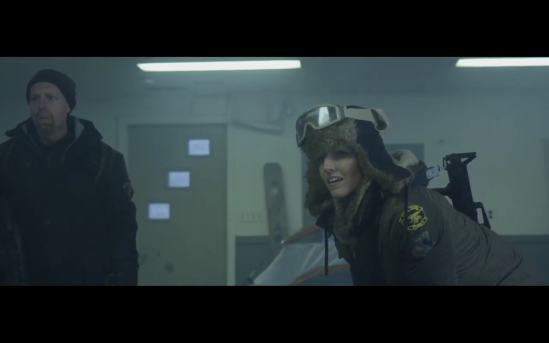
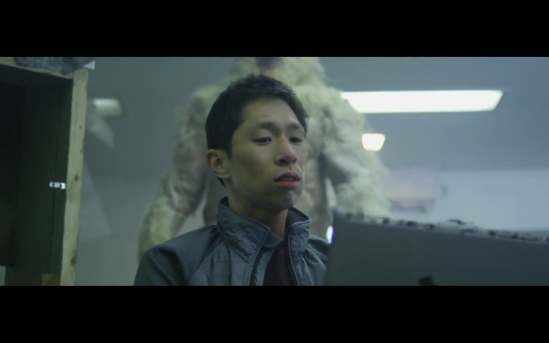
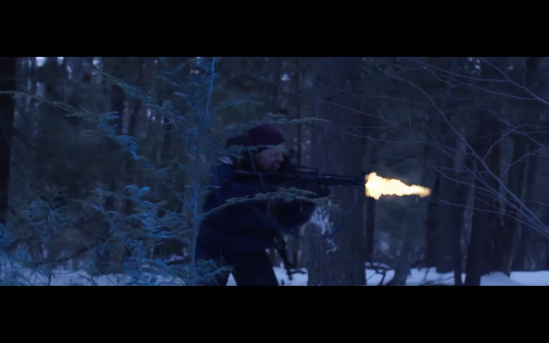
To Unearth a Lifesaving Plant, You Must Survive EVIL! “Yeti” reviewed! (High Flier Films / Digital Screener)

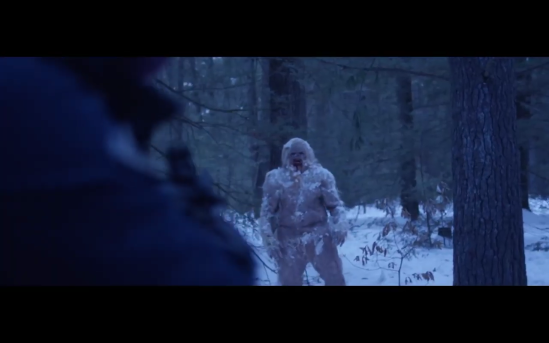
When a medical research team scouring the Himalayan mountains for a miracle plant that can cure cancerous cells disappears without a trace, a second team, armed to the teeth, venture up the harsh terrain to locate them and recover any evidence of the mythical plant dubbed the Yeti plant.  They discover the research station has been abandoned with examination equipment and notes left behind.  With a storm brewing and the topography jamming their radio signals, the only thing to do is push themselves to setup a triangulated perimeter in order to boost the radio strength and comb the mountainside for the plant before hunkering down from the storm, but little do they know that they’re being hunted by a primordial and fabled creature, the Yeti, stalking prey to protect his uncharted, stuck in time territory.

As the third film to be titled “Abominable” in the last 15 years, this particular 2020 creature feature on the ever elusive and mysterious Himalayan Yeti is helmed by the 2018 released scurrying little feet of those mischievously cursed “Elves” director Jamaal Burden might not be at the top of your search engine results, but if you search “Yeti,” you’ll see High Flier FIlms aims to detach from the previous moniker inhabitants.  Burden’s modestly budgeted, internationally shot, sophomore film returns the filmmaker right back into the mythic subhuman category with yet another timeless storybook creature living in legends slithered within the shadowy veil from a script written by J.D. Ellis (“The 13th Friday”) that’s of indie caliber with a touch of jaw-ripping, blood-sprayed snowy carnage in this post-Holiday, winter-horrorland super beast feature.  “Yeti” is the latest in a long line of horror schlock produced by Justin Price, Khu, and Deanna Grace Congo under Pikchure Zero production company and is filled in St. Petersburg, Russia. 

Confronting opposite the terrible Yeti is a cast of alien talent without so much as a recognizable genre name or face to anchor “Yeti’s” marketing success, beginning with Katrina Mattson in her debut lead performance as a young scientific assistant to the terminally ill-fated Dr. Helen whose played by Seattle born Amy Gordon.  The body of dialogue or visual communication didn’t flesh out Mattson’s assistant’s strong yearning to support Dr. Helen’s obsession in rooting out the never before seen Yeti plant other than stating she will do anything to help the Glioblastomas-doomed doctor by whatever means possible.  The disconnect in dynamic between the two supposed friends is not well established and completely melts away faster than the Himalayan snow on a Summery day when the two barely reunite after separating from the abandoned research station.  They’re each accompanied by a couple of mercenaries hired to be an armguard, for a reason why scientists needed M16 assault rifle toting ex-special forces types is beyond me, but actors Robert Berlin and Brandon Grimes serve as such, adding a tinge of military machoism that could have been amped up more against a Jason Voorhees worthy disappear and reappear act Yeti with the given inherent superhuman strength. Berlin wildly over performs at times just spouting out his lines as if reading off an instruction manual. Plus, his character is poorly developed as a money hungry Yeti hunter with an extremely naïve and arrogant personality to the point of yelling in the Yeti’s face when the Yeti is clearly not dead or incapacitated.  Victims pile up with the remaining cast becoming Yeti chow, including supporting performances from Justin Prince Moy, Magdaln Smus, Victir Ackeev, J.D. Ellis, and with Timothy Schultz passing as the scraggily titular abominable snowman.   

The reason why Burden’s “Abominable” might not be numero uno on your search engine results shouldn’t be total surprise, but even “Yeti” may not produced the same desired outcome.  Aside from not having any grade of star power attached to it, audiences will be awkwardly thrusted right into a perplexing point in the story of dropping us right into complication with a rescue team entering the abandoned Himalayan station and, from then on, a straight forward, uncompelling path of infinite chase with the ball incessantly in the Yeti’s corner trounces on any kind of hope or resistance for survival.  The man-in-a-suit Yeti and makeup effects are not too bad as an admissible effort for an indie production and what’s even more impressive is how Burden felt confident enough to actually show the creature. There have been Yeti, bigfoot, sasquatch, etc., films aplenty of that stray away from displaying much of the hairy beast, only providing glimpses of the large feet, ape-like hands, or fanged teeth to represent a presence, but for “Yeti,” the creature is proudly displayed in all it’s full glory despite being half hairless with patchy spots of snow-stuck fur. Joe Castro, an effects guru for off-the-wall horror for the past three decades with credits including “Night of the Demons III” and “Blood Feast 2: All U Can Eat”, created the Yeti suit while also dishes out some surprisingly decent gore effects that have a real palpable face mangling fetish and so bloody great. On the other hand, the visual effects and props are an abomination in themselves with obvious toy guns and lack of continuity and cause and effect visual effect givens.


Is “Yeti” another filmic miss on the missing link or can there a slither of entertaining gore with creature lucidity amid a trite script? I do think the latter in Jamal Burden’s “Abominable” from High Flier Films slated for a January 11th DVD release in the United Kingdom. Producer Khu is also the director of photography, using the steady and handheld cams to capture a heap of medium and closeup shots without seizing the opportunity to get a lay of the actual snow covered forest which the characters are heaving hot breaths in the frozen air. Khu does exude the fact of actual frigid conditions with the use of a bluish tint in every outdoor scene. “Rave Party Massacre’s” Matt Jantzen composes a tense-situated, industrial epic score that doesn’t fit “Yeti’s” marginal story structure and can be nearly rave-like and repetitive at times while overpoweringly robust. Sound design is another favorable aspect in “Abominable’s” chaos with a discernible range and depth, especially when working with crunchy snow and a lot of bulky clothing that can be heard rustling when characters move around frantically. Gore scenes are laced nicely with gooey, gushy sounds that can be tangibly slimy. There were no bonus material included with the digital screener nor where there any bonus scenes during or after the credits. The great Yeti adaptation still eludes our ever curious eyes as “Yeti” quenches a only blood thirst through an over-trekked, over-defiled snowy path of the subhuman subgenre.

When EVIL Strikes a Family Hard is When Fission Divides and Conquers. “Nuclear” reviewed! (101 Films / Digital Screener)

Emma witnesses her troubled brother violently beating their mother while dragging her through the woods.  After he leaves, Emma and her injured mother escape to the countryside, driving through the night until coming upon a village house, next to what was once a large power plant that now sits vacant, to squat for a few days.  Emma comes into an encounter with a local boy a little older than herself with a free spirit for illegal extreme sports and taking dangerous risks to new heights.  What was intended to be an isolating refuge has turned into an alluring interest for Emma who admires the boy’s nomadic lifestyle, but while her mother’s physical injuries heal, a lingering trauma begins to emerge and Emma’s violent brother is also hot on their trail seeking them out.

Lately, our reviews have been on a stretch of psychological thrillers by first time feature film directors expressing a compelling narrative in the worst of situations; we’ve tackled the unhealthy family relations while battling acute mental illness with Joe Marcantonio’s “Kindred” and have taken a step back in time into the Cold War era with isolation tension and uncontrollable violent outbursts in the “Darkness in Apartment 45,” directed by Nicole Groton.  Well, we’re going for the hat trick with Catherine Linstrum debuting her written and directed psychological drama, “Nuclear,” that deals with the fallout of an estranged, threadbare family under the looming shadow of a defunct nuclear power plant, upending a whole new meaning for the term nuclear family.  Co-written with longtime collaborator, David-John Newman. “Nuclear” is a radiating co-production funded by the British Film Institute, Fields Park Media, and Ffilm Cymru Wales, and Great Point Media with Stella Nwimo serving as producer and Paul Higgins as executive producer.

Much of the narrative hinges on Emma, “Locke & Key’s” Emilia Jones, as a 14-year daughter at the center of her brother’s terrible misdeed that sparks a flight of escape to the country and then befriends an eccentric boy who pulls her toward a more grounded frame of mind despite his extreme antics.  The boy, charmingly played by “1917’s” George MacKay, is exactly the distraction Emilia needed while sheltering in refuge. MacKay boyish good looks accentuates his character’s overweening attitude that renders a thin layer of mysteriousness about him as the boy,, and when I say boy I mean young man not much older than Emilia, lives out of his van near the power plant and does backflips on a stone bridge. With such a small cast, one would assume the boy would have interactions with Emilia’s mother or brother, but that’s not the case as the film purposefully uses evasive maneuvers intended not to mingle the boy with Emilia’s mother, played by another Resident Evil Jill Valentine actress (see review of “Darkness in Apartment 45”) Sienna Guillory, and brother Oliver Coopersmith (“It’s Alive” remake), who are weaved into different stages of Emilia’s cerebral reactions to events that unfold unexpectedly. Floating through the story, like a supernatural Japanese house wife, is Noriko Sakura who, much like most of the other characters, plays that is unidentified, but Sakura’s wraithlike presence attaches itself to Emilia’s mother as a telltale sign that something isn’t quite right with the mother’s mental state.

“Nuclear,” in regards to the term, can be interpreted and dissected on many levels within the film; two possible, and perhaps the more obvious, espies are a nuclear family (as a pun on the phrase that denotes nuclear fission) that goes through a chain reaction of dependent events after a horrible event and the other would be the blatant power plant sitting idle and empty in the background, a symbol of a ruin that once harnessed power and gave energy to all and an allegory to this young teenager Emilia’s handling of the crime committed against her one and only protector- her mother. “Nuclear” is very much a young girl coming of age film that strikes chords of self-reliance and free choice while also strumming to disconnect from her parents and family, but she must face them first in order to really let go of the past. But does Catherine Lindstrum pull all the elements together? Lindstrum’s brain-teasing drama will ultimately confuse the general masses. Hell, “Nuclear” even confuses me by not sewing the last threads to connect the stitches of hecatomb effects as the principles players somber through an inexplicit tapestry that’s not clear, present, and often feels distant. The end result does evoke a sense of a coming of age story, but how that adolescent scores through tribulation is about opaque as murky water.


“Nuclear” is a twisting cerebral topography tale comprised of seasoned actors and promising young talent from the United Kingdom being distributed courtesy 101 Films, releasing digitally November 9th. Behind the camera is French cinematographer Crystel Fournier with a harsh realism that delivers a natural, but bleak tone full of shadows and gray contrast. Fournier captures and differentiates Emma’s solitude and isolation, especially when she, inadvertently, searches for answers through the motif of faith centric crosses and messages that surround her in and out of the cottage. Stephen McKeon’s score compliments Fournier’s atmo-melancholic with beautiful synth piano and Celtic akin violin compositions. There were no bonus features included with this digital screener and there were no bonus scenes during or after the credits. Don’t expect a mushroom cloud of edge-of-your-seat drama and psychological torment, “Nuclear” is the breadth of anticipation of the Cold War, never knowing what, when, and where to expect the bomb to drop in Catherine Linstrum’s debuting quandary.

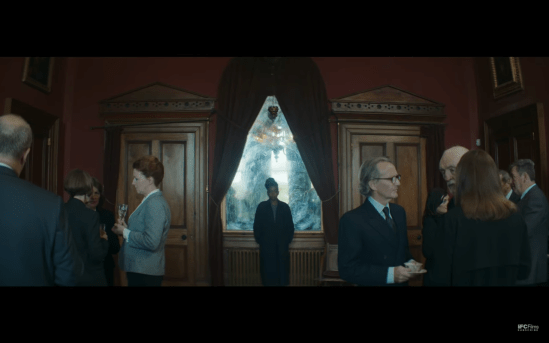
A Troubled Family’s EVIL Dynamic. “Kindred” reviewed! (IFC Midnight / Digital Screener)

When Ben and Charlotte declare a decision to move from the English countryside to Australia, Ben’s ardent mother, Margaret, refuses to let her son move away from his family and responsibility in overseeing the massive manor property that’s been in his family for generations.  Despite friction between mother and son, even after the unsuspected announcement of Charlotte with child, the young couple are eager to start their new lives abroad.  An accident causes the sudden death of Ben that takes a psychological toll on Charlotte.  Margaret, and Ben’s aim-to-please brother-in-law, abruptly move Charlotte into the grand manor home as she floats through grief, but their overwhelming generosity turns into obsession with her every move, corralling her to do what’s best for the unborn child with undue stress based off her own family’s mental history.  As Charlotte resists more against the family’s insistence she stay, the stronger their grip on her tightens. 

Sometimes, meeting your partner’s family can be uncomfortably standoffish.  In Joe Marcantonio’s psychological thriller “Kindred,” reticent of personal gain and admission of truth becomes a thick, abrasive wall of tension that crimps the fringes of family relations and mental instability.  The writer-director’s debut feature film hailing from the United Kingdom, releasing this November 6th, tampers with the control over one’s own body through the traumatized perception of a pregnant woman with predispositions on having children in the first place and on her dead boyfriend’s unusual family, coursing with unsettling mental and emotional warfare that’s already tipped in one side’s favor.  The 101 minute, English-made thriller is a co-production of Reiver Pictures and Serotonin Films in association with the makers of “Pride, Prejudice, and Zombies,” Phil Hunt and Tom Harberd of Head Gear Films and Compton and Elliot Ross of UK based Kreo Films.

The players in this tumbling mix of disturbing cat and mouse antics are more or less confined to a skewed variation of an immediate family though none of characters are exactly blood relatives.  Neither Charlotte, Margaret, or Thomas share an smidgen of the same DNA, but have become entangled, in one way or another, into Margaret’s hampering incubator that shelter’s their distinct and varied, sometimes uncooperative, personalities.  Margaret is beholden to memory to her late son, Ben, and exposing Margaret’s egotistic manipulations so wonderfully subtle and true is Fiona Shaw of the “Harry Potter” saga in a role that isn’t so dissimilar to the blunt nastiness of her Aunt Petunia character, but renders a more fierce, enshrouding malice that’s less caricature.  The Irish born Shaw and “DunKirk’s” Jack Lowdon dance a beguiling routine of mother and son as Lowdon plays Margaret’s step-son, Thomas.  Thomas tends to Margaret’s every snippy whim, being a charming and gleaming host, and an overall nice guy, but deep in the recesses of our minds we know something is just not right with Thomas’s polished veneer that soon will explode with true intentions out of dormancy.  Yet, things might not be okay with our seeming heroine either in Charlotte.  Charlotte is very weary of Margaret and Thomas who indirectly, through her eyes, hold hostage the mother-to-be from fleeing the family now that the connection is broken with Ben’s death.  In her debut principle feature film performance, Tamara Lawrance’s Charlotte scribbles outside the lines that smudges the contours of perception reality, adding a complexity component to her character that may or may not being suffering from parental depression commingled with external stress that treats Charlotte like a child in herself.  Chloe Pirrie, Anton Lesser (“Game of Thrones”), and Edward Holcroft (“Vampire Academy”) round out “Kindred’s” strong supporting cast.

Marcantonio’s “Kindred” splits the focal point of isolating tension, dividing the source into two distinct paths from the point of a view of the self-protective besieged.  In one hand, the pregnant and mentally vulnerable Charlotte experiences apprehension of being forcibly, and manipulatively, instructed by Margaret and Thomas to do what’s best for the baby…Ben’s baby.  Having never seen eye-to-eye or felt comfortable around Ben’s instable mother and peculiar brother-in-law, Charlotte has no Ben as a buffer against their coarse personas, overpowering her as a tag-team of self-interest, but most of everything Charlotte experiences is filtered by past judgements about them.  Alternatively, Margaret, Thomas, and even her boyfriend Ben, note directly to Charlotte her mother’s history with postpartum depression.  The undercurrent theory that it produces brings an under the table perception of how audiences will then try to solve Charlotte’s predicamental puzzle.  On the surface level, Charlotte is being held captive and drugged by her late boyfriend’s estranged family; obscurely, Charlotte’s terror is manifested by a loathed family lineage of mental illness and when your observations goes in one direction per the mind’s pre-wired setup, but all the evidence points to the contradiction, audiences will begin to empathize more closely to the harrowing experiences, through childlike control, of an unstable mind on the brink of a break.  Marcantionio very clearly makes things unclear of an in-between reality that challenges not only audiences, but also Charlotte, on what’s real and not real of the mind’s emphasis.  However, not everything is teed up perfectly as some of the abstract visuals, i.e. Charlotte’s dreams of ravens and horses, fall more into the rigors of psychological concepts that become lost in the affect of either pathway toward what could be considered a Schrodinger’s Cat finale as Charlotte, stuck inside a manor house that’s symbolically a box, could be both sane and insane.


Family can be a finicky thing and “Kindred” is a fastidious look at the instability of family and mental illness which can be, in filmmaker Joe Marcantonio’s eye, interchangeable.  Setting up shop before families get together for the impending holiday season, IFC Midnight will release “Kindred” in select theaters, on digital platforms, and on VOD November 6th.  In regards to the look of the film, director of photography, Carlos Catalan, hones in on a series of medium to medium-closeup shots while grasping very little toward widescreen shots, especially being shot mostly in a grand manor house in Scotland.  When Catalan has symmetrical framing, the allusion is gesturing grand with loneliness, but the cinematographer rarely has the frame centered, often creating an unnerving amount of space in the depth when juxtaposed with an uncentered character in the closeup all the while in natural light to not feign cynicism through use of color or filter. The only time filters are used are in the purple hued airy dream sequences with the raven and horses that become a metaphorical motif of Charlotte’s embattled dreams. The score is composed by a UK collaboration of multi-instrumental composers in Natalie Holt and Jack Halama. Holt’s harsh violin chords with Halama’s drama-fueling classical style produced hints of Mark Korven’s “The Witch” in similar tones, but explode with targeted dissensions that spur equally emotional dissensions amongst the characters. There were no bonus features included with the digital screener nor were there any bonus scenes during or after the credits. “Kindred” is relationally disjointing, disturbingly psychological, and textbook taut with tension as one of the best familiar thrillers to come out of the United Kingdom in the last quarter of the year.

A Child’s Toy Masks a Hidden EVIL! “Kaleidoscope” reviewed!


Just released from prison after 15 years and living alone in a high capacity apartment building, Carl is anxious to finally go onto a date after a long time of solitude. Mild-mannered and quiet, he manages to strike up a date with an uncultivated young woman named Abby who takes a strange, if not alluring, interest in Carl’s humble lifestyle, but when his estranged mother, Aileen, arrives back into his life, Carl’s seemingly perfect date comes crashing down into millions of pieces and old feelings of hate and urges for substance return to a warping fold. The lust and youthfulness he feels for Abby is replaced with fear and anger as reality bends on the verge of breaking as the past and present collide to an unfathomable finale.

The first thought that pops up about director Rupert Jones’ 2016 film, “Kaleidoscope,” is to instantly relate this film to the Dutch sex wave film, Wim Verstappen’s “Blue Movie,” because of a major structural similarity that’s important to both films, is essentially an inanimate character, and is a looming presence despite the “Blue Movie” being an erotic film and “Kaleidoscope” a suspenseful psychological thriller. Both movies feature a monolithic motel-esque apartment building complex in which both house the feature character, a former inmate, and the complex becomes part of the story where as Michael in “Blue Movie” runs his pornographic business and Carl interacts with the building as an obstacle to hurdle or a contributing factor to his problem. “Kaleidoscope” marks Rupert Jones’ sophomore feature directorial and his debut as the credited writer that lightly placed notes of hinting at a Roman Polanski picture.

Toby Jones is sorely an underrated actor. The versatile supporting English actor has been underused since non-fictional performance of Truman Capote in “Infamous” that was crudely undermined by the late Seymour Hoffman’s titular role in “Capote” of nearly the same year more than a decade ago. However, Jones maintains a presence both in Hollywood and the indie circuit with the latter honing in on a film about a man with severe mother issues and Jones nails a browbeaten and tortured soul performance perfectly. The mother issues come courtesy of “Hot Fuzz’s” Anne Reid as a intrusive and sickly, yet superior matriarch to Carl’s whimpering passiveness. Reid’s somehow manages to pull off being manipulative and sweet in one single persona and bespoke the relationship between mother and son with the mixing water and oil. In the middle of Carl and his mother’s love-hate dynamic is a third person of an unequivocally different persona, making a trifecta of clashing personalties. Abby, played by Sinead Matthews (“A Serial Killer’s Guide to Life”), brings a little jovial pleasantry to a dark cerebral tale. Rounding out the cast is Karl Johnson, Joseph Kloska, and Cecilia Noble.

So how does a child’s toy factor into Carl’s descent into madness? The cylinder device creates optical illusions, usually in a colorful spectrum and mirroring pattern that refract when spun in a circular motion and looking at a light source to illuminate the effect. The experience is fantastical and Carl, browbeaten by not only the criminal system, but also by his family, uses it as a means of escape, an allegorical path of avoiding darkness in his life and a way to advert the melancholy that is his existence. Even his date with Abby is a gloomily skewed as she has ulterior motives to further push Carl to a metaphorical breaking point. Yet, he’s at peace with his assumed childhood toy in the handful of scenes he’s using it which recalls the image of his father; a joyful moment that’s ironically the sore point of most of his tribulations. The Kaleidoscope could also symbolize seamless duality as Carl has difficult establishing what’s real and grasping the hardline of time. Rupert Jones subverts linear and conventional storytelling magnificently to not only put Carl in a twisted world, but also throwing the viewer into chaos along with him.

Sparky Pictures and IFC Midnight presents Rupert Jones’ psychological asphyxiation thriller and Stigma Films production of “Kaleidoscope” onto UK region 2, PAL DVD home video. The DVD image is presented in a widescreen, 1.78:1 aspect ratio, on a DVD9 and the digital quality, like always, is a unfathomable well of picturesque with crisply defined shades of black combined with some variant lighting techniques to tell Carl’s current mood. “Kaleidoscope” touches more on the natural skin and coloring, but does use some dry yellow tinting and some visual effects to embark on the once penitentiary patron’s mental break journey. The English language Dolby Digital 5.1 surround sound audio mix has multi-channel sensitivity utilizing all channels to jar the senses even more and to, seemingly, weaponize Mike Prestwood Smith’s chaotic score to take the state even further. Dialogue has supremacy and clarity. Bonus features includes a standard array of extras in the cast and crew commentary, trailer, photo gallery, and storyboards. “Kaleidoscope,” like in the toy’s changing patterns, shatters hope only to rejoin it back together to then shatters it again in Rupert Jones’ heated and confrontational tale of mirthless character and taxing parental abuse affecting one soul’s chances of normalcy and redemption into society even in the face of societal kickbacks.