The EVILs of Drugs, Addiction, and Art in “Bliss” reviewed!


Dezzy Donahue, a struggling Los Angeles artist, lives life ferociously with hard drugs and heavy drinking despite the cautionary advice of her quasi-boyfriend, Clive. Her current masterpiece falls behind on schedule and she hits a formidable creative block that results in being fired by her managing agent and with cash quickly dwindling, Dezzy’s losing the battle for inspiration that turns to an increasing narcotic intake surging through her system where any and all substances are fair game to explore. When she snorts a line of Diablo, a blissful, out of body experience drug, she finds herself in a rapturous three way with friend Courtney and her on-off side piece Ronnie that leave her with a post-high, post-sex altering inner body inexperience of opening the flood gates on her creativity to draw again as well as pang her with an insatiable need for a fix when no longer riding the high. Soon, Dezzy discovers the Diablo might not have been the drug that lit the fire inside her when a strong craving for blood becomes an inescapable addiction and a means to finally finish her greatest triumph work of art.

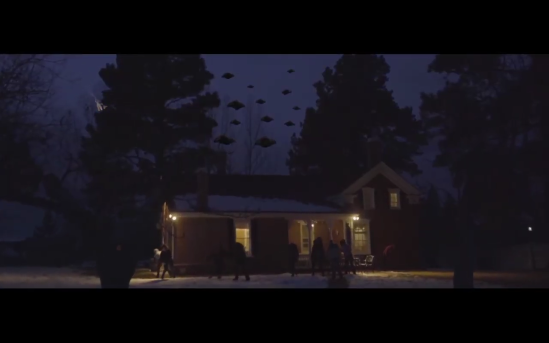
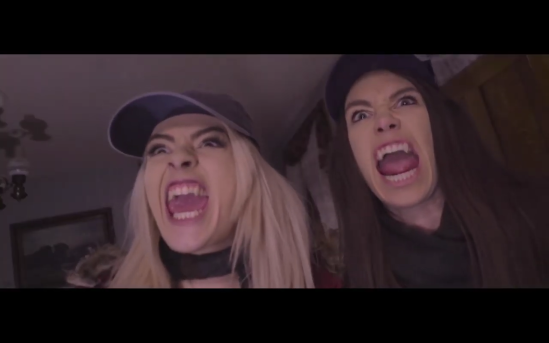
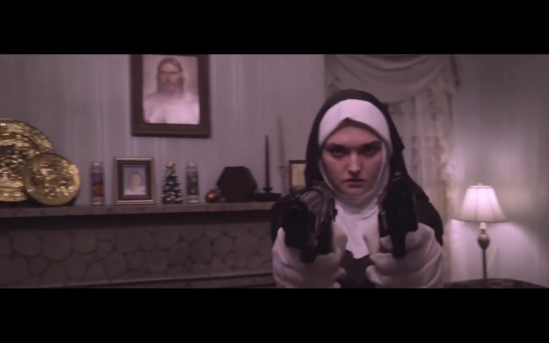
An audio/visual besieging rabbit hole shiplapped with braided beleaguering addiction and vampiric pathology in the stimulating aggressive, Joe Begos written and directed visceral horror, “Bliss,” set in the sordid Los Angeles metal scene. The “Almost Human” and “The Mind’s Eye” filmmaker hypnotizes on a stroboscope wave with his latest take on the vampire mythos with a drug-fueled, warmongering hell on a canvas tale of sex, drugs, and diabolical fiend cravings. Produced by Channel 83 Film, as are all of Bego’s works, “Bliss” is the director’s next notch up on the crazy, unrestrained belt that’s already garnished and weaponized with razor wire and three-inch cone spikes and while the story itself isn’t fashioned for originality, the way Joe Bego’s exfoliates the overripe garbage of rehashed formulaic filmmaking from the excessively strained eyeballs, sheepish with mawkish and dull stories, will be a new design to treasure as cult status.

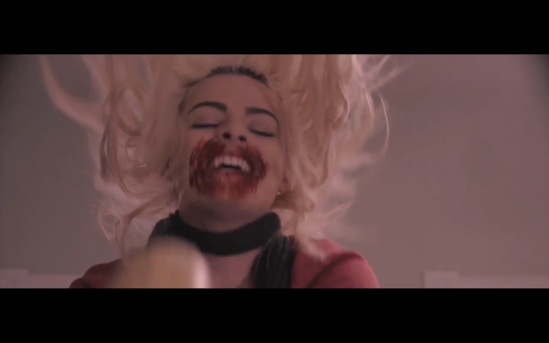
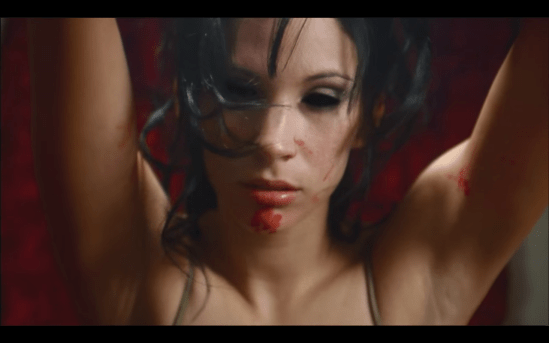
Where’s “Bliss’s” 2019 nomination for best actress in a lead role!? Dora Madison seizes the performance of Dezzy Donahue by storm inside a role of careless abandonment that coils into viperous mode and lashes out with a deadly strike of unconventional fangs. Madison embraces the exotic Joe Begos route covered in blood, paranoia, and a sleazy shade of florescent neon and runs a willingness to express his mesmerizing vision with body cam harnesses. “Bliss” quickly establishes a hard-hitting tenor and Madison, whose credits include “The Loft,” “Night of the Babysitter,” and in the next upcoming Begos release, “VFW,” exacts a fortified layer of extreme sovereign, a do-what-I-want policy with a zero complaint department attitude, while stowing away what little hope and compassion Dezzy has in the forgotten corners of her plainspoken mind until the moment is too late to turn back. The story solely follows Dezzy’s perception of events as she encounters and reencounters characters before and after needing a junkie’s fix, an exaggerated play on an abusers volatile relationships. The cast affixed to roles of Dezzy’s vexing fix are Tru Collins, Rhys Wakefield (“The Purge”), Jeremy Gardner (“The Mind’s Eye”), Graham Skipper (“Carnage Park”), Chris McKenna (“King of the Ants”), Rachel Avery, Abraham Benrubi (“Wristcutters: A Love Story”), and that lovable “Cheers” regular, George Wendt.

At this point in the review, an overabundance of praise for Joe Begos’ “Bliss” has been logged by this reviewer, who is obviously a fan of the film, but more can be unquestionably explored. From previous reviews and comments I’ve come across regarding “Bliss,” a minority have displayed a disdain for the indistinct theme of drug withdraws and vampirism that resembles Abel Ferrera’s 1995 film “The Addiction,” but instead of being set in shadowy alleys of New York’s urban jungle, Bego’s relocates to the wayward esse of L.A. life. Perhaps Begos was inspired by Ferrera’s undiluted struggle and violence that makes “Bliss” a clone to “The Addiction’s” chief thread, but the film’s are artistically polar opposites. “The Addiction’s” black and white photography and slow-burn air tunes more into the story of the Shakespearian tragedy variety, especially when Christopher Walken provides lengthy life stance and coping monologues to establish his eternal dominance over Lili Taylor. “Bliss” proclaims a stimulus trip from the very beginning with a favorable thrashing metal soundtrack and an psychedelic filmic presence that comes with an opening epileptic warning. Both films compliment the figurative comparison for a fix in their own poetic ways and would make a fantastic double feature release or double bill midnight movie.

If this writeup has a jonesing affect, “Bliss” is cut and lined ready for blipping on an Umbrella Entertainment DVD home video presented by Dark Sky Films. The Channel 83 Films production is presented in a widescreen, 2.35:1 aspect ratio, being shot with a ARRI/ZEISS Super Speed Lenses, as credited on IMDB, that would explain the sharp image and stark contrasts on the colors. The visual perception of the seemingly humming-on-your-eyeballs neon lighting barely lets you experience the film in natural lightening during night scenes and only in the daytime that resembles the little normalcy left of Dezzy’s life, fade away with natural light the more she succumbs to blood cravings. “Bliss” feels and acts out like a 90’s film, slightly grainy for grindhouse seduction by way of shooting of actual film stock (35mm!), and forgoes the bubbly shine of perfection, coinciding damningly with Dezzy’s inner circle of sleaze, grime, and gore. The English language Dolby Digital 5.1 surround sound has a lot of kick and energy with a prevailing metal and punk/post-punk soundtrack feature Doomriders, Deth Crux, and Electric Wizard just to name drop a few. Dialogue is clean with an appropriate depth in the midsts of hard partying and live bands. Range is a little harder to discern since the soundtrack really is overpowering and dialogue sops up the remaining amount of audio track space, but when opted, the ripping of flesh and breaking of bones doesn’t disappoint. No subtitles are offered. Like many of Umbrella Entertainment’s standard releases, the single sided, singer layer DVD has no static menu or special features to offer other than the 80 minute runtime feature. “Bliss” is one coked-out, blood hungry hell of a vampire tangent from the norm that rectifies the optic and audible sanctuary for shock brilliancy to flesh out the Machiavellian in all of us.

[https://www.youtube.com/watch?v=5KdXU-n7qSg]

You want it, You need it, You desire it! Own “Bliss” today!

Tell, Don’t Ask, Evil to Go Away! “The Addiction” review!


NYU Philosophy doctoral hopeful, Kathleen Conklin, has a run-in with a woman on the night streets of New York City, attacking her into a secluded dark enclave, and biting her on the neck after Kathleen is unable to comply with the woman’s bizarre instructions of ordering her to go away. The incident instills fear into Kathleen that quickly turns to a painful vampirism transformation that involves aversion to sunlight, self-antipathy, and a craving for blood. She continues to her studies that evolve into a deeper analytical parallelism of her newly acquired immortality, the results of it, and the human aspect that’s affected by it while along the way, feeding and turning friends, colleagues, and strangers into her brood of own image. Kathleen happens upon Peina, a vampire like herself, that has claimed to conquer his own addiction to blood and can even mirror himself as human, such as eating normal food and jogging. The agonizing withdrawal with Peina drops a slither of a notion into Kathleen that her gargantuan thirst for blood will overdose her soul to pure evil and she has to come to terms with her immortal being on the life she wants to live.

Abel Ferrara’s “The Addiction” has such anti-Hollywood tenacity that the black and white aurora of the 1995 noir vampire film goes against the more conventional grain that is Ferrara’s body of work, but still maintains a healthy amount of the director’s trademarks and his dispositional motifs to give the feature enough claim to clearly become his imprint of a screw you onto the big money motion pictures. The “Driller Killer” and “Bad Lieutenant” director orchestrates a film from without the complications of a union, with producers breathing down his neck to do this or that, and on such a minuscule budget; the vampires here are not transforming in bats, their eyes do not glow in the dark, and they even don’t have jugular piercing canines. Nicholas St. John’s script was written to portray monsters as just people with a severe addiction this particular drug of choice – the blood. The symbolism is so potent that’s hardly symbolism as the main character literally injects a syringe full of blood into the crook of her arm to get a fix.

Ravished without hesitation, Lili Taylor seizes Kathleen Conklin as if Taylor herself was addicted to the character, overtaking the character to an enlightened savagery of an academic disciple on the cusp of achieving stress-inducing doctoral status. Through the studious muck and death of mankind’s prior carnage, the “The Haunting” star goes for the full throttle transformation in the blink of a bite and never blatantly displays the hesitation of her former mortal self until the tide turns to whether stay blood thirsty or to live with the embattlement of struggling addiction. Kathleen crosses paths with Peina whose been undertaken by a classic Walken, Christopher Walken that is, and the New York City born “Communion” star had a big year in horror as “The Prophecy” was released the same year – 1995. Though Peina is crucial to Kathleen’s ultimate survival, the character has little screen time and Walken nails the performance with credence and gusto as some sort of subversive mentor to the young vampire protégé. The cast rounds out with Edie Falco, Paul Calderon (“Fear the Walking Dead”), Fredro Starr, and “The Hand That Rocks the Cradle’s” Annabella Sciorra as Casanova, the female nightstalker who takes a bite out of Kathleen and initiates the carnage.

Ferrara’s choice for black and white isn’t all surprising. At the time, numerous notable directors were doing the very exact concept in the 1990s, examples being Steven Speilberg’s award winning “Schindler’s List” in 1993 and Tim Burton’s dark comedy biopic “Ed Wood” with Johnny Depp in 1994, but Ferrara had a conceptually aesthetic noir appearance that created distance between the rest and established a solid black and white film that renders being akin to, perhaps, George Romero’s “Night of the Living Dead.” Not only did Ferrara’s film fit in the scheme of the 90’s fad, but extended “The Addiction’s” disturbing dramatic value and horror sensationalism in which color would have for sure diluted the story due in part to the pocket change budget. Taylor, Walken, and Sciorra very much believed in the project and that belief brought their characters to the formidable forefront to where a color picture didn’t really matter in the end.

Arrow Films presents “The Addiction” onto Blu-ray home video and is distributed by MVD Visual. The Blu-ray has been newly restored 4K scan of the original camera negative and approved by director Abel Ferrara and director of photography Ken Kelsch. The high definition 1080p widescreen, 1.85:1, picture has a clean palate and despite the lack of the color palette, the black and white has virtually little-to-no blotching or DNR, leaving a flawless image. The English 5.1 DTE-HD MA and 2.0 LPCM soundtracks, with optional English subtitles, is well-balanced, at least in the 5.1 DTE-HD Master Audio. Dialogue in the forefront with a brooding and jarring score by composer Joe Delia has great distinction and range, but there’s a curious lack of ambiance that focuses more on direct action of characters. NYC should be booming with surrounding noise; yet the direction Ferrara takes with reduced ambiance is risky, but exquisitely done to add a more personal touch to Kathleen Conklin’s struggle. Bonus material includes an audio commentary by Abel Ferrara, moderated by critic and biographer Brad Stevens. There also includes a new documentary, entitled Talking with the Vampires, directed by Abel Ferrara that features new interviews with composer Joe Delia, Ken Kelsch, Christopher Walken, Lili Taylor, and Ferrara himself. A new interview with Abel Ferrera going into the background of the film’s construction and the era of filmmaking, a new appreciation by Brad Stevens, an achival piece from the time of production, original trailer, and a reversible sleeve featuring original and newly commissioned artwork by Peter Strain. A supremely inclusive Blu-ray release by Arrow Films and MVD Visual of Abel Ferrara’s grittiest work of his gritty catalogue and the very spartan vampire film has an outlook of what future vampire films should aspire to with great beneficial expectations.

Buy “The Addiction” today!

Mad Doctors, Evil Bloodsuckers, and Vengeance in “Lust of the Vampire Girls” review!


After painstakingly trying to argue to her boyfriend that he never hangs out with her drug abusive friends, the woman withdraws to her friends’ exclusive sanctum without telling him. Before he realizes what’s really at stake, the boyfriend learns that her friends are potential Devil worshippers that aim to practice human sacrifices, but little does he know that his girlfriend is beyond the dangers of a Devil cultist as she had unwittingly placed herself in the experimental hands of a mad Nazi doctor named Gunter and his serum produced harem of female vampires and loyal male acolytes. As the boyfriend attempts to infiltrate the cult incognito, he’s overwhelmed by the flesh-piercing, bikini-wearing beauties, but the eldest vampire, whose bored after years of being with Gunter and wants to find true love, spares the man’s life and instantly imprints herself onto him. She shows him that his girlfriend is no longer mortal and promises to be with him forever, but before he can commit, he first must destroy Gunter and his work before the evil scientist distributes a new serum that’ll be able to transform women and men into the upgraded superior race of blood-thirsty vampires.

There have been moments where horror enthusiastic filmmakers have embarked creatively on re-creating cult favorites or re-inventing that of the European, over-sexualized female vampire, Victor Matellano’s remake of Jose Ramon Larraz’s for instance, and most have come out on top with inspirationally faithful stories or portray the particular type of promiscuous vampire. Writer-director Matt Johnson takes a wooden stake stab at the complexities of the homage with “Lust of the Vampire Girls,” his feature film debut, and with a budget that’s resting on a minimalistic mishmash pot of a self and crowd-funded platter, the director runs with his sparsely written script with a vast amount of bodies able to fill a plethora of roles. Instead of mystical, fantastical, or ancient damned souls feeding on the hapless male sex, the “LofVG” story surrounds a Nazi madman injecting his serum into women over the years (No, that’s not an euphemism) which is Johnson’s modern day spin to the genre.

Nameless characters, aside from Gunter, shape the lineup of vampires and humans, starting with Victor Medina as the boyfriend. Medina’s performance further darkens the character whose an utter jerk lacking chivalry and a moral compass, but the actor is able to fulfill the boyfriend’s character arc as he tracks down, and express a figment of empathy toward, his estranged pretty girlfriend played by “Friend Request’s” Amy Savannah. The two battle against each other with petty ventures of, sometimes typically, relationship woes and Medina and Savannah reflect that rather well until coming entangled with Dave Nilson’s Gunter. Certainly fitting the part and wielding a passable German accent, Nilson comes off as power, arrogant, and invincible. In short, perhaps the most convincing performance in the entire film. Leading Gunter’s harem den of vampire girls is a the doctor’s oldest, yet ageless, subject, donned to the lovely Ashley Eliza Parker, whose eagerness falls just beyond the fumes of desperation. Rounding out the cast are Jeff Christiensen, Cherish Dawn, Mary Etuk, Jami Kelly, Flo Median, and Bri Northem.

“Lust of the Vampire Girls” might be billed as a homage to the 1960’s and 1978’s European exploitation, but as the film seeps into a quasi-level surrealistic state garnished with sexy female lasses in undergarments, very much reminiscent of the genre claimed to respect, the allure finitely founders and tilts more toward below a meager attempt that results in wince-worthy acting and female vampires perpetually hissing through their teeth. In the sequence of events, the beginning offers a small non-linear storyline that’s sorely misplaced starting with the pretty girl being lost only to be found by a vampire loyalist, then the boyfriend, surrounded by variously masked cladded acolytes, becomes a sleeper agent in Gunter’s psychosexual church of horrors, but then the couple are having an embattled conversation at a coffee house, and then, before we know it, we’re back at the church again – with, again, the perpetual hissing, underwear garnished, vampires in silky, see-thru robes. Overly sexualized female vampires are a very Eurotrash and the hazy environment is very reminisce of the LSD era, which Matt Johnson pulls off both fairly well, but the greats, like Jean Rollin or Jesus Franco, made them more captivating than just being mindless, eye-candy monsters with a very bad lisps.

Wild Eye Releasing and MVDVisual release Matt Johnson’s “Lust of the Vampire Girls” onto DVD home video. Image quality varies in a numerous shades of tint, but for the majority, there’s a soft glow to the entire stock and macroblocking during night scenes. The stereo track has an unbalance wit about it that’s unsavory in it’s lossy quality during the genre uncharacteristically progressive metal soundtrack and offers a cacophony during scenes of anger and scuffle. Bonus material includes “LotVG” trailer and storyboards. On the surface, Matt Johnson skimmed the exploitation genre the filmmaker was shooting for and whether intentional or not, the quality waivers from script to performance and then there are aspects that just don’t make since (like vampires wearing gas mask..?), but it’s an atmospheric A-to-Z low-budget horror film and nothing more.

Own “Lust of the Vampire Girls!”

Bathor’s Battle of Evil Melodramatic Vampires! “Blood of the Tribades” review!


Bathor, the great vampire conqueror and provider of peace, had established a serene vampire village, driving out disorderly vampires from impeding conventions and rules. After two millennia, civil unrest has stricken the village. A plague has struck the male population, leaving nasty sores that disfigure their faces. With a religious and superstitious, power hungry megalomanic named Grando exploiting the plague and the name of Bathor, an uprising cult of desperate men seek to destroy all Bathor’s female vampires thought to be the cause of the mens’ ill misfortune. Lovers Élisabeth and Fantine survive brutal attack after brutal attack with the aid of banished vampires and the hunted vampires attempt a last chance endeavor to quickly preserve their once lost belief system instilled by the great one, Bathor, and rid the lands of Grando once and for all!

“Blood of the Tribades” is the 2016 homage powered, melodramatic social commentary vampire film from co-directors and co-writers Sophia Cacciola and Michael J. Epstein. As much as a micro-budget film as “Blood of the Tribades” is on paper, certain important attributes surface through the money constraints and convey a larger footprint such as elaborately classic locations in Massachusetts, Rhode Island, and New York that bring out the beauty in penny-pinching productions. Another notable quality from “Blood of the Tribades” is the large cast that exemplifies the scale of the story by tenfold and with an abundance of roles, there will follow a plentiful of deaths in a vampire film. Truth be told, Cacciola and Epstein’s film doesn’t have one single human in the bunch. That’s right, “Blood of the Tribades” is 100% vampire casted. Which, come to think of it, do vampires drink their own kind? In this film, the answer is yes and, as well as, staking their own kind.

Associate producer Chloé Cunha stars alongside another associate producer, Mary Widow, as the lesbian vampire couple Élisabeth and Fantine who seek to thwart Grando’s unwitting and cultish coup d’état. The characters represent two different, and well crafted, styles of vampiric women that are the dream-like, wanderer, such examples are pulled from films by Jean Rollin (“Fascination”) or Jesus Franco (“Female Vampire”), as well as the hard-nose, dark seductress from Hammer films that channel some great actresses such as Ingrid Pitt or Barbara Shelley. Cunha and Widow perfectly capture the essence of the distinctive styles more so than I could have ever thought possible. Élisabeth and Fantine are pitted against one of the more over-the-top performances of a villain I’ve seen in a while. Grando’s presence amounts to every inch of the screen from a very talented Seth Chatfield, who not only becomes a clear cut antagonist but does so with infectious enthusiasm. Topping of the main characters comes Bathor, who only receives a handful of screen time minutes. Tymisha Harris meshed well with the outlined characters, being equally extravagant in her own manner, and delivering the power Bathor must bestow upon her children. Kristofer Jenson, Zach Pidgeon, Stabatha La Thrills, Sindy Katrotic, Simone de Boudoir, and Dale Stones, plus many, many more, round out the cast.

Actually, “Blood of the Tribades” is a feminist movie that just happens to have vampires. Male oppression to keep the women from being themselves, from being outspoken, and from being open with their sexuality is clearly combated through the social commentary symbolism. Plus, touches on the suppression of sexuality and the outward projection of a society forbidden love, but however exposed the feminist versus complacency and closeted angst message might be, the script’s dialogue, despite the film’s 78 minute runtime, is extremely long winded with an unapologetic amount of exposition to explain the messages in various scenes where dialogue is not needed; one of the early scenes, with a man peeping outside the window of a very naked woman bathing before shooting an arrow through her bloodsucking heart, had the right message with that actioned a tone conversing the unspoken subplot of men against women. There’s also no telling which time period, or even universe, the story is set with various era styled garments from conservative nightwear, to bright red band-leader tops, to skin-tight, scantily night club outfits. The latter felt really out of place with Sindy Katrotic’s fighting wear.

Production company and distributor, Launch Over, presents “Blood of the Tribades” on high definition Blu-ray and is available for pre-order before the April 30th release date! Image quality of the 1080p picture, despite the number of filters used, still manages to pull off balanced and vivid hues of the forest and castle rooks, skin tones look too good for the plague makeup’s own well being, and thick black tones highlight the right amount of mise-en-scene without much aliasing or compression issues. Bonus features include a theatrical trailer and an in-depth behind-the-scenes with interviews from the directors, cast, and crew. Chock full of nudity and delivering a high body count, “Blood the Tribades” is an adoring, beautiful, and slightly satirical homage to the multifaceted 1970s female vampire by way of dogma masculinity and righteous fanaticism that isn’t far skewed in reality’s present day!

March 2017 Cult Epics Gets “Mondo Weirdo” and “Vampiros Sexos” on Blu-ray/DVD!

MONDO WEIRDO / VAMPIROS SEXOS Premieres on BLU-RAY/DVD March 14, 2017

Los Angeles, CA (March 6, 2017.) Cult Epics presents Carl Andersen’s films, the European answer to the Cinema of Transgression of Richard Kern and Nick Zedd, except more extreme, eccentric, surreal and erotic.

“The Hard-core version of Eraserhead” –Jan Doense (Weekend of Terror)
MONDO WEIRDO: A TRIP TO PARANOIA PARADISE aka JUNGFRAU IM ABGRUND wallows in smut, sleaze, gore, splatter, and dark comedy and is set in an underground world where both vampires and punk rockers engage in hardcore sex to the highly addictive and hypnotic electro music of Model D’oo. Dedicated to Jean Luc-Godard and Jess Franco featuring his daughter Jessica Franco-Manera. Shot on 16mm stock, presented in a new High-definition transfer on Blu-ray.

“Vampire Porno”
VAMPIROS SEXOS aka I WAS A TEENAGE ZABBADOING… is Carl Andersen’s debut film and is one of the weirdest movies ever, and it will certainly shock your mind. VAMPIROS SEXOS is the ultimate European underground punk rock sex vampire film. Stylish and trashy at the same time in the best sort of way, the film also features an endlessly entrancing no-wave score by Model D’oo. Cult Epics presents the rare only existing Uncut SD version on DVD together with: WHAT’S SO DIRTY ABOUT IT? Bonus short film. Cut-up trance noise nihilistic short film, reminiscent of the work of Throbbing Gristle and Kenneth Anger. SD

3 Disc Limited (numbered) Edition of 2000 copies includes Exclusive CD soundtrack by Model D’oo.

MONDO WEIRDO/VAMPIROS SEXOS Blu-ray/DVD/CD Combo
Price: $39.95
Street Date: March, 2016
Production Year: 1988/1990/1990
Film run time: Approx. 68/57/9
Language: English & German language with English subtitles
Aspect Ratio: 1.33:1
Audio: Dolby Digital 2.0 Stereo
Label: Cult Epics
Distributor: CAV
Blu-ray/DVD/CD Cat.no. CE-149
BD UPC: 881190014998
Rating: Not Rated

SPECIAL FEATURES
New High-definition Transfer (from original 16mm print)
Introduction by Erwin Leder (star of Angst)
The Making of Mondo Weirdo (2016)
The Making of I was a Teenage Zabbadoing aka Vampiros Sexos (2016)
Bonus film: What’s So Dirty About It? (1990)