Furry EVIL Bogies Go for the Flag! “Caddy Hack” reviewed! (Wild Eye Releasing / Blu-ray)

Special Edition Hole-in-One “Caddy Hack” On Blu-ray!

At the Old Glory Holes Golf Course, owner Wells Landon runs a tight ship under his garish wig before the weekend’s big money member’s tournament.  Hambone, Landon’s dimwitted and loyal groundskeeper, maintains the greens aesthetic tiptop shape with the help of his home brewed fertilizer, but the enriching fertilizer does more than just keep weeds from sprouting and keep the grass greener than Gumby, it also mutates the terrain terrorizing Gopher population into glowing-eyed, hairbrained killing machines offing the snobbish members, the party-hard caddies, and the course’s pretentious upper management in gruesome detail on all 18 holes.  Book nerd and greenhorn caddy Googie and his newly appointed and strict caddy manager Becky rally the caddy troops against a horde of impish, bloodthirsty rodents hellbent on shanking the golf course with more than just lumpy greens and unsightly mounds.  An all-out war between man and mammal tees off toward a fairway of carnage! 

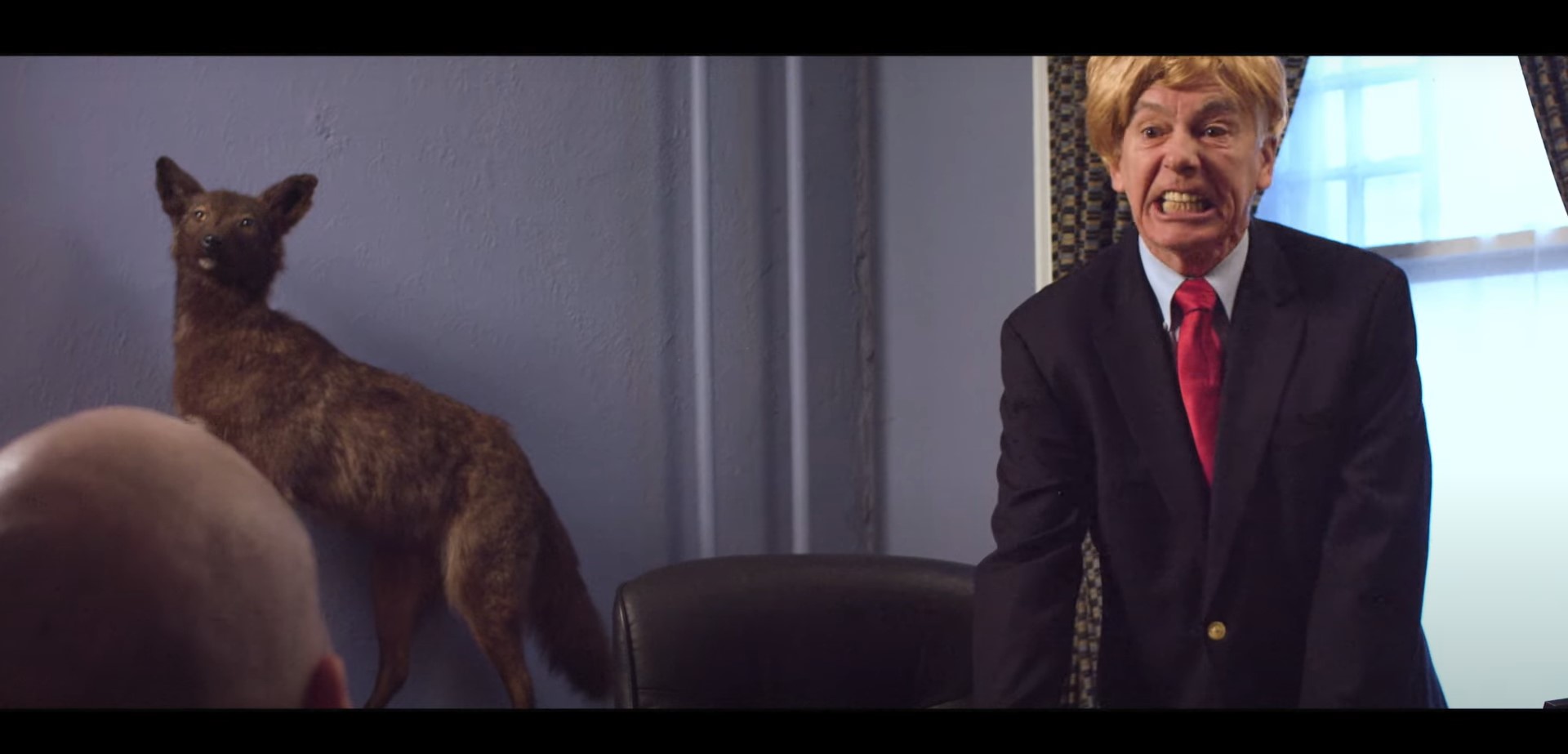
A comedy-horror satire based off the satirical sports-comedy “Caddyshack,” Anthony Catanese’s written-and-directed “Caddy Hack” (see what he did there?) continues the feud that started with Bill Murray’s groundskeeper character, Carl Spackler but instead of one pesky Gopher wreaking havoc, a multitude of furry, landscaping vandalizers rise from their subterranean burrows to take the offense battle against man.  The “Sadomanic,” “Hi-Death,” and music video director, of such bands as Doc Rotten and UgLi, helms the 2023 with great flair for the farcical and satire that not only madcap of mayhem but also rib-jabs an arrogant elitist wearing a bad hairpiece and expresses the building of a wall and having the gophers pay for it, if they could.  We all know that person and he shall not be named here for the sake of this review’s integrity.  “Caddy Hack” is filmed in Morrisville, PA and part of New Jersey (we get some really good Jersian accents here) and is produced by Catanese, Sara Casey, Jim Gordon, Joseph Kuzemka, and Scott Miller under Gordon’s Content Trenton and Catanese’s D.I.Why? Films along with Wild Eye Releasing’s Rob Hauschild as executive producer.

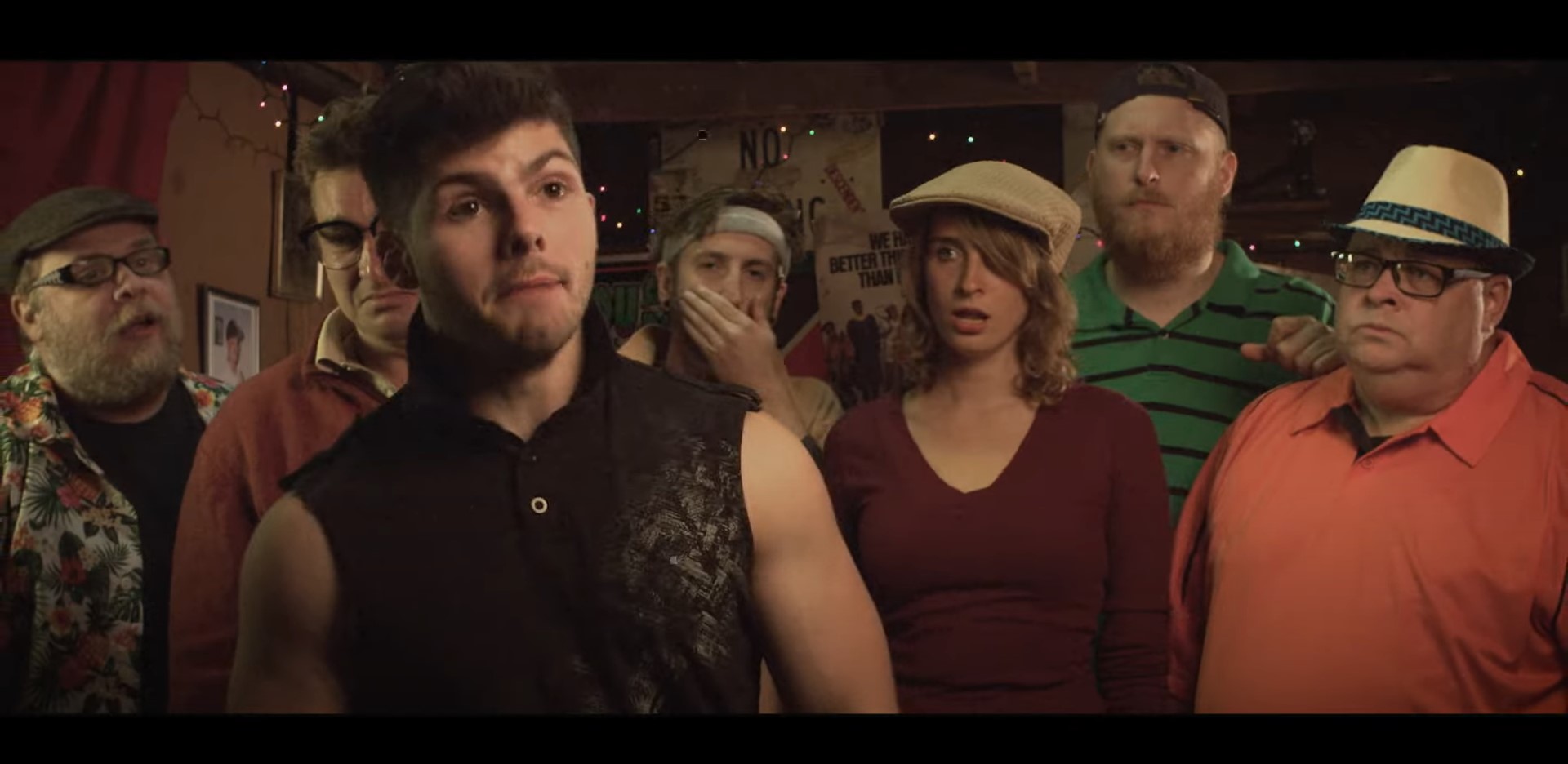
Not only is “Caddy Hack” a ridiculous horror-comedy of binging buffoonery, its also a story about unlikely romance between near middle-aged caddy of golf nerditude and a browbeating, yet ravishing, woman eager to be taken seriously no matter her qualifications.  Jake Foy and Chrissy Cavallo respectively play the likeable oil and water who commingle unexpectedly when Cavallo’s rigidity as the unqualified caddy manage takes a shine to Foy’s caddy-passionate and meek-lined Googie.  Foy and Cavallo, along with Jim Gordon (“Hi-Death”) as the unscrupulous, neon colored toupee-wearing course owner Wells Landon and Nick Twist (“Sadomaniac’) as the dimwitted groundskeeper who huffs his own fertilizer and has anachronistic Vietnam PTSD for his age, keep “Caddy Hack” from going into sandpits and water hazards with their on-point caricature performances of the assorted kind that pair well with this type of comedy-horror.  Ancillary moments with Googie’s boys-club, caddy cohort and an awkwardly horned-up Dolores Umbridge type secretary to Wells Landon pepper the cast with enough perpetual zaniness that the madcap madness never loses momentum but they pale terribly in comparison to the core four personalities to the point that “Caddy Hack” is downgraded a little in its laugh-out-loud lunacy with the dilution of many side-characters who don’t get the time of day and are overshadowed by the schlocky puffballs that are the gophers gone wild.  “Caddy Hack” tees up the remaining cast with John Evans, Joe Bierdron, Travis Frank, Cole Funke, Vincent Lockett, Scott Miller, Matt Reversz, Kirk Ponton, Mike Paquin, David Olsen Jr. and Ilene Sullivan (“Center City 2”) as Wells Landon’s pernicious, brown-nosing, admiring secretary. 

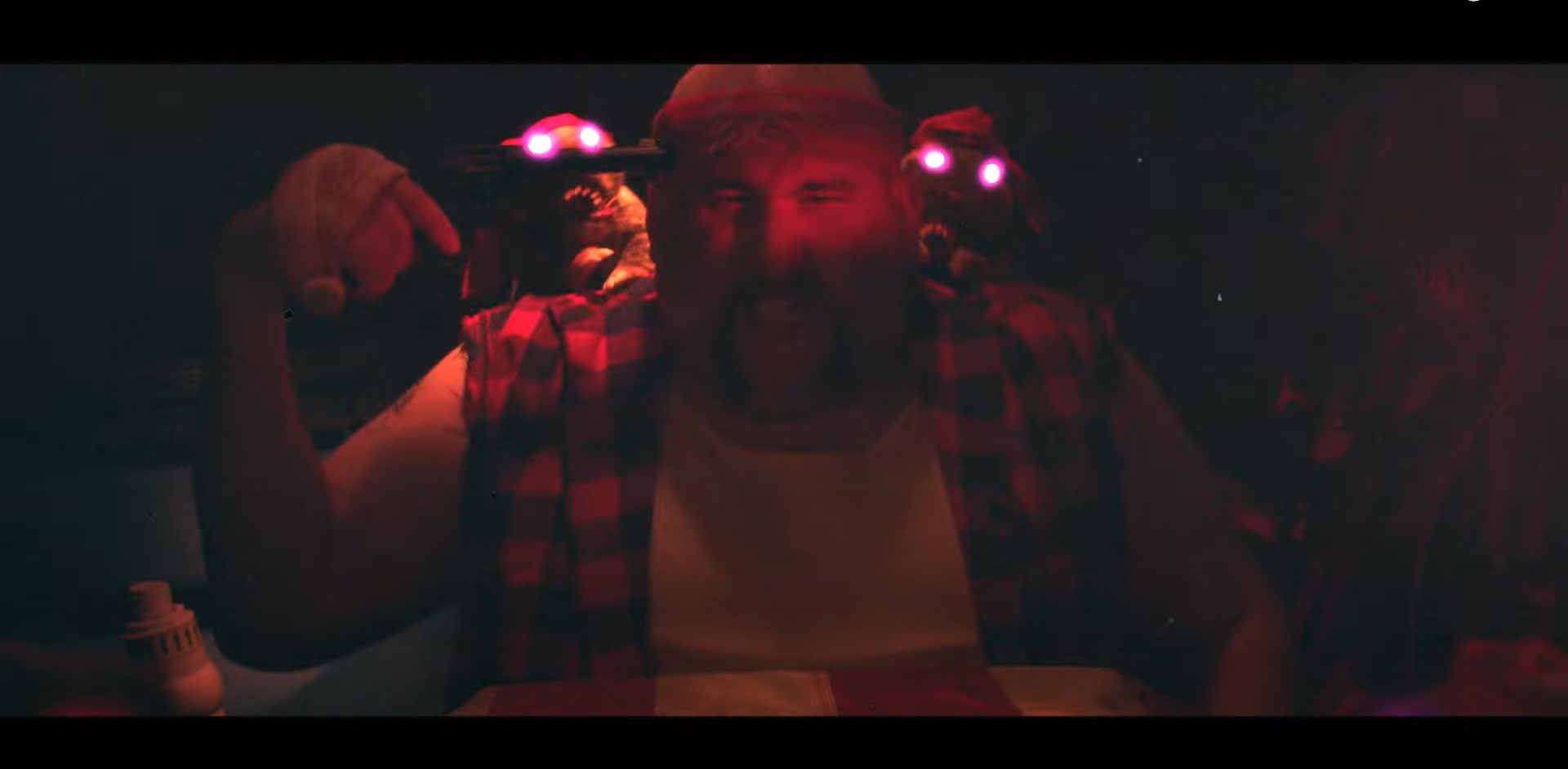
Some semblances of the 1980, Harold Ramis-directed and Chevy Chase, Rodney Dangerfield, and Bill Murray-starring gold-themed side-splitter barely lays up with Catanese’s comedy-horror spoof and homage.  There’s a catchy, 80’s-esque enough, opening credit song overtop areal views of a golf course with spliced in golf concatenations.  There’s also a dopey groundskeeper in warmonger mode against not one but a whole platoon of gophers.  That’s about where “Caddy Hack” draws the line in the sand, likely for legal reasons, in keeping tune with “Caddyshack” and from there on out, Anthony Catanese goes balls to the wall with his unapologetic creature-feature held in party mode that drops jabs of anti-Trump drollery.  The hand puppet, bloodthirsty gophers add to “Caddy Hack’s” shameless charm in a good way by layer compositing only a very little with VFX glowing eyes to give the burrowing rodents an evident behavior aberration.  Because they’re hand puppets, the gophers are very limited in frame and in action but that doesn’t hinder their mischief-maker flow and the angles, and composites, of which they’re filmed and constructed warrants credit in it hark back to the iconic “Caddyshack” dancing gopher and to make the scene somewhat tolerably evil.

Go for this gobbling and gobsmacking gopher horror “Caddy Hack” now on a special edition Blu-ray from Wild Eye Releasing. Presented on an AVC encoded, 1080p high-definition, BD50, in a widescreen 1.85:1 aspect ratio, “Caddy Hack” caters to the standard, low-budget independent mustering with a severe contrast in details and delineation between daytime and nighttime scenes. Generally, details thrive in well-lit exteriors with some softness due in part to the innate raw footage. The ungraded final product really shows its colors, or lack thereof, at night with a washed overlay and a noticeable of digital artefacts. There are some scenes that look cropped and blown-up for closeup purposes, degrading the image resolution a bit. The English LCPM stereo 2.0 has uncompressed, uninhibited thrust that’s decently shaped and arranged in sound design and layered. Dialogue can be detached at times but still in the forefront of the action with the occasional takeover by the cute or ferocious gopher grunts. Plenty of range diversity with no depth to add space leaving competing audio tracks to fight next in line behind dialogue, including fart gags which is becoming tiresome trope across indie comedy-horror in my opinion. There are no subtitles available with this release. The special edition release comes with an abundance of special features, including an audio commentary track with director Anthony Catanese and producer Sara Casey, Balls Deep karaoke pulled from the film’s main song on the soundtrack, a Brew Break drinking game, an Old Glory Holes commercial with Wells Landon, outtakes and behind-the-scenes footage, and the caddy rap track. The Blu-ray comes with exclusive physical lineaments too with a cardboard slipcase with an unacknowledged illustrated composite art, a clear traditional Blu-ray case with snapper that holds reversible cover art – a front cover that’s mixed composition between evil gophers and a happy foursome and the reverse side has an evil gopher laughing manically in a still frame, an Old Glory Holes VIP Card, and a folded mini poster of the slipcase cover art. The region free has a runtime of 75 minutes and is not rated. “Caddy Hack” chips divot-after-divot of missed fairways only to find a love for the game that is independent horror with a wildly and weaselly whackadoo of film about fur-lined pocket cheek gophers chewing on the golfers’ balls.

Special Edition Hole-in-One “Caddy Hack” On Blu-ray!

Under an Urban Club Scene, EVIL Horrors Connect Us All. “Flesh City” reviewed! (Wild Eye Releasing / DVD)

“Flesh City” Yearns for Connection on DVD!

An insomnious city pulsates with an industrial soundtrack and claws cantankerously at denizens without pity. Under one of the raging night club scenes, enamored raver Vyren follows the beautifully alluring Loquette, an inspiring electronic DJ, down into the club’s labyrinth of old stone corridors. Their coquettish play becomes the monitored study of Professor Yagov, a glowingly cadent and mad experimenter of anthropology. The two lovers are drugged and abducted by the Yogav with the intent of genetic mutating the couple’s anatomy that renders Vyren’s hand displaced with a bulbous nub and Loquette impregnated with an ingestible sludge. What becomes of their affliction insidiously infects the entire city population with a flesh tentacle curling through the city’s underground sewer and drainpipe infrastructure in what amasses to a single connection of brain-invading techno-horror.

“Flesh City” annexes our individuality for the sake of connective solidarity conveyed in an electronically infused and alternatively aesthetic experimental film from Germany’s own jack of all independent media and artistic trades, Thorsten Fleisch. The 2019 released feature is Fleisch’s first and only written-and-directed full-length film depicting his feverish analog avant-garde, reflecting the filmmaker’s menagerie of orthodox-shredding short films, video art, and written and produced music. Overseeing “Flesh City’s” cinematography and special effects, Fleisch has complete and utter autonomy of the visuals to obtain a harshly discordant image melody edited together, which Fleisch also manages, into an agglomerate of acetic aesthetics to shock and stress the audio and visual cortexes. Once under the working titles of “Berlin Blood” and “Zyntrax: Symphony of Flesh,” “Flesh City” is entirely shot in Berlin, Germany, produced by the director and United Kingdom producers Arthur Patching and Christian Serritiello, and is a feature of Fleischfilm and Tropical Grey Features.

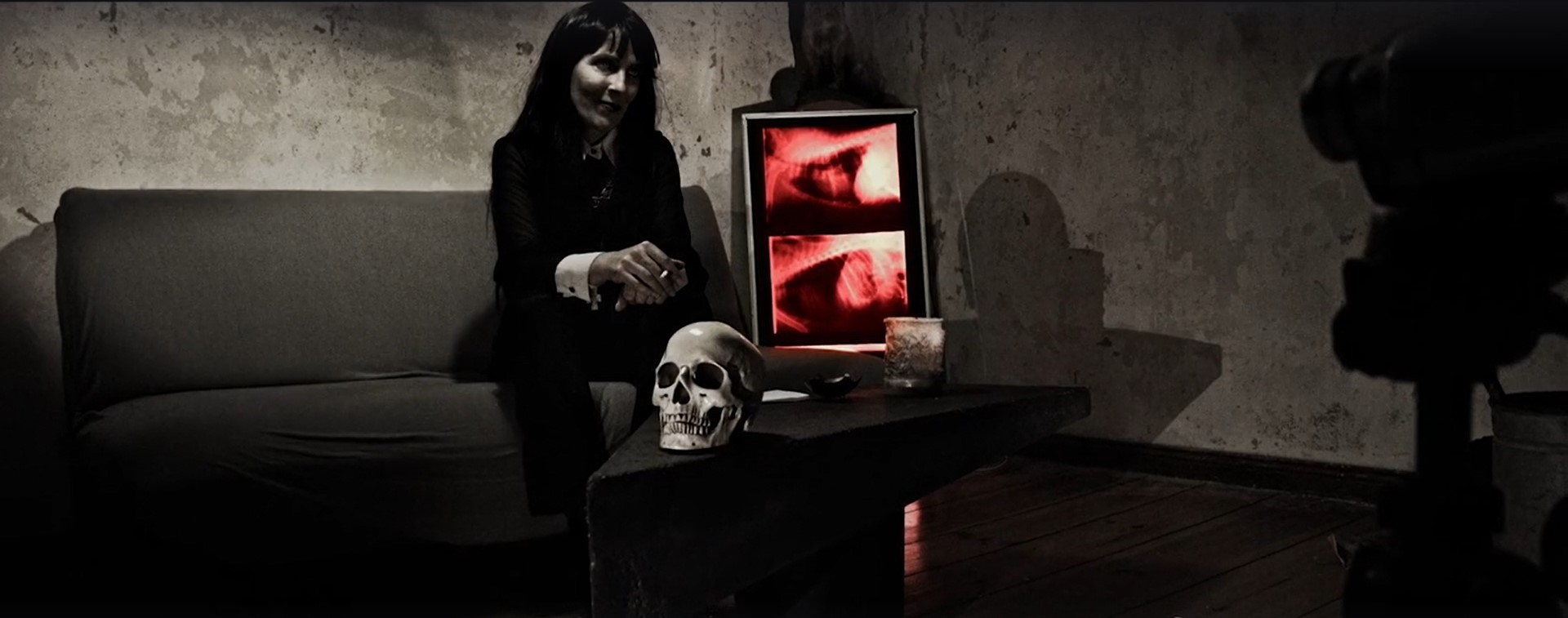
One of the film’s coproducers and musical artists, Christian Serritiello (“Streets of East L.A.”), is at the front lines of “Flesh City’s” afterthought cast of characters with Vryen as essentially the naïve and lured-in Alice chasing the white rabbit Loquette, played by Eva Ferox (“Love Songs for Scumbags”), down the twisted rabbit hole of a cellar dwelling doctor.  I say afterthought because the characters take a backseat to Fleisch’s contortion of reality and the analogical subtext generated by Fleisch’s love for analog anomalies, using them as supporting pawns to carry out his visceral vision of vitality.  Music videos, psychedelic montages, and grotesques images of beetles absorb screen time like formless or arthropodal principals.  Even Professor Yagov (Arthur Patching”) is obscured by a rainbow shimmer, never visually seeing his face as an individual seemingly between two dimensions.  “Flesh City” is a very multiverse, multidimensional nightmare-scape of unconventional color that has culminated from Fleisch’s imaginative idiosyncrasies over the years and that’s what being intently showcased here with more evident display of a less-character driven, shapeless story within the technical aspects of the DVD release where the soundtrack drowns the dialogue into a muffled deaf tone, like any good loud music venue would subdue.  “Flesh City’s” urbanites fill out with Marilena Netzker (“Love Songs for Scumbags”), Shaun Lawton (“Possession”), Denis Lyons (“German Angst”), Anthony Straeger (“Call of the Hunter”), Maria Hengge (“Love Songs for Scumbags”), Helena Prince (“12 Theses”), and Thorsten Fleisch in a Max Headroom meets Total Request Live-like host role of Quantum 1337.

“Flesh City” will not be everyone’s approx. 90 minutes of how to spend their time choice.  The experimental film will only speak to a few select souls with a filmic affinity for Lynchian peculiarities, Terry Gilliam’s bold fantasy, David Cronenberg’s body horror, and a hellish capriccio along with an eclectic music palate for noise rock, henpecking alternative, and strident industrial bass.  I wouldn’t go as far as saying Fleisch’s film is akin to nails on a chalkboard but can be boisterously unpleasant to the ears at times while, in the same breadth, be stimulating visually, even if that stimulation may induce a photosensitive epileptic seizure.  Fleisch’s non-traditional narrative design splices in music videos from various underground and indie artists with him providing introduction as an illusionary host in a virtual world, breaking up the Vyren and Loquette’s post-punk-adelic core quandary with a teetering melodic cacophony of feedback rock electronic, a hostile rhythm, and bizarre lyrics and visuals.  Fleisch pushes the taboo envelope with not only liberal nudity, to which Germans are very at ease with their body image, but also within the unconfined stylistic creativity of multi-formats that razzle-dazzles like the innards of radiant plasma globe; the Tesla coil electrons that’s drawn to your conductive flesh won’t hurt you but provide a feeling of captivated wonder.  Yet, don’t expect to be thrilled in a traditional predator-and-prey sense as “Flesh City” appeals more to our disconnect from each other and how to reconnect must be through some kind of inclemency. 

Likely to transmit under the radar, “Flesh City’s” biomorphic body horror arrives onto unrated director’s cut DVD home video courtesy of cult and independent distributing label Wild Eye Releasing in association with Tomcat Films.  The DVD5 presents the transfer in a widescreen 2.35:1 aspect ratio with varying levels of image quality due to different types of equipment and methods used to create Fleisch’s tripped out vision that contains, but isn’t limited to, black and white, color, stylistic lighting, analog equipment, digital equipment, stock footage, and so forth.  This mishmash movie makes for divisible degrees of signal quality that can be look crystal clear in one scene and then heavy noise interference the next, but the overall clarity is remains stable without any scenes being rifted because of visual vagueness.  The audio comes in two formats:  a English Dolby Digital 5.1 surround sound and a English Dolby Digital 2.0.  Frankly, the original English dialogue track is feeble under the tremendously potent soundtrack and sound design that makes comprehending Vyren and Loquette subterranean exchanges under the industrial rumble of the score virtually impossible to discern.  Even Quantum 1337’s cyber-stutter chat softly introduces us into his world, essentially leading the blind into a mound of musical mania. Bonus features only include other Wild Eye Releasing trailers with the physical aspects of the DVD come with a misconception cover art that has a terrifying gaunt and fleshy, humanoid creature front and center, but that creature doesn’t exist in the film until maybe at the climax that’s nebulously discernible at best what viewers are supposed to see. Inside the standard DVD snapper, the disc art is pressed with the same front cover image but with no accompanying insert. The region free disc features the unrated film with a runtime of 84 minutes. “Flesh City” is a delicacy of distortion, but the Thorsten Fleisch film is an acquired taste that general audiences won’t have taste for but, then again, general audiences are not Wild Eye Releasing’s target audience, now are they?

“Flesh City” Yearns for Connection on DVD!

Watch Out! EVIL is Coming for Your Dysfunctional Family! “The Bloody Man” reviewed! (Wild Eye Releasing / Blu-ray)

Better Behave or “The Bloody Man” Will Get You!  On Blu-ray at Amazon.com.

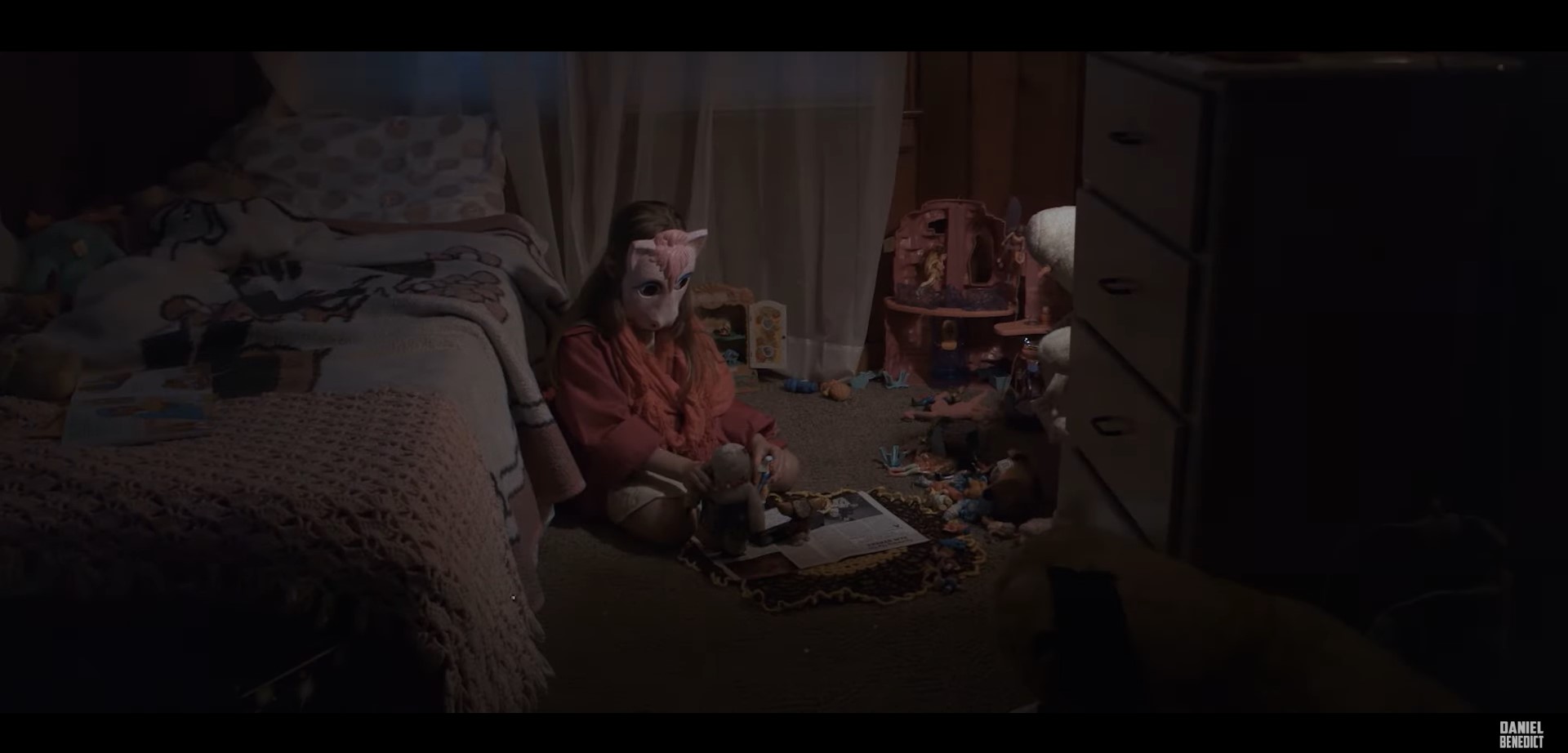
Set in the 1980s, Sam doesn’t cope well with life without his recently deceased beloved mother.  Getting along with his new stepmother proves to be challenging at best, his older brother continues to disregard him as an insignificant pest, his little sister gets under his skin in playing with his action figures without consent, and the school bully makes his life that much more difficult.  The young boy’s unhappiness spurs him into desperate measures by reciting a spell passage on the back of his favorite comic book, hoping the passage truthful to conjure up his deepest desire – to bring his mother back from the dead and fix a broken family.  The passage instead summons a demon, the Bloody Man, who seeks to rip fractured family apart even farther until their eventual dissolve and demise.  Able to possess and take shape of his stepmother, Sam must reunite his family in order to save not only his siblings but also his stepmother from fragmenting into nothingness and death at the hands of a demented demon trickster.

An homage to all things 1980s, “The Bloody Man” is a modern-day resemblance of one the more recent golden ages of cinema with a synth-laden soundtrack, all the popular play toy trinkets and new wave styles of the era, and a magazine loaded millimeter film stock shot in attempt to remove as much of the digital aerodynamics as possible in contemporary times.  Daniel Benedict, the director of the Halloween-themed slasher “Bunni” involving a sexy, leather-cladded, fishnet stockings wearing costume killer with bunny ears, takes a step back from extreme slashers and hops into more family-oriented terror with the protagonist heroes being kids stepping up against the forces of evil, think of films like “The Gate” or “Ernest Scarred Stupid.”  Not as slapstick as the “Ernest” droll-troll paragon of ritualized Halloween movie lineups, this crowdfunded project can be a little more vicious in delivering on the lines of the same heartwarming message that instilled into us from the Jim Varney 30-years-ago, that love is key in overcoming darkness.  Benedict pens and helms the 2020 production with wife Casi Clark, aka Casi Benedict, co-writing a script that loosely pulls in and indirectly references Benedicts’ collaborated efforts on a He-Man inspired fan made short “Fall of Grayskull” into their boogieman story.  The Benedicts’ production company Red Serial Films confects the film into fruition with Mercedez Varble, Jason L. Watson, Garrett M. Johnson, and Rihannon Crothers producing. 

Despite not having top bill on the film, David Daniel leads us through the angsty complications of a new family dynamic as well as being the centric force of rebuilding a crumbling household as the middle child, feeling every bit like the world is against him, Sam Harris.  Daniels debut feature and leading role depicts well the internal argumentative aspects of having to go along with a life-forming change no child should ever go through, the death of a mother, and that sends him and his family careening toward dissolution despite his cheerful father’s overly confident optimism.  The top bills go to a pair of “A Nightmare on Elm Street” alum who both play mother to Sam.  Lisa Wilcox (“A Nightmare on Elm Street:  The Dream Master” and “A Nightmare on Elm Street:  The Dream Child”) and Tuesday Knight (“A Nightmare on Elm Street:  The Dream Master”) switch back-and-forth, between flashback-and-present, Sam’s biological mother and his new, soon to be, stepmother.  Surely, it comes to reason that the Wilcox and Knight names not only provide a couple of “The Bloody Man” selling points for die hard Freddy Kruger acolytes but could also be seen as an homage to the Robert Englund franchise with a similar living between two planes of existence nightmare antagonists hunting down a house full of kids, using unhappiness as a vessel rather than dreams.  Though not scarred by full body burns, wielding a finger bladed glove, and sporting a dirty striped sweater and fedora, the Bloody Man has his own characteristics being a black magic sorcerer.  Dressed traditionally in a snug black Chinese robe and blood running down his wild eyed face, Nicholas Redd enlivens the Bloody Man on a playfully perturbing level but the script doesn’t allow Redd to deliver the Bloody Man’s full potential while also not cutting the villain fully into the fold until the nearly last act.  Instead, the Bloody Man is reduced to a few here-and-there appearances, some one-liners, with half of the character’s screen time awarded to Tuesday Knight in a duality role as the Bloody Man uses the caregiver’s looks to draw in the Harris children.  Redd has promising lunacy that’s sorely underutilized in more ways than one and in so much so, the film itself shouldn’t be titled after the character.  “The Bloody Man” remaining cast includes Sam Hadden, Olivia Sanders, Jeremy Carr (“Calm Before”), Dominick Wilkins (“6 Feet Below Hell”), Dan Eardley (“Retro Freaks”), KateLynn E. Newberry (“O9en Up”), and Ellie Parker (“Bones and All”).

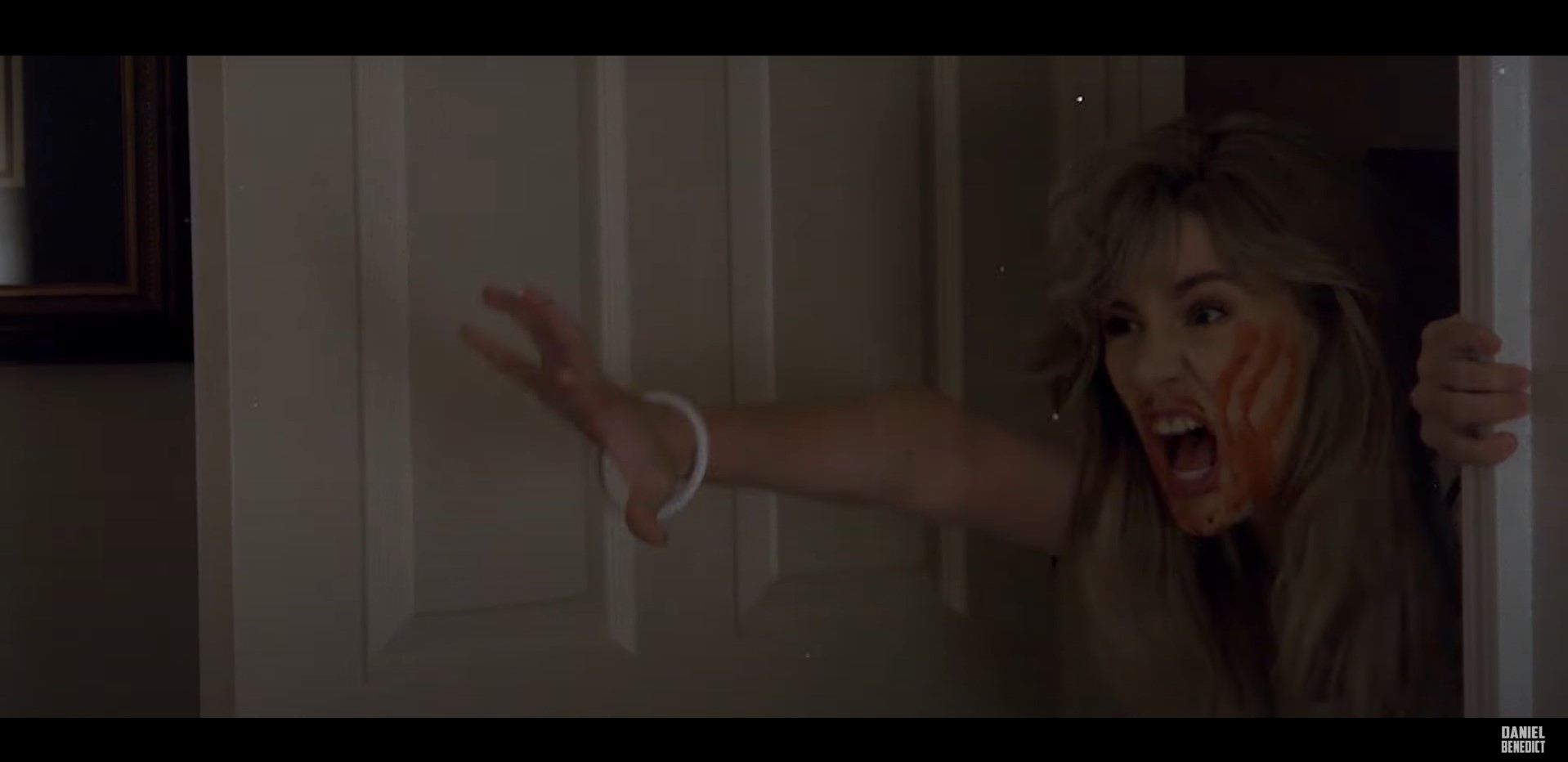
I’m all for a quasi-kid friendly horror of the same antithetical vein as “Monster Squad” or “Gremlins” where the subject matter borders the edge of being too risky, eking above the terror threshold for children who would be roughly the same age as the story’s principal leads battling for the very reconciliation of family before the Bloody Man kills them.  “The Bloody Man” lurks under the veil of being lighthearted in contrast to the brushing scenes of severed, sentient arms, blood streaking down various maniacal faces, a mildly gruesome decapitation, and moments of good ‘ole fashion terror that may induce nightmares for anyone under the age of 12.  A child’s lack of sleep because they’re waking up with fright-filled sweats will for sure not provide parents any favors, but Benedict skirts a fair amount of gore and does imply the significant damage and death offscreen almost as to shelter general audiences’ eyes for a broader invitation to watch the movie and, as mentioned previously, the titular bad guy doesn’t make an appearance until much later in the story that has been setup comically with a wrestling fanatic principal, Perry’s godawful verbal teasing, and a lot of 80’s inspired shots that nailed the decade’s analog paint job – a silver lining against the night terrors.  Honestly, the third act also drags out the culmination of events.  For such a small house, the Bloody Man chasing the Harris kids might as well taken place in a labyrinthine mansion, but the ground level with basement rancher slows down the hide-and-seek or maybe the Bloody Man is just really bad at childish game as the kids could stay in rooms for extended periods of time, even playing pretend with toys at one point, and in not once instance, does the Bloody Man bust in to snatch up a tyke to terminate.  Where “The Bloody Man” also struggles is buttoning up the summoning of the soulless sorcerer who’s conjured up by a mere passage reading off the back of Sam’s favorite Barbarian Man comic books.  The comic, which is introduced as a fairly over-the-counter object, holds this mystical darkness that must be conjoined with a family’s spiraling.  Yet, the story contradicts itself as the Bloody Man pursues another broken home that didn’t warrant the reading of the comic’s back cover passage, creating some confusion on how the cruel chaser of disconcerted children operates on a phantasmic plane.

As far as 80’s-inspired films go, “The Bloody Man” can run with the best of them, even with Netflix’s “Stranger Things,” and Wild Eye Releasing sees fit to drop a special edition Blu-ray of the Daniel Benedict comedic chiller.  The AVC encoded, high-definition 1080p, BD25 is presented in a widescreen 2.35:1 aspect ratio.  What makes the film feel decade authentic and that can suck you into it’s existence is Benedict’s decision to shoot either in 35mm or with a 35mm digital overlay that has characteristic dust speckles and a fine grain.  Image quality remain at a consistent color and black levels with a few flare ups of compression artefact issues, such as splotches in darker scenes, in squeezing this long runtime film onto a BD25 along with an atypical accompaniment of Wild Eye Release robust extras.  The bitrate does have large swings from lower teens to upwards of high 20s Mbps.  Yet, details generally come through with enough depth to create visual spacing between objects.  The English language Dolby Digital 2.0 stereo renders adequate for a narrative that doesn’t have a ton of range with an intimately tight story surrounding Sam and his siblings but is complimented greatly by Johnathan Fan Octo Evans retro-synth soundtrack with an oscillating pulse and a crescendo of tension, solidifying even more the 80’s inspiration. English subtitles are optionally available. The special features include a director’s commentary with Daniel Benedict, a gag-blooper reel, a local newscast behind-the-scenes segment, various promotional videos from Kickstarter, Indiegogo, Barbarian Man toys, an emulated One to Grown On based PSA show from the 80s, and a Showbox promo with the original trailer bringing up the tail. One last bonus scene is also at the end of the credits so stay to the very end. The physical features include a clear Blu-ray snapper case with latch that houses glow lit Harris kids geared up to tackle the looming Bloody Man, or that is my assumption of who that is on the front cover as that figure looks nothing like the Bloody Man on screen. A more true-to-form Bloody Man is on the cardboard slipcover in another retro illustrated, compositional mockup with a similar layout as the actual Blu-ray front cover. Inside the snapper case, the reverse front cover has a still image from the movie, typical of many Wild Eye Releases, a folded one-sheet with the additions of Tuesday Knight and Lisa Wilcox amongst the child leads, and a disc art pressed with the unknown version of Bloody Man. The region free release comes not rated and has an excessive runtime of 133 minutes, contributing to the pacing issues of the last act. “The Bloody Man” doesn’t exactly live up to the moniker in this tame throwback but what the film has is a mighty nostalgia that brings back feelings of a superlative horror age that was once, and still is, goosebump arousing.

Better Behave or “The Bloody Man” Will Get You!  On Blu-ray at Amazon.com.

Cheez-Whiz and EVIL Go Together like Camping and Horror! “Black Holler” reviewed! (Wild Eye Releasing / Blu-ray)

“Black Holler” on Blu-ray Home Video from Wild Eye Releasing!  Available at MVDVisual and Amazon.com!

The Black Holler woods has a notorious reputation for being cursed by a lost ancient artifact that once broken into two would sic supernatural powers upon to anyone disturbing the grounds.  A class of half-witted community college Archepology students embark on a field trip to the very same Black Holler woods.  Among them is the rebellious yet grounded black belt Laquita Johnson forced to tagalong in order for a last ditch effort for an educational institution to accept a reformed her despite the refractory record.  As soon as the class steps foot into the woods, one-by-on they begin to disappear mysteriously as the area comes alive with the vengeful spirits of a long forgotten tribe that once inhabited the land.  Poor decisions, ultra-egos, and classic horror movie tropes amalgamate into a don’t go into the woods with white people scenario of the year 1989 proportions.

Let me set the scene for you:  Back in 2017, Jason Berg and his cast and crew set out to make and release a homage horror-comedy that wasn’t just bloody and supernatural but was also drenched in the broad quintessential tropes of 1980s horror film.  Berg directed and cowrote the U.S. film alongside Heidi Ervin and Rachel Ward Heggen on a modestly budgeted scale that relied mostly on slapstick wit rather than full blown genre makeup and effects but the comedic style also treads into the parody territory, reminiscent of the days of yore with “Airplane” or even the relatively more modern version, and related horror-themed, “Scary Movie” series, aiming to cast objectifying humor as well as generate other politically incorrect forms of laughter that many Hollywood studios and off-Hollywood indies are afraid to touch with a 50-foot pole today with the fear of being criticized, sued, or even worse, #cancelled.  “Black Holler” isn’t having none of that black listed nonsense in its Troma-transgressional fashion.  “Black Holler” is a crowdfunded, Kickstarter and Indiegogo campaign production with executive producers Jim and Phyllis Casebolt, Heidi Ervin, and Wesley Rutledge and is filmed in and around Nashville, Tennessee with sponsorship by the Nashville Film Festival and production credits under the banner of Grand Prize Studios.  

One thing to notice about the Tennessee-native Jason Berg’s obscure, campy, and modern-day slice and dice of satire is that “Black Holler” has a large, sprawling cast acting in different, diverse locations though ultimately winding up backdropped in the woods like most low-budget horror films do.  Numerous principal leads receive nearly equal screen time to follow individual storylines with predominately Tamiko Robinson Steele (if that isn’t a Blaxploitation name, I don’t know what is) being the empowered, karate-instructed, skateboarding, last minute addition, Laquita Johnson, to a predominately white class of vanilla misfits.  “The Dead Center” Steele rarely engages an interaction with fellow camping characters but eventually Laquita glues herself to the scrawny nerd Walter Love (TikTok influence Nicholas Hadden).  As Laquita and Walter work on Walter’s social awkwardness with a quick hip-throwing lesson, the other students, led by the overly pretentious assistant Professor Thompson in a wonderfully painful and zany performance by Jesse Perry (“Zombies vs Strippers”).  Perry’s know-it-all façade is complimented by his awkward hand gestures and ridiculous facial expressions to make Professor Thompson a full-bodied caricature.  Much of the cast are equally as lampooning the usually trope characters:  the stoners (Bruce Ervin and Betty Williams), the angsty goth (Sarah VanArsdal, “Chest”), the goody two-shoe (Heidi Ervin), the slutty hot girl (Rachel Ward Heggen), the over-sexing couple (C.J Stanley and Stacy Gazenski), and a self-serving and bullying handsome jock who is satirically played by numbers actors of all races and ages with the in-script context that shows and movies recast principal actors with other actors who look nothing like the original and that the general audiences won’t notice.  “Black Holler” rounds out the cast with Brad Edwards, Wesley Rutledge, Leah Helena Miller, Justin Terrants, Brian Russell, Miguel Otero, and Stayc Givhan as Laquita’s white, queer cousin and who outperforms with sass and confidence to the near point of stealing the entire movie. 

Director Jason Berg recreates the late 1980’s to early 1990’s milieu and very well I might add. “Black Holler” has the skater-grunge dress, early model cell phones that are the size of a football with an antenna, and crass, douchy attitudes that fit the period’s horror catalogue casting call. Not one to take itself seriously, at all, “Black Holler” just needs to be sat down with and watched for what Jason Berg intended his debut film to be – one big parody of paranormal patterns. Berg achieved the goal in depicting an outlandish ensemble of highly vain characters too entrenched in their own objectives of “Pet Semetary” resurrecting animal rituals, engaging in hot premarital sex, and smoking pot while swimming with sea-sludge covered dead. Aside from the little “Pet Semetary” nod that goes hand-in-hand with the sacred Indian ground, the film pulls in and ties together inspiration from other 80’s era classics like “Evil Dead” with the forest jetting out vines to snatch and grab as well as a compilation of every horror movie set on a camping ground with a nefariously spooky and anecdotally deadly past. Many of the gags and goofs land in a generic vane tapped too often to strike it rich but there are a few outliers, such as the seamless Brett bit that tackles trite truth with well devised humor or when Professor Thompson, in one of his many zany arbitrary acts, climbs a tree like a squirrel that does provide a good chuckle, but then there’s the whole systemic racism callout that flies over my head as, to my memory, wasn’t a big thing in the 80s or 90s. Perhaps, the concept plays into the whole token black trope that Laquita represents to the group, as in what the title alludes to in tribute and in theme.

“Black Holler” is receiving a re-release from Wild Eye Releasing but in a new special feature-laden Collector’s Edition!  Presented in a 1.78:1 aspect ratio on a AVC encoded, high definition, 1080p Blu-ray, “Black Holler” does have quality appeal despite various gradings and stylistic choices, such as color filtering to de-age into black and white. Compression appears stable with no noticeable ghosting, aliasing, blocking or banding.  Details and delineation are sharp enough for videophile nitpicking to be at a minimum.  Despite some use of a blue tint during a flashback, nighttime sequences convey just enough sparse lighting to not be overflooded and still maintain a sense of darkness in neutral contrast.  The English LPCM Stereo 2.0 audio tracks offers a crystal clear digitally recorded dialogue that’s free of obstruction and background noise.  If you watch the gag reel, the crew does a remarkable job holding action in place until the boom is free of all sorts of motors, planes, and other environmental sonances.  Depth works out mostly in the foreground amongst closeups and medium shots while range mostly revolves around quick whips of vines and the splatter of blood.  Special features include a director, cast, and crew commentary, deleted and extended scenes, a gag / blooper reel that consists mostly of the ambient noise holds, an alternate opening and ending scene, We Made Our Goal and Guns & Roses parody song tracks, a “Black Holler” Kickstarter promotional video as well as a faux promotional video with Professor Thompson as host and oozing with Archepology excitement, and Wild Eye Releasing trailers.  Collector’s Edition release is housed in a cardboard slipcover with what appears to be colored graphite art of some semblance of the colorful characters clumped together flaunting their idiosyncratic characteristics and personalities.  The clear Blu-ray case with snapper, which has become more and more common than a traditional blue hued snapper case, frames the original Wild Eye releasing cover art of Laquita holding up a machete in an ebony femme fatale pose.  Both slipcase and Blu-ray back covers have identical layout designs.  If you unlatch and open her up, the reversible cover art has a great group picture of the cast in character and there’s also a folded illustrated poster in the insert which you can see on the disc art without having to unfold the poster.  The unrated flick comes region free and has a runtime of 89 minutes.  “Black Holler” is a love it or hate it satirical salute to horror stereotypes forged from out of a screw loose admiration that can be, at times, too immature to find funny but the whole package functionally works as a comedy peppered with genre elements.

“Black Holler” on Blu-ray Home Video from Wild Eye Releasing!  Available at MVDVisual and Amazon.com!

Norwegian EVIL Has Women Issues! “The Thrill of a Kill” reviewed! (Wild Eye Releasing / DVD)

Enjoy the “Kill” on DVD now Available on Amazon.com

Out of work Kimsy and her irritated mother butt heads over Kimsy’s lack of effort in trying to find a job and help out with responsibilities around the house.  After a particularly nasty argument, Kimsy storms out to walk off her frustration in the quiet surrounding woods.  Instead of lowering her blood pressure, Kimsy’s blood runs scarred and runs down her head as she’s knocked out and picked up by a playful serial killer with an irreparable hate for women and takes gratification in degrading them by any means possible.  Sadistically bred by unconditional motherly abuse, the killer treats each of his prized possessions like dogs to submit to his every beckon and call.  Kimsy’s mother and sister, Camilla, grow concern for Kimsy who hasn’t returned home and set off to find her.  When they realize she’s been abducted, they’re able to track her to a remote, vacant cabin used as a kill house and as they set foot inside the cabin to save Kimsy, a killer lies and waits to strike. 

Lars-Erik Lie’s Norwegian torture porn, “The Thrill of a Kill,” resonates with the old and true proverb, what comes around, goes around.  Filmed in and around Norway’s largest ski destination and resort, the Scandinavian mountain town of Trysil becomes the backwoods abattoir for the director to set his exploitation workshop for the bleak Norse horror.  “The Thrill of a Kill” is the first feature length fictional film from the Norway-Born Lie who has digs into the indie underground and gory storytelling, self-funded by his own banner, Violence Productions, and is coproduced by Morten K. Vebjørnsen and Arve Herman Tangen, Morten Storjordet, and Linda Ramona Nattali Eliassen serve as executive producers.

Dichotomizing “The Thrill of a Kill” into two stories set during two different time periods, Lars-Erik Lie’s focal point is not the hapless victims caught in a deadly spider’s web of perversities.  Instead, Lie’s story formulates the theory on how the sociopathic killer was ill-nurtured into a monster with an interweaving plot set in 1968 of a young boy (Carl Arild Heffermehl) neglected and abused, verbally and physically, by an alcoholic and sexually promiscuous about town mother (Sonja Bredesen) who would bring home another town drunk to bed. Missing his (deceased?) father and tired of being bullied by his own mother, the boy mental state snaps like a twig under immense emotional, family-oriented pressure and descends into a murderous madness. Years later and all grown up, the maniac mountain man abducts young women as a direct result of the hate toward his mother and her mistreatments. Arve Herman Tangen becomes the goateed face of the grown man gone haywire. Tangen develops his character with purposeful intent and with a nonaggressive tone to persuade his bound quarry to remain subdued. The role is nothing short of typical that we’ve seen in other films of its genus where a screwed-up child-turned-adult runs a deviancy amok sweatshop of imprisoned flesh and torture devices and Tangen really adds nothing meaningful to derangement. In her debut and only credited role, Kirsten Jakobsen, former Model Mayhem model from Oslo, succumbs to being the unlucky alternative girl, Kimsy, that runs into the big, overwhelming man while strolling through the forest. One would think Kimsy would have suffered brain damage after being struck and knocked unconscious not once, not twice, but three times by the killer who undresses her after each time with the third and final blow putting the final touches on his toying with the girl and bringing her back for a visit to his hen house of brutalized women. After the first blow or two, Jakobsen doesn’t show that much concern for Kimsy’s attentive wellness or concern as Kimsy continues to just wander as if nothing major has happened. Camilla Vestbø Losvik is a much more reliable and realistic rendition of the situation as Kimsy Sister, Camilla. As another alternative and attractive woman, Camilla shares a strong kinship with Kimsy despite their mother’s disciplinary differences toward them, to which eventually their mother (Toril Skansen) comes around as the patron saint of motherly worriment that’s likely a contrasting parallel to the killer’s unaffectionate mother. With an ugly-contented subgenre, “The Thrill of a Kill” has various compromising positions for its cast with rape and genital mutilation that there’s some shade of respect give to those who can mock play the unsettling moments we all are morbidly curious to see. The film rounds out with a lot of half-naked women strung up in bondage or chained to the wall with Linda Ramona Nattali Eliassen, Veronica Karlsmoen, Veronica Karlsmoen, Madicken Kulsrud, and Ann Kristin Lind with Raymond Bless, Niclas Falkman, and Jarl Kjetil Tøraasen as drunk, male suitors.

“The Thrill of a Kill” recreates the simulacrum of SOV horror as Lars-Erik Lie pulls out his handheld video to follow Kimsy’s journey through the jollies of a madman and the mother and sister’s rout out for their lost Kimsy. The beginning starts off with a zombie-laden dream sequences that places Kimsy in a field with a killer and his mutilated corpses that reanimate in a bit of foreshadowing of what’s in store for the spikey haired damsel. By dismissing her vividly horrifying dream of diminutive meaning, just like she does with everything else, Kimsy falls easily into the killer’s hands signifying one of the films’ themes to never take things for granted, especially those things that are important to you as exampled later on in the story. That’s about as much purpose I could pull from out of Lie’s film that floats like a feather on surface level waters. There is one other tangential offshoot Lie attempts to explored but never fleshes out fully is the unbeknownst to Kimsy and Camilla’s perverted hermit of a father who lives on the outskirts of town. Their mother thought he would have insight on Kimsy’s whereabouts but instead he tries to forcibly coerce Kimsy into his shack for involuntary lovemaking and then the exposition ensues after Camilla barely escapes his axe-chopping in (sexual?) frustration clutches. That exposition literally goes into a tunnel leading to nowhere and doesn’t alter the actions of Camilla or her mother to do anything different, expunging any kind of knowledge to utilize for a complete character arc and just comes to show Lie’s written bit parts don’t define the narrative of learned opportunities or gained instinct but rather are just additional sleazy show. The same sleazy show can be said about the rape scenes as they won’t ascertain the intended reaction of squeamish uncomfortableness. Now, while rape is no laughing matter or accustomed at any degree, there’s a level of numbness to these scenes that carry a severe flat affect to doesn’t display the anguish, the terror, or the hurt these women are going through as the killer decides upon himself to violate them. There’s literally no fight in these undrugged, still vigorous, young women who have just been snatched and made into his plaything and while some seasoned BDSM partisans may get aroused, the emotional receptor in me wants to empathize what their strife agony, but maybe that’s why the film is titled “The Thrill of a Kill,” to be an emblem of fun, cheap thrills.

Coming in at number 70 on the spine, the Norway schlocker-shocker, “The Thrill of a Kill” lands appropriately onto the Wild Eye Releasing’s Raw & Extreme banner. The 2011 released film finds a vessel for its North American debut over a decade later after its initial release and presented in a 1.33:1 aspect ratio, with vertical letterboxing on 16×9 televisions, despite the back cover listing a widescreen format and being released in 4:3 is a bit surprising as other countries display in anamorphic widescreen and the lens used in the film is definitely anamorphic as you can tell with flank falloff that distorts the image and makes the picture appear rounded. Color grading is slightly washed and lives in a low contrast. Again, I have to wonder how aesthetically different the transfer is on the outer region product. Soft, SOV-equivalent details don’t necessarily kill the image quality, but you can obviously notice some pixelation in the frame inside the shack and in wider shots of the landscape amongst the low pixelated bitrate. The Norwegian Golby Digital Stereo 2.0 comes out clean, clear, and about as full-bodied as can be with a two-channel system. Some of the Foley is overemphasized production which comes off sillier than the deserving impact of a thrown punch or a meat hook going through the lower mandible. English subtitles are burned/forced into the picture but are synched well without errors though the grasp maybe lost a little in translation. Bonus content is only a trailer selection warehousing select Raw & Extreme titles, such as “Hotel Inferno,” “Acid Bath,” “Morbid,” “Bread and Circus,” “Absolute Zombies,” “Whore,” and “Sadistic Eroticism.” Continuing to achieve maximum controversial covers, Wild Eye Releasing doesn’t hold back for “The Thrill of a Kill” DVD with a crude, yet fitting DEVON illustrated cover art that is a platterful of unclasped splatter while in the inside is a still frame of one of the more tongue biting scenes. No cuts with this unrated release and the film clocks in at 85 minutes with a region free playback. A grating gore gorger with mother issues, “A Thrill for a Kill” redundantly recalls our attention back to the subservience of what makes horror horrifying and while what terrifies us is pushed aside, the free-for-all fiend-at-play treats the death-obsessed to a buffet of blood and defilement.

Enjoy the “Kill” on DVD now Available on Amazon.com