

While at a Spanish night club, Lucy meets a darkly tall and handsome gentleman who takes her back to his luxurious yacht and spends a romantic night with him inside his cabin on the sea. The next morning, Lucy suffers from a terrible case of amnesia, unable to recall where she’s met this mysterious man before or even remember her own past and as she relaxes in her hotel room after a soothing bath, a past life vision of herself entangled with her one night stand, otherwise known as Dracula, establishes her place amongst Dracula’s side as his undead love, but vampire hunters, Doctor Van Helsing and his faithful assistant Seward, are hot on Dracula’s scent toward his brooding castle in order to save Lucy from succumbing to Dracula’s cursed evil forever.

“Apostle of Dracula” is a Spanish retelling of the classic Bram Stoker “Dracula” tale, versed in Edgar Allan Poetry, and is directed and co-written by Emilio Schargorodsky. Also known more in other parts of the world as “Dracula 0.9,” Schargorodsky’s film boldly tiptoes through a minimalistic approach regarding the mythos of the legendary vampire that dabbles in some special effects when required and uncomplicated imagery that still relishes in wondrous imagery. The “Spirits of the Dead” poetic works of American macabre writer Edgar Allan Poe reinforces the Gothically garnished settings and costumes and heightens the gloomy sensationalism in Schargorodsky’s melodramatic horror soap opera that redesigns slightly Dracula’s origins and his infatuating love interest that isn’t Mina Murray.

Instead, Dracula’s focus is resuscitating the undead cursed life into Lucy dreamily and elegantly portrayed by model-actress Nathalie Le Gosles. Le Gosles has ghostly grey eyes that pierce vividly on screen through her Lucy Westerna performance that’s quite different than what audiences might be typically used to in the character. Lucy is the titular character, being the “Apostle of Dracula,” and Dracula (Javier Caffarena) spares no expense or time and effort in making Lucy his forever. Caffarena’s Dracula is very much overshadowed by Le Gosles’s beauty and performance as Caffarena’s acting experience before his freshman film only credits him in on other role in a short film directed by Schargorodsky, but Caffarena’s a busy body on this feature, delving into many facets from cast to crew as also one of the three co-writers and also donning not only the cape and fangs of the vampire but also creating a composing soundtrack, editing the film, and acting as a producer. In all honest, Paul Lapidus stole the show with his role as the most famous vampire hunter that was ever created – Van Helsing. Virtually embracing every facet of his time hopping character, along with the rest of the cast, Lapidus’s steadfast approach toward a more conventional Van Helsing relieves many anxieties of jumbling up Dracula’s mythology. Antonia Del Rio, Francisco Del Rio, Jose Luis Matoso, and Virginia Palomino round out the cast.

Schargorodsky’s indie Gothic Dracula feature is not immaculate; however, because Schargorodsky is an experienced photographer, a silver lining in his filmmaking playbook is his impeccable eye for cinematography. Whether in the framing or capturing the organic beauty of the landscape, Schargorodsky blends a dream with classic styles that had once scared the pants off people by incorporating shadow imagery that pays a dear homage to that of F.W. Murnau’s “Nosferatu” alongside Caffarena’s Dracula shaving his head and extending his fingers to be a lookalike Max Schrek. Captivating as many of the frames might be, the juxtaposition to the story doesn’t hold water as the story hops from one century to another without much regard for exposition. Lucy’s passionate yacht fling with a daylight walking vampire not only raises many vampire mythos questions, but also leads into Lucy displacing much of her memories of herself and her past. She then goes into a trance after returning to her hotel room, envision her great lineage self intertwined with Dracla and that story unfolds for a good portion of the film from the time Lucy’s bit to when Van Helsing and Seward interject at Dracula’s Castle. The story then returns Lucy’s back to present time where she then fights to urge to be a bloodsucker, but can’t stop her desires to be with her undead beau all the while a modern day Van Helsing and Seward, sporting sleek Secret Service-issues shades and wardrobe, seek to protect Lucy at all cost. Lost somewhere in the midst of the story is an important pice of the puzzle that goes unexplained.

Wild Eye Releasing MVDVisual present the 2012 “Apostle of Dracula” onto DVD for the first time in the U.S. The DVD, graced with a cover illustrating an unrelated naked female vampire crotched down and glaring outward, widescreen presentation sports a digitally shot transfer that fairly mediocre throughout despite soft details, faint aliasing, and spotty moments of digital noise during darker scenes. However, the worst technical aspect lies with the dialogue audio track that’s horrendously dubbed in non-optional English in such a flat, monotone voice that all the passion behind the actors is lost. If you watch close in the special features, clips of untainted portions of the film can be caught with the original Spanish track, bringing a whole new life into the scenes. There are no options to play the original language or even optional subtitles. Caffarena’s looming score comes out clean with subtitle details in the LFE emitting from Stereo audio which can be seen discussed on the bonus material about composing the score. Another special features contain a pleasant surprise with a never before scene interview with the late Jess Franco, who looked to be on his death bed, conversing his positive thoughts and praises on Emilio’s film that does have a faint resemblance to Franco’s work consisting of elements, but not limited to, the gothic, dream-like, and slightly sleazy. Bonus material comes full circle with Wild Eye Releasing trailers. Emilio Schargorodsky’s self-funded Dracula film proves any filmmaker can be a auteur without losing focus despite some flaws being on the grand stage of an iconic horror monster and while “Apostle of Dracula” flips the script on Bram Stoker’s telling of one of the greatest villains ever scribed, there’s something to be said for the multiple ways to skin a cat in this and still able to construct a solid story in this European horror.
Tag Archives: Wild Eye Releasing
For All The Evil in the World, There is One Pint-Sized Hero! “The Search for Weng Weng” review!
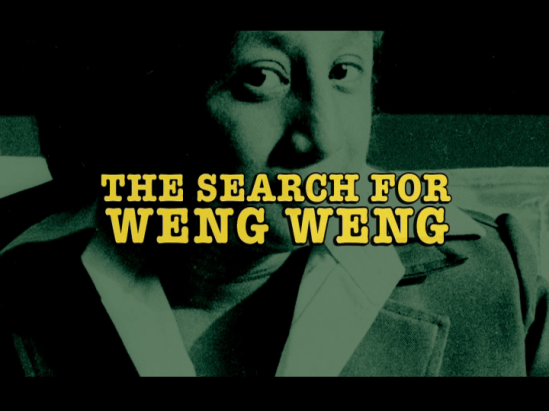
Australian filmmaker Andrew Leavold set forth on an adventure of answers to discover the legendary, the one-and-only, pint-sized actor known internationally as Weng Weng. In the early 1980’s, Weng Weng became the Guinness World Record’s smallest lead actor in a slew of rare, some never-before-seen, Filipino spy films and took the world by storm, creating a bizarre cult following on social media, and for Andrew Leavold, the only way to learn more about the Weng Weng, who could actually act and do his own stunts despite his small stature, was to create a documentary film that would take years in the making, but would hopefully answer three very simple, yet extremely difficult, questions: Who really was Weng Weng? How did he become Weng Weng? And where was Weng Weng now?
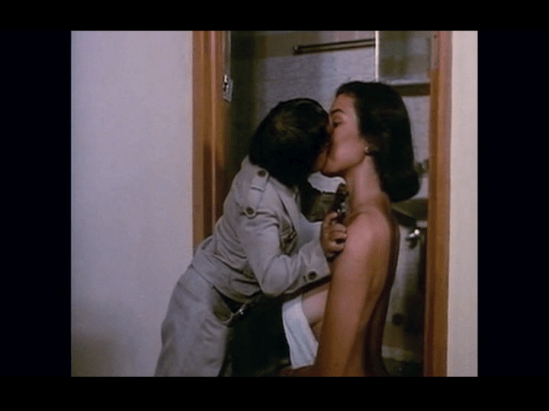
Weng Weng might be a humorous name for some, odd in fact, and his James Bond spinoffs as Agent 00 (double zero) flourished with zany stunts, practical special effects, and a tremendous amount of improbability – just like the Bond films themselves – but the Weng Weng films, even his Westerns, had an attractive aurora about them and not only because of the 2’9” sized actor. “The Search for Weng Weng’s” main focus was its titular star, but the film also displayed how the Pinoy films had engrained much of the Filipino culture and embraced their own charismatic star actors while, at the same time, being a byproduct of America’s Hollywood and other nation’s cinematic scenes. The Pinoy films were much akin to India’s Bollywood, replacing the musical and dancing segments with more action and comedy. Though Weng Weng’s films, including “For Y’ur Height Only” and “The Impossible Kid,” were whimsical and charming, Leavold’s documentary points out the darker side of the actor’s fame by comparing and explaining how Weng Weng’s “handicap” could be examined as a freak show gimmick that exploited Weng Weng out of cinematic earnings from his so-called adopted producers. The film also noted his lack of relationships with women and his health issues later on in life. Yet, “The Search for Weng Weng” highlighted much that was unknown about the actor, such as his real name, and that he was impressive and skillful at Karate; though small, Weng Weng wasn’t a traditional short person. He was fit and muscular and this helped him accomplish much of his own stunt work, which the Filipino stunt people have been claimed to be some of the best in the world.

Leavold doesn’t leave a stone unturned as he tracks down the persons involved in Weng Weng’s life. From the film crew who worked on the Agent 00 flms to his neighbors who grew up alongside him and from one of the five siblings, a brother whose the only surviving member of his impoverished family, to, perhaps, the wealthiest former first lady adored by all, Leavold checks every nook and cranny, every minute cubby hole to obtain that much more information about how Weng Weng lived and influenced their lives. In all, not a single person disliked the tiny personality as they appreciated much about him from his squeaking voice – that was always dubbed more masculine in the films – to his overall childlike serious, but calm nature. Weng Weng, in essence, was born a star guided by unscrupulous caregivers that was ultimately bittersweet for the childlike build and mentality.

“The Search for Weng Weng” hits the nail square on the head with the exactness of the title. Leavold’s impartialness leaves the wrongdoings against Weng Weng properly in the past as a good documentarian should impress. The editing is well done, taking a non-linear journey through Weng Weng’s short lived life and movie career and Leavold’s research and dedication to the project really amplifies through the film, giving Weng Weng the appreciation he rightfully deserves despite his height limitations.

Wild Eye Releasing in association with Monster Pictures presents “The Search for Weng Weng” on home video DVD. The region free, unrated DVD is shot in various formats from standard definition full screen to 16:9 widescreen with archival footage of the best of the best from the B-Asia film stock. Bonus features are plentiful with audio commentary from the director, Andrew Leavold, extended sequences of certain interviews, deleted scenes, the official “I Love Weng Weng” music video, and trailers. Who knew that there would be 92 minutes plus of content about a man not even three feet tall? Weng Weng was a mystery to us all and now, thanks to director Andre Leavold, everyone in the world can revel in that that is the amazing Weng Weng!

Buy Here “The Search for Weng Weng” on DVD!

Evil is Starving for Your Parts! “Model Hunger” review!

Former pin-up model Virginia “Ginny” Smith lives a solitary life on the street of a quiet Buffalo, New York suburban neighborhood. Her modeling past was prosperous, posing erotically with curves similar to that of pin-up queen Bettie Page, up until a newer, thinner model named Chloe undermines Ginny’s magazine spread career. Feeling abandoned, physically tortured, and seeking revenge throughout the years, Ginny eats up the competition from thin, to the fake, and to the virginal…literally! Sal and his mentally instable wife Debbie move in next door to Ginny. Soon after, Debbie suspects that her elder neighbor might be up to no good as people go into Ginny’s house but never come out. Chalking up her suspicions to psychosis, Sal ignores Debbie’s accusations until he mysteriously perishes in a car accident. Now nothing can stop Debbie from investigating into Ginny’s cold blooded habits.

“Model Hunger” is the long awaited directorial debut from long time scream queen and B-movie horror icon Debbie Rochon that publicly displays the dementedness clinging to the inner walls of her brain. Helming from off the screenplay penned by “Seed 2” producer James Morgart, Rochon quickly denotes the position of anti-supermodel figure, turning the thin, the snooty, and those who encourage that sort of behavior into nothing more than a gloppy stew of human chow. “Model Hunger” parodies the serious nature of young women whom go to extreme lengths of imitating the model beauties of today, but the film isn’t a clear-cut horror-comedy per say; instead, the genre of a bizarre cannibalism life style or social commentary revenge film might better suite the self-centering tone.

The premise most definitely classifies as a film Debbie Rochon would personally headline; Rochon personalized “Model Hunger” to her taste, but this time, Rochon’s sister-in-horror, Lynn Lowry (George A. Romero’s “The Crazies”) headlines as the vengeful, cannibalistic Ginny Smith. Lowry puts the hot in psychotic with a Southern Belle twist, delivering a memorable performance as a cougar-gone-cannibal and her character scores much of the Morgart screenplay dialogue that is overwhelmingly philosophical and ranting compared to a more downplayed principal character in the film’s third horror star – the veteran Tiffany Shepis. Shepis is Debbie next door and though that sounds like a title of a boorish 70’s porn, Debbie struggles with being burned out from a psychosis state that results in plagues of nightmares and prescribed pills. Aside from maybe the pill popping, nothing about Debbie’s persona brings to mind a porn starlet.

Contrary to a pair prominent female actresses who bring talent and experience from cult films such as “Tromeo and Juliet” and “Shivers” and a highlight of co-stars including the wonderful Michael Thurber (“The Sins of Dracula”), Brian Fortune (“Game of Thrones”), Carmine Capobianco (Psychos in Love) and “Chainsaw Sally’s” Suzi Lorraine casted ironically as a voluptuously large television host of “Suzi’s Secret,” the James Morgart script just couldn’t pull all the talent together. Points of unfocused storytelling noticeably stemmed from the first few scenes involving uncouth and dolled up cheerleaders practicing their routine, receiving their fundraiser packet, and going door-to-door soliciting. These segments run a natural course of supposedly setting up Lisa Dee (cheerleader Missy in the film) and Samantha Hoy (cheerleader Katie in the film) as the film’s leads. The squad practice could have been completely omitted and the story would have worked just the same without bamboozling the main players Lowry and Shepis. The script drags to a slow drift during the second act by not proceeding with much character progression other than Ginny slaughtering snared victim-after-victim to fill her icebox of superficial-inspired characters.
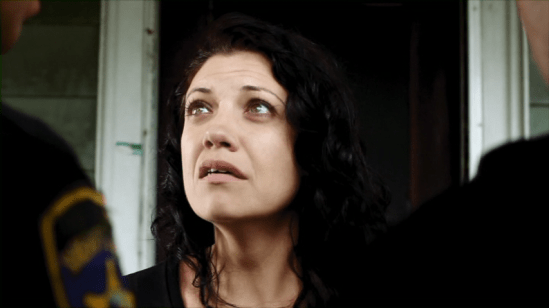
Honestly, the expectation of graphic violence had a sky high bar set upon the shoulders of Debbie Rochon’s inaugural film, but the special effects violence was unusually tame to a point, containing nothing too new and too extreme until near the finale that involves a naked Jehovah Witness and a medical grade scalpel. Aside from the lack of gross gratuity, the effects were borderline choppy; a prime example to consider would be the obvious rubber baseball bat, wielded by Ginny, that sprung forward and backward, like something out Looney Toon’s ACME company, when striking against an object, but “Model Hunger” was riddled, subtly throughout, with equipment flaws such as equipment shadows in scenes and a continuously shaky camera.

Wild Eye Releasing’s unrated DVD is presented in a widescreen format with a Dolby Digital 2.0 audio mix. Aside from some awkward framing and a bitrate issue that causes a bit of blotchiness, the digital camera video looks good for the most part with an audio mix from “Friday the 13th” composer Harry Manfredini that’s well balanced. The director commentary, in the bonus features, is a highlight of the extras with Debbie Rochon letting you into her creative side of her film. The commentary is accompanied with deleted scenes, music video, an interview with Aurelio Voltaire, a Babette Bombshell short, trailers, and an Easter Egg! Overall, the underlining point is clear of reverse body-shaming in a very Hatfield versus McCoy scenario and Debbie Rochon, for her cherry-popping film, creates a solid horror entry that displays it’s quality scars and hiccups which the film, nor Rochon, apologizes for and that’s a filmmaker, and actress, I can get behind.

Buy Debbie Rochon’s first film “Model Hunger” at Amazon.com!

Evil Bikers Take On Unstoppable and Unthinkable Savior! “All Hell Breaks Loose” review!

The spawned from hell biker gang, Satan’s Sinners, ride the dusty roads of west coast America in search of pure virgin women for their master’s ever growing domain. As they wreak hellish havoc along the way, they ride upon newly wed couple Nick and Bobby Sue, stealing the beautiful bride away from her loving husband and leaving him for dead on the side of the road. However, the Lord works in mysterious ways as divine intervention in a form of a boorish Cowboy, who may or may not be God himself, resurrects Nick from the dead again and again to save his wife from the ultimate damnation – Satan’s beautiful virgin slave. Armed and clueless, Nick finds help wherever he can, whether by the prideful local sheriff or the alcoholic priest who performed Nick’s marriage, to stop the bikers and to reclaim Bobby Sue.

“All Hell Breaks Loose” is one of those indie films that’ll fly under the radar of the indie film circuit, scraping and clawing at the surface and trying to create a name for itself. At face value, “All Hell Breaks Loose” is a hell of fun, devilishly entertaining, and so relaxed that it doesn’t take itself too seriously. Unfortunately, those film’s qualities are the complete antonym to a box office money maker or a breakthrough independent golden nugget. I get why money won’t just flow in, though. Director Jeremy Garner’s name won’t ring any bells and has dabbled more in the special effects field than the director’s chair, which I thought his 2009 special effects work on “Melvin” was fantastic, and the screenwriter Jacy Morris, under the pen name The Vocabularist, is also an unknown with only this film under his belt. There’s strike one. Secondly, the lead actor isn’t a big name; Nick Forrest name might seem similar to “Shaun of the Dead’s” Nick Frost, but, sadly, no. But Nick Forrest plays his character of the dimwitted, pee-wee hero character well enough for be recognized and respected. The last, and final strike, is film’s recognizable headliner – “Danger” Ehren McGhehey from “Jackass” fame.

Garner’s film doesn’t need to prove one damn thing to anybody. The horror-comedy story is simplicity thats surrounded itself with undying love, badass demon bikers, and God’s wish-washy methodology; there’s no symbolism or underlining message that suggest otherwise and there’s not much explanation here or there about the particulars of the Satan’s Sinner’s mission or why in that particular region they choose to run amok. Viewers looking for an untamed experience will just want to see the Bikers dish out violence and pain and see Nick die a horrible death over and over again. Even though Garner didn’t dip his hands into conducting the effects for his Sophomore film, Izzy Combs, Ray Kelley, and Steven Strop team up to pull off some amazing lunacy with the limited budget effects that get gory without being over-the-top and ridiculous.

Aside from a pipsqueak-to-a partial demi-god hero in Nick Forrest and “Danger” Ehren portraying a demon biker with an Elvis Presley obsession, the rest of the cast, like the Satan’s Sinners, is a motley crew of talent ranging from twenty years of B-movie experience in Todd Robinson to a slew of undiscovered actors, especially in the biker gang with Hunter O’Guinn, Joshua Lee Frazier, and Tommy Hestmark with leading lady Sarah Kobel Marquette as the damsel in distress while being undressed.
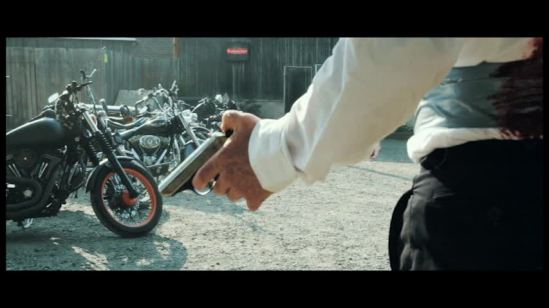
Wild Eye Releasing summons from the underworld “All Hell Breaks Loose.” The unrated, 92 minute feature might have cheesy and cheap DVD cover art, but the entertainment value speaks volumes. The release contains bonus features that contains an informative director’s commentary, a couple of deleted scenes, and trailers. Overall, give “All Hell Breaks Loose” a chance or two or three, just to be completely sure that you understand that what you’re about to see will be utter chaos that’ll make the Waco, Texas shooting look like a little girl’s tea party with her favorite stuffed animals.
Don’t Leave Evil On Hold! “Serial Kaller” review

Phone sex models broadcast their televised provocatively dressed bodies over the British airways while chatting with lonely customers. During their biggest broadcasting night, all the girls and crew become purposefully trapped in the sleazy studio, making the phone sex business a dead line. Disappearing one-by-one, each model falls viciously victim to a murderous psychopath who could by one of their most disturbed and perverted fans. With the power out and the studio on shambles, the survivors attempt to escape dead air by any means possible, even if that means coming face-to-face with their stalker.

The cast full of busty beautiful women enthralled to a murderer’s maniacal impulses sounds to be a bit of good horror movie fun untamed by the restrictive harnesses of big studio conventions. Director Dan Brownlie and his producing company Brand B Corporation develops “Serial Kaller” to be the limited budget archetype of the slasher films with an inkling into the very real world of broadcasting UK’s phone sex girls or better known as simply “babe shows.” Co-writer and star of “Serial Kaller” Dani Thompson once worked in the business, and appropriately proportionately so, that sparked the idea in her for a killer loose in the bare bones, deathtrap studio of a babe show. The diminutive budget project attached some B movie talent such as Suzi Lorraine and the iconic Debbie Rochon while rounding out the cast with top heavy talent in Jess Implazzi, Aisleyne Horgan-Wallace, Suzy Deakin, and Zoe Morrell.

With all the dazzling, easy-on-the-eyes women in the cast and a sweetly promised premise coinciding, “Serial Kaller” squirms itself onto the independent slasher scene with barely a thrill to offer and a death to deem applaudable. “Serial Kaller” stands out as much as pig in the middle of a stable of horses with mediocre kills, colorless dialogue, and disjointed concept that resembles more like an unfinished thought than a complete work. Brownlie’s and Thompson’s film subtly whispers similarities to, or homages to, that of the England’s 19th century prostitute murderer Jack the Ripper, with the start of an undefinable and causeless figure stalking sinfully innocent sex workers that happen to be, coincidentally, English. Yet, somehow that hint of respect becomes lost in translation; with a title like “Serial Kaller,” one might be under the impression that phones with have a significant role in the story, such as in Bob Clark’s “Black Christmas.” In reality, the phones are just, well, phones, while the story takes a rogue route that’s far from the intentions of the title, losing the motivations and the inspirations of a modern day Jack the Killer.
The co rrelation between the model’s baleful setup and the murderer circling nearby doesn’t jive to build successful suspense and when the moment finally comes to fruition where a model is about to bite the inevitable dust, there’s no jolt of anxiety toward the situation. The kill effects, consisting of minuscule budget practical and CGI effects, fail to heighten the murderous affairs. Probably the best kill scene in “Serial Kaller” is the electrocution through one of the babe show tech’s genitals, zapping up into the girl that’s unenthusiastically grinding his crotch with her clothes on and exploding out her eye balls. Zany death, but still kind of cool, right?

My good friends at Wild Eye Releasing brought “Serial Kaller” onto DVD, presenting the feature in a director driven retrofitted 4:3 full screen aspect ratio to give homage to once praised VHS nasties. Despite the slight lean toward a grindhouse appeal in the aspect ratio, the picture quality is clean, naturally toned, and detailed. The audio goes without hiss and is well balanced. Extra content includes director’s commentary, behind the scenes featurette, and trailers. The overall, “Serial Kaller” is the epitome of big concept packaged small and can’t quite muster a snowball effect to wrangle in the much needed thrill rush to go along with the scantily-cladded women, but Brownlie’s film redeems a little with Debbie Rochon phenomenal joker-esque performance that, unfortunately, has very little screen time.
 It's Bloggin Evil!