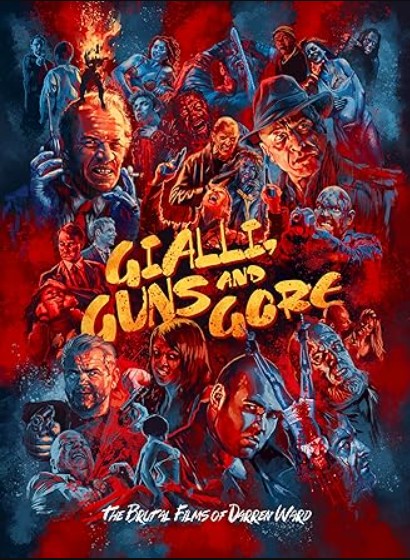
A Trio of EVIL of Italian-Inspired Violence. “Gialli, Guns, and Gore!: The Brutal Films of Darren Ward” reviewed! (Treasured Films / 3-Disc Blu-ray)

The Brutal Films of Darren Ward Are a Must See! Buy the Set Here!

Walker, a former SAS turned hitman mercenary, accepts a job by a white-collar narcotics kingpin to snuff out a rival organization for control over cocaine distribution territories only to be betrayed by his employee, targeted himself for elimination.  Going into hiding to recover after narrowly escape with injuries, Walker’s best and only friend is caught, tortured, and slaughtered to draw him out.  There’s nothing left for Walker to do other than to mercilessly wipe them off the face of the Earth.  In another thrilling tale, low-level hoodlum Mitchell steals 100K from another low-level hoodlum holding the money for a mob boss.  Planning to use the money to fund his daughter’s return from a comatose state, Mitchell must first outrun and outsmart the mob who are hunting him down, but nothing will get in the way of saving his little girl.  Lastly, Walker returns to the fold having retired permanently from the mercenary life and is now living the married life with a child on the way.  When a group of lowlife henchmen decide to joyride murder and posthumously rape his wife and leave him for dead, all Walker wants is thoughtless vengeance and he must go through an entire crime syndicate to get to those responsible for destroying all that he loves.  Unfortunately, the underlings of a ruthless Russian mob boss, who is trying to tie up loose ends before the police and investigators come after him, are protected by a small arsenal.
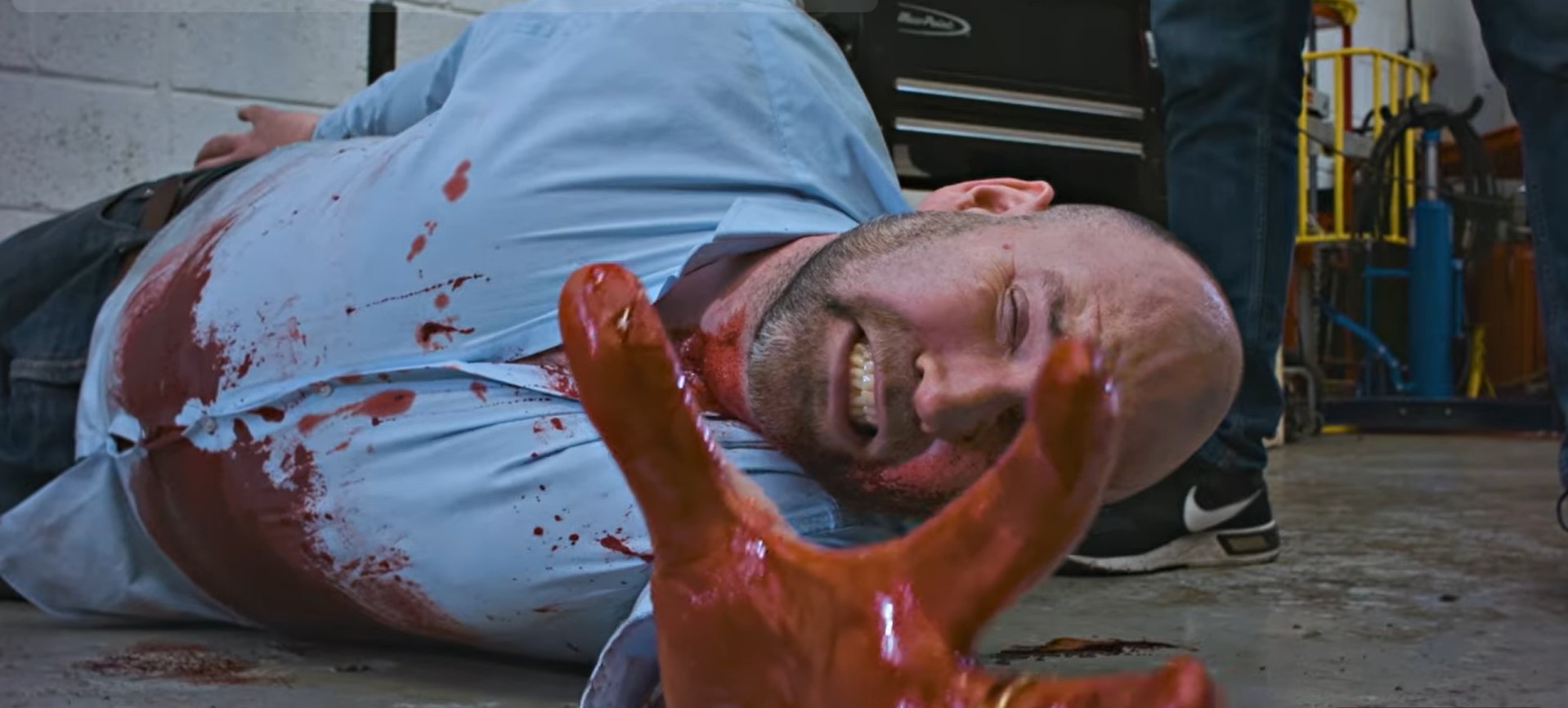
From 1997 to 2019, British filmmaker Darren Ward produced the Fury Trilogy, a 3-film series of violent crime thrillers that harked back to the days of the Italian poliziotteschi subgenre, a brutally violent series of crime thrillers released between 1960 and 1980 that saw themes of cruel hearted antagonists, a justifiable hero hellbent on revenge, and the up-close-and-personal violence and, often times, gore.  “Sudden Fury” (1997), “A Day of Violence” (2010), and “Beyond Fury” (2019) are the titles and while not all three wholeheartedly connect in the series and in story, they share the cruel characteristics and the visceral animosity that has lurked in the Italian shadows for way too long.  From Italy to the United Kingdom, Ward resurrects the short-lived classic exploitation subgenre having written-and-directed all three years over the course of 20 years, and maybe even before that as Ward wrote-and-directed the 1994 short film “Bitter Vengeance” that preluded the Fury Trilogy with a foundational base concept for subsequent feature films.  Ward produces the films under his company Giallo Films.
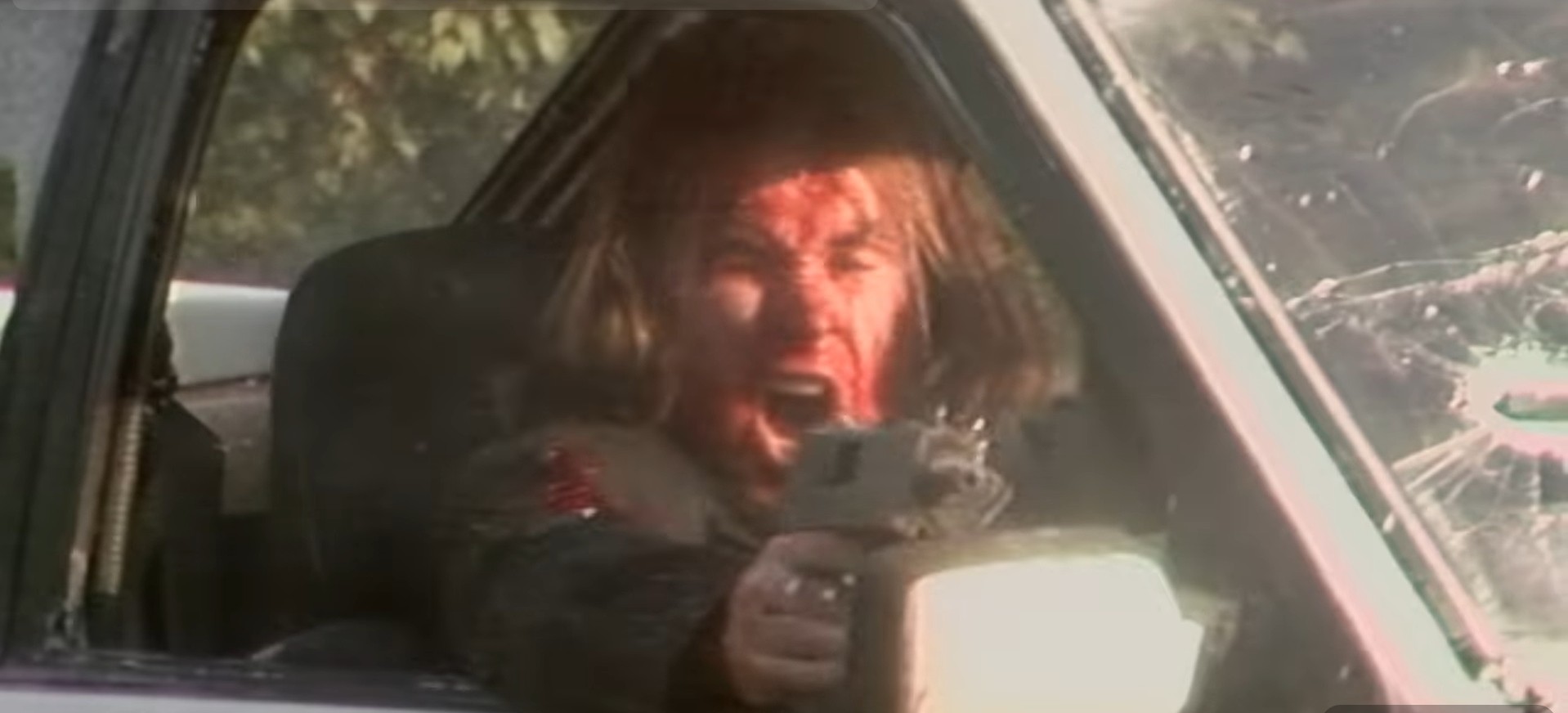
The 1997 “Sudden Fury” is a showcase of mid-90’s nostalgia propped up by vast, electric, and eccentric cast and characters that spin a web of complexity between two gangs, one hitman, and a whole lot of vengeful vendettas.  Nick Rendell plays the sought after former SAS soldier turned mercenary hitman Walker with full zeal for the 80’s action star by carrying a reputation that proceeds the character.  Rendell’s portrayal is often aloof as Walker stands in between two gangs and their lack of integrity as they squabble over the cocaine dominion, but when the last standing gang tries to hunt him down, killing his one and only friend in the process, Walker takes the fight to them guns blazing.  Rendell also carries over his performance to the 2010 film, the unconnected “A Day of Violence,” but in different shoes as Mitchell, a father, husband, and hoodlum in desperation mode and doing whatever he can to live and breathe inside the context of mob land complexity for a large sum of money.  Rendell goes form lone wolf to a man with dependent in a totally different side of character in Mitchell when compared to Walker when considering how the compassion attribute.  Now, Walker returns for “Beyond Fury” but Nick Rendell does not return to the role as the 2019 film sees Nick Roberts filling the mercenary shoes.  Also, this time around, Walker is given compassion, compassion for revenge!  In his retirement, his family is murdered arbitrarily – as if ill-fated living a previous life of violence and death – and vows revenge at his own expense to harm taking on an entire organized criminal organization, ran by the unforgiving “City of the Living Dead” and “Cannibal Ferox” actor Giovanni Lombardo Radice.  Radice is also one of the only other connective tissues between the last two films but in different roles with opposing significance with more prominence as the chief villain in “Beyond Fury” as well as Victor D. Thorn in various capacities in each three films.  Other notable cast members from across all three films include David Warbeck (“The Beyond”) in “Sudden Fury” and Dani Thompson (“Axe to Grind”) with Andy Ranger, Paul Murphy, Christopher Fosh, Steve Humprhies, Tina Barnes, Helena Martin, Tina Barnes, Joanna Finata, Harold Gasnier, Gary Baxter, Dan van Husen, Glenn Salvage.
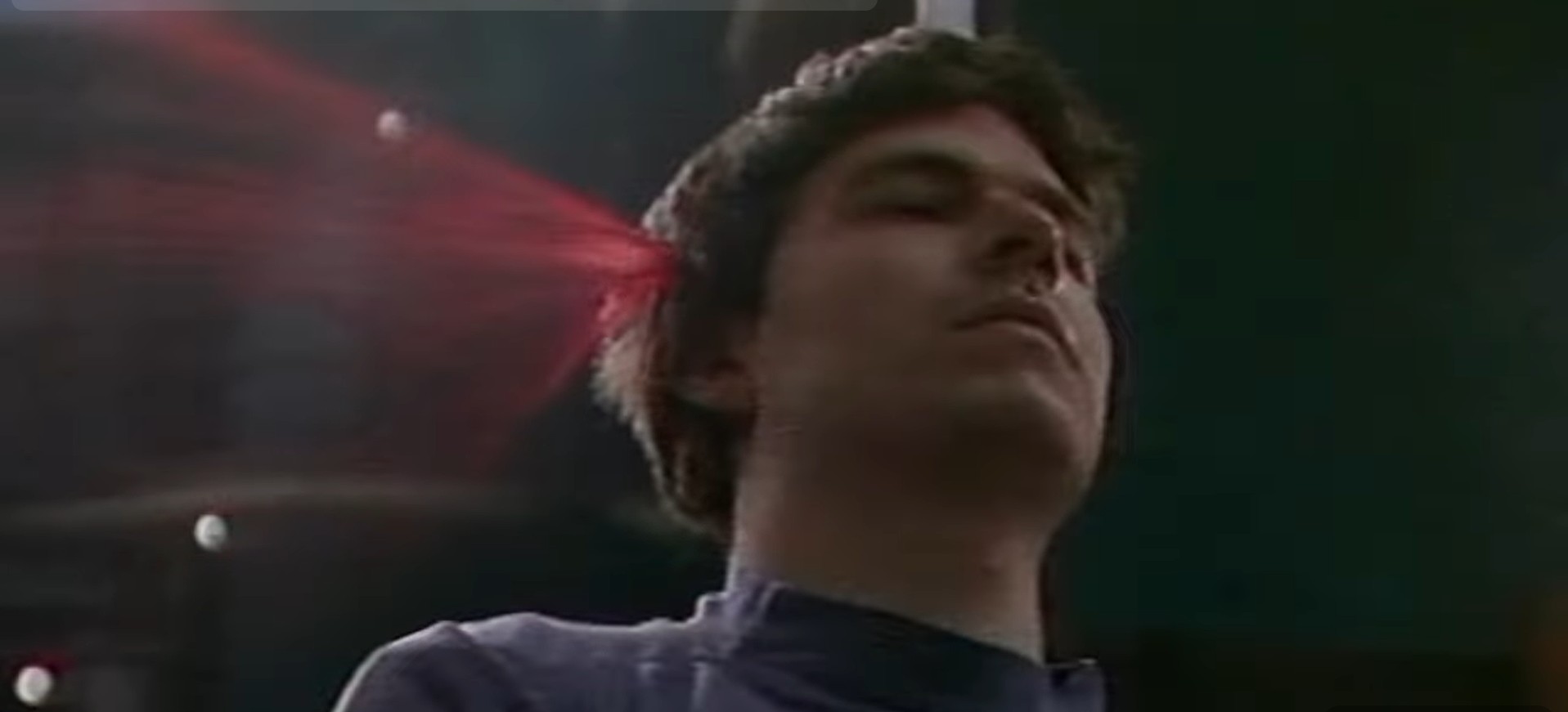
Darren Ward’s Fury Trilogy is roughly the same model copied over one another at roughly a decade and half apart, yet each individual storyline evokes a different impression as each has unique attributes.  “Sudden Fury” surrounds itself in sociopathy, drug trade, and gang war.  “A Day of Violence” has themes of devotion, parenthood, and blinding greed.  “Beyond Fury” spores retribution, justice, and loyalty.  Other than the reprisal of the Walker character in the first 1997 and last 2019 film, the real only aspects that connect the series together is the unflinching and visceral violence fueled one major motif in all of Ward’s movies, organized crime syndicates versus the single willed warrior.  Ward has no qualms with showing violence front and center in the most graphic way possible and without it being overly gratuitous or at least blending the excessive blood and gore action into the moment that it hides in plain sight.  The effects on all three films go hard under Alastair Vardy who did the SFX work on all three films.  Vardy is a major effects artist as of today, having worked on such films as “World War Z,” “Kick-Ass 2,” and last years “28 Years Later” and that speaks volumes to his dedication toward director Darren Ward and his three films produced on a lesser budget with mostly genre and cult actors.  Ward’s scripts are heavily dynamic and can become complex with betrayals, twists, and a fair amount of unpredictability in the grand schemes of either drug wars, money disputes, and damage control.  “Sudden Fury” and “Beyond Fury” has an easy, 2-part character arc for Walker but there often feels like a missing piece to his character backstory, especially when his stories are over 20 years apart and Ward doesn’t profoundly piece those missing years together with much effort.  Yet, through Ward’s camera cleverness and storytelling, there is plenty to like and easily digest through multiple camera angles of a scene, interesting shot setups, and the close and personal nature of strong violence.
UK distributor Treasured Films rolls out the bloody red carpet for Darren Ward’s Fury Trilogy with a brand new 3-Disc Blu-ray set entitled the “Gialli, Guns and Gore” set that is region free for all to enjoy the carnage.  The limited-edition boxset comes with newly remastered and graded scans for its grand worldwide Blu-ray debut on “Sudden Fury” and UK Blu-ray debut for “A Day of Violence” and “Beyond Fury.”  “Sudden Fury” is scanned from the original SOV material and into a 720HD, leaving a lot of room for unfortunate and unable improvement but this transfer is pretty damn good that retains that shot-on-video, interlacing aesthetic and muted colors.  There are no evident issues of overly heated color tones or tracking lines from magnetic tape deterioration and presents the best possible image with soft details in a 1.33:1 aspect ratio, though the back cover states all features are in a widescreen.  “A Day of Violence” and “Beyond Fury,” having been digitally filmed over 13-years later, are in a widescreen 1.78:1 aspect ratio with cleaner image resolution that looks neat a pin with granular details surrounding skin and textures, a slight slate color grading with hues being diffused and saturated in balance, and offers a focal depth to enhance quality.  The English language audio format is an uncompressed DTS-HD Master Audio 2.0 that packs a wallop front and center.  The Fury Trilogy has immense range of gunfire, fisticuffs, explosions, and car races that run the onomatopoeia length of an action bundle with clear dialogue that’s more vital in the last two films with isolating features and more muted in the first with more integration around surrounding elements and electronic interference from the implemented equipment.  There’s not a ton of depth in either film that relies heavily on making an impact with the ultraviolence and caffeinated action in the front role of a dual channel that does have a decent separation and isolation of dialogue and action.  English subtitles are available on all three releases.  “Sudden Fury” special features include an audio commentary by Darren Ward and star Nick Rendell, a retrospective documentary Sudden Fury:  12 years On, a retrospective making-of interview with Darren Ward The Crime Trilogy:  Part 1:  Sudden Fury, deleted scenes and outtakes, a BTS special effects make-up reel, Ward’s 1994 precursing short films “Bitter Vengeance,” 1993’s “Blue Fear,” and 1992’s “Paura Il Diavolo,” an image gallery, and archived trailers.  On “A Day of Violence,” a feature length documentary of Making-Of a Day of Violence, an interview with actor Giovanni Lombardo Radice, an audio commentary with Ward and star Nick Rendell, the second Darren ward retrospective documentary on the making-of The Crime Trilogy Part 2:  A Day of ViolenceThe Crime Trilogy:  The In-Between Years looks at Darren Ward’s short film “Nightmares” from 2004, deleted scenes and outtakes, the hardcore trailer, a no-so-hardcore soft trailer, a Soprano trailer, short film “Nightmares,” an audio commentary for ”Nightmares” with Ward, and an image gallery fill out the special features for the second feature.  The third feature’s special features conclude with another audio commentary with Darren Ward and Nick Rendell, The Crime Trilogy Part 3:  Beyond Fury retrospective documentary of the making-of the film, Chainsaw Fun featurette, the Gasworks Visual Effects reel, The Crime Trilogy props used in the film tour, the Ward 2025 short film “Passion,” an audio commentary for “Passion,” trailers, and an image gallery for that short film.  While the encoded special features are impressive, the physical presence of the Treasured Films release is equally as eye-catching with a rigid slipbox containing frontal artwork by Uncle Frank Productions, three clear Blu-ray Amaray cases, each with new, reversible sleeve art for all three titles, and snug inside the slipbox with them is a 31-page booklet with color stills, release acknowledgements, and essay by Tom Lee Rutter – Furious:  The Story of the John Woo of Southampton..  All films are UK certified 18 for strong bloody violence, gore, sexual violence, very strong language, and strong sex.  The runs are as followed:  “Sudden Fury” 103 minutes, “A Day of Violence” 116 minutes, and “Beyond Fury” 117 minutes. 

Last Rites: The “Gialli, Guns, and Gore” set is Darren Ward’s unflinching frenetic violence now glorified in a beautifully curated Treasured Films package!

The Brutal Films of Darren Ward Are a Must See! Buy the Set Here!

An EVIL Auction Decides One Girl’s Self-Inflicted Fate or the Entire School Massacre of Goth Students. “Eating Miss Campbell” reviewed! (Troma Films / Blu-ray)

“Eating Miss Campbell” on Blu-ray from Troma Films and Refuse Films!

Vegan-goth Beth Connor contemplates suicide daily while attending a high school with a student body that’s cliché to a 90’s horror film and living with her grossly affectionate father and stepmother who are nonchalant and oblivious to her own self-destruction.  When a new, radical, American headmaster is hired at her British school, he creates the “All You Can Eat Massacre” contest that grants one winner a chance at a fully loaded handgun to either kill those of the winner’s choosing or blow their own brains out.  Apart of the accompanying American contingent on school staff, a new English teacher, Miss Campbell, catches Beth’s eye, and she falls heads-over-heels for her.  The contest is Beth’s way out of this clichéd life but her feelings for a morally complicated Miss Campbell and Beth’s sudden urge to consume human flesh puts a small damper on her chances to win the “All You Can Eat Massacre” that’s also highly sought after by a trio of stuck-up, TV themed-named girls aimed to eradicate every freak, geek, and goth on campus grounds.

“Eating Miss Campbell” is the meta-horror-comedy that amplifies stains of the American way, history, and culture in a concurrent saturation of satire.  The Liam Regan film is everything Lloyd Kaufman and Troma Films dreams of in a Troma presented production with a goal to subvert the routine machine of mostly rightwing establishments and conventional, cherry-coated filmmaking.  The United Kingdom film, shot in Yorkshire, is a sequel to Regan’s “My Bloody Banjo” of 2015 but only with a few returning characters in a new situation rather than direct follow-up.  Regan’s sophomore film is the second chapter to what’s being labeled as the Bloody Banjo saga and is a production of Troma, Refused Films, and the “Bad Taste” inspired-company name Dereks Don’t Run Films with Regan and Kaufman producing and Dereks Don’t Run Films’ Danny Naylor serving as executive producer.

A cast made up UK and US actors, “Eating Miss Campbell” marks the return of some familiar faces and character names from Regan’s “My Bloody Banjo” with Vito Trigo (“Return to Nuke ‘Em High Vol. 1,” “Assassinaut”) as Mr. Sawyer now the progun, proviolence American headmaster of Beth Cooper’s school, Laurence R. Harvey (“Human Centipede 2,” “Frankenstein Created Bikers”) as Mr. Sawyer’s indelicately charming number one Clyde Toulon, Dani Thompson (“No Strings 2:  Playtime in Hell,” “Rock Band vs. Vampires’) as Mr. Sawyer’s well-endowed lover with an affection for younger high school boys, and, of course, no Troma production would be complete without a Lloyd Kaufman appearance or cameo as he re-enters the role of Dr.  Samuel Weil for a brief spell on a how-to dispatch oneself.  These returning personalities are integrated into a new grotesque story that surrounds high school goth and aware of the third wall girl Beth Cooper, played by “Book of Monsters” actress, and who has killer bangs, Lyndsey Craine.  Coopers looking to break out of the horror movie cliché by nixing herself before being consumed by the prosaism of it all, and she expositions this all to the camera, talking right to the viewers, to express her discontent and reasoning.  The tongue and cheek affair doesn’t end there with Emily Haigh (“The Lockdown Hauntings”), Sierra Summers, and Michaela Longden (“Book of Monsters”) playing into that 90’s theme by being Clarissa, Sabrina, and Melissa, all different television role iterations of one of the 90’s most iconic actresses Melissa Joan Hart.  The film rounds out with real life couple James Hamer-Morton (“Dead Love”) and Charlie Bond (“The Huntress of Auschwitz”) playing Beth’s parents, Justin A. Martell (“Return to Nuke ‘Em High Volume 1”) as school board member Tusk Everbone, Annabella Rich (“Powertool Cheerleaders vs the Boyband of the Screeching Dead”) as Nancy Applegate the bloodthirsty racist, Alexander J. Skinner as the girl chaser jock Ethan Rembrandt (Hotel Paranoia), and Lala Barlow in the titular role of English teacher, flesh eater Miss Campbell.

“Eating Miss Campbell” is completely satirical, completely outrageous, complete overtop, and a Troma contemporary classic.  Director Liam Regan understands the Lloyd Kaufman’s market audience to provide an unfiltered, unfettered independent production careening with uncontrollable momentum of bloody cannibalism, screwball antics, and topless gratuitousness and, in turn, solidifies himself as a Troma archetype director.  “Eating Miss Campbell” is a practical effects believer that implements squibs, prosthetics, and buckets of stainable blood to use in borrowed locations and while gruesome aspects work for the film, the pacing and storytelling is quite patchwork.  Covid-19, like the virus did for most films in production prior to 2020 lockdown, halted Regan’s progressive flow and caused a year-and-half, 18-month gap, that required additional weeks’ worth of shots, disrupting the flow in story and in character. There’s not a ton of filler to build history, storylines, or even give a moment to connect the pieces and absorb Regan’s revolving madcap that include references to cherry-picked scenes from “My Bloody Banjo” and the whole meta concept that beleaguers audiences with rants and rancorous tudes about reliving a certain period in time, such as a cliched 90’s horror movie for example, or a culture bastardized by violence and grotesque, maligned shapeshifters, and this becomes more than providing protagonist insight and protest propaganda no matter which way you slice and rearrange the story, and that goes without saying that’s most of Troma’s cuckoo-tastic catalogue.

Troma Films and Refuse Films proudly presents “Eating Miss Campbell” onto a Lloyd Kaufman introductory stated unrated director’s cut, Hi-Def Blu-ray. The AVC encoded, 1080p, BD25 presents the film in a 1.85:1 aspect ratio. A feature and a trunk load of extras on the lower shelf of capacity format, keeping in tune with most Troma home releases, shouldn’t surprise or phase the physical media aficionados to know there are compression issues along the darker tones with banding and some posterization, smoothing out textures in poor lighting. When details do emerge, they’re noticeable and visually enriching a right-to-rebel indie production without going overboard into the clarified butter that is major studio glossiness and precision. Often heavy shadow contrasting doesn’t dispel the vivid and appeasing coloring scheme that pops intermittently and skin tones, though skin texture in general bleeds into the adjacent shade, appear about as natural as initially captured without filter, gels, or post work enhancements. The British/American English track in a lossy Dolby Digital 5.1 surround sound mix lessens what should be a quite robust hitting of every audible mark. The scale of “Eating Miss Campbell” is quite expansive from start to finish, carrying over into a number of interior and exterior sets, as well as a lucrative range of diverging, differentiating noisemakers but what’s at hand does the job adequately with plenty of emphasis on the more foolish sense of humor. Depth is rarely utilized in what’s mostly medium-to-closeup scenes and replaced with just a level playing field loading of dialogue, which is clean and clear. An English Dolby Digital 2.0 Stereo is also available. Troma releases are good for special features and “Eating Miss Campbell” is another testament to a haul of extra content, including an audio commentary by director Liam Regan, editor Jack Hayes, and foley artist Finn Brackett, a 7 Days of Hell behind the scenes documentary that looks at the making-of the film with the post-COVID pickup shots, deleted scenes and outtakes, a gag highlight reel, raw b-roll footage, even more behind-the-scenes footage that’s nearly an hour long, the FrightFest premiere, cast interviews, VFX reel, the Troma radiation march against pollution, Troma in Time Square takes a look at Troma’s streaming service, Abbie Harper’s music video Tromatized, and the trailer. There are also a couple of prologue introductions with a Ukraine support intro and a Lloyd Kaufman as character Dr. Samuel Weil with intercut video of director Liam Regan. The traditional Amaray has a dim cover with colorful lettering in a compilation of characters overtop the high school. The disc is equally black with the same colorful lettering and a black and white penciled razor blade encircled by stark red blood. The region free release has a runtime of 94 minutes.

Last Rites: “Eating Miss Campbell” has edge that favors, or even flavors, Troma’s taste with a high school shooting, cannibalistic, no holds barred, teacher-student affair alternate societal universe that’s tough to digest but easy to chew.

“Eating Miss Campbell” on Blu-ray from Troma Films and Refuse Films!

Beware! EVIL is Afoot in a Small Town! “I Scream on the Beach” reviewed! (Darkside Releasing / Blu-ray)

First you Scream, then you DIE!  “I Scream On the Beach” available to buy at Amazon!

Mellow Coast is a small, quiet fishing town typically free from big city violence.  When a dead body shows up on the Mellow Coast’s shoreline, a past of enigmatic and thought solved disappearance cases return to haunt Emily whose father was murdered right in front of her when she was little, yet the local police department ruled her father’s case as simply a father-husband leaving his family when no evidence of blood was recovered, and his car was missing.  The murders and disappearances are connected to a now defunct large corporation working on shady experiments and as Emily digs deeper into her father’s case, a light is shed upon the dastardly transgressions of a shifty, under handing corporation as well as more bodies, including her close friends, turn up dead around town. Pieces all the clues together with the help of a keen detective desperate to solve a case no other officer wants to touch, Emily comes face-to-face with an unsuspecting, tightly knitted killer.

As if slasher films are already tough enough in trying to unlock and solve who the mysterious homicidal wolf in sheep’s clothing is before the big, blood reveal, the 2020 horror-comedy “I Scream on the Beach!” surely takes the cake as the impossible and no-win kobayashi maru test of the slasher genre. Hailing from United Kingdom with a retro 80’s VHS veneer, the Alexander Churchyard and Michael Holiday written-and-directed parodying red herring seeks to be deceptive and as cryptic as logically possible with a masked serial killer storyline stretching over a span of 10 years that culminates to an illogical and shockingly socking finale. “I Scream on the Beach!” is the first feature from the filmmakers working as a pair and as individuals, but Churchyard and Holiday have been skimming together that micro thin layer of the horror stratosphere with college short film works, such as “Fragments” and “The Ratman of Southend,” the latter referencing Churchyard and Holiday hometown of Southend-on-Sea in Southern Essex. The duo cofounded TIS Films Limited during their production of “I Scream on the Beach!” with Churchyard and Holiday as producers alongwith Claire Bowman and executive producer Hill Burton (“RoboWoman, “Slasher House 2”).

The story follows Mellow Coast local Emily, her friends, including a bashful big city transplant with a crush on her, and Detective Kincaid embroiled in a 10-year mystery beginning with the murder of Emily’s father (Rob Shaw) or maybe even beginning with the murder of Dr. Lloyd (Lloyd Kaufman, “The Toxic Avenger”). Hard to tell as Dr. Lloyd expositional death is brought up as background plot painting an unscrupulous picture against a devious, experiment-conduction corporation. In her first feature film and first of many productions with the Churchyard and Holiday team, Hannah Paterson is placed in the final girl role of a VHS decorated slasher that has her twisting and turning from the pub to every which way to find corpses stabbed, gutted, and decapitated in the search for the truth about her father. Her friends, played by Jamie Evans, Rosie Kingston, Ross Howard, and Reis Daniel, are the trope typical asshole, hot girl, filmic nerd, and good guy love interest, in that respective order, are definitely defined to bring out the shine around this specimen of the slasher genre. Lurking in the shadows, as a contemporary scream queen of such films like Debbie Rochen’s “Model Hunger” and “Cute Little Buggers” starring alongside the iconic Caroline Munro, is the Australian born, English raised actress Dani Thompson as a snarky bar keep and aspiring actress who pokes her into the picture as the sort of easy girl and easy target for other characters to love-and-hate, especially amongst Emily and her friends in a mixed bag of feelings toward her role of bitchy Paula. Martin W. Payne (“Toxic Schlock”) as the staunch, Mellow Coast chief inspector, Tess Gustard as Emily’s combative mother, Will Jones (“Terror at the Black Tree Forest”) as the dispassionate inspector, Andrea Sandell (“Patient Zero”) as a fake nun, Chris Linnat-Scott as the creepy Dr. A, and Mark Keegan in a surprising reprising role fill out the cast.

Churchyard and Holiday embark on a VHS faceplate journey with their inaugural film complete with faux tracking lines, low-quality picture, lo-fi audio, and rounding out the semblance with schlocky f/x composition and content.  “I Scream on the Beach!” is a non sequitur, yet perfectly fitting, title for a seemingly beach-themed slasher that evolves erratically and radically as the story progresses into an eyebrow raising “…what?”  I would also dare to say that the acting isn’t the best but rather reflects the modeled era of straight-to-video indie low-budget horror with mild ostentation exaggeration with a character or two grounding the film with relative gravity from floating toward a too far-gone outcome. “I Scream on the Beach” is a kind of film that sits in the nosebleed section of the video rental and physical media aisle (if there are such things as video rental or physical stores anymore) but, sometimes, the cheap seats can be the section where anything goes, and no one will ever know about what happens near the roof. I’m not saying the Churchyard-Holiday production is a raunchy, nudity-laden, immodest, grindhouse peepshow worthy of the now ousted 42nd Street; in fact, “I Scream on the Beach!” mounts a tame and respectable horror-comedy that, like the cheap seats, is nothing to be ashamed of because in the end, they both provide entertainment on a budget.

Continuing to pluck out atypical wild horror genre films, Darkside Releasing distributes “I Scream on the Beach!” onto Blu-ray home video as part of the UK release collection. Keeping with the VHS effect, the stretched 1:78:1 aspect ratio feels to mimic only the very summary of details that continue into employing other SOV gags such as tracking lines, as I mentioned above, as well as a flat coloring palette. The English language PCM 2.0 continues to stay the antiquated technical course, taking the joke all the way, with a badly dubbed and ambient filled lossy audio tracks that keep with the kitschy package. The unrated, 87-minute, full director’s cut release comes with retrograded previews, such as “Mask of Thorn,” optional cast and crew introductions to the film, an audio commentary, complete short films “The Decorator” and “The Hiker” that were briefly spotlighted in the story, and promo spots from the Music and Film Festival. “I Scream on the Beach!” falls above being better than low-rung horror that’ll still knock your socks off, literally, with surreptitious corporation experiments insidiously embedding its clandestine claws into small town denizens in the dark and being stalked.

First you Scream, then you DIE!  “I Scream On the Beach” available to buy at Amazon!

Don’t Leave Evil On Hold! “Serial Kaller” review

output_jxZGQ4
Phone sex models broadcast their televised provocatively dressed bodies over the British airways while chatting with lonely customers. During their biggest broadcasting night, all the girls and crew become purposefully trapped in the sleazy studio, making the phone sex business a dead line. Disappearing one-by-one, each model falls viciously victim to a murderous psychopath who could by one of their most disturbed and perverted fans. With the power out and the studio on shambles, the survivors attempt to escape dead air by any means possible, even if that means coming face-to-face with their stalker.
vlcsnap-2016-03-01-21h26m42s211
The cast full of busty beautiful women enthralled to a murderer’s maniacal impulses sounds to be a bit of good horror movie fun untamed by the restrictive harnesses of big studio conventions. Director Dan Brownlie and his producing company Brand B Corporation develops “Serial Kaller” to be the limited budget archetype of the slasher films with an inkling into the very real world of broadcasting UK’s phone sex girls or better known as simply “babe shows.” Co-writer and star of “Serial Kaller” Dani Thompson once worked in the business, and appropriately proportionately so, that sparked the idea in her for a killer loose in the bare bones, deathtrap studio of a babe show. The diminutive budget project attached some B movie talent such as Suzi Lorraine and the iconic Debbie Rochon while rounding out the cast with top heavy talent in Jess Implazzi, Aisleyne Horgan-Wallace, Suzy Deakin, and Zoe Morrell.
vlcsnap-2016-03-01-21h28m01s241
With all the dazzling, easy-on-the-eyes women in the cast and a sweetly promised premise coinciding, “Serial Kaller” squirms itself onto the independent slasher scene with barely a thrill to offer and a death to deem applaudable. “Serial Kaller” stands out as much as pig in the middle of a stable of horses with mediocre kills, colorless dialogue, and disjointed concept that resembles more like an unfinished thought than a complete work. Brownlie’s and Thompson’s film subtly whispers similarities to, or homages to, that of the England’s 19th century prostitute murderer Jack the Ripper, with the start of an undefinable and causeless figure stalking sinfully innocent sex workers that happen to be, coincidentally, English. Yet, somehow that hint of respect becomes lost in translation; with a title like “Serial Kaller,” one might be under the impression that phones with have a significant role in the story, such as in Bob Clark’s “Black Christmas.” In reality, the phones are just, well, phones, while the story takes a rogue route that’s far from the intentions of the title, losing the motivations and the inspirations of a modern day Jack the Killer.
The covlcsnap-2016-03-01-21h23m02s66rrelation between the model’s baleful setup and the murderer circling nearby doesn’t jive to build successful suspense and when the moment finally comes to fruition where a model is about to bite the inevitable dust, there’s no jolt of anxiety toward the situation. The kill effects, consisting of minuscule budget practical and CGI effects, fail to heighten the murderous affairs. Probably the best kill scene in “Serial Kaller” is the electrocution through one of the babe show tech’s genitals, zapping up into the girl that’s unenthusiastically grinding his crotch with her clothes on and exploding out her eye balls. Zany death, but still kind of cool, right?
vlcsnap-2016-03-01-21h24m59s213
My good friends at Wild Eye Releasing brought “Serial Kaller” onto DVD, presenting the feature in a director driven retrofitted 4:3 full screen aspect ratio to give homage to once praised VHS nasties. Despite the slight lean toward a grindhouse appeal in the aspect ratio, the picture quality is clean, naturally toned, and detailed. The audio goes without hiss and is well balanced. Extra content includes director’s commentary, behind the scenes featurette, and trailers. The overall, “Serial Kaller” is the epitome of big concept packaged small and can’t quite muster a snowball effect to wrangle in the much needed thrill rush to go along with the scantily-cladded women, but Brownlie’s film redeems a little with Debbie Rochon phenomenal joker-esque performance that, unfortunately, has very little screen time.