Sit Back. Relax. And Wank Off to EVIL’s “Live Feed” reviewed! (Unearthed Films / Blu-ray)

While on vacation in China, five friends traverse the local festivities and drinking holes, relaxing in the surroundings of an alien culture of their getaway destination, but when one of them accidently bumps into a depraved Chinese Triad boss, they believe to have nearly escaped a localized international incident with the help of a Japanese vacationer who seems to know quite a bit about this particular Triad boss.  To blow off steam, and to blow off some loads, the friends patron the Venus Theater, a sleazy porno theater offering 1-hour couples VIP rooms.  Their short-lived, and short-comings, visit turns into a terrifying nightmare of broadcasted kill rooms as they find themselves trapped inside the theater owned by the Triad boss for his personal snuff cinema experience and fine dining of cannibal cuisine.  Fried dong and balls are 100% MSG free. 

With a Ryan Nicholson directed film, you never know just what to expect.  From our reviews of the Vancouver native’s work, his teen slasher “Famine” was an angsty disappointment, his destitute slaughterhouse “Collar” collided technical gaffes with sordid satisfaction, and his most renowned direction on the bowling-themed retro-slasher, “Gutterballs” displayed a primal brilliance that rolled one hell of a strike down the lanes of indie filmmaking, but the late, great gore hound filmmaker always lit up our screens with a single reoccurring theme – flashes of red.  Lots and lots of red blood that is!  The blood geysers and gushes in heaps in Nicholson’s 2006 release, the written and directed, “Live Feed” that touts SOV violence in an arcane snuff style.  Co-written with his father, Roy Nicholson (“It Waits”), the self-taught, special effects prodigy bursts onto the full length feature scene with an introductory exploitation and survival horror full of ambition, insane effects, and a narrative bred specifically for fountaining blood.  Self-funded under Nicholson’s Plotdigger Films, the ”Live Feed” legacy continues to output interest in the gore and snuff subcategories with updated home video distributed releases throughout the years, keeping the resourceful, twisted humor filmmaker alive and well in our hearts and collections. 
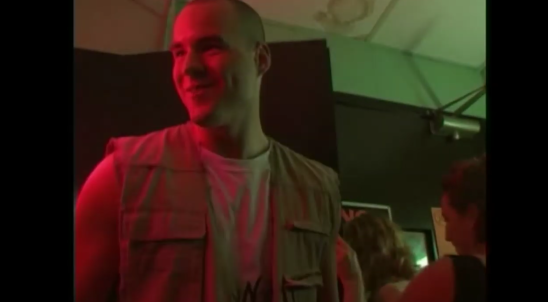
The story revolves around five friends, or more intimately, the hapless stars of a snuff theater production, who are not the most chaste or morally concerned individuals finding themselves center stage because of their wanton whims and uninhibited fortes.  Out of the touristy Americans in a given the impression of being a strange and sordid foreign land, one of them quickly becomes established as the primary beacon of hope as an unassertive wiser in Emily played by Taayla Markell in her first lead performance.  Though their long history makes for easy persuasion into participating, from a distance, in their lewd behaviors, Emily’s hemmed in around familiar perversities derived from her good friends and even her finance.  Mike, a muscular, drug-fueled blowhard develops his crass charisma from “Stan Helsing’s” Lee Tichon, Mike’s current and former girlfriends, Sarah and Linda, in tinge of tattered relationships by Caroline Chojnacki and Ashley Schappert, and Darren, Emily’s douchebag, philandering fiancé played by “Skew’s” Rob Scattergood, lead Emily astray from her own self-preserving inner voice when their arrogance and laxed attitudes place them in hot water with a sadistic Triad Boss.  Stephen Chang fills in the gangster roll with a plastic energy that’s over-the-top and absurd just like the two women who hang off each side of his arm in hackneyed fashion, offering very little to outshine as a sadistic megalomaniac.  Luckily for the out-of-towners who are soon-to-be-goners, they coincidently meet the conversant Miles Nakamura (“Mortal Kombat: Legacy’s” Kevan Ohtski) who round houses his way through a torrent of bad guys to save his newfound American friends, but for what reason goes over our heads other than the potential guilt of knowing he left them to their demise.  Greg Chan, Mike Bennett, Ted Friend, Colin Foo and introducing boner-fide stripper, Charlene McCulloch, with an in your face pole dance rounding out the cast.   

Whether in a stroke of good luck or an ill-timely misfortune, Eli Roth’s highly popular and profitable “Hostel” was released a year earlier in 2005 and while Nicholson’s surely cantered behind that gore porn locomotive in the early 2000’s that sauntered a path for many filmmakers to make unbridled torture and tits productions in the wake, “Hostel” undoubtedly provided some hinderance by scraping some of the shock value from off the sticky theater venue floors of “Live Feed.”  The characters were also nothing to write home about, or in this case, to write highly about, as the circumstances that churn the dynamics amongst their closed circle friendship don’t dissolve until well onto the cusp of being dismembered and thus becoming a moot investable or relatable venture that was, in a way, still crawling for the finish line with spotty payments on Darren and Emily’s acute about-face relationship, the only turbulent character context that saw contentious action.  Yet, there is wonder why “Live Feed” even attempts to brittle or outright break the bonds between friends and lovers in a film that’s all about the blood, about the blood, no trouble, as I channel my Megan Trainor phrases that probably sounds better in my head than in my review.   Unless Emily and Darren’s woes play later into the story, as a point of significant break from the other or in a glimmer of salvaging something between them, the purpose is purposeless and the blood should pool together the entire snuff narrative without an emotional hiccup.  Speaking of blood, the effects between Jason Ward (“American Mary”) and Ryan Nicholson couldn’t have been better executed with a pliable, tangible, and free from visual imagery arsenal at their fingertips with prosthetics upon prosthetics of grisly skirmish matter.

“Live Feed” has it all:  cannibalism, decapitations, sex, bondage, medieval torture, kung fu, snakes, pole dancing, barbecued penis, sword play, a “Big Trouble in Little China” old man Lo-Pan lookalike, and gallons of spattering blood.  All of the above now arrives uncut and uncensored onto an Unearthed Films Collector’s Edition Blu-ray release.  The region A BD50 presents the transfer in a widescreen, 1.85:1 aspect ratio, enclosed with various formatted styles from the poor resolution of SOV to a full-bodied and unstrained digital playback lit up with vibrant neon lightening by director of photography, Sasha Popove, to create an illuminating florescent color splay of a universal Asian urban district.  The sundry of styles can be weighty on the sequences that challenge what should be natural segues into the next scene, but the format choices, from mostly handheld vantage points, interrupt the flow with a nonsensical fluidity.  Unearthed Films amassed a legacy-stamping amount of extra content with a commentary with Ryan Nicholson and cast, a making-of segment entitled “Behind the Blood” which is geared toward being a tell-all on how they spun and produced “Live Feed’s” fruition, a return to the Venus Theater location with a low-key walkthrough of scene locations and you get a little X-rated show during a live project run, deleted scenes, alternate scenes and ending, the video feed footage, photo gallery, trailers, and a short film entitled “Womb Service” of the softcore feature playing background of the feature story. There’s also an “Adult version” of “Live Feed” in the bonus material that includes the original runtime feature but with edited in hardcore footage; however, personally, did not notice any sultry inserts. Maybe they’re brief and missable…? In the experience unravelling Ryan Nicholson’s work, “Live Feed” is the filmmaker’s second best movie with wholehearted intention to jazz it up with as much blood and exploitation as possible and his loss, as a person and an exorable filmmaker with room for ghoulish growth we’ll never experience, stings to this day.

“Live Feed” blu-ray now on sale at Amazon.com. Click the cover to go to Amazon.

When EVIL Isn’t That Black & White. “Choir Girl” reviewed! (Nexus Production Group / Digital Screener)

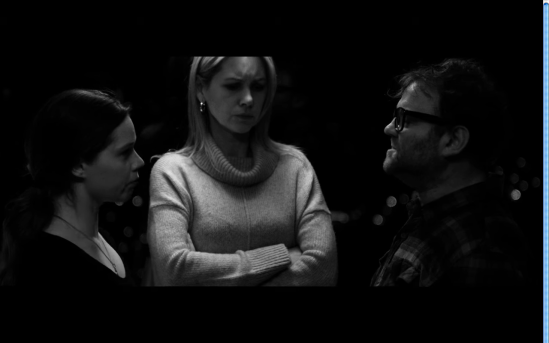
Eugene lives a lonely, pitiable existence.  Residing with his ailing father in a slum neighborhood, his photography background captures the crime and the desolation that surrounds him, snapping pictures without ever interceding with his crime-riddled subjects, in an attempt to hold an exhibition or sell his work to a high profile magazine, Slipstream, as his ticket out of the despair that engulfs him.  When Eugene stumbles upon young teenage girls being drugged and held for prostitution, he becomes fixated on Josephine when a low-level editor, seeing her as a professional stepping stone, prods him for more pictures that evoke hope out of her situation, but when he finally intervenes, helping her escape, Eugene falls into a world of a massive prostitution ring with doctors, cops, and major organizations on the payroll and a kingpin named Daddy at the helm.  The deeper the debt placed upon him for showing compassion to Josephine, the more the lines blur on whether he’s become his muse’s lone savior or just his meal ticket out his current life.

How far will your moral principles take you to save a teenage girl when you’re locked into a no-win situation?  That’s the theme explored to a shocking sexual assault conclusion in John Fraser’s 2019 unscrupulous Australian thriller, “Choir Girl.”  Introducing Fraser’s first credited written and directed full length feature film, shot entirely in black and white, the Melbourne arthouse and a goose egg-fairytale version of “Pretty Woman” speaks volumes toward the perceived illegality of immigration, the horrors of sex-trade, and the touch-and-go balance act between doing what’s right and self-serving opportunities with a 15-year old girl’s fate dangling at the end of a line.  “Choir Girl” is produced by Ivan Malekin under his Melbourne based label, Nexus Production Group, along with Lucinda Bruce serving as co-producer.

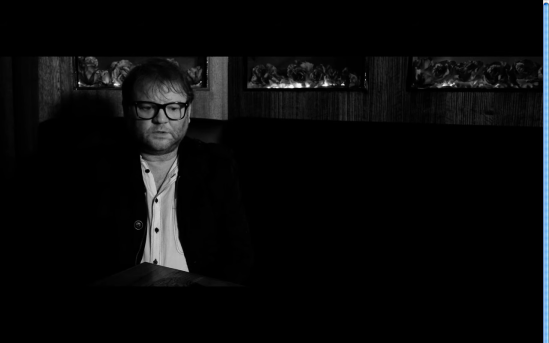
To carry “Choir Girl” through the muck of it all, a strong performance must arduously burden the gravity of the content and Peter Flaherty astounds with an ingloriously flawed and unlikely hero, Eugene.  “The Butcher Possessions” and “KIllervision” actor masts a greasily haggard with bordering neurodevelopment issues, disheveled in his attire, and walks with a noticeable limp, made intentionally noticeable when as he walks away from characters and situations.  Though Eugene seems meek, the shutterbug aches to improve himself by seemingly exploiting others as a freelance photographer and being persistent in that pursuit until becoming engrossed into a 15-year-old prostitute’s life struggle blossoming before our eyes a rather unsettling grown man and teenage girl relationship that assumes a pedophilia ideology of adoring the child to the extent of protection, but also falls in to grooming and sexual exploitation.  The film introduces audiences to Sarah Timm, playing Eugene’s muse, Josephine, an Eastern European illegal immigrant who literally has nothing left that is her own, this including her body, when forced into sex slavery so when Eugene and other characters call her diminutively by Jo, she immediately corrects them to call her Josephine in order to keep the one thing left that is still hers, her name.  In her first feature role, and a mightily demanding role it is with the amount of discomfiture of playing essentially an abused child, the German native will have audiences overlooking the fact that she’s portraying a teenager in the sordid sultriness of sex-trafficking with crafting Josephine’s war-torn history and pre-adolescent childhood stories as always the girl in the background, the unpretty forgotten girl that blended in and no one noticed, until she’s a part of a much larger, more ferocious, uncompromising system that Daddy (Jack Campbell) dictates with CCTV live feeds of every sleazy, scummy hotel bedroom in his syndicated footprint.  The cruelty that Jack Campbell reins savors every facet of Daddy’s being on screen with an intent to be a immovable roadblock in Eugene’s advanced for progress and for John Fraser’s “Choir Girl,” the character development and personalities find justification from the cast with the exception of one, the low on the totem pole and self-absorbed Slipstream magazine editor, Polly.  Krista Vendy imposes on Polly’s rabid  narcissism with an incredibility that becomes the underbelly amongst a bloc of solid performances.  Andy McPhee (“Wolf Creek”), Lee Mason (“The Caretaker”), Jillian Murray (“Body Melt”), and Kym Valentine fill out supporting roles. 

I love the juxtaposition opening of Eugene in his dark room in the middle of photographic processing his oblivious subjects, including a drug abusing child with a hypodermic heroine needle sticking out of his arm, a blowjob being serviced between a wall and bushes, or the aftermath of man being beaten with his assailants walking away from his leveled body, and then the title fades in from black and the next scene is of a framed magazine cover with the cover title “It’s All Back and White.”  The sequence sets up perfectly the entire premise driving “Choir Girl’s” gray area circumstances that nothing substantial, meaningful, or controversial can be black and white. Plus, the entire film is shot in black and white furthering the contrivance of the theme. The gray area challenging Eugene is a tightrope walk when squeezed for payment for snatching Josephine by the amoral organization claiming property theft, making him submit to the idiom of pulling his strings like a marionette or shooting at his feet to make him dance for insatiable perverse satisfaction. Eugene rarely displays remorse in his demeanor, face, or actions for the things he does and doesn’t do when faced with adversity in a slither of sociopathic idiosyncrasy, but when outright criticized for his inaction, he’s able to right wrongs with deplorable methods like a toddler trying to mop up a grape juice spill with mother’s expensive, white dress. There’s a bit of innocence or naivety in Eugene’s mind as you can almost see the gears slowly spinning when confronted but in the defense of the man who no really gave the time of day, those gyrating mice wheels of delicate thought snuck past every contingency against Eugene surviving Daddy’s deadly game, leading to an unsavory solution that puts the viewer in an awkward spot to either avert the eyes or remained captivated to see it through.


I, for one, remained seated, steadfast to the end, hypnotized by audacity of John Fraser in his feature film directorial, “Choir Girl,” that has arrived onto Apple’s iTunes. The unrated film is presented in it’s original aspect ratio of a widescreen format and will have an English language Dolby Digital 5.1 surround sound availability. Though derided as kitschy at times, the black and white veneer works here inside “Choir Girl’s” vascular system of catch-22s and director of photography, Mark Kenfield, rides a consistent straighten arrow style with steady cam shots, decent framing, and some tracking shots without pushing the envelope in regards to angles or oscillation. There were no bonus content or additional scenes during or after the credits. “Choir Girl” sings no praises of hallelujah. Offers no solace in time of hardship. If you’re looking for a movie that touches you, then you’re in for a rude awakening as “Choir Girl” obliterates the moral standards, leaving faith outside, with a severe penance in abetting the Devil’s work, selling their soul to do what’s right.

Steamed Pork Buns Stuff With EVIL! “The Untold Story” reviewed (Unearthed Films/Blu-ray)

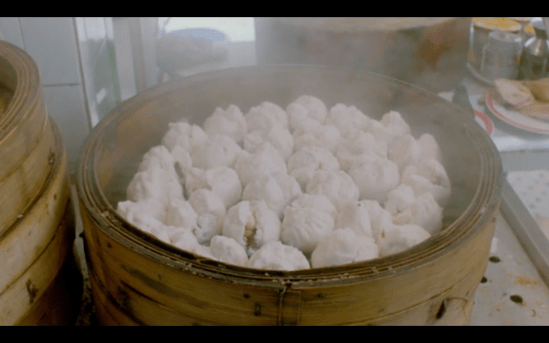
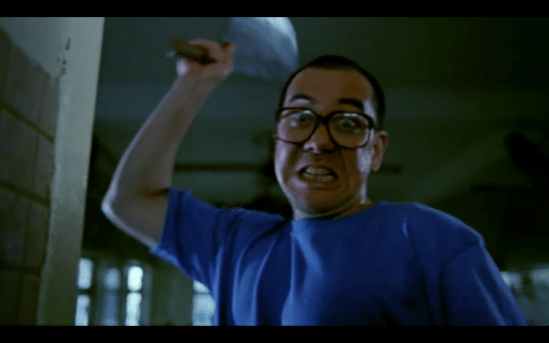
Wong Chi-hang brutally beats and sets fire to a fellow gambler who refuses to lend him money.  After destroying his identification card and creates a new look and identity, Wong flees Hong Kong before he can be hunted down for first degree murder and be served capital punishment for his crime.  For the last 8 years, Wong has lived and worked on the island village of Macau, running a small, but well-known, steamed bun restaurant, Eight Immortals Restaurant.  He receives inquisitive letters everyday asking about the whereabouts of the former owner, Cheng Lam, by Lam’s older brother on the mainland.  The letters force Wong to attempt manipulating lawyers into signing over the restaurant to him without Lam’s presence.  When the police discover dismembered limbs washed up on the beach, an investigation ensues that connects the body parts to a Chan Lai Chun, the mother-in-law to Cheng Lam, leading a small task force of blockheaded detectives to Wong’s restaurant where he becomes the prime suspect in the disappearances, but he won’t break so easily after being apprehended, unwilling to cooperate and confess to the whereabouts of the bodies of the vanished owner, his entire family, and a pair of workers.  Yet, what were exactly in those steam buns that made them so delicious?

Full disclosure.  I’m not too terribly familiar with Hong Kong’s rating system of Category I, II, and III, but I’ve more-or-less dabbled in the Category III (Cat III) horror and exploitation cinematic market, owning only a handful of these gruesome-and-sexually gratifying guilty pleasure full of sex, violence, and taboo concepts of titles such as “Riki-Oh:  The Story of Ricky,”  “The Chinese Torture Chamber,” and “Three…Extremes” and only “The Story of Ricky” has ever been popped into my player for recreational viewing.  Also, in my collection, is a Tai Sing DVD copy of Herman Yau’s 1993 crime-and-cannibalism graphic thriller “The Untold Story” and, frankly, I never opened it either, but when Unearthed Films sent me their new Blu-ray release to review, I’ll never be able to see chop sticks the same way again!  The eye-opening experience also screamed that I should definitely rip open and see those other films to quench my thirst for Cat III’s offensive opulence.  Based off a true story of the Eight Immortals Restaurant murders in 1985 around the Macau area, the nearly unwavering from the truth storyline parallels the Kam-Fai Law (“Dr. Lamb”) and Wing-Kin Lau (“Taxi Hunter”) co-written story in which a madman slaughters an entire family over a gambling dispute and runs their family business, the Eight Immortals Restaurant, until the police capture him, but Yau sticks more sensationalism to the already brutal notoriety surrounding the actual case with ground human barbecue steamed buns to tease with abhorrent flavor under the Golden Sun Films Distribution distribution of the Uniden Investments and Kwan Hung Films production.

“The Untold Story’s” lead man in the shoes of the maniacal, rage-filled Wong Chi-Hang is “Ebola Syndrome’s” Anthony Wong who initially thought the script was greatly unattractive.  Little did he know that his performance would be so good, so osmosis with his wide-eyed lunatic stare through the luminating pixels of the television screen, that the role would honor him with a Hong Kong Film Award for best actor; Hong Kong’s equivalent to the best actor award for an Oscar in the States.   The “Hard Boiled” actor embodies a soul of frustration and anger to rise his character up to the demented level of nihilism and heartless exploitation that unforgettably scores being the face of “The Untold Story’s” cruelty.  Yet, there is a Jekyll and Hyde complex with Yau’s film that cuts the cynicism with a risible troupe of police officers supervised by Officer Lee (Danny Lee “The Killer”).  With a beautiful foreign woman, a blatantly announced hooker, always at his side and being the sharpest detective on the force, Lee’s a contradictory, authoritative commander meshing immoral principles and duty into one while leading a four-person squad of non-initiatives comprised of three rubbernecking men, craning their gulping jugulars toward Mr. Lee’s arm-candied gals, and one tomboy woman with an affinity for Mr. Lee who struggles with being taken seriously amongst her peers as an unenticing woman in cop’s clothing.  The officers’ western names are a slither of satire to poke fun at the nicknames of tough or macho cops go by in the States with Bo, King Kong, Robert, and Bull (respectively Emily Kwan, King-Kong Lam, Eric Kei, and Parkman Wong of “Dr. Lamb”).  The cast rounds out with Fui-On Shing and Julie Lee. 

“The Untold Story’s” embittered nihilistic violence, gratuitous rape and sodomy, and steamy, mouth-watering cannibalism leverages this Cat III film as tiptop horror exploitation from the far East.  If broken down more, director Herman Yau pins and sews together a liaising three act prong story of a horrid man’s attempt at deadly stability in society and a madcap group of officers, with a penchant for police brutality and coercing confessions, bumbling their way through clues that ultimately funnel into a blended third act of magnetizing the two sides together toward a satisfying, almost faithful, ending of “The Eight Immortals Restaurant:  The Untold Story’s” purloin and murder fiction and non-fiction exploit.  Yau spares no expense for gore, serving up a platter worth the splatter of some nifty chop’em up and grind their meat into the dough effects that’ll turn stomachs as well as heads and doesn’t exude as bargain basement quality; yet, just enough gore goes uncovered to tantalize without a full onslaught tarp covering the ground of disembodied limbs and floor-splattering entrails that boil down to an overshadowing character that detracts from the cast performances as such can accompany with the more extreme Asian horror catalogue.  There’s nothing gentle about the actions of Wong Chi-Hang, but the way he’s scribed to manifest spur of the moment carnage, stemmed by the most minute disputes, and the way Anthony Wong carries and maneuvers of a monstrous villain with ease takes an esthetical point to not stray away from his, or rather his victims’, story.  “The Untold Story” is, in fact, meta-exploitation fiction of non-fiction down to the very last tasty morsel. 

In what is perhaps the epitome of Hong Kong’s Category III film index, “The Untold Story” arrives onto high definition Blu-ray courtesy of the gore and shock genre label, Unearthed Films as part of the label’s Unearthed Classics line and distributed by MVDVisual. The well preserved, near flawless transfer is presented in a widescreen, 1.78:1 aspect ratio, and the picture is a vast improvement over the slightly washed previous DVD releases though favors a higher contrast resolution that ekes trading out the details for a brighter, softer film in an overall compliment of Cho Wai-Kee’s beaming cinematography. Whether in the police station or the restaurant, fluorescent lumens light up the scenes with a sterile-driven madness. The Cantonese, Mandarin, and some English 1.0 PCM audio track denotes, without surprise, the lossy quality doddering from age and antiquated equipment, but renders well enough without the imperfections of hisses, distortions, or any vocal impediments. The option English subtitles display without error with only the issue in their breakneck pacing when attempting to keep up with reading the subtitles and the rapidfire dialogue. You basically have to skim read. The special features include commentaries with star Anthony Wong and Herman Yau, the superbly dark and traditional film score isolated for audible pleasure, commentary with Art Ettinger from Ultra Violent magazine and Bruce Holecheck of Cinema Arcana, a Q&A with Herman Yau, a featurette of the history behind Category III films of Hong Kong Exploitation Cinema, a interview with Rick Baker entitled Cantonese Carnage, and Unearthed Film trailers. There’s also an two-page insert of Art Ettinger’s write up about Hong Kong cinema and “The Untold Story.” Resilient to the test of time, “The Untold Story” benchmarks a high point in High Kong exploitation cinema, recalls the tremendous feat of performance by Anthony Wong, and displays the sheer mastery of disciplined filmmaking from Herman Yau in this unforgettable gruesome black comedy.

Must Own Christmas Gift! “The Untold Story” on Blu-ray!