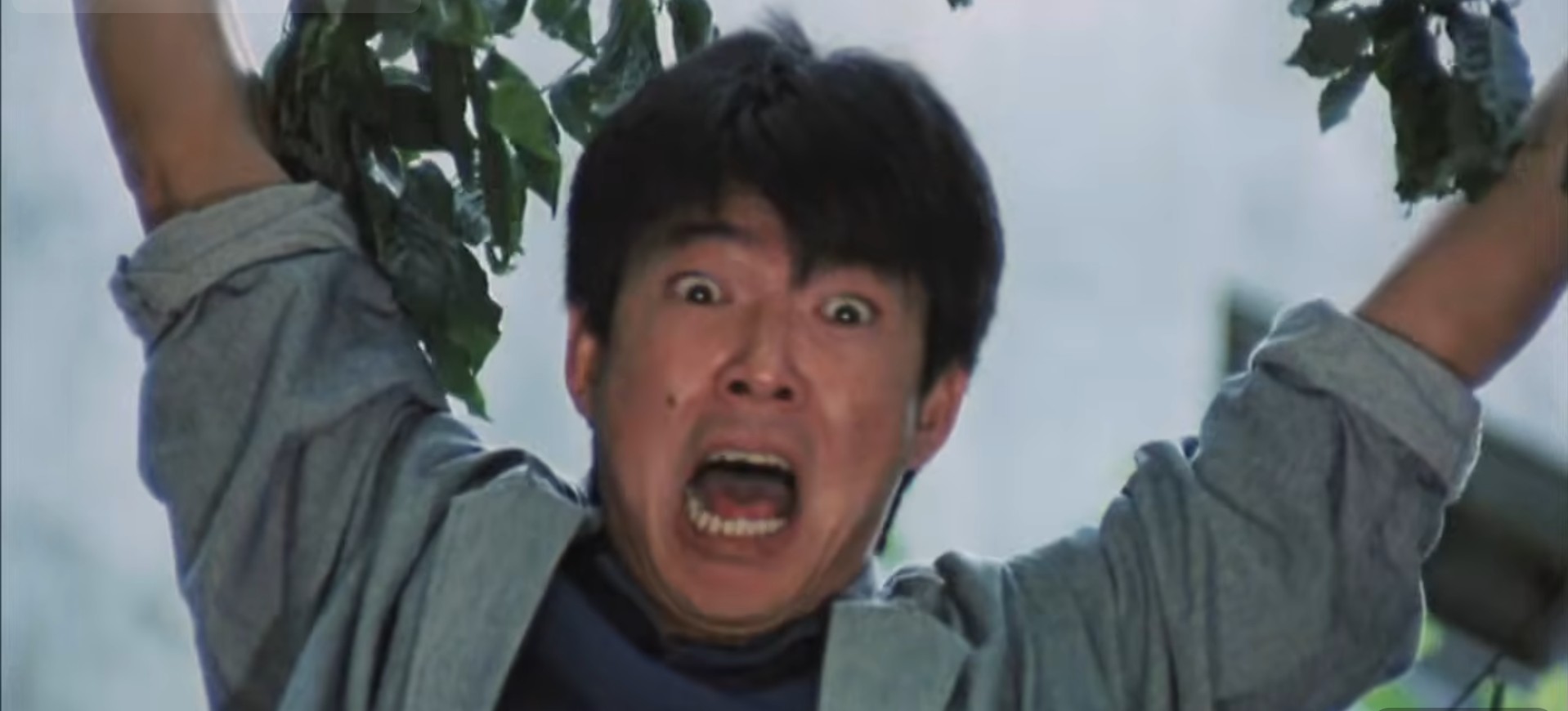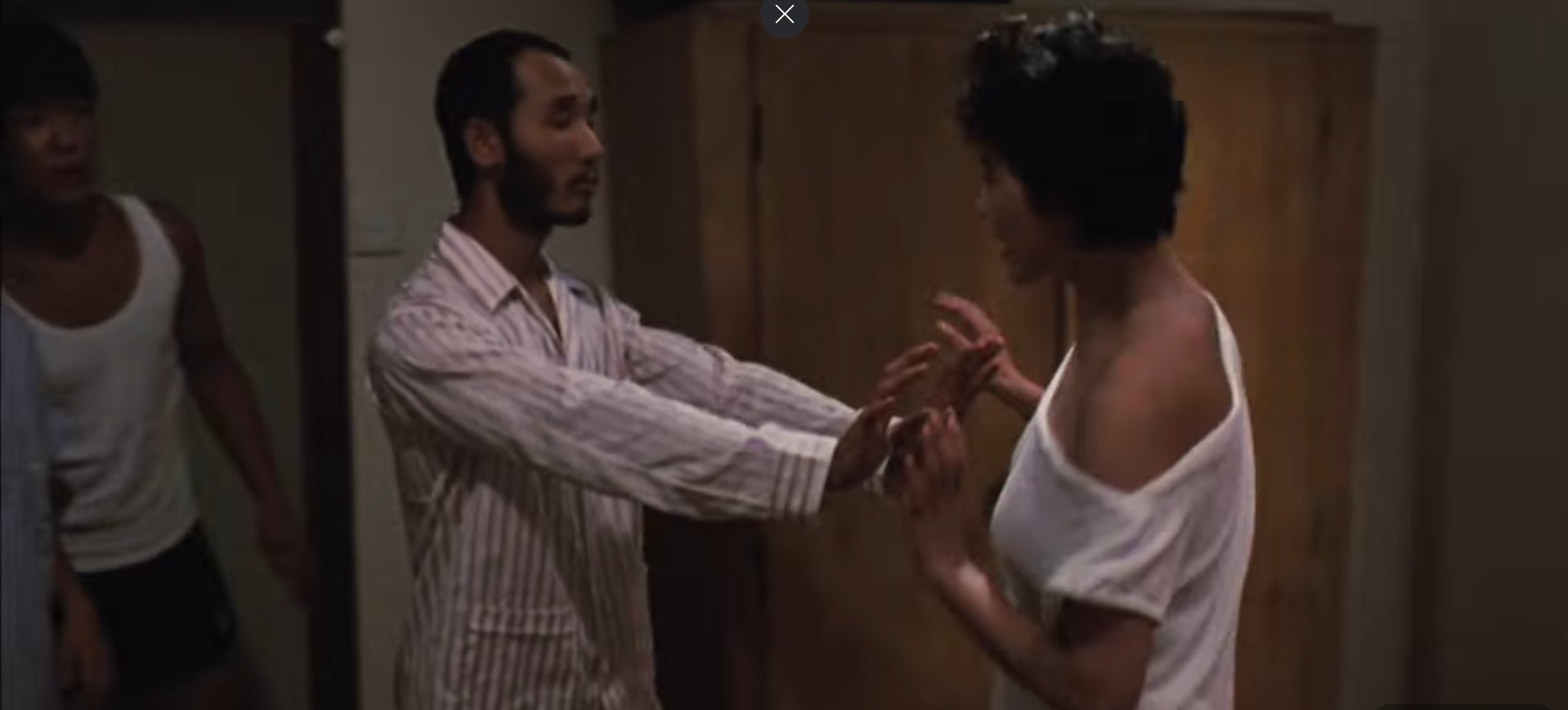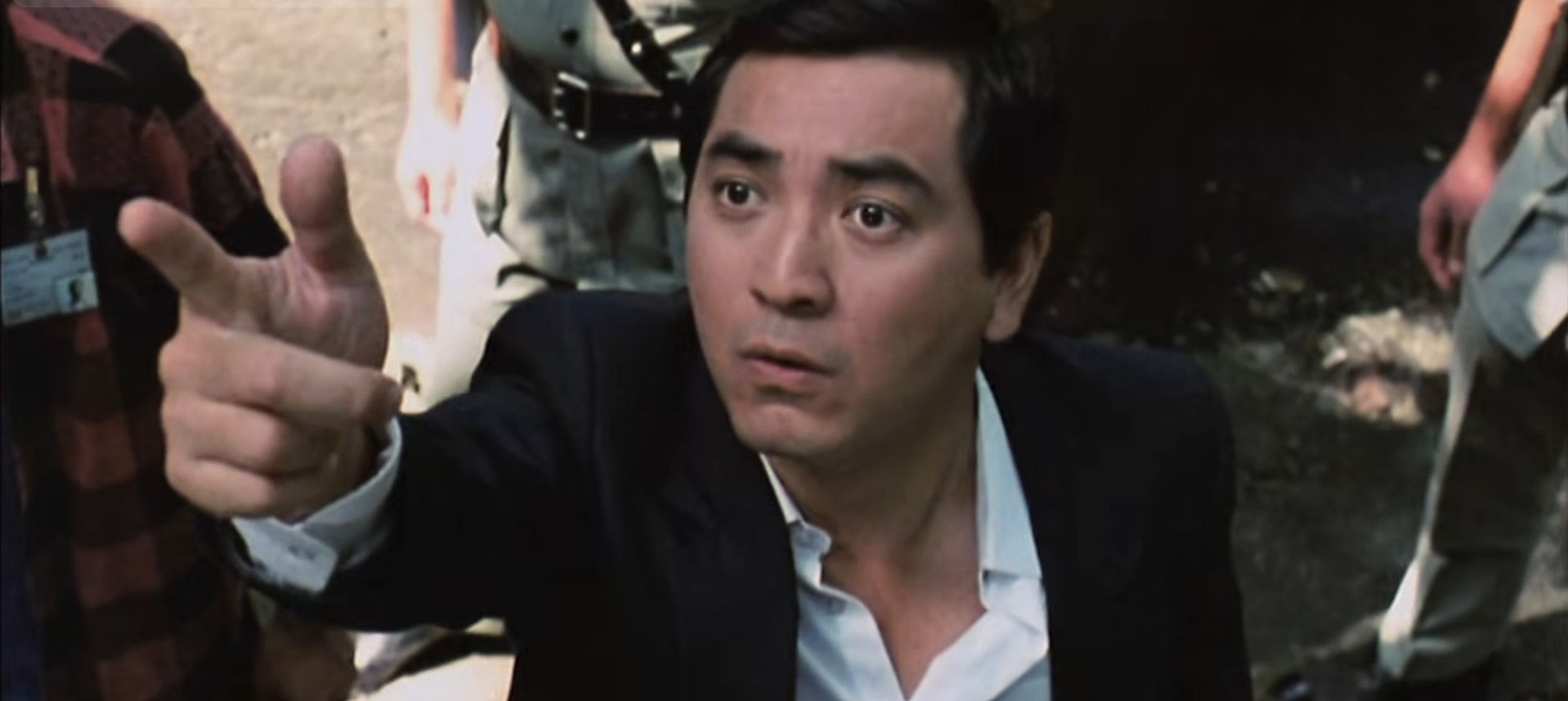
When EVIL Messes with a Family of Blue, There’s No Other Choice Than Street Justice. “She Shoots Straight” reviewed! (88 Films / Blu-ray)

“She Shoots Straights” and She Never Misses! On Blu-ray Today!

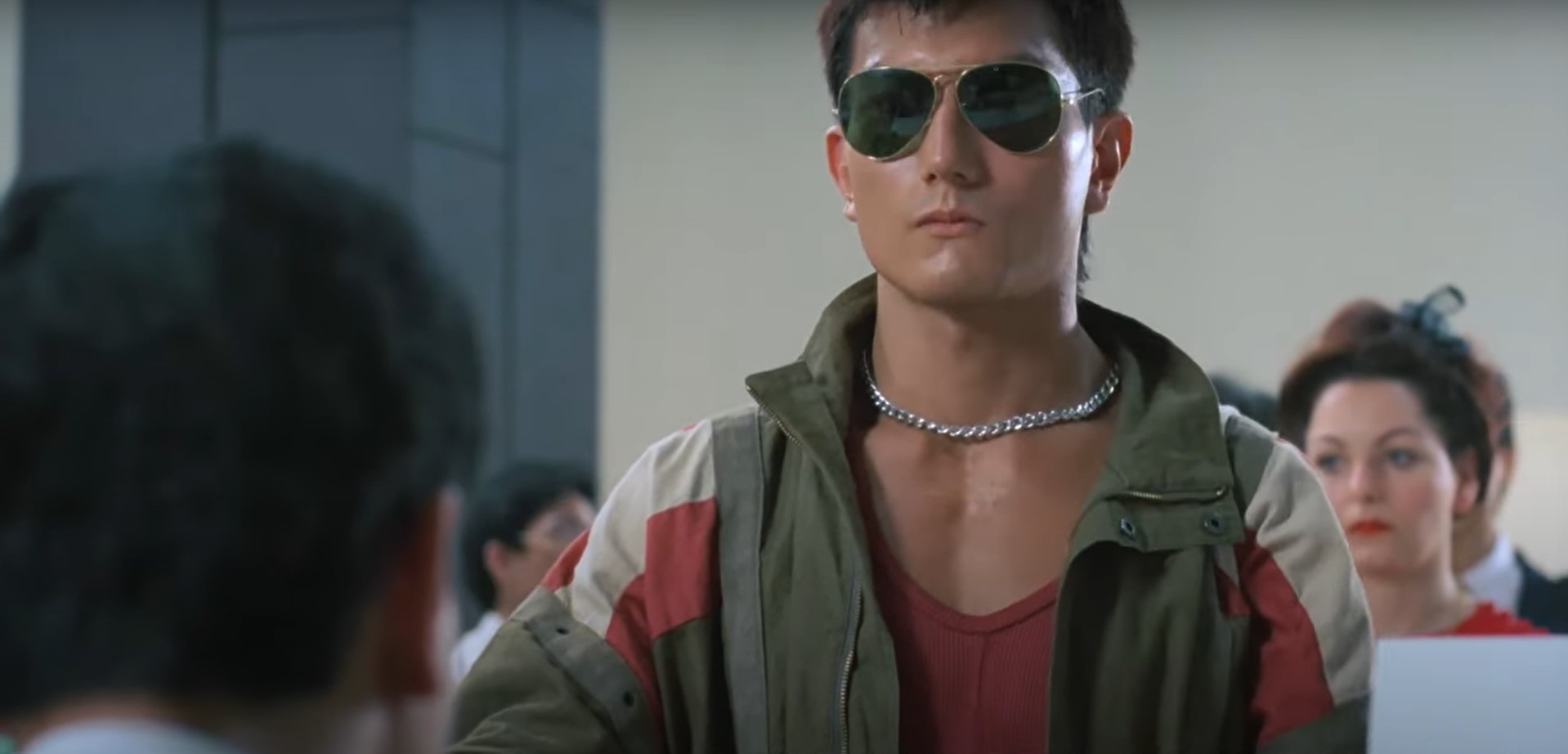
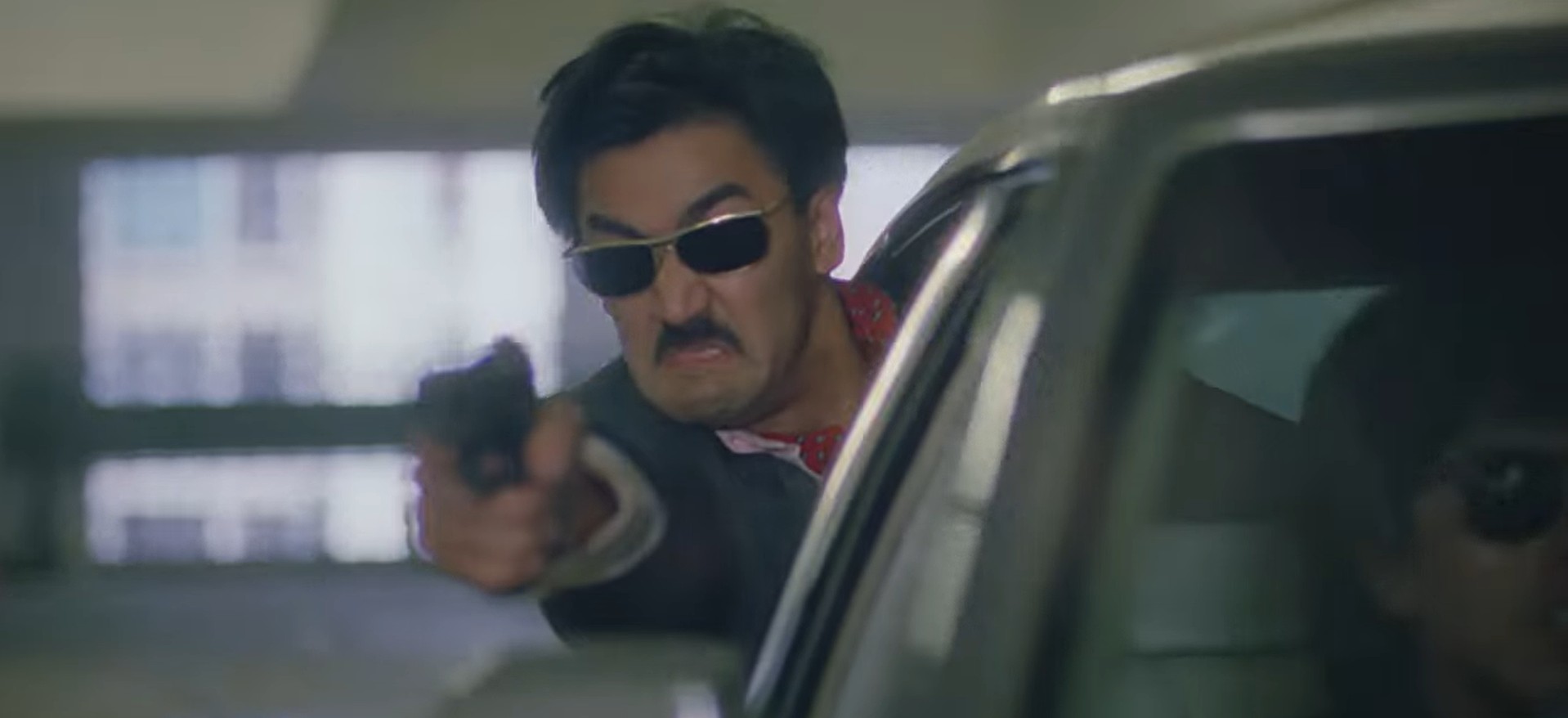
A widowed mother has four daughters and one son whom all work for the Honk Kong national police, more specifically called the CID, Criminal Investigation Division.  Her only son, Huang Tsung-pao, marries another cop, a promising officer named Mina Kao who is quickly rising up the ranks between her supervisor husband and the superintendent.  One could say the Huang family bleeds a brotherhood and sisterhood of blue, but none of Tsung Pao’s sisters approve of Mina despite her being a colleague in arms with the belief she’s stealing their brother away from them and receiving special treatment and recognition from a flirting superintendent who has eyes for her.  When the investigation team tracks down a dangerous, transgressing gang of Vietnamese refugees planning on robbing a night club at gunpoint, Tsung Pao is tragically killed in the one of the tussles, leaving Tsung-pao’s sisters, wife, and mother to seek revenge-seeking justice before the killers flee the country.
If you thought female-driven action films weren’t prevalent enough in the 1990s, 皇家女将,aka “She Shoots Straight,” aimed to prove that theory incorrect.  The Hong Kong production by “Yes, Madam!”) director Corey Yuen is nothing but women-in-action in this gun-fu actioner penned by Yuen, Kai-Chi Yuen (“Once Upon a Time in China”) and Barry Wong (“Mr. Vampire,” “Hard Boiled”).  The action dares with high wire acts that are kept grounded in reality but there’s plenty of intense hand-to-hand skirmishes made to be not only appear feasible on screen but awesomely cool while doing it.  Sunt coordinator and filmmaker Sammo Kam-Bo Hung, who we just covered as the stunt coordinator and second unit director in our review of Jean-Claude Van Damme’s “Knock Off,” produces the 1990 released venture to ensure palpable contact fighting with Pui-Wah Chan serving as co-producer and Leonard Ho serving as executive producer under the Sammo Kam-Bo Hung and Leonard Ho studio, Bo Ho Film Company.
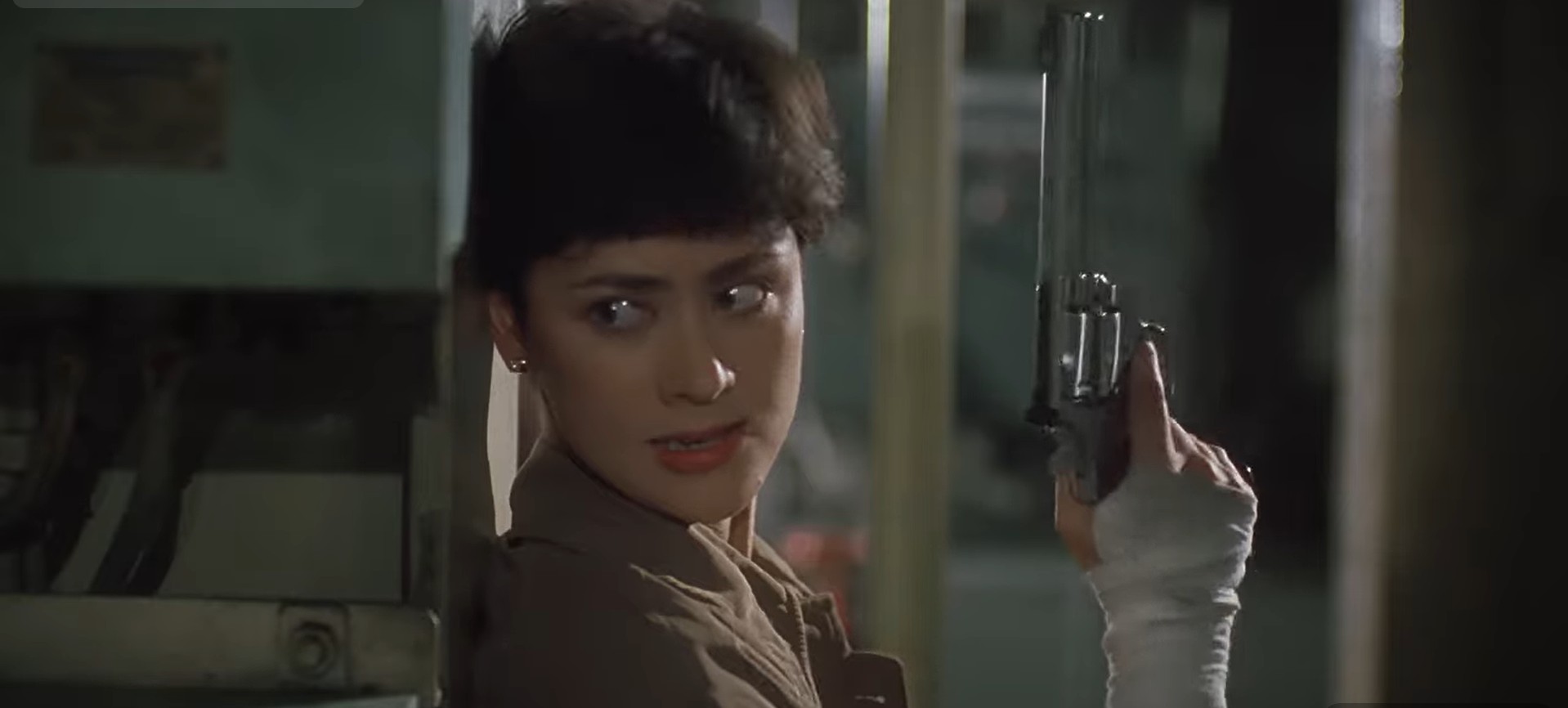
Men certainly take a backseat to “She Shoot Straight’s” policewomen with a vendetta, removing all the substantial and good out of the few male roles assigned, and spearheading the task to Joyce Godenzi.  “The Ghost Snatchers” actress finds herself lead aggrieved party, the widow Mina, in grief and out for revenge her way.  She’s joined by her late husband’s closest sister Huang Chia-Ling whose character arc began loathing Mina’s acute entry into their large law enforcement family.  Played by “2046’s” Carina Lau, the two women compliment their initial oppositions while solidifying their bond over a tragic commonality that shows being an officer is more than just a pageantry rise to the top, it’s, as Dominic Terretto would say in “Fast and the Furious,” family.  Even the on the villain side of characters, the main Vietnamese agitator and all-around bad guy Nguyan Hwa (Wah Yuen, “Kungfu Hustle”) is overshadowed by his sister Nguyen Ying, a peak physical specimen of physical strength, courage, and loyalty to her brothers.  Agnes Aurelio is a pure picture of strength as Ying who is not only a presence on screen with her muscular look and large curly hair, she also takes the final one-versus-one showdown with Mina in a dusty exhibition of martial arts skill but it’s Hwa’s sister who also breaks him out of refugee camp, sets up his escape plan, and gives more a fight with physicality than her gun-reliant brother.  The other male parts are equally as overshadowed with the superintendent (Chi-Wing Lau, “Police Story”) a horndog for the married Mina, Sammo Kam-Bo Hung in perhaps the least as the dismissed Huang relative on the force who’s continued to be mocked for his in-law status, and even Mina’s husband (Tony Ka Fai Leung, “Flying Dagger”) is killed in the most transfixing way right in front of Mina and Chia-Ling to harden their character story’s broken relationship.  Pik-Wan Tang rounds out the chief cast as the respected matriarch Mother Huang honors her late husband with five children who follow his footsteps and as a mother hyper aware of her family dynamic-suspended micro drama between the women.  Anglie Leung (“Vampire Buster”), Lai-Yui Lee (“School on Fire”) and Sandra Ng (“Ghostly Vixen”) found out the sister siblings. 
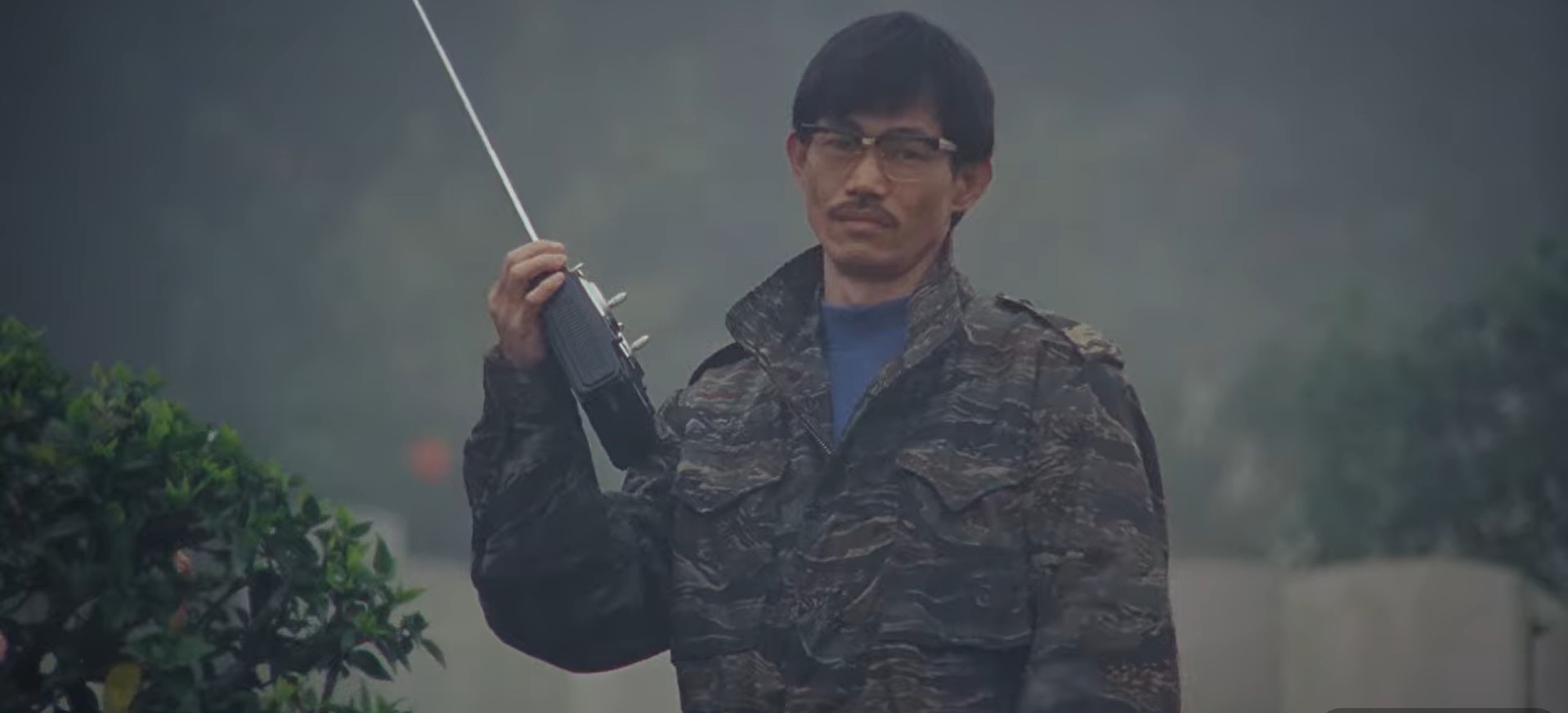
This Yuen entry of heroic bloodshed has deeper shades of comedy that wade around the waters of slapstick rather than be an abyss of tenebrous noir.  While the comedy is apparent and can be considered outrageous in the action-comedy framework, there’s an underlining serious tone with the demonstration of violence with blood squibs and even a body being impaled multiple times.  There’s no skirting around the violence that shows little result from the martial arts portion of the action, leaving flying projectiles to be the ill-fitting, carnage-laden lifetaker.  Yet, the sibling squabbling, the flirtatious foreplay, and the snarky remarks tone down the severity, cleaving the intensity in two for the film’s bifold persona that makes “She Shoots Straight” an interesting little film aside from the strong heroine aspect in a male dominated era of martial art films that began to incline with the likes of Michelle Yeoh, Cynthia Rothrock, and Cynthia Khan to name a few.  Joyce Godenzi’s name is definitely on that list with her performance in “She Shoot Straights” that deliveries a diversity of fast and hard moves with a beauty and grace in tandem.  The story’s lose approach with the unlawful Vietnamese refugees keeps plot pliable to change on a moment’s notice, such as an undercover operation turning into a deadly consequence that pivots from the lighthearted antics with slivers of action to a grittier payback overreaching the law with vigilantism, that results and retains a positive and fresh narrative progression.
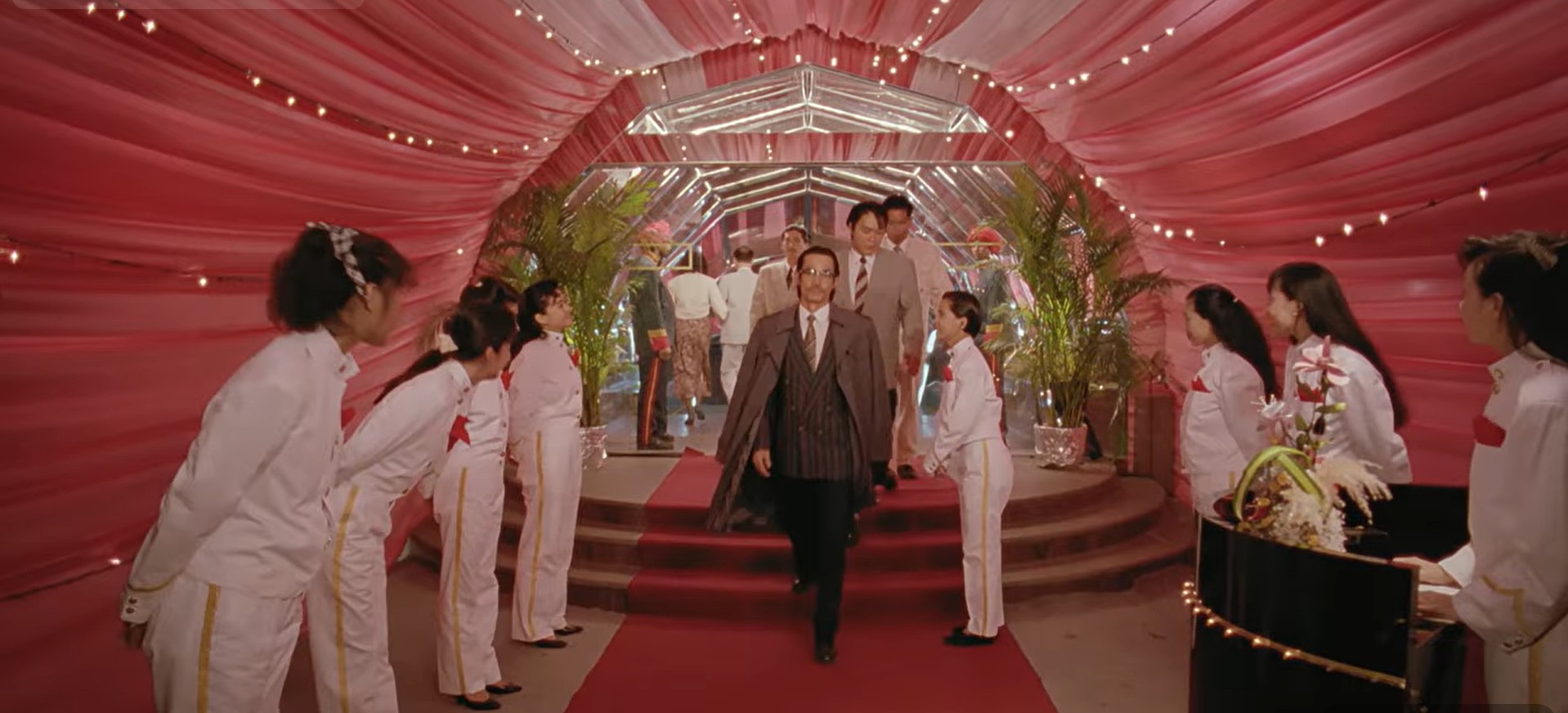
“She Shoots Straight” has a brand new 2K restoration Blu-ray from UK label 88 Films for the North America market.  The AVC encoded, 1080p high definition transfer is scanned from the original 35mm negative and stored on a BD50.  In a nutshell, 88 Film’s transfer is impeccable and flawless to present the naturally graded cinematography.  Colors are balanced in a diffused saturation, details are highly visible and charted with precision for the best-looking image, and the print restoration is one of the better products I’ve seen lately from a pristine original print from the Fortune Star Asian film archive.  The freshened image could even rival most shot-on-film movies of today, if not exceed it. The film is presented in the original aspect ratio of 1.85:1 widescreen.  The language ADR track is the original Cantonese mono with English subtitles.  The post-production audio hits all the necessary markers between action, environment, and dialogue, capturing with balance a crisp and clean dialogue that syncs very well with the subtitle pacing and is error free in t’s King’s English.  The fight hits have palpable impact with low muffled effects rather than the traditional chop-socky slappy whacks that all sounds alike in kicks and punches.  There’s never a time the action doesn’t synch with the audio and this create an authentic product rather than an evident post-production track that can be off-putting and feel disingenuous for viewers.  If subtitles are not your thing, there is an English dub available in 5.1 DTS-HD Master Audio and a LPCM 2.0 mono.  Special features include an in tandem commentary by Asian film expert Frank Djeng, an interview with scriptwriter Yuen Kai-Chi, alternate English credits, an image gallery, and the original Hong Kong trailer.  An impressive characteristic of the 88 Films’ Blu-ray is their ever color, ever stylized, and ever showcasing slipcover with a rigid O-ring that has some great artwork by graphic artist Sean Langmore that is also as the primary art on the reversible inner sleeve of the Amaray case.  The reverse side has the original Hong Kong compositional design that shows off more of Agnes Aurelio muscular definition and badassery.  The not rated film is region A locked, which is surprising only the North American rights are acquired because it’s a UK-based company, and clocks in at 92-minutes.

Last Rites: 88 Film’s 2K restoration of “She Shoots Straight” looks astonishing that elevates this police action comedy with a violent edge from Hong Kong. With a perfect blend of humor, gun-fu, and emotional weight, director Corey Yuen’s fortunately legacy lives on, now in Hi-Def, for future generation moviegoers.
“She Shoots Straights” and She Never Misses! On Blu-ray Today!

Two Cops. Two Girls. One EVIL Crime Boss! “Rosa” reviewed! (88 Films / Limited Edition Blu-ray)

Grab the Limited Edition Blu-ray of “Rosa” from 88 Films!

Little Monster and Lui Gung didn’t get along to begin with when Little Monster’s accident put Kung’s sister in the hospital for minor injuries but when the two rookie cops get on the bad side of their direct supervisor, Inspector Tin, they have no choice but to work together under his pleasure to see them suffer.  The two cops are assigned to the case of Li Wei-Feng, a smalltime crook who tries to black male mob boss Wong with incriminating photographs of a deal gone deadly.  They stay on top of and befriend Wei-Feng’s ex-girlfriend Rosa in hopes he’ll show up but the cops find themselves going on more double dates between Kung wooing the model Rosa and Little Monster courting Kung’s sister than actually doing any detective leg work.  Before they know it, they’re assisting Rosa out of her gambling debts with medium level bosses and on hot coals with Boss Wong’s formidable henchmen who will stop at nothing and will kill anyone in their way from obtaining the smoking gun film roll. 

“Rosa” is the 1986, Tung Cho “Joe” Cheung directed buddy cop comedy-action film from Hong Kong,  Cheung has delivered a string of action comedies prior, such as with the a torn Kung Fu novice must jealous mend the rift between his two masters before a war ensues in “The Incredible Kung-Fu Master” in 1978 and the story of a veteran police officer who must work both sides of the law to manage his wife’s gambling addiction is paired with a rookie cop to take down transgresses in “Shadow Ninja,” release in 1980.  “Rosa” is another notch of comedic effort in Cheung’s belt but on a bigger scale with well-known actors, a large cast, incredible stunts, and fast martial arts choreography in a script penned by the “Chungking Express” director Wong Kar-Wai and “Hard Boiled” and “Mr. Vampire” writer Barry Wong.  Wong and Anthony Chow (“The Cat”) produce the film under the Golden Harvest Company and Bo Ho Film Company flags.

“Rosa” uses an ensemble cast more for comedic purposes rather than to instill dramatic action, beginning chief principal Biao Yuen, who we’ve recently reviewed in another new phenomenal physical 88 Films Blu-ray release in “Saga of the Phoenix” and has had roles in “Game of Death,” “Encounter of a Spooky Kind,” and “Picture of a Nymph,” as the endearingly named Little Monster, a go-lucky rookie cop with skilled martial arts moves.  Charming and confidence, Yuen plays the most sensible of protagonists without absorbing a lot of humiliation unlike his costar Lowell Lo who finds himself in a more subordinate role of Lui Gung underneath Little Monster’s suavity by having more overreactions, slapstick, and chasing with his tongue out a lost cause – that being Rosa.  “Inferno Thunderbolt’s” Hsiao-Fen Lu plays that titular role, a gambler addict and model with loan shark debt with ties to a small-time crook that incidentally involve her in a deadlier high-stakes blackmail with a power crime boss, but her importance is depreciated by Yuen and Lo’s buddying comedy and not the driving focus of the plot.  In all, the progression is a group effort rather than encamping around a centralized person.  With that being said, Kara Ying Hung Wai (“The Ghost Story”) often feels like an afterthought, a proverbial fourth wheel, as Gung’s sister Lui Lui whos’ gifted lines and a presence here and there but is mainly only Little Monster’s love interest in corporeal presence only.  Rounding out the good guys is the hapless Inspector Tin (Paul Chun, “To Hell With the Devil”), an arrogant supervisor who doesn’t want to get his hands dirty with police work and recruits Little Monster and Kung as punching bags for wrong him in their individualized opening, mishap run-ins with the inspector, another comedy outlet absorbing Rosa’s unintended entrenched Mob connection.  The Mob and other baddies fill out the cast with Billy Sau Yat Ching, James Tien, Charlie Cho, Fat Chung, Chen Chuan, and Dick Wei. 

As far as “Rosa’s” action is concerned, it is topnotch quality between the wide-variety of stunts, the pinpoint choreography, and the excellently executed martial art fights that disproportionately leaves the narrative as a quintessential chop-socky police story.  I say disproportionately because the action is overly consumed by the comedy that, in itself, has struggles.  The humor physicality lands with precision with big hits taken in accidental error or are made within the context of choreographed fight scenes mostly stemmed by Lowell Lo and Paul Chun as they bumble their way through situations, but the dialogued jokes and other vocal gags are terribly corny that unfortunately dilute the overall mirth-murky pool that it becomes too often cringeworthy to swim in.  The light-hearted and sexualized humor is blended with an endless wooing and an outdo rivalry between the forced partnership that evolves into a fond friendship between Little Monster and Lui Gung, who is often referred to as Big Brother.  Lowell Lo embodies a larger slapstick piece of the pie with his distinguishable friendly face and doughy-eyed demeanor, contrasted against the athletic slender of Biao Yuen who outshines him on the conventional society determined good looks scale with an unassuming martial arts skillset to match.  All the serious and grim nature comes out of the Hong Kong’s criminal element with deadly assassins that use piano wire and large caliber handgun to lacerate jugulars and explode cars full of betrayed crooks.  The third act finale finally puts the pieces together and creates a harmonious brawl that blends action and comedy evenly, even integrating Lui Lui into the fold with an out of the blue ability to hold her own and fight just as fast and furious as Little Monster.  

Another Golden Harvest distributed production garners attention once again on 88 Films, in association with Fortune Star Films, with a definitive Blu-ray set from the UK boutique label making their presence known here in the North American market.  The AVC encoded, 1080p high-definition transfer, onto a BD50 has remarkable presentational quality with a pristine print transferred onto a 2K scan from its original 35mm negative.  The immersive quality shows no sign of destabilizing the matrix, leaving audiences with the immense scope of a cleaner, natural image full of depth and range of saturated and diffused color.  Skin tones appear organic and nitty-gritty with the stubble, sweat, beauty marks, and the subtle contrasts of tones.   88 Films’ flexes their restoration efforts that extends the color palate to suitable measure and each scene, through its superb editing by chop-socky veteran Peter Cheung, segues into the next without missing a color resolution beat.  The film is also presented in original 1.85:1 widescreen aspect ratio.  There are two ADR mono tracks, Cantonese and English.  Cantonese is preferred with the better mouth-to-sound synchronization, but both deliver a really good decoded mono mix despite the singular direction of all the audio but with post-production sound, that can be manipulated to exact timing with the exact sound to create a better disbursed audio design.  There some crackling and hissing in the dialogue but very low-level interference that doesn’t hinder the prominence and really affect the clarity.  The newly translated UK English subtitles are available from Ken Zhang and synch fine with a steady pace and come without typos.  Encoded special features have a new audio commentary by Hong Kong Cinema experts Frank Djeng and F.J. DeSanto, a second new commentary from another Hong Kong Cinema expert David west, an interview with director Tung Cho “Joe” Cheung and assistant director Benz Kong, alternate English opening and closing credit titles, an image gallery, and the original trailer.  The limited-edition set comes with a rigid slipbox sheathed by an O-Ring slipcover with new artwork by Sean Longmore that plays into Rosa’s bosomy running ga. Inside the slipbox is a 40-page color booklet with stills and a pair of essays from Fraser Elliott and Paul Bramhell, a collectible postcard, and the clear Amaray case with the same primary Langmore art on the sleeve that can be reversed for the original Hong Kong poster art.  The booklet and slipbox have more original art as well that speaks the action and slapstick.  The not rated, region A and B encoded release has a runtime of 97 minutes.

Last Rites: Fun, exciting, and moderately droll, “Rosa” might hit-and-miss on the comedy, but what definitely hits is the martial arts action defined in a harmony of perfect scrappy chorography.

Grab the Limited Edition Blu-ray of “Rosa” from 88 Films!

An EVIL Alien Blob Storms Earth in Search for Space Feline! “The Cat” reviewed! (88 Films / Limited Edition Blu-ray)

If you missed the Blu-ray, “The Cat” Standard Edition is Available!

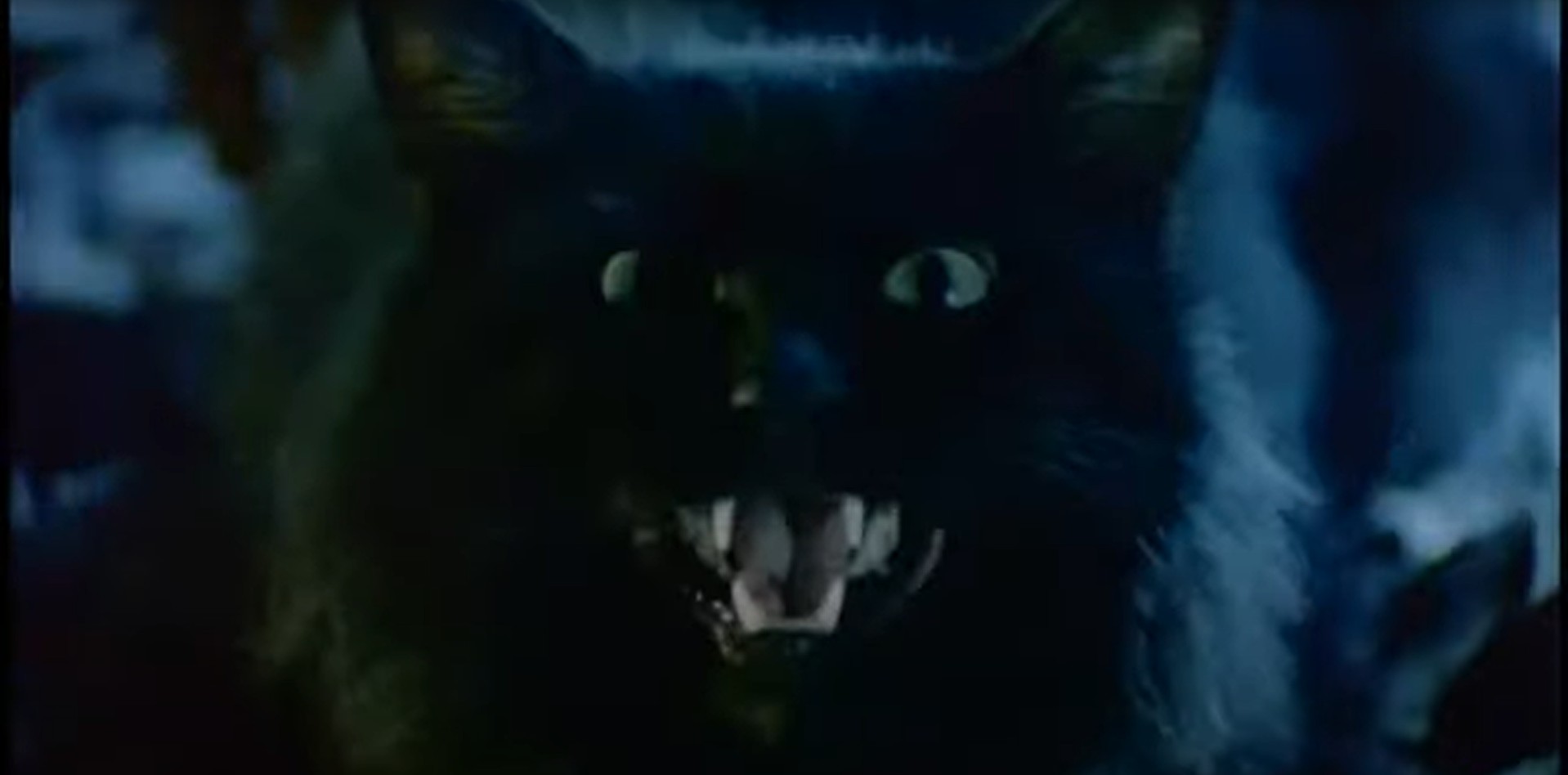
Storytelling author Wisely recounts one of his more fantastical pieces originating from more truth than fiction.  The writer reminisces investigating the mysterious occurrences surrounding a black cat and a young woman involved in a museum heist of an ancient, unknown artifact and, previously, in a strange encountering with Wisely’s friend Li Tung involving strange hammering noises and strewn about cat guts in an adjacent apartment.  Wisely soon discovers he’s bitten off more than he can chew becoming mixed up in extraterrestrial battle between the gentile but fierce fighting space cat and the young woman from another world versus a vicious and imposing orange alien blob that can inhabit dead humans and slip through tight confining spaces, leaving a burn trail of electrified bodies in its wake.  Wisely and his girlfriend, Pai so, decide to help the girl retrieve a second piece of the artifact that be used as a weapon against the relentless alien aggressor before the cat and girl can return to their home planet.

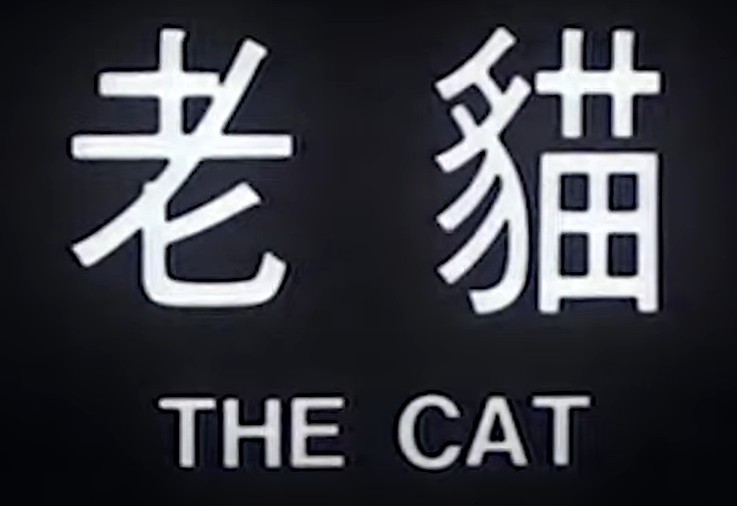
A strange science fiction thriller hailing from Hong Kong, “The Cat,” or “Lo mau,” is the 1991 filmic adaptation of author Ni Kuang’s “Old Cat” from a part of the Wisely adventure series of novels.  Written by frequent collaborating screenwriters Hing-Ka Chan and Gordon Chan (“Cat and Mouse,” “Behind the Yellow Line”) as well as numerous team-ups of Hing-Ka penning Gordon director helmed works (“Beast Cops,” “Thunderbolt”) and directed by “Riki-Oh:  The Story of Ricky” director Ngai Choi Lam, “The Cat’s” bizarrely unraveled as it is unrivaled but evokes a commingling of Hong Kong mysticism, science fiction, horror, and creature personification that’s hard to find not entertaining in its converging Daoism with creature feature movies!  Golden Harvest and Paragon Films, in association with Japan’s Nippon Television Network as a Hong Kong-Japanese alliance, are the companies behind the picture production with Chan Tung Chow (“Riki-Oh:  The Story of Ricky”) and Seiji Okuda (“Pulse”) as producers.

Hong Kong beauty Gloria Yip (“Riki-Oh:  The Story of Ricky,” “The Blue Jean Monster”) took Hong Kong cinema by storm in the early 90s before quietly taking a step back from acting to focus on building a family when newly married in 1995.  Since her divorce, Yip has been active in the last decade and half but to experience her best, early work, “The Cat” is a good start to behold her natural girl-next-door charisma and attractive attributes as an alien inside a human body.  Where she obtains this human form is unknown and her species social status, her name or how she became trapped on Earth is also vague, but Yip’s character can float waltz and is seemingly the caretaker of the Cat, who is a general of sorts in the alien race.  Her alien sidekick, Errol (Siu-Ming Lau, “Shaolin vs Evil Dead:  Ultimate Power,” “A Chinese Ghost Story”), too has an equivocal backstory as they search for weaponry relics and evade the caustic and electrically charged blob monster that threatens their world.  The story falls in more in tune with the three friends buried by the extraterrestrial struggle for survival and dominance with “A Chinse Ghost Story II and III’s” Waise Lee as principal lead character Wisely, a humble story writer living off the riches of girlfriend Pai So (Christine Ng, “Crime Story”), at least based on their dialogue of her owning a big house, playing tennis, and providing.  It’s an oddly laid out relationship that shows no quarrel or being tested when up against alien beings.  Li Tung (Lawrence Lau, “3-D Sex and Zen:  Extreme Ecstasy”) is Wisely’s first friend to encounter the girl and cat as noisy above neighbors but it’s their cop friend, Wang Chieh-Mei (Philip Kwok, “Hard Boiled”) who takes the unfortunate brunt being inhabited by the alien blob and becoming a Rambo-arsenal assassin.  The last piece to “The Cat’s” cast is actually the “Old Cat” author Ni Kuang having a cameo appearance as a warrior dog handler, Processor Yu.

Did I mention already that “The Cat” is beyond bizarre?  The campy story suffers from connective tissue deficiency syndrome, meaning there’s not enough exposition or explanation in the subdued, mild-manner interactions to really bring together and segue the really cool action and creature sequences that involve, but not limited to, pyrotechnics, forced perception effects, stop-motion, blood squibs, prosthetics and makeup, and high-flying wire acts involving not only people but cats and dogs!  The cat versus dog fight is a rough-and-tumble showstopper.  The special effects and choreographic teams of Hong Kong’s special makeup effects artist Chi-Wai Cheung (“Riki-Oh:  The Story of Ricky”) and stunt coordinator Philip Kwok taking their cogs and working into the grand effects design along with Japan’s f/x crew from visual effects artist Takashi Kawabata (“Dark Water”) and special effects Shinji Higuchi (“Gamera, the Guardian of the Universe”) is a masterful amalgamation of two cultures and two styles into one, blending high-flying acrobatics with the strange, bold stop-motion and visual effects that incorporate puppets and molds is optical buffet aimed stimulate and confound.  Nearly experimental in its narrative and effects while bordering being derivative, such as from the 1988 “The Blob” remake, “The Cat’ prowls, growls, and meows as a welcoming hot mess of feline phantasmagoria. 

On a new limited-edition Blu-ray set with exclusive, new artwork by graphic artist Sean Langmore, “The Cat” purrs with a fully-loaded, out of this world high definition release from UK label 88 Films and distributed by MVDVisual in the North American market.  A new 2K restoration of the original 35mm negative is encoded on a AVC encoded BD50 with a 1080p resolution in an aspect ratio of 1.85:1 widescreen.  Image presentation has the stellar glow of regular Hong Kong film stock, a stock that doesn’t dilute the defining particulars but only softens them slight.  The original negative has withstood the test of time and any improper handling providing the restoration effort with a focus-driven goal of grading and detail. The other side of that coin is that all the rubbery and irregular textures are now more in the spotlight instead of being lost in the lower resolution and more opaque video qualities.  Brilliant gel lighting and a comprehensive range of primary reds and blues coupled with an electric orange and blood red of the antagonistic monster seduces contrastingly inside a dark atmosphere with a story mostly told during the nighttime hours.  Remastered with a Cantonese DTS-HD mono track, the compositional track is about as good as it’s going to get but that’s not saying the audio is bad at all.  Clean and clear in ADR dialogue and distinct in the ambience and action, “The Cat’s” remastering is mighty without being punchy with broad-range, consistent audio that doesn’t have any holes poked into it and has an epic, original score by Phillip Chan (“Her Vengeance”).  Newly translated English subtitles are burned onto the only video file feature.  The encoded special features include an audio commentary by Asian film expert Frank Djeng of the NY Asian Film Festivial, a new interview with writer Gordon Chan in Cantonese with an English introduction, the Japanese cut of the film in standard definition, an image gallery, and theatrical trailer.  All of the encoded features will be available on the limited-edition and standard release sets.  Langmore’s artwork graces the LE O-ring slipcover and rigid slipbox with a crazy illustrative arrangement that details how bonkers “The Cat” gets.  Inside the slipbox, a full-bodied colored and detailed booklet with more original Langmore artwork, one sheets, stills, and other contents that include cast and crew acknowledgements, a Paul Bramhall retrospective essay on director Ngai Choi Lam That Cat is Dangerous, a second essay in regard to Nai-Choi’s niche cinematic credits by Matthew Edwards entitled Body Horror, and a special thanks roundup and more acknowledgements in the making of the Blu-ray release.  There’s also a collectible art card stuffed in between the clear Amaray case and the booklet.  The reversible cover art’s secondary slip-shell is of an original poster art, a good alternative to an already overused Langmore illustration that’s on the O-Ring and slipbox.  While not a numbered limited-edition release, news of the set already being or nearly sold out at most retailers is circulating, but there will be a standard edition slated for release late November ICYMI!  The not rated release has a 89-minute runtime and is encoded region A and B for playback.

Last Rites: Ngai Choi Lam’s science fiction, body horror, and creature feature inundated “The Cat” has all the weirdness and practical prosthetics, including deeply bizarre force perception visuals, that’s beyond our galaxy and capacity for understanding, landing with great precision onto a well-deserved, highly anticipated, and must own 88 Films’ limited-edition boxset!

If you missed the Blu-ray, “The Cat” Standard Edition is Available!

Yeoh, Rothrock Beat the EVIL to a Pulp! “Yes, Madam!” reviewed! (88 Films / Blu-ray)

“Yes, Madam!” on Blu-ray from 88 Films!

Hong Kong’s Inspector Ng and Scotland Yard’s Inspector Carrie Morris reluctantly join forces to solve the murder of an undercover British national on the verge of exposing a fraudulent real estate contract helmed by crooked businessman Mr. Tin.  When a small piece of key case evidence, a microfilm, winds up in the bumbling hands of three low-level thieves after coincidently robbing the undercover British agent’s hotel room, they find themselves at a crossroads; do they give up the kill-for microfilm to the police in the name of self-preservation or ransom it against Mr. Tin’s syndicate for a big payday?  The elusive Mr. Tin becomes enemy number one in Ng and Morris’s crosshairs despite his circumventing the law.  Not deterred by the failed arrest, the tough as nails inspectors track down the microfilm thieves to make their case and take down by force one of Hong Kong’s most powerful criminal organizations.  

An accelerating knockaround action-comedy from Corey Yuen (“Ninja in the Dragon’s Den,” “The Transporter”), “Yes, Madam!” is a fight-heavy, female-driven super cop emprise with martial arts daggers drawn and slicked in a vigorously lubed burlesque dark comedy.  The 1985 Hong Kong production, penned by Barry Wong (“Hard Boiled”) and James Clouse, as his sole credit, teams an unlikely and highly skilled, international partnership between a twosome of type A personalities who not only initially combat each other and then the unscrupulous bad guys and their mischievous plans but also against the historically prejudiced gender role reversals outside the borders of the story.  Action-packed choreography mixed with slapstick comedy, “Yes, Madam!” is entertainingly fun to watch and hard-hitting, produced by stuntman Sammo Hung (“Long Arm of the Law”) and film’s costar John Sham (“Royal Warriors”) and along with Sammo Hung, executive producer Sir Dickson Poon develops “Yes, Madam!” under their cofounded martial arts and action feature producing D&B Films.

If you’re ever looking for a celebrity roots film, a launching pad feature of success, “Yes, Madam!” has that inner circle, star-studded power and deliverance that not only showcases the beginnings of two presently well-known action and martial art film women but also joins the East with the West in a singular chop-socky fracas.  Oscar winner Michelle Yeoh (“Crouching Tiger, Hidden Dragon,” “Everything Everywhere All at Once”), credited as Michelle Khan, and black belt martial arts competitor and World Champion Cynthia Rothrock (“China O’Brien,” “Tiger Claws”) explode to the thousandth degree on screen as apex inspectors forced to work together to take down crime boss Mr. Tin (James Tien, “Fist of Fury”).  They’re fast, they’re ferocious, they’re incredibly talented in what could be considered their debut principal performances, especially Rothrock in her first feature film in which she doesn’t speak an ounce of either of the native Hong Kong’s Cantonese or Mandarin dialects.  Yeoh and Rothrock are top dog heroines in a yard full of marginal, blundering thieves caught in the middle of a grander operation.  Under incognito with pain reliever aliases are actor-producer John Sham (“Winners & Sinners”) as Strepsil, Hoi Mang (“Zu:  Warriors from the Magic Mountain”) as Aspirin, and Hark Tsui (“Working Class”) as Panadol and though they act like, and sort of resemble, the Three Stooges, the three thieves and counterfeiters embody a mutual brotherhood with background history and a all-for-one, one-for-all attitude as their minor caper turns into a full collapse of their con game.  Characters and performances are all over the board between the various groupings in the melee but does weirdly gel together in an artificial way toward a poignant culmination collision of what’s just and unjust that destroys, and unites, friendships and bonds.  “Yes, Madam” rounds out the cast with Melvin Wong, Wai Shum, Eddie Maher, Michael Harry, and Dick Wei (“Five Deadly Venoms”) and Fat Chung (“To Hell with the Devil”) as Mr. Tin’s nonpareil sub-bosses. 

Barreling along from the very beginning of an armored car hijacking turned into a bloody shootout to the grand finale that pageants the marvelous, born-for-this skill of Michelle Yeoh and Cynthia Rothrock as they plow down foes with acrobatic fists and kicks galore, “Yes, Madam” doesn’t dwindle as a debut disappointment but rather is a tour de force of destruction, drollery, and delictum prevention.  Outlandish at times, of course, with a story slightly straying off course here and there but that feverishly, cyclonic filmmaking condenses to being nothing new or novel for the reputably fast-paced, churn-them-out style of Hong Kong cinema and palpable fighting is taken to a whole new level of ouch and woah.  Multiple takes from various angles equates to the stunts being depressed continuously onto the repeat button, solidifying prolific editor Peter Cheung (“Ready to Rumble,” “Mr. Vampire”) as one of the best in the business, globally, to manage the multiple strands of film and make a coherent and entertaining yarn out of the celluloid chaos.  The crux of the kerfuffle isn’t delineated well enough to justify and muster this kind of police force and exaggerated villainy but the theme majority inside the broadly cartoonish veneer is mostly about respecting the girl boss and grasping friendship that has been taken for granted, dipped in a furiously candy-coated rouse of visually exciting stimulation. 

88 Films adds “Yes, Madam!” into their U.S. distribution cache with a new, well-curated Blu-ray release.  The AVC encoded, 1080p high-definition, BD50 presented 2K scanned and restored feature has the original aspect ratio of 1.85:1 in the Hong Kong cut. Beautifully diffused and vibrant color, there’s no hue deficiency under this well-lit production, restored to nicely detail skin tones and textures in every aspect of the lighting. No issues with compression during the rapid-fired sequence cells, such as aliasing or ghosting, and black levels are solid albeit there’s not a ton, if any, negative space to experience as even the night shots are illuminated in a “moon” diffusion. Delineation reflects a deepened background contrasted against foreground objects, creating ideal space between objects in what is mostly a close quartered, hand-to-hand combat with only a handful of medium, medium-long shots to make the scenes more realistic than choreographed on a wider frame. Two audio options encoded are the original Cantonese DTS-HD 2.0 mono and an English DTS-HD 5.1, both use ADR dialogue which incurs only minor negative separation and synch between actor and script. Cantonese track fairs slightly better with the native tongue but much like the story’s brisk pace, vocals are also quick as a whip and often times outpace the lips. What’s interesting about “Yes, Madam!’ is the score which is credited to Romeo Díaz (“A Chinese Ghost Story”) but samples much of John Carpenter’s “Halloween” in tense moments. “Halloween” comes through so prominently that it shadows and hurts Díaz’s own work, if any of it exists. Ambience tracks work with the grain with some of the fighting emphasized for chop-socky effect. English subtitles synch fine and have scribed errorfree. Product special features an audio commentary by Frank Djeng on the Hong Kong cut, a new interview with star Cynthia Rothrock, Rothrock and Djeng also provide select scene commentary, a new interview with Mang Hoi who played Aspirin, archive interview with Michelle Yeoh, an archive Battling Babes featurette, and with the Hong Kong trailer rounding things out. New action-packed compositional artwork from graphic designer Sean Langmore graces the primary cover art with original artwork on the reverse side. The disc art is pressed to promenade the two female actresses and there is nothing across the way in the insert clips. The region A playback release has a runtime of 93 minutes and is listed as not rated.

Last Rites: There’s nothing more to say other than “Yes, Madam!” A top-notch, assertive action film starring two worldclass women in the fighting subgenre who stir in the cool and the kickass with silky, smooth ease.

“Yes, Madam!” on Blu-ray from 88 Films!

EVIL Has the Right to Remain Dead! “Magic Cop” reviewed! (88 Films / Blu-ray)

No Two-Bit Magician In ‘Magic Cop” on Blu-ray!  

Hong Kong cops are confounded by a chaotic drug bust when learning that their female suspect, who had managed to overpower an entire unit of male officers and even take a bullet ambling deadpan into the streets, had died 7 days prior.  An outlying officer, and practicing Taoist, Uncle Feng is called to Hong Kong to not only quickly solve the narcotic crime but also investigate the unnatural properties of the case.  Feng is accompanied by his city eager niece Lin and two Hong Kong cops, a Taoist devotee and skeptic of Ancient Chinese spiritual mythologies.  Together, they track the drug trail to The Sorceress, a Japanese witch with powers that rival Feng and that can resurrect the dead into zombies and vampires to do her bidding, such as trafficking narcotics.  When the investigation closes in her business, The Sorceress and her right arm, skilled fighter plan to remove the only man worthy of stopping her.

Fans of Ricky Lau’s “Mr. Vampire” will once again be amazed and entertained by the fantastical and mystical action of Stephen Tung Wai’s “Magic Cop.”  Tung, a fellow martial artist and stunt man who had roles in “The Fatal Flying Guillotine” and John Woo’s “Hard Boiled,” helms his debut directorial penned by Chi-Leung Shum (“Vampire vs Vampire”) and the longtime Stephen Chow script writer Kan-Cheung Tsang (“Shaolin Soccer,” “Kung-Fu Hustle”).  The screenwriting duo brought lighting quick comedy to the mostly fictionally invented yet sprinkled with slivers of hard-pressed veracity and definitive entertaining occultism and what resulted resurrected “Mr. Vampire” semblance out of the being a period piece and into the modern day, backdropped in the year of 1990 when the film was released.  Long rumored to be the fifth sequel of the “Mr. Vampire” franchise, “Magic Cop” is a coproduction between Movie Impact Limited, Millifame Productions Limited, and Media Asia Film with star Ching-Ying Lam producing.

“Magic Cop,” and even “Mr. Vampire,” wouldn’t have such a cult following if it wasn’t for the Vulcan eyebrows and thin mustache of Ching-Ying Lam in costume.  The short-statured, Shanghai-born Lam delivers the same vigorous choreography and tranquil demeanor to this particularly stoic character of Uncle Feng, a Taoist practitioner to essentially wrangle unruly entities and please the spirits in the in-between our world.  Feng is old world and finds himself in surrounded by modernism when in Hong Kong, goaded by the young lead sergeant attached the case.  Practical as well as disrespectful, Sgt. Lam (Wilson Lam, “Ghost for Sale”) epitomizes today’s, or rather back then the 1990’s, modern man who has forgotten tradition and deference to those who came before.  Though padded with a fair amount of comedy coursing throughout, balanced against the impeccably edited tango fight sequences, Sgt’ Lam’s partner, known only as Sgt. 2237 played by “Centipede Horror’s” Kiu-Wai Miu, risibly wants to understudy Uncle Feng’s powers while Feng’s niece Lin, played by Mei-Wah Wong of “The Chinese Ghostbusters,” provides the subtle and quirky opposite sex that catches of the philandering eyes of Sgt. Lam.  The ragtag quartet of influx mindsets and personalities become challenged by their single common goal, to stop whoever is behind breathing life into the formidable dead and stop the unorthodox method of drug smuggling.  Former Japanese bodybuilder Michiko Nishwaki (“City Cops”) embodied that very dark magic antagonist.  Nishiwaki handles The Sorceress character with ease despite not having a surfeit army under her thumb; instead, this forces Nishiwaki to become the entire villain body with the slight, full-contact support for her right-hand bodyguard (Billy Chow, “Future Cops”) and a couple of undead lackeys, including Frankie Chi-Leung Chan of “Riki-Oh.”  “Magic Cop’s” cast rounds out completely with well-versed and seasoned, late actor Wu Ma (“Mr. Vampire,” “Return of the Demon”) as the chief inspector polarized in a complicated history with Uncle Feng.

What director Stephen Tung Wai boils down in essence is another variation of good executants of spirit humbled caretakers versus the wicked necromancers existing inside the fabric of the highly praised and cult-following “Mr. Vampire” universe.  Frankly, there’s nothing wrong with that derivativity since Ching-Ying Lam, Mr. Vampire himself, produces and stars as the titular hero.  Lam can conjure whatever-the-hell he wants in order to battle Hell itself.   “Magic Cop” is also a well-made, entertaining story, balanced between the contest wizardry, slapstick comedy, and the character dynamics, and stacked with improbable yet gratifying step-intensive fight orchestration that has gawked early martial arts films a wonder to behold and continues to do so to today but now trickles with pizzazz more-after-more due to put in place industry safety measures.  “Magic Cop” contains that lost art of potentially hazardous palatable physicality that beguiles more than the movie’s faux magic exhibited on screen.  To add to the authenticity, very little painted composited visual effects were used with makeup and the actors doing much of the heavy lifting with the editing team of Ting-Hung Kuo and Kee Charm Wu in full cut-and-paste fortifying mode to button up each sequence with comprehendible continuity of each punch, kick, and magical chopsocky.  One overtone made well known in “Magic Cop” is the unfillable chasms between old and new, respect and disrespect, and myth and science from whence solves no problems until some unified common ground can be reached in order to succeed, in this case, to stop a bitch of a witch.    

An age-resistance 35mm print scanned onto a buffed 2K Blu-ray that extracts the best print elements to-date. The AVC encoded, 1080p, Blu-ray presents Stephen Tung Wai’s picture in a widescreen 1.85:1 aspect ratio. A fine-tooth comb through the celluloid couldn’t unveil any major issue with the 88 Films release. Colors are richly grafted within the sabulous surfaces that are exceedingly defined with delimited, shadow-creating depth. Decoding speeds average around 35Mbps on a BD50, securing categorical choiceness amongst other releases and formats (that is until the potential 4K release). The release comes packed with four audio options to explore: The original Cantonese DTS-HD master audio 2.0 mix, a Cantonese DTS-HD 2.0 home video mix, an English DTS-HD 5.1 master audio dub, and an English DTS-HD 2.0 dub. Between the variated audio mixes, we preferred the original Cantonese DTS-HD 2.0 due to its cadence with the image and welcoming exactness through the lossless compression process. You can make do with the other three options, but the fidelity is much better with the original mix and only anti-subtitle sectarians would be pleased with an English dub. English subtitles are optional and synch well the dialogue but be prepared to speed read as the pacing is quick much like the dialect. Software special features include an audio commentary with Hong Kong film experts Frank Djeng and Marc Walkow, an alternate, standard definition Taiwanese cut of the film with alternate score, an interview with director Stephen Tung Wai, image gallery, and trailer. Endowed with a limited-edition, cardboard slipcover, the dark green Blu-ray snapper has newly illustrated, front cover artwork by Manchester graphic designer and 88 Films resident artist Sean Longmore, which is also on the cardboard O-slip. The reversible cover art has a reproduction of the original Hong Kong poster art. Stuffed in the insert is a mini-folded poster of Longmore’s front cover and a disc art, a scene moment captured in spherical rotunda, of the opening sequence. Available with a regional playback limited to A and B, the 88 Films release is not rated and has a runtime of 88 minutes. ‘Magic Cop, perhaps, wasn’t the sole proprietor of influence but certainly had a black talisman plying hand in the substrata of more Western favorites like “Big Trouble in Little China” and is a crucial cornerstone in representing the best of the Hong Kong Golden Age of cinema.

No Two-Bit Magician In ‘Magic Cop” on Blu-ray!