Online Bullies Deserve All the EVIL in the World! “The Columnist” reviewed! (Vertigo Releasing / Digital Screener)

Columnist Femke Boot is a damn good writer backed by her publication. Yet, Femke feel unsatisfied and unsettled by the extremely harsh social media comments aimed to not only torpedo her career in the column section but also discredited and publicly shamed by twisting events in her past. The barrage of nasty comments, determined to bully her into oblivion, plug up Femke’s creativity, causing severe writer’s block on an upcoming book her editor continues to pressure her on. When she discovers that her next door neighbor has disparaged her online as well, the struggling writer snaps, taking revenge on her neighbor and an army of internet trolls by pursuing their true identities, tracking them down, and takes her revenge, plus takes a little more for an indulging gratification.

Relevant. Chimeric. A social war on words that can be fatally influential from anonymous patrons of the world wide web is Ivo van Aart’s black comedy of retribution entitled “The Columnist.” Also known originally titled as “De Kuthoer,” roughly translated as “The Pussy Whore,” a way better and in your face title in my opinion, the Netherland tongue-and-cheek-and-severed-finger comedy-thriller is the third feature, first beyond the 60-minute mark, clocking in at 86 minutes, for Aart from a screenplay penned by Daan Windhorst. Aart and Windhorst last paired up for a Dutch miniseries, “Suspicious Minds,” and Aart’s debut film, “Quantum Zero,” two years prior. Their concrete foundation of collaboration sets up an engrossing insight on masked mindsets of internet bullying that backfires but not in the typical way and also indorses a freedom of speech theme caught in a vicious circle of death. Sabine Brian and Ronald Versteeg serve as producers under the Benijay capital investment group’s NL Films.

Katja Herbers (HBO’s “Westworld”) gives a stress-inducing performance as the tormented-to-insanity columnist.  Absorbing, like a sponge, of all the scornful negativity, Herbers leaves little room for writer Femke Boots to expand and breathe as a normal person who can filter out the harsh criticism as the “Loft” actress can tune into a louded, distracted mindset of delusion and have an underscored inkling twinkle in her eyes as her character muddles around in life normalcy of being a good mother to her free-speech advocating daughter Anna (Claire Porro) and be in a radically unlikely relationship with a gothically-cladded, fellow writer, Steven Dood aka Steven Death (Bram van der Kelen).  Journalist are trained to accept the harshest criticism as long as they can back up their stories with facts and references, but for a columnist, who makes a living off opinions, the same can not be said and it’s in that gray area where “The Columnist” likes to dwell that someone’s subjective living is under attack and the enemy is the entire world who thrives off being antagonistic just for the hell of it.  Herbers plays right into that soul sucking anger, directing all her energy into those who mask themselves in anonymity as they bombard her character with comments of ill-intent.  The frustration mounts, especially when Femke attempts to file police reports about the death threats, but is shrugged off by an unsympathetic uniform, and the pressure blows her top off in a silent switch into swift vengeance of a variety misogynistic trolls.  Genio de Groot, Rein Hofman, Seno Sever, and Achraf Koutet round out “The Columnist’s” cast.

Though not written, shot, or produced by women, “The Columnist” follows in suit with a string of strong pro-feminism films, coursing with the same blood of the feminist revolution in cinema that has empowered women to exhibit their artistry, such works include Brea Grant’s dual female-lead, black comedy about an opioid addicted nurse’s mafia entanglement in “12 Hour Shift,” Jill Gevargizian’s gothic trip into hairstyles and isolating madness of “The Stylist,” and Emerald Fennell’s 5-Academy Award nominated revenge-thriller about the social system’s gender double-standards in “Promising Young Woman.”  “The Columnist” topicality revolves around a woman writer being bashed, sometimes just for kicks of callous community fun, by a plethora of trolling men who hide behind self-attributing epithets and nicknames.  With only her their commenting handles, Google, and her wit,  Femke tracks them down comment-by-comment for confrontation with her weapon of choice, usually a state forestry bag full of gardening tools, and this is where the good writing and directing comes into the fold by establishing a complete smorgasbord of different male personalities to circulate with Femke’s rage against the unwarranted slanderous and malicious of their own doing. Where “The Columnist” also gets you thinking is the freedom of speech movement that Femke’s daughter, Anna, so tenaciously hammers into her stern high school’s administrative hierarchy, helmed by a, you guessed it, a male principal. While Anna’s story is relatively tongue-and-cheek in comparison to Femke’s more serial killer storyline, there’s a whole lot of irony happening between the two paralleling, mother and daughter narratives with Anna battling the school system singlehandedly to allow her words to ring true and free from principal oppression and repression while Femke, on the other side of coin, is permanently silencing the cataclysmic of social media hate mail in an act with a killer, survivalist instinct. “The Columnist’ is speechlessly brilliant under a candy-coated, caustic-comedy cover.

Opt into “The Columnist’s” op-ed with your own periling opinion as the film circulates around UK and Ireland theaters, and on various digital platforms, courtesy of Vertigo Releasing. Martijn Cousijn is credits as the cinematographer for the film whose mostly bright and buoyant scheme is peppered just enough with darker, minimalist lighting, askew in most case, to capture Femke’s sinister half of this Dr. Jekyll and Mr. Hyde duality with pessimism at the door being the altering elixir. Cousijn doesn’t play too much with the lighting, keeping true to a soft and bright air that doesn’t drop “The Columnist” acutely into a dismal perspective tale of a killer. My only disappointment with the film lies with the gore effects when it’s time to dispatch some rude keyboard-knuckleheads from the comforts of their own safe haven. Much of Femke’s desires to keepsake parts of her tormentors is nothing more than a slight of editing to achieve and that kind pelts holes in the freedom of speech aspect that’s perhaps one-third of the story. “The Columnist” is by no means made for young teens, but Femke Boots deserved to reign hellfire in a fiery display of well unexploitable violence. Having just released March 12th in the UK, there are obviously no bonus material, but there are also no before or after credit bonus scenes to keep you anxiously waiting to the end. Writers will undoubtedly hail Ivo van Aart’s “The Columnist” as a win against stony critics with the film’s profuse display for social change against cyberbullying and the reaffirmation of free speech or else there will be blood.
One Can’t Just Pray Away EVIL in “The Banishing” reviewed! (Shudder – Vertigo Releasing / Digital Screener)

Set in a backdrop of Great Britain on the very brink of world war against Nazi Germany in the late 1930s, a small English community has nearly lost it’s entire faith in the Catholic church after the last priest suddenly and mysteriously died.  When a young vicar is offered a generous stipend, the village parish, and a large estate by the region bishop to restore a congregational foothold, he brings with him his new wife and stepchild to make the house their home, but the house has a dark history that might have played a role in the previous vicar’s death and a lone, eccentric occultist urges the family to vacate the premises immediately before the house swallows them into grave danger at the haunted hands of sadistic monks, ghastly visions, and a tormented soul roaming the corridors. 

If the prim-and-proper social class structure of Julian Fellows’ “Downton Abbey” collided with the volatile and tormented spirits of James Wan’s “The Conjuring,” then Christopher Smith’s pre-wartime staged haunted house feature, “The Banishing,” would be the outcome.  The period piece horror marks the latest installment into the genre from the Bristol, English-born Smith who made a name for himself with 2004 dark subway corridor heartstopper, “Creep,” and went on to make cult favorites amongst genre fans with the workplace violence satire, “Severance,” and the medieval bubonic plague film, “Black Death” starring Sean Bean and Eddie Redmayne.  “The Banishing,” a term used as the practice within the supernatural ambit of dark magic to ward off negative spirits, is a UK feature co-written between David Beton, Ray Bogdanovich, and Dean Lines.  Maya Amsellem and Sharon Harel-Cohen serve as producers under the London-based WestEnd Films production banner with “The Banishing” marking their fifth completed feature film product and with the nearly worldwide distribution rights landing with AMC Network’s popular horror streaming service, Shudder, in partnership with Vertigo Releasing in the UK.

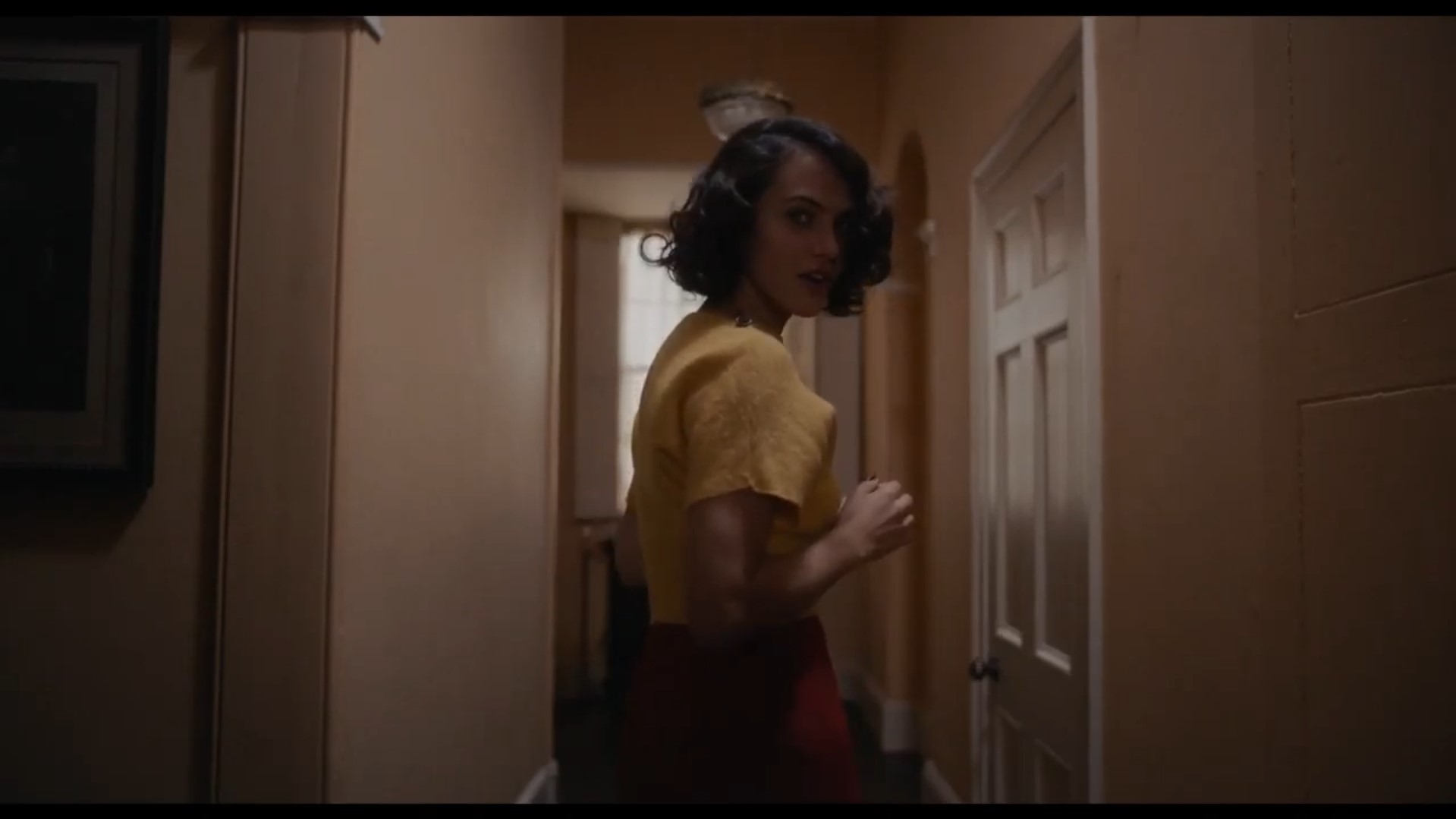
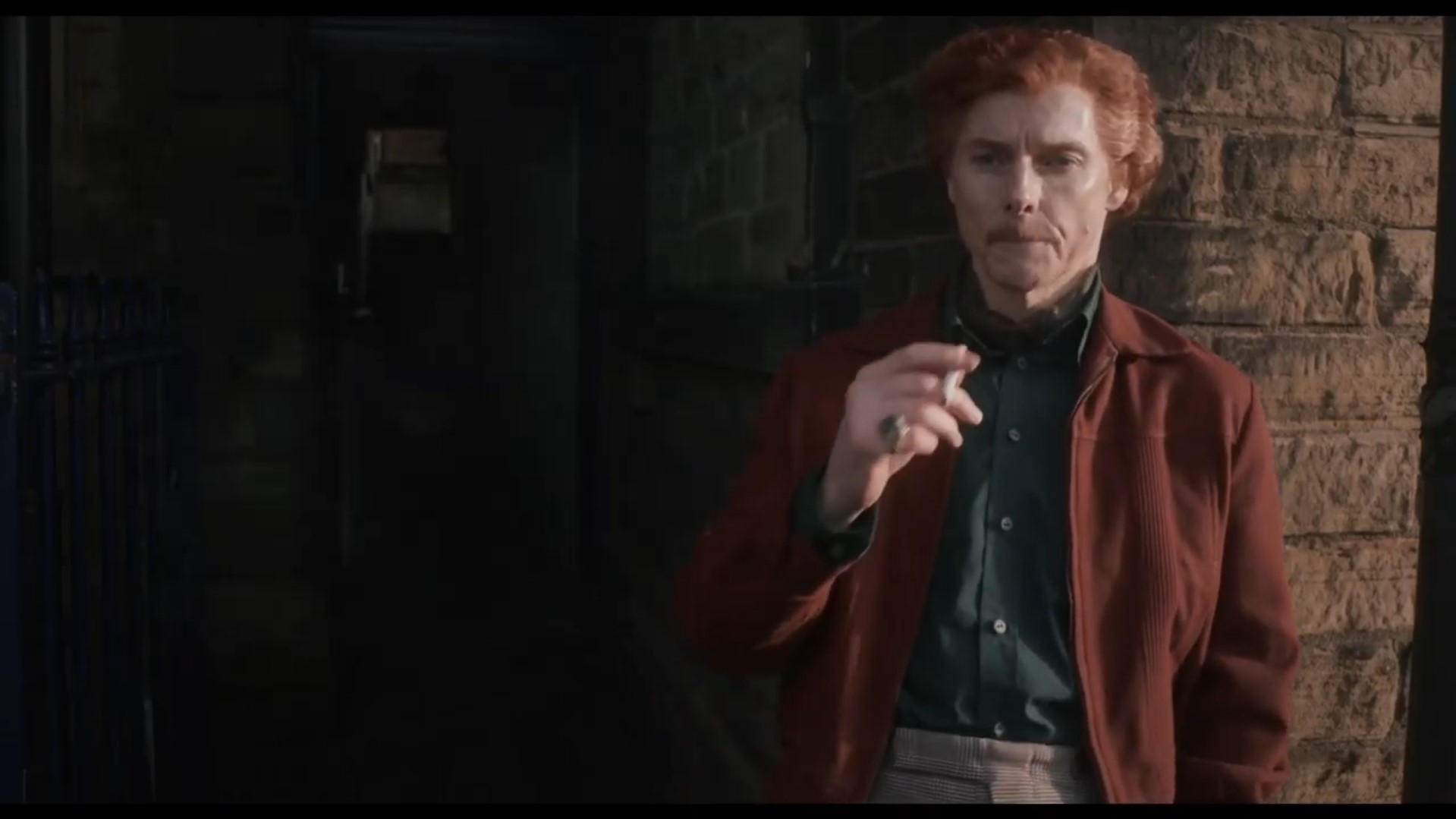
“The Banishing” revolves mainly around Marianne, the newly-wed vicar’s wife with a young girl along for the ride, played by Jessica Brown Findlay (“Downton Abbey,” “Victor Frankenstein”). Findlay endows Marianne with vitality as a woman who must meet the vicar’s standards of Godliness, but still be a strong mother to her child despite disreputable social standing. The priest Linus (Essex-born John Heffernan) lacks experience in the field of his cleric position, lending to question why the region bishop would appoint him to a muster a flock of faithful Christian followers during turbulent times. The husband and wife dynamic between Linus and Marianne is marred by dissonance backgrounds of a priest who doesn’t know to be with a woman and a woman who can’t escape her socially unflattering past. Heffernan and Findlay ignite as repellants of the same magnetic currents when the harder they try to extend their relationship, they push each other way, with Findlay giving a fervent performance. Speaking of performances, Sean Harris bares the most intriguing and rollicking local occultist. The “Mission Impossible: Fallout” actor parades around as Harry Price, a likable, straight-shooting outcast and a believer in the supernatural with extensive, and ghastly, historical knowledge on Linus and Marianne’s new home. As Price aims to extract the hapless from danger, he butts heads with a headstrong region bishop, a stern and solemn role secreted with distrust from John Lynch who has worked on a Christopher Smith film previously in “Black Death.” “The Terror” actor juxtaposes starkly against Harris as a character who dons a likeness to the clown prince of crime in costume than a dull agent man of the cloth…with secrets to uphold. “The Banishing” rounds out with a supporting cast in Adam Hugill, Jason Thorpe, Jean St. Clair, James Swanton, and Anya McKenna-Bruce as Marianne’s daughter, Adelaide.

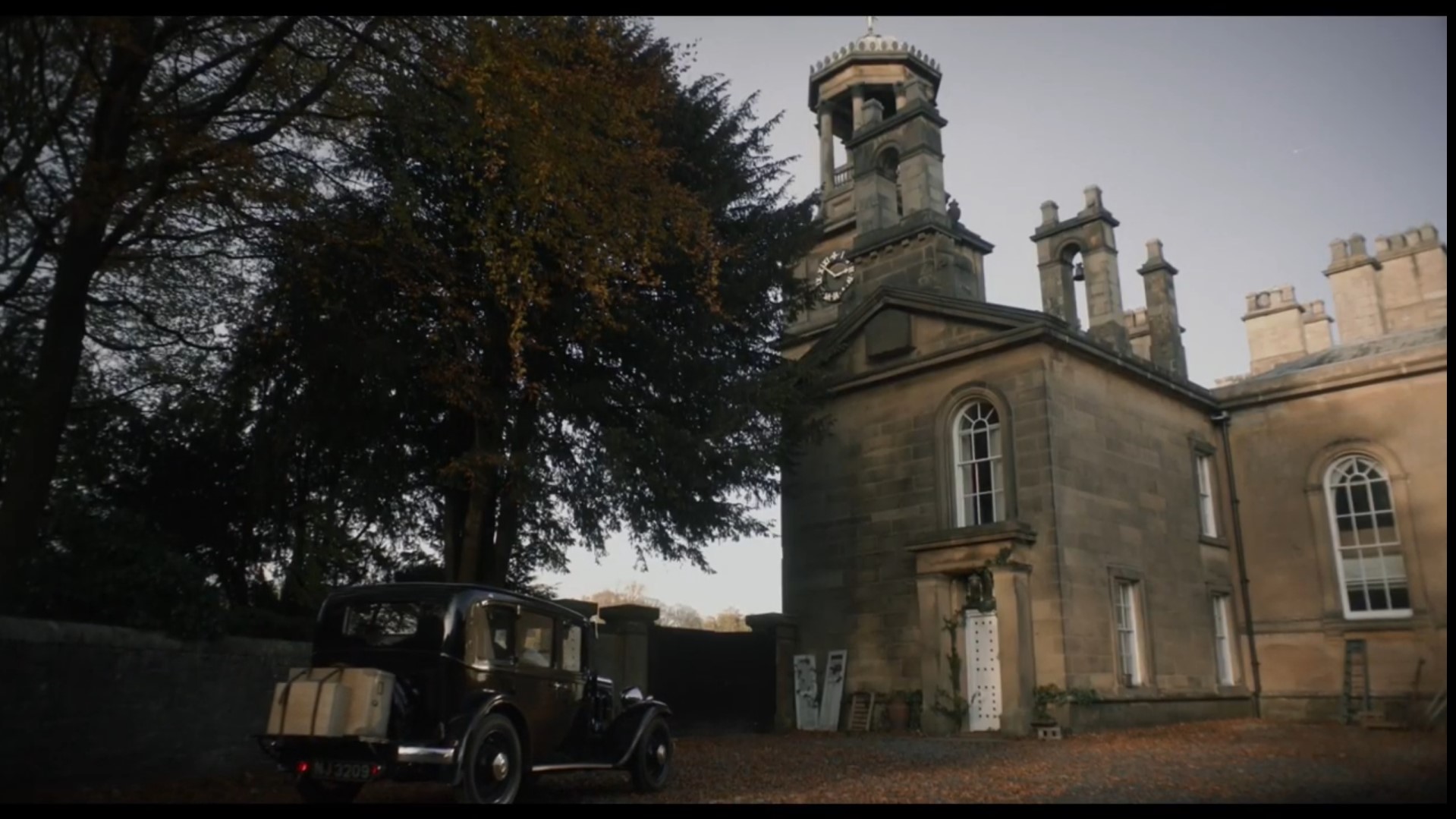
Set convincingly in a quaint, 1930s English town, Christopher Smith transports the audience back in time to the predated anxious moments before World War II that would upheave turmoil across all across Europe, but though that fretted lingering of war is set as the backdrop for “The Banishing,” and is coiled around every man who served in the first Great War that brought up more than once, the root of the narrative ultimately becomes the house Linus and Marianne have come to call their home.  Haunted house films surmise the house as a built-in principal character because of either the way the architecture affects the mental or physical wellbeing of it’s flesh and bone counterparts or if the abode is actually possessed and set to harm the inhabitants in a personification of pure evil, as such with various films of this caliber (“House,” “The Haunting,” etc,). Yet, Linus and Marianne’s estate failed to become a part of the narrative limelight despite the immense grounds that compromised of a large greenhouse and a robust library complete with fireplace and the disconcerting labyrinth of a dungeon-esque basement full of barred enclosures and close quartered corridors.  Nearly every interior shot felt like a new section of the house hat kept extending upon, what would be assumed, a grand mansion that had a longer rap sheet by reputation in being a former religious torture chamber run by sadistic monks hellbent on whipping the sin out of the mentally tormented. Smith always had an eye for the unsettling visuals and sustains that feng shui by allowing time and space to be the inner horrors of a funhouse, but doesn’t evoke clean, unadulterated terror that continues to profusely bleed into the film’s climatic cause-and-effect unraveling. There is a lack of a transformative realization and a small hurtle of sedated possession to figure out that the main presence in the house, amongst the other more malevolent presences, wants something and the characters are spoon fed each and every morsel to get them up to speed. The final scene of the bishop meeting with the Nazi regime intended to leave the story open for supernatural possibilities, but felt like a more poignant and compelling crux leading into Nazi occultism, hinted by the eccentric resident occultist Sean Harris.

Morosely dramatic and haunting, “The Banishing” is an aggressive salvo of facing shame head-on, creeping into UK cinemas and digital platforms on March 26th courtesy of Shudder and Vertigo Releasing. Director of photography Sarah Cunningham has an remarkable ability to engulf the actors in the space of the shot, making them seem diminutive to the rooms that feel like a giant hand looming overhead, and with the bare, hard lighting, the cinematography is really where “The Banishing” shines as gothic cladding without a stodgy spot to speak visible. Cunningham adds all the hallmarks of a horror film with titled angles, brilliant reds, and tight shots on tense faces to garner a more anxiety that never actually pans out by the end. The organic electro duo TOYDRUM score the 97 minute film with a single note droning hums at various pitch levels that can really get inside your head. The “Prevenge” composers set up scenes with a ill-founded fears when nothing presently visible is intended to fright. There were no bonus scenes during or after the credits, but one scene to note is Sean Harris waltzing with an uncredited woman during the opening credits that seems out of place but speaks to the aberrated decorum of his character. “The Banishing” works tirelessly to discredit shame by confronting truth and while we’re being beat over the head by the message, the overlay of horror is lost despite some brilliant and engrossing performances from Findlay and Harris who usher us through to the imperfect conclusion.

All Hail the EVIL Slumbering One! “Sacrifice” reviewed! (101 Films / Digital Screener)

Years after being quickly whisked away to America as a small child from his remote Norwegian island birthplace, Isaac returns nearly 30-years later with his new, pregnant wife, Emma, after the death of his mother leaves the empty family home in his inheritance.  With their heart set on fixing up and selling the house before the birth of their child, Isaac and Emma learn that marketing the seaside and scenic estate comes with a tragic past when the local sheriff discloses the brutal murder of Isaac’s father inside the home.  The dreadful information and the bizarre locals with their customary traditions doesn’t alarm Isaac who, instead, feels a strong connection and is drawn to staying whereas Emma, plagued by terrifying nightmares ever since stepping onto the island, is eager to sell and return to American as soon as possible, fleeing a community that worships an aquatic deity beneath the water’s surface.   

Based off dark fantasy and science fiction writer Paul Kane’s short story, “Men of the Cloth,” found in the author’s “The Colour of Madness” collective works, “Sacrifice” is an alienating folklore horror bound by the influence of a Lovecraftian core under the direction of a filmmaking due in Andy Collier and Toor Mian.  As their sophomore film as collaborating directors, following their 2017 psychological cop horror “Charismata,” Collier and Mian tackle Kane’s short story head-on by changing only a few details, such as location, family structure, and the title from formally known as Kane’s “The Colour of Madness” to “Sacrifice”, but keep rooted the foremost principles of “Men of the Cloth’s” cultish discomfort that’s greatly inspired with the otherworldly sensation of an amiss atmosphere akin to Robin Hardy’s “The Wicker Man.”  Filmed around the idyllic and mountain enclosed shore town of Bjørk, Norway and in the town of Volda, Norway, the 2020 film seeks to plop strangers into a strange land as a production of the London-based companies, Loose Canon Films and Hydra Films RKM, in association with Dread.

Over two years ago was the last time we reviewed a Barbara Crampton movie with “Death House,” that included a plethoric cast of her all-star genre brethren with Kane Hodder, Bill Moseley, Dee Wallace, and others, and, now, Crampton makes her glorious return to the Lovecraftian turf that nostalgically brings most of us horror fans back to the New York-born actress’s “From Beyond” and “Re-Animator” days.  “Sacrifice’s” Cthulhu spirit finds Crampton playing a small town Norwegian sheriff, Renate Lygard, in which Crampton, under the training of a dialect coach, surprises us with a fair Norway accent as she provides a quasi-warm hospitality set of manners upon island outliers in Isaac (Ludovic Hughes) and Emma (Sophie Stevens) Pinkman. Hughes and Stevens nudge their way into a solid man-and-wife, but their dynamic density becomes crispy at times and pale from their initial arrival soon after rustling with the natives. The lack of vitality doesn’t stem from the wedge being driven between from the lure of Isaac being called by the natural phenomena of the Northern Lights, the drunken friendly benevolence of Gunnar (Lucas Loughran) and Ledvor (Jack Kristiansen), and the full frontal skinny dipping of Renate’s beautiful daughter, Astrid, an eye-opening film introduction from Johanna Adde Dahl; instead, the Pinkman’s bond held together about as tight as using kindergarten grade craft glue that bled into the performances as well that came off stiff and unnatural. Aside from Hughes and Stevens hailing from the United Kingdom and Crampton from the U.S., the remaining cast was curtailed to Norway nationals, as such with Loughran and Kristiansen, rounding out the cast with Erik Lundan, Dag Soerlie, and Ingeborg Mork Håskjold.

“Sacrifice’s” cult mania lays on a thick coating of grass roots that really set the tone for an foreboding outcome.  An idyllic Norway fishing village propped between the eclipsing mountain range and marine inlet intrinsically obscures an already unspoken secret that’s only been rendered on the faces and actions of the residents.  At the center of village’s idiosyncrasies are the two hapless protagonists venturing into unknown territory with only an inherited house in their back pocket and a vague sense of youthful recollection; this sets up for an obvious antagonism theme of locals with a sense of xenophobic nationalism, especially against two Americans.  The initial friction opens the flood gates for cultural customaries to be weaponized against Isaac, who wants to strongly embrace his heritage, and Emma, who can’t seem to grasp the village’s peculiar beliefs and even goes as far as being naïve of and mocking the village’s traditions and deity.  The tension is compounded by the ominous presence of the labeled slumbering one, sleeping beneath the glossy surface of the inlet waves, but conjuring up tangible and intense nightmares that plague the every island inhabitant, a mystery Emma can’t explain, won’t entertain, and ignores exploring that turns Emma floundering more into Isaac’s sudden disinterest in her albeit soon-to-be-parents.  “Sacrifice’s” climatic, tell all scene harbors more secrets regarding Isaac and Emma’s purpose on the island that are to be interpreted by the audience, but don’t connect back to any string along clues leading up to a poignant and sharply-shocking ending.  Instead, “Sacrifice” acutely wraps up not only the story but also the characters like a paper wrapped fish at the fish market ready for sale without any huff about where, why, and how that particular bug-eyed fish became the gutted victim of man’s delicacy.

“Sacrifice” shores folklore horror swelled with Lovecraftian roots and is docking digitally today, March 15th, in the UK courtesy of 101 Films. The film has a runtime of 87 minutes and is presented in a widescreen 2.35:1 aspect ratio, shot on a Sony CineAlta Venice camera. Co-director Andy Collier tackles his first credit director of photography gig with interesting shots looking up through all different angles and vessels that hold water. Whether boiling eggs, taking a bath, or in small cove, Collier, and Mian, put eyes on the bottom surface, promoting all varieties of water within it a lurking presence and the imagery is done extremely well with depth and space to pull off the illusion. A fair amount of soft lighting, moments of bright primary color glow, and the specs of well-placed lighting to barely illuminate a scene is broodingly worthwhile. Tom Linden’s original score is fiercely compliment as a folklore staple, harsh-chord intensity that lingers well after the boiling blood levels drop to a mere tentacle dwelling simmer. There were no extra features or bonus scenes included with the digital screener. While the build up didn’t pay off at the bloody end, the two-tone terror of “Sacrifice” wrecks the nerves and frays warm pleasantries with wicked wallowing, slumbering, nearby in the shallows.

The Greatest Trick EVIL Ever Pulled Was Convincing Couples the Perfect Marriage Ever Existed. “Happily” reviewed! (Saban Films / Digital Screener)

Tom and Janet have been married for 14 years.  By that amount of time elapsed, marriage has moved past the honeymoon stage and settled into routine with the spark having dulled and sex life becoming nearly, if not totally, stale, but for Tom and Janet, their libidos are the equivalent to hormone-driven teenagers.  Their marriage has happily sustained over the years, never veering off course, but when a couples’ retreat invitation is rescinded by their friends because of the envied desire for each other and a mysterious man arrives at their door step next day offering a syringe injection that will cure them into a normal married couple, Tom and Janet believe they’re a part of a sick joke by one of their so-called friends, leading to a dead body, a brief case of unknown substance, and a re-invitation to the couples’ retreat where they must figure out who is and who isn’t of the four other couples are on team Tom and Janet.  Yet, the trip founded on the idea booze and relaxation turns into a disclosure of lies, secrets, and deadly disconnections. 

What’s the secret to a long lasting marriage?  Good sex, obviously.  But can an ostensibly impenetrable marriage be flawless?  That’s one of the themes writer-director BenDavid Grabinski toys with in his inaugural feature film directorial of “Happily” that disparages the unsullied union of Tom and Janet by a quartet of couples, who are also Tom and Janet’s closest friends, who aim to stick it to the happy couple because of their own marriage and life failures.  Grabinksi, creator and writer of revamped “Are You Afraid of the Dark?” television series, incorporates that element of grim tale mystery for allegorical effect into the psychology of envious, mal intent friends projecting their negativity on Tom and Janet’s positivity and love.  “Happily” is a production of the Arizona based Common Wall Media, an indie record and film production labeled owned and operated by Chuckie Duff, and, perhaps, the reason “Happily” has a killer soundtrack that includes Tim Capello “I Still Believe.”  Jack Black (“Tropic Thunder,” “Goosebumps”) also produces the film under his Electric Dynamite Productions, Inc. banner in collaboration with Indy Entertainment (“Nightmare Cinema”). 

I find extreme difficulty seeing Joel McHale in anything remotely with a serious tone for someone who grew up with the comedian during his 12 season days of E!’s spinoff of Talk Soup titled simply, The Soup.  McHale’s range as a funny man is beyond being paramount with great comic timing and able to deliver an unlimited amounts of laughs in just his mere expressions and that has translated well into his filmic career from comedies such as “Ted” to “The Happytime Murders” and even well into his more earnest and darker roles in “Deliver Us From Evil” and, his most recent release which is “Home Alone” for a more mature audiences, “Becky.”  In “Happily,” McHale plays Tom, a loving husband to wife Janet who can’t keep their hands off each other and never fight for more than half a day in what’s staunchly considered a perfectly sickening marriage by their closest friends.  One thing I’ve learned from watching Joel McHale in this role is not only can he bear the weight evenly of an emotional thriller, but the guy is jacked!  Opposite McHale is “Penny Dreadful:  City of Angels” star Kerry Bishé, matching the sexual and profound tone as the wife, Janet. Bishé takes on Janet’s ever benevolent wifedom, elevating it to a whole new level as the working spouse, ready to gratify Tom by any means possible and in any compromising position possible, who’s also served hand and foot by the same man who knows how to reciprocate at the right moment. Bishé’s a favorable compliment to McHale as a power couple daring the odds together on the same page until losing they’re way because, simply, they’re inevitably human. Tom and Janet square off against four other couples under suspicion of a suspected prank-gone-wrong after meeting with a mysterious man played by “Office Space’s” Stephen Root. Could the pranksters be the flamboyantly affluent, but unaffectionate Karen and Val (Natalie Zea of “The Following” and Paul Scheer of “Piranha 3DD”)? Could it be the uptight lesbian couple Carla and Maude (Shannon Woodward of “Westworld” and Kirby Howell-Baptiste of the upcoming “Cruella”)? Or is it the carefree Patricia and her inhospitable husband Donald (Natalie Morales of “The Santa Clara Diet” and “Mastermind’s” John Daly)? Maybe its the anger unmanaging Richard and his newfound fiancé Gretel (Breckin Meyer of “Freddy’s Dead: The Final Nightmare” and Charlyne Yi of ” Puppet Master: The Littlest Reich”)?

Grabinski forcibly shoves the happily in “Happily’s” Tom and Janet’s marriage down our throats with a diabolical lustful half-exposition, half-hanky-panky action before title sequence intro into their infinity spicy life. The couple screw like two teenage rabbits hopped up on an aphrodisiac more than a typical mundane couple of 14-years should ever seen in their union’s lifetime, but, then, Grabinski throws in the proverbial monkey wrench into the gears. The question comes up, and lingers throughout, whether Tom and Janet are inherently broken, a defect in their existential creation, and that begins to snowball down the hill of insidious thoughts as the protagonists have their idyllic marriage tainted by the hair brain idea of a stranger, carrying two syringes of an insta-fix made up of unknown, illuminating material, who beguiles them with bureaucratic niceties to lie his way into their home and tells them he works for a higher power. Is this mysterious man God? Perhaps, the Devil? Grabinski smartly keeps that little detail under wraps and, for the first half of the film, stays a mystery upon itself. In time, each couple begins to unravel cankerous secrets, all of which have been targeted at Tom and Janet for their perfection and that’s perhaps where “Happily” struggles a bit as a story as Grabinski has a rolodex of past events being flipped through a plethora of interaction exposition, leaving morsels to try and puzzle the uneasiness of the morose couples’ retreat together. The long and short of the story is that the audience will need more morsels to chew on, get the creative juices flowing, to understand character motivations because, in the end, “Happily” is one big couples therapy session of divulging secrets to wash away, more or less, soul-deteriorating sin.

Before all hope is lost between two people, an intervention is warranted, even if it’s a divine one in BenDavid Grabinski’s dark comedy “Happily” heading our way to theaters, digital, and on demand come Friday, March 19th from Saban Films. The R-rated film runs for 96 minutes is presented in a widescreen 2.39:1 aspect ratio that gets to showcase more of Adam Bricker’s luridly dreamy style. The “Starry Eyes” cinematographer instills a firm taste of precise, primary coloring tinting that evokes the intensity of the scene rather than pitching an outlined overlay on top of his soft lighting. The red “Predator”-esque vision through CCTV lens is a nice touch of also breaking up the more natural lit scenes for that ominous approach. Since “Happily” is coming to theaters, there is obviously no bonus material, but stick around for scenes during the credits and after credits. Lies, betrayals, murder, and the uncanny are soaked into “Happily’s” absorbent fibers as one of this years best dark comedies that hones in on ascertaining that nothing is perfect but the perfection that you make together.

In EVIL’s Chair and Ready for a Cut. “The Stylist” reviewed! (Arrow Films / Digital Screener)

Excellent at styling hair, but not so much at making friends, Claire lives a solitary life as she’s unable to personally spark connections, even with those who she interacts with on a daily basis.  As a hairstylist, she absorbs a plethora of private information provided willingly by her clients who see her as someone not significant enough to be troublesome or detrimental to hurt them, but, little do her clients know, Claire has a dark secret with obsessively overstepping into their lives and, sometimes, directly into their shoes as murder becomes a conduit for Claire to experience a slither of momentary solidarity and belonging happiness.   Brief in its euphoria, the elated feeling doesn’t last and Claire finds herself back into a vicious cycle beginning with being defeated, but when a regular client, Olivia, begs for wedding hair help, Olivia befriends the stylist who begins to sink deeper into a misinterpreted friendship with Olivia fabricated inside Claire’s disturbed mind. 

Whenever stepping onto the hair clippings of a barbershop, sit on the padded, pump-hydraulic chair, and be asked by a for certain fallible person how I want would like my haircut, my hands nervously clutch each other, the space between my eyebrows fold in and crunch, microscopic beads of sweat go down my hair raised back and the agitation in my mind grows louder than a blow dyer on a high setting.  Why do all these externally stemmed irritants happen to me at the seemingly communal and smile gracing barbershop?  Think about my situation, one driven by introverted behaviors and pessimism for the human race, this way:  your neck is choked tight with a hairdresser body-bag resembling cape, sharp, haircutting sheers clipping swiftly overhead, and the loud buzzing of a motor purring around your ears’ edge before they detailing the side of your face with tiny razors moving hundreds of miles per hour.  Let’s not also forget about the straight-razor across your neck to attack the five o’clock shadow!  No, thank you!  So, there was already an abundance of established anxiety heading into Jill Gevargizian’s written-and-directed hairdresser horror, “The Stylist,” that takes just a little bit more off than just what’s on top.  The “Dark Web” filmmaker reteams with co-writer Eric Havens to extend the profile of the quiet and quaint, Victorian chic hairdresser, Claire and her lonely killer inclinations based off their 2016 short film of the same title and add Los Angeles based copywriter and “Night of the Wolf’s” Eric Stolze into the salon of psychological horrors mix. “The Stylist” is a production of Gevargizian’s Sixx Tape Productions, that also includes Eric Havens and lead star Najarra Townsend, alongside co-productions Claw Productions, Method Media, and The Line Film Company.

Najarra Townsend reprises her role as Claire, the lonely hairstylist bedeviled by a lack of belonging and rapport with no family or friends. Claire spirals into internalized madness that unveils when trying to step inside the lives of others as her own. The “Wolf Mother” star becomes a granular speck of torment plagued severely by social awkwardness to the point of her need for perfecting the imaginary bond between her and Brea Grant’s character, Olivia, goes into destruction level transgressions that’s normal, living rent free, in Claire’s headspace. Grant, writer and director of one of our favorite films of 2020, “12 Hour Shift,” and in the recently released, critically acclaimed, Natasha Kermani thriller, “Lucky,” has to be a larger than life persona whose the center of attention, as soon-to-be-bride going through the throes of wedding planning, that can draw in the wide-eyed and impressionable Claire like a moth to a flame. Townsend’s a specific kind of talent to get inside Claire’s ennui state not once, but twice. The latter precisely nails down Claire’s outlying, exterior behavior, but also smooths out a mustard nuance veneer of vintage chic that becomes a part of the building blocks peculiarly exclusive to her quietly disruptive cause. Starkly contrasted against Claire, Grant relates to who we all see on the outside as Olivia, a shining glow of smiles and worries that most people can digest with ease on a daily bases and while her life, as chaotic as may seem with a wedding near on the horizon and questioning a deep down decision about marriage, is juxtaposed with such distinction that Gervargizian literally puts Claire and Olivia side-by-side in a split screen early in the film to expose one hiding her secrets and the other letting them all hang out. Sarah McGuire (“The House of Forbidden Secrets”), Millie Milan (“Clownado”), Davis DeRock and Laura Kirk round out the supporting cast.

Take a moment and breathe the very essence of women-driven horror that’s as stylish as it is deliciously deranged.  “The Stylist” echoes similar psychopathic traits of William Lustig’s “Manic” and displays self-careening elements soaked in barbicide and Gothicism.  The junior film of Jill Gevargizian narrates through the eyes of Claire’s unraveling humanity from the stylist’s quick fix of bloody hair removal to the potential for climbing out of that deep, dark hole of loneliness only to be suddenly sideswiped by the falters of manufactured delusions. “The Stylist” is wrapped in a sullen hairnet that never shows the jovial side of Claire’s pleasures as she’s embodying someone under their locks after calculatingly cutting more than just their hair; a perspective exclusively held within Claire’s head, leaving viewers entangled in her in seemingly normal beauty shell and her inner demented chaos. You feel sorry for her forlorn life, but creeped out by that same life’s byproduct. One aspect that “The Stylist” lacks, that can be off-putting for some, is the mold that made Claire. Miniscule slips of her upbringing becomes not enough to paint an exact portrait of Claire as a malevolent monster with sociable dysphoria and as the story builds to a climax and Claire tries to imitate her mother, who died in her mid 30’s when Claire was 17, the mimicry fairs to say that her mother also had similar problems that has innately passed and has coped a different way of dealing with mental illness by way of alcoholism, mentioned by Claire in a moment of courting a friendship with an eager bridezilla, Olivia.

What a fitting film to be discussed and celebrated on International Women’s Day 2021 in the Jill Gevargizian directed and Najarra Townsend lead “The Stylist” now released exclusively on Arrow Film’s UK VOD platform ahead of the physical Blu-ray package and digital HD releases come June 2021. Film film clocks in at a 105 minute runtime and is presented in a widescreen 2.39:1 aspect ratio. Behind the camera is Robert Patrick Stern whose composition of imagery is based mainly in natural lighting while dabbling in warm coloring such as reds, the occasional vibrant magenta, and a consistent yellow mustard, a favorite not only in Claire’s wardrobe but also tinged on the lens whenever a part of Claire’s localized disturbia. Stern’s clean and sleek picture palpably elevated John Pata’s editing of montages that were superimposed with transitions and the soul searing music of Nicholas Elert’s melancholic inducing piano-industrial score. There were no bonus features included nor were there any bonus scenes during or after the credits. “The Stylist” honors the past by reinventing the wheel in Jill Gevargizian’s clipping thriller with a hair-raising performance by Najarra Townsend as the maniacal hairdresser lonely next door.