There’s Nothing More EVIL than a Brother’s Revenge. “Dead Man’s Shoes” reviewed! (Second Sight / Blu-ray)

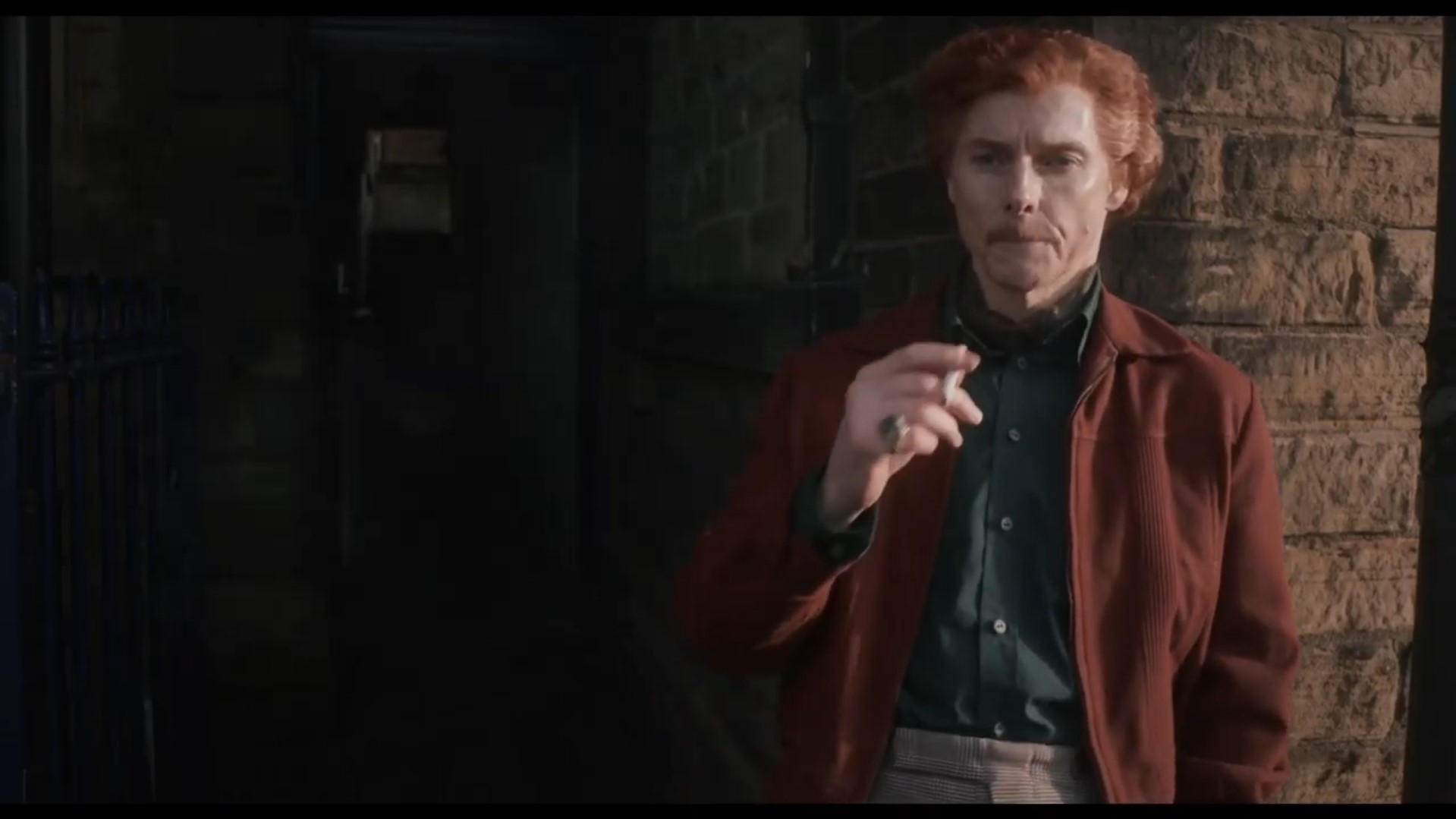
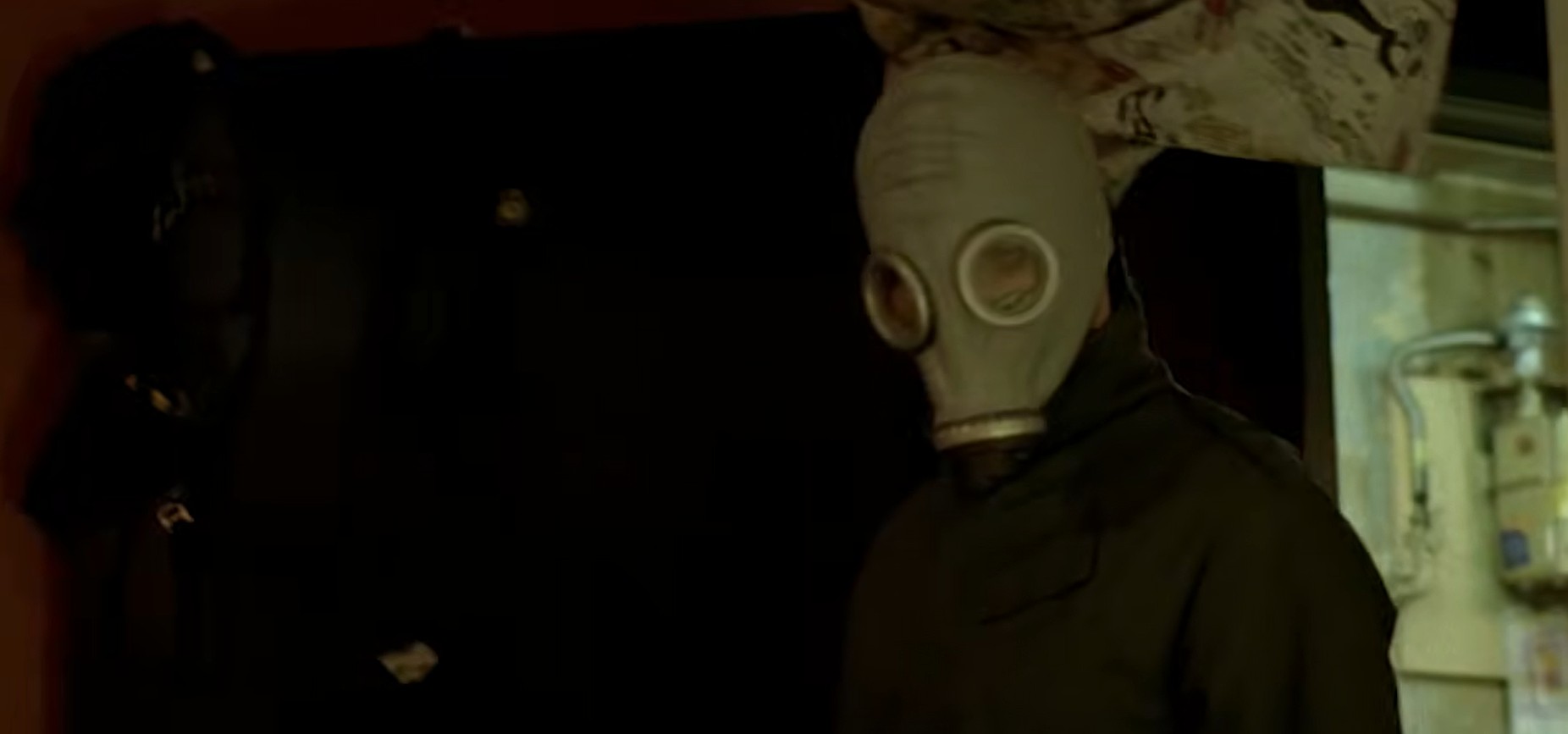
Richard, a former special forces soldier, returns to his hometown to exact revenge on a gang of townie drug dealers who teased and tormented his younger, simpleton brother Anthony.  Unawre of Richard’s return, the local drug runners find vandalization of their property and even of their person as they slept through the night, a playful jest of threats send pointing fingers at each other rather than an outsider looking in to destroy them.  When some drugs go missing and one of them recognizes Richard as Anthony’s brother, the recollection of what happened to Anthony sends them into an anxious state that Richard may want retribution for his little brother’s pain and suffering.  Pranks and thefts are only a prelude to the pain and suffering Richard seeks to unload onto them with plans of snuffing them out one-by-one but beating them at their own game of fooling around but with the intent to kill.  How far will Richard go before he succumbs to the level of those who fed into his wrath? 
“Dead Man’s Shoes” is a very meat and potatoes, independent revenge thriller from cowriter and director Shane Meadows that features the dangers of the bullying against those not able to withstand the mental capacity to absorb such unprovoked abuse and brutality as their unable to process and comprehend what that looks like. The story is also a relatable to the siblings having experienced a brother or sister at the receiving end of the abuse and wanting to do something extreme about it, and those who have done something extreme about it, with the retribution acts swallowing the soul. Paddy Considine debuts as cowriter on the UK production under the Warp Films, Big Arty Productions, and Film4 collaboration. Mark Herbert and Louise Meadows coproduce the film in the rolling hills and low agricultural landscape of Derbyshire that feature small English towns and skeletal abbeys.
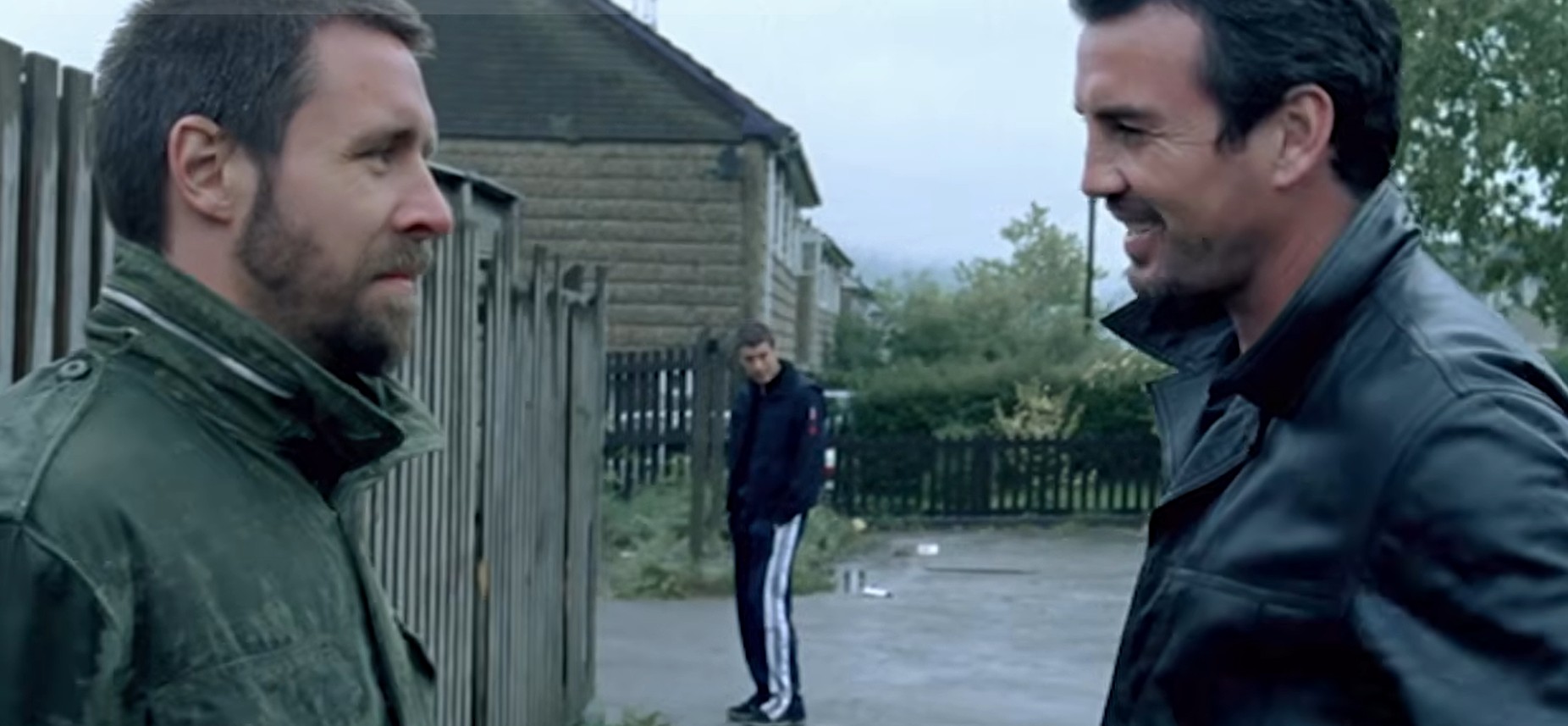
Cowriter Paddy Considine stars as Richard, the former soldier and older brother deadest on avenging his brother’s honor.  Considine has that 1000-yard stare with a stoic, emotionless expression of a man who masks his hurt with murderous action that speaks louder than words.  Garbed in a long green, military fatigue-like coat, a short, boxed beard, and his military duffle, Considine set himself to take on rinky-dink drug operation of a smalltown in the English countryside.  Richard control leaves gang leader Sonny (Gary Stretch, “Mega Shark Vs Crocosaurus”) at a disadvantage by dropping in unexpectedly with erratic behavior and not hint a plan against his crew made up of mostly bumbling and bickering buffoons, played by Stuart Wolfenden (“The Eschartrilogy:  Book of the Dead”), Neil Bell (“Dune Part I and II”), Paul Sadot, Seamus O’Neill (“Attack of the Adult Babies”), Paul Hurstfield (“The Spell”), and George Newton (“Creatures of the Night”).  However, one of the men are not like the others, carrying a different vibe from the rest of the hyena-rowdy drug pushers that puts Richard in a predicamental position of with how rapidly h’s succumbed to violence to the likes of those he’s toying with and dispatching that makes him reflect and be more contemplative with his brother.  We don’t get much time with little brother Anthony (Toby Kebbell, “RocknRolla”) who mentally handicap and follows his brother around to point out who wronged him back when, being exploited for the amusement of Sonny and his men, but Anthony puts into question older brother Richard’s sanity and motivational drive that continues a downward spiral of apathetic derangement.  “Prevenge’s” Jo Hartley and “Butterfly Kiss’s” Emily Aston are the only two female actresses in the film but the story’s nearly completely male centric that leave Hartley and Aston’s characters in the dust of minor support rather than significantly operating in the narrative. 
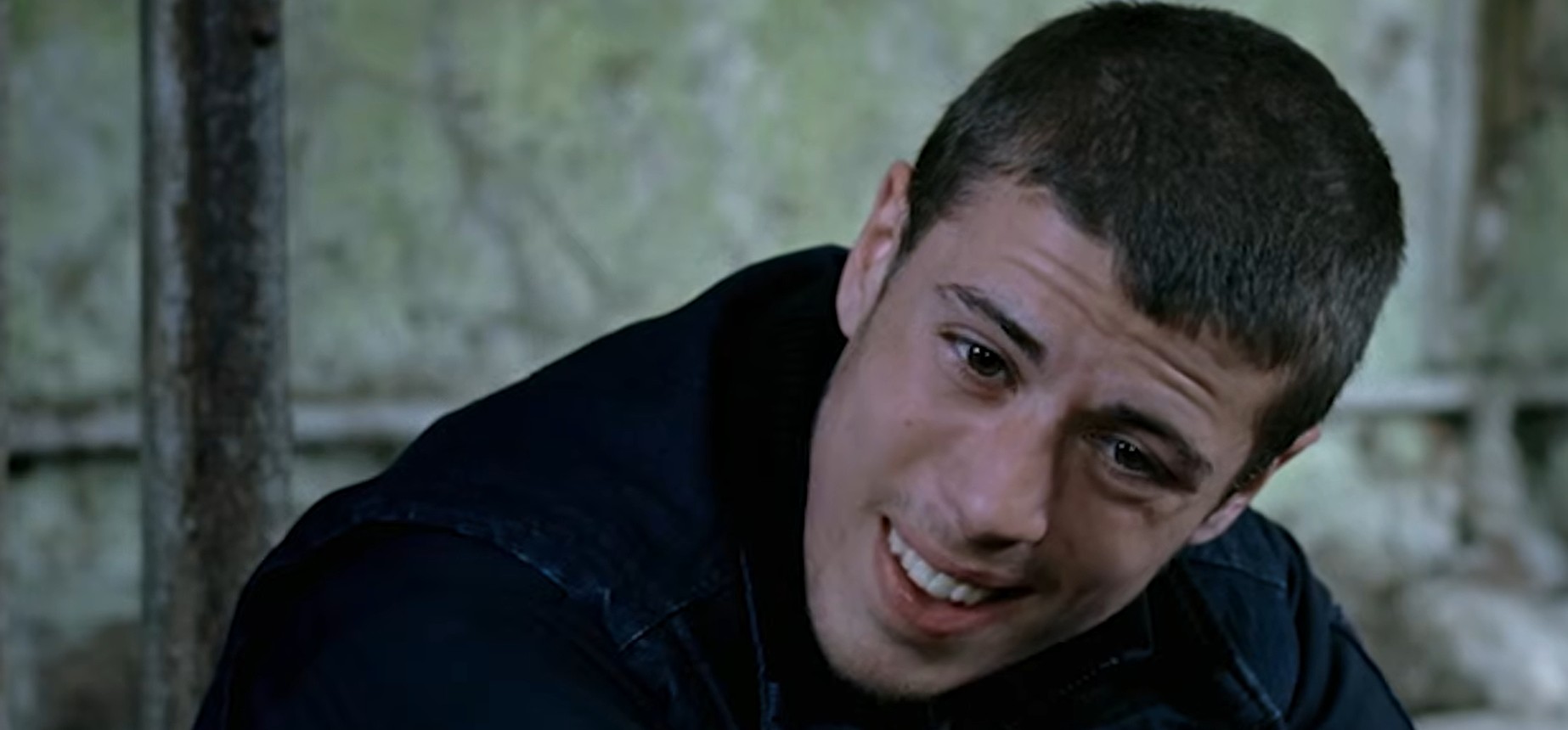
For a revenge thriller, Shane Meadows doesn’t dress up the violence. There are no extravagant shootouts, prolonged chases, explosions, surviving by the skin of your teeth, or anything of that nail-biting, edge-sitting, hair-raising tension to raise the stakes and create the anxiety of a live or die moment.  Instead, “Dead Man Shoes” carries out like any premediated murder would with an unexpected calmness in handing down wrath with a touch of class.  The bells and whistles are saves for the cast to portray a raw sliver of life in crime and the shared blood between two brothers with nothing in common and on opposite ends of the spectrum. Anthony was a deep shame from within Richard and that shame converts to violence in an afterthought of atonement for his own feelings about his brother.  He must run through a slew of bad guys who abused him to see his own faults in their relationship. As Richard and Anthony walk through the countryside on their way to town, there’s hardly a word or two between them but their proximity to each other is relaxed, comfortable, and without sibling difficulty that initially will have audiences believe a strong bond but the twist ending sheds a different, more problematic connection of poignant regret and disgrace that puts a good soldier on a downward path.  While the rest of the cast, mostly the gang, are petty shallows of people with no depth of character, only one other character rivals Richard’s complexity and it’s the one who’s left standing after Richard’s steamrolling, yet quiet as a church mouse, dysfunctional onslaught. 
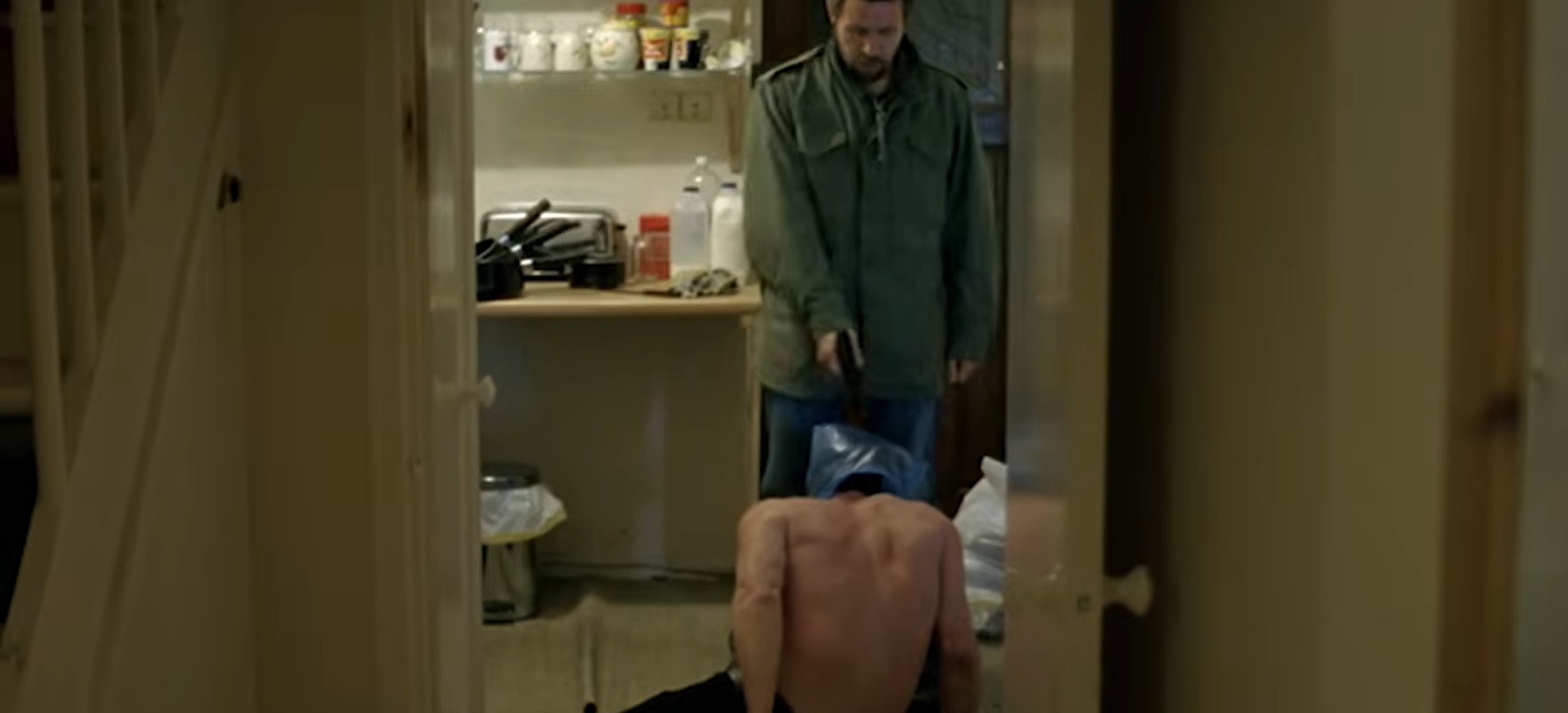
“Dead Man’s Shoes” receive new life with a Second Sight Films Blu-ray release.”  Second Sight’s Blu-ray is AVC encoded with high-definition, 1080p resolution onto a dual-layer BD50.  Shot on Super 16mm film and then blown up to 35mm for theatrical exhibition prints, Meadows’ film doesn’t look like a Super 16mm shot production with the appears of more a 35mm detail.  The natural grading doesn’t add any pizazz but that was not Meadow’s goal with heavily stylization.  Details are still touch and go, mostly leaning toward the lesser defined aspects of texture as some aspects of the Midlands are lost in the background and in the rolling foliage Richard treks, but delineation and contour check out okay.  No blatant or obvious issues of compression pains.  Second Sight presents the film in a widescreen 1.78:1 aspect ratio.  The UK English DTS-HD Master Audio 5.1 is more firepower than it needs but definitely is a solid sound design that levels the three major aspects:  dialogue, soundtrack, and ambience.  Dialogue is clean, clear, and prominent while the environment and action subside to fit with exact dynamics to scene.  The various indie-folk soundtrack wanders with Richard and Anthony across the land, also providing a prologue and epilogue bookend of resonation that connects with the tale tattering themes of loss of one’s physical and mental self.  There are English subtitles available for selection.  Second Sight provides plenty of special features with a raw, bare, indie production with a new audio commentary by director Shane Meadows and producer Mark Herbert, a second audio commentary by Andrew Graves and Jon Towlson, and a third audio commentary with director Meadows, lead actor Paddy Considine, and producer Herbert.  Also included is a new interview with Meadows and Herbert Quite a Journey, a new interview with actor Toby Kebbell A Very Fine Line, a new interview with Gary Stretch The Right Horse, an interview with director of photography Danny Cohen Made an Impact, deleted scenes, extended scenes, the short film “In Shane’s Shoes,” the short film “Northern Soul,” and the music video from Danger Mouse and Jemini.  The release comes in a smokey gray Amaray Blu-ray case with an uncredited new artwork on the single sided sleeve.  There are no other tangible features included.  The UK certified 18 film contains strong language, strong revenge violence, and hard drug use.  The region B encoded Blu-ray has a 90-minute runtime shelf life. 

Last Rites: “Dead Man’s Shoes” is quaint, hyper-local, and simply vengeance. The Second Sight Films Blu-ray is a great celebration of Shane Meadow’s tiny but tenacious thriller.
Underneath the Pulpit Waits an EVIL Difficult to Stomach! “The Borderlands” reviewed! (Second Sight Films / Limited Edition Blu-ray)

Order the Limited Edition Blu-ray of “The Borderlands” Here at Amazon.com

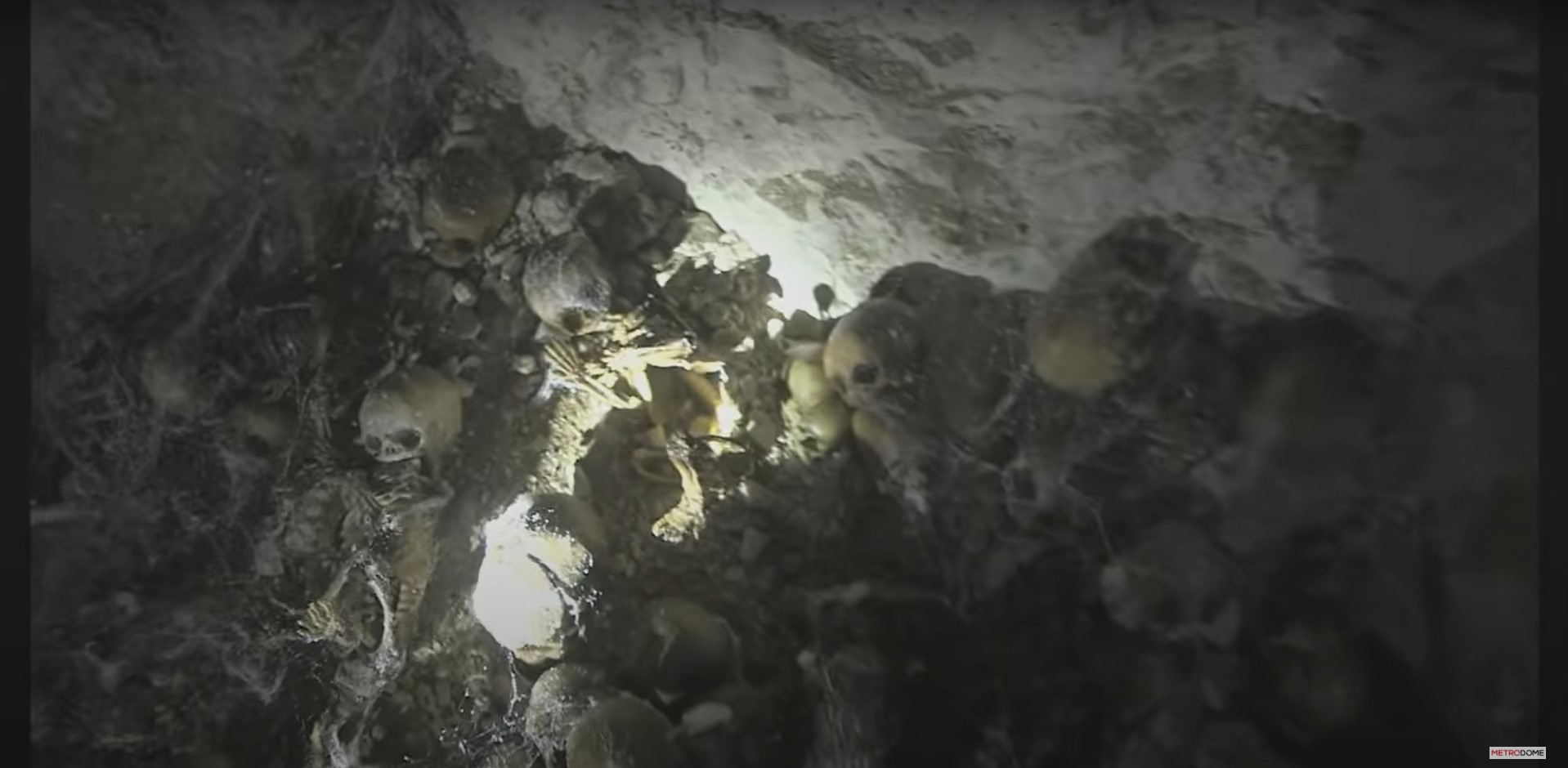
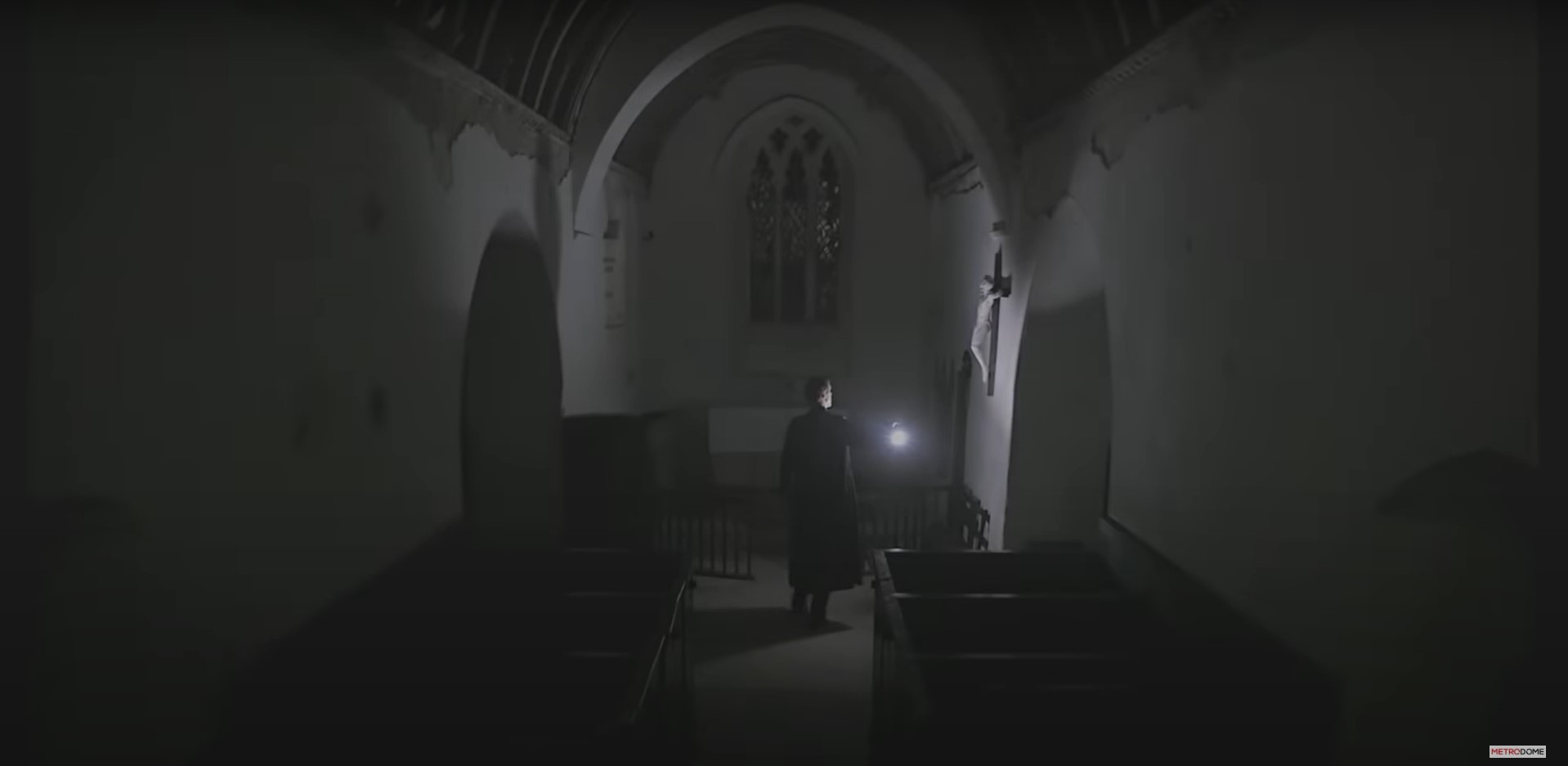
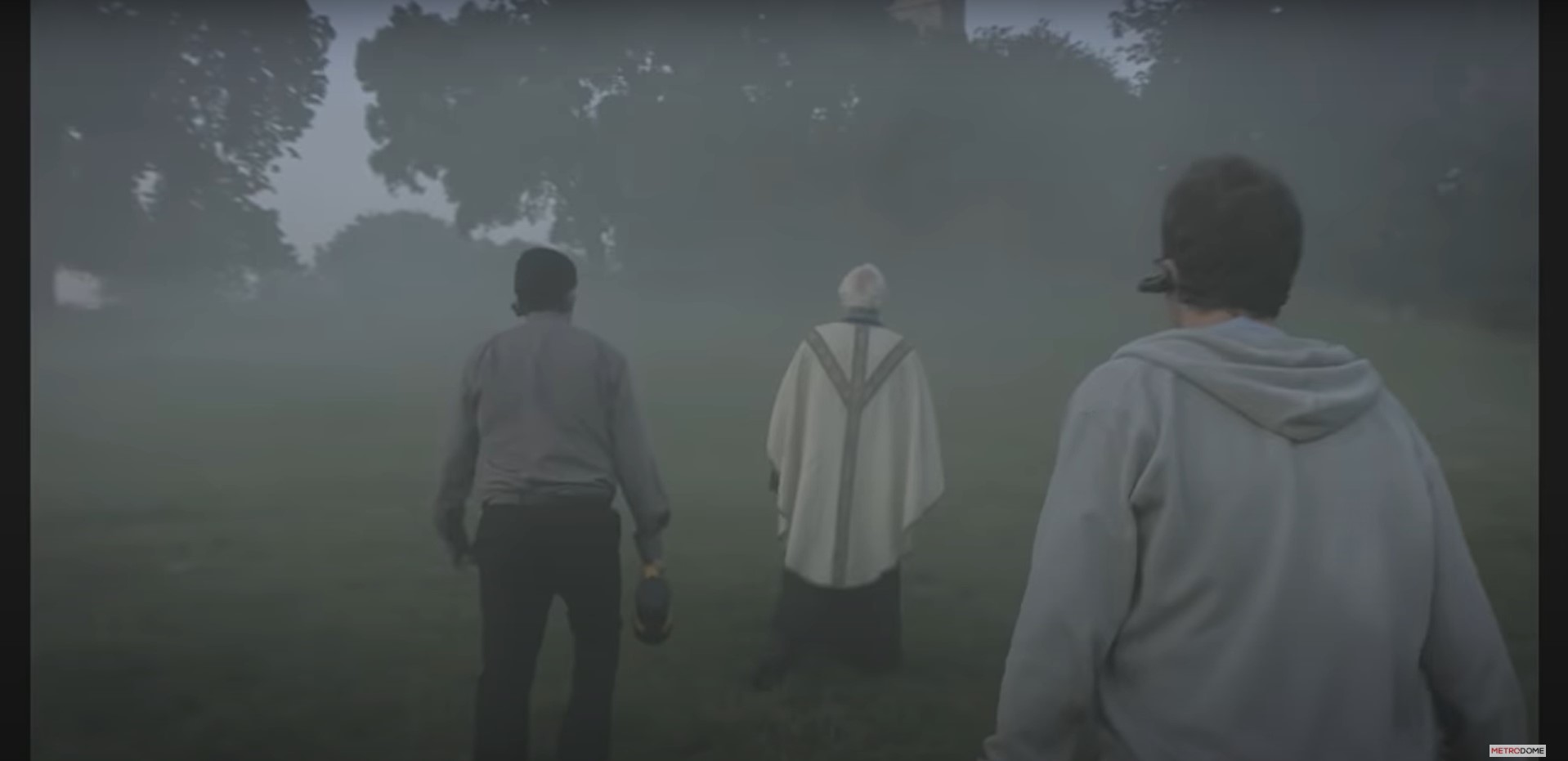
After exposing phony divine miracles at a Catholic Church in Brazil that resulted in the death of fellow Catholics, including a Cardinal, Vatican investigator and religious brother Deacon starts to lose faith with every fraud upon fraud case that points to the non-existence of a higher being.  Having fallen on the drink, the skeptical Deacon is dispatched to the English countryside of Devon where a Father Crellick had reopened a 13th century abandoned church and has been experiencing, in the Father’s words, miracles from God.  Joined by a Gray, a hired technology expert with agnostic beliefs, and a stern Father Mark, eager to disprove another false hope, the three men descend upon the Church with full, unequivocal examination to swiftly reveal the hoax and part ways.  Tensions rise between when logical explanation can’t be unearthed during Church rumblings, disembodied baby cries, and a behind-the-wall, shifting scratch sound that leads them to an underground labyrinth that will swallow them whole. 

Released in the U.S. under the title “Final Prayer,” Elliot Goldner’s 2013, found-footage UK horror “The Borderlands” is the director’s debut, and only, feature that places you right into the belly of the beast at POV level.  In a sea of found footage horror, “The Borderlands” seizes the opportunity to separate itself from the overwhelming portions of shaky camera, purposeful variable video and audio quality, and practical, obscured effects to put into question the strength of faith, specifically here in the Catholic setting, and what ultimately brings about the inevitable in that no matter what religious denomination or outlook you might have, no one is exempt from the grim reality that awaits.  Filmed mostly on location in Devon, UK, as well as West Ogwell and Chislehurst, London for many of the interior scenes, “The Borderlands” is a production of Metrodome Distribution and is produced by Jennifer Handorf (“Prevenge”) with Jezz Vernon (“They’re Outside”) serving as executive producer. 

Our team of Vatican investigators follows three men with starkly differing handles on religious faith.  Coinciding on their stance on the existence of a higher power, individualistically, they’re also incompatible to each other which makes for palpable tension and livens up the dynamic when predictability and patterns can be discerned with likeminded characters.  On the scale of human compositions, polar opposite of both spirituality and comportment is Father Mark (Aidan McArdle, “Metamorphosis”), a by-the-book priest unamused by the elaborate ruses created by those swimming in the same faith pool as himself, and Gray (Robin Hill, “Meg 2:  The Trench”), an untroubled, exuberant, hired techie eager to believe the face-value of the supposed miracles before him.  Aidan McArdle’s tenacity for dogma character comes through well enough to know that good Irish Catholic Father Mark is about as numb as the next investigating Catholic never on the verge of a true miracle as the frustration just oozes out him after one after another hoax divine ephiphany.  Robin Hill, on the other hand, could be the best John Oliver, of Max’s “Last Week Tonight,” impersonator I’ve ever seen and heard.  In all serious, Hill exacts a man looking for religion through the lens of paycheck and a fanboy of the supernatural, like as if the average horror movie enthusiastic came upon the real Freddy Kruger and just geeks the Hell out.  Then, there’s Deacon (Gordon Kennedy, (“T2 Trainspotting”) and like Father Mark, Deacon’s faith hangs in the balance after a botched investigator inadvertently sees the death of a Cardinal at the hands of pious locals.  Kennedy doubles down with Deacon’s wavering faith by drowning the character in alcohol and doubting every inexplicable Devon church oddity.  Yet, Deacon and Gray meld together to a near swap of credence, seesawing in their religious principles, when the things that go bump in the church can’t be explained.  Luke Neal (“Wilderness”) and Patrick Godfrey (“The Count of Monte Cristo”), who’s been practicing the acting craft for over half a century, play a couple of dissimilar priests lured by the Church’s mysterious forces.

What’s noticeably different about this particular bleak found footage nailbiter is the audience is integrated into story by the investigator’s strapped-on headcam, not just some schmo glued to a handheld camcorder running, yelling, and hiding for his life while still depressing the record button.  There’s also the element of a shrouded backstory that becomes unraveled overtime and speaks volumes to a couple of the character’s colorful conducts.  Those elements are then intensified by the cinematic crux, an archaic, resurrected small church’s unexplainable, mostly terrifying, daily disturbances the local priest indiscriminately deems miracles.  Not a single character has arbitrary or useless purpose for the sake of being an in-frame victim of circumstance as each exhibit a radical change over the course of investigation, adding copious ground to the big question, the question that’s on every character’s mind, is there an almighty presence beyond our corporeal plane and cerebral understanding really exist?  Come to find out, the characters are not asking the right question and get sucked into a terror on the terra the more curious they become in finding God amongst them.  Often times, found footage doesn’t fit into the storyline, whether be the aforesaid necessarily handling of the camera through the an insane ordeal or just doesn’t work with a regularly structured narrative, but “The Borderlands” couldn’t be received with success without the stunt of seeing through the eyes of the characters that subsequently emits a trick of light or an overactive imagination that smooths out solid jump scares when needed in what is a definitely watch in the dark type diabolical goosebumper. 

Second Sight Films takes charge with curating a definitive, all-expense paid trip to Elliot Goldner’s “The Borderlands” on Blu-ray home video.  The AVC encoded, high definition 1080p, BD50, hovering around 24 FPS and presented in an anamorphc widescreen 1.78:1 aspect ratio, leverages the capacity and the encoding to sharpen a relatively dark picture with more clarity without losing the unsettling spookiness with overreaching contrast.  Image presentation resembles closer to an upscaled 720p because of the found footage piece, and so we experience patchy spots, static ripples, and other miscellaneous plays into the supernatural sarcophagus that is the Devon church.  Skin tones and grading stays in tune with a brightly lit infusion of handheld torches as well as delineating the necessary with night vision cameras.  Goldner does a fine job with depth with the viewers being the foreground and using a lot of the peripheral and background to keep things hair-raising and interesting.  The English DTS-HD 5.1 audio track has lossless compression and really does throb with a wallop of balanced LFE and to-scaled dialogue.  What throws me off about this particular found footage, as well as some select others, that I find more a bothersome nuisance than a technical gaffe is an inlaid soundtrack.  A slow burn industrial score is used for “The Borderlands” to promote a greater sense of ominous omniety, like a background, repetitive, and sometimes swelling drone you might hear in certain first-person shooters from 20 to 30 years back. Dialogue tops the audio layers without being diluted by poor onboard cameras or having to contend with too much with the score, suggesting well-placed mics and sound design to achieve appropriate range and depth inside the frame configuration or even off-frame, behind or to the side of camera. Optional English subtitles are available. Like most Second Sight Films limited editions, “The Borderlands'” set packs a punch with encoded special features, such as a new audio commentary with actors Robin Hill and Gordon Kennedy, producers Jennifer Handorf, and special effects designer Dan Martin, a new interview that brings Robin Hill and Gordon Kennedy recollecting the behind-the-scenes and their characters in Dressed the Part, a new interview with producer Jennifer Handorf in Losing Faith, a new interview with special effects artist Dan Martin in Monster Goo, and a behind-the-scenes archival featurette. The limited-edition portion of this set includes a rigid slipcase with gorgeously bleak and grim illustrated artwork by Christopher Shy, a thick, 70-page color and black and white book with pictorials and new perspective and analytical essays from Tim Coleman, Martyn Conterio, Shellie McMurdo, and Johnny Walker, and 6 collector’s art cards, mostly resembling a distorted interlaced video and in an imperial purple-ish appearance from haunting scenes of the film. The artwork sheathed inside the translucent green Amaray case is the same as slipcase with no reverse cover work; it’s also pressed on the disc art. This release came with no inserts. One of the few Second Sight limited edition pieces to be licensed with a region free playback and the film itself has a runtime of 89 minutes and is UK certified 15 for strong language and threat.

Last Rites: Second Sight’s filmic selection pool for major league limited editions has been nothing short of stellar with “The Borderlands” being their latest, but definitely not their last, to be knighted worthy of physical media acclaim. Yet, it’s not like “The Borderlands” needed the boost as the film itself has a cult following for its shuddering tale and its monstrous ending that will have you reeling, maybe even screaming, in horror.

Order the Limited Edition Blu-ray of “The Borderlands” Here at Amazon.com

One Can’t Just Pray Away EVIL in “The Banishing” reviewed! (Shudder – Vertigo Releasing / Digital Screener)

Set in a backdrop of Great Britain on the very brink of world war against Nazi Germany in the late 1930s, a small English community has nearly lost it’s entire faith in the Catholic church after the last priest suddenly and mysteriously died.  When a young vicar is offered a generous stipend, the village parish, and a large estate by the region bishop to restore a congregational foothold, he brings with him his new wife and stepchild to make the house their home, but the house has a dark history that might have played a role in the previous vicar’s death and a lone, eccentric occultist urges the family to vacate the premises immediately before the house swallows them into grave danger at the haunted hands of sadistic monks, ghastly visions, and a tormented soul roaming the corridors. 

If the prim-and-proper social class structure of Julian Fellows’ “Downton Abbey” collided with the volatile and tormented spirits of James Wan’s “The Conjuring,” then Christopher Smith’s pre-wartime staged haunted house feature, “The Banishing,” would be the outcome.  The period piece horror marks the latest installment into the genre from the Bristol, English-born Smith who made a name for himself with 2004 dark subway corridor heartstopper, “Creep,” and went on to make cult favorites amongst genre fans with the workplace violence satire, “Severance,” and the medieval bubonic plague film, “Black Death” starring Sean Bean and Eddie Redmayne.  “The Banishing,” a term used as the practice within the supernatural ambit of dark magic to ward off negative spirits, is a UK feature co-written between David Beton, Ray Bogdanovich, and Dean Lines.  Maya Amsellem and Sharon Harel-Cohen serve as producers under the London-based WestEnd Films production banner with “The Banishing” marking their fifth completed feature film product and with the nearly worldwide distribution rights landing with AMC Network’s popular horror streaming service, Shudder, in partnership with Vertigo Releasing in the UK.

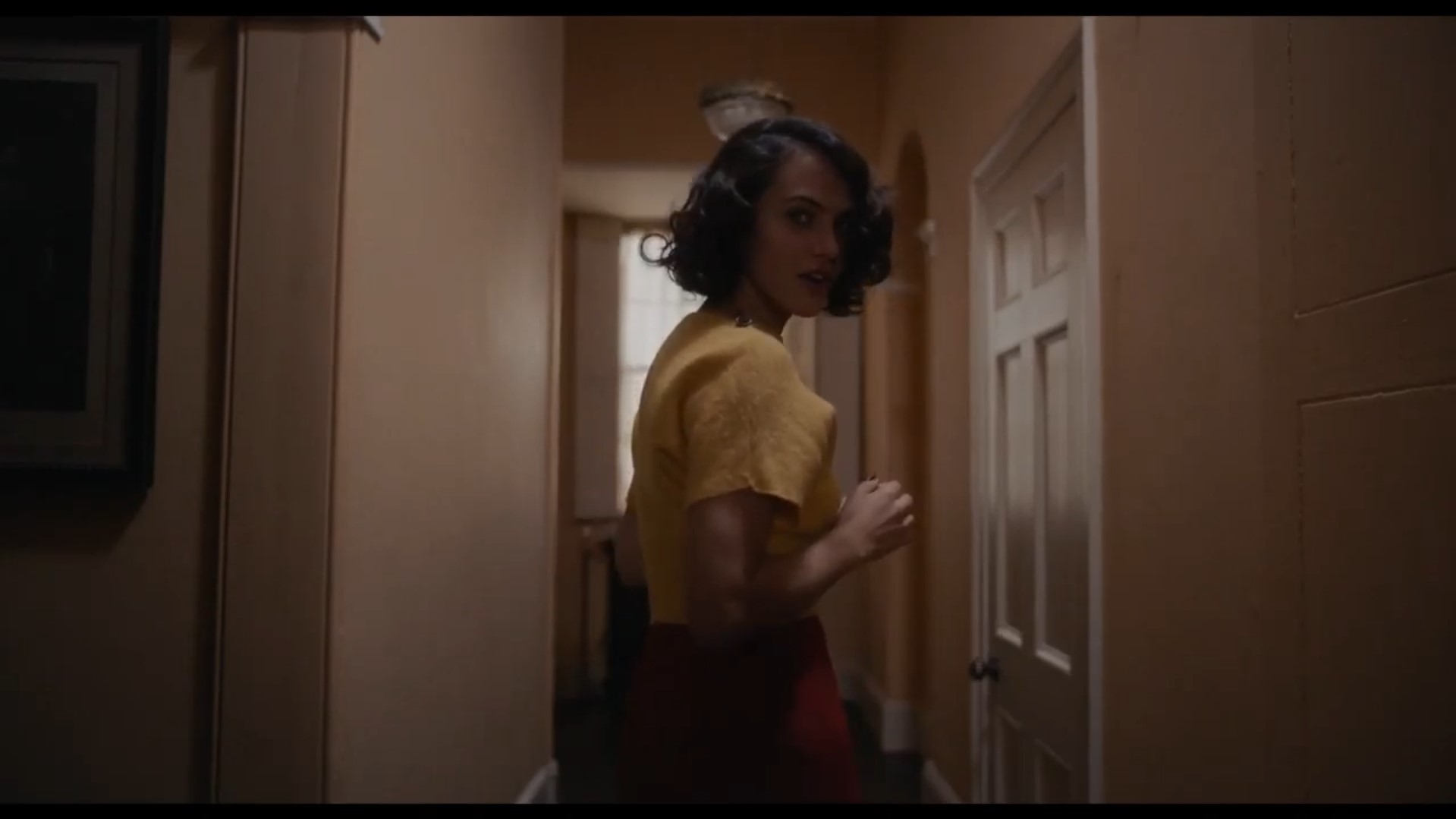
“The Banishing” revolves mainly around Marianne, the newly-wed vicar’s wife with a young girl along for the ride, played by Jessica Brown Findlay (“Downton Abbey,” “Victor Frankenstein”). Findlay endows Marianne with vitality as a woman who must meet the vicar’s standards of Godliness, but still be a strong mother to her child despite disreputable social standing. The priest Linus (Essex-born John Heffernan) lacks experience in the field of his cleric position, lending to question why the region bishop would appoint him to a muster a flock of faithful Christian followers during turbulent times. The husband and wife dynamic between Linus and Marianne is marred by dissonance backgrounds of a priest who doesn’t know to be with a woman and a woman who can’t escape her socially unflattering past. Heffernan and Findlay ignite as repellants of the same magnetic currents when the harder they try to extend their relationship, they push each other way, with Findlay giving a fervent performance. Speaking of performances, Sean Harris bares the most intriguing and rollicking local occultist. The “Mission Impossible: Fallout” actor parades around as Harry Price, a likable, straight-shooting outcast and a believer in the supernatural with extensive, and ghastly, historical knowledge on Linus and Marianne’s new home. As Price aims to extract the hapless from danger, he butts heads with a headstrong region bishop, a stern and solemn role secreted with distrust from John Lynch who has worked on a Christopher Smith film previously in “Black Death.” “The Terror” actor juxtaposes starkly against Harris as a character who dons a likeness to the clown prince of crime in costume than a dull agent man of the cloth…with secrets to uphold. “The Banishing” rounds out with a supporting cast in Adam Hugill, Jason Thorpe, Jean St. Clair, James Swanton, and Anya McKenna-Bruce as Marianne’s daughter, Adelaide.

Set convincingly in a quaint, 1930s English town, Christopher Smith transports the audience back in time to the predated anxious moments before World War II that would upheave turmoil across all across Europe, but though that fretted lingering of war is set as the backdrop for “The Banishing,” and is coiled around every man who served in the first Great War that brought up more than once, the root of the narrative ultimately becomes the house Linus and Marianne have come to call their home.  Haunted house films surmise the house as a built-in principal character because of either the way the architecture affects the mental or physical wellbeing of it’s flesh and bone counterparts or if the abode is actually possessed and set to harm the inhabitants in a personification of pure evil, as such with various films of this caliber (“House,” “The Haunting,” etc,). Yet, Linus and Marianne’s estate failed to become a part of the narrative limelight despite the immense grounds that compromised of a large greenhouse and a robust library complete with fireplace and the disconcerting labyrinth of a dungeon-esque basement full of barred enclosures and close quartered corridors.  Nearly every interior shot felt like a new section of the house hat kept extending upon, what would be assumed, a grand mansion that had a longer rap sheet by reputation in being a former religious torture chamber run by sadistic monks hellbent on whipping the sin out of the mentally tormented. Smith always had an eye for the unsettling visuals and sustains that feng shui by allowing time and space to be the inner horrors of a funhouse, but doesn’t evoke clean, unadulterated terror that continues to profusely bleed into the film’s climatic cause-and-effect unraveling. There is a lack of a transformative realization and a small hurtle of sedated possession to figure out that the main presence in the house, amongst the other more malevolent presences, wants something and the characters are spoon fed each and every morsel to get them up to speed. The final scene of the bishop meeting with the Nazi regime intended to leave the story open for supernatural possibilities, but felt like a more poignant and compelling crux leading into Nazi occultism, hinted by the eccentric resident occultist Sean Harris.

Morosely dramatic and haunting, “The Banishing” is an aggressive salvo of facing shame head-on, creeping into UK cinemas and digital platforms on March 26th courtesy of Shudder and Vertigo Releasing. Director of photography Sarah Cunningham has an remarkable ability to engulf the actors in the space of the shot, making them seem diminutive to the rooms that feel like a giant hand looming overhead, and with the bare, hard lighting, the cinematography is really where “The Banishing” shines as gothic cladding without a stodgy spot to speak visible. Cunningham adds all the hallmarks of a horror film with titled angles, brilliant reds, and tight shots on tense faces to garner a more anxiety that never actually pans out by the end. The organic electro duo TOYDRUM score the 97 minute film with a single note droning hums at various pitch levels that can really get inside your head. The “Prevenge” composers set up scenes with a ill-founded fears when nothing presently visible is intended to fright. There were no bonus scenes during or after the credits, but one scene to note is Sean Harris waltzing with an uncredited woman during the opening credits that seems out of place but speaks to the aberrated decorum of his character. “The Banishing” works tirelessly to discredit shame by confronting truth and while we’re being beat over the head by the message, the overlay of horror is lost despite some brilliant and engrossing performances from Findlay and Harris who usher us through to the imperfect conclusion.