An Ice Fishing Contemplation Becomes Interrupted by Kidnapping EVIL! “Dead of Winter” reviewed! (Vertigo Releasing / Blu-ray)

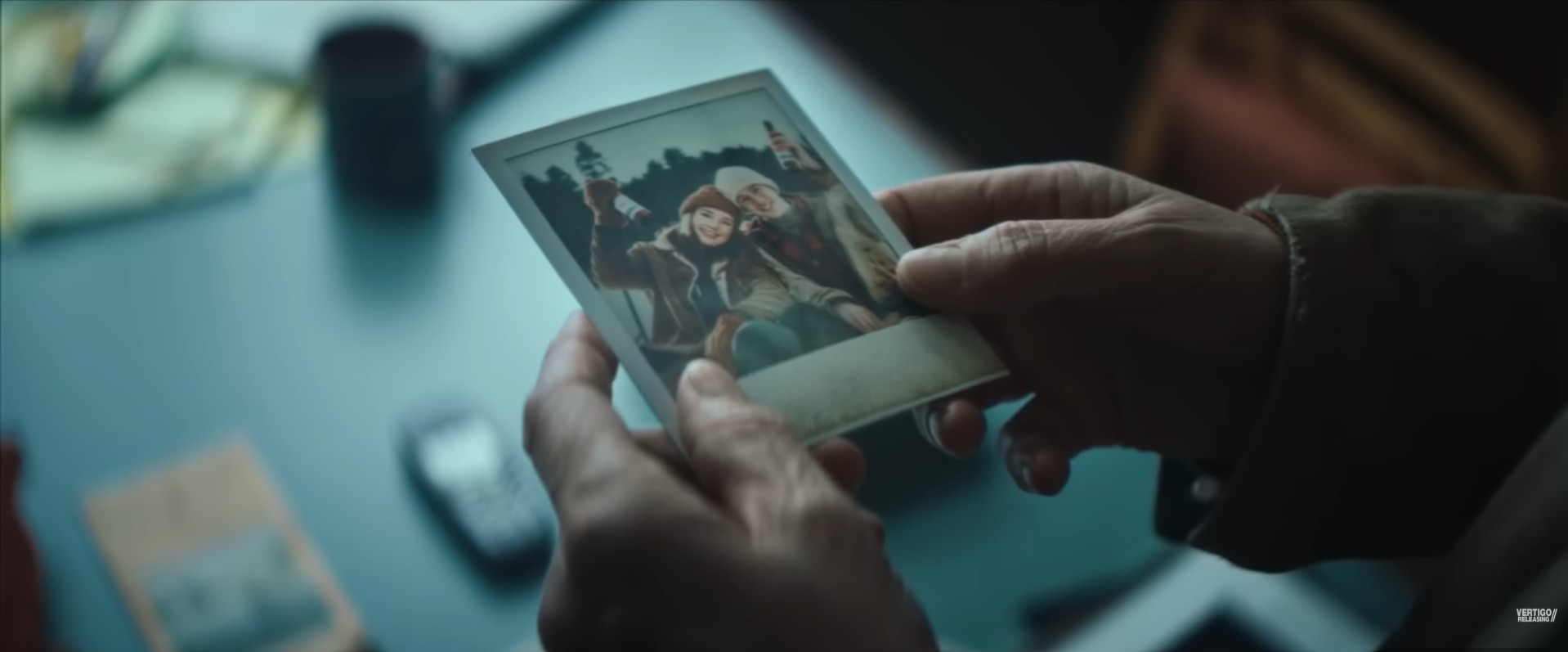
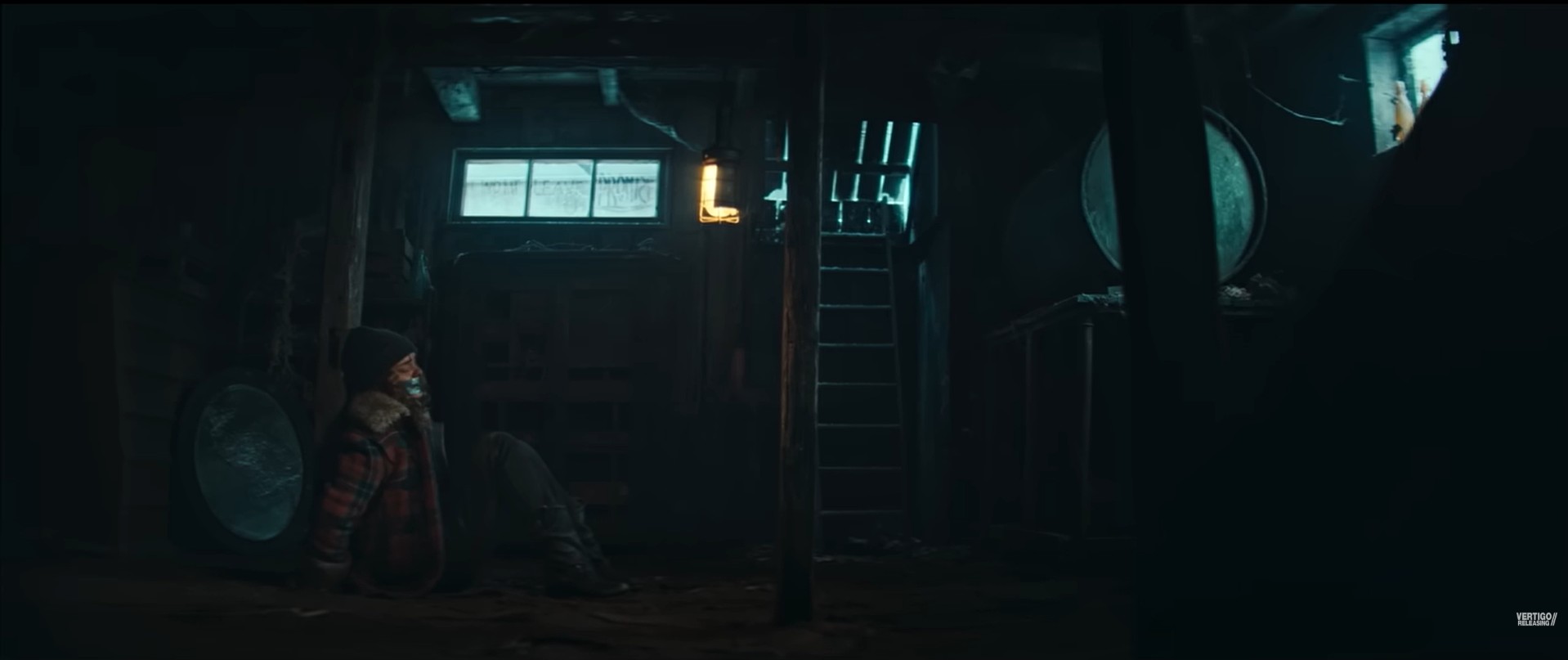
After the death of her husband, long time Minnesotan Barb travels to the snow covered, frozen over Lake Hilda to ice fish, the spot where her and husband had their first date.  When asking for directions from one of the few people she’s seen in hours, she inadvertently interrupts the kidnapping of a young girl by a husband and wife with an illegal self-preservation plot.  With help hours away, Barb knows she must do all that she can, push the limits of herself, to help the young girl escape the clutches of a determined woman who will stop at nothing and do anything to keep her desperate plan intact and moving forward.   Two against one seems like impossible odds but Barb is determined to keep her promise to the girl tied up in the basement and soon to be murdered for the one thing the wife, the lady in purple holding the rifle, needs. 

A transfiguration of one last goodbye during sudden loss into a destiny of saving a life brings chills to the bone in Brian Kirk’s snowy thriller “Dead of Winter.”  The 2025 released film is the latest feature length film from the “21 Bridges” director from a collaborating script between actor Dalton Leeb (“One Day Like Rain,” “Feeding Mr. Baldwin”) and composer Nicholas Jacobson-Larson (“Wildcat,” “Leave the World Behind”) in what would be the writing duo’s first screenplay as individuals and as a duet.  Koli, Finland doubles for the fictious Lake Hilda in the coldest parts of an upper Midwest winter that’s ever fleck of the season with snowcapped trees, drifts of snow, and a frozen lake, an overall sense of frigidity that reestablishes reference back the film title.  The Finnish, Germany, and U.S. coproduction from the company partnership of Stampede Studios, Augenschein Filmproduktion, Leonine Studios, Zweites Deutsches Fernshen, MMC Studios, Crafthaus, and Wild Bunch Germany is produced by Quirin Berg, Max Conradt, Cloe Garbay, Jonas Katzenstein, Greg Silverman, Maxmilian Leo, Max Widerman, Cosima von Spreti, and Bastian Sirodot. 

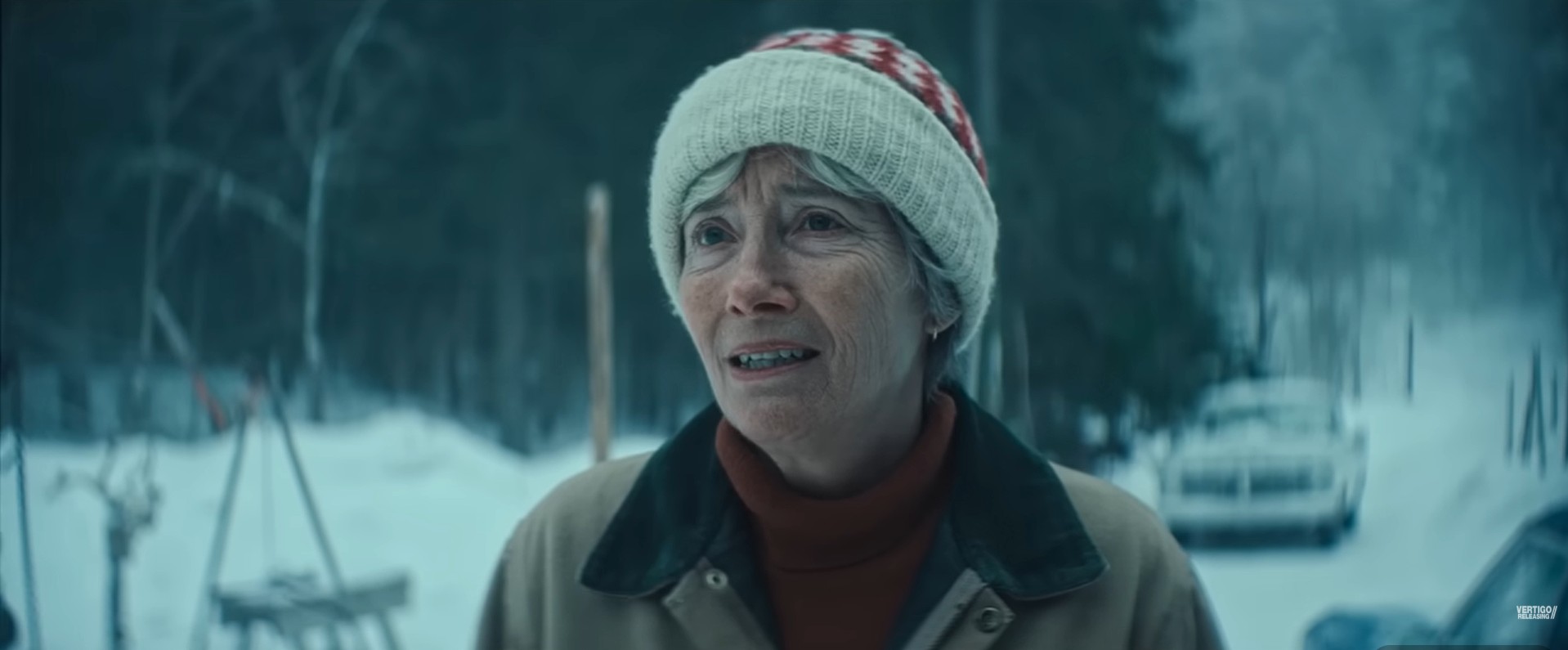
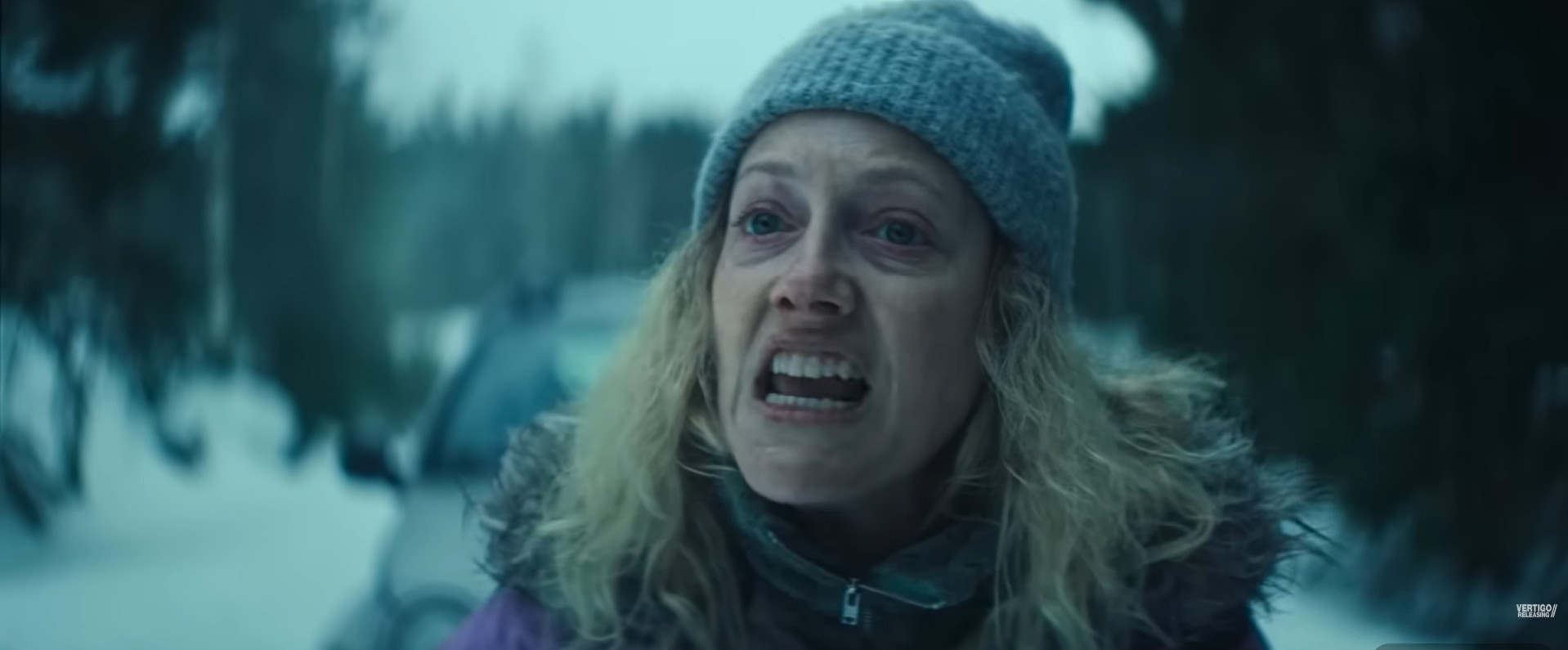
Two-time Oscar winner Emma Thompson finds herself in a tan mechanic suit driving up a frozen lake in the middle of nowhere and coming across a kidnapping.  The English actress, fondly known for her dramatic period pieces in “Howard’s End” and “Sense and Sensibility,” develops Minnesotan attributes for her role as Barb, a smalltown woman who lost the love of her life, a husband for decades, now on the precipice of letting him go for good by spreading his ashes into the lake where they first courted, as part of his last request.  While going through the emotional catalogue of reminiscent flashbacks and teary-eyed loss, Barb’s distracted by young woman, hands tied, and being held at gunpoint by a kidnapping hisband and wife.  While their names are never divulged, only credited as Camo Jacket for the man and Purple Lady for the woman, their scheme is not lost upon them as they are very aware of the dangers that confront them.  The only difference is the danger they face is dichotomized, Camo Jacket sees the immorality and the punitive measures of kidnapping someone for harm but does it anyway to save Purple Lady whose mortality is at stake with a terminal illness.  “Companion’s” Marc Menchaca doesn’t wear the pants in the dynamic in doing his wife’s bidding but the fear, the reluctance, and the sense is there enough to where it becomes pitiful to what he’s reduced as a man and as a husband whereas “Jurassic World’s” Judy Greer is an unstoppable monster with calculated intent who will stop at nothing, and I mean nothing, to get the young girl’s healthy organ.  Hearing Thompson in a Minnesota accent is not terribly jarring but it’s carries with it enough of a zing that it doesn’t suit her well but her character Barb’s tough as nails without exuding an equal presence as such and resourceful inside a mild panic veneer when coming inches away from death every time her and Purple Lady’s path cross.   “Dead of Winter’s” remaining cast sees Laurel Marsden (“The Pope’s Exorcist”) as the kidnapped girl in a role that doesn’t have any depth compared to Barb’s overdrive depth, Emma Thompson’s daughter Gaia Wise and Cúán Hosty-Blaney as young Barb and her husband Karl, and Brian F. O’Byrne (“Bug”) and Dalton Leeb as two hunters caught in the middle.

There’s something to be said for these genre types where an unfortunate, regular pedestrian is thrown into a forced hero position.  There’s an extra something when the setting is snow-covered and isolated with limited, what’s-on-your-person resources.  Barb’s very well written to be that exact person as if she was destined to be, maybe even lead by Karl’s hand, to be a young girl’s savior.  The root cause for the kidnapping is a bit of a far stretch with an illegal and clandestine medical procedure held out from being completed until Camo Jacket and Purple Lady can setup a pop-up surgical tent over the iced lake, a concept that often feels longwinded through the whole ordeal, but this gives Barb the opportunity to make constant fools of the kidnappers by sabotaging gear and setting up traps that cause they enough harm to make the cold by an extreme factor and delay them enough to attempt rescue.  Kirk misses a few important editing and factual elements that put blights on the authenticity and the performance of an otherwise competent action-thriller.  Barb scouts, hides, and runs around an area with less clothes than her counterparts and perhaps Barb’s lifelong residence in the extreme cold of Minnesota has acclimated her body but for this long period of time without being indoors would, shielding from the outside elements, would have taken a toll on anybody.  There are also some editing issues, such as a flame shown before the fire start in the next scene, in a blatant miss of continuity.  Barb’s flashbacks of her past life with Karl are active and sporadic throughout which feels out of place with a contemplative activity when time of slaving someone’s life is of the essence and the threat is always near.

Vertigo Releasing releases elderly woman tenacity and determination to do what’s right in “Dead of Winter,” now available on Blu-ray.  The UK release is an AVC encoded, 1080p high-definition, BD50 presented in an anamorphic widescreen 2.23.1 that captures the majestic of a winterized Minnesota (aka Finland) with extra wide shots and creating immersive depth.  Despite all the snow, there’s no whiteout here with a higher contrast to define shapes amongst the powdery white stuff, such as the tall tales, hillside terrains, and the man-made objects that stick out in the back and foreground without losing focus or delineation.  Textures are nicely crisp around the edges and on the body to get a full sense of each character’s attire – which is important for credit classification – and the environment surrounding.  There are select scenes of superimposed effects, such as when people go under the frozen lake and into the water, that appear more angelic in the slowed down moment of dramaticism that denote a very polished stylistic choice in what too is a stark contrast against a harsh winter landscape.  There’s also a purposeful desaturation of color that juxtaposes against Barb’s flashback scenes that are more brilliant with the colors and softer lighting to recount Barb’s happier days.  Skin tones and details appear nature with an extra wrinkle or two on Emma Thompson’s face to make her appear more midwestern rugged.  The English language 5.1 DTS-HD Master Audio is accompanied by a second encoding, a 2.0 LPCM Stereo.  The surround sound mix is the preferred option here that captures the reverberations of a snow-scape through the side and backchannels.  The gunfire really comes through with a pop and a directional sense.  Every effect hits the intended marker with clarity and has a vigorous impact while Volker Bertelmann’s synch-harrow score weaves into and out of the action and the reminiscing moments.  Dialogue is clean and without issue, and though I made a negative remark of Thompson’s Minnesotan accent, it’s not, in fact, that terrible but does feel unnaturally off as it contents with her classic British English.  English SDH subtitles are available.  Extras include a making-of featurette and the theatrical trailer.  The Vertigo Releasing physical set is also just as simple with a standard Amaray case with a battered and bruised weary Emma Thompson in character on the front cover.   There is no reverse side image on the sleeve insert, no other physical extras, and the disc is pressed with the same front cover design.  The UK certified 15 feature, for strong language, threat, violence, and injury detail, has a runtime of 98 minutes and is region locked on B. 

Last Rites: “Dead of Winter” ices the filmic competition with a tundra-sized unlikely hero thriller who never looked for trouble, but trouble finds her in a fit of righting wrongs kismet. The standard Vertigo Releasing Blu-ray is just that, standard, but the film itself embraces the cold elements with stark winter harshness and an even colder organ heist.

EVIL Does Not Sit and Rollover. “Good Boy” reviewed! (Visions Home Video / 4K UHD Blu-ray)

“Good Boy” Now Available on 4K UHD Blu-ray from Visions Home Video

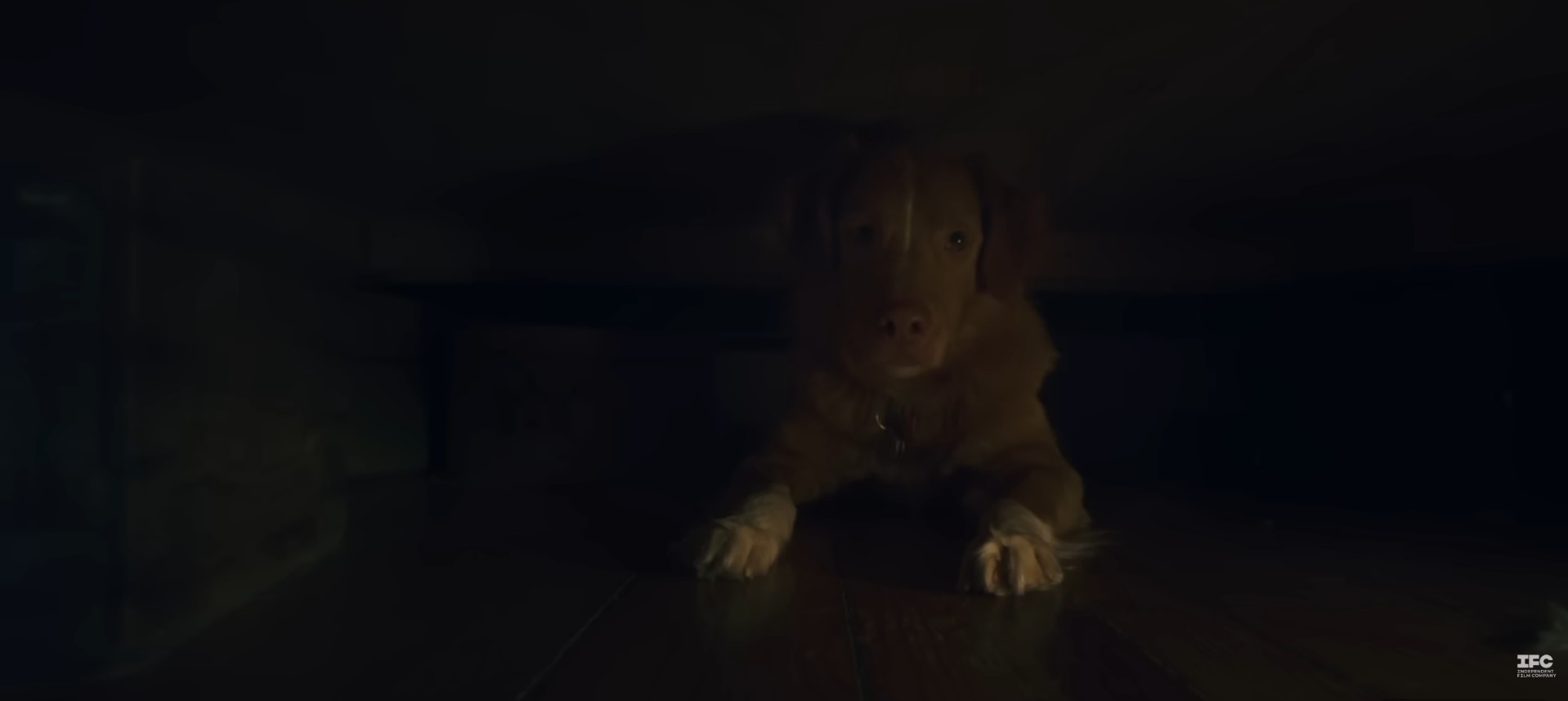
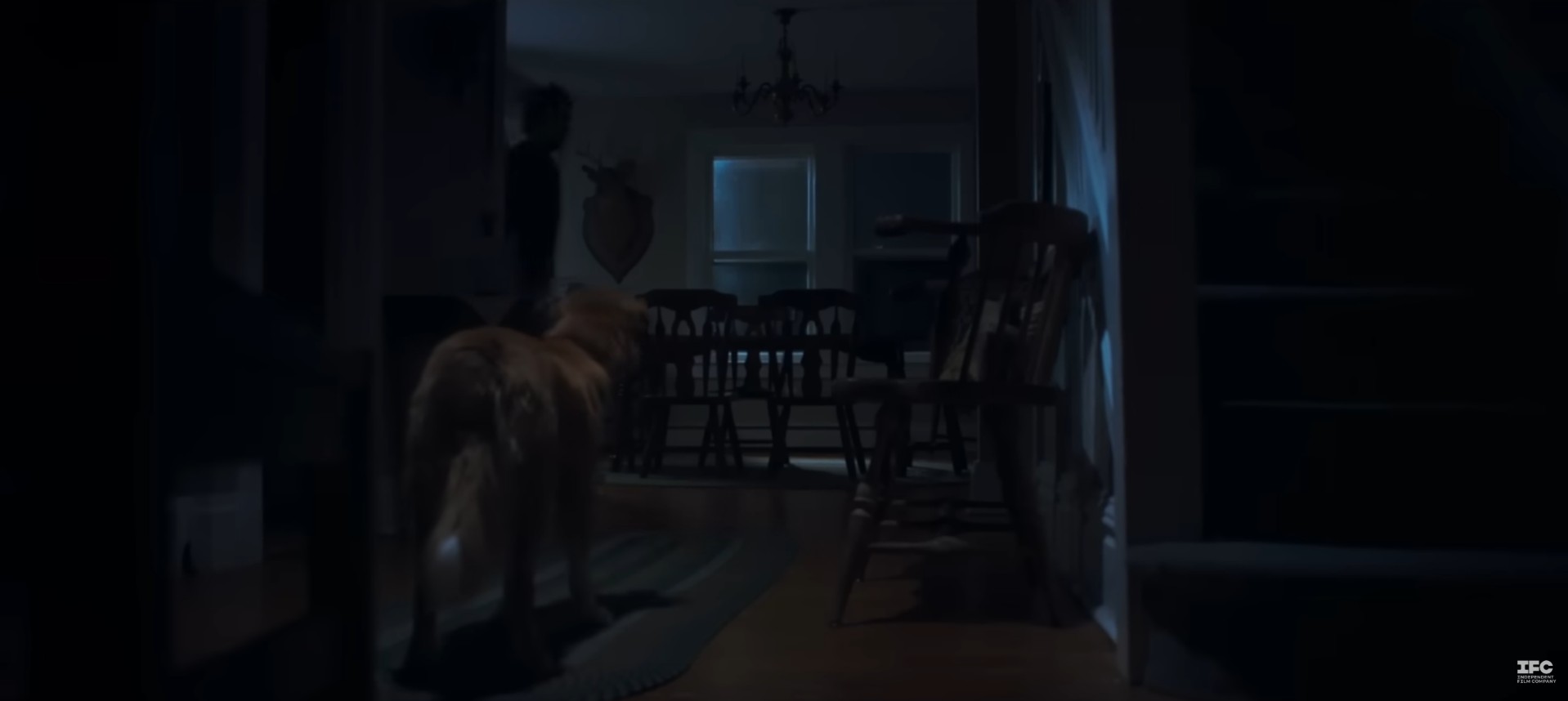
Indy is a good boy, a loyal nova Scotia Tolling Retriever pet and friend to his owner Todd who’s had him since being a puppy.  When Indy senses trouble, a troubling shadowy figure lurking and following his owner, he tries to do all that he can to protect the one he loves the most.  Struggling with a chronic illness, Todd retreats to his grandfather’s isolated cabin deep within the woods for a little rest and relaxation after a medical scare that put him in the hospital.  Indy senses the supernatural force has followed them away from the city and into the rural family home.  As the presence moves about the house, moving closer and closer toward his friend, Todd’s chronic illness becomes increasingly worse, and Indy’s nightmares bend reality as the shadow begins to take a horrifying shape.  Todd’s disease has him nearly incapacitated and unaware of the dangers that surround him, leaving Indy as the last line of defense against the looming dark force that wants to take him.

Pet owners rejoice!  A horror movie with a story from the perspective of its star, a dog.  The 2025 supernatural thriller “Good Boy” has Indy, the then 8-year-old dog’s real name, headlining the film, directed by Indy’s owner Ben Leonberg, horror short filmmaker with such recent credits as “The Fisherman’s Wife” and “Dead Head” from within the last decade.  Leonberg also wrote the script alongside Alex Cannon and took over three years to make due to the complexity of working with untrained animal actors, a task that’s easier said than done, to accomplish Indy’s character narrative from his point of view, and, of course, the rigorous A-to-Zs of creating a feature length film. Leonberg coproduces “Good Boy” with Kari Fischer and Brian Goodheart.  “Good Boy” is a self-referential studio made film with the company name called “What’s Wrong With Your Dog?”

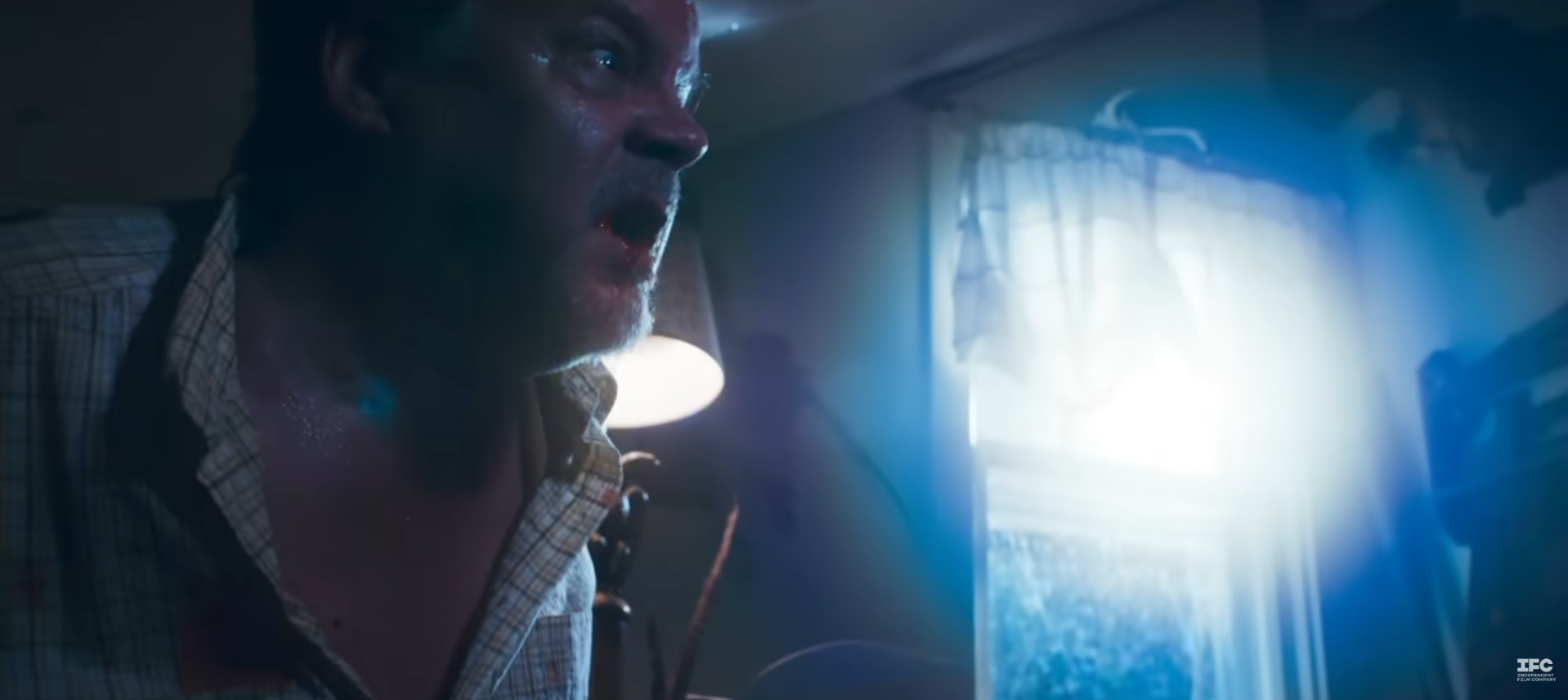
If casting an animal with a hesitation stillness and pensive piercing eyes, Indy is the four-legged fur baby on the short list.  This specific Nova Scotia Tolling Retriever, a breed known for his hunting qualities and retrieval of gunned down carcass and not acting, is an untrained thespian by all means but has a multitude of expressions that work toward the menacing supernatural sense of dread and uneasiness.  When Indy stares into a dark corner, it’s shadows expanding slow across the walls and floors, the stare does convey concern.  When Indy cries and whimpers in apprehension of being left alone or his owner unaccompanied outside the house, those high-pitched cries and frantic movements from window-to-window bring narrative tension to unsafe separation from man and his loyal best friend-protector.  It’s clear that director Ben Leonberg treats his star pup with star focus, providing a dog-level perspective view that incepts and evokes a reaction just like any human character.  This applies even to the interactions with Todd (Shane Jensen) and his swaying, emotional reactions working through his own ebb-and-flow pain of a mysterious illness that plagues him.  Our first scene with Todd has him sitting motionless on the couch, in the dark, and drooling blood from his mouth in an indistinguishable view of his face, a motif amongst all human characters in frame to keep the focus on Indy’s facial Rolodex of emotions.  We never do know what’s wrong with Todd, whether be cancer, organ failure, or perhaps even the supernatural’s malevolent exposure, but it’s made clear he’s on death’s door in more ways than one.  The only human face shown is through the VCR playback of Todd’s grandfather and it’s the unique bone structure of horror friend Larry Fessenden (“Habit,” “Jakob’s Wife”) who often seems to be in, in some way, shape, or form, in a number of Shudder distributed films recently.  Arielle Friedman and Stuart Rudin bring up the small cast rear. 

“Good Boy” is simply not a novel concept.  There have been a few animal centered and perception movies throughout the decades, to name a few we start with “Babe,” the loveable little pig who finds friendship with a barn spider, then there was the tearjerking one with an orphaned bear cub who hitches to an adult male to avoid game hunters in “The Bear,” and, lastly, “Homeward Bound” was an adventurous return home with human voiceovers for two dogs and one cat team.  The element “Good Boy” does differ from those aforesaid examples.  Aside from giving Indy a voice, the non-personified canine is dropped into an intensely atmospheric horror framework that removes the safety net of having opposable thumbs and the misunderstanding between man and animal that makes the tense situation that much more riveting when Indy can’t express to his human the danger that lurks.  There’s a heavy theme of animal sensing danger or something amiss with someone carrying an unseen disease, that disease in “Good Boy” manifests as the shadowy figure that acts like the harbinger of death, or to the dark tune of a grim reaper, lying-in-waiting and eventually reaching for Indy’s human pal, Todd.  In this concept is the tragic downhill of Todd and the heartbreaking care Indy tries to protect and care for his unsuspecting master but in between all of that concern and drive for Indy is a steady fear something isn’t right, looking past Todd’s ailment toward a showier threat that, to an extent, plays like a device of ignorance for Indy, one that truly distracts him for the real danger plaguing Todd that bets the question, do dogs cope with trouble by creating a diversion? 

Visions Home Video, a premium home media label from UK’s Vertigo Releasing, retrieves “Good Boy” for a UK-Ireland 4K UHD Blu-ray release that’s supported on a HEVC encoded, 2160p ultra high-definition, BD100.  Through surreal nightmares, inky darkness, and graded with primarily dark gray and bluish tones, “Good Boy” faces images challenges with an indie production attempting to instill atmospheric fear and subtle bumps in the night.  That challenge is ultimately met its match with DolbyVision that’s able to decode those type, often blocky, negative spaces and darker color scheme in its high dynamic range.  Texturing works to fiber explicate Indy’s golden coat but much of the other details are kept in the dark as Indy’s, with his coloring, is represents almost like a bright spot amongst the color palette, even Todd is obscured in darkness, rain, or mist, but the details that do show do emerge.  Two English audio tracks are encoded with a 5.1 DTS-HD Master Audio and a LPCM 2.0 Stereo.  In regard to the surround mix, back and side channels diffuse the atmosphere non-diegetic sounds to create an immersive environment of a creaky old house pitter-pattered by rain and gusts of wind.  Coupled with the front work dialogue and the forceful jump scare moments creates a cinematic bubble that puts viewers right into the dark and stormy eeriness while sitting in their living room, if the viewer has the appropriate audio setup.  Dialogue is clean, clear, and prominent albeit ambiance tries to nudge it out of the way at times to but unsuccessfully.  Minor instances of depth of Indy, or even the presence, scurrying about the house have leveled balance in what is mostly a still air progression of Indy’s voiceless communication efforts. English is the only available subtitles. Special features include a making-of featurette Making an Indy Film and the theatrical trailer. There are more attractive physical features within Visions Home Video’s black and silver two-toned cardboard O-ring slipcover that leans into the shadow motifs. The same image art is also on the Scanova one-sided sleeve but inside, in the insert, is a double-sided folded mini poster with the same art plus an additional design. There are also four post cards with stills from the feature. The UK 15 certified release has strong horror and bloody images in its brisk 72-minute and region free runtime.

Last Rites: In horror, animals are mostly the perceptive ones, able to see and sense danger that can’t be seen with the human naked eye, and Ben Leonberg captures that phenomena through a fear-induced illness metaphor, one that lies and waits until terminal lucidity knows there’s no escaping the inevitable. Not even man’s best friend can stop it.

“Good Boy” Now Available on 4K UHD Blu-ray from Visions Home Video

Yorgos Lanthimos Early Day EVIL is Not to be Missed! “Dogtooth” reviewed! (Visions Home Video / 4K UHD)

“Dogtooth” Available on 4K UHD Blu-ray from Visions Home Video!

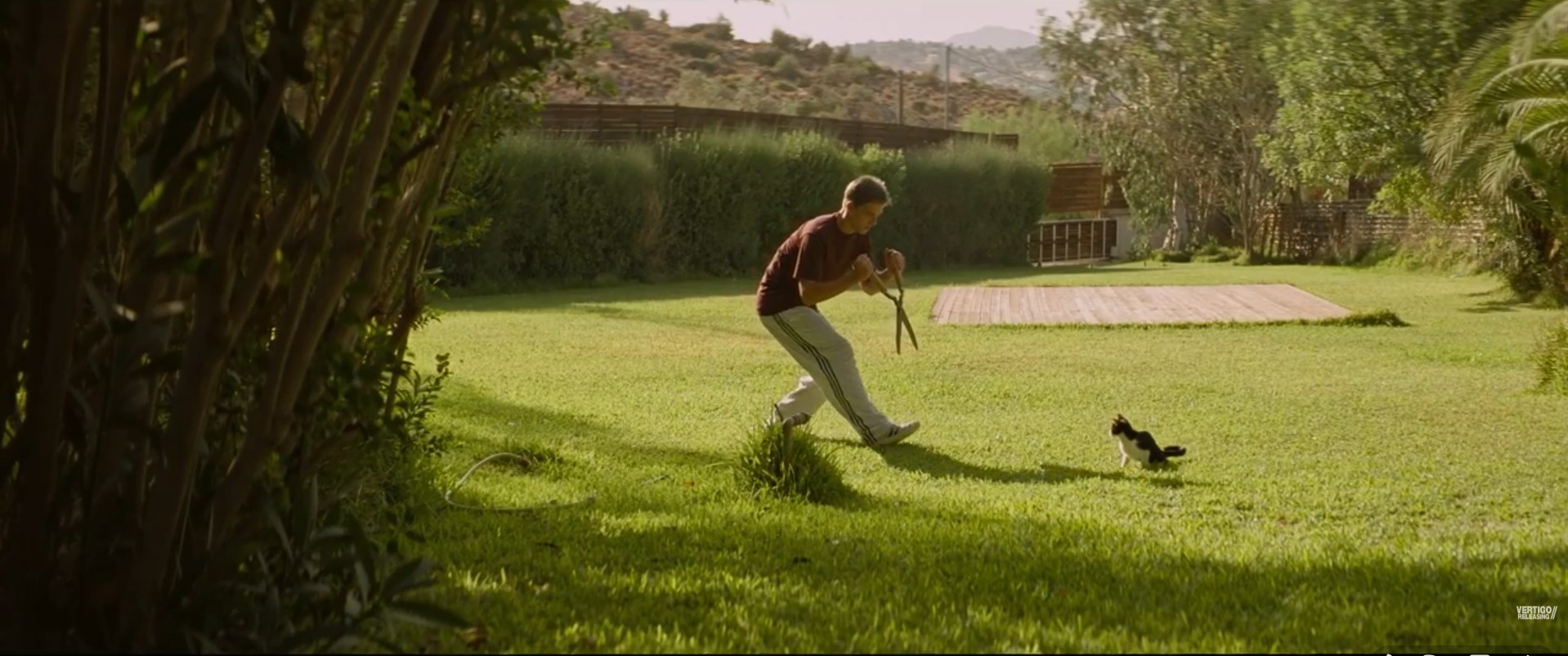
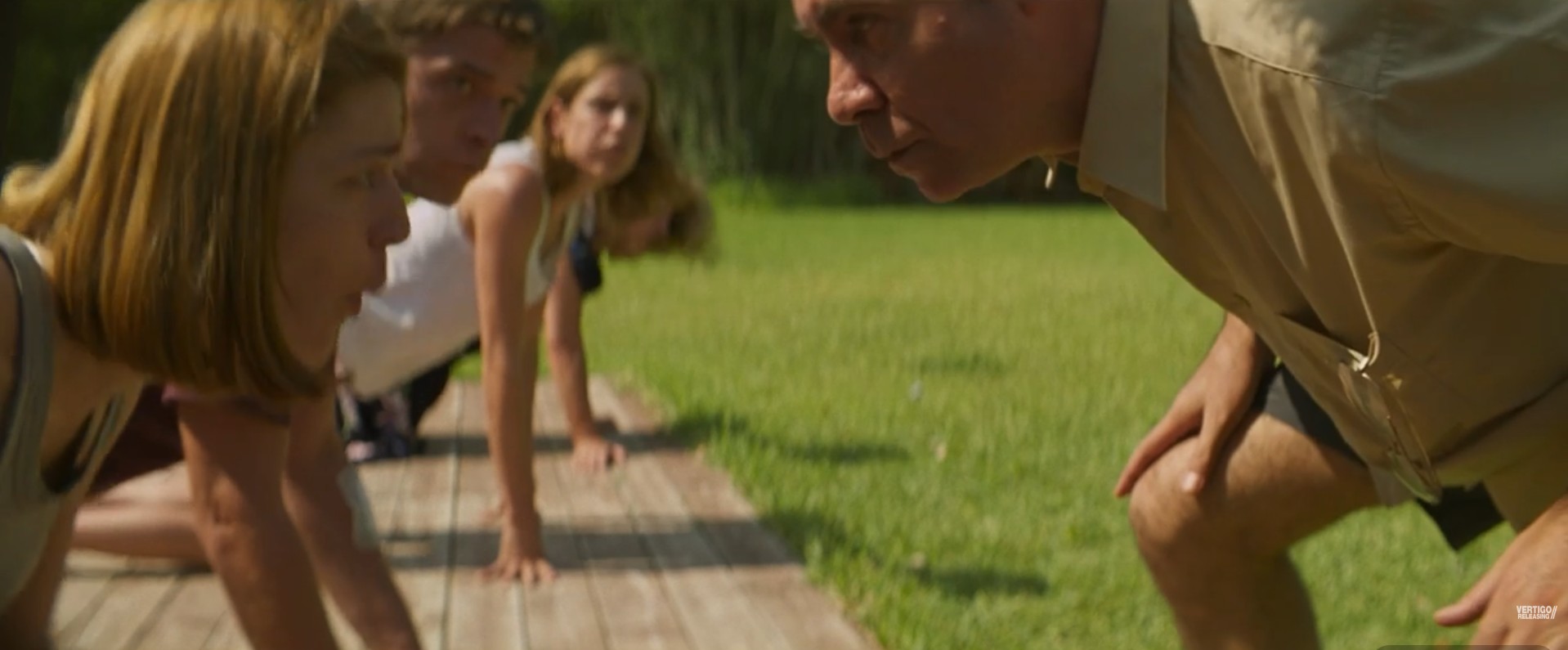
Three adult children remain on home grounds by their manipulative father to protect them from the outside world and keep them suspended in a childlike state.  Educated on a basic level and even educated incorrectly to strategically keep their spongy intellect pure and from asking too many questions about the curiosities beyond the front gate, the children must complete chores and workouts under their father’s regimental thumb, earning tokens to keep them engaged with simple activities and rewards, but the outside can’t be stopped from seeping in with exterior influences raising more questions than the father can keep up with lies, excuses, and fabricated stories.  If he finds his children entertaining an inspiration, his immediate reaction is to manipulatively redirect or even use violence if necessary to put his children back in a stationary line, scaring them of dangers outside the home, such as the killer ferocity of a household cat as it’s curiosity that killed the cat.  Or is it the other way around, did the cat kill the curiosity? 

Way before his 2026 Oscar nominated film “Bugonia,” way before his quicky dark-comedic Frankenstein variation “Poor Things,” way before the shapeshifting deadline of forced relationships in “The Lobster,” offbeat and provocative Greek filmmaker Yorgos Lanthimos directed “Dogtooth,” the 2009 psychological horror-drama that displayed a disturbing power-dynamics of a nuclear family by a manipulative father of three.  Lanthimos co-wrote the script alongside Efthimis Filippou, a regular collaborator with the director from Filippou’s debuting “Dogtooth” script up until 2017 psychological, life invasion thriller “The Killing of a Sacred Deer.”  “Dogtooth,” or “Κυνόδοντας” in the native Greek vernacular, is filmed in the heart of Athens, coproduced between Lanthimos, Yorgos Tsourgiannis, and “Do It Yourself” producer Katerina Kaskanioti, and is a collaborated studio project of Boo Productions, Greek Film Center, and Tsourgiannis’s Horsefly Productions. 

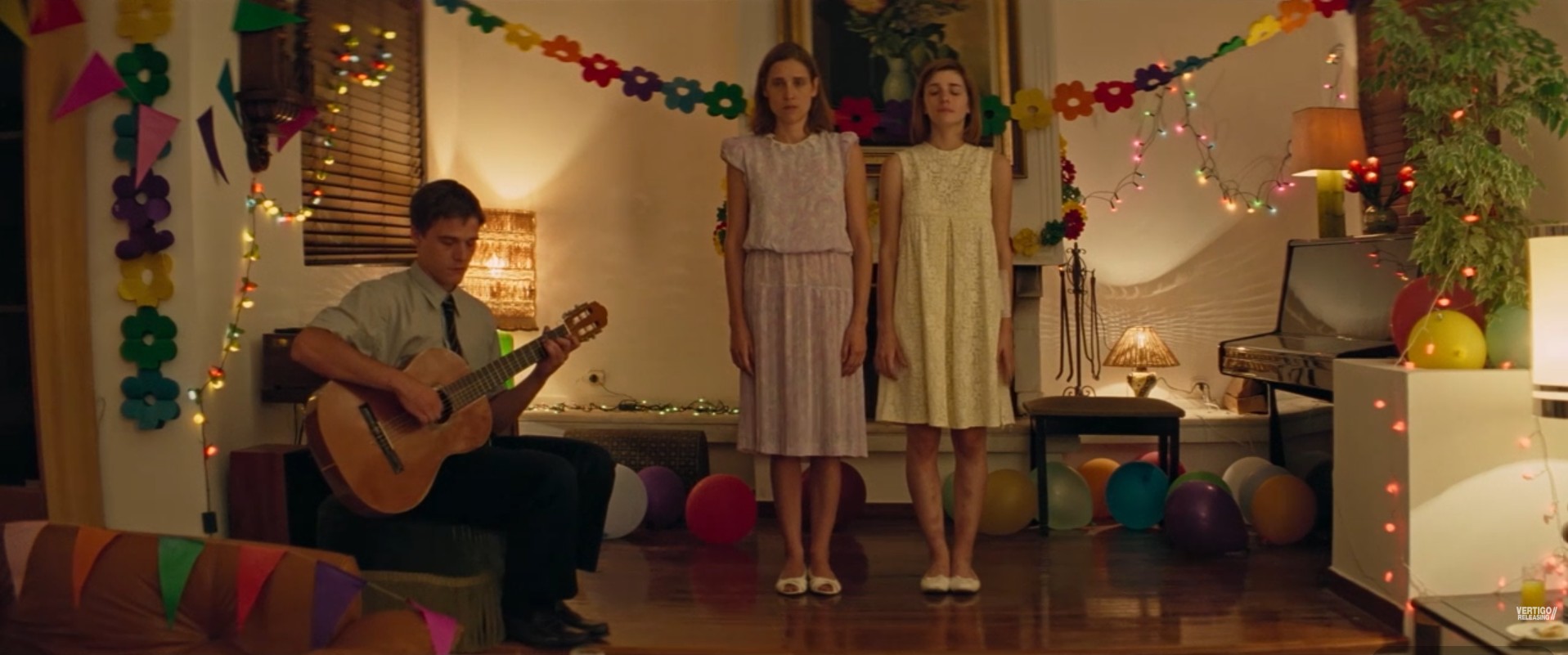
“Dogtooth” consists of a tight cast of six actors between the parents, three kids, and a security guard employed at the father’s manufacturer.  Some would say Christos Stergioglou plays one of the worst manipulating parents on screen of our generation with a calm demeanor and a convincing nature while having a ferocious side of physical punishment against those going against the grain.  With a small cast, those taking the beatings can be his children.  “Singapore Sling’s” Michele Valley is in the mother role, an equal schemer in her abetting of the problematic parenting, but it’s quite unclear whether the Mother is either in on the Father’s paranoic protective plan or whether she too is a victim of his deceit.  While she can be seen deriding her children in seldom words and violence, she too follows Father’s strange ways:  pretending to be a four-legged guard dog like her kids, never leaves the house, succumbs to Father’s sexual habits, etc.  The sex never extends from parent to child, leaving most of Father’s perversities kept intact by Mother and a good old fashion VHS stag tape, but there’s still exploitation done amongst the children.  Treated to his own arranged woman to bed, overseen by his Father, the son’s sexual hormones and desires are made docile by the security guard Christina (Anna Kalaitzidou) from his father’s work and is seen as an act of transactional duty rather than having a presence of affection.  Christos Passalis does embody his character with a young, pre-adolescent boy with tempers, sibling competitiveness, and appropriate reactions to all things that accompany a young boy.  Eventually, after Christina is let go exploiting and influencing the younger daughter with sexual tradeoffs and forbidden contraband, the son is forced to have sex with one of his sisters to maintain the stability of a pure environment.  Angeliki Papoulia and Mary Tsonia are the Older and Younger Daughter with similar appearances and attributes, too exemplifying childlike qualities, that make them also like twins in how they act and how they act with each other with the Eldest naturally, without purposeful intent, trying to break free of her father’s grip in the way children do – in irritational and hurtful ways.  Other than Christian, none of the main principal characters have a name, leaving them to be a representation of any family of any kind out in the world.  Steve Krikris, Sissi Petropoulou, and Alexander Voulgaris round out the film’s supporting parts.

Yorgos Lanthimos takes helicopter parenting to the extreme but in subtle, death-by-a-thousand cuts techniques simply by sheltering in place his entirely family for years and himself teaching his children lessons of his own fabrication.  Taught the world is a dangerous place, where cats are the most feared and deadly animal who killed their exiled “brother”, the children fear what’s beyond their sprawling compound so much they don’t dare cross the gate line.  Vulgar worlds like pussy are defined with innocuous objects, such as lamp light, and lesser provocative vocabulary, in this case zombie, is given the designation to little yellow flowers.  The children’s minds are so brainwashed, their identity is also erased along with their names, mostly busying themselves in the same sterile clothing that evokes no emotion whatsoever.  Lanthimos extends this common place sense of being into the character interactions, whether between family members or the supporting characters, that make the entire tone feel that more unsettling and perfunctory.   The sexual tension is chronic, even between the siblings it’s uncomfortably prevalent, but never malicious on the surface as the acts are kept dutiful and necessary to sustain dominion over the children and perhaps even the wife despite its icky film coating.  The whole idea of the titular dogtooth is a rite of passage from childhood to adulthood, the latter suppressed by the weaponization of sex, education, and threat, for when the permanent adult canine, or dogtooth as Father puts it, falls out is when a child can leave the next and in that is manipulative false hope that one day, the strongest tooth, it’s ability to rip through meat and sinew, will fall out on its own accord, essentially making the children a metaphorical dogtooth that needs forceful extraction from its rigid system of enameled manipulation.

Courtesy of Visions Home Video, a premium home media label from Vertigo Releasing, “Dogtooth” arrives on 4K UHD Blu-ray in the UK-Ireland.  Presented with 2160p in the original aspect ratio of 2.39:1, the HEVC encoded BD100 has a superior encoding compared to previous models and other region 4Ks with a Yorgos Lanthimos approved transfer of the 35mm negative that’s contains and controls the grain that once had issues in previous releases with ill-defining effects on darker sections of the scene, establishing corrected contrast where intended and needed other releases failed to accomplish.  A natural light grading shines through with immersive coloring from the monochromic, or achromatic, outfits to the saturation of greens of the compound estate, a dynamic range of the metadata, DolbyVision.  There’s very minor speckling off some individual cells on the stock but the overall product is the best “Dogtooth” has looked and deserves it.  There are a pair of audio layers available:  a DTS-HD Master Audio 5.1 and a LPCM 2.0 Stereo both in Greek with optional English subtitles.  The monotonic dialogue alleviates many issues associated with these tracks as there are no inflections, tones, forced accents, or any other shaded types of vocal manipulation.  The plainspoken, forth-right conversing creates a naturally prominent layer that’s clean and concentrated above all else.  That’s not the say the soundtrack or the ambience drags or lacks behind though it is slightly less dynamic in its diegetic range.  You won’t be fully immersed with audio hits through side or back channels, but every layer has a stronger and bolder presence than before in previous releases.  Special features include a film in tandem audio commentary with stars Angeliki Papoulia and Christos Passalis, an archived interview with Yorgos Lanthimos from 2009, a 2025 London Film Festival stage interview with more in-depth insights from Lanthimos, three deleted scenes, and two original trailers.  Visions home video release is a vision in itself starting with the beginning layer, a cardboard O-ring slipcover with a somewhat glossy, upscaled image of one of the female children locked behind a bar-cell of bare legs.  The same image is represented as the primary sleeve art inside a Scanova case (no Blu-ray logo at the top).  Inserted inside are four collectible cards of high-quality stills from the film and a double-sided folded mini-poster.  The region free release is UK certified 18 for strong sex and nudity inside the duration of 97 minutes. 

Last Rites: “Dogtooth’s” disturbing fan outs, spreads like an infection of manipulation, but is localized in and around the property that’s become a cage, or an invisible fence, with the latter being more poignant to the storyline with the father having them bark and be on all fours like a dog, a pet symbolism indictive of egocentric power over those one can control from the beginning. The new Visions Home Video 4K UHD release is a new and improved upgrade for any collector’s wall.

“Dogtooth” Available on 4K UHD Blu-ray from Visions Home Video!

Cinderalla’s Beauty Evokes an EVIL of Jealously, Obsession, and Beauty Standards. “The Ugly Stepsister” reviewed! (Second Sight Films / Blu-ray)

“The Ugly Stepsister” on 4K UHD Blu-ray from Second Sight!

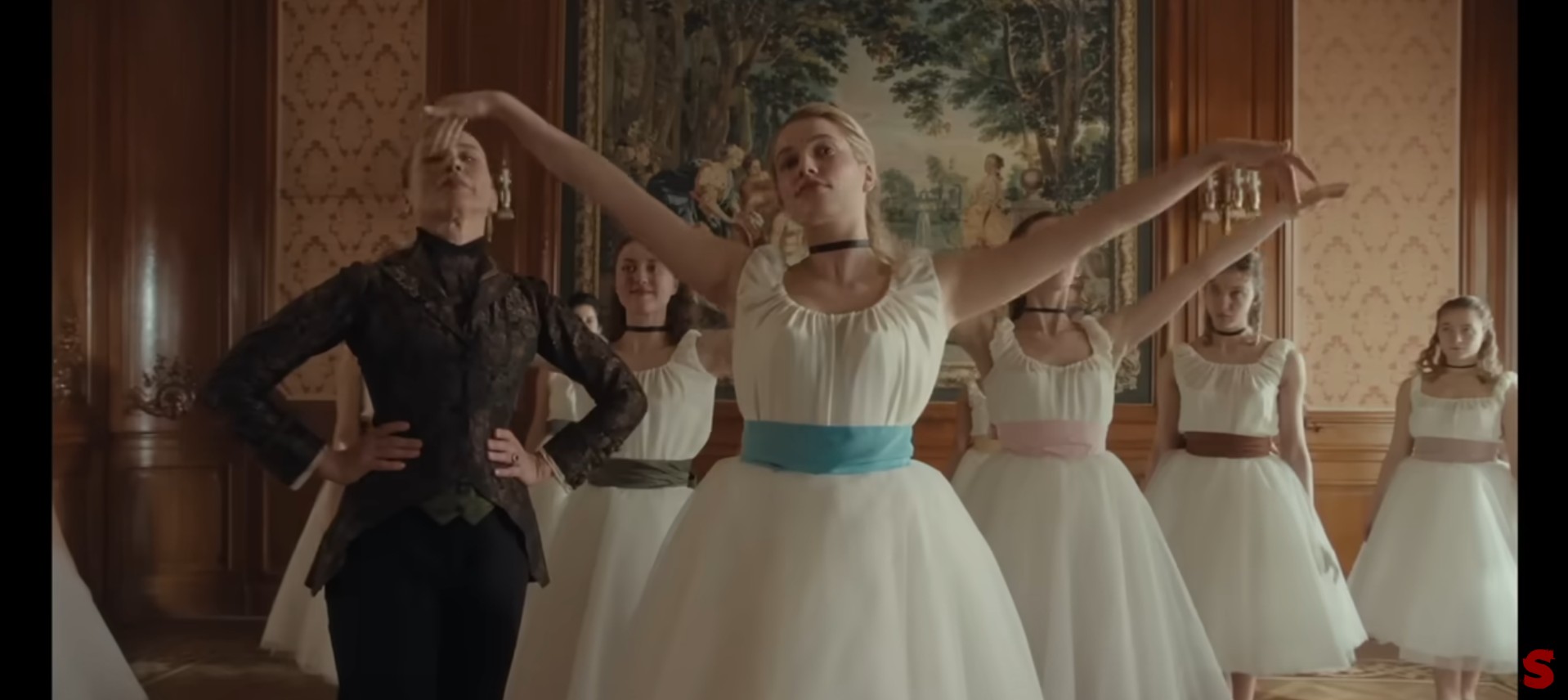
Elvira’s mother weds a wealthy estate owner to re-establish life and permanence in high society.  Alongside living with her sister Alma and her new, beautiful stepsister Agnes, Elvira keeps on smile on her braced teeth though she’s passively mistreated by those around her.  When Agnes’s father suddenly passes away and it’s unearthed the estate has no money to its name, the opportunity to attend the monarchy ball for the prince to select a wife from a pool of available the virginal maidens is Elvira’s persistent dream to marry a prince and get her family back in wealth and power.  Elvira attends finishing school to learn proper lady etiquette but her braces, round nose, and pudgy exterior pushes her aside of teacher’s attention in favor of the beautiful, blond Agnes.  Primeval cosmetic surgeries, tape worms, and no sympathy from her mother send Elvira down a path of obsession despite the harm to herself as she eyes the prize of landing the prince of her dreams over her stepsister. 

Based off the classic folk and fairy tale Cinderella, debut feature film director Emilie Blichfeldt takes a different perspective on the story that retains its roots in happily ever after but redirects the core narrative to the eldest stepsister in immense obsession, pain, and suffering to obtain the seeming unobtainable, to marry a prince.  “The Ugly Stepsister” the 2025 dark comedy and body horror from Norway that emphasizes the lengths one will take to become noticeably perfect in every aesthetic way.  Blichfeldt regularly visit the concept of a deranged perception of beautiful in her short films from the 2013 documentary “Do You Like My Hair?” that aims to spin a reinvention on beauty standards by finding it from within and the more body fantastical “Sara’s Intimate Confessions” that follows a big and tall disproportional woman exploring what it means to be feminine with her overly talkative vulva.  “The Ugly Stepsister” also tackles beautiful in a more painfully, cathartic way in order to achieve, much the same way a cheerleader sustains a lower body weight to make the squad or the self-harm models put themselves through to stay thin and beautiful.  The film, entitled in it’s native Norwegian as Den stygge stesøsteren, is a coproduction between Lava Films, Film i Väst, Scanbox Entertainment, Zentropa International Sweden, and Mer Film with Lizette Jonjic, Ada Soloman, Mariusz Wlodarski, and Maria Ekerhovd in the role of international producers. 

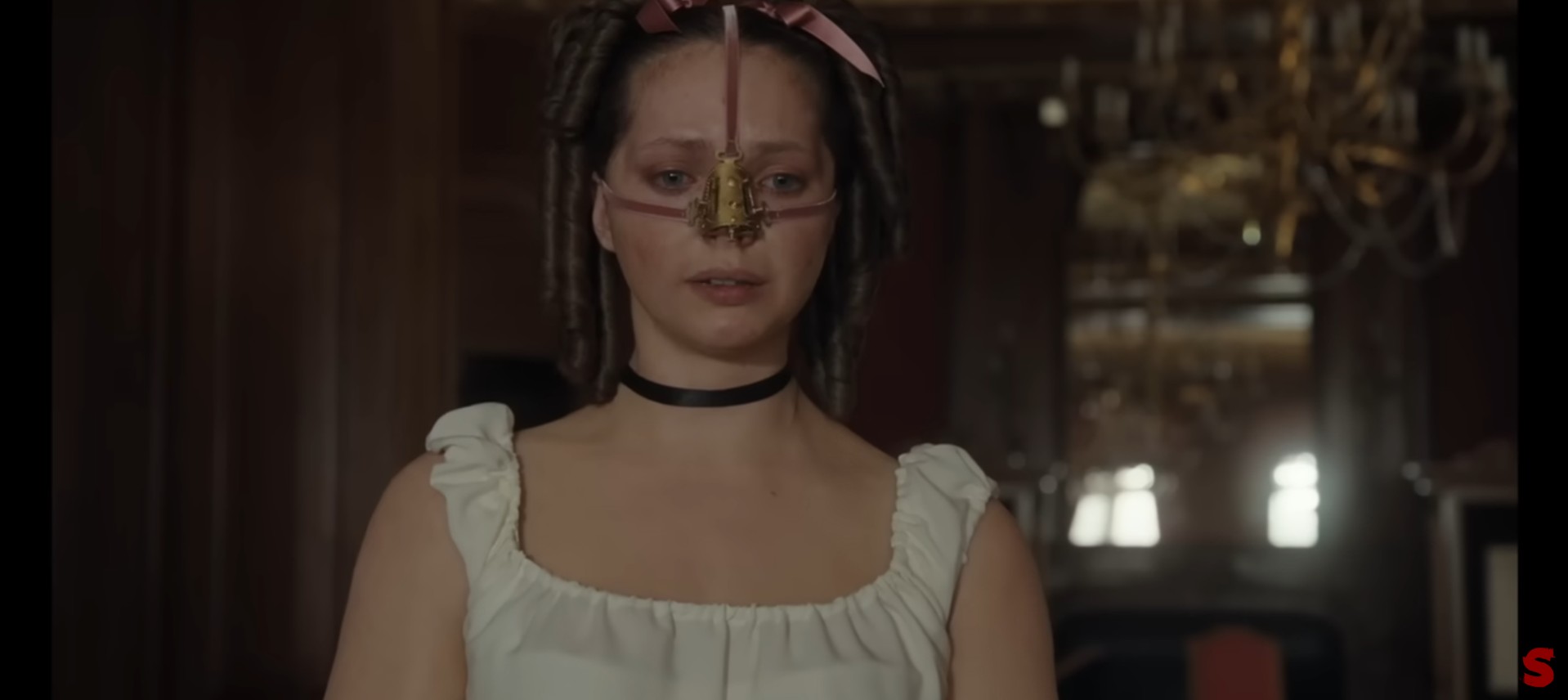
Though a beauty already in her own right, Lea Myren donned prosthetics and makeup for the titular Elvira to make the appearance of later teen, early 20s woman just on the verge of losing the baby fat.  Other personal traits added to Elvira’s character are braces, dark corkscrew curls, and muted toned outfits to further and contrast as a perceived ugliness within the context of the era, but in reality, Elvira’s beautiful young woman already with soft, large eyes, a curvy physique, and a natural gift of goodness within her that’s twisted by exterior conventions on what is defined as beauty. Shedding some of those elements, like the braces and weight, transform Elvira into a more desirable young lady now visible to all, from her draconian etiquette teacher who initially wouldn’t give her the time of day to the Prince who first looked upon Elvira with disgust in her natural state before become an exquisite creature stemmed from surgery and other unnatural body manipulations.  Myren wonderfully careens the character right into the dirt as Elvira cuts off her nose to spite her face, damn near literally, on the quixotic quest to change her outer shell that ultimately changes her from the inside.  Constants in Elvira’s life, or way, are Agnes, who’s only referenced as Cinderella once in a look that isn’t too cinder-y, played by Thea Sofie Loch Næss (“Arctic Void”) who doesn’t struggles with her character’s looks but contends with her new family’s acute empowerment, mostly rooted in family favoritism and jealousy, as well as Alma, Elvira’s younger sister with a by far majority much more comfortable in her own skin despite having dressed similarly with frizzier, unkempt hair by way of Fo Fagerli’s approach. Loch Næss doesn’t portray the as pure and innocence of the Disney classic, with her passionate romance with the stable boy in the hay barn, but the character is fairly close in all other regards with the more significant change to the characters being the stepsisters, especially Elvira’s reserved notions turned bitter when being compared to Agnes.  Alma is altogether out of the equation with no bitterness in her heart nor with any malice whatsoever to anybody but tends to her sister’s rise and downfall with little pushback.  Ane Dahl Torp (“The Wave”) is in the role of the mother Rebekka who will do anything to advance her daughter in society, mostly for selfish reasons as we’ll gather later on through a course of characters, such as the Prince Julian (Isac Calmroth), stable boy Isak (Malte Gårdinger), brutal plastic surgeon Dr. Esthétique (Adam Lundgren), and finishing school head mistresses/lesbian lovers (Katarzyna Herman & Cecilia Forss) who have contrasting approaches, both negative, toward Elvira’s waistline. 

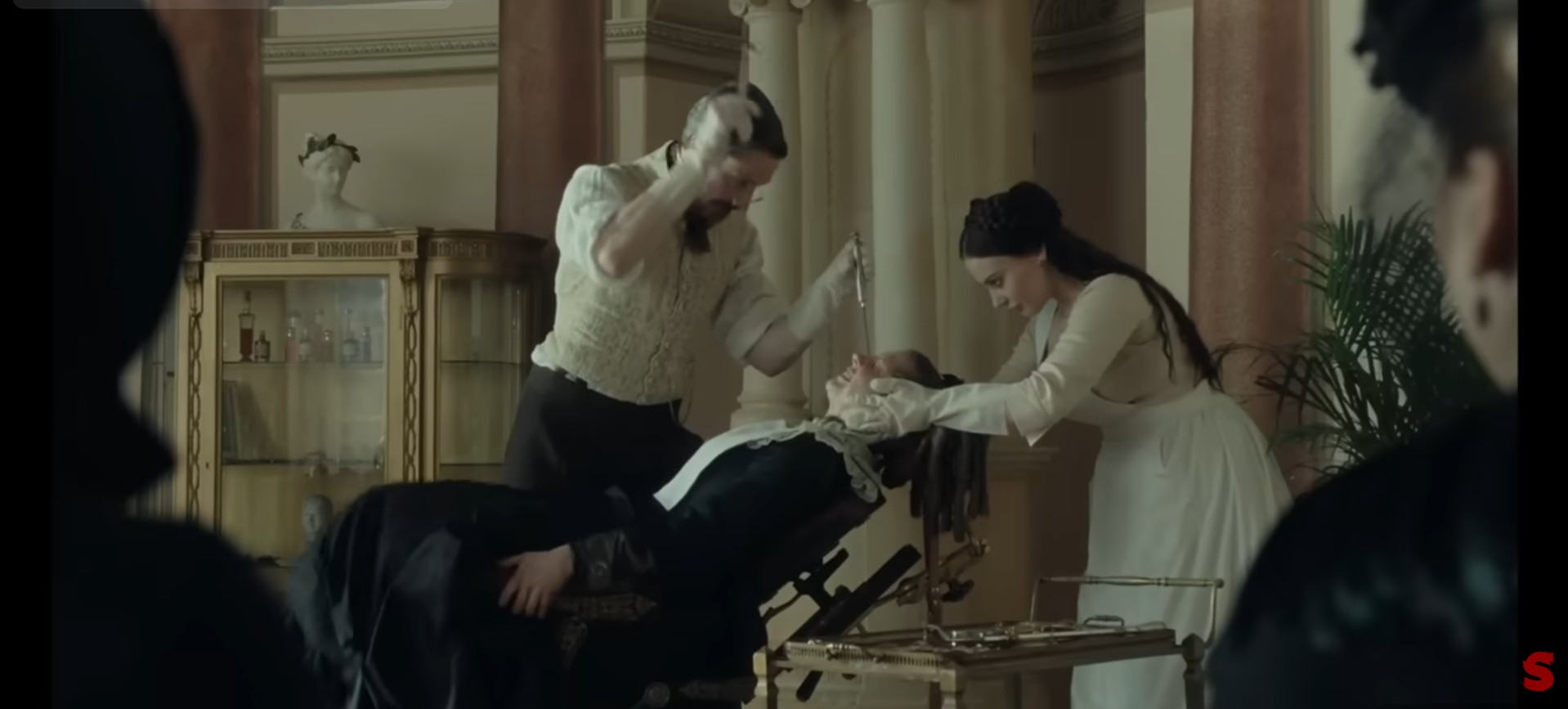
“The Ugly Stepsister’s” body horror is more than just a serious manipulation in losing weight and cutting more than corners toward image perfection.  The real horror is in the shame, the shaming of the body that’s overlooked, called out, and humiliated and to make matters worse for Elvira, her body type is by all of today’s standards curvy in the right places and beautiful albeit a body double was used for her pre-trim down nude scene.  Prosthetics are in place around the face and arms to make Lea Myren appear a little weightier, but the difference is extremely negligible and that’s the real power of horror when it’s terribly subtle, an already beautiful young girl succumb to peer and societal pressures that induces crazy self-harm for opinionated ideals and appearances.  Blichfeldt’s ideas of body-shaming extreme measures done by Elvira are not a far stretch from what self-conscious people do today about their weight.  Instead of swallowing a tape worm egg, one can stick a figure down their throat to achieve the same effect.  Instead of breaking a nose to re-mold with a hammer and chisel, surgery and medicines are abused ot be the new, easy, fast weight lost solution.  Blichfeldt comparative shots linger on Agnes with Elvira seething with envy and with the director’s bold choice of provocative nudity, exposing genitalia and depiction of X-rated acts, engages an alluring perversity that sheds light on a superficial world of beauty and sex, shielding the core, deeper problem of societal shame. 

Second Sight Films brings the Shudder and Vertigo Releasing North American marketed  “The Ugly Stepsister” to 4K UHD Blu-ray.  The ultra high-definition release is HVEC encoded onto a BD66 and presented in HDR10 with Dolby Vision, at 2160p, and in it’s the original aspect ratio, a European 1.66:1 widescreen.  Match the dark toned nature, the grading also exacts a somber coating with mahogany and ebony wooden structures and dimly lit castles of a Victorian era to bask in an austere state were, more so with personal happiness, is hard to come by.  Details are hard to stomach, in a good way, with proximate detail in the special effects closeups, such as in the mutilation scene where a nearly severed toes are hanging on for dear life by what little skin in left tethered to the foot, that go into macrolevel detail and is accentuated by the additional pixels.  Skin tones appear natural and unique to each individual in a purposeful contrast of fair and tanned skin along with different layers of texturing between organic qualities and the fabric outfits they wear, such as Agnes more single block outfit with a smoother design compared to Elvira’s multiple layers and pattern garb.  The Norwegian DTS-HD Master Audio 5.1 has an eclectic powerhouse soundtrack of synth and string orchestra from John Erik Kaada and Vilde Tuv.  The story doesn’t have a great deal of direction use for the 5.1 mix with mostly a conversating piece with mostly diegetic ambience, leaving the 5.1 less immersive than required, but there is vitality and strength behind the dialogue and action, clear and unobscured in its clean presence.  The multitude of squishiness, again the severed toes and also the removal of the tape worm through an orifice, is highly emphasized more max effect.  Areas of depth mostly lingers around the front but there are opportune moments in medium shots for audio expression.  English subtitles are clean, accurate, and well-paced.  Special features on the standard 4K release include a new audio commentary with director Emilie Blichfeldt and filmmaker Patrik Syversen, a new audio commentary with critic Meagan Navarro, a new interview with Blichfieldt This is my Ball, a new interview with star Lea Myren Generational Trauma, a new interview with Cinderella actress Thea Sofie Loc Naess Take Up Space, a new interview with special effects artist Thomas Foldberg Character and Gore, a special effects featurette The Beauty of Ugly:  The Effects of the Ugly Stepsister, a visual essay from Kat Hughes A Cinderella Story, deleted scenes, and both the Blichfiedt short films mentioned earlier in this review:  “How Do You Like My Hair?” and “Sara’s Intimate Confessions.”  The review here is for the standard 4K UHD Blu-ray set but there is a limited edition set that includes the 1080p Blu-ray as well.  The black Amaray case features a character still of Elvira on the front cover in all her dark maiden and sweet-faced glory.  There are no physical extras inside.  UK certified 18 for strong sex, nudity, and gore, “The Ugly Stepsister” from Second Sight Films is region free and has a runtime of 109 minutes. 

Last Rites: “The Ugly Stepsister” is a yarn not yet explored in other Cinderella tales, especially when it involves body horror and a sexually explicitness that that will forever make watching the Disney classic now uncomfortable when a recalled thought from Blichfeldt’s film pops into the visual cortex. Yet, it’s a remarkably twisted story from a different perspective that isn’t magically fantastical but grim and tragic.

“The Ugly Stepsister” on 4K UHD Blu-ray from Second Sight!

Online Bullies Deserve All the EVIL in the World! “The Columnist” reviewed! (Vertigo Releasing / Digital Screener)

Columnist Femke Boot is a damn good writer backed by her publication. Yet, Femke feel unsatisfied and unsettled by the extremely harsh social media comments aimed to not only torpedo her career in the column section but also discredited and publicly shamed by twisting events in her past. The barrage of nasty comments, determined to bully her into oblivion, plug up Femke’s creativity, causing severe writer’s block on an upcoming book her editor continues to pressure her on. When she discovers that her next door neighbor has disparaged her online as well, the struggling writer snaps, taking revenge on her neighbor and an army of internet trolls by pursuing their true identities, tracking them down, and takes her revenge, plus takes a little more for an indulging gratification.

Relevant. Chimeric. A social war on words that can be fatally influential from anonymous patrons of the world wide web is Ivo van Aart’s black comedy of retribution entitled “The Columnist.” Also known originally titled as “De Kuthoer,” roughly translated as “The Pussy Whore,” a way better and in your face title in my opinion, the Netherland tongue-and-cheek-and-severed-finger comedy-thriller is the third feature, first beyond the 60-minute mark, clocking in at 86 minutes, for Aart from a screenplay penned by Daan Windhorst. Aart and Windhorst last paired up for a Dutch miniseries, “Suspicious Minds,” and Aart’s debut film, “Quantum Zero,” two years prior. Their concrete foundation of collaboration sets up an engrossing insight on masked mindsets of internet bullying that backfires but not in the typical way and also indorses a freedom of speech theme caught in a vicious circle of death. Sabine Brian and Ronald Versteeg serve as producers under the Benijay capital investment group’s NL Films.

Katja Herbers (HBO’s “Westworld”) gives a stress-inducing performance as the tormented-to-insanity columnist.  Absorbing, like a sponge, of all the scornful negativity, Herbers leaves little room for writer Femke Boots to expand and breathe as a normal person who can filter out the harsh criticism as the “Loft” actress can tune into a louded, distracted mindset of delusion and have an underscored inkling twinkle in her eyes as her character muddles around in life normalcy of being a good mother to her free-speech advocating daughter Anna (Claire Porro) and be in a radically unlikely relationship with a gothically-cladded, fellow writer, Steven Dood aka Steven Death (Bram van der Kelen).  Journalist are trained to accept the harshest criticism as long as they can back up their stories with facts and references, but for a columnist, who makes a living off opinions, the same can not be said and it’s in that gray area where “The Columnist” likes to dwell that someone’s subjective living is under attack and the enemy is the entire world who thrives off being antagonistic just for the hell of it.  Herbers plays right into that soul sucking anger, directing all her energy into those who mask themselves in anonymity as they bombard her character with comments of ill-intent.  The frustration mounts, especially when Femke attempts to file police reports about the death threats, but is shrugged off by an unsympathetic uniform, and the pressure blows her top off in a silent switch into swift vengeance of a variety misogynistic trolls.  Genio de Groot, Rein Hofman, Seno Sever, and Achraf Koutet round out “The Columnist’s” cast.

Though not written, shot, or produced by women, “The Columnist” follows in suit with a string of strong pro-feminism films, coursing with the same blood of the feminist revolution in cinema that has empowered women to exhibit their artistry, such works include Brea Grant’s dual female-lead, black comedy about an opioid addicted nurse’s mafia entanglement in “12 Hour Shift,” Jill Gevargizian’s gothic trip into hairstyles and isolating madness of “The Stylist,” and Emerald Fennell’s 5-Academy Award nominated revenge-thriller about the social system’s gender double-standards in “Promising Young Woman.”  “The Columnist” topicality revolves around a woman writer being bashed, sometimes just for kicks of callous community fun, by a plethora of trolling men who hide behind self-attributing epithets and nicknames.  With only her their commenting handles, Google, and her wit,  Femke tracks them down comment-by-comment for confrontation with her weapon of choice, usually a state forestry bag full of gardening tools, and this is where the good writing and directing comes into the fold by establishing a complete smorgasbord of different male personalities to circulate with Femke’s rage against the unwarranted slanderous and malicious of their own doing. Where “The Columnist” also gets you thinking is the freedom of speech movement that Femke’s daughter, Anna, so tenaciously hammers into her stern high school’s administrative hierarchy, helmed by a, you guessed it, a male principal. While Anna’s story is relatively tongue-and-cheek in comparison to Femke’s more serial killer storyline, there’s a whole lot of irony happening between the two paralleling, mother and daughter narratives with Anna battling the school system singlehandedly to allow her words to ring true and free from principal oppression and repression while Femke, on the other side of coin, is permanently silencing the cataclysmic of social media hate mail in an act with a killer, survivalist instinct. “The Columnist’ is speechlessly brilliant under a candy-coated, caustic-comedy cover.

Opt into “The Columnist’s” op-ed with your own periling opinion as the film circulates around UK and Ireland theaters, and on various digital platforms, courtesy of Vertigo Releasing. Martijn Cousijn is credits as the cinematographer for the film whose mostly bright and buoyant scheme is peppered just enough with darker, minimalist lighting, askew in most case, to capture Femke’s sinister half of this Dr. Jekyll and Mr. Hyde duality with pessimism at the door being the altering elixir. Cousijn doesn’t play too much with the lighting, keeping true to a soft and bright air that doesn’t drop “The Columnist” acutely into a dismal perspective tale of a killer. My only disappointment with the film lies with the gore effects when it’s time to dispatch some rude keyboard-knuckleheads from the comforts of their own safe haven. Much of Femke’s desires to keepsake parts of her tormentors is nothing more than a slight of editing to achieve and that kind pelts holes in the freedom of speech aspect that’s perhaps one-third of the story. “The Columnist” is by no means made for young teens, but Femke Boots deserved to reign hellfire in a fiery display of well unexploitable violence. Having just released March 12th in the UK, there are obviously no bonus material, but there are also no before or after credit bonus scenes to keep you anxiously waiting to the end. Writers will undoubtedly hail Ivo van Aart’s “The Columnist” as a win against stony critics with the film’s profuse display for social change against cyberbullying and the reaffirmation of free speech or else there will be blood.