

Charles Milles Manson was a notorious criminal and cult leader living a commune lifestyle in the peace and love era of the 1960’s. The Mason Family was his communal cult following that squatted in the outskirts of Californian desserts and self indulged in hallucinogens. Radicalized and dangerous, Manson exploited their unwavering loyalty to his radicalizing behavior of a hippie way of life. Filmmaker John Aes-Nihil, a collector and lionizer of all things Charles Manson, shoots a recreation of the daily activities of Mason’s cult members, filmed at infamous Manson locations that gave a taste of commune life while also providing shuddering atmospheric insights of kill spots. To Aes-Nihil, Charles Manson lived and breathed through interpretation of their, so called, home movies.

Filmed between 1974 to 1979, three years after Charles Manson was convicted of first degree murder, director John Aes-Nihil filmed his rather homage-life rendition of what he calls the “Manson Family Movies.” Not released until 1984, Aes-Nihil also brings legend to fruition of a rumor that Manson and his followers filmed much of their daily rituals and societal deviancies, giving “Manson Family Movies” more stigma to the already controversial obsession the filmmaker already made mania in such a short turnaround from Manson’s conviction finale. “Manson Family Movies” is also a silent film, a rarity for a late 70’s, early 80’s that was just in an industrial transitional point of visual special effects and larger than life performances; yet Aes-Nihil’s remains silent and crudely finesses his interpretative documentary with stage play performances and badly scrawled title cards that instill an engrossing affect of internal sliminess toward the already visceral nature.

The cast consists of many unknown faces who have come and gone even before “Manson Family Movies” was first viewed by the public. Their involvement begs the question of their pride for subject matter involving the brutal stabbing murder of a pregnant woman with the senseless and, almost, toying deaths of couple as their listed names are more than likely pseudonyms, credited as if themselves were a part of a hippie commune with names like Rick the Precious Dove as Charles Manson, Krista Meth (Crystal Meth?), Porn Michael, Miss Sheila Star, and Sister Audress just to name some of the more eye-catching credits. As aforesaid, performances are choreographed indiscriminately that much of the violence goes by the waist side, but as characters go, more than most look the part with the exception of some transvestism as some actors and actresses don multiple roles in the bottom of the money barrel feature. Other dime actors included Katie Lazarus, Knarly Dana, Mr. Jacquetta, Judy, Ms Mule, Danny, Lori, Miss Head, Ms Brad, Moka, Chucky, Rusty, King Mama, and The Cosmic Ray. Seriously…

Not much is first-rate about the “Manson Family Movies” aside from a couple of exceptions: 1) Cult Epics amazing two-disc re-release that’ll be covered later and 2) the fact that Aes-Nihil constructed home like movies using what looks like 8mm negative film complete with deterioration and defects, providing a desensitizing and demoralizing halo around the heavy material. “Manson Family Movies” won’t be many audiences cup of historical tea and many folks will probably point out that this is only an interpretation of events, but was the raid on “Pearl Harbor” accurately depicted by Jerry Bruckheimer or did James Cameron give every minute detail correct in “Titanic?” I think not. Not to compare apples to oranges to blue berries, but as base observation, Aes-Nihil did what any director would have more than likely done with an influential historical moment, a little embellished reenactment no different from the stud Hollywood filmmakers.
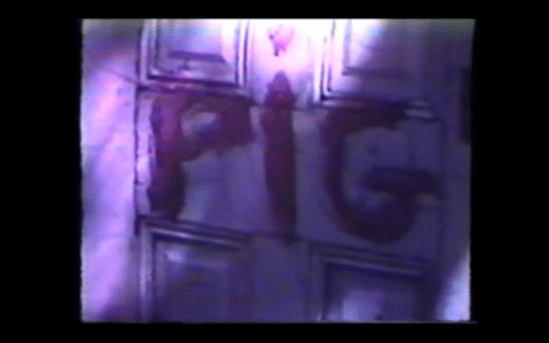
Cult Epics’ re-release of the “Manson Family Movies” is now presented in a region free, two-disc set complete with a slip illustrated with the same composited Charlie Manson head cover art by Brian Viveros and the same disc art by Charles Manson himself from the 2005 release. The film is presented in a 4:3 aspect ratio with the black bars on either side of the frame and, as previously mentioned, the image clarity is marked by scratches, flares, and dirt. Surely, for visual stimulation. Billed a silent film, the dual channel mix of the redux and remastered score is resoundingly poignant and strangely vibrant with Charlie Manson and his Manson Family recorded music as the soundtrack. Plus, there are actually less aesthetically audio tracks from Sloppy Titty Freaks, Beyond Joy and Evil, Glen Meadmore, and some sampling of the Beatles from, you guessed it, Helter Skelter. Special features include John Aes-Nihil commentary track, outtakes with director’s commentary, last interviews with Charles Manson, the original LADP crime and morgue photos, and the second disc contains Sharon Tate’s home movies without an audio track. After watching “Manson Family Movies,” John Aes-Nihil comes to suspicion as perhaps one of Charlie’s commune followers as he depicts a chilling look into the past, through a window of ghastly sovereignty over impressionable young people, and champions a real home movie approach that makes the entire package, along with a invigoratingly haunting score, a black gem.
Author Archives: Steven Lewis


Sanities Dissolve in a Concoction of EVIL! “Ladyworld” reviewed!

When a catastrophic ecological event traps eight teenage girls celebrating a birthday inside a house, they find themselves at the mercy of limited resources and with no adult supervision. With every window and door inescapably blocked, being trapped isn’t the only obstacle that looms over their adolescent minds when factions begin to form between sane and insanity as their cache of already scarce food and water quickly dwindle. Before her eventual disappearance, the birthday girl spoke of seeing a man attacking her right before the destructive shaking that left them befuddled. The remaining girls quickly line their thoughts in various ways from either spiraling out of control and embarking on a psyche control measure to deal with the haunting information or accepting the information and use it as a fear inducer for power. One-by-one, fears are exploited and minds are broken down to their most hostile and primal qualities that rapidly become an epidemic to those still in the realm of reality.
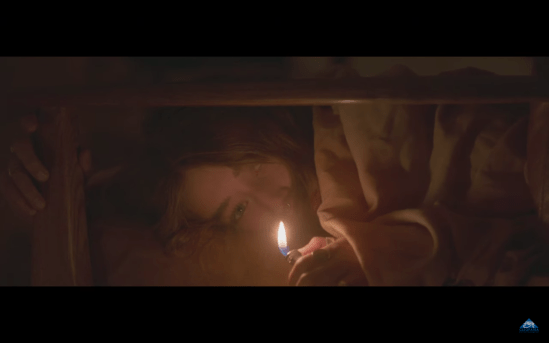
To preface director Amanda Kramer’s “Ladyworld,” there’s little background exposition or visual representation to really set the stage of psychological deterioration. The 2018 thriller can be said to be a modern, all-female take on the William Golding 1954 novel, “Lord of the Flies.” Produced by Pfaff and Pfaff Productions as well as A Love and Death production film, “Ladyworld” is essentially female centric and comes close to being true to form to its title in front and behind the camera with the debut feature directorial from Amanda Kramer. The script was also co-penned by Kramer and Benjamin Shearn. “Ladyworld” is credited as a festival circuit novelty with institutions such as the TIFF New Wave, BFI London, and Fantastic Fest, but “Ladyworld” is also novel in another way as in a doppelganger representation of Amanda Kramer herself as a filmmaker who sincerely believes in art house expressionism.

While all the actresses involved, portraying eight teenage girls, are spectacular in their own rite or as a pack, one particular actress stands out above the rest in name alone and more recently because of her debut in a popular science-fiction-horror Netflix series set in the 1980’s. Yup, “Stranger Things’” Maya Hawke, daughter of Ethan Hawke and Uma Thurman, has a co-starring role that elicits the use of her usually charmingly raspy voice into a gasp of unnerving bellows amongst her colorfully expressive mental deprivations. Yet, Hawke’s role, though equally headlined, seems more supportive against musician and television actress Ariela Barer and “Quija: Origin of Evil” actress Annalise Basso as the two teenage girls that consistently butt heads to jockey for leadership. The tension created between Barer and Basso is plumed unanticipated friction and is about as wild as any unpredictable scenario can muster. The last prominent character, the introduced unstable Dolly, has familiar parallels Ryan Simpkins’ Fangoria Chainsaw Award nominated performance in the also predominated all-female film, “Anguish,” from 2015. Simpkins trades in supernatural crazy for disastrous crazy as a teenage girl with a penchant for adding ten years her junior. Together, alternate and combative personalities fluctuate the proceedings, marking “Ladywold” unpredictable from not only Amanda Kramer’s broad-minded expression stance but also in solitary performances manage to flow as one. Rounding out the cast is Odessa Adlon, Tatsumi Romano, and Zora Casebere.

“Ladyworld” is an interesting experimental film and, unfortunately in this opinion, that’s about as far as this film might top in a market filled with visual pops, depth performances, and something new and shiny at every angle and turn. “Ladyworld” comes off a bit monotone to the preceptors in a flat line of congealed, unwavering tension from start to finish, despite coming to a head. Structurally, Kramer frames their environmental entrapment with just enough to make their plight more feasible without having to visually showcase it; the assumption, in one interpretation, is a Californian earthquake that resulted in a landslide that blocks all the windows and doors with hundreds, if not thousands, of pounds of pressure against the opening. Though this is only one interpretation of events, Kramer is very good at cascading the effect into being much more dire by reminding us that no sires can be heard, cell service has ceased, and all hope is lost within the limited space their held. That kind of compelling of the unknown and cerebral warping uncertainty is quite alluring, but that gripping element is not found equally invasive throughout.
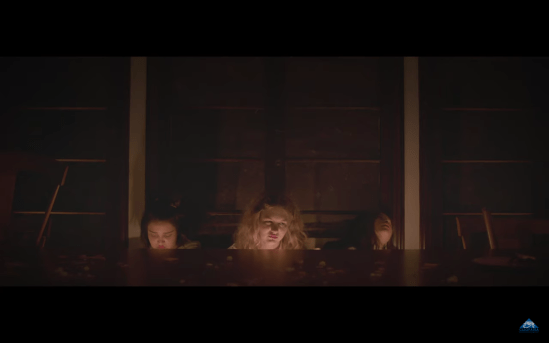
MVDVisual and Cleopatra Entertainment has positive womenism vibes with Amanda Kramer’s “Ladyworld” being released onto DVD home video. The 94 minute presentation is in a widescreen, 16:9 aspect ratio format that leans conveying more to a bland and flat coloring scheme. Essentially faded, no pops of primary hues are implemented as if to devoid all hope from a helplessness scenario. Details are a bit fuzzy too resulting from an aliasing issue or jaggies around the outer edges of things. Usually with Cleopatra Entertainment releases, lossy audio tracks have been rearing their ugly heads which would cause many questions marks with reviewers familiar with Cleopatra Entertainment as its a sublabel to Cleopatra Records – a Los Angeles-based independent record label, but with “Ladyworld,” the English dual channel audio tracks is rather robust with accompanying range and depth. However, the Callie Ryan experimental acapella instrumental can be nails on a chalk board that, again, sets a gloomy tone that consistently punches you in every perceivable sensory organ. Bonus features are slim, including an image slideshow and the theatrical and teaser trailer. “Ladyworld” has niche appeal, but Amanda Kramer and crew really put themselves out into the cinema-verse with style and performance to ultimately deliver a surreal and frightening tapestry of the unhinged and underdeveloped teenage psyche.

Own Amanda Kramers all female casted “Ladyworld!”

EVIL’s Confessional Will Be Their Rex-oning! “The VelociPastor” reviewed!

Father Doug Jones witnesses his parent’s murder by a violent car explosion and begins to question his devotion to God. At the advice of his friend, Father Stewart, Jones travels the world to rediscover his faith, landing him in the deep forests of China where he comes in contact with an ancient, mystical artifact. His discovery is life changing, or rather physically changing, as the power of the relic enables him to transform into a vicious dinosaur. The horrifying thought of his transformation and killing of an armed and dangerous thug has the priest scrambling to recollect himself as the man of the cloth, but the prostitute, who witnesses his true calling of vigilantism, convinces him to use his newfound powers against the swarm of crime. A secret clan of ninjas, acquainted with Jones’ abilities, seek to destroy his unofficial denomination to progress their diabolical plan for domination.
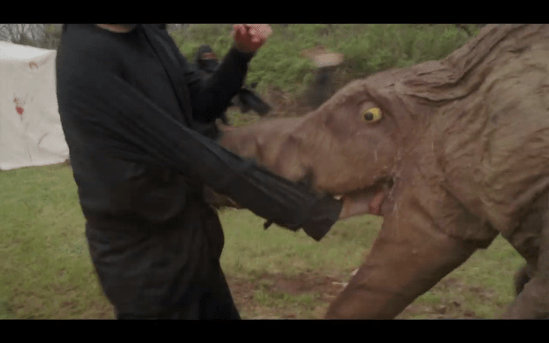
Full disclosure. There in lies a soft spot for bad, sometimes off-script, horror movies involving the prehistoric reptilians. On the USA Network, decades ago when USA Network had late night horror films, “Carnosaur” trilogy was enjoyable to watch, hooking and reeling me into the dino horror subgenre. The categorically offbeat genre even unearthed my celebrity crush even before I knew who she was with “Tammy and the T-Rex.” Even in the heavily edited form, Denise Richards still stunned me with her dino-riffic dynamics. Plus, Vinegar Syndrome is releasing an unedited version! ItsBlogginEvil just posted a review, not too long ago, for another Wild Eye releasing, “Jurassic Dead!” Steven Spielberg and the “Jurassic Park” franchise, of course, laid the foundation of critically acclaimed Triassic and Cretaceous thrillers, but the crude complexion of the indie market feels more at home, more uninhibited, and, definitely, more spirited and that’s what writer-director Brendan Steere and his team breathes new life into with the horror-comedy “The Velocipastor!”

The man behind the titular “The VelociPastor” character is Greg Cohan, a television actor regular, who dons the clerical collar and endeavors through the practical special effects of “The First Purge’s” Jennifer Suarez. Young, fit, and a good sport, Doug Jones is perfect for a clergyman turned velociraptor who dismembers the wicked and karate kicks ninjas while also sporting a pink mini dress in a scene of self revelation and also doing hand-to-hand combat in whitey-tighties. Opposite Jones, playing the love interest, is Alyssa Kempinski as the hooking for tuition pre-law med student, Carol, who becomes the facilitator of Father Jones prehistoric predicament. Jones and Kempinksi charisma shine through the absurdity as their keenest for each other develops into a full fledge fighting duo. Kempinski’s softer touch compared to Cohan’s zany comedy levels out, if that’s even possible, a film about a priest with a dino-lycanthrope complex. “The VelociPastor” supporting cast are equally as sharp with the farcical, pulpy vibe, rounding out with some really fantastic performance from amateur actors, including Aurelio Voltaire (“Model Hunger”), Brendan Steere’s father Daniel Steere, Jesse Turtis, Jiechang Yang, and a pulsating rendition of a worst-of-the-worst pimp with Fernando Pacheco de Castro.

“The VelociPastor” doesn’t take itself seriously, paralleling the similarities to other martial art parodies like “Kung Pow: Enter the Fist,” but Steere incorporates a healthy appreciation for pulp writing and independent filmmaking for his crowdfunded venture. While the “The VelociPastor” might have a trashy, kitschy name to draw in audience and also heavily lined pocket patrons, the film itself isn’t all that trashy, schlocky, or shoddy. Much of the action is not Father Doug Jones as a skin-shredding Dinosaur wreaking havoc amongst the lowlifes and crime syndicates, the very vibrant montage takes care of that, but rather runs a baseline story of a man and a woman, from two separate worlds of prostitution and a man of faith fall in love, has fairly simple and conventional means once all the idiosyncratic glitter and glam is removed; a notion that can be said to be the foundational basis for many other movies. Even director Brendan Steere admitted during a Q and A session that “The VelociPastor” isn’t a jab at the Church, closing the door on conjecture and blasphemous intentions with the ending remark that velocipastor just sounded cool from a harmless auto-correct error.

Wild Eye Releasing and Cyfuno Ventures presents “The VelociPastor” onto a unrated DVD home video. Based off Brendan Steere’s 2011 faux grindhouse trailer of the same title which the director used 16mm Kodak stock, the feature film loses a fair amount of that particular grindhouse appeal, but Steere still manages to manufacture grindhouse attributes by creating scratches on the floor of his dark bathroom and also baking the film in his oven to obtain a warm, dry coloring to give the film age and deterioration. Details in the 2018 film are ten times more distinguishable than in his 2011 trailer and the since being garnished almost completely with practical effects, nothing detailed has grand poise and exhibits every uncouth knook and cranny that only adds to the horror-comedy’s charm. The 2.0 stereo mix has an even keel about it and doesn’t embark on the same grindhouse wear Steere attempts to develop on the image, but the dialogue is prominent and ambience, from the fighting hits to the roar, is on point with depth and range. English closed captioning subtitles are available. Bonus features include a commentary track, gag reel, a Texas Frightmare Cast and Crew question and answer with Greg Cohan, Brendan Steere, and Jesse Gouldsbury, and the theatrical trailer. As about as B-movie as a feature can get, “The VelociPastor” rekindles the jurassic age’s primal instincts and unleashes a new and ferocious cult icon, one that’ll not only bite your head clean off, but will exact the last rites before doing so! Amen!

The VelociPastor on DVD! Click the DVD to buy!

When Alone, EVIL Will Be Your Company. “The Wind” reviewed!

Living at the edge of the 19th century frontier, husband and wife, Isaac and Lizzy, live in complete seclusion as far as the eye can see until another couple, Gideon and Emma, settle a mile away in a nearby cabin. Unused to the punishing conditions the frontier might yield, the St. Louis bred Gideon and Emma find living without the comforts of urban life challenging and rely on Isaac and Lizzy’s strength and experience for survival. However, the frontier’s harsh reality produces a malevolent presence that flows through the prairie, stalking and toying with the settlers, only revealing itself to Lizzy while the others act if nothing is going on or just acting strange. The sudden and violent death of Emma and her unborn child send Gideon and Isaac on a two-day ride to nearby town, leaving Lizzy to face the isolated terror alone with only a double barrel shotgun that never leaves her side, but in her strife, Lizzy learns more about her newfound neighbors and even unearths some troubling truth about her husband that even further segregates Lizzy from the rest of reality.

If there wasn’t one more single thing to demonize, director Emma Tammi conjures up “The Wind” to mystify the western frontier. As Tammi’s debut directorial, penned by short film screenwriter Teresa Sutherland, the supernatural film’s dubbing could be a rendering of a long lost Stephen King working title, but all corny jokes aside, “The Wind” really could from the inner quailing of Stephen King’s horror show mindset. The film’s produced by Adam Hendricks and Greg Gilreath under their U.S. label, Divide/Conquer, and released in 2018. The same company that delivered the horror anthology sequel “V/H/S: Viral,” Isa Mezzei’s sleeper thriller “CAM,” and the upcoming, second remake of “Black Christmas” with Imogen Poots and Cary Elwes. With a premise dropped right into the fear of the unknown itself and with some powerful production support, “The Wind” should have soared as an unvarnished spook show come hell or high noon, but the jury is hung waiting on the executioners ultimate verdict regarding Tammi’s freshman film.

Five actors make up all the cast of “The Wind,” beginning with the solemn opening night scene with frontier men, Isaac Macklin (Ashley Zukerman of “Fear the Walking Dead”) and Gideon Harper (Dylan McTee of “Midnighters”), waiting patiently outside a cabin door until Isaac’s wife, Lizzy (Caitlin Gerard of “Insidious: The Last Key”) walks out, supposed baby in hand, and covered in blood. The subtle, yet chilling scene sets the movie from the get-go, sparking already a mystery at hand and coveting most of the focused cast. The two characters unannounced at the beginning, swim in and out of flashbacks and toward the progression of Lizzy’s embattlement with “The Wind.” That’s not to say that these characters are any less favorable to the story as “Slender Man’s” Julia Goldani Telles shepherds a vivid description of subtle lust and extreme instability that rocks a strong and self-reliant Lizzy living priorly a stale reality. There’s also the introduction of a wandering and warm pastor that leads to chilling reveal questioning any kind second guesses there might be about Lizzy. All thanks to veteran television actor, Miles Anderson.

“The Wind’s” non-linear narrative teases two courses, one working forward and the other backwards to a catalytic moment that becomes motivational for majority of characters in the prior days and the beginning of the end for one in particular. Though the latter centralizes around Lizzy’s flashbacks and encounters with the evil spectral wind, her descent into madness conjures more violently through the discovery; it’s as if her current state of mind has been stirred, whirled, whipped, tumbled, and agitated from the past that keeps lurking forward into her mind’s eye. Tammi pristinely conveys a subtle message of undertones from the past and present that chip away at Lizzy’s forsaken reality, leaving those around her delicately exposed to her untreated alarms to the nighttime wind of a menacing nature. Teresa Sutherland’s script to story is illuminate tenfold by the wealth in production that recreates the rustic cabins and the callously formed hardships of the western frontier and if you combine that with the talents of cast, “The Wind” will undoubtedly blow you away.

Umbrella Entertainment delivers Emma Tammi’s “The Wind” into the Australian DVD home video market and presented in the original aspect ratio, a widescreen 2.35:1, that develops a hearty American untrodden landscape for the devil to dance in the wind. Cinematographer Lyn Moncrief’s coloring is a bit warm and bland to establish a western movie feel and really had notes of a Robert Eggers (“The Witch”) style in filmmaking with slow churn long shots and a minimalistic mise-en-scene, especially for a similar pseudo-period piece. Eggers invocation solidified itself more so in the Ben Lovett’s crass and cacophony of an instrumental score that adds more to the creepiness factor while remaining relatively framed in the time era. The Umbrella Entertainment’s release goes right into the feature without a static menu so there are no bonus features to dive into. “The Wind” might feel like an unfinished piece of cinematic literature, but remains still a damn fine thriller that seeps ice cold chills into the bones and ponders the effects of loneliness and trauma that’s nearly puts this film into the woman versus nature category, a premise that will be hopefully concluded by a upcoming book adaptation.
When the EVIL in Your Dreams Terrorizes You…”Nightwish” Reviewed!
A graduate dream research group experiment on paranormal and sensory deprivation sleep patterns involving controlling their own dreams, even if their terrifying, and examining their own deaths but when they pivot to investigate supernatural activity inside an isolated compound mansion in the midst of an arid desert, the four students and their eccentric teacher conjure malevolencies that include satanic rituals and alien encounters. With their professor spearheading an underlying motive to use them for his diabolical plans, the hesitant and scared group must decide to either force their participation or try and escape their instructors madness, but when the lines of reality blur, friend becomes foe and foe becomes friend with casualties in the middle on all sides as grisly depictions of death and suffering question whether their nightmares are spilling into reality.
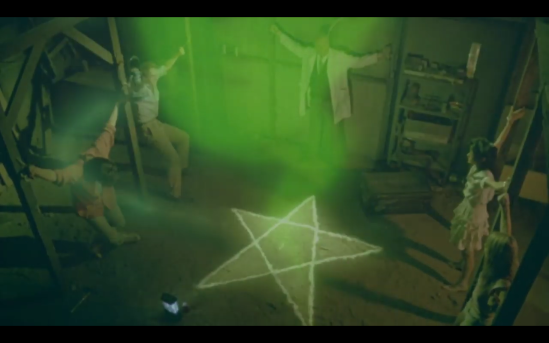
Subconscious surrealism on an ultimate terror coaster from writer-director Bruce R. Cook with an unspeakable horror in every corner, from flesh eating extraterrestrials to disillusioned Mad Doctors, in the nightmare-inducing “Nightwish!” The 1989 made and 1990 released “Nightwish” is produced by Paul White and Keith Walley, both of whom collaboratively funded through their Wild Street Pictures production company the early 1990s horror which included another Unearthed Classics release, spine #2, “The Dark Side of the Moon” and, also, put a little cash into the Jeffrey Combs cult favorite, the Brian Yuzna sequel of “Re-Animator,” “Bride of Re-Animator.” However, the real star of the filming crew is none other than Sean McLin. Before going full fledge into being a camera operator, especially around the early days of Power Rangers’ television series, McLin had a short stint as director of photography and his cinematography beyond divine that engrossed to draw audiences into odd angles, mind-boggling depth play, and just colors after colors of spectre ghoulishness. McLin provided a pure motley of mental macabre of the Gregory Nicotero (“Day of the Dead”), Robert Kurtzman (“Lord of Illusions”), and Howard Berger (“In The Mouth of Madness”) powerhouse effects team.
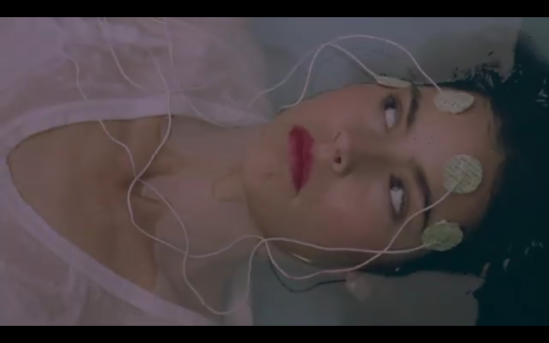
The central characters essentially encompass four graduate students – Bill (Artur Cybulski), Jack (“April Fools’s Day’s” Clayton Rohner), Donna (“Friday the 13th Part VII: The New Blood’s” Elizabeth Kaitan), and Kim (Alisha Das) – along with their stern professor played by the solemn faced Jack Starrett (“Grizzly II: The Concert”). Relatively low on the totem poll names when considering a main cast; hell, I only know Clayton Rohner from his role in the mid-80’s teen transgender appropriation film, “Just One of the Guys” as well as being Admiral Jameson on one episode of Star Trek: TNG. Yet, the combination of crew talent along with the chiseled define facial features of a one Brian Thompson (“Cobra”), the meshed cast suffer no visible calamities or outright fumbles of performance as they each carrier about equal weight into a floating, weightless, construct of boiling human antagonizing fear. The cast rounds out with colorful supporting performances of a muscle head henchmen by Robert Tessier (“The Sword and the Sorcerer”) and the nitwit gate keeper, also animal feeder, Wendall played by Tom Dugan. Yet, Thompson tops the more colorful performances as Dean whose Kim’s ruggedly, manly boyfriend that’s more confident jock without the loss of brain cells. Thompson’s at the height of career, sporing a tank top for most of the film that puts his muscular form on display, but he isn’t the only actor to bare skin as Elizabeth Kaitan and, especially, Alisha Das bare a bit of flesh for the sake of providing a sexual desire to story.
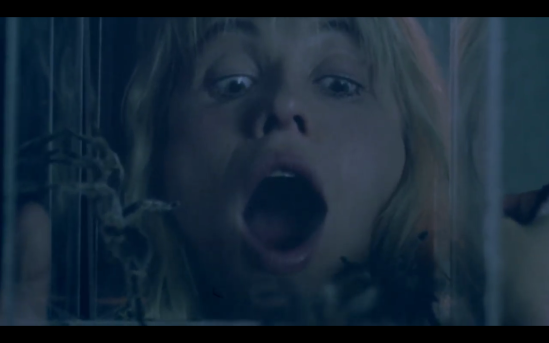
“Nightwish” understandably has a hard chronicle to follow because any film, regardless of genre, incorporating dreams or delving into the state of madness is definitively ambiguous at best, hard to follow, and puts minds into high gear to either understand the just what the hell is going on or to make sense of the chain of events to deduct a reasonable explanation. Sure, over thinking “Nightwish” as a complex construct can be dead wrong. There could be simplicity strewn about and, maybe, we’re too dense or too complicated ourself be aware of the obvious, but Cook certainly knew how to piece together a disjointed storyline that distinctly defines part A of the plot, but parts B and C are so well blend together that the clarity of part A starts to disintegrate and more questions than answers starting whizzing through our think box. “Nightwish” epitomizes the resemblance of nightmare residue and is best left open for personal interpretation.
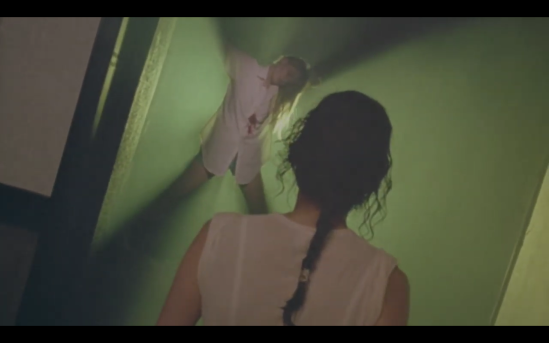
Spine #3 from Unearthed Films Classics label comes “Nightwish” onto Blu-ray distributed by MVD Visual. The Blu-ray is presented 1080p in a widescreen 1.85:1 aspect ratio through a newly restored 4k transfer, but the transfer, perhaps from the best negative possible, has some minuscule wear with faint scratches and dirt impressions; however, the definition and the color palette ultimately overrun the set hard grain with the minor damage also being an after thought. The uncompressed English 2.0 PCM has a better grade in comparison to the video with clear dialogue and a robust soundtrack throughout to which the ambience is nearly overshadows by but does present itself despite the lack of inertia to progress. Special features include a commentary track with Wild Street Pictures producer Paul White and the president and founder of Unearthed Films Stephen Biro. Also available is a photo gallery, trailers, and an extensive cast and crew bio booklet filled also with production notes and a slew of high resolution stills that’s great to flip through. As another judiciously placed classic for Unearthed Films, “Nightwish” is a dream come true for viewers that combines the effects talents of Nicotero, Kurtzman, and Berger with the terrifying ferocity of facing death through in the dark subconsciousness.

Nightwish available on Blu-ray!


