Don’t Be Fooled By the EVILs of Your Mind! “Open Your Eyes” reviewed! (Gravitas Ventures / Digital Screener)


Screenwriter Jason is on a deadline.  The producer is looking for his next script and soon.  The writer finds himself in a funk in not only fleshing out his script but also with his memories as a lingering sensation clings to him as flashes of moments that don’t seem quite right haunt his reality.  As he plugs along with his writing, other strange occurrences happen all around him:  a portion of his apartment wall is deteriorating from a leak in an adjacent upstairs unit, a cat has seemingly made it’s way into AC ducts, and objects disappear and reappear.  His dormant apartment complex is frustrating and lonely when he can’t reach the upstairs neighbor or the building manager about the leak that’s destroying his wall, but when he runs into Lisa, a neighbor from down the hall, many of his concerns fade away with her striking beauty and the two start up the beginnings of a possible relationship.  Yet, there’s still something amiss he can’t put his finger on and his newfound friend Lisa might just be the key to his awakening.   

Modest psychological horror has always been a tough one to pull off.  Instead of a straight forward zombie apocalypse or a killer behind a creepy mask slashing to bits half-naked teenagers, the psychological horror subgenre has to develop disintegration details and piece together fragmentations in a whirlwind character study that hopefully materializes into logical sense.  Writer-director Greg A. Sager tackles such threadbare cognizance with the filmmaker’s latest feature, “Open Your Eyes,” a Canadian psychological horror-thriller released this month.  Sager remains firmly in the horror realm with his fourth feature film behind 2012’s demon-seeding “The Devil in Me,” 2014’s supernatural penancing “Kingdom Come,” and 2018’s extraterrestrial thriller “Gray Matter.”  Continue the trend with all his independent productions, Sager self-produces alongside his co-founding Matchbox Pictures Inc., partner, Gary Elmer, who is also the cinematographer on the project.

“Open Your Eyes” is also modest in casting with two backbone characters keeping Sager’s narrative from being an bodiless work of art.  Doing much of the heavy lifting is the Toronto based Ry Barrett and with his close connection with filmmaker Chad Archibald, Barrett has had, in many different capacities, a role in a string of B-horror, including such films as “The Drownsman,” “Antisocial,” and “Neverlost” which are all tied to the Ontario director.  “Open Your Eyes” serves only as the second time Barrett and Sager team up following the release of “Kingdom Come.”   Barrett exudes an unconscious performance in Jason’s unravelling from crunch-time screenwriter to an unglued madman living in Jason’s version of a tenantable matrix.  Jason is almost sleepwalking through a lonely existence even before meeting his neighbor Lisa, a role played by Joanna Saul in her commencing feature film act, and the struggling to keep structural integrity writer hardly suspects and worries about strange manifestations that are happening all around him.  I don’t think Sager captures Jason’s full autonomy awareness that leaves the character more blank than bothered.  Barrett and Saul have adequate enough chemistry to make their barely a courtship romance intriguing, but her character’s implementation into restoring Jason’s vital grip on reality just kind of falls into his lap without a pinky being lifted on Jason’s part to assist in his own deliverance.   Heather May and Julianna Suzanne Bailey round out the small cast.

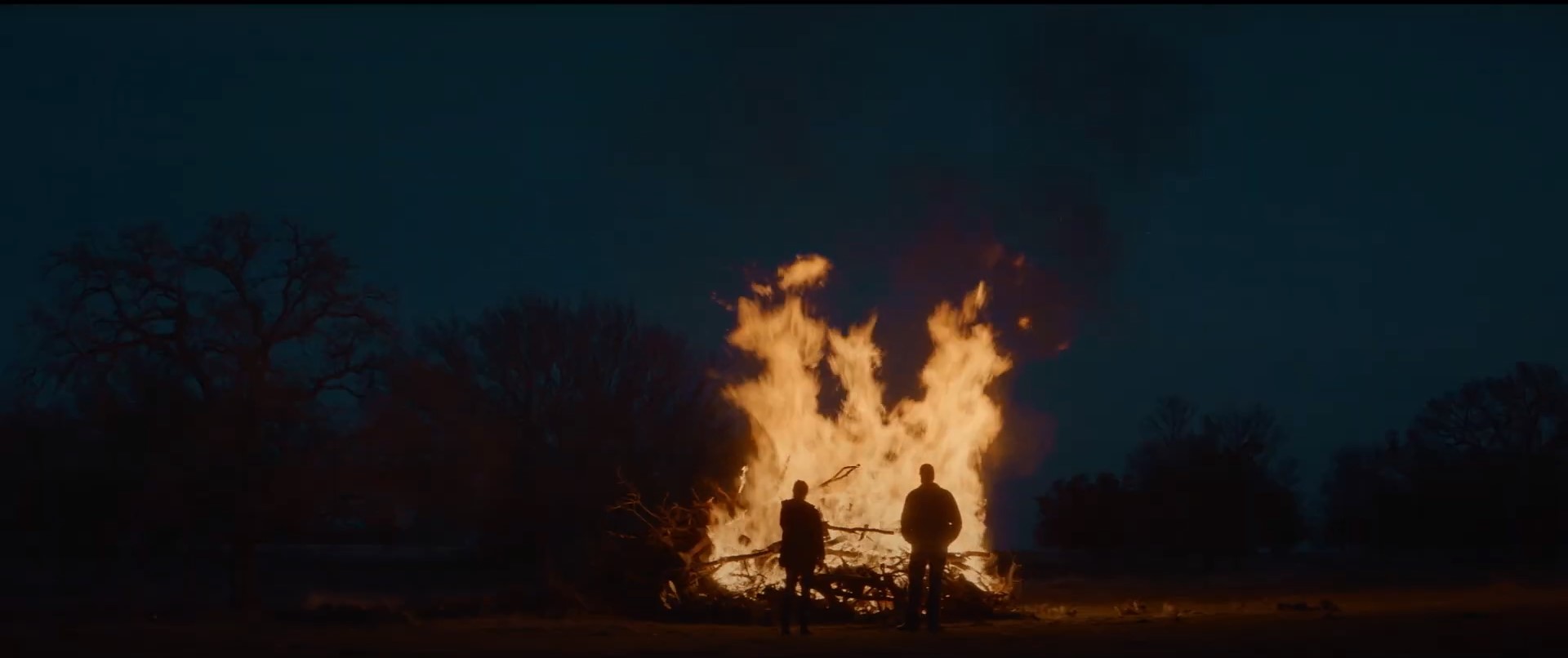
Aside from the nuisances with the character development, the sterilized comforts of Jason’s living conditions alone provide an unconventional chill.  Though living in an apartment complex is normally assumed chockablock with tenants living their lives, Jason’s apartment building is virtually vacant, void of the hustle and bustle of occupants, with not as much as a whisper from the exterior of Jason’s top-to-bottom, side-to-side walls.   What seems to be an idyllic environment for a concentrating writer becomes an oppressive variable that yet doesn’t seem to slow down or question Jason’s momentum or leave any kind of sense of threat along the way, leaving his what should be an ominous place of mind-bending confinement hanging out to whither and dry up .  I thought the plot twist to be shrouded enough to warrant a semi pleasantly surprised and unexpected ending that connects topically to today’s real-world climate.  Not to be riding a one trick themed pony, Sager also plays upon the themes of grief over loss and how the mind compensates with overactivity and gap fillers to avoid a complete mental system overload while also subtly adding a static charge of illusory sensations to make unsettling disturbances.  “Open Your Eyes” will not scare your socks off as it’s not that kind of film; instead, expect a slow-burn mystery more puzzling than panicky as the walls begin to crumble…literally. 

Okay, puzzlers.  Get puzzling on the new mystery horror-thriller, “Open Your Eyes,” that was distributed this past June by Gravitas Ventures on DVD, Blu-ray, and digital.  Producer Gary Elmer, as director of photography, paints the dark corners with softer figures that provides a really good shadowy contrast between character and background.  Elmer’s small use of the blue tint, his over-the-shoulder hallway delph, and shallow focus add tidbits of appeal without just “Open Your Eyes” seeming like another flat indie production.  Since I was provided with a digital screener, I can’t comment to confidently on the audio and video qualities of a physical release, but presented 2.35:1 widescreen was digitally shot on a CineAlta series Sony Venice camera that effectively provides a smoother grain, especially in the inky shadows, that transmit a really rich data scheme for post-production and offers that flexibility in producing range.  Another byproduct of the Venice camera is the natural looking skin tones seen with Elmer’s film when not under a tinted lens.  No bonus material offered with the digital screener and there were no bonus scenes during or after the credits.  Perhaps with a runtime a little longer than necessary, clocking in a 99 minutes, “Open Your Eyes” is a quaint terror touching the tattered strings of a mind, body, and soul pushed over the edge and into a falsehood bred by fear and loss.

Own “Open Your Eyes” on DVD or Watch on Prime Video!

The Devil’s Tongue is a Powerful, Influencing EVIL. “The Dark and The Wicked” reviewed! (Acorn Media / Blu-ray)


Siblings Louise and Michael Straker return home to their farmland house when their terminally ill father becomes bedridden.  A long time alone and isolated before her children arrived, Virginia provided suitable care for their father up until the voices started.  Lurking in between the shadows around the rural home, a menacing presence wedges itself into an already splintered family spirit as the harbinger of death coming for their father’s soul.  The influence of voices and grim visions tatter Louise and Michael resolve, testing their unconditional love for family and moral obligations, but evil can be very persuasive the closer their father comes to his end. 

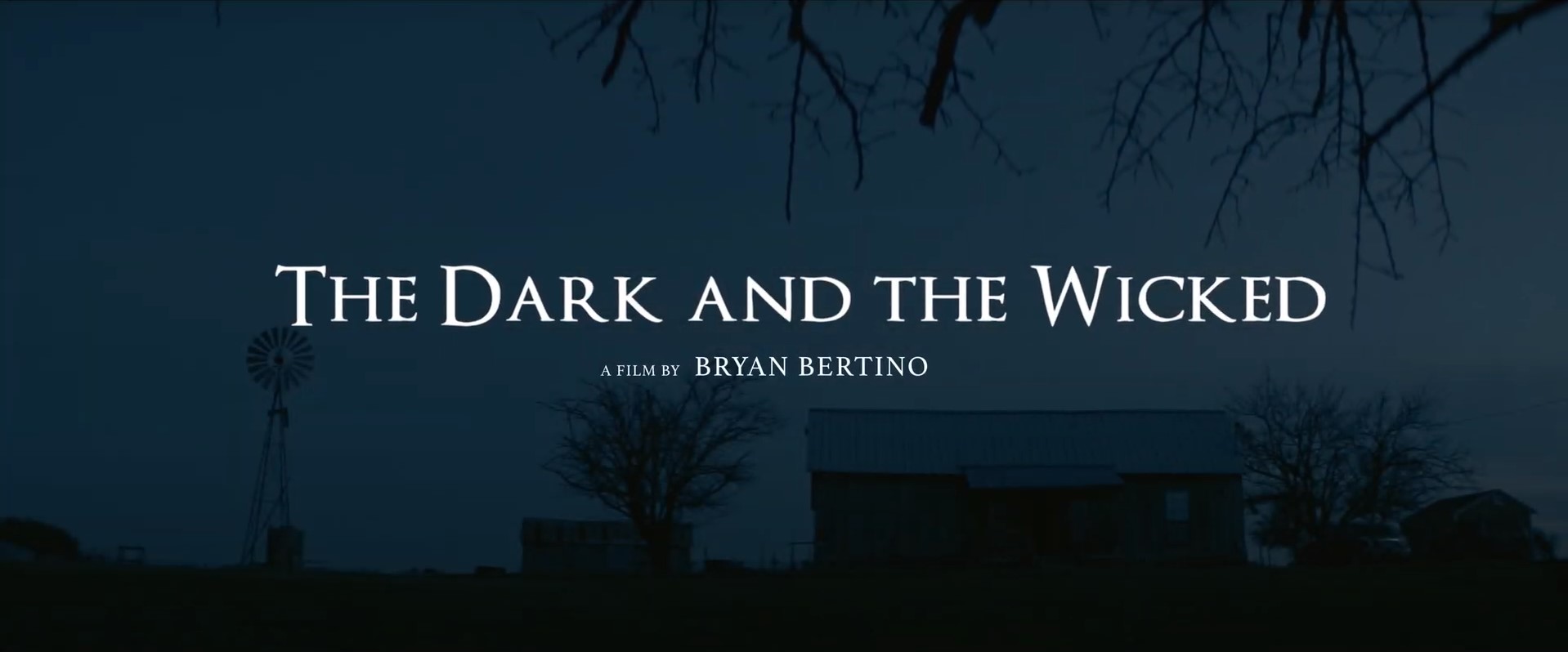
The battle grounds of losing oneself during the verge of loss has commonly been a recurrent topic amongst indie films.  For filmmaker Bryan Bertino, the concept feels deeply personal.  “The Strangers” and “Monster” writer-director’s latest discomforting horror film, “The Dark and the Wicked,” uses Devil speak in mass, detrimental volumes as an allegoric device for the internal deconstruction of family, capitalizing for his tale the use of his family’s rural Texas farm house written as a threatening locale of isolation and the tenebrous unknown.  “The Dark and the Wicked’s” paganistic undertones heavily perceive a dissipating family structure’s disconnect from not only God but from the community who has been all but absent from coming to the fictional Straker family aid.  The 2020 released film is produced by Bertino’s production company, Unbroken Pictures, alongside Shotgun Shack Pictures (“Hurt”), Traveling Picture Show Company (“The Blackcoat’s Daughter’), and in association with Inwood Road Films.

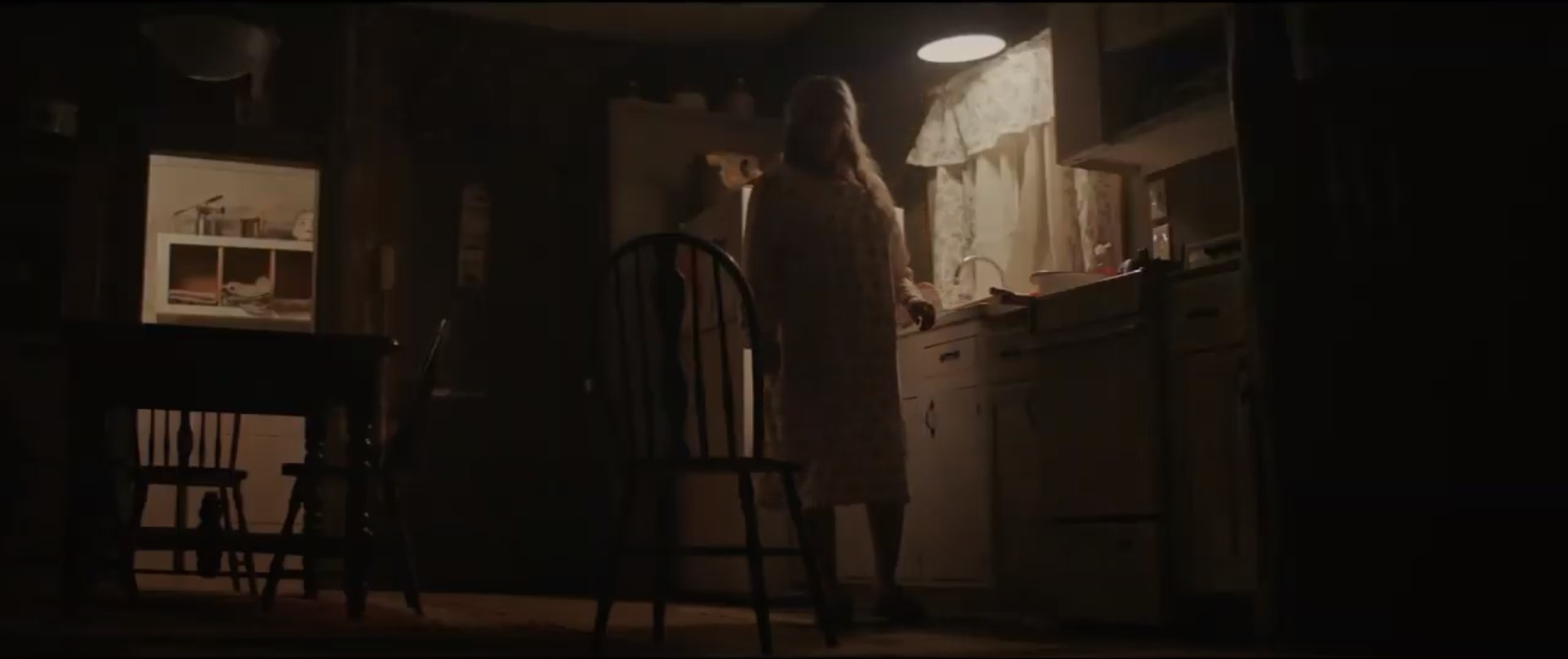
To play characters accustomed to the rural lands of the Texas outskirts, “The Dark and the Wicked” required a range submerged with leisurely movements, a Lonestar draw, and to, of course, look good in plaid and Wrangler jeans.  The cast that emerged was nothing short of spectacularly precise in fabricating the lives of remote lives rural Texans, opening with a Texas-born Julie Oliver-Touchstone (“Bounded by Evil”) sewing dresses in the barn, tending the farm’s goats, and chopping produced in her white nightgown as who will be the catalytic mother, Virginia Straker, that passes not only the 24-hour hospice care to her children but also all the beneath the light misery that drives her terrified.  The girth of the story revolves around, Louise, “The Umbrella Academy’s” Marin Ireland, and Michael, Michael Abbot Jr. from the upcoming “Hell House,” as sister and brother who return back home upon the news of their bedridden father (Michael Zagst).  At this point in the story, where we meet Louise and Michael for the first time, a shrouded background puts a delectable side dish of mystery into making them initially interesting, but over the course of the 96 minute runtime, the enigma dissolves around why Louise no longer works from the Postal Service and what’s stringently being shied away from the thick layered division between the siblings from being close to one another.  The impending standoffish goes unspoken, never comes to a head between them as like the unfolding of “The Strangers” where Liv Tyler and Scott Speedman unravel and expose their marital struggles with the invisible wall between them before, and even in the midst of, being terrorized.  There’s something there that isn’t being part of the exposition or coming back around when the Devil comes really calling for their father’s doomed soul.  Instead, Ireland and Abbot simply assimilate well enough into their falling into farm life dynamics as the sister who must shoulder the responsibility of hospice care and the brother overseeing what could be considered man’s work of handling the duties of raising livestock.   We also get some messed up supporting second fiddlers to execute Satan’s handywork with performances Lynn Andrews, Tom Nowicki (“Conjurer”), Mindy Raymond (“Bigfoot Wars”), and “The Walking Dead’s” Xander Berkeley channeling his best Julian Beck’s Kane performance as a sinister Priest making a house call.

Bryan Bertino has a stillness about his films. Their creepily quiet, stirred in a somber stew of macabre, and utterly deranged in a nihilist coating. What appeals to me about “The Dark and the Wicked,” as well as “The Strangers,” is Bertino’s gift to deliver powerful fatalist realism. His stories couple earthly family drama with otherworldly malevolence stemmed from the deeper affects of prolonged relationship breakdowns that literally assigns a demonizing blame on the supernatural for people’s own crumbling failings. Another aspect is the godless presence wholeheartedly felt throughout from the Straker’s loud and proud proclamation of atheism to the lack of religious artifacts. Michael nearly tosses the priest out of his keester just for making checking and noting his mother’s recent unbeknownst connection to God to which Michael took great offense. This leads into the Straker’s lack of community connection as they seemingly are adverse or are agonized by those who wish to help and those who rather seem them burn under the guise of the malice presence. Goats are thematically prevalent to the story, especially when the shadowy Wicked hides amongst the herd, like a wolf in sheep’s clothing. Goats are often associated with Pagan beliefs, such as with the deity Baphomet, and the evils marked upon them by cultures all around the world and by having the Straker farm be a goat farm is more than just coincidence. “The Dark and the Wicked” brings chaos and confusion much like any circumstances where one or both parents die and all the burdens, all the consequences, and all the pure emotional baggage that comes with death is passed to the children whether the Devil is involved or not. When broken down rudimentary that decline of hope and overwhelming grief can cause a great amount of destruction for any family and even extend to friends with suicide being heavily portrayed in the film. Bertino masterfully touches upon every collateral damage output leaving no one spared from death’s, the Devil’s, hopeless hold on them.

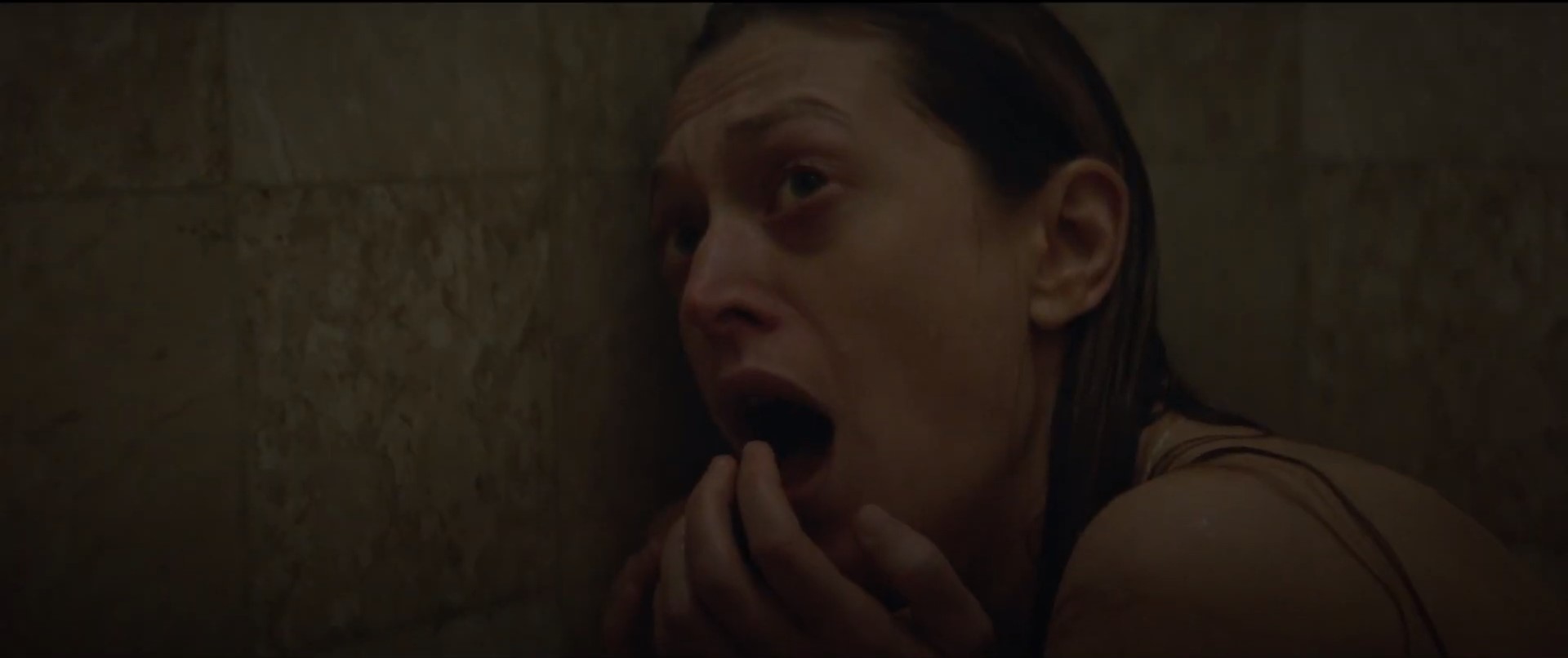
Filled with frightening imagery, plenty of toe-curling suspense, and a loud silence of utter despondency, “The Dark and the Wicked” is a must own for any horror fan and, luckily for you, Acorn Media International just released the Bryan Bertino film on Blu-ray in the UK in alliance with horror’s favorite streaming service, Shudder. Listed as region 2, but more accurately a region B in Blu-ray format, the PAL encoded release is presented in a widescreen 2.39:1 aspect ratio. If there was one word to describe the comprehensive picture that word would be dark. Bertino maintains an eclipsing cinematography through hard lighting, matted lifeless colors, and a reduction tint to give it that extra gloomy blackness. Cinematographer Tristan Nyby’s first collaboration with Bertino is also the first debut into the genre field and Nyby comes out on top with an ability to show just enough, whether through shallow focus or obscured wide shots to always keep the depth and range of the unknown factor alive and frightening. In regards to the Blu-ray quality, “The Dark and the Wicked” has little to offer in details not because of the lack there of but because much of the film is shot in the dark, a fine midnight black with little-to-no wish or noise, and dim lighting . Facial details do appear slightly soft as you can’t make out the blemishes or even skin pores, but the intentional flat coloring steers much of that away from the senses. The English language DTS-HD Master Audio 5.1 surround sound is a boost of jumpscare ambient effects. The range and depth finely pitch the position of well-timed scares, especially when the strung together bottles, glasses, and cans rattle in a discordance. Dialogue has lossy muster that makes discerning characters’, especially Michael or his mother, Virginia’s, Southern draw. English subtitles are optional. Special features include only a Fantasia Q&A with actors Merin Ireland and Michael Abbott Jr that dive into their characters quite a bit and into Bertino’s morose mindset. Bleak and genuinely personal on a whole other level, “The Dark and the Wicked” is quintessential truth when talking about the Bryan Bertino Americana horror film and, believe you me, expect more devilish descriptors that’ll shock you.

Once You Let EVIL In, EVIL Will Never Let Go. “The Babadook” reviewed! (Second Sight Films / Blu-ray Screener)


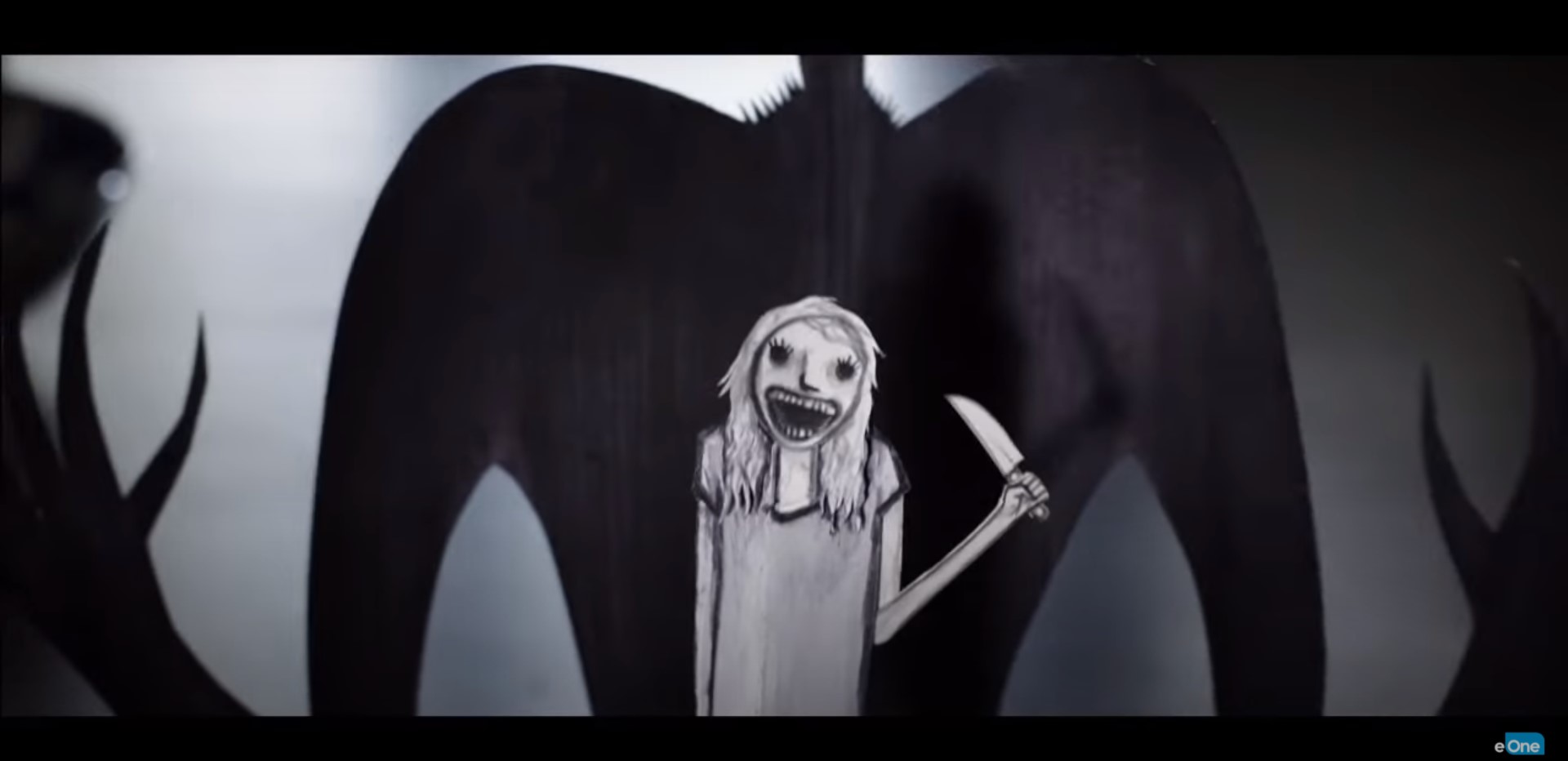
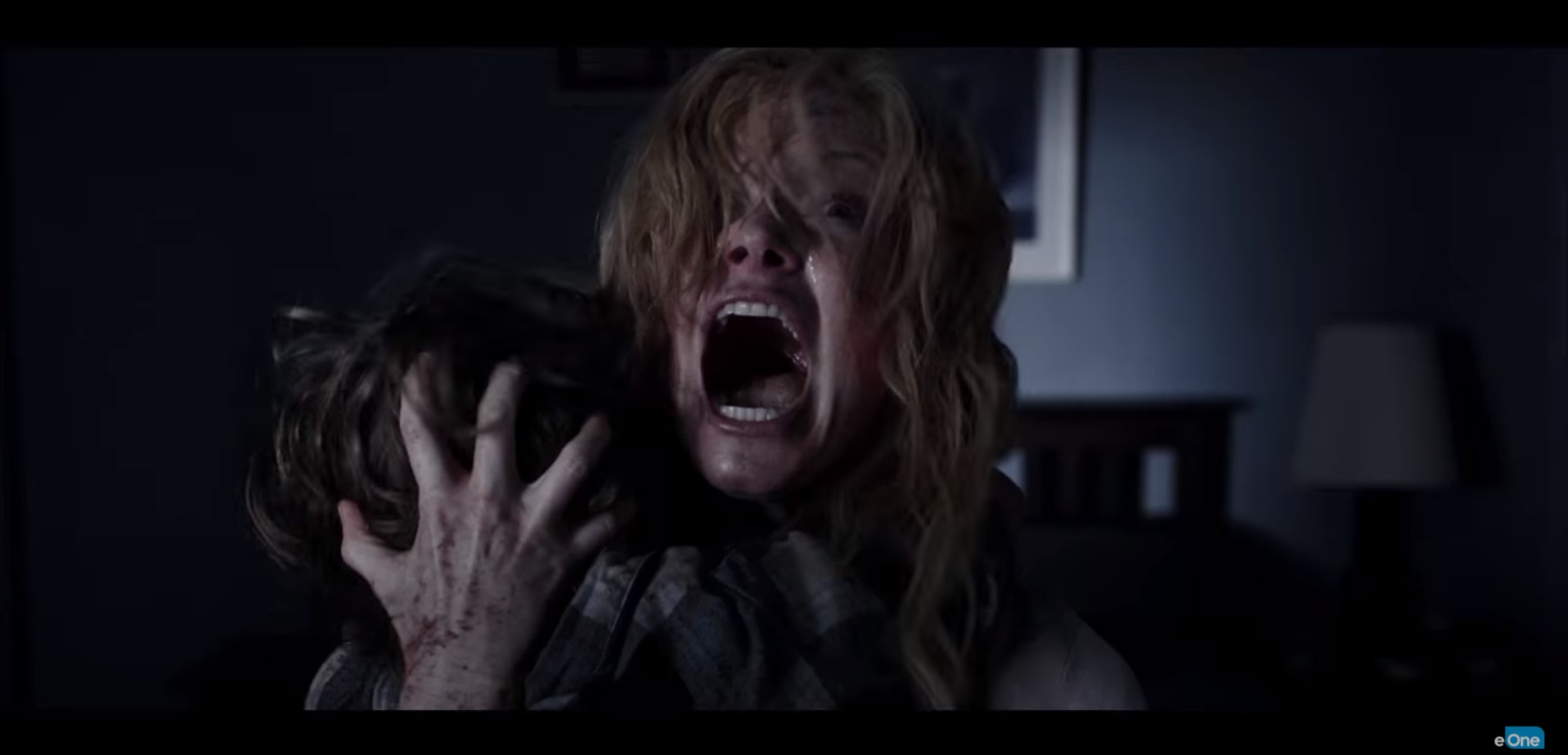
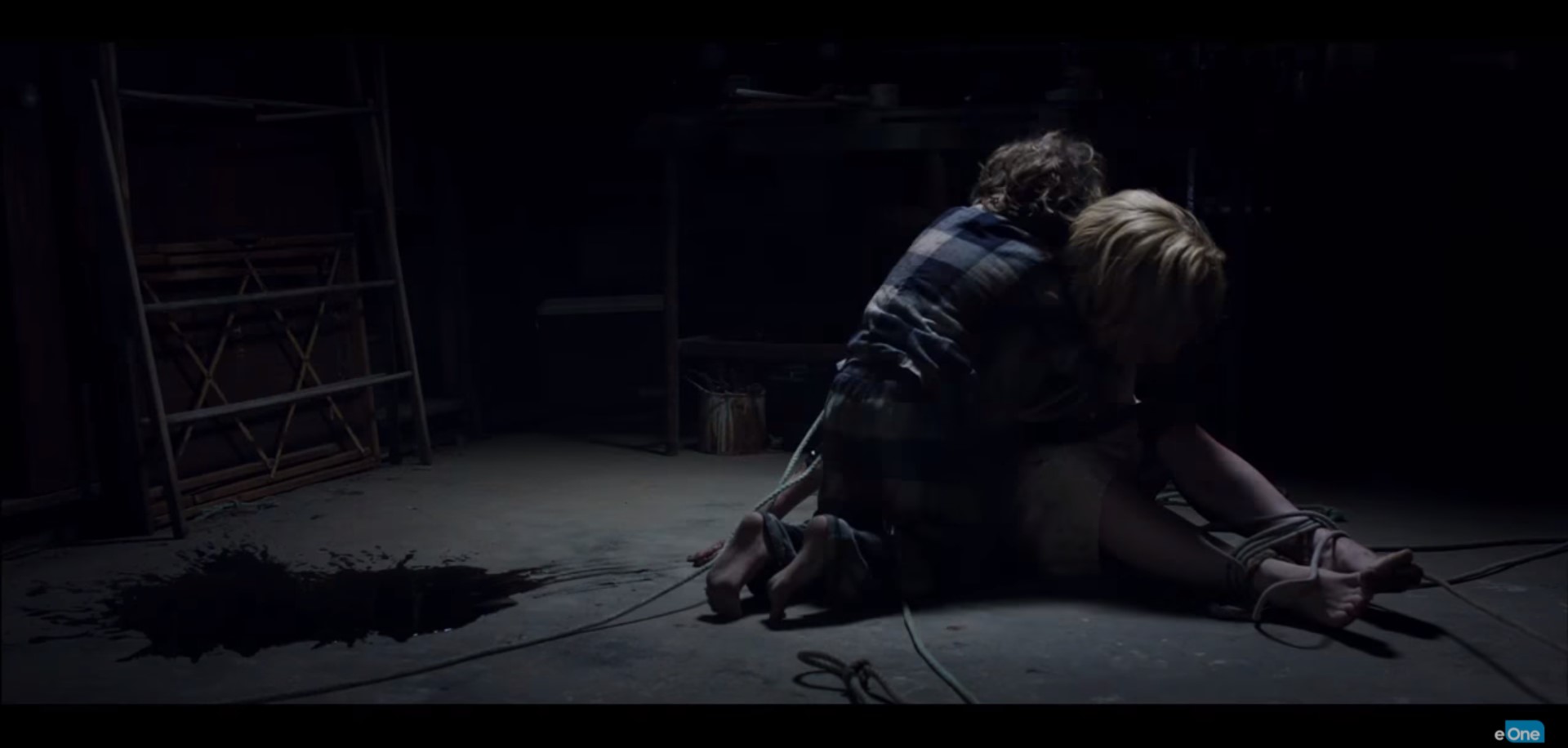
Stage set six years after a car accident involving the death of her husband, single mother Amelia and her difficult six-year-old son, Samuel, struggle to find a harmonious balance in their mother-son relationship.  Samuel’s outbursts and aggressive behaviors deflate the boy’s sometimes sweet nature that has oppressed Amelia into her wits end, alienating her from connecting with other people, even her own sister.  For days Amelia can’t sleep as the stress mounds and Samuel’s erratic temperament continues to worsen, especially when Samuel discovers a mysterious book from the shelf entitled Mister Babadook.  A book he can’t shake from his mind.  The frightening book, filled with graphic imagery and popups, tells of an ominous, dark figure eager to be let into their lives and when the Babadook presence lurks from the pages to reality, hiding in the darkest corners of their home and leeching on the strained anxiety and fear, Amelia and Samuel must rely on each other to wade out the Babadook’s horrible wretchedness only to realize that the way to stop from succumbing to the Babadook’s wrath is to face it head on. 

I can not believe that nearly 7 years has gone by and I have not once sat with a viewing of Jennifer Kent’s “The Babadook.”  Well, luckily for me, genre UK curator and distributor Second Sight Films is releasing the golden egg of limited edition 4K UHD/Bluray sets and was able to snag a screener for review!  The Australian film is an emotionally complex and enormously identifiable thriller that demonizes the post-death states of those dealing with loss and struggling to live on tasked with what’s typically a two person responsibility of mutual support and care.  Kent, who wrote and directed the film, expands upon her original 2005 short entitled “Monster,” by keeping the wrenching core that close in tighter and tighter on the mother and son while upping the visual and audio stylistic elements to make an immersive sympathetic undergo and not just an empathetic one.  “The Babadook” is a production of a conglomerate of companies, including Screen Australia, Causeway Films, Smoking Gun Productions, The South Australian Film Corporation, and Entertainment One and is produced by “Cargo’s” Kristina Ceyton and Jeff Harrison along with “The 13th House’s” Kristian Moliere.

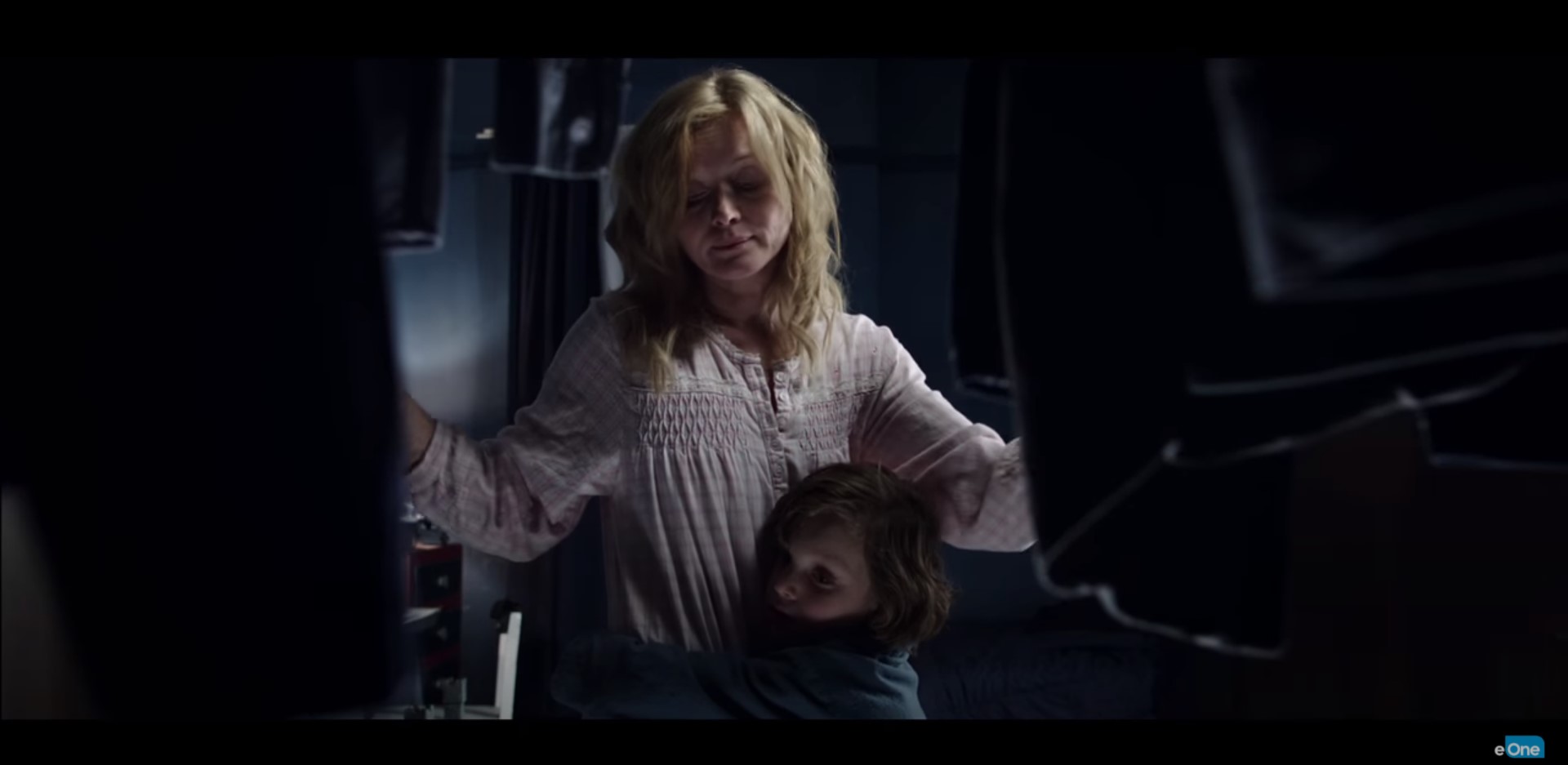
Tackling these performances of a suppressed grief-stricken mother on the edge of snapping and a young boy growing up without a father and innocently oblivious to his own autistic like behavioral issues come with layers upon layers of character depth and, in my firm opinion, Essie Davis and Noah Wiseman crush the roles with a heartbreaking dynamic.   “The Matrix Reloaded” and “Revolutions” star Davis has a tangible wearied performance of a single parent with no one to turn to for help as your unconditional love for her troubled son runs on fumes, dangerously low without an outlet for support, encouragement, or relief.  Samuel has more familiarity in the genre as a relatively new trope, an autistic child that becomes intertwined with a wicked presence that has popped up more recent films, such as Jacob Chase’s “Come Play” and Greg McLean’s “The Darkness,”  as researches learn more about autism and society has been able to authenticate the condition over the years.  The debut feature performance from young Noah Wiseman can get under-your-skin being a restless busy body, a screeching backseat thrasher, and a poke and prod child in constant need of attention, but Noah is able to switch right into a sweet natured young boy with lots of wonderment and love for his mother.  Noah’s inventive, creative, and has a knack for self-preservation when dealing with a looming evil hungry for his fearful submission but because Noah is different from other children, he’s society labeled “disadvantage” is actually advantage, a tool for survival, that keeps him fixated on what’s important.  Focally attuned to just Amelia and Samuel in the story, the film barely registers the supporting cast that rounds out with Hayley McElhinney, Daniel Henshall, Barbara West, and Tim Purcell as the obscured Babadook.

Right from the opening scene, director Jennifer Kent instills a visually stylish premise geared to layer Amelia’s troubled mindset with an etherealized environment nightmare of her husband’s tragic death followed with the reality-grounding energy drain of raising single-handedly a difficult child and the rest of Amelia’s social bubble imploding without a sense of compassion.  From Samuel’s school to her own sister, Amelia is bombarded with delineation of Samuel’s behavior, riddling her psyche with shot after shot of disparaging remarks compounded upon a lingering pain that goes all the way back to her husband’s death nearly seven years ago and to which she subconsciously assigns Samuel blame.  Culminating to a head on Samuel’s birthday, the exact same date of her husband’s death, is a flood of weary and breakdown overtaking Amelia’s last bit of hope for her child and for herself.  This manifests an internalized darkness protruding out into the exterior in the form of Mister Babadook, the embodiment of grief pent up and let loose, feeding off Amelia’s exhaustion and malevolently possessing her being to want to do the worst possible thing overly stressed and repressed parents can do – take out their pain on their children.  Kent masterfully crafts symbolizing grief as an atypical presence of our normal selves.  The sheer amount of dimly lit negative space for the Babadook lying in waiting goes not to waste as when you think something is there, perhaps the Babadook, nothing actually materializes from the ominous shadows, but, in the realm of the story’s reality, that sensation of feeling a presence in the room with you is beyond a tauten tangibility and Kent, playing with that construct, adds stomach knotting audible cues, a guttural discordance, that narrow the eyes, pull the covers over the head, and have you wait with bated breath.

Let the “The Babadook” in with Second Sight Films’ 3-disc limited edition dual formatted, region free 4K UHD and region B Blu-ray, release arriving in the UK on June 21st.  The 4K presentation, an upscaled 2160p, is mastered by the original post production facility and presented in a 10-bit HDR10.  Both 4K and Blu-ray have an aspect ratio of 2.35:1 widescreen.  Audio options include the an English language DTS-HD master audio 5.1 and an English LPCM 2.0, complete with perplexing creature roaring soundbites from the original Resident Evil game on PlayStation.  Since only a screener disc was provided for this review, I am unable to comment on the exact quality of the release’s audio and video outputs; however, the rigid slipcase, with artwork from Peter Diamond, sheaths an abundance of special features, including a new audio commentary by Alexandra Heller-Nicholas and Josh Nelson, “This is My House!” – an interview with lead actress Essie Davis working with the cast and crew as well as her impressions of the story, “The Sister:  Interview with Hayley McElhinney” who talks about her character’s uncompassionate sibling role, and interviews with producers Kristina Ceyton and Kristian Moliere, editor Simon Njoo, production designer Alex Homes, composer Jud Kurzel, and book illustrator of Mister Babadook Alexander Juhasz.  The release also comes with Jennifer Kent’s inspirational short film, “Monster,” the making-off “”They Call Him Mister Babadook,” featurette about production design and set location in “There’s No Place Like Home:  Creating the House,” special effects talk about the sole stabbing scene, segment on stunt work, “Illustrating Evil: Creating the Book” that was illustrated by Alexander Juhasz, and a 150-page hardback book with brand new essays, an achieved interview with the director, concept illustrations, and behind the scenes photos  and collectors’ art cards that were not included with the screener.   Broodingly topical and harrowingly acted with perfection, “The Babadook” is the epithet for silent deadly threats, squirrelled and suppressed away by innate survival instincts only to be a subsonic explosion when the unstable psyche’s flashing point is sparked. 

A Security Guard’s Terrifying Dance With EVIL in the “Morgue” reviewed! (Blu-ray / Well Go USA Entertainment)

After fleeing a hit and run on his way to his girlfriend’s house, night security guard Diego Martinez is called to work a shift at the hospital morgue later that evening.  Seemingly showing very little concern for what transpired earlier, Diego goes through the motions of the night, checking doors and making sure the area is locked up tight and secure.  When a pursuit of a vagrant ends with Diego trapped inside the eight table slab morgue, he comes face-to-face with the malevolent paranormal in a terrifying night of survival.   Could what be happening to the scared night security be connected to the pedestrian he hit with his car or the transcendence of a purgatory afterlife from those who pass through the morgue without a pulse? 

“Morgue” is the Paraguayan poltergeist and purgatory thriller of high anxiety and tenebrific atmosphere proportions from the introductory feature film directorial debut of Hugo Cardozo.  The 2019 released horror film, which only recently made Stateside debut onto home video, is supposedly based on real events and written and produced for the silver screen by Cardozo and not only does the filmmaker showcase a hair-raising fright of a foreign film, “Morgue” also highlights the intrinsic South American infostructure and societal norms that’ll certainly be eye-catching details and differences to audiences from Paraguay’s northern neighbors.  From the Toyota Hillux trucks that are not sold in the U.S., to the wheel valve toilet flushes, to the open plaza compounds, “Morgue” is a down-to-Earth Latin American production that offers no unrepresentative notional misconceptions of other parts of the world.  Trust me, I’ve been to South America and to me, the city framework is authentic to the location.   With the support of FilmSharks’ subsidiary, The Remake Co., and HJ (Hugo Javier) Producciónes, a music video and film production company, “Morgue” is filmed in the district city of Encarnación, the capital city of Itapúa in Paraguay. 

Much of the story lands on poor Diego Martinez’s shoulders.  A cheapskate and a bit of an overall scoundrel, Martinez’s loafing life only has one thing going for it, his doting girlfriend who keeps him on thin ice because of his wandering eye and penchant for breaking promises.  Pablo Martinez has no problem playing a fool in Diego’s pitiful life as the actor shifts right into being indolent young man driving a beat-up jalopy and steel shavers just to keep ups his groomed look.  On the job, Pablo Martinez has to shift postures to a more diligent security guard which, for a character already established in a foundation without throwing down a trickster trope card, creates an uneasiness and a sense of empathy for Diego during his otherworldly ordeal as he follows his duties without much messing around.  Martinez, in both the character and actor, radiates fear once the tables turn and he realizes what he’s up against isn’t human or in figment of his imagination.  Or is it?  The role is written with some ambiguity on whether his experience might be guilt induced, but that’s for you, the audience, to decide.  “Morgue’s” one man show fleshes out with some strong supporting performances from Francisco Ayala, Willi Villalba, María del Mar Fernández, Abel Martínez, and Raúl Rotela.

Not many horror films hecho en Paraguay come across our screener desk; in fact, Cardozo’s “Morgue” is probably the first from the country and not too sound like a stuffy harsh critic, but I wouldn’t exactly say I’m more than pleasantly surprised by the overall design; yet,  I’m not not impressed either.  The middle of the road impression balances the bone-shivering atmospherics of a dark and tightly confining morgue where mischievous spirits seriously terrorize and toy with Diego’s physical and mental being with an about-face in Diego nonchalant behaviors and the established and recognized grim tone Cardozo slowly builds around the bonehead protagonist quickly fades at the very tail end with cheesy special effects and unfitting Latin rock music.  Without going too much into spoiler details, “Morgue” strongly reminds me of some elements of the “Creepshow 2” segment, “The Hitch-Hiker,” blended with Ore Bornedal’s “Nightwatch” while being stuffed with paranormal psychotic-nightmare fuel straight into the guts of story for gaslighting a terrified response.  The slow burn beginning might seethe a few eager to dive right into the you can’t-spell-pandemonium-without-demon action, but does set up perfectly, in a few suppressed laughs kind of way, Diego’s series of events that serve as a bread crumb trail to his frightening ordeal.  Cardozo utilizes various shooting techniques, many stunningly achieved in the manipulation of the film, to capture Diego’s fear and hikes the tension to a bite your lip in suspense level that’s well deserved. 

Light and spooky, “Morgue” is a lean, shivering supernatural story machine released onto digital and Blu-ray courtesy of Well Go USA Entertainment this past May.  The not rated, single-layered AVC encoded disc, 1080p Blu-ray is presented in a widescreen 16:9 aspect ratio, has a runtime of approx. 81 minutes, and has a region A playback. Director of photography, Blas Guerrero, discerns a softer touch that you can more or less notice around Diego’s face as the details are not as fine, but the deep blue and purples hued tints (and other lightly used color grades) and lighting make for elevated stellar direction toward the things that go bump in the morgue at night. Cardozo employs closed circuit cameras, extreme closeups, sped up playback, and a nifty deep focus of indiscernible corporeal silhouettes that is just creepy in itself. The Spanish and Guarani DTS-HD 5.1 Master Audio track has little to muster in the dialogue department with Diego having very little interaction with others, such as his girlfriend through a video call or the night guard he’s relieving, but the dialogue track does come through clearly. The captioning is synched well with no obvious errors aside for some translational preferences from Spanish to English. Catered to be a startling romp, “Morgue” is heavy on the ambient LFE effects that do a nice job filtering through and landing the desired whip-in scare and then quiet again, resetting for the next go around. In the background, there is a slight engine-esque hum throughout and I thought maybe it’s presence was just in the Morgue, the rumbling spans the almost the entire duration of the story and doesn’t seem to be emanating from the dialogue track. Bluntly, the Blu-ray release lacks bonus features with only a theatrical trailer along with preview trailers before the film. The physical release does have a cardboard slipcover but of the same images and stills as the snapcase. A good time can be had with “Morgue’s” karma emerged psychological torment of one man and the spooky energy swarmed in shadows and dodgy point of views that solidifies Cardozo’s Paraguayan thriller as a rival to most name brand counterparts, but because of the ending that kills the entire mood of “Morgue’s” misery lashing, that bad taste of an anticlimactic drop off finale cuts far deeper than expected.

“Morgue” Blu-ray is on sale now at Amazon.com!

Do You Know Why EVIL is Fun the Life of the Party? Because He’s a Fungi! “Gaia” reviewed! (Decal / Digital Screener)


Checking and repairing motion capturing surveillance cameras in one of the last untouched forests in the world, a park ranger becomes severely injured while tracking a downed drone.  She finds herself in the company of a nature survivalist, a father and son, living outside the means of the modern world and becoming acolytes to waking entity underneath the forest ground, sprouting up and assimilating the living organisms topside, including people, into spore-growth mutated creatures.  Despite the father and son’s devotion to the being, essentially integrating themselves seemingly uninfected by the airborne spores, they avoid the blind drones who hunt by sound and the survivalist know most of the tricks in the book to dodge their incessant wrath, but the ranger brings new dangers to their sanctuary forest home being an outside influence on the son who takes a keen fascination to her beauty as well as instill in him an interest beyond the edge of the wilderness.  Battling two fronts and keep his devotion to the ancient being, the father must do anything in his power to avoid the corruption of his son even if that means making a sacrificial pact with his God. 

If you dug unearthing Ben Wheatley’s “In the Earth” that released earlier this year, then travel from the United Kingdom to South Africa and definitely follow up with another subterranean deity at the crust of breaking through to our plane of existence with Jaco Bouwer’s nature versus man, out of body experience, thriller “Gaia.”  “Gaia,” from Greek mythology is one of the primordial deities of Earth, plays on themes of youth into adulthood, the parental struggles of children leaving home, and the dangers of a forgotten and neglected nature from a script from South American screenwriter Tertius Kapp, collaborating once again with Bouwer after their work in their respective roles on the crime horror series “Die Spreeus.”  Filmed in the Tsitsikamma forest of South Africa, “Gaia” is a production of the new Film Initiative Africa company in partnership with kykNet Films.

With only less than a handful of actors, four to be exact, the characters are quickly overshadowed and swallowed by the dense growth of an uncultivated forest.  Couple that with an insidious fungi that unhurriedly alters the exposed with toadstools and mushrooms shoots growing from the inside out onto their skin and face until they’re a part of the forest or a syncytial creature and you have an isolating setting of dichotomized terror between the beauty of nature’s miracle and it frighteningly growing right on your forehead. The story opens with park rangers Gabi (“Die Spreeus'” Monique Rockman) and her more playfully cautious partner Winston (Anthony Oseyeme, South African television’s “The Dead Places”) kayaking down river with Gabi using a drone to scout the forest ahead. Eventually, Gabi and Winston become separated because Gabi feels compelled to track down the downed drone alone and Winston bumbles the his watertight inappropriate walkie-talkie right into the river, making it useless and easily setting up obstacles to make reinstating their partnership extremely difficult in a forest that’s literally trying to eat them so to speak. This is where Gabi encounters the austere father and son living on dogma Gabi has yet to be schooled until the pundit father, Berend (“Blood Drive’s” Carel Nel), educates her on him and his son vocation, the forest deity, and, eventually, her own fate. Berend’s son Stefan (Alex van Dyk) is a child raised in the thicket, lamed by his father about the outside world because of his own insecurities. Nel and van Dyk are charismatically mysterious snaking themselves through the woods as one unit and ping well of each other in silent action as they collect spores and set primitive traps. Only when Gabi becomes an inadvertent wedge that lights a small flame of interest under Stefan, who’s at the edge of adulthood as a young man with hormones and a sense of wonder, does Nel and van Dyk begin to dissolve the father and son union that turns into a love triangle, of sorts, to which no parent will ever win when it comes to new and shiny objects and a sexual drive bigger than any spirit dwelling forest.

“Gaia’s” disturbing and omnipresent world imagery creates thought-provoking allegory of nature fighting back against the rapid infestation known as people.  As mankind creeps closer to the borders of naturally preserved habitats, singeing ancient ecosystems with deforestation and various grades of Earth withering pollution, the idea that a planet has a champion of defense, eager to rid the land of detrimental flesh and bone with a fungus cleanse, in an unseen mythological terrestrial being personified as this worshipped-by-few deity is great creative story telling. Paralleling the concept is a secondary of dynamics, the growth of life within the destruction of life. Stefan is nothing more than a boy without knowledge beyond the forest limits until he meets an resident of that outside world with the power to influence and we all know beautiful women have this mystifying power of young men. While Berend sees corruption, a tainting of purity that is his son, Gabi depicts more than just an aesthetic influencer and good-doer eager to save a boy from an unadorned existence, she is also the full-bodied, well-endowed representation of everything persuasive to impressionable minds. Bouwer works the characters interactions inside an imagery soup that bob with meat chunks, that gleam off the edges of rigid noodles, under a milky broth that looks so unnatural that only nature can be the very architect of it’s organic design. The hallucinations, the nightmares, the floating, hazy spores douse the senses, the psyche, with undiluted uneasiness and that’s Bouwer’s defining moment with a trip down a rabbit hole made with cautionary tale fibers too unreal and fantastical to forget.

Part ecological horror, part posture on pollution, and part Biblical narrative with The Binding of Isaac, “Gaia’s” value is as immensely somber as it is scary. “Gaia” is planned to be unearthed to the public exclusively in theaters on June 18th and everywhere digitally one week later, June 25th, as the inaugural feature from the new distribution company, Decal. Jorrie van der Walt’s eye for contrast and distressing imagery is enriching to a soul hungry for the subtle and striking caliginous brink of apocalypses. Bordering pure performance art tinged with intense closeups, Walt easily interchanges the grand forest presence with tight personal trepidation as if nothing else in the world was as important as that exact moment, as you’ll see in the screenshots. The digital effects coupled with the makeup work tilts more to a less textured desire, but integrates well enough into the madness of phantasmagoria. “Gaia” is beautifully shot, edited, acted, written, and directed as a pondering piece for the reality of Anthropocene principles rooted by elemental horror.