Feeding Off on the Evil Energy! “The House on Pine Street” review!

the-house-on-pine-street

Married couple Jennifer and Luke move to Jennifer’s small hometown in Kansas suburbia after an incident with Jennifer’s pregnancy at their city home in Chicago causes concern for the baby from both Luke and Jennifer’s mother Meredith. Feeling not at home and isolated, Jennifer quickly detaches herself from everyone around her, but when spooky occurrences start to slowly reveal in their new home, Jennifer desperately needs her family and friends to eagerly believe that the house is haunted. When everything firmly believes that Jennifer might be suffering from another pregnancy episode like in Chicago, the young woman experiences a psychological horror that drives her into a blurred line of what’s she seeing is either frighteningly real or a nightmarish psychosis.
vlcsnap-2016-01-13-21h48m33s9
“The House on Pine Street” is a chilling, effective thriller helmed by twin brothers Aaron and Austin Keeling, who both also co-wrote the film with newcomer Natalie Jones. The Keeling twins, along with numerous short film cinematographer Juan Sebastian Baron, were able to capture alluring framing and uncomfortable camera angles, consisting of the use of medium and close up shots, that suit the film’s unsettling and haunting nature. The poetic beauty of the vibrant exterior contrasted with the bleak and rundown features inside the Luke and Jennifer’s home tell the harrowing story of where the dread begins and lingers to languish and the brothers were really able to set the entire pace of the film, prolonging out the story’s suspense, and able to create an engaging tale within about a two month time spatial difference and have it laid out logically.
vlcsnap-2016-01-13-21h27m55s176
Aside from the obviously talented crew, the phenomenal cast ranks this lesser known 2015 ghost film near the top. Emily Goss embodies Jennifer’s loneliness and fear through the subjection of constant ghastly occurrences. Whereas Jennifer’s husband Luke played by Taylor Bottles, even with the slick and enduring hipster hairdo, feeds off Goss’s non compos mentis situation, making the character Jennifer drown in darkness without any compassion. Personally, Jim Korinke captured my favorite performance as the neighborly quasi medium. With no acting credit to his name, Korinke’s ability to keep up and maintain with a younger, more experienced acting talent is beyond remarkable on screen and fun to watch.
vlcsnap-2016-01-13-21h46m09s114
Much like the film’s generic title, the story is simplistic; however, the story is without a mind blowing twist which most of Hollywood gets off on. “The House on Pine Street” speaks in underlining messages. The motif of energy keeps reoccurring throughout much of the plot, sparking the conversation that negative or positive energy will be the inevitable karma influence. If a person emits negative energy, bad juju will be the result and visa versa. While the story hovers around Jennifer’s locus, her negative, pessimistic attitude contributes to the tribulations toward other characters. The Keelings were able to subtly convey the energy message without being blatant and expositive.
output_ybEM1X
“The House on Pine Street” works and works well regardless of the overused and lackluster title that has become more repetitive and an unfortunate eyesore to those scouring the retail racks, looking for an engaging thriller, but the Keeling duo are a pair of cinema prodigy twins, who with the right cast and crew can take a smaller project, like this, and polish it into gold. Second Sight distribution is set to release this spin-chilling “The House on Pine Street” thriller onto DVD home video in the UK on February 1st. Just in case you’re not completely sold, take it from me that goosebumps will occupy every inch if your chilled flesh when watching in the dark and the light.
Evil Can’t Be Contained. “Captive” review!

dT1hSFIwY0Rvdkx6TmpMV2R0ZUdOdmJTMWljeTV6WlhKMlpYSXViR0Z1TDIxaGFXd3ZZMnhwWlc1MEwybHVkR1Z5Ym1Gc0wyRjBkR0ZqYUcxbGJuUXZaRzkzYm14dllXUXZkR0YwZERCZk1TMHRMWFJ0WVdreE5ESTJNREJrWlRjMk5EY3pZamc1TzJwelpYTnphVzl1YVdROU9FWkNNVUV4Tnprd1JEVTNOakJHTkRneE1
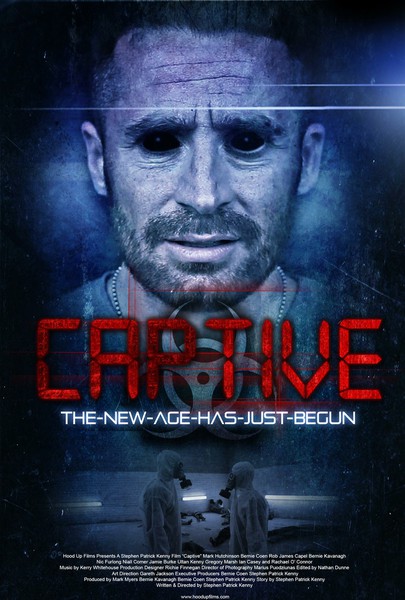
Twelve strangers awake confused and scared in a desolated and impenetrable shed. Suspicion surrounds their bafflement as they attempt to determine the reason for their captivity and who is behind it. Suddenly, a phone rings and the testing begins. The voice on the other end of the line wants something and if the twelve captives don’t comply or fail to deliver, the secretly injected virus previously pumped into them during their unconscious state will transform them into blood thirsty, demon-like creatures and fatally strike them down within 24 hours. If they attempt to escape, they will be shot down. In addition to the already extreme situation, relentless ambient gunfire and explosions rock the world outside the shed walls. The only way out, to survive the whole ideal, is to abide by their captors rules and be the last one left alive.
dT1hSFIwY0Rvdkx6TmpMV2R0ZUdOdmJTMWljeTV6WlhKMlpYSXViR0Z1TDIxaGFXd3ZZMnhwWlc1MEwybHVkR1Z5Ym1Gc0wyRjBkR0ZqYUcxbGJuUXZaRzkzYm14dllXUXZkR0YwZERCZk1pMHRMWFJ0WVdreE5ESTJNREJrWlRjMk5EY3pZamc1TzJwelpYTnphVzl1YVdROU9FWkNNVUV4Tnprd1JEVTNOakJHTkRneE1
The notion of the inability to escape is an anxiety-filled fear all can relate toward; in fact, many may have had the suffocating buried 6-feet under in a pine wooden box nightmare that induces shortness of breath and sweat on the brow – I know I have. Writer-director Stephen Patrick Kenny’s film “Captive” attempts to relay that fear on a grander scale with the twelve strangers trapped inside a shed at an unknown location – the equivalent to that “pine wooden box.” The scenario puts the audience in the shoes of the characters, who are also asking themselves numerous questions that race through their minds. Why am I here? Who did this to me? What’s going on? With each turn of a minute, the questions are slowly answered, whether the characters would favor the answer or not. However, the audience is acute to a little bit more information then the twelve unlucky souls. Information, such as the two men in hazard suits placing their limp bodies into the shed and from the black title cards used to formally announce the death of each character, that a type of brutish test is being conducted and that takes the audience out from the unknown and into a solely voyeuristic perspective.
dT1hSFIwY0Rvdkx6TmpMV2R0ZUdOdmJTMWljeTV6WlhKMlpYSXViR0Z1TDIxaGFXd3ZZMnhwWlc1MEwybHVkR1Z5Ym1Gc0wyRjBkR0ZqYUcxbGJuUXZaRzkzYm14dllXUXZkR0YwZERCZk5pMHRMWFJ0WVdreE5ESTJNREJrWlRjMk5EY3pZamc1TzJwelpYTnphVzl1YVdROU9FWkNNVUV4Tnprd1JEVTNOakJHTkRneE1
Being voyeuristic should entitle all to witness the end result of the twelve players involved, but, unfortunately, we become just as clueless and lost toward the characters’ fate and the situation around them. This hybrid role of the audience, whether we’re a part of the situation or an outside party, aches and pains the logical and rational portions of the mind. In Kenny’s sophomore film, characters come and go, Houdini-like, in and out of the story without much explanation and the same can be said about their deaths. In a tail end scene, a character is alive and in the next scene, the character’s sprawled out on the floor…dead. The kill shot, the smoking gun, are omitted. A limited budget, poor editing techniques, and use of stock sound effects result in this crude determination of characters’ final destination and leave gaping holes that sour the story’s appeal.
dT1hSFIwY0Rvdkx6TmpMV2R0ZUdOdmJTMWljeTV6WlhKMlpYSXViR0Z1TDIxaGFXd3ZZMnhwWlc1MEwybHVkR1Z5Ym1Gc0wyRjBkR0ZqYUcxbGJuUXZaRzkzYm14dllXUXZkR0YwZERCZk5DMHRMWFJ0WVdreE5ESTJNREJrWlRjMk5EY3pZamc1TzJwelpYTnphVzl1YVdROU9FWkNNVUV4Tnprd1JEVTNOakJHTkRneE1
The director’s style is visually comparable to the outer stories of a modern day video game plot without the enjoyable interactive game play. Stocked with a heavily hazy blue tint that sears into your vision, paper mache like special effects and graphics, and black title cards that act as chapters to each character’s demise path, “Captive” is more similar to a video game than a film. What’s also concerning is the lack of character development of any kind note worthy of virtue or quality. The Kenny script focuses more on the title cards rather than structuring a coherent story on the basis of solid characters and, sadly, each character is hindered from any sympathy or concern.; in fact, numerous characters quickly become dispatched within a smidgen of their awakening and if you blink, you’ll even miss their scenes. The actors, majority a cast that has had a working relationship with Kenny, don’t quite sell film as the performances are rigid and forced upon deliveries and reactions toward their hand dealt goes unnaturally and uncouth.
dT1hSFIwY0Rvdkx6TmpMV2R0ZUdOdmJTMWljeTV6WlhKMlpYSXViR0Z1TDIxaGFXd3ZZMnhwWlc1MEwybHVkR1Z5Ym1Gc0wyRjBkR0ZqYUcxbGJuUXZaRzkzYm14dllXUXZkR0YwZERCZk5TMHRMWFJ0WVdreE5ESTJNREJrWlRjMk5EY3pZamc1TzJwelpYTnphVzl1YVdROU9FWkNNVUV4Tnprd1JEVTNOakJHTkRneE1
Even though many flaws plague Kenny’s film, I’m glad to see horror out of Ireland has not completely been forgotten. However, I’m just not seeing much heart or creativity behind “Captive” and the hopes were high going into the film after watching a vigorous trailer that displayed promising non-stop “demon” horror, suspense, and ultra-violence. None of those attributes made the final cut, I suppose, marking Stephen Patrick Kenny’s and Hoodup Film’s Sci-Fi horror-thriller “Captive” not superbly captivating.

Evil Lies and Waits Under A Blanket of Amnesia! “Deadly Revisions” review!

output_w4KTBL
Popular horror screenwriter Grafton Torn wakes up screaming in a hospital room and suffering from amnesia, unable to recall how he ended up lying face down at the bottom of his stairs. His special effects friend, Deter, offers Grafton his woodsy cabin, isolated from town, to relax from the extreme nightmares that plague him. Soon Grafton’s nightmares become a blur between dream and reality, constantly causing him to question his sanity when movie prop objects go missing, unexplainable mental blackouts, and visions of people brutally murdered. Grafton must sift through the bitter memories of his separation with his wife Cat and ghastly manifestations of horror to seek the truth of his insanity or he’ll die trying.
vlcsnap-2015-12-31-23h59m48s177
I spent my New Years Eve night with Bill Oberst Jr. and his performance in the horror-thriller “Deadly Revisions” was better than gazing at explosively colorful fireworks. While the rest of the drunkard world partied stupidly away, counting down the year’s end, “Deadly Revisions” had been summoning me with a familiar “Evil Dead” cabin in the ominous woods gracing the front cover art. Honestly, I wasn’t expecting much from the Gregory Blair directed film because of the SGL Entertainment distribution company whom usually acquires and distributes low-end independent horror that’s generally amiss favorably. And even though that ominous front cover cabin in the woods wasn’t exactly ominous in the actual movie, this SGL production deemed to be a diamond in the most dirtiest of roughs; a shining example proving that all is not what is seems.
vlcsnap-2015-12-31-23h23m37s218
Just the mere name Grafton Torn sounds like name of a Bill Oberst Jr. character role, but the character seemed even keeled and intelligently acute to his surroundings which doesn’t usually fit the bill of Bill’s unusual characters. Just in recollecting previous films, Oberst played numerous zany characters such as a crazed werewolf in “Werewolf Rising,” a zombie news reporter in “Zombie World,” and a murderous child rapist in “Krampus: The Christmas Devil.” Though Oberst portrays lunacy frighteningly well, he outperformed his other more enthusiastic roles with Grafton Torn by composing himself properly and being more reactive to the possibility of insanity.
vlcsnap-2015-12-31-22h19m21s66
Where in the world did Gregory Blair come from? Blair certainly has a talented eye for the horror genre or at least an inspired taste to shape and mold a familiar setting with horror fans. The latter is more likely with minor characters suggestively named after horror icons; such characters are named Nurse Voorhees (Jason Voorhees reference) and Doctor Myers (Michael Myers reference). With no previous directorial credits to his name, “Deadly Revisions” is the freshman film for Blair under the direction and penmanship categories. Well edited, great angles, and quality effects contribute to a well received viewing. The long time actor also had a minor role in the film and helped produce the film in conjunction with PIX/SEE Productions, capturing a few awards during “Deadly Revisions” two-year journey to home video, including a win for Best Narrative Feature at the Los Angeles Movie Awards and Best Screenplay at the Terror Film Festival.
vlcsnap-2015-12-31-23h15m14s53
The story will keep one guessing and, technically, the ending goes unforeseen. Blair’s puzzling horror-thriller produces bluffs upon bluffs upon bluffs, manufacturing an unpredictable and murky ending. Blair quickly jabs in minor hints to the finale that don’t TKO until the end and his writing scheme and direction puts the unwitting protagonist Grafton, and the unwitting viewer, in a whirlwind state of total confusion and distressing fear that’s highly valuable for a film with restricted independent capacities. Even though “Deadly Revisions” took shape in 2013, the DVD didn’t hit shelves until 2015 and I can frankly state that “Deadly Revisions” has one of the best narratives I’ve seen this past year in independent horror.
vlcsnap-2015-12-31-23h00m20s79
“Deadly Revisions” makes the 2015 underrated list for sure. Technically and entertainingly, the Gregory Blair and Bill Oberst Jr. collaboration models a damn good thrilling story. Don’t be fooled by the generically tacky DVD cover art; instead, make the effort go forward with this reviewer’s positive recommendation and be pleasantly surprised and delightfully terrified. If a negative comment had to be made about this film, the DVD quality could use some work with the darker digitally shot scenes. Posterization and noise clout much of the night time scenes, annoying creating a speckled blob effect that briefly causes narrative loss – a familiarity with the likes of SGL Productions.

In-And-Out Evil! “The Diabolical” review!

Screen shot 2015-12-21 at 4.43.23 PM
Single mother Madison lives with her two small children in their presence-plagued home. When money becomes severely tight and her son’s violent behavior erupts once again, the family of three are hesitant to leave their home, but once one of the apparitions transmit something to the children that won’t allow them to leave the house without becoming severely ill, the family is forced to remain stuck in their abode cell. Madison’s scientific boyfriend Nikolai looks to help the weary family fight this evil that won’t let them leave, but when Madison digs further into the apparitions, she discovers that their is more to their sudden and random appearances and that the once trusted Nikolai might somehow be maliciously involved.

“The Diabolical” is an interesting horror film from first time feature film writer-director Alistair Legrand. Legrand, whose credits mainly include music videos, opens the story up to a withering family on the verge of destruction with the father-husband having already left due to a lingering love-hate relationship between him and Madison and they’re well aware of the presences, some more grotesque than others, that come and go with a sudden spark of electricity. No set up laid out to introduce the initial contact between apparition and family; instead, the characters, though still unsettled by each frightful visit, continue to live life amongst the paranormal. Not even paranormal scientists have the fortitude to challenge the eidolons, which pokes fun at films like “The Conjuring.”
Screen shot 2015-12-21 at 4.40.38 PM
I say that “The Diabolical” is an interesting film because the apparitions have complexities that are not made clear until near the end, but hints are strewn through to give that something isn’t exactly clear sensation. However, Legrand doesn’t quite piece together the story to deliver a packed full package to feel the full effect. The story feels undercooked and when the finale is revealed, many of the previous events in the film don’t quite add up to conclude nicely the twist ending. The apparitions have qualities that are never explained and don’t contribute to their reason for being. Another frustrating underdevelopment is with Madison, the family, and their relationship with Nikolai. Were not quite sure if Madison’s husband left because of Madison, a little exposition states that’s the case, or if their son Jacob did something to harm him fatally. The father just doesn’t exist and his presence felt neglected, ignored, and forgotten to the point where there was really no need to have the off-screen existence. Nikolai fills in that father shoe, but his relationship with Madison seems very casual as if Madison didn’t just come off a serious relationship and was dating for the first time.
Screen shot 2015-12-21 at 4.41.41 PM
Madison is not the kind of typical role for lead actress Ali Larter. The Resident Evil and Final Destination star has been an archetype of strong female characters in most of horror movie credits and while Madison is a strong female lead, envisioning Larter as a mother of two children sits unimaginably. Besides, Legrand doesn’t make the beautiful and unflinching Larter seem like a worn and torn down person whose husband has is gone, bills are piling up to the ceiling, and harmful apparitions are popping up all over the house. Legrand also doesn’t necessarily pit the evil apparitions against Madison until near the tail end, painting the apparitions almost as if their part of the family’s imagination in the beginning. The sense that the family is completely cool with these ghost-like-gruesome and terrifying presences does nothing to motivate the family, especially Madison, to move out form the house.
output_7Ur4wE
The special effects department delivers top notch phantasms even if some of the apparitions move around the house like Bill Cosby in “Ghost Dad” or look like creatures from the “Silent Hill” films. Nothing from the practical or the computer generated effects appeared shoddy. I’m pleasantly appeased by the work special effects artist Jason Collins and his colleagues have conjured up. However, the story doesn’t reflect the effects as the story loses steam abruptly for a knockout ending; the ending felt, as it looked, rushed. Tying up the mystery of the apparitions into a brief, underdeveloped scene. Then to top off the ending, leave an open ending scene that doesn’t quite work to solidify an understanding.
Screen shot 2015-12-21 at 4.40.20 PM
“The Diabolical” is truly diabolical as Alistair Legrand’s horror film with a Sci-Fi flair teases a good and fascinating story, yet only manages to founder with an over saturated underdevelopment. I really wanted to like this movie, especially since I’m fond of Ali Larter and her work, but trying see past the Alistair Legrand’s flaws is like throwing a no hitter and still walking half the batters that come to the plate – its not a perfect game. In any case, I would still recommend “The Diabolical” from the UK distributor High Flier Films for a unique story, eye glazing CGI, and, of course, the gorgeous Ali Larter!

Evil Takes a Ride! “The Lady in the Car with Glasses and a Gun” review!

8
Dany Doremus, a lonely secretary roped in by her boss to work on a big project at his home, steals her boss’s car for a joyride to the sea as her boss and his family go away on holiday. When she makes numerous stops from town to town, the townsfolk approach her, claiming and swearing they know her even though she’s never been to this particular area before. If things couldn’t get weirder or even more suspenseful, a dead body is discovered in the car’s trunk. Dany wonders if she’s deranged and crazy or just a part of a some elaborate murder mystery conspired against her.
1
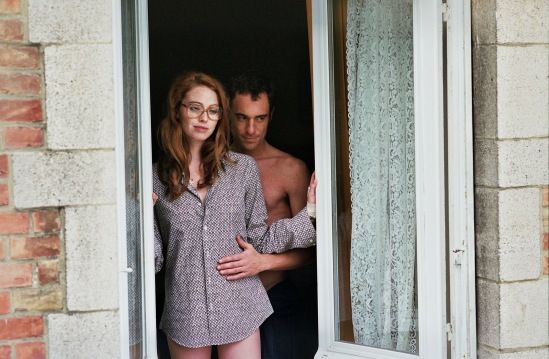
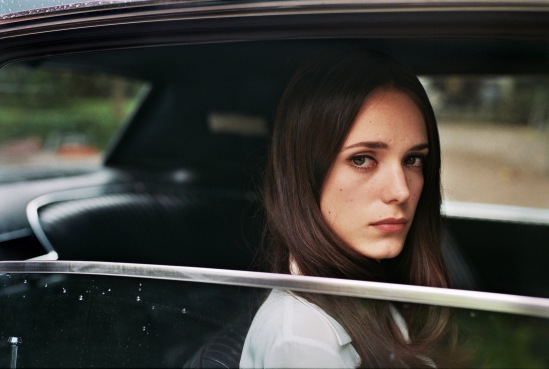
“The Lady in the Car with Glasses and a Gun” is a remake of the 1970 Anatole Litvak film of the same title. Though I’ve never seen the original Litvak film based off the award winning crime novel by Sebastien Japrisot, I’m sure director Joann Sfar’s film doesn’t stray much from the main artery that is the story, but Sfar spices up the tale through the addition of a young and feverishly heart-throbbing cast of actors and actresses. A murder mystery that sells sex more than thrills, Joann Sfar explicitly has Scottish born actress Freya Mavor and “Nymphomaniac’s” Stacy Martin do more than their fair share being sex symbol and straining the barrier of sexual tension, especially with a couple of highly eroticized topless scenes from both actresses. In a bombardment of thigh high mini skirts and tight at the waist dresses, the film setting is to reflect the 1960s to 1970s time period where if the story was in the technology age, “The Lady in the Car with Glasses and a Gun” might have had a totally different outcome.

Autosave-File vom d-lab2/3 der AgfaPhoto GmbH

Autosave-File vom d-lab2/3 der AgfaPhoto GmbH

Like any good crime novels or films, noir plays a bit part and with the Sfar remake, noir is ever present from beginning to end. Dany’s noir scenario has her being plagued by a retraced trip she’s never initially taken, being roughed up by a glove-wearing mystery person in a duo of giallo familiar scenes, and discovering a dead body in the trunk of her boss’s Thunderbird. All the pieces come together to form one big elaborate undertaking with the big twist at the end and while I’m not sure if the novel and the Litvak film do marvelous work in the detail to wrap Dany’s adventure, I feel Sfar’s missed the mark by not filing in the holes that construct a twist ending. Maybe Japrisot’s novel a bit vague too, but there’s certainly multiple voids that needed to be filled to plausibly and logically explain the ending.
2
As I said before, Freya Mavor’s sexiness couldn’t be any more potent. The relatively young in the industry actress has tons of potential outside the European film market. Stacy Martin has been on that fringe of the industry since her controversial breakout role in Lars von Trier’s “Nymphomaniac.” Both Mavor and Martin work well together, creating the tension between their characters while pulling off a lustrous vision. The male lead playing Michael, Benjamin Biolay, reminds me of a young Benicio del Toro with a very reserved demeanor and calculating coldness about him.

Autosave-File vom d-lab2/3 der AgfaPhoto GmbH

Autosave-File vom d-lab2/3 der AgfaPhoto GmbH

Magnolia Pictures proudly releases the remake of “The Lady in the Car with Glasses and a Gun” in limited theaters across the nation today, December 18th, and will also be available on demand. Another variation of an award winning story with modern actors set in a time period that has been long forgotten, “The Lady in the Car with Glasses and a Gun” stimulates the whodunit objective that keeps you on the edge of your seat for every second.