The Mayflower Brought the Thanks of EVIL Long Ago! “The Last Thanksgiving” reviewed! (Scream Team Releasing / Blu-ray)

Gobble Up and Chow Down on “The Last Thanksgiving” on Blu-ray!

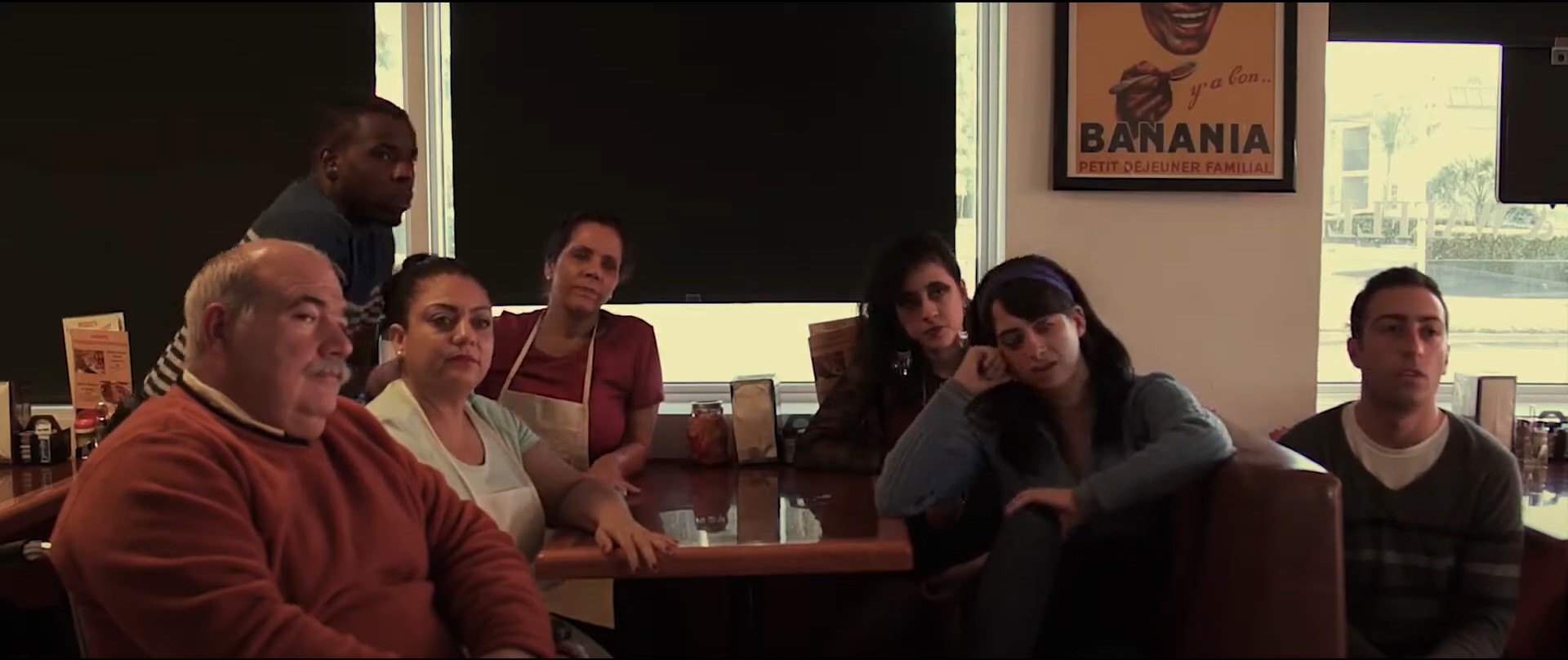
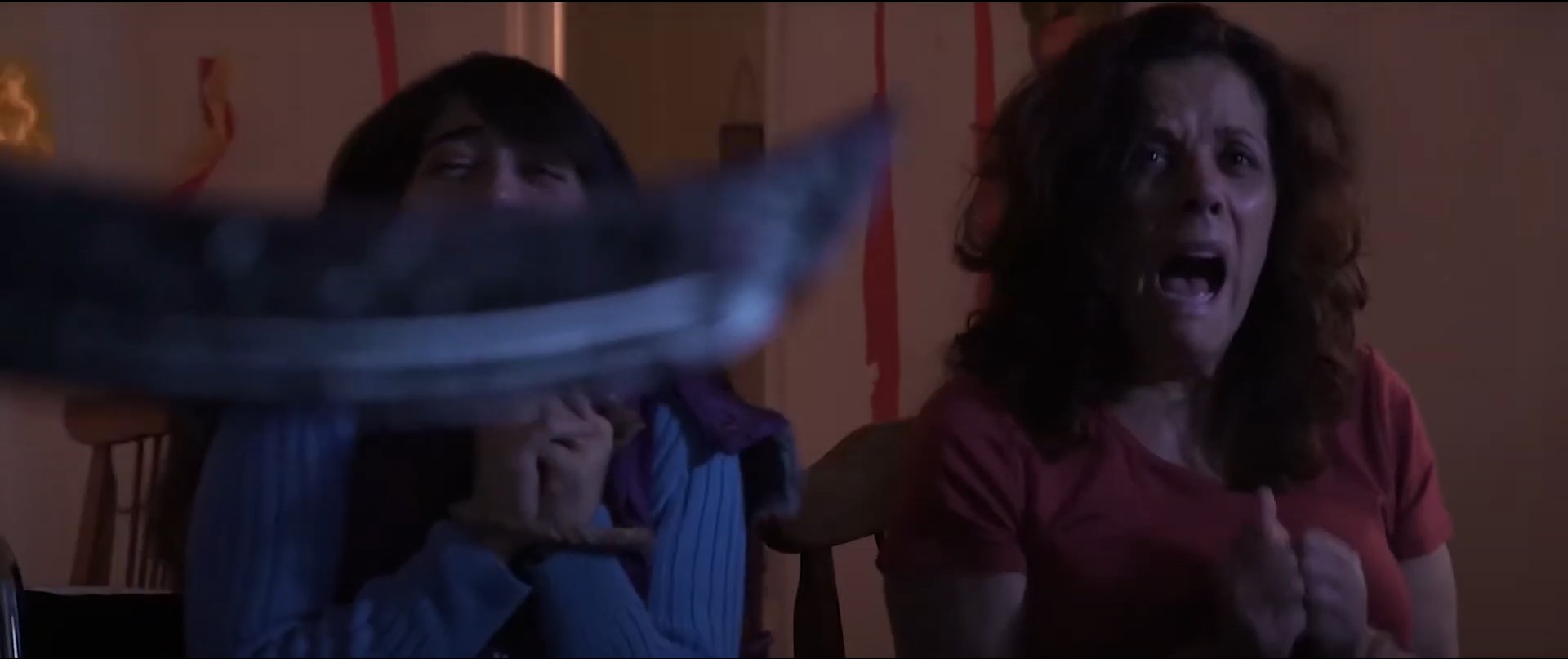
Lisa-Marie Taft is known for being uncompromisingly difficult to be around with her snarky comments and negative attitude.  She’s especially coarse when she has to spend her Thanksgiving holiday working tables at the restaurant, one of the only places open on Thanksgiving.  Stuck with the equally as enthusiastic coworkers, Lisa-Marie can’t go home and snog with her boyfriend when one lonely customer decides to show up right before they were given the blessing to leave.  The situation at the restaurant goes from irritable to fatal when a family of cannibals with ancestry Pilgrim ties raids the open business to keep with their yearly tradition of cooking a thankful feast out of “thankless” people.  For 400 years, the tradition has been upheld and sought through, but they’ve never went up against anyone like Lisa-Marie Taft before. 

Are we ready for some Thanksgiving leftovers yet?  The time to give thanks to all our family and friends holiday has come and gone and many fans have exhausted through the extremely short list of Thanksgiving themed horror films, such as “Thankskilling,” “Thankskilling 3” and “Blood Rage” to be the most likely few viewed this past holiday week.  Well, have you ever heard of 2020’s “The Last Thanksgiving” from writer-director Erick Lorinc?  If you haven’t, then put back on your watching stretchy pants to gobble up another feast of cranberries and carnage as this slasher is from a group of University of Miami grads shooting on the streets and in the rural fall foliage of Chattanooga, Tennessee and in the Derry’s Family Restaurant in Hollywood, Florida with some of the shots being done over the actual Thanksgiving break for, you know, immersive authentic fall and giving thanks atmospheric quality.  “The Last Thanksgiving” is a Peak Jerry Production and is the first full-length feature film from Lorinc and produced by Annissa Omran with Sydney Gold serve as associate producer.

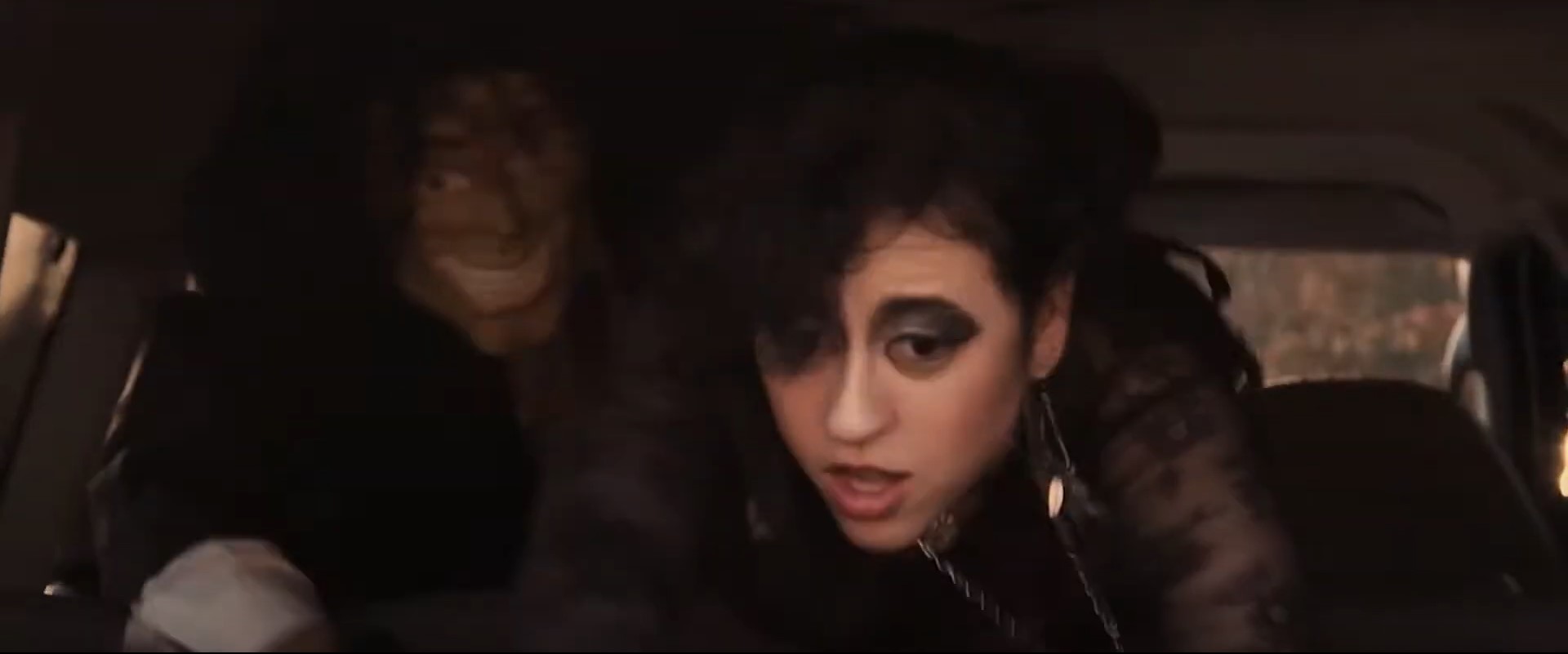
In the role of the snooty, snarky Lisa-Marie is fellow University of Miami grad Samantha Ferrand who plays the not-so-nice version of Halloween’s Laurie Strode with a complete disdain for her responsibly burdening parents and, well, basically any form of adult authority.  Even Lisa-Marie’s softy boss receives talkback and huff and puffs from what Lorinc pens as a self-centered brat.  As Lisa-Marie goes to war against the world, including her gothic waitress counterpart Trudie (Gabriela Spampinato) in a witty top dog positioning back-and-forth at times, she’s goes up against the Brimstone family who have a long-standing cannibalistic Thanksgiving tradition of following their Pilgrim relative’s footsteps, Abigail Brimstone (played dually by Alex Love and Gosta Utarefson).  The Brimstone family tradition has been enacted for over 400 years by each generation and this generation is no different with the commune living of two sisters and two brothers, who also may or may not be sleeping with other.  Yikes! Matthew McClure and Tristan Petashnick become the masterminding main face of the Brimstone clan as brother and sister, Kurt and Cordelia, while Laura Finley and Michael Vitovich come top up as the grunt work muscle as Maggie and as the Leatherface-esque Trip, a tall, quiet, and mask-wearing brother that takes a note from classic slasher icons with walking chase downs and brutal kills. Together, the Brimstone family is not terribly cliche at all and are backed by strong, singular performances that stand out like rightful, lip-smacking wolves against the restaurant sheep trying to survive the holiday on the backs of each other. These particular group of individuals are the perfect side dishes to the smorgasbord of sanguinary grub with a Backstage audition casting of Robert Richards Jr., Brandon Holzer, Madelin Marchant, Tametria Harris, Bobby Eddy, Nicholas Punales, Francisco D Gonzalez, and scream queen icon, Linnea Quigley (“Night of the Demons”) as the one, lonely restaurant patron in the wrong place, at the wrong time.

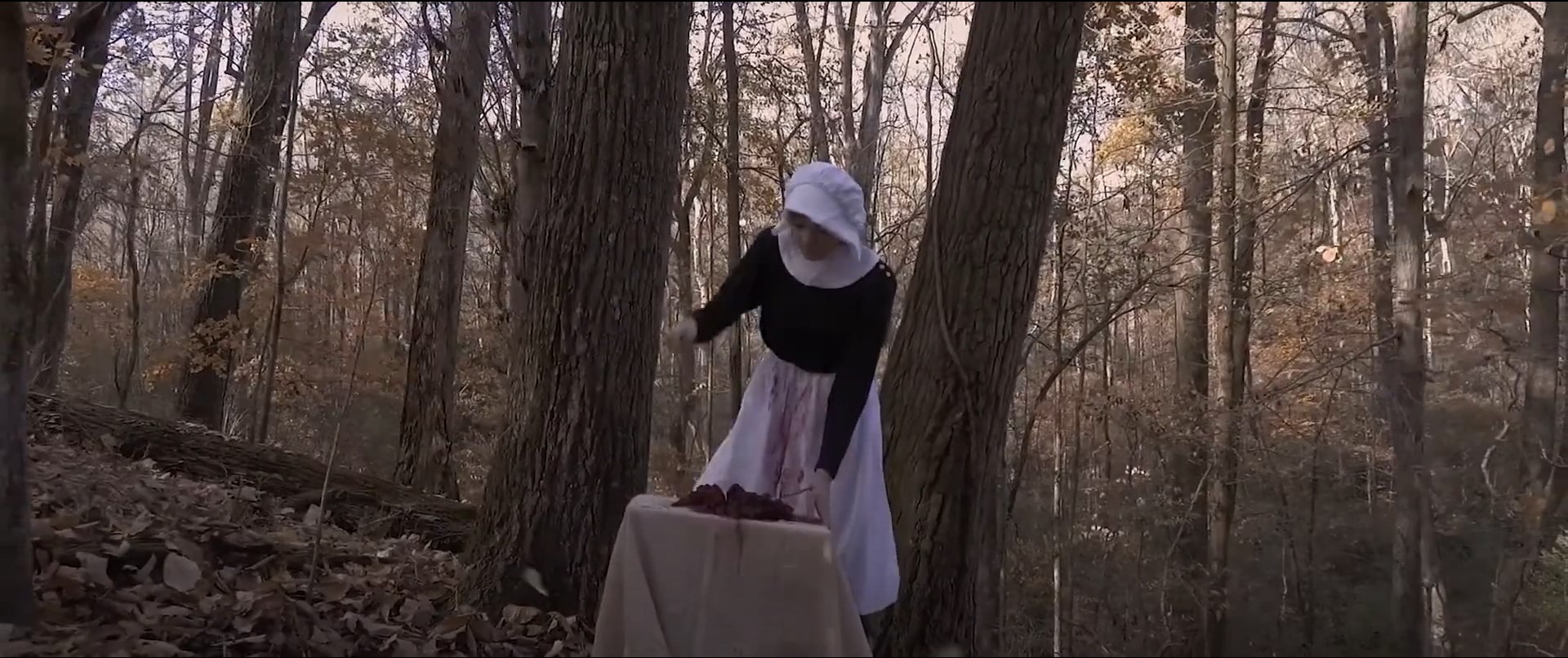
We’ve established that performances are strong, but what about the story?  Does it salivate interest and keep your attention from start to finish?  Is enough Thanksgiving incorporated material live up to the niche theme?  Certainly campy with dark, puritanical humor that stresses the importance giving thanks and being with family and friends on the holiday, “The Last Thanksgiving” unquestionably  expresses itself as a film that fits inside the theme’s parameters while also not taking itself too seriously, which has been routinely par for the course for these types of Turkey Day films.  Lorinc’s story concept stretches the gamut by briefly sending audiences back in time to when Pilgrims had the first Thanksgiving with the local Native American.  With the quasi-flash back story depicting Abigail Brimstone, who was in need of more food for the first feast because the Native Americans would be joining them at the table, chopping and mincing the postmortem remains of a handful of Native Americans to robust her menu, the Brimstone family quickly becomes understood after the first two acts of just chalking them up to your everyday cannibal, but the Lorinc takes the simple and satisfactory explanation, one that’s easily understandable and works as a cause, to a complicated and incongruous supernatural area with a 400-year old Abigail Brimstone still very much alive, and still looking good after four centuries, to procreate with one of each year’s male victims to keep the family craving and carving that human flesh turkey.   Cleaved in half heads, a jawless leftover, and a basement full of acidic gravy should be gobbled up in this traditional holiday horror film, “The Last Thanksgiving!”

Scream Team Releasing releases “The Last Thanksgiving” on a AVC encoded Blu-ray home video with a 1.77:1 aspect ratio and presented 1080p high definition. For a fall holiday feature, we’re treated to some fall coloring of brown and red of the Chattanooga wooded areas and the detailing in the textures of sweaters, scarfs, and pilgrim hats to bring out the right festive feelings of a fall, but the image grading reins backs a tad that doesn’t showcase the true beauty of fading foliage. For an indie crew working with university equipment, contrast levels appear balanced to enrich the shadows where needed and lit-up appropriate locations helps delineate scenes of trepidation clearly. There were no evident issues with compression on the 50GB Blu-ray pressing. The English language 5.1 surround stereo mix is the sole mix on the release and this is the part of the A/V package where “The Last Thanksgiving” can’t stuff it all into that the big bird cavity. Dialogue is clear but is more pallid to the ears and when decibels reach a certain height, the audio output starts to break down slightly to a crackle. Optional English subtitles are available. Bonus features include an audio commentary, The Long Pilgrimage an in-depth making of featurette with the University of Miami grad cast and crew, “Thanksgiving” 1978 short film which has scenes spliced into the feature film, gag reel, Talking Turkey: Late Night Discussion, auditions, photo gallery, teaser, and official trailer. The blue snapper case has shoddy front cover art that doesn’t provide the best first impression, but the backside has more retro appeal and the cover art is reversible with still image on the inside with the film’s splayed on top. The Scream Teaming Releasing Blu-ray comes region free, unrated, and has a runtime of 70 minutes. “The Last Thanksgiving” is a great addition to the boutique Thanksgiving horror movie table that will certainly be a yearly staple in every family fright night viewing tradition.

Gobble Up and Chow Down on “The Last Thanksgiving” on Blu-ray!

The Clap is the Real Evil Here. “Quiet Days in Clichy” reviewed! (Blue Underground / 4K Ultra HD and Blu-ray)

“Quiet Days in Clichy” 4K Ultra HD and Blu-ray Combo Set Available Now!

Joey and Carl are two broke writers living the coquet bachelor life in a small Paris, France apartment where they have a revolving door of transient sexual encounters with various women.  Despite being writer poor and hungry for most of the time, Joey and Carl happily lead a charmed life of meaningless moments.  Doesn’t matter to them how or from who they contracted a sexual transmitted disease.  Doesn’t matter to them how they pay for their carnal escapades.  And, mostly, doesn’t matter to them the age of the women they sleep with as long as it doesn’t cause them trouble.  The woes of everyday life do not stop the roommates from enjoying night clubs, traveling abroad, and the simple, bodily pleasures of French women.

In the same preface vein as Jens Jørgen Thorsen adaptively written-and-directed “Quiet Days in Clichy,” some readers may find the following material offensive, revolting, and not up to the universal moral standard – especially more so in the politically awareness of contemporary times.  Based off the novel of the same title from American writer Henry Miller, who was seen as an intellectual surrealist enlightened by the chauvinistic viewpoints on women and sex, the Danish, 1970-released blue film, “Quiet Days in Clichy,” resembles something of a semi-biographical depiction of Miller’s own personal non-fictional experiences as a proofreader in Paris during the 1930s, but updated to more contemporary times in the 1960s with genre designation that’s more of sex comedy than bio documentary.  The novel, which was banned in the United States for many years, focuses on the frivolous joys of simple pleasures that superseded the life sustaining necessities, such as food or money for food and become something of a blend between Miller’s explicit anecdotes and some wishful fantasy.  Shot on location in the small outer rim Paris neighborhood in Clichy, “Quiet Days in Clichy,” also known in the U.S. as the “Not So Quiet Days” or “Stille dage i Clichy” in the Norse Danish tongue, is produced by comedy producers Klaus Pagh and Henrik Sandberg.

A full skin, hang loose, and complete sexist semblance is no easy task and yet the two principal Dane actors Paul Valjean and Wayne Rodda, as Joey and Carl, are not the best looking in the men gene pool. “Quiet Days in Clichy” marks Valjean and Rodda’s one and only leading roles in their shrimpy career and while their performances paint the characters as apathetic womanizers, they still render a dopey slack-jawed dialogue as if delightful halfwits, a description not terrible too far off from the roles their portraying. The story substantially surrounds around Joey more frequently in what is an uneven dynamic development of the buddy comedy system to undercut Carl nearly completely out of the picture if no half-naked women are in the scene. Perhaps because Paul Valjean, or at least Valjean made up in Joey’s balding hair line and spectacles, looks a lot like the adapted story’s novelist author, Henry Miller. Again, this film is a semi-biographical onset of one man’s intellectual philosophy on sex and nihilism. There’s even a bit of nonchalant pedophilia as Carl takes a dunce young girl, Colette (Elsebeth Reingaard) at the ripe age of 14 off the street and keeps her as a sexual pet who keeps the house tidy in nothing more than a shirt and the way Thorsen depicts the introduction and the proceedings of keeping her around feels rather normalizing and whimsical despite Carl practically shoving her pubescence right in our faces with repetitive noting the illegality of underage exploitation and trouble that comes with it as long as the law doesn’t finds out. Even when the roommates are found out and confronts sans police, Joey and Carl’s punishment is nothing more than a stern warning from Colette’s mother. A plethora of women cross the screen and round out “Quiet Days in Clichy’s” menagerie of lewd and sensual women with roles by Ulla Koppel, Susanne Krage, Avi Sagild, Lisbet Lindquist, and Anne Kehler.

Henry Miller may have been something of a surrealist author, Jens Jørgen Thorsen was also something of a surrealist director that approached the adaptation with the knowledge the content would offend likely most people who find cavalier sex and arrogance to be offense.  “Quiet Days in Clichy” is certainly obscene with wanton waywardness.  Thorsen has a way of telling the lewd and crude story from the philanderer’s perspective that construes a routine day-and-a-life and everyone appears okay with what would usually be a Molotov cocktail exploding self-spiraling madness.  Instead, Thorsen paints a happy-go-lucky portrait of Joey (and Carl too) with aimless ambivalence and does so with frenzied edited scenes that trims out frames and you still get the gist of sequential events by letting your brain connect the dots.  The same cerebral interpretation also takes place during the photograph montage of Joey and Carl’s trip to the small country of Luxembourg in a flurry of images that tell a sequential ordered story of their whirlwind trip filled with seeing the sights, causing some mischief, and, of course, flirting with the local women.  Thorsen also showcases ground level Paris to the fullest with mom-and-pop storefronts, open aired dining, the widened trafficked lanes, and the night club scenes complete with featuring American Jazz saxophonist Ben Webster scoring a subdued hot number while Joey and Carl become handsy and indulge in covert public exhibition with the female patrons at a small-time cabaret club.  Miller’s adapted work is a philosophy of sexual freedom that takes precedent over personal welfare is akin to self-torpedoing with still a starry-eyed and goofy grin expression.

Stylistically, even though this Thorsen sex comedy is labeled a blue film by subgenre the film actually is voided color all around with a black and white cinematography approach by Jesper Høm that looks super slick with a well-preserved transfer in a slight low contrast on the new Blue Underground 2-disc 4K Ultra HD and Blu-ray set. The brand-new restoration on a 66GB, double layer, release comes scanned in 4K 16-bit from recently discovered uncut and uncensored original fine-grain negative that absolutely is very fine indeed! The black and white picture is presented in a European widescreen standard of a 1.66:1 aspect ratio and barely shows signs of age with an anti-wear, which makes me suspect there might have been some cleanup work. There’s clearly some DNR use to smooth out the grain, but this effort also clears up the black and white picture very nicely, resulting in a solid contrast that favors the lower said a tad. The 4K Ultra HD and Blu-ray process mid-to-high 30s Mbps with no pacing issues to the frame rate. Both come with new rescored English 1.0 audio mixes with the 4K Ultra HD sporting a Dolby Vision HDR while the Blu-ray’s DTS-HD Master Audio presents an equally clean file. Both offer quality audio designs that are free from undercutting distortions, such as a cracking, popping, hissing, etc, and are greatly robust with the Dolby Vision eking out a little fuller bodied product. One gripe I have is that Blue Underground doesn’t translate the French-speaking ancillary roles that become lost to conversation if one does not know the tongue, but the English subtitles are free from error and synch up well without any delay or being too quick. French subtitles are also included. Bonus features include new deleted scenes and new theatrical trailer on both discs. The Blu-ray also includes the Songs of Clichy – a 2002 interview with soundtrack composure Country Joe McDonald speaking about one note role of just scoring the film and coming to terms with his unaware sexism, Dirty Blooks, Dirty Movies, Barney Rosset on Henry Miller – an interview with Henry Miller’s editor and publisher that touched upon the mad, chauvinistic genius and perversions of the blacklisted author, Midnight Blue – an archival second interview with Barney Rosset, new poster and still gallery, a new Henry Miller book cover gallery of the title, and new scanned court documents when America seized the film upon entry into the country and the legal fight that ensued to obtain it back. The physical release comes with a not safe for work cardboard slipcover with imprinted frames from scenes while the blacked out 4K and Blu-ray snapper case comes with original artwork of one of the more memorable scenes. The release comes not rated with a runtime of 91 minutes. “Quiet Days in Clichy” lead to more rambunctious nights in the Paris suburb of debauchery and Blue Underground preserves the perverse with a higher quality of lower standards in a beauty of a release.

“Quiet Days in Clichy” 4K Ultra HD and Blu-ray Combo Set Available Now!

The Devil Is Never Pretentious with His EVIL! “Satan’s Little Helper” reviewed! (Synapse Films / Blu-ray)

Bluray is Currently Cheaper than DVD!  Grab “Satan’s Little Helper” Fast!

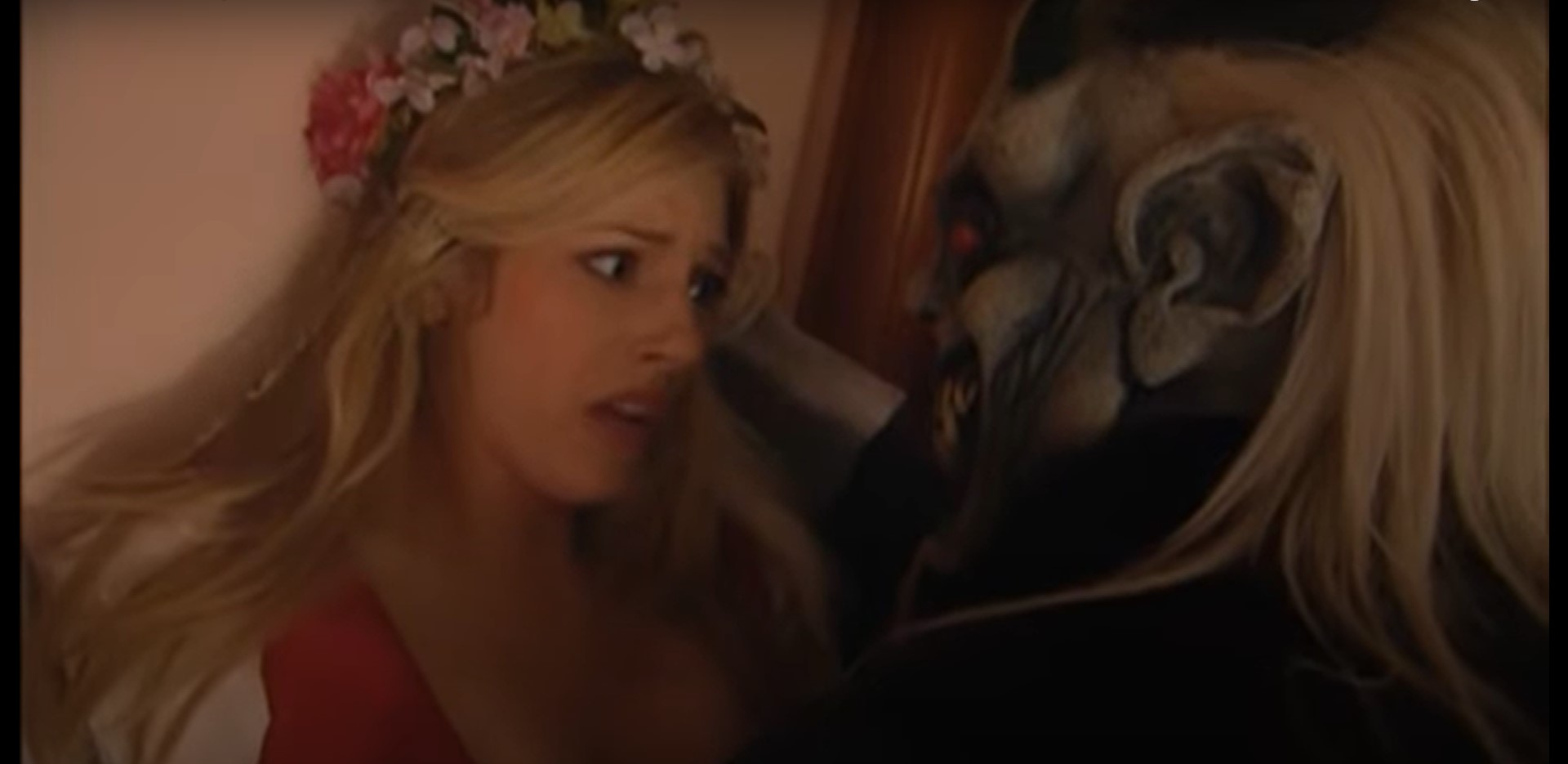
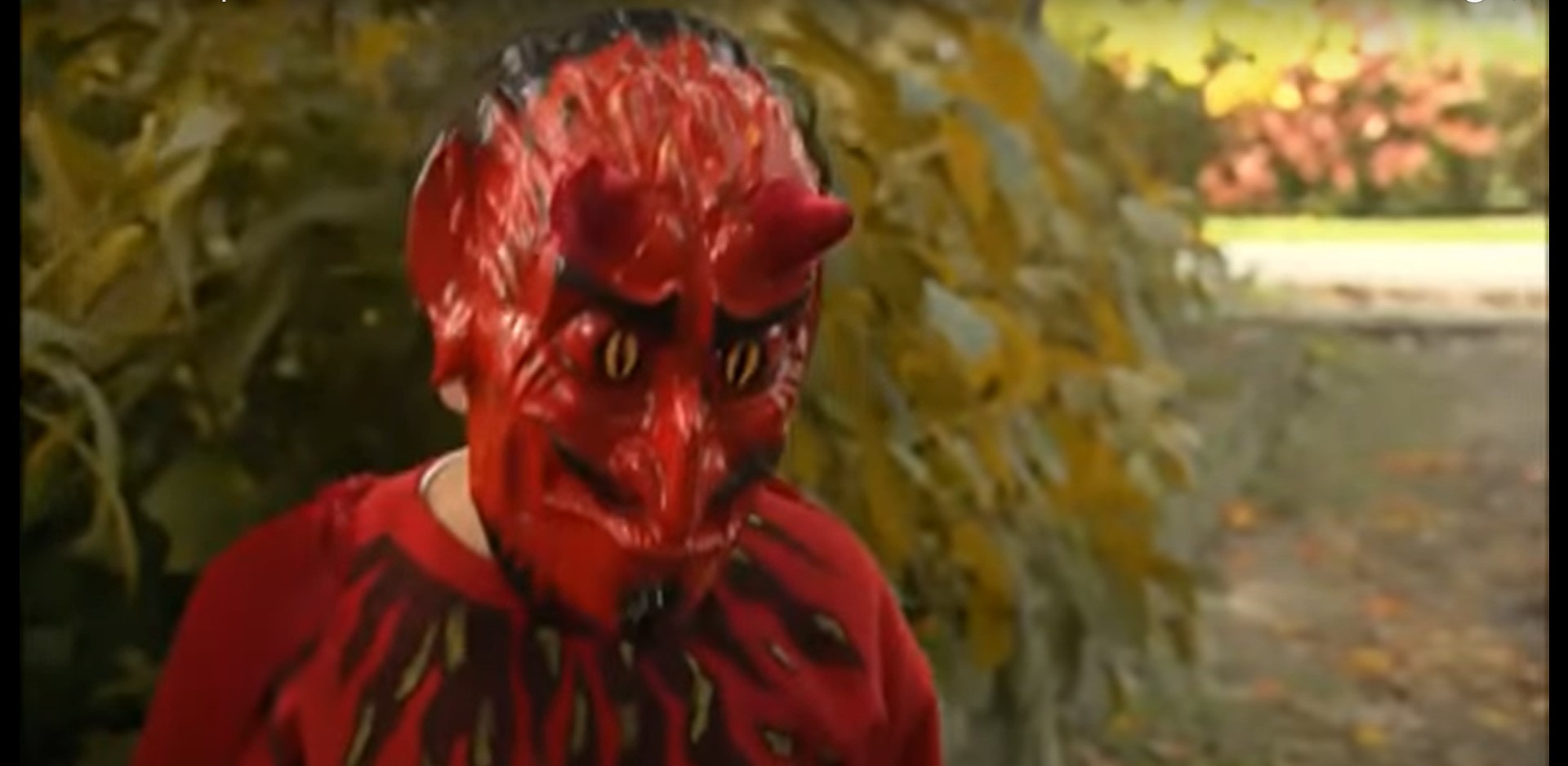
Obsessed with his new video game Satan’s Little Helper, where a little boy helps the Satan dispense murderous bloody mayhem, naïve Dougie, sporting his own hot red Satan costume and mask, swears he’ll have a chance to meet Satan himself during Halloween.  Who Dougie believes he stumbles upon is the master of darkness but, in reality, the overactive and imaginative adolescent has discovered a deranged, untalkative serial killer in a Satan costume going house-to-house setting up realistic looking gruesome displays as Halloween lawn decorations.  Feeling slighted when his college-age sister comes home to Bell Island with a new boyfriend unexpectedly, an upset Dougie wants Satan to kill the boyfriend, but the killer insidiously uses the boy as a pawn and works his way into Dougie’s family home and everyone thinks it’s the new boyfriend masked as Satan to impress and please the difficult child.  Set in motion is a flight of wickedness throughout the night on the island town that’s unprepared for the chaos yet to come. 

Jeff Lieberman is already something of a cult horror director amongst fans. Having written-and-directed obscure classics “Just Before Dawn,” “Blue Sunshine,” and “Squirm” within 5 years between 1976 and 1981, Lieberman took horror by varietal storm by dipping his toes into different subgenres and doing moderately well at it., establishing a legacy with re-releases of his films into the new millennia. Though quiet for many years in the realm of horror, Lieberman makes a return with 2004’s “Satan Little Helper,” a killer horror-comedy filled with an innate fear of the unknown with what or who is truly behind that devilish mask. Lieberman wrote and directed the feature with a dark and morbid stamp perfect for the Halloween season. If you’re looking for a good Halloween movie, “Satan’s Little Helper” should be on your short list. Set on the fictional location of Bell Island, which is actually Long Island, New York, “Satan’s Little Helper” is a production of Intrinsic Value Films (“The Last Thing Mary Saw”) and the limited liability company under the alteration of the film’s title with Satan’s Little Company and is self-produced by Lieberman as well as Mickey McDonough, Isen Robbins, and Aimee Schoof with Carl Tostevin serving as executive producer. Screen Media Films waived the theatrical rights route by releasing the insta-cult film directly onto the video market.

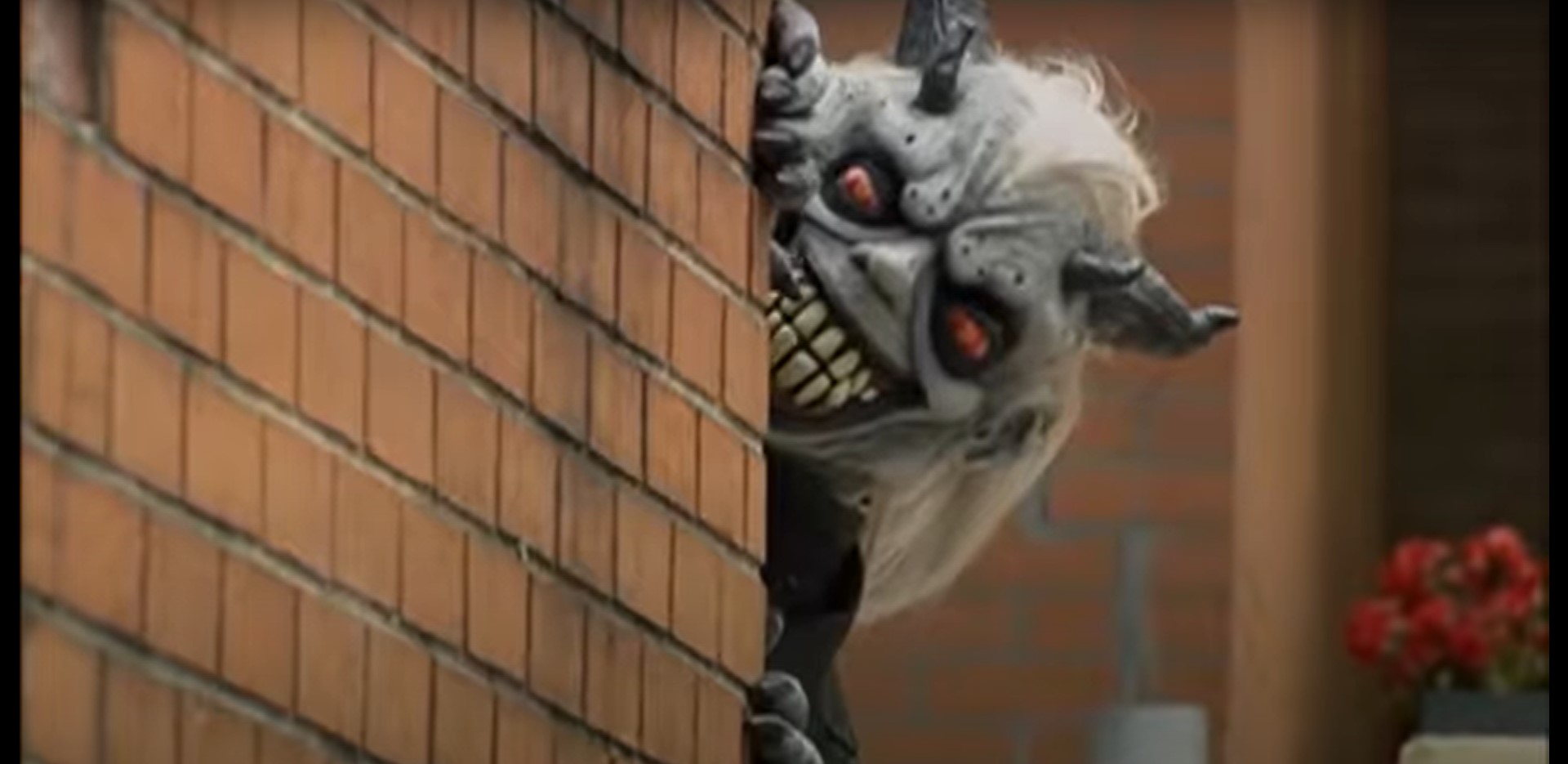
Gracing prominently most physical releases with a sinister grin is a dialogue-less and faceless principal character, who with every centimeter of his latex teeth and showing a lackadaisical posture as he turns Bell Island upside down as his own massacring playground, is obviously the serial killer, played by Joshua Annex. Annex spin on Satan Man reaps the story’s benefits by creating a mischievous antagonist to the likes we’ve never seen on screen before despite being playing the murderer behind the mask trope. Annex might be playing Satan but the actor is not playing the titular character, or is her? The double entendre can be interpreted in two ways: the masked killer is actually Satan’s helper on Earth or Dougie, the annoyingly naive brat with an unhealthy infatuation with the Lord of Darkness. Played by a then adolescent Alexander Brickel in his debut performance, Dougie’s only kicks the hornet’s nest even more for not only the residents of Bell Island, but also for his family as the young loutish lad invites the killer his family abode under false pretenses and never revels the truth until it’s too late. Brickel is intense in an aggravating Dennis the Menace kind of way, but the act works all too well with the flanking character players who need to feed off of Dougie’s hellion deposition that all stems from wanting to marry his sister. Is there some kind of symbolism or metaphor there? Speaking of the sister, Katheryn Winnick (“Hellraiser: Hellworld,” “Polar”) levels the eccentricity with normal reactionaries as the sister Jenna. Counterbalancing to make sure her normalcies don’t overstay their welcome is the great Amanda Plummer (“Pulp Fiction,” “The Prophecy”) with sublimely odd mother that only Amanda Plummer could pull off and make it feel right. Stephen Gramham, Wass Stevens, Melisa McGregor, and Dan Ziskie round out the cast.

Perfect for the season, perfect as a cult film, perfect to just be for everyday viewing, “Satan’s Little Helper” has been kept in the shadows far too long and needs to be risen from the netherworld for all to bear witness the unsystematic carnage from someone who just wants to see the world burned. The Lieberman film intoxicates with spontaneity as you never know what to expect or happen next. The script is simple, yet smartly contrived to work as a haphazard horror with a foundation foe with no limits, no boundaries, and no motivation. There’s a relief that there’s no supernatural or actual Satanic force driving the plot and, instead, unravels in a prevailing fashion with an accepted and logical fear that the person behind the mask is not always the person you believe wearing it. While Lieberman’s script does a nice job fleshing out a feature length film where the doesn’t have one single word of dialogue, there are moments when suspicions amongst the family would have or should have come a lot sooner and that stretches the reality some, making act two gummy around the midsection when the serial killer is playing the part of Jenna’s boyfriend. Lieberman caveats Jenn and her boyfriend, Alex, as a pair of studious actors and Alex is just immersed in his role as Satan to please Dougie and while that seems very plausible, how long the act maintained its course did not. Eventually, Lieberman became wise to the Satan costume’s stagnancy and moved the character along into another facade of choice that then goes into a guess who game of deception. An aspect of the killer’s intelligence that makes the character uber-clever and that much more deadly.

“Satan’s Little Helper” is one of Synapse Film’s more contemporary releases that doesn’t require a hefty image upgrade but the new 1080p high-definition upgrade and a supplemental bonus features make this new Blu-ray release very attractive. Presented in a widescreen 1.78:1 aspect ratio, the AVC encoded Blu-ray craves out a resolute image as expected since the modern film is digitally recorded and hasn’t been affected by the wear-and-tear of age and neglect. Perhaps not as glossy as an expensive Hollywood type production with a late 90’s-early 2000s glaze, gel, or filter, “Satan’s Little Helper” keeps a more than adequate showing of details and a medley of colors amongst is more natural cinematography with a handful of night scenes shot in a day under a dark filter. Only one scene of concern stands out on the ferry pier and in what’s supposed to be a close up of Dougie’s dumbfounded face when meeting Jenna’s boyfriend for the first time has somehow turned into a blown up shot that stretches the image fuzzy and masking the delineation. The English language DTS-HD master audio shows no signs of issues with a flawless and lossless sound design. The clean and clear dialogue raises the bar on Dougie’s testy tantrums and cleans out with the ambient effects toward the killer’s actions to compensate for his lack of chit-chat. Optional English subtitles are offered on this release. Bonus features include a commentary with director Jeff Lieberman, an archival behind-the-scenes featurette, The Devil in the Details making-of featurette that goes into cast and crew interviews with Lieberman, Alexander Brickel (now older and with longer hair), director of photography Dejan Georgevich, and special effects artist Anthony Pepe, a tour of the filming locations guided by Lieberman in Mister Satan’s Neighborhood, and the promotional trailer. The physical release comes in the nifty blackout Blu-ray case with a Synapse catalogue insert in case you want to buy their releases via mailed order form. Synapse Film’s “Satan’s Little Helper” new Blu-ray comes home at the most opportune time during this 2022 Halloween season and is sure to be viewed as a delightful deluge of dark comedy carnage and destruction, some of the best attributes of any good horror film.

Bluray is Currently Cheaper than DVD!  Grab “Satan’s Little Helper” Fast!

This Bundle of EVIL has a Dirty Diaper! “Baby Oopsie” reviewed! (Full Moon / Blu-ray)

“Baby Oopsie”  The Baddest Baby in Town on Blu-ray!

Who would have thought that playing with dolls could be deadly.  Sybil Pittman certainly didn’t think so as she hosts her internet streaming doll vlog showcasing her collection of pint sizes doll babies most of which Sybil has restored back to life…literally.  When a mysterious package arrives with the battered and stitched together head of Baby Oopsie, a severely bullied and neglected Sybil locks herself in the basement to work tirelessly on repairing Baby Oopsie’s head and mechanical body that includes, unbeknownst to Sybil, one special gear under a satanic spell to for collecting souls.   Baby Oopsie, the once pride and joy of Sybil’s restorations, has been resurrected from the toy junkyard and aims to claim the lives of Sybil’s tormentors to sustain it’s own diabolic animation.  When all of Sybil’s adversaries are eliminated, Baby Oopsie still requires lives to live and turns on Sybil’s friends and Sybil herself that becomes a battle to the death.

Full Moon knows how to run and market a good product that can last a lifetime and they continue to stroll through their finely tuned niche of deranged doll other pint-sized psychos to this very day with brand new produced features hitting the physical and streaming retain shelves in 2022.  Following the success of “Don’t Let Her In,” one of those new features aforementioned, is the return of the evilest rug rat known to infant kind, Baby Oopsie, from the “Demonic Toys” universe.  William Butler, who I fondly remember playing sweet country boy Tom being blown up and having his corpse feasted on in Tom Savini’s “Night of the Living Dead” remake, continues his long-standing tenure with Charles Band and Full Moon that began in 1986, under the Charles Band Empire Pictures company production and Stuart Gordon directed “From Beyond,” with a new written-and-directed feature “Baby Oopsie,” a concentrated, standalone spinoff of “Demonic Toys.”  This isn’t Butler’s first go-around with the go-go-ga-ga-gut your guts dolly as the filmmaker helmed “Demonic Toys 2:  Personal Demons” in 2010.  Charles Band and Butler produce the film with regular Full Moon executive producer Nick Blaskowski under the Full Moon Features in association with Candy Bar Productions.

Viral sensation the McRib Queen versus demonic toy Baby Oopsie. Stand up and character comedienne, Libbie Higgins, debuts in her first feature headlining role as Sybil Pittman, the repressed and intimidated vlogging doll queen living in abusive hell with tyrannical stepmother after the death of her beloved father. Higgins, who has an Onlyfans page for only $8 a month for all you obsessed fans out there, adorns a wig, glasses, and meme cat sweaters to get into the head of Pittman’s secluded world and where outsiders browbeat her into a reserved submission and wishful thinking only provides little comfort returning the hurt played out internal sadistic fantasies. For her breakout role, Higgins transcends her comedienne persona and into an anxiety-riddled outcast wretched by life’s punches and horror-struck by a doll that walks, talks, and kills like a macho-sadist. Before going head-to-head with the berserk Baby Oopsie (voiced by newcomer Jill Barlett), Sybil is caught between the devil and a saint with her brash, overbearing, stepmother played by Lynne Acton McPherson (“Improbus”) and the attentive and caring subletter played by Marilyn Bass, who tries very hard to be Full Moon sexy and skin-revealing without showing the camera too much. Her “best friend” Ray-Ray tips the scales toward believing in Sybil’s beauty and craft, befriending the doll queen despite her large radius of shunning those want to get closer to her, such as the mailman or the gardener, because of the depressive self-pity. Yet, Ray-Ray brings to the light and so does the actor who portrays the upbeat Hey Hunny sassy-mouth in TikTok and Youtuber influencer Justin Armistead. Armistead is magnetically chipper onscreen compared to Higgins story-obliged monotone placidness that balances out quite nicely the duo’s vanilla and peanut-butter-marshmallow swirl relationship. “Baby Oopsie” is full of character and characters, rounding out it’s smorgasbord of victims and supports with Diane Frankenhausen, Shamecka Nelson, Joseph Huebner, Michael O’Grady, Michael Carrino, Christopher J. Meigs, Tim Dorsey, and Josephine Bullock.

Set and filmed in Cleveland, Ohio at the proclaimed Full Moon estate, a 60’s-70’s anachronous house with many rooms becomes the playground setting for “Baby Oopsie,” the cast, and the crew. The location that reflects an era no longer modern, a dated obsoletism, to match Baby Oopsie’s classic and ideal bald-bald in a night gown form. However, normal Baby Oopsie also comes with that grotesque, malformed face that only a doll obsessed mother could love and would cause the toughest of horror fans to fear in their pants in on glance at the augmented representation of a human infant. It’s the creepy old doll look you definitely don’t want to see sitting in a dark corner blankly staring at you.  Of course, the special effects are not the classic Full Moon stop motion you see with the “Puppet Master” flicks as “Baby Oopsie” deals in tangibility with a bait and switch editing between the number of diverse molded Oopsie dolls created by special effects supervisor Greg Lightner (“Corona Zombies,” “Don’t Let Her In”) that include an open mouth and sneering face or a set of glowing eyes to provide a sense of evil.  Oopsie fits right into Sybil’s down on her luck story that is nicely compact and complete for an indie horror quietly but surely touches upon Sybil’s life in various key scenes, such as the gardener who hangs around because her father was much beloved or how much Sybil is despised at work between the dragooning, nitpicking, and strict boss and the snickering colleagues that look down at her.  Butler’s sweet-and-salty route delegates a fine line between her friends and foes that make the stakes clear when Oopsie decides impulsively to go off the bad-guy only rails. “Baby Oopsie” is far from cute and cuddly. “Baby Oopsie” is closer to being ugly and uncouth as the prime and pinnacle sequel of anthropomorphic toy horror in today’s Full Moon toy chest of films.

Spinoffs have become the new favorite amongst audiences, “Baby Oopsie” even pays a sideswiping jab to “Annabelle” of the “Conjuring” universe, and while we see a lot of spinoffs in television, the concepts and ideas are beginning to spill more frequently for filmgoing fans and, as such, “Baby Oopsie” is reborn onto her (or is it him? or it?) own Blu-ray home video from Full Moon Features. The region free, high-definition release, presented in a widescreen 1.78:1 aspect ratio, is the epitome of digital recording without much of a single critique or compression issue. Inundated with a more realism than stylism presence in front of the camera with the exception of a few edited in art renditions of satanic imagery, Butler and cinematographer Josh Apple apply a clean, high-resolution coating that undeniably very familiar to Full Moon’s repertoire. What’s also a motif straight out of Full Moon’s bag of goodies in the carnivalesque score. The Dolby Digital 5.1 surround soundtrack raises the volume on the Fred Rapoport and Rick Butler above a superseding level that swallows the English dialogue at times. You really want to absorb Jill Barlett’s vulgarities as Baby Oopsie but need to fight the soundtrack to do so during key moments when Oopsie’s profanity-laden Tourette like behavior kicks in. The release also comes with a second audio option with a Dolby digital 2.0 stereo. Bonus features include a behind-the-scenes featurette with cast and crew interviews on their experience making the film and poking fun at each other at times in a well-edited jest, a Videozone featurette that’s essentially a mini panel with producer Charles Band, director William Butler, and stars Libbie Higgins, Marilyn Bass, and Lynne Acton McPherson taking a break in the midst of filming to talk about their characters, to talk about the film itself, and for Band to plug his streaming service and new projects, there’s a mini-featurette All Dolled Up! that has Libbie Higgins in character, Justin Armistead self-recording in his bathroom, like on TikTok, and Baby Oopsie announce the winner and runner-up’s of a contest to win a Full Moon prize package. Bonus content rounds out with Full Moon trailers. The Blu-ray comes unrated, and feature has a runtime of 78 minutes. “Baby Oopsie” is not the addendum to the profane book of “Demonic Toys” but rather an extenuating chapter that opens the door for all the misfit and maniacal toys to one day have their own independent rampaging furtherance that are likely already drafted, budged, and ready to shoot at a moment’s notice.

“Baby Oopsie”  The Baddest Baby in Town on Blu-ray!

Taxi Driver by Day, EVIL Serial Killer by Night! “Dr. Lamb” reviewed! (Unearthed Films / Blu-ray)

“Dr. Lamb” is ready to operate.  See him in action on Blu-ray from Unearthed Films and MVD Visual!

Quiet as a boy verbally and physically abused by his stepmother yet laid to experience the adult perversities at the permission of his unconcerned father, Lam Gor-Yu, now as a man, is still quiet and still has unusual interests as an afterhours taxi driver.  Triggered by rainy nights when a torrent of verbal abuse by his female passengers send the usually reserved taxi driver into a homicidal fury, extending his lonely nights into straggling women, returning their bodies to his family homes, and video tapes his exploits within his fascination for amateur medical procedures.  When the police raid his family home after developed disturbing pictures were discovered at the local print shop, Lam’s entire family is hauled into questioning and it’s to Inspector Lee and his team to unearth exactly what transpired to the lifeless bodies seized by a notoriously sociopathic serial killer.

When you think of serial killers globally, Hong Kong isn’t the first place that comes to mind.  In fact, Hong Kong isn’t even a blip on the radar as the Pearl River Delta residence only has two known serial killers attributed to the city.  One of those killers is Lam Kor-wan – aka The Jars Murderer – aka the Rainy Night Butcher – who terrorized the then British territorialized Hong Kong in the early 80s, killing and post-mortem mutilating four young women.  La Kor-wan became the notorious inspirational material for the Danny Lee and Billy Tang (“Run and Kill”) co-directed Dr. Lamb that was released in 1992 and penned by Kam-Fai Law (“The Close Encounters of Vampire).  “The Killer’s” star Lee, who was more Chinese action star than filmmaker, developed the film, reluctantly at first, during the time when Hong Kong’s Category III classification rating was extending from solely high-end erotica and sleaze into extreme horror and thrillers.  Lee served as executive producer with Parkman Wong, who also worked alongside Danny Lee on “The Killer,” under Grand River Films Ltd.

To be portraying one of two Hong Kong’s serial killers feels like an unsurmountable responsibility burdening the actor’s shoulders in order to parallel the motivational intricacies and the mental mindset as accurate as possible knowing that the character can’t just blend into a vast serial killer fold where you can find multiple variations of John Wayne Gacy or Jeffrey Dahmer being grossly rendered for U.S. pop culture exploitation.  Yet, in steps in front of the camera Simon Yam, one of Hong Kong’s prolific action stars in the late 80s to early 90’s now stepping into the shoes of a real-life maniacal persona and relatively close to where all of Lam Kor-wan’s dirty-little-deeds took place.  Simon Yam could very well be the killer himself, that’s how brilliantly Yam’s performance is in what’s certainly a confident display of range in contrast within his acting opus.  Replacing a gun with a scalpel, Lee and Yam dig deep into the character’s psyche with an interpretation of why Lam Kor-wan did what he did and, frankly, Yam just went stoically wild to reach Lam’s staggering levels of crazy as he descends deeper into the retelling of his encounters with each victim. While “Dr Lamb” is a grim tale, there’s a comical side to it with the police force, supervised by Inspector Lee, played by Danny Lee himself in a duality position of cast and crew. More of the comic relief stems from Inspector Lee’s second-in-command, an experienced, yet overweight, cop who lets others handle his workload. Literally named Fat Bing, comedian and “Human Lanterns” actor Kent Cheng continues his whimsical routine in unvarnished subject matter revolving around separate bits and pieces of people’s tissue and organs for twisted pleasures. Collateral damage of Lam’s horrifying late-night exploratory surgery antics on women involve his family as they also become suspects. Lam’s father (Siu-Ming Lau, “A Chinese Ghost Story”) keeps his blinders on while the evidence piles only to be turned when his son’s transgressions include a minor family member does his own flesh and blood then cross a line of no return.

There are always two sides to every story. No, I’m not saying there are two repelling sides to The Rainy Night Butcher’s homicidal havoc. “Dr. Lamb,” as a film, has a dichotomy about it that’s half biographically true and grim while the other half is crime drama peppered with clownery. The combination is odd and equally as frustrating as the black tone of the historical background and the graphic nature of some authentical depicted acts of inhuman urges find their way weaved into the fabric of cavalier cop buffoonery who, on one hand, seem really good and really intense at their job while, on the other hand, lack the gumption for sobering behavior. Even when investigating Lam’s videotape (to which there is no way in Hell Lam videotaped that himself as the camera moves as he’s engrossed with necrophilia and removing body parts), the cops overact the disgust with what looks like chunky tuna being forced out of their mouth along the lines of appearing like vomit. The underplayed theme is anything but funny in its psychological context of misanthropy and misogyny. All of Lam’s scenes of cruelty are told in flashback through his perspective, molded by his undertone hate for women. “Dr. Lamb” is a misogynistic tale bred out of childhood abuse by a woman close to his family and unabashed and unattended by his lenient father’s lack of concern. Three out of the four women Lam taxis-to-taxidermy often verbally and physically assault him and plague his personal space with their awful behavior, setting a dial backwards in his battered brain that reminds him of the time his stepmother slapped him or forced him into a closet for hours. Is “Dr. Lamb” a Freudian lemma that Lam sees his ruthless stepmother in these women and turns on them to humiliate their corporeal existence? That’s a deep dive, but not as deep as “Dr. Lamb” cuts as a visceral experience based off of one of Hong Kong’s notorious serial killers.

Distributing in at number 8 on the spine of the Unearthed Films’ Unearthed Classics banner is “Dr. Lamb” on a new Blu-ray home video. The region A locked, AVC encoded, BD50 is slicked up with a 1080p high-definition upgrade presented in a widescreen 1.78:1 aspect ratio. As one of cinematographer Kin-Fai Mau’s first few pictures, the cool blue and misty has an interesting allure like a hazy bad dream subdued by an infusion of looking through blue glass with a prism of white light filtering through. Perhaps not as detailed as desired, the release does stand above the rest with low-level continuous speck blemishes that are only noticeable if you’re searching for them. Two audio options are available: a Cantonese LPCM 2.0 Mono and a Mandarin LPCM 2.0 Mono. Both tracks do come with well-sync and accurate English subtitles with the only downside is in their quick sojourning. There are a few instances where the subtitles pop up for literally a second as a result of quick nature of the dialect to get to the next set of text. While toggling between the two languages, my audio receptors really took to the Cantonese for a more natural flow and visually for unison between speech and speaking. The Mandarin is certainly more powerful but also too over-the-top as in watching I relate to watching old Japanese with English dub. The special features include an audio commentary by Ultra Violent’s Art Ettinger and Cinema Arcana’s Bruce Holecheck, a background interview about “Dr Lamb’s” genesis with the story producer Gilbert Po Lamb to the Slaughter, an interview with film critic James Mudge on the Golden Era of Cat III Three Times the Fear, a talking point conversation about “Dr Lamb” from film academic Sean Tierney, an Atomic TV interview with star Simon Yam, and trailers. The physical release itself comes with a 6-page, color booklet essay from cinema academic and author Calem Waddell (producer of “The Collingswood Story” and many horror-film related documentaries). A cardboard slipcover with one of the more provocative poster arts. Unearthed Films’ Blu-ray comes unrated with a runtime of 90 minutes. When perusing what to watch one night, be sure to hail down this cab of fact-based macabre driven by “Dr Lamb’s” psychological psychopathy and his pathologic urge for unnecessary medical procedures.

“Dr. Lamb” is ready to operate.  See him in action on Blu-ray from Unearthed Films and MVD Visual!