When You’re Jilted and You Contemptuously Summon an EVIL Succubus! “Lillith” reviewed (Terror Films / Digital Screener)


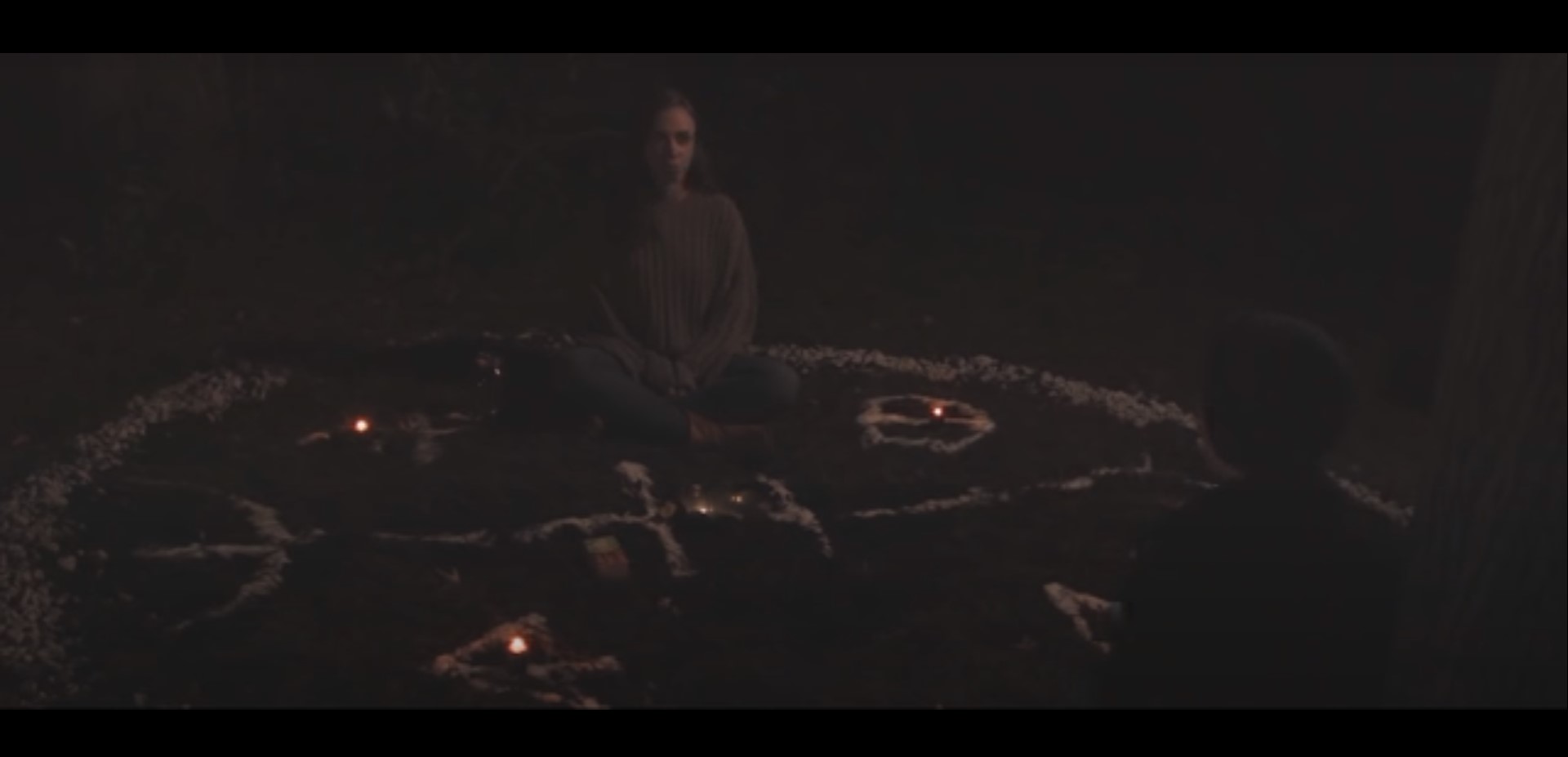
Jenna’s been dating Brad for 5 years and when she catches him red-handed with another woman, learning that he’s been with multiple women over the span of their relationship, blood boiling revenge seems like the only course of action.  Jenna’s wiccan friend, Emma, has a radical strategy to summon a succubus to sleep with Brad and give him heartbreaking Satanic STDs.  Warned about the dangers of black magic that could backfire 3 times the affliction upon them, Jenna and Emma go through the summoning ritual, calling forth the sex-crazed succubus named Lillith.  Quickly making short work of Brad, tearing him open like a gift on Christmas day, the friend soon realize they’ve unleashed an unstoppable, man-eating killing machine and they have no idea how to stop her. 

In Jewish theology, the she-demon Lilith has been weaves into popular culture and literature time after time again with tweaks, alterations, and revamps to capitalize on the first wife of Adam’s infamous name in various outlets.  Amongst being one of the first female demons, the figure, in name only, has been broaden across numerous religious texts and  pop culture mediums from vampires, to a wild beast, and to a source of lustful dreams.  For Lee Esposito, Lillith sticks to the demoness basics, luring gullible and randy men to sex and death as a ritual beckoned succubus, in the 2019 horror-comedy, merely titled “Lillith.”   The indie picture cautions revenge as a hasty, reckless option that tows disastrous, deadly consequences.  Based off Esposito’s 2016 7-minute concept short of the same name, the 93 minute feature length film levels up the concept’s sound department crew member, Luke Stannard, to cowriter and was the genesis of Esposito’s New Jersey-based production company, Ritterhaus Productions, with executive producers Joey Esposito and Mike Arpala footing the bill. 

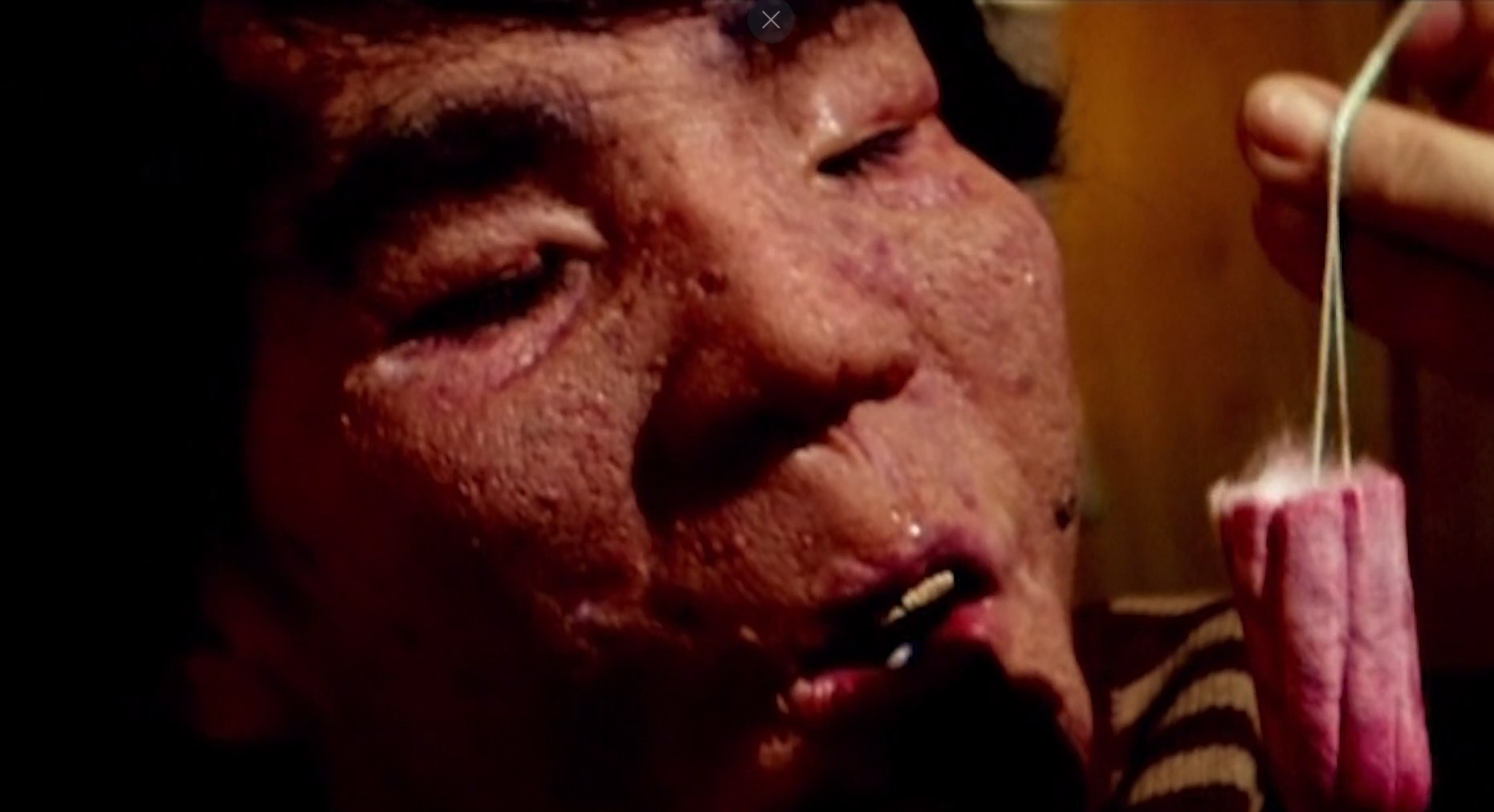
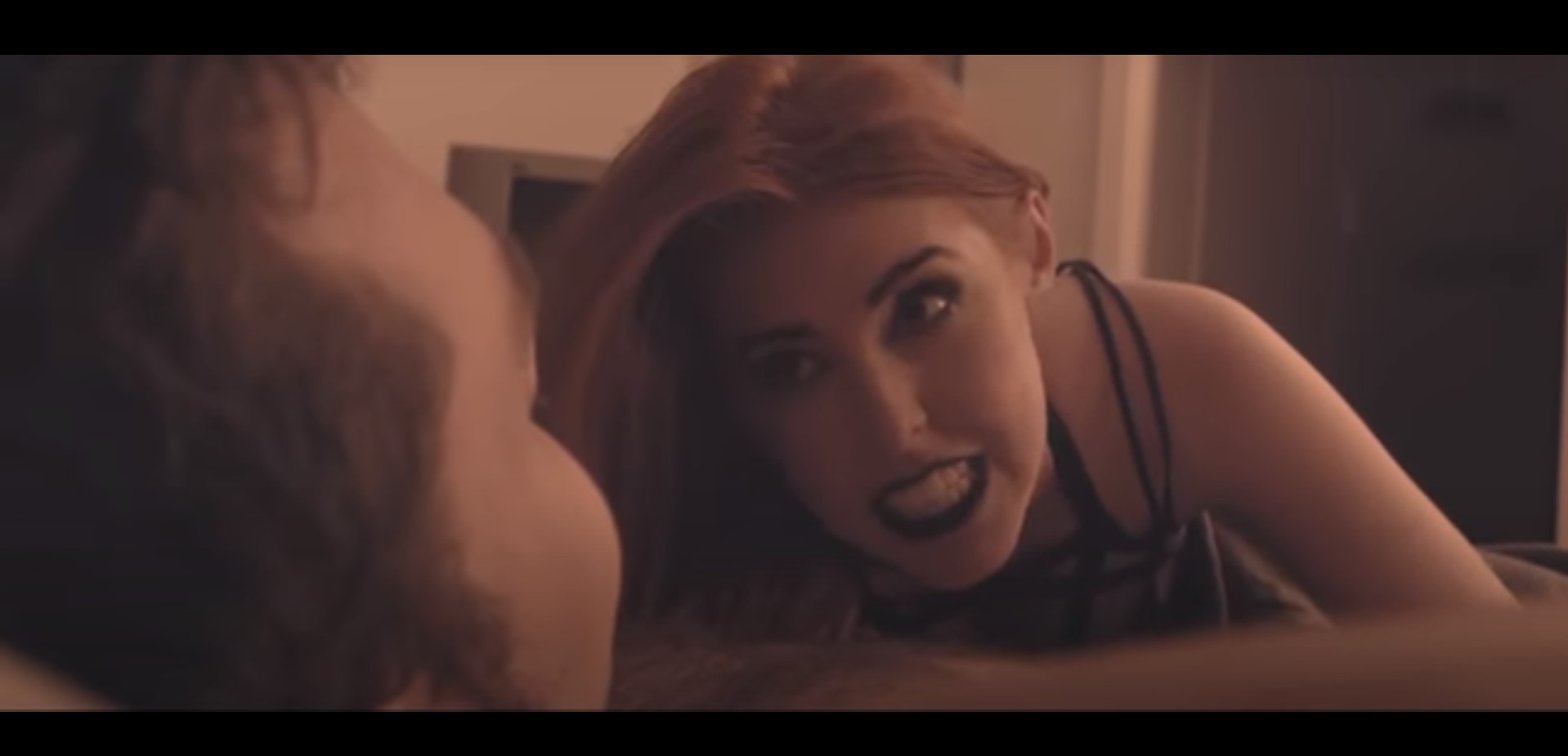
To pull off a slimmer version of “Jennifer’s Body,” “Lillith’s” cast had to be indispensably funny and well-versed with their characters.  For the most part, the cast stick the landing, running away with their character ticks that fully engulf the colorful performances and making them certifiably memorable.  Savannah Whitten most notably showcases her amusement playing the titular character decked out as an alternative-cladded woman with promiscuous purpose.   Whitten also doesn’t look too shabby in full body lime green attire that requires the actress to don a protruding head prosthetic, bulky mouthpiece, and vibrant yellow contacts as the Lillith shifts, in edited scene transitions, back and forth from alt-girl to full blown succubus.  The snazzy redhead, NYC based actress is opposite Nell Kessler and Robin Carolyn Parent in their respective roles, who spell besties as demon summoning chaos, Jenna and Emma.  Kessler and Parent equally have fun in being the vindictively scorned, jilted lover and her eccentric best friend who just wants to see if she can conjure up evil for the hell of it.  The female-led cast deliver timely, funny bits of dialogue individual wrapped like their very own personal skits, but then the attitudes change and the range stretches more meaningful when circumstances become dire and that’s when the cast of ladies really do shine as actors.  “Lillith” wouldn’t be as half as successful if it wasn’t aslo for the supporting cast, even in the small roles, to add a smooth ebb and flow of macabre comedy with Langston Fishburne (yes, that iconic surname is related to Laurence Fishburne), Taylor Turner, Lily Telford, and Michael Finnigan.

“Lillith” very much appeals to the feminist esteemed without beating you over the head with the crusading theme.  Cornerstones like a succubus snacking on sexually-charged males, Emma’s astute quips and enthusiasms about the historical and religious rises and victories over men while also in an unabashed lesbian relationship, and the vagina being held as a live or die power source of extraordinary consequences all reflect feminized filmmaking, but then Esposito, who is a man and identifies as a male, makes a sharp criticism that isn’t exclusive to feminism but can be said about most subjects if slipped into an oversaturated abundance.  What if the actions of feminism goes too far?   What if drilling an ideology beyond the point of no return causes more corrosive damage than actual good?  That’s what Esposito’s “Lillith” explores inside the “uh-oh, we made a mistake and must fix it” latter acts with great attention to how a woman’s genitals becomes key to saving all of mankind.   The irony is unbelievably hilarious, smart, and provocative, whether intentional or not.  What kills most of “Lillith’s” boutique vibe is the fluidity of the A/V technical quality that often approaches homemade movie levels of inconsistent sound design.  I’m frequently adjusting up and down the volume and trying to discern dialogue out of stronger ambience and noise the boom captures in an unfortunate leaky blockade of decent script dialogue. 

July saw the release of Lee Esposito’s “Lillith” rip through the hormonal student body pool with a laid back and snarky she-demon from Hell on Demand and Digital courtesy of indie genre distributor, Terror Films.  “Lillith” is shot over the course of 33 consecutive days from New Jersey to New York with director of photography Vincent Caffarello behind the camera and though making any sort of judgement on the A/V aspects for a streaming link might as well be akin to chucking my words right into the trash, I do firmly believe a considerable amount of budget went into casting solid actors and eye-catching makeup work as sound design guerilla notches into Lillith’s smoother interior like a throwing small river rocks at a pristine car. Maybe the shooting equipment lacked high definition properties or maybe post-production could have cleaned up Caffarello’s basic standard efforted shots but, either way, the DP’s stationary and steady cam of mediums and closeups, with occasional slight POV or over the shoulder, gather enough information about what’s happening in the scene in a still interesting perspective. With any digital screener, special feature content is at a zilch and there are also no bonus scenes during or after the credits; however, let “Lillith” speak for itself without the glamour of extra goodies. There’s hell to pay but paying hell with lives is what the sultry death-dealer “Lillith” does best between the sheets…just watch out for her teeth, gentlemen.

“Lillith” is right now included with Prime Video!  

EVIL Should Have Never Pissed Off One Uncontrollable, Raging Chick! “Jolt” reviewed! (Amazon Studios / Digital Screener)


Intermittent Explosive Disorder.  It’s an unstable condition Lindy Lewis has lived with her entire life where the little annoyance can set her into a murderous rage.  High levels of cortisone give her extra stamina, increased strength, and an endless stream of undaunted courage.  Mix all of that with her antisocial behavior and a variety of special, military grade, skillsets, Lindy can be one of the most deadliest humans if you happen to piss her off.  To control her temperament, an unorthodox psychiatrist designs an self-inducing electroshock harness that provides Lindy at jolt of electricity to snap her out of a potential bloodthirsty rampage, but when she finally finds a man pleasing in every way , a man who can keep the volatile emotions at bay, his sudden murder sends her into a vindictive slaughter of anyone involved with his death. 

“Shoot’em Up” meets “Crank” in Tanya Wexler’s unbridled tempest, “Jolt, that features an eclectically (and electrifying) international cast dropped into a graphic novel noir of femme fatales and organized crime.  The “Relative Evil,” aka “Ball in the House,” Wexler directs the 2021 released revenge narrative from a vivacious script penned by Scott Wascha as the writer’s debut feature length credit.  Filmed oversees in Bulgaria, “Jolt” is a melting pot of explosions, street fighting, and Hell hath no fury like a woman scorn under the production banner of Avi Lerner’s typically entertaining, yet hit-or-miss Millennium Films in collaboration with Busted Shark Productions, Eclectic Pictures, Nu Boyana Film Studios, and the “2001 Maniacs” series’ Christa Campbell and Lati Grobman company, Campbell-Grobman Films.

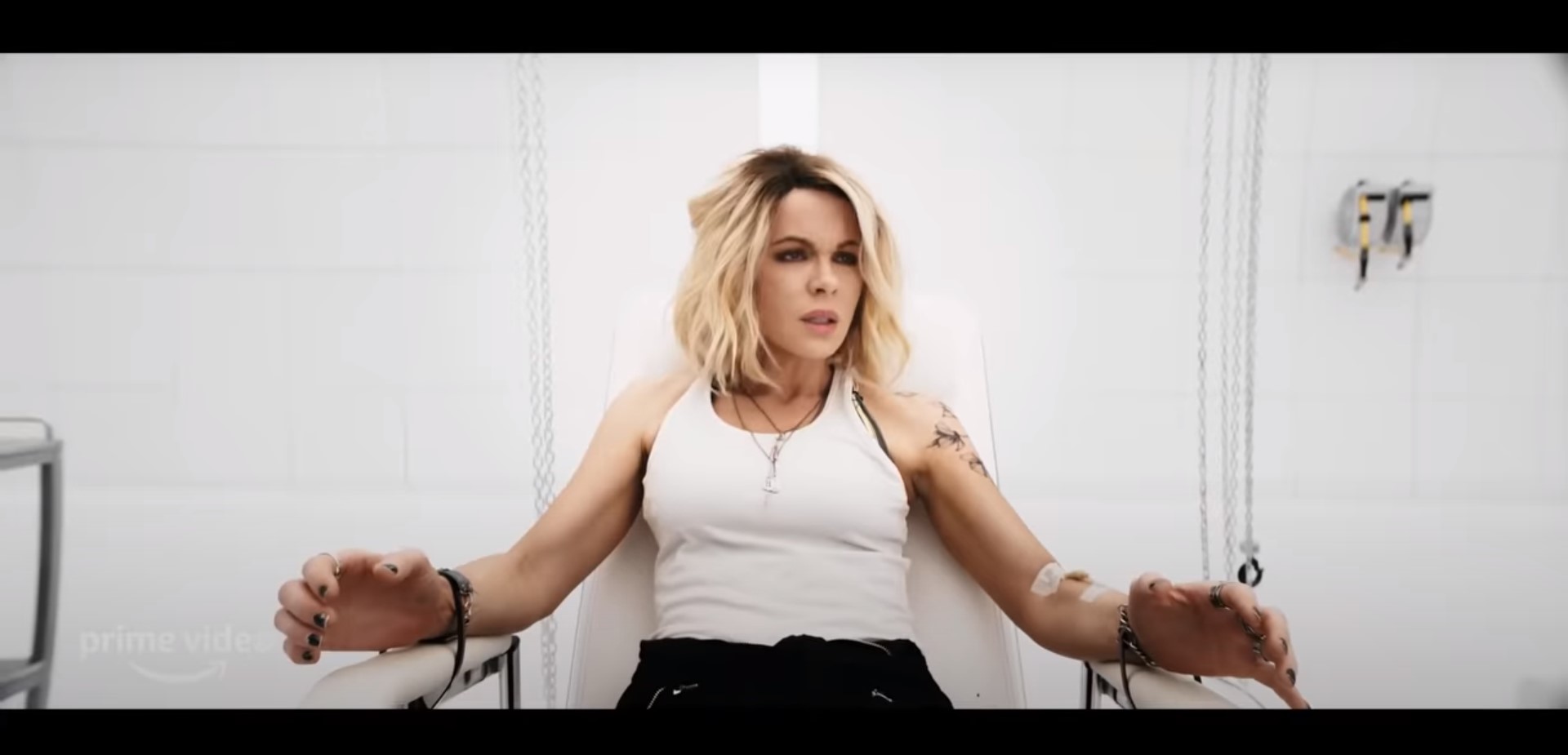
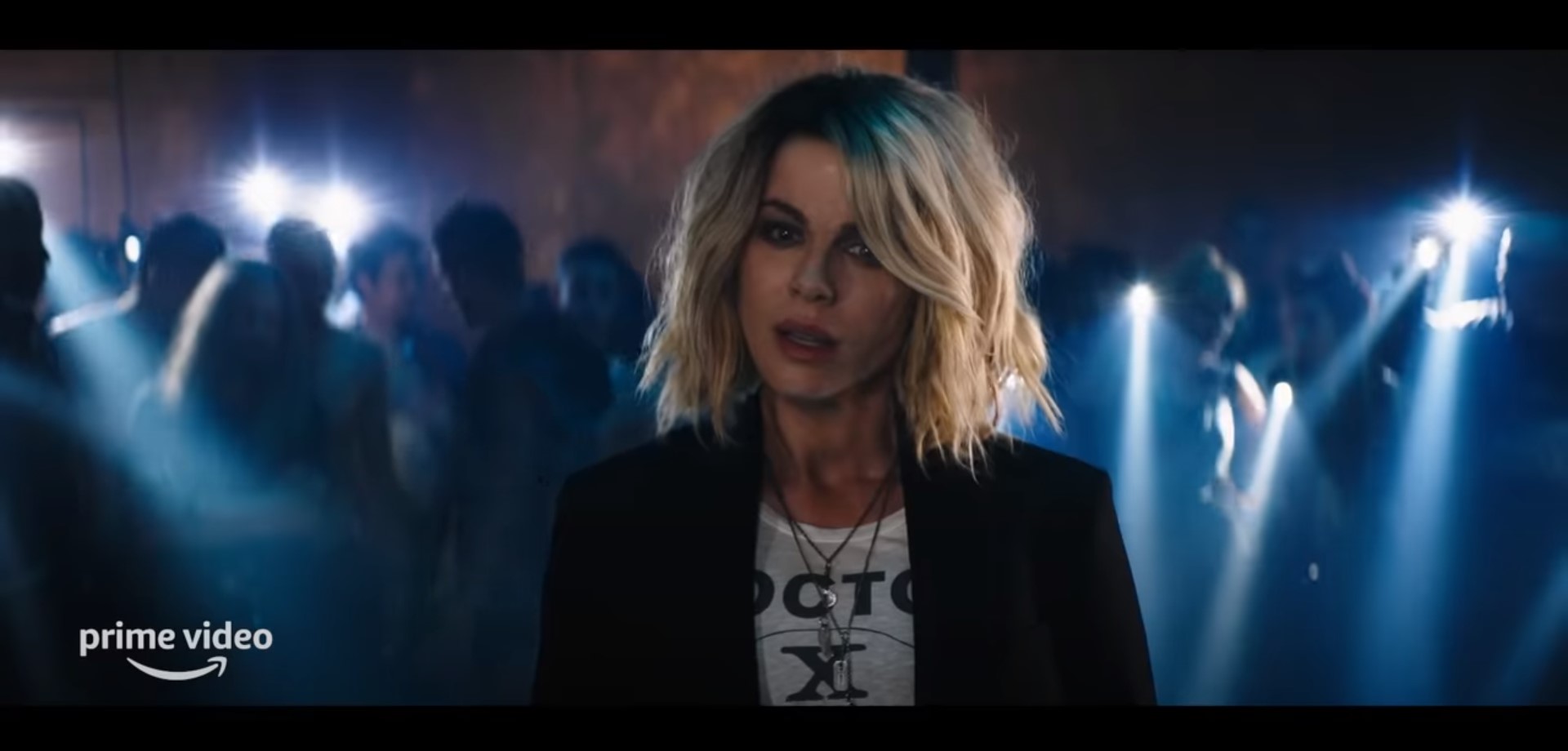
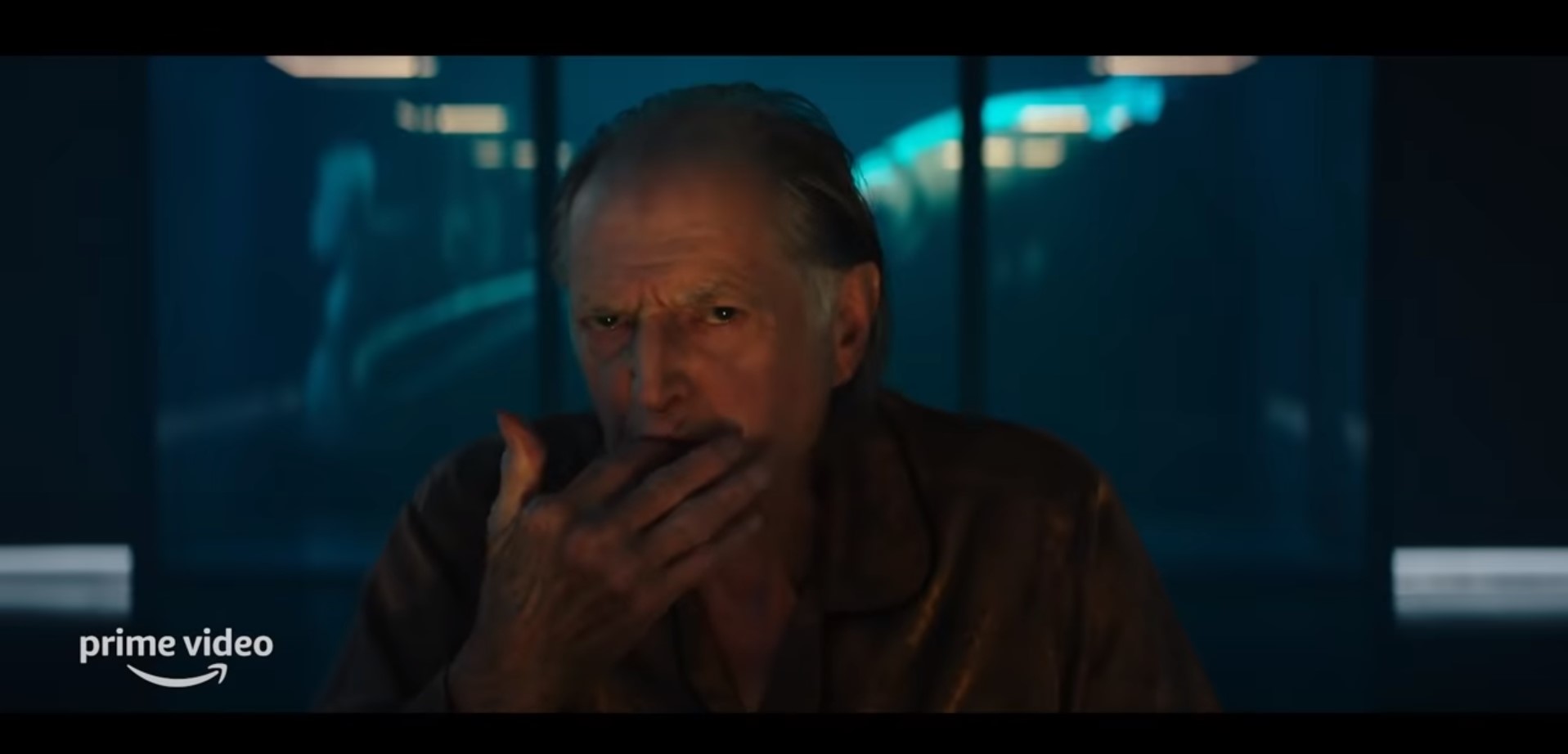
As if she never stopped playing the sleek vampiric werewolf huntress, Selene, of the “Underworld” franchise, Kate Beckinsale is stunning.  And I don’t just mean her timeless and ageless beauty as the English actress, who is living her best life at the latter half of her 40’s, proves that age is just a number in executing a physically demanding role with nearly every scene involving stunt work.  Unlike the gun-toting Selene, Lindy Lewis prefers her bareknuckle combat and a car battery alligator clipped to an old man’s genitals to get what she’s after.  Beckinsale plays the role beautifully equipped with a sharp, snarky tongue that’s pretty damn funny, well-timed, and consistently befitting to the Lindy’s personality.  “Jolt” has many colorful characters played by interestingly elected actors.  “Suicide Squad’s” Captain Boomerang himself, Jai Courtney, finds himself as the unlikely sedative lover, Justin, to counteract Lindy’s explosiveness.  The Australian actor, who is more than a decade junior to Beckinsale, fills in “Jolt’s” ranks alongside the gruffy-raspy voiced Argus Filtch, I mean David Bradley (“Harry Potter” franchise), as the top-tiered bad guy who stamp-approved the hit on Justin.  Along the way, a pair of tenacious detectives pursue the wrongly accused Lindy as a welcoming pair polarized on how to bring in their suspect that isn’t based off corruption with “Orange as the New Black’s” Laverne Cox as the by-the-book cop and “Snakes on a Plane’s” Bobby Cannavale as a cop with a softer side for the pursued.  “Jolt” rounds out with Ori Pfeffer (“Shallow Ground”), Sophie Sanderson, Susan Sarandon (“The Rocky Horror Picture Show”) in a minor role, and versatile Stanley Tucci (“The Lovely Bones”) as the electroshock harness inventor and psychiatrist, Dr. Munchin.

While it sounds like I’m singing high praises for Wexler’s film that does indeed have an amazing cast, quick wit performances, can be funny, and great action, I find “Jolt” to be lacking that little Je Ne Sais Quoi as the French would say.  Maybe the breakneck speed story that follows an illogical and nonsensical means of progression overloads the system to where you fry out your organic circuit boards trying to keep up with Lindy’s investigative warpath.  Aside from the fact that figuring out what happened to poor Justin is no mystery, an overexploited trope spanning from every era of cinema, our heroine also nonchalantly strolls right into the middle of crowded street fights, police stations, and in and out of explosions with every aspect of her hell hath no fury like a woman scorned purpose seeming too easy without anything rewarding stemming from difficulty that surrounded her, leaving no tension to salivating over or achieve relief from her impossible no way out scenarios.  Even when Lindy is easily captured, tied to a torture chair, and still mouthing off to her captor, the bad guys still let her go…on purpose!  (enter mind blowing up here)  Speaking of things going boom, the limited visual effects work renders like a cheaply made for television spectacular, especially with the explosive finale ofan inferior inferno ball of combustion and flames composited over top the endgame skyscraper locale.  I have never loved and hated a film as much as I do “Jolt” and will have to wait until the – assumed – pipelined sequel to break this torment of indecision.

What might be considered to be vague and entertaining euphemism for addiction, “Jolt’ is high powered narcotics injected right into the sensory nervous system.  The Millennium Films feature will broadband across Amazon’s Prime Video streaming service on July 23rd under the Amazon Studio’s banner.  “Krampus” director of photography, Jules O’Loughlin, brings a chic and symmetrical contemporary noir to the look, using a not so severe fisheye lens to emphasize centered characters while wrapping the fluorescently lit background ever so slightly around them. Best scene is the torch lit brawl, tinted in a blue-purple shade, that makes for a simple yet grander cockfight. The steadycam work anchors down more of the fast paced punch’em, kick’em fight sequences which is a credit to O’Loughlin in making the scenes work for the audiences instead of the audience working to make out the scenes. Dominic Lewis caters the soundtrack’s pulsing electro score that does the trick by keeping up with the whiplash pacing, but barely sneaks in there as Lindy’s anthem to clean house. “Jolt” leaves Lindy’s book entirely unfinished with a well-knowledgeable human wrangler in Susan Sarandon to segue audiences into a possible sequel that will start off looking not too promising for our asskickin’ heroine. While there are no post-credit scenes, there is a slightly humorous, slightly minor character fulfilling bonus scene to looking for mid-credits. “Jolt” needs a little jolt itself in some areas of considerable concern, but the fast paced action doesn’t bore, the clever wit has endless sardonic charm, and there’s a little something for everyone to enjoy.

Watch “Jolt” on Prime Video coming July 23rd!  Dropping This Thursday!

Tune Into EVIL’s Overnight Radio Programming! “Ten Minutes to Midnight” reviewed! (MVD Visual / Blu-ray)


Veteran night shift disc jockey, Amy Marlowe, has hosted her own renowned punk rock show for the last 30 years.  On the night of a major hurricane rolling through town, the broadcast must go on as radio never sleeps, but Amy is bitten on the neck by flying bat prior to arriving into the station.  If things couldn’t get any worse, she’s trapped inside the station with the sleazy station executive who surprisingly introduces the disc jockey’s much younger and beautiful replacement.  As Amy deals with the sudden aftershock of forced retirement, she slowly descends into a topsy-turvy reality full of unannounced secrets, movements through her own past and present, and the unusually strange staff transforming into monsters inside the station walls.  To top it off, Amy craves blood.  Between the possibilities of unexpected grief and anger, rabies, or becoming something far more evil, Amy Marlowe, either way, is losing her grip on the real world.

The amount of thought and expression on blunt force change, numb appreciation, and profound existentialism worked into the allegorical dark vampire comedy, “10 Minutes to Midnight,” never steals from the narrative’s basic element, a breed of classically fed undead horror.  Writer-director, Erik Bloomquist, helms his sophomore feature film directorial that is also the second film written collaboratively with brother, Carson Bloomquist, following their 2019 debut thriller, “Long Lost.”  The Connecticut based siblings shoot “!0 Minutes to Midnight” at the ABC affiliated WILI radio station in Willimantic over the course of seven week nights, self-producing under the Bloomquist Mainframe Pictures banner alongside the third “Long Lost” screenwriter-turned producer, Adam Weppler, who also has a major role in the film. 

A soulful, applause-all-around performance by headlining scream queen Caroline Williams who makes her return to the DJ booth 35-years later after going face-to-face with Leatherface’s chainsaw in “Texas Chainsaw Massacre 2” and, by God, Williams still has the cold-cocking charisma of her 1986 self.  Pinned to be discarded by station exec Robert (William Youmans), Amy Marlow loses control of her on-air persona for the first time in 30-years of broadcast radio.  Williams is on target with Marlow’s salacious-pointing meltdown rant with a viperous, quick-witted tongue spurred by the very news of her canning that started the hamster wheeling rolling, putting the pieces together of how much backstabbing, ungratefulness, and all-for-nothing hard work (and her younger days’ sexual servitude) becomes a deafening cacophony of noise before her Ten Minutes Before Midnight broadcast segment airtime.  Watching Williams work never gets dull from the one moment she’s rightfully screaming and ripping someone a new one to being overwhelmingly fractured by the venom that courses through her veins in a transformative and stunning performance.  Accompanying Marlow on her sudden career nosedive are a trio of dividing personalities that pull a different versions of the radio star.  Marlow’s seemingly only workplace friend and confidant, Aaron (Adam Weppler), has been a fan of hers ever since he was little, even providing a touching anecdote about him listening to her broadcast when he was a little boy, and there’s something between them, but teeters between admiration and desire that doesn’t flesh out because, again, it’s another problematic thematical item being circled around.  The other two characters rile up Marlow’s inner angst with their threatening postures or their maddening babble.  Nicole Kang (“Swallow”) and the late Nicholas Tucci (“You’re Next”), in their roles of hotshot millennial newcomer, Sienna, and the quirky and rambling security guard, Ernie, achieve just those respective levels of kicking someone when they’re already down with a flurry of annoyance.  Kang and Tucci deliver concentrated performances.  The acting is so entrenched into their characters, as well as with Weppler and Youmans’,” that when Marlow enters a status interchangeable, role-reversal, and nightmarish last stage of her existence coming to a conclusion, “Ten Minutes to Midnight” reups another thought-provoking scenario; one that has you frantically rewiring the tightly woven profiles your brain has determined about the characters to keep up with Bloomquist who is clearly three steps ahead.

Martin Scorsese once compared certain films to theme parks, noting their cinematic worth only in their high octane action entertainment and special effects that draw audiences in like moths to a flame and never letting the actors do the meaningful work themselves.  “Ten Minutes to Midnight” is a blue-chip, character driven vampire story rare to these parks.  Bloomquist’s themes on ageism, sexism, regret, change, grief, millennials, and more, snake through Marlow’s multifaceted transitional experience in a stylishly cynical fantasy.  Much of Marlowe’s perception isn’t tenaciously reliant on the consequences of the vampire bat bite to her neck.  Reoccurring as an example of perception throughout the film, whenever the camera hovers over a clock displaying 11:50 P.M., is the fading disc jockey finding herself stuck in a timeless rut, eternally clinging to her show in a disparate attempt to be relevant despite the inevitability of change as often noted by each idiosyncratic character – Aaron changing up her normal broadcast set start to call-ins, Robert axing her for younger talent, Ernie incessantly pointing out her symptomatic changes after the bite, and Sienna embodying the very epitome of change.  Marlow’s mind melds with her physical transformation as she goes through the seven stages of grief to at which one point she talks to who might be her younger self over the phone.  Marlow, initially hesitant, does not guide change, but to rather embrace it in a moment of accepting her own checkered past.  However, the dialogue I found to be most poignant was during the retirement party with sunken-eyed celebrators who just randomly show up for the event and Marlow turns to Aaron and comments on not exactly knowing who these people are.  There’s depth and soul in that comment for someone going through the process of retirement who sees unacquainted, new faces and perceiving them with only a tinge of familiarity and a lot of isolating loneliness.

If looking for wildly crafted and superbly acted vampire celluloid, I highly recommend Erik Bloomquist’s “Ten Minutes to Midnight” to sate your thirst now on Blu-ray home video from MVD Visual in associations with Jinga Films and Danse Macabre. The region free Hi-Def 1080p Blu-ray is presented in a widescreen 1.78:1 on a BD25 and has a runtime of 73 minutes. Shot in a shadows of hard lighting, the picture quality is relatively sharp in the lack of natural light, but that sharpness scatters like roaches when a spectrum wave of neon hues or a bathe of vivid tint casts a psychotomimetic inducing trip through Thomas Nguyen’s tightly quartered medium and close up angles. The overall coloring on the location and characters falls into a matte flatness that works to the lightings advantage when using rich exterior color sources. The atmospherics are Amsterdam sultry under the heat of a carnal fluorescent red and Nguyen’s lofty present steady cam endues a nostalgic flame of eerie dreamscapes similar to early John Carpenter, such as in “The Fog” or “Prince of Darkness.” The English language audio tracks come with two options, a 5.1 surround sound and a stereo 2.0. “Ten Minutes to Midnight” is an audio-visual probe into the mind and senses and so the obvious choice here is the 5.1 surround sound; however, the lossy dialogue track becomes quickly overwhelmed by the behemoth sound design and soundtrack, the latter being original music by Gyom Amphoux. Musically, not my cup of tea, but will find an audience and fits into the narrative perfectly. Bonus materials include a behind the scenes entitled “Take One,” audio commentaries by director Erik and Carson Bloomquist as well as star Caroline Williams, multiple featurettes, a Grimmfest interview with the Bloomquists, Williams, WIlliam Youmans, and Thomas Nguyen, Grimmoire Academy and Popcorn Frights intros, and a festival teaser trailer. “Ten Minutes to Midnight” is a dusk till dawn decimator of sanity, a wickedly fun vampire oddity, and has an unforgettable, batty performance from Caroline Williams.

Recommended!  “Ten Minutes to Midnight” now on Blu-ray!

EVIL Will Have You Die Laughing! “Too Late” reviewed (Gravitas Ventures / Digital Screener)


Non-stop and around the clock, Violet is the worked obsessed assistant to legendary showman and standup comic Bob Devore at the Too Late comedy club.  Violet books new talent and schedules the lineup day in, day out, but that isn’t all she does for her overly demanding boss.  Bob Devore has been around for a long time and during a very specific moon cycle, Bob needs to eat and we’re not talking pizza or Subway sandwiches.   Bob is a literal monster who feeds on devouring entire people, especially no comedy talent hacks provided by his assistant, Violet.  The longevity of Bob’s Life spans decades, if not centuries, as he sees people come and go right off existence.  When Violet meets a nice guy comic who Bob takes a shining to, the long time lonely assistant decides enough is enough and the time to stand up to the eternal stand up comedian and monster boss is now before what little she has is taken from her. 

I hear the Los Angeles stand-up comedy scene is tough.  Sometimes, even cutthroat.  In D.W. Thomas’ comedy-horror “Too Late,” a blend of mic night funnies with a hunger for full body snacks, dying on stage turns into a whole new meaning!  Thomas’ debut feature film kills it as a low-budget horror that incorporates figurative levels of monstrosities behind the curtain of a stand-up’s spotlight.  The 2021 film is the first screenplay credit for Tom Becker that tackles underappreciated long hours and work ethic of female workers in a typical male dominated profession., touching upon the toxicity of the business.  “Too Late’s” underground comedy-horror sees the light of day under the indie production studio, Firemark Media, and is produced by Thomas and Becker as well as executive producer and long time industry vet, Lonnie Ramati, a production business affairs manager dabbling in producer with the selected credits including “The Expendable” sequels, “Leatherface,” and 2019’s “Hellboy” under his belt. 

“Too Late” marquees mostly tongue-and-cheek talent in a cast list chocked full of comedians, starting with actress, writer, and jack of all trades stand-up comedian Alyssa Limperis in the headline role of Violet.  What’s ironic with Limperis’s “Too Late” role is that Violet is perhaps by design the least funniest amongst the characters as a lonely, borderline depressed, and overworked slave of an assistant to Bob Devore, a renowned variety show presenter and entertainer played by one of my favorite spoof performances by Ron Lynch from last year in Travis Irvine’s “Killer Raccoons! 2! Dark Christmas in the Dark!” as General Negligence.  As Violet begins to blossom after meeting humble comic, Jimmy Rhodes (Will Weldon), after bumping into him renting out one of her friend’s closet since, you know, L.A. is a tough, expensive town, this give Limperis ammunition to turn Violet sour on her abrasive, glass ceiling mentor.  Limpers excellently conceals intentions in each relationship step taken with her new unassuming and amiable beau and this really brings out Devore’ darkness crafted so well by the New York born actor and comedian with a gloomier roaring-twenties vaudeville vibe.  One thing I will say about the chemistry between Limperis and Weldon is I didn’t think there was much spark as their flirting banter catered to good friendzone material.  Perhaps used for their more syndicated appeal, Mary Lynn Rajskub and Fred Armisen add very little to the mix.  “24’s” Rajskub is a no-nonsense hotshot comic who has Devore wrapped around her finger whereas Armisen plays a nearly simpleminded stage hand who adds a bit of levity to the darker tone with his pudding cups and indecisiveness on blue filter gels for the spotlight.  The rest of cast pans out with Jack De Sena (“The Veil), Brooks Wheelan, Jenny Zigrino, Billy Breed, and Paul Danke. 

“Too Late’s” opening drive buildups a focuses around Violet’s passively aggressive position in being an undervalued assistant to her bark-and-you-jump Boss.  Constantly scribble but unenabled to perform her own material be her own self-starting, stand-up comedian, Violent falls into a lonely state that she is unaware of and it takes her best friend/roommate’s lighthearted berating to get Violent to come to a Jesus moment with her total profession and lack of relationship unhappiness. What’s not in the prevalent in the first act is Bob Devore’s permanence, his beastly transmogrification, and his appetite for anthropoids. If you didn’t read the synopsis beforehand, the acute dark turn “Too Late” takes comes at a shock because of how little-to-no prep there is setting up the true Bob Devore. A backfill of creeps a long, like opening the little chocolate stuffed doors on an advent calendar, in a wait and you’ll get more character treats up to a grand finale. About two-thirds of the way through, “Too Late” starts to flounder with what to do about Devore as a character, never expressing a full delineation of character to how Devore ended up at a nightclub, or who, or actually what, the actual hell is he and how Violet, who isn’t as innocent as one might believe, became so fatefully involved. The underlining theme here, noted explicitly in the title, is don’t hold yourself back no matter the circumstances, whether be an actual monster or a monstrous personality, because life is short, time is of the essence, and carpe diem! Violet, a hard working female in a male dominated industry and is undercut by not only her dominating boss but also her advantage taking male peers, need a monkey wrench in the gears of a monotonous, browbeaten life and that happened to be Jimmy Rhodes, a nice, non-threatening, and unimposing comedian who seemed to be just be handed the keys to Violet’s rightful castle just because he’s a man, and though she falls for Jimmy, that’s the career careening straw that breaks Violet’s abuse absorbing spirit.

With a dry wit, “Too Late” black humor is more figurative than funny but first time director D.W. Thomas makes good on her debut horror-comedy that has released this month in select theaters and on digital platforms, such as iTunes, Google Play, Fandango Now and all major cable/satellite platforms from Gravitas Ventures. A digital screener doesn’t allow me to fully dive into the A/V quality but the Scott Toler Collins cinematography grasps the underground comedy scene experience, selling the location of an boutique variety show club, hard mood lit in various colored staged lighting with a smoky irradiance, of tight medium and closeup shots that kind of hover amongst the characters. “Too Late” is not effects heavy though maybe should have been to make Bob Devore a real menacing presence as much of his late night snacking is done off screen, through shadows, or blurred during a shallow focus. We always get the aftermath Bob Devore, bloated and bulging at the seams from a big meal, like a secondhand Eddie Murphy fat suit from “The Nutty Professor.” Still, kudos to Mo Meinhart (“The Walking Dead”) in making Ron Lynch appear farcically 40lbs heavier in what you might typically seen in a Looney Toons episode. Bucking the more modern trend, this indie picture has no bonus scenes during or after the credits. The in-film stand-up is spotty at best but “Too Late” has a lot else to focus on with a deeply disturbing look at machismo arrogance and sexism inequality that are the relevant horrors of today.

“Too Late” on Amazon Prime!

You Can’t Run From the EVIL That Seeks Out the Competition. “Homewrecker” reviewed! (101 Films / Digital Screener)


Michelle is at the point in her life, struggling as a 30-something year old interior designer, where the urge to have children is strong.  When trying to conceive with her husband seems to be going downhill, she is befriended by an overly obsessive stranger, Linda, who has took an uncomfortably intense interest in her personal life.  An innocent enough invitation back to Linda’s house proves costly with Linda’s flickering infatuation for Michelle’s private business that turns quickly sour in a cat and mouse game of survival.  Trapped, Michelle must understand Linda’s madness in order to stay alive.

Ca-ra-zyyy!  That’s one of many ways to label Zach Gayne’s woman-on-woman scuffle in the comedy-horror “Homewrecker” that will surely turn many feminist heads at breakneck and contentious speeds with the better woman standing scenario.  Gayne’s freshman film tests the wills of two very different women and their counter mindsets while excavating a common core connection rooted subconsciously deep within them both.  A distinction that gives the 2020 riotous feature an edge is the two sole actresses, Alex Esso (“Starry Eyes,” “Doctor Sleep”) and Precious Chong (“Luba”), daughter of famed stoner comedian Tommy Chong, portraying Michelle and Linda are also “Homewreckers” cowriters alongside Gayne, equipping their characters with an authentic image by filling the roles themselves and getting out of the project exactly what’s desired.  The trio also produce the film in a coproduction with fellow producer Josh Mandel of Industry Standard Films and under the financials of Precious’s mother Shelby Chong, Chris Morsby, and Delaney Siren as executive producers.

Precious Chong, hands down, steals all the glory in “Homewrecker” with her wide-eyed, mentally unstable, zany, and stuck in the 80’s single white female that makes Glenn Close performance seem diminutive and more like an innocent and shy little crush in “Fatal Attraction.”  Linda epitomizes the very definition of crazy as a person unable to progress from an era of her peak youth being the most popular girl in school, judging by the VHS tapes, 80’s soundtrack, and outdated board games, I’d say Linda’s popular party girl inner nature hasn’t disembarked from the late 80’s to early 90’s train, and Chong delivers a singularity tweak of neurosis and delusion that frighteningly teeters from over exaggeration to real representation.  Unfortunately, Chong’s invasive, off-the-rocker performance overshadows Alex Esso’s more level-headed, amiable, and fight or flight Michelle and her unconventional responses and reactions to Linda’s incessant behavior in, perhaps, a more poorly written character.  Michelle is the too nice to the point where opportunities arise for escape or attack and she chooses the total opposite in trying to reason with an unreasonable person.  The motivation behind Michelle for even going to Linda’s house is rather slim so either something deep in her subconscious wills her to go (maybe Linda’s eagerness to lend an ear on a torrent of personal unloading) or she’s a just gullible to a fault.  Rounding out the cast is the man in the middle, Robert, played by Kris Siddiqi and the friendly neighbor Wilson, played by Tony Matthews (“The Craft: Legacy”), in a bit part that’s a clever homage to the Wilson character in Tim Allen sitcom, “Home Improvement,” as he peeps just over the fence to say hello as well as an contradictory play on the “Homewrecker” title.

Aforementioned, there is gray area in the character actions and rationales that thins much of the story’s harrowing affect and even seeps slightly into the more dark comedic moments.  Yelling (in my head) at the screen for Michelle to jump out the window (after lingering half out for clearly a minute) or taking advantage to overpower Linda (during a moment of long poignant embrace) was just a waste of my mental breath as the Michelle is frustratingly too timid, too nice, too afraid to cut the unseen bounds that holds her back from reinstalling balance in her upheaved life held in Linda’s unstable hands.  The pacing a bit of a drag as well by holding onto scenes, with various cuts, longer than necessary.  For a film slightly over an hour long, the conversing segments between the principle characters, Linda and Michelle, could last up to 20 minutes with more than most of the chat awry by Linda’s idiosyncrasies.   What works for “Homewrecker” is single day story set inside Linda’s home that really hones in and develops the snowballing turmoiled relationship between the two women. Being the film’s strong suit in unveiling the crux of the problem that’s not surface level crazy person versus sane person, the plot point revelation truly did blindside me and I was like, whoa.  Everything made sense without having to dig deeper into exposition to understand the minor details of what was happening exactly.  “Homewrecker” also has great brief climatic gore involving an emblematic sledgehammer and a pair of sharp scissors that, again, comes unexpectedly from a cat and mouse game that has been rather tame for most of the film.  Zach Gayne’s film pleasantly puts a blood red cherry on top of a deranged ice scream sundae dripping with fanaticism fudge in a scrumptious little fatal attraction.

Efficiently compact but just as aggressive as an overly jealous and overactive girlfriend plagued by psychosis, “Homewrecker” premiered it’s way digitally into UK homes by 101 Films back on May 24th.  The Toronto, Canada production is presented in a widescreen 2.39:1 aspect ratio with a lean runtime of 76 minutes.  Co-producer Delaney Siren serves as the cinematographer for “Homewrecker’s” regular split screen and multiple angle shots denoting a clear sense of where each character location is without the film feeling like a typical slasher while maintaining the focus on telling both women’s side.  “Homewrecker” marks Siren’s first feature film as a cinematography, but has multiple credits in the genre for macabre inspired music videos under the Toronto based music recording and film production company, “Reel Wolf Productions.”  For a film that has completely and satisfactory bookends, there are no bonus scenes during or after the credits.  Quirky and dark, “Homewrecker” is a read between the lines comedy-thriller about abduction, devotion questioning , delusional obsession, and honesty.