EVIL’s on the Shallow End of “Deep Space” reviewed! (Scorpion Releasing / Blu-ray)

“Deep Space” Invades Blu-ray on Amazon.com!

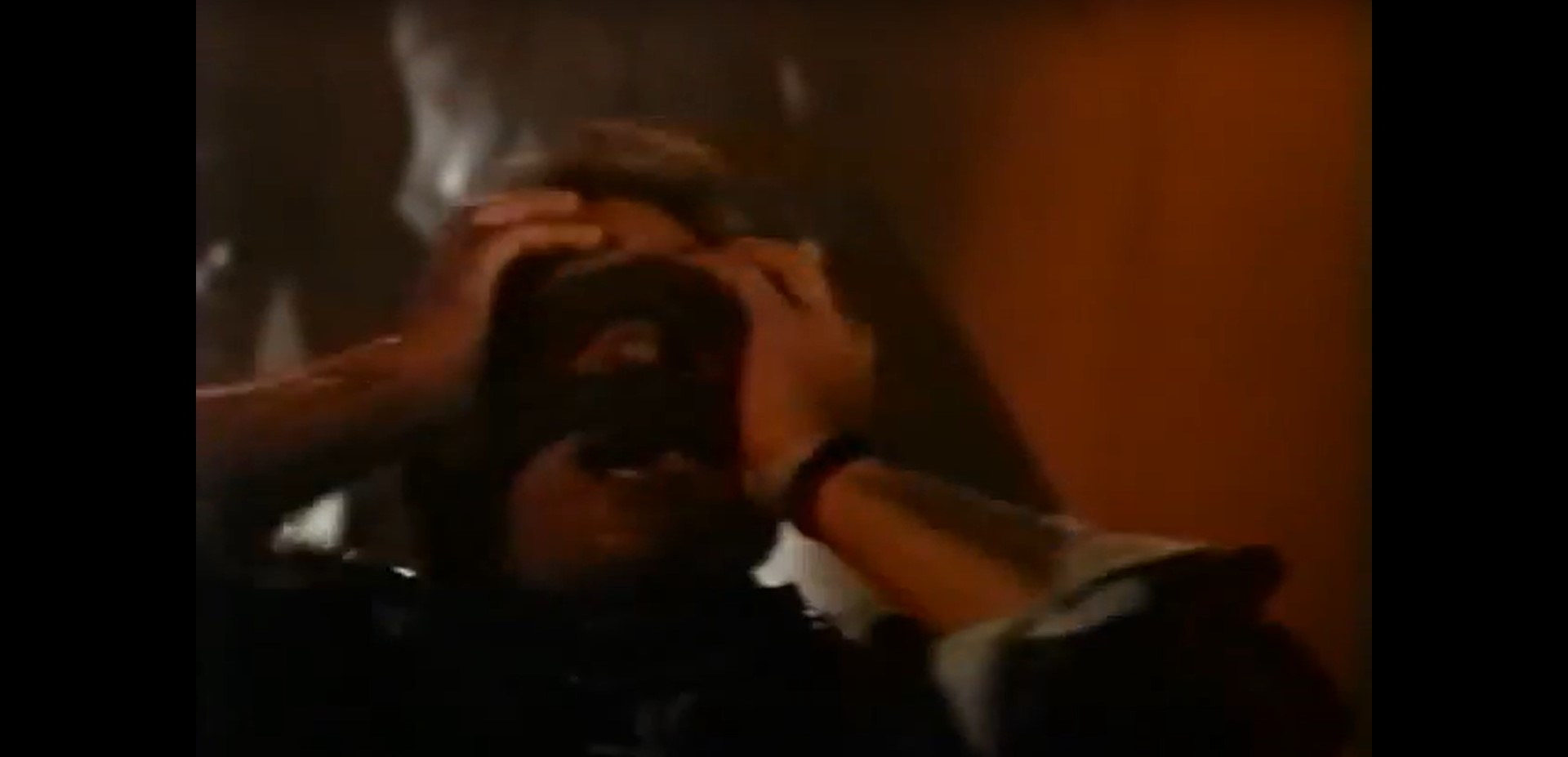
A government funded space craft containing a monstrous biological weapon crashes to Earth.  The organic creature is genetically coded to be a killing machine with a craving for eating it’s enemy and, now, it’s loose in the city and not responding to the scientists’ command self-destruct codes.  Tough and obstinate cop Ian McLemore and his partner, Jerry Merris, are ordered ot investigate the crash site before government agents take control of the case, even removing a pair of strange organic pods with them for further examination.  When a couple of close colleagues are shred to pieces at the hands of the creature, McLemore will stop at nothing to figure out what’s wreaking havoc in his city and blow it away.  

1988 – a weird, yet greatly satisfying transitional period of fading 80’s horror into nipping at the insanity of 90’s brazen prosthetic creature effects right before the turn of the computer generated decade.  Granted, Fred Olen Ray’s Sci-Fi horror “Deep Space,” which is ironically set on Earth, is very much an enamored 1980’s horror, but the Olen Ray film is where you can kind of see the turning of change on the horizon when the story’s ideas become too grandiose for tangibility alone, no matter how much us fans love to see practical effects over CGI.  The script, cowritten between Olen Ray and T.L. Lankford (“Hollywood Chainsaw Hookers,” “Fatal Passion”), is massive more expensive than anything the filmmaker’s had previously done and with a $2 million budget, “Deep Space” gets a giant explosion, high speed car scenes and wreckage, the iconic face and voice of Charles Napier, a Xenomorph-like creature, and a ultra-bloody chainsaw scene that could give “Evil Dead’s” Ash Williams a run for his money.  “Deep Space” is a production of Trans World Entertainment (no, not the same monikered company that sunk money into the bleeding financially physical media brick and mortar outlets like FYE, Camelot Music, or Suncoast) and shot in Los Angeles under producers Olen Ray, Alan Amiel (“Inner Sanctum”), and Herb Linsey (“Neon Maniacs”) with Yoram Pelman (“Commando Squad”) as executive producer.

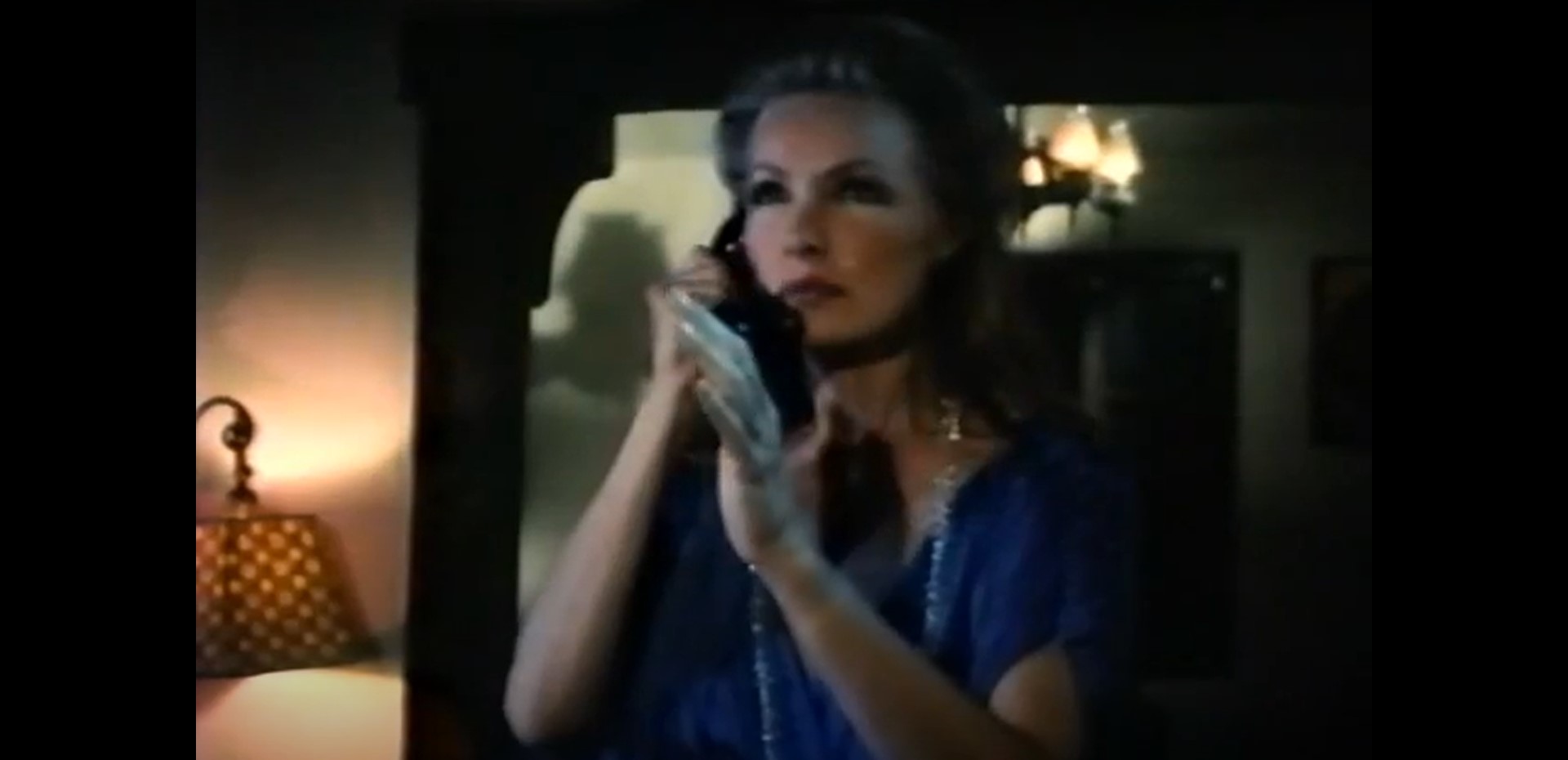
At the center of the chaos is Ian McLemore, a hardnose and stubborn, harmlessly sarcastic detective who goes against the authoritative grain and cuts through bureaucratic tape to get the job done.  Playing McLemore is the unmistakable Charles Napier.  The “Rambo:  First Blood Part II” and “The Silence of the Lambs” actor, who is about as legendary as they come in supporting roles, lands his own lead man role with his own buxom beauty romantic leading lady in Ann Turkel {“Humanoids from the Deep”), as a new, but experienced, cop, Carla Sandbourn, on the L.A. force.  Experiencing Napier as an attractive male lead was a little more off-putting that initially thought.  The veteran actor, who began a career in the movie picture industry in his early 30s which was later than most of his counterparts, is hovering around early 50s in this role, middle of the ground with his physical appearance, and has a masculine square chin akin to Ron Pearlman with matching hair color to the “Hellboy” actor.  At an age gap of approx. 10 years between them at the time of filming, Napier and Turkel make their courtship appear easy; in fact, almost too easy as Turkel’s drops her shirt at the mere sight of McLemore dressed as a Scotsman blowing away at bagpipes for a gag effect in sleeping with him.  Both Napier and Sandbourn are charming enough to pull off a love affair without causing too much of a they’re so old stir.  “Serenity’s” Ron Glass plays the casual with the flow Partner Jerry Merris, “The Inglorious Bastards’” Bo Svenson is full of patience as the McLemore insubordination absorbing Captain Robertson, and the original Catwoman herself, from the Adam West “Batman” television series, Julie Newmar as a psychic who can clairvoyantly see the creature’s murderous mayhem.

The fact that “Deep Space” doesn’t take place at all in space is innately tongue in cheek to begin with, but that brand of flippancy courses through the film’s veins despite the blood splattering and semi-serious veneer, weaving between an action-horror and a horror-comedy during the entire 90-minutes.  Some of the comedy is intention, such as McLemore’s husky wit and sarcasm, but there’s also the extremely foggy campy side to this gem.  Some of these elements include the creature being hinted as a genetically mutated cockroach or the left field use of Julie Newmar’s psychic abilities that are randomly injected the storyline for the sole purpose of forewarning McLemore over the telephone rather being an intrinsic piece to stopping the creature.  The creature carnage would undoubtedly be investigated and exterminated without the psychic’s help, making her character farcical in futility.  “Deep Space” also pulls a little inspiration from “Alien,” maybe even the sequel, “Aliens,” with a toothy, long-headed, and eyeless black organism that resembles much like a Xenomorph or the Xenomorph queen and there’s also a near shot-for-shot sequence of a security guard whistling to and trying to persuade a cat to come to him while the monster rises from behind and strikes a fatal blow.  The scene is very reminiscent of Harry Dean Stanton’s death in “Alien.”  Being campy has it’s highlights but never can fully overshadow scenes that erect suspense or are saturated with gore which “Deep Space” has both with a combination of editing and piercingly sharp sound design and a rip-roaring, blood-splattering chainsaw kill that’s leaves that good metallic taste in your mouth.

There’s no escaping the blood-hungry tentacles of the “Deep Space” monster coming at you in a brand new 2018 high-definition master Blu-ray from Scorpion Releasing, leased from MGM, and distributed by Ronin Flix and MVD Visual. The hard-locked region A Blu-ray is presented in an anamorphic widescreen 1.85:1 aspect ratio and is rated R. Fred Olen Ray knew how to develop an eerie, twirling fog and wind atmosphere and this master crisps up that iconic trope image. Textural details and natural-appearing skin colors are delineated nicely throughout as you can make out every little blemish and hair on a shirtless Charles Napier as well as really getting into the slimy orifices of the creature and having a sense of its viscosity with a decisive sheen. Black areas are inky and dense with the right amount of grain in the overall picture and no obvious signs of image posterization, retaining the natural shadowing, along with no cropping or border enhancements. The English language DTS-HD master audio stereo finds common quality ground with a tidy dialogue track that does Napier’s resonating and recognizable jest justice. However, there is some hissing early on into the film, especially in the lab scenes in the contentious dialogue between the military general and the lead scientist. Omar Tal’s sound design proves vital to the story that relies on the screeching, the scuttling, the whooshing of tentacles, and the booming roars of the creatures, coinciding appropriately with Alan Oldfield and Robert O. Ragland’s rather run of the mill serrated and discordant electronic score. What “Deep Space” Blu-ray lacks is robust extras with only an audio commentary with director Fred Olen Ray and a scene selection index. “Deep Space” ages about as well as you expect over the last 35 years, but this Fred Olen Ray creature feature relic becomes rightfully preserved for being quintessential B-movie verve that no longer seems to exist in today’s age and also the fact that Charles Napier wears a kilt.

***Stills do not represent or were captured from the Blu-ray release

“Deep Space” Invades Blu-ray on Amazon.com!

Beware the EVIL Bite of Silver Teeth! “The Cursed” reviewed! (LD Entertainment / Digital Screener)


Lord Seamus Laurent and the neighboring landowners show grave concern for the recent Gypsy encroachment upon their shared property.  In proactivity protecting the laboring residents and the pastoral farmland of the feudal system, Laurent and fellow landowners order the removal of the Gypsies by hiring ruthless mercenaries who slaughter every last Gypsy in cold blood and bury them in the land.  When every resident on the estate, from villagers to the lord’s family, share a common nightmare of silver teeth buried with the Gypsy corpses, an evil curse unleashes upon the farmland with a killer beast roaming, hunting every resident.  Gypsy chasing pathologist John McBride enlists himself helping Laurent and the villagers to not only relieve them of the cursed creature, but also face his own tragic past linked to the very same evil he pursues.  

Lycanthropy an allegory for the cholera outbreak in late 19th century Europe?  That’s the seemingly centric subject to Sean Ellis’s written-and-directed, folkloric supernaturally spun creature feature “The Cursed.”  Though narratively set and actually shot in France, “The Cursed,” or else better known internationally under the original title “Eight for Silver,” is comprised nearly of all English actors with very few from France and an American in the principal lead to wage war against a swift enemy that kills anyone without prejudice and without mercy.  No, I’m not talking about the wolfish creature that rips settlers and lords to shredded sacks of meat.  I’m speaking of the Cholera epidemics of the 19th century and while Ellis’s metaphoric intentions lean more toward the pains of broad-based additions, our modern pandemic plight felt more widespread linking both the past and present with an event that plagued countries like a curse with unsystematic cruelty and didn’t differentiate between the poor unfortunate and the opulent.  The Los Angeles based production company LD Entertainment finances and produces the feature under Mickey Liddell (“The Grey,” “Jacob’s Ladder” ’19) along with executive producers Alison Semenza (“Lost Boys:  The Tribe”) and Jacob and Joseph Yakob.

“The Predator’s” Boyd Holbrook walks the pathological shoes of John McBride, a man haunted by his past in his continuous pursuit of nomadic Gypsies, and it just so happens that McBride falls right into the thicket of, unknown at the time, Gypsy-made bedlam as missing children and ravaged dead bodies pop up.  Holbrook tries to corral in the pathologist’s inexplicable purpose as the character is often too withdrawn from his intent on what he’d actually do if he came across any Gypsies, which McBride never does.   Instead, McBride feels like a hero who’s dumped in the perfect place at the perfect time to be the hunter of what his pathological experience and instincts claim to be the death-dealings of a wolf while the village becomes the bewildered and unassuming hunted, led by the 2019 “Hellboy” actor Alistair Petrie as the noble estate lord Seamus Laurent stewing stoically in his own despair and desperate head space in search of his missing son (Max Mackintosh). The only character acting rationale in a conventionally proper manner in her reactions to the whole situation is Seamus’s wife Isabelle (Kelly Reilly, “Eden Lake”), with a blistering heartful longing for her son, and their daughter Charlotte (Amelia Crouch, “The Woman in Black 2: Angel of Death”), with a shock-induced and childlike response to her brother’s disappearance. Yet, Isabelle and Charlotte alter course. Isabelle weaves in and out of anguish to the point where her suffering is only implemented to benefit the story and Charlotte, well, Charlotte plainly disappears as a key supporting character who knows truly happened to her brother in the field and with a villager boy, Timmy (Tommy Rodge), who discovers the silver teeth etched with curse inducing rune symbols. The interactions between McBride, Seamus, and Isabelle never quite feel nature and complete, as if there’s an unspoken trust issue between McBride and Seamus or a mutual understanding or compassion between McBride and Isabelle that never leaves the hilt of the sword to see spark action. Nigel Betts, Roxane Doran, Richard Cunningham, Pascale Becouze, Simon Kunz, and Amazon’s “Hanna” star Áine Rose Daly, as farm hand girl turned white wolf, round out “The Cursed” cast.

Sean Elliss tweaks the werewolf mythos to try and shake up the genre, turning it up on its head to dust off a tired narrative of man bitten by wolf, man turns into wolf, wolf terrorizes villagers, and villagers kill wolf with silver bullet. Instead of silver weaponized for good, “The Cursed” weaponizes it as Gypsy revenge, a calling card that leaves bite marks with lasting impression until every single inhabitant, guilty or innocent in the crime against the Romanian wayfarers, is laid to waste by its transformative power. Though unexplained in why the Gypsies forge silver fangs etched with a curse other than a storm is coming, as if perhaps they’re clairvoyancy provided them with a disturbance in the air instinct rather than exactly what to expect, the teeth are a nice cinematic touch of menacing terror literally inscribed on each tooth. “The Cursed” atmospherics of folkloric superstitions blended into a broodingly dense landscape of low-lying fog and uncomfortably vast empty fields surrounded by a thickset of trees comes close to the likes of a Hammer horror setting, especially with the period of time in which “The Cursed” plays out in that has been Hammer’s niche era. The setting might be the only controlled aspect of Ellis’s take on the werewolf genre as the werewolf, if that is what we can even call the abomination of mutation, is written from out of our traditionally known contexts and into a new breed of metamorphism. Hairless, white, and somatically encasing, Ellis’s monsters radically redefine our expectations with a beast that literally consumes our very being and turns us into an unrecognizable fiend amongst the flock. Fast, agile, and ruthless, this newfangled fang-bearer up until the end never received any insularity resentment from me, but the ending abruptly diminishes the near mindless brute strength of a beast with a hint of intelligence in its ability to sound like person to draw the hapless into a trap and that’s where a line needs to be drawn, especially when the technique is used as an out of the blue device toward an endgame.

Whether be a narrative about an all-consuming addiction or about a precipitating plague of chaos in the time of cholera, the uniquity of “The Cursed,” semi-diverging from one of the most revered classic monsters in our history, may be an immediate turn off for many traditionalists, but the film does right by the savagery gore, the minatory threat that lingers in every scene, and that no one is immune from danger. LD Entertainment is set to release “The Cursed” this Friday, February 18th, in theaters. Since this was a digital screener, the audio and video will not be covered. No bonus mater or extra scenes during or after the credits were provided. Sean Ellis provides that creepy fog-laden and dense folky aesthetic of barnyard chic while still conditioning an upscale appearance of a beautifully crafted production from a native French crew of productions designers in Thierry Zemmour and Pascal de Guellec as well as costume designer Madeline Fountaine. “The Cursed” starts strong with visceral intent to be novel by offering callous over civility, a dysmorphic werewolf, and a new set of blingy chompers fit for Lil’ Wayne, but gaps riddle unignorable holes into the story and its characters that ultimately becomes the silver bullet obliterating the beastly nature this new breed of wolf desperately needed to survive unscathed.

Bestiality. Borowczyk Pushes the Boundaries with EVIL Themes. “The Beast” reviewed! (Blu-ray / Umbrella Entertainment)

“The Beast” Available on Umbrella Entertainment’s Beyond Genre label at Amazom.com

Marquis Pierre de l’Esperance, a French lord on the brink of financial ruin, is able to swing a deal before the death of the well-off English tycoon Philip Broadhurst. Under the conditions of Broadhurst’s will, his daughter Lucy must marry I’Esperance’s introverted, and equestrian obsessed son within six months after his death. Lucy, and her aunt Virginia, travel deep into the French forest to the deteriorating chateau to do a first ever meet and greet between the two soon-to-be married. Marred by centuries old local legend of a lustful beast who sexually defiled the Lady of the estate’s family lineage, I’Esperance aims to restore order by marrying into fortune and leave old cockamamie tales behind him. Yet, Lucy can’t shake vivid and stimulatingly graphic dreams of the romping woman and beast, leading to speculation whether the legends are true or not?

Certain types of filmmakers push the limits and exude their provocative talents to blur the lines between arthouse cinema and pornography. Those same filmmakers would argue that arthouse cinema and porn are, in fact, nearly one in the same if complimented with an intriguing story full of subversive subtext sure to outrage the status quo. Walerian Borowcyzk is one of those auteur artists basking in the absurdity and the arousing aspects of his films. The Polish writer and director wrote and helmed “The Beast,” aka “La Bête,” a one-part sex-comedy and one-part fantastical horror that is one-whole bizarre beyond our wildest dreams. “The Beast” was once considered to be a part of Borowcyzk’s short film collection of erotic stories known as “Immoral Tales;” however, the short film shot was scrapped from the project and then reimplemented into a full-length feature with outer rim narrative built around it’s very thematical essences of bestiality and the corruption of man due to woman’s virtue, the latter inspired by the French novella “Lokis” by Prosper Mérimée. The France originated film was produced by Anatole Dauman under the French studio, Argos Films, which produced much of Borowyczk’s work.

“The Beast’s” ensemble cast play intrinsic notes toward the fullest extent of the narrative’s shell machination as well as the saturation of eroticism from the grifting lord l’Esperance to the chateau’s only manservant, who when not answering his Lord’s beck and call, is fooling around secretively and lustfully with I’Esperance’s daughter. Veteran actor Guy Tréjan unearths the very ill-humored presence of a struggling lord seeking to reclaim fortune and glory to his estate and family. Most of the time, we feel sympathy for I’Esperance’s inability to catch a break, but on the deeper, darker scope, I’Esperance hides many truths, keeps many secrets, and even black mails his uncle, Duc Rammendelo de Balo, played by legendary actor Marcel Dalio (“Super Witch of Love Island”), making the lord a villain of his own haphazard design. I’Esperance’s nitwit and reclusive son Mathurin is played by Pierre Benedetti, who has worked with Borowcyzk later his career in “Immoral Woman.” Not much of Benedetti is profoundly showcased, leaving much of Mathurin in the dark despite being a principle figure in the plot as the husband-to-be for the aspiring romantic Lucy Broadhurst from “Le diaboliche’s” Lisbeth Hummel. Hummel, along with 1995 “Castle Freak’s” Elisabeth Kaza as Lucy’s aunt Virginia, are supposed to be affluent English women travelling to France in order to settle future marital affairs with the I’Esperances, but Hummel and Kaza have such thick accents that no matter how proper their English may be, there’s still present the French and Hungarian elocutions in their English dialogue. Hummel does capture Lucy’s free-spirited, free-form sexuality so inclined by Borowcyzk as the director envisions her as the clairvoyant trigger that unsheathes an age-old curse to light, but Hummel is not the only participant in “The Beast’s” amativeness with Hassane Fall, Pascale Rivault, Julien Hanany, and sex-symbol Sirpa Lane (“Nazi Love Camp 27,” “Papaya: Love Goddess of the Cannibals”) paving a more perverse course with illicit affairs, object sexuality, and, of course, bestiality. Though none of these aspects were more than disturbing in comparison to Roland Armontel’s version of a local priest setting an uncomfortably affectionate dynamic with two of his alter boys that Borowyczk focused and lingered on when the chief characters have left the scene.

Trying to understand Walerian Borowyczk’s “The Beast” is akin to trying to understand the wanton complexities of the human psyche. In all its whirlwind of implications, “The Beast” is heavily and artfully abstract in a non-abstaining manner as sultry desires, no matter how forbidden, are the superior playthings utilized for Borowyczk’s totality of storytelling. The uber-sexual graphic tale invests little into the imagination with vivid imagery of genitalia in all shapes and sizes in organic and mythical forms. Yes, there is a lengthy opening scene of horse copulation with emphasis on each of the bulbous male and female’s sexual organs. Yes, there is also a satirical creature chase that transforms into a frolicking romp between a human woman and a dog-bear creature with a miniature representation of an erect horse member ejaculating like a geyser without an end. The excessive vehemence towards sex is Borowyczk’s gift to the audience toward feeling a flurry of mixed emotions from being a little bit peed, to a little bit put off, to even a little bit strangely turned on all in one sitting. Though sex is unusually celebrated in “The Beast,” the beast itself is also the representation of perversion, an animalistic and libidinous savage horndog lusting after the chastity of virgin women that’s allegoric to spoiled bloodlines and cursed households in a path of ruinous destruction, especially in the downfall of a crumbling aristocracy. Borowyczk injects and interjects comedy to lighten the socially disturbing atmospherics of paraphilia and the social consequences that follow.

As part of their Worlds on Film:  Beyond Genres banner, Umbrella Entertainment releases Walerian Borowczk’s “The Beast” as volume #13 on a region free, 2K scanned Blu-ray in full 1080p High Definition.  Presented in the original aspect ratio of what once was the European theatrical standard widescreen 1.66:1 aspect ratio, the 35mm transfer provides a relatively clean viewing free of aging and blemishes albeit the innate agreement of healthy amount of grain that comes standard with celluloid film stock.  While color grading definitely looks non-existent in the release, a once over would have sharpened the image immensely from the slightly flat and natural color scheme.  The tri-lingual French, English, and Italian DTS-HD Master Audio 2.0 mono track is a compressed version from the 2015 Arrow Film’s Blu-ray release with an uncompressed LPCM 2.0 audio.  Virtually no difference in the lossless audio with also no difference in the synchronizing between visual and audio elements.  Dialogue runs smooth and clear with little-to-no hissing or pops and the same can be said about the more than adequate ambient track, the lively French Harpsichord piano soundtrack, and even the outlandish foley of beast sounds through the limited parameters of the two channeled output.  Special features pale in comparison to previous Blu releases, but are none-the-less impressive including 16mm behind-the-scenes, archival documentary footage in the making of “The Beast,” an introduction by film critic Peter Bradshaw, a featurette of Borowczyk’s beast sketches, letter of confidence to the producer, and a treatment to a potential sequel that never materialized The Frenzy of Ecstasy, an philosophical interview with the director Walerian Borowczyk, the director’s biography, a still gallery, and theatrical trailer.  Illustrator Simon Sherry designs new and exquisite cover art for the cardboard slipcover and snapcase cover that perfectly represents the tone of the story.  The cover art is also reversible with Hispanic poster art and praising critic reviews and quotes.  The release is certified R18+ for high level sexual themes and sex scenarios. “The Beast” is an upfront, artful, and confrontational film about bestiality and sexual corruption bred to challenge the formulaic narrative with a call of unbridled seduction and a flamboyant flare for a firm erect furry.

“The Beast” Available on Umbrella Entertainment’s Beyond Genre label at Amazom.com

EVIL Wants a Cuddle in “Benny Loves You” reveiwed! (Epic Pictures / DVD)


35-year old man-child Jack still lives with his parents, still plays with toys, and remains stuck in a dead-end job.  When his parents tragically die in a surprise birthday for him and his professional prospects at an all time low, Jack decides to grow up and improve his life, even if that means throwing away his favorite childhood stuffed teddy bear, Benny.   Being discarded in a blink of an eye resurrects Benny to life, seeking Jack’s affection like the good old days when Jack was a child.  There’s only one problem, Benny doesn’t want to share Jack’s love and the toy’s thirst for blood sends him into playful murderous rage against anyone or anything that comes near him.  Jack has come to terms with Benny’s intentions, even mocking up a new craze toy line inspired by Benny, but as the bodies pile up and a new woman comes into his life, Jack must confront his plushy childhood best friend to save what little of a life he has left. 

What an age us horror fans live in!  Our good guy doll Chucky makes a tremendous comeback these last couple of years with a reboot film and a new television series on SyFy!  Killer dolls are back, baby!  Joining in on the fun is another pintsized maniac with just about as much red coloring on its soft nap as Chucky’s stringy hair on top of his head and, also, sees about the same amount red when wielding a knife with homicidal intentions.  From the United Kingdom comes Karl Holt’s time to grown up or die horror-comedy “Benny Loves You.”  Holt’s a one man show in his debut feature film that he doesn’t just direct, but also is the writer, editor, cinematographer, composer, lead star, and producer of this heart-warming and heart-severing, cute and cuddly, gore show.  The 2019 released riot is an exclusive Dread Central (Dread) presented release of a joint production from Raven Banner and Darkline Entertainment.

Alongside Ken Holt as Jack, the failure to launch mid-30’s man still parent dependent, are a slew of individuals with a variety of personalities suited to Benny’s killer taste in protecting his most beloved human.  From home to the office, Benny slays through the competition in the game of life and death, starting with an indifferent bank representative, played by Greg Barnett (“Hot Property”), looking to foreclose on Jack’s family home.  Yet, Jack has seemingly always been destined for a grisly fate, just not his own, as his parents (Catriona McDonald and Greg Page) die in a “Final Destination” style accident rooted by the very theme of the story – his inability to grow up.  As when Jack and Benny’s new dynamic goes through a 180-degree positive spin on Jack improving his downtrodden life is when more unfortunate souls become ensnared in Benny’s mission.  More of the oppressive office environment, with snide performances from a pug pooch-adoring and stern boss in absolute deadpan by James Parsons and a jerk colleague in the running for a promotion played perfectly tat by George Collie.  Then there’s the love interest in Claire Cartwright (“Souljacker”) as Dawn, a toy tech engineer who finds common interests in Jack and falls for him.   Cartwright exudes pleasure seeking in an overreaching of every man’s fantasy categorized kind of gal.  Holt tries to maintain Dawn’s perfection with her own Benny-esque storyline but that never brings the character down to his level of trouble, leaving Cartwright cornered in being just a slave to Jack’s coyness instead of a sympathetic character.  Cast rounds out with Anthony Styles (“Razors: The Return of Jack the Ripper”) and Darren Benedict (“Aux”) as two oblivious cops who are actually inching closer to the truth as well as David Wayman (“Seven Devils”) as a real estate agent and Lydia Hourihan (“Inmate Zero”) as Jack’s ex-girlfriend.

While Benny may not have the massive sex appeal of a one Brad Dourif or a mega franchise with vary degrees of success, “Benny Loves You” is still a delicious small fry of the toys gone murderously wild horror-comedy subgenre that dapples into a little of everything from gratuitous gore to the heartfelt warm and fuzzies.  The blend of practical and composited computer imagery of Benny’s movements is the work of a mad genius and I’m sure we have Holt to thank for that as well under his many hats in production.  Benny strikes me more differently than the likes of “Child’s Play” or even the anthropomorphic toys of “Puppet Master” with an encompassing amount of personality.  From his cutesy voice box limited to only a handful of says like cuddle me or Ta-Da! to the way he flops around like a possessed rag doll with wide eyes and an ear-to-ear smile, Benny’s an easy villain to love and is easily able to root for when the unlikeable people of Jack’s life suddenly hem in with unforgiving, browbeating mercy, making Benny the cutest and most loveable anti-heroic punisher of the killer toy canon. Holt’s film doesn’t come out flawlessly unscathed, however, where minor issues of lightspeed pacing and choppy editing aims to get through one scene to the next leaving little to sink in when plot points, monkey wrenches, or heart-warmings transpire. Much of the background into Benny’s sudden erect to life goes unexplained but that Devil in the lack of details is better suited for a film about a discarded toy coming to life – “Toy Story” did it and look how successful Disney made that franchise – and while the whole film is fluff filmmaking at is finest, you have to find appreciation in the smallest details, especially with Holt’s forging of horror scenario tropes into embarrassing personal ordeals that don’t even involve the titular killer.

I’m sure “Benny Loves You” has already been through the toyetic process, at least on the indie production circuit, but, in any case, you can definitely own Karl Holt’s wonderfully macabre and instant cult classic on DVD home video from Epic Pictures, a Dread picture label. The not rated, region free release clocks in at 94 minutes and is presented in a widescreen 2.35:1 aspect ratio. Where Benny shines as a grisly tale of saying goodbye to your childhood stuffed friend, the clarity in the image state is not so defined with a meager detail and sharpness. Scenes with the matted CGI often appear blurry and chunky with Benny very flat in what should be his grand alive and breathing opus. The English language Dolby Digital 5.1 lossy audio too inadequate for the scope of content. Holt included a wide range of sounds, and this audio track is bridled to curb in an assortment of a blend of action, horror, and the downright awe of Benny’s cuteness. Dialogue a bit muddled but overall perceptible. So far, audio and visuals are a blinking sign to a rather cheapie DVD presentation and the lack of special features hits the last nail into the mass-produced coffin, reaffirming that the standalone movie home media is all well and alive and that’s okay with me in the case of “Benny Loves Me.” A chip off the old diabolical doll block, “Benny Loves Me” is an out of the blue hit, a real cutup, and the perfect Friday night fright to enjoy with your own personal favorite, stuffed animal buddy.

MUST OWN!  Bring Benny Home on the “Benny Loves You” DVD!

The Most EVIL Being in the Galaxy Doesn’t Stand A Chance Against Little Mimi. “Psycho Goreman” reviewed! (Acorn Media International / Blu-ray)

Brother and Sister, Luke and Mimi, discover a gem that unimprisons a dark alien warlord destined to destroy worlds.  The gem and the being are one, connected by the ancient forces powering the talisman, and whoever wields it can control the evil one.  Fortunately for now, the gem is in young Mimi’s possession.  The bossy and sassy preteen sees the alien, dubbed Psycho Goreman, as a new friend and toy, gallivanting around town catering to every Mimi whims.  Lightyears away on a distant planet, a council comprised with the forces of good, who banished Psycho Goreman to eternal banishment and imprisonment, learn of their once terrorizing tormentor having escaped his confines.  Leader of the council, an elysian warrior named Pandora, vows to track down their adversary and put an end to his existence, bringing a destructive showdown of good versus evil in Mimi and Luke’s small-town. 

The anomalous mind of filmmaker Steven Kostanski is vacillatingly distinctive and churning adulation for the late 1980’s to early 1990’s high camp, metal-infused horror films that heavily inspired him.  His latest written and directed Sci-Fi horror-comedy, “Psycho Goreman,” fits perfectly into Kostanski’s brand of stupidity, nonsensical, animation-saturated, bizarro reality horror that has made us, or at least me, fall heads over heels for his previous credits, such as “Manborg” and the “W is for Wish” segment of “The ABCs of Death 2.”  Kostanski is also a special effects guru having worked delivering gruesome terror and insane imagination skills to the big and small screen, but makeup FX artist takes a backseat to his employer, the Ontario-based MastersFX managed by Todd Masters, and they grab the reins by providing a slew of mixed bag practical and visual effects and animation styles that is a time warp back to the tangibly ridiculous and forged every follicle freakshow horror and science fiction celluloid from 30 some odd years ago.  “Psycho Gorman,” or “PG” for short, is a production of the pseudonym Crazy Ball Productions, as in the Crazy Ball game Mimi and Luke play, and Raven Banner, presented as an exclusive acquisition by RLJ Entertainment and Shudder.

To make something as ridiculous as PG to work, you need a colorful, wildcard cast to pull off every microfiber of manic personalities you can muster and sticking out with the wildest personality is not the titular character who is neither the brightest highlight nor the leader of the pack.  That spot was filled far before PG makes an unearthing introduction by the film’s smallest, youngest, and most delightfully sarcastic and ostentation lead in newcomer Nita-Josee Hanna as Mimi, who’s roughhouse and snarky sassiness goes unparalleled even up against the Arch Duke of Nightmares.  The dynamic plays on that whimsical idea of little girls with big personalities can be the center of attention.  In this case, Mimi requires the world, no, the universe to revolve around her ultra-spoiled nurturing.  Her possession of the gem gives her unlimited power with her possession of PG, played by undoubtedly hot and bothered by the latex suit, but otherwise good sport, Matthew Ninaber (“Transference”).  Hanna and Ninaber are an absolute joy to watch together with their contrasting comedic deliveries:  Hanna’s aggressive flamboyance compared to Ninaber’s subtle and solemn stewing.  Then there’s Mimi’s brother Luke, played by Owen Myre, who will have a role in the upcoming “Terrifier” sequel and one of the film’s running jokes is PG can never remember Luke’s name.  That lack of standout presence for Myre’s character is quite literal and not because Myre’s performance is forgettable and a complete wash (in fact, Myre is fantastic is the meek, submissive older brother), but between Mimi and PG, those overwhelming characters totally consume much of the attention.  Adam Brooks (“Manborg,” “Father’s Day”) and Alexis Kara Hancey fill in as Mimi and Luke’s lackadaisical father and frustrated mother while Kristen MacCulloch (“Motherly) suits up as the PG’s holier-than-thou arch nemesis, Pandora, in Templar species form while Roxine Latoya Plummer blends in with the rest of the population with Pandora’s human form.  “Pscyho Goreman” rounds out with Alex Chung, Scout Flint, Robert Homer, Conor Sweeney, Matthew Kennedy, Asuka Kurosawaw, and Scott Flint.

“Psycho Goreman” necessarily fills a pivotal void.  Most genre films aim to pass along a message, sometimes important to the filmmakers, to convey a lesson, an idea, a political or social protest, or to spark awareness on an issue, but with Steven Kostanski, watching his work is like taking a vacation with an immense clearing of any and all undercurrents and obvious messages for pure, unadulterated, frequently mindless entertainment that just looks cool.  Underneath the composited animation and practical effect layers is an anything goes, no strings attached, brutally-caked, dopamine drip that causes glossy-eyes and a warm wash over of all the senses.  Side effects I can definitely live with and be refreshed by when needing a break from reality.  The amount of space medieval practical effects alone makes “Psycho Goreman” feel like “He-Man and the Masters of the Universe” and while that Gary Goddard 1987 science-fiction fantasy starring Dolph Lundgren, perhaps, heavily inspires Kostanski’s intergalactic battle-royale on Earth, the story mirrors much to the tune of “Suburban Commando” with Hulk Hogan.  Hear me out.  Rogue-vigilante, played by Hogan, crashes into Earth where he winds up with the unsuspecting Wilcox family who melts the big, bad commando’s heart and simultaneously fix, mostly unwittingly, what’s broken with the family while alien bounty hunters track him down.  “Psycho Goreman” is the same storyline with less gore; hell, “PG” is even kid dialogue friendly.  If you know “Suburban Commando,” you know, and now you can’t unsee it! 

As part of Acorn Media International’s RLJ Entertainment and Shudder exclusive line, “Psycho Goreman” is destined for darkness onto Blu-ray home video with over 2 hours of special feature content.  The UK region 2, PAL encoded, BD50 is presented in a widescreen 2.39:1 aspect ratio with a runtime of 96 minutes.  Nothing noteworthy to terribly point out from the digital picture shot on an ARRI Alexa Mini with Angenieux Optimo Lens that produces a spherical image you’ll optically notice that seemingly has a rounded surface to bring wide framed objects closer together.  Kostanski utilizes a blend of stop-motion and green screen with seamless results and even though slightly on the caricature side of alien landscape and creature production, everything befits “Psycho Goreman’s” extensive universe.  The English language DTS-HD Master Audio 5.1 has excellent acoustical output in a vast array of vocal timbres and epic ambiance on and off of Earth.  Dialogue is clean and prominent on both the actors and voice actors with the latter sometimes, unfortunately, masked by the voice manipulator.  The Blu-ray release packs a punch with over 2 hours of special features including a director’s commentary, interviews with cast and crew including Steven Kostanski, Nina-Josee Hanna, Owne Myre, Adam Brooks, Alexis Hancy and Matthew Ninabar, different fight chirography records from location and in practice at a martial arts studio, behind the scenes featurettes with character backstories, a trading card gallery, concept art, a behind-the-scenes photo gallery, and the animation creation.  “Psycho Goreman” is rated 15 for strong bloody violence, gore, and injury detail.  Sit back, relax, and let Steven Kostanski speak to your childhood senses with his adult antihero, “Psycho Goreman.” 

Own “Psycho Goreman” on UK Blu-ray (Region 2)