EVIL is a Giant Cockroach Trying To Bite Your Head Off…Man! “Love and Monsters” reviewed! (Paramount / Blu-ray Review)

For seven years, monsters have ravaged the human race to nearly extinction after nuclear nations destroyed an planet killing meteor in space, but the radioactive debris that fall back to Earth mutated the smallest creatures into monstrous killing machines.  Humans have been divided into colonies forced into underground bunkers.  Joel Dawson has been barely surviving with bunk mates who see him as a liability in his inability to act when faced with a monster situation and has been unable to connect, romantically, with another person.  When Joel discovers his high school sweetheart is 85 miles away in another colony, Joel decides to leave the bunker safe haven and journey across the dangerous surface for seven days for the sole purpose of love.  Forced to face his fears and adapt to survive a perilous land full of giant centipedes, hungry massive toads, and a crusty crab the size of a two story building, Joel must rely on his instincts and the help of rule-following topside survivors to see again the girl he thought he lost.

Add “Love and Monsters,” a monstrously romantic creature feature, right up there with “Warm Bodies” as this decade’s version of horror and love dancing the tangled tango in this kill or be eaten comedy-love pursuit directed by Michael Matthews.  The 2020 release is Matthews’ sophomore directorial from a script co-written between Brian Duffield and Matthew Robinson off a Duffield’s original “Monster Problems” script.  Duffield is best known for penning last year’s water leviathan success, “Underwater,” starring Kristen Stewart, with “Monster Trucks’” Robinson coming aboard to finesse the grand adventure mechanism that makes “Love and Monsters” a singular trek through heart-thumping terrorland.  The Canadian production filmed in the amalgam terrain of Australia is produced by Dan Cohen and Shawn Levy, who both know a thing or two about doomsday premises in producing Netflix’s “Stranger Things” and the Denis Villeneuve sleeper sci-fi first contact film, “Arrival,” under 21 Laps Entertainment in association with Entertainment One and Paramount Pictures distribution in North America.

A singular journey of bushwhacking and survival falls upon the shoulders of a young man who hasn’t yet transitioned to be an adult. From the time he was 16 years old, Joel Dawson knew love, but didn’t know how to fend for himself when life gets tough….really tough, like, full of carnivorous creatures in an end of humanity and heading to extinction tough. Yet, as adults, we thrive on challenges as our brains have learned to adapt with each new level of adversity and obstacle. For Joel, being stuck in the past, reliving a swift romance, has suspended him in nowheresville as he struggles to find love and age-appropriate interaction with of his kind peers. Dylan O’Brian captures Joel’s inability to see the clearly world around him because, literally, he hasn’t seen or experienced the world for about a third of his young life. Portrayed early on in young adult fiction with his feet firm in the heartthrob remake of “Teen Wolf” television series and coming out of adapted for film “The Maze Runner” trilogy, O’Brien discovers that being feeble and lonely can be just as powerful as being a werewolf or a dystopian survivalist; instead, O’Brien up-plays the quirky, quick-witted, outcast with delusions about his solitary and unpopularity as he finds fortitude by trekking seven days through a monster-riddled hell to rekindle his relationship with Amiee, the last person he personally felt a connection to who hasn’t been squished under the foot of a Granddaddy Long Leg. “The Head Hunter” and “Underwater” star, Jessica Henwick, retunes her vocal chords to present her best American English accent in order to be Joel’s live-or-die love interest, if she hasn’t changed in the last seven horrible years. Yet, before Joel and Amiee reunite in what’s a finger-crossable moment of love again at first sight, the meek Joel Dawson needs to go through, what half the monsters outside have already gone through, is a metamorphosis of sorts to be bigger, tougher, and more self-reliant. This is where MCU alums, Michael Rooker (“Guardians of the Galaxy”) and Ariana Greenblatt (“Avengers: Infinity War”) step in. As Clyde, Rooker’s the Bear Grylls of monster land, knowing all the tips and tricks of topside survival all the while sporting a Richard Simmons perm, whereas Greenblatt, as the orphaned Minnow traveling in companion with Clyde, is just rugged despite her pintsize. “Love and Monsters” really focuses on these four individuals that mainly perpetuate only one of them, Joel, to be the best survivor he can be at the bottom of the food chain, but other minor characters do arise and nudge brash action that requires the solidity of an unbroken community chain. Dan Ewing (“Occupation”), Ellen Hollman (“Asylum”), Pacharo Mzembe, Tre Hale, Senie Priti, Amalie Golden, and “The Road Warrior’s” Bruce Spence makes a cameo appearance as Old Pete.

What I find interesting about “Love and Monsters,” that’s more prevalent in most post-apocalypse themed plots, is the lack of dog-eat-dog between humans.  While the story mainly skirts around the concept with a running gag that the real reason Joel left his colony is because he’s a no-good food stealer, Joel’s interactions with his and Amiee’s colonies, plus in his travels with Clyde and Minnow, showed no sign of deception or greed, a rare and humbling dynamic when starved, weary, and scared people are backed against a wall and cutthroat advantages are at arm’s length; instead, a real sense of community and compassion is committed that brings a sense of hope, not for just Joel in a world conquered by monsters, but for also audiences with pessimistic views about the volatility of man.  Even with all the fears of A.I hostile takeover, tender moments of man face-to-face with machine seals that threat into inexistence as Joel comes across a damaged MAV1S unit, an anatomical automaton built for servicing humanity, borders that plane of complex human emotions with all the right things to say and able to read what Joel needs to here to keep him moving in a sacrificial scene of the androids’ last hurrah before complete battery drain.  “Love and Monsters” doesn’t do a complete withdrawal from the hypodermic needle of inhuman poison, but the concept is certainly not the emphasis.  With a title like “Love and Monsters,” you want the monsters to be, at the very least, half of the story, as promised, and we’re treated to a slew of different monsters with different personalities and with different innate weapons. Not all the monsters are blood thirsty. Some are gentle, but judged for their immense size and scary physical attributes and Matthews points this important theme out in a trope about-face, signifying that just because this is a monster movie, doesn’t mean all monsters have been unjustly deemed vicious and terrorizing. In a way, these monsters parallel in being judged just as inaccurately as Joel is by his survivalist peers without so much as the benefit of the doubt and only when a trust evolves from out of being scared is when judgements wash away with sheltered conventional thinking. Diminutive inside a fantasyland of behemoth horrors, “Love and Monsters” has a tremendous heart with an interpersonal message about understanding connections with people inside the mixed-messaged confines of coming into adulthood.

If we don’t nuke ourselves out of existence first, the lifeforms underneath the soles of our shoes will gladly seize dominance for an easy, human-sized, snack in Michael Matthews’ “Love and Monsters” now released on Blu-ray plus digital, as well as 4K Ultra HD and DVD, courtesy of Paramount Pictures. The PG-13 action-adventure creature feature is presented in high definition, 1080p, widescreen 2.35:1 aspect ratio. Australia is already a futuristic land of gorgeous overgrowth and untouched wonder, Lachlan Milne trades in the practical (zombie horde) aesthetics of “Little Monsters” to a transcending larger types of monsters to scale an open world environment to eventually be combined with post-production visual effects of Kaiju-sized myriapods, crustaceans, and amphibians to just name a few. Award winning VFX company, The Mill, has seamless and organic creations that blend truth and deception with the scariest of ease as creatures explode out of the ground or lumber above head with no angle left uncovered or underdeveloped in giving audiences unmistakable visuals of our nightmares. The English language 7.1 DTS-HD master audio mix is the epitome of well balanced with clear dialogue, a complimentary soundtrack, and a long range and diverse depth of sound engineered monsters being monsters from low, sonorous gutturals to the high cracks and pops of creature movements. Inside a cardboard slipcover, The Paramount Pictures Blu-ray comes with a digital movie code to add to your digital movie collection to watch anywhere, but the release also comes with deleted scenes, a “Bottom of the Food Chain” featurette feature snippet interviews with the cast and crew, and “It’s a Monster World: Creating a Post-Apocalyptic Landscape” that dives into the natural preserve combined with production design to create the apocalypse illusion. Adventurously invigorating and outside the norm of telling story patterns, “Love and Monsters” romanticizes the post-apocalypse with a self love theme in a hope-inspiring and fun creature-crammed monster movie.

Blu-ray of “Love and Monsters.” Click poster to purchase at Amazon.com!

To Unearth a Lifesaving Plant, You Must Survive EVIL! “Yeti” reviewed! (High Flier Films / Digital Screener)

When a medical research team scouring the Himalayan mountains for a miracle plant that can cure cancerous cells disappears without a trace, a second team, armed to the teeth, venture up the harsh terrain to locate them and recover any evidence of the mythical plant dubbed the Yeti plant.  They discover the research station has been abandoned with examination equipment and notes left behind.  With a storm brewing and the topography jamming their radio signals, the only thing to do is push themselves to setup a triangulated perimeter in order to boost the radio strength and comb the mountainside for the plant before hunkering down from the storm, but little do they know that they’re being hunted by a primordial and fabled creature, the Yeti, stalking prey to protect his uncharted, stuck in time territory.

As the third film to be titled “Abominable” in the last 15 years, this particular 2020 creature feature on the ever elusive and mysterious Himalayan Yeti is helmed by the 2018 released scurrying little feet of those mischievously cursed “Elves” director Jamaal Burden might not be at the top of your search engine results, but if you search “Yeti,” you’ll see High Flier FIlms aims to detach from the previous moniker inhabitants.  Burden’s modestly budgeted, internationally shot, sophomore film returns the filmmaker right back into the mythic subhuman category with yet another timeless storybook creature living in legends slithered within the shadowy veil from a script written by J.D. Ellis (“The 13th Friday”) that’s of indie caliber with a touch of jaw-ripping, blood-sprayed snowy carnage in this post-Holiday, winter-horrorland super beast feature.  “Yeti” is the latest in a long line of horror schlock produced by Justin Price, Khu, and Deanna Grace Congo under Pikchure Zero production company and is filled in St. Petersburg, Russia. 

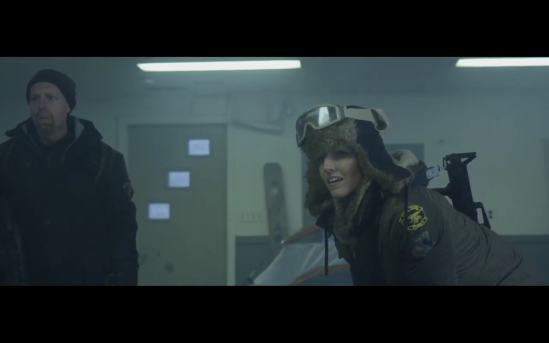
Confronting opposite the terrible Yeti is a cast of alien talent without so much as a recognizable genre name or face to anchor “Yeti’s” marketing success, beginning with Katrina Mattson in her debut lead performance as a young scientific assistant to the terminally ill-fated Dr. Helen whose played by Seattle born Amy Gordon.  The body of dialogue or visual communication didn’t flesh out Mattson’s assistant’s strong yearning to support Dr. Helen’s obsession in rooting out the never before seen Yeti plant other than stating she will do anything to help the Glioblastomas-doomed doctor by whatever means possible.  The disconnect in dynamic between the two supposed friends is not well established and completely melts away faster than the Himalayan snow on a Summery day when the two barely reunite after separating from the abandoned research station.  They’re each accompanied by a couple of mercenaries hired to be an armguard, for a reason why scientists needed M16 assault rifle toting ex-special forces types is beyond me, but actors Robert Berlin and Brandon Grimes serve as such, adding a tinge of military machoism that could have been amped up more against a Jason Voorhees worthy disappear and reappear act Yeti with the given inherent superhuman strength. Berlin wildly over performs at times just spouting out his lines as if reading off an instruction manual. Plus, his character is poorly developed as a money hungry Yeti hunter with an extremely naïve and arrogant personality to the point of yelling in the Yeti’s face when the Yeti is clearly not dead or incapacitated.  Victims pile up with the remaining cast becoming Yeti chow, including supporting performances from Justin Prince Moy, Magdaln Smus, Victir Ackeev, J.D. Ellis, and with Timothy Schultz passing as the scraggily titular abominable snowman.   

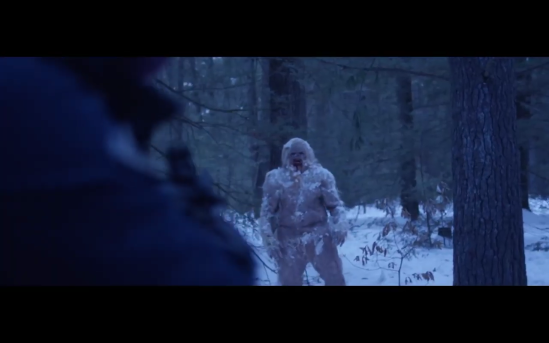
The reason why Burden’s “Abominable” might not be numero uno on your search engine results shouldn’t be total surprise, but even “Yeti” may not produced the same desired outcome.  Aside from not having any grade of star power attached to it, audiences will be awkwardly thrusted right into a perplexing point in the story of dropping us right into complication with a rescue team entering the abandoned Himalayan station and, from then on, a straight forward, uncompelling path of infinite chase with the ball incessantly in the Yeti’s corner trounces on any kind of hope or resistance for survival.  The man-in-a-suit Yeti and makeup effects are not too bad as an admissible effort for an indie production and what’s even more impressive is how Burden felt confident enough to actually show the creature. There have been Yeti, bigfoot, sasquatch, etc., films aplenty of that stray away from displaying much of the hairy beast, only providing glimpses of the large feet, ape-like hands, or fanged teeth to represent a presence, but for “Yeti,” the creature is proudly displayed in all it’s full glory despite being half hairless with patchy spots of snow-stuck fur. Joe Castro, an effects guru for off-the-wall horror for the past three decades with credits including “Night of the Demons III” and “Blood Feast 2: All U Can Eat”, created the Yeti suit while also dishes out some surprisingly decent gore effects that have a real palpable face mangling fetish and so bloody great. On the other hand, the visual effects and props are an abomination in themselves with obvious toy guns and lack of continuity and cause and effect visual effect givens.


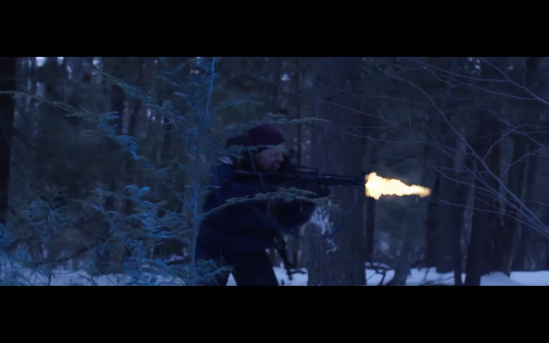
Is “Yeti” another filmic miss on the missing link or can there a slither of entertaining gore with creature lucidity amid a trite script? I do think the latter in Jamal Burden’s “Abominable” from High Flier Films slated for a January 11th DVD release in the United Kingdom. Producer Khu is also the director of photography, using the steady and handheld cams to capture a heap of medium and closeup shots without seizing the opportunity to get a lay of the actual snow covered forest which the characters are heaving hot breaths in the frozen air. Khu does exude the fact of actual frigid conditions with the use of a bluish tint in every outdoor scene. “Rave Party Massacre’s” Matt Jantzen composes a tense-situated, industrial epic score that doesn’t fit “Yeti’s” marginal story structure and can be nearly rave-like and repetitive at times while overpoweringly robust. Sound design is another favorable aspect in “Abominable’s” chaos with a discernible range and depth, especially when working with crunchy snow and a lot of bulky clothing that can be heard rustling when characters move around frantically. Gore scenes are laced nicely with gooey, gushy sounds that can be tangibly slimy. There were no bonus material included with the digital screener nor where there any bonus scenes during or after the credits. The great Yeti adaptation still eludes our ever curious eyes as “Yeti” quenches a only blood thirst through an over-trekked, over-defiled snowy path of the subhuman subgenre.

EVIL Trifles With a Vindictive Obsessed Cop in “Split Second” reviewed! (MVDVisual / Blu-ray)

Global warming has taken a toll on the Earth’s polar ice caps in 2008 with cascading amounts of water flooding around the world bringing knee high waters to coastal cities.  London is hit hard with drenching sewer overflows and coastal run overs that result in an over infestation of rats to storm the streets, back alleys, and even resident homes, carrying a harmful disease in their occupation.  However, something else compounds the rat plague that slashes at random victims, tearing their hearts out violently from their chests without ever leaving a witness except for one, a rogue and paranoid detective Harley Stone whose partner was slain in one of the deadly attacks and himself marred by the killer. Partnered with a new hot shot know-it-all detective following the murders, an obsessed Stone confronts his haunting traumas as he continues to pursue the inhuman perpetrator who has a psychic connection to Stone, personally toying with the on-edge officer, and has kidnapped his girlfriend as bait.

Even though 2008 has come and gone now almost 12 years ago, Tony Maylam’s 1992 actionized-creature feature “Split Second” still holds water just like the rising tide pools on the streets of London.  “The Burning” director, Maylam, helms, with the finishing touches of the final sequences directed by Ian Sharp after Maylam’s sudden departure, a fast paced and snarky script penned by Gary Scott Thompson as one of the writer’s very first big budget outputs from nearly 30 years ago that was followed up with major studio films, including a little project you may or may not have heard of, “The Fast and The Furious” mega franchise.  Before nitrous suped-up cars hot-rodding on asphalt, jumping high speed trains, and flying off cliffs in a lap strap of criminal activity luxury, Thompson created a formidable, heart-devouring beast that became the trap-setting, trophy-hunting predator and the teeth-snapping, chest-bursting xenomorph all in one package to symbolize the irreversible and ignored effects of an overpopulated, warming planet.  “Split Second” is a production of Challenge Film Corporation and produced by Muse Productions with Chris Hanley, Laura Gregory, and Keith Cavele serving in a producer role.

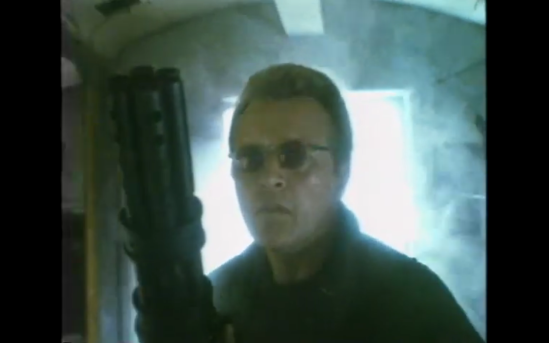
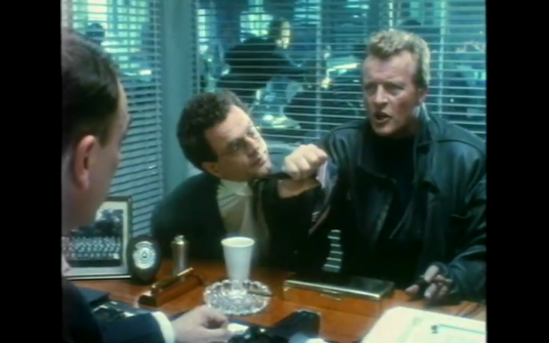
The Netherlands’ very own Rutger Hauer sheds his nice guy exterior for Harley Stone’s shell-shocked, rough and tough outer shell.  The late “Blade Runner” and “The Hitcher” actor brings a certain cinematic coolant to “Split Second’s” overheating fringe of disproportionate action and science fiction horror, a lop-sidedness typical of a Rutger Hauer production, by being larger than life in the little aspects that add to the dimensions of the scene, making every moment famished for Stone’s next eccentric and animated move.  Stone is partnered with an equally vigorous Detective Dick Durkin who starts out as a cultured drip of criminal activity and an astronomical proficient before quickly blooming into the same gritty mirror image of Stone.  Credited as Neil Duncan, the current vocational voice actor Alastair Duncan has a natural dynamic with Hauer despite their asymmetrical careers and endures an incredible character arc successfully turning Durkins’ relatively square image – though debatable with smart, good looking, and gets sex every day swagger – into a Stone acolyte after witnessing the human threatening existence of an unnatural ferocious monster.  The female love interest didn’t seem to fit the “Split Second’s” gentle steampunk lace and zany character scheme with Kim Cattrall as Stone’s estranged girlfriend, Michelle McLaine.  As much as love the “Big Trouble in Little China” actress’s late 80’s to early 90’s career, the girlfriend role feels sorely plopped into the film for the sake of having a love interest as much of the character is illuminated through exposition with McLaine being the wife of Stone’s former partner stemmed from her and Stone’s affair and then lingers her subsequent alienation from the rogue cop despite an inextinguishable flame between them. As Cattrall provides the sexiness in the city of London, McLanie iss aesthetically airy without tangible substance other than kick in the pants motivation for saving. “Split Second” rounds out with the late Pete Postlethwaite (“The Lost World: Jurassic Park”), Alun Armstrong (“Van Helsing”), Stewart Harvey-Wilson and “Scoorged’s” Michael J. Pollard as London’s the rat catcher.

“Split Second” is an early nineties junket spiraling with flashy facets of easily digestible, entertaining chewables that continuously hits all the right flavor sensations in terms of acting, dialogue, production design, creature design, and cinematography. The bonkers script and equally as bonkers visual concept inserts an extremely likable brazen world of the future in the form of a dank, or danker, London under one or two feet of water; in every moment Stone or Durkin hit the streets, they’re essentially swimming in brown street liquid and the overall effect places a blanket of filth glazing over my eyes and secreting out of my captivated body is a cold spine-shivering chill that’s immersive to Stone and Durkin’s slushing around. Stephen Norrington, who went on to direct “Death Machine” and “Blade,” slapped together a fairly effective creature design despite the creature rarely being in full exhibition and for very good reason. A brief flash of razor sharp fingers, a quick dash of unearthly skin, and the gruesome aftermath in it’s wake evolved a better rendition of the creature in our minds than perhaps the actual resulting appearance with result that tacked on one big mysterious allure that doubled down coinciding with the principle characters who also has never seen the killer before. “Split Second” is constantly suspended in action with little down time to reflect on the theme of global warming and it’s life-changing choking effects that not only rushes thousands of gallons of water onto the streets and increase the survivalist rat population up to nearly impossible control levels, but also tampers with the balance of astrometric forces, bringing evil to the world in the form of a heart-eating devil to the surface when astrology deemed the moon in position for such an event and that’s also perhaps the downside to Tony Maylam’s film. The monster bares little backstory to sink one’s teeth into and raises an immeasurable amount of unanswered questions relating to the fate that intertwined Stone into the creature’s inner sphere of extrasensory perception, the origins of the creature and it’s genetic makeup, and the relationship between it and the cult correlations.

A melting pot of feculent and bloodshed pother, “Split Second” arrives onto a high definition Blu-ray courtesy of 101 Films and on MVDVisual’s MVD Rewind Collection banner. The region free, R-rated feature is presented in 1080p with a widescreen, 1.85:1 aspect ratio with a newly 4K scan complete with restoration and coloring grading from the original 35mm negative. The inviting image, with adequate grain and a cigarette burn here and there, basks mainly in a steely blue among other primary colors rearing up while thick with a brightly contrasted neo-noir shadow wrung through. Skin textures are consistently and continuously glistening with sweat setting on top of the natural coloring and the facial follicules present a rather sharp image, making this release the best looking transfer to date. The English language 2.0 LPCM stereo mix doesn’t let up with a robust mix of forefront dialogue, a balance of range and depth, and a pulsating cheesy-action soundtrack Stephen Parsons and Francis Haines. English subtitles are optionally included. The heft bonus features package includes exclusive content such as an audio commentary by action film history Mike Leeder and filmmaker Arne Venerma, a new conversation entitled “Great Big Bloody Guns!” between actor Alastair Duncan and producer Laura Gregory, a “Call Me Mr. Snips!” interview with composer Stephen Parsons, a “Stay in Line!” interview with line producer Laura Borg, a “More Blood!” interview with creature effects designer Cliff Wallace, and a “Shoot Everything!” interview with cinematographer Clive Tickner. But, wait, there’s more! Also included is the original making of feature with stars Rutger Hauer, Kim Cattrall, Alastair Duncan, Michael J. Pollard, writer Gary Scott Thompson, original behind the scenes feature with effects creator Stephen Norrington and other cast and crew, the “Second Split” Japanese cut includes the deleted scenes and built in Japanese subtitles, 7 promotional TV clips, U.S. VHS home video promo, theatrical trailer, and a MVD exclusive reversible sleeve with artwork from The Dude Designs, cardboard slipcover, and mini-poster insert. The difficult decision to determine Rutger Hauer’s best work can be daunting as the man is King Midas with every project he touches, but “Split Second” reveals now more than just being pure gold with this MVD Rewind Collection Blu-ray release that’s a must own, must have, must see, and a must collect physical release of the rundown of a monster-run amok, neo-noir, steampunk, action-comedy-horror….in a nutshell.

Own this Rutger Hauer classic “Split Second” on Blu-ray!

Never Had An EVIL Friend Like Me! “Come Play” reviewed! (Focus Features / Digital Screener)

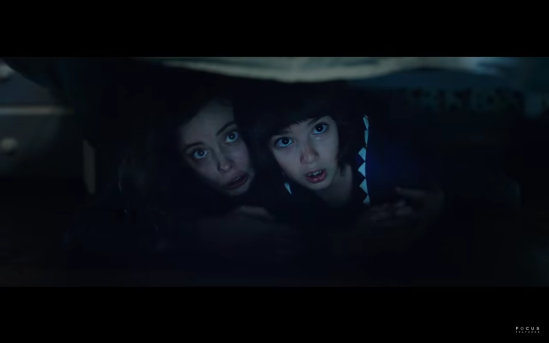
Elementary student Oliver has autism that impedes his speech, requiring near obsessive use of the phone and tablet to communicate with touchtone words as well as using the device for recreational binge watching of SpongeBob SquarePants to calm him when agitated.  Unable to make friends, Oliver’s loneliness causes him to sink deeper into his devices while his parents bicker amongst themselves on the endless topic of caring, treating, and assisting with Oliver’s needs, such as speech therapy and daily routine.  On another dimensional plane, looking inside-out of Oliver’s devices, is Larry, an equally lonely, misunderstood monster trying to break into Oliver’s world and take him away to be forever friends.  It’s up to his overprotective mother and insouciant father to stop Larry’s aggressively desperate out reach into Oliver’s world and pluck him forever from a life of being misunderstood. 

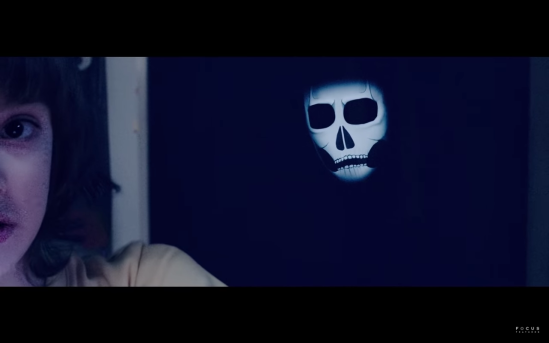
Forget the monsters lying in wait underneath the bed!  Forget the monsters lurking inside the dark closet!  The monster in your phone, capturing your attention span on a glossy-eyed level, should be the monster we all fear from Jacob Chase’s written and directed tech creature feature, “Come Play.”  “Come Play” introduces Jacob Chase into feature filmmaking after being involved wearing multiple hats in a series of short films, spanning over in the last decade and half, with his 5-minute long short film, “Larry,” plotted out as one third shift bored parking lot attendant who discovers an abandoned iPad inside the lost and found box located in his booth and releases a disfigured titular creature that lumbers toward him after reading through  “The Misunderstood Monster” children’s tale on the device, becoming the foundational work inspiring a 96 minute, fully fleshed out narrative with dangerous undercurrents of voyeurism and loneliness coinciding with an equally-hazardous theme in the detriments of being a helicopter parent, hindering the independent growth and maturity of youth. “Come Play” is a co-production of Amblin and Reliance Entertainment.

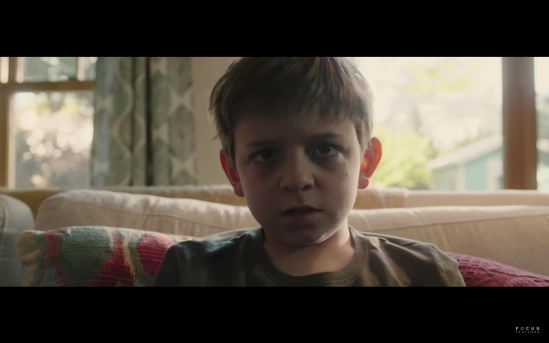
When they’re in a career hot zone, child actors flourish and grow inside a broad base of horror, being nurtured either from or by the creepy child sub-category or from or by being the unlikely hero that has the save the oblivious adults (just look at the kiddie cast of “Stranger Thingsfor example). Azhy Robertson falls into the latter as the epitome of innocence in playing Oliver, a young boy with autism unable to communicate clearly the monster stalking him from a stratum between two existences. “Marriage Story’s” Robertson continues to gleam versatilely as an actor who can use his imagination to not only react to a rendered behemoth creature but also submerse into the characteristics of autism and not oversell beyond what’s needed. Robertson also continues his girth toward a well-rounded career that now has a notch for horror under his broadening belt. Like many monster-plagued kid horror, the parents are always oblivious and dismissive to the situation and “Come Play” continues the trope with a pair of quarrelling parents in the midst of separation that undoubtedly adds to the extramundane energy fueling Larry’s need for Oliver. Gillian Jacobs (“Bad Milo”) and John Gallaghar Jr. (“Underwater”) butt heads sorely on one topic: Oliver. As their marriage dissolves through unspoken subtleties under the Oliver epicenter, that missed mightier connection could have been more powerful on how the split up affects the reactionary consequences of Oliver’s developmental disorder, an affect so tremendous that it componentizes Larry and his aggressive and brazen abduction tactics that are not so discreet. However there characters are perceived, Jacobs and Gallaghar modestly pack a punch in what has been laid to be the Azhy Robertson show of a vulnerable, yet smart, child versus a relentless and grotesque monster. Winslow Fegley, Jayden Marine, Gavin MacIver-Wright, and Eboni Booth round out the cast.

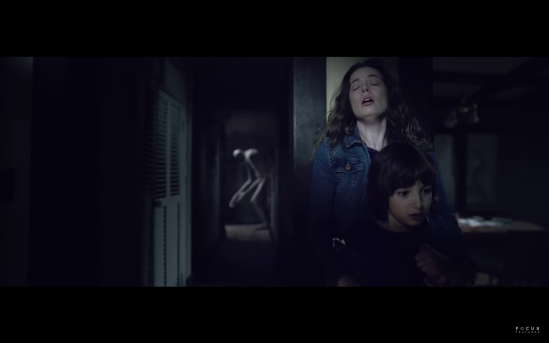
Jacob Chase has proven to be able to handle building breath-holding suspense and tension with the otherworldly plane Larry, a Slenderman-like in appearance and character inspired villain lumbering around not only in Oliver’s house, coursing through the electrical currents in his sub-plane world, but also by peering from out of closets, shying away in the darkest corners of the house, and looming around in a parking lot’s graveyard shift hours only to be perceptible through the phone and tablet camera lenses and, at times, manifesting a translucent presence that has force behind, the latter being an added side dish, transcending from Chase’s short film, to Larry’s predacious tech-manipulating arsenal when obstacles stand in the way of his BFF.  Even if “Come Play’s” superlative thrills ride on the heels of potent jump scares and unnerving silence with bated breathed, hiccups do arise in a more alleviated roller-coaster that shreds holes into the well-established terror instead of nurturing the tone.  Now while I understand the rating is PG-13 to secure a wider audience and, maybe, be a little lighthearted at times, an awkward diluted dread douses the credibility of the characters in strife with actions, such a scene include Oliver’s parents striking down upon his tablet with alternating hammer blows.  In what almost seems like a joke with an archaic technique that old-timey railroad workers use when nailing in track spikes or when carnies – one being a clown – hammer in spokes in unison to erect the big top, the scene is just out of focus in regards to the rest of the scope and there are other scenes like these sprinkled in throughout that raises character quandary concerns.  Why not just one parent whack away on the destruction of the dag’on device?  A handful of the reactionary actions to protect Oliver are glazed with an unreasonable, panic-stricken defense that begs the question whether they’re fit to actually be parents, which, if looking on the flipside of the argument, might also play into more of the unbeneficial family structure that originated the Larry intrusion.  Speaking of originating and the monster, Larry’s exact origins is obscured from the audiences as no plot points touch in depth upon Larry’s background and, you know what, that’s okay here; the more mysterious path is sometimes the best and, in “Come Play,” Larry’s inexplicable being as a child seducing abductor relates much more frighteningly and unfortunately in real world occurrences. 

Predators come in all shapes and sizes.  In this case, Larry’s atrocious presence, trying to obscure his real identity innately, symbolizes the very personalities of the real monstrous predators living among us, trolling online to prey on the vulnerable.  “Come Play” is an oxymoronic subtle hyperbole that serves as a cautionary warning for parents and children molded with pure monster in the closet entertainment in mind releasing theatrically on October 30, pushed from its original July release due to COVID-19, courtesy of Focus Features.  Serving as director to photographer is French cinematographer and serial shadow worker, Maxime Alexandre, who was worked with acclaimed horror director Alexandre Aja on “High Tension,” “P2,” and “Crawl.”  Alexandra manipulates the space, melding wide, full and closeups, to work the perceptions toward a post-production visual design in adding Larry into the frames and honing in on the lighting to just show enough of the space to make the allusion of Larry’s presence even more ominous. The back and forth of the underused practical Larry and the mostly CGI Larry sparsely have any difference between the final product outcome. The visual effects team of Mr. X saunter with what could have been a clear disaster of composite creature imagery with all the trademarks of synthetic splicing; instead, Larry matches well to the point of an indistinguishable challenge between what’s real and what’s not. The score by the “Don’t Breathe” and “Evil Dead” remake’s Roque Banos does the job to subversively infiltrate the security earmuffs to wring your cochlea to an inch of its life, but doesn’t resonate with you much more than the length of the film; however, Larry’s clicking and snapping of his appendageal joints and his guttural clatters emanate vicinity apprehension, as if the audiences can hear the dun dun hook as a tall tale sign of a circling shark in the water.  Sound design is half the fun in the film as the monster is more than half there when it’s on screen. No bonus material accompanied the release and there were no bonus scenes during or after the credits, but I’ve included Chase’s short, “Larry,” below for your own comparison and enjoyment!  “Come Play” boosts many unsavory themes between the parameters of technology and children underneath a mask of a faceless friend willing to frighten and fight anyone into submission to obtain complete, domineering companionship to end his chilling fairytale story.

Larry: Short Film

Millennial Martian Mayhem Is EVIL’s Wheelhouse in “Save Yourselves” reviewed! (Bleecker Street Media / Digital Screener)

Brooklyn couple, Su and Jack, find their noses constantly buried in their devices as the relationship between them begins to stagnate with unfulfilled measures.  In an effort to reconnect with each other meaningfully and detach themselves from the wedging worldwide web, they accept a close friend’s offer to use his upstate cabin as a rekindling retreat getaway from the mundane routine, away from the bustling city, and away from their highly addictive technological devices, shutting themselves off from the numbing side of the world to focus on each other.  As they become acquainted with their isolated surroundings and truly work on themselves, an attack from an alien race of pouffe balls has invaded Earth.  When they finally figure what’s happening, the serenity cabin therapy has been abruptly severed by besieging extraterrestrial furballs from space and they must rely on their little know-how to survive.

To all the modern millennial couples living comfortably in urban stasis and experiencing the world vicariously through the internet, “Save Yourselves!” is a calling and an unlikely savior you didn’t even know you needed from the writing-directing team of Alex Huston Fischer and Eleanor Wilson.  The duo’s introductory feature length film is a satirical sci-fi side-splitter of the celestial kind that, frankly, exposes the rudimentary sustaining people like Su and Jack who we all know exist and wouldn’t know how to start a fire with the quick strike of a match let alone save themselves from an apocalyptical alien invasion, but much like Su and Jack’s understanding of their surroundings and also to their defense, what does anybody know about surviving creatures from another planet?  “Save Yourselves!” is produced by Peter Traugott and Adi Ezroni of the New York based Keshet Studios as the company’s sophomore feature, Eamon Downey and Philip Erdoes of Last Rodeo Studios (“Scare Me”), and Joshua Blum of Washington Square Films.

Internet obsessed couple Su and Jack can barely not fiddle with their phones, laptops, and even Alexia for more than a minute, scouring the limitless online resource for information and entertainment that even infiltrates into their livelihood of administrative assistant scheduling and online popup box retail services.  “Mr. Robot’s” Sunita Mani sits into the internet top 10 list fixated mindset of Su with a complimenting structure revolving around her character’s meticulous life layout constructed by internet page browser tabs.  Equally as reliant on the power of the internet is her beau Jack, played by “Stranger Things’” John Reynolds in a hipster blend of Crispin Glover with the voice comparisons to Hanna-Barbera’s The Funky Phantom.  Mani and Reynolds accorded a charmingly naïve pair of social media engulfed millennials on a path of monotonous self-implosion and take their characters’ arcs over the growth threshold as their thrust to survive without knowing nothing of the tangible (Jack’s own word) world.  “Save Yourselves” is essentially the Sunita Mani and John Reynolds’ show, but the cast rounds out with bit part performances from Ben Sinclair, John Early, and Johanna Day.

Su and Jack are extremely likeable characters with some real and some fantastical unlikeable problems of social media addiction and space beings snatching their planet right under their touchscreen pressed noses. “Save Yourselves” knits a palpable double meaning that not only conveys the impractical saving of themselves from the impending attack of furry aliens, isolated in a thick, unfamiliar wooded ecosystem, but also save themselves from their own social network debilitated selves who rely too much on the glitzy pyrite of the Gram (Instagram) and Facebook to rule their lives.  Directors Fischer and Wilson gamble with a good chunk of the story’s unresolved aspects the plot points build up so well that might leave audiences scratching their heads while a lip-curling complexity freezes their mouths agape in wondering next steps for hapless couple Su and Jack. For the defense of the unexplained, the Earth invasion is an, as we know it, impenetrable fact of pure science fiction, glimmered in 1960’s fashion with resemblance to the Shatner era Star Trek “Trouble with Tribbles” alien pouffe balls (the filmmakers must have been “Star Trek” fans) of various shapes and colors beleaguering an assault with Spider-Man-like bio-lash to get around, an unquenchable thirst for Ethanol, and sonic fluctuance. When you type it out loud it sounds ridiculous, but “Save Yourselves!” harps back on the classic Sci-Fi features with a contemporary wit toward the inept abilities of today’s modern young adults and their reliance on social media.

Going off the grid nonplusses city dwellers with formidable diurnal life routines in the indie science fiction comedy “Save Yourselves!” that has invaded theaters and at-home platforms this week, distributed Bleecker Street Media. The 93 minute, rated R social commentary satire is shot mainly in an unfiltered, natural light with a handheld and steady cam, grounding the filming within the wilderness of New York’s upper state with a sound staged to recreate the tuning fork of kooky otherworldly sound bites and soundtracks. Since this is a theatrical new release, there will be no review on the A/V aspects. There were no bonus material included or any bonus scenes during or after the credits. “Save Yourselves!” is an eye opening gag of real time, real world dependents forced to outlast the odds and grow individually, and collectively, as independent people valued more than thought.

Pre-orde “Save Yourselves!” on DVD ahead of it’s October 9th release.