

One man kidnaps women, gags and bounds them inside his bleak apartment, and unleashes a fury of hate and disgust whilst searching for one woman who will understand him and his relentless, and vehement, scouring. One woman lures highly aroused men back to their apartment for what they believe will be a night of passionate embrace or of simplistic carnalities of inhibition. While the guys are thinking with the wrong head, the woman slices and dices them to a pulverized pulp of death meat and repetitively fillets their manhood postmortem without guilt. She, too, also searches for something, but is more reserved about it as she allows men to verbalize their needs and desires to her. As the two killers go through the melee day-by-day, they eventually find each other, but before realizing their compatibility, the killer inside themselves square off against each other in a one-on-one bout of maniacal mayhem that must unravel in blood before unsheathing true love.

Who knew that love could hurt so badly? Director Takashi Hirose exhibits a painful peak into two desperate swains callously searching for some understanding, some deep rooted mutual pain that plagues their own embodiment, in “Brutal,” Hirose’s 2016 feature that packs a bloody brawling wallop of the human will toward punitive punishment and desperate determination. The Japanese filmmaker also wrote and co-produced the three part chapters that segments Man, Woman, and Man and Woman into a commingled three act narrative of utter chaos that glorifies finding a soulmate in the most insane circumstances. E-Harmony. OKCupid. OnlyFarmers.com. None of these so-called matchmaker websites have the formidable fortitude to remove all the political niceties and to dig into the human psyche the way that only Takashi Hirose can to lure out and strip one person’s entire vulnerability and, essentially, the parts that makes us ultimately human into a raging, yet emotionally unstable, hapless lover.

Butch, the one and only moniker for the actor, portrays the Man who is a very strong and determined man that brings to his apartment many nice, and sometimes unsavory, attractive ladies; however, he doesn’t whip them up an aphrodisiac dinner or sweep them off their feet with a romantic Rom-Com. He likes to move the relationship along, at a hare’s pace, with getting down and dirty and in certainly not in a sexualized manner. Butch pinpoints the man’s ambitions, machine-like in his will with a hint of softness behind the eyes when plucking through the headcount of numerous women for his match. Ayano is equally compelling as Woman and though Ayano has brawnier range of comedies and dramas under her belt, she notches gore and shock as if it’s simple to get stabbed 50 times and be completely nude with unpleasant prosthetics garnishing the naughty bits of your body. Butch and Ayano are quintessential to “Brutal’s” languishing love story and present themselves with such confidence, which is made key from their previous work with Takashi Hirose – Ayano worked with Hirose in his dramatic horror short, “Bandaged” in 2011 and then Hirose worked with Butch in a 2012 zombie short entitled “Moratorium” that starred Japanese cult and former pinku actress, Asami. The film also stars Katrina Grey (“Vampire Reborn”), Takashi Nishina (“Ringu 2”), Naho Nakashima, and Nanako Ohata.

Hirose doesn’t hold back the punches. In fact, he’s added one or two more for good measures. Helmed by a three person crew and one visual effects artist, the special effects department ramps up the rampage and carnage, making poetry out of ruthless romanticism. The end result is absolutely killer with stab after stab, gore galore, and post-mutilation prosthetics of the naughty bits. Hirose steps aside for fight sequence director Satoshi Hakuzen to exalt his gift for action sequences. Having previously worked on “Resident Evil: Degeneration” and “Dead Sushi,” Hakuzen showcases his mixture of gore and shock horror and hand-to-hand combat in the smallest of quarters while still seamlessly continuing Hirose’s narrative. Yet, “Brutal” doesn’t follow much of the laws of basic human biology as when people are knifed multiple times, whether spreading punctures along the various parts of the body or more precise slices into one focused area like the crotch, they keep breathing breath and they keep moving like their Arnold Schwarzeneggers covered T-800 endoskeletons in “The Terminator” and that unfaithfulness to realism inches “Brutal” more toward a fantastical flavor.

Unearthed Films and MVDVisual present Takashi Hirose’s “Brutal” onto Blu-ray for the first time and it’s brutally honest with a phenomenally fair picture engrained from a singer layer BD and presented in 1080p with a widescreen 1.85:1 aspect ratio. Colors really match the film’s coarse tone of a desaturated hue where the blood runs like caramel colored water. Textures look fine, especially around the natural looking skin toned bodies of each person, and the no noticeable issues with compression. The Japanese language Dolby Digital 2.0 audio track fairs equally well with a prominent dialogue track and a sickening range of lacerating thrust that make wet whiff sounds of cold steel that much painful. Tatsushiro Hirose’s rock score unfortunately wanes in soundtrack behind the intensity of Man and Woman’s blood thirst for love to the point of almost non-existent. Subtitles sync up nicely to the dialogue track. Bonus features a clipped production progression of behind-the-scenes, trailers, and music videos. “Brutal” and Unearthed Films found each other, just as Man and Woman in their twisted circumstances, and present an entertaining 67 minutes that solidifies Takashi Hirose one hell of a romanticist and absolutely, 100% bestow his film a true-to-form designation.
Category Archives: Death
Evil Ousts Evil in “Christmas Blood” review!

On Christmas Eve for over a Decade until 2011, a psychopath dressed as Santa Clause hunts down people on his naughty list, people whom have, at one time or another, been incarcerated. Santa’s violent kill streak ends when detective Thomas Rasch tracks puts multiple bullets into Santa after the gruesome slaughter of three people. After 6 years of imprisonment, with no sign of improvement from his holiday hallucinations, Santa escapes to continue checking and crossing those unlucky souls off his naught list, leading him to Alta, a small, quiet village in the northern most part of Norway where one woman when unpunished on his list. Unbeknownst to Santa, the woman he intends to frightfully dispatch has committed suicide, leaving behind a daughter, Julia, to oversee her mother’s home. Struggling to cope with her the loss of her mother, Julia’s college friends from all over the world embark to comfort her on Julia’s first Christmas without her mother, but the gesture of goodwill only speaks to their impending doom with a serial killer Santa ready to reign in Christmas with red blood soaked, holiday fear.

“Christmas Blood, aka “Juleblod” in the original Norwegian lingo, is Reinert Kiil’s yuletide splattering spectacular. Kiil writes and directs a new horror-holiday classic of the Norwegian variety that turns the jolly, red nose, cookie-eating fat guy into an axe wielding maniac. “Silent Night, Deadly Night.” “Black Christmas.” “Jack Frost.” “Christmas Blood” joins the high ranking level of a niche genre, the X-Mas horror genre, which doesn’t see really the light of day in conventional theaters, but home video unsheathes the new life into films one may have never heard of such as Kiil’s “Juleblod” Yet, the overall body of work for Christmas films is very black and white. They’re either overly feel good films with a blanket of pure white joy and happiness or utterly insane and soaked with the crimson interior body fluid, unless you count Die Hard or Lethal Weapon as Christmas films than one can make a case. “Christmas Blood” is certainly in that far right polar opposite of extreme violence, but is solid and engrossing, chopping body parts away with trepidation and stringed up with multi-colored lights.

Ringing in the holiday screams are young victims typically associated with familiar slasher archetypes. The “Christmas Blood” prey, typically adorned by actresses due to their ability produce toe curling, are a pact of university school friends gathered together to rally around one who has recently lost her mother to suicide. Helen Eidsvag, Haddy Jallow, Yassmine Johansen, Karoline Stemre, Kylie Stephenson, and Marte Saeteren share the limelight as unsuspecting Christmas carnage-fodder and all of the actresses hail from Norway with the exception of Kylie Stephenson, who has odd interjecting into Norwegian conversations with her Australian English dialect. Written as great friends, but also depicted as the worst of enemies as various facets of animosity slithers between them, the actresses pull off of their ill-fated character quirks well: Eidsvag as the innocent and naïve Sanne, Jallow as the drug indulgent and secret keeping black sheep Kitika, Johansen does stern and uptight girlfriend well in Katja, Stemre as a favorably licentious mute Elisabeth, Stephenson is the fun-loving non-national in Annika, and Saeteren as the heartbroken Julia with loss of her mother. I’m not sure if “Christmas Blood” would be a socially acceptable film in the States and not because of the blood-spatter blasphemy of traditional holiday and Christianity values, but because of how the one and only black character is treated throughout the narrative in a predominately white movie. Kitika has no verbal filter, smokes weed despite her host’s severe objection, slept with and was going to sleep with again her friend’s boyfriend, is kicked out into the freezing cold along with said friend’s boyfriend by the rest of her white friends, and is eventually slaughtered and stuffed into Santa’s sack. The remaining cast includes Jørgen Langhelle, Stig Henrik Hoff, Sondre Krogtoft Larsen, and Andreas Nonaas.

“Christmas Blood” is a retro-grade horror film that very merrily feels like a product of the Golden Age of slasher-survival genre from the 1980’s with a powerful and unstoppable aggressive killer, a delectable high body count, and a significant calendar date to infamously memorialize the event, similar to Friday the 13th or Halloween dates that are have been synonymous to Jason Voorhees or Michael Myers. Generally speaking, Santa’s already this jolly mystical being worshipped by all and in “Christmas Blood,” that mysticism is really exploited, but as a frightful killer Santa who is seemingly able to be in two places at once and survive a barrage of bullets. Only a couple gripes linger that don’t necessarily derail Santa’s slay-ing of bitchy former co-eds, daft police offers, or any unfortunate person in his blizzard path of butchery. For one, the wordy title card sequence explaining the background of serial Santa’s 13-year killing spree is sorely out of place and slightly kills the buzz built up initially by the gruesome opening scene that sets the morbid tone. Secondly, on the technical side, the lighting is very dim lit. The coloring scheme from the decorative bulbs is festively great and there’s also a very low-tone neon red, blue, and yellow juxtaposed against a bleak, cold setting as if walking through Amsterdam’s Red Light district at night, but with less people, more snow, and no peep shows, but the overall lighting is thin-to-damn near black at times that, shamefully, shades some of the gore work into a silhouette something and your eyes attempt to define what is being seen, but can’t definitively consume the form. Luckily, numerous gory moments make the cut in the light that include exposed entrails and some sheer brutal force with an axe to the neck and to the vagina!.

Artsploitation Films present “Christmas Blood” onto DVD this December. Presented in a widescreen 2.35:1 aspect ratio, the details are a little lost in the dim lighting as mentioned before, but the image quality looks vibrant on colorful in the mise-en-scene lighting and there are no issues with artefacts. The Norwegian Dolby Digital 5.1 surround sound track is rather pristine like a bow-wrapped present under the tinseled tennenbaum, gifted with clarity, synchronization, and no distortion in any aspect. English subtitles are available and are synched well. However, Artsploitation’s release offers no bonus materials aside from a static menu, but this Reinert Kiil’s “Christmas Blood” snarls Merry Fucking Christmas by bastardizing the popular Scandinavian folkore of the genial Saint Nick into a fierce and frightening killing machine!
Evil Isn’t Home. “Death House” review!

Top law enforcement agents, Boon and Novak, achieve special access through steep sacrifice during job assignments and are permitted to tour their upcoming placement in the highly exclusive Death House, the ultimate maximum and multi-level penitentiary home to the nastiest criminals known to society and the deadly threat to mankind in a metaphysical way. Death Houses uses virtual reality to keep inmates stimulated to the point of calm submission as well as drugging the homeless and the unwanted to supply killers with victims upon victims in an their personalized virtual surroundings, but when an outsider uses an EMP to knock out all power within the facility, the cages are open and the ruthless animals are free to overrun, beating to death the guards and staff. Boon and Novak must fight their way to the bottom level that hold the Five Evils, criminals with grotesque supernatural abilities and a wickedly grisly past, where the two agents believe the Evils are their best hope for survial against a Five Evils acolyte named Sieg and his faithful jailhouse followers.

Considered as “The Expandables” of horror, “Death House” had gained almost instant fandom solely from the long-list of horror icons in the cast. Director B. Harrison Smith (“Camp Dread”) re-writes most of Gunnar Hansen’s original “Death House” story produced by Cleopatra Entertainment and Entertainment Factory. Cleopatra Entertainment is more notably a music label that has delved into films the last few years and, in my opinion, haven’t faired positively in the horror genre, but “The Texas Chainsaw Massacre” star fought tooth and nail to try and get his script off the ground, even in the face of death. “Death House” saw release after Hansen’s death, but from interviews with the filmmakers, Smith had almost totally revamped the original treatment, leaving The Evil’s at Hansen’s request if his script was to be entirely cleaned. Shot right in this reviewer’s backyard of Philadelphia, Pennsylvania at the historic Eastern State Penitentiary, the defunct prison is an ideal location as the “Death House” due in part to John Haviland’s separate cell design and gritty appeal that was once of the home of Al Capone, but more of the focus is on the interior than exterior with green scenes and Los Angeles shots constructing the story-lined scenes.

Like aforementioned, “Death House” has been called the “The Expendables” of horror. An immense, if not soaked, cast of horror fan favorites are peppered about around the main characters of Agent Boon and Novak. “Sushi Girl” and “Zombeavers” star Courtney Palm embodies the Agent Boon character with G-man toughness, but finds difficulty leaving that b-horror mentality with shakiness in working climatic scenes. Palm’s also roped into doing an extremely gratuitous shower scene with Cody Longo (“Piranha 3D”) as Agent Novak. Novak’s a hotshot and Longo has the looks and the talent to out perform his character, but Smith’s script doesn’t do justice to either Boon or Novak’s character that blatantly underwhelms their performances with cameo star power and a shoddy narrative. Dee Wallace (“Cujo”), Barbara Crampton {“Re-Animator”), and Kane Hodder (“Jason Goes to Hell”) have prominent roles that are pertinent to the story and are enjoyable to see them in more of a supporting capacity. Andrenne Barbeau {“The Fog”), Sid Haig (“The Devil’s Rejects”), Vernon Wells (“The Road Warrior”), Bill Moseley {“The Devil’s Rejects”), Lloyd Kaufman (Mr. Troma), Michael Berryman (“The Hills Have Eyes”), Tony Todd (“Candyman”), Sean Whalen (“The People Under the Stairs”), Debbie Rochon (“Killer Rack”), Bill Oberst Jr. (“Deadly Revisions”), Felissa Rosa (“Sleepaway Camp”), Danny Trejo (“Machete”), Tiffany Shepis (“Abominable”), Brinke Stevens (“The Slumber Party Massacre”), Camille Keaton (“I Spit On Your Grave”), Gunnar Hansen (“The Texas Chainsaw Massacre), and R.A. Mihailoff (“Leatherface: Texas Chainsaw Massacre”). Whew. Rounding out the remaining cast is Lindsay Harley (“Nightmare Nurse”), Vincent M. Ward (“The Walking Dead”), and Bernhard Forcher.

While the genre star-studded ensemble cast is a wet dream for horror fans, “Death House” fails in numerous filmmaking categories with the first being the most important, the script. Smith’s re-work of Hansen’s original story requires another drastic once-over, or two, as the final result attempts to push, stuff, and cram 100 lbs of multi-subgenre elements into a 10 lb, inflexible bag, cramping the ambitious project with dis-connective storyline tissue braced together with shoddy visual effects, like the two agents free-falling down a bottomless elevator shaft and able to precisely shoot their targets on each level. The overall result of “Death House” just endures an unfinished varnish and seems slapped together with pre-schooler glue and claggy spit. Singular moments surface as diamond specks amongst cubic zirconias, like the Mortal Kombat fatality-esque practical effects, but are too far and in between to muster up an enjoyable film. The Five Evils definitely and desperately needed more presence in the story instead of just flexing the talking heads muscle; well, the only two Evils to say anything at all were Bill Moseley and Vernon Wells. The Five Evils didn’t quite have that oomph to be a force to be dealt with as Gold-described beings who philosophical interpretations on the concept of good and evil.

Cleopatra Entertainment and MVDVisual present B. Harrison Smith’s long-anticipated “Death House” onto DVD home video. The unrated, all-region DVD is presented in a widescreen format that displays some frayed flaws like contrast; there’s way too much inky black in the dark scenes and little-to-no definition in more visible sequences. The compression suffers from blotchy artefacts at times too and lacks hues, which works with the gritty tone inside the Eastern State Penitentiary’s decomposing walls of rubble and decay. Visual effects are glossy with virtually no textures to give detail or, essentially, life amongst the continuous death. Bonus features include multiple interviews with director B. Harrison Smith, Courtney Palm, and more. Also included is a behind-the-scenes feather, a gallery slideshow, and theatrical trailer. Despite being true to the title and highly anticipated since it’s inception into the public market, “Death House” ultimately disappointments as an unfurnished mess enlisted with big names in the horror domain that’ll unfairly sell the film on it’s own, but all-star cameos won’t establish “Death House” as a solidified cult favorite, being unfortunately one of the biggest release flops of 2018.
Political Extremist Molds An Evil Spawn! “Trauma” review!

In 1978 Chile, a powerful political extremist exploits the Chilean army to conduct and carrier out the physical and sexual abuse against the people of Chile, including forcing his own son, Juan, to have sex with his tortured mother and executing her right in front of him while in the fornicating act. Juan’s father continues to further the abuse with fear, terror, and misogynistic berates until he’s finally fatally coup. Fast forward to 2011, Juan’s an unstoppable madman as he terrorizes the locals over the years without authoritative regulation and also four female outsiders on holiday for a girls’ weekend. Juan and his son force their way into their residence, tyrannizing, raping, and even killing one of them before leaving his cruel mark in his wake, but with the help of a local officer, the remaining three survivors seeks to make sure Juan, and his equally screwed up family, never harm anyone again. However, Juan is prepared, held up inside a compound subterfuge, well-armed and well-unhinged.

Perhaps based loosely off the atrocities of of former Chilean President Augusto Pinochet in the 1970’s, Artsploitation Films’ distributed “Trauma” goes to the unapologetic extreme, building upon an already unsavory narrative into the bred morbid disposition of the human psyche. Written and directed by “Zombie Dawn’s” Lucio A. Rojas, “Trauma” is a cold, blunt object with a razor sharp bite and has a penchant for the twisted. The Chilean director’s film isn’t the only game in the market of extreme movies, but does manage to create a motive of separation between most with the offending character experiencing traumatic corruption by someone close; in this case, Juan’s father 40-years earlier by oppressing the boy through physical pain and scrambling his son’s mental state by removing any humility, compassion, and reasoning that manufactures the perfect ruthless butcher. Pinochet used his military power to be a lethal strong hand when desired; Rojas spices it up by adding forced incest, rape-after-rape, and implementing a subconscious malevolency.

“Trauma” stars “To Kill A Man’s” Daniel Antivilo as the despicable Juan. Antivilo is patient and soft in his approach to a deranged character that doesn’t display that wild abandonment in psychotics. Juan goes on to slowly terrorize four lovely outsiders from the city in Andrea (Catalina Martin), Camila (Macarena Carrere), Julia (Ximena del Solar of “Perfidy,” another Rojas film), and Magdalena (Dominga Bofill). The four actresses offer up different character perspectives and personality that should divide the dynamic or, at least, complicate it; there’s a strong sense of lesbianism between them, even exhibiting traits in those who don’t identify as such. Antivilo macho savagery pitted against the four stunning, but strong women does create a black and white, stark-producing character placement. Outside that dynamic, one character has no dialogue and, yet, manages to high level physical role that’s barbaric, humiliating, and spacey and that role is inside of Juan’s schizoid son, Mario, is donned by Felipe Rios who has the strung out appearance of a long, drawn out face and muscularly thin. Eduardo Paxeco, Claudio Riveros, and Florencia Heredia round out the cast.

Rojas does a beautiful job in the juxtaposition department, paralleling the bleak, grimy, and yet agreeable life of Juan and his equally as certifiable family next to the full of life and vigor in the unsuspecting women that Rojas’ introduces off with Camila and Julia engaging in a steamy girl-on-girl love making scene that doesn’t leave much to the imagination and, then, slides into their instant road trip the day after. Rojas had built up Juan’s pain and suffering toward being molded into a monster whereas the women fly by the seat of their pants, churning out memorable moments in a flash whereas Juan’s unfortunate course was a slow burn throughout his long, hard life. The parallelism flips from Juan to the women up until the moment their lives intertwine and this is where things get messy with Roja’s script. Between Julia, Camila, Magda, and Andre, three of whom are related, tension builds as Julia plays the flirtatious and brazen field between hooking up with the cousins as stroppy Andrea steams in a passive stew on the sideline. This subplot never goes explored, going uncooked right in the middle of a hot flame where passions and couples’ plights evolve the story. The abrupt presence of Juan puts a cease and desist on any other subplot that ultimate funnels “Trauma” to be a rape-revenge flick with a graphic content.

Artsploitation Films continues to distribute internationally provocative films that always delight as well as disgust (in a good way). With Lucio A. Roja’s 2017 film, “Trauma”, casualties pile high and damage control is non-existent, fitting the Philadelphian-based company’s axiom that presents the film onto a high-definition Blu-ray. With a widescreen, aspect ratio 2.35:1, the image quality is quite good. Details are very promising here and really need to be with the gore. The face explosion and the jaw unhinging deaths are certainly not stodgy as the scene on these moments linger more than most would, soaking up the full effect of the viscous covered chunks out from the face crater by a high caliber handgun is a thing of beauty. The Spanish 5.1 surround sound syncs up well in all aspects from dialogue to ambiance. English subtitles are available and line up well enough though speedy at times. Dialogue is clear and present, Ignacio Redard score is heard, and no signs of any kind of distortions or other issues. Bonus features are limited to just the theatrical trailer. “Trauma” might have vastly skewed the actual events the film is based off of to pen a story, but what a gorgeously gory-filled and exploitively-charged narrative that can be a tell all for the cause and effect of political extremism at it’s worse. Director Lucio A. Rojas puts Chile on the controversial and extreme horror map.
Did Evil Put You On It’s Will? “Next of Kin” review!

After the untimely death of her mother, Linda returns from her university studies to reacquaint herself with the inherited Montclare, a home for the elderly her mother owned and operated through the decades as a family business. As she internally debates about whether to sell the grand, yet antiquated estate, 24-year-old Linda shuffles through her mother’s left behind things that rekindle Linda’s faded memories of her youth and add a sense of melancholy about her mother’s mental condition. A seemingly quiet, if not quirky, home for the elderly quickly becomes shrouded with mystery after the discovery of one of the residents found dead in a bathtub. Soon after, Linda feels as if she’s being watched and toyed with inside the corridors of Montclare: candles found lit, bathroom fixtures overflowing and cascading with water, mysterious figures looming from inside her room’s window, and her mother’s belongings sprawled out about the room. Paranoia sets into Linda as she suspects the resident caretaker and doctor of a lethal plot against her inside an old, foreboding manor that troubled her mother into deathly consequences and she searches for answers inside her mother’s extensive diaries that reveal the ominous dread that overwhelmed her inside an evil house.

“Next of Kin” is Australian’s answer to Dario Argento’s hauntingly apprehensive and vividly hued classic, “Suspiria.” Directed by Tony Williams and co-written with Michael Heath (“Death Warmed Over”), “Next of Kin” embodies monolithic brooding merits of a gracefully shaped horror and palpitating anxiety unlike any other Australian horror film we’ve ever seen before. In fact, Williams 1982 film doesn’t feel very Australian at all that’s set chiefly in and around Montclar, a lavishly gothic estate with expensive fountains and floral garnishes. Aside from native accent and barely a dusty road to drive down, the country of origin could be anywhere, punching home the aspect that the incident at Montclar is universal. Looking into a couple of their techniques, Williams and cinematographer Gary Hansen (“Image of Death”) utilize slow motion and interlaced scenes to convey a surreal dread that transcends from film to senses, also involving disruptive audio cues and visual jump scares, to culminate every scene, ever moment, into a well thought out result on how to effectively reach out and affect that scared little boy or girl in all of us.

Primarily a television and mini-series actress, Jacki Kerin sets foot into the main actress Linda. Kerin’s able to flip emotions from emitting a passive quality while she seemingly annoyed by her mother’s death while switching gears into a hyper-tensive defender. The small screen actress translate well onto the big screen, accompanying well versed thespians in “Picnic at Hanging Rock’s” John Jarratt, who went onto to more notably the “Wolf Creek” franchise. There’s also Alex Scott (“The Abominable Dr. Phibes”) and Tasmanian-born actress Gerda Nicholson. Scott and Nicholson do a fine job of portraying un-trust worthy snoops with underlining knowledge yet to be exposed and with Kerin, the fear goes unopposed and spreads like wild fire. the remaining cast includes Charles McCallum, Bernadette Gibson, Robert Ratti, Vince Deltito, and Debra Lawrence.

Practical effects are minimal in “Next of Kin,” but are well integrated with a meticulous purpose. Williams maintains the gore to an infancy amount, but the New Zealand born director doesn’t nickel-and-dime the macabre. Much of the death displayed comes in at post-humorous, visually positioning the cold and blue hued, more at times ripped life from, bodies to vessel the story forward toward a shocking, what-the-hell, and oh glorious climax. Then, when all the proverbial cards on the table, Linda finds herself ensnared in a cat-and-mouse game where Chris Murray’s practical effects come to the forefront. Special effects maestro, Chris Murray, had the George Miller experience while working on “Max Max” in 1979, prepping him to be the adequate effects artist to create surreal and, also, brutal Giallo-like murder.
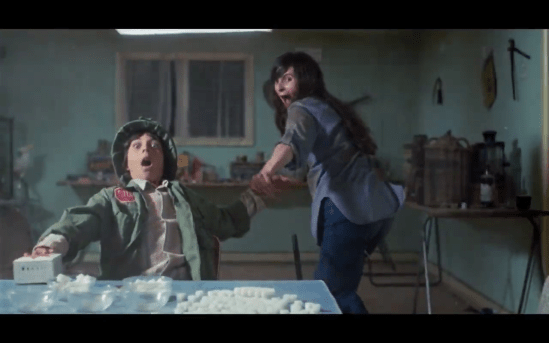
Umbrella Entertainment presents Tony Williams’ “Next of Kin” onto a region free, full HD 1080p Blu-ray home video. An Ozploitation classic in itself, Umbrella Entertainment puts the film on a home media pedestal with a remastered 4k transfer from the original 35mm interpostive and presented in a widescreen, 1.77:1 aspect ratio. Beyond gorgeous with lush grim colors and able to keep the natural grain of the 35mm nitrate, “Next of Kin” sees one hell of an upgrade that shows no wear in the transfer and no compression issues or edging enhancements. Even with the heavy blue tint at time, the amount and the use is appropriate alongside Gary Hansen’s vision. The new English DTS-HD master audio emphasizes the heavy synthesized score by German electronic music composer Klaus Schulze that meshes fine with the creepy house ambiance. Dialogue is properly forefront and crystal clear. Special features run amok with audio commentaries with director Tony Williams, producer Tom White, and with cast members John Jarrett, Jackie Kerin, Robert Rattie. Also on the release is a “Return to Montclar – Next of Kin” shooting locations revisited, extended interviews from “Not Quite Hollywood” director Mark Hartley, deleted scenes, original and VHS trailer, German opening credits and trailer, an image gallery, and a couple of Tony Williams’ short films: “The Day We Landed on the Most Perfect Planet in the Universe” and “Getting Together.” “Next of Kin” has a brawny Italian Giallo flavor with a gritty, distinctive core of Australian horror filmmaking; sheerly beautiful and indisputably morbid, director Tony Williams has garnished a choice horror favorite that’s been sorely passed over through the years.
 It's Bloggin Evil!